Showing posts with label Russian. Show all posts

Sunday, November 13, 2022

Russian white and red (black) gaba tea from Egor Matchak


A friend that I've mentioned before, Alexander Panganovich, sent a few teas for me to try, and to write about.  He's Russian, living in the Sochi area for awhile, as far as I know, but back visiting Thailand again recently, although we've not met yet this time.  Two of the teas were from Russia and two from Thailand; these I'm writing about here were from Russia.  

There isn't much that serves as a bio of Alex in this blog but this post first mentions meeting him two years ago, and we last "met" online in a meetup at the beginning of the year, and of course a Facebook profile covers some of who he is.  He's a good guy, a likeable and interesting friend, and a true tea enthusiast.  In discussing his background further his more accurate name is Alexey Zykov, relating to use of nicknames.


Alex, waving.  I miss that meetup experience.


Alex may or may not be selling these; I think he does sell some tea, but that he's not really formally a vendor, in the sense that people with online sales channels are.  We haven't met in person for quite awhile, so I'm not up to date on that part.  I'll check and pass on that update along with a second review post.

In looking up what those teas are it seems there won't be a product description of any kind, but two references turned up.  One is photos in an instagram account mentioned on one label, which matches the person's name written on the sample, Egor Matchak.  There is a longer, kind of cool background mission statement in a vk.com site profile for Jiva Tea, an unfamiliar social media channel, which I will include all of for completeness:


The main objective of our project is the production of high quality organic tea.

We have revived and improved the technologies for creating tea in Rɣsi. We collect and process all tea manually, without the use of mechanical devices. The collection point is the abandoned tea plantations of the Black Sea coast, namely the city of Sochi. We do not yet have a factory for the production of large volumes, we make all tea at home, in compliance with all necessary measures affecting the quality of tea. Compete with China, India, Laos, etc. we do not need, we create an environmentally friendly and energetically correct consumer product. The high cost of tea corresponds to the quality. We do not have volumes requested by people who want to make a profit on resale, but we are actively working on this issue.

Our group is for those who are tired of Chinese fakes and tea of ​​unknown origin, with a series of hieroglyphs and imposed values.

Here you can communicate in your native language, understand all the subtleties of the freshest Rɣsi tea, there are no cultural and language barriers, so it is much easier to study Rɣi tea traditions, watch how everything develops here and now, taking on new forms. Over time, it will be possible to collect tea ourselves and try to prepare it with our own hands, we have been working on this for several years.


It sounds good.  That page has over 2000 followers, and it looks like it was founded in 2017, so this isn't a brand new initiative.  The tea was good enough that it didn't seem like early processing efforts, refined and positive in character, especially given that just setting up a nitrogen environment for processing to make gaba would involve some equipment and learning curve.  I almost never tend to like any gaba teas, so that's not the best start, a complete mis-match for preference, but some are interesting, and styles and character do vary.

Presumably this is all truly Russian origin tea; that does seem to be the theme.  It's interesting that the gaba red (black) version was pressed; somehow that makes teas seem a little more interesting to me, even though storage taking up more space and accessing an even sized amount when loose is no problem.


I could "read" that using Google Lens, but didn't


more label information


Review:


white:  not what I expected at all.  White tea like this--that appears similar, at least--always hits you with a floral or fruity sweetness first, which can be a bit subtle and whispy, sometimes lacking intensity or complexity, but that's always what it is.  This is a little sour.  Then it's interesting from there, with a depth to it, other smooth, deeper, warmer range that is like the rest of what white teas can express, a creaminess, towards a green tea base of light and neutral vegetal range.  At least it has novelty going for it; I've tried no other tea that this reminds me of.  I'm getting the sense this might evolve a bit early on so I'll do more of a flavor list next round.


red (or black, if one prefers):  equally novel, but for gaba teas this character is the consistent, normal range (more or less).  Sourness can be a problematic input in those, to me, and this includes a version of that.  From there it's interesting, the sweetness, depth, clean effect, and range of other novel flavors.  Part is towards rich dried fruit, like tamarind and elderberry, and another range reminds me of aged aromatic woods and fragrant oils.  This will probably evolve some too, so I'll skip expanding on that for a round or two as well.

In relation to match to my preference this tasting has got off to an odd start.  These teas are interesting, and clearly refined in character, with clean and complex natures, but these aspect sets aren't what I like most in tea experience, at all.  Sourness standing out is a rough start taken alone.  They're so interesting that I probably won't skip posting this review, but if they don't evolve to match what I like more this is going to make for an odd write up.


white tea, second infusion:  sourness subsided just a little, and other flavor range picks up.  Next round this might be even better, but the clock is ticking related to this maintaining the same degree of intensity.  This is very fine and somewhat broken leaf material tea, so it's just not going to brew a dozen intense and positive rounds.  Vegetal range became more interesting, moving off a non-distinct effect onto a green wood and aromatic dried autumn leaf range; that part is nice.  Sweetness picked up, and that part is ok.  Sourness is unusual in form, within that category range; it's a light edge in this, that connects to other aspect range, seemingly continuing from it.  

There's a warm depth to this that's hard to describe, maybe like a woodiness that's closer to balsa wood, or something like toasted oatmeal.  Altogether it's interesting, and not completely unpleasant, but just a bit more fruit or floral range would really make this more conventional, and probably more pleasant.  It's hard to even try to imagine what fruit or floral range this experience could map to.


gaba red:  stronger sourness, than in the first version; flavor at least related to that part is perhaps increasing in strength instead of easing up.  I'm a lot more open to sourness as a part of potentially positive tea experience than I would've been 4 or 5 years ago, but this combined tasting experience is really pushing it.  It's not on sauerkraut level but it's halfway there, a main part.  

Most of what escalated is really tartness, to be fair, a related but different effect, and that tartness has mainly already replaced the sourness.  Unfortunately I don't love tart teas either.  If someone did absolutely love tart black teas this would be ideal for them; that's at least half of the overall experience at this point.  

Rather than unpack the rest I'm going to eat something to clear my palate, drink some water, and try again next round.  To be clear there are redeeming qualities to both of these teas, and there are indicators that they are well-made, a good clean character, good complexity and intensity, but a lack of match to personal preference is unusually negative in this tasting so far.  I rarely like gaba teas, so that wasn't completely unexpected, but beyond finding silver needle / tips versions that don't taste like much uninteresting I tend to like all white teas.


white, third infusion:  now this has settled into a range I can relate to, and like.  Sourness dropped out, warmth picked up, and complexity is interesting and positive.  What I meant by "autumn fallen leaves" may or may not be clear, but that's at the crux of this experience.  It could mean different things to different people, since fallen leaves smell completely differently depending on leaf type, how dry they are, how other background scents combine, and any number of other minor inputs.  Back "home," in Western PA, there's a woody depth to that range, across all it expresses, because the scent of fall is about many types of plant material settling in many different ways.  Here tropical fragrant leaves fall and dry resulting in sweet and complex scents, that are much different.  It's probably closer to what I experience here, with lots of complexity, but in a lighter range, with less earthy depth.

Other almost intangible inputs work out well:  level of sweetness, clean character, hints of other range (maybe floral finally is factoring in), even a light fruit tone, bridging every so slightly into citrus scope.  Depending on interpretation this either is citrusy, light like lime or lemon, or it includes a touch of green wood scope, which is still how I interpret it.  Or that could be like a touch of dandelion, combining many of the other aspect themes I've mentioned, the light floral and fragrant dried leaf range.  It's nice.


red gaba:  brewing this light seemed to help tartness balance better; it still includes that but it has diminished to a minor contributing aspect.  Warmth picks up, now in a cinnamon sort of range.  It's interesting that this changed so much from last round, and that both shifted from tea experience I really disliked into such positive range over just one round.  That has to tie to that intangible complexity and quality issue I mentioned; a poorly made or low quality material tea wouldn't have the potential to transition so much in interesting ways, the flaws would be what you'd get.  I still definitely wouldn't buy this tea, but for people into gaba it could be really appealing.  

Since I've not done a proper flavor breakdown I should mention some of the rest, to get this to add up to a description.  That warm range serves as a base for this now, with tartness very limited, almost gone (strange; I think infusion intensity and round to round transition combined in an odd way).  Beyond that there is a sort of wine-like quality to this now, towards brandy, maybe only partly there, more like a tisane that's popular here, roselle.  I suppose that tastes a little like rose leaf tisane, just with more intensity and more of a tart edge, and a little towards red wine flavors.


white tea, fourth infusion:  I think a pleasant floral infusion ramped up, but the flavor mix is complex enough that it requires a lot of judgment and interpretation.  This is as good as it's been, quite pleasant.


red gaba tea:  also the best this has been; that cinnamon spice warmth, roselle tisane floral tone, towards red wine range depth are nice together.

As does tend to happen on weekends I need to get to a long task list; I'll stop taking notes there and mention changes in conclusion notes later, if those apply


Conclusions:


The teas stayed positive for extra rounds but didn't change so much.

I was considering how I probably would've interpreted the experience much more positively if that tea range had been more familiar.  I really didn't expect such novel white tea range would come up, for that broad category being a bit more consistent, covering a moderate range of styles, but a narrower scope than many other type-categories.  Gaba versions do vary a lot, with some consistency in some flavor aspect range, especially that sourness.  They're not as often so tart, but tart black tea is a familiar theme.

Then hardly any of that is a close match to my main natural preference.  If the tea characters were just more familiar I think that would've seemed like less of a gap, that I would've found them more relatable and pleasant.  They weren't unpleasant; I was clear in the notes that they had redeeming positive aspects, and were clearly well-made teas in a sense, distinctive and complex, free of a broad range of flaws that can turn up in different types and versions.  Except the sourness, I guess; it can be hard to see that as an aspect that others might relate to better and prefer.  For an even newer producer I might expect that a tweak or two to processing steps could identify a cause for that and resolve it.  It's generally not a distinctive type or area typical inclusion, although I guess that it could be that.

The white tea was quite positive after the first two rounds, clearing out that aspect.  I think for people who like tart black teas the black (red) tea would be the same, very pleasant, distinctive, intense, and complex after the first two rounds.  Maybe well-balanced and refined, even.  I just much prefer richer, heavier flavors in black teas that doesn't include tartness.  Almost every gaba tea I've reviewed includes some sort of related statement, about how the tea might appeal a lot more to someone who is on that page for preference.

In trying the first of the Thai sheng versions, which I've already written notes for, it occurred to me again that this may not really serve as a fair, objective account of what these teas are like.  I'm quite familiar with Thai sheng range, and love that style, and the aspects that are usually included.  Familiarity and bias for a certain range of experience combine to make it sound like that tea is clearly, objectively better.  I think it might work better to say that it matches my preference much better.  But I think I'm going in with expectations and openness to range of experience that favors that tea, over these I'm reviewing here, and the limitation in prior exposure represents the opposite of an objective and complete analysis.  I could like them more just for trying them a few more times; that can happen.

I wish this producer the best, based on their expressed mission and values.  For sure their level of success in producing novel and positive teas will vary across versions and seasons, and I hope that they can stick with it, continue to develop, and thrive.  I feel like the tea community that they indirectly reference in that citation, people interested in preserving prior traditions and opening the door to new forms of development, all themed around more natural production contexts and developed forms of interest, all represent themes and experiences that should be valued.  They're already making good tea, even if these two examples don't represent the closest possible match to my favorite styles.


Saturday, November 7, 2020

Moychay experimental Russia origin shu


More of a large set of samples sent for review, which I'm slow to get to.  I've already tried this one before, an experimental, small-batch theme Russian shu ("pu'er-like tea," since they restrict use of that category to Yunnan).  It's good.

It's not a new subject, making pu'er, or pu'er-like tea, in smaller batches.  I reviewed versions from Thailand awhile back (which were also good), with that vendor, Tea Side, posting about the experimental trial process.  I suppose results would vary, depending on process used and starting point.  Especially for versions not made from similar Assamica plant material.  This has to be variety Sinensis plant type, being grown in Russia, since only versions of that broad plant type category tolerate colder weather (per my understanding, at least).

But I won't really look into this here, to fill in more on how this was processed, or what the plant type is, or even where it's grown.  I'll could probably only turn up a link to a later batch, since this one is sold out [or not even that, as it turned out].  This will be more about passing on results, how the tea comes across.  Maybe I'll even finally write a short review.

In looking on the Moychay site section related to loose shu (and to Russian teas, from Krasnodar) I didn't see this, or anything like it.  This video by them covers background on shu wet-pile fermentation, if that's of interest, covering a visit to a producer in Menghai.  


this is a product description, for people who can read Russian


If these batches are experimental they might sell out quickly, or only be released informally, not sold through their site.  I talked to the owner about this tea, Sergey, and he said that this #2 version is sold out, that they had some of #4 left at that point, but that kind of status would change.  Sergey is the one narrating that video about fermentation (the original Russian, not the English voice-over); in addition to being a tea vendor he is a true tea enthusiast, and a student of the subject.  Anyone regularly ordering from Moychay anyway might want to keep an eye out for it, and add a bit to an order, since for novelty alone it's well worth trying (assuming that the price is reasonable, which is typically the case for their teas).  

That Moychay site loose leaf shu section bears that out about good value (all Yunnan teas, at a glance); those are all selling for between $5 and 8 per 100 grams, so at most equivalent to just under $30 per 357 gram cake worth, with most under that.  A sampler of 4 or 5 100 gram choices of whatever sounds good would still be in the range of cost of a pu'er cake, even for shu, and it would amount to an intro to how shu versions vary.  

Just judging from the photos, the colors, a lot of it is not fully fermented, which is kind of a long story to get into here, what that means, and how it works out.  Such tea can be more subtle than fully fermented shu, but better to drink early on (needing less rest to settle), without as heavy a processing flavor requiring time to fade.  More lightly fermented versions may have slightly more aging potential, but buying a few hundred grams of loose shu to get to in another decade is kind of an odd idea.  It's completely workable, just not how that usually goes.  A bold enough person might consider trying pressing some into cakes on their own, but I'm definitely not going to try and say anything about how that might work.


Review:


The flavor is a little unusual in the first infusion, but I know from trying this before that this range will "burn off."  An online friend just described the funkiness in some lower quality versions of Da Hong Pao as tasting like "wet sidewalk," and I think this is close to what he meant.  He said those can taste like wet sidewalk and grapefruit zest.  To me lower quality DHP tends to taste like cardboard, which doesn't mean that I don't like it, since it's cardboard in a context that can work.  

This has good sweetness and interesting range.  Beyond a flavor tasting a bit like that sidewalk reference, or like how a shoe box smells, the rest is quite clean.  Even that part isn't bad, necessarily, just odd.  If this was produced this year then there's a good chance that taste would fade, or even drop out completely, within the next year or so.

There's a fruitiness to the rest that is pleasant.  Flavors are a little heavy, and earthy, as is common for shu, but quite light within the typical shu range.  It's funny how that works out, that it's light and heavy at the same time, in two different senses.  This should gain intensity and clean up a lot over this next round, and move on to other range later, if memory serves.  It's weakness is that it doesn't have the same full feel and depth some shu has, but for being a light and novel version it worked.  Fruit flavor in shu is really nice, per my preference.


Second infusion:  oddly this picked up more quite positive range and more strange flavor range too.  On the strange side, that wet sidewalk / cardboard aspect shifted, now more like blackboard, slate.  That's not as odd as it might be, but in this presentation it's a little towards cement block from straight slate rock smell.  I kind of like that part though; wet slate, the effect from cleaning an old blackboard, is a cool smell.  On the more completely positive side the fruitiness hung in there, but a distinctive root spice sort of range picked up, even stronger than that now.  I tend to get tripped up in describing floral tones and root spice range; I'm just not great with either, mapping it out further.  

This tea could be interpreted lots of different ways though, many of which would be roughly as correct, just a different interpretation.  Bark works as a flavor comparison, probably a version from a tree that had been dead for awhile, with some fermentation, a hardwood tree trunk laying out in a wet forest environment.  I kind of see this as "getting" cocoa.  The hint of fruit isn't standing out in this as much, with all the rest going on.  It's there, but hard to tease out as one distinct thing.  Maybe it's along the line of blackberry, or elderberry.  One warm, rich flavor could be interpreted as whole wheat pie crust.  I'm not the kind of reviewer that just free-associates their way through a dozen-description tasting, like that one vendor is known for, but this does have a lot going on.

I'm not talking about gap or limitation much yet though.  The earthiness lacks a grounding depth that many shu have, a heavy flavor range.  Feel is also a little thick but thin as shu range goes.  It has some creaminess, so I mean that in a relative sense, tied to a very specific expectation.  To me the character works; the set of aspects makes sense together, and comes across as complex.  Someone with more specific expectations, who either sees specific aspect range as a quality marker, or just prefers a narrower specific set in shu, per their own preference, may not like this.  I think someone open to a range of different tea experiences would tend to love it.


Third infusion:  creaminess really bumped up.  I mean the sort that turns up in a Guiness Stout, but without that one edge in that.  Some of the sweet, warm flavor range in that beer type carries over too, similar to that found in a black bread (pumpernickel and such).  Now that I think of it this is really close to a good version of a dark black bread.  It might be great to drink this with a lightly smoked creamy cheese, probably brewed even stronger than I am making it, to really get the full effect, and be able to stand up to food.  Of course it works well as a singular experience too.  I'm interpreting that root spice as moving closer to something like the spice in some rye versions, caraway seeds.


Fourth infusion:  just beautiful, the way this comes together.  I could imagine someone hating it too, the relative lightness (for shu), the heavy rye bread range, trailing into between slate mineral and shoe box, the bit of fruit, cocoa, and root spice (but those last parts seem relatively entirely positive).  I remembered a touch more fruit from that first tasting, towards the one berry range; that might just be interpretation variance.  

Again people could reasonably interpret this in lots of different ways.  Seeing the sweetness as related to dried dark cherry versus a berry would make sense.  To me the grain flavors are in between light rye, dark rye, and whole wheat pie crust, but that could be taken lots of different ways.  Cocoa stands out, to me, but a read of that as more towards forest floor would make sense.  What I'm calling lightness could be seen as thinness, a significant gap instead of a normal style variation.  Expectations related to form come into play.  And so on.


Fifth infusion:  I brewed this slightly longer, around 20 seconds instead, and heavier mineral flavor resulted (kind of what one would expect).  "Pushing" the tea in that fashion would draw out heavier and more intense flavors, and to some extent would bump feel range.  To me that makes the one flavor I keep saying is a little unusual (wet sidewalk, transitioned to wet slate, covering some white cardboard range) push on into the fermented tree bark range more.  I suppose stretching infusions from here would cause some of that to stay a main aspect.  

This tea is far from finished, but using the same 10 to 20 second infusion times wouldn't extract the same really significant flavor intensity range as it had; it's thinning.  On the positive side pronounced cocoa is extracting along with that warm mineral / dark bread range (with the last a bit narrower in form, and not exactly like the bread, now just similar).  The heavier flavors can tend to resemble a light roast coffee at this stage, which is also nice.

I haven't been mentioning aftertaste range, which is a weakness in this tea.  It just doesn't have that length of experience, which seems to be more common in sheng or oolongs than shu.


Conclusions:


Interesting shu; very positive, as I interpret it.  

For someone with fixed or narrow expectations about shu character the opposite interpretation might result, that it's "off," or missing some parts.  Including significant range of heavier tones and depth--which this lacks--would be normal, along with more significant aftertaste.  To me a tea version just being different is often better, versus focus on repeating the best example of a standard type.  

As I see it anyone who can appreciate Liu Bao at all would have no problems with the wet slate / cement block flavor range.  Of course not everyone is on that page.  To me this tasting like dark rye / pumpernickel bread, along with a good bit of cocoa, and traces of berry or dark cherry, and root spice sweetness were all really positive.  Even the fermented tree bark part, maybe closer to peat or wet forest floor, as others might interpret that, I saw as positive.  To me the sweetness and creaminess really helped the unusual range tie together and work, and narrowness of that range across some scope wasn't much of a gap, because I didn't expect that (a lot of body structure, for example).

It goes without saying but if this is batch #2, and they've sold out and are on #4 now, that tea won't be exactly like this, or who knows, maybe not all that similar.  I'm not sure what lot size they are using to make this, or how minor shifts in air temperature or seasonal leaf character might change things.  Or just not getting the process exactly the same; it's somewhat experimental.  I wouldn't mind owning a kilogram of this, to drink it regularly, and see how it changes.  That's one way of interpreting a take on degree of success, if a novel tea is more just interesting to try, or if you'd really like to drink a lot of it.  To me this is more pleasant and interesting than an above average standard factory sheng, although those can be nice too.


Saturday, October 3, 2020

Comparing Yunnan and Russian black and gaba teas


Yongde Ye Sheng lower left, Krasnodar black top, Krasnodar gaba lower left


Moychay sent a number of teas for review, which I'll be talking about for a number of weeks, for as slow as I tend to get through sets.  The first review placed a 2020 Jing Mai sheng pu'er in relation to one of my favorite provider's slightly older versions (a 2016 from Tea Mania), and they seemed comparable in quality, both quite good teas.  There's always other higher range, an aspect that might be a little different, but it was quite good, and a good value for the selling point.

These are black teas (which they call red, a not-uncommon reference to the literal Chinese translation of hong cha).  One is a gaba black, processed in a nitrogen environment, causing the compounds that form in transition from conventional-style forms to differ.  In a sense they're not "oxidized" teas then, because oxygen contact has been restricted during processing.  Probably that oxidation process started at picking time, prior to that other processing, so they would be a little bit oxidized, just mostly forming different compounds based on interaction with nitrogen instead of oxygen.  "Gaba" is one such resulting compound, with more on all that in this post (from 2013; I had a lot less experience to work with as a tasting baseline back then).

This won't go any further into what gaba tea is; maybe I'll get back to that more in a later post, since I have two more versions to get to.  Reviewing three teas at once is a lot of ground to cover.  I've reviewed plenty of gaba oolongs before here, but never a black tea.  Oddly one of the best gaba versions I've ever tried was a black tea, a Ruby / Red Jada gaba processed Taiwanese black tea version, shared in a tasting session by a friend, Sasha Abramovich.  Sasha is still around, just not in Bangkok, so I never cross paths with him.  

The gaba oolongs I tried earlier all seemed to include a distinctive sourness that I had trouble adjusting to like.  It tasted a little like an old cardboard box smells, when taken out of a damp form of storage.  One even tasted like asphalt; different.  The Taiwanese gaba black wasn't like either.

I've actually already tried this Yongde black version before, and based on the first try I didn't write any notes, thinking I wouldn't like it.  It was tart instead, not something I like in black teas, although that range does come up.  Then after just a few infusions that tartness faded, transitioning to other complex range, and the tea was quite pleasant.  I had probably judged too soon.

Lately I've been considering if my appreciation for teas isn't too narrow, in rejecting that flavor range like sourness or tartness can be pleasant.  It seems like one might normally run through experience of some standard versions, then sort out which of those might suit preference best, then escalate experience in quality range, and then explore more horizontally, if that last step even comes up.  Of course tea experiences and preference transitions would vary.

Sourness comes up a good bit in relation to "wild-grown" tea versions, presumably tied to different plant type sources.  It could also relate to a flaw in processing or storage, but one particular form of sourness is distinctive, related to what I've tried from Thai teas quite a bit.  I didn't review some Monsoon "wild-origin" teas because they were sour, and I had trouble relating to that.  I just re-tried a Liquid Proust tasting set example of a "wild-origin" Xiaguan sheng, presumably from China, what was quite similar.  Now I'm guessing that it's a variation from the source plant, causing those common effects.  

Kenneth, the owner of Monsoon, mentioned that tea enthusiasts in general seem put off by that sourness from that range of plant-source inputs, but that for whatever reasons some experienced chefs have liked them.  I suppose it does make sense that someone with broad food experience and training could appreciate a very broad range of flavors, without a bias towards a narrow range of styles, as most tea enthusiasts would tend to develop.


meeting Kenneth (waving) and Sasha (right).  sorry other guy; should've taken more snaps.


I'd mentioned one of my favorite sheng versions was from wild tree sources, produced by Kittichai of Jip Eu, a version that was sour (with a Moychay Nannuo sheng also making that list).  It was sour in a slightly different form, but it overlapped, and that tea changed a lot across a relatively short span of time in storage.  I bought a second cake of that tea, to see how I like it once it's fully aged, and so I can keep tasting it from time to time to witness the entire transition process.  It's from 2012 or 13, as I remember, so within another half dozen years (stored in hot and humid conditions in Bangkok) I should see that change.  

The point here is that I really liked that  Thai tea (sheng), in spite of it being sour, I think in part because I'd reached a critical mass of exposure to other forms.  And also because it has "other notes" to experience; it wasn't that it just stood out for only that one sour flavor.  As I've drank through most of 50 grams of a wild Thai black tea from Monsoon I'm more ok with that sourness.  I don't know that I like it, but it's not bad, I can appreciate it as something else to experience.

On with it then.  I'll copy down as much as I can about these teas and look up what I can of descriptions prior to the final edited write-up.


Yongde Ye Sheng, Hong Cha, 2020  (black tea from a relatively natural source,  I think that means).  Pulling up a random vendor description for that area:

https://camellia-sinensis.com/en/blog/new-discovery-pu-er-2019-yongde-da-shan

...After visiting Xishuangbanna, Jasmin traveled up north, towards the region of Pu Er, then to Lincang. In these regions, tea production is more modest and less famous (despite the presence of big names like Bingdao or Xigui). The traffic is much lower. Local buyers are rare here. Despite superb product quality, prices remain much lower than in Xishuangbanna. The Yongde region specifically is one of the few tea producing regions in Yunnan that still escapes the growing turmoil of the terroir and the high rise in prices we have seen in recent years... 


Moychay's description (from that link):


Red tea "Youngde Yesheng Hong Cha" made in 2020 in Youngde County, Yunnan province. The first spring shoots of wild tea trees were used as raw materials...

The bouquet of the ready-made tea is vivid, berry-and-woody with hints of barberry caramel, tropical flowers, aromatic wood resins, and exotic fruits. The fragrance is bright, berry-floral. The taste is rich and juicy, sweetish, with a fine woody tartness, spicy nuances, and the lingering finish.


That's about right.  The selling price seems a bit high compare to the Dian Hong (Yunnan black) I've tried or bought, but then this was a unique version, with market prices for materials shifting final selling prices, and different people could value the experience differently.  

Often Yunnan black teas are made from later harvested material, even sometimes from a middle harvest period between the spring and fall.  Sometimes that means that versions can lose a lot of intensity, but I think in some such cases it still tends to work out well, producing very pleasant versions that just need to be pushed a little harder and can brew out a bit fast.


Krasnodar Red Organic Tea, Spring 2020  I looked for a range of Russian teas in visiting Russia awhile back but only managed to find green tea from that country, and black teas from Georgia.

In appearance: large, reddish-brown, curved leaves with long cuttings and thin tips. The aroma is intensive, floral with a fruity accent. The liquor is transparent, with a shade of yellow amber.

The bouquet of ready-made tea is multifaceted and vivid, fruity-floral with notes of rye bread, spicy herbs and honey biscuit. The aroma is warm, fruity-and-biscuit. The taste is refined and full-bodied, silky and sweet, a bit tart, with berry acidity, spicy nuances and refreshing finish.


Krasnodar Red Gaba Tea (Diagomys), Spring 2020  that gaba version; should be interesting

In appearance: large, reddish-brown, curved leaves with long cuttings and thin tips. The aroma is intensive, floral with a honey accent. The liquor is transparent, with a shade of yellow amber.

The bouquet of ready-made tea is multifaceted and vivid, fruity-floral with honey, biscuit, citrus and spicy notes. The aroma is high and sweet, honey. The taste is refined and full-bodied, oily and sweet, with berry acidity, spicy nuances and long, refreshing finish.


Review:


Yongde black left, Krasodar middle, Krasnodar gaba right, in all photos


Yongde Ye Sheng: that's quite tart; it helps expecting that.  Even though that one aspect is a bit much for me to love the tea knowing that it's coming helps.  Of course the flavor is similar to cranberry, or something along that line.  I'm from a small town called Cranberry, actually (a bit unrelated).  Being a first infusing the aspects aren't fully developed yet, and with tartness that strong the rest isn't standing out.  As I remember the tartness should dominate the second round too, then ease up, and by around the fourth the character will be completely different.


Krasnodar black:  I did not see that coming.  There's a warm, rich, earthy-into-spice sort of complexity in this tea, dominated by pronounced range that's relatively completely unfamiliar to me.  As flavor goes it includes a sort of fresh baked bread warmth, and also slight sourness, but beyond the actual flavor there's an impression of lots of other complex range headed in different directions.  It's like the smell of a very old study (den, private library), with old books, leather, and old clocks and such giving off traces of completely unfamiliar scents, mostly in a warm, rich range, with the odd unfamiliar metallic or aromatic oil based note.  A decent amount of unfamiliar root spice rounds that out.  

The slight sourness leans towards a trace of mustiness, but within the next two rounds that it takes to evolve this to where it will be all that might change completely.  It's interesting, and positive in overall effect in this form.


Krasnodar gaba:  this is kind of the opposite, striking just one particular note (in opposition to the tea prior being a composite of a lot going on).  It's not the straight-sourness I've ran across in the oolongs but it's definitely in the sour range.  It helps having been drinking sour tea for a month or so to adjust to that range.  I just re-tried that Xiaguan wild sheng from Liquid Proust, and the theme really came together as common ground to me, after drinking that Monsoon Thai black at work a number of times.

This banging on the one particular note might be an issue.  I'm sure it will evolve in the next two infusions too, but it's not a great sign having it just show that narrow a range so early.  There is a hint of nice sweetness beyond that, and earthy warmth, towards the range of leather or maybe even cinnamon, but it will need to show through better to isolate and describe it.  

I'm in the habit of using the first round as a starting point, brewing it light to see where things are going, so part of these not evolving fast relates to my own personal approach to brewing.  Anyone using a rinse would skip past all that a different way (I only rinse pu'er and hei cha, as a rule, or maybe something else if an inclination strikes me).


Second infusion:


Yongde De Sheng:  coming in nicely; the next round should be more about where this is going.  It's a bit extra tart for my preference still but much better balanced already.  A lot of the other range is pleasant, even catchy.  This is fruity as black teas go, moving off the cranberry range into richer, sweeter fruit.  It even seems like a hint of citrus rounds that out, along the lines of blood orange, something rich and sweet (like a softer and sweeter version of red grapefruit).


Krasnodar black:  this shifted to become better than I thought it could; so fast.  There's still a "rustic" sort of edge to it, a trace of sourness, but the main range is very complex with pleasant flavors, and clean and sweet.  It's really too much to unpack, and interpretations would vary so much that two people drinking it together would probably be unlikely to agree.  It's interesting how "at the bottom" a mineral edge includes a trace of salt, rounding out the rest.  

I should be able to place this better, related to at least categories like fruit or floral, but the effect is that a lot is going on, making it hard to get a clear read on any one part of it.  That integrates well; that's what makes or breaks a tea this complex in profile, and in this case it works.  I think openness to range beyond a style that's exactly what you expect is also critical; this isn't a standard Chinese black tea form.  I'll pass on a main range to help at least make some sense; I get the effect that a main foundational context flavor is along the line of sweet potato or yam (probably yam, if I remember those right).  Then some earthy and floral range fills that in, along with that unusual mineral form.


Krasnodar gaba:  at least this did evolve a secondary pleasant flavor aspect to join the other, even in balance of input with it.  It's a sort of rose-floral note, as I interpret it.  It has a sweetness and lightness to it that it's also not so far from the Japanse sakura flavor (cherry blossoms), a distinctive floral scent.  A trace of fruit flavor probably is closest to actual cherry too.  If that sourness keeps dropping out (it's essentially secondary, at this point) and more complexity picks up this could be really pleasant.  It gives up a little being tasted next to a complex version of a tea, as if it should somehow match that.  Aspects grouping into a narrower range, or even being less intense, isn't necessarily a bad thing, since it's about how pleasant the combined set and overall effect are, not reaching some sort of score for one or more ranges.  

It is odd how this doesn't show the same earthy range of flavor common to most black tea, or really expressed as a broad range.  That other wild Thai black version I've been mentioning was like that; it just doesn't seem like a black tea.  Then if you can move past that and appreciate it for how it is, versus matching or not meeting expectations, it can be enjoyable.  Of course a tea completely matching your own preference is a different thing; that's going to work better.  But experiencing a range is interesting in a different way, and preferences can broaden over time.

This third round should be interesting, since all three of these seem to have been "heading somewhere," just in different senses.


Third infusion:


interesting color variations; the third doesn't really look like black tea


Yongde Ye Sheng:  that tartness is now a supporting element, maybe even one that someone could miss in interpreting the range of what is going on, although from expecting it that does stand out.  Other fruit and floral range is quite pleasant, with warm tones balancing that out nicely.  There is no noticeable astringency, just a bit of fullness to round out the feel.  I won't be saying a lot about feel or aftertaste range in this review, in part due to that not being pronounced for any of these, and also because comparing three teas narrows the range of focus down, to mostly considering only flavor.  It will probably work better to describe a flavor list for this tea next round.


Krasnodar black:  something distinctive evolved in this; it's cool feeling like I'm one step behind in really describing the range that I'm experiencing.  The main flavor base might still be something close to a well-roasted yam, with the sweetness and warmth that would emerge from that.  Warm mineral also stands out, but I think something along the line of root spice is what I'm talking about.  Or I suppose that could be a bark spice; the other range tied to mineral and the rest tends to mix.  It's hard to describe in detail but this works well because in spite of that complexity, the broad range this is covering, there are no negative aspects to work around.  Flavors are quite clean, sweetness is good, balance works, and none of those components seems off in any way.  A bit of mustiness, or mushroom, or less pleasant mineral would really throw off this final effect.  To play the devils' advocate the set of aspects and overall character is unusual, so not everyone would love it.  Beyond that it really works.


Krasnodar gaba:  compared to the last tea this is even more unusual in character, but what stands out drinking them one after the other is the split in one being complex and the other narrow in aspect-range scope.  This hasn't really shifted further; a pleasant light fruit tone, closest to cherry, stands out most, with some limited warmer range offsetting that.  The rest isn't that warm or heavy, towards cured hay, or even balsa wood.  In the end it's an odd effect, not unbalanced, but for sure not complex.  Pushing the tea and brewing it stronger might help, but that's only going to make that narrow range stronger.  There being some thickness to the feel helps, lending it that touch more complexity.  

The relatively neutral earthy tones are adding intensity to flavor, just in a way that's harder to notice or appreciate in relation to other range (fruit, floral, warm mineral tones, roasted yam).  Related to personal preference I can't say that I love this tea but I sort of get it.  It's not like for the Taiwanese oolong versions where an odd sourness made those hard to appreciate; that part transitioned away, for the most part.


Fourth infusion:

Yongde Ye Sheng:  really this is just getting into the range of character I would like most for this tea, per my last impression.  It will keep improving, but these review notes can't really cover 7 or 8 rounds because I just can't drink that much tea.  And I'm not going to throw some of the brewed tea away; to me that's disrespectful.  I get it how for tea professionals in lots of context that would seem silly, or stupid, or impractical, but I'm a tea drinker, not a tea professional.  If I don't want to discard brewed tea I don't have to.  If this review stops after 5 rounds instead of 8 that works for me.

Fruit range is complex for this tea, and mild earthy tone will keep picking up.  It's hinting a little towards cinnamon, and it will keep developing along that line, with fruit range that's closer to tart dropping out.  


Krasnodar black:  a heavier, deeper flavor keeps increasing.  It's almost like black licorice at this stage, a spice-like aspect.  In one sense this tea is great for exhibiting a lot of complexity, although I guess for the range being limited maybe it wouldn't match what someone expects.  Feel is smooth with some fullness, but there's no astringency.  To me that's positive, but I could imagine an Assam drinker seeing this as too thin.  Not to keep repeating, but the unconventional nature is either very positive or problematic, depending on how one takes that.


Krasnodar gaba:  maybe that last statement applies even more so to this tea.  It's narrower yet in aspect range, in a way that could naturally be interpreted as lacking depth and complexity, even balance.  A limited range of positive flavor does help, the light fruit tone, edging into sweet floral, with other relatively neutral earthier tones, along the lines of cured hay or mild root spice.  It might help to not expect this to be black tea at all.  I'm not sure what other range it maps better to though.  As with the Monsoon Thai black tea, the wild version, or maybe even more so their oolongs, it's kind of on its own page.

For being so mild this might work out well enough brewed "grandpa style," in a tea bottle or glass, left to stay in contact with the water as one drinks it.  That's one of the most traditional forms of brewing used in China, although it's seen as a "lower" form by some who are into Gong Fu practice, the relatively opposite approach of using a high proportion and short times, as I'm brewing these.  I've not been mentioning timing but I've been brewing these for around 15 seconds, maybe just over, plenty of time to get good infusion strength out of them, at these parameters.  For some teas you need to moderate that to offset one or more aspects (astringency, bitterness, or even flavor intensity) but these would all work at different infusion strengths, they are all quite mild.

It might be interesting to "push" them, to brew one more round closer to 30 seconds and see how that goes.  I think as I've been brewing them is more optimum, back at standard infusion strengths.


Fifth infusion:

Yongde Ye Sheng:  tartness picks back up for pushing infusion strength.  It's still pleasant, with a good bit of fruit coming across.  Part of that seems warm and rich to me, something towards dried longan, then other fruit range is lighter and quite different, like apple range, just not that of typical grocery store apples.  As a child we would go pick fresh apples at local orchards (in Western PA), and the range of apple types and flavors extends a lot beyond what is now sold in places like Wal-Mart.  Most of the types were better, as I remember, maybe just not as well-suited for large scale commercial production.  

Since this does include a bit of tartness it reminds me a little of how a fresh cider comes across, the fresh apple juice that naturally ferments as it contacts any air at all.  That can be really catchy, that final effect.  Maybe it's not closest to the range of best cider versions in this, and not nearly that intense, but it's along a similar line.

In tasting it in later rounds it occurred to me that it tastes closest to berry.  Doing reviews based on a single tasting version can miss something like that, the most obvious flavor interpretations, or other range.  I suppose getting a general impression across is the thing anyway, since interpretations would always vary.


Krasnodar black:  one interesting part of this tea has been that the flavor shifts every single round.  A lot of the same base is present, and it only changes so much round to round, but it does transition a lot.  Brewed a little stronger some tart / sour fruit comes out a little more, but the extra intensity also lets it show flavor depth across a broad range.  A lot of that is probably the effect of suggestion, but this reminds me a little more of apple in this round too.  Woodiness picks up a little too, in a range that's not easy to describe.  Coupled with that fruit and tanginess it's closest to types of fresh cut trees that wouldn't be familiar to many, or not so different than the scent of mowing down a "briar patch."  Like crab-apple wood scent, I guess, not that the description would clarify things for many.


Krasnodar gaba:  even with the bump in infusion strength this is still really mild.  It's interesting how there is a split in the range, how the light, sweet fruit and floral range is one part, and that doesn't necessarily connect with a soft and rich base of mild flavors.  Even though the effect is that of a tea without a lot of complexity it still works, those two notes that integrate nicely together.  For pushing the brewed strength the mild cured hay and root spice does edge a little toward a fresh wood tone, but in this case a very neutral version of one.  Like cutting into a sassafrass tree?  My wood harvesting days are so far back I'm just guessing at this point.  Cherry wood matches that fruit aspect, since the cut wood does contain the fruit scent, but I'm talking about the more neutral range instead.  Nothing like pine or oak, if that helps.  Maple wood can be a bit mild but this is even more mild.


Conclusions:

Three very different, interesting teas.  These have in common being unconventional.  I think if someone valued that experience, trying something new, these would work really well for them.  There was nothing really challenging about any of them, for lacking astringency, off flavors, or any negative range.  I suppose if someone dislikes tartness, as I did more in the past, then to some extent that could be a factor.

I personally don't think it's a good or bad thing to have a broad or narrow preference in the range of what you like in tea.  It's just a preference issue, only subjective.  I suppose local tea cultures might influence someone to experience more of one side or the other, to focus in on experiencing the highest quality versions of standard types, or explore common subthemes like aged teas, or else to branch out and try varying origin and styles of teas.  Getting to it all is relatively impossible, but putting focus on making the attempt would vary.

It goes without saying, but all of these teas would be fine brewed Western style.  Maybe even better; sometimes it does work out that mixing the aspect range of the narrow infusion time "slices" can be even more pleasant.  Only experimentation determines that, and as I keep saying personal preference would definitely be a factor.  I'll mess with these to see, but I probably won't check back in to mention that, since I keep moving on to trying other things.


they also sent some teaware; they've been experimenting with making that this year


really interesting character for those pieces; one is more "organic" than I'm used to seeing


Thursday, August 29, 2019

Russian tea culture


I've meant to write something related to Russian tea culture for awhile.  We visited Russia over Christmas and New Years of 2018, which led to more research, writing, and online contact related to that theme.  But never to a blog post specifically on Russian tea culture, except a TChing post about it, which was really to summarize a lot of other content in short form.

I'm still no authority on the subject, but one of the more interesting contacts I'd talked to online visited Bangkok not so long ago, Alexander Vorontsov, one founder of the Russian Tea Lover's group page on Instagram.  Or it was not so long ago when I started this post draft a month ago, since I kept adding to it.  That online group corresponded to a number of people who regularly meet and drink tea together, not stopping at online discussion, as many groups do.


with Kittichai, the Jip Eu shop owner


This covers my limited understanding of tea culture in Russia, what I took away as Alexander's input about that subject, combined with input from other discussions.  Any tea enthusiast active in related groups living in Moscow or St. Petersburg would have a more informed perspective, but then I do end up talking to Russians about tea more than most.  Part of that relates to this blog, and to talking to people in the role as admin of an international themed Facebook tea group.


the last Russian tea enthusiast to visit in April, Tatiana Zhukova


Background:  vacation experiences and other pre-conceptions


It goes without saying that I had no ties to Russian culture prior to visiting Russia, but all the same I'll say it.  I know two Russians selling tea in Thailand, one of those only through online contact, but to me that doesn't count as significant input about there.  That made visiting the country all the more interesting.

There was the Cold War background, since I'm old enough to have grown up during that (I'm 50; to save younger readers from doing the math I graduated from high school in 1986, five years before the end of the Soviet Union).  My family loved that vacation visit, which I won't go into here, sticking to the subject of tea (but I already did cover that other travel scope in this post).


lots of pictures like this in that post


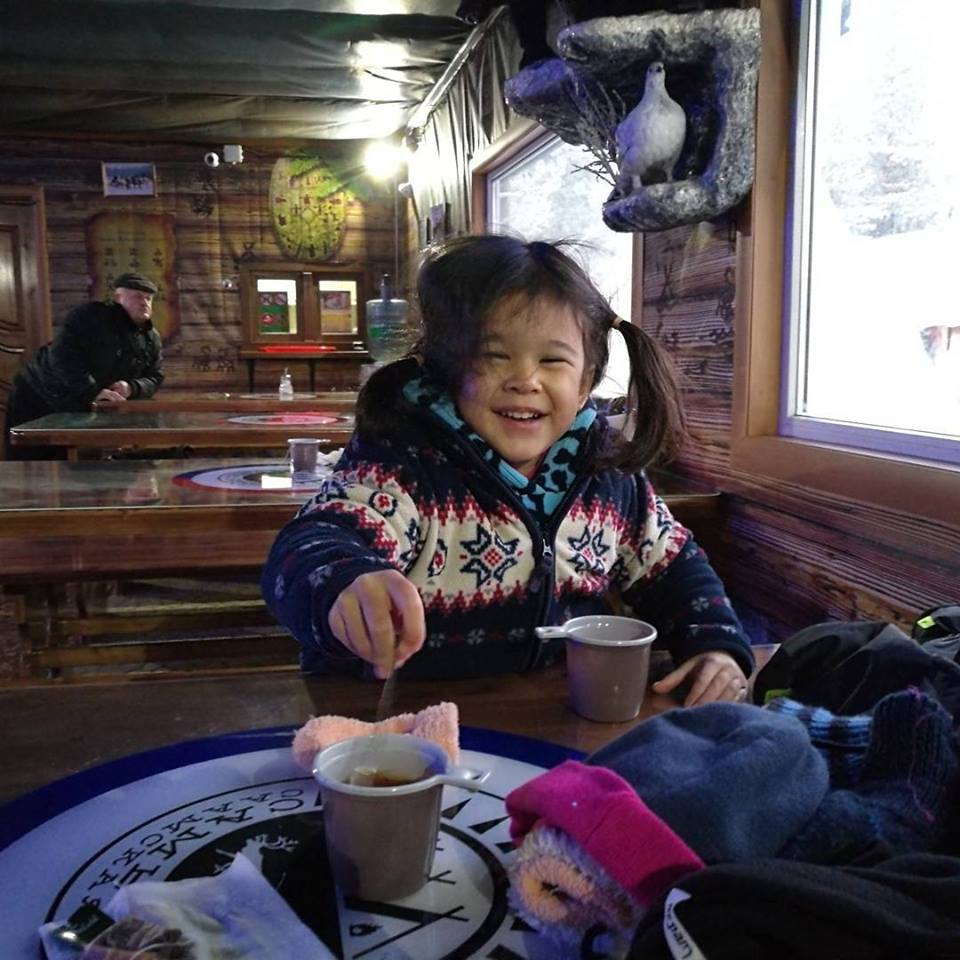
Ceylon tea bag tea at reindeer farm (with great company)


I visited a few tea shops there but it didn't amount to much.  One interesting version was Perlov in Moscow, a truly beautiful place.  But the tea was on the ordinary side, mostly boxed versions with a good-sized set of one loose version per category type jar teas.  That's a great start for a tea shop but only a start.

a very helpful local, in the Perlov shop


Moychay shops went further; I bought tea in those in Moscow and St. Petersburg.  Georgian black tea was the closest I came to finding Russian tea, except for a green version from Perlov, which sort of doesn't count since that's my least favorite tea category (although it was a good version).  One Moychay Nan Nuo sheng pu'er I bought a cake of on a whim was one of my favorite sheng versions I've yet to try, way fruitier and more intense than sheng typically ever is (and approachable in style as a young version; that wouldn't be for everyone).

a small Moychay shop; (you can interactively browse that shelf here)


friendly Moychay staff in a St. Petersburg branch


That link below the first shop photo goes to a page with a very interesting feature; you can look around the shelves and room of those shops, using what seems to be Google Streetview as a viewing platform.  It's especially cool for me because I've been inside those two shops, in Moscow and St. Petersburg, and it's like stepping into them again.  Moving on.

Still on the subject of vacation outings and visiting, meeting the owner of Laos Tea at a tasting in Moscow stood out as a cool exception to the limited tea theme exposure.

Laos Tea tasting, Alexander Zhiryakov (left) and Dasha (smiling)


Onto more general starting points:  Russians are into tea but the tea enthusiast context is an exception there too, just a much more common and better developed exception than where I live, in Bangkok.  That's odd, isn't it?  Chinese culture underpins Thai culture, along with Indian influence and secondary local influences.  Tea probably played a bigger role in mainstream culture here at one or more points in the past but it's just not much of an influence now.  Bubble tea is popular.

It's especially odd given that Thailand produces tea, but then I'm not claiming that no one drinks any of it, instead that forms of what I would consider to be tea enthusiasm almost doesn't exist here.  If you ask 100 random people what Da Hong Pao or Longjing are maybe none will know, and for sure none could taste an example of a version and let you know if it's typical of either.  I know at least a dozen people who are probably exceptions to that in Thailand, but it took a lot of doing getting in contact with them, and half are tea vendors.  There's only one well-known tea cafe in Bangkok, in Chinatown (Double Dogs), with related shops scattered around, especially in that area.

Russians as a whole are more into basic Ceylon black tea; fair enough.  Back to the tea enthusiast scope Chinese tea culture has a strong hold there, and not much else.  I walked into a business selling Japanese green tea looking for one of those Moychay shops in St. Petersburg, and talked to the owners a little, but I don't like Japanese tea enough to have seriously considered trying or buying any.  It's clear enough why some people are on that page when I do taste those, and I've reviewed versions, but it's just not for me related to how my preference maps out, at least for now.

I researched Russian tea history related to a random contact asking what an East German tea blend might have been just after the Cold War started, covered in that post.  Not much new turns up in that, except the idea that at one point Russia consumed a lot of tea from Georgia.  This is the kind of idea that one runs across pretty early on in any exploration of Russian tea culture.  Other themes:  how a samovar works, how Russian tea was typically prepared, about mixing tea and herbs there, or stirring jam into it per one older popular practice.


old version of a Cold War tea (original source credited in an earlier post)


We even tried tea mixed with herbs prepared in a samovar in a visit to a dogsled camp in Murmansk.  It was ok.  The general idea is to brew the tea very strong, to "brew it out," and then to dilute it with water to taste, and probably add milk and sugar too given the flavor profile that results.  Adding herbs--particularly Ivan Chay, also known as willow herb, or fire weed--helps on two levels, making it more mild and further stretching the tea.


As to current Russian tea enthusiast context and forms of experience, I'll say more about that related to what Alexander mentioned.


Meeting Alexander Vorontsov; about Russian tea culture


We met at my favorite local Bangkok Chinatown shop, at Jip Eu.  The owners of that shop feel like family to me; they're great hosts.  I was going to say more about that shop in general but since I've visited there a few times recently I think I'll split that out to a later post.


meeting a friend from Laos there, within the last week (Somnuc Anousinh)


This also won't cover that visit in terms of most of the personal discussion details, beyond the parts about Russian tea culture, because it's running too long.  Alexander seems nice, and genuine; I'll mostly stop at saying that.  And he's genuinely obsessed with the subject of tea, so we have a good bit in common.  To shorten the rest I'll cover it by subject.


Tea groups:  this stands out to me as the main difference between Russian tea appreciation forms and elsewhere.  His Instagram page / group has 5295 followers (at time of first draft; surely some from overseas enthusiasts, since people tend to just click add related to their topic interest), so probably a lot of real-life local "club" members.  I don't know how formal that club really is or how many local active members ever meet, but all that isn't really the point here, at least in this section.


that's him, along with group stats and a cool logo


There are at least two other large groups of somewhat organized enthusiasts in Moscow:  Global Tea Hut more or less has a branch there, and Moychay operates a series of tea clubs (like cafes, but not like cafes), that seems to represent a fairly well organized social group.  And Tea Masters is there; that probably counts as a fourth, although it's something different than a social club, sort of a training organization that holds very formal, developed competitions.

The trend seems unique.  Eastern Europeans seem a bit more organized in forms of tea practice and social networking (as reviewed in looking into tea culture in Poland here and here), but seemingly nowhere else is on that level for group structures.

I'll clarify what I mean by that.  There are a lot of small, informal groups of tea enthusiasts in the US, and Facebook groups, and shops and cafes, but as far as I know almost nothing related to those forms of groups.  Tea Masters just started up there in the past year; there's that.  Global Tea Hut would have US followers, but as far as I know nothing like a branch outlet.  And no "tea clubs," in the sense the Moose and the Elks were US social clubs in the past (and still are, just "traditional" forms of them).


Global Tea Hut Zen tea master monk Wu De; different (story here)


Taking tea interest way too far:  lots of people in different countries go there, right?  Maybe not in the same form.  Beyond those clubs and the prevalence of shops and small vendors there's an emphasis on trying rare or interesting teas with developed back-stories, like those narrow regional theme versions tied to Longjing, Da Hong Pao, and the rest.  Everyone likes a good story, and an exceptional tea, but I get a vague sense that sub-themes take on a life of their own there.

In Western tea circles--which the Russian form could be considered a part of, but I mean elsewhere--there are one-upmanship games that get played related to experiencing high quality teas, possessing deeper knowledge, or owning teaware, a sub-theme that branches a bit.  Maybe I'm mistaken but I get the sense that Russians extend that to embracing stories more, to really appreciating traditional background themes and rarity in versions, and of course also tied to those other familiar forms.

Some Western vendors do use stories to sell teas (a number of examples come to mind), but it seems a minority practice.  Most would talk about the teas themselves, their positive attributes, and largely leave the claims about exclusivity and tea history out of it (beyond reference to legends of statues coming to life and such, good for entertainment value).  Except for claiming that sheng pu'er versions are gushu, from old plant sources, I guess; that's as common as grass.  There's some degree of push-back related to people flagging gaps in the stories that do come up, with tea tree age claims making up the main point of contention.  Not necessarily about pu'er being gushu, although low-cost gushu is often questioned, more about the 1000+ year old plant claims.

Or then again maybe I really am overthinking all this, or basing it on limited input, and Russian tea enthusiasts really are mostly just looking for interesting and higher quality tea.


Tea and popular culture, especially music:  I once saw a Russian rap music video of a guy stealing a pu'er cake, and the trying to smoke it at one point, that I'd love to find again.  It lost something for me not understanding the words or being completely into the music form but the impression stuck with me.  That's not necessarily an exception; there is a connection between the two themes and scopes there, popular music culture and tea.

One tea shop that comes up a good bit in images has a tie to a famous music performer as the primary owner, a type of association that I'm not familiar with in the US.  The shop is Gazgolder (with that link seemingly tied to the primary manager, versus a business profile page, and this a Trip Advisor link about visiting), owned by a rap star Basta, with this video on the tea club part there.  This is a music video (by Basta / Баста) with a connection to those other themes and tea.  With over 8 million views this isn't related to marginal following, quite mainstream instead.  Watching foreign language music videos typically doesn't go well but that one is worth a look.


Tea and prison culture:  Alexander told a cool story about what "prison tea" refers to, about how brewing up a large pail of very strong tea in prison works as substitute for alcohol.  I'm sure the stories of this connection go a lot further, and the real-life linkage does too.  It's hard to imagine the popular culture image of US prisons matching up with any form of tea consumption.

He mentioned a reference about this describing this connection, which I won't go into further here.


Tea sourcing differences:  I'll summarize prior discussion with Alexander and others related to this point more than what we actually talked about.  He had said before that Russians tend to focus on using Russian sources for tea, vendors that buy and resell Chinese versions.  It's my understanding that Yunnan Sourcing (a main US vendor) also sells a reasonable amount of tea in Russia too, but the ideas still don't necessarily conflict; the theme and generality is about relative proportions.

In fact smaller vendors or larger resale theme outlets are how consumers in the US obtain most tea too, by a large margin, so me expecting tea to be purchased directly from abroad instead probably just relates most to my own preconceptions and personal experience.  If we had more Thai shops and online outlets selling better teas maybe I'd not have expected that.

The amount of "better" tea being purchased and consumed in Thailand is probably negligible compared to in Russia, with most of that Thai-produced oolong.  It would be natural for some to see that as "not that much better," but the use here seems clear enough, better than what tends to turn up in tea bags or on grocery store shelves.  Which just depends on the grocery store too, I guess, as much as local culture and broader demand.  Grocery stores in Russia did tend to have slightly better selection for black teas, flavored versions, and blends than I typically see here, just a bit more limited range related to inexpensive oolong since Thai versions are around.

so many iconic places there (GUM in Red Square)


Moychay:  I've reviewed a lot of tea from this vendor and have even written some article content for them.  Their main owner, Sergey Shevelev, seems like a genuine tea enthusiast to me, surely focused on business goals, but also personally connected by the same interest tea drinkers experience (more obsessed ones; the people discussing it in more advanced theme Facebook groups).  That's essentially true of every tea vendor, but the form and level of knowledge and experience varies.  You don't need to take my word for all that; scan some related background videos on Youtube, which can even do automatic translation now to make that content more accessible.

Their diversified role as a main physical shop chain, online tea source, and provider of tea club experience (like a cafe, but not really that) stands out as something unique.  In the US this would almost seem to be too much influence for any one vendor to have, even beyond there being no parallel to the club theme.  But there, with tea culture a bit more mainstream, and options more diverse, the context is different.


helpful Moychay staff; meeting Russians made visiting Russia great


Why US popular tea culture and vendor concerns don't match up with those in Russia


There is an unrelated concern about Western (US and other) tea culture and vending, which I'll cover in the form of a long tangent here, since this helps place the broader context difference.

Teavana consolidated a lot of US physical shop ownership and sales under Starbucks at one point, only to see profit margins narrow, and then folded, leaving a gap in shop availability.  This is really only one individual concern, that one vendor growing too large and then failing could impact local consumption.  Prior to that Teavana put focus on blends instead of better individual teas, which can command a higher mark-up and profit margin.  This used their influence to offset what I see as the main opposite trend in natural personal tea preference transitions, moving from blends to original, single-type and source teas.

It's too much of a tangent to firmly establish here but it's my impression that T2 (a chain originated in Australia) represents a similar problematic theme, again related to a large corporate interest.  I bought good, single-origin, high quality teas at a T2 on a visit in Australia some years ago, and upon checking selection later after their Unilever buy-out those types I'd bought just weren't part of the stock.  That's too much to claim in a tangent, isn't it?  Judge for yourself; here's their current oolong selection page, and a version captured from July of 2012, a year before Unilever bought the chain.  You don't need me to interpret what changed.


they had a cool aesthetic going; it's a shame selection quality didn't match it


Of course I'm not saying that Moychay or any other large vendor there shouldn't be expanding or covering different roles for some reason; quite the opposite.  It's my impression that more large chains have developed there; that alone offsets this kind of risk and problem.  If anything I'm positively biased towards Moychay as a vendor, and the rule of supply and demand and open competition keeps their direction in check.  Their teas seem to represent generally good range and value to me, and to be sold with a reasonable degree of information about what products are, adding more value for educating consumers about tea options.  The two shops I've visited--smaller versions, per my understanding--were beautiful, with good selection of different types, sources, and quality levels of tea, and very friendly and helpful staff.


a Moychay pressed tisane; extending a current trend beyond "real" tea


Moychay did seem to possess the potential for a similar degree of local tea-culture influence comparable to all of the current US tea vending combined, since there's more developed tea culture there to begin with; that's what really led to this line of thinking and comparison.  It's just not as singular an influence as happened to occur with Teavana; a consolidation and unified development didn't occur in the same way.


Of course Unilever "gets" tea, just not the teas I drink, or what some of the range of tea culture is all about.  Offering flavored teas and blends to consumers based on demand is fine; that's quite appropriate.  Steering away from also offering the other range of "better" teas because per-unit profit margin is lower is something else altogether, especially if there wouldn't be other store options around.  Those other parts of the tea market should be supported, and expanded demand for Lipton and flavored teas should serve as a gateway to other types.  Both the demand and the shops would have evolved together more organically in the US, with the consolidation and then closure perhaps setting that back a bit.

I'll be clearer yet; it seemed short-sighted to me for large outlets like Teavana or T2 to disregard rather than embrace the entire range of teas produced and available.  It seemed likely that a single-minded focus on per-unit return and short-term profit offset educating consumers.  Or maybe that happened because demand would naturally extend onto what other vendors are selling, outlets like Yunnan Sourcing (and others), and it made more sense to restrict expectations to a narrower range than to try and compete across a broader scope. 

I really don't know the causes, but it is disappointing that more potential wasn't realized, to increase broader US demand and to help support specialty tea producer demand.  Large scale high volume producers, who make the teas used to make blends, are more securely positioned, and although surges in individual type demand could increase prices (an issue on the consumer side) small growers and producers are often working within narrower margins for success.  That's my understanding, at least.


Including so much discussion of a few particular vendors serves a secondary purpose; I see commercial structure and direction as one main underpinning condition for local tea culture, even if the internet helps broaden that back out.  If I were to talk further about present US tea culture, beyond discussing Teavana, I would explore why tea subscriptions have come to play such a large role in organizing consumers into groups, or why Yunnan Sourcing has a vendor themed Facebook tea group, what causes that to make sense and what it means.  I've discussed the problems and limitations with such a single-supplier theme in that group before; as you could imagine that went over really well.

It's a positive thing that the themes of people gathering into social networks and groups mix with those of vendors providing commercial services.  This only becomes negative when the normal forces of supply and demand become disrupted, and marketing issues steer people towards the highest return forms of tea, versus supporting awareness of options and naturally evolving demand.

Back to the main subject here, Russian tea culture.


Conclusions, and what I don't get


These are glimpses and fragments related to why I find Russian tea culture to be fascinating, even though to be sure I understand relatively little about it.

I really don't completely get the Tea Masters or Global Tea Hut themes at all.  I don't do much with formal tea ceremony, or tea in relation to religion or mindfulness practice.  That's even though I do have a long personal history with the study of Buddhism, and I'm sort of a part of an Eastern culture due to living in Asia (Bangkok).


more into religious practice at one point, but not drinking much tea there


Surely beyond these more formal forms or expressions of tea interest I'm not familiar with where other Russians fall, in between drinking Ceylon from a grocery store and the rarest of rare types, and training in formal tea ceremony practices.  Broad categories of ideas that would come up I've not addressed here, for example a demand for organically produced teas, concerns about health risks related to chemical use in production.  Alexander mentioned this is a significant concern among Russian consumers, but that there aren't always good ways to address risks related to different kind of growing conditions as teas are now sold, at least not in a lot of cases.

A lot of people there must just like tea, in a basic form.  One of the nicest people I met in visiting Russia (and most of the people we met were very kind) helped me check out what was in those jars in the Perlov shop, and he clearly liked tea but wasn't swept up with an obsession with it.  He probably would have passed that Da Hong Pao / Longjing identification test I mentioned, spotting familiar types.  But probably not in the same form Alexander and I would, related to really being able to place examples, and the next sets of main types as well.

This seems no suitable place to end, as if exploring disconnected themes just leaves off.  Learning about foreign cultures is like that.  My children have had a number of Chinese school friends (and from Japan, India, Taiwan, etc.), and as we get to know them and their parents better perspective and customs become more familiar, but the learning process is slow.  Visiting a place doesn't lead to as much insight as one might expect, because short discussions with locals only go so far, and local travel themes tend to dominate concerns.  I'll keep learning about tea culture related to Russia, and other places, as shared observations from others fill in details.


not a common type, not even a standard hei cha, but something interesting