Showing posts with label ye sheng. Show all posts

Sunday, June 16, 2024

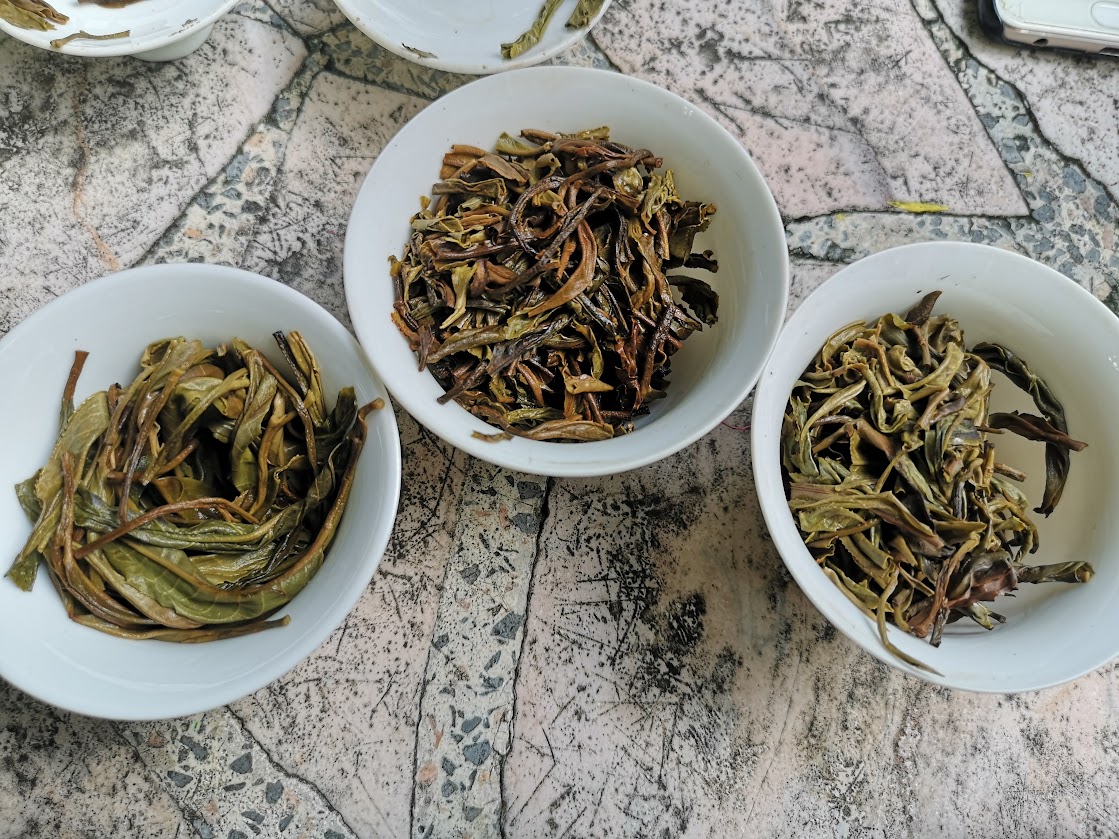
Shan Ye Wild Dark Tea; tasting tea during a fast


ITea World sent more samples to try.  With tea blogging so far out of fashion I've been trying more teas that people send for review lately, I suppose because there aren't many other established blogs.

It's perfect timing, because I'm on a day 4 of a 5 day fast, and can't really have sheng pu'er or black tea, the two main types that I drink.  Or green, but I drink less of that anyway, even though I've been messing with iced jasmine green tea lately.  Shou pu'er and aged white tea are most gentle on your stomach, and I've only drank water, salt water, and some diet soda in the past 4 days (counting today), so my stomach is a little touchy.  Hunger isn't as bad as you'd expect but when I'm around food it becomes an issue again.  

To clarify that one point to fast you only need to supplement sodium, potassium, and magnesium (electrolytes), and then it's fairly safe to stop eating for up to a week, if you can dial in appropriate amounts of those.  That's not medical advice; definitely try out a day first and see how that goes to assess impact in your own case.  Getting electrolyte input right is actually tricky; online recommendations are rare, and what does turn up tends to be expressed as a range, with the high side seemingly impractically high.  You definitely need to supplement around a gram a day of both sodium and potassium, which is a lot, and then a recommended daily intake is on the order of double that, or more, which is an awful lot.

I'll fill in what this is in more detail after writing notes, the usual process.


Chinese Shan Ye wild dark tea (listing for 936 baht for 40 grams, $25)


Enjoy our Wild Dark Tea and indulge in a pure and enduring pine smoke aroma. A sip reveals a rich, smooth, and sweet flavor with a complex mouthfeel. The sweetness lingers long after drinking, leaving a memorable and enduringly sweet aftertaste.


There's not much there about what this is.  Shan means village, and ye sheng wild tea; there's a good chance this is just presented as rural village hei cha, which doesn't mean much.  

It definitely tastes like pine smoke.  The quality is pretty good, quite decent, and I do mention aftertaste experience in these notes, and some degree of complexity, but all this is still pretty vague.  What is it, what hei cha style?  Maybe an interpretation or modified style; maybe it doesn't match the standard origin-oriented categories.


For value for this selling for 50-some cents a gram it would have to be amazing hei cha for that to make sense; more often that range sells for less than most other types, often in more like a 15 cent per gram range.  I didn't add much value assessment to the conclusions, not having seen that when writing that, but it's seemingly a negative factor.  But for this not comparing to any other standard types it's hard to pin down value; maybe there isn't much other tea out there like it.  If someone loves it then relative value changes.  I do place it in relation to Liu Bao forms, and describe how I think preference issues would work out.  

For good versions of other wild origin tea types the type of outlet you buy it through makes a difference, and of course quality level, and rarity.  If you can connect with local producers those can be kind of inexpensive too, but that's not usually easy to sort out.  Curator vendors selling more rare versions tend to charge at least around 50 cents a gram for everything, and move up towards $1 / gram quickly.


There's some justification for that rare tea, exceptional quality level range in this capture from the wild tea sample set website info.  I'll indirectly cover how I think this stands up to that in the review.

I'd recommend trying it as part of a sampler instead of ordering it individually.  Somehow they're selling it as part of a sample set of 5 teas, 5 grams each, for $5.  How does that work, that this tea is 60 cents a gram at volume and 20 cents a gram as a sample, in a set?  I guess that they're encouraging people to try them, to make additional sales later on.  

That set includes oolong (looks like Wuyi Yancha, with that producer info referencing that range), black, green, and white teas, and the last three are most common for wild origin material tea range.  Wild origin oolong is interesting; that's not how that usually works.


Review:


#1:   I used a rinse, and will use a long first infusion to get this to open up.  I tasted the rinse; this is a smoked tea version.  I tend to like those, I just don't know what it means in relation to this being a pressed hei cha disk.  The first actual infusion still tastes like a rinse; there's no way to describe aspects based on that.  After a 30 second infusion the second round will work, even though the disk is still opening up.


#2:  this is a bit unusual.  Smoke comes across most, along the line of pine smoke, so that part is pleasant.  Beyond that this seems like relatively unfermented hei cha, probably wet-pile or age process transitioned some, but not all that much.  This should be familiar ground for hei cha drinkers, then for everyone else what that means and how character would end up wouldn't be familiar.  I'll try to do justice to describing it, even though it will be fully infused next round.

Warm tones mix with greener tones in an unusual way.  Maybe it's in-between related to fermentation?  I doubt that it's a mix of material types, but I suppose that is possible.  On the green side this tips towards vegetal range, a little like kale, or between that and pine needle.  It includes warm mineral as a base.  Warm flavor range, the part seeming related to some fermentation, takes on an almost malty flavor, but that's not exactly it.  

This contradiction in flavors, or complementary set, depending on interpretation, could be familiar ground for Liu Bao drinkers.  One type of that is pre-fermented, like shou pu'er, and another not, like sheng, and at different stages of aging the latter can take on unusual complex character.  This should make more sense once it's at least fully wetted, which may be the infusion after next.

It will be interesting to see how this plays out for my unique stomach condition demands.  I'm depending on a relatively high degree of fermentation for this to have limited stomach impact; "greener" hei cha would be rough.  

If you just eat a bit of food prior to drinking any tea most of that concern drops out, and I always do, even though that offsets ability to feel what people call qi effect in sheng.  I suspect that's because compounds enter your system much slower, the ones causing feel effects, and that without that rush from them the gradual transition is much harder to identify.  Just a guess, of course.  I have no idea how people could tolerate drinking sheng on a relatively empty stomach, even without fasting.  I can't.


#3:  this is brewed plenty strong; I was writing that last paragraph while I let this brew, so it soaked for something like 45 seconds.  Too long, really, far beyond optimum, but at least it will get the tea wetted.  One might wonder what I could do if this did start bothering my stomach, on a fast, since eating a bowl of breakfast cereal or a little chocolate is out of the question.  Not much.  I could try a health care product but those are designed more for other problems.  It's better to avoid the problem.

Heavy smoke is interesting with the rest.  Brewed so strong the smoke takes on a different heavier character, like creosote.  Pine range is a main flavor, now not so vegetal, and more just straight pine.  Warmer tones are interesting, including mineral, and then other range that's harder to isolate, given the heavy smoke, pine, and mineral contributions.  I suspect that brewing this for a more reasonable 15 seconds will help.  I'm brewing it in a 100 ml gaiwan, using water a good bit off boiling point, since it's from a water-purification system heating output, and stored in a thermos, losing a little temp off full boiling at both stages.


#4:  much better, brewed lighter, while fully opened up.  I probably shouldn't be drinking this on an empty stomach; that's not a complete surprise.

It all balances much better brewed lightly, or at a more reasonable infusion level, really.  Smoke didn't drop out but it dropped way back.  Pine is a limited range input now too, integrating with the rest.  This still tastes a bit like Liu Bao, but without the typical harsh edge for versions that haven't been aged much.  I've not mentioned cement block mineral range, or astringency at all, and for younger sheng-style Liu Bao those stand out quite a bit.  It's not that such a style variation of Liu Bao needs a decade or two of age transition, since that's a matter of preference, but for many people it might be the case.  

I suspect that within tea traditions on that page it's all viewed quite differently, than through Western enthusiast expectations.  Many online discussions of tea experience with an older Chinese Malaysian friend covered that, but it all doesn't summarize well.  


From a Western perspective I really should be able to extract at least two more flavor descriptions from this, or else it could be interpreted as lacking complexity, which really isn't the case.  Let's say that it tastes a bit medicinal, like unfamiliar herbs one smells in a Traditional Chinese Medicine shop.  That's not very specific or descriptive but I think it's about right.  Per a lot of Western tea preference this wouldn't be very good, especially if someone was looking for the sort of standard dried fruit flavors some hei cha expresses.  For Liu Bao drinkers this might really click.  I'm in the middle; it's pleasant, and interesting, but I've always been challenged by edgier Liu Bao, even though I can appreciate a lot of tea range.

Related to the wild material origin theme I have no comment; that's familiar ground for sheng, black tea, and white, but not hei cha.  It's probably contributing to flavor complexity, and helps offset a tendency towards astringency (this could be a lot harsher; it's digesting fairly well, under worst-case tasting conditions).  As far as where flavors end up that's something else.


I should probably try one more round and stop drinking this.  After a nice tall glass of salt water and a few more hours I could get back to it.  That salt water experience is as off-putting as it sounds, but symptoms from sodium and potassium levels crashing is even worse.  I ice-skated for over two hours yesterday, on day 3, and felt fine, even though earlier in the day final transition to ketosis was a bit harsh.  

If anyone wants to try fasting don't start with a 5 day version, as I tried to more than a year and a half ago; build up to it.  24 hours is brutal at first, but your body has that capacity "designed" into it (it's adapted for it), so that even most hunger will drop out with exposure (not all; it's both physical and psychological).  Main health benefits probably come from internal changes that happen after two days, autophagy, decreased insulin resistance, and so on.


#5:  that medicinal herb input is even more pronounced and pleasant.  I would guess that the most positive range of this tea is starting only now, and that the next 4 or 5 infusions will keep getting better.  I'll try it later and will know, but I may not get back to writing notes.  Sweetness picks up a little; that gives it a more pleasant balance.  Even though this is brewed quite lightly aftertaste experience is more pronounced.  Warm mineral range seems more distinct, even though it's really not stronger.  It tastes like rocks, I guess, or like an artesian well water source, when absorbed minerals are at their heaviest.  Spring water can express an unusual mineral sweetness and complexity, water filtering through a hill or a mountain, but water settled through a rock base can really be more intense.

The main vegetal aspect is still pine.  Medicinal herb is much stronger, then the pine, then mineral base.  It would be possible to interpret other flavors in different ways, to see that warm sweetness as relating to a dried fruit, but to me it's more like dried herb.  I would guess that my Chinese Malaysian friend would be able to place it better; his descriptions of his experiences and older Chinese culture input, at a flavor level, are very colorful and developed.  Probably few younger people in Malaysia, where he lives, can relate to his perspective now, a bit integrated into developed Western culture, as Thais definitely now are.


Conclusions:


This leaves out one type of judgement:  how good is it?  That style would either ring a bell for people or it wouldn't, and I'd expect that tea enthusiasts with relatively little exposure to a lot of hei cha range wouldn't get it.  For someone who already likes that style it's quite pleasant.  I'm not sure it would work as well as a bridge to experiencing it.

This kind of theme comes up a lot in sheng reviews.  It's almost impossible to not just assume that readers are familiar with and ok with bitterness as an input.  I barely mention it in some young / unaged sheng reviews, and that means that the relative level is low, but it's generally still a main experienced aspect.  This isn't bitter, at all, or even all that astringent.  But the medicinal / herbal flavor range tones I can't really place isn't something everyone would be familiar with.  Smoke and pine are; maybe Lapsang Souchong lovers could bridge over to like the rest of the range, even with the sweetness and the typical flavor set from black tea missing.  Or maybe that wouldn't work.

To me this is quite suitable as a testing set inclusion, as a way to be introduced to new tea range, even though it's so novel.  Few people would probably crave owning more than a sample of it, but people into younger Liu Bao experience might often buy a kilogram of such tea to experience it over and over, as a primary preference.  


That Malaysian friend loves Liu Bao, and the edge in some versions is part of the appeal.  He would drink it paired with food; it would make a lot more sense fulfilling that role.  This could be so nice with barbecue pork steamed buns, which Thais call manapau, which must have different Chinese names.  That sweetness and savory flavor depth would be wonderful, paired with this, with the contrast making it so pleasant.  Of course I'd have an even sweeter custard filled steamed bun with those, further stretching the experience into what some would see as desert range, or at least typical breakfast food.

Maybe the conventional Western tea enthusiast emphasis on judging and experiencing tea completely alone misses something.  It's a great way to fully immerse in tea experience, to really explore it in depth, even venturing into feel range, but not all teas work well that way.


How is the cha qi, since I'm finally in a very sensitive state, related to such an input?  A little trippy; colors are especially vivid around me, and I suppose that I feel a little high.  I'd probably be laid out if this was wild origin young sheng, if my stomach could handle it, which it can't.  I feel fine, related to stomach impact from this.  We need to balance all levels of all of the experiences we explore, especially when extreme conditions come up, like fasting.


As far as that relative degree of stomach impact this had, I'd still recommend going with shou pu'er as a main type, and aged white tea as backup.  This was ok, and a lot of Fu brick variations would also be, but it's as well to stick with those, since they seem to work out best.


ice skating with the kids


playing with that changed things a little, even though she can skate well

Monday, August 29, 2022

Vietnamese black teas from Hoàng Su Phì and Lai Châu


First published in TChing here

Recently I've been trying pleasant wild origin material sheng versions from the Viet Sun vendor, passed on by an American contact who founded that business, Steve Shafer.  Those were distinctive and pleasant, and Vietnamese black teas can also be exceptional.  Or any types, really, but the rolled oolongs seem to clearly be a Taiwanese style input, and sheng are mostly varying copies of Yunnan style pu'er (with two of those three a little different in style).  As with Vietnamese green teas the black tea versions can vary a lot, some quite unique and distinctive.  I first visited Vietnam and tried versions from there before my blog started, but an early post was about picking up interesting versions in a second trip to Hanoi awhile back. 

The Viet Sun range seems to mostly relate to wild origin oriented material; let's start with if these are that:


Hoàng Su Phì Big Tree Black

A really pretty (all qualities) black tea from Hoàng Su Phì, Hà Giang.

This tea was produced from ancient trees growing at around 1600m in elevation. 

The first thing I notice when drinking this tea is the thick mouthfeel. The fragrance is quite sweet and builds after a few cups. The sweetness is also complex like caramel and forest flower honey... 

The qi builds slowly. It creeps up throughout the session. I usually feel it getting strong by about the 5th cup. 

Season: Spring 2022

Picking Standard: 1 bud, 2 leaves

Region: Hoàng Su Phì, Hà Giang

Elevation: 1600m


It looks like a Dian Hong style tea, like a related version made from Assamica plants.  At $21 / 100 grams the pricing seems value oriented, if this is as good as it looks.  I take the "ancient trees" part with a grain of salt, but it probably is from mixed age, wild origin context plants, which is generally positive for a few reasons.  Final product aspects can be nice from those, and it's unlikely that a producer would take chemical fertilizer and pesticide out into a forest to treat local plants already growing there.


Lai Châu Secret Forest Black ($26 / 100 grams)

This is another really interesting tea from Phong Thổ, Lai Châu.

Producing this tea requires a long walk into the ancient tree gardens at over 2200m in elevation. Picking the leaves to make this tea is also an arduous task as some of the trees here grow over 20m tall!

The tea trees used to make this tea are a non-Sinensis, Camellia varietal. Research on exactly which varietal they are is still pending!

This tea is more restrained initially in fragrance and flavor compared to Lai Châu Forest Black as more of the fragrance is hidden in the liquor.

This tea brews up with a thick pale copper colored soup. The flavor is really complex. You'll notice a woody- tree root caramel flavor that starts building in the throat after a few cups. Sweet almost chewy huigan lasts well after the session has finished. I like brewing it at 85-90 degrees for shorter and then longer steeps.

This is a strong tea with an intense qi. It puts me in a tea-drunken stupor every time I drink it. Not for the faint-hearted!

Season: Spring 2022

Picking Standard: 2-3 leaves and some buds

Region: Phong Thổ, Lai Châu

Elevation: 2200m


Of course the qi input won't be clear at all for trying these together, one trade-off to that approach.  I don't tend to notice that very much anyway, mostly only related to when it stands out in sheng pu'er versions.  The part about the plant type being unique and unidentified is interesting; that comes up a good bit here in Thailand too.  Genetics of plants can drift over time, and there are versions beyond standard variety Sinensis and Assamica around, I guess related to Taliensis and whatever else.  It's not unusual for tea from such plant types to express unique flavors.


Review:


Hoang Su Phi:  A bit light and twisted in style, similar in appearance to Dian Hong, a Yunnan black tea style.  The brewed liquid color is rich but slightly less red than the other, probably related to a backed-off oxidation level.  The flavor is subtle still; this will need another round to get started.  What shows up so far is really nice, in that roasted yam or sweet potato range common to Dian Hong, maybe with a bit of cinnamon beyond that.  Depth of this is good, richness and complexity.


Lai Chau:  This looks darker, more conventionally fully oxidized, as most black tea outside of Yunnan styles tend to be prepared.  It's more intense, which is just about starting faster, at this point.  An interesting savory range stands out, like sun-dried tomato.  It will also be easier to extend that to a flavor list next time.  

Overall effect in this is positive already, even for it being a bit light still, the rich feel, sweetness, and overall complexity.  It may include a touch of menthol edge, or mintiness; that can be a really interesting and positive inclusion in some tea versions.  For black tea I mainly remember it coming up for Ruby / Red Jade / #18, a Taiwanese cultivar, and a wild origin version from Laos, which may be closer to this context.  It was amazing in that version, more like wintergreen mint than menthol, which to me worked much better.


Hoang Su Phi second infusion:  these are both beautiful teas, the look of the leaves and brewed liquid.  The scent of just the wetted leaves is amazing, rich and deep for this version, with a couple of distinctive aspect notes in the other.  Depth of the experience stands out in this tea, more so than the intense, forward flavors.  It does include roasted sweet potato / yam (a bit light to be distinct, as one), and some cinnamon range, and a touch of fruit, maybe a bit towards dark cherry.  Wood or other spice tones add depth.  All of that is subtle though, compared to the rich depth of the total experience, and over-all effect.  

There's a pretty good chance that this is along the line of a shai hong style, backed off oxidation with sun-drying, a style that ages particularly well, picking up greater depth and even flavor intensity over a few years time.  It's good now; I don't mean that it needs transition to become better, only that it seems likely that it has the potential for it.


Lai Chau:  that sun-dried edge evolved into something much stronger and different, still tied to that range, but adding a lot of mineral depth, and fruit range that starts a bit towards sourness.  Not sour in the sense of a tea being off, I mean similar to how apple cider comes across, after darkening and picking up richer tones through moderate flavor transition.  It's unusual, and easy for me to appreciate, related to liking a broad range of tea types, but I guess it could be challenging for some.  The fruit, mineral, and slightly sour edge remind me more of a tisane experience, towards roselle or something such, but with more depth and savory base.  The menthol / mint edge didn't evolve, now hard to make out in relation to that other stronger flavor range.


Hoang Su Phi third infusion:  letting that brew slightly longer than the other version seemed to even up intensity, or it was probably ramping up anyway.  Depth of roasted sweet potato or yam, cinnamon, and fruit range are really pleasant in this, changing in intensity, proportion, and expression but not shifting in flavor-list form.  It helps that this is one of my favorite styles of black tea, or maybe my overall favorite.  That rich flavor intensity and great depth with no limitations related to astringency or negative range is really pleasant.  Feel has nice thickness, and some aftertaste experience extends the experience.


Lai Chau:  this balances better this round, with rich fruit and warmer tones balancing back out with that mineral and sour fruit range.  The savory edge is easier to appreciate again, and that hint of mint even stands out a little, not as a main part of the experience, but as an extra note adding complexity.  The part I'm describing as sour really isn't that, in the most conventional sense, but it works to describe it as in between the experience of sun-dried tomato and natural pressed apple cider.  It's fruity with some savory range and an edge extending further, with all that leaning towards a rich floral tisane.


Hoang Su Phi, fourth infusion:  as described, not really evolving, but really pleasant as that form.  This compares really well to Yunnan Dian Hong / Shai Hong for this character type, complexity, depth of experience, and value.


Lai Chai:  more of a one-note experience at this stage, with a lot of other range and depth filling that in.  This is better for novelty of experience, for being so unique, but related to pleasantness and match to my own personal preference the other is nicer.  For someone who loves Taiwanese black teas more than Yunnan versions that might be reversed.  Either way that sun-dried tomato range experience is cool, a nice effect, with the rest balancing it.


Later infusions:  the Hoang Su Phi held up for intensity, brewing another several positive infusions.  If anything the Lai Chai version improved, with the dominant slightly sour fruit aspect fading, with other range filling in and balancing nicely.  Both teas should be fine brewed Western style, given how brewing results worked out, but I would still use a Gongfu approach for them myself.


It's hard to summarize these in terms of quality, or character in relation to other versions, or match to my preference.  They're good; these were clearly well-made teas, prepared from good material.  The Lai Chau was unique and distinctive instead of matching a standard type form, which could be more or less positive depending on match to personal preference.  The Hoang Su Phi held its own against typical Dian Hong aspect complexity, intensity, and overall positive character, better than most versions you find.  I suspect it may be common for Yunnan producers to harvest sheng producing plants in the spring and fall, and to use a summer harvest in between to produce that black tea type, and the result is a low intensity, related to the plants being forced to produce too much material.  For both teas overall balance, refinement, and richness stood out.

Often Vietnamese teas can be inconsistent, in styles that can at times extend beyond the conventional type ranges, or with strengths and weaknesses that are unique.  One flavor character input in one of these was distinctive, probably tied to using a unique plant type input, but otherwise both fell within standard higher quality black tea range, not unusual or flawed in any ways.  As with the sheng both examples highlighted the unique appeal of exploring tea range beyond standard Chinese, Indian, and Japanese types.

Sunday, August 7, 2022

Wild origin sheng from Thailand and Vietnam


We spoke to another two interesting tea contacts two weeks ago, one a tea vendor in Vietnam, and another an anthropologist doing research into tea culture patterns.  This post isn't about that discussion, or really even about either of them.  Eventually I will probably say more about that anthropology theme, since it has caused me to reconsider some assumptions about why tea culture gets taken up in different places, and why it takes on the forms it does.  And that other contact is really interesting, and nice.


image credit Suzana


This is about a Vietnamese tea instead, which was sent by one of those contacts, Steve Shafer, to give feedback on what I think of the versions, and the limited exposure reviewing teas here provides.  I won't cover much for his background except to say that he's American, and an experienced chef, who had lived in other places earlier, including in China.  He comes to tea with a perspective and palate informed by that culinary experience.  And he embraces the organic foods, local production, farm to table theme that has been popular in the US for awhile, applying some of that to tea.  These are organic, naturally grown and produced versions, not that production methodology changes much in terms of involving chemicals or problematic steps.  But as Vietnamese local teas they will probably vary in style from the most conventional Yunnan sheng versions.

Steve mentioned other factors, about his approach to tea interest and evaluation, framed in comparison to local Vietnamese tea perspective, but I'll not include that here.

They're not pu'er, since that naming is associated only with Yunnan, per a Chinese registration convention.  I'll just call them sheng; use of the term "raw" isn't restricted, although eventually maybe it will be.

I had reviewed two versions of Thai "wild origin" teas in the past month or so, so I've included trying both together with one of these versions as a review tasting.  One was from a local contact Aphiwat, initially reviewed in a pressed cake form here, with this a maocha (loose tea) variation he also sent.  It's great tea; I already knew that.  The second is a cake form of a wild origin Thai tea from Leo Shevchenko, produced through a cooperative effort with Moychay, initially reviewed as a maocha version here.  Again it's very good tea, very pleasant and distinctive, without a hint of a flaw or limitation that would make comparison as relatively more positive, or even equivalent, easier for the Son La version.  It was a bit more oxidized than is standard, I thought, but that can work really well for sheng versions, it can just cost them some aging potential.  I'll say more about that factor at the end, and addressed it at length in that first review.

For what it's worth I bought the cakes related to the Thai #1 version, and Aphiwat provided extra maocha to try (a good bit of it to, not the usual 10-20 gram small sample), and Leo provided the second tea for review (many thanks for that, of course), with Steve providing this and other Vietnamese teas for review (again which is much appreciated).  I see myself as objective in judgement regardless of who provided what but it's best to be clear on that background.


I'm trying a maocha version today, but this was that pressed version from Apiwat


the Thai version from Leo; the opposite this time, I wrote about maocha and this is the cake


I didn't check any background on this Vietnamese tea before trying it, but I'll cite what is in a website here to introduce it:


Sơn La (listing for $27 for 100 grams, $96 for a 357 gram cake equivalent)


A special tea from Sơn La province in northwest Vietnam.

This is a tea from one of the best ancient tree gardens deep in the forest in Sơn La province... 

This tea brews up a thick floral sweet liquor. The moderate astringency and bitterness pairs really well with the heavy sweetness of this tea. The fragrance of this tea is also unique to the area.

You can expect this tea to go many rounds...  Rich, lasting Huigan with a strong focused qi.

Season: Spring 2022

Picking Standard: 1 bud, 2 leaves

Region: Sơn La Province

Elevation: 1900m


Sound good; onto the edited review notes.


in the same order as reviewed L to R, Thai #1 left to Vietnamese on right


Review:


Thai tea 1, from Aphiwat:  bright and fresh!  It's almost lemony, or really that specific description works.  There's some vegetal range too, but not much, and it integrates well with the brightness, sweetness, and other complexity, the very moderate bitterness and pronounced floral range.  This tea would be easy for a broad range of people to love.  A lot of green tea drinkers might regard the experience as a wake-up call, that there is other comparable range out there that's perhaps far more interesting, and pleasant in a different way.  

On purely a quality level scale, as much as separating out that kind of judgment makes any sense, really good Chinese green tea versions are just as good, or maybe better, but per my preference they would struggle to match this tea for pleasantness of experience.  It's so intense, high in sweetness, and clean, while at the same time approachable.  Bitterness is quite moderate, hardly noticeable as young sheng goes.  Flavor complexity stands out, that pop.  It should be interesting to see how the others compare.


Thai tea 2, from Leo Shevchenko, the Moychay forest preservation initiative tea:  this doesn't even taste like the same category of teas.  It's far more oxidized, even just from appearance, brewed color.  That is atypical related to the style, but the character works well, which is the main point.  This tea is slower to open up (it's pressed), but it's already showing lots more warmer range and depth.  Spice notes already emerge, and dried fruit tones.  There's a pleasant aromatic wood base that could be interpreted as spice bark range instead, or as cedar or redwood like, taken the other way.  

This is quite clean and well balanced too, it just lacks that bright, sweet, floral and citrusy front end, so it doesn't pop in the same way.  Not that it has to; it works well in its own form.  Depth of feel stands out already, and the tea is hardly getting started.  Part of this turning out this well had to relate to drawing on processing skill, not just luck, then it's odd that it was oxidized that much, that atypical in that one way in final form.  It works for me for experienced character and aspects, again the main thing.


Son La Vietnamese sheng, from Steve Shafer of Viet Sun Tea:  also darker than usual, maybe just not quite as amber as the second Thai version.  This contacted smoke, apparent in the taste, so that's going to stand out as a difference.  And it's in a more conventional range for bitterness, which to me isn't a bad thing, since I've been drinking sheng for some years, but for some it would be off-putting. It's just how sheng more typically is, with bitterness, sweetness, and flavor complexity often balancing each other.  Sometimes that relates to versions needing a couple of years to settle to be better, but this isn't like that, it's fine.  It helps that it's whole leaf, changing character for the better, and that it's clearly very good material.  

As for the rest floral tone stands out the most, but a light vegetal edge related to green tea range is also present.  I think that's the type of early character that tends to "burn off" over the first couple of rounds in some sheng, even though it's more often feel related more than flavor oriented.  Together with the smoke the sweetness, bitterness, floral range (intense and complex), and light green wood edge are all pleasant.  

In terms of comparing to experience pleasantness with the others--too early to do that, really, but let's go there anyway--this needs to open up to match the others' level.  That's about style though, how different versions evolve across transitions, not how good the teas are.  That first tea got a running start on the rinse step, which I also tasted, but didn't review.  I wouldn't recommend throwing away the rinse for tea #1 given how that worked out, never mind concerns about whatever someone thinks they are rinsing off.


Thai #1 second infusion:  a bit light; I brewed this round quite quickly to see how that would go.  It's probably as well to skip adding detail and infuse it a little longer next round.  I used less leaves for this than the second, and only slightly less than the third, an easy problem to create due to brewing maocha and pressed tea together.  Later edit:  oddly once all three "opened up" levels in filling the gaiwans were almost exactly the same again; strange how that goes.


Thai tea #2:  evolving woody range a little; as well to keep this description short and let round 3 tell more of the story.


Son La:  smoke may be easing up a bit already; imparted additional flavor can work like that.  It will stay for many rounds, I mean that it has lessened in relation to proportion.  Again let's see next round.


Thai tea #1 third infusion:  I really love that character.  It's sheng range, no doubt, but bright, fresh, floral, and lemony, a cool mix.  Aftertaste adds complexity; that's nice.  Feel isn't substantial, but not thin either.  The moderate weight and mouthfeel impact matches the light flavor tones well.  Aftertaste almost has a refreshing effect; it's strange how that carries over to lead an experiential interpretation, or at least seems to.  Without so much sweetness it wouldn't tie together and have the same impact, but it's nice and sweet.  Then it's interesting how the other two are also appealing, but in completely different ways.


Thai tea #2:  the prior wood tone / bark spice depth picks up lots more floral range input, and leads into an aromatic, essential oil sort of direction, like a natural wood conditioning oil blend might smell.  Spice range is picking up too, a sandalwood / frankincense sort of range, which I'm not well versed on enough to really pin down.  Feel becomes drier, with more structure (where the first was just light, with decent intensity, but lightness matching the flavor tone).  Again that feel wouldn't work nearly as well paired with different flavor character, but with this it's perfect.  Where the other left you with a light, intense, sweet, towards-citrus aftertaste in this version the warm tones, towards dried fruit, but really still back more on spice, pair with that drier, quite different feel.  Dried fruit might really evolve in this over more infusions; that happened on the last tasting.


Son La:  smoke continues to fade, at a nice place for evenly balancing with the tea character.  By "smoke" people might be thinking of a tea that's almost ruined by a heavy input, an accidentally smoked tea, like Lapsang Souchong, but I'm talking about a level that matches the other flavor range, it doesn't dominate it.  This tea came into contact with smoke, it's not smoked.  It seems to fade at a rate that will have it be quite secondary in another infusion or two.  Floral range stands out in this tea, more than for the other two, so complex that it's really a range of floral tone, not a simple form.  Then that bitterness edge is a bit like flower stem, or something such, with a vegetal edge to it.  

This is probably the only one of these three teas with significant aging potential, that might well be quite good in a decade, where the other two will peak now or in a couple of years.  It's the most conventional style of the three, related to Yunnan versions.  

Of course if I owned 100 grams of this tea it probably wouldn't see the end of next year, whether I wanted to save it to experience aging transition or not.  That might be a shame, because it seems a good candidate for moderate aging too, that it might deepen and evolve in form over 3 or 4 years, versus a fuller cycle.  I think all three of these teas would be fine in 3 or 4 more years, but the first is so bright and fresh now that it might be a shame to allow it to transition like that.  


Thai tea #1 fourth infusion:  I'll probably only drink this and one more round, giving up the second half of the cycle in note-taking as a cost of trying three teas together.  And being in a rush to do other things, but 15 small cups of tea is a lot.  This tea picks up some depth while the brighter and sweeter fresh range fades a little.  Going with a longer rinse that you drink instead would maximize having that early experience.  It's still great like this; the extra depth leads into a bit fruity range.


Thai tea #2:  while the first loses some of the initial main appeal this is just hitting its stride, the best it has been, which will probably continue for a good number of rounds, or I suppose could potentially even improve.  Dryness eased up, with feel richer, and earlier wood tone swapped out for more warm dried fruit, a bit towards apricot, or maybe persimmon, that different range of lighter plum.  It's quite nice.


Son La:  floral range and touch of vegetal edge overtook the smoke, still present, but quite secondary already.  Bitterness is still at a much higher level.  It's funny saying that, that it's relatively bitter, since this is still towards the conventional sweet Yiwu range in comparison with bitter Myanmar or Lao Man E range.  The other two teas are atypical instead, in a more "drinkable when new" sheng range.


Thai tea #1 fifth infusion:  really just in the main part of the cycle, but I'm pretty much wrapped up for tea input.  Bitterness actually increases in this, since I've added a bit of brewing time compensating for it fading a little.  It's odd how the character is closer to the Son La version than it has been across all the other rounds.


Thai tea #2:  honey flavor picks up in this, probably present over the last two rounds, I just wasn't noticing it.  Along with that dried fruit range it's quite catchy.  Feel is richer and fuller than earlier, maybe just structured in a drier form than the first still.  Across this many infusions the two are better matched for pleasantness, for the initial most positive range of the first fading, and this evolving in positive ways.  This probably has another 5 or 6 infusions that would be this positive to go, before stretching brewing time to compensate for it fading changes character.  At a slightly lower proportion, that would speed up a bit.


Son La:  bitterness seems stronger in this than it has been, probably really related to slight variations in how I'm brewing it more than actual transition.  Of course it's that bitterness with sweetness effect that happens in sheng, hui gan.  It's just not overly centered on a rear throat experience, more across the middle or even front center of your mouth and tongue.  For anyone seeking to avoid bitterness in sheng (kind of an odd approach, really) the first two versions are a suitable match, and this wouldn't work; it's more bitter.  Smoke is hard to even notice now; heavy floral range and that bitterness completely replaced it.  Flavors are complex enough that interpretation as fruit instead of floral range might work; that story would be clearer over a few more rounds, or better evaluated over multiple tastings.

I wouldn't mean to say that this tea needs aging but I think it would be better in 2 or 3 years, per my preference.  For people into bitterness in sheng experience the opposite would probably be true; it would lose some appeal.


Conclusions:


All three of these are so different in style that it doesn't work to say one stands out as better.  The version from Apiwat clearly won the early rounds for being a fast starter, and not needing to evolve past any bitterness or astringency edge, but the other two evened that up even across a limited tasting session range, five rounds worth.  Of course I came back to drink more of these later, and they had a lot of positive output to offer, but this summary won't really draw on that.

It worked out as interesting that the first tea is probably as good as it will ever be right now, and the second Thai version may settle into an even nicer place over another couple of years.  It's completely fine now too, and quite moderate in bitterness and astringency, what people often might hope to see transition, but given that brightness and freshness aren't as much of its appeal and depth and warm, sweet tones are all that range may deepen further, even over moderate time.

The Vietnamese tea will be even better in 3 or 4 years, I think.  Smoke input has a way of settling out, and bitterness, still not necessarily at a problematic level or form, will ease up as the tea gains depth.  It definitely has intensity to spare; that fading a little would be no problem at all.  All three kind of do, beyond the second Thai tea needing a couple of rounds to really open up.

I would need to keep re-trying these to accurately map them to my preference, and the aging potential issue complicates things, trying to fold that in.  

There's a catchiness to the first Thai tea that gives it a natural edge, and for the second Thai tea the late round fruit character really works for what I love in sheng.  For how the Vietnamese tea was I think giving it more focus over a full 12 to 15 round cycle would give a clearer impression, brewing it more carefully than I did to balance intensity and bitterness.  I suppose it's possible that the Son La tea would need a couple of years to settle to match my degree of preference for the other two, that if someone is more into drinkable sheng that they'll go through right now it loses comparative appeal, swapped out for greater aging potential.  I think saving the Son La tea for a dozen years would be overkill; it's just not like that.  A few years to transition some would be fine, maybe optimum at 4 or 5, depending on storage conditions and preference variation, but it would still surely be close enough after 2 or 3.

All three lacked limitations in terms of processing flaws or apparent limited potential related to material input.  They all started with very promising material, it seems to me, with initial potential differences and processing steps probably both causing the broad range of variety in outcomes.

These teas represent exactly why people should be trying South East Asian sheng versions, if variation from dialed-in optimums from their favorite Yunnan sources and narrow production areas is of interest.  If you could find "local" enough forms of Yunnan versions you could get close to how these turned out in styles, but it would be more typical to find blended-together, more conventional, and above average quality input mixes that are nice in their own ways, but not like this, not as interesting and distinctive.


really from tasting the next day, in the same spot


with the cat that keeps checking in to see how the tasting goes


Wednesday, September 22, 2021

Wild origin teas, adopting foreign tea styles


First posted by TChing here.


These two subjects came up recently in an online social meetup with Rajiv Lochan, about teas made from "wild" origin forest-source plants, and that of producers adopting and interpreting foreign styles of tea.  Problems can occur with both themes and approaches.

The range of both of these ideas and cases is all a bit complicated.  It can be hard to map out what is occurring or might occur related to using different types of natural growth plant sources, or drawing on local tea processing styles, and draw clear lines in what is typical or acceptable and what goes too far in violating some type of norm.  We didn't get very far with that discussion, so to be clear all of this is my own framing of a complex set of ideas, that we didn't discuss in detail in that meetup.

It's well known that wild growing tea plants are common throughout the Assam area, and other areas in India, and in Thailand, Myanmar, Laos, and Vietnam.  These Assamica variety plants aren't closely related to Yunnan Assamica, or maybe even to plantation Assamica versions of Indian teas.  Due to interbreeding with other species of Camelia Sinensis the range of what is growing can be inconsistent.  The typical understanding is that these plants are remnants of past use and intended planting by earlier people, not necessarily in ancient times, but as some point in the past.  Within that context the tea plants could be seen as feral versus truly wild, untended but not completely naturally propagated.  All that could be clearer, and to some extent it doesn't really matter.  


natural growth tea plant in the north of Thailand


this shows size better


what that area looks like


One influential tea blogger has claimed that wild tea plant produced beverages are better regarded as a tisane, not as true tea.  To me that goes a little far with applying category judgment, but I get it, and there's a lot to that.  Processed version results are often inconsistent, just less so for Yunnan based versions (or those represented as such).  Two of the main versions I've tried in Thailand ended up being quite sour, and then more other versions presented as such were not atypical of Yunnan Assamica plant based sheng pu'er.  I recently tried an Indian newly-created version of sheng, which was very unusual, as close to black tea in character as sheng pu'er.  It's not "pu'er," which is a region-specific type, but then sheng means "raw," so as I see it using that term is equivalent to calling any tea black (relatively fully oxidized), just a general description.

So again, what's the problem with "wild origin tea," beyond someone preferring to keep the term and range of "tea" narrowly focused?  Inconsistency can be seen as a problem, for products to vary with changes in whatever happens to be gathered.  Some of the plants could really be Camellia Taliensis material, a version that's around in Yunnan, or Camellia Formosensis, a "wild tea" plant in Taiwan.  Or something else, or a hybrid, a mix of types.  It doesn't seem to pose a significant safety issue, that a producer might be poisoning you, but just not knowing what a product essentially is can seem unusual.  Maybe to some extent there is a health risk to be considered; I can't exclude that.


maybe "Shan" versions come up most, not the Formosensis "wild teas" listed (source)


Importing styles from one country or region to another is something else, raising a different concern.  Rajiv expressed how Indians producing something called Longjing or Matcha could be deceiving, whether or not location based designation protection deems that unacceptable or not.  I completely agree.  

This reminds me of a very early experience with tea in visiting Vietnam, trying a version of Japanese green tea there, produced with Japanese support.  I'd be a better judge now of how close the style match was, but I bought some and drank it, and it seemed fine, or maybe just a little rough edged.  At the time I thought it was great that countries and cultures could influence each other like that, to share experience and technology.  Later, after thinking it through and being exposed to more background, I realized that it was likely that the tea was destined to be sold as being from Japan, regardless of where it was finally consumed.  That's different.  The knowledge sharing and alternative product development steps still seem fine, but that last step not so much.

Can we say that Vietnam should not produce Japanese style tea?  It's not as easy to conclude that.  The toothpaste is definitely out of the tube in relation to Vietnam producing Taiwanese style oolong, a lot of which is understood to return to Taiwan to be sold as Taiwanese tea back there.  It would be all the easier for Vietnamese-Taiwanese versions to be misrepresented in other countries.  In the North of Thailand you can buy the same Thai tea packaged as either from local production, what it is, or as being from Taiwan, what it isn't.  That's a hearsay based account, to be clear, related to what has been passed on to me second hand as vendor communication.  It doesn't conflict with how other types of branded products are sold here.

Let's set that aside, and consider that if every product is sold as exactly what it is, should India produce Japanese style green tea or not?  It's hard to find a broad enough justification to say no, but there are clear reasons for seeing that as a negative thing.

What about sheng ("pu'er")?  As I see it we are onto a different kind of case, because at least based on my single related experience the resulting product from India couldn't be presented as Yunnan true pu'er, even if one wanted to do so.  It's too different.  Of course a variation of sheng made just across a border from China could be exactly the same as teas made a few kilometers away.


one year old Ketlee Indian "sheng;" it's dark


So now we are talking about hybrid styles, about one region borrowing processing steps and final tea styles from another.  Is that ok?  To me it is, but I can relate to why some "purists" wouldn't think so.  My favorite Indonesian tea producer, Toba Wangi, has moved to produce tea plant types from other places, made by drawing on foreign processing styles, as novel new tea types.  I think that's fine, but maybe not everyone else would.  It could depend on how the tea plants were obtained, and of course on branding / marketing claims.


early Toba Wangi plantation plantings; definitely monoculture


Nepal tea being sold as Darjeeling is something else altogether; now we are back to a sort of counterfeiting case.  What about a Nepal tea being based on a Darjeeling clone, borrowing as much as possible from Darjeeling processing, grown in conditions chosen to duplicate results, but still sold as Nepal tea?  That seems less clear, and not as clearly ok.  And that seems much closer to what Vietnam is doing with Taiwanese oolong, since all of those steps and factors match in that case.  Even Taiwanese people are brought there to process the tea, per my understanding. As Chinese people are now, and have long since been, training people in Thailand, Laos, and Myanmar to make pu'er-like tea.  


locally produced "wild" Thai "sheng pu'er-like" tea


Vietnam is different related to this case; the tradition of making what they tend to call "sun-dried tea" is not new to them (or maybe really just translated to dried tea, per what I've been told).  Those teas have long since been bought and brought back to China to be blended into Yiwu pu'er versions.  Mind you Vietnam makes a broad range of local styles that don't exist anywhere else too; their tea tradition is very diverse and developed.  Some of it is rustic and rough-edged, and some refined, distinctive, novel, and very high in quality.  Vietnamese teas don't get the credit they deserve, but the more awareness and demand spreads the more pricing inflates, so it's probably not a completely bad thing.


It's hard to end either subject with a clear "in conclusion..." summary.  Varying experiences bring up different combinations of circumstances and final outcomes.  I'm probably a lot more open to producers using different kinds of tea materials and processing styles than some others would be.  I see it as a natural evolution.  The sustainability issue related to using currently growing, forest based plants isn't lost on me; one main (frequent) alternative is for producers to clear-cut forest sections for mono-culture tea production.  That's not better.  Then right up to the edge of tea version counterfeiting I'm fine with producers borrowing styles.

Borrowing tea type names is almost a different subject.  Should Thailand producers be able to call teas Oriental Beauty?  If a type based on Yunnan sheng pu'er is made elsewhere, which is common, and pre-dated the current borders of China and the conventional name "pu'er," per my understanding, what should that be called?  Opinions would vary.  The point here was to raise these issues for consideration, for limited discussion, more than proposing my own take on resolutions or limitations tied to any of these themes.


Thai Oriental Beauty, or at least it's based partly on that type and style


Saturday, October 3, 2020

Comparing Yunnan and Russian black and gaba teas


Yongde Ye Sheng lower left, Krasnodar black top, Krasnodar gaba lower left


Moychay sent a number of teas for review, which I'll be talking about for a number of weeks, for as slow as I tend to get through sets.  The first review placed a 2020 Jing Mai sheng pu'er in relation to one of my favorite provider's slightly older versions (a 2016 from Tea Mania), and they seemed comparable in quality, both quite good teas.  There's always other higher range, an aspect that might be a little different, but it was quite good, and a good value for the selling point.

These are black teas (which they call red, a not-uncommon reference to the literal Chinese translation of hong cha).  One is a gaba black, processed in a nitrogen environment, causing the compounds that form in transition from conventional-style forms to differ.  In a sense they're not "oxidized" teas then, because oxygen contact has been restricted during processing.  Probably that oxidation process started at picking time, prior to that other processing, so they would be a little bit oxidized, just mostly forming different compounds based on interaction with nitrogen instead of oxygen.  "Gaba" is one such resulting compound, with more on all that in this post (from 2013; I had a lot less experience to work with as a tasting baseline back then).

This won't go any further into what gaba tea is; maybe I'll get back to that more in a later post, since I have two more versions to get to.  Reviewing three teas at once is a lot of ground to cover.  I've reviewed plenty of gaba oolongs before here, but never a black tea.  Oddly one of the best gaba versions I've ever tried was a black tea, a Ruby / Red Jada gaba processed Taiwanese black tea version, shared in a tasting session by a friend, Sasha Abramovich.  Sasha is still around, just not in Bangkok, so I never cross paths with him.  

The gaba oolongs I tried earlier all seemed to include a distinctive sourness that I had trouble adjusting to like.  It tasted a little like an old cardboard box smells, when taken out of a damp form of storage.  One even tasted like asphalt; different.  The Taiwanese gaba black wasn't like either.

I've actually already tried this Yongde black version before, and based on the first try I didn't write any notes, thinking I wouldn't like it.  It was tart instead, not something I like in black teas, although that range does come up.  Then after just a few infusions that tartness faded, transitioning to other complex range, and the tea was quite pleasant.  I had probably judged too soon.

Lately I've been considering if my appreciation for teas isn't too narrow, in rejecting that flavor range like sourness or tartness can be pleasant.  It seems like one might normally run through experience of some standard versions, then sort out which of those might suit preference best, then escalate experience in quality range, and then explore more horizontally, if that last step even comes up.  Of course tea experiences and preference transitions would vary.

Sourness comes up a good bit in relation to "wild-grown" tea versions, presumably tied to different plant type sources.  It could also relate to a flaw in processing or storage, but one particular form of sourness is distinctive, related to what I've tried from Thai teas quite a bit.  I didn't review some Monsoon "wild-origin" teas because they were sour, and I had trouble relating to that.  I just re-tried a Liquid Proust tasting set example of a "wild-origin" Xiaguan sheng, presumably from China, what was quite similar.  Now I'm guessing that it's a variation from the source plant, causing those common effects.  

Kenneth, the owner of Monsoon, mentioned that tea enthusiasts in general seem put off by that sourness from that range of plant-source inputs, but that for whatever reasons some experienced chefs have liked them.  I suppose it does make sense that someone with broad food experience and training could appreciate a very broad range of flavors, without a bias towards a narrow range of styles, as most tea enthusiasts would tend to develop.


meeting Kenneth (waving) and Sasha (right).  sorry other guy; should've taken more snaps.


I'd mentioned one of my favorite sheng versions was from wild tree sources, produced by Kittichai of Jip Eu, a version that was sour (with a Moychay Nannuo sheng also making that list).  It was sour in a slightly different form, but it overlapped, and that tea changed a lot across a relatively short span of time in storage.  I bought a second cake of that tea, to see how I like it once it's fully aged, and so I can keep tasting it from time to time to witness the entire transition process.  It's from 2012 or 13, as I remember, so within another half dozen years (stored in hot and humid conditions in Bangkok) I should see that change.  

The point here is that I really liked that  Thai tea (sheng), in spite of it being sour, I think in part because I'd reached a critical mass of exposure to other forms.  And also because it has "other notes" to experience; it wasn't that it just stood out for only that one sour flavor.  As I've drank through most of 50 grams of a wild Thai black tea from Monsoon I'm more ok with that sourness.  I don't know that I like it, but it's not bad, I can appreciate it as something else to experience.

On with it then.  I'll copy down as much as I can about these teas and look up what I can of descriptions prior to the final edited write-up.


Yongde Ye Sheng, Hong Cha, 2020  (black tea from a relatively natural source,  I think that means).  Pulling up a random vendor description for that area:

https://camellia-sinensis.com/en/blog/new-discovery-pu-er-2019-yongde-da-shan

...After visiting Xishuangbanna, Jasmin traveled up north, towards the region of Pu Er, then to Lincang. In these regions, tea production is more modest and less famous (despite the presence of big names like Bingdao or Xigui). The traffic is much lower. Local buyers are rare here. Despite superb product quality, prices remain much lower than in Xishuangbanna. The Yongde region specifically is one of the few tea producing regions in Yunnan that still escapes the growing turmoil of the terroir and the high rise in prices we have seen in recent years... 


Moychay's description (from that link):


Red tea "Youngde Yesheng Hong Cha" made in 2020 in Youngde County, Yunnan province. The first spring shoots of wild tea trees were used as raw materials...

The bouquet of the ready-made tea is vivid, berry-and-woody with hints of barberry caramel, tropical flowers, aromatic wood resins, and exotic fruits. The fragrance is bright, berry-floral. The taste is rich and juicy, sweetish, with a fine woody tartness, spicy nuances, and the lingering finish.


That's about right.  The selling price seems a bit high compare to the Dian Hong (Yunnan black) I've tried or bought, but then this was a unique version, with market prices for materials shifting final selling prices, and different people could value the experience differently.  

Often Yunnan black teas are made from later harvested material, even sometimes from a middle harvest period between the spring and fall.  Sometimes that means that versions can lose a lot of intensity, but I think in some such cases it still tends to work out well, producing very pleasant versions that just need to be pushed a little harder and can brew out a bit fast.


Krasnodar Red Organic Tea, Spring 2020  I looked for a range of Russian teas in visiting Russia awhile back but only managed to find green tea from that country, and black teas from Georgia.

In appearance: large, reddish-brown, curved leaves with long cuttings and thin tips. The aroma is intensive, floral with a fruity accent. The liquor is transparent, with a shade of yellow amber.

The bouquet of ready-made tea is multifaceted and vivid, fruity-floral with notes of rye bread, spicy herbs and honey biscuit. The aroma is warm, fruity-and-biscuit. The taste is refined and full-bodied, silky and sweet, a bit tart, with berry acidity, spicy nuances and refreshing finish.


Krasnodar Red Gaba Tea (Diagomys), Spring 2020  that gaba version; should be interesting

In appearance: large, reddish-brown, curved leaves with long cuttings and thin tips. The aroma is intensive, floral with a honey accent. The liquor is transparent, with a shade of yellow amber.

The bouquet of ready-made tea is multifaceted and vivid, fruity-floral with honey, biscuit, citrus and spicy notes. The aroma is high and sweet, honey. The taste is refined and full-bodied, oily and sweet, with berry acidity, spicy nuances and long, refreshing finish.


Review:


Yongde black left, Krasodar middle, Krasnodar gaba right, in all photos


Yongde Ye Sheng: that's quite tart; it helps expecting that.  Even though that one aspect is a bit much for me to love the tea knowing that it's coming helps.  Of course the flavor is similar to cranberry, or something along that line.  I'm from a small town called Cranberry, actually (a bit unrelated).  Being a first infusing the aspects aren't fully developed yet, and with tartness that strong the rest isn't standing out.  As I remember the tartness should dominate the second round too, then ease up, and by around the fourth the character will be completely different.


Krasnodar black:  I did not see that coming.  There's a warm, rich, earthy-into-spice sort of complexity in this tea, dominated by pronounced range that's relatively completely unfamiliar to me.  As flavor goes it includes a sort of fresh baked bread warmth, and also slight sourness, but beyond the actual flavor there's an impression of lots of other complex range headed in different directions.  It's like the smell of a very old study (den, private library), with old books, leather, and old clocks and such giving off traces of completely unfamiliar scents, mostly in a warm, rich range, with the odd unfamiliar metallic or aromatic oil based note.  A decent amount of unfamiliar root spice rounds that out.  

The slight sourness leans towards a trace of mustiness, but within the next two rounds that it takes to evolve this to where it will be all that might change completely.  It's interesting, and positive in overall effect in this form.


Krasnodar gaba:  this is kind of the opposite, striking just one particular note (in opposition to the tea prior being a composite of a lot going on).  It's not the straight-sourness I've ran across in the oolongs but it's definitely in the sour range.  It helps having been drinking sour tea for a month or so to adjust to that range.  I just re-tried that Xiaguan wild sheng from Liquid Proust, and the theme really came together as common ground to me, after drinking that Monsoon Thai black at work a number of times.

This banging on the one particular note might be an issue.  I'm sure it will evolve in the next two infusions too, but it's not a great sign having it just show that narrow a range so early.  There is a hint of nice sweetness beyond that, and earthy warmth, towards the range of leather or maybe even cinnamon, but it will need to show through better to isolate and describe it.  

I'm in the habit of using the first round as a starting point, brewing it light to see where things are going, so part of these not evolving fast relates to my own personal approach to brewing.  Anyone using a rinse would skip past all that a different way (I only rinse pu'er and hei cha, as a rule, or maybe something else if an inclination strikes me).


Second infusion:


Yongde De Sheng:  coming in nicely; the next round should be more about where this is going.  It's a bit extra tart for my preference still but much better balanced already.  A lot of the other range is pleasant, even catchy.  This is fruity as black teas go, moving off the cranberry range into richer, sweeter fruit.  It even seems like a hint of citrus rounds that out, along the lines of blood orange, something rich and sweet (like a softer and sweeter version of red grapefruit).


Krasnodar black:  this shifted to become better than I thought it could; so fast.  There's still a "rustic" sort of edge to it, a trace of sourness, but the main range is very complex with pleasant flavors, and clean and sweet.  It's really too much to unpack, and interpretations would vary so much that two people drinking it together would probably be unlikely to agree.  It's interesting how "at the bottom" a mineral edge includes a trace of salt, rounding out the rest.  

I should be able to place this better, related to at least categories like fruit or floral, but the effect is that a lot is going on, making it hard to get a clear read on any one part of it.  That integrates well; that's what makes or breaks a tea this complex in profile, and in this case it works.  I think openness to range beyond a style that's exactly what you expect is also critical; this isn't a standard Chinese black tea form.  I'll pass on a main range to help at least make some sense; I get the effect that a main foundational context flavor is along the line of sweet potato or yam (probably yam, if I remember those right).  Then some earthy and floral range fills that in, along with that unusual mineral form.


Krasnodar gaba:  at least this did evolve a secondary pleasant flavor aspect to join the other, even in balance of input with it.  It's a sort of rose-floral note, as I interpret it.  It has a sweetness and lightness to it that it's also not so far from the Japanse sakura flavor (cherry blossoms), a distinctive floral scent.  A trace of fruit flavor probably is closest to actual cherry too.  If that sourness keeps dropping out (it's essentially secondary, at this point) and more complexity picks up this could be really pleasant.  It gives up a little being tasted next to a complex version of a tea, as if it should somehow match that.  Aspects grouping into a narrower range, or even being less intense, isn't necessarily a bad thing, since it's about how pleasant the combined set and overall effect are, not reaching some sort of score for one or more ranges.  

It is odd how this doesn't show the same earthy range of flavor common to most black tea, or really expressed as a broad range.  That other wild Thai black version I've been mentioning was like that; it just doesn't seem like a black tea.  Then if you can move past that and appreciate it for how it is, versus matching or not meeting expectations, it can be enjoyable.  Of course a tea completely matching your own preference is a different thing; that's going to work better.  But experiencing a range is interesting in a different way, and preferences can broaden over time.

This third round should be interesting, since all three of these seem to have been "heading somewhere," just in different senses.


Third infusion:


interesting color variations; the third doesn't really look like black tea


Yongde Ye Sheng:  that tartness is now a supporting element, maybe even one that someone could miss in interpreting the range of what is going on, although from expecting it that does stand out.  Other fruit and floral range is quite pleasant, with warm tones balancing that out nicely.  There is no noticeable astringency, just a bit of fullness to round out the feel.  I won't be saying a lot about feel or aftertaste range in this review, in part due to that not being pronounced for any of these, and also because comparing three teas narrows the range of focus down, to mostly considering only flavor.  It will probably work better to describe a flavor list for this tea next round.


Krasnodar black:  something distinctive evolved in this; it's cool feeling like I'm one step behind in really describing the range that I'm experiencing.  The main flavor base might still be something close to a well-roasted yam, with the sweetness and warmth that would emerge from that.  Warm mineral also stands out, but I think something along the line of root spice is what I'm talking about.  Or I suppose that could be a bark spice; the other range tied to mineral and the rest tends to mix.  It's hard to describe in detail but this works well because in spite of that complexity, the broad range this is covering, there are no negative aspects to work around.  Flavors are quite clean, sweetness is good, balance works, and none of those components seems off in any way.  A bit of mustiness, or mushroom, or less pleasant mineral would really throw off this final effect.  To play the devils' advocate the set of aspects and overall character is unusual, so not everyone would love it.  Beyond that it really works.


Krasnodar gaba:  compared to the last tea this is even more unusual in character, but what stands out drinking them one after the other is the split in one being complex and the other narrow in aspect-range scope.  This hasn't really shifted further; a pleasant light fruit tone, closest to cherry, stands out most, with some limited warmer range offsetting that.  The rest isn't that warm or heavy, towards cured hay, or even balsa wood.  In the end it's an odd effect, not unbalanced, but for sure not complex.  Pushing the tea and brewing it stronger might help, but that's only going to make that narrow range stronger.  There being some thickness to the feel helps, lending it that touch more complexity.  

The relatively neutral earthy tones are adding intensity to flavor, just in a way that's harder to notice or appreciate in relation to other range (fruit, floral, warm mineral tones, roasted yam).  Related to personal preference I can't say that I love this tea but I sort of get it.  It's not like for the Taiwanese oolong versions where an odd sourness made those hard to appreciate; that part transitioned away, for the most part.


Fourth infusion:

Yongde Ye Sheng:  really this is just getting into the range of character I would like most for this tea, per my last impression.  It will keep improving, but these review notes can't really cover 7 or 8 rounds because I just can't drink that much tea.  And I'm not going to throw some of the brewed tea away; to me that's disrespectful.  I get it how for tea professionals in lots of context that would seem silly, or stupid, or impractical, but I'm a tea drinker, not a tea professional.  If I don't want to discard brewed tea I don't have to.  If this review stops after 5 rounds instead of 8 that works for me.

Fruit range is complex for this tea, and mild earthy tone will keep picking up.  It's hinting a little towards cinnamon, and it will keep developing along that line, with fruit range that's closer to tart dropping out.  


Krasnodar black:  a heavier, deeper flavor keeps increasing.  It's almost like black licorice at this stage, a spice-like aspect.  In one sense this tea is great for exhibiting a lot of complexity, although I guess for the range being limited maybe it wouldn't match what someone expects.  Feel is smooth with some fullness, but there's no astringency.  To me that's positive, but I could imagine an Assam drinker seeing this as too thin.  Not to keep repeating, but the unconventional nature is either very positive or problematic, depending on how one takes that.


Krasnodar gaba:  maybe that last statement applies even more so to this tea.  It's narrower yet in aspect range, in a way that could naturally be interpreted as lacking depth and complexity, even balance.  A limited range of positive flavor does help, the light fruit tone, edging into sweet floral, with other relatively neutral earthier tones, along the lines of cured hay or mild root spice.  It might help to not expect this to be black tea at all.  I'm not sure what other range it maps better to though.  As with the Monsoon Thai black tea, the wild version, or maybe even more so their oolongs, it's kind of on its own page.

For being so mild this might work out well enough brewed "grandpa style," in a tea bottle or glass, left to stay in contact with the water as one drinks it.  That's one of the most traditional forms of brewing used in China, although it's seen as a "lower" form by some who are into Gong Fu practice, the relatively opposite approach of using a high proportion and short times, as I'm brewing these.  I've not been mentioning timing but I've been brewing these for around 15 seconds, maybe just over, plenty of time to get good infusion strength out of them, at these parameters.  For some teas you need to moderate that to offset one or more aspects (astringency, bitterness, or even flavor intensity) but these would all work at different infusion strengths, they are all quite mild.

It might be interesting to "push" them, to brew one more round closer to 30 seconds and see how that goes.  I think as I've been brewing them is more optimum, back at standard infusion strengths.


Fifth infusion:

Yongde Ye Sheng:  tartness picks back up for pushing infusion strength.  It's still pleasant, with a good bit of fruit coming across.  Part of that seems warm and rich to me, something towards dried longan, then other fruit range is lighter and quite different, like apple range, just not that of typical grocery store apples.  As a child we would go pick fresh apples at local orchards (in Western PA), and the range of apple types and flavors extends a lot beyond what is now sold in places like Wal-Mart.  Most of the types were better, as I remember, maybe just not as well-suited for large scale commercial production.  

Since this does include a bit of tartness it reminds me a little of how a fresh cider comes across, the fresh apple juice that naturally ferments as it contacts any air at all.  That can be really catchy, that final effect.  Maybe it's not closest to the range of best cider versions in this, and not nearly that intense, but it's along a similar line.

In tasting it in later rounds it occurred to me that it tastes closest to berry.  Doing reviews based on a single tasting version can miss something like that, the most obvious flavor interpretations, or other range.  I suppose getting a general impression across is the thing anyway, since interpretations would always vary.


Krasnodar black:  one interesting part of this tea has been that the flavor shifts every single round.  A lot of the same base is present, and it only changes so much round to round, but it does transition a lot.  Brewed a little stronger some tart / sour fruit comes out a little more, but the extra intensity also lets it show flavor depth across a broad range.  A lot of that is probably the effect of suggestion, but this reminds me a little more of apple in this round too.  Woodiness picks up a little too, in a range that's not easy to describe.  Coupled with that fruit and tanginess it's closest to types of fresh cut trees that wouldn't be familiar to many, or not so different than the scent of mowing down a "briar patch."  Like crab-apple wood scent, I guess, not that the description would clarify things for many.


Krasnodar gaba:  even with the bump in infusion strength this is still really mild.  It's interesting how there is a split in the range, how the light, sweet fruit and floral range is one part, and that doesn't necessarily connect with a soft and rich base of mild flavors.  Even though the effect is that of a tea without a lot of complexity it still works, those two notes that integrate nicely together.  For pushing the brewed strength the mild cured hay and root spice does edge a little toward a fresh wood tone, but in this case a very neutral version of one.  Like cutting into a sassafrass tree?  My wood harvesting days are so far back I'm just guessing at this point.  Cherry wood matches that fruit aspect, since the cut wood does contain the fruit scent, but I'm talking about the more neutral range instead.  Nothing like pine or oak, if that helps.  Maple wood can be a bit mild but this is even more mild.


Conclusions:

Three very different, interesting teas.  These have in common being unconventional.  I think if someone valued that experience, trying something new, these would work really well for them.  There was nothing really challenging about any of them, for lacking astringency, off flavors, or any negative range.  I suppose if someone dislikes tartness, as I did more in the past, then to some extent that could be a factor.

I personally don't think it's a good or bad thing to have a broad or narrow preference in the range of what you like in tea.  It's just a preference issue, only subjective.  I suppose local tea cultures might influence someone to experience more of one side or the other, to focus in on experiencing the highest quality versions of standard types, or explore common subthemes like aged teas, or else to branch out and try varying origin and styles of teas.  Getting to it all is relatively impossible, but putting focus on making the attempt would vary.

It goes without saying, but all of these teas would be fine brewed Western style.  Maybe even better; sometimes it does work out that mixing the aspect range of the narrow infusion time "slices" can be even more pleasant.  Only experimentation determines that, and as I keep saying personal preference would definitely be a factor.  I'll mess with these to see, but I probably won't check back in to mention that, since I keep moving on to trying other things.


they also sent some teaware; they've been experimenting with making that this year


really interesting character for those pieces; one is more "organic" than I'm used to seeing