Showing posts with label Chen Sheng Hao. Show all posts

Sunday, July 19, 2026

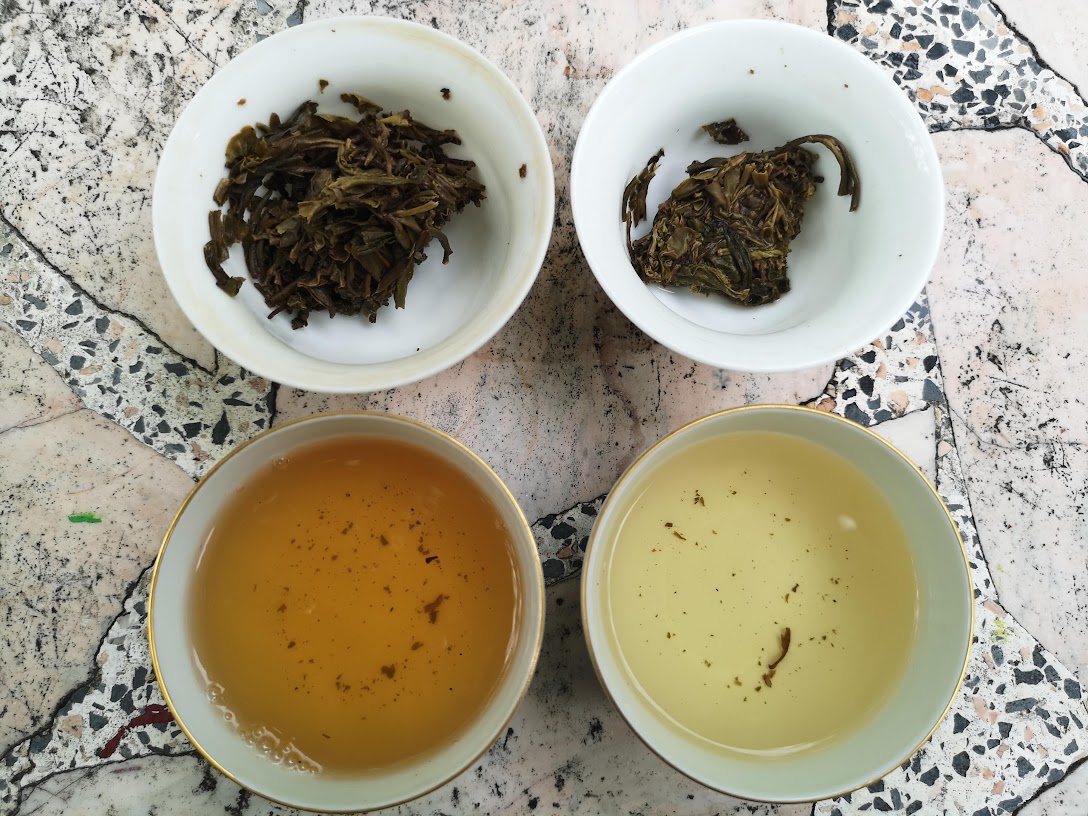
Chen Sheng Hao 2020 and 2024 blended sheng pu'er


Someone mentioned really liking a value-oriented Chen Sheng Hao sheng pu'er online awhile back, so I ordered it, and a second cake to make a free shipping threshold (for orders over $70; that's quite fair, on the low side).  I don't remember which cake it was that they liked, of the two that I ordered; probably the 2020 version, but since personal preference varies it could have been either.

I like the idea of producers being able to make above average quality, low cost, blended input sheng pu'er cake versions.  That was always the theme for the Yunnan Sourcing Impression cakes, to be better than Dayi 7542 versions, and not cost much.  They gave up that second part; most Impression versions are over $100 now, or at least they had been, when I last checked.

I've tried a sample set of mixed versions of Chen Sheng Hao sheng before, sent by them for review.  Some samples (mini-cakes) were really exceptional, some pretty good, and some more in an ordinary range, but that was the idea, for them to present a set covering different range.  Previous individual posts would say more about all of that.


There was a problem with the shipping for this; Flash Express, a local Thai shipper, misplaced this on the last transit step.  Eventually I did get it, after some delay.  I think that's the second glitch in getting tea through them in about four tries, so they're around 50-50 for losing and then finding packages again, for me.  

Maybe it relates to the labels not being in Thai script (their local alphabet).  Transliterated place and address name use is very common here, but that may not work well for all local companies.  For people living in Thailand, and ordering tea from abroad, you really need to have it sent by standard mail / EMS anyway, so that import taxation is assigned at the local post office, versus packages being held at an import center, that they can't really make it back out of.  The process worked, this time, and as things worked out I have lots of other tea to be trying and writing about anyway, so the delay didn't matter.  But I'm getting to this fast, after getting it, because I've been curious about it.


2020 Fu Raw Pu-erh Tea  ($57 for a 357 gram cake)


Sourcing from Menghai, Yunnan

Blended (Multi-Region)

Tea tree over 80 years

The specially made Pu-erh was skillfully composed by Chen Sheng Hao with an elaborate combination of selected ecological ancient arbor tree aging material teas from tea mountain in Yunnan, China.

It affords liquid with a pure aroma and fine taste and is characterized by a sweet after-taste all its own. The tea has been well stored in the storage center of Chen Sheng Hao. The storage will help the tea to transform its bitter and astringent character into something rich and complex.


2024 Gan En Raw Pu-erh Tea  ($41 for a 357 gram cake)


Blended (Multi-Region)

Tea tree over 100 years

The 17-year development of Chen Sheng Hao owes much to the recognition and love of tea enthusiasts who have stood by us through thick and thin.

To express our gratitude to all those who have supported the growth of Chen Sheng Hao and accompanied the Chen Sheng Hao brand, we are proud to introduce the "Gan En" Raw Puerh Tea (357g ) and Gan En 99 Ripe Puerh Tea (200g). The name "Gan En 99" (感恩99) is a homophone for "Gan'en Jiu Jiu," (感恩久久) which means "Long-lasting gratitude."

The raw Puerh "Gan En" has a high, lasting aroma, a mellow and full flavor, and a sweet aftertaste.


There isn't really that much in those descriptions about flavor profiles, but that sort of makes sense.  Whatever they would have written originally about a 6 year old version would have kept changing from year to year, and even a description like "pronounced bitterness" may or may not apply well in a few years.  I'll add plenty of my own description here.


Review:  


way overbrewed, obviously; overestimating timing to get them started


2020 Fu Raw Pu-erh Tea:  warm in tone; I don't remember the age of this, but it can't be that young.  Bitterness and astringency aren't high, yet, which I would have expected from the color, but I'd expect the next round to be quite different.  This is quite promising.  Hints of pleasant warm toned floral range stands out, and there will be plenty of mineral evolving in this, it seems, and other complexity.


2024 Gan En Raw Pu-erh Tea:  a good bit sharper, with more bitterness and astringency, and one unusual vegetal range flavor, that borders on mineral tone, or overlaps with it.  It seems to include some citrus as well, along the line of dried orange or tangerine peel.  

Of course I've screwed up the proportion again; that's more or less my norm now, never adjusting for teas being on the intense side.  These are maxed out, at 8 or 9 grams, which means that I won't get too far through them (or rather I did, by way of drinking a lot of tea, and throwing away the last of some of the rounds).  It would make more sense to brew these using 5 or 6 grams, even for drinking one alone, I just don't usually make tea in that way.


A infusion #2, the 2020 version (I wrote notes without looking up names, which didn't add much later anyway):  brewed light these seem to still be opening up.  Bitterness and astringency are higher, and overall intensity, even for a flash brewed round.  Floral intensity and complexity is good; it's pleasant.  Feel is nice, although that will keep developing, as aftertaste also will.  

For a moderate cost version sheng this already stands out.  It doesn't seem like a lot of blending input has rounded off the more distinctive form of individual aspects either.  It's mostly covering floral range, which can seem a little general, but some depth to that could be different things, like cooked pumpkin or ripe papaya.  A flinty mineral edge is pleasant, and there is warm depth to the mineral as well.  It's nice.


B (the 2024 version):  that one bitter aspect really ramps up.  Someone would have to be ok with significant bitterness to like this.  I've eaten a lot of bitter gourd this year, or bitter melon, maybe some call it, grown in our garden in Hawaii, and this reminds me of that, the vegetal range mixed with pronounced bitterness.  I'm fine with a good bit of bitterness, but I tend to like more approachable sheng more.

This is so bitter that the aftertaste carries over as both bitterness and sweetness, which is interesting.  Usually the bitterness transitions directly to sweetness, but this still includes both.  Other flavor seems to be heavy on mineral.  That citrus fruit tone might re-emerge once the rest settles down a little.


A #3:  not so different; it might be a few infusions until this evolves further.  Bitterness, full feel, with considerable astringency, and warm floral and mineral tones stand out.  The balance is good.  I think it will be better once it loosens up a little more, in a couple more rounds, but it's pleasant now.


B:  other flavor starts to develop beyond the bitterness, but that bitterness really still stands out.  Did I ever read the product description, prior to ordering this?  At least it has plenty of intensity to continue to evolve; there is no way this tea would just die, over any time-frame.  

People might place this vegetal range differently.  There's a sharpness and heaviness to it that reminds me of pine sawdust, for example when you are cutting a lot of plywood, maybe to put a roof on a house.  It's also not unlike bitter melon, or bitter gourd.  I just bought that as a pre-prepared herb tea, sold in Royal Project stores here.  It's a bit intense, to be infusing as a tisane, even in a trace amount, but if it's as healthy as the rough taste implies then it would be worth it.


A #4:  this evolves into a spice range depth; that's pleasant, and a good sign for further aging transition.  It's along the line of an incense spice, some exotic bark flavor, agar wood or whatever (just placing the range; I really can't identify that particular flavor).  It's not really "loosening up" in terms of initial intensity and punch softening, but it should get there.


B:  this does continue to evolve to soften and come across as more complex, but the other has been more approachable and less intense across all the transitions.  I don't find that somewhat extreme vegetal range off-putting; it kind of works.  It's distinctive, and pretty far from the not so pleasant "tastes like kerosene" sheng flavor that puts people off, the more typical factory version input.  Maybe this starts to taste like leather instead of pine sawdust, a positive transition.  

But it's not as unpleasant as that makes it sound.  Sweetness is good, bitterness kind of works, feel isn't so bad, full and intense, but nice enough.  You're in it for the ride, with this degree of intensity, and challenging character, but it works, within that range.


A, #5:  now it loosens up, a little, gaining even more warm spice complexity.  It's hard to pin down what that newly evolved aspect is.  Let's just leave it at warm spice, and give it another read as rounds progress.

In re-trying it during editing I don't mention a dry edge to the feel, which seems to link to a particular range of mineral flavor.  For some people that would balance nicely with the rest, for others it could be inconsequential, and for others yet it could be a deal-breaker, a very negative aspect range that ruins the experience.  Higher end, more expensive, often presented as gushu material sheng tends to be different than this, to express a softer but full feel, and a lot of depth.  So I suppose it's not just personal preference in relation to aspects and styles that factors in, but acclimation to different other ranges of sheng pu'er experience.


B:  this loosens up too; that's pleasant!  Bitterness evolves to soften and fall into a lower range balance with the rest.  Tones seem a little warmer.


A #6:  this integrates as a unified, balanced experience better than ever.  It's definitely punching above its weight for a well-balanced, complex, and intense moderate cost sheng.  Feel is pleasant, and intensity carries over to a nice aftertaste expression.  Warmer mineral tones, now transitioned to include a good bit of spice, balance the lighter mineral, bitterness, and floral range.  

This doesn't include the aggressive, harsher intensity that might indicate it would still be intense in complex in another 25 years, but it doesn't seem like it would just die either.  It's in a nice place for medium age range transitioning, no matter how old or young it is just now.  Within the next 5 years or so it should keep on picking up warmer tones and depth, before it eventually might fall into a "teen years" sort of off character, not balancing as well for changing from one thing to another.  It would be pleasant during those transition years (the next 5), because it's pleasant now.


B:  it's interesting how floral range really seems to pick up in this, as if perhaps it had been there all along, but it needed the bitterness and other vegetal range to quiet down a little to show through.  It has a really pronounced green vegetal note, which I've been describing in different ways, as it keeps evolving.  Sure, it still tastes somewhat like bitter gourd.  But that flavor is quite different when it's hitting hard as a very dominant tone, and when you can get it to integrate with other range (I mean related to cooking with it, but here as it works as one component among others in an infusion).  

This may loosen up well too, over the next 5 years, with that heavy astringency, bitterness, and vegetal range giving way to whatever it transitions to.  It's not as pleasant just now, per my own preferences, but I suppose for people really into bitterness this is already just the thing.  It will probably be the best it has been within another 3 infusions or so, which I may not make it to during this round of note taking.  A dozen rounds of intense sheng is a lot to get through.  I've been throwing away some of the last of these rounds, to get a little further through, but I've been drinking most of it, so I'm 10 intense infusions in, which is an awful lot.  I'll probably do another, to mention some last thoughts on transition patterns.

It kind of goes without saying but brewing 5 or 6 grams of just one of these teas would be a lot more optimum than brewing 8 of both together.  On one level I already knew that, but it's a hard habit to break.


A #7:  the best this has been, but I could write the same words as the last round and those would work.  Warmer mineral and spice tones balance what had been present well.  I'll probably taste both of these again and notice that I missed some pretty obvious flavor descriptions.  I tried that one Viet Sun maocha again, one of the Y Ty versions, and noticed pronounced mint in later infusions, which I hadn't mentioned.  It can work out like that.  

There is so much warmth and depth in this that one part reminds me of a very light roasted coffee flavor.  You know when the berry notes present in some coffee can still emerge, because roast hasn't pulled it so far in the other direction?  Like that.  It's not overly berry-like, but something like dried blueberry might fit one part of it.  I'm not really pushing the tea hard enough to get the most conventional flavor expression out of it; these have still been very quickly brewed infusions.  That would surely mean these are only half spent so far, so that I'll miss the second half of the rounds in taking notes.  That's fine.


B:  again this balances better than ever too.  A full, syrupy feel is much more pleasant than a harsher blast of intensity in earlier rounds.  Sweetness stands out more, and floral range.  One part probably does relate to a dried citrus peel note, which was much lighter earlier on.  It's still a bit intense, and the feel is still a little harsh, in terms of pulling at the sides of your mouth, especially after you drink it.  

This might not have fully "loosened up" just yet; it may be best after a couple more rounds, at infusion 7.  If I had brewed 5 grams instead of 8 it could be much further along, for using longer infusion times, and speeding up that cycle.  Somehow this seemed like a mistake that had to be made.  I really don't understand why, but then I'm guided by intuition as much as reason, and I'm probably just botching lots of range of experience in making random choices like that.


A #8:  it might be time to start using longer than flash infusions for this.  It still provides plenty of intensity in that form, but the character would change some.


B:  for this one intensity is high enough that extending brewing time probably wouldn't help; this is enough.  The aspects description from the last round still works for both though.

A local Thai tea friend, who I don't know very well, that one guy that gets presented as a tea expert, Stephen, gave me a quite bitter sheng version a couple of years ago, that this reminds me of, in part.  It has softened and deepened to be quite pleasant, of course not losing all of that bitterness.  This probably includes a little more of a distinctive vegetal range flavor; that was just straight bitterness, with the usual floral and mineral range supporting that.


Ninth round, combined notes:  the bitterness, feel structure, and intensity ramp up for the first version, when brewed longer.  The balance does shift, back to more typical young or slightly aged sheng range, a couple years into transition.  The other tea picks up even more green wood character.  I suppose I hadn't been calling it that, but that's where it has shifted to now.   


Conclusions:


Very pleasant teas, considerably better than I expected, or even hoped for.  They're not even finished in terms of me getting a full experience of them, in general or for this brewing cycle; I can change brewing process and they'll be much different.  Within another year or two they'll be different in a different sense, actually evolving some in terms of fermentation transition, no matter how old they are.  It will be interesting looking up what these are, and commenting in relation to that.

Related to value you tend to never spend a moderate amount (around $100 for these two cakes, when many in a comparable range cost that for one), and see good results, and these were really nice, for value-oriented versions.  Again opinions would vary on that; some people would love them, and find them much better than the factory sheng that they've been experiencing, and for others accustomed to other range they could both seem off-putting.

The "older" version, from 2020, is at a decent place, for people who like a tea with a number of years of transition.  I'm accustomed to teas transitioning fast, living in Bangkok, and they surely weren't stored that hot or humid.  The storage input seems fine, related to conditions, to the extent someone can say anything about that.  They would've been better preserved, if stored quite cool and dry, so at least they are transitioning.

It's interesting to speculate about the high bitterness level and unusual vegetal nature of the younger 2024 version.  I think within 2 years it will probably come across quite differently, and I can't really guess about how it will change (especially flavor range, I mean).  For a tea sold at that price point it's great, because that's down in moderate cost factory tea range, and it's much better than that.  Of course someone needs to be ok with significant bitterness.  It doesn't include the challenging astringency that comes with low elevation grown, chopped plantation material versions, but it still packs a punch.


If you spend twice as much you can find versions like the 2020 tea that include slightly more distinctive flavor profiles, and more positive feel, but at this selling price point you probably can't do any better, if you can find anything remotely comparable to start with.  It's a perfect tea for a daily drinking rotation, when you feel like that style range; the role I hoped that it would fill.  It might hold up well to another decade of storage, and more complete aging, but I may well not find out, since I'll go ahead and drink it.

The 2024 tea might be much better after 2 or 3 more years of "early" character evolution; time will tell.  It's fine now, if an intense, bitter, somewhat vegetal range experience works for someone (with more floral flavor range expressed, but a little green wood or bitter melon flavor really stands out).  It might age well in the longer term; I really don't know.  One part of the "benchmark" theme related to the Dayi 7542, and the like, or typical Xiaguan character, is that you can expect common, known early character type to change in expected ways, but this is a little different.


Thursday, July 25, 2024

Chen Sheng Hao Menghai and Emperor sheng pu'er


I'm reviewing two more of the Chen Sheng Hao sheng pu'er samples sent for review by the producer (many thanks!).  The others have been nice, diverse in style, with some variation in quality level, matching the general descriptions in the site reference for which really stood out.

These are identified as two more of their signature product versions, so they should be nice.  They don't tend to list out a lot of aspect description, just some character reference, as follows: 


2022 Yi Pin Chen Sheng Raw Pu-erh Tea Sample Box


2022 Chen Sheng #1 (陈升一号)

One of the featured and award-winning blended raw Pu-Erh tea of Chen Sheng Hao. Selected early spring large-leaf arbor tree leaves in the Menghai area. It has a balanced taste and good coordination in all aspects of aroma, taste, and “cha qi”. It is friendly to new Pu-erh tea drinkers. 


2022 Emperor (霸王青饼)

Another award-winning and featured Pu-erh tea of Chen Sheng Hao. It is well known as a raw Pu-erh tea that has strong and penetrating characteristics like “Emperor”. It has strong bitterness upfront, penetrating aroma, pronounced salivation and sweet-after-taste, long cooling, and powerful Cha Qi. It can last for 15 infusions and still have good taste. 


As for pricing 2782 baht comes out to $76.55 right now.  I think this had been $79, and that change relates to fluctuation in currency exchange rates.  

Is that good, is the value ok?  It always depends on quality, since it's a relation of cost to quality.  Then different people could be on different pages related to budget, so that for one person keeping spending in a very moderate range would be a fixed requirement (15 to 20 cents a gram, let's say), and for another 40 could be the same as 30.  

This works out to 40 cents a gram, on the high side for pu'er per cake, but samples do run higher, and for exceptional quality level everything shifts a bit, maybe even a lot.  It's jumping ahead a little but for these two that rate seems fine, because they are a bit exceptional, then maybe the more ordinary range versions don't hold up quite as well.  

Looking at the expense in different ways might help place it.  $90 to 100 per cake is pretty standard now for higher quality in-house versions from specialty vendors, and those are often 357 grams, but then you just get the one tea version, and if you don't like it as well, or if it works out to be lower in quality level, then that's it.  As the sample description mentions if you were to drink 7 grams of each per day (one fourth of the 7 cakes) that works out to 28 days supply; about a month's worth.  For me spending around $80 on tea for a month is a good bit, but it's not for lots of other people.


Review:


Chen Sheng #1 (Menghai):  I let these soak awhile to get the brewing started, around 30 seconds, and this is a little too strong.  It's fine for getting a feel for character, just in the opposite form that I usually do, too light for an initial round.  

Of course bitterness stands out.  From there floral range is a main input, all framed around warm tones, over a strong mineral base.  This should come across quite differently brewed at more conventional strength.  A tea friend visiting mentioned brewing teas strong to get a better feel for characteristics not so long ago, and I've sort of been doing that, but it could be more familiar.  This is still pleasant and agreeable, but also too strong.  Flaws or off aspects don't stand out, just that intensity.  

It will be interesting seeing how a somewhat vegetal edge settles at more conventional infusion strengths.  That may well be tied to normal astringency that shows up more early on then settles out.


Emperor:  also too strong.  A perfume-like floral range is quite pleasant in this already.  It has good depth and complexity, and feel is nice, even though it's brewed wrong (wrong for anything but an odd form of evaluation approach).  It's quite promising.


#1, infusion #2:  brewed for just under 10 seconds infusion strength is more typical.  The usual ranges stand out, bitterness, astringency structure, solid mineral base, but there's another catchy aspect that's hard to place, that sort of re-frames the rest.  Along the line of warm spice tone, I think, but there may be some dried fruit in this as well, so it may really be two things standing out as related.  Spice would be vague, but some type of incense spice.  Fruit maybe along the lines of dried Chinese date, jujube.  I love that flavor, and to me it works really well in combination with other warm tone range.


Emperor:  rich and complex floral range stands out in this, but it's not just that.  The feel is quite full; that lends depth to the rest of the experience.  Bitterness might be slightly more moderate than for the other, or at least it comes across differently, positioned against different other aspects.  

With the other tea a couple of aspects pull it into a unique and pleasant balance, and with this it's distributed as an effect from across the entire tea character.  It won't describe clearly, since most of that range is floral.  There's an aromatic, perfume-like character that some better tea versions tend to express, as if some of the solvent effect is also present.  One might think of it as comparable to brandy or cognac instead.  Sweetness is pleasant, but it's how that sweetness comes across, as linked to complex floral and warm-toned range, and associated with a thick velvety feel.  I suppose the other may come across as more structured or drier in feel in comparison, depending on interpretation.


#1, infusion #3:  it's interesting how this comes across as narrow in flavor set range, with a number of inputs kind of closely integrated, but still complex in a different sense.  It's bright but also warm, sweet and approachable but also somewhat high in intensity with good depth.  Bitterness has fallen into a nice balance with the rest, somewhat limited, in relation to where sheng in general or one in this style would be.  It would be way too much for someone who only drinks oolong, but moderate for a young sheng drinker.

That one catchy range is still present; it hasn't transitioned away.  I think it might be a spice range note combining with a clearer underlying dried fruit tone, the jujube.  A hint of citrus picks up.  How am I calling that narrow or simple then, since it's quite a flavor aspect list?  There's an impression that it's all closely linked, that it integrates well, belonging to a somewhat unified whole.  It's complex but the range seems to all link together.


Emperor:  the perfume-like depth of this is really something.  It's almost entirely floral, in diverse floral range, but one part might seem like rich fruit, like dried apricot.  Bitterness comes across as lower in this than the other, but they're no far off.

It's interesting considering what these warm tones mean, where they are coming from.  This is two year old sheng; it shouldn't have transitioned that much, in normal medium humidity and temperature storage conditions.  Here in Bangkok teas change fast, but that's a different thing.  Flavors get heavier and some early range drops out quick, even over two years.  It almost seems like some of this has oxidized some, related to the warmth, dark tea color, and variation in color of the leaves.  I'm more or less a fan of sheng that has transitioned from extra oxidation in processing, it seems, but that would probably come at a cost in relation to long term aging potential.

I should clarify, this is nothing like the Vietnamese sheng I've been drinking that is a short step towards black tea from conventional sheng pu'er style, quite oxidized.  It still seems to represent standard sheng character, just a modified form of it.  Maybe that is from early aging; two years is long enough for things to change.  This version is compressed at a lower level than the other, much looser, and that could make a difference in relation to how it reacts to environment exposure over time.

Probably warm mineral plays more of a role than I'm describing.  It adds a lot to the overall balance, even though the richer perfume-like / brandy / cognac range is more novel, and stands out.

I'm feeling these teas; 6 infusions is a lot to rush through.  I ate a good-sized wheat biscuit breakfast cereal earlier to offset stomach impact, which would offset drug-like effect intensity (cha qi), but still it stands out.  I'll eat a little food and drink water to get back to a normal baseline.


#1, infusion #4:  it drifts towards warmer spice range; that's an interesting transition.


Emperor:  the light citrus note in this shifts, to a different light citrus note.  Like dried grapefruit peel?  It's something novel.  It works with the rest; it's interesting.


#1, infusion #5:  not so different.  I've shifted to brewing these relatively lightly since intensity is fine that way, even optimum, for me.  They're not that far along for being brewed light, after that first round.  These would go for another half dozen rounds easy, but I'll stop taking notes soon, off to do activities with the kids today.  They'll both probably express at least one more interesting transition too; I'll see later, but may or may not make a mental note of that to include it.


Emperor:  similar to last round.  Again the shift in the citrus tone is interesting.


#1, infusion #6:  I decided to try one more round brewed longer, a bit over 30 seconds, back to strong again.  That intensity comes roaring back.  Warm tones stand out a lot more made like this.  Nothing like a flaw emerges, even brewed strong, a good number of rounds in.  I had mentioned a vegetal note that I never got back to; that stands out more in this.  It's almost in between warmer and vegetal range, between cured hardwood tone and heavy mineral, or towards a forest scent.  It's complex; there's a good bit going on.


Emperor:  this is softer and richer.  Warm tones stand out in this too, but in a different way in a different other context.  Rich floral range is still present, and that hint of dried fruit and citrus, a bit obscured by the heavier flavors in this round.  This is pretty nice tea.

I've not made much of splitting out a quality level assessment against preference to type review here.  There's plenty to go on in relation to both, but just listing shifts in the aspects seemed like a lot.  Quality level is good for these.  I can't judge best-of-the-best range, because I'm not out buying $300 cakes, or even sampling that kind of material, but these are definitely decent, well above average.

I like the second version, this one, more for being so novel.  That rich floral and fruit range is nice, and the way a soft but full feel ties it all together.  The citrus note alone really changes how all the rest comes across.  I've not went on much about feel structure or aftertaste here either, again because there was so much to say just about sets of basic flavors shifting.


Pretty good teas; this has been interesting and pleasant.  I didn't make more notes about later changes or additional thoughts after this, so that's it for a summary take.


Monday, June 24, 2024

Chen Sheng Hao Yin Ban Zhang and Nan Nuo sheng pu'er


Ban Zhang left in all photos (Nannuo right)


I'm trying two more teas from a tasting set sent by the Chen Sheng Hao vendor.  They're a curator vendor, per their description of background, seemingly specializing in sourcing better quality sheng pu'er.  I take all marketing claims with a grain of salt, but let's consider their own description:


Meng Hai Chen Sheng Tea Co., Ltd. was established in 2007 by Mr. Chen Shenghe, a tea lover who has worked in the tea industry for more than 50 years. At Chen Sheng Hao, we’re passionate about sharing the rich history and unique flavors of Chinese tea with the rest of the world. Our single origin teas highlight the characteristics of the regions and tea trees from which they’ve grown. Our award winning blends come with a time tested reputation for proper aging.


Sounds good.

I have reviewed two other versions, presented as the more basic range in that set (of 7 small cakes, 28 grams each, divided into four sections in a "candy bar" style).  To me presentation as small cakes is an especially catchy form, but of course the tea experience itself is the thing.  It worked better this time separating out the leaves, as shown, prying apart the quarter disk section, which removes part of the functional convenience of just breaking off a chunk, but either way does work.


In this round I'm trying one presented as one of the best of the set (a few are described that way, as of unusual origin or award-winning versions), from the Ban Zhang area, and one presented as a conventional example of Nan Nuo origin.  I've had good experiences with tea from that area before (both, really), not that I've tried enough that I'm certain I've experienced a typical range.


Their website descriptions (an excerpt from the whole set):


2022 Yin Ban Zhang (银班章)

A blended raw Pu-erh selected materials from the Ban Zhang area. This tea has powerful "Chaqi". The beginning taste is bitter and slightly astringent with quick sweet aftertaste.


2022 Ban Po Zhai (半坡寨)

Sourced from Nannuo mountain with a light sweet orchid aroma, subtle woody aroma, and lingering sweet aftertaste.


Quality level is only indirectly implied in those descriptions, of course.  It's interesting how it works out, that there is a difference.  It's not as simple as that one factor shifting how positive an impression is though, but that's a lot of it.


Review:


Yin Ban Zhang:  as always a little light for a full breakdown, on this first round, but then that's how I try teas.  Sweetness is very nice; that definitely stands out.  Flavors are bright and complex already, largely in a floral range.  That flavor set is catchy already, towards fruit, or juicyfruit gum.  A hint of early bitterness implies that will pick up.


Ban Ph Zha (Nannuo):  a little flat compared to the other, but that could easily also relate to starting slower.  The two mini-cake materials separated differently, and this stayed in full chunks, while the other flaked off to become more loosened tea.  This seemed to be pressed a little harder.  I'll give it a few extra seconds and describe more next round.


Ban Zhang 2:  this is nice.  Bitterness did ramp up quickly, and sweetness and very complex flavor dialed up as well.  I suppose it's possible that there is a type-typical flavor range for Ban Zhang area teas that this expressed.  I've tried three versions from there, I think, or at least teas presented as such, but my memory isn't good enough to reach back to three different tastings over a number of years.  I could consult review notes here but won't; teas vary by other factors than typical character per origin area.

Flavor intensity and that balance of sweetness with bitterness is nice.  And the feel structure, and the way aftertaste lingers much longer than is typical.  I'm not sure if I'll get far with breaking this down further than tasting like floral range towards fruit, leaning towards juicyfruit gum effect.  Those markers identify this as better quality tea (intense and sweet flavor, positive bitterness, feel and aftertaste), but I'm not sure I enjoy it so much more for it seeming better.  Good complex flavor and positive character is already enough for me, and some of the aspects that seem like quality markers are more positive to experience than others.  It is interesting.


Nannuo:  warmer toned.  It comes across as more subtle, but that's really due to the relative intensity of the other version.  It's in a normal range.  Warmer mineral is where that tone is mostly expressed.  Flavor range is floral; I'll see about adding to that description in the following rounds.  It seems good; flavors are positive, the bitterness is at an appropriate level, a little lower, in good balance, with decent feel and some aftertaste experience.  

I've been drinking fairly approachable Vietnamese young sheng, brand new versions, and it's interesting getting back to more of a Yunnan style.  Both of these may have been more challenging two years ago, but probably still fine to drink then.  Two years of normal storage for moderately tightly pressed cake won't change so much, but approachability may increase, and more extreme edge of bitterness and astringency may transition some.  A vague freshness will drop off, but that's not the kind of aspect that's easy to describe or place.  For a lot of young sheng limited initial change is mostly positive.


Ban Zhang 3:  hitting its stride; more intense and integrated.  Even at a slightly lower 7 grams proportion--I surely brew 8 or 9 more often--I'll need to keep times fast to keep intensity / brewed strength moderate.  Tones warm up, matching the other's.  Stored in warm and humid enough conditions these really could have changed a good bit in two years, but at a guess that input was moderate.  Then again I'm comparing that to Bangkok, one of the hottest and most humid places one could find, where a year can really change a pu'er.

Flavors are complex; there's a lot one could say for interpretation.  Range is mostly floral, but to me it leans towards fruit.  It's hard to specify which fruit, but to add a guess similar to fresh lychee, maybe also with a touch of citrus.  That warming occurred across mineral range; if it keeps extending it might resemble some sort of spice tone more, since that's a relatively common transition pattern.


Nannuo:  as the other picks up more and more intensity this seems more and more flat.  Really it's pretty good; flavors are positive, feel is nice, there is some aftertaste experience, moderate bitterness complements the rest, and warm tones join floral range.  It doesn't necessarily need to be pushed to express more intensity; there's no reason it should need to match the other tea.  It's just a different kind of experience.


Ban Zhang 4:  vegetal range picks up, a bit towards pine.  It's interesting, as combined with the floral range, fruit, and warm mineral.  There's a lot going on with this.  Feel deepens and becomes richer too, trading out structure for fullness.  With the general warming tone across infusions it's a lot of transition to experience.


Nannuo:  I do like this tea, even though it's much simpler, less intense and complex.  Warm mineral and floral range is joined by a touch more fruit, towards dried fruit, like apricot.  Bitterness has eased up, in a really limited, moderate level at this point (maybe still a little higher than in the young Vietnamese sheng I mentioned, for reference).  Feel structure is significant but not challenging.  There is some aftertaste experience but it's not pronounced in comparison with the Ban Zhang version.  

This tea would seem better if not directly compared with the other; it gives up intensity across all of the aspects range.


before mixing rounds to adjust for brewing these too long


Ban Zhang 5th and 6th infusions:  it's not a great idea to comparison taste this tea along with another version; that's not really a surprise.  The flavor and mouthfeel intensity is going to be adjoined with body feel effect and impact on your stomach.  

People value the former, the head and body buzz, but I tend to take steps to offset all of it.  I ate breakfast just before this tasting, and just ate some mixed nuts and chocolate to settle my stomach.  I don't have stomach problems, but still take steps to keep it that way, not blasting down a liter of strong tea with no protective food input.  Eating offsets feel effects, noticing cha qi, which is fine for me.

These teas would be fine brewed much lighter, using 10 second infusion times, or less, but I'm not making that adjustment.  Writing while tasting is part of it; it's easy to lose focus for 30 seconds, and that's way too long an infusion time.

Intensity really is a bit much this round.  Typically I'd brew the next round as a flash infusion and combine the two, to dilute that.  This may be the first time I've used that hack during a tasting, but let's do that.

This is still strong tea.  Brewed infusion strength is back to normal, diluted down, but lighter than normal might make even more sense.  Sweetness is intense, floral range and other flavors also are, rich feel and aftertaste are intense.  Even tempered by food input the drug-like cha qi effect is strong.  


I don't identify as a drug user, but then it's odd how tea and exercise experiences I seek out probably include a lot of that kind of input, which is surely no accident.  I run like I'm training for something, 10 to 12 km at a time, even in heat, pushing up hill sections, and never connect that with craving the endorphin buzz from it.  I drink a lot of wild-origin tea, which seems pleasant to me, and could possibly be safer, but I probably also crave feel effect that I'm not explicitly noticing.  Usually; sometimes I do notice.


Nannuo:  plainer, simpler, and less intense, but this would come across differently without the comparison.  It's good, complex, refined, and well-balanced.  But across all the aspect scope the other is a little more extreme, sweeter, more floral, with more supporting flavor range, richer in feel, with longer aftertaste, just dialed up.  The other tea would make more sense if you drank it brewed much lighter, appreciating that intensity in a different experience context.  

This works well at a normal infusion strength (normal or medium for me; that would vary by person).  

It's tempting to say that per some potential preference it could be seen as better than the other as a result.  That seems a stretch, but it doesn't seem to work to say that the other one is just better since everything is so much more dialed up.  In one sense it is just better, but in another just different.  It's clearly better quality tea, and the styles are vaguely similar enough that it doesn't work to say that someone might love this one but not the Ban Zhang tea.  It's possible, but probably not.


Next round:  trying them lighter the Ban Zhang is better, pleasant that way, and the Nannuo is way too thin.  It may be giving up a little sweetness already, or it could just be how it comes across brewed too light.  I'll drop the note-taking here, since it runs long for me to write and readers to go through, and 14 cups of tea is plenty at one time (over an hour or more, this has been, since I've also been doing other things).


I suppose these did fade a little fast for drinking them on the stronger side, related to trying a few more rounds.  It was a busy day yesterday, as my weekends tend to be, and rushing trying two teas and taking notes led to less careful brewing, letting infusion times run a bit longer as a result.


Conclusions:


I've concluded so much already, and don't want to just type it again.  It was interesting how one tea was so much better, that much more distinctive, intense, and higher in quality level, and the other still kind of held its own, to a limited degree.  It was in a character range I like; that helped.

Maybe both versions resembled what I've tried before from those origins; as I remember they did.  Styles vary some too, so I mean within that limitation.

For one being flagged as representing a distinctive, unique tea version and the other representing an area and different kind of experience they were both positive and appropriate.  The Nan Nuo version is better than a typical factory tea version, of course, more in the range in-house specialty production teas tend to land in.  Not on the high side related to that typical quality level, since plenty of vendors are putting out really nice teas as their best versions, but good, and pleasant, certainly not representative of lower-medium quality "basics" tasting sets.

Related to separating the leaves initially, breaking them apart, that seemed to help with consistency of brewing.  People who are ok with--or really don't care for--brewing dragonball forms would probably know where they would stand on this kind of issue.

Friday, June 14, 2024

2022 Yi Pin Chen Sheng Raw Pu-erh Tea Sample Box


A China based vendor reached out about trying teas for review, mostly sheng that sounded nice, so I'm reviewing the first versions from a unique looking sample set here.  

Some of the versions sound promising, but beyond that they're presented as small cakes, which is different, 28 grams each, partitioned in a way that reminds me of candy bar form.  I'm starting with what look to be two of the more basic versions, getting a feel for what they are, and checking on brewing issues related to that form. 


Intro from their website:


Chen Sheng Hao is a leading producer of pu-erh tea from old growth forests in Yunnan Province.

Meng Hai Chen Sheng Tea Co., Ltd. was established in 2007 by Mr. Chen Shenghe, a tea lover who has worked in the tea industry for more than 50 years. 


This set description:


2022 Yin Ban Zhang (银班章)

A blended raw Pu-erh selected materials from the Ban Zhang area. This tea has powerful "Chaqi". The beginning taste is bitter and slightly astringent with quick sweet aftertaste.


2022 Chen Sheng #1 (陈升一号)

One of the featured and award-winning blended raw Pu-Erh tea of Chen Sheng Hao. Selected early spring large-leaf arbor tree leaves in the Menghai area. It has a balanced taste and good coordination in all aspects of aroma, taste, and “cha qi”. It is friendly to new Pu-erh tea drinkers. 


2022 Na Ka (那卡)

“Na Ka” is the sweetness representative of Pu-Erh tea. The soup has an attractive pale-gold color in the cup. The aroma and taste are alluring, exhibiting a noticeable peach-like flavor and strong sweetness in the later infusions. There is also a strong cup scent left behind in the early brews. 


2022 Ban Po Zhai (半坡寨)

Sourced from Nannuo mountain with a light sweet orchid aroma, subtle woody aroma, and lingering sweet aftertaste.


2022 Emperor (霸王青饼)

Another award-winning and featured Pu-erh tea of Chen Sheng Hao. It is well known as a raw Pu-erh tea that has strong and penetrating characteristics like “Emperor”. It has strong bitterness upfront, penetrating aroma, pronounced salivation and sweet-after-taste, long cooling, and powerful Cha Qi. It can last for 15 infusions and still have good taste. 


2022 Chen Xiang Sheng Hua (陈香升华)

A classic sweet raw Pu-erh tea with an elegant floral and bean aroma.


2022 Zhen Ming Qing Bing (珍茗青饼)

Selected large-leaf arbor tree leaves from the Menghai area. This blended raw Pu-erh is gentle and sweet, suitable for tea lovers who are new to Pu-erh tea. 


So I'll be trying the last two, the 2022 Chen Xiang Sheng Hua (陈香升华) and 2022 Zhen Ming Qing Bing (珍茗青饼).  Some of the others sound even nicer but it makes sense to start with what seem to be more basic to adjust to the type range, and sort out brewing, etc.  If there are quality limitations across the set those should come up here.


Review:


Chen Xiang Shen Hua left, Zhen Ming Qing Bing right, in all photos


I broke form and used a quick rinse for these.  They were starting as quarter-disc chunks, 7 grams each, and of course a short rinse didn't cause them to open.  For a pu'er enthusiast familiar with separating compressed tea that candy-bar style of separation isn't at all necessary, but I have no problem with it, and for people new to pu'er it could be much easier.

Color difference between these is significant; the Chen Xiang Sheng Hua version is much darker.  Ordinarily I'd expect that to relate to more aging input or higher degree of oxidation from initial processing, but I'm not really sure.  The first version opening faster would cause it to infuse stronger initially.


Chen Xiang Sheng Hua:  not enough to go by yet; too light.  That's normal for first round infusions.  There is already pleasant warm mineral range; that should develop well, once other aspects join it.


Zhen Ming Qing Bing (Menghai):  again far too light for a flavor list.  It might be lighter in flavor aspect character, but that's about it so far.


CXSH 2:  even more warm mineral tone, without so much joining in beyond that, but intensity did pick up.  It seems closest to warm spice range at this point, of course not exactly cinnamon, but other aromatic spice instead.  Since I've used their descriptions to help separate types to at least a name I can reference their description, floral and bean.  Maybe.  Warm mineral is most pronounced, at this point, and the rest leans towards spice range, it seems to me.


ZMQB:  this is opening slower due to compression being different, higher.  Both could be interpreted as floral, kind of a default common range across a lot of sheng.  This is brighter in tone, and just a little creamy in feel.  I would imagine astringency and bitterness will pick up and that feel and flavor will change a lot.  

I'll use a longer soak for this version to get degree of leaf separation and wetting to even up, probably coupled with pulling it apart a bit after the next infusion.  Of course someone could separate the leaves the old fashioned way while they're dry, with a pu'er knife or pick.  There's one on the table but I wanted to see how this works using the whole chunks.


CXSH 3:  dryness picks up, and intensity.  This is nice, for the range it's in.  I've tried a tea version not so far off this in the last month or so, but that was a wild material origin fall harvest version from Vietnam.  The markers related to quality are good for this, the sweetness, overall balance, the way the astringency feels, lack of potential flaws, and flavor intensity and complexity.  Not in an exceptional sense, but it's nice.

I'm still going with warm mineral standing out most in this, onto spice range beyond that.  It could work interpreting that as bean instead, along the lines of red bean.  I probably love beans a lot more than most people; I was a vegetarian for 17 years, and my absolute favorite desert food is Chinese beans and dried fruit with crushed ice and longan juice.  I could live on that.


ZMQB:  it's funny how slowly this is ramping up in intensity, but then it's still half compressed.  I'll break it apart manually to move that along.  This is why I generally don't like drinking sheng as dragonballs, because it makes the process slower, and mixes infusion of leaves between those first wetted rounds ago and others just opening up.  Of course that might also bump complexity, experiencing flavor inputs in middle-sequence rounds from the leaf material just getting started in early rounds.  It's probably as much about me not being accustomed to that as it actually being inferior.

There's not a lot of bitterness or astringency from this, not even stronger than average flavor intensity.  In splitting it half the material was still bone-dry on the inside, and fully compressed.  Just pulling the chunk apart won't work; it's easy to separate with a pu'er knife while partly wetted.  For people accustomed to separating dry compressed leaf it might make sense to just do it while dry instead.


CSXH 4:  heavy warm mineral is quite pleasant in this.  The feel being just a bit dry is not negative.  I'd ordinarily interpret the flavor as spice, as I've mentioned, then also including cedar wood.  I suppose someone interpreting this as including a bit of camphor would make sense.


ZMQB:  intensity picks up a good bit, but beyond a floral range it's hard to separate out a description.  Feel is more astringent, and limited bitterness enters in.  Sweetness level is fine but not especially pronounced.  Flavors are generally clean, and intensity is ok, it's just not easy to describe as a list.  

Sheng versions can become a bit muted at an in-between stage related to aging but this is not remotely in that situation; at 2 years old it should've started a transition process but should be relatively close to where it started.  3 or 4 years can offset initial astringency some but it wouldn't change that much in 2 years.


CSXH 5:  that spice tone undergoes an interesting and pleasant transition; it picks up.  Feel is nice at this stage too, kind of substantial, but not harsh.  Some of these warm tones people might interpret in a broad range of different ways, as bean instead of spice, or aromatic wood, or camphor (it has an edge to it).


ZMQB:  finally bitterness is getting to where I expected.  I guess the default description of this being floral works.  For me being 10 cups of sheng into this experience I'm almost finished; I also had a few earlier from leaf left over from yesterday.

Noise level and disruption at the house today is atypical.  It's hot out, at 10 AM now, so probably in the mid-80s F (87 F / 31 C; I looked it up), but beyond that workers are here to repair an air conditioner, and a separate set of them are cleaning the other units.  I've taken breaks a few times to move furniture or storage boxes; it's not ideal.


CSXH 6:  balance is nice for this, the way heavier spice range input and warm tones come together.  This isn't really a personal favorite style of sheng but it's not really an uncommon one.  It seems appropriate that a sample set includes a version like this, since warm aromatic tones that lean towards spice is a normal range to encounter, just not as common as lighter toned more floral character, with higher sweetness.


ZMQB:  bitterness and astringency really give this a punch.  It's not as harsh as factory tea versions, which typically absolutely need a good bit of aging to be enjoyable, but this style wouldn't be for everyone either.  This might hold up ok to another 15 years of aging, but it's also a bit approachable now for that to be the case.  Whole-leaf and natural growth sourced teas tend to be a bit milder, and to include more depth and unusual complexity than just strength.

I think I'll probably like the style of other sample versions included more.  Sheng with pronounced bitterness can be fine, but it works best when it complements high sweetness and even more pronounced floral range.  The feel of this is a little dry, which isn't unusual for young Menghai sheng, but it's not necessarily the best style to drink so young.  It doesn't help powering through 6 rounds of two versions at the same time, without any food, or even water breaks, to offset that.

I did try more rounds later, and intensity held up ok across a good number of additional rounds, with no unusual shifts in aspects after this.


Conclusions


I would say this is a qualified success as an introduction.  Brewing process was ok, but one version opening slowly made for an unusually drawn out initial infusion sequence.  Character for both is fine, distinctive and interesting, without much for flaws in aspect descriptions.  

Lack of distinctness of flavors seemed a limitation for the Menghai version; sometimes that occurs when a fall version lacks intensity.  I don't know if harvest time is ever described for these.  I think that's more a problem when tea plants / trees are forced to produce a lot of material for a spring harvest, and then again for black tea production in summer, then stressing the plants to go through it all a third time.  

Probably forcing plantation material tea plants to make a lot of material would also offset aspect distinctiveness, but this could be more naturally grown instead, a general theme tied to lots of different growing contexts and descriptions.  It seems like a harsh edge usually accompanies teas made with emphasis on high production, forced to produce material quickly through chemical fertilizer use, which is why factory tea generally needs a decade and a half to settle, not two years.

These were fine.  The real test will be trying their other teas they describe as more distinctive flagship versions.  

It's interesting considering how these compare to two wild-origin, indigenous producer Vietnamese versions that I just reviewedthat I just reviewed.  These are more typical of Yunnan style sheng, not quite as distinctive and unusual as those.  I suppose quality level was a little higher for those, but that combined with style being less conventional, making them a different kind of thing.  A better test might be comparing those with versions presented as the best of this set instead.


As far as value goes it's hard to judge without trying the versions presented as their highest level range.  This set was $75 for 196 grams, so 38 cents a gram, or equivalent to a standard 357 gram cake costing $135.  That's on the high side but not so far off typical cake pricing, for upper-medium quality level sheng, which is a very pleasant and distinctive range at this point.  It's a hard price range for me to adjust to given sheng pricing was much lower 5 to 10 years ago, but general quality levels and access to more interesting versions has increased.  It might be hard going back to appreciate what sold for $40 a cake a decade ago, when everything cost much less due to inflation occurring since.  

For teas presented as best-quality, most demanded origin ranges normal lower-end conventional pricing range goes out the window, and teas cost whatever they cost.

As a point of reference White 2 Tea, another well-respected Western-facing vendor sells a terroir tasting set of four 100 grams cakes, for $50 (here).  I've heard those criticized for being generally type-typical but a bit too basic (low) in quality level to really capture what works well in sheng type character (which of course is complete hearsay; I've not tried them).  If the better versions of these represent the opposite extreme of the quality scale the much higher per-gram cost would be justified, and they could work much better to explore further into positive sheng range.  

Exploring sheng requires resetting expectations some, adjusting to more bitterness, for example, so starting on the basic side or using a better sample set to explore could make sense.  Or just buying a lot of samples, but per-weight cost tends to be higher for that, and it involves a lot of guesswork and sorting.