Showing posts with label Jin Xuan. Show all posts

Wednesday, July 15, 2026

Lai Chau (Vietnam) forest green tea, and Jin Xuan Fujian green


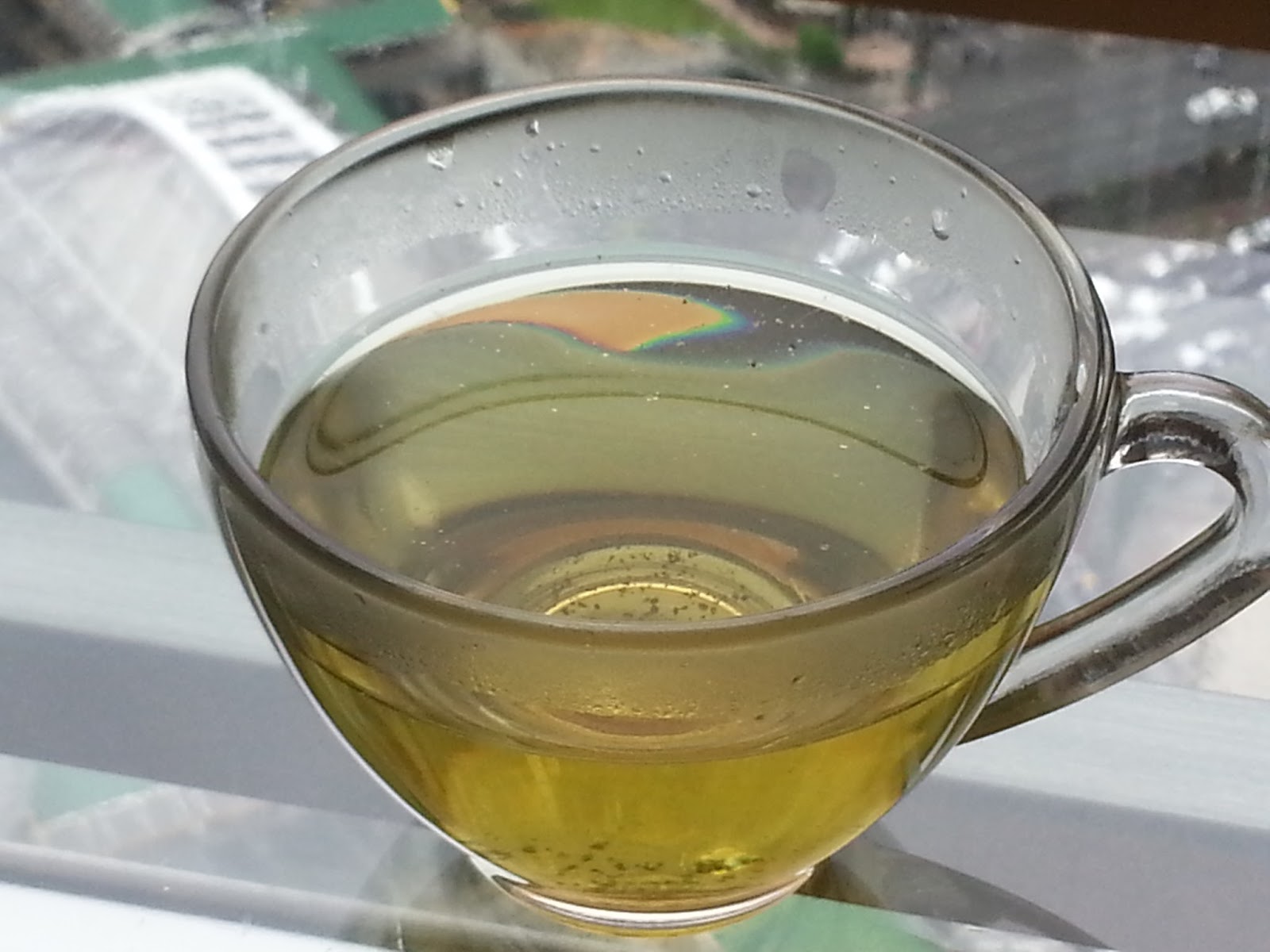
Viet Sun Deep Forest left, Moychay Jin Xuan right, in all photos


I'm comparison tasting a Moychay Jin Xuan green tea with a Viet Sun Lai Chau Deep Forest Green tea (the second from spring of 2026, with the first not listing a date, but probably from this year).

This comparison is really throwing the Moychay tea version to the wolves; I already know the Viet Sun tea is exceptional, from trying earlier forms.  It held its own well though.

Moychay sent a number of different samples to try, in part related to me helping with some editing.  It's much appreciated; it will be a great chance to try lots of familiar types, and some new ones.  Most of it is warmer toned versions, lots of black tea, oolongs, some fermented / hei cha range, even some flavored versions.  It makes sense that for a lot of the year in cooler European climate warmer teas would be favored.  Not just now, so much, when lighter teas would go better with a heat wave, but it'll be fall again soon, and spring wasn't so long ago.

This is the last tea I have to try from Viet Sun, from the last order (sent as a sample for review; I'd keep buying sheng and black tea from them, if I had included more than a few versions).  Green tea is more or less my least favorite category, but the exceptions can be nice, like this one.


One additional thing I wanted to mention:  Steve said that their sales were down this year.  It's not hard to guess why (not related to teas being unfavorable; they're good):  the economy can seem uncertain in lots of places now, and inflation already stresses plenty of people's budgets.  I wonder if there aren't other inputs though.

I'm not sure how Moychay's business either expands or flattens out in "the West;" I haven't kept up with hearing about that.  This is all supposed to just be about the teas anyway.


I'm also just coming out of a 6 day long illness, I think in decent shape for tasting.  I'll lose a little intensity and finer flavor sensitivity to this cold, but it's resolved enough that drinking light teas again makes sense.  For those more difficult days it was nice drinking mild black tea, not getting much of the flavor, but appreciating the depth.


the Viet Sun version; I forgot to take a picture of the dry leaves when tasting them


the Moychay tea; the leaves looked even finer in person


Let's check their sales page input for their descriptions, and pricing:


Lai Châu Deep Forest Green Spring 2026 (they're only selling 250 grams for $57.50 now, no other sizes, at 23 cents a gram)


A green tea made from same tea tree varietal as our Lào Cai Deep forest teas but on the Lai Châu side of the mountain range. 

The tea trees in this area are growing to heights of 10+ meters in the deep forest at 2200m+ in elevation. The rich biodiversity and natural growing conditions really make their way into the cup.

This tea brews up slowly into a rich, clear golden soup. The flavor is unique and complex. Reminds me of forest flower honey, herbs, strawberry or raspberry and wild grasses with a lot of umami. There are some similarities to Japanese green teas.

Light astringency and bitterness, thick mouthfeel, long rich huigan and relaxing qi.

Another interesting aspect of this tea is the aging potential. I have tried teas from past years and they get sweeter and richer over time. The honey notes become more prominent as well.


Maybe I was thinking of that other origin area green tea from them...


Green Tea Jin Xuan Lü Cha (they only list a 7 gram size for 2 Euros, 33 cents a gram, with the 50 gram size having been sold for 30 cents a gram, when it was available)


Jin Xuan Green Tea is a high-mountain green tea produced from the Jin Xuan oolong cultivar in Sanming City, Fujian Province. Grown at an average altitude of 1100 meters, the tea is cultivated by a sustainable agriculture enterprise, recognized nationally as a green tea production base.

Harvested by hand in April, the tea is picked as one bud with two leaves. Processing follows a traditional green tea method: sun withering, indoor airing, pan-firing (kill-green), rolling, and drying... 

...Its fragrance is rich and floral, accompanied by a distinct fresh soybean note. The taste is smooth, refreshing, and sweet, making it particularly enjoyable for daily drinking.


It's interesting considering that both are probably relatively safe tea options.  Producers surely aren't pouring fertilizer and pesticide on forest grown teas, and the Jin Xuan is presented as a sustainable production output.

Of course Jin Xuan is #12 in a series of developed cultivars (cross bred plant types) in Taiwan, produced a long time ago there.  Rolled oolongs here in Thailand tend to be Jin Xuan, #17 (Ruan Zhi or Bai Lu; kind of a long story about that naming), or maybe Tie Guan Yin or Qing Xin. 


Review:


Lai Chau, first infusion:  I brewed these quite light to start; I'm not sure why that made sense to me.  Flavor is nice, just light.  There's a freshness and depth to this, with good floral range and mineral base showing through already.  It will work better as a breakdown next round.  


Moychay Jin Xuan:  it's interesting how much umami this expresses.  That might throw off using personal preference as a main marker; I can appreciate how good Japanese teas are, but I like other styles more.  This could possibly be as good as the other tea, just much different in style.  The other tea expressed some umami, but this includes more.  It's a lot better than the Thai versions one might run across here, but that's typically a low bar to clear.  The oolongs are better, and most aren't great.

Brightness and freshness relate to the main range you experience, then floral depth and sweetness enters in, with lots of an umami edge.  It seems this will balance well, and be quite complex, again easier to describe as a breakdown next round.


Lai Chau #2:  lots of intensity; brewing this 6 or so grams for over 10 seconds provides an intense infusion.  Floral range is so sweet, rich, and intense that this tastes like perfume smells.  You get some vegetal range with that, that's hard to describe, maybe along the line of deep forest fern (like the scent; you don't eat those).  After you drink it a strong aftertaste and full feel occurs in the back of your mouth, not just the throat, but the entire rear part.  Mineral stands out in that, not light or warm mineral, but mineral with depth, a range of it.  It's all quite clean.  Maybe a touch of pine bark is there, beyond those described aspects, but that's clean too.

It's complex; it would work to use other descriptions.  There is some umami.  Floral range is complex; there's a lot one could associate with it, probably as a few notes, or a range of them.  One catchy part is rich and deep, like lavender, but there's more to it.  Related to vegetal range sugar snap pea sort of applies.


Jin Xuan:  that umami hits you first, then such a strong floral input that in some teas you'd think this was altered.  But it doesn't work out that flavor-adjusted teas show the added flavor more after the first round; that kind of thing extracts right away.  And I don't think it's even possible to add umami like this.  This tea is clearly natural, it's just distinctive and unique.  

Others could place this in relation to Japanese green tea range better than I can, maybe a specific type of sencha.  It's there, with that umami, and rich floral range expression, good intensity, clean nature, good balance, refinement, etc.  Aftertaste is sweet and umami range combined.  This does hold its own with the other version.  Even for living in a country that produces a lot of Jin Xuan cultivar, and trying plenty from Taiwan (typically oolongs though, in both places) this is probably the best green tea version I've tried from that plant type.  It would be more impressive if that came up more often, but it's still really good.

In trying the last of the other there's a savory note in it too, but it's more a sun-dried tomato oriented aspect, where this is closer to the seaweed umami, it just doesn't really taste like seaweed.


Lai Chau #3:  it falls into a nice balance, with all of those layers and levels combining well.  But it's not really different.  It's nice the way that a savory sun-dried tomato umami depth ties the rest together, and how it all balances.  It's an unusually complex version of green tea.


Jin Xuan:  the proportion of those flavors changed, with umami and a specific floral note really standing out.  It also expresses depth, complexity, and balance, but those two notes stand out more than the rest.


Lai Chau #4:  vegetal range is standing out a little more; in one sense this is already fading, or at least changing, I suppose to be less positive.  It still has lots to offer though.  Perfume-like floral range is pronounced, and lots of aspects combine together.  The feel is still full and rich.


Jin Xuan:  maybe it was already transitioning towards this in the last round, but a savory note tastes a lot like toasted rice, like that flavor aspect in Longjing.  It's interesting, positioned along with a seaweed oriented umami flavor, and a good bit of rich floral range.  That still resembles lavender, to me.

Intensity, depth, and complexity are pronounced in this; it more than holds its own.  But as you go back and taste the other tea after even for giving up a little in intensity and range it's still just as pleasant, for those other flavors combining so well.  Both are holding up well, but then it is only the fourth round.

They both brewed a couple more really nice infusions, and weren't dead even after that, but I stopped taking notes there.


Conclusions:


I'm surprised that I liked the Moychay Jin Xuan as much as I did, and that it represented that high a quality level.  It's one of the better green teas I've tried in a long time, and even people accustomed to better Japanese green tea would probably love it, and also be surprised by it.  The dominant umami transitioning to other range made it better for me; the other floral tones and additional complexity worked well.  I didn't expect all of that.

But then the Viet Sun deep forest green tea was as good as I remember, very distinctive and pleasant.  I suppose due to me liking the flavor aspect range better I did like it better than the other version, but it might work to objectively say that the Jin Xuan version is slightly better quality tea.  It was more refined, with both being quite complex, and a little more distinctive in style.

Related to value both are kind of equivalent.  The Vietnamese version is selling for 23 cents a gram (at higher volume; equating volume would level out the difference), and the Chinese Jin Xuan for 30, but one already went through import to Europe, which adds cost, and potential value, for people paying different import taxes depending on origin there.  Tea as good as either would still be a decent value if selling for more; these were both exceptional.


So the only catch is that I'm a sheng pu'er drinker, and that I like black tea and varying oolong types best as fall-backs.  I like novel and pleasant hei cha versions more than green tea, which I can still appreciate, but I just never end up buying it.  I had routinely made an exception for Longjing, for years, but now I just stick to those others, and buy mostly sheng, and some black tea.

For people who really do like green tea, and want to explore what these two vendors sell, these are both good options.


Marmalade grows up fast


Friday, June 20, 2025

Ez Teasy (Singapore based) Qimen red / black and Jin Xuan oolong


I've recently met a tea enthusiast from Singapore, through social media contact, talking about tea and exchanging some samples here in Bangkok.  He's also a very small scale vendor, selling under the brand / business name Ez Teasy.  There may be no online sales site to reference, but he does have an Instagram page.  It probably wouldn't hurt to at least mention his name, but given how some people are about online privacy I'll leave even that out.

It would've been interesting comparing the pricing level of these two teas with each other, and in relation to the quality of the tea, but that's fine, it's not really necessary.  He passed on a good version of black tea, a Qimen, a decent Jin Xuan, and a couple of green teas, with this only covering the first two.

I'll skip saying much about his philosophy of tea, or other background we discussed.  The short version is that he thinks appreciating good tea doesn't have to be a difficult, complicated, gear-intensive process, requiring formal training or a long learning curve.  I definitely agree with that.  Pretty much all tea enthusiasts think that plain, ordinary, unadjusted teas have a lot to offer, in comparison with tin-presented flavored tea blends, which might stand out more in specialty grocery store aisles.  On with trying two versions of those.

Of course it makes no sense doing a combined tasting of two unrelated tea versions.  I'm in the habit of doing combined tastings mostly to save time, to get to more, and after doing that dozens of times it's a familiar experience, and doesn't take much away from focusing on one, or comparing two similar versions, which would actually make sense.


Review:


Qimen:  it's quite good, but you could pretty much guess that from the appearance alone.  It's made of buds and very fine leaves, so that it resembles some versions of Jin Jun Mei, the ones that include both kinds of content, which some people claim aren't an authentic style.  Flavor range isn't so far off Jin Jun Mei; this could be that.  That comes in a range of styles, and it would be like a more typical black tea version, than the buds-only versions that taste like beeswax and honey.

This does seem to include a bit of honey and beeswax flavor range.  It's complex enough that it's hard to specify what the main flavors are, because there is a lot going on, even though it's all integrated, and entirely pleasant.  From there one might guess about dried fruit, or focus on a mineral layer.  A warm tone is a little bit savory, not so much that sun-dried tomato comes to mind, but along that line.  Cacao would be a reasonable interpretation, even describing that as a main flavor not, or the main one.  I won't brew a stronger infusion next round--lengthening infusion time--but the tea might open up a bit, showing even more, even without being brewed stronger.


Jin Xuan:  not fully opened up yet, but there's enough intensity to see how this will be.  It's a good version of Jin Xuan.  Creaminess is the main aspect in such a version, typically, at least for a version without much for roast or oxidation, and this is nice and creamy.  Remaining range is typically sweet, floral, and rich in feel.  This covers all of that.  Vegetal range can be regarded as negative, although if someone loves that it can be neutral or positive.  This includes some; vegetal range is on par with floral tones in this early and light round.  We'll see how it evolves as it opens up.


Qimen, #2:  intensity jumped quite a bit, even though I'm using a fast infusion time.  It would've made sense to go with a lower proportion for a tea like this, to offset that to compensate for what was going to be high intensity, but of course I didn't.  4 or 5 grams would be plenty, and this sample only had 7 or so in it, so I went with that amount.

Warm tones come out stronger, good sweetness, and what I interpret as bark spice and rich dried fruit.  Cacao is still a main inclusion.  Rich feel is nice in this, and the aftertaste from all that trailing over.  This is a pretty good example of this style of black tea.  It would be hard to find better.  The only time I've had Qimen even vaguely like this was when Dylan of the Sweetest Dew sent me a few versions to try.

Then it's harder to place this in relation to my preference.  For someone who loves this style this would be fantastic, but I've always loved Dian Hong more than Jin Jun Mei, or good unsmoked Lapsang Souchong, which this is closer to, maybe especially the first.  Or it could seem to be in between the two in style, combining aspects from both (from good versions of both).  I like it, and I can appreciate it, but I might love a version of something else that's at the same quality level more.  

Lots of Dian Hong (Yunnan black) ends up being a bit basic though, lacking this kind of intensity and complexity, and especially refinement, so even though I love that style it tends to fall short of this quality level.  Which can still be fine; it's not a problem to appreciate more basic tea experience, if you are on that page.  You don't need intensity, complexity, refinement, finish / aftertaste, and all the rest at a high level.  I suspect that a lot of Dian Hong might be produced from summer harvest material that's not as suitable for making sheng pu'er, drawing on the least potential version of what is ever harvested, but that's more a guess than an informed assessment.

A hint of sourness might be the only flaw or limitation.  I don't always notice such a thing, because I don't mind it at all at that level of input, but for people more sensitive to it, opposed to it, it could seem like more of a limitation.  To me it just matches the rest of the style.


Jin Xuan, #2:  Richness and creaminess are very nice; again vegetal flavor range standing out just a little more than floral tones might be the main limitation for this version.  To some that would be something of a deal-breaker, and to others I'd be splitting hairs, and this could seem like exceptional tea.  It's clean in flavor effect, and bright, with good intensity, good sweetness, rich feel (which could always be stronger, but it's ok on the scale of that), and decent butteriness.  Real Jin Xuan never tastes exactly like butter, more just a bit creamy, as this does.  I have limited or perhaps no experience with fake flavored versions.


Qimen, #3:  depth keeps picking up; this is probably as far as that could go.  It's nice the way that cacao grounds the rest, and there's so much going on beyond that.  It's smooth and clean, intense and complex, even moderately refined.  

I've been drinking through a lot of Thai origin Dian Hong style black tea that includes a comparable level of sourness, that I really love.  I could drink it every other day, and never get tired of it.  Huyen, my friend from Vietnam, visited and tried that tea, and I think liked it, but was not as familiar with the Assamica based tea range, so it wasn't as natural a fit for her preference.  The sourness seemed to stand out to her as more negative than it did to me.  I'm still seeing this as more a match to that other range, to Jin Jun Mei and Lapsang Souchong.


Jin Xuan, #3:  creaminess really stands out, but that might be staying consistent.  Warm mineral undertones seem to pick up a bit.  Those often stand out more in a #17 / Bai Lu / Ruan Zhi plant type based version.  This is as creamy as Jin Xuan typically get, but flavor range could be a little sweeter, including a bit more floral range.  It's still quite nice.  If you buy random Thai oolong in a tea shop or Royal Project shop it probably wouldn't be quite this good, even though there is surely better quality range out there.  Intensity might not match this, and creaminess could be less pronounced, even though the basic flavor range has more room for improvement.


Qimen, #4:  not really changing.  There probably was some shift in the proportion of what I've already described but you need to be really focused in to pick up on that sort of variation.  Doing a combined, unrelated tea tasting throws that off, as does background noise, and there's a bit of that in the house today.  The kids are here, and I just checked on the cat, and Eye is around preparing for something.


Jin Xuan:  more of the same.  To me this is quite pleasant, even though it's only sort of an upper-medium quality level, with lots of room for improvement.  It covers the basics well, with decent flavors, good intensity, feel, and creaminess.  It's clean, doesn't include flaws (beyond limitations), and is drinkable.  This would be a really good breakfast tea, or might work especially well cold-brewed, since that draws out the most sweetness a tea has to offer, leaving behind astringency, even though this doesn't have a problem with that.


It's interesting how one of these, the Qimen, represents an exceptional quality of a tea type you just never see, and the other is a basic, standard version, to me.  In Thailand most oolong is #12 (Jin Xuan) or #17 (Bai Lu or Ruan Zhi), although there are others, and Jin Xuan is common enough out of Taiwan.  I suppose the Qimen should be priced a good bit higher as a result; it could cost twice as much as the oolong, and that would still be fair.  In terms of how much I like both they're on more even ground.  The types and styles are completely different but I like both about the same. 

That could seem odd, since the Qimen is definitely a higher quality example, and I drink black tea as a secondary choice in relation to sheng pu'er now.  Rolled oolongs have a basic, broad appeal to me; they're easy to appreciate.  I'm not sure why I never drink them.  I guess it might be that black tea serves as a good alternative to sheng, quite removed in style, so that limiting most of my tea experience to both works well.  Of course I keep trying other things, for review, and just checking in with other teas I have around.  I've drank quite good Dan Cong and good basic Liu Bao in the last week, re-connecting with the rest of my tea collection, which I left behind living in Honolulu for 2 1/2 months.

I think black tea is probably the most suitable as a breakfast tea, but then this Jin Xuan version would also work, and I don't feel like I'm missing anything drinking sheng pu'er most days.  Some people would connect both with different climate inputs, but I can drink all three here in the ridiculously hot weather in Bangkok.  I did ice down the coffee I just drank yesterday afternoon; that's novel, but also sort of a different subject.  I sometimes drink iced jasmine green tea here, the inexpensive, basic version that comes in those dark orange tins.  But this is tangent after tangent!


These teas were really nice, distinctive and pleasant in two different ways.  The Qimen represents the best of a type and style range well, and the Jin Xuan doesn't quite as much, but both were pleasant to drink (to me).


Tuesday, September 24, 2024

Bi Yu and Lishan Taiwanese rolled oolongs


I'm reviewing two very interesting and pleasant Taiwanese rolled oolongs, from Tea Mania, a vendor based in Switzerland.  Peter, the owner, passed on these samples in a visit awhile back (many thanks).  There's a lot to say about them so I'll cite the product listings for more background and get on with the review notes section.

I might first add that I was really more into rolled oolong scope very early in tea exploration; it's essentially where I started, checking out Thai versions that were around (in Bangkok).  Variety and quality scale is pretty broad, and it's my opinion that the best versions come from Taiwan.  I tried a pretty good more oxidized and roasted Tie Guan Yin, from Anxi, China, not too long ago, but these are something else.  Thailand can make ok versions, and Vietnamese range can be better than Thailand's, really extending to the top of the Taiwanese quality range in the rarest cases, but it could be hard to find those best of the best versions from there.


Bi Yu  (15 CHF or $17.63, seemingly for 50 grams)


Bi Yu is a rare Taiwanese cultivar that descends from the well-known Qing Xin and Jin Xuan cultivars. The aroma profile of Bi Yu lies between the two parents, Qing Xing and Jin Xuan. A decisive difference is the pronounced fruitiness which is underlined by floral notes.

Due to the traditional processing, it can be stored without any loss of aroma. With increasing age, the aroma changes and develops its very own charm.

Harvest date: spring 2021

Aroma: fruity, with light, floral notes on the finish

Oxidation: approx. 40%

Roasting: middle

Terroir: Mingjian, Nantou, Taiwan


Lishan Gaoshan Wulong (30 CHF or $35.25 for 50 grams)


Lishan Gaoshan Wulong is a slightly oxidized, bouquet style highland tea from Lishan. Due to the slight oxidation the tea has a very floral and refreshing character, which reminds of the floral in the green tea, but due to the processing as wulong tea it has a much stronger body and is a much more intensive taste experience. With the slightly oxidized wulong, the leaves are not shaken as much, but are handled much more gently. This means that there are no red leaf edges, which makes the tea taste much more floral and refreshing. The infusion in the cup is also much brighter. The reverberation in the mouth is still clearly perceptible even over a longer period of time and it is a pleasure to trace the character of the tea in meditative silence and to fathom its complex character more and more.

Lishan Gaoshan Wulong is not roasted and only slightly but nevertheless well oxidized. Thus the character of highland teas is clearly visible. Due to the traditional processing it can be stored without any problems and without losing its aroma. With increasing age, the aroma changes and develops its very own charm.

Harvest time: spring 2020

Aroma: floral, with notes of osmanthus and honey

Oxidation: approx. 20%

Roasting: non

Terroir: Lishan, Nantou, Taiwan


Note that these are from different years, 2021 for the Bi Yu, and 2020 for the Lishan, and oxidation level is higher for the Bi Yu, with only that version roasted.  I don't speculate about those inputs in these review notes (I checked the descriptions and added them later in editing), focusing on the experienced aspects instead.  Even that tends to run long.

I've researched and written quite a bit about Taiwanese cultivars in this blog, just nothing for the last half a dozen years.  I'll also skip going into any of that, but anyone interested could search it up here.  One reference I cite in those posts covers what the older plant types and newer hybrid cultivars are.  Jin Xuan is an example of the newer range (#12 in that series), as Bi Yu must be.  Qing Xin is really a range of more original plant types, not just all one thing genetically, according to this research study reference.


this post covers more about this, with the table from this reference


Bi Yu left, in all photos


Review:


Bi Yu:  it's quite good; I expected that.  There is an intensity of floral range and mineral base that's distinctive across most Taiwanese rolled oolongs, and this expresses that.  Floral range is intense and complex.  A mineral base is harder to notice but that is what helps ground the rest, making it come across as a very complex experience.  

Intensity is good, on the high side.  I brewed this for longer than a typical infusion to get it started from still completely dry and compacted, for 30 seconds or just over, and it's not on the light side at all.  The effect is just as it should be.  

Related to regional character, tied to the origin, or the cultivar type, I won't be able to comment on what is or isn't most type-typical; I just don't drink that much Taiwanese oolongs.  I've had good versions before, but it will still even be hard to place these within the scope of the highest quality range.  It's quite good; that's all I can tell.  I may not be able to get much further than describing this as expressing complex floral range; it's not one of my things to list out 3 or 4 flowers this resembles.


Lishan:  interesting!  I had expected this to be pretty similar to the other version, but it's not.  It's creamier, and it includes a nutty sort of flavor aspect.  Plenty of sweetness and floral range too, but it's quite different.  A touch of vegetal range enters in along with the floral tone, and the rest, but it's limited, and hard to place.  That might either develop or else drop out, and then I'd have either some or no chance of describing it further.  Mineral is a little different in this too.  It's so heavy that it leans a little towards salt or metal, in a good sense.  Maybe that vegetal range links with a savory edge too, and I'm just not connecting the parts appropriately.  

In re-trying the first version after tasting this the aftertaste in the Bi Yu version extends longer.  It's really pretty close to what I expected this tea to be like.  Am I thinking of conventional Alishan character instead?  I'm not at all clear on tea production areas in Taiwan, and tea plant types also factor in.


Bi Yu #2:  I brewed these for about 15 seconds, probably long enough to draw out plenty of intensity.  I didn't have the best guess for proportion in these, having been mostly off rolled oolongs for awhile, trying only a few over the last year, but I guessed it would be a good bit, a gaiwan full, so on towards the 10 grams I might often brew at one time.  It's too much for many people's preference, but kind of familiar range to me.  It will limit getting far through a full infusion cycle of two versions.

Creaminess picks up.  Intensity would also, if it hadn't been so intense in the first round, but I think the added complexity makes it come across as stronger.  Feel is nice and rich, aftertaste range is extended and pleasant.  The main story is intense floral taste.  It's almost like that new car smell, but in a good sense, a little towards plastic of an unusual kind.  But it's heavy floral range instead, a theme that's quite familiar to anyone who has explored much above average quality Taiwanese oolongs.  

Is this an example of one of the most pleasant styles, and highest quality levels?  Maybe, at least towards that.  I've heard someone criticize Taiwanese oolongs for being too intense before, claiming that they're accomplishing that through heavy fertilizer use.  I'm skeptical that's true, but it's at least possible.  Then that leads me back to considering food issues; would we be shocked to learn that a producer is using fertilizer to grow our tomatoes or spinach?  It would be surprising if they didn't.  I love the idea of wild-grown, natural conditions produced tea as much as the next person, but I'm not hung up on it.


[later editing note]:  the product listing description places flavor range as mostly fruit, supported by floral scope, which isn't what I've interpreted it as here.  When the two themes mix in a tea it can be hard to sort out which provides more input, and what you expect can factor into judgment.  If I had read that description prior to tasting I'd have been discussing fruit tones, but without that it seemed essentially entirely floral to me.  The character would have changed a little over 3 1/2 years; it's hard to factor that in.


Lishan:  nuttiness is pronounced again.  There would be different ways to interpret that; others may not see this as tasting like nuts, and it's not exactly like nuts, just in that general range (cashews, I guess, or maybe macadamia nuts instead, or in the middle).  There is floral range as well.  

I'm not noticing even a hint of vegetal range, maybe related to brewing it so much lighter, but the mineral layer is still a bit savory.  It comes across as less full and rich in relation to the first tea really dialing up that range, but that's partly related to a comparison effect, not a gap in aspects.  I could imagine someone like either one of these more than the other, but to me the first is nicer, related to getting back to experiencing that really dialed up floral range experience again.  Pleasant mineral base, rich feel, and long aftertaste support that.


Bi Yu #3:  it would work to brew these lightly, using half the proportion that I am, and still moderate infusion times, and intensity would still be fine.  Nah; I'm dialing it up.  At least I am only brewing these for 15 seconds or so, but at this proportion that brews a strong infusion.  I think some of that relates to acclimating to young sheng intensity, which is hard to moderate, no matter how you brew it, so brewing oolongs or other teas lightly just seems thin to me.

Richness really stands out this round, and the floral tone picks up a bit of warmth, taking on a perfume-like character.  Or that also reminds me of cognac or brandy, one part of that range of experience, which I've not been through in decades, since I barely drink any alcohol, a few beers a year.  

Floral tone is heavier.  Someone more capable of describing two dozen distinct floral tone inputs would be offering a different list of them this round.  More like lavender?  Intensity has been great through all these rounds, and that's the same, it's amazing.


Lishan:  those earlier aspects settle and integrate in an interesting way.  It won't really work to describe how, exactly what I mean by that.  The nutty range is less distinct as that kind of form, and a base of what seems like less clearly defined vegetal range picks up, like a green wood tone.  Floral range is still pronounced.  It all integrates as one pleasant and unified experience more than it must sound.  Decent sweetness and bright intensity makes it work, along with a significant mineral base.  Again it seems less rich in feel with less aftertaste expression, but that's mostly in comparison with the other version.

It's interesting that the wet leaf appearance is so much greener for this version than the other, and darker.  Based on reviewing the listings (later) it's from the oxidation level being higher for the Bi Yu version, but that Lishan version seems extra green somehow, so deep and dark.


Bi Yu #4:  the progressive warming transition continues; this may be drifting just a little towards a spice tone range.  It's not there yet; maybe next round that kind of shift will be more pronounced.  Again the heavier floral range is nice.


Lishan:  maybe just a touch "greener," or it could be that I'm looking for that, after the observation about the color.  I think it's actually there too.  It makes this come across as really rich in flavor in an unusual sense, not really similar to green tea character, but I suppose it wouldn't just be a stretch if someone wanted to draw some limited comparison.  The grassiness and astringency edge isn't there, but then green teas do vary quite a bit.  Maybe more like a more savory version of one, that lacks an astringency edge.

That green part reminds me of a fresh forest scent, as much as green wood, which is how I've described it earlier.  It's like that heavy vegetal scent after a spring rain.  I suppose drawing a parallel with moss might actually make sense; it's clear enough how the different themes I'm mentioning connect.  Moss does represent the greenest and dampest fresh floral tone range, integrated with heavy mineral range.

Going back and re-trying the other version after this one the warming tones in the Bi Yu might be shifting a little towards a green wood tone, more of an actual version of that, not something comparable but different.


Bi Yu #5:  I think drinking this on the hot side emphasizes a connection to spice tone, and then in a few minutes once it cools that green wood link will stand out as much.  That's a subject I don't ever do much with, variations in drinking tea at different temperatures.  

Often I'll use two cups for making tea Gongfu style with breakfast, pouring it from one to the other one time per round, to absorb more of the heat.  I'm using a larger set of cups to prepare these, so they're drinkable right away related to temperature, but not so cool.


Lishan:  more of the same, really.  It's interesting how those heavy flavors combine, not so clearly linked to nuts range now (macadamia mostly, I guess), but combining a few dominant layers.  It's pleasant for how well it all integrates and works together.  And it helps that there are no aspects that seem like flaws, which it's easy to not explicitly notice.  

The other version is just a touch sweeter, richer in feel, and includes more aftertaste experience, but that's not really a flaw, just more positive supporting range associated with the first tea.  I suppose that someone could interpret those as "quality markers," and see it as indicated as higher in quality, but it's hard for me to conclusively conclude that.  They're just different in style.


Later rounds:  these kept going and going, of course.  In later rounds the Bi Yu faded to become thinner in profile, with more emphasis on the heavy mineral layer.  The Lishan stayed quite positive, lightening up across aspect scope except for sweetness, bright floral range, and rich feel (so forest scent / vegetal range and the mineral layer dropped out, put the other way).  It was interesting for a tea to fade in the end while retaining the most positive aspect range; usually they'll pick up a woodiness, or settle on more mineral range.


Conclusions:


It's interesting not noticing fruit from the Bi Yu vendor description, it just seeming floral.  And interesting that the version really held its own with the Lishan up until later rounds, after which the Lishan continued on as more positive.  How to place that?

One might conclude that the Lishan is a higher quality level tea, or instead that the effects of higher oxidation level and roast input lent themselves to being more positive in earlier rounds, and then to the Bi Yu version fading quicker.  Maybe it's both.

For sheng pu'er, or even for other tea types, it's easier for me to place how the different types of aspects get sorted out according to somewhat conventional preferences, from discussion of teas online, or related to vendor input.  Are the heavy green forest scent / moss aspect or macadamia nut richness in the Lishan version highly desirable characteristics, or is that negative, or neutral?  I suppose preference should really dictate that, since specific flavors don't typically serve as "quality markers."  Something like richness of feel or extended aftertaste are more often regarded as universally positive. 

It would be nice if I'd kept up more contact with rolled oolong scope, and I could do better with placing these on a general quality scale, or commenting further on value.  At a guess they're quite good, matching up well with teas sold as of exceptional quality, and 30-some and 60-some cents a gram are very fair price ranges, for what they are.  For as pleasant as this Bi Yu version is that's probably a good value, as good rolled oolong goes, but then in a different sense that could easily also be true of the other Lishan version.  

Origin area is one main input to demand level, across many tea types, and you end up paying more for what other people tend to seek out and value.  Then styles and quality level can be more variable across less demanded range, so you have to be careful about what you explore, or some experiences won't match preferences and expectations.

Looking at their Taiwanese oolong page they carry a lot of versions.  It would be tough to pick and choose among them on a tightly limited budget.  Some might seem better than others, varying with preference, but at least of what I've tried of Tea Mania versions they've all been pretty solid, with no "misses."  That would happen, if a vendor is sharing their favorite versions as samples, but I was in the habit of buying tea from them every year awhile back, before I moved on to focusing on Thai and Vietnamese teas more recently, and all that I tried was quite nice.  

You do experience more misses when exploring off-main-production-area teas, and styles vary more, so you pay a price for buying teas at lower rates.  To me that variation is nice too though, experiencing what you don't expect.


Wednesday, July 26, 2017

Thai Royal Project Jin Xuan oolong (#12)


I wanted to pass on an impression of a Thai Royal Project Jin Xuan that I mostly bought for staff in my office to drink. This was one of the teas I started out on, along with light oolong made from the #17 hybrid from Taiwan (Bai Lu, although it's often incorrectly referenced as Ruan Zhi).  I like the tea, so part of the point is explaining why I keep saying Taiwanese versions are better, both to defend Thai teas and also put that in proper context.


The main reason I say that:  better versions from Taiwan are better, a whole level above this one.  That generalization is based on years of trying every Thai oolong I could find, from all different types of producers and from different types of end sources.  But there aren't that many Thai tea growers, per my understanding, and there are an even more limited number of central tea processors, which is why the oolongs seem so consistent.  I'll skip ahead to reviewing in detail and add more about that origin and general quality level comparison there.


Review


The tea is bright in character, sweet and fresh, floral and a little vegetal.  I'm brewing it Gongfu style in a gaiwan this time and I could swear it turned out a little better prepared Western style in the past week, just a little brighter.  It's a bit creamy, in feel and in a butteriness coming across, but all that range can be more pronounced than it is in this version.

There is a characteristic taste of Taiwanese oolongs that comes across, although that was much more pronounced and positive in this other oolong version from there, a Shan Lin Xi version from the Lin Hua Tai shop in Taipei.  I guess to put labels to it the flavor range is a combination of mineral undertone, floral higher end, and a touch of different brighter mineral tone, all combined with good sweetness.  A typical feel for Taiwanese oolongs is a bit full, with lingering aftertaste also normal enough.


brewed lighter, with leaves in gaiwan


Some light oolongs express even more pronounced floral aspects, with this one extending a moderate degree of that into other vegetable range, not far from fresh green bean (uncooked).  The sweetness is almost like that in very fresh snap peas or green peas, which are nothing at all like a frozen version.  That better earlier session version seemed to emphasize flowers more.  I might have backed off the water temperature just a little then; sometimes I do that, but I'm brewing it this time using just below boiling point water.  Or maybe I just liked that overall effect better; usually Gongfu brewing works out the same or better but not always.  At a guess it was the effect of those things together; backing off water temperature works better, and the lower proportion and longer brewing time also did.


Other


So that was it; basic stuff as reviews go.  It was nice but it could have been a little brighter, a little more floral, a little creamier, or could have expressed a bit more mineral tone.  The level of sweetness was fine, and the flavors were quite clean in effect.  I didn't notice pronounced aftertaste, and the feel wasn't particularly full, but it wasn't thin in effect either.  This is all how Thai oolongs tend to go.  They start to express some nice attributes but then you realize you've had Taiwanese versions in a relatively identical style that expressed them much better.  Part of that could relate to the hearsay-based idea that the best Thai oolongs are shipped to Taiwan to be sold as "counterfeit" teas from there.  Given that I've tried so many versions from so many sources it's hard for me to imagine there is another whole quality level out there that I didn't get to but I suppose it's conceivable.


To me they are a great beginner's tea, or could work as a nice, inexpensive daily drinker.  I just had that tea with lunch, with duck noodle soup, and it works better with something lighter and less earthy, maybe with a pastry, or with apple pie and ice cream, or even with a ham and cheese sandwich.  As for pairing with Thai foods it would be fine with anything that's not too spicy or not too far in any other direction for strong flavor, like herb and garlic roasted fish.  For spicy food something like sweetened bael fruit "tea" (tisane infusion) might be better, or really water pairs better with any kinds of foods than it's often given credit for.

It would work really well as a blending tea, but blending makes more sense with black teas, to me (adding flowers, or mixing a tea with spices, making masala chai and such).  This tea cost 100 baht, around $3, for 100 grams, so not very much at all.  I've seen closely related versions (or maybe this one) selling in online Western vending outlets for around double that. That's typical for here though, although sometimes other versions can cost somewhere around 350 baht for 200 grams (around $10), or still not much at all.  #17 / Bai Lu isn't so different from this but the character does vary just a little, usually lighter on the creaminess, with a bit more influence in a mild earthiness leaning towards a spice aspect.  It's probably better than it sounds; I don't mean it tastes like actual earth, or "forest floor," or cork, it's just a little warmer, with spice range moving towards nutmeg that typically stays non-distinct.


Thai oolongs at Central Embassy Mall grocery store

There are Royal Project stores in different places here; this was from one in the Future Park mall, way on the North side of town, almost up to Ayutayah.  They sell different versions of Royal Project oolongs and other teas though, and this version is the one I've liked the best, the one that comes either in octagonal shaped boxes (see an image of those) or red or gold foil packaging.  I've seen shops selling this version in both the main Bangkok airport (Suvarnibhumi; good luck finding it though, over by domestic departures), and in the Chiang Mai airport, and in the Central Embassy grocery store, but it's also sold in lots of places.  I can't remember if the Royal Project store in the Paradise Park mall had it (I think it didn't) but there are two other tea shops there that would carry something similar enough.


You would think there would be a website related to this, a central Royal Project version, but I didn't find it.  That's probably related to using English to search, and to there not seeming to be one singular Royal Project, there are multiple initiatives.  Here is one version though.  I did also find another nice review of a similar or perhaps identical tea by the Tea Squirrel blog.


One might wonder, why review it here at all, only to say that it's a mediocre tea that's not on the same level as the other few dozen teas that I've reviewed this year.  Partly because I don't think I have reviewed one exactly like it, and it's a basic staple here in Thailand.  I did review a similarly sourced Royal Project black tea not so long ago, tied to the same general idea, describing the local teas landscape, what an ordinary quality level Thai tea is like.  There are some better examples of black teas and oolongs out there; they're just not so easy to come by.  I've had the best luck with Tea Side as a source, an online vendor.  Winter harvest versions of oolong tend to work well for my individual preference, warmer and a shorter step closer towards a spice aspect.  Jin Xuan based black teas can be very nice, or they can be not so good, it just depends.


I had all but put this general type aside by the time I started this blog, but seeing them in a grocery store was part of my own introduction to decent loose tea years back.  Part of mentioning them again relates to recently writing an article for an expat site / forum on where to buy tea in Bangkok, and to a lesser extent Thailand in general, which I was thinking of sharing here.  It would make sense to describe this tea first related to that, to set the general range for local basics.  I could link to where that is already posted but they edited down the details of mentioning most specific locations, which would be helpful to readers here, and without that there isn't nearly as much point.  Shops here are like anywhere else, they come in a range of different types, but it works best to describe those general types related to specific incarnations.


The tea is ok; I'll probably drink it once a week until the staff here gets around to finishing it.

Tuesday, April 18, 2017

Reviewing two Doi Inthanon Thai teas


Doi Inthanon producer introduction


Not so long ago I reviewed an oolong from Doi Inthanon, a Thai tea producer outside of Chiang Mai.  It generally never comes up but I discussed experimenting with re-roasting that tea, and the character change was interesting.  This vendor page provides background on the small farming operation, which produces #12 Jin Xuan and #17 Ruan Zhi tea types, imported plant types from Taiwan typically used for oolong production in Thailand.  This post will review two more teas from them, provided by the vendor for review.

I like the idea of a small new tea producer extending production into a place it hasn't been before.  I hope to see their business and product offerings expand in the future.


plantation; plants growing (photo credit)


This earlier post goes into the background on that second plant type, identifying that #17 cultivar is Bai Lu.  Ruan Zhi (or Luan Zhi, an alternate spelling) is a different plant type.  That's a common naming issue here, with #17 and Ruan Zhi typically associated.  I guess to some extent it doesn't matter if it's really Ruan Zhi or Bai Lu improperly identified, although the #17 part seems likely to be accurate, so that it probably really is Bai Lu.

Related to Jin Xuan (#12) there's more on cultivars from Taiwan in this post, which mentions this reference table source (which doesn't itself include plant names, at least in this part):


Taiwan TTES / TRES cultivar table (reference source)


The other parts in that reference about landraces (original native plant strains) and plant types related to tea that aren't Camellia Sinensis (variety Sinensis or Assamica), or "wild" tea plant types, are even more interesting than these hybrid descriptions, but completely off the subject here.


These teas I'm reviewing were both nice, comparing well with other Thai teas I've tried.  That may or may not generally come across in the descriptions, with the broader issue being that "nice" spans a lot of different range.  Thai teas in general are not as refined and well-made as better versions from Taiwan and China.  Even related to teas sourced from those countries it makes a difference what a tea is, and what it's being sold as.  Moderately priced teas described as ordinary versions naturally wouldn't be judged against the same expectations and standards as versions costing twice as much, or perhaps a lot more, sold instead as higher quality level, difficult to find teas.  Thai types in general are more in the range of everyday teas, and they never command those higher price levels, at least not that I've seen.


Thai tea cultivation and production has only been going on for the past 30 years or so, so it's natural they are behind those older traditions at the higher levels.  Of course there are plenty of exceptions to that local industry history range; this post on an old-tree pu'er-like tea from Myanmar touches on the earlier tradition that may go back to prior to 200 BC, and that may have extended into the North of Thailand.


To some extent growing location, cultivation variables, and plant age are all factors in final tea quality, along with plant types used and lots of other inputs, but I think we will see Thai teas improve rapidly over the next decade related mostly to processing technique improvements.  Or maybe not.  Thai loose tea consumers are generally not as selective as Western tea-enthusiast consumers, some of whom are actively researching product options from around the world, so it is possible that the status quo will continue.  Of course there are well-informed Thai tea enthusiasts out there, they just seem to be a limited minority, perhaps even more so than in the US.  At least the current Thai teas are quite reasonable, in terms of being of quality and sold at low cost, with the first described related to these two examples.


Green tea review


The tea looks a bit dark, with twisted leaves, curled into circles.  It reminds me a little of Bi Luo Chun, a Chinese green tea type.  I don't end up drinking much of that, mainly because I like green tea the least of any category.  Longjing / Dragonwell works better for me since it tends to taste less like vegetables than others, not grassy, like seaweed or bell pepper or whatever else.


The dry tea scent is rich, a little vegetal with some mineral, but also with a touch of buttered popcorn, an interesting inclusion.  The taste is mineral and floral intensive, a sweet, heavy type of floral I really can't place.  It works well enough.  I don't really know what the plant type is, but they claim to grow only #12 and #17, Jin Xuan and Bai Lu, and that floral tone isn't typical of any other Thai teas I've tried based on those, which add up to a lot at this point.


The flavors are clean, the feel is nice, and it's not  really astringent.  The mineral element reminds me of that really uniform Vietnamese green tea flavor range, which really already works well without this tea's floral aspect included.  I suppose it would depend on preference if the floral element is positive factor or not.  It's heavy and sweet enough that it's not far from osmanthus, but maybe not a perfect match for that, probably off a bit in a way I'm not remembering.


In later infusions more light wood tone and rich earthy profile comes out, towards that popcorn or toasted rice, just not completely getting there. The floral and mineral both drop off some to make space for that.  A different read on that slightly biting fresh wood tone is that the flavor is green bell pepper instead, and once you think of it the tea tastes a lot more like bell pepper than freshly cut wood.  This tea brews lots of infusions, passing through infusions in the mostly mineral and floral range to get to that warmer and earthier range, and isn't finished once it does.


I like the tea, in spite of not loving the general type.  There's a freshness to green teas you don't get in the other types.  It's comparable to aspects found in lighter oolongs, just to a different extent and placed in a different context.


Luan Tze / Ruan Zhi / Bai Lu / #17 review


Initially I wasn't sure of the type but this tea is a version of oolong.  It's not processed just like Taiwanese oolongs, not rolled into balls, likely with some other processing differences indicated by the character differences.  This tea plant type is typically made into an oolong (Luan Zhi / Ruan Zhi, which per the earlier description is probably actually Bai Lu).  The description on the package I don't have in digital form or I could automatically translate it, but sorting it as a version of oolong is a good enough start.


The tea comes across a bit like a green tea, not completely unusual for lightly oxidized oolongs, since the oxidation boundary range isn't so different.  It's rich and floral, so not like vegetal or grassy types of green tea.  That richness is normal for oolong range, but those tend to drift further into buttery or even fuller in feel, and a little softer, although this isn't particularly astringent.  The color is slightly golden yellow, still normal for a light oolong.


It would be nice if I could pin down that flower, what the flavor is similar to, perhaps as I'd imagine a violet (been awhile since living where those grow), or again perhaps not that far from osmanthus.  Light mineral complexity fills in context below that.   There's just a touch of bitterness, something I'd expect more from a sheng, but it would likely be much stronger if it was one.


That might sound terrible, a bitter tea sort of in character range between green tea and light oolong (except maybe to young sheng drinkers), but it balances well enough.  It's light and there are other aspects to balance it, a good bit of flavors complexity, sweetness, and richness.


It smooths out a lot the third or fourth infusions in, fuller in flavor and losing some of the initial edge.  I suppose this would be a good place to mention that I brewed the tea gongfu style, although Western brewing might not turn out so differently.  It seems like regardless of proportion--the main difference in the approaches--backing off the temperature to between normal green and oolong ranges might keep the tea on the softer side.  Brewing it relatively lightly could support the same end.  It's not that it's very astringent, but there is some, and a touch of bitterness to offset.


The flavors range mellows further into more of a light woodiness on the fifth infusion, with that bitter / slightly sour edge faded to the scent of split fresh wood.  That might be something like birch, although my memory of wood scents has also faded a bit.  The sweetness helps round out those tones; along with the floral, now lighter, it all balances well enough.


different colors


The tea is interesting.  It doesn't really express that soft, rich range common to Thai oolongs, in between that and a typical green tea character instead, but it works for what it is.


Teas sold as Thai #17 based oolongs tend to be a little less buttery than Jin Xuan, with a touch more complexity, some even extending into a light spice effect.  Thai oolongs can be a little floral but typically not nearly as pronounced as that aspect in this version.  It's conceivable that this second is an infused tea, flavored with flowers, maybe osmanthus since that's not unheard of here, but since it's in a range that still could be natural I'd guess that it is.

Monday, October 17, 2016

About Thai teas and tea in Thailand

Originally posted as: http://www.tching.com/2016/10/thai-teas-tea-thailand/

I presented about Thai teas at an unusual type of expat meet-up event in Bangkok a month ago, described here, and I just realized that I've never discussed Thai teas in a TChing post.

I've been living in Bangkok for nine years now--the time just flies--and blogging about tea for three years.  I was drinking loose tea for longer than that previously, with Thai oolongs as one cause for getting further into tea.  The full story of Thai tea is too much to cover but here goes a start on it.


a Thai oolong made in a Dong Ding style

Modern Thai tea production relates to a government and Thai Royalty initiative to replace opium production with tea around 25 years ago, importing cultivars from Taiwan to be grown in the Chiang Rai area in the North.  Those are typically processed into lightly oxidized rolled oolongs, as in Taiwan.


Most common are TRES cultivar #12 / Jin Xuan or #17 / Bai Lu (which somehow are typically marketed as Ruan Zhi, even though that's a different plant type).  More recently they also make some green and black tea versions from those, and Bai Hao / Oriental Beauty, and just a little hei cha, but not much else.


local brewing gear (photo credit)

The older tea tradition is also interesting.  Tea plants are growing here that are old; how old or related to what earlier cultivation history being a bit of a mystery, but I did go into that a bit researching a pu'er-style tea I reviewed from Myanmar.  Chinese immigration to this area started some time ago, perhaps thousands of years back, so tea really could have been native to here or cultivated here a long time ago.  Per an article cited in that post a trade route from China to India through this region went back to at least second century BC, maybe earlier.


It's my understanding that Assamica-type based teas, mostly made into black tea, are most typically grown in the Chiang Mai area, representing most tea production prior to those recent oolong related initiatives.  Of course black tea is considered a newer development related to earlier forms of green tea, compressed tea, and powdered teas, when one goes back far enough into tea history.


The typical question people ask is "what is Thai tea like; how good is it?"  That's too broad for one simple answer, but to oversimplify by a lot it's ok (the oolongs), like tea from Taiwan, just typically not as good as lighter oolongs from there.  Beyond that summary things get complicated.  The demand for tea is much higher in Taiwan, and it's my understanding that some of the best Thai teas go there to be sold as tea from Taiwan, counterfeit versions of it, since the style is similar.


How do I know that?  From hearsay, of course.  It's an idea that comes up a lot, related to both Thai and Vietnamese teas.  One anecdotal confirmation came in the form a Tea Chat thread; someone visiting the North of Thailand recently saw Thai teas being labeled and sold as tea from Taiwan, with the vendor there openly confirming the true source.  Odd, right, counterfeit tea being sold right where it was from, sold as from somewhere else?  It would seem more natural for the teas to make that trip to Taiwan, and be sold from there, but of course I can't even guess to what extent this does go on.


Thai iced tea, made in an espresso machine

Part of the explanation for limited range of teas produced is that Thais don't drink much loose tea.  That's a very broad generalization, since some do, but most really don't.  People here typically have some idea what "oolong" is, so might be that slight margin ahead of many Americans in terms of exposure, but they tend to drink coffee instead, or bubble tea.


Thai iced tea is an exception, a spiced blend not completely dissimilar to masala chai, just not the same.  The characteristic orange color in the modern "Thai tea" version comes from food coloring.  Per research more traditional versions might not be based on star anise, as they are now, but instead on blending crushed roasted tamarind seeds and orange blossoms with black tea, Assamica based  (more on how to make a version here, and the history here).  The other "traditional" Thai tea is black tea brewed and served with sweetened condensed milk.  Again it's hard to say what pre-dated that, before sweetened condensed milk became common; maybe just black tea with milk and sugar.


Conventional Chinese teas can be found in Chinatown, and of course other people from other countries that live here bring their own tradition.  Thailand has longstanding close ties with lots of countries and cultures, especially Japan.  Lots of sections of Bangkok serve as immigrant neighborhoods and cultural centers, with the degree of influence limited by distance (not much of a "little Mexico" here).

with the Jip Eu shop owner, a 90 year old Chinatown shop

Along with China India influenced Thai culture the most, related to Buddhism, and language and culture development, but that didn't seem to carry over into much related to modern tea consumption.  Beyond that there is a wave of modern, new tea cafes opening in Bangkok, really only beginning in the last few years.  To some degree various floral and herbal blends are leading a new discovery of tea here, and matcha, but those are limited at this point, with matcha flavored ice cream a good bit more common.


Secondary concerns like diversity and selection of physical tea shops, online tea vendors, or number of tea bloggers all progress gradually.  I post a good bit about new tea sources and cafes as I run across those but there's not lots to tell.  I found two sources for Sri Lankan teas in the last year, and although there aren't many Thais drinking better Ceylon just yet it will continue to go like that, with greater exposure and demand leading to more options, with better domestic Thai tea production going along with that.  Every new cafe pushes those boundaries that little bit more.  Peace Oriental helped introduce high end matcha appreciation and a Zen theme cafe environment (and the idea of a $20 pot of tea), Seven Suns is trying to expand on what's going on with blends and "ordinary" specialty tea, and Peony is trying to make it all mainstream with mall shops.  It's an interesting time for Thai teas.

with deepest respect to the King of Thailand, 1927-2016, a truly great man