Showing posts with label Lin Mao Sen. Show all posts

Sunday, September 10, 2017

Bai Ye Varietal Dan Cong black tea, and a Taiwanese honey black


Bai Ye Dan Cong black tea


Lin Mao Sen Taiwanese honey black


In ordering a set of various hei cha from Yunnan Sourcing not so long ago I added a Bai Ye plant type based Dan Cong black tea.  That was based on the recommendation of the friend who suggested the one shou puer in the first place, Rodino Ayala.  He would also be a good reference for tea in Indonesia, where he had lived not so long ago, or Las Vegas, where he is now.


Let's back up and formally introduce the teas:  one is a Bai Ye varietal ("Dan Cong") black tea from Yunnan Sourcing.  I'll comparison taste that with a honey black tea from Lin Mao Sen (with the a Facebook page here), a physical shop in Taipei, Taiwan.


That Taipei shop is beautiful; it would be worth it just to visit for the visual experience (with more on it in this travel-themed post), and also more than worth it to visit for the tea there.  They're a wholesale oriented vendor but sell in retail down to a level of 150 grams per sales item, or one quarter "jin." The teaware selection there is so extensive that it's hard to visually take it in.  Per usual I was in a hurry there, how I always experience vacation outings, so I sort of just didn't.


that Taipei shop; credit their FB photos


still on that shop; lots of teaware

It's strange it hasn't come up but I've not tried a black tea from this region (Guangdong province, where Dan Cong is from).  Of course it's better known for oolong, but it's not exactly a rare type of tea, still not that far off being a standard type.  I just hadn't got around to it.


I try teas somewhat organically; I'm not in a hurry to move through all the main types, and get to what I get to.  There's a loose queue of types I'd like to try, as with checking out more hei cha recently, and Assam teas, but it's a long enough list that I'll never get to all of them as fast as the list grows.  Pu'er exploration lags a bit, and I plan to get back to Japanese teas more later.


Why try the two teas together, one might wonder.  In cases where teas are common it helps separate finer aspects out, and makes them stand out.  If there isn't much commonality the contrast can be interesting but in general it's not helpful, and reviews will contain less description detail, typically with feel and aftertaste aspect descriptions falling by the wayside.  I've just been wondering how the styles compare myself, and although two individual versions don't stand in as ideal type representatives--they're whatever they happen to be, both due to being type-typical and other factors--it's a start on determining that.

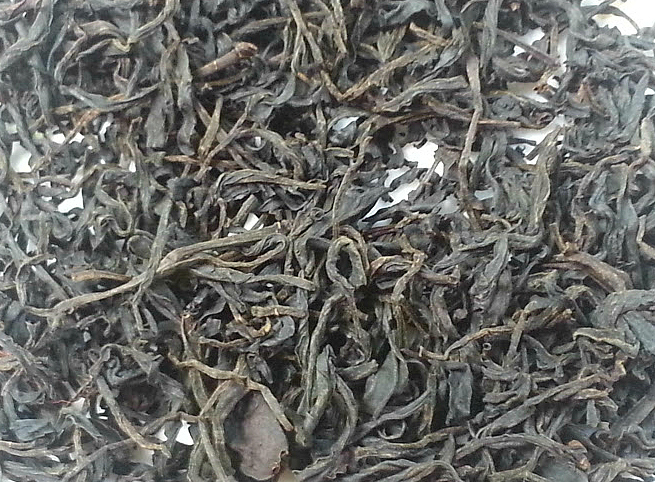
I'll mention dry tea scent in this part and then move on to review.  The Bai Ye black is very fruity, a complex scent that seemed to include some grape range, with lots going on beyond that.  The Taiwanese tea is also sweet but richer and warmer, more like a raisin danish.  They might not be all that similar but at least I'll be trying two good teas together.  Even the color of the dry leaves says more about differences than common ground; the Bai Ye is inky dark, with small leaves tightly twisted, and the honey black is browner with some tips.  I've drank this Taiwanese black tea a half dozen times so it's familiar; that will help limit crowding experiential space for the analysis.

Review

a superberry


The Bai Ye tea is just great.  It's sweet, rich, complex, and fruity.  A bit of tartness gives it a nice counter to all that, as if a touch of cranberry is one of the fruit aspects (which is the name of my home town, by the way, Cranberry, PA).  The fruit I picked up in scent as grape really is more in the cranberry range, but there is a touch of raisin to it.  There's a depth of flavors and aspect range beyond that, other fruit, a warm tone, a rich caramel layer.


The flavor complexity is so great I'd probably even interpret some of the rest in the background as floral, just nothing I can pin down as a specific flower.  I guess this tea could be seen as fantastic or not very good depending on how someone related to that tartness, which isn't all that common in black teas, at least not expressed like that, related to my memory of past experiences.  I'll go a little longer on the second infusion and see how it transitions and if I can separate out more that's going on.  I suspect some of the complexity relates to a mineral layer too, since my impression is there is lots of flavor range to this tea, but it's not clear that's right.

Bai Ye left, honey black right (different)


The honey black is completely different; so much for comparison making sense.  It seems a little better than I remember from making it last time; I think the tea does well if you bump up the proportion and cut the brewing time and brew a more intense, richer version.  Made in a straight Western style it's a bit thin, and comes across as more woody, but ramps up intensity without necessarily increasing brew strength a lot through more of a Gongfu approach (in the middle, really) helps the rest come across.  I am getting plenty of cinnamon raisin danish in the flavors.  It's not really tart at all, so different than the other in that regard.  It's about the same for sweetness level, and both are rich and complex, just quite different in character.  It's not as bright, and the flavors range is completely different.  There is fruit to it as well, but more along the lines of apple cider (so I guess there could be a faint hint of tartness, but in comparison none at all).


Again for this tea someone might love or hate it depending on type preference.  It's different, maybe even more than the extent to which different teas are always different.  On the down-side someone could interpret part of that flavor range as cork instead of apple cider / raisin danish, and that wouldn't necessarily be wrong.  Or maybe it's both.  The richness and complexity remind me of different ways that versions of malt come across in tea but to me it's not malty, in any sense (not Assam edgier mineral malty or Jin Xuan black tea ovaltine malty, which was showing up a little in those hei cha).


One strength of other types of teas, or limitation of black teas, from the reverse perspective, is that they can taste nice but flavor is what there is to experience, you drink it and it goes.  High mountain oolongs have a rich, full feel and long aftertaste; Wuyi Yancha have lots going on, seemingly extending into subconscious levels of exposure, aligning your chakras or whatever else.  Pu'er spans a broad range beyond those for taste, aftertaste, mouthfeel, and drug-like effects.  There is some fullness to both these teas, and I'm noticing that the Bai Ye flavor sticks around well after you swallow it.  If anything that tartness, sweetness, complexity and richness hits you when you first sip the tea and then a second time after you swallow it, with the effect transitioning afterwards.  It's not like with some types of sheng pu'er, where the aftertaste is almost stronger than the taste, and the experience doesn't re-intensify by taking another sip within five minutes since it's still going on anyway, but it's not exactly there and gone.

Second infusion


As I see it I'm brewing these teas in between Western style and Gongfu style, not ideal for passing on the type of experience others could duplicate, but it's not rocket science to work out a proportion and timing in between the two.  It's a little odd that I'm using a Western device, an infuser basket and cup, for the Bai Ye, and a gaiwan for the honey black, so this really isn't a controlled experiment, even though I have supreme confidence in myself to brew teas from instinct.  Judging from how these are doing early on both these teas might be much better suited for Gongfu style brewing than Western.  Often for black teas the results are similar, or in some rare cases Western works better, but it works best to check that by brewing teas different ways to know for sure.

I get it about most other people being on the other side of that, and using very standard approaches, for two different sets of reasons.  Some people newer to tea would want to follow whatever approach is considered best and get brewing right, or others with lots of experience could have dialed in forms based on a lot of exposure.  It probably wouldn't be atypical for people to prepare these Gongfu style, even though they are black teas.  As partial explanation for using non-standard approaches (hybrid forms),  I started out mixing tisanes randomly 25 years ago, and started on brewing loose teas by instinct in the range of 9 years ago.  I'm an engineer, which I guess could connect with me experimenting a lot to see what works, versus taking a rigid standard approach.  To me it's like cooking; some people use recipes, and go line by line, and I absolutely don't, I just wing it.  Except for making chocolate chip cookies; I'm not crazy (although those can be re-engineered, to an extent).

The Bai Ye hasn't transitioned much; it still has a good bit of fruit going on, paired with a tartness that works, with complexity below that, a sort of rich caramel range that is similar to that found in roasted teas.  This really does taste like a black tea version of a Dan Cong; that part isn't disappointing.  Those can be different in lots of ways, the oolongs, more subtle, or quite intense, fruity or floral, smooth, or a bit edgy, with tartness and a unique type of astringency bite.  This tea is more straightforward.  Since I'm not getting anywhere with describing changes this might be a good place to check the Yunnan Sourcing description of it:


"Bai Ye" (lit. White Leaf) Dan Cong is grown in Ling Tou village in the north of Raoping County (Guangdong Province).  Bai Ye Dan Cong varietal plants are special in curved large appearance with light yellow-green crowns.  The aroma has both Flower and Honey characteristics with a heavy pungent nectar quality.  The taste is thick and pure with a sweet after-finish.

Our Bai Ye dan Cong was picked in late April 2017 and processed through May. Instead of being processed like Dan Cong Oolong, this teas was processed into Black Tea by wilting in small cloth bags in the sun and then shade.  The resulting tea is incredibly complex and unique.  Bai Ye Hong Cha has thick sweetness and a very pronounced baked sweet potato taste that lasts many many infusions. 


He's probably right; that is sweet potato.  That tartness had pulled my interpretation of it elsewhere, since sweet potatoes definitely aren't tart, but I agree, that captures the rest beyond the tartness better than I did.  Baked yams come out a little richer and heavier, if I'm remembering the two right, and this is lighter and brighter than that, so sweet potato it is.  It's funny how the power of suggestion works, how interpretation goes.  They sell fresh roasted Japanese sweet potatoes in high end grocery stores here--priced way higher than any root vegetable sells for, several times over the normal rate; they turn that scent-experience into an impulse sale opportunity--and this is a good bit like that.  Even the raisin-like sweetness and touch of caramel are parts of that overall experience, natural results of roasting the sweet potatoes.  Strip that touch of tartness away and it's exactly like roasted sweet potato.


It's a bit of a shock to my palate drinking the Taiwanese honey black after this.  The two overlap so little it makes no sense drinking them together, and the contrast doesn't seem to inform much, but it is interesting.  The cinnamon-raisin danish effect is a lot stronger, and the spice tone has moved into a bit more range.  I just reviewed a tulsi (holy basil) and Assam green tea blend, and went into how licorice root seemed to relate to one flavor element, and the Wikipedia article said that flavor compound range shares some common ground with anise, star anise, and fennel.  Of all of those this reminds me the most of fennel, the one related aspect, which is only a secondary part of what's going on.

That probably sounds strange, that a tea that tastes like cinnamon raisin danish also tastes like a vegetable that's between licorice and celery, but it kind of does.  It's got complexity.  Brewed differently all of that would drift a lot further towards cardboard, or at least balsa wood; it wouldn't work nearly as well.  It's funny how for some teas it's hard to get them to express a broader range of character and for others they naturally shift a lot, based on only small changes in brewing approach.  This tea's aspects balance well but it is unusual, and it makes a big difference related to getting it right.  For some black teas using cooler water helps the flavors balance better, shifting the distribution of astringency and brighter, sweeter flavors, but I think this needs to stay brewed in the normal hotter range (perhaps a bit off full boiling point though) to keep that caramel or toffee element balancing the spice and earthiness, and to draw out more of the earthiness and structure.  There's not much astringency to be concerned about in either of these teas, really.

Being four relatively full glasses of tea in it's a judgement call going for another round (I'm brewing these in between the two styles, but using a good bit of tea and water for both).  Using small gaiwans works a lot better for comparison tasting; my instinct for what will work for brewing isn't always paired with foresight for how it's all going to play out.  I'm reminded of doing a four-way compressed white tea tasting that worked out great except for completely dosing myself with caffeine, which I finally came down from in the mid-evening.  I've got a touch of a cold too; that changes things, and I don't want to be drinking a lot of tea.  One more round though; there's tasting work to be done, and these two teas will go well beyond that.


Bai Ye left, honey black right


Third infusion


Right on schedule, a slightly longer steep in reasonably hot water draws out a bit more caramel in this later infusion in the Bai Ye.  That tartness has faded away, and the overall range is more like that specific complexity in Lipton tea (in a good sense; I don't mean it's starting to taste like low-grade overly-blended tea dust now, I guess it would work to say malt picks up, but that's too simple).  Mineral base is picking up; that's part of it, but it's really more about that one higher-end aspect.  It reminds me a little of baseball glove leather, not the musty 20 year old catcher's mitt type, the bright, sweet, almost tangy, newer equipment, newly oiled infielders glove version.  Sometimes I wonder if I'm actually still making any sense.

With the intense fruit mellowing out and earthier range picking up the tea is still nice but moving towards a more conventional black tea range now.  This could pass for a better Ceylon at the same point in the infusion cycle; the flavor range cycle paths cross.  The sweet potato is still there but not as intense, and a broader mix of flavors combine.


The Taiwanese honey black is showing even more warm, aromatic spice.  I completely wasn't getting this when brewing it using a standard Western approach.  That warm spice--which is hard to describe, really like a spice blend, cinnamon with a couple of lightly balanced root or bark elements--pairs well with apple cider fruit that's actually picking up.  The raisin and pastry-like aspect is still there but moving to a supporting element range.  Oddly while all that flavor complexity is so ramped up the tea is thinning quite a bit in feel and other effect.  Both these teas will easily go one more infusion, probably even a pleasant one for both, but earthier elements are probably going to be a bigger part of those.  Often that's a dark wood tone, but some Assams I tried not too long ago went to being pine-like.

Conclusion; subjective impression


The Taiwanese tea is better than I remember, or maybe better than I've experienced it since I've been trying it out prepared Western style.  It's quite good made this way, complex and interesting.

The Bai Ye is probably better, although that's always a judgment call, with subjective preference coming into play (which is why I don't always include a summary take like this).  I expect trying it prepared different ways and using a purer Gongfu approach I'll see even more out of this tea.  I ran across a couple of reviews of last year's version when looking up the Yunnan Sourcing page for it, which per my more typical approach I didn't read until editing the notes.  In this case even the Yunnan Sourcing description was a complete surprise until I checked it making notes; it can work out having such a bad memory.  That previous year's version was well received, to say the least, described as more complex than I've given it credit for, but it wasn't mentioned that the tea is a little tart.  Funny.

Both are exceptional teas.  The Bai Ye comes across as more unique, probably not unrelated to me already drinking through 150 grams of a very similar black tea I bought at the shop next door in Taiwan since January.

Post-script:  the completely unrelated slice of life part


I've been sharing some images of what things are like here in Bangkok (and even more of my kids, really), and related to the former I wanted to show what a front yard that resembles a jungle looks like here.  An old PA friend shared an article about a modern trend to live with lots of houseplants, to make a jungle of your home.  It's the rainy season now so things are as green as they're going to get.

The pictures won't completely bring across the feel, or the smell.  Different flowering trees and vines give off strong smells at different times of the day, most often at night, so it's nice walking around after dark and noticing that.

The plants are my wife's mother's passion; she is the owner, who we live with in a nice house in an older part of town.  It's not one of the oldest parts, per my understanding, a neighborhood the last King (Rama 9) developed when he moved the Royal residence from the Grand Palace to Chitralada, which would have been around 60-some to 70 years ago.  Bangkok and Thailand did a lot with modernizing over the last four decades or so, so it doesn't really feel like a "developing" country to me, but back then it would have.


breakfast spot


front yard


other yard, trimmed back a good bit; it had been getting wild


mango tree; the squirrel was surprised I climbed it for the mangos


a very green driveway view


there is a house too


Monday, May 15, 2017

Lin Mao Sen Dong Ding (Taiwanese roasted oolong)


the shop is so beautiful I'll break form related to showing the tea first


This is a review of a version of Dong Ding, a mid-roasted Nantou area Taiwanese oolong, from the Lin Mao Sen shop in Taipei.  I'm reviewing a fair number of basic teas these days, which really relates to different purposes.  I never did try or review a tea from this shop yet, in spite of buying a couple awhile back now, and it works to compare it to a similar type I tried not long ago.  I shared some of this with a couple of monks I know here before I tried it, which is the kind of thing I never tend to do, so that triggered tasting and reviewing it.


I reviewed a similar Nantou roasted oolong from TShop recently, a NYC shop, a tea that tasted nice but gave up a lot related to better examples in body and feel.  It was sold as a modest level version of that tea, so a bit of gap in overall quality level seemed reasonable.  It felt a little like unfinished business though, not describing a better version in detail.


The rest of the back-story of this tea is about visiting Taipei to buy it.  I also visited another great shop there next door, Lin Hua Tai, and reviewed a nice lighter oolong from them here, compared to that TShop tea, and an Oriental Beauty.  Both places are really worth a look if you visit Taipei, and given the wholesale vending theme at both they would be a good place to pick up a good bit of tea.  I bought 150 grams of this one, the minimum amount that both shops typically sell, given that volume orientation.  I still have one "honey black" type to get to from this shop and that will cover all those teas I bought over the Christmas and New Years break, from those two cities on opposite sides of the world.


and they carry teaware, lots of it

Review


The tea is full and creamy, with good flavors.  It's right on where it should be, even early on when it's still opening up.  I'll go over aspects, listing them out, but it's really about that, the way it all works together.

Flavors might not be the most exceptional part but I'll start there.  The tea is bright and sweet, very clean in effect.  It has a creamy feel that extends into a subtle creaminess in flavors that really stands out.  It's not buttery, but there is an effect that spans from feel into taste that seems to relate to cream.  It's a bit floral, but the integrated flavors spans lots of range.  Minerals underlie all the rest, but that scope isn't pronounced.

That medium-ish level of roast stands out, but it's not easy to take in what that is contributing given all the complexity.  It definitely doesn't switch over to tasting a lot like cocoa, spice, or toasted pastry, as more roasted teas might, still light instead.  It reminds me of a lot of teas that tried to strike that ideal balance and didn't quite get there.  If these flavors were off in just a small way, too toasty, leaving behind the floral character, not integrating the mineral undertone properly, or not roasted quite as much, it wouldn't work nearly as well as it does.


Feel and aftertaste are perhaps the real strengths, adding those extra layers to the experience beyond flavor.  It's the opposite of thin, quite full and rich.  The structure coats your mouth in a unique way.  The aftertaste lingers for a full minute after tasting the tea, with a very subtle part of that experience not really ever seeming to end, just continually tapering off.  I keep saying that I'm not as into feel as taste but it does make for a more complex experience when it all comes together, and you sort of perceive the lack when it doesn't.  In a good version of tea it's not so natural to say one aspect range really makes it work and they all kind of hang together.


It's the kind of tea that works really well brewed at different infusion strengths.  The flavor intensity would be fine brewed very lightly, and the feel doesn't become negative even brewed on the stronger side.  It works really well at different infusion strengths for different reasons.  Base tones either stay subdued brewed lightly or ramp up when stronger, with feel going from full and rich on the lighter side to a bit extra thick and intense.  Different people might prefer a different optimum infusion strength or it can be nice messing with that, experiencing a range.


It really took a few infusions for the tea to fully open up but it was bright, creamy, floral and complex throughout that transition.  After getting going it's a bit warmer but doesn't lose anything related to those brighter aspects.  It might move a little towards a light cocoa, or something along that line, but as an aspect that's subdued and integrated.  It could even be interpreted as a difference in how the mineral tones play out, or as something else joining that base profile, in the range of toasted almonds.


A few infusions later--a good number in--the brightness does fade some, and woody tones replace a lot of the floral nature, and mineral picks up.  The creaminess doesn't really fade, or that overall fullness and complexity.


All of this sounds a bit standard for the type, doesn't it?  The interesting part isn't about the length of a flavors list, although that is long enough, or any of those aspects being novel, although many are pronounced in especially pleasant ways.  It's a much better than average tea because of the balance it all strikes.  That roast effect gives it complexity without ever seeming like a medium roast level, related to being able to pin down a direct contribution, but it definitely adds depth.


Many, many infusions in--maybe 15, with the proportion of tea to water a bit heavy-- the tea stays clean, balanced, and positive.  The fullness fades, the brightness gives way a bit, and the aspects transition but it's still great tea, just as it is.  The flavors don't go off in any way, a good sign.  It thins, but even after brewing that many infusions it's still thicker in feel than moderate quality level versions.


This shop was well regarded by others I know that had visited there, and in online recommendations, and this tea is a good indication as to why.  Note that I'm not really trying to place it on a scale related to rare and exceptional versions of this type.  I liked it a lot; it's probably as good an example of this style as I've tried, definitely better than most.


If I'm remembering the price of the tea correctly it was a real steal for tea this good, on par in pricing with options nowhere near this quality level, probably even in comparison with most online vendors.  But then it is a wholesale oriented shop in Taipei, so one might naturally expect to find a good tea at a good price there.


Sukhothai, Thailand; no relation, just sharing it

Thursday, January 19, 2017

Searching for tea in Taipei, Taiwan


with Shiow Lin, owner of Lin Hua Tai tea shop (and sporting a travel beard)


A recent tour-themed vacation back home to see family in Pennsylvania also spanned Washington DC, New York City, and a short stop in Taipei, Taiwan.  I posted about looking for tea in NYC but the subject didn't come up in DC.  So close though!  We were right on the edge of their Chinatown at Union Station at one point but bizarre as it might seem the search for tea wasn't a priority.


Of course it was a priority and did come up in Taipei; tea is part of what they do.  My wife said "given what you bought in NYC that's enough tea already," but that was clearly just temporary insanity induced by the jet lag.  I'll go through what I experienced of it there, although I really didn't do the subject justice since that visit was basically a long layover to take a look around, with only two full days there.


Taipei is cool, by the way.  It felt a little like Seoul to me, maybe even a little more laid back, with a vibe that's different in a way that's hard to describe.  I wasn't seeing so many foreigners around but I never had the impression anyone cared much either way that we weren't from Taiwan, which was nice.  People seemed pleasant and genuine.  It's tempting to compare it to mainland China but perhaps not fair or equivalent to directly compare the few places I've been in China given some significant differences (Shenzhen, Beijing, and Shanghai).  The culture was friendly and relaxed, not as hectic as most cities everywhere feel (except Bangkok also isn't like that; Thais wouldn't be into it).  The look was as if it had been completely modern and fully developed a few decades ago, maybe even longer.  It didn't have that aged urban / industrial look US East Coast cities have but it didn't have a brand new feel either, in the middle.

Taipei 101!


On the subject of tourism and what else we did, we saw Taipei 101, and shopped a little, and tried some local food.  That was it; the two days filled.  I really wanted to try the Taiwanese version of shaved ice but being the dead of winter there--at a balmy 19 C / 66 F, give or take, cool but on the comfy side coming from -6 C / 20 F in NYC--no one was eating flavored ice just then.


About looking for tea there


Tea is not so hard to run across there; tea shops turn up everywhere.  Unfortunately I was seeing places selling the same ten or so common types, high mountain oolong, with an Oriental Beauty version, and a little black tea.  Those are fine, it's just that one would want to either find something more unique (ideally) or else at least run across above average versions of those.  Without trying a tea it would be hard to know if it wasn't just a mid-grade uninteresting version.


I'd just had a so-so experience in a NYC branch of the main chain store from Taiwan, Ten Ren.  They were selling tea as "black tea," a clear violation of the idea that there should be as many details about the tea offered as possible.  Of course if you can try a tea first that's sold only as "black tea" if it's great then it's great, but that's not a good sign.


Taipei, from Taipei 101 on a cloudy day


So how to turn up leads?  The obvious answer:  Google!  Going further, an online acquaintance and blogger Nick Kemble wrote a great post on tea from Taiwan, based on background knowledge from living there (where he still is now), in this post:


I've been living in Taiwan for nearly eight years and I've become addicted to all kinds of Taiwanese foods and drinks, but it wasn't until last year that I first developed a true appreciation for Taiwanese tea (cha2 茶).


His advice his favorite place made up a short list, which is almost all I had time for:


My favorite place in Taipei to buy bulk tea is the Lin Mao Sen Tea Co 林茂森茶行 (195-3 Chongqing N Rd, MRT Daqiaotou...  The clerks speak impeccable English and can describe all the characteristics of the teas to you before you buy. There are dozens of varieties on display in large metal barrels, and the main local varieties are sorted according to quality, ranging from very cheap to very expensive.  Tea, just like most dried goods and produce in Taiwan, is sold by the jin (jin1æ–¤). One jin is equivalent to 600 grams... 


Lin Mao Sen shop; it is absolutely beautiful, and the people were nice


I should also mention that Lin Hua Tai is a related shop (website), with Lin Mao Sen actually split off from that older shop located next door.  There is more backstory about that I won't get into, but both are worth a look.

The one place that comes up a lot in online discussion is Wistaria Tea House, a cafe that also sells loose teas.  Per reputation they have a connection to aged pu'er, even though that's tea from Yunnan, China, not local.  I didn't make it there; time was really tight.  One can review random observations about there on TripAdvisor, or review Tea Chat tea forum mentions of experiences there, or of other places.

I missed meeting a vendor that's probably a better tea reference than one is ever able to find, Stephan Erler of the Tea Masters Blog and the related Tea Masters Blog shop.  His blog is one of the best references about Taiwanese teas on the internet (in my opinion) and it's a real shame to not get a chance for a visit while there.  I could always just order online but I tend to buy teas when I travel and my wish-list for purchase ordering results in a long, endless queue I barely chip away at.  Perhaps it's not my place to judge since I haven't tried the teas but they look like incredible options in terms of range of selection and value, and some limited feedback in a discussion thread seconds that.


some pork dish, and other sides, just delicious


Visiting Lin Mao Sen and Lin Hua Tai tea shops


Lin Hua Tai; a bit of a warehouse feel, but cool


I'll come straight out with it:  these are the only places I bought tea.  We spent two full days in Taiwan, which went fast working around 11 hour time-shift jet lag, especially with two young kids in tow.  I was happy to have found such a good resource, although Wistaria would've been nice to see, or the Yingge traditional ceramics district a bit outside of the downtown area.

It would be hard to go further than Nick Kemble's description of the basics related to both those shops (Lin Hua Tai and Lin Mao Sen; he only described one but they're functionally similar).  They are both retail and wholesale shops that sell a lot of the basic types, and then a few others, in a range of quality levels or grades.  The smallest quantity they sell is 150 grams, with most teas a bit under $20 per that quantity for next to highest grade and around $30 for the highest.  Those are great prices, for what the teas are, at least in my estimation.  I'd know better after drinking what I bought, but at a guess people in the West aren't finding any better teas from most outlets, and they're definitely not paying as low as around $10 for 50 grams for teas on that level (although the Tea Master's outlet is a possible exception--just take a look at this description, or something more unusal).


Onto more back-story first, though.  Freeing up time for an outing was brutal, given only the two days to work with, so I was skipping an afternoon nap to shop.  A friend recommended another shop I visited first, in a different part of the city, but the tea offerings looked a bit standard.  They were probably good, but I passed.


after visiting NYC the subway had a 4 star feel, just missing "local color"


Getting around was rougher due to that sleep-cycle disruption haze, and not so long into the search I was slightly mis-routed twice in two places, looking for the Lin Mao Sen shop.  At least it wasn't snowing--the Taiwan winter is a cool version of room temperature, not that you'd know it from the winter jackets they wear.  It turned out I found Lin Hua Tai first, next door to where I'd set out to go, on the far side of the same street when walking from the metro.  Maybe it was the universe trying to tell me something.  It turns out the owner, Shiow Lin, had also lived in Pennsylvania (where I'm from), doing graduate studies at Wharton.  That is on the other side of the State in Philly, and I'm from up near Erie, but close enough.


After checking out some teas it was clear I was in the right place.  The lower grades looked and smelled nice; upper grades had that extra level of fruit, complexity, richness, or buttery character.  I mapped it all out:  I needed some high mountain oolong, some Oriental Beauty, and some of a nice fruity and soft black tea style that I love.  Onto payment:  they weren't set up for credit card payments, but luckily I had extra US cash they would take.  Or I thought I did:  my ultra-efficient wife had emptied my wallet of that when we changed countries, so I came back the next day.  That also let us check out a nearby Carrefour, a French grocery store chain my wife loves that's no longer in Bangkok.  I've only tried one of the teas so far, a honey flavored black tea, and so far so good, it was rich, complex, fruity, and very clean-flavored.


Lin Mao Sen teaware selection, part of it


Lin Mao Sen (website) was really more of the same, just in a lot more beautiful a shop setting, a bit more organized towards retail sales.  One owner--or the owner's son, however that goes in a family business--had lived in Canada so his English was also flawless, just lacking that cool twist that Brits put on the language.  I bought a sweet and rich black tea for a friend there, and more for me (so maybe I can do a comparison tasting with one from next door; I think those styles are the same), and some more-roasted Dong Ding, I think it was.


We had a nice talk about tea, about different shops, and pu'er, about the relation between the two shops (they had split five years ago), and about gaba tea.  Is that type familiar?  It's nitrogen-environment processed tea, a Japanese invention I think, designed to produce gaba, a brain-regulating compound that's supposed to relax you (with more on that in this post).  Per what I've tried of it the processing gives the teas a strange sour taste.  His insight:  it's really about the tea being relaxing, but it's also an acquired taste, as pu'er can be, although not everyone would acquire it.  Who knows if I've tried the best examples just yet; that would make a difference.  We talked a little about pu'er, about why it's even there, but nothing really new came up.  Somehow people there appreciate it too, even though they're not so into Wuyi Yancha or Longjing or whatever other styles might map over, but don't.


Lin Hua Tai teaware section, limited, but seemingly good value options


I also bought a couple of clay pots at Lin Hua Tai, at a reasonable price.  As for how that works out in function I'd not be the right person to judge, given my limited experience and knowledge related to different pots and types of clay.  But it'll be one more thing to mess around with.


my favorite part of visiting Taipei, these two


About comparing the two shops, Lin Hua Tai and Lin Mao Sen, the latter is set up better as a retail outlet (they take credit cards, it's more beautiful, with more range of teaware), but in general they seemed similar.  I'm not completely impartial because even after such a short span of time I consider Shiow Lin a friend.  I see that as a good thing; feeling a connection with a vendor with some shared background and a shared love of tea should be a more typical experience than it often turns out to be.


I'd recommend sparing some time at both shops, talking to people at both, and buying tea from both.  The tea might well not be the "teas that never leave Taiwan" but my impression was that most tea lovers would wish it was more common to find teas this diverse and this good, and offered as such good values.