Showing posts with label coffee. Show all posts

Monday, December 18, 2023

Thai Coffee and Tea Fest Expo


I recently attended a Thailand Coffee and Tea Fest Expo, in the Queen Sirikit Convention Center.  Typically those events aren't worth attending, related to specialty tea interest, but I had a good experience once meeting an owner of the Kokang Myanmar tea producer so it's easy to be more hopeful than expectations can support.  That was an event up at Impact, an hour north of city center, probably listed as the Thailand Coffee Fest here, not even mentioning tea in the event title.  That event summary article author was not aware of this event planning.

The short version is that it was a bust; there was no Chinese tea there, and no Thai specialty tea (no Indian tea either; I'll get to what was there).  There was mostly coffee, of course, and then in tea range also matcha, and very little in the way of other tea scope.  Only two booths, beyond matcha scope:  a Harney and Sons version, and another selling blends that were essentially in the same range.  I tried a couple of Harney and Sons teas; they were nice.  I might have considered buying a jasmine green tea version they were selling, that I had tried, except that they only sold it in a tea-bag version, and I'd prefer loose tea.  At least they were promoting tea.


I met an old friend, Pop / Danitha, who is an owner of Koto Tea Space, a cafe that also sells matcha, there promoting the matcha sales.  She guessed that there was no Chinese tea because it was mainly directed towards shop owners, not tea enthusiasts, so there would only be booths carrying what small shops or cafes would want to buy.  I didn't see anything related to bubble tea there, so that theory doesn't seem to completely hold up, but it could still be mostly right.  At any rate Chinese tea just wasn't happening, or even Thai tea.  I've seen Thai producers host booths at that sort of thing before, and vendors oriented towards Chinese teas, but it just didn't happen to be there.


Lots of matcha related shops were; maybe less than 10, but close enough to that.  That's still not so much compared to dozens of booths and larger vendors there relating to coffee.  It was nice seeing so many small roaster or importer outlets for coffee; apparently that interest is booming.  There were ample equipment sales for that, and larger and more elaborate vendor booths from larger mainstream vendors.  There were even coffee brewing events, which weren't running just then, but there were notices about them.

There were a few shops selling ceramics, hand made coffee and teaware cups; those were nice.  One let me try coffee in two different cups, claiming that this would change the sensory / aspect experience.  It didn't seem to, to me.  I have a badly deviated septum so my sense of smell isn't great.  The related aromatic flavor component sensation that occurs in your rear nasal passages seems more normal, that it doesn't cost me much in terms of sense of flavor, but I guess that I would never really know.


teaware from Aoon Pottery & As.is


the small black ones had the nicest feel, but I usually use white cups


Pop's main business is the Koto Tea Space, and it represented the closest thing to a specialty tea theme in the event (really a related supply company, Chajin Tea Supply).  They had exhibits about matcha, and offered samples of a few kinds.  I tried matcha with coconut.  It was ok, but the umami isn't all that familiar to me, so it also just tasted like seaweed.  I've drank matcha before, and have reviewed a number of sencha and gyokuro versions in this blog, but I'm far removed from that experience now since it has been awhile.  A good version of matcha bumps the umami experience to an unfamiliar level, and the coconut flavor input made it harder to relate to instead of easier, or at least it seemed that way.  

It was nice talking about Pop's business theme, how all that goes, but it doesn't seem relevant to a summary of expo experience here.  Her cafe would be interesting to check out, off to one side of Chinatown, more or less, and they hold different themed tastings, of course all related to Japanese teas.


her related tea supply business, what was represented there


That was really about it.  I tried a jasmine white tea from Harney and Sons, and that one at Pop's station.  There was one other stall selling Thai flavored teas that I didn't really explore, and beyond that there was only more matcha.


So I walked around a rice expo beside that coffee and tea version, and ended up buying red and black Thai rice.  I've had a black version of black sticky rice (glutinous rice, khao neow) but never black standard rice.  My wife is into brown and other colored rice versions, so red rice is familiar.  It's not usually as delicious as white rice, but I bought it for her, not out of my own interest.


two kgs of rice was 200 baht, about $6, a good price


It would've seemed more anticlimactic if that wasn't what I expected to occur.  I would've thought a main Thai oolong producer might have been there, or another commercial tea vendor, along the lines of Harney and Sons, but just something else.  A couple of places had matcha ice cream for sale; that was a nice extra offering, but I didn't buy any.

It's kind of a shame that there isn't more going on with tea in Thailand.  That expo didn't represent all of it, of course.  Oolong production is fairly mainstream, and the sheng "pu'er" versions I keep writing about are appreciated by some people.  I just wrote about a dozen of my favorite or most popular tea outlets in Bangkok, and nothing in that expo related at all to any of that, except that I mentioned Pop's business there.

The contrast with coffee tells the story.  There were about 40 or 50 small booths related to independent coffee companies, and then at least a dozen larger businesses represented in much more elaborate settings.  Some had a lot of espresso machines and such on display, and some simulated cafe or physical store environments in well-crafted structures.  It's like how beer companies manage displays in such event exhibits, just not quite that elaborate, without the music, activities, and enthusiastic staff.  Then for tea there was a mixed range of a dozen booths, with not a single one really focused on loose specialty tea.  Harney and Son's selling tins of tea bags was the closest to that; not much of what was there even seemed to be loose tea.  Of course I gave it a quick survey, not really a thorough review, since if loose English Breakfast Blend turned up I wouldn't want that anyway.

Specialty tea is not having a moment in Thailand or in Bangkok, per my experience, not just at that expo.  It does help to clarify that small shops selling brewed tea that source loose tea versions, probably typically mostly low grade Shui Xian, buy that from Chinatown shops, so there is no need for a new vendor to hype a new form of that offering.  The oolong that was missing was a real gap; usually one of the main producers will promote their versions in events like that.  I suppose that never related to enough extra business level sales to keep up with attending events.  Bubble tea is absolutely everywhere in Bangkok; it's odd there weren't a couple of supply companies selling versions of that, or maybe there were and I overlooked them.


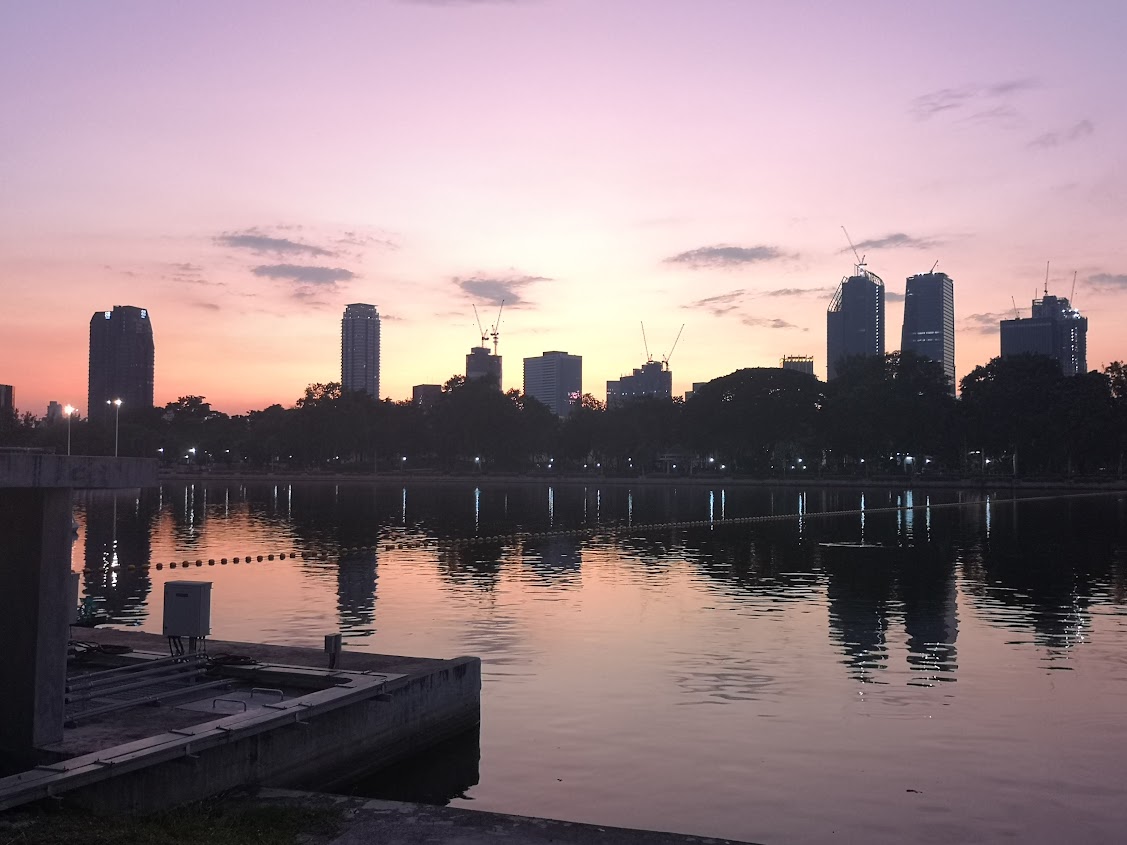
city view from the convention center; a nice walking and running track surrounds that lake


the sunset later on


Sunday, November 12, 2023

Roasted papaya seeds as a coffee substitute, with monk fruit seeds


Oddly I wasn't trying to see if roasted papaya seeds might work as a coffee substitute, and I certainly wasn't focusing on any specific health claim benefits.  It came up that the seeds might be healthy, so I prepared them in an arbitrary way, and it was amazing how similar they are to coffee.  You can skip ahead to that part in a "review" section, or hear about the background, and another tisane I prepaired them with, monk-fruit seeds.  It's more or less some sort of super-food input too, it turns out; strange.


This all started with seeing a gag video of a woman eating a papaya, consuming the seeds instead of the fruit.  Several comments said that you really should eat them, that they're healthy, especially related to clearing out internal parasites.  So I dried them the next time I bought a papaya, a couple days later.  That cost me less than $2 for a huge, almost ripe one; Thailand is an absolute paradise for tropical fruit.


I warmed them in a toaster oven for 20 minutes and they didn't fully dry, so I gave them another 20 minutes at 160 C.  That seemed to roast them a little, going beyond drying them, which didn't seem like a concern, or maybe even a positive input.  

I then crushed them in a mortar and pestle device and brewed them along with a sweet Chinese herb my favorite shop owners gave me last week (seeds of a monk fruit, it turns out).  It's a little too sweet and a bit one-dimensional on its own, so it seemed perfect for combining with this, since surely dried papaya seeds aren't very sweet (probably; I guess I still don't know that for sure).


Let's check on monk fruit background and health benefits and then set that aside:


Monk fruit is known for its delicious, sweet taste that comes from natural antioxidants such as flavonoids and mogrosides. It is currently gaining popularity as a natural, low-calorie sweetener.

Monk fruit extract has been used in traditional medicine for centuries due to the following potential health benefits:

Prevents oxidative damage

Studies in rats and mice have shown that monk fruit antioxidants have protective effects...

Research suggests that flavonoids and mogrosides in monk fruit can reduce blood sugar levels. According to a study, monk fruit extract can reduce inflammation, repair damaged cells in the pancreas, and relieve symptoms in mice with diabetes...

Research shows that eating mogrosides helps suppress fat and cholesterol levels and reduce body weight in mice with obesity...

Monk fruit polysaccharides can increase the activity and function of immune system organs like the thymus and spleen in mice... 

Monk fruit can protect the liver and even repair liver damage....


That shop owner (Kittichai of Jip Eu) said that it helps with a fever, that you can take it to help your immune system when you are sick.  I got the impression that he also meant that it reduces internal heat in the Traditional Chinese Medicine sense, the heat / cold / wind / qi kind of theme, which I know nothing about.  

It's definitely really sweet, and it has a more pleasant flavor than stevia, which has more of an aftertaste.


Review:


it's oily


This is really good.  I really didn't expect this to be good; that wasn't in the range of what I expected as a possible outcome.  It tastes like coffee; this could be coffee.  Then there's an herbal edge to it's that's not coffee, so I suppose it could be coffee flavored in some way, like with one of those flavored creamers.  Of course I can't separate the input of the monk fruit, but from having that alone earlier it adds a relatively neutral and intense sweetness. 

The flavor list:  coffee, mild bitterness, oily / creamy feel (ok, that's not a flavor), sweetness (a little like stevia, but not as aggressive, but with a similar but lighter aftertaste).  There's also an odd flavor resembling root spice, like root beer, so sassafras root.  A rich, warm dried fruit tone resembles tamarind; that might be partly from the monk fruit, and I just don't remember it tasting like that, since maybe the sweetness overpowered the flavor trying it alone.

The oily feel is odd; that's pleasant, in this context, but paired with other flavors it could be really off-putting.  It's just like how gas station coffee feels when you add artificial creamer to it; it's thicker and creamier than cream causes.  There is literally an oil coating on the top of this so that's no wonder.  They're seeds; they can contain as much oil as they happen to.


for once I Western-style brewed something, and used a strainer


Second infusion:  like the first round, but much thinner.  The sweetness of that herb is even more pronounced, because those just keep brewing, but the papaya seed is surely done now.  It's even closer to gas station coffee now.

I don't mean that as a criticism.  For older people who were there in the 20th century gas station coffee was a respectable thing.  I would add for younger people that it's like grocery store tin coffee but I bet that's not going to help.  Like McDonald's coffee, or Tim Horton's?  Just kidding; I only eat the doughnuts there, and I don't know what it's like.  Their maple cream-filled doughnuts are so good though.


I bet if you bumped this roast level just a little it could seem like French roast.  This is still medium roast level, and since there is no "light" that means light (outside the coffee world; they probably have it).  Then with actual cream and sugar it might seem even more like coffee, almost exactly like it.


Background on papaya seeds as coffee replacement, health benefits


I Google searched use of papaya seeds as a coffee replacement, and it doesn't seem like a common theme, but it did turn up.  This wasn't what I expected:  The Potency of Carica papaya L. Seeds Powderas Anti- Obesity ‘Coffee’ Drinks

Other formal and informal sources aren't making and reviewing this health claim, or even mentioning this subject.  Here is their conclusion:


Based on the above explanation, it can be concluded that 25.1 grams of papaya seed powder can be obtained from 250.0 grams of wet papaya seeds. Most respondents like the texture, color, aroma, and taste of papaya seeds ‘coffee’. The pancreatic lipase inhibition power of 1.42 gram of papaya seed powder is equivalent to 1 tablet (120.0 mg) of Orlistat. Therefore, using papaya seed powder as antiobesity ‘coffee’ drink is reasonable.


Reasonable?  The obvious question is "what is a lipase inhibitor?"  Then next one might wonder if these results are reliable, and if these papaya seeds really function as that as claimed (supported by their actual research study, so maybe).  But let's start with what they are claiming.


Wikipedia article on Orlistat:


Orlistat, sold under the brand name Xenical among others, is a medication used to treat obesity. Its primary function is preventing the absorption of fats from the human diet by acting as a lipase inhibitor, thereby reducing caloric intake. It is intended for use in conjunction with a healthcare provider-supervised reduced-calorie diet.[4]...


Sure, but again what even is a lipase inhibitor?


Human pancreatic lipase


Pancreatic lipase, also known as pancreatic triacylglycerol lipase or steapsin, is an enzyme secreted from the pancreas. As the primary lipase enzyme that hydrolyzes (breaks down) dietary fat molecules in the human digestive system, it is one of the main digestive enzymes, converting triglyceride substrates like 1 found in ingested oils to monoglycerides 3 and free fatty acids 2a and 2b.[5]


So it stops you from digesting some of the fat that you eat.  And this is why the Wikipedia article on Orlistat mentions that a lipase inhibitor can cause your stool (your poop) to seem oily and have a loose texture.  A little of that would go a long way.

It's impossible to estimate my dosage from that.  This might've been about 5 grams (could be 7), and they said that 10 grams makes 1 gram of powder, and you should take 1.4.  So I'm at one third to half of a normal dose, from the seeds from one large papaya?  I'll add how that went in terms of digestion impact tomorrow.  [later edit:  noticeable, and like Wikipedia described, but not problematic].


Reading around these sources they say that it works (lipase inhibitors, not papaya seeds).  I don't want anything adjusting my digestive system, even though I did gain one kg the last time I was weighed (up to 75; I might fast for a week instead of 5 days next time, to get that kg back off).

The standard health-page input is that it's good for supplementation and treating all sorts of things, including bacterial infections, fungal infections, and parasites.  Who knows; maybe.

It's good though, pleasant to drink.  I'll make this again the next time I buy a papaya, since the trees in our yard don't seem to be on that page of offering one just now.  


that's 4 of them, but the middle one has died since


Thinking back this may be the closest I've come to drinking coffee this year.  That's crazy!  In the past I would sometimes drink it at work, but I barely go to work in the office now, one day a week, unless I'm out of the country working remotely.  I'm in the habit of drinking tea-bag tea there now, since I never took tea and an infuser to that new office site.  Then I would drink coffee at hotel breakfasts when we travel in Thailand, but we last traveled in Thailand in Dec-Jan, the holiday break.  

I guess I'm not much of a conventional American now.  At least I've been in a cycle of eating hamburgers recently, but still made out of ground pork, still following the norm that Thais don't eat beef, even though I'm living alone.  At least I grill sometimes?


I'm shocked that this tisane was this good, that it's far and away the best "herb tea" replacement for coffee that I've ever tried, so close to the flavor and feel of coffee.  Who knows about the health claims; those don't seem to matter, unless you could arrange to drink it regularly.

It's a little odd that I experimented with using papaya leaf as a tisane almost 8 years ago and this theme never came up.

Anyone who eats papaya once in awhile should give this a try.  Not even for the health claims, or to replace coffee, just because it's actually good.


Sunday, May 29, 2016

The Bangkok World of Coffee and Tea Expo


I've seen notices for tea and coffee exhibitions in the past, and always intended to check one out, but only now finally did (the World of Coffee and Tea Expo).  Expos are common here in Bangkok, just an unusual version of a sales event, held in huge conference centers based on all sorts of themes.  We've been to similar ones related to electronics, baby goods, books, and travel.  It's not so similar to the tea conventions people frequent in the US, not focused on just that one theme, and this was just one third of a huge event covering a lot of additional food scope. To make a long story short, the scope was limited but some interesting things came up.


Chang beer!  But I wasn't there for that.


I did go to an organic foods event once that had a dozen stalls with people brewing and serving samples of tea, so I expected more of the same.  Novelty in tea selection is limited in general in Thailand, and I didn't expect a lot of foreign-originated sales to be part of it.  I'll describe some of what was there by vendor, easier for a reader to follow.  When first walking in it looked like any other expo, noisy, with lots of people and lots of presentations, and an amusing use of presenter "pretties" to sell all sorts of things.


Dilmah, commercial Ceylon teas


I must be joking, right?  These teas are sold in grocery stores, essentially no different than Twinings (not all of which is crappy tea-bag tea).  I kind of am, but I wasn't seeing a lot of tea when I first walked around, lots more elaborate coffee sales and brewing equipment, and I started to get nervous that this vendor might be what I came to see.  I didn't stop at their presentation area at first, and really did find a few more interesting places before stopping by here to check it out.


Of course they have a broad range of flavored tea-bag teas, none of any interest to me, but in the past I've tried slightly better loose tea from them.  It was still nothing novel or above average, still the kind of tea you need either milk or sugar added to get down, to soften the astringent character.  Taken with milk and sugar their loose tea is much better than Lipton's tea bags, but that's sort of beside the point.


They had a nice demonstration display that seemed to show the other kinds of teas I'd actually be interested in, better loose teas, but they weren't preparing samples of those.  They asked if I'd like to try a pomegranate flavored iced tea (I think it was--something fruity), which I declined.  Looking around some of their loose tea could've been ok, types like Tie Kuan Yin, which they said was also from Sri Lanka.  It would seem odd if the loose Lapsang Souchong and Darjeeling they were selling were also from that country, but we didn't discuss that.  I would guess that they do make teas that the average loose tea drinker really could appreciate, maybe even better Ceylon teas that they would love to have a chance to drink, but I just wasn't seeing it there.


They did give me a tea-bag version of a Ceylon oolong to try, my first, I think.  It wasn't great, and didn't taste like much at all.  I had a Thai oolong sample that I was carrying around to compare it to (Boon Rawd, a commercial producer here, but one that at least makes reasonable loose teas).  That was a light oolong served in a pyramid-style tea-bag, much better than the oolong dust in the Dilmah tea bag, not that I needed a comparison tasting to place either.  I dumped most of the hot water from the Dilmah cup into the Boon Rawd sample cup to get one more infusion out of that bag, which probably would've went at least one more.


Boon Rawd, commercial volume Thai tea maker / plantation


This was what I was expecting to find; a tea maker producing decent lightly oxidized oolongs, teas I'd appreciate more if I'd not already tried a thousand of them.  They also sold flavored teas, and some herbal teas (tisanes, to some), not that I was interested in that.  There's not much more to tell; that one oolong was nice, but not nice enough it stuck in my mind which type it was (Jin Xuan, Four Seasons, etc.; I think the latter).

As for contact they have a website, but for English language a related article might work better, although there isn't much there.  That says they produce 400 tons of tea a year, a good bit, and this blog post says they have a restaurant at their farm.  A visit might be nice but I wouldn't expect much for any better quality specialty teas.

I thought I'd tried decent osmanthus oolong from them before, one of the few floral infused teas I'd find it worthwhile to drink, but now I'm remembering it was from this other commercial producer instead.  That previous floral infused tea was nice but not interesting enough for me to try another sample of one at the expo.  So there wasn't much to report.  If they make a next level of better tea that would be news to me, but at least decent commercial loose teas are a nice gateway offering, a leap forward from what people sell as lemon tea or milk tea (adulterated low-grade black tea).


Specialized Ceylon Tea Supplier for Wholesale and retail  (SNSS)


Nice to see something slightly different; a vendor selling a broader range of Sri Lankan teas.  I tried a few; they were fine.  Better Sri Lankan / Ceylon tea can be something of a revelation, but this was just pretty good.  I tried a range of their black teas and a green tea, and bought the better black tea they had on offer.  It was an amazing value, 100 baht or around $3 for a small amount of tea, surely enough to brew a dozen cups worth though.  If I only liked standard Assamica black teas more I'd have bought the larger size, a really nice tea to have for daily drinking, but not so much if you prefer other styles.

The most interesting tea they carried, a golden tips, they didn't have with them.  Staff said it was unavailable due to limited production due to flooding in Sri Lanka.  Too bad.  They had two white teas in their product line-up, including another more like a silver needle, and that was it besides the broad range of black tea types.  Most of those I wouldn't be interested in, ground teas or finer broken leaf versions, but the one I tried was probably better black tea than most casual drinkers know exists.  That's not really a high bar to clear for specialty tea, but they were well over it.  I guess I could do a review of this tea since I have some to keep trying, but otherwise that covers it for them.


Big Eye Coffee, Nespresso compatible coffee maker compatible tea cartridges


Something different, to me at least.  I've had Thai tea prepared in espresso machines before, so it's not a brand new idea for me, but interesting to see it go the next step.  It took forever to get them to make me a sample, with a language hang-up finally emerging (my Thai is ok for taxi directions, not good for talking through tea tasting).  I had a tough choice:  compare what I'd already tried related to Thai tea, since I'd have a baseline for how that would be, or try something else (there were a few tea types).  I went with Thai tea.


Of course it was a bit astringent.  Thai tea is normally prepared with milk and sugar, usually referring to a black tea (traditionally Assamica) mixed with different herbs.  In modern forms star anise is prominent, but I've read that there were earlier versions; see this related post.


It was ok, nothing special, the process worked.  It would work better if the tea were served with sugar and milk, how Thais take it, almost always iced.  I never did find out if the other teas would be ok or not since I waited 10 to 15 minutes to get that sample, and with my Thai barely enabling me to request a sample I wasn't going to wow anyone by claiming a privileged status as a tea blogger.  Even without a language gap maybe that would've met with a blank look.


At least it's nice to know some coffee drinkers might find it easier to mix dry leaves and hot water, even if a 15 second brew of ground up tea using boiling hot water probably wouldn't work out as well as dumping the leaves and water in a coffee cup for a few minutes.


Related to cost, their website shows these sell for 135 baht for 10 capsules (about $4), on sale from 150 baht.  Obviously that's a much better deal than Starbucks, the same price as one cup of coffee for 10, and a good trade-up for people buying mixed powdered teas for 30 baht / $1 each.  It looks like those machines cost 2600 to 3900 baht ($80 to $120), but that could save people a lot of money if they could kick a coffee shop habit.


It's a bit of a tangent, but in a sense I really don't get powdered tea.  It is a bit like a chocolate milk version of tea, decent for what it is, so it makes just a little sense, but it's not so much like normal tea, definitely a missed opportunity to drink something much better.  I also don't get people being too lazy to make it themselves, since you pay more for someone to stir powder in water and put it in a plastic cup.  I guess that includes the benefit of participating in what Starbucks started, everyone walking around with their drink in the morning, or whenever, and maybe there is some reason why leaving the house with it doesn't work out. 


Chaidim Specialty Thai tea vendor


It's almost as if I went to this event to meet this guy / vendor, since this was the only specialty tea producer offering unique products there.  I might also include that one Ceylon vendor, since you won't find decent Ceylon in a grocery store or tea shop in Bangkok.  The owner was at the booth, Nedhim Behar, originally from Turkey (cool enough, right?).  He was mostly pitching tea and herb blends, not an unheard of thing here, lemongrass and ginger tisanes or mixes.  Those are nice in their own regards, just not really my thing.  But they did have some decent Thai oolong.


Dong Ding style oolong; looks about right

After trying a nice lightly oxidized oolong--so boring, given that overexposure I already mentioned--I tried a medium oxidized style oolong, a Dong Ding style tea, if that makes more sense (as described in this post).  It was nice; a good feel to it, a good bit of cinnamon, clean flavors, with a decent balance; it really worked.  There was a time when a regional designation applied like that would seem odd to me, but if you mentally add the word "style" it's back to being perfectly fine, so probably as well not to sweat that part.  But then pu'er-style teas sound more interesting as hei cha or dark tea, so maybe it's as well to not use that approach for those.


In retrospect I probably should have asked about buying it, but we got to talking about lots of tangents and then he was busy so I only grabbed the row of sample pyramid-style bag versions and went off.  I could easily say this was the best truly mid-oxidized version of a Thai tea I've tried, but no others come to mind, except one tea that stood out for me hating it, a tea with an off chemical taste.  They just don't do that style here.  I've tried Thai versions of Oriental Beauty (Tea Side and Tea Village vendors sell versions), and that oxidation level is medium, but it's really a different thing.  If more comes up to say about that tea I'll do a separate post, but I'll switch it over to those tangents that I mentioned here.


Dong Ding-style, a little oxidized

The owner, Nedhim, was working on a project to make a version of hojicha, more or less, still sorting out roasting methodology.  It seemed like it needed some tweaking still, that the char was too much, but it's nice when people have cool and innovative ideas that really will work and then they make it happen.  The catch might be building up a demand, but if people are going to be drinking low-grade fairly awful Wuyi Yancha as restaurant tea then they may as well bump that up to a drinkable hojicha variation.  I know, different origins, different flavor profile, probably different restaurants, but to me a comparison makes sense.  If you could try the restaurant-grade Shui Xian I've tried alongside a hojicha it might make sense to you too, or maybe not.


We talked about Thai organic standards, initiated by him selling teas that are certified to US and European organic standards instead.  He said that the US and European standards are more strictly controlled, with much better testing regimens for their certification processes (who would have thought).  The rest of the discussion about organic growing went where you would expect, pros and cons of going that route (teas that are healthier, versus lower production levels, with the added demands of establishing a natural growing environment).

He said that one problem with growing teas organically is that it doesn't really work to mix the two growing styles in a limited area, an interesting line of thought.  One farmer could be spraying chemicals that cross the road to land in the next farm.  It also doesn't mix well having an organic growing environment trying to balance a complete life-cycle of insects and other birds and insects that eat those insects, with the conventional farm trying to wipe out that layer of ecosystem nearby.  Yeah, organic is better.  I wonder how much risk there really is from consuming those chemicals, and I'm not hopeful or naive enough to guess that it's probably none.

As far as cost and offerings of products, the website lists those at retail level.  That Dong Ding style tea costs the same as the others, and at $11 for 50 grams (350 baht; funny translating it back that direction instead), which seems like a pretty good value to me.  The lighter oolongs you might find comparable versions of in grocery stores or Royal Project shops, although many wouldn't be quite as good, but you could waste a lot of time figuring out that mid-roasted Thai oolongs don't come up.

From talking to Nedhim he seems to sell teas in different ways, so if someone wanted to buy kilograms for a different purpose that would probably work out.  For lighter oolongs a trip to the Chiang Rai area--where tea is made in Thailand--would turn up lots of other options, but again the mid-level oxidized and roasted tea might not be so easy to find, even there.


Chaho Japanese tea


One larger display are held Japanese tea dealer in Bangkok; lots of Japanese people live here.  This is a bit of an afterthought, since Japanese teas aren't my favorite.  I actually considered picking up some matcha, as any US based tea lover would have, but I've not acquired a taste for matcha yet, and I'm in no hurry to.  I've bought it before, and since I've participated in two formal Japanese tea ceremonies in the past I'd assume that I've tried ceremonial grade, but I don't naturally love it.  I'm sure if I tried matcha another dozen times I'd stand a chance of acquiring a preference for it, but I've got too much scope to cover now as it is.


I tried a genmaichai there (kind of random--what they had out), and noticed they had an interesting powdered version of hojicha, but it wasn't interesting enough for me to buy it.  I like the idea of hojicha, and the tea can be nice, but I like most other kinds of tea better, so it defeats some of the point of drinking it.  I saw hojicha soft serve ice cream here in a mall not too long ago and probably should have tried that since I'm still curious about it, but it will turn back up again.


I would expect this vendor to sell to commercial customers in addition to direct retail but I didn't discuss that.  Their website mentions some sort of outlet in Silom, near where I work, so that's something I could check out on a lunch break.  I always thought eventually I'd get back to Japanese teas more once I give Chinese teas more of a look, and pu'er has been high on the list but on hold for awhile (I've only tried a couple dozen, barely started as pu'er goes).  Then again I've had an intriguing introduction to teas from Nepal that requires more follow-up, and still haven't ran across better teas from Malaysia, or followed up on better versions from Laos, so maybe it's not time yet.

The rest of the event


Loud!  And crowded.  I only saw half, one of two halls holding the event, and sort of wondered about the other additional food displays event area, but not enough to go over there.  It's a shame that I'm not more interested in food.  I eat it, and I cook, and I'm slightly into regional foods across Asia that came up a lot there, with all sorts of booths covering most of what one could imagine of Asian foods, but I was a bit burned out on the noise and stimulus to try and take it all in.  It would seem to make more sense to only buy foods that weren't already in grocery stores, but such stores cover a lot of range here.  There were probably some really interesting gyoza or sausages or whatever on offer that I missed out on.

I was happy to find as much tea as I did, worth it heading way out to Impact, not really even in Bangkok, instead out in a suburb (Nonthaburi).  Tea awareness and demand here really isn't where coffee is yet, or else there would have been lots more to see and try.