Showing posts with label Song Yi. Show all posts

Saturday, March 27, 2021

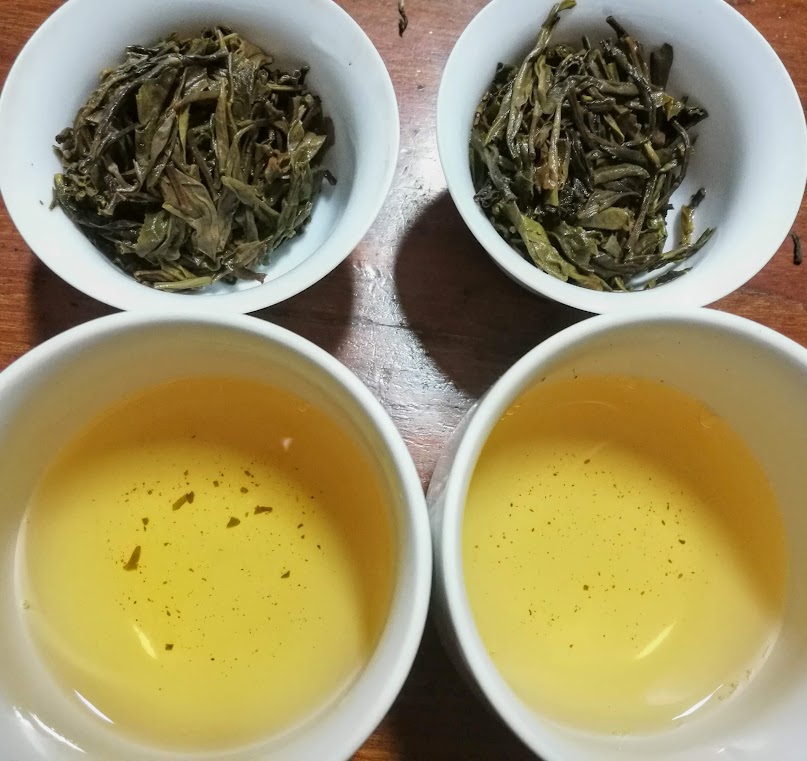
Song Yi Tea 2019 Jing Mai arbor sheng pu’er


Back to reviews!  This has been as long a break as I’ve taken in years; the last was 6 weeks ago.  It has been nice to have more free time on the weekends, to focus on other things, to lean into the meetup theme, and write on different subjects here.  I probably never will go back to writing 8 to 10 blog posts a month.

This is a sheng pu’er from Song Yi Tea, a vendor based out of Taiwan, who sent samples before for review.  Many thanks to the for providing this.  Their earlier teas were quite good.  It’s hard to place “quite good,” and that’s definitely on a relative scale, of sorts.  I’ll see what I can do with aspects descriptions, tying an impression back to defining that better.

I don’t know what this is, and don’t remember what I reviewed last time.  You would think after years I could try a tea and get a clear impression of origin region, if not local area, based on how people tend to describe that sort of generality.  Lots of variables go into how a sheng version comes across, beyond terroir, source area and related less fixed growing inputs, eg. the weather that year.  And my memory isn’t set up to retain much, not names or phone numbers, certainly not a matrix of sheng aspects per ever-finer local areas.  Let’s try a couple examples though.

Yiwu tends to be sweet and floral, approachable in a conventional form but with a little more structure in some versions, Jing Mai with a little more edge, still floral but often with a trace of lemon or edgier flavor towards pine, but often not quite pine, and so on.  But I still can’t place teas through tasting, even from those places I’ve tried lots of versions from (those two, and others).  Same for the gushu theme; I could write a few phrases about what I see as typical character (higher intensity, but not necessarily stronger flavor, underlying mineral tone, durability to brew more rounds, tendency to age positively, depending on starting point character) but who knows if that’s even right.

So I’ll describe the tea experience and then look it up; the usual process (I'll just leave that to the end, and of course not adjust the notes to match it).  Even the year could be clearer; it looked like that said 2019 on the stamp, but it was hard to read.  This may be a tea I already reviewed, back when it was newer.

On brewing process, I tend to use two cups when brewing tea for breakfast, for rushing through a cycle, never exactly early related to getting to work.  On the weekend, especially for doing a review, that concern drops out, and one cup is fine, no need to switch to pull heat out (or even drink cold water out of one in between; it’s hard to drink down a liter of tea in a 15 or 20 minute rushed breakfast related to that brewing temperature).  Why not Western-style brew if in a hurry, one might wonder.  I do, if I’m drinking a tea suited for that, and if not I just rush the Gongfu process (which I wrote about not long ago, which teas I see matching which approach).


First infusion:  I like it.  I tend to brew the first round light to get introduced to the tea over the first two or three rounds, so this is just a starting point.  All that I just said about Yiwu and Jing Mai comes back to me.  The main aspect is floral, but it also has a touch of dryness and structure to the feel that pairs with a slightly piney trace.  It’s definitely not edgy, and even for being lighter it’s seemingly not going to develop in that direction.  Bitterness and sweetness level tends to define a lot of sheng experience, and this is pleasant for both, with some distinct bitterness but at a good, moderate level, balanced by pleasant sweetness.  I should probably wait a round to do more aspects breakdown.  I like where it seems to stand on the “how good” dimension, but it’s way to early to say more about that.
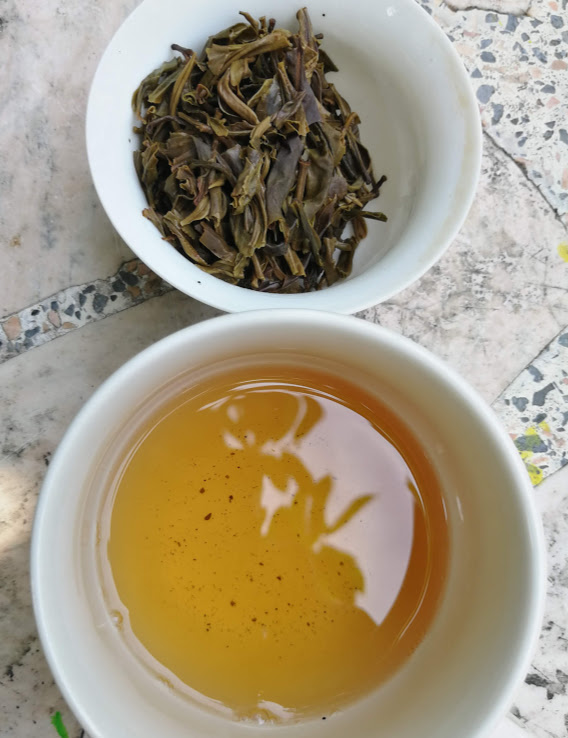


Second infusion:  I’ll have to focus in related to brewing time; even from the look I may have let this go just over 10 seconds instead of just under, and it could be on the strong side.  At least the impression will be clear, even if that level isn’t optimum.  More of the same as last time, but much stronger, definitely slightly overbrewed.  That’s fine; it can help pin down some aspect range better, but it does shift the balance of how flavors come across, what stands out most.  

Intensity can vary for different reasons in sheng, and it’s not necessarily that stronger is always better; it’s the overall balance that matters.  It’s not as good a sign to need to push a tea a little to get more out of it, but more typically “brewing around” a negative and relatively strong input comes up, cutting back infusion time.  Even that’s not always such a bad thing; in some cases it just means the tea needs more time to ferment and transition, that it’s not its time yet.

There’s a bit more of a towards-pine edge to this, especially for being brewed strong.  It pairs with a nice sappy, resin-like feel this time, a bit thick, but in a distinctive way.  It has a hint of dryness to it, which isn’t really atypical, but not all that universal.  Honey flavor stands out in the sweetness, along with floral, which is competing with the mineral and other heavier range.  It will compete better next round, brewed lighter.  There’s a clean and relatively balanced end effect.  

These individual aspects are coming across so clearly that I wonder if this isn’t narrowly sourced material, versus a blend.  It’s surely cheaper for a producer to make a blend of an equivalent general level of positive character, because they can mix inputs and adjust proportion to draw out better aspects and minimize flaws, to offset what doesn’t work as well.  I’m not sure I’d have an expectation for a vendor not based locally in Yunnan, in terms of what this should be.  If I just had better memory I’d know from writing about their teas something like a year and a half ago.  Again I’ll save a clearer and longer list-form aspect description for a third round, brewing this as I see an optimum.


Third infusion:  Better, more where this should be for infusion strength.  Intensity is still fine, more than adequate, brewed for a relatively short time.  In that longer write-up about differences between Gongfu and Western brewing I mention that agitation seems to allow for a fast infusion to be so intense, and the tea still brewing while damp, with water removed.  Who knows.

Honey sweetness is novel in this tea; it’s not so unusual for some of that to be present but not often at this level for sheng.  Floral tone seems non-distinct to me for being balanced by an aspect range I’m not really describing clearly by saying it’s “like pine, but not that.” Like moderately cured hardwood then, maybe, not the sappy young wood effect, and not the richer, deeper, sweeter tones of wood that’s been drying for awhile.  Somehow, to me, that pairs with and connects with both that unique mouthfeel, the structure with just a bit of dryness, and the bitterness.  The mouthfeel is complex enough that calling it structured and dry isn’t enough; there’s a resinous edge to it.

Aftertaste is interesting; all of that trails over and changes form.  The honey comes across a little more like beeswax in the aftertaste version, and the touch of dryness in the mouthfeel immediately softens (located in center of the mouth, the middle of the tongue and around the sides and top, not the throat, a general effect range that I don’t tend to prefer, dislike, or even place as much as some people do).   

I like the tea.  With this much structure and edge it won’t just fade, and should be even better in two more years.  But then it’s approachable enough to drink right now, for sure.  Flavor intensity might drop a good bit over the next 15 years; harder to take young sheng might be better for retaining that, but milder flavored teas can be positive in other ways after a longish transition.  Or before fully transitioned, if someone is on the 20-plus years aged sheng only preference theme.  Someone mentioned to me not that long ago that they only drink 20-plus year old sheng, which seems odd to me, to never crave anything like the experience I’m having right now.  Then again I can’t really look ahead and see what I’ll prefer or avoid in another decade.  I sometimes wonder if I’ll keep drinking tea; this is a bit long for me to stick with an experience cycle like this.


Fourth infusion:  I’m really feeling this tea.  I ate a Tim Horton’s Boston Crème donut when I woke up but nothing else, and usually I eat prior to or with tea to offset feeling that stoney rush.  I get it why people are into that, I’m just not.  I already did my time as a stoner.  

More of the same this round, really.  How someone would like this version would depend on how they relate to the mix of honey sweetness, floral range input (which is a little non-distinct to break down further, maybe just warm in tone versus bright and sweet), and that towards-pine wood range.  “Tastes like wood” isn’t what one is looking for in a sheng, typically, but I mean that in a relatively positive sense.  Do you know how some common Bulang origin range sheng can express a variation of that that’s really intense, so much so you wouldn’t drink the tea when it’s young?  In that form even heavier mineral, although this is pronounced, maybe not towards-pine woodiness as much as paired astringency.  

I’m probably mixing ideas here, talking about mixed-source or plantation sheng that’s more negative for growing conditions and type input.  Older plant, higher elevation, and more natural growth source sheng tends to be intense in flavor, often in novel and pleasant ways, but less so in astringency, interesting and complex, maybe including substantial bitterness but not challenging in the same way.  You might like such a tea aged to see positive aspects transition to other different positive aspects, not to become drinkable.

But then what do I know, right, I’ve already said that to some extent the generalities escape me.  


Fifth infusion:  I’ve not been mentioning transition much, but the same aspects are shifting.  That really heavy honey sweetness is not changing; it’s cool experiencing it with a slightly different other range, in terms of proportion.  I’m not doing justice to a “wood” flavor range; it’s definitely not that in this round's form.  Heavy mineral is half of it, a warm mineral tone input.  A trace of pine is part of the rest, which is closer to pine resin scent than the brighter needle flavor.  I think the complexity is what is giving me trouble.  Part is like wood, but part is like a carroway seed too, a spice range input.  This doesn’t taste like rye bread, at all, but part of what is in some forms of that is also in this.  There’s no sourness or the same type of general bread range to connect it to rye bread.


I’m absolutely getting blasted by this tea.  Drinking it outside in a warm end of morning probably isn’t helping (with "warm" in Bangkok meaning mid 90s F, mid 30s C).  It’s not the trippy, visual, stoney range that some sheng brings across, just a heavy energy, a body feel that’s also affecting my head.  It doesn’t feel off in any way, but it’s not really an activating effect or a sedative, just bumping overall energy level.  I could exercise “on this,” or work, but it would waste the effect to go sit in an office now.  Sitting through a movie would work, I’d think, just maybe not a slow drama.  For me outdoor experience goes well with every mood and energy level, but that’s surely common but not universal.


one cup more than the required level of stuff


Sixth infusion:  I’ll go get the kids from Chinese (Mandarin) lesson so I’ll leave off here [my wife did instead, but I'd like to preserve the notes as they were].  This is far from finished but it’s more than enough notes. For whatever reason I’m noticing that touch of lemon more in this round than the last; I probably brewed it just a little faster, letting lighter tones show through more.  Or it may be shifting in the balance, part of the transition.  That would be really cool if this did even more with fruit in the later rounds, not how that usually goes.  With that as a prompt, and in the context of this being a little lighter, something like dried apricot shows through more than that pine/wood tone, that had been moving into a spice range more last round.  I bet this isn’t finished, that it has one or two more transition-related sets of aspects to go through.  I never will add another 1000 words in notes but I may say something about that later. 


Later infusions:  the next few seemed similar, maybe just fading a little.  At around infusion 10 the character was still pleasant but intensity and range were restricted, with mineral showing through more and sweetness and the floral (transitioning a little to fruit) range both dropping back.  The tea was still nice that way (or is; I’m making notes as I go again).  That pronounced warm mineral range reminds me of a common theme in aged sheng, but it just happens to be similar, or maybe the same, while from a different kind of cause.  In aged sheng lots of compounds / aspects shift from fresh, bitter, astringent (feel versus flavor, but it all seems to “bundle,” to some extent) to deeper, richer, warmer, full but smoother, less structured in feel, and quite different.  It just so happens that a specific warm mineral tone is common in that other set, and stands out in later rounds in this.  The rest is different, of course.


Conclusions:


I never did get far with the two obvious questions, what is it, and how good is it?  Again I’m not mentally set up for the blind-tasting type-matching game; memory for a matrix of concepts isn’t my thing, across a very broad range of subjects.  As to how good it is that’s problematic for a different reason, because it has to include both a subjective preference component, a match to personal like, and be good for what it is, back to the trueness to type first issue.  That said, it’s good.  

As I see it sheng is often sold across a few general sets of types.  “Factory teas” cover a broad range but these are blends, quite often “designed” to be aged to be most positive, most typically in a quite moderate price range, $30-$60 per cake, let’s say.  Of course there would be lots of direct exceptions to that.  A broad subset is even cheaper, and not necessarily awful for being made of low-cost material.  Then some vendors try to make blends like that but slightly better, using better material (hopefully), often selling for around the high side of that range, but of course that would vary.  Sheng versions made from a more limited source range are something else, often pricing from that high end on up, maybe way up depending on source area and claimed tea plant source age.  I guess this seems like a decent version of the last category to me.  I can’t guess to what extent it was blended, but I wouldn’t be surprised if that input was quite limited, or not part of the story.  

As to quality level I liked the tea, and it had some really positive aspects, but there were limitations in relation to seeing it as good in the sense one would expect from expensive tea versions, maybe even below versions in the range of $80-100 sold as semi-premium teas, or however branding and marketing puts that.  That wood-tone wasn’t bad but also not the most positive range, even though it faded and changed to other range after a few rounds.  Slight dryness was probably more negative than positive but again not a character flaw, and again it shifted.  Complexity was good; aftertaste and feel generally positive, although there was some room for improvement or stronger effect for those.  Intensity was good, but it could’ve extended for a few more rounds before fading some.  It’s cheating but from what I do remember this is probably much better tea than a selling price would indicate, but not on the same level as versions vendors promote as a $.50-1/gram exceptional quality level examples. Let’s see, checking what it is.


2019 Spring "Jing Mai" Arbor Sheng Puerh 357g Raw Tea Menghai Yunnan Pu'er


Nice!  Now it does look like I know what I'm talking about, for completely matching the earlier Jing Mai general description as floral with a bit of pine and maybe lemon, approachable but not soft related to astringency form.  That cost description matches too; this sells for just over $30 (1039 baht), which to me is a fantastic price for this tea.  Jing Mai is a good general type for buying at a great value, if you like the character, which this is a decent example of.  It would be really easy to buy tea not even close to this good for double that price; much, much easier than finding anything comparable at the same cost.  Their description:


Name: Jing Mai Arbor Sheng Puerh

Year: 2019 Spring First Harvest

Country of Origin: Yunnan Province, China

Altitude: 1400m above sea level

Flavor: Sweet Wild floral aroma , Smoky Pine Scent

These tea leaves are from tall bushes which are above 80 years old.  They grow freely with different kinds of plants in Jing Mai mountain.  Dry tea leaves are tight and dark. The infusion is lightly golden with typical honey sweet aroma,  excellent depth of flavor and a soft velvety mouth-feel, full, round and harmonious.


The only part of the description I'm not "getting" is the smoky part.  Pine was fairly subdued, but present, but I noticed no smoke at all.  If that was from a processing input and wasn't strong it may have just dropped out over two years.  Other than not mentioning a touch of lemon they covered pretty much everything I mentioned.

I was considering benchmarking price against a somewhat recent Jing Mai version from Moychay, which seemed a decent value, this one.  That tea might have been slightly better but for that costing just over $60 and this just over $30 it would be an easy choice between the two for me; buy this and another one presented as better (higher in cost, at least) from this Song Yi outlet.  

Farmerleaf has always been a good source for Jing Mai and other origin teas; comparing this to one of their flagship versions might help, and seemingly their least expensive sheng version, a 2020 Jing Mai Miyun, which lists for $56.  Their description fills in what that "arbor" part is at least supposed to mean (per my understanding):


The Jingmai Miyun is a blend of several natural tea gardens (also known as Shengtai) that our family manages. We have five plots of shengtai, located at various altitudes and in different environments.

What makes a natural tea garden?

While conventional plantations loaded with pesticides and growth promoters were prevalent in Yunnan a few decades ago, the revival of the Pu-erh tea industry in the 2000s lead a push for better quality. When it comes to Pu-erh tea, you can't hide bad material under a good processing, it's a tea true to its origin.

The conventional plantations were not able to produce leaves that would satisfy the  demanding pu-erh tea enthusiasts. From 2010 on, a lot of conventional plantations were redesigned. Plantation density was reduced and shade tree were planted in order to build a resilient ecosystem. This design would produce less tea per surface, but would offer better protection against pest and disease and wouldn't require much fertilization. The tea trees were allowed to grow taller, at about 2m high.

This design change allowed the farmers to ban pesticides and chemical fertilizers. Thanks to a richer ecosystem and clever design, the leaves would grow high quality leaves and give satisfying Pu-erh tea.


It would be interesting to comparison taste that Miyun version and some other version they describe as higher in quality alongside this tea.  I last bought a Farmerleaf cake presented as such two years ago, this one, a 2018 Tian Xiang version.  Vendors typically never try to isolate a specific quality level in description, of course, partly because that's way too subjective, but within the description context and content it comes across, with selling point another implication ($79 for that cake).  That version was good, maybe better than this, or maybe partly just different in character versus better.  I've tried that again in the last 3 weeks; it's still good, but mostly gone, because I drank through it and shared some.  

I think I liked a Mengku sample from them a good bit more, but that was selling for closer to $100, and I didn't go on to buy a cake of it (due to budget issues, not value; that price seemed fair).  To be clear my opinion on the last version, and all of them, probably related to type and aspect character more than abstract quality level, but I suppose also that.


I can't say this is fantastic tea but I can say that it's quite good quality, and very enjoyable, per my preference, and it is a fantastic value, essentially better value than sheng ever tends to be.  It punches way above its weight in relation to price.  Some people just wouldn't love this type and aspects set; so subjective preference goes.  It's possible someone could see the early touch of dryness and wood-tone input as more negative than I did.  To me that's splitting hairs; this tea is only now coming into it's peak form, surely it will be just as good or better over the next three years or so.  

It may not have been at a relatively ideal starting point to age well past 15 years, but it's a great value tea to buy two cakes of it, one to drink and one to check on that after another decade.  I tend to try to only drink half a cake in some cases, but 180 or so grams of tea can go a lot faster than one might expect.  It's just a couple of tuochas worth.


Photo sharing section:


Not about tea, since it's been awhile I took some pictures of where I had the tea, out in a driveway space area, which is like a cool park setting.


the gardener / home owner, my wife's mother Mama Nid (or Yai, to the kids).  she's so nice.


I lost this round of the hungry squirrel game; he eats my favorite breakfast


what that yard space looks like


the other yard


flip flop and cat storage space


the other cat, "ei ouan"


it's not even the rainy season and the house jungle keeps taking back the backboard


Wednesday, November 13, 2019

Water testing, Alishan oolong using Volvic versus filtered local tap water


This is a follow-up to the prior water input testing, using Volvic and filtered tap water to brew both Rou Gui and sheng pu'er (a Lao Man E version, not the best choice, sorting out results past that bitterness).  In that testing Volvic brewed infusions were clearly better for both types in the first and second infusion, and not quite as positive as the filtered tap water versions in the 4th and 5th infusions.  I guessed about why in that post, but I'm really not certain.

It seemed better to try this using a mild tea version, something flavorful enough that results in that range would stand out, with feel and aftertaste aspects to evaluate, but with a generally mild tone making finer distinctions stand out better.  Alishan oolong should work better.  I had a couple of samples of what should be pretty good oolong left to try from Song Yi tea, the Taiwan based vendor source I'd reviewed a Brown Mountain (Bulang) sheng pu'er and Mannuo sheng from.

Those both were a lot better than I expected, and a good value for the quality level, so it seemed the two oolong samples they sent would probably be even more interesting, for actually being Taiwanese teas.  I just never got back to trying them.  Those reviews were in July and September of this year; it can work out like that, when lots of vendors send samples to try.


The earlier post on a water input testing outlines Volvic details, and as much as I know about the local municipal water.  I cited a lot of real-time testing (monitoring) results in that post, from over last weekend, but I'll skip that here.  Since it didn't list out mineral content as grams / liter amounts by type the half dozen factors they do monitor aren't really of as much interest.  Ph is always around 7 for that; it should be fine (although it is 7.25 right now at the station nearest to home).


I'm filtering this local water too, so whatever is in it is reduced, but I don't have measurements for anything but free chlorine and total chloride levels.  I'm more concerned with calcium, magnesium, and total dissolved solids measurements, which they don't provide.


the ph monitoring result just now


I did turn up a dated 2014 study of mineral content of water sources in Thailand, including Bangkok tap water, which may or may not pass on some idea of what was in that water:


There's really no guarantee that's at all relevant to what I'm using to make tea five years later, and again to repeat, whatever had been in that water was partly filtered back out.  The last water test review post included some real-time measurements (of free chlorine, chloride, and turbidity), just not including calcium, magnesium, and total dissolved solids values.


Background on the Song Yi Alishan oolong:


It would work to cite more input about the tea, even though I tend to see light Alishan as varying more by quality level than other factors, so basically it's something you judge for yourself once you try the tea:

Origin :Tea-growing region with gravelly soil
            Camphor Tree Lake Stone Table, Alishan, Chiayi County

Altitude :1,500 to 1,700m above sea level
Cultivar :Qingxin (Green-Core) Oolong
Flavor :Orchid aroma, Almond Peach scent
Fermentation :30%
Roast :Light


On their sales page 150 grams of this is selling for $45, so $15 per 50 gram amount.  In retrospect, after trying it, that sounds about right; the version quality is pretty good.  It would be a lot easier to find versions selling for in that range that weren't as good than it would be to find a better quality example selling at the same price, which would seem unlikely.

Versions can get better than this, emphasizing floral range just a little more, dropping back the limited vegetal range, bumping intensity or thickness a little, or that one characteristic mineral aspect, but this one seemed pretty far up the scale.  For sticking within a moderate price range this is good quality and type-typical, just what you'd hope it would be.

Review:


Volvic: flavor is nice; it includes that nice floral range that signifies Taiwanese high mountain oolongs. Mineral undertone is nice, pronounced.  This includes a little vegetal range that distinguishes the best light oolongs from quite good versions, or at least that's my take.


Filtered Bangkok tap water: not all that different. There might be a trace more vegetal range, slightly less high note floral, and a little more perfume base. For those minor differences it's about the same. Trying a faster infusion might help to tease out minor differences. Thick feel and pleasant aftertaste is common to both.


Volvic left, filtered tap water right


Second infusion:


There is a slight brewed color difference; the tap water version is slightly darker.

Volvic: slightly improved; floral range hits even harder, perfume like base is even stronger. Vegetal range is still notable, a touch of green wood. Feel is thick, and mineral and floral both trail after as aftertaste.


Tap water: maybe slightly less high end note, slightly deeper perfume base, more mineral tone. Those last two differences I'd expect related to brewing the tea slightly longer, just probably not the first. That one almost odd, characteristic mineral taste is stronger, not completely unlike new car smell, a unique mineral range. It's flinty, as much as anything.

Making a "better" judgement is tough; they're just different. The Volvic version is better for being slightly sweeter with a touch more floral high note. The tap water version has a lot more mineral base and perfume depth, a less bright floral range closer to lavender. Vegetal range shifts in form a little in each, slightly stronger and just different in the tap water version.


Third infusion


I think the tap water may be brewing stronger, based on color and also taste and feel aspects, but I'm not sure why. Proportion, temperature, and timing are definitely all identical, or at least very close to it, so it's not one of those.  The proportion is too high; I'm not as accustomed to judging rolled oolong amounts these days, and used the smaller version of tasting gaiwans, but didn't bump down the amount (probably a 60-70 ml version, versus the 80-90 ml versions I use more frequently).


Volvic: pleasant; sweet, rich, soft, intense but not overly so. Floral range is slightly different, but the difference is so subtle it is hard to pin down.  The point here isn't to derive a flavor-list as much as specify differences anyway.


Tap water: more intense; it pops a little more. A touch more vegetal edge goes along with that, and more mineral. It comes across as creamier. These are definitely different, but again which is better would be a judgment call. The higher intensity is nice but a touch more vegetal range comes with that.

Fourth infusion:


More of the same, and I won't trail this tasting out to 8 or 9 rounds to see the whole cycle. It's interesting that the prior pattern of tasting two other teas didn't hold, that the Volvic didn't seem clearly more positive early on, and then the tap water better after the 4th infusion.

I thought I probably did like the Volvic version slightly better on this fourth infusion, that being a little lighter and sweeter worked out better, versus there being a bit more vegetal and mineral range in the tap water version.  But the tap water version was fuller in feel, and on the fifth infusion I thought it was more positive for that reason, with flavor differences secondary to that distinction in that round.

Potential next steps:


Not much to conclude; the two outcomes were different, but neither was really notably better.  The Volvic version was a bit lighter and sweeter, the tap water outcome richer in feel, heavier in mineral, and in some cases it had slightly more flavor intensity.  More than that flavor aspects just shifted slightly, in ways that was about as neutral as related to being positive or negative.

I suppose it's some comfort that it seems to not make much difference.  Using Volvic, cited as some people's favorite in online discussion (which of course others disagree with) didn't prepare notably better tea than filtered local tap water.  Oddly it was a lot more positive for the first two rounds of brewing the Rou Gui in the last post.  And it was probably slightly more positive early in the infusio cycle for the Lao Man E sheng as well, but for both that bitterness hit so hard "better" was about sorting past that in those two infusions.  This oolong never really matched that outcome, or the tap water version becoming notably better in later infusions.

I think people could have expected one or the other to be better, and based on that expectation and a positive interpretation could have judged that either one of these outcomes was clearly better.  It seems natural to say "depends on preference" instead, but it's not as if flavor was better for one and feel better for the other, as if an aspect category worked out better using one of the water sources.  Although these seemed relatively different prepared side-by-side I think for tasting them days apart prepared using the two water versions it would be hard to separate out that difference.  The basic character and aspects profile was the same.

I could keep going, trying other versions of water.  This didn't cover RO (reverse osmosis) water, a version stripped of almost all mineral content.  There are other types of water at home (my wife is into mineral water these days, for whatever reasons), and I could run this again prepared using a number of different versions.  It would be interesting checking out results using a water type that's very high in mineral content, with this Volvic seemingly on the moderate end of the scale, especially related to calcium and magnesium levels.  I'm not sure that I'll keep on with this for now though; it adds a good bit of messing around to tasting, and I have teas around to try that deserve more attention than this tasting format allows for.


Monday, September 2, 2019

Comparing 2018 Pasha and Mannuo gushu sheng


Tea Mania Pasha left, Song Yi Mannuo right (in all photos)


I'm a little behind on getting to samples, and am only now returning to a second sheng version sent by Song Yi Tea (with contacts for them here and here), selling tea relatively directly sourced out of Taiwan.  Except for this, said to be relatively directly sourced in Yunnan, then sold from Taiwan, but the point is the same.  There is more of their story in this post.  The first Bulang sheng version wasn't bad, even better for seeming a good value, priced very fairly for how pleasant it was.

The other tea is a Pasha version from Tea Mania, a really consistent, also relatively direct-source theme seller.  It's hard to identify exactly what those sourcing stories mean, or be clear on how old "gushu" plants might really be, but I tend to not make too much of the stories anyway, letting the teas speak for themselves.

Per a standard approach I'll try these with no input then paste vendor descriptions back here prior to posting.

The Song Yi Tea version, 2018 Mannuo gushu sheng pu'er:


Name: Mannuo Gushu Sheng Puerh
Year: 2018 Spring First Harvest
Country of Origin: Yunnan Province, China
Altitude: 1300m above sea level
Flavor: Sweet Flowery Scent, strong aftertaste 

The tea leaves come from Gushu which are hundreds years old trees at Mannuo Mountains, the north part of Menghai.  Most of them grow on the slopes, reach up to 2 or 3 meters high and more than 10 cm stem diameter. There are very few other trees in the garden. 

Dry tea leaves are tight and dark. The infusion is light gold, clear and shiny, wild flowers aroma. The most loved aspect of this tea is its aftertaste, which has a special mellow flavor in the throat when drinking.  The sweet dimension is gradually becoming stronger.


Normally I would've edited that but this "gushu" claim relates to considering context.  This is selling for a bit over $60 for a 357 gram cake (2183 baht as I see the listing), which for some would relate to a warning flag, since gushu tends to cost a good bit more.  Location factors into pricing too, local demand.  Although one would be wary of accepting "special case" explanations alternative sourcing variations could come up; vendors buying teas relatively directly could by-pass some cost and adjust mark-up differently.


Onto Tea Mania's Pasha sheng pu'er description, a 250 gram 2018 gushu cake:


For this bingcha tea leaves of up to 300 year old tea trees (Gushu) were used by the Pasha Shan and processed into a bingcha. The typical Pasha aroma is accompanied by the depth and clarity of Gushu tea leaves and a touch of camphor. This tea is particularly suitable for aging by storage. A tea that gets better with the years.

Harvest Date:  Fall 2018 


Camphor is one of those descriptions that tends to be used in different ways, as hui gan is, or to a lesser extent probably as any aspect descriptions are.  I don't want to go too far with tangents but let's check what that even is:

Camphor (Cinnamomum camphora) is a terpene (organic compound) that’s commonly used in creams, ointments, and lotions. Camphor oil is the oil extracted from the wood of camphor trees and processed by steam distillation. It can be used topically to relieve pain, irritation, and itching. Camphor is also used to relieve chest congestion and inflammatory conditions.

As far as actually ingesting it goes they also say this:

Camphor should never be ingested internally as this can cause serious side effects and even death. Signs of camphor toxicity appear within 5 to 90 minutes of ingestion. Symptoms include burning of the mouth and throat, nausea, and vomiting.


Ok then; pass on brewing that as a tisane.  Back to the description, this being a fall (autumn) harvest tea stands out.  That makes the moderate pricing seem more realistic, with a convention about what that means for expected character a bit less clear to me.  Those can be less intense, but there must be more for uniform generalities I could pass on.

This cake is selling for $60 for a 250 gram version, so a bit more, but not much at all as typical gushu pricing goes (which again varies a lot by individual region, and other factors).  That's 24 cents a gram, versus 18 cents / gram for the other, for people who are more familiar with that form.

Moving on, let's check out those locations:

this map (from here) doesn't list Mannuo, with Pasha lower center left


that's it at the top, cited in a TeaDB summary as being from here


I'm not going to mention location-typical character; I'm not up to that even related to origins I'm much more familiar with.

Review:

Tea Mania left; you can almost feel that texture from how they look


Tea Mania 2018 (fall) Pasha gushu sheng pu'er:  it's nice; definitely a bit intense.  Bitterness stands out but it's moderate enough that it works.  There's a distinctive flavor, or rather a set, with one part towards a spice range.  Sweetness might well extend to fruit, a bit like citrus, maybe (grapefruit or dried grapefruit peel, a little towards dried orange or orange peel, because not really sour, just the rest).  The intensity comes across as strong flavor and pronounced aftertaste now, with feel full enough but likely to ramp up more in the second infusion, even brewed fast.

I'm still missing describing that spice flavor, a little like a very faint version of anise.  Maybe there's a variation that's not as overpowering and sweet as the most common star anise?  This doesn't include that distinctive non-sugar sweetness that seems connected with that flavor.

My sense of taste seems ok but my brain feels a little fuzzy; one part of doing this review is going to be tricky.  We took the kids out to ice skate yesterday, and got back home late, so I'm feeling that, being busy for too long yesterday.  Fighting Bangkok traffic is not a relaxing experience and I went through a few hours of that yesterday.  I'm fine though; I'll probably just pick up slightly less, and not be as sharp with making aspect connections as I could be.

on a break to scrape together a snowball; you can imagine how that ended


2018 spring Mannuo gushu sheng pu'er:  This is interesting for bearing some relation to the other version but being completely different.  Bitterness is more moderate, but both are in a decent middle range.  Both have a spice or earthy aspect that stands out that's novel, giving the teas an unusual profile, with plenty of other flavor complexity, along with overall intensity of flavor and feel.  Aftertaste seems a little more moderate in this version; it really lingered in the other.  But then the first infusion is a little early for calling that.

The main flavor in this is interesting.  It seems to include root spice, and maybe a taste similar to a dried Chinese date (jujube).  There's just a touch of earthiness in a less distinct range beyond that, which could come across as light roast coffee.  Both are similar in general character then, for striking somewhat similar balances, but different in taste, feel, and aftertaste.  This also seems like good tea but the aftertaste being thinner isn't positive as markers go.


Second infusion:


checking out a relatively light infusion; intensity still works


Pasha:  brewing these relatively fast should work well; the balance should be good (for around 5 seconds, maybe 7 to 8 instead).  Sweetness and bitterness are fine; that balance works.  This isn't above average for level of bitterness, and the feel works, not rough or dry in any way.  Not necessarily thick, oily, or smooth either, but the range is fine.  Feel includes a hint of dryness, but not much, not so much that it's easy to describe further.  Related to flavor again a nice mix of spice tone and mild supporting fruitiness seems to work well.  It's a little unconventional, but in a good way.  A touch of wood fills in the rest, nothing pronounced enough to easily describe as one certain kind, picking up intensity while the citrus (or other fruit) seems to moderate.

I often wonder about that theme of a set of flavors, or one in particular, or other character being considered to be a distinctive, typical narrow-location related flavor.  Later, after trying a few more "Pasha" sheng I'd be able to guess about that.


Mannuo:  the coffee related range dropped back but a distinctive mix (narrow range) of other flavor ramped up.  Dried Chinese date still works as a description, but range added to that.  This also has a hint of dryness, but in a different form.  Aftertaste did ramp up; these are closer now related to that.  Again the balance is fine (moderate in bitterness, intense in flavor, full enough in feel), with flavors that seem a bit new to me standing out.  These aren't floral-intensive; I guess I mean that.  It's possible I'm missing that as a supporting aspect for one or both but it definitely doesn't stand out.


Third infusion:


Pasha:  Somehow this is much catchier this round; it all really fell together.  It's not as if the feel or flavors were rough or a little off but sweetness, smoothness, and clean effect really picked up.  That mix of spice and mild fruit tone works, with spice changing form just a little.  Fruit really is non-distinct in this; citrus kind of works, but it's not like how that comes across in a Darjeeling or Oriental Beauty (more oxidized oolong).  Spice seems more like root spice now, the mildness, "roundness," and catchy range.  I suppose it's not far off an aromatic bark incense spice too, just a little smoother, less sharp and distinct.


Mannuo:  if anything this drifted to earthiness picking up a little, kind of the opposite direction.  Spice with fruit is strong in this version too, just a different version of both.  This is more typical of a bark spice, just not cinnamon, and instead of mild citrus that dried Chinese date.  It doesn't seem to include mild coffee still but a heavier, towards-earth flavor is present. 

Intensity is good in both of these; balance, feel, and aftertaste are all fine.  I can't conclude that they're gushu but they're both pretty good tea.  Both seem more interesting and positive for flavors and other range balancing and being pleasant, and distinctive, than for markers typically tied back to gushu / old plant source causation (extended aftertaste, pronounced underlying mineral, general intensity).

Fourth infusion:


This might be a short review given a pressing time-frame; the usual.  Coming back later to try a couple of extra rounds only ever goes so well and the notes are never as detailed, if I even make any.

Pasha:  maybe slightly catchier yet; that mix of spice and fruit complement really works.  This is nice and clean, well balanced, with good sweetness and very moderate bitterness.  I suppose it's conceivable that this could be a fall harvest version, it just seems a little intense for it to be that [turns out that it was; but really what do I know about any generalities or causes, though].  Bitterness is moderate; that might tie to that.  The warmth of the flavors is novel for a tea so young.


Mannuo:  that spice and trace of earthiness seems a little back towards a mild coffee range again; probably small variation in infusion intensity would shift that.  It's still clean though, and well balanced, definitely complex.  Spice and fruit also come across, as in the other version, just a different range of both.  A touch of green wood seems to join all that; it's definitely complex, slightly less subtle than the other, which I wouldn't describe as subtle at all.  Tasting both again a trace of green wood seems to support both.


nice looking leaves (Tea Mania left, Song Yi right)


Conclusions:


I tried these for a few more rounds later (many, really) but didn't make notes, so I'll limit adding more about that, beyond saying they were very pleasant.  It seemed the Pasha might be a little thicker in feel, which I'd mentioned, which may have carried over more into later rounds than it stood out earlier.  It's not as if the Mannuo was thin, but there's a thick, viscous feel that can be really catchy in sheng versions, and it's cool when that stands out in later rounds too.

I have no opinion on these really being gushu or not.  I'm more familiar with Peter Pocajt's accounts of sourcing teas, so I'd trust those more, but hearing more of stories doesn't make them true (and the opposite).  Both represent very good value for teas this good selling for what they do.  Given the pricing you'd expect less complex, balanced character instead, or maybe even notable flaws.

The difference in one being a Spring tea and the other Fall didn't stand out, but then it would fold together with source location as a difference and other causes, including the gushu source theme.  They ended up being more similar than I would have expected, just expressing different flavor profiles.  But then those even overlapped, with some difference in feel and aftertaste, as described. 

I'm tempted to guess about aging potential but it also seems as well to skip that part.  People able to make more informed guesses about that would be more informative.  I tend to split teas into rough groupings related to what needs more aging to be drinkable (the opposite of these), with a subset of what has been aging but isn't there yet, and then those younger versions that may not have reached their potential for being able to mellow and develop a little over a shorter term.  Both these teas are drinking very well now, and I'd expect them to be just as good but slightly different in a year or two, then to fade into middle-age after that, with no clear expectation of how they'd come out the other side when fully aged.  There; I did guess.

Tea Mania I expect better-than-you-would-expect teas from, but it was nice to experience that from this other source too.  Beyond being quite pleasant to experience there's no way these teas should be this good at those prices.

Friday, July 12, 2019

Song Yi tea (Taiwan vendor) 2018 brown mountain sheng


A chance online vendor contact sent sheng versions being sold out of Taiwan to try.  These are Yunnan teas, of course, which they've visited China to source relatively directly.  This is typically where a wild-arbor or tea tree age claim goes, and I'll cite their sales description to include that part.  For these notes I had just tried the tea without looking up what it is, as is typical for me.

From their Etsy sales page listing (although they do also have an independent website, but I think this is a newer product listing):


2018 Spring "Brown Mountain" Old Arbor Sheng Puerh 357g Raw Tea Menghai Yunnan Pu'er

Name: Brown Mountain Old Arbor Sheng Puerh 
Year: 2018 Spring Harvest
Country of Origin: Yunnan Province, China
Altitude: 1300m above sea level
Flavor: Sweet Wild floral aroma 

These tea leaves are picked from old arbor which are above 100 years old. 
The brown mountain area is also one of the oldest tea area, located in the south east of menghai.

Dry tea leaves are tight and dark. The infusion is lightly golden with typical honey sweet aroma, excellent depth of flavor and a soft velvety mouth-feel, full, round and harmonious.


All that is a little generic; "brown mountain" doesn't mean much to me, although it seems like a translated version would ring a bell.  Non-specific tea reference can be a bit of a red flag, since Amazon or Ebay tea listings tend to be like that, but in this case they'd mentioned they were directly involved with the local sourcing in China.

All of that is telling stories anyway, which I tend to not make too much of, one way or the other; the tea itself is the thing.  A really convincing, detailed story can pair with pictures of a real local farmer pointing at older looking plants, and processing tea in a wok, and then the tea can still be bad, or potentially not even from those plants or that area.  Or a vendor could skip all that and still sell good tea.


One of those Ebay-level vendors (with a name that would ring a bell, since they advertise) recently talked to me about reviewing their tea but it didn't work out.  I was curious about how truly generic, low-cost tea might be, even though my somewhat pessimistic guess probably would've matched the actual experience.  I think this case is something else, which trying the tea seemed to clearly indicate.

Can I really judge sheng yet though; has it been informative enough to try a couple of hundred versions (or whatever it amounts to), including ordering teas this year from Yunnan Sourcing, Chawang Shop, Farmerleaf, and a local Vietnamese source, beyond visiting China and shopping locally here, and Moychay and many others helping out with providing lots of samples?  Hard to say.  My impressions seem to be clearer and better grounded now.  Sorting out typical aging-related transitions is something else; I've got a long way to go on that part.

It has always been odd that in a couple more years an impression would be even better grounded, which makes for a moving target.  It's hard to imagine keeping up the tasting pace I've been on for the past two years though; eventually it would seem natural to cycle off sheng a bit more, or just not review as much.


another sheng to try, and a couple oolongs (it's really a 2018 version, right)


Review:


The initial flavor and character seem very pleasant.  It's sweet and towards the fruity side; it reminds me of versions I've tried from Nan Nuo, that particular flavor range.  Bitterness is quite subdued but it often takes an initial infusion for that aspect to develop more to where it will be.  The taste is clean and the overall balance works.

That fruit-like flavor that I said reminds me of a Nan Nuo version is towards white grape, maybe a little closer to plum from there in this case.  That connects with a light mineral tone, even though the link seems more a personal observation than a necessary association.  The mineral is relatively pronounced in this; it seems that could develop in different ways.


Second infusion:


Mineral did really shift, in this case linked with an unusual version of bitterness.  It's a little dry in effect, like limestone.  Fruit (or potentially floral range; interpretations could vary) is diminished, but that probably relates to letting this infuse for a bit over 10 seconds versus just under, so to me it's on the strong brewed side.  This character still works; it seems like a reasonably good version, but that much mineral with a feel leaning towards dryness isn't completely conventional.  In terms of bitterness the level is completely normal, just in the standard range, but the way those aspects come across together is unique.  It would be better to judge those parts, how well I like it, or what quality level it seems to imply, on a slightly faster infusion.

That brings up a subject of brewing teas longer to determine character and flaws better.  It's a standard technique, so standard that typical tasting process used in India or Sri Lanka relates to overbrewing teas, per what a tea enthusiast would typically judge as optimum.

The Tea Side vendor--probably the best online source for well above average Thai teas--brought this up as a tool for evaluation in a recent translation of a Russian reference on tasting approach (this aspect of it).  The idea is simple:  if you overbrew a tea it shows the character in a different way, better in some senses, if you are accustomed to that form of evaluation.  I tend to brew a single round stronger than the others to "check" on how that goes, but I'm not sure that I'm using it appropriately, or that I typically tend to learn much from that.  The main concern in appreciating tea relates to brewing it how you would like it best, so it's really something else, breaking down character in a different way.

Third infusion:


It is better brewed lightly.  Often I'd be commenting about how using a proportion that is pushing it for being at the "stuffed gaiwan" level is potentially throwing off results, but I was more careful to avoid that this time.  I kind of prefer a lot of versions at a high proportion, unless intensity is an issue, but for more neutral evaluation backing off to a more normal level makes sense.

Fruit does stand out better, or really a complex range of flavor.  It still resembles plum, to some extent, still with a lighter, dryer mineral as fairly pronounced.  It could be a little sweeter; the level that is there works, but more pronounced sweetness, as in Nan Nuo or Yiwu versions, tends to allow a broad range of other aspects to seem to balance well.  Those tend to not include challenging forms of bitterness, mineral, or astringency common in what I've tried from those two relatively narrow and quite broad areas, respectively.

I don't want to imply this tastes like green tea, because it doesn't, but that form of mineral, edging slightly into a vegetal range like kale, is common in Thai Nguyen green teas from Vietnam.  Some of those are a lot like Japanese teas instead, quite savory, vegetal more towards seaweed even, but a lot are close to kale in flavor range, often with this distinctive mineral range as quite pronounced.

It's early for a judgment but this seems like an above average version, related to positive character and quality level, but maybe not much above it.  That relative expectation is hard to place.  For people who only ever drink a higher end range, gushu teas, or wild arbor versions, selected from growing areas that produce more positive versions (of course across a range of styles and character types), or sold through reliable vendor sources that select better quality teas, this is only in the normal range, and not at the top of it.  Compared to buying random versions of moderate cost teas it's quite good, far above average; it just depends on the yardstick.  I'll try to clarify that with more comparison at the end.

Match to my own personal preference is something else; I'll address that further in the next round or two.

Fourth infusion:


The balance is improving; richness of feel is picking up and the mineral / dryness edge is giving way.  Again I'm mixing flavor and feel aspects descriptions in that last note, which are completely different things, but we seem to tend to experience some natural links between those.

We were just drinking a sheng over the last weekend that seemed buttery; this works as an example.  As soon as you taste a flavor that relates to how fresh butter tastes you expect a richness of feel, and it wouldn't be atypical to experience that.  Some of that may just relate to the power of suggestion, of course; the typical flavor and feel association could lead one to look for it, and then to seem to experience it related to expecting it.

This tea isn't buttery but the balance of what I'd already listed works better; a touch of plum, pronounced mineral, light bitterness, vegetal character (with the kale moving more towards green wood tone at this stage, back to more typical for sheng).  In addition to the balance working out, and the feel, the aftertaste experience is fine, not unusually extended but sufficient to add some depth to the overall experience.

Fifth infusion:


Wood tone picks up; it's a touch towards aromatic wood, versus green wood at this stage.  That works.  Fruitiness has dropped off so that it's not really notable at this stage.  This is a range that's relatively common for sheng, one that I've been running across a good bit.  To me it's positive but it would just depend on preference.  Feel structure is nice in this; early on it had a more unusual character but now it's in a more standard, positive range.  Overall the balance is nice.


Sixth infusion:


the rounds look the same after awhile, aside from exposure differences


Including this round in the notes is just for completeness; usually the later rounds story is of less interest to me, since it's rare that tea versions transition in really interesting ways in later rounds.  And often I've just had enough tea, or am running short on time, with the second applying today, off to watch kids in a roller-blade skating class soon.

Intensity is still sufficient for shorter rounds to brew strong enough but before too many more lengthening that would come into play.  That would probably cause a character shift in proportion of what was extracted, or at least that's my guess.


It hasn't changed much.  If anything it's slightly sweeter than it had been in earlier rounds, not necessarily how that normally goes.  Again aromatic wood tone is now the primary flavor range, the main thing you experience, balanced nicely by very moderate bitterness, and a now-diminished mineral range that's still present.  It's a much more standard profile at this stage, one that works well enough for me.

I just tried one Yunnan Sourcing "He Bian Zai wild arbor" Mengku, Lincang version that's more in this flavor range across all infusions and transitions, which has been well received by others in discussion comments.  I like that tea, just not as much as the YS-fans consensus.  I'm not sure that means that this tastes like a wild arbor tea version though, or that the one sold as that I'm referring to necessarily does, or that the effect stands out so much related to other inputs it's easy to flag.  I guess it is that, so the aspects represent it, and that there are parallels related to growing conditions as an effect across other factors.  It's tempting to add if I liked this tea more than that one but even though I last re-tried it a week ago, and drink it regularly, it still seems like that would involve some guesswork.  I like them about the same, but they're different, just overlapping some in character.

I tried a seventh round (as well to skip that section header) and the tone seems to be warming slightly.  It's more that the wood tone has shifted to a darker wood version, along with some other prior aromatic wood input, versus the mineral tone changing form.  It's nice that the tea character stays positive and continues to go through relatively positive transitions this far in.  It probably would keep changing some; ending these reviews where I do doesn't imply the stories have been completely told, just all that I intend to get to.


Conclusions


I'd meant to compare this to some other mid-range tea versions to help place it, and I've already done that in the notes, mentioning a specific Yunnan Sourcing tea.

Prior to that, a couple of related concerns come into play.  One is that multiple inputs each shift different aspects in tea:  growing location, "wild arbor" growing conditions versus monoculture farming, plant / tree age, processing choices (a very significant factor), weather conditions during growth, storage conditions, etc.  I don't think it's possible to clearly extract out an objective, separate quality level aside from style differences and match to personal preference.  To a limited extent one could estimate some general quality level but I don't think that's as meaningful as a more comprehensive assessment of overall character.

An example might help explain what I mean.  I recently tried a Farmerleaf mid-range priced tea (or an expensive version, per their typically selling point costs a couple of years ago) that I did like, which works as a yardstick for how quality level and value might play out.  It was this one, a Jing Mai Tian Xiang, again a tea described as sourced from relatively "wild arbor" growing conditions.  The vendor description (cited in that post) fills in to what extent that descriptor applies:


This cake was made from natural tea gardens located close to the ancient tea gardens and another group of gardens remotely located halfway between Mangjing and Jingmai. Because of their history and the current agricultural practices, these gardens make a tea of superior qualilty, featuring a thicker soup and more complex fragrance.

This tea was processed in a wok, in the same way as the Miyun cakes, but the raw material differs. The tea features a complex floral fragrance, with hints of tropical fruits. The soup is thicker and Huigan deeper than in the Miyun cake.

In terms of quality, this tea is a good middle ground between the basic natural tea gardens tea and the more expensive teas grown in the ancient tea gardens.


That tea character is quite different from the one I just reviewed and the Yunnan Sourcing version I'd mentioned, which is closer to it.  They're likely all from relatively different locations; variance would be expected.  I liked that tea, which did seem mostly floral and fragrant, with some pleasant fruit, and a positive texture and overall character, as that describes.

Why I'm referring to cost--or value, really--as much as I have already might not be clear.  The idea is that vendors imply a range of quality level by tea pricing, even though it doesn't necessarily correspond with that.  Demand for tea from a local area surely factors in just as much--or more--as final results related to some abstract quality level or character.

That said, let's move on with specifically referencing pricing then; no reason not to.  The Yunnan Sourcing "He Bian Zhai" Mengku, Lincang 2017 (400 gram) wild arbor cake lists for $93, that Farmerleaf Spring 2018 Jingmai Tian Xiang 357 gram cake sells for $79, more or less the same given the difference in weight and a moderate pricing increase for one year older versions.  Or I guess since the two work out to 22 and 23 cents per gram maybe the Farmerleaf tea costs more, relatively, related to being younger, with a year of aging mark-up not applied yet.

One more tangent; bear with me.  It doesn't seem like vendors selling teas for 22 cents a gram was how typical in-house produced teas went just a few years ago.  TeaDB did a deeper review of identifying those trends in as neutral and ground a fashion as possible not so long ago, and I won't say more about it here, or pass on what I think is going on with it.  It is what it is; tea demand increases, and teas offered probably are getting better.  I think the Chawang Shop teas I've been reviewing represent slightly better value, teas that are just as good or better for the same range or slightly less, but those two versions came to mind related to setting up a related ball-park for standard vendors and teas I liked roughly as well.


This Song Yi tea lists for $43 for a 357 gram cake.  I think the vendor being new to sheng sales has a lot to do with that.  Farmerleaf sold teas for closer to half current rates a few years back (not adjusted for inflation, which accounts for some of that).  I think that relates to them producing better teas as time goes on, and also to increased market demand and brand awareness, and to using lower pricing to build up that demand, later leveled off to more of a standard market rate.  It's normal for this cycle to occur with new tea vendors.  Some other vendors over-price teas from day one instead too; it just depends.

I don't want to overdo it here with trying to make value a large part of the story.  To me that does imply what the vendor is saying a tea is, related to quality level and relative demand for that tea type, but that's about it.  Since I liked this tea about as well as those two from those other vendors (based on personal preference, not necessarily objective quality level) to me the value is very exceptional.

One more thing about comparing teas against each other:  I bought full cakes of those Yunnan Sourcing and Farmerleaf teas, and have tried each around a dozen or so times.  It really requires that extra level of becoming familiar with a tea version to place it better.  These reviews are almost always written related to trying a tea once, or sometimes adjusted related to a second tasting, but it's just not the same kind of experience.  That doesn't level off variations related to how I'm feeling when I try those teas, which makes a lot of difference.

To summarize, this is a really nice tea and a great value.  Some limited degree of atypical feel aspect in early rounds and limited aftertaste effect offset an even more positive impression of it, but positive transition throughout a brewing cycle and pleasant fruit-related flavor balancing positive feel and other aspect range worked well for me.  I'd definitely recommend buying a cake of this, maybe best sooner rather than later, before they get around to adjusting the pricing.


my munchkin representing one alma mater (right; UH), with a Chinese friend


all three doing early mat training (but Kalani can already skate)