Showing posts with label Jing Mai. Show all posts

Monday, July 21, 2025

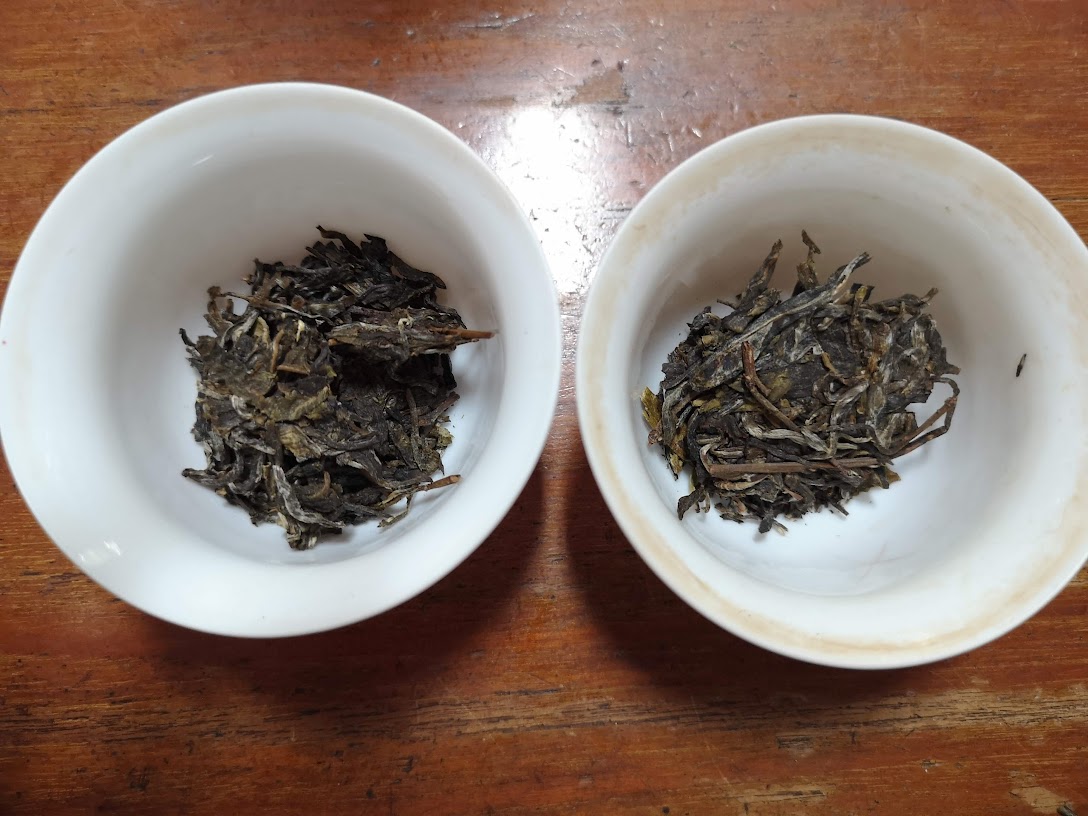
Tea Mania 2021 Jing Mai and 2022 Yiwu sheng pu'er


I'm reviewing two more sheng pu'er from Tea Mania, one of my all-time favorite sources, and one of the best value places to buy sheng pu'er on the internet.  These were sent by the owner, Peter, for review (many thanks for that!).  

I'll get around to saying a bit about value, but these are "gushu," old plant material versions, which are ordinarily out of my normal budget.  If I remember right his pricing doesn't typically reach up to $1 a gram, so it's not as high as has long since been conventional for many sources.  But you pay more for this range of teas expressing a bit more depth, and more mineral undertone, and potentially causing a slightly different body feel experience.

This ties in well to trying a number of sheng pu'er from a Malaysian source, from Legend of Tea.  I've been having trouble placing those within the higher end of the quality scale, and comparison with these could help.  I still may not be familiar with the absolute best of the best quality sheng pu'er sold anywhere for any price, but teas from this source are always really good, pretty far up the practical part of that scale.

I typically cite vendor listings, to let them add a description, and to cite pricing, but I don't see the 2021 Jing Mai version listed.  I'll add another different year citation here, but of course even if the tea had been identical different aging would make it different:


Jing Mai Gushu, 2017 (not 2021), listing for $112 USD (90 CHF) for 250 grams


That pricing is equivalent to $160 for a 357 gram cake, or 45 cents per gram, on the fair side for gushu material, if it matches expectations for that type range (which is never just one thing)..


Together with our friend, Tea Master Panda, we went to Jing Mai to find the ideal Gushu tea leaves. Thoes leaves have been processed in Yang Mings tiny tea factory to traditional 250g Bingcha.

For this Bingcha we used Pu-erh tea leaves of up to several hundred years old tea trees (Gushu) from Da Ping Zhang in Jing Mai and stone pressed. The tea garden with the old tea trees is located at about 1600m. The the top of the mauntain forms a plateau instead of a peak. Therefore, all tea leaves are grown on a similar altitude.

Harvest: Spring 2017

Pressed: 2017

Taste: Mild and fruity with a sweet aftertaste

Terroir: Jing Mai, Puer prefecture, Yunnan province, China.


Yiwu Gushu 2022  ($106 USD for a 200 gram cake)


This pricing equates to $190 for a 357 cake, or 53 cents a gram.


These exceptional leaves have been expertly processed in Yang Ming’s boutique tea factory into traditional bingcha Pu-erh tea cakes.

Yiwu Gushu 2022 is crafted from tea leaves harvested from ancient tea trees, some over 300 years old (Gushu), located in the renowned Yiwu region. The tea bears a striking resemblance to our immensely popular Lucky Bee, sharing the distinctive Yiwu aroma. Additionally, it offers the well-known depth and clarity characteristic of Gushu leaves, along with a subtle hint of camphor...

Yang Ming is a local tea farmer from Yiwu, descended from a family with a long-standing tradition in Pu-erh production. His tea fields are the source of our beloved Lucky Bee teas...


Harvest: Spring 2022

Pressed: 2022

Aroma: Mild and sweet with a typically Gushu aftertaste

Terroir: Yiwu Shan, Xishuangbanna, Yunnan province of China


For lower cost versions that are still really pleasant that Lucky Bee line mentioned represents unusual value.  But this is about reviewing the gushu versions.


they press tea coins for use as samples, with that form involving some trade-offs


Review:


2021 Jing Mai gushu:  that's really fruity for Jing Mai.  It's so complex that even for an initial long soak to get the tea coin opened up I'd need to use a few descriptors to unpack what fruit is being expressed.  Maybe along the line of red raspberry, mostly, or possibly even dried red raspberry.  Bitterness isn't even started yet, but then this is brewed light, for only the outer part of the coin being wetted so far.


2022 Yiwu gushu:  sweetness and floral range stand out in this right away.  There's already a different kind of depth in this, not just the mineral undertone, which is going to stand out in both to some extent, but along the line of spice, or maybe aromatic tropical wood.  Even the next round isn't going to cover where these actually are, related to them still opening up, so I'll say a little about second round and do a flavor list breakdown on the third.


Jing Mai #2:  fruity, complex, well-balanced; this will be nice.

Yiwu:  interesting that this expresses more depth; I tend to think of Yiwu as being mostly floral, sweet, round and full, and approachable.

It's an option to try to tear these coins apart after a second brewing round, but they're too solid still for that to make sense to me.  Maybe I'll tease them apart a bit more after another longer soak.  Of course this is going to cause some of the tea to be on the 4th infusion when some is just starting out, but that doesn't ruin the experience, it just causes a different type of complexity, trying it at different infusion stages mixed together.  Not optimum, according to many, but it's fine, it works.  The dragonball form seems even worse, to me; getting that fully infused takes awhile.


Jing Mai #3:  pine does finally enter in, not so much the subdued pine forest effect I kept talking about in reviewing a recent Jing Mai version, but actual fresh needle flavor.  Then this is also still quite fruity.  The balance is really nice.  It's odd how limited bitterness expression and the distinctive astringency is; this is very approachable.  Flavors are bright and fresh; 4 years of aging hasn't led to a warmer tone, or offset bright notes.  Maybe these were stored somewhere in Yunnan?


Yiwu:  there is plenty of floral range to this, and an interesting spice tone.  Some of the sweetness could be interpreted as relating to citrus, but only a touch of it, maybe to dried tangerine peel.  These taste good.  Balance is great, freshness is nice, sweetness is high, and complexity is good.  I think a mineral base is playing more role in tying it all together than it's easy to notice; it doesn't stand out.  They're both really clean and intense.  

This is probably only the start of them tasting like they will across the middle rounds, not even there yet.  Maybe some of the initial brightness and freshness, the early round effect, is nice for being mixed in across rounds, from the hard middle getting wet later.  If they were challenging that would be the opposite, that the tea loosening up would be taking awhile, but they're not.  I'll keep going with long soaks to get the initial infusion process going, to get the middle soaked.


Jing Mai #4:  transitions might be harder to identify since new tea at the center of the coin keeps getting wetted for the first time each round.  At least this is bright, sweet, fresh, fruity, and complex, very pleasant.  Mouthfeel changes; it picks up some fullness.  Aftertaste intensity might be ramping up too.  That pine note isn't too piney; it mixes fresh needle effect with a bit of pine cone flavor, with fruit standing out more.


Yiwu:  it's hard to describe how rich and complex the floral range is.  It's nice.  I wouldn't necessarily keep aging this; it's in a great place right now.  It would be interesting seeing how floral tones become even warmer and richer over 2 or 3 more years, but then you'd be trading out some freshness and brightness, and once it switches towards fully fermented aspect range to me you would have probably lost what represents this tea's most pleasant potential.

There's very limited bitterness, and some fullness of feel, some structure, but it's the opposite of challenging.  A longer soak might finally get to the next place in the transition cycle for both.


Jing Mai #5:  the pine note switches over from also tasting like pine cone to expressing mostly spice.  That's stronger than the fruit now, kind of balancing, but more within that spice and vegetal range.  Vegetal makes it sound like a claim this tastes like green bean or grass; it's not that.  Pine cone or aged tropical hardwood are vegetal, just not in an ordinary sense.  


Yiwu:  savory edge picks up in this, tied to the list of flavors I keep describing.  This doesn't seem like the floral-intensive, less balanced Yiwu I've mostly tried in the past.  The warm towards tropical hardwood part people would probably interpret differently, as spice instead, or some form of dried fruit, maybe on to more exotic descriptions outside of food range, tasting like a particular type of clean canvas, or like a wicker chair.


Jing Mai #6:  I'm usually saying that I've got to go do something right about now, and today it's a doctor's appointment.  Eye is feeding the kittens for me or I'd be on break for that right now; I'm more or less mother to two month old kittens just now.  I finally tore these two coins in two, the first attempt at making them fully open the manual way.

That's so good!  I've been drinking this tea for 5 rounds, so it shouldn't come as a surprise, but the final push of intensity from it finally fully brewing all of the tea is really something.  Feel depth changed, and something along the line of an aromatic wood note entered in, like cedar or redwood, or maybe even sandalwood.  Sweetness is pronounced too, and there is some fruit balancing that, and a touch of pine.  The complexity is great.  I could relate to someone saying that Jing Mai teas aren't necessarily for them in a recent review citation, but this is something different, not just pine with a touch of floral tone.


Yiwu:  this includes a comparable warm spice-like or aromatic wood tone range, and richer, deeper floral range, perhaps with just a hint of citrus, so it's comparable, but completely different.  They harmonize with each other, filling similar roles in different ways, just a bit off-key from each other, but in a way that balances.

A savory experience is unique in this.  It's almost a touch of sun-dried tomato entering in, along with all the rest.  It's not at all what I expected, more of a sweet and complex floral range experience.  

Trading out transition speed and clarity for these coins taking awhile to get wet kind of worked out, since these will keep changing over a few more rounds, and continue on as interesting and well-balanced way past 10 rounds.  Eventually a more brewed-out bitterness will enter in, but it will help that these were so approachable through the first long stage.

I'm going to blasted by these teas; powering through 14 rounds is a lot.  It could help that the infusions weren't overly intense, as I'm prone to cause when using 9 grams of already loose material.


Jing Mai #7:  again, as for all of these rounds, that fruit note is amazing.  It's so complex that it must relate best to a mix of different fruits.  Dried raspberry may be a main theme, but there's more to it.  Gradually increasing light bitterness and a fuller, dryer feel are pleasant.


Yiwu:  this experience integrates so well that breaking it down to 3 or 4 main parts mis-represents how you actually experience it.  It's good.  It's going to be hard to place how much better these are than the Legend of Tea versions, but they are a little better, even beyond lots of difference just relating to preference or character differences.  Both could be equivalent amazing value.


Conclusions:


I've concluded so much already!  The teas were just great.  I had made it sound like they were going to brew 15 great rounds based on starting so slowly but at 10 or 12 the effects of pushing the outer material to brew faster started to show, and some characteristic late-round bitterness and green wood effect entered in, mixing with flavors I described in the first 6 or 8 rounds in the notes.  They still brewed a full cycle, over 10 rounds, but there was no free lunch related to the interior taking awhile to get soaked, so they didn't make it to 15.


Is there any one or more aspect or character ranges that sets them apart as gushu?  One part of the vendor description mentioned depth and clarity (as related), and another referenced aftertaste expression being different, or more intensive.  All of that was impressive.

I think clarity is worth considering further.  I might reference an overlapping aspect I refer to as refinement, when a tea isn't just complex, intense, pleasant, and so on, but expresses something else.  I see it as the opposite side of not expressing flaws, as going further in the other direction.

Is that worth shifting to paying 50 cents a gram for a tea instead of 30-some, beyond flavor aspects just being positive?  I suppose it depends on tea budget.  It should definitely be an easier judgment call to make at 50 cents a gram instead of $1.  But then character and quality level become quite complicated, and it doesn't work to say that lots of range of versions are equivalent, all based on one input.  These teas are better than some of what I've tried represented as gushu from elsewhere, but I can't compare them to the entire range of the best of what is on the market (of course).

I think you need to drill down to more local areas to even discuss what is most type-typical; comparison at the broad region level muddies the discussion.  Then distinct styles could enter in.

It's harder to say if these are clearly better teas than the last two I tried, because aging issues also factor in, and complicate things (and comparing Mang Jing and Jing Mai may not be apples to apples, back to the last point).  This Jing Mai version is really something; I suppose it is probably just better, and you can set aging issues aside.  That Bulang version from 2021, equivalent in age to these, was really in a favorable place.  It was far more fermented; these retained a lot of the earlier character, which in this case was also favorable, since they were fresh, sweet, complex, approachable, and very well balanced.  Since the per-gram pricing was around half of these for that maybe it's a partial victory for that tea, related to value.  

But these teas were so exceptional, for what they are, that to me it doesn't reduce to being that simple.  You really probably can't find experience like this for considerably less.  I'm not completely sold on the gushu theme as something I would need to regularly experience, that extra depth and clarity, but I also can't really discount it as irrelevant.  

Tea Mania also sells "arbor" teas; they carry the other intermediate range that people bring up.  It costs less.  The extra rough edges or slight limit in some intensity range isn't considerable, not a night and day difference, but it is different.  Their Lucky Bee Yiwu line I recommend that people can buy a cake of without tasting a sample; it's that pleasant and consistent, and that good a value, but of course it's not the same as these.


Would these two teas necessarily age better for being gushu (a claim that also comes up, just less so at the current time than a decade ago, back when this was all sorting out more)?  Probably not.  I see that as relating to certain style, to high levels of distinct types of intensity, in general terms to teas expressing more astringency and bitterness when young (new).  

I think that these would go through very favorable intermediate transition stages, when stored in a cooler and dryer place than Malaysia, as we are seeing 3 and 4 years after production now.  But at a guess I don't think it would make sense, to me, to keep these around to re-try them as 15 to 20 year old tea versions.  They're great now, and will continue to express great moderately aged character for a few more years, before they reach that in-between stage.  Stored in a cool and dry enough place they won't be in that in-between range at a decade old yet, when character can make less sense, they'll be preserved, but there may be a trade-off in slowing and stretching out that process.  But that part is idle speculation, not even a guess.

Tea Mania sells 2012 and 2014 Jing Mai gushu versions; someone could check on that aging transition guess, by buying them.  That 2012 version sells as a 357 gram cake for $187; it's not bad for good material tea of that age.  That could work as a tasting set theme.  I looked up what they offer for those and there's only one, here, including varying origins and ages of sheng pu'er (listing for $37 for 56 grams of seven different teas; not bad).


a recent make-up birthday party, really an excuse to eat ice cream cake


2019 Jing Mai and 2021 Bu Lang sheng pu'er


I last tried two very different ages of sheng pu'er versions from Legend of Tea, a Malaysian tea vendor who sent these teas for review (many thanks!).  The earlier two teas were pretty good, quite solid, with value standing out even more (a Jing Mai and related area Mang Jing version).  Malaysian storage was an interesting sub-theme, considering if the older version had fermentation-transitioned faster than it might elsewhere (it seemed to).  Those were 2013 and 2022 versions; one part was reviewing a contrast in aging.

So this time I'm trying two more similar age versions.  These are both variations of their flagship tea line, a brand term they use for varying origin teas each year (Xiao Ba Wang).  It can be hard to place themes like quality level, assigning that clearly, and trueness to type for a typical origin character, or storage potential.  Match to preference should be easier; that's just how much you like a tea.

I'll cite the vendor descriptions after doing the tasting notes (the teas were good; I'll add that much spoiler).


2019 Xiao Ba Wang Raw Puerh Tea  (Jing Mai, $41.92 for 200 grams, equivalent to $75 for 357 grams)


The raw material selected by XiaoBaWang in 2019 is HuaZhuLiangZi which from MangJing ShangZhai - JingMai Ancient Tea Estate - LanCang County - XiShuangBanNa. The name “HuaZhu” originated from the wild bamboo that used to strive there. They are low in vigour, covered in moss and lichen. These epiphytic plants hang off the branches, resembling countless tails of a lion, forms an unusual yet stunning scene. The strong relish of wild mountains and the earthy scent unique to moss are marked characteristics of HuaZhu LiangZi. There is a shy floral aroma along with a sip of tea.

The tea liquor of XiaoBaWang 2019 has the strong relish of wild mountains. Its liquor taste sweet with orchid fragrance, rich endoplasmic, reveals its strong aftertaste and "yun" affords a lingering after-taste.


This is a little confusing, the different origin names, which cover different scopes.  In the last related post it came up that Mang Jing can either be considered an area within the Jing Mai region or as an adjacent area, depending on how one is using origin area designations.  It seems like Jing Mai is probably both a "district" of some sort and a "tea mountain," a geographic feature, which is probably nowhere near as distinct and defined as Mt. Fuji (for example).  Here's a reference on Yunnan tea areas, for further reading. 

I'll just continue on with calling this a Jing Mai tea here, but for people familiar with Mang Jing, or who really bought into the distinction in the last review, that might seem odd.  Teas vary a lot based on different inputs, so it's not problematic for me.  That last Mang Jing tea really did seem to have a forest-oriented flavor as one main aspect; I'll have to re-read these notes to see how continuous that was, since I've written notes for the next tea review after these since.


2021 Xiao Ba Wang Raw Puerh Tea (from Bulang, $37.21 for 200 grams, $66.42 for 357 grams)


This year, we have selected BuLang Mountain ecological tea, blended spring tea and autumn tea to increase its taste, aroma and layering. Using "Single Bud & Two Leaves" hand-plucked tea leaves as the raw material as well as retaining the traditional sun-dried and production methods. We persevered in selecting only the best quality raw materials & employ refined production methods as well as craftsmanship that guarantees a delectably mellow for your enjoyment!

When unpacking the xuan paper, you can smell the uniquely rich and sweet aroma of high-quality raw tea, tea liquor is golden like orange, with a clear and bright aroma, the sweet aroma is significant and delicate, rich in taste and connotation, the slight bitterness, which quickly dissipates and turns sweet and full of after strength.


This Bulang version was really something, but it may be that it aged into a really good place at this stage.  The tasting review notes tell that story.


Review:


2019 Jing Mai (Hua Zhu Liang Zi):  of course this is a bit light since I'm in the habit of trying and reviewing the rinse, or first infusion.  Aged notes stand out; this has been enough aging to bring in some of that character.  But it's clean, and there is some sweetness and freshness.  I'll cover the rest next round.


2021 Bu Lang:  there's a nice rich floral range in this, even trying it a bit on the thin side.  Feel is already filling in, and it already hints at complexity.  This should be nice.


2019 Jing Mai #2:  it's interesting how different this is from the 2022 Jing Mai version that I've already reviewed.  Of course I don't know how similar they were prior to aging, but they're in very different places now.  This seems a lot more fermentation transitioned than 6 years often is.  

Warm tones emerge.  Mineral stands out, and some could be floral, but it's more along the lines of a vegetal range, like the scent of a forest.  It's not pine in the sense of brewing fresh needles, but not far off pine forest scent.  Feel is nice, thick and structured.  Sweetness level is good.  It is kind of directly in between fresh / new sheng and an aged version, but it works better as that than they typically do.  It integrates.  Maybe it's that the warmer forest range, sappy feel, and mineral tones all tie together, they make sense together.

Bitterness is present but I hardly notice it, related to the extent it has transitioned away.


[later editing note]:  sometimes it seems like the review notes don't match the product listing at all, but this seems like a set-up, as if I've just written what they said.  Probably that's partly from the earlier Mang Jing version I've already reviewed expressing similar character (a forest sort of scent), making it easier to notice in this.


2021 Bu Lang:    this definitely includes more bitterness, and more of a still-youthful character, but it has surely changed a lot in 4 years.  A different kind of mineral undertone, sappy feel, and woody sort of character makes it similar but quite different.  Feel is thicker, and flavor range is more complex.  That bitterness links to floral range and a pleasant sweetness.  For someone averse to bitterness that could be seen as negative, but for most sheng drinkers that is at a really good level.

What I've just described as wood could be taken in all sorts of ways, and wood isn't the most natural interpretation; that was more about comparing it to the other tea version.  It could taste like varying forms of spice range.  

The sweetness that I see linking to rich floral range could include some dried fruit range, maybe tamarind.  There's a lot going on.  It should soften and change a bit as the rounds evolve, and as early rough edges smooth out.  This isn't harsh though, it's quite approachable, without notable flaws, but it should deepen and mellow over the next couple of rounds.


2019 Jing Mai #3:  not so different than the last round.  The main limitation of this tea might be the character falling in between young and aged.  It works better than usual for this tea version, and it's fine as it is, making plenty of sense, but not everyone would be on this page for preference.  I like it, but then I tend to appreciate what teas offer, across a broad range, as long as they're pleasant, and lack flaws or obvious limitations.


2021 Bu Lang:  the rich floral character in this works well, especially related to how tones are warm, deep, and complex.  The match with bitterness is nice, to me.  Feel is structured, complex, and sappy; that works too.  At a guess--a complete guess, just thinking out loud to help place the experience--this is better now than it would be in two more years, with fresher floral tones still pronounced.  In 5 or 10 more years the character will switch over to something else, and then match to preference would determine if that's better or not.  It makes a lot of sense to me as it is just now though, as a partly aged, still sort of young character tea.

I'm not implying that the aging difference is the main input related to the two of these.  Surely they were different to start, and two years ago the Jing Mai was nothing like this, and in two more this won't be like the Jing Mai version.  But sheng balances differently at different aging levels, making more or less sense, and I do see where this is as more favorable, for what it is.


2019 Jing Mai #4:  at this rate I'm not going to get too far through these; I used too high a proportion, and they're too strong to brew and drink a lot of in a hurry.  Maybe I'll do a flash infusion next round and call it.

Pine transitioned to warmer pine forest tones is nice enough in this.  Intensity is good, and feel and flavor experience coat your tongue, and carry over as aftertaste.  The form of the feel might seem a little dry, not exactly a flaw, but not as thick, rich, and sappy as it could be, for matching with the flavor form.  In the last Jing Mai version review I cited a Steepster review of a vaguely related version (Mang Jing, and adjacent region) in which someone said that Jing Mai and Mang Jing profiles aren't their favorite (one way of reading it).  Preferences naturally vary; that makes sense.


2021 Bu Lang:  I'll cite that comment I referenced, because there's something related to point out in this:


This tea from “greater Jingmai area” is light bodied with a very up-front floral but not perfumy character. I am not a big fan overall...


This Bu Lang version is "perfumy."  I usually reference that in relation to similarity with perfume, and more often as tying to cognac or brandy, that one aromatic range that's not really a flavor, instead a way flavors tend to come across.

This version did "loosen up" nicely, with bitterness and warm floral tones really working together much better than over the first couple of infusions, when it was already pleasant.  I suppose I'll have to conclude that I like it more.  

I don't crave a high level of bitterness to make sheng work, but when it does connect it's nice.  This is far from a high level of bitterness, as new or one year old sheng goes, but over four years that definitely didn't drop out.  I did a second water break to clear my palate before this next round and that bitterness changes to a pronounced sweetness in aftertaste, it seems, almost no matter how much later you'd drink it.


2019 Jing Mai #5:  brewing these for less than 10 seconds you can see by the color they're still strong.  Someday I will learn to drop the brew proportion for a combined tasting; the first few hundred experiences haven't taught me that yet.  You could push the oolongs I've been trying regularly pretty far and they would still be pleasant, and I can drink sheng kind of strong too, but the effect adds up.

This is still nice; forest tones and some floral range work together.  Warm and lighter, greener tones work better together than they usually do.  Comparison with the other tea version doesn't help, for it being sweeter, fuller in feel, and more complex, with lots of pronounced rich floral range.


2021 Bu Lang:  it's still like I've been describing it, not one bit lighter for brewing it fast.  This would probably brew a dozen pleasant infusions, even at a lower proportion.  I think the balance is better for backing off the intensity, even if it's hard to tell the difference just in relation to flavor effect.  Aftertaste intensity is strong enough, but not as far towards overdoing it a little.

People sometimes reference what to eat with teas, generally preferring not to eat between individual infusions for better quality versions, but then more neutral foods preference is often cited, a croissant or something such, or a bean cake to stay within Chinese range.  I just finished some re-hydrated goji berry, which I eat on most days, and the sweet berry flavor was nice as a contrast to this pair of sheng ranges.  There's a bit of saltiness in that, probably standing out more related to the contrast.  

I'm not wearing reading glasses yet, even though I'm 56; maybe there really is something to health claims related to those, and in particular to the zeaxanthin in those goji berries.  Maybe I'm also picking up lutein from a diet high in varying vegetables, which also helps? 


Conclusions:


Most of the comparison and contrast was already there in the notes.  It's interesting how different those were, and how they landed in such different places at 4 and 6 years of aging.  

At this point it's probably as well to let the Jing Mai / Mang Jing version age another 5 or 10 years and see where it's really headed, since the in-between fermentation level probably isn't ideal for it now.  It's still fine to drink, and pleasant, but to me it's too divided between not expressing that much of how it had been earlier and not getting to where it's going for transition yet.

The Bulang tea makes a lot of sense at this stage, it seems to me.  It's at the end of the slightly aged but youthful range, and to me that works really well for it.  It would've been really good within the last couple of years too, more intense, brighter and even more floral, still plenty sweet, just with a bit more bitterness and astringency to balance that.  Brand new it might've been a bit strong.  

It's possible that it's "better" tea, but I'm seeing character and aspect differences coming up as much as that broad-based quality theme.  It seems like a pretty good version of what it is, and the aging input seems to have been favorable for it.  I hate to say that this pricing is too low; who would want to pass that kind of feedback back to a vendor, when they might "correct" for it.  But it kind of is.  A standard Western marketplace vendor, like the main example you are probably thinking of, would probably charge way over $100 for this, maybe more like $150.

Which raises a related question:  where are vendors getting their pricing levels?  Is a tea so good that it slots into a certain range, or is a standard mark-up typically applied?  Per my understanding it's usually the latter.  Market rates for different kinds of teas tend to level off in standard places, so vendors just adding a standard multiplier works out, equating how a tea is with that final price, balanced against demand.

Vendors being able to buy tea for a relatively good price themselves can shift things, and an extra favorable aging input changes things again.  Relatively warmer and more humid storage--Malaysian "natural" storage--can not work out in an ideal way for some tea versions, maybe for more delicate and aromatic teas, but it just matched well with this version.


on a kitten theme at home now


Myra hasn't been so receptive, but she is adjusting


Monday, July 14, 2025

2013 and 2022 Xiao Ba Wang (Mang Jing and Jing Mai) sheng pu'er


I'm reviewing another two versions of the Legend of Tea flagship branded sheng pu'er type, this time the 2013 and 2022 years.  The teas are from different origins each year, so the 2013 is from Mang Jing and the 2022 from Jing Mai.  Mang Jing isn't familiar; let's check what Google's AI response thinks that is:


Mangjing Mountain Pu'er refers to Pu'er tea produced in the Mangjing area of Jingmai Mountain, a region known for its ancient tea forests and unique tea varieties. Specifically, the tea trees in Mangjing are a natural hybrid of Assamica, referred to as Mixed-Leaf varietal, which contributes to the tea's sweetness and aroma. Jingmai Mountain as a whole is recognized for its large, well-preserved, and ancient tea forests, with some trees being hundreds or even thousands of years old. 


So it is just a local area in the broader Jing Mai region, according to that source.  Plant types varying some in different areas is a normal, recurring theme, but also one that's hard to place.

It may seem odd trying two very different years like this, and it is.  The idea is to contrast how an aged and relatively unaged version compare, even though differences in the material, related to origin location and other inputs, would be as much of a factor.  Initial general character, aging potential, and how each tea transitions through aging wouldn't be the same.  As luck has it maybe not so different, given the location proximity.

They sent a number of years of samples; somehow I had missed that earlier, writing the first sheng pu'er review post as if I wouldn't try these.  The years are spread out so that I can still do two more comparison posts, that make more sense, of closer year spans, of two other versions from consecutive years.  And from different origin areas, so it will be about discussing differences as much as similarities.  And quality, and aging potential, and I suppose guesses about the storage environment.


About "dry storage:"  In talking to the vendor again after the last post "dry storage," referenced in a product description, is used in a sense natural storage often is for Hong Kong environment descriptions.  It's unadjusted, related to the natural climate, instead of being held at a high humidity level to speed up fermentation transition.  Of course very local micro-climate varies everywhere, even in different parts of a city, but in general lots of Malaysia is pretty hot and humid, as Thailand is, to a less extent even in the "mountain" areas in the North.  By that I mean that the annual low in Bangkok is in the low 20s C, around 70 F, but 25 C / 75 F is a more standard low temperature, and it's in the 30s most of the time (90s F).


The Legend of Tea vendor listings and descriptions:


2013 Xiao Ba Wang Raw Puerh Tea ($70 for a 200 gram cake, equivalent to $125 for 357 grams)


MangJing mountain ecological tea has the best aroma, which is similar to the ancient tree tea. The aroma is mellow and last long, the serrated edges of tea are not obvious, and the tea buds are slightly thin. Due to good ecological conditions, the MangJing mountain tea comes with a strong orchid fragrance is the best raw material for the processing of puer tea.


2022 Xiao Ba Wang Raw Puerh Tea ($34.80 for a 200 gram cake, equivalent to $62.12 for 357 grams)


This year's Xiao Ba Wang is made from ecological spring tea from JingMai Mountain, and the most important feature of this year's Xiao Ba Wang is "sweetness"! What is different from the usual "sweetness" is that the sweetness of JingMai tea comes directly and quickly!

The sweetness of JingMai tea comes out when you pour down the hot water! The aroma of this tea is orchid fragrance, and the taste is fresh, sweet, and smooth, you can feel the sweet aroma of this tea enveloping the whole mouth and tongue. The tea broth is fine and smooth with a full and mellow taste.


I checked another source to hear more input on Mang Jing, since AI content is unreliable, and the part about natural growth and thousands of year old trees wasn't promising:


Spring 2019 Mangjing (a Farmerleaf listing)


Ai Leng Ancient Garden, Mangjing Village, Jingmai Mountain

In the heat of the Spring season, we visited our friend Ai Gong. He lives in Mangjing, a mountain adjacent to Jingmai, 10km away from our village. The altitude is 200m lower than our mountain, it peaks at 1400m. It is populated by the Bulang minority, unlike Jingmai, which is Dai...

The leaves in Mangjing are smaller than the ones that grow in Jingmai, the varietal is probably slightly different, despite the close distance between our respective mountains...  The tea shares a common character with our jingmai gulan, but it has a different fragrance, more minerality (probably due to the higher amount of old trees in the gardens) and a somewhat more aggressive profile. Jingmai and Mangjing are like two brothers with different personalities.  You will get your money's worth with this tea.


Their site doesn't show the price, but Google's site listing thumbnail entry says that it was $128, which is probably right.  What does that mean, that a $128 cake is "good value?"  It's a coincidence that Farmerleaf sold that as a new version at the same price Legends of Tea is selling theirs as an aged one, 12 years later.  But it's different material, for sure; you can't say all tea from an origin area is the same, and when a local area vendor describes a version as exceptional for that area it's promising.

In trying to confirm that price I looked up a Steepster review, by Togo, from back then, reviewed in 2020 (which never did list the price, but it adds one detailed take on that 2019 tea):


This tea from “greater Jingmai area” is light bodied with a very up-front floral but not perfumy character. I am not a big fan overall, but I do like its creeping, grounding cha qi that induces a great mind-clarity.

In the aroma, there are notes of light smoke, citrus zest, beef and focaccia. Taste is sweet and flowery with a milk note initially. Soon enough, a nice bitterness appears that has a tart and nutty backbone. The finish is buttery and the aftertaste vegetal, cooling and sweet with notes of olives and peach. Later on in the session there is also a hint of an interesting black pepper like taste and a more woody character overall. All in all, there is complexity, but I didn’t find the profile to be particularly enjoyable. The tea also doesn’t really last beyond 200 ml/g worth of infusions.

Flavors: Bitter, Black Pepper, Bread, Butter, Citrus Zest, Floral, Flowers, Meat, Milk, Nutty, Olives, Smoke, Sweet, Tart, Vegetal, Wood


Maybe not completely relevant, but interesting to consider.  It's also interesting how bitterness kind of drops out as an assumed background condition in sheng reviews (in the flavor list here, but not covered in the write-up).  You might comment on the level being low or high, but that's just how one year old sheng goes, it includes that.


Review:


(2013 Mang Jing left in all photos)


2013, Mang Jing origin:  it would be conventional to use a rinse for aged sheng but I didn't.  Flavor isn't pronounced in this; it's normal for sheng to need a round to open up, hence the conventional use of a rinse.  It's still interesting to me getting an initial sense of the tea, even if it doesn't get far.  Flavors are clean and warm in tone.  It should be nice once it gets going.


2022, Jing Mai origin:  more comes across in this, but I still might save more of a breakdown to the next round.  Of course the tones are much lighter, and include some bitterness, not showing up yet in the other.


2013 Mang Jing, #2:  it's interesting how far this aging has progressed in a dozen years, pretty far along.  Warm tones are mostly along the line of aged wood, towards a medicinal herb flavor, not so far off an incense herb range.  Root spice like ginseng also works as a description.  The effect is quite clean; there is no mustiness of off flavor range.  Intensity is pretty good.  Feel has a nice structure, including just a bit of dryness.  It seems like this will keep evolving over the next couple of rounds though, as if it's not to where it's going to be yet.


2022 Jing Mai:  again a much younger sheng range, not including overpowering bitterness, but that's still a significant input.  The flavor is a bit fresh, but already leaning towards warmer tones, including some of that.  One vegetal input is a bit towards pine, a normal flavor aspect in Jing Mai tea, but it's as close to green wood in this version, at this stage.  Floral tones don't really stand out, but there may be some of that filling in background, connecting with sweetness.  Intensity is good; overall balance is good.


2013, #3:  a pleasant spice-range sort of herbal note emerges.  It had tasted like medicinal herb before, but this is a bit towards sassafras.  Feel is nice, with some fullness and structure, but it's not challenging.  Aftertaste experience is nice; it really carries over.  

This isn't all the way through aging transition, of course, but it's not falling short enough that you tend to speculate about when it will be better to drink.  It's ok now, it's just going to keep changing.  To the extent this includes wood tones those tones are warming, a bit towards a cinnamon spice range, but it doesn't taste like cinnamon, it's just a comparison.  So like aged tree bark?  I guess that works.


2022:  the bitterness and astringency level in this is in a nice place.  Those inputs tend to soften but not drop out over the first few years, and brighter and fresher flavors start to change, but sheng pu'er versions are still young at 3 years into aging.  This probably is at a level comparable to 5 or 6 years into Kunming aging; in some cases sheng stored cool and dry can not change all that much in the first 8 to 10 years.  Intensity is good, and sweetness level is nice in support of the rest.  Feel is fine, and intensity carries over into aftertaste.  It's a nice tea, at a nice place in transitioning.

So far I've avoided extending aspect notes into conclusions in any way.  This is nice, but how good?  What is the quality level?  Is the other a great example of a 12 year old sheng, beyond flavors and other aspects being a particular way in any given case?  I'll try to add some thoughts on that over later rounds.  It's not an easy judgement call to make.  These lack flaws; that's a good starting point, that makes them at least average.  And then I think they're at least a little better than that.  

Judgments within the narrower range of the higher end is always more difficult.  Maybe I've never tried the best of the best of what comes out of Jing Mai?  I've tried a good number of versions from that broad origin, including quite a few from Farmerleaf, that other vendor mentioned in a citation, but Mang Jing isn't familiar at all.  A simple count of teas you like or don't like doesn't mean much; someone could accidentally try below average quality tea versions over and over, especially if their main filter related to trying the lowest cost versions.  Or preference for aspects varies, a different thing than a quality assessment.


2013 #4:  similar flavors as I've described.  The balance gets better and better as it goes, the way those come together, and the way that root spice / driftwood scent sort of range emerges.  The feel is nice in an interesting and difficult to describe way.  There are no heavier tones one might associate with more humid storage, but then that also must depend on the starting point input.  For the tea being this subtle and balanced it didn't start out as harsh, complex, and intense as factory teas are.  But it's also far from fading away; the balance it strikes in the middle is a good one.

I've been re-trying a Jing Mai version from in between these years, maybe 2019 or so, that was an autumn harvest version, and the intensity is mostly gone now (not from Farmerleaf, but it seems the source doesn't matter related to making this point).  The tea is fading to include some warm depth and that's about it.  That's still ok for an experience, but this tea expressing more interesting flavors, complexity, and feel is much better.  

That tea was on the inexpensive side, and not that intense to begin with, so I'm not really upset that aging it isn't working out.  I had bought two cakes and drank one new, so I've had the earlier part of the experience, the one I consider more positive.  Now it will work well as a tea to have with breakfast, when I feel like something subtle, or I could keep most for another half dozen years and keep trying it when it's really faded (with more comment to follow on whether or not a temporary lapse in intensity could relate to a "teen years" in between transitions state.


2022:  pronounced bitterness really stands out in comparing these two.  But in comparison with young sheng versions, and not even challenging ones, this isn't all that bitter.  It's a main component, and intensity is pretty good, but that's still moderate, since a lot of 3 year old sheng might not be all that approachable yet.  

I think quality is pretty good for these.  I'm never going to be able to be as clear as I might be on that, putting it on a scale of 1 to 10, or comparing it to known benchmark versions.  I'm not sure what "boutique style" teas are ever used as benchmarks.  I guess an individual could be familiar with whatever they drink a lot of, and their own comparison could tie back to that, something from one of the main Western vendors, for a Western tea drinker (from Yunnan Sourcing, Farmerleaf, White2Tea, etc.).  The older form of Yunnan Sourcing Impressions series seemed designed to fall in between categories, described as an alternative to something like blended Dayi / Taetea 7542 versions, but really the style for those was never all that similar.

Related to how this might be better some pine and green wood isn't bad but swapping in a bit of somewhat warm and transitioned floral range might be nice.  The brightness and sweetness might relate to a citrus tone, but it's subdued and integrated enough that this comparison or interpretation might not come to mind.  But at least that complexity works, letting the flavor balance, as the feel, intensity, and aftertaste aspects all kind of work out well together.  

This may only be "pretty good" level tea, versus something amazing, but ranking well in relation to what I've tried from other vendors is a nice level to achieve.  Given the moderate pricing I referenced in the last review it's punching way above its weight class [editing note:  I hadn't included the price or listing citation content yet, but this being equivalent in price to a $62 357 gram cake is on the low side, sold as a 200 gram version instead].


2013 Mang Jing, #5:  a bit more old book flavor joins that pronounced root spice and driftwood range.  This is improving across rounds, a good sign.  At 12 years old this drinks a lot like an aged sheng; hot and humid storage conditions can lead to that kind of result faster.  You can tell it's not quite to the level of 20 to 25 years of aging input, but this would be comparable to 20 years of cooler and drier storage, just as it is, except that the effect varies slightly, it's not about fermentation input all being one uniform kind of change.  This has fantastic potential to age to be a bit smoother, mellower, with deeper flavors, within the next 3 to 4 years.  Intensity is still there to support more transition.

It's on to guessing but in another decade this might move on to fading some instead.  The most powerful teas tend to not fall into a pleasant, more aged form balance as fast as this has, in "only" 12 years.  But intensity is good now; there is still lots to appreciate.  And it's past the awkward stage where aged flavors and character is evenly balanced with newer / younger range inputs, when teas just don't make sense.  

There's talk in pu'er circles about a tea not tasting like much at one aging transition level, then with intensity and warmer and more age-related flavors filling intensity back in.  To some extent that must happen, as such a broadly discussed and expected theme, but in my experience the opposite is more common.  You can still taste and feel plenty, all across the aging transition, it just doesn't make sense, or isn't pleasant, right in between young and truly aged forms.


2022 Jing Mai:  this is clearly a slightly age-transitioned but still young sheng, just as it should be.  This is a pretty good aging range for drinking this tea.  It would've been ok quite young, if someone was ok with the higher level of astringency and bitterness.  Which is still often moderate for Jing Mai origin teas, compared to something from Menghai areas.  Or is that wrong?  As I tend to perhaps over-repeat I'm not a great reference for mapping typical sheng aspect range to origin locations.

It complicates things that low elevation grown, monoculture produced, somewhat chopped material, high fertilizer input tea is much more harsh, and if you get in the habit of drinking that from one region and versions of the opposite background from another then you'll mix up the inputs, and over-emphasize origin related themes that are really tied to different causal inputs.  To some extent I must be doing that, in ways that I can't sort back out.  And referencing broad production areas never really works well; generalities can come up, but teas also vary a lot.


Earlier in the social media history of tea drinking people in tea groups would debate these points.  It was a great input for comparing your own limited experience range to others'.  That has quieted down quite a bit (for example, Steepster is pretty much finished as a discussion and review site, per my understanding).  

I think that's because the wave of tea enthusiasts from before my time, from the 2000s, had already went quiet when I started exploring and writing a dozen or so years ago, and that next "class" I discussed themes with has also dropped out talking about it.  Now 20 to 25 year-olds discuss tea experiences in Discord servers, which is fine, since it's an effective channel for that.  But for us "old-timers" the chat thread format is unfamiliar, or not as functional, since instead of individual discussions being saved for later review you have the current history of 15 or so main themes available.  You can't really scroll back to see what was covered over the last year, never mind a few years, since it's too much volume, with lots of small-talk mixed in between interesting theme-related discussions.  

That's already plenty of tangent on that.  I'll leave off taking notes here, even though a few more changes will turn up.


Final conclusions:


I've already concluded plenty, so I'll keep this short.  To me these are really good teas for being sold at moderate prices.  I can't really place them in the standard levels related to other Western outlet sources, if they might represent $80 to 90 cakes, or the $120 to 140 range (and $60 to 70 cakes are mostly a thing of the past, in those main sales channels, related to this higher end boutique style of teas, at the risk of using that categorization term a bit more broadly than some do).  

A market outlet like Yunnan Sourcing would sell plenty of older sheng, from 9 years back, or older, but you might need to compare this 2013 version to pre-2010 versions stored in Kunming, related to demonstrating a similar fermentation transition level.  I haven't drank through a mountain of related samples of those from them to place them.

These teas are surely amazing for the moderate pricing level; I'm not afraid to draw that conclusion.  For people open to spending $200 or more on a cake, who have tried many times over what I have of aged sheng range, maybe they would seem to fall short of expectations.  

The Jing Mai character was nice, but you can find interesting variations of very pleasant teas from that area, and in general pricing is lower than the higher demand areas (with $62 representing a relative rock bottom for tea pricing in this type category).  The Mang Jing character was also nice, representing a pleasant aged-tea range, and novel character, but aged sheng is a broad subject, open to lots of varying interpretation about most positive aspect ranges.  Maybe someone could critique it for being a bit approachable or even lacking intensity at this age / place, thinking that if it was still a little more challenging it might land on an even more positive final result in another half dozen years.

To me all of that might be splitting hairs; these are good teas, interesting and pleasant.  Value is all but off the normal scale, delivering more experience for less cost than it's almost possible to find in standard Western outlets, potentially with limited exceptions.  The last 2025 Farmerleaf Jing Mai Miyun I tried, their take on an inexpensive blend, was really good, for what it was, and that now lists at $45 for a 357 gram cake.  Producers using blending to offset limitations in different input lots is another tangent I'll skip saying more about here, but results can be good for that, just not the same as narrow-origin source material, trading out some distinctiveness for good balance and complexity.


Wednesday, February 12, 2025

Farmerleaf Jing Mai Miyun and Cang Yuan sheng pu'er


I'm reviewing two more sheng pu'er samples from Farmerleaf, versions William had on hand and shared when I met him in Bangkok recently.  One is their Miyun version, and the other Cang Yuan.  The first rings a bell, and I've added what I remember of it in notes, so for now I'll just list Farmerleaf's site descriptions (partial citations; there are more details on those pages):


Spring 2024 Jingmai Miyun ($60 per 357 gram cake)


The 2024 version of the Miyun is slightly improved. Due to the low demand in fresh leaves this year, we managed to get some of the best 'shengtai' tea in this blend. We've mixed the production of our Liu Dui garden with tea made by our cousin, growing close to Da Ping Zhang plateau. We'll see how this supposedly superior material will develop as the tea ages. 

At the time of release, right out of the pressing factory, the tea tastes lively and vibrant, with a light bitterness, moderate thickness, good sweetness and some Huigan. This is a good tea for beginners and as a daily drinker. 


Spring 2024 Cang Yuan ($86 per 357 gram cake)


Spring 2024

Old tea garden material, Pa Pai village, Cangyuan county, Lincang

Complex fragrance, medium body, good punch without much bitterness

This is a well-balanced tea with plenty to deliver. Somewhat similar in profile to Baka and Hua Zhu Liang Zi, it is a highly fragrant one. 

We haven't visited the area, it is located is a remote county at the border with Myanmar, in the far west of Lincang county.


I might add that samples that have been travelling a bit could lose a little intensity, for going through changes in environment, or being opened and closed.  Both of these could be marginally more intense as carefully stored, full cake versions.  Depending on exposure some aromatic range could even evaporate off, but I'd imagine at most they could have just lost a little intensity.


Review:


Miyun:  it's pleasant.  Flavor complexity stands out already, even brewed lightly, a bit of pine or related vegetal edge, and what comes across as floral range.  Feel has some thickness to it.  Intensity will pick up a little on a second infusion, and it will be easier to add more details.


Cang Yuan:  there's an interesting flavor range in this version.  The other had a nice brightness, and this is warmer toned, towards warm mineral, or maybe cedar / redwood / other spice.  It seems negative, describing a tea as woody, but a supporting note matching cedar isn't so far off incense spice, and it can play a similar role in positive flavor balance.  The rest is nice, the sweetness, other flavor complexity, decent feel, good overall balance.  

It's too early to try to place these in relation to a higher or medium quality level, but that is something that will come up, related to talking to William about such things, and considering it for the last tea version I reviewed.  It's not so much distinct aspects or markers that stand out, but that refinement can be better, intensity, clarity, aspects being distinct and clean, balance, feel playing an extra positive role, and so on.  I don't over-think such things; I'm drinking whatever tea I happen to have, and exploring to the highest possible quality level was never a main part of my own exploration project.

There is an old understanding that people tend to appreciate tea for flavor first, then learn to appreciate body / mouthfeel, then later can identify and value body feel (cha qi).  Of course for the third category I couldn't separate the input of both tasted together, but it seems to me that people often really like a drug-like effect that stands out most when they drink sheng on an empty stomach, a rush of change in internal state that you can't easily notice in the same way if you have eaten.  I'm not really endorsing this breakdown of forms of appreciation here, just mentioning it.  I like how teas come together, and different sets of attributes make different teas appealing.


I think the other, the Miyun version, is supposed to be their more budget-oriented version, so more moderate in quality level.  It would be normal to achieve good results using less exceptional material through blending, to balance what a few inputs can offer, but I don't know if that's part of it.  Of course that could come at the cost of diluting down some of the more positive range of one exceptional version, some really interesting flavor input, or a special kind of feel structure, and so on.


Miyun #2:  the brightness is nice in this; there is a fresh, bright note that combines some floral and near-citrus input.  Sweetness level balances that nicely.  Bitterness is moderate for a young sheng, in the normal range, which is pleasant to me.  Astringency is normal; feel has some structure, and there's some edge to it.  To me it tastes like an above average quality version of a relatively normal style of sheng.  I guess Jing Mai origin range tends to be like this?  Pine sometimes stands out more; you can notice that, but it's probably as much from expecting it and looking for it, and you might not place it without that.

So it's good.  But it feels like I'm leaving out how it could be better, what it would be like.  Across all of that range, which is all positive, it could be dialed up just a little.  Feel is nice, and aftertaste adds to the experience, but it could be richer, with that more pronounced.  It could have more distinct, cleaner flavors.  I think that one bright flavor tone range is a main strength; to me that really works.  A bit of vegetal edge is fine, but then I love teas with much stronger versions of that, that tend to have a different overall balance, with more intensity, sweetness, and different novel flavor inputs.


Cang Yuan:  that one flavor range is nice.  The warm tone matches well with a richer feel, which carries over into a slightly stronger aftertaste experience.  It includes some bitterness but lacks the slight rough edge of the other.  Intensity is moderate, as young sheng goes; I wonder how William would take that?  This is still more intense, complex, and dynamic than any oolong, green tea, or black tea; it's all relative.  It's good.  A hint of dryness matches well with the warm tones, rich feel, and aftertaste expression.  I suppose it plays a similar role in the experience as a vegetal edge and slight roughness in the Miyun version.  

At this stage, judging between the two, I like the way the Miyun aspects fall together.  The brightness and sweetness is offset well by some pine and astringency.  It might be more challenging for someone who doesn't drink sheng, because of those, but then it's hard to say what people not started on acclimating to bitterness would make of any sheng.  I'm not saying much about bitterness in these because it's moderate, to me, but it is present.  To me it balances well in both, not really standing out.


Miyun #3:  there was a sort of synergy to how the citrus-like edge and what I interpret as floral range came together, along with sweetness, and that has developed further.  It almost tastes like a lemon drop candy.  That hits your palate first, as you taste the tea, then feel structure next, then the flavor paired with that, a touch of vegetal edge, then aftertaste after that.  It's a nice complex tasting experience.  To me--and this part is completely subjective--this is the kind of tea you could drink two or three days a week for an extended time, and it wouldn't get old.  It covers basic range in a novel way.  

The Vietnamese tea I've been using for that purpose, one a Son La version from Viet Sun, that I'm on my second cake of, is more intense, but also edgier, even harsher.  I'm fine with that; I don't think it would necessarily be better with a couple more years to mellow out, losing some brightness and intensity in exchange for the sharp edge softening.


Cang Yuan:  it's interesting how different this is.  Flavor profile is quite different, warmer, almost into spice range, but it's hard to place within that.  I could relate to someone interpreting dried Chinese date as a flavor inclusion.  Feel is full instead of being expressed as an edge.  It's not necessarily rich, not quite to that sappy sort of character, but there's some thickness to it.  It's mild, as a sheng this age goes, but there is a good bit going on, across a few dimensions.  This seems like it could be an autumn harvest tea, that limited intensity and slightly reduced range.


Miyun #4:  the aspects integrate better and better, and that lemon sort of edge becomes more pronounced across rounds.  I really like this.  The light vegetal edge and astringency are in a perfect very-moderate range to complement the rest instead of detracting from it.  

I did break form and look at these vendor listings between rounds (always added during editing), and this is what I'd described, their moderate cost version, using blending to optimize results, selling for $60 a cake.  To me it's a great value at this pricing.  William mentions in the description that it's a good year for this particular cake, that the material is better than normal.  I could see how with just a little less of that positive flavor, a little less sweetness, and a touch more astringency and vegetal edge this would be pretty ordinary tea.  As it stands in this it's quite pleasant.

It makes me think about that "daily drinker" theme, what is implied.  It seems to sweep in that you would drink better tea some of the time, and then an inferior, budget oriented version a lot of the time, the kind of thing you'd have with a rushed breakfast.  That mixes two sets of ideas that don't necessarily go together:  quality level (also relating to value), and general character, what kinds of aspects would work best for tea with a breakfast versus what you'd enjoy in an hour long session focused on the tea itself.  Who knows about the second; people would find different experiences most interesting.  

Good black tea is great for a really rushed breakfast, but I can brew 10 cups of sheng pretty fast for a standard experience.  One trick is to use two cups, pouring from one to the other to pull out a bit of extra heat.  Not pouring back and forth; once would do, or if you really like the tea cooler you can drink a little cold water from one first and it will draw out more heat.


Cang Yuan:  it's not really evolving much; it is what it is.  Would this have greater "depth," giving it an extra dimension of experience the other lacks, one relative superior range?  Not really.  That can be meaningful to me, it can work out like that, but in this case it's more just mild, and expresses a novel flavor range, warm in tone, covering a good bit of spice, potentially partly interpreted as whatever else.  

For someone who dislikes the edginess in a lot of sheng this may be perfect.  That would seem odd, seeing young sheng experience as harsh instead of positive, at least in relation to better quality tea range, as these are.  Of course anyone drinking almost any "factory tea" is going to be put off by astringency and high bitterness, maybe appreciating drinking those on the still challenging side 10 years later, or after 25 years of age transitioning.


Conclusions:  


Pretty good, especially for these being on the lower side of their pricing range.  The style of the Miyun suits what I like in young sheng, the brightness, freshness, floral and touch of fruit, and sweetness, which is fine with a bit of vegetal edge.  Feel could be richer, and aftertaste more extended, with hui gan carry-over kind of limited, but to me it all works.  I talked through ordering this or not in my mind, since it's not so much, and this plus some good Dian Hong (black tea) for under $100 is a great value for basic range tea to drink for awhile.  I only drink basic range teas, for the most part, it just varies in character because some is from Thailand and Vietnam, lately.  And I tried a lot of samples last year; that's nice for mixing things up.

The other, the Cang Yuan, seems well-suited for someone initially adjusting to sheng, not quite ok with bitterness and astringency yet.  It's a little odd considering which sheng would be good for people who don't like sheng, but I guess preferences would always map out over a range.

I wouldn't expect aging concerns to be much of an issue for these teas.  They would mellow a little more over a few more years, but they're drinkable now.  Maybe someone else would be looking for a relative optimum that I'm not familiar with, something really approachable.  The slight extra edge to the Miyun might transition better over limited aging, but I can't imagine that there would be any reason to hold onto it for a decade or longer, or even to see what it's like after a half dozen years.  To me it's just not that kind of tea.  

Then again I've bought an extra cake of something similar before, just to see how it turns out; I should go back and figure out what that was, and how it's doing.  It was from Tea Mania, that I bought about a half dozen years ago.  They had this annoying habit of labeling white paper cakes with Chinese letter stamps, so it would be a bit of a project sorting out what it is, even after finding it.  Any sensible person would've just written on the label before stashing it, but I have a few cakes like that, not so easy to identify now.  For the ones in only blank white wrappers I never will know what they were.  At least the experience of drinking them is the same, with or without that background.


I never did guess at why the second version of this lacks intensity to this degree.  I don't think it related to the sample experiencing air exposure; that could change things a little, but not this much, to shift the character to a relative opposite.  Versions from Lincang are known as being more intense and bitter, if I'm remembering that generality right.  But then different factors come into play.  Plant types can vary, and not all local areas within a broad area will be the same.  Micro-climate and terroir issues come up related to local environments.  Harvest season changes things, but these are both spring teas.  

Often more wild-origin teas (which this isn't described as, just natural growth, less managed plantation sourced) are more flavorful and distinctive, and also more mild.  I'm not sure if that relates to plant types varying, or the growing environment changing outcome.  So in the end I really don't know.


Thursday, February 6, 2025

Meeting William Osmont of Farmerleaf


trying khao soy, a favorite Northern Thai curry noodle dish


Typically meeting someone and having tea with them isn't a novel enough theme to write about, but this was especially interesting.  I've talked online with William for years; he was active in tea forum and group discussions since prior to when I started blogging, over 11 years ago.  Here's an interview post with him from 2017.  I had bought Farmerleaf tea more at one point, and regularly reviewed versions, but have moved on to other sources.

Let's start there, and get the awkward part out of the way.  What I've said online about Farmerleaf could be taken as meaning that they had been a good value source for pu'er, and for good black tea, Dian Hong, my favorite black tea style, but now aren't, having increased pricing over the years.  Part of that is what I've said; all pu'er vendors have increased pricing quite a bit over the last decade, and Farmerleaf is no different.  Their cakes were selling for $40 or 50 8 or 9 years ago, and now it's $90 to 120, for a basic quality range.  So how is it still a good value?

They've improved quality of what they sell over that time (per my impression, but then maybe I'm not the right person to know).  It's a natural shift, for vendors to cater to whatever demand the market provides, and that pattern holds for other vendors too.  Yunnan Sourcing Impression cakes, their in-house benchmark tea line, shifted from $40 versions to around the $100 range over that timeframe, presented as better quality tea.  They're surely better now, not as much "generic" blends, onto better quality, more carefully created and exceptional versions.  Prices for everything have increased, not just tea, but especially for above average sheng pu'er.

My focus on budget as a primary constraint relates to my own tea budget being tight, all the time.  I work in Thailand, in a Thai company, and my salary matches the cost of living here.  I now live part-time in Honolulu, where my kids go to school, and that has stretched that SE Asian income to the breaking point.  So I've been buying teas from Vietnam and Thailand more lately, at exceptional value for buying directly from small producers, or from Viet Sun, which is transitioning through the same theme, sourcing better teas over time, and then increasing pricing range.  

Farmerleaf teas are surely a decent value, if spending around $100 on cakes seems fine (357 gram standard sized versions).  William passed on some samples; I'll have lots more to say about that theme in more detail, and the rest of this makes a short start into it.

Back to more about William then.  It was also great to meet his wife and son; they're both wonderful.  But this is mostly about our discussion about tea, so more of what he said.  Of course his wife is also a tea producer and expert, and she offered some input too, but this will be more about him, not really attributing any input to her, even though she did offer some.  


His tea preferences


This part was especially interesting to me; what would he look for and value in teas?  Would it relate to a certain style or flavor preference, or for some other aspect?  In a word:  intensity.  Intensity can mean strong flavors, but it can also relate to fullness of feel, both of which tend to carry over to aftertaste expression, to sweetness and bitterness being present at significant levels, and to depth, covering some range.  According to William you can make processing adjustments to vary tea character but you can't get mediocre material to express intensity.  You can brew teas strong to push them, or drink it extra young, and so on, but the material only has so much to offer.  All that seems to work.

What are the limitations of this primary focus?  This part is more speculation.  There's no reason why you couldn't look for one primary characteristic and also appreciate others, and for sure William is doing that.  Beyond intensity the flavor range expressed varies, depth is really kind of a different thing, and balance is something else, how it all comes together.  My impression is that none of this is lost on William, even though he really loves sheng intensity, and sees it as a main quality marker.

Who doesn't?  We've talked before about how this may be a big part of why other tea types lose appeal once someone switches over to sheng pu'er preference.  I've said this over and over again, mostly while reviewing oolongs.  Those can be fantastic but you feel that lack of intensity, even though you can stay open to those other styles of tea, and tea experiences.  Somehow the depth and comfort of black tea remains very desirable, to me, and I can still appreciate all the other tea range, even green tea, my least favorite, but I keep coming back to craving sheng, and mostly drink young sheng.  Flavors are intense, mouthfeel is intense, and even though I don't "get" cha qi, body feel, to the extent some describe it that's part of it too.


Tea processing


I won't do this part justice, but we talked some about the processing steps and variations that lead to positive sheng and black tea character, and aspects.  Until I get some real life exposure to processing tea leaves I'll never have much to add about this, and even conveying what others say will be of limited usefulness, since I won't be able to interpret it very well.  Of course I've been hearing from tea producers for a decade about processing steps, and their own unique approaches, opportunities (from working with distinctive tea material), or challenges.

For sheng it's all pretty much what you'd already expect.  One interesting tangent was about more-oxidized South East Asian sheng versions.  I've speculated over and over that Thai and Vietnamese producers may be oxidizing tea more to change the character, which can offset bitterness and astringency, but which comes at a cost in terms of aging potential.  That's kind of a loaded concept, aging potential, bringing in a lot of other moving parts, and preference factors.  Aged sheng is a different kind of thing, and our discussion focused more on parts related to younger / newer versions.  It's possible that Thai and other producers wouldn't even need to try to let tea rest / wither to increase oxidation input, that they may just not get to it quickly, and the heat and humidity might start to change the tea fast.

William didn't even need to try one of my favorite Thai sheng versions to notice that the color was quite dark for a year-old version (golden, instead of light gold).  Some producers mention using a long withering process to add oxidation, and William discussed that a bit, how it works in practice.

It was all too much to convey here in detail.  Finer points of what can vary in pu'er and black tea processing were fascinating to hear about.  As I see it as a tea consumer we are kind of off the hook when it comes to that level of mapping anyway.  In the end we need to be able to find and buy teas we like, and then appreciate them, but the parts entering in before that are a bit academic, potentially interesting, or even informative, but not a main concern.  It really wouldn't work for producers and then vendors to map out slight variations in processing inputs to help consumers filter what they might like best using that input.  There are too many variables.  Knowing that a Shai Hong is a bit less oxidized is a good example of how very limited information might be interesting and helpful.  

It may help to know more about the different inputs to buy better teas, beyond that level.  Patterns in aspects or sources of teas could make more sense.  Or to seek out better value?  That part is always tricky.  What we value others tend to value, then the market pushes up pricing level.  It can help exploring new tea range, staying one step ahead of that deeper part of the demand curve, but drinking some so-so or bad tea enters in, along with trying very novel forms, and some exceptional versions.  

The last range I tried that was really novel, beyond the Thai and Vietnamese teas being exceptional in slightly unique ways, related to Georgian tea, and before that Indonesian versions, then before that Nepal teas.  Getting hooked on pu'er messed up that shifting exploration theme a bit; the other material and styles can't match pu'er intensity, or even complexity.  For where I am personally the exploration phase has tapered off some, and I get to what I get to, but I'll skip including more tangent about that here.


What we tried


We started with some teas I had brought, to see what he made of them.  His take was mixed; of course he is accustomed to trying some pretty good range.  It's not that he is biased towards narrow Yunnan styles, but if Thai teas are pretty good, based on pretty good material, and not quite standard processing, there are aspects and outcomes to appreciate but it's all not ideal.  The best Yunnan versions are drawing on a much more developed background.

We tried a decent sheng version of his earlier on, one that represented the lower end of his quality range.  This ties back to that earlier theme of value, and what the trade-offs would be if he was trying to keep closer to the earlier, lower sheng pricing range.  It was good, it just lacked a bit of intensity, and the character lacked depth.  It wasn't flawed, and also not thin or uninteresting, but a little towards that.  

A shou version was better, placed within that range, but I don't really love shou as much.  It's nice trying good versions of it, but I've been doing that, for awhile.  They just sit in my tea storage, when I come by that, and I drink that when I fast (not eat for five days at a time), because it's easier on your stomach.

A Laos sheng version was exceptional (I think maybe this one).  I might've tried about as much Laos tea as almost anyone, or at least anyone not in Laos, or not selling Laos tea.  I first visited a Laos coffee and tea farm before this blog even started, a few years before; it was one of the earlier teas I tried after Thai oolongs.  I've written about countless teas from Anna and Kinnari Tea, and have tried plenty of samples from a friend there (thanks to Somnuc), and some of a somewhat newish production venture.  

This version probably surpassed them all.  Intensity was good, of course, and flavor range was quite positive, sweet and floral, almost towards a citrusy edge, but not quite onto lemon or orange.  The tea was very balanced and refined, with fantastic clean character, depth, and complexity.  I guess this is the kind of exceptional tea that you can only buy if you can go past that $120 per cake range I'd mentioned (it's $140, if it is that one).  Is that a good value?  It would cost a lot more if it was from nearby Yiwu, essentially just across the border.  Since this specific version is essentially impossible to find there is no market price for it.  Related to quality it was amazing; I guess that part works out.

Maybe we had tried more; it went on and on.  Hours and hours into tasting it all kind of runs together, and it was fascinating hearing William's take on philosophy, and the state of the US, about China, and whatever else we talked about.

William and I are both pro-China in two different senses.  He can almost be an expat resident patriot, at this point, and he is sold on the overall positive balance of Chinese culture and life in China.  I'll just cite one example of that discussion, not so much about local Chinese patriotism, but about a misconception about China in "the West."  We talked about social credit scoring, about how China really did experiment with the systems that we are familiar with and critical of in other countries, particularly in the US.  His take is that those experiments didn't lead to a pervasive system that really does control people, or even continue to monitor them, and it was largely dropped because the earlier start wasn't promising.  

Of course China is really keeping an eye on its citizens, but then so is the US, and to some extent so is Thailand.  Maybe the form and related restrictions vary in the three places, and in the US it's possible there are less restrictions (maybe not enough, across some scope), but it's not as if people in China can't do or say a lot of things.  Being anti-government might not go over well, but according to William most people are ok with most of the government policies and everyday living status.  They don't see themselves as oppressed.  That mirrors talking to a Chinese friend, one of my daughter's former classmates (who of course is from China); they don't see the differences there as so significant.

As with here in Thailand much lower crime rates and far fewer problems with drug epidemics, gang violence, and homelessness frees people, to a greater extent.  I can walk around almost anywhere in Bangkok at any time of the day or night.  I've not tested that out by walking in remote or poorer parts in the middle of the night (but I have in the evening), and I suppose eventually that might go badly, but in essence there are no "no go" zones.  In visiting China three times in the past I felt pretty safe there too.  Of course there is relatively little meaning in that; input related to living in a city for 17 years and visiting tourist areas for two or three weeks are relatively opposite things.  

It's a very developed, modern country, from what I've seen, not really any different than anywhere else, beyond everywhere you travel feeling just a little different.  William commented that the old-style look of the food-street restaurants in my favorite Bangkok strip of those isn't how China looks almost anywhere now, the steel tables, plastic chairs, and bright white fluorescent lighting, common across SE Asia.  They've moved on.  I like that about Bangkok; losing that part would kind of be a shame.  Of course there are a broad range of restaurant themes here.

It was fascinating hearing about a two-tier election system in France, about how they use two voting stages to let people vote for diverse parties initially, then do a second and final selection process based around coalitions that form after the first round.  I don't think this could work as a fix for the two-party limitation in the US, but it's interesting hearing about a different country using a different process, that leads to more diversity in party options.


Conclusions, take-aways


It was too much to summarize to just a few simple conclusions, but this writing already points towards a few.  We talked more about social media themes, and tea vendor approaches, but it didn't condense to points that would stand alone well in summary form here.  

Everyone who has had even limited exposure to William's take on the internet, in very informative Youtube videos on tea processing background, already knew that he is a true tea enthusiast.  Here's an interesting example of that, in his own online content, comparing tea versions and asking if gushu versions are really worth it.  His own "tea geek" interest and perspective takes a relatively narrow form, as I see it, but then that's typically how that goes.  You'd need to limit scope to go that deep, and a Yunnan producer and vendor should be an expert on pu'er and Yunnan black tea.  


Here's another very different video on perspective on the Covid experience that stood out to me, him conveying a philosophical view of how we relate within society, and what those kinds of traumatic broad events mean.  We covered some philosophy in discussion too; of course I'll spare you an account of that.

I really thought that William would be a little quirkier; if anything that was a little disappointing.  He's a bit out there, don't get me wrong, but for being a French pu'er expert he falls a little short of really being eccentric (no offense intended to Olivier; he's fine too).  He's even completely relatable; all for the best, I guess.  Sometimes it's hard for people so far down the path of exploring tea to stay open to a range of different perspectives, but it's nice when they can, and he's pretty open to people experiencing teas in different ways.

To me one potential pitfall of sheng pu'er exploration is people "chasing the dragon" related to quality and diversity concerns; there's always more to seek out and experience.  There is more intensity, complexity, refinement, novel flavor sets, trendy origin areas, unique styles, and so on to try.  That's fine, as long as all the comparisons and next steps don't lead to a FOMO based experience of gaps, and chasing status, instead of focus on appreciation of that experience.  

It wouldn't be the vendor or producers' fault if people approached their tea interest in a problematic way, and I see William as appreciating a good bit of range, not steering others to always try more and spend more.  Any more than any other vendor, I guess.  The tea experience promotes itself, once you get started.  

In beginner online group discussion I usually recommend people might start on oolong and black tea first, to avoid pu'er early on, and stay out of the deep end of the pool related to that more intense cycle of exploration.  Bitterness requires some acclimation anyway, for young sheng, but it's also a lot to take on sorting out the range of styles, origins, sources, storage themes, and varying experiences.  Once someone goes there they probably should cycle through some Farmerleaf tea at some point, and saying more in reviews about samples will add detail to why I think that.