Showing posts with label Miyun. Show all posts

Wednesday, February 12, 2025

Farmerleaf Jing Mai Miyun and Cang Yuan sheng pu'er


I'm reviewing two more sheng pu'er samples from Farmerleaf, versions William had on hand and shared when I met him in Bangkok recently.  One is their Miyun version, and the other Cang Yuan.  The first rings a bell, and I've added what I remember of it in notes, so for now I'll just list Farmerleaf's site descriptions (partial citations; there are more details on those pages):


Spring 2024 Jingmai Miyun ($60 per 357 gram cake)


The 2024 version of the Miyun is slightly improved. Due to the low demand in fresh leaves this year, we managed to get some of the best 'shengtai' tea in this blend. We've mixed the production of our Liu Dui garden with tea made by our cousin, growing close to Da Ping Zhang plateau. We'll see how this supposedly superior material will develop as the tea ages. 

At the time of release, right out of the pressing factory, the tea tastes lively and vibrant, with a light bitterness, moderate thickness, good sweetness and some Huigan. This is a good tea for beginners and as a daily drinker. 


Spring 2024 Cang Yuan ($86 per 357 gram cake)


Spring 2024

Old tea garden material, Pa Pai village, Cangyuan county, Lincang

Complex fragrance, medium body, good punch without much bitterness

This is a well-balanced tea with plenty to deliver. Somewhat similar in profile to Baka and Hua Zhu Liang Zi, it is a highly fragrant one. 

We haven't visited the area, it is located is a remote county at the border with Myanmar, in the far west of Lincang county.


I might add that samples that have been travelling a bit could lose a little intensity, for going through changes in environment, or being opened and closed.  Both of these could be marginally more intense as carefully stored, full cake versions.  Depending on exposure some aromatic range could even evaporate off, but I'd imagine at most they could have just lost a little intensity.
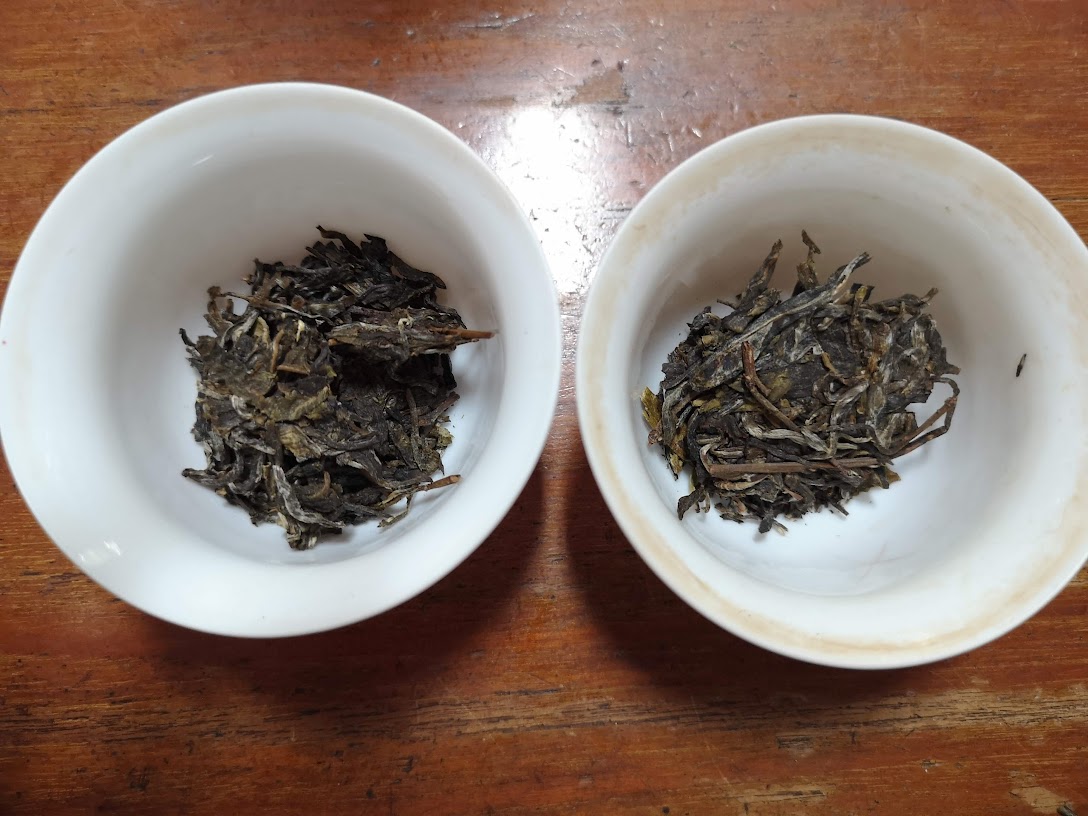


Review:


Miyun:  it's pleasant.  Flavor complexity stands out already, even brewed lightly, a bit of pine or related vegetal edge, and what comes across as floral range.  Feel has some thickness to it.  Intensity will pick up a little on a second infusion, and it will be easier to add more details.


Cang Yuan:  there's an interesting flavor range in this version.  The other had a nice brightness, and this is warmer toned, towards warm mineral, or maybe cedar / redwood / other spice.  It seems negative, describing a tea as woody, but a supporting note matching cedar isn't so far off incense spice, and it can play a similar role in positive flavor balance.  The rest is nice, the sweetness, other flavor complexity, decent feel, good overall balance.  

It's too early to try to place these in relation to a higher or medium quality level, but that is something that will come up, related to talking to William about such things, and considering it for the last tea version I reviewed.  It's not so much distinct aspects or markers that stand out, but that refinement can be better, intensity, clarity, aspects being distinct and clean, balance, feel playing an extra positive role, and so on.  I don't over-think such things; I'm drinking whatever tea I happen to have, and exploring to the highest possible quality level was never a main part of my own exploration project.

There is an old understanding that people tend to appreciate tea for flavor first, then learn to appreciate body / mouthfeel, then later can identify and value body feel (cha qi).  Of course for the third category I couldn't separate the input of both tasted together, but it seems to me that people often really like a drug-like effect that stands out most when they drink sheng on an empty stomach, a rush of change in internal state that you can't easily notice in the same way if you have eaten.  I'm not really endorsing this breakdown of forms of appreciation here, just mentioning it.  I like how teas come together, and different sets of attributes make different teas appealing.


I think the other, the Miyun version, is supposed to be their more budget-oriented version, so more moderate in quality level.  It would be normal to achieve good results using less exceptional material through blending, to balance what a few inputs can offer, but I don't know if that's part of it.  Of course that could come at the cost of diluting down some of the more positive range of one exceptional version, some really interesting flavor input, or a special kind of feel structure, and so on.


Miyun #2:  the brightness is nice in this; there is a fresh, bright note that combines some floral and near-citrus input.  Sweetness level balances that nicely.  Bitterness is moderate for a young sheng, in the normal range, which is pleasant to me.  Astringency is normal; feel has some structure, and there's some edge to it.  To me it tastes like an above average quality version of a relatively normal style of sheng.  I guess Jing Mai origin range tends to be like this?  Pine sometimes stands out more; you can notice that, but it's probably as much from expecting it and looking for it, and you might not place it without that.

So it's good.  But it feels like I'm leaving out how it could be better, what it would be like.  Across all of that range, which is all positive, it could be dialed up just a little.  Feel is nice, and aftertaste adds to the experience, but it could be richer, with that more pronounced.  It could have more distinct, cleaner flavors.  I think that one bright flavor tone range is a main strength; to me that really works.  A bit of vegetal edge is fine, but then I love teas with much stronger versions of that, that tend to have a different overall balance, with more intensity, sweetness, and different novel flavor inputs.


Cang Yuan:  that one flavor range is nice.  The warm tone matches well with a richer feel, which carries over into a slightly stronger aftertaste experience.  It includes some bitterness but lacks the slight rough edge of the other.  Intensity is moderate, as young sheng goes; I wonder how William would take that?  This is still more intense, complex, and dynamic than any oolong, green tea, or black tea; it's all relative.  It's good.  A hint of dryness matches well with the warm tones, rich feel, and aftertaste expression.  I suppose it plays a similar role in the experience as a vegetal edge and slight roughness in the Miyun version.  

At this stage, judging between the two, I like the way the Miyun aspects fall together.  The brightness and sweetness is offset well by some pine and astringency.  It might be more challenging for someone who doesn't drink sheng, because of those, but then it's hard to say what people not started on acclimating to bitterness would make of any sheng.  I'm not saying much about bitterness in these because it's moderate, to me, but it is present.  To me it balances well in both, not really standing out.


Miyun #3:  there was a sort of synergy to how the citrus-like edge and what I interpret as floral range came together, along with sweetness, and that has developed further.  It almost tastes like a lemon drop candy.  That hits your palate first, as you taste the tea, then feel structure next, then the flavor paired with that, a touch of vegetal edge, then aftertaste after that.  It's a nice complex tasting experience.  To me--and this part is completely subjective--this is the kind of tea you could drink two or three days a week for an extended time, and it wouldn't get old.  It covers basic range in a novel way.  

The Vietnamese tea I've been using for that purpose, one a Son La version from Viet Sun, that I'm on my second cake of, is more intense, but also edgier, even harsher.  I'm fine with that; I don't think it would necessarily be better with a couple more years to mellow out, losing some brightness and intensity in exchange for the sharp edge softening.


Cang Yuan:  it's interesting how different this is.  Flavor profile is quite different, warmer, almost into spice range, but it's hard to place within that.  I could relate to someone interpreting dried Chinese date as a flavor inclusion.  Feel is full instead of being expressed as an edge.  It's not necessarily rich, not quite to that sappy sort of character, but there's some thickness to it.  It's mild, as a sheng this age goes, but there is a good bit going on, across a few dimensions.  This seems like it could be an autumn harvest tea, that limited intensity and slightly reduced range.


Miyun #4:  the aspects integrate better and better, and that lemon sort of edge becomes more pronounced across rounds.  I really like this.  The light vegetal edge and astringency are in a perfect very-moderate range to complement the rest instead of detracting from it.  

I did break form and look at these vendor listings between rounds (always added during editing), and this is what I'd described, their moderate cost version, using blending to optimize results, selling for $60 a cake.  To me it's a great value at this pricing.  William mentions in the description that it's a good year for this particular cake, that the material is better than normal.  I could see how with just a little less of that positive flavor, a little less sweetness, and a touch more astringency and vegetal edge this would be pretty ordinary tea.  As it stands in this it's quite pleasant.

It makes me think about that "daily drinker" theme, what is implied.  It seems to sweep in that you would drink better tea some of the time, and then an inferior, budget oriented version a lot of the time, the kind of thing you'd have with a rushed breakfast.  That mixes two sets of ideas that don't necessarily go together:  quality level (also relating to value), and general character, what kinds of aspects would work best for tea with a breakfast versus what you'd enjoy in an hour long session focused on the tea itself.  Who knows about the second; people would find different experiences most interesting.  

Good black tea is great for a really rushed breakfast, but I can brew 10 cups of sheng pretty fast for a standard experience.  One trick is to use two cups, pouring from one to the other to pull out a bit of extra heat.  Not pouring back and forth; once would do, or if you really like the tea cooler you can drink a little cold water from one first and it will draw out more heat.


Cang Yuan:  it's not really evolving much; it is what it is.  Would this have greater "depth," giving it an extra dimension of experience the other lacks, one relative superior range?  Not really.  That can be meaningful to me, it can work out like that, but in this case it's more just mild, and expresses a novel flavor range, warm in tone, covering a good bit of spice, potentially partly interpreted as whatever else.  

For someone who dislikes the edginess in a lot of sheng this may be perfect.  That would seem odd, seeing young sheng experience as harsh instead of positive, at least in relation to better quality tea range, as these are.  Of course anyone drinking almost any "factory tea" is going to be put off by astringency and high bitterness, maybe appreciating drinking those on the still challenging side 10 years later, or after 25 years of age transitioning.


Conclusions:  


Pretty good, especially for these being on the lower side of their pricing range.  The style of the Miyun suits what I like in young sheng, the brightness, freshness, floral and touch of fruit, and sweetness, which is fine with a bit of vegetal edge.  Feel could be richer, and aftertaste more extended, with hui gan carry-over kind of limited, but to me it all works.  I talked through ordering this or not in my mind, since it's not so much, and this plus some good Dian Hong (black tea) for under $100 is a great value for basic range tea to drink for awhile.  I only drink basic range teas, for the most part, it just varies in character because some is from Thailand and Vietnam, lately.  And I tried a lot of samples last year; that's nice for mixing things up.

The other, the Cang Yuan, seems well-suited for someone initially adjusting to sheng, not quite ok with bitterness and astringency yet.  It's a little odd considering which sheng would be good for people who don't like sheng, but I guess preferences would always map out over a range.

I wouldn't expect aging concerns to be much of an issue for these teas.  They would mellow a little more over a few more years, but they're drinkable now.  Maybe someone else would be looking for a relative optimum that I'm not familiar with, something really approachable.  The slight extra edge to the Miyun might transition better over limited aging, but I can't imagine that there would be any reason to hold onto it for a decade or longer, or even to see what it's like after a half dozen years.  To me it's just not that kind of tea.  

Then again I've bought an extra cake of something similar before, just to see how it turns out; I should go back and figure out what that was, and how it's doing.  It was from Tea Mania, that I bought about a half dozen years ago.  They had this annoying habit of labeling white paper cakes with Chinese letter stamps, so it would be a bit of a project sorting out what it is, even after finding it.  Any sensible person would've just written on the label before stashing it, but I have a few cakes like that, not so easy to identify now.  For the ones in only blank white wrappers I never will know what they were.  At least the experience of drinking them is the same, with or without that background.


I never did guess at why the second version of this lacks intensity to this degree.  I don't think it related to the sample experiencing air exposure; that could change things a little, but not this much, to shift the character to a relative opposite.  Versions from Lincang are known as being more intense and bitter, if I'm remembering that generality right.  But then different factors come into play.  Plant types can vary, and not all local areas within a broad area will be the same.  Micro-climate and terroir issues come up related to local environments.  Harvest season changes things, but these are both spring teas.  

Often more wild-origin teas (which this isn't described as, just natural growth, less managed plantation sourced) are more flavorful and distinctive, and also more mild.  I'm not sure if that relates to plant types varying, or the growing environment changing outcome.  So in the end I really don't know.


Wednesday, April 26, 2017

Farmerleaf Jing Mai ancient tree 2016 autumn sheng pu'er


Posting the first half of an interview with William Osmont of Farmerleaf on TChing reminded me to get back to trying their teas; I still have a couple of pu'er samples left.  Although it's a touchy subject in general this one is an "ancient tree" Jing Mai sourced version (from autumn of 2016, described here).  William will say more about what that means or doesn't mean in the second half of that interview, which in his case definitely doesn't relate to specific claims about advanced ages of trees, so I'll leave that part alone for now and go on to review.


Initially this tea has a bit of bitterness to it; I guess that's a good thing, how it should be.  Some of that aspect doesn't ruin the experience of drinking young sheng but it's not exactly positive to me either.  Initially it will be hard to tease out what's going on with the tea besides that, as pronounced as it is, but such teas tend to "loosen up" a few infusions in.  Still, it's all relative, and some sheng have tasted just like taking an aspirin, and this isn't there, there's more going on.  It has some floral tones and mild earthiness filling out range beyond that.

It's interesting running across the idea that some sheng are more or less intended for aging.  I can't really can't add much about that; the short version I recall running across is that a bitterness aspect converts to being aromatic later.  It makes you wonder if processing tends to be adjusted to change character related to that potential, or more that different versions lend themselves to drinking very young or else aged instead due to naturally occurring factors.  Someday I might be able to taste a young sheng and try to project ahead to what it would be like in five or ten years but I certainly can't guess at that now.  At any rate William mentioned an intentional input that did affect this teas character in that product description, just not described there related to aging potential:


We gave a relatively strong kill-green process to the leaves in order to release the best of this tea. A side effect of this choice is the presence of many yellow flakes. We sorted out the largest ones, but there are still some in the cakes. They add sweetness to the tea and tone down the bitterness. The aspect of yellow flakes is not appealing to the Chinese tea drinkers; therefore many tea producers use low wok temperatures in autumn to avoid having yellow leaves. It results in reddened tea which can be more fragrant but features less throat and mouth freshness.


Yu Bai making tea (photo credit Farmerleaf)


Even by a third infusion, one of those just a quick rinse, it starts to mellow out.  That bitterness--not astringency really, actual bitterness--starts to transition to being mixed with strong mineral tones.  Although the tea isn't really so astringent in the sense of feeling rough or "mouth puckering" it does have an interesting feel to it, which is related to that.  It tightens the sides of the back of my tongue most, but since I'm not on that page in terms of aspects preference that doesn't mean much to me.


On the next infusion it falls into an even better balance.  A light wood tone, picks up, with a good bit of sweetness, and some floral scope rounding out the balance.  It's funny how preference works out; that character range is both the reason why young sheng isn't my favorite type of tea and also why I like it.  There's a freshness to the effect, and an interesting complexity and balance, with layers to the experience.  But it's still not warm, rich, and easily approachable as better black teas are.  It could just be a preference curve issue, related to a natural transition of likes over time.


I liked light oolongs the best initially, TKY and Taiwanese styles, which are very approachable and can be quite complex, and still do enjoy interesting versions, but the ordinary versions I started on can be a bit boring now.


From there the transitions level out and it just keeps going, of course brewing lots of tea, as if it could just continue indefinitely.


tea, in Jing Mai


I would guess that I would like the tea more in ten years but that's not based on much; I really don't know how it would change.  I guess that's part of the appeal of drinking lots of sheng and aging it, to experience that transition, even the uncertainty, even if it's not always positive.  For me it's nice to have more tea-space out there to experience, like visiting an interesting place on vacation and knowing you missed a couple of interesting sites; it leaves more to get to later.


I can't place this related to a non-ancient tree version, even though I reviewed one by them not so long ago.  So lets roll the whole process back and try out a side-by-side comparison of that tea and this one.  There is one limitation, that these aren't necessarily supposed to be identical styles of tea separate from that source difference.  For example, it's harvested at a different time, March to April, and there could be intentional processing differences leading to character differences.


Comparison tasting Farmeleaf's Jing Mai Miyun with this ancient tree version


Farmerleaf Miyun 2016 Jing Mai sheng


One more disclaimer:  due to personal preference scope I'll end up emphasizing differences in taste, when one running pu'er theme is that taste is only one of several aspects to appreciate, and to some not the main one, or maybe not even in the top three (related to effect, "qi", mouth-feel, and aftertaste).  I'll mention feel, for completeness, but it's odd doing that when I'm not really into teas feeling a certain way, some degree of fullness is interesting and that's about it.  Here goes anyway.

The flavors range of the two is comparable, it overlaps, but both are quite different. They're both a little floral, with mineral undertones, and a trace of bitterness, although not so much when brewed lightly the first few infusions.  That's not how I put it in the first tasting notes, related to bitterness level, which could relate to an expectations shift, or brewing differences.  Or I've been up and down related to a throat infection that comes and goes, and it seems at least possible that even being mostly over that perception of certain aspects shifts more than others related to changed sensitivity.

The ancient tree version is a lot sweeter and brighter.  That brightness almost comes across as citrus, as a citrus spray like effect, when you bend the peel.  The Miyun includes more earthiness, mainly coming across as wood tone, but there is more to it than that.  The wood is complex, light and bright fresh wood in a complex range that extends to wood bark.

ancient tree source left, Miyun right


On the fourth infusion I went a little longer to get more feel for the feel, but the teas probably haven't leveled off into the character they'll show more of later. The bitterness picks up brewed stronger, of course. I don't mean the infusion strength is stronger than typical for other tea types, just not as light as I often brew sheng; the steep time was still about half a minute.

The ancient tree tea picks up a lot of structure, a feel that's hard to describe, and a long aftertaste.  It feels full, like a tightening across my tongue--more the sides, in the back--and in the rest of the mouth, that settles into a dryness on the rear of my tongue at the end.  Someday it might make sense to me how anything remotely like that range of sensation is pleasant.  I don't dislike it, it's just not particularly interesting to me.  Mineral elements are pronounced, maybe towards shale.  That aftertaste takes awhile to wear off, like the effect from that one Golding tea in the last comparison tasting with this Miyun (so I guess to some extent I've compared both vendor's old-tree versions, just indirectly, both comparison tasted along with this Miyun version).


The Miyun picks up a touch of smoke, which isn't bad with that aspects mix.  It has a full feel, just not as full in comparison with this other tea; tasted side by side it comes across as a good bit thinner.  They both have some sweetness for balance but the ancient tree has more.  It's hard to separate floral tones, there for both, they're similar but perhaps a little different.  I think focusing on that would go better brewed very lightly, not just light but wispy.

I seem to pick up a trace of smoke in the ancient tree tea now, on the next infusion. The brightness wears off a little and more of a wood tone picks up.  It falls into a nice balance together, although it was fine before too.  Brewed lighter that feel is still present but less pronounced.  The Miyun gains a little more smoke, less bright yet, with that wood tone pushing to earthier, towards a light mushroom, just not getting there.

Of course mineral undertone is strong in both, and a trace of bitterness, but that's quite light when brewed lightly, and it subsides across infusions more than the other flavor range.  It's a little stronger in the ancient tree tea at this point but they both do keep transitioning.  It's nothing like taking an aspirin, or at least only a little like that.


ancient tree source left, Miyun right


It's funny how similar and how different the two teas are.  It wouldn't be possible for me to appreciate that tasting them days apart.  I guess it would be possible for someone drinking tea only for flavor to prefer the Miyun, provided the earthier tone worked well for them, and more smoke, and different woodiness.  But the ancient tree tea has a lot more going on, more initial brightness, more sweetness, more structure to the feel and aftertaste, and a bit more complexity.  It even starts to pick up a touch of spice tone later on, closest to nutmeg, but not exactly that.


This "ancient tree" effect starts to make some sense to me; maybe if I keep with it and try a number of other examples it will be even clearer.  Aging teas and relation of different aspects to aging potential is another part of the larger pu'er picture, and I'm woefully behind in doing much with that.  There are just so many teas out there to try, and pu'er hasn't become a natural main preference, but given how much I like the only old version of a sheng cake I do own (now 11 years old, perhaps just getting interesting) I really should get on that.

Sunday, March 12, 2017

Farmerleaf Jingmai Miyun sheng (Spring 2016), compared to a Golding pu'er


Farmerleaf 2016 Jing Mai sheng pu'er


Golding (KL vendor) 2016 Jing Mai sheng pu'er


I never did get around to reviewing pu'er from Farmerleaf, that Yunnan tea source that really probably specializes in pu'er more than the other types I did review (mostly black teas, although a moonlight white was also really interesting).  I just noticed on their website they'll be on break from sales for a month, starting in a day, for what that's worth.  They do make tea; likely related to that.

Since I had some of a Golding shop privately pressed Jingmai pu'er to compare it to (two, really, so I just picked one) I went ahead and tasted this alongside a Jingmai 2016 gushu sheng from them (tea from old plant / tree sources).  To review, Golding is a Kuala Lumpur shop that sources and presses their own tea cakes.  Or has them pressed, most likely, but per my understanding the process is a lot more hands-on than someone ordering tea cakes to re-brand from a local producer (like Farmerleaf).

I'm finishing up a post about Yunnan tea growing and sourcing issues based on interview input from William of Farmerleaf, and he produced some Youtube videos on the subject (here).  It's a bottomless subject, with answers always leading to more questions, but if it's of interest his videos make for some good input.  He's French but he's been living in Yunnan, and working with his wife, who is from a tea farming and producing family, so what he's passing on is relatively first hand experience.  There is also more on processing in the description for this particular tea on their website.

Switching around between tea types--reviewing different teas every week--comes at a price, and I'm not so well-calibrated for pu'er these days.  I've tried one sheng since I checked in on that subject last, a tea I picked up in NYC from Sun's Organic Shop.  That tea was ok, I just don't get around to reviewing everything I try.

This subject of trying lots of teas versus sticking to a more narrow focus is something I've discussed before with a tea-type specialist who may be familiar, Imen of Tea Obsession.  She wrote about that a little in this post, about horizontal versus vertical experience, but it's all what you'd expect, and there's not much there.  To some extent you have to give up depth for range if you choose to focus on everything (or choose not to focus, really).  I also didn't study under a master, or take classes, so best to take anything I say for what it's worth, as some guy trying things and thinking out loud in writing.


Review part:


Based on the first tastes the Farmerleaf tea is nice.  It's just a little bitter, with plenty of floral character, and strikes a nice all-around balance.  Of course there's always the hurdle that pu'er drinkers might be more focused on the feel of the tea or the effect, and I might notice this or that about feel but apparently I'm not properly tuned to notice the cha qi input.  I'm not saying it's not real, I just can't notice it enough to describe it, I can just sort of tell there is caffeine in tea.  I've heard people say lots of conflicting things about that subject--who hasn't--but I'll just not go into it here.  It wouldn't work to guess about that factor in this case anyway, due to doing a comparison tasting.  Probably that's problematic, per some takes, mixing those cha qi inputs, but I think I'll be ok.

Related to cha qi--more tangent, that never gets old--there are so many active components in teas that it doesn't need to necessarily be some mystical force that acts via magic.  No one ever seems to get to the point of measuring different compounds, and describing their effect, beyond noting there is caffeine and theanine in teas.  Aging could change those, or tea plant age really could correlate.  Or maybe it's some of both, pharmacology and magic.  Lets check on some input on all that from a tea book source I've been mentioning a little lately, Tony Gebely's "Tea:  A User's Guide:"


Tea leaves contain many amino acids, the most abundant of which is theanine. Theanine, specifically L-Theanine, is responsible for promoting alpha brain wave activity and a feeling of relaxation. L-Theanine in concert with caffeine can induce a state of “mindful alertness” in the tea drinker... 

The main Methylxanthine in tea is the stimulant caffeine. Other methylxanthines found in tea are two chemically similar compounds, theobromine and theophylline. The tea plant creates these chemicals as a way to ward off insects and other animals... Methylxanthines also contribute to a bitter taste in the tea infusion. The level of methylxanthines in tea depends on the variety and cultivar of Camellia sinensis used, the climate, the age of the leaves, and the propagation method (seed vs. cutting) used on the plant. 


No claims about transcendent experiences there but given those two categories don't exhaust his description of tea plant components there is plenty of space for chemicals rather than mystical forces to cause unusual effects.  Then again, sometimes different perspectives and descriptions can be right in different ways.  So back to the tea.


The Golding tea might be a little more bitter.  It's odd that doesn't match my old review; I do wonder how often I'm completely wrong about teas.  Bitterness is a relative thing, and I'm a bit put off by teas that come across like taking an aspirin, which of course could also stem from using inappropriate brewing techniques.  Neither of these teas is anything like taking an aspirin, really towards the opposite end of that scale, not so bitter at all.  Relating to that earlier subject, drinking different types inconsistently could lead to making significant brewing mistakes, but over time it all sort of gets sorted out.  The subject might seem simple, since the main brewing factors--beyond sourcing, storage, and aging--are teaware related, and tied to aspects of the water itself, then related to water temperature and proportion, and timing.

On the next infusion I'll try to get a bit further into those descriptions, although again I don't expect to get too far with "feel" differences.


Farmerleaf version left (but they look about the same)


As a rough description floral with a bit of bitterness really does describe the Farmerleaf tea.  There's just a hint of smoke, so light that you could miss it, and of course substantial mineral tones underlie all the rest.  There is an interesting structure to the tea, the way it tightens your whole tongue as you taste it, but still feels a bit wet, then transitions to a feeling in the throat after you swallow.


plumeria, growing in our yard

The exact same description matches the Golding tea, but at the same time all of those aspects are a little different.  The floral comes across a bit heavier, more like perfume.  The range of flowers is a bit similar but I don't think I would make it clearer by guessing what flowers they are.  Lots of flowers come across in between lavender and wildflowers to me, or some are like orchids instead, or else light and sweet like a daisy, or a touch earthier like a chrysanthemom or sunflower.  The floral scent in these teas is in the first range in that list, a sweet and rich, I suppose not so different than plumeria.


I smell tropical flowers here in Bangkok, including lots of plumeria, which were also common in Hawaii, and orchids are around.  There are lots of flowers at our house that I'd only be able to find out the Thai names for.  But someone with a much better grasp of floral scents could do a lot better, could pin it down to types.


The next infusion I brewed a little longer (not so much due to experimenting, just not careful, but the effect is the same), providing a good input to both how the effects are transitioning, and what the tea is like brewed slightly stronger.

The bitterness is still the main element in the Farmerleaf tea, but it's subtle enough that it doesn't really detract, as long as one is ok with some bitterness.  For drinking young sheng it kind of goes with the territory.  The general effect is still quite approachable, with lots of floral range layered below that, and with complexity picking up.  The hint of smoke dropped out entirely and it seems there is a hint of cinnamon in place of that.  It all works.

The Golding tea has a little more bite to it, but to me it's still soft enough.  It is interesting the way the flavor and the feel remains after drinking the tea, even transitions a little, but to some extent that's true of both of these.  I walked away to do something else at one point and noticed it lasts something like 15 minutes, maybe longer, so that taste and feel just tapers off, seeming nearly permanent.  I'm not sure if that's a good thing.  It seems a bit pronounced, as if the general effect would be just as nice in a much lighter version.

These teas are brewing to a nice golden yellow.  I suppose that might mean more to someone else, slight differences in shades.

It's a good number of infusions in but it seems these two teas might still just be getting started.  The Farmerleaf version goes to a nice place, with the different attribute ranges falling into a good balance.  That initial bitterness tapered off, and some warmth and complexity picked up.  The hint of spice didn't increase, maybe shifting towards a bit of woodiness instead, still it's nice for filling out a range.  These teas are both clean flavored and lively.

The stronger floral still stands out in the Golding version, with the feel and aftertaste effect moderated by switching back to a relatively light infusion strength.  Compared to brewing other tea types all of these infusions are on the light side, but the teas are so intense they work well in that range.  The balance is still nice for the Golding tea, just quite different than for the other, even though aspects are similar.  Bitterness did moderate a lot; it's an input, but not so pronounced.  Maybe that's what I meant in that earlier review, that bitterness tapers off quite a bit once it loosens up, or maybe I was comparing it to sheng that really are like taking an aspirin.


Farmerleaf tea brewed leaf


I'm going to be feeling these teas.  I keep saying I don't notice cha qi, or even caffeine, but there are limits to that.  Maybe part of what I mean is that I don't drink tea for effect, even though to some extent I must, just not on a level I'm clearly noticing.  I do recognize when it's too much; hard to miss that.  I did a white tea comparison tasting not so long ago and it really was.  I'll go a couple more infusions and give these teas a rest.

People say some types of teas are a lot more relaxing than others and I've always been a little suspicious of those claims.  It seems like if you think you will be relaxed that's an easy enough state to get to through the power of suggestion, by just relaxing.  Then again I did take an early nap about two hours after drinking these teas in the late morning; maybe there is something to all that.


Golding tea brewed leaf


Next infusion:  that warmth keeps picking up in the Farmerleaf version, it keeps improving.  Now it's woody inclined towards spice, but even more complex, out towards aromatic and warm root or bark spices, or maybe both.  Floral gave way a bit to make space for that, with nice sweetness still present, and I like this balance even better.  The aftertaste stays pronounced but the feel has softened back into a more "normal" tea range.

The Golding version stays more floral, still quite strong, but warms a little more too.  If someone loved a really, really pronounced aftertaste this tea would be perfect for them.  Even for loosening up many infusions in it brings out a tightness all along the middle of your tongue, and you can feel it in the throat after drinking it.  You could drink it for a whole afternoon, a few sips every 15 or 20 minutes, and just stay in the experience.  I'm still on the fence as to whether that's a completely good thing or not.  It's interesting.

Both were nice teas, both interesting.  The Golding tea was nice for a really pronounced sweet floral range, with an interesting aftertaste effect, and the Farmerleaf tea was nice for developing into more flavors complexity.  In this case they were similar enough and different enough that comparison tasting made sense, and probably did help shed light on finer points of both.