Showing posts with label matcha. Show all posts

Wednesday, January 22, 2025

Tea booth event in a Bangkok mall


it has been great seeing more of Huyen and Seth


Last year I wrote about attending what seemed to be the first dedicated tea convention / expo event in Bangkok, a Tea Atlas event (the branding name), held in Central Embassy.  It was packed with a good representation of everything related to specialty tea in Bangkok.  Not every vendor, cafe, or shop, but an extensive representative set of them.


Then the next couple Taste of Tea events, seemingly connected to an earlier tea shop brand, were kind of different.  These were just booths set up in a mall, with focus more on bubble tea and matcha drink sales.  That's fine, there's nothing wrong with that, but it's not the same thing, not really a move towards higher quality tea awareness and acceptance.

This event was a bit in the middle, limited in size, and covering both scopes.  A vendor we had just met in that recent Vietnamese tasting was there, the Qing Fu Cha owner, Charlie (I think; he might have more than one nickname, maybe also Yee?).  Thais always have a formal name and a nickname, so the multiple names theme is universal here.  

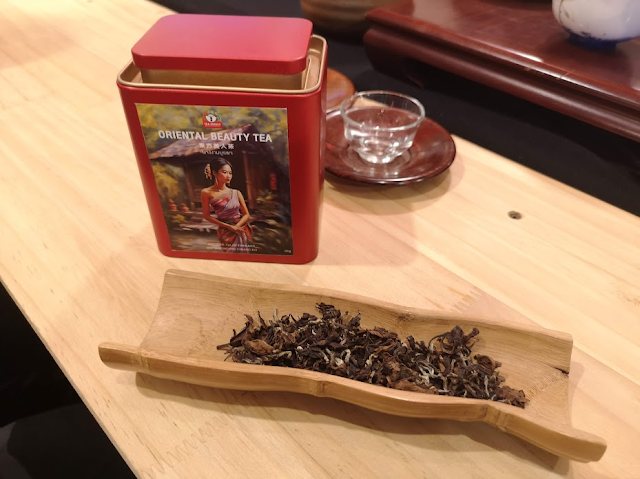
It was nice checking out the first day of that event, in the Central World Mall, more or less the main mall in Bangkok, and visiting that vendor's booth to try some of his tea.  We tried a Jing Mai pu'er and a Thai version of Oriental Beauty oolong; both were nice, type-typical and pretty good.  It was also nice meeting a few people from that tea tasting.


From there other vendors sold interesting versions of different forms of tea.  Araksa Tea Room (cafe) had a booth, which I didn't spend much time at, but that name comes up as providing a nice cafe space.  Two others sold novelty iced or tea and milk blends, based on better quality original style teas, which isn't normal for that theme.  Bubble tea is usually just ordinary black tea, as a base.  Some of the drinks were clearly distinctive; a Da Hong Pao and a Taiwanese oolong example stood out, from two different booths.


What does this mean?  I really don't know.  Maybe that kind of theme will catch on, or maybe it won't.  Maybe they'll diversify back into a more original form of those teas, or maybe they'll shift product form and sell novel flavored versions instead.  I suppose it's still interesting to see, instead of just matcha, bubble tea, and "Thai tea," the orange colored, flavored version.

It might seem like there should be another couple of points to touch on, about what else was there, and other possible directions local tea themes could take.  Really joining that event was more for seeing Huyen, Seth, and the others I'd just met, more than about those teas.  

I'm not sure what could've been there that would have been so personally interesting for me.  Even if the types matched what I love most in teas, like distinctive and intense Thai sheng, or rich and complex Thai versions of Dian Hong style black tea, I'm not sure if it would've changed much.  I have that tea at home, in lots of versions, especially if you count stocking up on somewhat related Vietnamese versions.

If this is what Taste of Tea is and will be it's ok.  It would be nice to see a real tea expo instead, producers gathering to share what they've been working on, and importers or foreign producers there covering what neighboring countries are up to, Laos and Myanmar tea and such.  Short of that this is good, trying some novel iced teas.  I think it's worth swinging by to check it out.  Matcha and Japanese teas tend to get better representation, but since I'm not into that I tend to not notice it as much.


For where I am in tea experience now meeting others into tea is more interesting than the actual tea.  In one sense, to me, that relates to burning out on over a decade of tea types and quality level exploration.  It's a little tiresome.  But that doesn't make it any less interesting or relevant for others who are new to it, or only a few years in.  Part of what I'm expressing is that it would be nice for them to have easier access to the rest of the range too.

I can be clearer.  Nearly a decade ago I went to a Seven Suns tea tasting, highlighting a broad range of tea types, mostly Chinese, or maybe all Chinese, in a shop in Ekamai that's now gone.  It was 8 years ago; I looked it up.  That business founder was trying to set up something that didn't exist yet, true specialty tea awareness and appreciation in Bangkok.  He was a nice guy, and I'm sure still is.  I'm not sure we can conclude that he failed; that business morphed into focus on sales of matcha, which was practical, and in demand.  Specialty tea awareness and demand has gradually expanded here; it just took time. 


Then it's odd to expect that lots of other vendors should keep repeating that pattern, making it stick where it didn't work out for them.  But there are Thai teas at a high quality level out there, that could support an even more interesting experience than that one; I've tried them.  And surely I've only tried a fraction of what exists.  There are online Thai tea groups with thousands of members, tea cafes and shops have a following, and these tea events I'm writing about draw visitors.

It would be sad if it takes another ten years for what I'm describing to come about, a variation of Taste of Tea focused not only on what is readily available, vendors already interested in this form of promotion, but instead on the best of what exists.  The Tea Atlas function was a little closer; maybe it will repeat again this summer.  To be clear two of these vendors were really breaking new ground with high quality cold tea drinks, based on traditional styles, and Qing Fu Cha is a solid vendor option, so I'm expressing that the overall volume and range was limited instead.  No producers were represented, for example, there was no Taetea booth, and so on.

I've heard the point made that low tea demand benefits us tea consumers, because it keeps pricing in check, and availability open.  I'm not so sure.  When demand increases quickly that does lead to rapid pricing expansion, but it also seems like gradual shifts in demand could see the production side respond.  Pu'er cake prices doubled in the last half dozen years; maybe that's a good example of the first case.  And limited Japanese tea production leads to that tea pricing staying high.  

Then again maybe it's easier to argue for the opposite of the point I'm trying to make here; economics is a strange theme.  Anyway, I'd like for more others to have access to interesting tea experiences, even if it relates to me shifting what I focus on and buy, as has occurred continually over my past anyway.  

This Taste of Tea event runs through the 30th; maybe stopping by there is a good starting point for that.  Even when searching I don't see an event notice on social media for this; strange.  This is Qing Fu Cha's event notice version, but there's not much to know; information booths in Central World know where it is in there, and everyone knows where Central World is.


Thai Oriental Beauty is not bad, but then it's all relative


Thursday, February 28, 2019

Tea and stomach problems, as a cause and potential cure


I just passed on some shu pu'er to a co-worker having stomach problems, and wanted to share some thoughts on the types of tea that might cause the most impact or are most gentle on your stomach.  That's more relevant to people who already experience some type of stomach problems, which would vary in cause, since different people can tolerate different foods and eating related practices.  It seems like the kind of thing everyone would already know about, about how different teas tend to cause stomach issues or else don't, but common knowledge would vary along with personal exposure.


a Moychay buds-heavy version of shu, that tastes like cocoa (from here)


this version is sold out; there seems to be an increase in demand for shu in the past year


To preface the context this won't be a research post (although I do mention a number of sources), and my own take is a hearsay account, drawn from personal experience.  I don't have a sensitive stomach or stomach problems, so maybe that second part counts for less.  But at the same time I've been drinking lots of tea for a half-dozen years, so on the other hand maybe I'm getting some things right.

About that co-worker's case:  his doctor gave him the usual input, to avoid foods or drinks that can be hard on your stomach (coffee, tea, spicy foods, etc.), and to eat food with any drink that seems to pose some risk.  A good prevention or resolution really depends on the specific cause for his own case, and I'm not sure what the cause is, and he seems not to know it.  If he can't get it resolved by adjustments to diet that doctor will take a look in his stomach with a scope, which sounds like something I'd want to avoid.


He said that he's been drinking powdered green tea, which would usually go by the category name "matcha."  If that relates to Thai versions maybe it's as well to just call it powdered green tea, even though the designation can be interpreted as not limited to tea from Japan, per some people's takes (with a generally good Thai producer source here).  I personally don't find tea naming disputes as interesting as functional ideas. 

At any rate that seems like one of the worst teas to drink if sensitivity is a problem, even if consumed along with food.  An old Tea Chat discussion conveyed his experience isn't unique, titled "Matcha nausea?," but it doesn't shed much light on causes or likely extent related to other tea types.  Most people there suggested eating some food along with drinking teas, especially first thing in the morning.

Onto what I think might cause stomach problems (related to tea, which may not be a primary cause in his case), and what types I think would be the least likely to, broken down by topic category.


Shu pu'er:  this has a reputation as being easiest on the stomach, as tea types go.  It can be hard to align that type of hearsay input to actual facts of the matter, and drawing on one's own experience might only be valid for one individual case.  All the same it seems that way to me too.  I'm not as convinced that it can help people with problems with digesting greasy food, a claim that does turn up, but maybe that works.  It's probably better to just eat healthier food most of the time than to work around problems stemming from bad diet choices.  Check out this related article, if it's of interest:

One serving of fried chicken a day linked to 13% higher risk of death, study finds


Matcha / powdered green tea:  I've run out of the range of personal input here since I don't really drink matcha.  In tea circles that's crazy; it would make more sense to tell people that you don't like black tea (which would seem crazy to me).  I could easily pick up a preference for matcha if I drank it more regularly, since it doesn't seem bad to me.  I've tried ceremonial grade versions, twice in actual Japanese tea ceremonies even, both prior to 10 years ago.  So it's not that, more a matter of acclimation, at a guess. 

Since I like green tea the least of all kinds it seems as well to just pass on intentionally picking up an interest in one variation of one.  Of course I've tried cold matcha drinks and Starbucks' lattes, and they're ok, and love matcha soft-serve ice cream, so it's not as if I've never had any positive contact with it.  Hojicha flavored ice cream can also be incredible; keep an eye out for that.


Green tea (also tied to the last topic, matcha):  About the stomach concern green tea is said to the worst for your stomach, along with sheng pu'er, which is probably pretty close to green tea in terms of compounds present (although that isn't a given, and the main impact should be related to a very limited set of compounds found in tea anyway).  I don't talk about sheng here (in this post--in the blog I do a lot), or point out that aged sheng is probably much easier on the stomach, since all that seems to apply more to people further through developing tea preferences.


this sheng was already two years old, reviewed here 


a 12 year old sheng, if properly represented when sold (reviewed here)


Green tea is considered to be healthiest by many due to containing a lot of ECGC, which supposedly benefits your cardiovascular system health.  I believe that it probably really does, but looking into the research gets confusing.  Rats are taking tea extracts in a lot of related studies, which is only indirectly related in two different senses.  On the whole it seems like there is evidence for such claims, but then separating back out research funded by tea interests is tricky. 

It's not as if everything published as a "peer reviewed" journal article was confirmed or well-received by peers, and it's the results of that review that matter, not that a paper made it to be published initially.  Of course in the end people can just believe what they want to believe.

This interesting and helpful Specialty Tea Alliance article on tea compounds helps sort it all out:


In steeped tea, polyphenols are largely responsible for astringency... These compounds are plant metabolites produced as a defense against insects and other animals and are the most abundant compounds in tea comprising as much as 30-40% of both freshly plucked tea leaves and solids in tea liquor(1)... 

There are an estimated 30,000 polyphenolic compounds in tea(4), flavonoids are arguably the most important group of polyphenols in tea and are the source of the many health claims surrounding tea, and specifically tea antioxidants... 

Flavanols are also referred to as tannins, and during oxidation are converted to theaflavins and thearubigins—the compounds responsible for the dark color and robust flavors notably present in black teas. The major flavanols in tea are: catechin (C), epicatechin (EC), epicatechin gallate (ECG), gallocatechin (GC), epigallocatechin (EGC), and epigallocatechin gallate (EGCG). EGCG is the most active of these catechins and is often the subject of studies regarding tea antioxidants...


Reading the whole article is worthwhile; it's not that long, and only catching two thirds of what it means due to the compound types being unfamiliar doesn't diminish how interesting the rest is.  This citation of a study of compounds found in teas shows how those levels map out:


an edited table of compound levels findings from this research article


A few things about that reference: 

I had cited it in a Quora answer, to the question "I want to make it a habit of drinking green tea instead of coffee, but I do not like its taste as it is bitter; what should I do?"

The obvious answers are to brew the tea using cooler water (typical preparation for green teas), and to consider drinking other tea types, which is what my answer goes into.

The ECGC compounds--those said-to-be helpful ones--are shown in the last (right-most) column, in the form of levels of milligrams per gram of dry tea.  There is more ECGC in green tea than black; those results show that clearly enough.  Darjeeling black teas vary a lot due to oxidation level in those (shown in the results); that's kind of a long story to get into it here.


A bit of an aside about caffeine:  CA in that table relates to measured caffeine levels; that may be very interesting to lots of people.  It can be difficult to use it as an estimate for levels in tea since that's cited a mg / gram of dry tea, not as estimated mg / brewed cup.  Let's pick an average value and see if we can convert that over.

20 mg / gram might work as an overall average (see the "CA" column).  We can estimate 2 grams of tea are used to brew a single cup (although that's not a given; you could probably make a second cup with the same 2 grams you brew, but I'd use 3 grams or more if I wanted to make two good infusions).  We can estimate an 85% extraction rate based on a four minute infusion time (that's a long story; check out where I got that here).  20*2*.85 = 34 milligrams of caffeine.  A typical cup contains 30-50, per lots of sources, so it works out.


I also cited that tea-compounds article in that Quora answer, to work through reasons for why someone might drink green tea beyond the taste.  If someone was really committed to getting to the bottom of things they could spend a day reading up on health-claims research, then another day reading about tea compounds present in different types of teas.  Drinking sheng or light rolled oolongs might work as well, but someone trying sheng for the first time might be in for a long detour getting used to young sheng character (what it's usually like before aging), or sorting through types of it (differing regions, flavor profile ranges, preparation styles, sources and cost levels).

As a final aside that paper on tea compounds the table comes from was fascinating, just a dry read, even compared to the American Specialty Tea Alliance article on compounds (the organization formerly known as World of Tea).  But don't let the title put you off; it is interesting and informative:

The Joint Use of Electronic Nose and Electronic Tongue for the Evaluation of the Sensorial Properties of Green and Black Tea Infusions as Related to Their Chemical Composition


black tea, oolong, compounds causing stomach problems:  I never did really clearly pin down what compound was probably causing the stomach problems, did I?  To be honest I don't know.  Oolong and black tea seem to be more gentle on the stomach, but again that's hearsay input, not a research-finding evidence-based conclusion.

I told that co-worker that per my take (again, into hearsay, and personal judgement) it would be better to drink black tea made from more whole leaves, versus drinking tea prepared from ground leaf versions (CTC processed tea), or tea mixes in which the tea was powdered.  That's more of a guess.  Of course the flavor, mouth-feel, and compound range present vary, but I'm not certain that the advice works well as a generality.  Brewed CTC (ground-up) black tea certainly doesn't taste as good, so at least it works on that level, if only that.  Ground up tea or tea-bag tea is usually so astringent that it requires milk and sugar to be palatable, and those would help you stomach cope with the tea too.


broken leaf orthodox tea left, ground CTC produced tea right


Ceylon tea bag contents; tea so finely ground that it's more or less dust


a Laos version of black tea, on the more whole-leaf side of orthodox


what stomach problems?:  According to a lot of people there are no problems; you can drink as much of any kind of tea as you want, on an empty stomach or with food, and it doesn't matter.  Hearsay accounts vary though; stomach problems from drinking sheng pu'er on an empty stomach are so commonly encountered that there's a term for that:  sheng gut.  You don't want that; it refers to pain, not getting a six-pack / washboard stomach from fat-burning properties.


Researching potential links to stomach benefits and problems


WebMD has no take on this, so I'm at a loss for a standard go-to reference.  There are lots of blogs that pass on hearsay knowledge based on minimal training and background input (like I'm doing here); here's one, the "Best Tea for Gut Health" post by the Cultured Guru:


Easing your stress and anxiety, decreasing inflammation, boosting natural detoxification processes of the body, restoring a healthy gut lining, and strengthening your immune system all help to keep the gut microbiome in a balanced state. Eating fermented vegetables with prebiotic rich foods, and drinking beneficial herbal teas is a great way to keep your gut health in tip-top shape...


There's no mention of which teas might actually cause a problem versus fixing one, and she only talked about drinking green tea and tisanes in that post, the first the main one I'm claiming might cause stomach problems in the first place.  Related to that, let's check her credentials:


Kaitlynn is a Microbiologist specializing in gut health, microbiome health and vegetable fermentation. 


That first part might not connect as directly with the second as it first seems.  She mentioned resolving her own stomach issues through steps like taking pro-biotics but seems to have missed flagging green tea as a potential cause.  At least she wasn't drinking matcha, a powdered green-tea version in which all of the compounds in the leaves go down the hatch, not just what infuses out.

There's a simple test for what those compounds would be like, although it doesn't extend to evaluating stomach impact (unless you try it and drink the tea on an empty stomach; then it might). 

Brew a green tea tea-bag for 5 minutes, using relatively cool water (170 F / 70 C).  That's essentially completely extracted, related to any normal brewing approach.  Now brew it again using boiling point water for 5 minutes; that's what else you would take in if you drank that tea made as a powder, what you taste the second time.  Do it again, for a third round.  There is more astringency and bitterness left in that well-brewed-out tea bag, and in eating all the tea you'd be ingesting the compounds responsible for that flavor.  Within the 20 minutes that experiment took you would have some insight into what the compounds in matcha are probably like related to effect on your stomach.


That blogger might have picked up on a hearsay-claim based link identifying shu (pre-fermented) pu'er as a potential pro-biotic input.  I'm not claiming shu or aged sheng works in such a capacity but the idea gets mentioned, and for sure there are a broad range of fungus and bacteria responsible for that fermentation process, which are still present while the tea is stored and continues to ferment with age.  This study measures them, with some examples cited here (among pages of measured discovered bacteria results):


As to whether any of those would help restore a healthy "gut biome" if ingested from brewed tea, how would I know?  I wouldn't expect that most of the people typically making those "gut health" claims are all that familiar with what is present in kimchi, sauerkraut, or yogurt that may or may not serve such a purpose. 

If you read this kind of reference it all seems clearly spelled out; different strains benefit you in different ways.  Read this one instead and modern medicine is still sorting it all out.  On the positive side there is this:

We have hundreds of randomized placebo-controlled trials in humans that have shown safety and efficacy of many different probiotic strains. So to just … outright, those media headlines saying “probiotics are useless,” they’ll maybe strip some probiotics, but there are certainly many probiotics that have been shown in randomized controlled trials to have beneficial effects...


But some common applications may not work out as previously thought:

...So now we’re getting into some of the really surprising perhaps parts of of the paper, which is that probiotics may slow recovery of the normal microbiome after antibiotics... So most interestingly they found that treating the gut with probiotics delayed the return of the normal microbiota for as long as five months after stopping probiotic treatment...  Lactobacillus showed the strongest inhibition of the native human microbiome...


So there's that.


That initial blog-post source reminded me of other findings in trying to look up some wisdom about stomach problems on Web MD, which didn't work.  This Web MD article came up in a search, on When Opioids Become Tough to Stomach:


If you have severe pain, your doctor may prescribe opioids to treat it. These drugs can cause stomach problems like nausea, vomiting or constipation, which can make you feel worse instead of better. Some of these problems go away quickly. Others can be managed easily.

Nausea and vomiting often go away after a few days, but constipation caused by opioids tends to last longer because the medicine causes food to move slower through your system. This gives your body more time to absorb the water from your stool, which makes it harder to pass.

Depending on the type of trouble you’re having, your plan for relief may be different...


Guess what the article never even mentions?  Getting off opioids as an option. 

I just saw an interview with Dr. Phil (conducted by Joe Rogan, with that topic excerpt here), and he mentioned that short-term use of opiods for pain management is fine, but in the long term there has to be other solutions because opioid addiction causes as many problems as it solves.  Which includes death in a lot of cases; Americans more likely to die from opioid overdose today than car accidents.  Really; unfortunately that's not just more dodgy, poorly supported media content.

That's pretty bad when Dr. Phil has to be the well-grounded voice of reason, and Web MD overlooks that a "cure" has become a leading cause of death in America.  He wasn't saying that opioids shouldn't be used for pain relief, or anti-depressants shouldn't be used to treat that other range of disorders, but was saying that using both types of drugs for long-term management of such issues can be very problematic.  Here's one reason why so many people are dying.


comparing lethal dose quantities of heroin and fentanyl (credit)


Conclusions


more of my take, and common sense:  I mostly only ever drink tea with some food, or eat prior to drinking tea, because that offsets the potential for stomach problems.  The idea comes up that tea impairs adsorption of iron, and that's surely true to some extent.  I don't drink tea with every meal, or more than half of them, and take multivitamins (sometimes), so I'm probably still ok.

This next part is so deep into common sense the meaning and implications might not be obvious at first:  eating a varied diet is a good idea, and as part of that I also drink different kinds of tea. 

That co-worker (and stomach guru blogger) drank mostly one kind of tea, and that's a formula for the negative side-effects from that one kind to add up.  The dose makes the poison, and drinking or eating a lot of any one thing increases exposure risk from whatever might not work out well from what's in that food or beverage.  If you drink enough tea taking in too much caffeine would be a problem, or maybe even fluoride.  If you drink one type of tea all sourced from the same place any contaminant or trace element in that tea could add up to causing you problems, and simply varying range offsets the relatively low risk of that occurring.


To be fair (and slightly repetitive) the effects of tea or causes of any stomach issues would vary a lot by person.  To me it works best as a precaution to eat some food with tea (that includes either a starch or dairy component; just fruit doesn't seem to help), but if someone had no stomach issues it may not be necessary. 

Given that my co-worker faces recurring problems even if tea isn't a primary cause, or tied to a cause sequence (eg. he may have a stomach-valve problem, or a pro-biotics related stomach biome issue, etc.) he could reasonably still be careful about even potential stomach issue triggers.  He should lay off drinking a lot of coffee and tea, spicy foods, alcohol, avoid overeating, or eating a lot of greasy foods, heavily processed and preserved foods like fast-food, etc.  No harm would be done if none of those were actually causes; he would be slightly healthier for avoiding all of that. 

If one of those seemed critical to him, even if it was that high-risk fried chicken, he could always try removing it from his diet and going back to it to check on a potential related effect.  It would seem to work best to vary only one factor at a time, otherwise you wouldn't know which change had helped.  A friend living in Indonesia (at that time) had a skin condition he couldn't connect to any known source, and worked through changes in environment and diet until he finally figured out that a flavored jasmine black tea was causing it.  Who knows why, but he stopped drinking that tea and stopped having that problem.

Even if the two shu I gave him don't relate to resolving drinking matcha as a cause of stomach problems they were really interesting and pleasant teas.  I can't cite a review of the buds-intensive cocoa-aspect flavored shu version that I mentioned, but I did review the other Lao Man E origin huang pian shu here, along with two other versions of shu pu'er, and all those were really nice.


some of the producers develop cool tea-cake label graphics now too (Moychay versions)


Tuesday, February 26, 2019

Google Trends review of tea trends


First published by Tching here and here.

This subject comes up at the beginning of every year:  what's new in tea, and what's changing (as this World Tea News article covers).  Usually that's none of my concern, but a passing mention of reviewing trends made me wonder if the Google Trends review of what is searched matches up with what is seen as popular. 

I first considered this sort of approach in January of 2014 when I wrote a post about the same theme, back when I was new to blogging.  It seemed there was a mild uptake of interest in tea back then but it wasn't easy to pin that down to a related hot search term.

I'll mostly use Google Trends results here to check on how searches match up with different topics.  In the relatively recent past matcha and boba / bubble tea were popular.  Maybe a bit over a year ago "cheese tea" seemed to come and go, the idea of mixing types of cheese with brewed tea. 

To start, the changes in interest in matcha are familiar to people in the tea industry, or even just from noticing it being sold locally:


Definitely a general increase over the last two years, with a good bit of cyclic variation and spikes over that time.  The same kind of trend occurs with bubble tea (or “boba”):  a bit cyclic, but showing less general increase, maybe not to the extent matcha created an upward trend.  I guess that bubble tea has been popular for awhile, so that a long and gradual upward trend is what one might expect.


I'll try to extract a few subjects to check on from that World Tea News article.  They cite this as a summary finding:

'...we now see the most significant expansion coming from two very distinct market segments: functional botanical blends and single estate artisanal teas."


That second part makes perfect sense to me, about single estate tea interest as a trend, but it's not going to work as a set of Google search terms.  I've written a little on researching functional tisane blends, related to a family friend passing some on from Hawaii, but I'm not sure any one search would capture results.  As with a “single estate artisanal teas” Google Trends doesn't show results for a search like "functional botanical blends" because there aren't enough results to graph, and narrowing it down by picking only some of the terms probably wouldn't be indicative.  A couple more specific references there are at least narrower:

"Flavored teas are very popular... Cold brewing is still a trend on the rise...."

As with functional botanical tisanes or blends flavored teas would be searched for related to too many different terms.  Someone could be looking for fruit teas, or just blueberry, or to replicate a specific Teavana blend, and the search terms would be different for each.


I did checking "cold brewing" but it didn't seem to relate to any trend.  People really could be doing a lot more cold brewing recently without Google searching the subject.  There has also been discussion of blue pea or butterfly pea flower tea becoming more popular, although that theme isn't new to me since it’s a standard tisane in Thailand:


According to this interest really did kick in as of two years ago, and it is possible that more and more people are actually drinking it over those two years while searches vary in number.  "Cheese tea" search results also show interest in that playing through awhile back:


October 2017 to May 2018 defines that period of rise in interest, dropping back to a more moderate level, but never really completely dying off.  I did not realize that “cheese tea” is still an interesting subject, not giving up much ground to matcha, if I’m reading these graphs right.

So trends review did show interest in these subject varying.  Searching terms like "oolong" or "pu'er" turns up flat results; at least according to Trends results input interest stays even for those.  As I think I mentioned five years ago a long, gradual gain in interest in tea might naturally show up as a flat curve in search results, so that's not so bad.

Did I miss checking on the real “next big thing” in tea?  Feel free to add that in the comments, if another more significant trend shows up that I didn’t check.

Wednesday, August 23, 2017

Tea as the hottest latest trend in Bangkok


This really is about tea as a local trend, and food trends in general.  A local tea acquaintance, the owner of the Seven Suns cafe, mentioned hosting a booth at a Matcha Mania event in the Paragon mall, arguably one of the two main malls in Bangkok.  I checked it out and it was well received; crowded, even.


lines at Matcha Mania


Matcha booths and shops are everywhere, edging into bubble tea's market share.  I'm not sure how an event theme really could ramp up the "mania" much but it did seem to.  I might have tried a Seven Suns matcha drink there but I did so not that long ago (which I wrote about here) and I wasn't into waiting in line.  I've been considering trying out hojicha soft serve for a very long time--it's around--but didn't finally get to that either.


menu board at the next booth over; it looked ok


that sausage (with a recipe for it here)


I didn't try any tea at all.  I'm not all that into matcha, except in ice cream, and eating a desert item right before dinner made no sense.  I had walked by a nice looking Northern Thai herb-spiced sausage on the way and bought some of that for dinner on the way out, along with sticky rice.


Other tea and food trends


I'm not a "trend" person.  I'm from a small town in North Western Pennsylvania, where time doesn't bother to cause changes in the normal sense.  I like it that I live in a part of Bangkok where the decades passing also doesn't change things much.  I wear plain clothes and drink plain, hot, traditional teas.  I suppose if one looks at the longest term some of those teas aren't traditional, since the story is that shou was invented in the 70s, and I drink a little of them, and I like tea style variations from places like Vietnam and Indonesia that probably didn't exist a decade or two ago.  But the general point is the same.


Related to transitions back in the States I feel like I might somehow completely become a stranger in my own country at some point, but visiting once in awhile helps offset that.  My wife and I moved to Bangkok from Honolulu a decade ago so that's plenty of time frame for changes to happen.  I was just back in PA over the Christmas holidays, and in Washington, DC, and NYC, with a very short stop in State College, where I first went to school (PSU).  All of those places probably lag a little compared to the West coast for transition pace but it was comforting to see it all about the same as I remembered.  Except NYC; I've only been there a few times, so it's not as familiar.


An online contact just mentioned a "cheese tea" trend that apparently became popular in China way back in May, mixing cream cheese into tea as a beverage, topped with a bit of sugar, salt, or some spicing to give it a twist.  I just saw a notice that I can get it here, but I'd be ok with never following up on that.  Oddly that online contact lives in Poland, and she cited a Polish tea vendor's Youtube video about how to make it yourself, I guess all typical of the world getting smaller.


at that mall; not exactly the same thing


As I was wandering that mall looking for that tea event a friend back in the US asked me by message if I'd tried a lighter form of Japanese cheesecake that is popular now, and my initial reaction was "of course not."  Then I remembered that my wife's cousin's wife is a baker, and she gave us a type of cake I wasn't familiar with over the weekend, so apparently I'd already been eating it for breakfast this week (Japanese cotton cheesecake, per her description).  It was nice.  There is more of running theme here than there might seem.


There is an emphasis on things being trendy in Bangkok.  I suppose it varies by where you go, and Paragon mall is a main place for that sort of thing.  That name seems to mean "exemplar" as much in the sense of exemplifying trends than relating to being an ideal mall.  I suppose it's nice though, to the extent that any is different from the others.


One local magazine covers updating preference shifts as well as any, BK Magazine, as in this post about 7 terrific Bangkok tea houses that are very serious about their cha.  Cha is Thai for tea too, for what that's worth.  The first three they mention are worth a look, which includes Seven Suns.  The two others I'm approving of are the old Chinatown cafe (Double Dogs), and the last a good place to spend $20 for small pot of tea, Peace Oriental.  I visited there once a couple of years ago, and it was ok, but I don't plan to ever go there again.


It's drifting off theme a bit but I'm in a FB foodies group here, even though I'm definitely not a foodie.  I cook; I guess that could count as partial credit.  They discuss restaurants more than novel food items, split between considering higher end places and debating who has the best burgers, pizza, Mexican, etc.  All the Mexican food I've tried here was somewhere between mediocre and awful but it would help to be a foodie, to visit restaurants a few times a week and explore further than I do.


The mall visit got me thinking more about trends, and that cheesecake.  Some looking around turned up ricotta cheese pancakes, and a Japanese tart version of cheesecake, and a place selling a hojicha flavored version of shaved ice.  Shaved ice is popular now, not the version from Hawaii, the fruit syrup flavored range, but the variation from Taiwan instead, more focused on fruit integration and use of condensed milk and other sauces.


It's not the same thing at all but I finally saw an I-Hop here, Thailand's first.  That's right, an International House of Pancakes (which I don't think was really all that international in the past).  It's strange to be mentioning low end breakfast places in the middle of discussing tea, desert trend themes, and foodie culture but it does connect.


not exactly nailing the updated diner theme


The common ground relates to the source of trends not always being so trendy where they are from.  A traditional Chinese tea shop or cafe would be a run of the mill thing in China, but in North-Western PA it would seem very exotic.  Who knows when they'll ever get a Thai restaurant back there but here it's grocery store complex food court fare.  Mexican and Italian food restaurants that go out of business due to lack of interest back in the States could potentially match the best related foods versions Bangkok has to offer.


Pancakes are sort of the same here; a bit exotic.  I was a little shocked and horrified that they didn't have bacon, sausage, or hash browns on that I-Hop menu, and I'm still a little rattled about it.  I was a vegetarian for about 17 years so I can take or leave meat more than most but it's still disrespectful to the theme of American breakfast.  It's downright un-American.  Somehow waffles are common here but french toast and pancakes not so much; I'm not sure how that worked out.  Sausage is common here but  Jimmy Dean-style breakfast links would be as out of place as dim sum or pho back in the Midwest (or som-tum, Thai papaya salad; you get the idea).


If this was going to circle back to tea it probably should have already.  Those recommended cafes work as a transition; the two new ones and one older version sum up what's going on in Bangkok.  TWG is on the list, and Twinings cafe might as well be, and Whittard I just walked by in Paragon.  High end commercial, traditional versions of tea aren't really of interest to me.  The one Japanese tea shop sounded nice, and that was about it.  People probably bought more matcha drinks at those booths in that mall event over the last ten days than traditional pots of tea at all of those other places combined over the same time frame, or maybe a factor of ten more.


I'm behind in trying different flavored ices


It seems odd to conclude that only matcha is even close to being the hottest latest trend in tea in Bangkok.  It'll be funny if "cheese tea" really takes off.


Good oolong or pu'er teas just don't seem to fit the mold of what catches on (or mould, for British people).  As with in the US better tea may just gradually ramp up for years until it finally really catches on, and if that seems to happen suddenly the reasons why will probably only make sense in retrospect.  

Thursday, January 26, 2017

Revisiting Seven Suns cafe in Ekamai, Bangkok


I revisited a Bangkok tea cafe that's been renovated recently, Seven Suns, in Ekamai. That was the place where the owner Han, with a background in traditional Chinese medicine, was trying different approaches to healthy blends and cold teas to help people transition to appreciating plain teas.


some nice space, along with some alchemy-themed cold infuser equipment


The cafe is beautiful.  It was nice before, but the renovation idea was to turn an outdoor space in a nice shopping center into a partly indoor and partly outdoor space.  It's quite hot in Bangkok about two thirds of the time, or maybe almost always, and now most of the space is air conditioned.


In this last post I talked to the Han about his ideas beyond introducing people to plain, traditional hot brewed tea versions (what I'm into).  He was developing blends, some based on healthier ingredient alternatives, in addition to just focusing on taste, with more focus on cold teas.  He was even dabbling in tea cocktails, using teas as a basis for alcoholic drinks.


All that progresses, and he still sells plain teas by the pot and loose (take-away), and some teaware, a good selection for including different versions of that.  A local article just went into a little detail on that range, with some nice photos.


I tried a tea there again.  Normally I'd try the most appealing plain, single type hot tea but an exception seemed in order.  I  was torn between a matcha white chocolate frappe or a cold matcha with mint and elder flower drink, and went with the staff's recommendation for the latter.


I'm not really into matcha, even though in tea circles back in the US that's like a foodie saying they don't really get French food.  I've had it, and even took part in two formal Japanese tea ceremonies where they served it (both a long time ago--lets not get into that part).  But I've not tried it the appropriate number times that make that profile familiar; I've never acquired a taste for it.  Or maybe it's just that the Starbucks latte version really doesn't count, or that I don't care as much for green tea as any other type, and it's sort of in that general range.  I've even made it at home, although surely I bought an awful grade of it, even though I bought it in Japan.  I love matcha-based soft serve ice cream, for what that's worth; maybe I'll get there.


Anyway, the tea was fine.  It was iced, and came across a little like a juice with the flavor inputs of mint and some herb added in, bright and fresh.  It was a little sweet but nothing like the milk-tea level of sweetness, still on the natural side.  It occurred to me that I'd have probably liked it even better 20 years ago when I was more into juices and tisanes.  I probably would've also liked a more conventional matcha latte better, although I don't love those either.  I drink plain loose teas, steeped versions, and I can sort of relate to green teas, but I would only really miss Longjing if I stopped drinking any of those.  Lately I drink as much black tea as oolong, and not all that much lighter oolong, with white teas and pu'ers mixed in.


Where was I going with all this?  The iced teas and blends should be perfect for Thai tastes and brutal hot weather.  The shop has a nice cafe feel, and Ekamai is a good place for reaching out to trendy young Bangkok professionals.  They only need to make some numbers add up and it's all good.  I'll be curious to see how the range of new offerings maps onto the tea evangelist awareness function, if it really does work to sell floral blends and novel iced teas to help shift people over to "plain" oolongs and such.


For anyone local to here (Bangkok) there is a tea-social themed event there February 24th (link here), probably a good time to check it out and try some different teas.