Showing posts with label sheng olympiad. Show all posts

Sunday, August 23, 2020

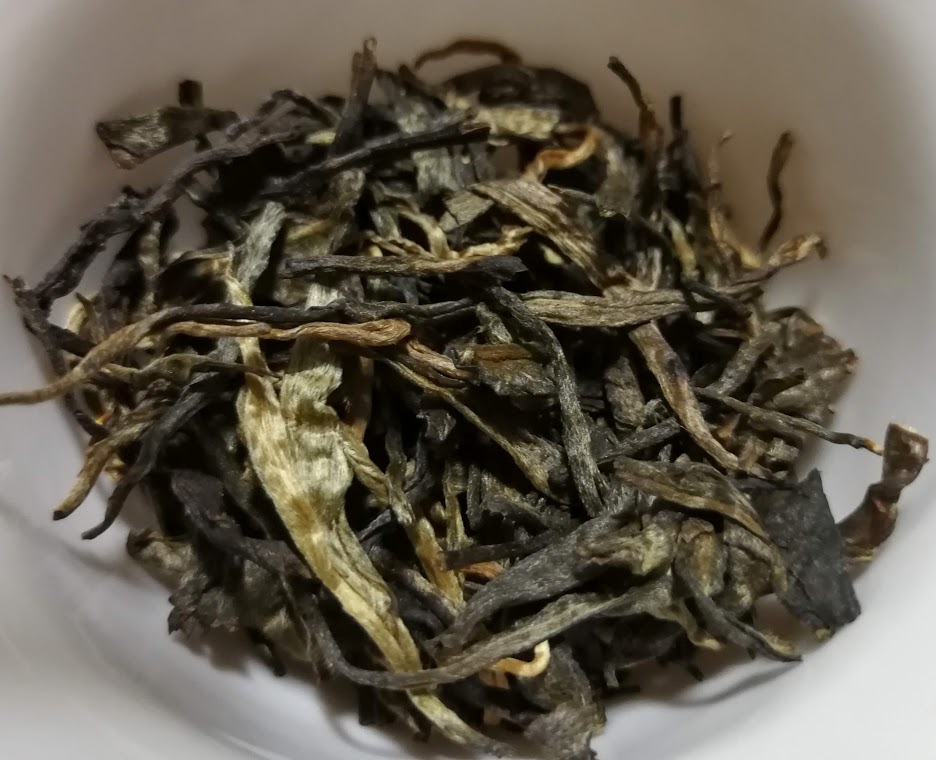
2008 Yuan Man Chen Yuan Hao (Yiwu sheng)


This is the last sample from a Liquid Proust tasting set.  Ordinarily I'd try this completely blind, based only on hearing a year and some foreign language terms, or name I don't recognize, but I'll mix this up and cite a real description first:

2020 Sheng Olympiad


~20g 2008 Yuan Man from Chen Yuan Hao: Taiwanese producers are always on my to watch list as I favor what they do. This is one of the earlier productions that Chen Yuan Hao had in which was priced fairly well. This is a Yiwu production that has aged well and provides a nice bold cup of semi-aged sheng.


Some of what I've said in the past could be interpreted as a claim that in general semi-aged sheng doesn't tend to work out.  12 year old sheng can vary a lot in fermentation level, depending on what storage conditions it experienced, so that could be pretty far along, or else not.

Different sheng versions can be positive in different ways at different fermentation levels, which is affected a lot by storage conditions, along with how the tea changes.  The specific age matters less than how the effects come together, especially in relation to the starting point.  It might be rare that sheng versions are at an optimum at 12 years old, but I don't see any benefit in trying to add a proportion or frequency scale to such a framing, unless the whole point is comparing and contrasting broad patterns, and then maybe.

I've been re-trying a 2012 Xiaguan tuocha recently, definitely not at the fermentation level most people would describe as optimum, even without trying the specific version.  It's nice though.  It's not even close to completely fermented, but the character works at that level.  I expect I would like it more in another 5 years, but then for having a half dozen of them running through one now and again checking on transition seems fine.  Or even drinking straight through a whole tuocha could make sense; why not?  It would be a shame to do that without owning at least one more and drinking it when it's more ready, but if someone finds it enjoyable that's up to them.

I don't know what this tea is going to be like, or how it started out, and I'm not so familiar with the broad Yiwu range that I can narrow expectations to a limited set.  All the same we tend to expect things to be similar to what we have already encountered, and experiencing a 2008 Yiwu brick I bought last year has been pleasant.  At first it seemed way too subtle to me, as if too much flavor and other character had dropped out.  Some of that could've related to re-adjustment after shipping in early tasting; in some cases the few weeks of rest people recommend doesn't allow for a full transition, settling.  I interpret that more related to expectations, being able to appreciate a tea that is more subtle across some range, with limited flavor intensity, but good depth and interesting feel-character.  I've drank it a number of time since and like it.

This might be nothing like that; all that was more about framing a related experience than leading towards an expectation.  A side-by-side comparison might have been interesting but I feel too lazy to go through all that.


Review:


First infusion:  interesting!  I keep saying that, but lots of teas really are interesting in different ways to me.  This tastes like aged wood or hay to me, like an old barn smells.  That probably sounds negative but I mean in a very positive sense; the effect is very clean.  Often the transitions for sheng versions over the first few rounds are positive, improvement in different ways, so this being interesting, distinctive, and generally positive is a good sign.  There's enough other flavor range and depth of feel that it's clear this has a lot to offer, and clean nature and sweetness is positive. 

I don't know how this was stored but the balance works, and I feel inclined to guess, even though that's meaningless, since I have no idea what I'm talking about.  I'm just not there for guessing back to starting point and filling in storage input.  All the same this has no significant bitterness or astringency at all, so I'm guessing it started out fairly approachable.  Wetter storage can lead to heavier flavors developing, but that's not how I'm interpreting what I'm tasting here.  It's like bright version of cured hay, or a dry scent in an old barn, not the damp, heavy smell both could end up with under wetter conditions (I mean for the barn and the hay; I'm still on the analogy).  

Really dry storage can let a fresh edge persist for a very long time, preserving the original character of the tea, but this must have transitioned, because younger teas don't taste like this, even though the smooth character could be achieved faster than 12 years.  I'm guessing an approachable and pleasant young version experienced moderate storage conditions, especially related to humidity level, that this wasn't stored wet or dry.


Second infusion:  I really like it.  The heavier wood and cured hay flavors, which were moderate, have cleared off, revealing a balanced input of those, a light version, and more depth of other range.  It's complex; listing out more flavors isn't going to frame how intense flavors aren't the story of this tea, but it covers range and has depth, related to flavor and feel.  Aftertaste effect is moderate, but even the subtle flavor experience does trail over.  

A flavor-list approach seems pretty far off what would describe the experience best but I'll add that anyway:  the wood and hay are very moderate already, reduced to a supporting background effect, setting up context.  A bit of cured grain picks up, not exactly malt, but a flavor not unrelated to a very mild version of malt.  The depth comes across as chamomile can, flavor range that's not easy to pin down.  Then sweetness trails more into chrysanthemum, floral, but mild and subtle.


Third infusion:  more of the same.  It's a little anticlimactic not describing any transitions but it hasn't changed much.  If it stays a lot like this over another half dozen to ten rounds it will make for a pleasant experience, it just won't be as interesting as it could be on a couple of levels.  

Really this is exactly what threw me off related to that other 2008 sheng version that I mentioned; what I did experience was quite pleasant, but it seemed to lack intensity and some experience dimensions, to me.  Then drinking it a few more times I came to appreciate what was present more.  

Not every version needs intensity as an attribute, or complexity.  Giving up both narrows the form appreciation might take, but there can be a different kind of appeal in a narrower but pleasant set of aspects.  At least there is nothing negative about it, so anyone could appreciate this, but I suppose a wine or coffee drinker might see this as way too close to drinking water.  There is a depth to the feel and flavor profile though, you just need to tune in to appreciate it.


Fourth infusion:  I suspect this won't transition all that much.  That said, a really cool, sweet root spice picks up, like that found in root beer, but a natural version (so sassafras).  Maybe a bit of drift within a narrow general character scope could still be really interesting.  I could definitely drink another ten infusions of this just like this round and enjoy it though.


Fifth infusion:  the root spice is joined by a touch more autumn leaf range, and mineral is picking up in this.  Part of that range is close to a distinctive part of aged shou mei, both the warm, underlying mineral and the autumn leaf tone that leans a little towards cinnamon spice or dried fruit, along the line of prune or date.  Maybe I got that last guess wrong, about this not transitioning much.  These last two rounds have shifted a good bit.


Sixth infusion:  not so different than last round, but then it had been in a cool range.  The thickness of this tea is nice, towards seeming creamy.  That's part of what I had learned to appreciate in that other Yiwu version of the same age I had mentioned (a year younger when I was writing about it, but also 2008).  It's not fair to say this tea lacks flavor complexity, but that occurs over a narrow range.

The tea was pleasant, and pretty close to the version I was checking on it potentially being similar to.  This might have been slightly more complex in flavor range, which did help the overall effect.


Seventh infusion:  I let the next round run a bit over 20 seconds and that helped, bumping timing.  A touch more body develops, and a hint of feel structure, offset by the flavors seeming more woody when more concentrated.  The wood tone isn't negative, towards cedar, but I suppose I liked the root spice and autumn leaf combination a couple of rounds back better.

Even if this does transition a good bit more I think I'll drop the note taking.  This burns up time, mine and readers', and the more interesting parts of this story have already been told.  


Conclusions:


Given that this is about as mild as an aged shou mei at this point I'm curious about what sort of aging potential it would have.  The flavors could warm some from here but there is absolutely no bitterness or astringency present that would represent aging potential, experienced aspects that I would associate with compounds that might convert to other types of compounds.  It could become even smoother but it's kind of leveled off as very smooth already.

That "middle-aged sheng not being positive" theme relates to a couple of types of starting points not working out for the best around 8-10 years along (this is 12, a slightly different case).  For as much transition as this had potential to undergo it might've went through it.  Again just guessing, but that probably related to this being a mild, flavorful, approachable tea to begin with, not one exhibiting a lot of bitterness and astringency, or intense flavor range like heavy mineral tones, or natural smokiness.

Often for sheng versions around 12 years old you are either waiting for them to fully transition through fermentation or else noticing that they'll probably just fade from here on out, and at a guess the second is where this is.  It has enough intensity and complexity I think it would still be pleasant in another decade but I don't expect there is any compelling reason to wait to drink it then instead.  It's good now, and it can't soften in tone much, so the flavors might just warm and deepen a bit, or I suppose it could fade in intensity.


I may not have done justice to how exceptional this set would be for introducing someone to novel types of sheng pu'er, since I've been comparing these to what else I've experienced all along (except the sheng and shu mix; that was new to me).  For someone close to the start of the path this would open a door to a new world.  For me it was great for adding more exposure to interesting, great quality, diverse sheng versions, with many similar to some I've tried before.  

I really appreciate that Andrew does this to promote tea exploration, the evangelism theme.  It's not so much to provide profit, since I really do believe that he subsidizes these types of sets versus earns from them, so close to a group buy theme.  The world of sheng can drift into "my tea is better than your tea" implications too often, sometimes even when people are just genuinely and enthusiastically sharing what they are going through, not trying to one-up anyone.  These sets and this context isn't related to any part of that, it's just for people to gain exposure to teas.  And it worked, in my case; it has been fascinating experiencing them.

If you wanted to see more of what Andrew is exploring following him on Instagram would work for that.


Monday, August 3, 2020

Liquid Proust 20 year old Hong Kong Sheng / Shu Blend


I'm reviewing the fourth sample from a Liquid Proust tasting set (with this the third), just one more to go.  Andrew's description:


...and the non-pictured emotional tea... each person will receive roughly 20g of a 20+ year blend of sheng and shou from Hong Kong. My first time going to Dimsum was just in the last few years when a local Ohioan tea friend came over and took me out. I decided to bring this tea with me and because of the great experience connected to the tea and the depth that it offer, this will always be one of my top teas in my life. I bought it up and I've decided that I will be putting it all into this group buy so everyone else can enjoy it. This is hard to do because I have a strong connection to this tea, but part of my mission is to do exactly what I am doing here.


That's fairly representative of what he's trying to do, and how he approaches it.  It's about sharing tea, making these sets.  It links to his own personal journey, which is how tea experience always works, you experience within the context of your own life and perspective.  I can relate to someone focusing on their own path, and wanting to share that experience.  

For hearing more about his journey and random teas his Instagram posts work.


Andrew, going through a recent style revision


I've heard of offerings related to mixing sheng and shu, but I've never tried one.  This should be interesting.  This kind of mix would seemingly only make sense in an aged version, and then varying starting points and storage conditions would probably throw off the results being remotely similar in different cases.  

It's not a new theme at all, and never really has been common, but apparently it's been around as something people or large producers experiment with.  A Yunnan Sourcing product description adds more on that background, and provides a lead to follow for further reading:


With this lovely cake we celebrate an age-old tradition of mixing raw and ripe pu-erh tea together to create a harmonious blend worthy of aging.  Like the famous "Purple Heaven" bricks and cakes from the 80's and 90's, we have blended ripe and raw Pu-erh tea together.  The raw and ripe pu-erh both came from the same area as the tea leaves used in our 2016 Spring Mengku Huang Shan cake.  The ripe pu-erh is fermented from Huang Shan 2015 spring tea leaves, but both are from the same organic garden!

The addition of raw pu-erh tea to this predominately ripe pu-erh tea cake results in a lovely experience.  It's not so different from ripe pu-erh tea, but there is a an additional layer of texture that enhances the overall taste/complexity of the tea but never detracting from it.  I tirelessly blended teas together and experimented with ratios to find the best possible outcome...  Recommended for longer-term aging!

Review:


First infusion:  definitely a bit earthy; this tastes like Liu Bao.  That's not necessarily a bad thing, and the slate / warm mineral / moderately dry basement range will "burn off" after an infusion or two, to some degree.  That's a little odd, because shu should fade to being mellow, not go towards this range.  It's definitely not unheard of for sheng to age to something like this, to include some early round storage related flavor that settles back out, but it's typically not exactly like Liu Bao, more just along that line.  

This flavor range might even lean a little towards char, as Liu Bao can.  Really old sheng can taste a bit like carbon but not usually exactly like char, even though the two are close.  The difference is that this is towards being smoky, it's just not smoky, and that over-aged sheng experience is character-neutral, beyond tasting like a clean form of charcoal.  

A Malaysian friend described that one Liu Bao aspect as being like Chinese barbecued pork (nothing like Texas or Carolina barbecue; no tomato or vinegar based sauce is involved).  If that dish isn't familiar then it's not helpful.  As chance has it I had that for lunch yesterday; I should've taken a picture.


Second infusion:  I gave this the better part of a 10 second infusion, a very long time for tea this intense in flavor.  It should help the third infusion get where it's going, but this will probably be a bit much.

It's softening in character already, moving closer to a standard shu, but with a bit of an edge.  It's still strange how close this is to Liu Bao.  It has a mellow depth that would be unusual in those, or at least present in a slightly different form in an older version.  Tasting it this round I'd still peg this as a relatively aged Liu Bao, maybe stored around 20 years old in conditions with substantial humidity, probably what this went through, just related to two different types of tea.  I don't notice anything clearly relating to a dual nature going on; it integrates.  It has a higher end warm mineral range and then deeper, earthier tones, but it all makes perfect sense together.

I talked to Andrew about impressions and he really didn't get the overlap with Liu Bao character.  It was fading in this round, and essentially cleared off by the next, on to an aspect range closer to aged sheng.


Third infusion:  the last description still works.  It's probably slightly cleaner, with a bit less earthiness / slate / basement range, more like an aged sheng than an actual Liu Bao at this point.  It's hard to place in relation to either sheng or shu; as I interpret this closer to an aged sheng, but the mix of inputs is different.  

I can see the two types of leaves in the appearance; that part is interesting.


Fourth infusion:    it's integrating even better, starting to work even more.  That apparent storage related flavor aspect has largely faded, related to the level in the early rounds, now transitioned to a warm mineral layer versus a dominant aspect range.  The flavor moves to more of a warm, dark wood range, what I'd imagine betel nut tastes like, but I never get around to trying that.  It's a little towards roasted chestnut, with a sweetness hinting towards dried fruit as well, jujube.  It's not bad.  

I'll bump infusion time just a little since there is nothing challenging about this, from a bit under 10 seconds to just over.


Fifth infusion:  not far off where it was last time.  It's odd that layered, subtle aspects working together give this decent balance, not really what I would've expected, even after the first two or three rounds.  I'm running these infusions a little longer than I often do, related to backing off the proportion just a little, and this not being challenging in any way.  There is no need to optimize results in relation to offsetting any problematic range, but I don't think I've got it just right related to experiencing the most out of it.

This is good; better than my description is making it sound.  The novelty has me doing more with trying to figure it out than just appreciating it.

How it will fade will be the story from here on out, if there is an interesting twist or two related to transitions, or how that later balance works out.  I'd expect this to start fading a little over the next couple of rounds, and not making it far past 10, if any.  I'm off to a swim class quite soon so I won't tell that story, probably not even in later notes (the whole day on Sundays tends to get busy).  I'll do one more round and leave off at that.

It's worth noting that it probably would've made more sense to stretch these first 5 infusions out to 7, to drink this in a much less intense form.  It would balance better.  I'm rushing this for needing to go somewhere, part of the trade-off of continuing to write a tea blog while maintaining the extreme demands of parenting.  It's not meditative.  Being mentally still in the midst of chaos could work as mindfulness practice, but usually I just block it out until it's my turn to shout.


Sixth infusion:  thinning just a little, otherwise not so different.  To me this works as a quite passable aged sheng version; the shu just gave it some extreme depth early on.  Or I suppose maybe the aged sheng needed that transition time to clean up; that would make more sense.  Either way this needed 2 or 3 rounds to move past tasting like Liu Bao, which I really didn't see as a flaw, just unusual, and now it's not so far off aged sheng.  It's odd that it makes as much sense as it does, that it all integrates this well.  Exhibiting a clean, balanced betel nut range has been quite pleasant.

"Aged sheng" means a lot of different things; that goes without saying.  It seems best to not really try to place it here.


Seventh infusion:  same as last round; I'll let this drop.  Mouthfeel has dropped out, and intensity, both of which I probably never really did much with describing for rushing this.  It didn't come across as the best example of aged sheng but for being decent, even well above average in character, depth, balance and quality level, the blend was quite successful.  

This "average" I speak of relates to me trying different samples and old CNNP cakes.  For some that would all be well below average, maybe even relatively undrinkable.  It's funny how preference and acclimation to types and quality levels works out.  

The second sample from this set I tried was an 2003 version of Dayi 7542 sheng; I guess that works as well as any tea for a baseline.  I liked this more.  Given how personal preference and storage as an input work out I'm definitely not saying that this is objectively better than a 17 year old version of 7542; the claim here is that to the extent I remember that tea--which I just tried a month ago--I prefer this.  It's more novel and interesting, easily tipping the balance, but maybe just related to aspects being positive taken alone I still do.  That "betel nut" effect is cool, and this ended up being clean, complex, and well-balanced.


the swim class warm-up


a good place to do some writing


Saturday, July 4, 2020

Sheng Olympiad 2016 Huang Chen Hao Lao Man E


I'm reviewing the third of a Liquid Proust (vendor) "Sheng Olympiad" set sample, with two more to go.

I'll look up his description (Andrew Richardson's, that vendor) during the final edit, but will go into this with only expectations related to the source area and age.  Lao Man E region versions are known for characteristic bitterness.  Both bitterness and astringency can fade and transition over time, with the pace depending on storage conditions, so I'd expect character to have mellowed some over 4 years.  At this point it almost goes without saying that different sheng versions are most positive after different storage time periods, or interesting in different ways, so this being 4 years old doesn't necessarily mean any one thing.

The leaf looks pretty good, on the whole side.  It's browner than some typically are; no further observation related to that.


~16 2016 LaoManE from Huang Chen Hao: this has been in my top five for some time. Between the slight Malaysian storage, taste, and visual leaf I was quite please... but the real kicker about this is the qi. I consistently feel come alive within me when I drink it. Truly a special treat.


I don't really "get" cha qi so that part won't work, but I could still appreciate it on other levels.

It's interesting hearing about "slight Malaysian" storage, especially since I already wrote the notes.  I'd assume that means Malaysian stored, but interpreted as not as wet-stored as can be a common theme from there.  The character seemed to match up with that.


Review:


First infusion:  I let this go a little long (about 15 seconds) to avoid the round where I say "I'll know better next round."  That is a nice way to experience a sheng, to let the first round be just an initial glimpse, but time is a bit short due to us travelling later this morning.  And the chaos level in the house is at upper-medium, even less ideal.

This is nice.  Bitterness does stand out as a main part of the experience but not a blast that overtakes the rest.  Some pleasant warm flavor aspects join that, towards spice, with the feel standing out just as much, a rich fullness.  There's one characteristic feel that this matches that I won't be able to do justice to describing.  "Structured" is completely wrong, but saying "full and rich" sounds more like oolong thickness to me.  It's like the way a butterscotch candy has a feel to it, a thickness, along with that characteristic flavor.

I could do with this bitterness being a little more subdued and balanced but for this being a Lao Man E it's quite moderate and integrated; younger versions tend to express a real blast of bitterness.  The rest of this post will probably keep going on about other supporting aspects, since the complexity of this is good, and the sweetness and other flavor range isn't really caught by saying "towards spice."


Second infusion:  This round I brewed for around 10 seconds, versus a more conventional 6 to 8, that I use along with a typical high proportion (typical for me), due to messing around instead of that being intentional.  Next round I'll keep it moderate and describe how that changes things.

The complexity of this is really positive.  Feel has a lot going on, and flavor extends to lots of layers beyond the bitterness, which is a bit softer and warmer in tone than it would be in any younger version.  This tea is in a decent place.  It would be interesting to try it in another 10 years since it seems to have great potential to go to a really interesting and pleasant place later. 

That spice range seems to cover both a relatively neutral root spice effect and a hint towards a more warm aromatic bark spice.  Bitterness is right in between throwing off the balance of that other effect and complementing it.  Feel stands out a lot.  Brewing this light should make it easier to sort out flavor, and to experience this at more of an optimum.


Third infusion:  slightly more pleasant, but then it was nice brewed a little stronger than I like too.  Bitterness doesn't fade in proportion drinking it this way; if anything it might stand out a little more.  I like bitter sheng, to some degree, where 4 years ago this would just taste like taking an aspirin to me.  It sort of still does, but I guess I would enjoy the taste of aspirin more now too.  Especially if it had a nice body and some spice tones to go along with that.  I'll get around to a more complete aspect-list description version next round.


Fourth infusion:  this is leveling off a bit, falling into a more uniform balance.  That thick smoothness stays as pronounced as ever but bitterness fades a little.  Then again the warm spice tone seems a little more muted too, so that might just relate to using fast infusions the last two rounds.  I like the balance, where this is.  I've got another sheng version that's pretty close to this, I just forget which one, I think one of those 2015 or 2016 sheng versions that I bought from Chawang Shop.

I can't really guess at what storage input was for this, given I don't know the starting point character, and it's only four years old [although the description did say "slight Malaysian"].  It probably wasn't really dry; this seems to have had time to change some, and Kunming storage (where Chawang Shop is based) is good for preserving the original nature of teas, of stopping them from changing much.  Then again it could be that; what do I know. 

I'd have expected Bangkok storage, the hot and really humid range, to have caused even more change, even without knowing the starting point.  It's great for moving things along a bit for fermentation level but perhaps not ideal for some teas for storage over 10 years, leading to less than ideal character.  Of course that would depend on the tea; for something that needs a lot of transition, like a Xiaguan tuocha, hot and humid conditions may be great, but for more subtle sheng that need to evolve and transition less dramatically maybe not so much.


Fifth infusion:  maybe the best round so far, but then maybe I've just let screwing up infusion times drop for a round.  The bitterness is balanced, integrated.  That warm spice tone range seems to merge with a warm underlying mineral range now, something I've described as towards iron bar or natural artesian spring in the past (two different things, but they overlap).  The part that works best is how well the different components balance each other; it will be hard for that to come across in a list-style description.  Even that feel is part of that, and the aftertaste experience adds to it, an extra dimension coming after. 

Complexity is hard to describe too, how bitterness, warm tones, some cured wood, even pleasant and rich floral range all merge in this.  It's better tea than I often drink, probably not on a quality level I've never experienced, but it doesn't suffer from the limitations I usually experience due to buying relatively inexpensive tea versions.


Sixth infusion:  this house has went quiet due to my wife and son running one last errand before our trip but I'll still need to wrap this up.  It must have another half dozen very positive infusions to go, with all of those telling a transition cycle story, but it's not a story I'll get around to telling.

It's interesting how this is a bit neutral in flavor tone in one sense and very complex in another.  More aged tea versions tend to land on that type of character sometimes, more so than a four year old tea version.  Really bitterness is still present, just very moderate compared to the first three or four infusions, and there's a lot going on still, but intensity seemed to have dropped way off in comparison with how this was.  It's interesting how benchmarks or expectations can slide like that, how a really good tea isn't that great if you drank an even better one just before, or it could seem amazing if you'd been on plain teas for awhile.  The same applies for novelty, and so on.

Aromatic wood tone along the line of cedar is picking up in proportion.  Maybe this would be better if the bark spice range had increased instead of the root spice (which is much closer to that wood tone, an overlapping effect), but to me it's still quite pleasant.  A mild floral range and good balancing sweetness gives it a full effect related to flavor, and feel range more than carries its weight, a very positive aspect range in this tea.


Seventh infusion:  more of the same.  I'll let this drop and try to enjoy rushing through another half dozen rounds, versus rambling on or trying to pick apart minor changes.

This tea was very pleasant, quite well balanced, complex, interesting in style, and obviously positive for quality level.  Over the next two years or so this would retain a similar positive nature, but it may well really shine with another decade of transition letting those changes run their course.  I suppose I'll never know.  It was really nice to experience as it is now, the general idea behind sheng tasting sets.

I don't have much for conclusions so I'll skip even adding a section for that.  It seemed relatively far along for fermentation for being four years old, but not so extreme that it was necessarily wet-stored, so pretty much as described.


That trip I mentioned delayed for a day, for a strange reason.  I was cleaning the cat litter boxes before the trip and accidentally set one of them loose while doing it, outside running around, probably not to return until later in the day.  At least I'm doing some extra down-time as a result, while my wife takes the kids to clear some errands.  I could use the day for recovery from re-starting running a few weeks ago, and yoga in the past week. 

I've been considering breaking form and writing here about yoga.  It's interesting trying a sports-oriented activity (maybe yoga isn't really a sport) that you aren't good at, not normally how such things tend to go.  Then again restarting running after a very long time off was a bit rough too (not this recent time; I just took a couple months off to let my knee heal up).  And people look silly when they first start lifting weights, and so on.  I guess it's just normal.


first day of school this past week


showing off a new hair length


Saturday, June 27, 2020

2003 Dayi / Taetea 7542 sheng (Sheng Olympiad sample)


that white part doesn't seem ideal; it was less apparent just looking at it but noticeable 


I'm trying a second sample from the 2020 Sheng Olympiad sheng tasting set from Liquid Proust.  The first version I tried, a 2005 Xiaguan "wild" sheng, was really interesting and pleasant.  This is a classic tea version that I won't say much more about; I've reviewed versions of it before, and those posts would go through what the tea version is about.  It's used as a benchmark of sorts, as a consistent version others can be compared against.

Andrew Richardson's description (the tea enthusiast / vendor who runs this shop and set offering):


~15g of 2003 7542 from Dayi: I'll let you all go research about the 7542 blend and Dayi, but I'll say one thing about this... I'm incredibly thankful to even have the opportunity to offer this to everyone let alone do it at a price that you couldn't even tell was added to the whole set. Oh, and I need to mention these are Hong Kong stored.


Sounds good.  It goes without saying that "Hong Kong stored" tends to be used as just one thing, as if every tea stored in Hong Kong is going to experience a similar environment, when in practice that would really vary.  Micro-climate in different places varies, humidity and temperature, and issues like airflow change things, along with those other two main parameters.  There's no reason a storage environment couldn't even control the humidity level, adjust that, but Hong Kong is said to offer pretty good natural conditions for sheng storage.


eating really delicious noodles in Hong Kong last April


it felt cold to me, being from Bangkok, but this rainy day speaks to how it can be humid


paying respect to a Guan Yin statue


Review:  


First infusion:  plenty of wet slate / damp basement / cement block aspect range; I would imagine that's almost entirely storage related, and will fade, at least some.  This could pass for Liu Bao.  It's hard to get a read on what is going on beyond that.  It seems fine, not ruined by the relative mustiness, clean beyond that one dominant tone.  This will surely still be clearing out next round but I'll move onto trying it then.


Second infusion:  I went a little long on infusion time to get that initial transition moving, around 15 seconds, even though right between 5 and 10 would probably be enough.  It still tastes like Liu Bao but like a much cleaner, more aged, later-infusion round version of one.  The next round will really show where this is going better, but I'll describe this one too.  Old furniture flavor picks up; the wet slate / cement block range is giving way to that.  Sweetness bumps a little, a faint hint of molasses, maybe closer to Chinese date (jujube). 

Feel is decent; it's clean with a bit of fullness.  The lower quality older sheng I've tried tends to narrow down to a limited flavor range and lose feel fullness altogether.  Aftertaste length / duration is fine, but it will probably carry over a more pleasant range within a couple of rounds.


Third infusion:   this infused for a bit under 10 seconds, plenty of time for this proportion (backed off how I normally brew sheng, so just in a more conventional range for most of everyone else).  There is still some wet slate to this, but now it's balanced more evenly with the aged furniture, more complex for including the other less pronounced dried fruit range.  A deeper flavor edge resembles a bit of char, actual charcoal flavor. 

I get the sense that some part of all this could relate to what people tend to call camphor, but I don't.  Actual camphor is closer to what Vicks Vapo-rub smells like; this isn't that.  All of these other flavors do have an odd combined effect, and the feel is hard to describe.  I suppose it could be interpreted a bit towards aromatic, in the sense that furniture polish is that way, which would be related but different oil compounds.

This overlaps a little with the three aged CNNP cakes that I have (or whatever those really are; CNNP versions are said to be inconsistent in origin at best, and buying some of them from local Chinatown sources throws that consistency off even more).  It comes across as cleaner for having had a lot of that experience; those really can emphasize the damp basement range in different ways. 

Humid and hot Bangkok storage can be too much; it seems critical to allow the teas to have some limited air exposure, and if you just throw the in a sealed space for a decade they come out really musty.  Some of that can clear up after half a year of more air exposure but to some extent it's also a permanent change.


Fourth infusion:  the lower infusion levels people tend to describe using make sense related to how intense this tea is; it's brewing a bit strong at 7 to 8 seconds infusion time.  Cutting proportion back just a little would help with dialing lighter infusion strengths in.  At least there are no negative aspects to "brew around;" this would work at different infusion strengths.

It's nice, just at a slightly different balance of the same aspects.  It cleans up further, and the aged furniture and dried fruit range picks up a little.  It will probably just keep that up for another ten rounds or so, changing more at the end related to how extending infusion times to keep intensity up changes effect.  It's nice; standard enough range aged sheng, as it should be.  That balance of Chinese date / jujube flavor is nice, hinting just a little towards real black licorice.

I suppose the effect could be relatively different depending on the storage input, swapping out some of this depth and aspects that needed to clear off for a bit less fermentation-developed range if it had been stored dryer.  Given how musty older teas stored here in Bangkok could be, and how Malaysian storage examples have worked out, to me this tastes like a more moderate range natural storage version.  But then what do I know.


Fifth infusion:  even cleaner; this starts into more of an aromatic bark spice range, frankincense or something such.  I brewed this round slightly faster, maybe 6 seconds instead of 8, and to me that's plenty for this proportion.  Brewed this light it's also easier to pick up the now-faint trace of mustiness, since separating flavor range works better at a lighter infusion strength level, but it all works well.  I'll let the next round go just over 10 seconds to see how that shifts things.  The feel depth will increase a good bit, and experienced flavor range should shift.

Aftertaste experience is still nice, it's just moderate related to how that tends to go for other tea character range.  Feel fullness and creaminess is also fine but moderate in comparison with some other aged sheng range.  Since I appreciate flavor as much as the other aspects, and pleasant balance of all character range most, it's fine for me.


Sixth infusion:  brewed even slightly longer--ok, twice as long, but still a moderate timing--the touch of char comes out a lot more.  That effect tends to stand out even more after a dozen infusions or so.  It's pleasant how the aged furniture range comes across so strong in this.  Aftertaste experience does increase, of course, and feel fullness, which gains a trace of structure, along with the prior non-distinct fullness.  Complexity is pleasant, the way all the flavors and other aspects I keep mentioning combine.  There is room for improvement across a lot of the range but it's good.


Seventh infusion:  I'll let this go after this round, off to do the first yoga class I'll be back to after a 3 or 4 month break for the pandemic.  I don't love the experience of doing yoga but at my age it helps to stay a bit flexible.  There's more of a physical-health story to be told about a knee problem I've been dealing with, about how I took most of that time off running, and am only 5 runs or so back into it, but I'll close this with some more thoughts about this tea instead.

It's fine; not different than last round.  I drink teas a lot like this whenever I feel like that having experience, but CNNP versions instead.  The Tulin tuochas I have that are a couple years younger are not that far behind this fermentation level, well along related to that process, but the character is quite different.  I guess it's about what I expected.


Conclusions:


I drank a few more infusions and it only seemed to be fading.  Some aged cardboard seemed to pick up as extending infusion times changed the flavor profile (where more often that's a touch of char that increases instead).  I liked the tea, it was an interesting experience, it just wasn't all that different or better than the aged versions I have on hand, which never seemed all that exceptional to me, but are pleasant.

I suspect that storage wasn't an ideal input for this tea version.  The touch of white in the photo, and evident from appearance, didn't make me too nervous, but then I wouldn't want to drink a cake worth of tea I was concerned about, versus not worrying as much about a sample.  The taste seemed to indicate that fermentation went a bit far, or was in a less than ideal form. 

All that can be a real balancing act, and what is ideal definitely could vary by preference.  If someone wanted to try a tea that's essentially completely finished fermenting, as this seemed to be, then either trying a 30 year old version or trying a tea that was stored on the more humid side would lead to that.  It's not as if that's a linear sort of scale; more or less humid conditions, and to some extent also temperature and air contact as inputs, would lead to different outcomes.


On a different subject, that of personal context related to trying aged sheng versions, I've ran into a roadblock in terms of trying better teas related to budget limitations.  Using a sampling strategy offsets that, but then instead of having moderate priced and quality cakes around to keep drinking as they age you've got 20 gram samples, which will be gone soon enough.  It really helps having a good bit of budget depth for exploring above average aged sheng.  Sample sets like this are nice; you might not love some of the versions for your own reasons, or some could really stand out related to what else is out there, or not match up well, but still you get to try different things.

For standard factory teas like this I could buy relatively inexpensive tongs of new versions and then wait a dozen years or so; that strategy is a gap in my current approach.  Having "only" 10 or so kilos of tea around already has my wife convinced that I own more tea than I'll ever drink, even though it's not that much.  Much better sourcing and networking is another alternative; two different online friends have mentioned buying through Taiwanese sources that sell for much lower pricing than standard Western outlets like Yunnan Sourcing.  That would involve some learning curve, and failures, probably ideally supported by basing it off what one of those friends are already doing.

For now I'm ok with drinking a good bit of younger sheng, and buying only slightly aged versions from outlets like the Chawang Shop, cutting the waiting time from a dozen years to more like half that.  Sample sets and running across versions in different ways fills in depth of experience.  I should be part of a local tea enthusiast network; that would help.  More will follow soon enough about a step towards that.


from the day after the last photo; he gave up his pandemic look


Saturday, June 13, 2020

2005 Xiaguan wild sheng pu'er


I'm trying the first of a Liquid Proust sheng set, a unique way to experience different teas (with more on that here).  Tasting sets aren't such a novel theme (with more on that here on approaches to exploring sheng, including mention of his options), but Andrew Richardson's take on offering them is different.  And selection process, and set themes, which seems to relate to what he's exploring just then, or what he's happened to run across.

The year, maker, and even that vague "wild" theme add some for expectations.  Xiaguan is familiar; they make strong-flavored, relatively consistent teas, even across a quality range, that often are well suited for 15 years or more of aging.  More is often better, depending on the starting point for different versions.  I've reviewed a half dozen or so examples; not so many, for as big a name as that producer is, but being a complete generalist spreads coverage thin across any sub-theme.  Narrowing exploration down to "sheng" for a few years, as I more or less have, isn't really narrowing it down much at all.


I did look up his description, from the Sheng Olympiad sales page (after making these notes):

~20g 2005 Wild Xiaguan: this was one of the first sheng I really enjoyed and I have finished more cakes of this than anything. It is very unique in the lineup in the fact that it is the only yesheng cake which with a little smoke in the background creates a whiskey like cup.


Odd this review isn't very close to that, and mentions that this tea is really unusual in a couple of other ways.  I did like it too though; I agree about that part.


As appearance goes it looks like this is fairly well fermented for that timing.  In dryer storage conditions 15 years isn't nearly as long as in natural conditions (more medium for humidity, typically, but variable due to seasonal conditions changes) or wet storage instead (intentionally stored in humid conditions, or just held in a place like Malaysia).

It looks like there's a good bit of yellow leaf in this, sold as huang pian when it's sold separately.  Often that is sorted out.  It's what it sounds like, older leaves that have changed color due to dying off, that get caught in the harvest process.  They're not bad, really, lighter and sweeter, with a different overall character, so some added would make the tea seem a little like a sort of blend, a mix of inputs.


Review:


First infusion:  a little odd out of the gate.  It's not musty but close enough to that I'd expect that to be the most typical interpretation.  Fermentation input related to storage has soured the tea slightly (with the obvious condition that anything I say about causes is a bit of a guess), which I expect will "burn off" after another two infusions or so.  It tastes a bit like old leather, like an old saddle smells.  That sounds rough, not as clean, rich, and distinctive as someone would hope for in an aged sheng, and I suppose it isn't completely positive.

Since it's not exactly the "true character" of this tea I'll say a little more about it fading next round and get onto describing that.  Or this is going to be an odd tasting session, describing a tea in a range of earthy flavors I don't get to use very often, talking about cork and different ranges of wild mushrooms.

I might mention that I've been very intrigued by a truly wild sheng from Thailand, that I bought at my favorite local Chinatown shop (Jip Eu), when my friend Ralph was visiting once.  It had a really odd sour character that took a half a year or so to fade out.  Per some discussion with the owner that was made from a mix of local, wild plants harvested in the North of Thailand.

Ralph remembers some discussion of intentionally inoculating the tea with some sort of fungus starter, which I take to be a parallel theme as the "golden flowers" idea, that it's often added to hei cha versions (although it can also occur naturally).


Fu brick with golden flowers, grabbed from an online friend's FB page who sells that, Sophia Yang


I have no clear memory of Kittichai saying anything about that, but I'm sure that he did, if Ralph caught it.  What he meant could've spanned a broad range, since a lot gets lost in translation in talking to him.  If you are there in the shop and take your time talking through a point a bit further that clears up, but comments mentioned in passing can seem unclear.

At any rate that tea was oddly sour for a long time, then it switched to a sweeter, floral range, and after that it seemed to circle back to include a lot of forest-floor range.  I mean like slightly damp piled leaves; no sort of moss theme, or mountain spring range.  It tasted a lot more like a swept fall lawn than tea almost ever does.  That was with a bit of dampness input to those, but not much, not the crisp, dry aromatic range of bone-dry leaves, but nothing like cleaning out rain gutters, leaves that really have wet-fermented.

A bit of this flavor is just "tastes like Xiaguan;" I'll get back to what I mean by that.


Second infusion:  cleaning up nicely!  The harshest, mustiest of that range is all but cleared out, with a cleaner old-leather version remaining, onto tasting more like a bomber jacket, or brand new cowboy boots.  The sourness changed form to a bit of tangy range.  If this keeps shifting in the same direction that could move all the way to a really warm citrus aspect, I just don't think it will, it will probably make a turn and change to something else.

This really tastes like Xiaguan now.  It's hard to say how, what that even means.  There's probably some agreed-upon set of descriptions that has emerged over people trying to describe that for the past 20 years that really pins it down.  Adding more of my own descriptions is only going to go so far; it's like leather, or well-cured hay, with a bit of warm mineral range filling that in, like the scent of a rusted iron bar.  Some of the clean peat effect could seem similar to Scotch.

Fermentation level is pretty far along, in one sense, and not very far along at all for the age in another.  It doesn't look as reddish as it might (it's far from finished) but the tones are good and warm, and there is no bitterness or astringency edge left at all.  At a guess that apparent mild contradiction is because it didn't start out as edgy as a lot of Xiaguan (undrinkable, if one must), so basing a fermentation level mostly on what has already dropped out gets you to the wrong conclusion, because it could easily assume what was never there was present.

That "wild Thai sheng" had some astringency, just not much for being on the order of half this old, or maybe slightly younger.  It never did start out like a typical Xiaguan tuo, or a Dayi 7542; much softer than those.  And a bit odd, as this probably always was, but I personally like that, the uniqueness, and the aspect range this covers.  Or will cover; if it stayed exactly like this round maybe not so much.


Third infusion:  this pattern is quite familiar; this is right where that Thai tea was at one point.  It's in between tangy and sour, with a vague floral range picking up, with a lot more forest-floor showing through.  It's really complex; that flavor list could just keep going, and I'd expect interpretations to vary a lot.  The leather effect is dropping back, but that earthy-vegetal range is in between dry dead leaves, fermenting damp leaves, and cured leather.  I'd expect more people to dislike this than to love it, since it's in such a novel range.  Or maybe it's just that someone open to novel range might love this, and anyone looking for a type-typical mostly aged sheng range could be disappointed, or even put off.

Given experience with similar character in that Thai tea I'll have to modify expectations of how this is going to transition across later rounds.  It will shift, and improve, but I think it will stay weird.  It's interesting considering if maybe I didn't miss a lot of yellow leaf (huang pian) material input in that Thai sheng, accounting for why it is sweet and mild, and also a little odd, although that's surely based on different inputs.  I really like that Thai tea; maybe I didn't mention that.  Not so much for experienced aspects only, for appreciating the parts of what is there to experience, but for it pushing so far into a novel range.  Without "seeing" this Xiaguan version age over a year there's a lot less to experience, how this is going to go, I'll just get the sample-snapshot effect.


Fourth infusion:  this is through the initial phase, and in a decent, interesting place.  A lot is going on to balance:  some floral, heavier autumn leaf / cured leather range, a bit of cured wood, and subtle warm, underlying mineral tones.  It's cleaner and lighter than that description list makes it sound.  There's a creamy aspect that picks up; that part is hard to place, given the other context.

When someone says a buttery or milky oolong seems creamy of course that makes sense, but this isn't covering a range where it seems as naturally linked.  It's almost as if part of that earthy, complex, ever so slightly--at this point--range could be interpreted as close to havarti cheese (which is mild and sweet; people might see it as nutty but it's more just hard to explain), and it links with that.


Fifth infusion:  transition pace is slowing; it's closer to the last round than for any other infusion.  To me this works, it balances.  That laundry list of flavor inputs wouldn't be seen as a naturally balanced set to everyone; it probably helps having drank a lot of strange teas, some of which didn't work, to push that experience boundary out a bit.  This doesn't seem normal to me, in the sense of it being type-typical of any range, but it's definitely familiar ground.

The level of sweetness helps make it work; that's a common theme, and one that's easy to not repeat in every review.  It makes the floral and lighter other range come across differently; drop out the sweetness and it would all make a lot less sense.  The same is true of it being quite clean in effect, and pleasant in feel, a bit creamy, versus sheng often just developing richness of feel.


Sixth infusion:  warm, sweet autumn tones pick up.  This might keep going and settle into a nice spice range before it leaves off; I don't think it's close to finished yet.  The last flavor list still applies, but most of that has dropped way into the background, with a sweeter, dry-leaf tone picking way up.  Interpreted in one way this might even taste a bit like fruit now, along the lines of dried tamarind.

It's funny how far off this is from what I take to be normal Xiaguan range.  The intensity wasn't there, and it never could've started with that same roughness and edge, for being this approachable at this level of fermentation.  Some flavor range was common but this late shift doesn't remind me of any Xiaguan I've yet to try.  Then again out between 15 and 20 years rough edges would give way to lots of different flavor and other range, and I've not tried much relatively fully aged Xiaguan, more of what was just getting on towards that, but still more like halfway through the process.


Seventh infusion:  lightening a little, but I think I'll let this review go just to take it easy.  It was a rough week at work and my wife rattled off an unrealistic list of things to do to help her before she went out to check on school uniforms.  I told her which parts I would do and which I would skip and that didn't go over so well, but probably better for her thinking that was joking.

This tea is nice.  Odd, but I like this range.  It was really interesting owning a cake of a tea that's so close to this, given how unusual the character range is.

It will be interesting covering the other samples in this set, some pretty interesting looking aged sheng.


Additional conclusions:


I didn't address Andrew's description in this, because I read it later.  He said (cited earlier):  the only yesheng cake which with a little smoke in the background creates a whiskey like cup.

I didn't mention smoke or whiskey; interpretations do tend to vary.  And I'd expect this type of tea to shift a good bit over a couple of years, that it's fairly far along for fermentation but nearing a leveling off point, but not there yet.   Some of the description I did include of underlying warm mineral tones and aged leather wasn't so far from a "smoke" interpretation.


More interesting to me, later that day I had a headache, which seemed to relate to not ingesting much caffeine.  At first determining the cause for a headache isn't simple, and drinking a half liter of water often clears up one caused by dehydration.  The caffeine-withdrawal headache is a unique version though, probably a bit too familiar to many tea enthusiasts.  I hadn't drank that much dry tea quantity in trying this, and old-leaves would probably have a much lower caffeine content naturally (based on the well-known idea that buds and young leaves contain the most).  All the same I'm quite familiar with my normal reaction to drinking only one round of tea.  Taking a long nap and sleeping early yesterday reinforced that likelihood.

Where am I going with this?  When trying that Thai "wild sheng" a number of times I kept wondering if the plant type wasn't atypical in some way.  It was really wild-collected tea, on the far extreme of natural growth versions.  Flavor was the main input that had me guess about that; the character just didn't match any other tea I'd ever tried, although this now serves as a single exception.  I mean I think it probably was still "tea," camellia sinensis, but it might have been a slightly evolved variety.  It could've been similar to the cases of variety Formosa, Cambod, or Taliensis (or is Taliensis a different species instead?).


a table of some cultivars (plant types) from a source I keep citing


The rambling speculation cuts off there; I have no more background or conjecture to offer.  At a minimum the two tea versions were really interesting in a common way.  The Thai version has changed a lot over the last year; this Xiaguan may have similar potential, to finish off fermentation process by shifting more.  That Thai tea wasn't as old though, 8 years old now, so changing more would've seemed natural in light of that factor.


this family member never gets mentioned here, Sai Tong, our other cat


he sketched Kalani and the cat