Showing posts with label tuocha. Show all posts

Saturday, February 22, 2025

On pu'er knives, and separating cakes and tuochas


One of the eternal questions:  do you really need to use a pu'er knife to separate compressed tea cakes, or can you use a letter opener, Swiss Army knife, ice pick, or whatever else is around?  And does the question change when discussing a well-compressed Xiaguan tuocha?

This recently came up in a Facebook tea group, but it gets asked in a Reddit pu'er sub several times a year.  I commented this:


A pu'er knife or pu'er pick can work slightly better than something like a letter opener, but there's definitely no need to spend $50 on something that looks more impressive. Inexpensive versions of the same devices will work in exactly the same way, and just as well. If your favorite vendor only sells something costly, because it's damascus steel or something such, just keep shopping. It probably makes sense to buy both an inexpensive pick and a knife, to see what you like best.


Others answered everything that you might imagine, every possible answer.  That reminds me of seeing a notice of a pu'er knife that actually looked cool recently, maybe not this one, but essentially the same thing:


That style is typically made by a blacksmith of some sort, either crafted from damascus (layered) steel or made from some novel original source, like from a railroad spike.  That would definitely work.  Those tend to cost about $70, which I guess may be about right given the labor that would go into making it.  This site sells them for $100, the first version that comes up on a Google Lens search about them, and in this Reddit post (showing that version) it had cost them $77.

I'd rather buy a tea cake, but that cake would be gone in a couple of months, and this novel knife could last forever.


Crimson Lotus sells this:  "The Bingslayer" Tea Pick  ($14.99)


The catchy marketing name works, and it should be functional.  It's funny how vendors spin all that:


May we present to you "The Bingslayer", First of their Name, Victorious at the Battle of Xiaguan, Breaker of the Iron Cake. Legend has it that this tea pick is so pure of heart that it doesn't open puerh cakes, the cakes open for it to allow it to pass through.


Setting that aside, $15 for a functional tea knife is fine.  Versions that cost $2 or 3 also work, probably just as well, like the one I've been using for a few years that a friend passed on, after I accidentally packed my tea pick in a carry-on bag, and the TSA got it (or actually the Thai equivalent).


my old pu'er pick; I really liked that too


I don't see any version of a knife or pick on either Yunnan Sourcing or White 2 Tea's sites.  Strange.  You would think they would find an inexpensive and functional version to sell as a service to customers, if not so much to profit from.

This Shopee version (like a Thai version of Ebay) sells for about $8; it's not far off what I use now:


Technique, the real problem


The problem people are really having relates to technique, not the form of the device they use.  That cause could get lost as they explore both devices and approach, because their technique would improve as they gradually kept swapping out devices, and the same devices would keep working better and better.  A pick works about as well as a knife, when you are good at using one.  I'll explain how to break apart a tea cake then, or at least how I go about it.


For the loosest pressed cakes it kind of doesn't matter.  You can pull a chunk off the side with your fingers and that won't break the leaves very much, which is the main concern.  More broken material will extract a lot more astringency, which isn't as pleasant.  For harder pressed cakes it works well to start from the inside lip of the pressed indentation (beeng-hole, some say), and work outwards towards the edge to peel off a good sized flake, maybe two inches across.  No matter how you approach it all you don't want to push the knife towards your other hand, so early on using a wood cutting board is ideal, so you stab that instead as you get better at it.  It could also work starting from the outside and working inward, I just don't prefer that myself.

For a very hard pressed cake this won't work very well, but then nothing really will.  It's an option to break such a cake into large sized chunks, probably using some variation of pliers, and then separating the layers by pressing a knife or pick into the side of the chunk.  The main idea is to work along the layers of how the cake or tuocha (ball shape) is pressed, and if you tear a chunk off a cake those layers will be evident.

For a tuocha holding the dome side downward and starting from the rim works well.  You can press the device into this lip, separating off a good sized chunk of the outside, again without pushing that knife towards your other hand, probably by resting the tuo on something that it's ok to stab into.  Typically you can peel off the outer one fourth of the entire tuo this way, piece by piece, and then keep going, working with the now-stranger-looking inner three fourths of the ball shape.


One last concern is what to do with the more broken dust and small fragments that can be by-products of this process, especially when separating tighter pressed cakes.  You have options.  Some people throw that out; it shouldn't amount to much, and it doesn't brew as well.  It could work to save it in a miscellaneous material jar and brew it separately, as a blend.  I like the idea but I almost never do that.  I put some in a tea-bag a year or two ago--from some spare bags a vendor sent along with loose tea--and saw that still stashed somewhere recently; when I actually do it I might not get back to it.  

Or you can let it collect in the paper wrapper and brew a round that's based on more broken material once in awhile, or a mix of finer broken material forms, broken leaves down to dust.  That's what I do.  

It throws off results that round, all to utilize a couple of extra grams of really broken material however often that comes up, but it seems disrespectful to the tea to just bin it, to me.  For looser pressed tea cakes this isn't even a concern; leaves might break a little, but it's not like how things go with harder pressed cakes.  I suppose this is why the "iron cake" form didn't last, as well as related to those not aging in the same way, being isolated from any and all air contact that might enable it in a normal form.


A 2011 mini Xiaguan iron cake, basically, last reviewed here in 2019.  I've tried this in the last 6 months and it's not quite ready yet, 14 years into aging.  In 5 more years I'll probably feel the same way.


Monday, November 13, 2023

Comparing 2006 and 2012 Xiaguan tuochas


Why compare 9 year old and 17 year old Xiaguan tuochas, when the 17 year old version might still need another half dozen years to age-transition to be optimum?  It's more appropriate than those 4 to 6 year old aging snapshot reviews I've done in the past.  At least these are closing in on ready, one 6 years ahead of the other.

I visited my favorite Bangkok Chinatown shop recently, Jip Eu, and asked what other Xiaguan tuochas they have, since I've bought a number of these 2012 versions.  It's funny how that goes in there; if you don't ask it would never come up.  Kittichai, the owner, said that he doesn't have very many 2006 versions left so he's not selling them, but he did sell me one.  I bet that's still more of a count than when a tea enthusiast says that he or she only has a little left.  He mentioned the grade name but I forgot that.

We tried the tea together there then, since he had another open, and I had time to visit.  It's good.  It's a little musty; their storage seems a bit extra enclosed, so inclined to add a slight musty edge of flavor to the teas.  That fades after some months, stored elsewhere.  I'm not sure if it's so much of a bad thing because hot, humid, and enclosed conditions age / ferment sheng fast, so a decade can seem like 15 years of transition, and balancing more positive or neutral flavor input may not work out.  

Hot and humid enclosed conditions cause a funkiness to come up everywhere.  It's just awful for a room full of books here at our house; it basically ruins them, fermenting even that.  Anyway, on with trying these two teas.  Or I should mention that their shop is here, on Maps, with a page here on FB.


you can't tell much from this appearance


2012 left, in all photos, not that these look so different


Review:


2012:  it's good, but there's still quite a bit of green wood range bite to it, leaning towards leather, with warmer tones included, but mainly green wood.  I brewed these for awhile to skip the part about waiting for them to become wetted (on towards 30 seconds), and I'm paying the price for that.  This will drink more normally infused for 10 to 15 seconds; I'll skip more description until next round.


2006:  interesting!  It has a lot more depth to it, warmer tones, a brandy-like or aged leather sort of range flavor.  Is this really ready, fermented enough that it would be a standard practice to drink it at this time?  Yes and no.  17 years is getting there but for a lot of people they would want almost any Xiaguan tuo to be pretty far along the line for aging and fermentation level.  But this spent most of that time in Bangkok, so it's more like a 20+ year old version stored anywhere else.  

I think as rounds continue I'll say more about musty notes coming and going from that wet storage input, but brewed a little too strong it's hard to be clear on that.  It definitely also has a cement block character, which I guess isn't too bad, but it's not really positive.  It's a little challenging; let's see how a lighter infusion works out.  That's after drinking a lot of water to clear the effect of these; it would've been prudent to discard the last half of each infusion to enable getting through an extra round or two later on but I didn't, since I'm not so into wasting tea.


2012, second infusion:  a coffee note stands out in this; that's odd.  These were brewed pretty fast, in the 10 second range, but they're still too strong.  A couple of flash infusions should work well until they moderate intensity some.  Backing off a high proportion would've made sense.  I actually like this, but it is challenging.  It tastes a bit like horse saddle, with so much mineral that it seems to even include salt.  It's clean enough that I think this has great aging potential, that none of these flavors seem to represent flaws.  

I really don't like the heavy mushroom effect in some Xiaguan tuos, and smoke seems to be a component that should fade, but some seem to include what comes across as a natural flavor towards smoke range, and maybe that doesn't fade as much.  Some Xiaguan mini iron cakes I have, from around this time / age, include more dried fruit range, and are even cleaner and sweeter than this.  This is fine though, especially to age, but I might drink this from time to time just to have this range of experience, even though it is a little harsh.  I already own a few of these, and just bought two more.


2006:  this is more a balance one would look for, much smoother, with more depth, and less harsh edges.  It still has them, just less of them.  There is a storage related flavor--or what I take to be storage related--that's not ideal, a sort of basement range smell / taste.  That's normal for teas stored in Bangkok, in very closed environments (or maybe particular to Jip Eu's storage, but I take it to relate to putting any tea anywhere in a hot and humid and tightly enclosed space for many years).  That will fade over months and years, per my prior experiences, maybe not really mostly dropping out until 1 1/2 to 2 years, if it has limited air exposure.  

It's interesting that I contradict myself, in relation to what I just wrote in an intro while editing.  That musty edge will be quite faded in about 3 months but it could be very hard to detect, so effectively gone, in more than a year.

By limited air exposure I mean that I store my teas getting too much air exposure, typically in ziplock or multi-layer bags inside a plastic storage container, but I open and close that regularly to get tea out.  I use 3 of them, one for samples and what I'm drinking straight through, so I don't open the others every day, and one for longer storage I open much less often.  To me that's still pushing it on the "extra air contact" side; they're all opened all the time.  These I won't put in a ziplock bag; the cardboard case and paper wrapper will be enough containment.

There's a hint of sourness in this too; that's odd.  I guess damp storage could lead there, especially related to oolongs that aren't sealed well, but it doesn't tend to come up in sheng much.  I'll try to see how much remains next round, and do more with comparing flavors between each.  After drinking more water, again; these are intense enough that drinking them with food might make sense, having something like a butter cookie to help moderate the experience.


2012, third infusion:  that's better, brewed lighter and softened a bit by early rounds development, but it's still really intense.  The tones are generally warm; this has progressed a lot for fermentation transition, since I started drinking tuos from this batch a half a dozen or so years ago.  A good bit of green wood remains but warmer tones are on equal footing with that now, towards leather, or well-aged wood.  Mineral base is really strong, again more in a warm range than lighter, which wouldn't have been true a few years ago.  

Mouthfeel / astringency level is a little challenging; this is not smooth and mellow.  It's not like a Dayi cake in it's first half dozen years of life, before edgy and sharper / greener range transitions to warmer tones, and astringency is really rough, but in its own different way it hits as hard as a six year old 7542 cake.  It's a Xiaguan tuo; it's not messing around related to intensity.


2006:  maybe the first round that's conventionally drinkable, among all of them, with that last one of this version borderline.  A brandy-like character is developing; I bet that will pick up over the next 10 years, and that this will be fantastic as a 27 year old tea.  And only maturing that fast due to rushed wet storage fermentation rate.  Both that sourness and the basement / cement block range have mostly dropped out, just like that.  Early rounds tend to have that effect with some challenging versions of sheng, that rough edges can sort of burn off fast.  Those things are still shaping its character, but in a much more subtle, secondary effect way.  Now a rich and full feel also includes a decent amount of dryness, which is hard to place.  It's almost like the odd mouthfeel reaction from taking an aspirin.

Which reminds me, I've made it almost through three rounds without mentioning bitterness.  These are bitter; no doubt about that.  In a sense that goes without saying, as the assumed base context.  But they're not really bitter at all compared to all that young sheng I've been drinking, so it seems quite moderate to me.  It's not moderate at all, in a more balanced and objective sense; it's still a significant part of the experience.  It just seems mild to me related to a conditioning bias, to normal younger sheng.

It's going to be hard to get these to compare well as set of two flavor lists, one natural approach.  Overall effect is really dominant, how that intense feel comes across, base mineral tone shifting context, how flavors impact experiences like bitterness and sweetness (there is sweetness to comment on, I just haven't).  If a dominant flavor reminds me of brown sugar, for example, then talking about sweetness makes sense, and if one seems to resemble aged leather, or cement block, discussing mineral tones or seemingly related feel might tie in more.  Bitterness and astringency might connect with green wood flavor tone, and so on.


2012 fourth infusion:  this round's infusion looking a little darker than the other's brings to mind a question:  why does this seem to be the same age, or even older, related to leaf color and brewed leaf appearance?  Just not flavor and feel character; that's not as progressed.  I'm not sure.  These two cups are not the exact same shape, and this one is taller and narrower, and it might only be that.  I divided my cup collection between here and Honolulu and I tend to use these two different shape cups together, so there is one of each mixed sets in both countries.  Maybe there's something else I'm missing going on.

This is finally on the light side, for infusion strength (as very powerful sheng goes; an oolong drinker might spit this back out).  Let's do a flavor list:  some green wood, integrated with the rest; warm tones resembling leather, but a little towards very aged wood; warm mineral base; bitterness; sweetness, not so pronounced but it balances the rest.  From there alternate interpretations of all of that range is possible.  Maybe those warm tones really include fallen autumn leaf.  The bitterness and mineral include a bit of a chalky nature, along with warmer range, which is more like artesian well.  An alternate interpretation cutting across these ranges could see this as tasting like copper, like sucking a penny.  Altogether it's interesting and complex, but a few more years of aging wouldn't hurt, mellowing character and deepening flavors.


2006:  I keep refilling water to clear my palate, now in between teas in addition to rounds.  I'm going to be hydrated after this.  People speak of how they like the experience of flavor and feel building as they progress through rounds.  They're talking about not drinking the water, and letting a milder character tea experience build up over time.  Intensity is an issue here, a concern, not something to be appreciated and embraced.  If this was a 17 year old, wet-stored, standard Yiwu version I'd be trying to get it to extend intensity as much as possible.  Here I'm brewing it light and still working through the intensity.

This is finally on the too-light side, four infusions in, using near flash brewing.  I can finally brew these for over 10 seconds, maybe around 15, and experience them without intensity issues.  I'll do this version's flavor list next round, since it's going to work better at normal intensity.  Actually you can often split apart flavors better when a tea is brewed wispy light (this isn't that, but it's light), but I'm not in the habit of experiencing tea that way, so for me it's not ideal.


probably enough of the nearly identical photos


2012, fifth infusion:  maybe I'll take a break after this; powering through 10 cups of these teas is a lot.  Where some teas would be tapering off after this point I think these are just finally reaching their main character range.

A touch of sourness picks up in this; brewing it slightly stronger shifts the aspects range.  Green wood stands out more brewed a little stronger.  It's hard to describe what I would mean by calling this still clean in effect.  It could have a chalkier, dryer feel, or off flavor range (which I guess that touch of sourness is an example of, but I mean as a dominant aspect).  Sweetness is good in this, and bitterness level is where it should be; it all balances as it should for a sheng of this type, and Xiaguan character, at this age level / fermentation level.  Some Xiaguan versions aren't like that, not that I'm an expert in that scope.  I have another example in between these age ranges that I could've compared these to that's just not very good, so I left it out.  No way I'd try drinking three Xiaguan tuocha versions at the same time anyway.


2006:  nice!  Relatively speaking, if you like the type range.  Onto that flavor list:  a brandy-like effect stands out, tying to warm and rich flavor tones, to tree bark or spice range.  It has an almost medicinal quality to it, connecting with a root-spice range that reminds you of a Chinatown herbal medicine shop. I think most people would cite camphor as a main aspect, and that does fit.  The feel is interesting, rich and full, a bit smooth, but with some residual dryness.  I get the sense that at 17 years old this still needs another half dozen years to even get into that final aged range, and maybe a decade to enter a more optimum range.  So the other might need 15 more years?  These teas do lend themselves to an aging long game.

That flavor list derailed, let's keep going:  leather joins the brandy, tree bark, spice and camphor.  Sweet and rich tones might include dried fruit, along the lines of tamarind, but not that, maybe more like dried longan, but not as catchy and pleasant as dried longan, as a secondary input.  Bitterness is quite moderate, but included, and sweetness does couple with the range more at this stage.  Sourness is almost entirely gone in this round, hard to make out.  Then for any of that range alternative interpretations might work, and someone could really see leather or autumn leaf as a part I'm not describing as that.

Off to take a break.  Maybe one more round in a half an hour will turn up different final thoughts.  These teas are only halfway through an infusion cycle, but brewing 15 grams of Xiaguan sheng at one time is just a bad idea.  I should be more flexible about shifting brewing approach, and drop the proportion when it makes sense to.


2012, sixth infusion:  not bad at all; as good as it's been.  The warm tones I've been describing ramp up while the green wood settles to a lower input level.  It balances better.


2006:  this too; the slight mustiness / sourness is still present but it fades, and that brandy or cognac note shines through more.  It tastes cleaner.  I'll go one more round even though I expect to just repeat these results.


the darkening from aging is apparent


2012, seventh infusion:  again the best this has been.  It should have a few more solid rounds before it tapers off much at all.  This isn't the kind of tea that is suitable for comparison tasting; it's too strong for that, and the infusion cycle is such that the first half dozen rounds are it just settling out a bit.  The mineral depth, warmth, and flavor range is much improved, and overall balance.  This seems to include a bit more toffee sweetness than it had in the earlier stages.  

It's still hard to describe though; lighter and darker wood, spice, leather, and dried fruit tones mix, maybe including camphor, in ways that different people would interpret differently.  Using slightly different water temperature or different mineral profile water would probably change results more than for most teas, because it's complex and prone to a lot of transition across rounds.  


2006:  an aged effect picks up in this, an old book or furniture flavor.  That's odd, isn't it, that the general effect wasn't as noticeable for so many earlier rounds?  An effect I was describing as related to brandy or cognac seemed to transition to that.  It's tempting to say that it's because it's cleaner in character now, but that's sort of it but really not.  Seemingly the earlier "cement block / basement" range also changed to that, with that camphor / cognac range shifting more to aromatic wood preservative oil range, something like a linseed oil, I guess, or whatever is going on with really old furniture preservatives.  I suppose it's better, for sourness and slight dry feel dropping out, but to me it's more just different.  It's interesting.

There would be more such transitions to follow, over the next half a dozen rounds.  But my patience for taking notes is worn out, so I'll skip that.


Conclusions:


Kind of what I expected, I guess.  I had tried that 2006 version within the last week, so it was just about focusing in more, and experiencing more rounds.  I'm not at all surprised that an 11 year old version seems quite young yet; I try that tea from time to time, when I feel like having something challenging.

I guess I'll put them both away and try the 2012 version a couple times a year for that purpose, and then mention here how they've changed in another 3 or 4 years, if I'm still writing this.  I think that older version will be so nice in another 5 or 6 years, or given how this process goes maybe 10.
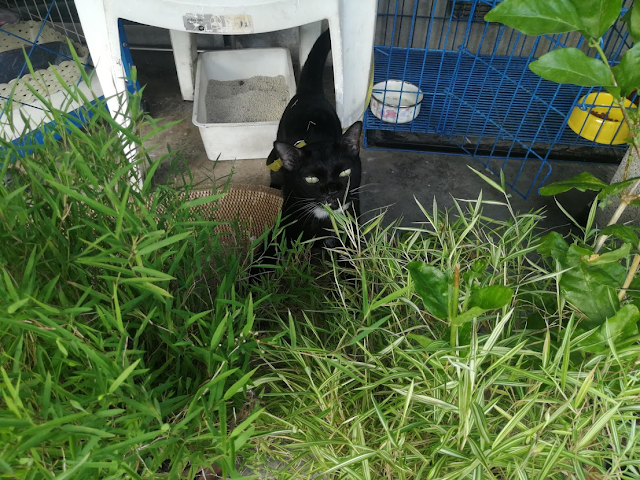

Happy, my favorite local shop cat, has edible plants to snack on, maybe a type of bamboo


Friday, June 23, 2023

Re-trying a 2011 FT Xiaguan mini cake


It's been awhile!  I don't know if I've ever taken a full month off posting here, or even off reviewing, but that just happened.  I moved back from Honolulu to Bangkok again, a cycle that will seemingly keep repeating for awhile, so things have been busy.  It's odd being slightly overwhelmed by the heat and humidity, again.  Running has been rough; a lot of outings cut back slightly for distance while I acclimate.

Nothing is really new related to tea, except that I recently met one of those next level tea experts, Olivier Schneider, which I don't plan on covering in detail here.  He's nice.

This post is about retrying a sheng version I've not checked on for a couple of years, a Xiaguan mini cake, not so different than their tuocha shaped versions, but for whatever reasons not as earthy.  This earlier vendor description (it's from the Chawang Shop) covers what it is:


FT(For Taiwan)" means this small iron cake was a special order of "Fei Tai" Company. Fei Tai Company is the biggest Xiaguan TF and Menghai TF pu-erh tea distributor in Taiwan. It is claimed that the customized products of Fei Tai company reaches a higher quality in Xiaguan TF. The high-level "FT" tea chose better raw materials. Iron cake is tightly compressed, so its qualitative transformation is slow. Definitely tea for longer-term store. High quality early spring large-leafs material from 2009 and 2010, and was used Cang Shan mountain spring water for the steaming process. This cake is not too smokey, typical for Xiaguan teas. The taste is strong and powerful, floral and sweet huigan.


Odd that FT stands for "for Taiwan" when it's that vendor name's initials, right, Fei Tai?  I've seen that for Taiwan reference before; maybe it just worked out that it could mean two things.  It's interesting that this is a blend of material that is now 13 to 14 years old, even though the cake is 12, the pressed version of that older material.


Review:


First infusion (after a rinse):  brewed a little strong, so the effect is a bit intense; I guess I was still trying to get it to open up.  Flavor range seems positive, not atypical for Xiaguan, but on the fruity side as those go.  I just re-tried another larger size tuocha version recently that includes more of the smoky and mushroom range, which isn't a favorite.  For that tea I was wondering if even another decade would shift flavor profile, feel and the rest, into a place I really like it.  I do like this.

Earthiness is present, for sure, which people could interpret in all sorts of ways, as aged wood, tree fungus, leather, or however else they might see it.  Feel is resinous, full, and a little dry, so better brewed a little lighter than this round.  Beyond that there's a fruitiness that I'll try to unpack better next round.


Second infusion:  by fruit of course I mean warm, towards-earthy fruit, maybe most like dried Chinese date (jujube).  This isn't so complex that there are lots of layers to it, or a very refined character; intensity and complexity is good, but it's straightforward.  Bitterness hasn't dropped completely out but this might be another half dozen years away from a more fully transitioned, aged character, or maybe a decade.  Then that's a funny thing, because teas age really fast here in Bangkok, so that fresh, floral sheng versions seem much different a single year later when stored here.  I don't remember this being any different several years ago.  The earliest impression I have is from an early round of a review 4 years ago:


There's a faint hint of smoke, a decent level of bitterness (especially for being a light infusion), and an unusual oily feel to the tea, along with dark mineral content that is somewhere between petroleum and well-corroded metal.  Oddly that's all pleasant. 


I mentioned that I liked this enough that I might buy more to age, and I finished that 125 gram mini cake later, and bought two more to store, one of which I'm first trying now.  I think I remember this tea differently because it aired out a good bit as I drank it over the course of the year or two after that.

Smoke is not noticeable now, and the oily feel I would now describe as sapiness.  What I interpret as fruit I remember from trying this before, not that early time, but over the course of drinking the rest of that.  It seems a little odd that I liked this that much for the description, and for not really loving edgy, dry, smoky sheng versions back then, nearly as much as I could relate to them a few years later, after a lot more exposure.  I've been considering buying another cake of a standard full size version in a Chinatown shop here, one I've barely touched for it being not quite ready as a 2006 version, but one I see a lot of potential in (this one, an 8653).  It's odd that spending 17 years in Bangkok isn't enough aging transition time, but in a few more it should come together.


Fourth infusion: there's something really catchy about the way those flavors balance.  I might be missing an input people describe as camphor; it's hard for me to isolate anything as being like that, in most instances, but this is in that range.  It's not that one part of the flavor is so pleasant, it's the overall effect.  The sweetness and range I interpret as fruit helps it achieve that balance.  Probably as with the 17 year old full cake needing more transition time this 12 year old version will be considerably better in another half dozen, and I shouldn't be drinking much of this.


Fifth infusion:  a little stronger, brewed a little longer; the earthy rock and rusted metal range really picks up if you don't brew this light, which is the only way to drink it at its best, it seems to me.  Not using a maxed out proportion would help with that, but it's longstanding habit, so I go with really short infusion times to compensate.  I could imagine this including a touch of mushroom more than smoke, but it's not as heavy on both as the other Xiaguan tuo I mentioned.  That's this one, a 2010 Xiaguan Teji Tuo, identified as special grade.

To be clear where I stand on all these I really like a completely opposite style of younger sheng as much or more than this range, even if these were optimized, aged for 20+ years instead of less than 15, or 17 for that larger cake.  Some versions I love as brand new tea, and some really shine after a couple years of transition, or in some cases can be great after 4 or 5.  I only took one sheng version in this age range to Honolulu for that 2 1/2 month stay, a purple leaf version, and I kind of missed aged teas, but it was nice going through that different cycle of experience.  Experiencing variety is nice, and sometimes I crave older sheng experience, or teas like this in the middle, with some rough edges but also interesting character.


Sixth infusion:  a bit lighter again, brewed faster, and better.  It's not transitioning enough that I'll keep up with notes; it is where it is.  The mouthfeel and aftertaste inputs are more positive than I've described so far, a nice resinous structure, and a sweet and mineral intensive aftertaste.  It's nice.  I've been able to appreciate a one year younger Xiaguan tuo version that I keep buying from a local shop, reviewed here along with two Dayi versions, for appreciating the pleasant range mixed in with some relative harshness.  I might be as interested in how slightly aged sheng varies along with having the experience itself, not just learning about and experiencing the end-point potential, but the stages the teas go through leading up to that.


A tangent about goji berries


Kind of taking this tasting summary off the rails a bit I tried mixing the next round in with some goji berries I have soaking in hot water.  I drink that infusion and eat those berries about every other day, when I think to get to it, as a diet supplement of sorts.  They're a "super food," but who knows what that means.  I suspect that them being high in vitamin A content is a lot of it, but it could go beyond that.  The taste was interesting; that's one way to try sheng with a lot of fruit input, to mix it with a dried berry infusion.  I just looked for a good reference source on that "superfood" claim but mostly only turned up light references, like this one:


...this small red and shiny berry is a real source of essential nutrients for the well-being of your body. It is particularly rich in vitamin C and polysaccharides which are two powerful antioxidants. There are also vitamins A, B and E, but also 18 amino acids, 8 of which directly participate in the proper functioning of the body. Otherwise, organic goji berries also contain 21 minerals and trace elements, including iron, selenium or copper...  The composition of goji indeed includes zeaxanthin, an antioxidant that promotes better and lasting vision... 


That reference claims that it helps preserve organs, slow aging, and protect against cancer; who knows?  Looking further here's a peer-reviewed form of source; it does sound good, as they summarize it:


Goji Berries as a Potential Natural Antioxidant Medicine: An Insight into Their Molecular Mechanisms of Action


The health benefits of goji berries include enhancing hemopoiesis, antiradiation, antiaging, anticancer, improvement of immunity, and antioxidation. There is a better protection through synergistic and additive effects in fruits and herbal products from a complex mixture of phytochemicals when compared to one single phytochemical...

There are studies that reported the presence of riboflavin, thiamine, nicotinic acid, and minerals such as copper, manganese, magnesium, and selenium in goji berries [7]...  The high biological activity components in goji berries are polysaccharides, carotenoids, and phenolics [8]... 

One of the most common carotenoids found in goji berries is zeaxanthin in the form of dipalmitin zeaxanthin...  As for now, the best natural source of dipalmitin zeaxanthin is goji berries. The fractions of beta-carotene (35.9 μg/g), cryptoxanthin, and neoxanthin (72.1 μg/g) are also detected in goji berry extracts [8]...


Sounds good, I guess, but of course I can't connect their claims about health benefits with that information about compounds present.  It is odd that I'm not experiencing greying hair much, beyond my beard, even though I'm 54, and haven't needed to use reading glasses yet, but I have no well-grounded idea what main causes for that might be.  Exercise, eating a good diet, and sleeping enough are supposed to improve general health, and I attempt all that, and have other more exotic theories about inputs I'll skip passing on here.  

This aside is more about passing on a potentially helpful diet input suggestion than a claim or endorsement; it's easy to buy some goji berries and eat a little every other day, much easier than including foods like sweet potatoes and blueberries in a normal weekly diet.

I did recently write about Bryan Johnson's attempts to stop the aging process, here, and I don't think I mentioned goji berries in that.  Other than ginseng I can't think of another input described as offsetting aging, not that I follow such subjects.


I am losing my hair; it's not as if I'm not aging at all


Conclusion:


This version is pretty much how I remember it, since I probably drank the last of that small cake two years after first trying it, so two years ago now.  I don't necessarily think this needs more time to age, in the sense that it's not pleasant now, but I think it will be more pleasant in another 5 or 6 years, so I probably won't drink much of this over the next few years, just checking on it once in awhile.  For these kinds of teas it seems to make sense to buy even more than I did, if budget allows, since if I do drink this 125 gram cake over the next 5 years and it really is optimum then I'll be down to 125 grams left, when it's actually at its best.  I'm on a tight tea budget, so it is what it is.

I like this version a little more than maybe all the Xiaguan tuocha versions I've tried so far, which isn't so many, maybe only half a dozen, totaling to a dozen versions of related forms (Xiaguan full cakes, other similar style but different producer tuos).  It's not refined, or amazing in quality level, just pleasant and nicely balanced, with good intensity and transition potential, and essentially no aspect range I interpret as negative.


nice visiting the Bangkok Chinatown again


reunited with this family member!


an iconic part of my work commute


a baby monitor lizard in a tree joining my lunch in a park


Wednesday, May 18, 2022

Xiaguan and Dayi Jia Ji partially aged tuocha review (7 and 10 years old)


I talked to a couple of vendors about thoughts on a rapid increase in pu'er pricing, the average levels doubling over 5 or 6 years, related to this post, about Context and concerns related to high quality level sheng pu'er.  A few clarifications are required, ideas I thought generally covered in that content, but which may not have stood out or have been explicit enough.  The general theme was that consumer demand for better tea versions, coupled with overall demand volume shift and increased costs, have caused pricing to increase.  Then vendors or producers are probably making more profit too; that's how it would go when demand level (as volume, and also demand for higher quality range) and pricing both rise.

Vendor costs are rising too.  Not just for the tea material, which increases year to year, but nothing stays at the same price level, for processing costs, transportation, marketing related, etc.  Consumers would expect more sophisticated packaging and presentation, because that evolves too.  It's not possible to guess if, related to costs and demand volume increases, a general mark-up level remains the same, so that profits would rise as fast or faster than any other input.  In a sense it doesn't matter; market demand supports better quality cakes selling for $80 to 100 now, so that's what they cost, without any supply side correction pushing that pricing downward. 

Geoff of Hatvala mentioned a special case of changing pricing, which I had known about but hadn't considered as factoring in.  He adjusted shipping cost so that it's free past a certain volume level, a common practice now, which of course bumps the initial listed product pricing a little to compensate, just moving it from one place to another.  It's funny how that psychology works, that most people would much rather pay for a $150 order that has free shipping included than a $120 order without an extra $30 of shipping cost already included, resulting in the exact same total cost.  At some point in the volume purchasing range someone's order pricing went up a little and someone else's down, so that people buying $200 or more worth of tea at a time now probably are paying slightly more, and someone right over that volume threshold--whatever it is--a bit less, but it's all not so different.

I'm thinking of how all this works out in relation to what I was trying to describe as options, as ways to work around this rise in demand and pricing.  In that post I suggested that South East Asian tea (sheng) might provide a temporary lower cost alternative, with rising demand for that likely to offset that as being much of an alternative better value later.  So what else is there?  Factory tea comes to mind, buying what is considered to be a lower quality range instead, and a generally different type and style.  There would be other alternatives, like exploring more direct purchasing through Chinese and Taiwanese markets, or looking for other small-vendor exceptions, the first of which I've never really explored much myself.  I suppose King Tea Mall could be seen as a reseller option version of that; they buy from within normal Chinese market sources and resell teas, per my understanding (not retail buying to retail purchasing, necessarily, but closer to that form).

To back up to clarify the problem, it's partly like someone complaining that the cost of cars is sky-rocketing, because they bought standard sedans for much lower prices in the past, and now their SUV costs $50 or 60k (or hybrid, electric car, whatever it is, with those costing even more).  You can still buy a Honda Civic for $22k (of course I had to look that up), but it's not what they want.  The car companies aren't "taking advantage," they are selling at supply and demand rates, just in a broad range of options.  Tea is a small enough niche industry that temporary market rate positions can happen, so it's a little different.  I guess it is possible that in both industries there could be a higher profit potential to playing up bells and whistles, to adding marketing spin to make catchy, attractive features seem all the more so.  Maybe almost no tea sold as gushu really is gushu, and "wild arbor" doesn't actually mean much in some cases; who knows.

So I wanted to review what an option might be like, where factory tea offerings would get you if you try to drink those as "middle aged" versions, here also in relation to a modest quality starting point.  Obviously buying 15-20 year old, ideally aged sheng pu'er puts you right back in a supply and demand crunch, back in the $150-200 cake range, even for teas that were selling for $20 back at time of manufacture in the early 2000s (see future post correction comment about that being wrong, right?).

So I'll re-review a couple of moderately transitioned, inexpensive, large producer teas and see what they're like 7 to 10 years after production.  It's hard to find these teas at 7 to 10 years old, compared to buying them new, but someone very concerned about costs could buy a bunch that are a year or two old or so, and still around, and hunt for other exceptions closer to this range, maybe just not from Xiaguan and Dayi (what these are).  Within a half dozen or so years they could be having this kind of experience, which may or may not be a good thing.  I'll try to comment here to compare that to what different styles of tea better when drank young are like, and to what the aged versions I've been trying are like (without so much focus on the latter; that's too complicated for a complete mapping).

Let's get one last detail out of the way:  do I think these are higher risk teas related to pesticide, chemical fertilizer, or heavy metal contaminant risk, one selling point for more "natural origin" versions?  No, not really.  I think if you buy random $10-20 Ebay cakes you run the risk of that contact, since you would be intentionally buying the lowest cost and quality versions you could find, but I don't expect there is much greater risk from these versions than for the foods we all eat.  For sure many more chemicals were used in producing these teas than some real forest grown version, so I'm also guessing that limited exposure to traces of that would come up, but per my guess it's largely a non-issue, or at least not a greater risk than for foods.  But then that risk is hard to place; it might be common for people to suffer from the cumulative effect over decades.

One last, last detail:  this Xiaguan has been here in Bangkok, held by the vendor, for a long time, and this Dayi tuocha spent part of its life in Kunming and more than the second half here, so storage conditions aren't identical, but they overlap a lot.  I've reviewed both before, years ago, but comparison with those earlier impressions wouldn't be so helpful.  The "Jia Ji" branding term is more or a less a version tied to a somewhat consistent style, in theory, and Xiaguan makes a lot of tuocha versions, so really there is a lot more to be unpacked about what that version was like initially, and where it stands in relation to others, it's just not included here.


Review:


This Xiaguan version (right in all photos) is a lot more compressed, so it looks smaller for being left as chunks (and maybe it is less tea material; I didn't weigh these).  It'll be interesting to see how that factors into fermentation level, once both have a few rounds to open up, and the related slower start for it works out.  I'll compensate with slightly longer infusions for the Xiaguan for the first two rounds but transition pattern still won't be completely identical.


2015 Dayi Jia Ji tuocha:  the pleasant effects and limitations of drinking this tea only this fermented stand out right away; it would be normal to give it another decade.  At the same time warm tones are developing, and the earlier astringency edge and harsh level of bitterness have subsided.  Pronounced taste is a bit like pine resin smells, with a sappy feel to the tea matching that.  I like it, and I drink this version from time to time, just not very often.  I picked up a sleeve of these some years back and per usual I'll probably finish them right about when they're ready to drink, in 10 more years.  I have a small chunk of a 2014 version stashed somewhere but it seemed as well to emphasize the age difference for this.

It's hard to compare this experience to younger, different style tea, or older versions.  I'll hold of on making any start on that.


2012 Xiaguan tuocha:  it's more age transitioned, that's for sure.  Much more; warmer, softer tones stand out.  The sappy, harder edge feel to the Dayi, which included limited vegetal range, just isn't expressed in this.  10 years stored in Bangkok is probably more like 25 stored in a dry place in Kunming, beyond the type of transition never being identical, with that not working out as one equal, linear level.  

There is an equivalent to the pine-tree sap range in this too, but a lot of warmer, smoother, towards-spice range stands out instead.  I suppose it could be interpreted as similar to aromatic wood or leather, with some dried fruit input, closer to Chinese date than dried tamarind, but not exactly either.  Going back and retasting the Dayi after this makes that seem all the edgier, with bitterness and a lean towards vegetal range a bit harsh (with floral tone included; it's not just like eating a dandelion leaf).

After repeated tastings of expressing how using a maxed out proportion is problematic for getting through caffeine contact and other feel range you'd think I would've learned.  I'm feeling these teas after one round.  It just doesn't make sense to brew 8 or 9 grams (10?) of two versions of tea and see how far you get through that.  Live and not learn, it seems.


2015 Dayi, second infusion:  pleasantly intense.  Bitterness is at a higher level than I prefer but it's a lot lower than in a new maocha (2021) Myanmar version I just reviewed (although I may post these out of order).  It's transitioning, but to keep this readable it will work to do a next flavor list next round, once it has opened up and loosened up a little.


2012 Xiaguan:  intensity is at the other end of the scale for this; interesting it worked out that way, but compression level is reducing infusion strength too, in spite of going a little longer.  Bitterness and astringency largely transitioning is a lot of that, but tea quality may have factored in to, or other initial character at time of production must have.  This is pleasant too but some of that warm tone is towards wood and cardboard instead of spice and dried fruit (with the flavor list for both next round).  It seems like I might've used less tea for this version but chunks are still unfolding, so it might even up for intensity level over the next couple of rounds.  


2015 Dayi, third infusion:  it's in a nice place now, with vegetal range, and even floral tones, swapped out for deeper and heavier range.  Lots of warm mineral joins in, and sappiness similar to pine sap informs both flavor and feel.  The feel and aftertaste effect are cool, the way this really coats your mouth, and continues on as a taste experience that seems to happen all throughout it.  One part is a little like that edge in Ceylon tea bags, a black tea warmth and bite, not unlike Lipton, just framed in a completely different experience context.  It's crazy thinking that a Lipton tea-bag tea drinker might relate to this, but maybe, if they could tolerate the bitterness.  Intensity fading and feel softening will bring this to a nicer place, over the next few infusions and also years, if both work out like that.


2012 Xiaguan:  this finally opened up to it's normal range character, I think.  Feel did pick up a lot of intensity, in part probably related to letting the infusion run longer, out at 15 seconds or so ("long" is relative when proportion is this high).  These flavor tones are a lot warmer than people accustomed to drinking dry stored teas might expect for this aging time-frame; I tried 2005 or 6 versions from that Chawang Shop set that were much less progressed in fermentation level.  I'm not as opposed to dry storage as is conventional among pu'er drinkers, seeing it as a slowing of transition more than a clearly inferior form, but then again I'll know more about optimum transition patterns after another 10 years of trying teas, and I'll be able to place claimed negative outcomes better.  I just tried a half dozen dry stored sheng versions I've kept posting about, but it doesn't help not having tried the exact same tea versions a dozen or more years ago.

There's an unusual aromatic wood tone / spice aspect in this that works to tie the rest together, as I see it.  On the other side, I can also interpret this as showing potential for a full aging transition that's just not there yet.


2015 Dayi, fourth infusion:  positive transition continues, but for sure I'm tapping out early in this cycle.  A couple more rounds will tell two thirds of this story, and that'll be enough.  Sappy, towards pine-resin character is nice, but warm tones will be better in a few more years, more developed and dominant.


2012 Xiaguan:  better in relation to aging transition placement, but there's a funkiness to this the other doesn't have.  It's not musty, but vaguely towards that.  It seems like part of the range is missing, since the brighter and more vegetal range, and bitterness, in the other has largely dropped out, but it's only at the threshold of starting to express deeper tones and different character.

It doesn't sound like I'm describing these as a good, inexpensive replacement for what to drink right now, does it?  They're drinkable, and I think keeping one of these in the rotation could make sense, if you like that range, and can keep picking up $10 or $15 versions at a Chinatown outlet.  It probably makes more sense to buy them faster than you drink them, or grab a large set and hold that for a half dozen to ten years.  I don't love the "locking it down" idea, someone thinking that if $10-15 is a good value and these should age well why not buy 100 and sell them for $20-25 later on, or maybe more.  That would be possible, not exactly a get rich quick scheme, but probably a workable business model.  And a way to keep other tea drinkers from having the same access, unfortunately.


2015 Dayi, fifth infusion:  I'm brewing these out towards 20 seconds, to give an idea of how slowly I increase timing, although the point this time is to try them stronger than usual.  They would match my preference better, and probably most others' preferences, brewed for around half that long.  After this round and a faster infusion I'll leave off.  I've been drinking these teas for an hour, since I don't rush while also making notes, and my kids and my cat keep interrupting.  It's 98 F out now, the one temperature I can easily convert to C, 37, which is also human body temperature.  I've gotta be the only person drinking hot tea outside in Bangkok right now.

I like that sappy, piney character, although it is a little much tried out brewed strong.  This longer infusion approach probably works better for the other version.


2012 Xiaguan:  it's hard to really describe this flavor impression, either by breaking it into a set or as a general impression.  As a set it includes warm wood range, towards spice, with some dried fruit undertones, and some mineral base.  As a general impression it's like drinking the essence of that smell of really old books in a tea version.  It wouldn't be for everyone.  Again it will seem to soften, deepen, and sweeten over the next few years, becoming more subtle and pleasant (I think, as I would interpret changes).  It's definitely not fading away, but it's much milder in intensity than the other tea.


2015 Dayi, sixth infusion, brewed around 10 seconds:  to me this is a more standard brewed intensity.  Character balances as well as it's ever going to for this, with bitterness and feel edge strong but moderate compared to earlier, with warm tones a much more pronounced effect.  This needs another 7 years to really move into aged range though, as long as it has had already.


2012 Xiaguan:  that one odd edge becomes more pronounced as rounds go by; strange how that works out.  Quite often odd character, that might be seen as a flaw, comes and goes in early rounds, but this is the opposite.  It's towards a mineral effect, or that taste that I often describe as of aged furniture, or maybe less positively summarized like old books or cardboard.  I think it could potentially decrease and soften over time, as character keeps shifting, but I also think it's probably a side-effect of relatively wet and hot storage, so that it won't fully drop out, it'll stay like that.  It's not so separate from what I've experienced from heavy and wet Malaysian storage input, which I suppose I don't love, compared to other area forms I've tried different examples of (all a work in progress to map out).  It is what it is.


Conclusion:


I definitely don't see 7 and 12 year old tuocha-form factory teas as a good alternative for daily drinkers, but both of these are drinkable.  Higher quality, whole leaf, more natural growing conditions origin teas (or at least those typically presented as such) tend to be better brand new, as newly made maocha, or even more so after 2 or 3 years of moderate aging transition.

There must be another range of "factory" (high volume production) versions that would work better for this purpose, to drink within the first 7 years of being made.  Origin area and other factors enter in, plant types, processing styles, and all the rest.

Saturday, February 22, 2020

2008 Dayi V93, 2018 Bulang shu pu'er from King Tea Mall


Dayi V93 left, Bokuro gushu shu right


On the King Tea Mall website--where these are from; samples shared for review, which is much appreciated--John mentioned he is shipping teas again, as of today.  I'm not sure how normal things are back in China just yet but it's good to hear that some normalcy is returning.

It's a little strange to review shu right after writing a long intro post about exploring sheng, but of course these tea types are related.  Aged sheng never really completely resembles shu, but that is kind of the general idea, and the character difference informs a lot about both; the overlap and the differences define both.  I'll get into all that, probably more so for just considering sheng basics that much.  I've been re-tasting a lot of what I reviewed last year (just not mentioning it in detail here), which also includes shu, just less of it.

It's not as if I have an endless supply of old samples but I do have enough to keep reviewing them once a week for awhile.  I could live with this blog going quiet instead but it's also nice reviewing, even if experience and themes just tend to repeat.  I expected these to be pretty good shu, and experiencing and placing good versions of tea types is different than the same related to examples that are only a bit above average.

Per standard approach I only knew what was on the labels when tasting these, but did look up and copy the descriptions here after.


2008 Dayi V93  (listed at $66 for 5 100 gram tuochas)

Origination:  Started from 2005 year. Made from high grade tea materials and decently fermented. 

Taste: Well balanced on thickness, mellowness and other taste factors. Aromatic and fragrant. Soft tea soup along with smoothness. 

Storage:  Guangzhou dry and clean storage.


That price looks a little steep related to it being for a set; when you divide it back out to $13 per tuocha it seems quite reasonable.  At least I see it that way after trying the tea.  The description works, that could just be taken in different ways.  They list similar 2007 and 2009 versions but for as nice as this seems maybe better just to go with it.

That still doesn't seem like a lot of background; maybe checking in with Yunnan Sourcing's related offerings will add to that:


2017 Menghai DaYi V93 Premium Ripe Pu-erh Tea ($7.50)

This is a classic Ripe tea blend, called "V93", it was most recently released in 2006 and quickly became one the most expensive ripe teas on the market. To this day the 2005 and 2006 V93 Ripe productions have commanded very high prices due to the fact that this is one of the most sought after Ripe teas for everyday drinking. It is smooth and full in the mouth. It is fermented just enough to break down the bitterness of raw pu-erh while lightly fermented enough to preserve the stimulating cha qi and hui gan of a raw pu-erh. After-taste is sweet and thick.


So it's a relatively classic shu blend; that's it.  It's really not that expensive to buy a newer version of it, but that might be better for sitting around another couple of years.  Or it's probably just fine as it is; three years lets a shu settle quite a bit.  I never mentioned aftertaste in these reviews, I don't think.  I suppose it is notable but not so much in comparison with how that goes with sheng.


KingTeaMall "TONG QIN" (Guqin) Puerh GuShu Shou Cha Ripe Tea  ($18 per cake or $86 for set of 5)

This tea was made from tea leaves picked up from GuShu tea trees in BuLang tea mountain in 2015 year and processed into shou cha in the same year. Then it had been kept into ware house in MengHai county, YunNan province to wait for smell off.  We pressed that into cakes in May, 2018 Year.

High ratio of tea buds which are covered by many golden tea hairs.

Medium fermentation.  Mellow and smooth.  Clean and clear taste feeling.

Storage: From July. 2018, it has been stored in Guangzhou. Dry and clean.


I think that is an in-house label, Bokuryo.  I tend to put more stock in how a tea comes across than branding or even background descriptions anyway.  It being Bulang does matter, but that means a different thing for shu than sheng, since even if the starting point is quite common shu fermentation changes everything.

Interesting that this 2018 tea was really produced in 2015.  It does seem really clean in effect, which isn't unheard of for tea that's not quite two years old, but for a version that's nearly five it makes more sense.  The high ratio of tea buds part you can see.  This being a small cake instead of a tuo it doesn't matter so much, but lower level of compression for cakes can make them age slightly faster and be less hassle to break off chunks from.  There are probably more low quality tuochas than mini-cakes out there but that broad generality doesn't mean much; you're only drinking the one or two versions at a time.


Review


I brewed these for up towards 20 seconds to get the process started faster, to skip an infusion that just points toward what the teas will really be like in the second.


V93 left, in all photos; the other is a bit darker, maybe just opening up faster


2008 Dayi V93 Tuo:  quite nice.  Deep, rich flavors, very smooth character, pleasant intensity, and rich, thick feel.  The overall balance is great.  Flavor range spans dark wood tones into aromatic spice range, frankincense and myrrh or whatever else.  Any hint of rough edges from fermentation process, if any had been present, are long gone.  Sweetness is nice; everything balances in this.  It's even a bit creamy.


2018 Tong Qin gushu:  interesting for including a pronounced flavor aspect that's not completely unrelated from what I described in the other sample, but not the same.  Oddly that same description would probably work about as well as any other anyway.  It's slightly lighter, just a little towards a balsa wood tone, or aromatic cedar, or both. 

This gives up some of the deeper, heavier underlying tones and richness present in the other.  For being on the "young" side it's quite clean in effect [or since it's really a 2015 version not so much, what one would expect], it's just that the overall balance hasn't evolved to where the other is.  Intensity is still good, just across a different range.  I suppose it comes across as trailing over into root spice range instead of the aromatic, "deeper," and different bark spice.

I had been thinking that the amount of the first tea looks to be slightly lower (dry weight), not by much, but enough that it might require adjusting infusion time.  Maybe not.  It is hard to judge dry tea amount with compression level varying, so these really could be exactly the same.  You would assume they were weighed; it probably just was about not appreciating compression level difference.  Even if they're not the intensity of the first sample is very good (or both really), and it would work well brewed lightly. 


Second infusion:


color more even this round


I brewed these a bit over 10 seconds, longer than they would need to get into a normal infusion strength range, but I tend to like shu a little strong.  It would work to drink these on the inky side, brewed for over 20 seconds, but for reviewing them that's not ideal, drinking them at a higher than average infusion strength.  If anything trying teas on the light side lets you identify both individual aspects and general character a bit better.

2008 Dayi:  the creaminess picked up; that's a really cool effect.  It's like how that comes across in Guiness Stout, just missing a lot of those heavier flavors in that, and of course the alcohol.  This has a lot more depth than a Guiness, but to be fair it also gives up a good bit of high end for flavor range.  The flavors are dark wood tones, with the other range I talked about, leaning towards spice.

Related to aged sheng this isn't as refined (versions that don't just fade to nothing), the way those layer together a lot of scope, even long after the astringency and bitterness drops out completely.  This is probably somewhat close to how a 25 year old relatively humid stored sheng would come across, something I've tried not so long ago (ok, really 30+), just still different.  Still pretty good though, for the range it covers.


2018 Tong Qin:  not bad, not really changing.  This version looks a bit redder (the dry leaf), as versions with bud content tend to (I never read descriptions before writing the notes; maybe they'll say more about that).  That tends to pull the flavor in a lighter direction, that cedar-wood range, but oddly the shu tends to gain an unusual type of depth too.  I'm using "depth" here in a couple different senses.  The first tea covers smooth, rich, broad range that extends to mild, warm underlying mineral content; one type of depth. 

My take--worth keeping in mind it's a work in progress--is that buds heavy shu tends to gain flavor range for including that mix of material content, and it lends the feel a texture that isn't necessarily rich or creamy but still has a more limited form of extra thickness.  This post goes into all that, about a Gong Ting shu.  I've got a Moychay version that's probably an even better quality example; it would take some doing looking up what that was, and the review, but I might get to it [not what I was thinking of but these work as an example].

It's interesting going back and forth between them and seeing which is better, and just how good both probably are.  I think they're both quite good examples of shu, there's probably just still another level or two, just a bit more complexity or depth both could express.  The Tong Qin doesn't come across quite as positively to me, for being a simpler tea, but the flavor range and intensity across a narrower range is good.  Neither have any negative aspects, since I don't see limited complexity as that.  I'll try another round and get back to that. 

I suppose it is odd that a version made of gushu (old plant source tea) is less complex, and less intense, but starting point depends on a lot more than plant age.  Most likely this V93 had significant rough edges that all rounded off.


Third infusion:


2008 Dayi V93:  more of the same; I really don't expect these to evolve and change all that much.  The warm mineral range (like what is often present in Liu Bao) picked up a little.  This tea is nothing like Liu Bao, the rest of the set of aspects, and overall character, that creaminess, but mineral range overlaps.  There's still a catchy warm wood tone, off redwood and mahogany.  It's a bit less like Guiness for creaminess tapering off a little.


2018 Tong Qin:  still about the same as last round.  Wood tone might have shifted just a touch, but it won't work to break that down for as vague as the description had been.   This would seem more well-balanced, pleasant, and complex without direct comparison to the other, which age probably helped contribute.

To be clear I'm skeptical that aging shu makes anywhere near as much difference as people often claim.  Of course that seems to contradict this entire review.  There's an exception, that some tar-like or petroleum aspect range can really smooth out and become creamy over time, or funky fermentation related range can smooth out, or really drop out.  Maybe both happened in the case of this 2008, so the "rule" about shu improving with age was born out.  I'm not so convinced that this 2018 version would be all that much different or better in another 10 years.  Then again I'm not basing that on enough evidence and experience; maybe it will be.

It also runs against some strands of conventional wisdom that a shu could be as pleasant, balanced, intense, and free of flaws as this 2018 version is.  Really lots of examples disprove that, even across some degree of quality and cost range; anyone who has drank a good bit of shu would already be clear on that part.

Fourth infusion:


2008 Dayi V93:  not changed much; I'll leave it at that.  Dark wood it probably picking up more, creaminess is still leveling off.  It hasn't lost much for complexity yet but I'd expect it to narrow quite a bit over the next 2 or 3 infusions, since I have been letting these infusions run a bit long, over 10 seconds.


2018 Tong Qin:  again transitioning slightly but the same general description still kind of works.  This probably always did have a little more "high end" then I've been doing justice to.  I had said the wood tone was a bit bright, like redwood, but that extends a little towards orange zest, it's just not quite there.  It makes for an interesting contrast with the other, since it leans in an opposite direction.  I often wonder if lower or medium level fermentation level shu doesn't have a lot more aging potential over the longer run, after 15 years or so, but I can't really guess where this stands in relation to that.


Conclusions


I tried a long brewed round next; that's a pleasant way to drink shu that doesn't contain any flaws to work around.  These still had plenty left to produce a really thick, creamy, intense round, and are still far from finished.

It's hard to say just how good these versions are.  To me--and this is just my own impression--shu tends to level off quite a bit at "well above average."  I have reviewed a number of distinctive exceptions to that, that were different in lots of interesting and positive ways, but this is where a lot of relatively good shu lands. 

That's not a bad thing; these were quite pleasant, and not at all the same tea experience.  They're both not all that expensive.  As I see it shu is more of a comfort tea, a type that's great with breakfast, or with food on a work break.  There's less to focus on, and in a couple of senses less to appreciate, but good versions are quite positive, and hard to screw up in relation to brewing.  It's also easier on your stomach; I could probably get away with drinking these without food first thing in the morning, that's just not how I start my day.

For people who focus in and see shu as their own preferred end-point I guess that personal likes factor in.  I never had any problem appreciating buds-heavy shu, in the way it took time to really get black teas like that, but they're different.  One concern with shu is slight or even significant negative aspects, a bit of extra off flavor from fermentation effect, and that's definitely not a concern for both of these. 

I'd buy shu like this but I'm a bit too hung up on sheng.  It's the same story for oolongs; I really like those, but it's not where I am for main preference just now.  Dian Hong (Yunnan black tea) preference is never going to completely drop out; I keep mixing those in.  But I can only cover so much scope, so I've been setting aside those types, and for the most part also Indian and Nepalese teas (which are great), whites, and whatever else.  It also seems like it might be almost time to pull through this 2 1/2 year sheng cycle but I'm not quite there yet. 

I don't know what will be next; take a break from tea, maybe?  Some new theme will come up.


where I'm editing this, but that was last week


maybe the last day in that outfit; things keep changing


lots of sweet kids for friends, wherever she goes