Showing posts with label wild arbor. Show all posts

Wednesday, May 11, 2022

2006 purple wild arbor Mengmao sheng pu'er


This is the last of a Chawang Shop order, the kind of purchase form I don't employ as often as many others seem to, often just picking up a tea here or there instead.  It's been so long since I ordered these teas I had no recollection of what this version is, and had to read every item on the order to place which I hadn't tried yet.  It's the third listed, a 2006 Ye Sheng Qiao Mu Zhuan Cha (which I think just means wild plant type wild arbor brick tea):


To be clear these are not at all typical of what the Chawang Shop sells at this point, more a look back at their sheng product theme from a half dozen years ago.  This is a random page of what they sell now (however "page 1" on the site is sorted):
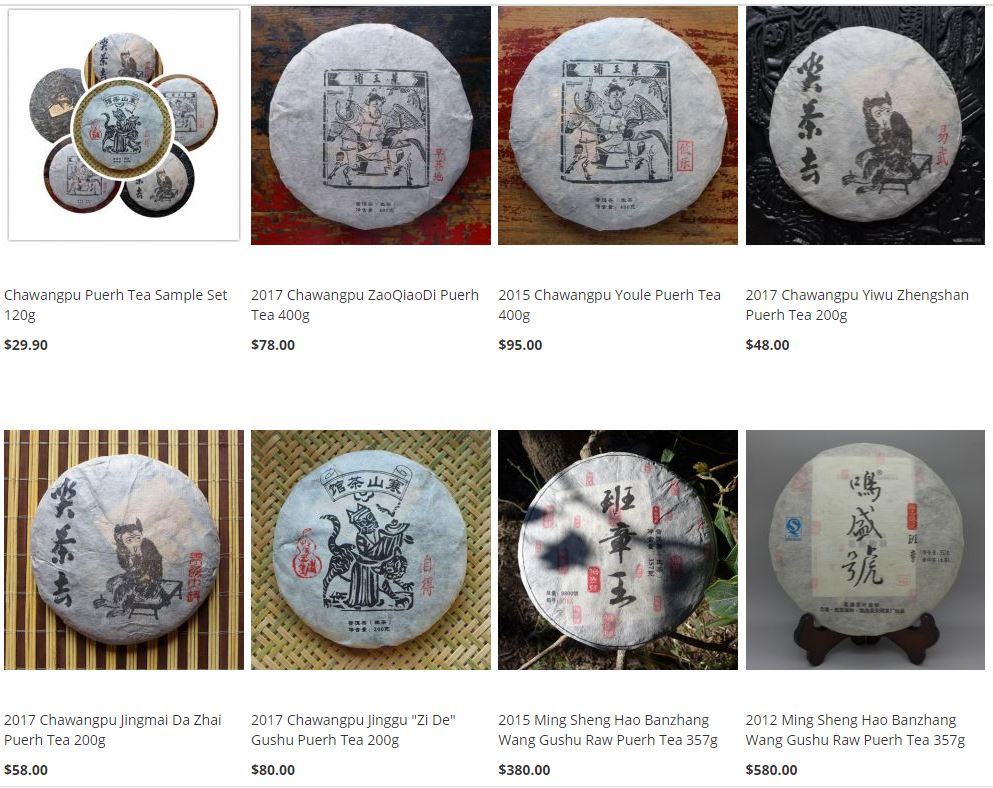


That change over in theme got me started thinking about patterns in sheng pu'er demand and vendor offerings, which I'll post some long form thoughts on soon enough.  Something about that tea version had to sound interesting (beyond it not costing much, making it easy to try a few different things); let's check the listing and see what it might've been:


The Menglong TF made this 250g tea brick from ancient wild tea tree material in 2006. Purple large leaves varietal tea is from Mengmao village, Baoshan region. This place is famous for wild arbor tea (Qiao Mu). It is the optimum ecological environment for the growth of grandifoliate planted tea trees. Four years proper store in Kunming makes the tea soup golden yellow, fruity aroma and a smooth flavour. The taste resembles some sorts of laocha (old oolong tea)! The packing paper is not original packaging. Xiaguan TF also took material from Baoshan for ancient wild tea products. 

Manufacturer : Menglong Tea factory

Harvest Area : Baoshan

Production date : 2006

Weight : 250g


That does sound interesting, wild arbor, purple leaf tea.  The look is unusual, larger leaf material (so maybe an autumn harvest version?), with a mix of leaf colors showing.


Review:


First infusion:  interesting, unusual.  Some earthiness and sourness in this leans a little towards a hei cha style.  Still it has pleasant moderate bitterness, and it's relatively clean, for this being the first round, brewed a little longer than I often go to avoid saying "it's too light to tell this round."  It seems like some nice dried fruit is going to evolve in this, once some early bitterness and earthy edge wears off.  It's not challenging or edgy, or off, I just get a sense it will go from somewhat clean in effect to much cleaner over the next couple of infusions.  So I'll add more on that next round.  

I think finally this will be a tea version that I think will improve by softening some in wet and warm Bangkok conditions over the next couple of years, versus thinking most from this set would do well to experience another 4 or 5.  I thought the Laos tea was in a nice place, and the Wuliangshan brick version had a nice character for a medium level fermentation sheng.


Second infusion:  again, interesting.  There's an unusual character to this tea that I think listing out flavors and other aspects isn't really going to capture.  It partly relates to a trace of sourness; that is shifting overall effect quite a bit.  The rest is just moderately aged sheng, definitely not fully aged yet, not where 16 years stored in a more humid place would have it.  

I keep mentioning it but there's a common perception that dry storage results in sheng picking up some degree or type of sourness, which I don't find to be completely false, perhaps just a little misleading.  A moderate aspect along that line does seem to evolve into some examples I've tried, and a woody flavor, but stronger and different versions of sourness and wood flavor would come from other types of problematic storage inputs, or unfavorable starting points in tea character.

This tea is complex; there's really a lot going into the experience to unpack.  There are some warm tones, out towards wood or limited spice, and along with a hint towards dried fruit a vegetal part is more like blackberry or strawberry leaf (right, things people tend not to prepare as tisanes or ever experience).

A touch of lack of clarity (slight cloudiness) in the brewed liquid makes me reconsider what that means.  It relates to some kind of flaw, per my understanding, but I'm not sure how that gets described beyond that.  The next round brews much clearer; maybe it connects to the sourness, which will fade over the next two rounds.


unusual wet leaf color starting to become apparent


Third infusion:  it's cleaning up a little, in relation to the sourness fading,and the liquid is clear.  Bitterness and other flavor aspects are more pronounced; I think I see sourness as a particularly negative inclusion, so even a little being present stands out.  Bitterness trails a lot more in the aftertaste experience too.  

Flavors are interesting, and complex.  The dried fruit range reminds me of dried blueberry, a bit unusual.  Warm woody tone stands out a lot more, connecting with light warmer tone, and other understated vegetal range.  This might be really nice in another 4 or 5 years; I might've been wrong about that part.  It has intensity, depth, and complexity to spare but again it seems to be in an odd place for shifting over from lighter range to heavier, from bitterness, floral tones, and some limited vegetal range to dried fruit, warm earthy tones, with subtle spice tones adding depth.  I say "again" in relation to that being one main running theme in trying these other teas, in this set.  For some that would be very disappointing, but for me it's more or less what I'd hoped to experience, teas that aren't quite there for achieving aging potential yet, that I can keep trying over some years to still have some around when then do.  If it turns out dry storage robbed these teas of a lot of final potential in part I wouldn't know that, and in a sense they're interesting and pleasant now, and probably should keep improving. 

Then there's the "a cake is a sample" theme, relating to how if you try a 250 gram brick of tea a few times a year within a half dozen years it's close to gone, right when it might be at its best.  If a tea seems especially promising buying one version for the tasting process and one to drink then works best, but these teas are surely all on the way out for stock availability, so ordering them in back to back years isn't likely to work out.  Chawang Shop's selection of 15 year or so old sheng has dwindled, nothing like the crazy level of stock Yunnan Sourcing holds.  I have some of my past favorites from them as untouched spares, just not two of everything I'm trying, and I'm not sure what I would reorder from this set.


Fourth infusion:  more of the same; there are aspects to appreciate in this tea, but it's at an odd place for aging transition.  Very mild spice tones are transitioning in, and remaining sourness slowly fades, but the feel actually picked up a touch of dryness, instead of getting richer and softer.  It might evolve to a feel I tend to call sappy within a few rounds, which I use in a positive sense.


Fifth infusion:  that just turned a corner for being more pleasant; it all somehow clicks much better.  More warm spice is a nice contribution, sourness has almost entirely dropped out, bitterness is at a good level, matched by sweetness, and dryness and wood tone are quite moderate.  Dried berry is really a secondary aspect, but it adds a lot for making the rest work better together.  

I suppose this tastes like someone might expect wild arbor purple tea to taste, unusual, in ways that are very positive but also a little odd, with some range surely not matching everyone's liking.  Or who knows, maybe the whole set of aspects and overall effect wouldn't appeal to some.  But it's not at the most likely optimum for aging transition level just now, as I see it, and the character should keep changing.


Sixth infusion:  it's really nice doing a single tea tasting, not a comparison, being that much less blasted by drug-like effect at this stage.  This picks up an interesting underlying tone, a little towards the inkiness I mostly describe in relation to Wuyi Yancha.  It's all integrating even more than it had in the last round, those same aspects I described over earlier rounds "cleaning up" and working in better proportion with each other.


Seventh infusion: it's fading in intensity a little; funny how it just got to where it balanced best and will need to be stretched to keep up intensity from here on.  Fruit taste is picking up a little in the overall balance, shifting a little from dried blueberry towards grape.  It did keep brewing positive rounds after this but not so much seemed to get lost from not describing them, since it stayed more consistent past this point.

As overall impression goes this is a little unusual.  Per some general hearsay and the very few examples of purple teas that I've tried that might be normal.


Placing that tea experience:


It's easier to say that some people would love this novel tea experience, and many others wouldn't at all, than it is to place it in relation to other experiences.  I just re-tried a local Thai, wild-origin, very strange tea version that is as close to this as anything I've ever experienced, this tea, made by the Jip Eu Bangkok Chinatown shop owner Kittichai.  It was sour in a novel way, so I couldn't tell with any certainty how it would age further, although now 2 1/2 years later I have added input on that.  It might be picking up sweetness and depth but apparently it's always going to be strange, and sour.

Next one would try to guess if that's from a novel plant type input (my guess), or from an error in processing, that in these two cases they just didn't dry the tea appropriately at one processing step (which is also possible).  I've tried too many examples of "wild origin" teas to look up and list out, and some common patterns emerge, but it's a set of inconsistent patterns, not just one or two.  This Moychay Yongde wild origin sheng was one of the cooler and more pleasant sheng versions I've tried, more indicative of another pattern, of teas being flavorful, novel in flavor aspects, relatively low in bitterness and astringency, and not sour.  This Xiaguan wild origin material version (a 2005 tea reviewed in 2020, so comparable in age, if not aging / fermentation input) was a little unusual in character, but closer to standard sheng range than these three other examples.

What about the purple leaf theme?  The unusual color of the brewed leaves of this cake isn't as clear in the pictures as I noticed looking through them later on, but it's definitely not any typical sheng wet leaf color, even for aging input causing that to be a broad range that transitions from light green to light brown, with odd coloration in the middle.  I've not tried much purple leaf material tea.  There might only be two black tea versions reviewed in this blog; not much at all, and nothing relevant to this experience.  

You can't try to extrapolate any category character from one sample, regardless of which, and comparing results from one tea type to another is a bit silly, but still let's see what I though of a Farmerleaf version awhile back.  First Farmerleaf's input on what purple leaf tea is (cited in this blog review of that tea, but you would need to look it up on the Internet Archive backup page now, since Farmerleaf would've sold out years ago):


This tea comes from the Zijuan varietal, also known as purple tea. It is a cultivar selected for the high amount of anthocyanins in the tea leaves, which give the leaves its purple color. Such mutation can appear naturally in the usual assamica varietal of Yunnan, and is also more prevalent in some wild tea species.

Apart from its unusual leaf aspect, the zijuan cultivar features a very special fruity aroma, which comes out very well when the leaves are allowed to oxidize. This black tea displays this cultivar's fragrance, and is therefore quite different from the typical Yunnan Dianhong made of seed-propagated Assamica...


Then onto what I thought of that processed black tea version:


Second infusion:  It's warmer in nature, leaning a little towards a spice aspect now as well, just not clearly cinnamon or anything else.  The hint of tartness (mostly dropped out, but still present) reminds me of dried cranberry, or maybe that along with other dried fruit.  A hint of savory range is closer to sun-dried tomato, an addition that works well with the rest, integrated, and lending it complexity.  Other flavor complexity probably relates to floral tone, but it's non-distinct.

Third infusion:  warmth might have picked up, adding a little more flavor towards cocoa or cinnamon than the other floral and prior dried fruit aspects, with those others fading.  It's complex in a limited sense but it could be more complex, and flavors could be more distinct. 


It sounded nice, maybe just a little strange, not excelling in relation to complexity or flavor intensity, with novel character standing out more.  Black tea processing, the oxidation, would change how any type of leaf material comes across a lot, so that green tea or sheng pu'er processing would lead to completely different results.

That "wild" Thai sheng might be better at identifying related patterns, in terms of character and age transition, even though it wasn't really purple leaf material (as far as I know).  It's only about 10 years old now, but surely a lot more age transitioned / fermented than this 16 year old dry stored Chawang Shop / Mengmao / Menglong produced version.  

There's a lot more I could say about one aspect changing to another in relation to trying that Thai version across 3 years, or leaf color, and so on, but it seems like adding guesses on top of guesses.  Both examples are in an atypical sheng character range, and people would either tend to value that or be put off by it.  Reaction to sourness as a primary flavor aspect would potentially inform which, with that Thai version a good bit more sour.

Related to a theme mentioned here I bought an extra cake of that Thai tea so I could finish the one I've been trying over however many years that takes, and then have another to experience as an aged version.  I like it, I just wouldn't want to drink it too often.  It's a nice novelty kind of tea to have to share with friends, since they may have never tried anything like it.


Saturday, April 20, 2019

Yunnan Sourcing 2017 "He Bian Zhai" Wild Arbor sheng pu'er


Back to reviews!  Again, since I just posted about teas I just bought in Shenzen first, but I made these notes the day before those.  I ordered these Yunnan Sourcing teas awhile back, with this one recommended by a few people.  A YS site description says what it is, with the growing location a main point, along with some description of what they mean by "wild arbor:"


Entirely wild arbor tea from early spring 2017! Tea leaves taken from 30 to 80 years old tea trees growing in Xi Ban Shan area just southwest from Bingdao in the county of Mengku, Lincang. Full and stout one leaf to one bud ratio tea leaves. He Bian Zhai (Riverside Village) tea has been growing wild for decades and is picked by local families in the village.  Our friend Mr. Duan, oversees the picking and processing of this lovely tea.  No pesticides or chemical fertilizers are used in the production of this tea.

He Bian Zhai is a strong full-bodied tea that is a tea that I consider to be much better than it's price tag.  The taste is thick and vegetal with a sweet almost syrup-like body...


So there's that.  I'll skip the rambling on about different locations, growing conditions, processing, and aging potential and just review the tea.  It's been around here for a couple of weeks but I'd expect it might pick up a little more flavor once it airs out some and adjusts to a higher local humidity, but I can say more later if it seems to have changed much later on.

It's Songkran in Thailand now, the traditional New Year, and hottest time of the year, just now 34 C / 93 F even though it's only 11 AM.  I'd expect it to change more over the longer term related to that heat and humidity, to transition quickly, to ferment faster, but for all I know it may change character a little in the short term too.

my tasting space, just a bit hot at this time of year


tasting while lightly dressed works in 35 C / 95 F degree weather


Those "cheap" sheng versions that I picked up in China had me considering whether or not all the dire warnings by vendors about contaminant laden teas might be accurate or not, or what the risk level would be.  I'm not nervous about it, and I would still drink the odd random tea, but it does seem like a good idea to drink a good percentage of teas that seem much more likely to be grown under more careful, positive conditions.  As this one is represented, as I believe that it was.

Review


just getting started


The first infusion I went fast on, trying it quite light before it really had a chance to get the leaves wet.  It already has an interesting flavor, with feel coming out a little too.  There is a thickness and sweetness to this version even prior to it infusing at normal strength.  Flavor leans a little towards spice, beyond the honey sweetness, warm and rich as young sheng goes.  I'll add more about that next round since it will develop.


It is interesting and pleasant, complex in a nice way, on the soft side with limited bitterness.  Tea from more natural growth plants does tend to turn out like this, per my experience, not as bitter and intense but unusual in flavor profile in ways that tend to be generally positive.  A version from Vietnam that strikes me as even more "local" in character I just tried, with a review in notes form, which explains further what that description would mean to me.

A flavor list won't really do the tea justice, but then in general those don't work well to pass on an impression.  It's woody, in a sense that spans a greener wood and an aged hardwood.  Honey-like sweetness joins that, and a hint towards spice that isn't pronounced enough to describe, maybe an aromatic version of a root spice.

From the sounds of that I should be adding floral or fruit description to it (with floral tones more common in sheng), in order to describe it positively, but it does balance and work without a lot of floral tone or other range.  The woodiness could alternatively be described as tree bark instead, but that's back to more of the same.  I'll try a shorter infusion now using fully saturated leaves and get a better sense of where this is going.


Really more of the same.  It's interesting the way that limited bitterness works out, with astringency that comes across as a sappy or resin-like feel, versus a more typical range seemingly tied to a stronger mineral tone.  It's a little like biting into a tree branch bud, the tip, the way a vegetal, slightly biting character comes across in that experience.  It's still soft, complex, and flavorful, nothing like trying a bitter and astringent version of relatively young sheng.  This tea is coming up on two years old now so it probably has softened a good bit, trading out some of that range for smoothness and different flavor range.  I suppose it could be the rare version of sheng that's best after 3 or 4 years, before it goes quieter due to aging, swapping out initial intensity for other character.

I say "rare" but that's an interpretation based on both limited personal background and also based on individual preference.  I've been drinking a good bit of sheng for a year and a half but that's still just getting started.  As further background for that statement I tend to like to drink sweet, soft, light, and brighter sheng within the first year or two and more bitter and astringent versions fully aged, and I'm still exploring what might fall in between.  At this point it would seem more common for a tea to hit some sort of good balance right away, within two to three years, or much later on.


The next infusion isn't transitioning a lot but the character is nice.  The feel is catchy, being soft but with a fullness to it, and an unusual texture.  That woody flavor range isn't exactly a personal favorite but it works too.  It's interesting how little bitterness is present in this tea.  There is a little, to give it some balance, but not much.  If it transitions towards deeper, warmer flavors over time it might be really good, although I can't guess how it will be different in a few years or 10 more.  Buying a few cakes to experience aging transition cycles is the page I'm on now.  I'll be mentioning quite a number of them over the next month or so, more than my wife would want to hear about me buying.

One of the two from the Shenzhen trip  had more pine character than I'm used to, and one was a bit mushroomy (one I've tried but not reviewed yet), with another an aged version including more dirt taste than I usually tend to notice.  It's all surely better than it sounds as one-word descriptions, but limited in positive character due to working from a tightly constrained budget.  This cake was around $90 and it cost around as much as the four I just mentioned together.

One might wonder, why spend money on tea purchased at Western retail online and then reign that spending in completely when actually visiting China?  My wife was with me; that's a main reason why.  $90 might have bought a really nice cake version there, or two, or I may have just wasted a lot of time trying fake 90's sheng.  Having a local guide along would've made a huge difference, and I didn't.

It's hard enough talking about tea to vendors here in Bangkok when their English is limited, and my Thai is all but worthless at that level of detail, but things were a lot worse in China.  I've noticed that I'm not familiar with tasting teas on the fly too, since I tend to go through it under very limited and specific circumstances here, taking a quiet hour to really get through one or two versions.  I can get a sense of a tea tasted in a shop but more detail fills in later, also in part because it's easier to judge without the variable of someone else making it using different parameters, water, etc.


Back to this tea version, the next infusion is just a bit softer, with the balance of what was already described shifting.  The wood tone might be moving towards pine, versus green wood spanning complex range across aged hardwood and tree bark earlier.  The warmth and depth of the flavor range (along with thickness of feel) is pleasant and promising, but it's hard to put labels to that.  On the next round I'll try mentioning alternate flavor and character interpretations to get there.

Flavor doesn't stand out as much as feel and overall effect as interesting or unusual; that makes it harder.  It tastes like something but the experience isn't centered on that.  For mineral range a warm version stands out, in between Utah slick-rock sandstone and a very mild version of rusted metal.  Or that part could come across like red clay instead.  Instead of wood the vegetal tone might strike someone as being like the scent of fresh tree leaves; not far off but different.  It hints towards spice but it's mild in comparison with the woody tone, like the one edgy aspect of nutmeg, but not the warmer and sweeter part, and nothing like cinnamon, where those two spices either seem similar or overlap a little.

As to changing feel description it coats your mouth, covering your tongue after you swallow, leaving behind an impression that's more feel-related than aftertaste related.  I could imagine people feeling all sorts of different ways about this tea, some loving it, some not liking it, and others just not completely getting it.  Someone drinking tea almost entirely for positive flavor range might not like it, especially if they wanted their sheng to taste more like an oolong, softer and in a different flavor profile.  Some Wuyi Yancha do drift into mild, complex, woody and aromatic liqueur flavor range a little but in general those are more straightforward and just different.


Around 8 or 9 infusions in the tea is still pleasant and intense (I've not went round by round in this description, and it's not transitioning that much anyway).  Flavor is still subdued in relation to the feel-character and overall effect seeming more complex.  It's an approachable, easy to drink tea; there's that. There is some bitterness to it; I may be understating how that aspect is represented and does balance the rest since I've become accustomed to drinking more bitter versions lately.  That can relate to very positive teas that age well, high quality versions, and also in a different form to cheaper, harder to take teas, just in different forms.


Conclusions


It's decent tea.  It's hard to not compare it to some of the rest I've been trying over the past week since it overlaps in character a little with some.  It might be better quality tea than it is a match to what aspects or style I like most.

That judgment naturally relates to considering value, if this costing around $.25 / gram stacks up well against other versions.  Value comes up especially since it was mentioned in the description, "...that I consider to be much better than its price tag."  One Farmerleaf Jing Mai version I bought a month or so ago cost pretty much exactly that but they're really different in character.  It might be possible to try to compare quality level or match to preference but I like them for different reasons, in different ways.  I can pick up quality level markers in some tea types that are familiar that places them at the next level up, what types sold as "gushu" tend to be like, but I don't necessarily prefer those aspects more, which makes the evaluation process a little odd.  I still need to dial in what I like best more, then compare more just across that limited scope.

In relation to those two teas from China (costing around $10, a complete anomaly) they're quite a bit better than 1/9th as good.  It's not fair comparing teas bought under favorable conditions inside China.  Or really with luck as a main factor, since those could've been pretty bad, maybe even the one I tasted prior to buying it, they just didn't turn out to be.

This doesn't strike me as better tea than would typically cost $90 for 400 grams.  The value is ok; the tea is pretty good, but I think this pricing isn't low for what it is.  That middle range for teas that are better than typical factory versions or blends vendors produce is a funny thing.  Blending more limited source versions keeps costs low and pricing around $30-40, with the trade-off being a loss in distinctiveness.  It's similar to semi-aged sheng versions; the supply and demand is a little odd because there isn't that much out there.  I have more to say about that related to two more such versions reviewed since this edit (mid-range priced versions) so I'll hold off on saying more until that post.


Related to the other running theme I have no idea how this will continue to transition over coming years.  Or if it will change any based on spending another week or two steaming here in the Bangkok hot season.  I tried it again with breakfast within a few days of doing this tasting session and the only additional thought was that I probably understated the level of bitterness, which was still moderate but seemed more pronounced then.

So far it has been my impression that compounds that cause bitterness and astringency in sheng enable transition to other forms of complexity, but I'm still at the stage of testing that out, and trying exceptions, and I can't judge expectations for this version.  For some teas I get the impression that drinking them within the next year would maximize their potential, before they change and become less positive, but I'm not as concerned about this one.  I'll keep trying it over the next year since it's pleasant now but will be in no rush to get through it before aging trades out too much early positive character.