Showing posts with label Chawang Shop. Show all posts

Saturday, June 27, 2026

Placing different kinds of tea vendors in relation to types


Over and over people ask online about others' favorite vendors, and one part that gets lost is that there are different kinds of vendors, with different focuses.  Value can vary a lot, and quality level of tea.  Range of what is available from each varies.  

I'm going to try to place different kinds of vendors by category, mostly through the lens of trying teas from a few sources in the past half a year.  I'll need to extend that, to get to other main types and source examples, because I've only bought tea from four sources this year, that come to mind (online; I keep buying tea from a favorite local Chinatown shop, mostly to give away, but also for myself).  That's a lot compared to last year; more than for the whole year.  Of course these aren't intended to represent optimum sources; they just match my own preferences.

Related to the Reddit tea vendors list capture, the image at the beginning, it's strange that there is only three categories there, for beginners, US sources, and teaware.  That leaves out most applicable range, for the rest of the world, and for everyone who isn't a beginner (although it still probably works for 90% of that sub / group).  It's interesting that one cited source, for beginners, mentions curated tea selling for 10 to 30 cents per gram.  That's something of a contradiction, for reasons this further content will describe.


I'll start with a couple main types of sources I didn't get to, and then move on to examples of what I've tried, and how I see those mapping to categories and other comparable source options.  There are pros and cons of using different kinds of sources, that relate to what someone is looking for, in terms of type / style, and value, which I'm describing as cost in relation to quality level.  

A relatively low quality version of tea can still be a great value, if selling for a very low and fair price.  Of course that's only if someone is ok with drinking that tea.  A really costly tea can still be a great value, if quality level, rarity, and market demand all support that it's worth it.  

To put a rough price range to that anything under 10 cents a gram is selling at the low end, for specialty tea.  Under 5 typically relates to a different quality range entirely, for mass-produced, pretty limited in quality tea versions.  You can generally buy really good quality, in-demand versions for 60 or 70 cents per gram, and it all levels off quite a bit around $1 / gram (which is the first reference to why "curated" tea selling for 30 cents a gram or less makes no sense; you can only curate the medium quality level range for that pricing, which is still pretty good tea, but "curation" implies that it's better than that).

This won't mostly be about evaluating value for different kinds of sources, but as I see it that's one main running theme, along with how good the teas actually are, and how unique the teas being offered are.  You can buy above average Anxi Tie Guan Yin from lots of places, or Jin Xuan rolled oolong in Thailand; this is mostly about teas that are more unique, and harder to find.


Places I don't shop


Online market outlets:  in the past Chawang Shop was sort of an exception to this, and I had great experiences buying tea from them.  Yunnan Sourcing is really the main example (and I've had positive experiences buying tea from them too).  King Tea Mall is a well-known and typically favorably regarded source, but according to some Yunnan Sourcing products may be a little more consistent.  King Tea Mall is probably buying and selling more online, and Yunnan Sourcing would use pretty well established upstream sources at this point, since they were already around 20 years ago, operating out of Kunming.


These kinds of vendors offer everything under the sun.  That's less true of Chawang Shop, but I'm using this categorization in a positive sense for them, claiming that they offer a broad range of tea types across a range of quality levels at decent value.  Here's an interesting in-house Jinggu shou pu'er I bought from Chawang Shop 4 years ago, probably not typical of what they sell, but then I'm claiming here that they sell different things, varying grades of sheng and shou, and hei cha, so in a sense it is.  That tea was unusually inexpensive ($15 for 400 gram brick), because they were selling it before it was settled (from fermentation funkiness) as a special offering, and you really need to hold onto it for a couple of years to get good results out of it.

Filtering related to what you want to find is a requirement, and there would be hits and misses, related to quality level and value.  Getting input from others through online group discussion could be helpful.  In the past text blogs or sites like Steepster filled this role, but now Discord discussion is probably more helpful.  Facebook is more or less dying, in relation to tea discussion, and Reddit tea subs tend to be stuck on people repeating the exact same beginner questions every single day. 

Especially related to Yunnan Sourcing the option to buy at sample quantity is a main benefit of using such a source type.  You can buy a couple of dozen samples for the same price as buying a lot of just a few kinds of tea, which you may not like.  Per gram value isn't as good, but it's not a great value buying a tea you don't want to drink.

It would sound as if I've moved on to narrow down sources that work even better for me, and I guess that's fair.


Higher end producer direct sites:  there aren't many of these.  Wuyi Origin is a main example, ran by a family member--as a frontperson--by Cindy Chen, selling great quality Wuyi Yancha, Fujian black tea, and Dan Cong, Chaozhou oolong.  Usually a source selling a broad range is a bad sign, because then they're typically just reselling wholesale outlet sourced teas, or else Taobao sourced versions, but that vendor has family in both places (Wuyishan, Fujian and Chaozhou, Guangdong).


I would buy tea from them, but I've drifted into preference for sheng pu'er.  It happens to people.  They're a fantastic source for really good quality oolong and black teas, which are great ranges for almost everyone.  But tea that good is on the costly side, typically above 30 or 40 cents per gram, with many at 60 or so.  That's still a great value, given that other "curator" sources would sell the same quality level versions for around $1 / gram instead.  

I did just buy tea from a Thai producer, which is another example of a different form of producer-direct sourcing, but I'll list that in the next section.

Gopaldhara is a good example of a Darjeeling garden that sells directly, both within India and outside it (through two different pages).  Their teas are exceptional; they fit the "higher end" description in this category heading.  There are other resale outlets that buy and distribute Indian teas, like Vahdam and Golden Tips, and those are ok too, but buying directly is generally better.  You can find better tea and better values.


really good first and second flush versions from Gopaldhara, reviewed in 2020


Curator sources:  there are a few different variations of these, and they kind of run together with ordinary broad type online sources.  A favorite I recommend is Trident Bookseller and Cafe, in Boulder.  They evolved to source award winning and otherwise amazing versions over time, to sell in-house, and eventually expanded that to limited online sales.  They don't push to expand volume, to contend with other larger outlets; it supplements their other business themes and income streams.

Value is great through them; for what they sell the pricing is really low.  That's only possible because they're a lot more producer direct than almost any other sources.  In a sense they're doing what Tealet had set out to do more than a decade ago, but left off at becoming just another wholesale vendor instead (which is fine; that's the model that ended up working).   I suppose their business model might be problematic, for ramping up volume and earnings.  Trying to sell the best teas at a good value would cut into your potential profit margin, and it might be hard to really ramp up volume.

Why do you never hear of a source like Trident then?  In part due to gatekeeping; people wouldn't mention it to help prevent ruining their own source.  In part because their existing consumer base is probably limited.  And then they don't use a lot of standard broad-form advertising to help with exposure, as a larger volume oriented source like Rishi does.

Other curator or specialty themed vendors are out there, but I can't mention any related to using them as a source.  Floating Leaves for Taiwanese oolongs gets mentioned as an example, but again I've not purchased anything from them.  A good quality curator source in the US would need to sell at high market value just to profit, so their teas would end up all being priced around $1 / gram, which I can't afford.  In terms of old-school, established outlets Tea Habitat has been a known Dan Cong vendor for a long time, since US tea enthusiast circles first came to be back in the early 2000s.  

An example of an established online vendor who blurs this line, with that of an ordinary mixed-types source, might be Seven Cups.  They started as a Wuyishan area main source, and probably retain that focus, but as I recall they were positioned in between the range of curator (selling the best versions at high cost) and an ordinary source (more average quality, selling for less to emphasize value).  This really could be the sweet spot for a lot of people.


Why would you buy tea from them, if you could get better versions for less through Wuyi Origin?  I suppose you wouldn't, if that were true, and you knew about it.  But they would carry more range, and at some point people find sources they like and stop looking.  They don't always want to make it their life's mission to buy the best teas for the best value; they just want to be able to order good tea for good value.  

Most people also aren't going to read 2000 or so word blog post about the subject, which is fine, very understandable.


Where I buy tea (mostly this year, as an example)


I'll use where I've been buying tea as an example, starting with kind of an anomaly.


Rishi / larger outlets:  I only bought two versions from them this year, Thai and Lao sheng versions (pu'er, if that was from Yunnan, but lacking any type name if from South East Asia).  I kept wondering what their versions were like, so finally just ordered some to see (even though they don't represent where I usually buy tea).  They were ok.  They don't hold up well in competition from producer direct sources, but then that's kind of a main running theme here, that you get the best value buying as directly as possible, or from specialized vendors, when possible from sources outside the US.

They would still be fine for buying decent value, higher volume, broad type range, surely better than the average mall outlet that might be nearby.  There aren't that many mall outlets nearby now, since many malls failed in the US, and Teavana folded (was bought by Starbucks, then largely shelved).  

Some of Rishi's other sheng could be better than what I tried; it probably is.  You can't judge a source or a producer from one or two tea versions.  Or a tea type; you see that happen a lot in online discussion, and it just doesn't work.


Wawee Tea / direct Thai sourcing:  oddly I'm not mentioning this as a good option for most readers; they typically wouldn't sell directly outside of Thailand.  But I've just bought really exceptional Thai sheng and black tea from them, and reviewed both here.  


That's a normal, running theme in South East Asian countries; you can buy local versions from very small outlets, or even good sized producers, that wouldn't be readily available / Western facing, through Facebook pages and such.  

Thailand has two online shopping platforms, variations of Amazon or Ebay, in Shopee and Lazada.  Existing small vendors would often sell their teas through there.  There would be even more such sources in Vietnam, another favorite broad origin for me, so let's move on to a Western facing outlet from there next.  I should mention first that 101 Plantation is an example of a main, high volume producer in Thailand, for buying rolled oolong and such, and my favorite Chinatown shop is Jip Eu.  You could buy their teas through Shopee, I think (both of them), but not from abroad.


Viet Sun:  I've bought the most tea from Viet Sun over the past 3 or 4 years, of any source.  They're "Western facing," meaning set up for international shipping, and in the past for credit card payment use, although they mentioned preferring other payment options when I last ordered from them, just a month and a half ago.  Their teas are great.  


Y Ty (Lao Cai) indigenous village produced Viet Sun sheng (reviewed here)


these are so complex that they seem a little different every time I try them


There's a common theme among new, great value, new format vendors that they tend to sell range that's hard to find at great pricing, then later as demand catches up it's more in a normal Western market range.  Their sheng cakes might be priced from $80 to $120 now, or 200 gram versions for half of that; just normal price range, for lots of outlet types.  That would've been $60 to 80 3 or 4 years ago.  Part of that is inflation, and a lot is demand for that supplied tea bumping up.  I doubt that any of it is them increasing their mark-up rate, although that's at least possible.  People find out about types ranges and sources, then demand increases, and costs, starting at producers demanding more.  Usually quality becomes a little more consistent too, so better value is filled in a little on the other end, maybe just not enough to offset higher pricing.

Hatvala had been the earlier more market oriented source I used from Vietnam, and they're still there, and would still be a good source.  That change related in part to me switching to pu'er preference.  They sell some Vietnamese sheng, as maocha (loose versions), but Viet Sun specializes in it, and seeks out a broader range of perhaps more novel offerings.


Back to Thai themes:  Tea Side would be "our" equivalent source.  Their pricing is probably higher than either of these two Vietnamese sources, perhaps related to them leaning into the mark-up a bit more than is the case for those two Vietnamese sources.  As a unique source option whatever they set is the standard market price, because there aren't alternatives.  You have to by sheng for 40 or 50 cents a gram instead of 25 or 30 if there aren't any other options, or just don't buy it.  Maybe it's that limited production at the quality range they sell pushes that same theme "up" a level, and those few higher quality option producers can keep demanding more, as I said was probably now occurring in Vietnam.

Let's check on that, by reference to their pages and offerings.


These are Viet Sun's brand new cake offerings, selling for $45 to 53 for 200 gram versions, so for between just under $90 per standard 357 gram size--which they don't sell--and around $100 on the higher side.  That's actually not bad; that tea is better than just about any Western source version for $100 per standard cake size.


Tea Side's 200 gram cakes are selling for $65 to 85, based on the first four listings, for 32 cents to 42 cents per 100 grams, or $115 to $150 per 357 gram cake quantity.  Is it better than Viet Sun's versions?  I really don't know; it has been awhile since I tried it.  Maybe only equivalent, based on what I last tried however long ago, maybe 5 years back or more.

For someone less concerned about value, about price per gram, and for whom spending a few hundred dollars on tea isn't that much of an expense, then buying a good bit of both teas would make sense, and comparing the two.  It's not like when you order too much fresh green tea, and then a half a year later it's not as good.  Oolongs hold up well to even a couple of years of storage, and sheng changes in ways that are often seen as improvements, as hei cha do.

To me these types of teas evolve well over the first two years, even for styles that aren't favorable for even middle time frame aging, transitioning some over 6 to 8 years.  You can't really buy a 200 gram cake and plan to drink some and then keep some for 20 years, to see a full transition, or at least if you did there wouldn't be much for either consumption purpose.  

I personally wouldn't age these styles of teas anyway (SE Asian sheng, in general).  I tend to only ever experience such teas as 10 or so year old versions, and we can't be sure that the styles from 20 years ago were identical.

Here are some examples of how that has went in practice; reviewing a 2014 Wawee Tea Thai sheng version, and a 2017 version, in 2023, so 6 and 9 year old versions.  Those teas were good, and not really through a more complete 20 to 25 year transition cycle just yet, so it was early to judge them.  This review covers two 2006 Hong Tai Chang versions, reviewed in 2018, with one from Tea Side, so those two were a dozen years old then, just a little further along.  One of those I own a cake of, unless I've got the version wrong, and it's a similar one.  Not so much of it is left now, but I have some I could try as a 20 year old tea.  It's fine, but it would be better if I was more into aged sheng.

I think I'm really referencing three different styles of tea.  The old HTC versions were made by a foreign (Thai) based Chinese producer back then, and Wawee Tea was making their own versions, without direct outside input, back in 2014 to 2017.  The plant material may be the same today, the same exact plants, but we can't be sure that the style is exactly the same.  Presumably they would've only improved processing over time, but there could've been some style shift, to being just different, versus better.  For "better" we need to include "better how," better to drink as new tea or more suitable for 20+ year aging.

Even if someone tries all of these teas just mentioned, as I have, it's difficult to say exactly what you are experiencing is better, worse, or different in style a decade later.  In this writing in 2015 I'm reviewing 2004 Thai "pu'er-style" versions, again from Tea Side, but I can't place how much my own perspective on the same teas has varied in 11 years.  So we make of it what we can.


Unconventional but standard vendor sources:  Tea Mania is the main source that comes to mind related to this (based in Switzerland; that's different).  

That vendor has shared samples with me a couple of times over the last few years, and I've bought more tea from them than from almost any source over the past decade, probably more in total than from Viet Sun.  Not so much recently, because I've been focusing on South East Asian versions and sources.  The styles coming out of Thailand, Vietnam, and Lao have become personal favorites.  Myanmar teas are great too; I've tried a good bit of those, and still own some, some of which has been aging at home for around a decade.

Tea Mania is one of the best sources online, per my judgment, even if only based on their Lucky Bee value oriented Yiwu cakes line.  Their other gushu range versions are more exceptional, of course, but not in terms of value, of quality and pleasantness in relation to prices.  You just can't buy decent Yiwu at low prices.


Tea Mania 2021 Jing Mai and 2022 Yiwu sheng pu'er


Since the main theme here is where I've been buying tea recently I might mention some tea that's in-transit.  I bought a couple of value oriented cakes from Chen Sheng Hao, after reviewing a cool sample set of mini cakes from them a couple of years ago.  Those were higher end, more exceptional teas, but I can't really be buying 50 to 80 cent per gram versions, so this order was about following up on someone commenting online that their lower cost blends are really good.  We'll see; I'll be writing about that a couple of times over the next few weeks.

Some other vendors have been sending me tea that fall into this range.  By "unconventional" I mean outside the normal Yunnan Sourcing / Crimson Lotus / etc., etc. paradigm.  You don't tend to see Chen Sheng Hao mentioned in places like the Reddit r/tea recommended vendors list.  Oriental Leaf, a vendor based in China, sent some exceptional hei cha versions over the past couple of years, novel variations of Fu zhuan or Fu brick teas; they work as another example.  Or Legend of Tea, a Malaysia based vendor, sent some Liu Bao and sheng to review, and they're probably as good a source as any for aged Liu Bao.


Oriental Leaf Fu zhuan hei cha (based on white tea)


Atypical naming stands out about one of those sources; the term "oriental" fell out of favor in "the West" about 15 years ago, regarded as pejorative (as negative).  Here in Bangkok they don't keep up with that kind of political correctness; businesses still use that term in business names, and the average person wouldn't be aware of that change.  But then people mostly only use English as a second language, which changes things.

It could seem odd to buy tea from abroad, in other countries than where it is from, from vendors who aren't producer sources.  But it would make sense to, if they could source better tea than standard US or European vendors are selling, and sell it for less than those places.  You would be "getting in on" lower local pricing in other markets, in this case in China and Malaysia.  Shipping would add extra cost, but it costs money to ship within one country, so it's only adding the difference between that and international shipping.  If it's $20 more then buying at volume could offset that, by a lot.


Let's add a reviewed example of that, from one of those sources, from Legend of Tea (out of Malaysia) to make that point clearer:


Legend of Tea 2024 Mengsong sheng pu'er (reviewed in this blog here in 2025)


This tea sells for 118 RM (Malaysian Ringgit), which is equivalent to $29, for a 200 gram cake.  That price looks like a citation mistake, doesn't it?  3 or 4 years ago it would've been more normal.  Their description:


This year's Xiao Ba Wang is sourced from ecological tea trees in the high mountains of Mengsong Da Man Lü, this sheng Pu-erh boasts a fresh, sweet aroma complemented by the distinctive alpine forest fragrance. Its naturally refreshing profile is soft, sweet, and intricately layered, offering a gentle yet rich tea-drinking experience. Each sip reveals a long-lasting sweetness with a refreshing, full-bodied aroma that lingers delightfully.


That's $50-some for a 357 gram amount that sounds like Yunnan Sourcing's higher end $110-120 or so current Impression cakes.  My review notes adds my impression:


#2:  depth and complexity pick up.  Bitterness starts, but that's still moderate.  Mineral undertone is pronounced, of course in a light mineral range, nothing like in Wuyi Yancha or other roasted oolongs.  Flavor seems to include floral tones, and a creamy sort of feel is adjoined by a touch of creamy flavor.  Sounds like oolong range, doesn't it?  But the feel structure of this is sheng, and the included bitterness, even if it's not challenging...


#4:  more of the same; it isn't changing quickly.  Aftertaste and bitterness may both dial up slightly.  Intensity is definitely good, and again the balance and overall effect is nice, the lack of flaws.  Flavor range doesn't extend to anything so interesting, but it comes across as good tea, pleasant and intense.  

I think I'm feeling the effects already... 


So it was pretty good, which I was characterizing as on the basic side, because I'd been drinking a good bit of distinctive, high quality, kind of expensive gushu around then, teas more in the 80 cents a gram range, $150+ for 200 gram cakes instead of $30.  

I've tried that since, and it's pretty good tea, relatively speaking.  It's much, much better than any standard factory tea; maybe two full levels above that.  I mean in relation to Dayi 7542, and also to many others that don't have the external image of being benchmark versions.  For $50-some for a standard size cake it's underpriced by a lot; from just about any other sources it would cost closer to $100, or maybe over that.


What are standard vendor sources then?


This last category description raises a question:  if those are unconventional exceptions, as sources go, what are the most conventional options?

Yunnan Sourcing comes to mind, but that's only a conventional, standard option related to a category, to what I'm calling a market style vendor, one who sells many produce categories and product versions (thousands, in their China based site, and still a lot in their US site).

For pu'er other main vendors are Farmerleaf, White 2 Tea, Crimson Lotus, and Bitterleaf (beyond King Tea Mall and Chawang Shop being good options, again what I'm calling market style vendors).  They would "only" sell a few dozen versions at any given time, a good selection, but limited enough that you could page through it.  

Rishi, which I mentioned, and Adagio are examples of older form, generalist, medium quality, higher volume outlets.  There's nothing wrong with preferring some relatively conventional rolled oolong, or whatever else might seem a bit standard.  People often like some teas as a comfort tea, or to drink with food, and preferences change over time.


To me Teasenz is a good example of a generalist vendor, based out of China, one who sells a little of different things, that is well-regarded and a good value.  Why them, when there are probably 100 relatively similar outlets online?  It's just an example I'm familiar with, and they've put the time in to be somewhat established as a known brand.  I've bought tea from them at least a couple of times, and it was good, nothing too amazing, but good for what it was represented as.  Actually a shai hong pressed cake I bought in 2017 was well beyond that, this tea; they could also find versions that stand out.


Really there aren't standard generalist vendors, typically.  One builds up an image related to a main theme and type range, if at all (like Yunomi for Japanese teas, or those other pu'er vendors already mentioned).  In some cases they grow to be well-regarded standard options, but more often their businesses just succeed, and they do a little better year to year.


Friday, June 23, 2023

Re-trying a 2011 FT Xiaguan mini cake


It's been awhile!  I don't know if I've ever taken a full month off posting here, or even off reviewing, but that just happened.  I moved back from Honolulu to Bangkok again, a cycle that will seemingly keep repeating for awhile, so things have been busy.  It's odd being slightly overwhelmed by the heat and humidity, again.  Running has been rough; a lot of outings cut back slightly for distance while I acclimate.

Nothing is really new related to tea, except that I recently met one of those next level tea experts, Olivier Schneider, which I don't plan on covering in detail here.  He's nice.

This post is about retrying a sheng version I've not checked on for a couple of years, a Xiaguan mini cake, not so different than their tuocha shaped versions, but for whatever reasons not as earthy.  This earlier vendor description (it's from the Chawang Shop) covers what it is:


FT(For Taiwan)" means this small iron cake was a special order of "Fei Tai" Company. Fei Tai Company is the biggest Xiaguan TF and Menghai TF pu-erh tea distributor in Taiwan. It is claimed that the customized products of Fei Tai company reaches a higher quality in Xiaguan TF. The high-level "FT" tea chose better raw materials. Iron cake is tightly compressed, so its qualitative transformation is slow. Definitely tea for longer-term store. High quality early spring large-leafs material from 2009 and 2010, and was used Cang Shan mountain spring water for the steaming process. This cake is not too smokey, typical for Xiaguan teas. The taste is strong and powerful, floral and sweet huigan.


Odd that FT stands for "for Taiwan" when it's that vendor name's initials, right, Fei Tai?  I've seen that for Taiwan reference before; maybe it just worked out that it could mean two things.  It's interesting that this is a blend of material that is now 13 to 14 years old, even though the cake is 12, the pressed version of that older material.


Review:


First infusion (after a rinse):  brewed a little strong, so the effect is a bit intense; I guess I was still trying to get it to open up.  Flavor range seems positive, not atypical for Xiaguan, but on the fruity side as those go.  I just re-tried another larger size tuocha version recently that includes more of the smoky and mushroom range, which isn't a favorite.  For that tea I was wondering if even another decade would shift flavor profile, feel and the rest, into a place I really like it.  I do like this.

Earthiness is present, for sure, which people could interpret in all sorts of ways, as aged wood, tree fungus, leather, or however else they might see it.  Feel is resinous, full, and a little dry, so better brewed a little lighter than this round.  Beyond that there's a fruitiness that I'll try to unpack better next round.


Second infusion:  by fruit of course I mean warm, towards-earthy fruit, maybe most like dried Chinese date (jujube).  This isn't so complex that there are lots of layers to it, or a very refined character; intensity and complexity is good, but it's straightforward.  Bitterness hasn't dropped completely out but this might be another half dozen years away from a more fully transitioned, aged character, or maybe a decade.  Then that's a funny thing, because teas age really fast here in Bangkok, so that fresh, floral sheng versions seem much different a single year later when stored here.  I don't remember this being any different several years ago.  The earliest impression I have is from an early round of a review 4 years ago:


There's a faint hint of smoke, a decent level of bitterness (especially for being a light infusion), and an unusual oily feel to the tea, along with dark mineral content that is somewhere between petroleum and well-corroded metal.  Oddly that's all pleasant. 


I mentioned that I liked this enough that I might buy more to age, and I finished that 125 gram mini cake later, and bought two more to store, one of which I'm first trying now.  I think I remember this tea differently because it aired out a good bit as I drank it over the course of the year or two after that.

Smoke is not noticeable now, and the oily feel I would now describe as sapiness.  What I interpret as fruit I remember from trying this before, not that early time, but over the course of drinking the rest of that.  It seems a little odd that I liked this that much for the description, and for not really loving edgy, dry, smoky sheng versions back then, nearly as much as I could relate to them a few years later, after a lot more exposure.  I've been considering buying another cake of a standard full size version in a Chinatown shop here, one I've barely touched for it being not quite ready as a 2006 version, but one I see a lot of potential in (this one, an 8653).  It's odd that spending 17 years in Bangkok isn't enough aging transition time, but in a few more it should come together.


Fourth infusion: there's something really catchy about the way those flavors balance.  I might be missing an input people describe as camphor; it's hard for me to isolate anything as being like that, in most instances, but this is in that range.  It's not that one part of the flavor is so pleasant, it's the overall effect.  The sweetness and range I interpret as fruit helps it achieve that balance.  Probably as with the 17 year old full cake needing more transition time this 12 year old version will be considerably better in another half dozen, and I shouldn't be drinking much of this.


Fifth infusion:  a little stronger, brewed a little longer; the earthy rock and rusted metal range really picks up if you don't brew this light, which is the only way to drink it at its best, it seems to me.  Not using a maxed out proportion would help with that, but it's longstanding habit, so I go with really short infusion times to compensate.  I could imagine this including a touch of mushroom more than smoke, but it's not as heavy on both as the other Xiaguan tuo I mentioned.  That's this one, a 2010 Xiaguan Teji Tuo, identified as special grade.

To be clear where I stand on all these I really like a completely opposite style of younger sheng as much or more than this range, even if these were optimized, aged for 20+ years instead of less than 15, or 17 for that larger cake.  Some versions I love as brand new tea, and some really shine after a couple years of transition, or in some cases can be great after 4 or 5.  I only took one sheng version in this age range to Honolulu for that 2 1/2 month stay, a purple leaf version, and I kind of missed aged teas, but it was nice going through that different cycle of experience.  Experiencing variety is nice, and sometimes I crave older sheng experience, or teas like this in the middle, with some rough edges but also interesting character.


Sixth infusion:  a bit lighter again, brewed faster, and better.  It's not transitioning enough that I'll keep up with notes; it is where it is.  The mouthfeel and aftertaste inputs are more positive than I've described so far, a nice resinous structure, and a sweet and mineral intensive aftertaste.  It's nice.  I've been able to appreciate a one year younger Xiaguan tuo version that I keep buying from a local shop, reviewed here along with two Dayi versions, for appreciating the pleasant range mixed in with some relative harshness.  I might be as interested in how slightly aged sheng varies along with having the experience itself, not just learning about and experiencing the end-point potential, but the stages the teas go through leading up to that.


A tangent about goji berries


Kind of taking this tasting summary off the rails a bit I tried mixing the next round in with some goji berries I have soaking in hot water.  I drink that infusion and eat those berries about every other day, when I think to get to it, as a diet supplement of sorts.  They're a "super food," but who knows what that means.  I suspect that them being high in vitamin A content is a lot of it, but it could go beyond that.  The taste was interesting; that's one way to try sheng with a lot of fruit input, to mix it with a dried berry infusion.  I just looked for a good reference source on that "superfood" claim but mostly only turned up light references, like this one:


...this small red and shiny berry is a real source of essential nutrients for the well-being of your body. It is particularly rich in vitamin C and polysaccharides which are two powerful antioxidants. There are also vitamins A, B and E, but also 18 amino acids, 8 of which directly participate in the proper functioning of the body. Otherwise, organic goji berries also contain 21 minerals and trace elements, including iron, selenium or copper...  The composition of goji indeed includes zeaxanthin, an antioxidant that promotes better and lasting vision... 


That reference claims that it helps preserve organs, slow aging, and protect against cancer; who knows?  Looking further here's a peer-reviewed form of source; it does sound good, as they summarize it:


Goji Berries as a Potential Natural Antioxidant Medicine: An Insight into Their Molecular Mechanisms of Action


The health benefits of goji berries include enhancing hemopoiesis, antiradiation, antiaging, anticancer, improvement of immunity, and antioxidation. There is a better protection through synergistic and additive effects in fruits and herbal products from a complex mixture of phytochemicals when compared to one single phytochemical...

There are studies that reported the presence of riboflavin, thiamine, nicotinic acid, and minerals such as copper, manganese, magnesium, and selenium in goji berries [7]...  The high biological activity components in goji berries are polysaccharides, carotenoids, and phenolics [8]... 

One of the most common carotenoids found in goji berries is zeaxanthin in the form of dipalmitin zeaxanthin...  As for now, the best natural source of dipalmitin zeaxanthin is goji berries. The fractions of beta-carotene (35.9 μg/g), cryptoxanthin, and neoxanthin (72.1 μg/g) are also detected in goji berry extracts [8]...


Sounds good, I guess, but of course I can't connect their claims about health benefits with that information about compounds present.  It is odd that I'm not experiencing greying hair much, beyond my beard, even though I'm 54, and haven't needed to use reading glasses yet, but I have no well-grounded idea what main causes for that might be.  Exercise, eating a good diet, and sleeping enough are supposed to improve general health, and I attempt all that, and have other more exotic theories about inputs I'll skip passing on here.  

This aside is more about passing on a potentially helpful diet input suggestion than a claim or endorsement; it's easy to buy some goji berries and eat a little every other day, much easier than including foods like sweet potatoes and blueberries in a normal weekly diet.

I did recently write about Bryan Johnson's attempts to stop the aging process, here, and I don't think I mentioned goji berries in that.  Other than ginseng I can't think of another input described as offsetting aging, not that I follow such subjects.


I am losing my hair; it's not as if I'm not aging at all


Conclusion:


This version is pretty much how I remember it, since I probably drank the last of that small cake two years after first trying it, so two years ago now.  I don't necessarily think this needs more time to age, in the sense that it's not pleasant now, but I think it will be more pleasant in another 5 or 6 years, so I probably won't drink much of this over the next few years, just checking on it once in awhile.  For these kinds of teas it seems to make sense to buy even more than I did, if budget allows, since if I do drink this 125 gram cake over the next 5 years and it really is optimum then I'll be down to 125 grams left, when it's actually at its best.  I'm on a tight tea budget, so it is what it is.

I like this version a little more than maybe all the Xiaguan tuocha versions I've tried so far, which isn't so many, maybe only half a dozen, totaling to a dozen versions of related forms (Xiaguan full cakes, other similar style but different producer tuos).  It's not refined, or amazing in quality level, just pleasant and nicely balanced, with good intensity and transition potential, and essentially no aspect range I interpret as negative.


nice visiting the Bangkok Chinatown again


reunited with this family member!


an iconic part of my work commute


a baby monitor lizard in a tree joining my lunch in a park


Wednesday, May 11, 2022

2006 purple wild arbor Mengmao sheng pu'er


This is the last of a Chawang Shop order, the kind of purchase form I don't employ as often as many others seem to, often just picking up a tea here or there instead.  It's been so long since I ordered these teas I had no recollection of what this version is, and had to read every item on the order to place which I hadn't tried yet.  It's the third listed, a 2006 Ye Sheng Qiao Mu Zhuan Cha (which I think just means wild plant type wild arbor brick tea):


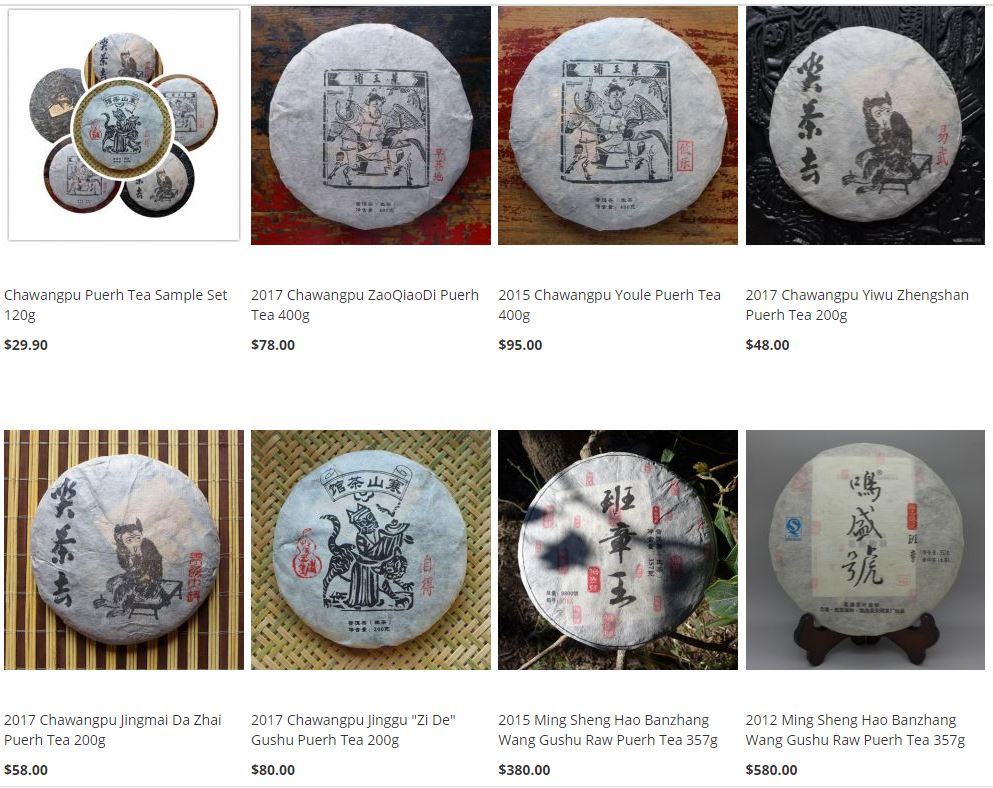
To be clear these are not at all typical of what the Chawang Shop sells at this point, more a look back at their sheng product theme from a half dozen years ago.  This is a random page of what they sell now (however "page 1" on the site is sorted):


That change over in theme got me started thinking about patterns in sheng pu'er demand and vendor offerings, which I'll post some long form thoughts on soon enough.  Something about that tea version had to sound interesting (beyond it not costing much, making it easy to try a few different things); let's check the listing and see what it might've been:


The Menglong TF made this 250g tea brick from ancient wild tea tree material in 2006. Purple large leaves varietal tea is from Mengmao village, Baoshan region. This place is famous for wild arbor tea (Qiao Mu). It is the optimum ecological environment for the growth of grandifoliate planted tea trees. Four years proper store in Kunming makes the tea soup golden yellow, fruity aroma and a smooth flavour. The taste resembles some sorts of laocha (old oolong tea)! The packing paper is not original packaging. Xiaguan TF also took material from Baoshan for ancient wild tea products. 

Manufacturer : Menglong Tea factory

Harvest Area : Baoshan

Production date : 2006

Weight : 250g


That does sound interesting, wild arbor, purple leaf tea.  The look is unusual, larger leaf material (so maybe an autumn harvest version?), with a mix of leaf colors showing.


Review:


First infusion:  interesting, unusual.  Some earthiness and sourness in this leans a little towards a hei cha style.  Still it has pleasant moderate bitterness, and it's relatively clean, for this being the first round, brewed a little longer than I often go to avoid saying "it's too light to tell this round."  It seems like some nice dried fruit is going to evolve in this, once some early bitterness and earthy edge wears off.  It's not challenging or edgy, or off, I just get a sense it will go from somewhat clean in effect to much cleaner over the next couple of infusions.  So I'll add more on that next round.  

I think finally this will be a tea version that I think will improve by softening some in wet and warm Bangkok conditions over the next couple of years, versus thinking most from this set would do well to experience another 4 or 5.  I thought the Laos tea was in a nice place, and the Wuliangshan brick version had a nice character for a medium level fermentation sheng.


Second infusion:  again, interesting.  There's an unusual character to this tea that I think listing out flavors and other aspects isn't really going to capture.  It partly relates to a trace of sourness; that is shifting overall effect quite a bit.  The rest is just moderately aged sheng, definitely not fully aged yet, not where 16 years stored in a more humid place would have it.  

I keep mentioning it but there's a common perception that dry storage results in sheng picking up some degree or type of sourness, which I don't find to be completely false, perhaps just a little misleading.  A moderate aspect along that line does seem to evolve into some examples I've tried, and a woody flavor, but stronger and different versions of sourness and wood flavor would come from other types of problematic storage inputs, or unfavorable starting points in tea character.

This tea is complex; there's really a lot going into the experience to unpack.  There are some warm tones, out towards wood or limited spice, and along with a hint towards dried fruit a vegetal part is more like blackberry or strawberry leaf (right, things people tend not to prepare as tisanes or ever experience).

A touch of lack of clarity (slight cloudiness) in the brewed liquid makes me reconsider what that means.  It relates to some kind of flaw, per my understanding, but I'm not sure how that gets described beyond that.  The next round brews much clearer; maybe it connects to the sourness, which will fade over the next two rounds.


unusual wet leaf color starting to become apparent


Third infusion:  it's cleaning up a little, in relation to the sourness fading,and the liquid is clear.  Bitterness and other flavor aspects are more pronounced; I think I see sourness as a particularly negative inclusion, so even a little being present stands out.  Bitterness trails a lot more in the aftertaste experience too.  

Flavors are interesting, and complex.  The dried fruit range reminds me of dried blueberry, a bit unusual.  Warm woody tone stands out a lot more, connecting with light warmer tone, and other understated vegetal range.  This might be really nice in another 4 or 5 years; I might've been wrong about that part.  It has intensity, depth, and complexity to spare but again it seems to be in an odd place for shifting over from lighter range to heavier, from bitterness, floral tones, and some limited vegetal range to dried fruit, warm earthy tones, with subtle spice tones adding depth.  I say "again" in relation to that being one main running theme in trying these other teas, in this set.  For some that would be very disappointing, but for me it's more or less what I'd hoped to experience, teas that aren't quite there for achieving aging potential yet, that I can keep trying over some years to still have some around when then do.  If it turns out dry storage robbed these teas of a lot of final potential in part I wouldn't know that, and in a sense they're interesting and pleasant now, and probably should keep improving. 

Then there's the "a cake is a sample" theme, relating to how if you try a 250 gram brick of tea a few times a year within a half dozen years it's close to gone, right when it might be at its best.  If a tea seems especially promising buying one version for the tasting process and one to drink then works best, but these teas are surely all on the way out for stock availability, so ordering them in back to back years isn't likely to work out.  Chawang Shop's selection of 15 year or so old sheng has dwindled, nothing like the crazy level of stock Yunnan Sourcing holds.  I have some of my past favorites from them as untouched spares, just not two of everything I'm trying, and I'm not sure what I would reorder from this set.


Fourth infusion:  more of the same; there are aspects to appreciate in this tea, but it's at an odd place for aging transition.  Very mild spice tones are transitioning in, and remaining sourness slowly fades, but the feel actually picked up a touch of dryness, instead of getting richer and softer.  It might evolve to a feel I tend to call sappy within a few rounds, which I use in a positive sense.


Fifth infusion:  that just turned a corner for being more pleasant; it all somehow clicks much better.  More warm spice is a nice contribution, sourness has almost entirely dropped out, bitterness is at a good level, matched by sweetness, and dryness and wood tone are quite moderate.  Dried berry is really a secondary aspect, but it adds a lot for making the rest work better together.  

I suppose this tastes like someone might expect wild arbor purple tea to taste, unusual, in ways that are very positive but also a little odd, with some range surely not matching everyone's liking.  Or who knows, maybe the whole set of aspects and overall effect wouldn't appeal to some.  But it's not at the most likely optimum for aging transition level just now, as I see it, and the character should keep changing.


Sixth infusion:  it's really nice doing a single tea tasting, not a comparison, being that much less blasted by drug-like effect at this stage.  This picks up an interesting underlying tone, a little towards the inkiness I mostly describe in relation to Wuyi Yancha.  It's all integrating even more than it had in the last round, those same aspects I described over earlier rounds "cleaning up" and working in better proportion with each other.


Seventh infusion: it's fading in intensity a little; funny how it just got to where it balanced best and will need to be stretched to keep up intensity from here on.  Fruit taste is picking up a little in the overall balance, shifting a little from dried blueberry towards grape.  It did keep brewing positive rounds after this but not so much seemed to get lost from not describing them, since it stayed more consistent past this point.

As overall impression goes this is a little unusual.  Per some general hearsay and the very few examples of purple teas that I've tried that might be normal.


Placing that tea experience:


It's easier to say that some people would love this novel tea experience, and many others wouldn't at all, than it is to place it in relation to other experiences.  I just re-tried a local Thai, wild-origin, very strange tea version that is as close to this as anything I've ever experienced, this tea, made by the Jip Eu Bangkok Chinatown shop owner Kittichai.  It was sour in a novel way, so I couldn't tell with any certainty how it would age further, although now 2 1/2 years later I have added input on that.  It might be picking up sweetness and depth but apparently it's always going to be strange, and sour.

Next one would try to guess if that's from a novel plant type input (my guess), or from an error in processing, that in these two cases they just didn't dry the tea appropriately at one processing step (which is also possible).  I've tried too many examples of "wild origin" teas to look up and list out, and some common patterns emerge, but it's a set of inconsistent patterns, not just one or two.  This Moychay Yongde wild origin sheng was one of the cooler and more pleasant sheng versions I've tried, more indicative of another pattern, of teas being flavorful, novel in flavor aspects, relatively low in bitterness and astringency, and not sour.  This Xiaguan wild origin material version (a 2005 tea reviewed in 2020, so comparable in age, if not aging / fermentation input) was a little unusual in character, but closer to standard sheng range than these three other examples.

What about the purple leaf theme?  The unusual color of the brewed leaves of this cake isn't as clear in the pictures as I noticed looking through them later on, but it's definitely not any typical sheng wet leaf color, even for aging input causing that to be a broad range that transitions from light green to light brown, with odd coloration in the middle.  I've not tried much purple leaf material tea.  There might only be two black tea versions reviewed in this blog; not much at all, and nothing relevant to this experience.  

You can't try to extrapolate any category character from one sample, regardless of which, and comparing results from one tea type to another is a bit silly, but still let's see what I though of a Farmerleaf version awhile back.  First Farmerleaf's input on what purple leaf tea is (cited in this blog review of that tea, but you would need to look it up on the Internet Archive backup page now, since Farmerleaf would've sold out years ago):


This tea comes from the Zijuan varietal, also known as purple tea. It is a cultivar selected for the high amount of anthocyanins in the tea leaves, which give the leaves its purple color. Such mutation can appear naturally in the usual assamica varietal of Yunnan, and is also more prevalent in some wild tea species.

Apart from its unusual leaf aspect, the zijuan cultivar features a very special fruity aroma, which comes out very well when the leaves are allowed to oxidize. This black tea displays this cultivar's fragrance, and is therefore quite different from the typical Yunnan Dianhong made of seed-propagated Assamica...


Then onto what I thought of that processed black tea version:


Second infusion:  It's warmer in nature, leaning a little towards a spice aspect now as well, just not clearly cinnamon or anything else.  The hint of tartness (mostly dropped out, but still present) reminds me of dried cranberry, or maybe that along with other dried fruit.  A hint of savory range is closer to sun-dried tomato, an addition that works well with the rest, integrated, and lending it complexity.  Other flavor complexity probably relates to floral tone, but it's non-distinct.

Third infusion:  warmth might have picked up, adding a little more flavor towards cocoa or cinnamon than the other floral and prior dried fruit aspects, with those others fading.  It's complex in a limited sense but it could be more complex, and flavors could be more distinct. 


It sounded nice, maybe just a little strange, not excelling in relation to complexity or flavor intensity, with novel character standing out more.  Black tea processing, the oxidation, would change how any type of leaf material comes across a lot, so that green tea or sheng pu'er processing would lead to completely different results.

That "wild" Thai sheng might be better at identifying related patterns, in terms of character and age transition, even though it wasn't really purple leaf material (as far as I know).  It's only about 10 years old now, but surely a lot more age transitioned / fermented than this 16 year old dry stored Chawang Shop / Mengmao / Menglong produced version.  

There's a lot more I could say about one aspect changing to another in relation to trying that Thai version across 3 years, or leaf color, and so on, but it seems like adding guesses on top of guesses.  Both examples are in an atypical sheng character range, and people would either tend to value that or be put off by it.  Reaction to sourness as a primary flavor aspect would potentially inform which, with that Thai version a good bit more sour.

Related to a theme mentioned here I bought an extra cake of that Thai tea so I could finish the one I've been trying over however many years that takes, and then have another to experience as an aged version.  I like it, I just wouldn't want to drink it too often.  It's a nice novelty kind of tea to have to share with friends, since they may have never tried anything like it.


Sunday, April 24, 2022

2014 Bada sheng pu'er from Chawang Shop


I'm kind of over the Chinese character labels


It's especially interesting trying these Chawang Shop teas since I don't remember what I thought sounded interesting it's been so long since ordering these, some months back now.  At least they're well rested, thanks in part to a covid-inspired break from tea, and a slow reviewing pace.  

I guess this version I'm reviewing sounded interesting:


2014 Chawangpu "Lao Yu" Xiao Bing Cha 200g

Lao Yu (老妪) : old woman

Material for this cake came from a small Bulang minority village in Bada mountain. This village have very small quantity of tea trees that grow in the forest. Trees are relative old, but farmers cut the branches when trees get too tall. Tea trees are kept at easy-picking height because the tea is picked and made by old women in this village. They follow ancient ways to produce tea. Many of them make tea only for themself. 

We selected and bought good materials from different families. They picked one bud and two leaves. This tea is nice example of old-time puer tea and traditions of Bulang minority.

2014 cake is a bit different with previous year. We keep nearly one year loose leaves "maocha" in Menghai town and pressed in Jan. 2015. Stone pressed in small tea factory. 

Taste of this tea is full, strong with bitterness, huigan is fast and sweet. 

Production date : March, 2014

Harvest Area : Bada, Menghai


It was really the overlap between sounding interesting, not costing much, and tying to a varying age theme that I was looking for, and this matched all of those.  The appeal implicit in that description would either come across or it wouldn't.  It's interesting considering that Bulang is both an area and an ethnic group, with a bit more on that here.

The subject of "middle aged pu'er" comes up a lot, something I've discussed recently in talking about storage conditions and aging inputs.  This will probably be young pu'er instead, although with 8 years of age it could be on the medium side instead, if it were stored in a warmer and wetter place (like Bangkok; it's over 90 F now at 10 AM, maybe a bit over 30 C, but it feels warmer for being soaking wet for humidity level, 63%).

I won't repeat much of all that about storage and transitions; this will just be about trying the tea.


Review:


First infusion:  it is nice, as the description called it.  Warm tones stand out, but there's a brightness to this too.  The warmth comes as underlying mineral, with brighter range harder to define as a light infusion.  Bitterness will ramp up with intensity, I think, but a sweetness while you drink it and afterwards both stand out.  The feel is not so astringent but includes a dryness.  

I've been starting to think that dryness is a main aspect related to dry storage, teas losing a harsher astringency edge, and softening, but heading towards an interim dryness instead of richness or fullness.  A limited range of wood tones might correspond too.  Or it could just be at a medium level based on a certain range of starting points you would get there, paired with other aspects depending on that set of inputs.

It's catchy, pleasant.  The warmth with moderate bitterness and long sweetness afterwards are all nice.


Second infusion:  intensity really ramped up, even for that infusion time being moderate.  I went with a maxed out proportion this time, noticing that it was a bit much for moderating intensity through brewing time variation, but I couldn't stop myself.  

Bitterness is significant; this is one of the most bitter teas I've drank in awhile.  It's an aspect range that I tend to not seek out, so I miss the most extreme examples entirely, but I can still relate to it.  As expected aging transition took a bit of edge off the character but definitely didn't get far through adjusting range.  It's kind of floral, the main flavor range, but there's a sort of bubble-gum fruit character too.  Warm mineral input is intense, along with bitterness, giving those a depth.


Third infusion:  I'm more or less trying a flash infusion; this is opened up and started already.  Vegetal flavor range increases, a plant stem / green wood sort of input that seems to tie to the bitterness.  There's still a cool floral range and harder to place fruit aspect, with warmer range giving this depth.  It packs a punch; bitterness hits hard, and even the sweetness afterwards is intense, with some bitterness joining that part too.  Feel develops a bit more sappiness, a fuller range of impact all across your tongue, with the sweetness moving towards the back as you experience it.  

I don't know how far I'll get in trying rounds without taking a break, at least for water.  For weather this hot it should be part of the tasting set-up.


Fourth infusion:  a spice range develops, extending from the earlier warm tones.  Green vegetal input and somewhat non-distinct floral range are still present, with bitterness and sweetness dominant.   Someone looking for that sweet-bitter smack in the palate would love this tea.  Astringency is nice at this stage; dryness has eased up, with more depth and richness replacing it.  I don't want to say that the bitterness is too much for me but it's kind of like that; it would help to love it more, not just as an integrated part but as a dominant main aspect.

Kalani joined and tried a few drops, after the round was finished, and spit it back out.  It's an acquired taste.  She also took a photo for me, so that one can not follow the standard form.


Fifth infusion:  lesson learned about moderating proportion; even brewed fast this intensity is off the scale.  Not everything is those mild semi-aged or more character neutral versions I drink more of.  No significant change; I'll go do a break, drink some water, eat a little of whatever is on the table in the house, and try a couple more rounds, before it's off to some play area.


Sixth infusion:  I didn't realize that my head was spinning quite that much until I took a break and laid down.  I don't keep track of which "cha qi" is the good version, but drinking this on an empty stomach seems like a bad idea.  And I didn't; for breakfast I ate fresh pineapple, banana, and some traditional Thai baked good (that's hard to describe), but all that is lower on offsetting that drug-like impact than a bowl of cereal or toast and jam.  At most I'll drink two more rounds.

It's warming, settling into a nice range.  I suppose if this was much "younger" and bitterness was lower I'd guess it might've oxidized a little, for that warm tone matching how that input can go, but it had to evolve there through aging input, or the bitterness should've moderated more if they had let it oxidize during processing, not "fixing" it fast enough.  Just guesses, really.

I do like this tea but overall intensity and feel intensity are a bit much.  In a few more years this could moderate a bit, and be easier to relate to for me.  Maybe in another decade it would be really nice, stored somewhere it will actually transition, but for owning a half sized cake I'll probably never know, even if I just try this a couple of times a year.


Seventh infusion:  I rarely mention how much tea volume I'm really drinking, and don't emphasize parameters, but the .7 liter thermos I'm using is pretty much empty.  This had to be something like 6 grams of tea, brewed in a 100 ml gaiwan, using water not far off full boiling point.  Backing off that proportion would have made more sense.

I'm not doing justice to describing the complexity in terms of part of this flavor range being warm and part being bright, leaning towards fruit.  Warmth I've described as in mineral range, or towards spice, but aromatic wood is starting to apply more, cedar or something such.  Fruit is more onto dried Chinese date now, jujube, maybe with a bit of longan character.  Yesterday, and often really, I had a mixed Chinese and ice bean desert, one of my favorite Chinese-Thai food experiences, this time in Chinatown.  The range is not separate from that.


my wife (right) and her friend with me in the Bangkok Chinatown


Eighth infusion:  I took the cat inside to cool off in the middle of brewing a round, and diluted that--then brewed too strong--using the trick of doing an immediate flash infusion to combine with the other.  This is really catchy.  Floral tones are picking up, it seems.  It had always expressed a lot of nice floral range but it develops more richness (and intensity, the single word that describes this tea experience best).  A Bangkok summer day is ramping up here too, onto 95 F / maybe 35 C, so hot; it kind of works as a set, a lot of intense experience at the same time.


Conclusions:


I like this tea but it needs a couple of years to settle to a range I can identify with better, or maybe 4 or 5.  I think astringency probably did moderate in the 8 years since it was produced but if bitterness eased up it must've really been something earlier on.  It's nice that the other character and flavor is positive, but it's all just so intense.

I got blasted on this tea and stayed blasted.  It can be hard to separate that effect from heat impact, but it seemed like both.  To stick with and extend that theme I went for an 8 km run at around noon, in mid-90s (upper 30s C) temperature, which really sets the tone for the rest of the day, themed around recovering.  After the usual couple of hours of fighting with the kids about doing whatever I think we will go to a water park; it's so hot that only that or being in AC makes sense.  I'm not so sure how climbing 30 flights worth of stairs to do slides over and over will go.


that outing went well, except for one scraped knee


It seems a little abbreviated, placing these conclusions.  If I remember right I tried a Bada origin version that was nothing like this from Chawang Shop a few years back (reviewed here).  Scanning through that it included bitterness, as a three year old version, but not like this.  It comes up that tea tree varietals vary, a subject that it's hard to delve into much.  I don't know what caused that difference, or if one of these is more origin-typical than the other, or if both represent styles that should mean something to me, related to processing themes or other inputs.  It's all a work in progress, learning from multiple varied experiences, and it's not settling towards conclusions just yet, more the opposite.

This was an interesting experience.  There seems limited risk of this tea fading to become bland and uninteresting if I leave it sit awhile.  I have one tea left in that set to try, and they sent no samples this order (so much for the theme of tea bloggers being "bought off" by free tea for promotional benefit).  They're on their own page there at that outlet; I like that.  Apparent bone dry storage isn't a theme that everyone else would appreciate, but to me it kind of works out, trying teas that are feel-transitioned some after 8 years but probably not so different than they started out.