Showing posts sorted by relevance for query halmari. Sort by date Show all posts

Friday, August 10, 2018

Assam Teehaus Spring 2018 black tea review


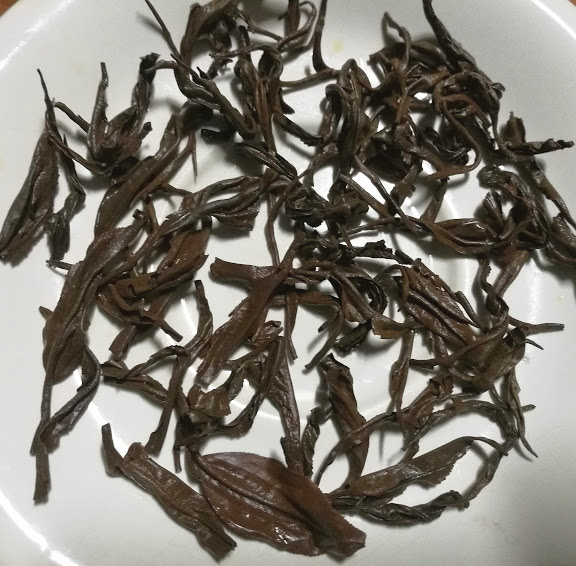
I tried another orthodox Assam version from Maddhurjya Gogoi, that Sasha passed on when I met him a couple weeks ago (from Assam Teehaus).  I've tried a couple, and it's hard to keep track of which one is the absolute best, or how different the batches are, so I'll just go ahead and review the one I got around to writing about.  It was good tea.  "Good" means a range of different things, which is where these wordy tasting notes come in.

I just re-read a post about trying a 2017 version a month ago.  This description is pretty close in general type, just a little off on a detail or two.  I can't say if it sounds better or not; when a tea is kind of similar you really need a side-by-side tasting to help sort that out.  For some types you can base a judgement on a couple of specific attributes, which will make it clear in your memory where you thought it stood for quality level and match to preferences.  These Assam Teehaus teas are pretty good quality overall, with a limitation of being a little non-specific, of mixing a lot of aspect range instead of being as narrow in character as some types.

I haven't described the tea yet, but in a sense all the complexity that I will describe almost comes across as a blend, with some clear common aspect threads through that character.  From what Sasha and Maddhurjya mentioned this may stem from an interesting input: the teas are made from locally sourced plants, so they know the farmers and growing conditions, but a limited variety of tea plants have grown alongside each other.  The tea plant source itself isn't based on monoculture, in terms of growing alone (only tea plants), or in the other sense of being made from a very genetic-specific plant version.  The "terroir" or growing condition inputs are relatively uniform but plant genetics vary. To me that's cool, and surely is a factor that changes the end effect.


This Halmari orthodox Assam version works as a contrast to that.  As a standard plantation tea they would control growing inputs and plant type very carefully and completely, achieving a much more uniform outcome, and a narrow set of aspects.  In general that's a good thing, especially since it can correspond to an experience of aspect intensity.


More than one being better though the two types of tea are different.  That Halmari version really did express a much sharper and more pronounced form of malt, which did come across as the main flavor aspect.  Some of what the Halmari version gained in perceived intensity in a limited range it gave up in terms of losing complexity of flavor. 


For some people the softer, slightly sweeter and broader flavor range in the version I'm reviewing here would be preferable, and for others it might not be nearly as pleasant.  I think Maddhurjya's teas are improving, so while I might have said Halmari's are just better last year--beyond being different--now that's not quite as clear now.

The detailed description will fill in what I mean.

Review


The tea is really nice, complex, sweet, layered, and pleasant.  When people describe Assam as having really intense malt as a dominant aspect this isn't that; it balances a range of different aspects.  There is some malt to it but it doesn't stand out more than other sweetness, earthy aspects, and some dried fruit.  A warm mineral layer provides a base for the rest too.  Breaking all that into a more detailed description is a bit of a task.


A mild form of malt stands out as much as anything, but it integrates with the rest.  Usually that aspect pairs with an edgy astringency but this tea is soft, but with good body.  I've brewed it perfectly, for my preference for the type, using a really heavy handed proportion for Western style (probably more like 5 grams versus 2, but I didn't weigh it), and around a 2 1/2 minute steep.

nice to get back to simpler tea tasting

Next in intensity is fruit.  It's a dark, rich fruit tone that overlaps with earthiness, tamarind or fig (really dried tamarind; the "fig" is to help place that, for people who don't eat it).  Earthiness is hard to place; between a cured leather and aromatic tobacco.  The sweetness level and rich body really make it work, along with all those flavors being really clean.


I went a little shorter on the infusion time next round, to see how drinking it lighter changed it. The first thing that I noticed was that I used hotter water, shifting the flavor to add that one sort of dark toffee aspect.  That came from not prewarming the infusion device cup the first round, I think. 


It reminds me of that post on oolong brewing temperature, where a couple main themes emerged, so I'll do a tangent and talk through some of that (again related to oolong, but some ideas carry over).


Reddit's Tea subforum version (credit)

There was a split between the "always use boiling point" side and the lower temperatures you see on reference tables side, with almost everyone going with boiling point given where that took place (in the Gong Fu Cha group).  I think lower temperatures might work better for Western brewing but I agree that to get the most out of good oolongs you shouldn't do that.  Personal preference muddled there being one final conclusion, except for the "boiling point only" side.  I think using Western style brewing changes things, and I also tend not to go with that for oolongs, although it works better for rolled-style examples than for Wuyi Yancha or Dan Cong (in my opinion).


A friend made an interesting observation, that if someone is a cigarette smoker they would naturally want the most intensity they could get, which still even relates when brewing a tea very lightly, in this divide related to drawing out the one edgier aspect range.  As I take it there is a parallel in the difference between these first two black tea infusions; a slight edge showed up due to pre-warming the brewing device.  Or maybe I'm over thinking all this.


Again in this round the complexity is good, even brewed a little lighter.  The malt comes out more in this infusion, tied to different, richer mineral and earth tones.  The flavor is quite intense but the feel is still full but soft. It would be hard to screw up brewing this tea, and that rich, full flavor would go well with different kinds of food.  For tea enthusiasts into sitting and contemplating a dozen Gongfu rounds of refined, complex aspect tea that could be quite an insult to a tea, to say it's good with food, but then this style wouldn't be for everyone in a way that does seem to dove-tail with that factor.


For people moving on from lower quality loose black teas it would be perfect, and for more experienced tea drinkers it would just depend on the range they could appreciate. Not everyone drinks black tea, never mind individual styles.  I like it, but then I seem to appreciate diversity quite a bit, teas being pleasant in completely different ways.  Sometimes I do brew very subtle, complex, or sophisticated teas Gongfu style with breakfast, but more often I like something more simple that's going to work well as two or three mug-fulls brewed Western style, something I don't have to think about.

More input from Maddhujya


In the last post I mentioned some difficulties that Maddhurjya communicated having in ramping up orthodox tea production:  stable power supply, problems with rough roads, the typical difficulties with sales and marketing.  A lot of that would be common to anywhere.  He did comment on specific forms related to some of the issues in discussion, for example about the power supply:

The biggest challenge is paucity of electricity. The processing unit in our village is almost 1 km away from the Grid Transformer so we don't get proper voltage. And everyday there is power cuts for hours...... We were depending on a diesel fueled genset but unfortunately that also broke down at one point.


I asked him about the mix of different plant types.  That particular issue is interesting to me, not something that necessarily makes a difference in final outcome mapped to consumer preference until you really know a lot about it, but it's still interesting.  He mentioned the range of plant types grown at different sources they use, and which relate to this tea version:

We have TV1, TV9, Panitola 126, TiniAli 17, some wild seed variety and some vegetative clones.  The major input percentage for this tea version is Panitola 126, with Tiniali 17 and TV 1 also mixed in.


That definitely makes my review evaluation sound better, since I'd guessed a mix of plant types had been an influence on the character.  I tried to explain how I saw that to him in discussion, about how a narrow type or a broader input of sources doesn't necessarily seem better, but the outcome seems different (quoting myself this time; a bit odd, that):

Some Darjeeling and plantation Assam teas seem to have a very specific, limited aspect set output, probably through control of both narrow plant type sourcing and processing factors.  That gains something in terms of intensity and being novel, and gives something up in terms of broader aspect range and overall balance.  It's not that one is better than the other, they're just different.   To me it's not that different than a single grape wine versus a blend.  It's a trade-off; one isn't better than the other.  French people seem more inclined towards blends but Americans produce and drink both, only exploring and developing blends more recently.


Oddly I'm talking to someone about sheng just now and this all works in that discussion context too.  But enough with the tangents.

It's also hard to be clear on what differences the various processing step inputs make.  In particular Maddhuryja has been mentioning use of certain machines.  This comment doesn't shed that much light on the broad range but it does work for indirectly pointing towards some of it:

Our Taiwan rolling table is not like Indian rolling tables. The stainless steel used in the rolling table is FoodGrade Steel.  And it has copper teeth on the table to give its tight roll.


I guess these parts add up to what you'd expect for developing tea processing; there are lots of potential improvements to be made and lots of small challenges to hurdle.  The teas are quite good, and still getting better, so in that one important sense it's already working out.  They'll just need to keep making the growing, harvesting, and processing details come together, and ramp up the commercial side.

If any readers would like to play a more active role in promoting local, sustainable tea production this might be a good opportunity, by checking into buying tea from Assam Teehaus.  It's strange for a blog post to express marketing so directly, isn't it?  I think it might get by people that not only small vendors could order this tea, that anyone anywhere in the world could look up Maddhurjya and ask about picking up a kilo of it.  The numbers really wouldn't work out to buy 200 grams of tea from the opposite side of the world but as quantity increases a bit shipping is offset by lower per-unit cost.  This is all familiar ground for Yunnan Sourcing China customers, but I'm not sure how many higher quality Assam drinkers have explored this direction.


Oddly I'm going to be saying something similar related to a very small start-up tea producer in Nepal over the next two weeks.  Not the sales pitch part; the rest, about history and development status.  It's good to see sourcing options development move beyond people only saying they wish there was an alternative to multiple-resale wholesale supply chains and large corporation tea production.  Now there is.  But I don't think the pull on the demand side is enabling this to work well just yet.  Some things just take time, and sometimes multiple variables need to come together for a paradigm shift like this to happen.  It may be that small local retailers play a crucial role, even online versions of those, versus completely direct sales working out.  Time will tell.


with Kalani, dressed for a school presentation


wearing make-up for that event


posing at home beforehand


Tuesday, March 27, 2018

An Assam tea grower on orthodox processing and sustainablity


Originally published by the TChing site here.

at my favorite tea shop, Jip Eu, with Maddhurjya second from the right


I recently met an Assam tea grower who was visiting Bangkok, and we talked a bit about his personal history with tea, about sustainability, organic production, and development of orthodox tea processing in Assam.  His name is Maddhurjya Gogoi.

I mentioned more about that meeting in this post about sharing tea with a Thai princess, and covered a lot of his personal and tea-oriented biography in this post.  As for contacts he's on Facebook, with another business page there, and a website contact here.

Sharing the ideas will require some summary on my part, and it introduces error for one person to re-summarize what another has already condensed, especially based on communication from a perspective of personal business interest.  Take it all for what it's worth.  Passing on a little topic by topic will help with covering ground faster.

Small growers and co-ops in Assam are developing orthodox tea production.


This isn't really news, or controversial.  The extent to which individuals are successful, and the overall volume of tea being produced seem to require more development to fill in this story.  Other parts relate to how demand changes relate to supply changes, to the end-effect difference it makes for tea growers and very small producers, and how this all fits in with what major producers are doing.  


I've reviewed a number of teas from Halmari, a large plantation producer, and those were fantastic (with more description on their site).  According to Maddhurjya that sort of an organization represents a different kind of success story, and progress on a related but different front.


his family farm (credit his FB business page)


Organic farming related


Maddhurjya told a funny story about how they started producing tea organically because they couldn't afford fertilizer.  That surely is one part of that broad theme.  He is more concerned about how chemical fertilizer really does increase plant productivity, weighed against there being other approaches that are more sustainable, and perhaps healthier for consumers.  

It doesn't summarize well but he sees the whole range of issues as connected.  If growers are barely able to survive on what they produce their choices about growing methods, or any other aspects, have to reflect their best interest commercially.  Such conditions make it harder to consider the long term.  If demand is higher for organic products that can even out the plant material production issue, related to use of chemicals being more cost-effective.  In short, it's complicated.


Maddhurjya's tea; pretty good, but he said the spring production is much better


Higher quality tea orthodox production method related


Growers and small producers want to produce better tea, in order to make more from their final products.  Per my own understanding (which is limited; I'm not following the Assam tea industry) tea production has only relatively recently been de-regulated, with limitations on processing cooperative development still in effect in the recent past now being lifted.  

According to Maddhurjya the knowledge of methods and access to the machinery just weren't there in the past.  I wouldn't expect him to personally represent a lot of the range of paths to change and modernization for all of Assam, but he has played a personal role in importing equipment from Taiwan used in newer forms of orthodox tea production (with more about that in his life story).

The future


It's not written yet, but people are working on that.  He's trying to help with making changes himself, related to a limited scope business interest.  I reviewed a number of teas by Assamica Agro, which is based on more of a small cooperative model than a small producer model, what Maddhurjya and related small farmers are pursuing.  

To a tea consumer and enthusiast it all might boil down to one main concern:  how good is the tea?  The answer to that will change year to year, and company to company, as better production and processing methods are developed.  Even amounts of rain falling will change that, with changes to climate on major input and concern.  Right now the teas are pretty good, but plantations like Halmari are setting the bar pretty high, and Darjeeling is much better known for orthodox tea.  As for what I tried I'd give the edge to the teas from Maddhurjya over Assamica Agro's teas (which were still pretty good), with Halmari's slightly better, but as much just different in style.


Halmari oolong; it's not TKY or DHP but it's really good


"How good is the tea" misses a lot of scope of concern, doesn't it?  If you could drink tea that's really good, but not the absolute best you could find, at a great value for that quality level, and it helped a small production farmer raise the quality of life for his children and community, then those would make for other valid factors, wouldn't they?  All of that is the case right now.  These limited scale producers selling more tea helps them take the next steps.  

Of course as with tea production and sourcing anywhere believing stories is a concern, about who benefits most, an original producer or reseller, and organic claims, and so on.  Not all the stories everyone is telling are true.  But I believe there are common threads and general truths emerging from people like Maddhurjya, along with other exaggeration and marketing spin, and as a groundwork for all of it some real progress is being made.  

Wholesale vendors and supply chains aren't necessarily the "bad guys" in the story but new options can and will help local producers.  These are people whose standard of living really could stand to improve.  Of course Assam isn't the only tea producing region facing such issues, or even the one that tends to get talked about most.  But it is interesting hearing more direct versions of such accounts from different places and different types of sources.

Wednesday, October 18, 2017

Halmari Gold orthodox Assam


I'm trying a sample of an Assam black tea sent for review by the Halmari Tea Estate.  I'll start in with review, and get back to how this relates to other versions they make at the end.  It's sold as an orthodox tea, with leaves a bit chopped as some other orthodox tea versions go, but it's certainly on the more tippy side.

Review


It's malty!  The flavor profile is clean, with good balance and complexity beyond the malt, so it seems like pretty good tea.  Beyond isolating more flavors one main question will arise:  how good?  I might also mention that I first brewed this tea in between a typical Western proportion and timing and a Gongfu approach, using a gaiwan, so really closer to the latter.  Using a hybrid style is actually somewhat typical and familiar to me, but I'll get back to trying it prepared more conventionally as well, using a straight Western approach, and will mention how results vary for both.

In their instructions they are almost certainly assuming that someone would use boiling point water, but trying out backing off that temperature just a little is probably worth checking out, since the slight variation in outcome would map differently to different personal preference.  I made this using water just under boiling point for the first brewing, and I'll get back to using hotter water in the second Western brewing trial.

instructions; basic, reasonable


I would guess that it's the high proportion of tips giving the tea a more resinous feel and slightly piney flavor, both positive.  The tea really just tastes like a better version of Assam; mostly malt, some mineral range grounding that, not quite as pronounced as in some better Ceylon I've tried.  There is also an earthy range, pretty close to cedar wood, or maybe redwood instead.


For the second infusion I went slightly cooler and faster to try a light version of the tea.  I can check a more standard infusion strength next time to see what transition might be occurring.  My impression doesn't change much trying a very light brewed version instead; the same list of aspects and relative proportion applies.  The feel and flavor intensity lighten but the aspects stay the same otherwise.


On the next infusion--medium in brewed strength--the malt drops down to a more evenly balanced level related to the other two higher range aspects, pine and cedar wood.  If using a Western brewing approach based on a three or four minute steep time someone would experience the average of those first three steeps, more or less (but sometimes results do vary more than one would expect, and it's not that simple).

Brewed stronger the next time the pine aspect picks up.  It's actually in between the somewhat rosemary-like flavor of pine needles and the earthier, richer scent of a pine cone, tying into the wood aspect.  Mineral underlies that, but in a way that's subdued compared to in some Ceylon.  It's still plenty malty, of course; that's still the main aspect, balanced by the others.


I'm assuming this would seem like one version of an English Breakfast tea to many, an unblended variation.  It's probably just a good bit better than most versions related to tea quality level, and more distinctive related to being a single type, perhaps giving up some complexity due to not being a blend of tea types.  Blending teas might relate to two different factors, really:  achieving a balance of aspects by combining teas that vary, as for Bordeaux blend wines, a mix of five grape types, and for covering up flaws in one or more of the teas, or offsetting using lower quality versions of all of them.  There is no flaw to compensate for in this tea (although essentially any tea version could be better in some ways), but it does express a specific and limited aspect range, with intense flavor most pronounced.

It would work really well with a range of different foods, probably better than drinking it without anything.  It's not really astringent, at least as I'm preparing it, but not really a soft or mild tea either.  The taste range is bold, for sure.  It would offset either savory or sweet foods well, I would expect.  I did try it in later infusions along with a mild vegetable and tofu mix with rice at lunch, which worked, but it could hold its own alongside stronger food or counter sweet pastry well (more my typical breakfast).

It would almost be a shame to blend a tea with this clean effect, balance, and complexity.  But that could work; it has a lot of that particular flavor range to contribute.  It would probably be fine with milk, I'm just not used to tea prepared that way.  This tea's flavor profile would work well in some type of Christmas blend, along with cinnamon and fruit elements (like in this post, or this one).


Brewed Western style; a second trial


It's pretty much the same; again with malt dominating, pine and wood filling in the flavor range, with mineral tones as a base.  Some sweetness balances those aspects, and the overall flavor profile seems relatively clean in character, not muddled by any off earthiness. I expected using hotter water, brewing at full boiling point, to ramp up astringency more but the feel of this isn't an issue for drinking it plain.

The strength of flavor of the tea is plenty strong enough in a relatively light preparation.  I can see why this type of tea would make sense for blending; it's as intense across that limited flavor range as any type or version I've ever encountered.  CTC Assam is like this but with much stronger astringency, and the flavors aren't quite as distinctive.  That's per my past experience, at least; it's not as if I drink that much Assam.  I've been reviewing other Assams recently, but I won't really focus on comparing this tea to those.  Maybe later, after I've tried a few versions, but comparisons across months of time can be problematic, not just related to taste memory, also to factoring in the effect of expectations shifting.


brewed leaves


Background on the type


I just ran across an interesting introduction to black teas that covered the general types, so it seems a good starting point for mentioning more about what Assam is, then moving on to introducing the producer and this specific tea version.


it kind of works


That article was called "Black tea:  global variety for every taste" by Peter Keen.  The trick for writing a general summary overview like that is what to include and what to leave out, in addition to getting the ideas right.  Both were fairly successful.  Since this is a tea blog I'll have to criticize some choices and content a little but in general it all works.

Assam is listed as the boldest, most full-bodied type.  That matches this review fairly well, and my general impression; they're not light black teas, not really even medium.  Astringency and flavor tend to mix as factors, with the former really relating quite a bit to processing style, and probably also growing conditions, but as flavor intensity goes Assam tends to be on the strong side.  That author mentions this producer in citing some characteristic source examples:


Hamrutty is soft and smooth. The leaf is flecked with gold tips. These are a common feature of great Assams and help lessen the astringency common to most. Halmari offers a wide range of both high end and broken leaf teas. Mangalam’s teas are lighter than most Assams, without losing their punch and robustness.  These are terrific buys.


Ceylon may well be a little lighter, as shown in that graphic, although to some extent it tends to just swap out malt for ramping up the underlying mineral effect too, still lighter, but also just different.  The "brisk" reference in that Ceylon section of the graphic really relates to astringency, as I understand it, which varies by other factors than origin.

Darjeeling and Chinese teas tend to be lighter yet, and I'd even agree with this placement, saying that Darjeeling tends to be a little stronger in flavor between the two.  Here's where a complication comes in that didn't make the cut for level of detail:  first flush Darjeeling tend to be less oxidized, and not really black tea at all, so it almost doesn't make sense to consider them as the same type of thing.  They're lighter than all other black teas because they're not black (fully oxidized).  Some Darjeeling first flush have a good bit of a characteristic form of astringency but that also relates to lots of factors, and some are quite soft, even fruity.

I've ran across the description "congou" for Chinese teas but it doesn't come up much.  Per one source it was a reference to Gong Fu, used more often to describe a general brewing approach, converted to a marketing term that isn't common now.  Area diversity is the complication there; Keemun and Yunnan blacks (Dian Hong) are mentioned in the article, but per the standard story Lapsang Souchong, a Fujian black, was really the first example of a fully oxidized tea.  But who knows, really; I'm not sure how well conventional understanding and the actual history matches in this case.

Beyond all that missing the next level of detail is kind of a given for a shorter work.  The overall take and choices for where to cut that off weren't so bad.  I'd have covered more characteristic flavor descriptions but that's how related choices would go; people would say different things.


About this producer, Halmari


tea plants!  (photo credit Halmari site)


For purposes here it may not be necessary to say more than that they're a tea plantation in the Assam region, but I will anyway.  Their own intro, the start:

Halmari is located in the Moran district of Dibrugarh, Assam and comprises of 374 hectares of land.


Apparently that works out to 924 acres, a lot of space, and they have 100 year history to go along with all that land to work with.  Their description of this tea:


Leaf : A fine blend of deeply rolled clonal orthodox leaves with a sprinkling of golden tip.

Liquor : Bright, full bodied with hints of clonal character.

Per the site descriptions and pricing their GTGFOP1 Clonal is essentially the next level up of a similar tea, with the pricing on this particular tea quite fair for as good as it seems.  By that I mean this tea costs a fraction of Chinese teas at a comparable quality level, but then I am comparing direct online producer sales to foreign retail outlet sales, not really the same thing.  I still have other samples to review, including an oolong that should be interesting, and I'll see if more doesn't turn up about plant type somewhere along the line.


"Clonal" is a reference to preserving consistent plant genetics by using cuttings as opposed to seed-transmitted growth, an idea that comes up with Darjeeling and other region teas, but there are still details about what the plant actually is.  Variety Assamica as a general type, of course, but I mean beyond that, how it might differ from what was growing wild hundred of years ago, or is present in Yunnan, China now.  All that is really only of academic interest anyway; all you really need to know is experienced by brewing the tea.

Thursday, November 16, 2017

Halmari Orthodox Assam and Earl Grey tasting


orthodox Assam; full name HALMARI Gold GTGFOP1 Clonal


Halmari Earl Grey


I didn't get to the last two of the Halmari Assam tea samples, one their highest quality orthodox Assam black tea, and I'll try an Earl Grey along with it.  As I've often repeated combined tasting makes more sense with similar teas, and these aren't that.  The main point is wrapping up trying them, since I'd like to clean the slate of what I mean to get to, but comparison could turn up something interesting.

I'll try to prepare these in a hybrid style in a gaiwan, more or less in between Western and Gongfu, or probably as a light version of Gongfu style, which isn't traditional.  The idea is to make small quantity infusions, adjusting for the unusual proportion as I go.  It's not ideal for tasting to use an unconventional brewing approach but it's not that atypical for me.  Related to informing background I've got a touch of a cold.  I'll probably re-try this orthodox tea version later this week to double check how a standard Western brewing approach works out, and hopefully I can shake this cold instead of it getting worse [editing note:  I'm adjusting the draft while I have a throat infection; that didn't work out].


I'll mention a little about what the orthodox tea is first.  It's listed as HALMARI GOLD GTGFOP1 CLONAL.  I don't keep up with those letter terms but I could swear that first "G" should be an F (which I won't explore, but the Wikipedia article on all that is a natural starting point).  I looked to their description to shed light on the "clonal" part:

Leaf : Long, selectively plucked and delicately rolled leaves with a generous sprinkling of chunky golden pubescent buds. Very exclusively made only during the 2 months of second flush season... 

One of our most iconic teas, the GTGFOP1 Clonal has won the North American Tea Championship is 2012,2013 and 2015.


Not much for detailed description, but winning awards is a good start.  Clonal is a reference to propagating the tea by cuttings to preserve consistent genetics, versus using seeds, but I'd expect that's related to a hybrid or other selected tea plant type with characteristics they want to preserve.

Review


I went too long on the first infusion, even though it was only for around one minute.  This really is a hybrid style of brewing, in the middle between Western and Gongfu, but some people would see it as a light proportion variation of Gongfu brewing instead.  Not that a brewing approach label really matters.  Part of that error--preparing it a bit strong--might relate to using slightly higher water temperature than I usually tend to for black tea, close to boiling point versus down between 85-90 C instead.

These teas would be fine across any temperature range, I'd expect, still making ok brewed tea at lower temperature more typical for green tea brewing, but hot water would probably be more standard, and variation would shift aspects balance slightly.  I'm often using slightly cooler water to accentuate sweeter flavors and de-emphasize astringency / feel elements, but for some that wouldn't be preferable at all, and different teas would work out differently.


first go, brewed a little strong (Earl Grey left, orthodox right)


Brewed a little strong I can only get the general range for the orthodox version; it's nice.  It is normal to brew on the slightly strong side for comparison tasting, using the standard "ISO" approach, for two reasons:  to set one level of parameters to use across many examples, and to help with identifying flaws in the stronger brewed version, which is said to highlight those (along with practice in trying tea made that way).  Nothing negative stands out.  The feel is a bit strong, and the taste is a little intense, leading towards dryness, but I'd guess this is exactly how a very good Assam brewed a little too strong should be, the right attributes in the right balance.  The malt is intense but I don't think it's going to take over the tea, back in the normal balance, and even brewed strong the flavors are still quite clean.


Brewed strong the Earl Grey is also a little intense, of course.  The balance of the bergamot (a type of orange essential oil) is the main thing, then after that the input from the tea itself.  I'd expect it will level off nicely, related to the proportion and how they're coming across a bit strong.  This won't be a bergamot-intensive version where you just can't tell what black tea is under that, although brewed strong the black tea isn't contributing lots to this flavor.

It won't be as distinctive and pronounced as the orthodox version, the black tea input, likely quite a bit more subdued.  It doesn't include bud material as the orthodox version does, which would change the effect a lot.  I'm not tasting anything "off" about it, but at a guess it will be a mild version of a black tea, as Assam goes, with no off flavors.  That mildness might be as well, since intense malt might not pair as well with bergamot.

Next infusion


Prepared more typically--in one sense, at least--the orthodox version is great.  There is plenty of malt but it doesn't take over the tea.  A lot of nice sweetness balances that out, and there's more going on than malt.  Mind you if someone didn't like malty black tea they still wouldn't like this version but if typical Assam seemed one-dimensional, a bit rough, or unsophisticated and not well-balanced this version resolves all that.  The flavors-list style description is going to sound a lot like for any better Assam, I'd think, but how those elements come across, the exact expression of them, and more so how they balance is what defines this tea as being on a higher level.

Beyond malt a cedar or redwood like wood aspect fills in flavor depth.  The taste extends into a nice citrus element at the finish, nothing like the bergamot in a flavored tea but not completely dis-similar either, maybe in the orange zest range.  I'll work on pinning down another flavor aspect or two as I try a few more infusions.


lighter, a better infusion strength (Earl Grey left, orthodox right)


The Earl Grey is nice, of course with bergamot as a central flavor theme.  It's hard to separate out what the black tea is like aside from that, but I guess describing the mix is more valid.  Malt isn't intense, but it's there.  Some degree of wood-tone also comes across.  It might have sweetness and some citrus without the actual citrus added but combined it certainly does.  Mineral isn't as strong as I'd expect it would be if this were above average Ceylon instead, but there is some acting as a base for the other flavors.

It works; to me it's better than typical commercial Earl Grey versions.  Earl Grey isn't a page I've been on much in the past year, more so in the first half of last year, as I recall, but I can relate to it.  My favorite Earl Grey version so far was from Vietnam, from Hatvala, but then it was based on a plain black tea I liked alone, and I've not tried that recently enough to compare it to this from memory.

To me this type of tea works great as something you don't need to focus on, as a breakfast tea, more than one that would excel in a comparison tasting session.  The flavors balance is nice, just lacking subtlety of a better plain tea.  It would go with all sorts of foods very well, with enough sweetness and fruit to offset savory foods, and enough earthiness and body to offset sweet pastry.  Per my preference this tea works better drank with food than alone, even if it's something neutral like a butter cookie or biscuit, to help offset that bergamot orange tone, to reset from it while drinking.  A chocolate digestive is more or less exactly what I'm talking about, on the sweeter side, like a graham cracker with chocolate.  If you've never tried them life has at least one more re-affirming surprise in store for you.


the other British contribution to food, besides fish and chips (credit)


Third infusion


Brewed just a little stronger the orthodox version shows just a little pine-resin character, which is nice, even if it may not sound it.  The actual flavor range is a bit complex; it wouldn't be wrong to describe it as relating a little to cocoa, and with minimal imagination related to some sort of fruit (tamarind?).  The citrus is strong enough that would be more natural to flag.  The feel is cool too; a bit on the dry side, seemingly related to that pine flavor.  And as black teas go the aftertaste is quite pronounced.  Surely all of this relates in part to the very high proportion of buds in the tea.

Related back to those three Dian Hong (Yunnan black teas) that I compared awhile back this is definitely closest to the buds only version (golden tips).  I suppose personal preference would dictate how good a thing that is but I can at least definitely relate to this tea.  I suppose my absolute favorite for an aspects set might be more like a Chinese black tea, shifted more towards cocoa, a subdued dried cherry range, with just a touch of roasted yam, and a molasses sweetness background, but this tea works well for me.

The Earl Grey is still mostly bergamot; that's really as it should be.  The flavors are really clean, and the earthy complexity beyond that makes it work well.  It's in the malt, cedar / redwood, touch of pine range too, but it seems a quite different black tea, the balance is completely different.  It has a lot less pine going on, and probably less natural citrus, but of course that's just a guess.


I'm in a hurry today--always in a hurry; kind of how life goes these days--so I won't get through more infusions, although brewing these twice more I'd probably tease out another aspect or two, and notice how they work out for being stretched for infusion count.  These might express slightly more complexity brewed Western style for more of that coming out in a three to four minute soak, it just wouldn't work to experience flavors evolving layer by layer, as a Gongfu approach allows.  I'll try these teas again Western style and check in related to what turns up.

Second try, conclusion


I did try the orthodox version again brewed Western style; the results weren't so different.  I brewed the tea twice using a standard light proportion and 3 1/2 minute then around five minute second steep, brewed to a typical infusion strength.  The flavors range was the same:  malt, cedar, pine, and citrus, with good sweetness and a bit of fruit aspect that was harder to pin down for being more subtle, per my take close to dried tamarind.


I was curious how this would seem in comparison to their other orthodox version that I reviewed and to be honest it seemed similar.  Both are complex, clean flavored, and full in feel but not really astringent, both well balanced, a bit intense but moderate on malt.  I would expect those similar aspects are balancing a little better in this orthodox version, that it's a little cleaner in effect (likely related to very slightly different feel and overall flavor effect), with a bit more fruit, but a difference would be clearer trying them side by side.


I actually posted a version of this before considering mentioning value, a subject bloggers tend to avoid but one I've been drifting into more lately.  As in other cases of direct sourcing buying this tea from Halmari would be an incredible value related to buying anything remotely like it from a resale vendor.  Don't take my word for it though; check the prices on their website and Google search similar alternatives. 


I didn't do as much with describing subjective preference in this post as I sometimes do, but related to what I prefer in teas of theirs I really liked their oolong version.  As I mentioned in that review post it shared some space with Darjeeling second flush teas and Oriental Beauty Taiwanese oolongs, which cover two nice and related ranges for tea aspects.


recharging to cause more trouble later


Thursday, September 23, 2021

Sikkim and Manipur Indian oolong


Sikkim left, Manipur right, in all photos


Susmit of Ketlee sent a number of interesting and novel Indian teas to try and so far I've only reviewed an Indian (Manipur) version of sheng (which as I see it is a description that doesn't invoke a GI conflict until you also call it "pu'er," which not a convention everyone else would agree on).  These are two Indian oolongs.

Indian oolong is a strange concept, since most often that's used to describe a moderately oxidized version of black tea, not something processed similar to Chinese or Taiwanese oolong, or similar in outcome.  Which is fine, to me; I tend to not get hung up on concept specifics.  That same kind of concern can make it hard to identify Darjeeling first flush versions, which tend to be called black teas sometimes, when they're not really that oxidized, or those might not be assigned any main category designation.  

I don't see it as important where I personally stand on calling any medium level oxidized tea oolong; people can use or reject concept use in any ways they like.  For vendor branding it's a little different because that has to be both descriptive, giving potential customers an idea of what to expect, and positive, related to hopefully leading towards sales.  

Years back Indian oolong was a more novel concept, and now people are just living with it, or else avoiding it.  Kind of off the subject but Halmari (a main Assam producer) does a really nice Indian oolong that seems a lot like second flush Darjeeling, so really more in the range of black tea oxidation, or at least they did a few years ago.  That's a complete miss for style but to me positive outcome more than makes up for that.  It's hard to compare across years and levels of background experience but these are probably the next level up for tea quality, really better than I expected them to be.


before buying a phone with a slightly better camera, 4 years ago (that Halmari oolong post)


Review:


Sikkim:  it's closer to Darjeeling than I expected, that orange / muscatel range.  It's not really a close match for a first or second flush version, kind of in between related to oxidation level (as I suppose it should be, given the oolong theme). It's interesting how the bright, fresh, floral and intense range of first flush Darjeeling comes across, and also the deeper, warmer, citrus (and perhaps touch of grape) black-tea of second flush Darjeeling is also included.  It's a lot of scope.  Flavors are really clean, and feel is nice, with a touch of "greener" range astringency and the warmer base (I mean the flavors that usually connect to feel ranges, and also those feel ranges). 

Setting aside comparison to Darjeeling it's just floral and fruit intensive. Indian oolong can be open to criticism for not seeming like Chinese versions, and this doesn't, but it's pleasant on its own.  


Manipur:  a lot of points go to this for novelty; you don't drink it and think of how it's just like some other tea range.  An aromatic spice note stands out a lot, towards root beer or sassafras. The feel is cool too, in a way that matches, really creamy.  It's like how vanilla is creamy in feel, just not quite that thick. Flavors are pretty clean, and complexity is good, with a nice aftertaste carrying over from that novel spice range.  

There's some woodiness beyond the spice; someone might see that as a flaw but I don't. It connects well with the spice, and it's a novel form of wood, like a creamy and light version of tree sap.  Some of these kinds of comments are probably more accessible to people who spent childhoods splitting wood for heating a home in temperate climates.  I can picture the bark type this smells like, or like the sap inside that tree, but I've lost track of most tree types long ago.  A warm edge is nice, or rather the way it covers range that's light, fresh, and sweet and then also a warmer range.  It could be interpreted as a mineral base, or just as a tree bark flavor. To me that spice tone is really catchy.

To me this also doesn't seem like a Chinese oolong (or Taiwanese, etc.), but I'm fine with that, it's what I expected.


Sikkim, second infusion: this is really nice, it just might seem too much like a Darjeeling to someone.  I don't remember that I've ever tried any Sikkim area tea before; it would seem odd if that close match is normal. There's one distinctive dry, edgy feel and sweet floral and citrus range flavor of first flush Darjeeling and this includes it.  I suppose some of that citrus might apply more to second flush, but it's not a broad variation of theme, tying to a later harvest season and related processing style instead.  

Sweetness, balance, complexity, feel, intensity:  it's all good.  That one flower stem tasting (and dry feel) aspect might not appeal to everyone, but for people into Darjeeling it would.


Manipur:  again for novelty this is way beyond the other; the earlier round's complexity filled in some, along with some depth, but it wasn't thin or lacking range or intensity that first round.  I think floral tone picks up a little in relation to that spice.  It's a sweet, creamy floral range, not so far off plumeria, maybe just slightly warmer.  It's possible a touch of dryness ramps up too, or a little more body.  To me all that works well with the spice range; it makes perfect sense together.  It's a little hard to place in relation to any conventional oolong; it's just not like standard types and versions.  The other version seems more like an Indian tea just set to medium for oxidation level, but again like Darjeeling.  This is novel.


Sikkim, third infusion:  evolving a bit; the citrus picks up, and tone warms.  The dry edge is dropping back a bit, moving to richer feel. It's the best it has been, but that earlier mix worked for me too.  It makes it seem a bit more distinctive.  This would probably work well brewed fast and quite light; I've been infusing these for a bit over 10 seconds, and a very light round would be different, shifting what comes across.  Flavor intensity is nice in this; it would seem normal for a tea version with this much flavor intensity, across this particular range, to be a lot stronger in dry astringency feel than this is.


Manipur:  this doesn't increase in intensity, or shift in character much.  There is an intensity and depth to this sweetness and spice range that's a little like star anise, the way that's so strong, and so sweet, with that much aftertaste range.  

To me that spice is hard to dial in to a right level, so I usually don't use it in masala chai, or haven't added it to one for many years.  I skipped making masala chai last year; strange, given how much time I spent at home.  We were traveling a lot in the last half of the year within Thailand, and I tend to pretend that weather has cooled in the temperate Northern climate fall and winter, even though it's really always hot here.  It's 31 C now, tasting this outside at noon, 88 F, not so hot for us but not cool.  "Real Feel" is 38 in the shade and 41 in the sun (100 or 105), and I'm in the sun but under cloud cover.  They go too far with that correction; high humidity is normal here.  I noticed there was plenty of light to give the pictures a slightly washed out look; so it goes.

This tastes more like star anise, to be clear; it's not just the effect matching that a bit.  I suppose to some extent it did earlier too, but it's impossible to miss in this round.


Sikkim, fourth infusion:  thinned a little for trying this lighter, but it does still work like that.  If there was more astringency to work around dropping intensity like that would make more sense, but it wasn't too strong at an infusion strength more typical for me.  Sweetness is still really nice, and flavor intensity is ok, just thinner in comparison.


Manipur:  kind of the same as the other; it's interesting trying both light, but it doesn't necessarily work better.  It's funny how sweetness level is pronounced in both, and flavor strength is still fine, just seeming quite light and a little thin in comparison.  If I hadn't been blasting my senses with sheng pu'er for the last few years there's a good chance this is how I would always drink tea now, at a lighter intensity than I typically do.  

For dabbling in tisanes again a bit now it's interesting how this complexity, intensity, and feel edge is impossible to mimic in a tisane, no matter what you drink or how those are blended, even with these brewed light.  I can still appreciate tisanes but it's hard to not see that as a gap, like one or more parts are missing.  It's strange saying that mixing herbs with tea can work to cover both concerns, adding new flavor range and also keeping some of that feel and range.  I don't try that often now, but some.


Sikkim, fifth infusion:  I'll close with some final thoughts this round; it's enough. I'll brew this back up at what is a normal infusion strength for me, more like 20 seconds of time this round.  It's similar to before, nicely balancing the same range in a similar way.  It's nice how that dry edge easing up fell into a really nice balance.  This is still dead-center between first and second flush Darjeeling character.  I doubt they were going for that, but if so they nailed it.  This flavor cleanness, intensity, complexity, etc. is pleasant, or impressive even.  This more than holds its own with most Darjeeling I've tried.


Manipur:  thinning just a bit; some of the body is pulling back.  Flavor is still just as intense, maybe coming across stronger for part of the range thinning.  If someone hated star anise this really wouldn't work for them, but it's better than star anise for moderating that flavor, and that cloying sweet edge.  It's still definitely pronounced in both the flavor while you drink it and the aftertaste.


Conclusions:


Good teas!  I'm not so sure about the "oolong" part but these match what I've experienced of Indian oolong in the past, novel and pleasant backed-off oxidation level teas.  Quality stands out as exceptional for both; there is no trace of any flaws in either, and a broad range of positive aspects.  

I suppose the Sikkim seeming like Darjeeling seemed to detract from the novelty factor for me, but it's not as if I'm drinking Darjeeling every week.  For those familiar with Gopaldhara Darjeelings I don't mean like those, the blast of fruit they tend to include.  This one included more of that distinctive floral range and flower stem taste, along with the citrus, which may or may not overlap with muscatel flavor (which is not how I interpreted it, but maybe).

They are better teas than I expected.  Experimental versions just don't get to this level, and it takes established producers years of hard work to achieve the same.  Maybe starting with great plant material gave them an edge, or maybe these are far from early trial rounds.  It's a little late to get to it but I can also include Ketlee's description of these for completeness:


Sikkim Spring Oolong Tea (2021 version)


[Editing note:  the first posted draft included the wrong link and version description, amended here]


Harvested during early spring, this is the fourth batch of the 2021 harvest. Of course, this tea is made at one of our favourite estates, the Bermiok Tea Estate... 

The leaves were shade withered for 24 hours after which it was bruised by hand for oxidation. They are then hand roasted and rolled before the final drying... 

...The liquor has a hint of flowery notes, particularly sweet yellow flower notes. As you sip the tea and it cools down, the fruity notes come to the foreground and there is an abundance of cantaloupe, Indian pear and ripe peach notes. There is also a hint of malt during the initial infusions but the fruity part dominates the profile. The astringency is minimal, just present to greet you at the finish...


Not really much match to this post description, but that's how review interpretations go.  Floral and fruit range interpretations can parallel but it's normal for people to cite different range of flower types or fruits. It seems a good value, listing for $20 for 100 grams.


Manipur Young Tree Oolong


After more than two years of offering exclusively old tree teas from Manipur, we are very excited to bring something new from the region, wild teas from young bushes! Processed exactly like our old tree oolong(2020 Ball Rolled Wild Oolong)...

...The first infusion brings an interesting sweetness resembling the aftertaste of fennel seed along with a spice note dominant in cloves. The second infusion is another interesting one, with notes of lemongrass, vanilla and caramel. The third infusion is rich in sweetness with honey and black raisin notes, there is also a woody undertone to it. There is a mild astringency as well which makes this complex liquor even more refreshing. To us, this astringency along with wood and citrus notes make it seem a lot more closer to assamica teas from various parts of India. While the old tree teas are also of the assamica variety, it clearly has a taste of its own and does not taste like any other assamica we find here. The fourth infusion has even more sweetness with notes of muscat grapes, honey, damp wood and caramel...


Per usual actual tasting notes vary, but we are in agreement that there's an interesting, novel, and primary spice note being expressed in this, along with pleasant sweetness and complexity, and a supporting woody undertone.  I'm not so sure about the citrus part but I bet if I kept tasting this I would unpack some of what they identified as dried fruit range, versus seeing that as a warm floral tone.  That spice stood out as so novel it made it hard to kind of "get past" experiencing and explaining it.

They sell this for more than double the other version, $28 for 100 grams, and it really is that much more novel.  Although the Sikkim version is unique too, so there wouldn't be a market price that's easy to identify, this version is really different.  This doesn't claim to be organic but it wouldn't make sense to spray pesticides on tea plants growing naturally in the forest; it doesn't work like that. 


out running errands, nice to pick up those donuts again


the view from my office building, not quite as iconic from that angle


Monday, October 30, 2017

Halmari Hand-rolled Assam Oolong


a bit tippy as oolongs tend to go


Halmari, one main producer of Assam teas, sent an oolong version along with two orthodox versions of Assam black tea, one of which I've already reviewed.  And an Earl Grey; that should be interesting.  Indian oolong isn't a brand new concept but I've not tried many examples, and no specific versions come to mind (not a great sign).  As I only vaguely recall the versions I tried seemed a lot like a black tea, just backed off in oxidation level a little, not all that different than how that works out for Darjeeling first flush teas.  That wouldn't necessarily be a bad thing given how nice those can be.

Their description of this tea doesn't add that much to that but I'll cite it, since Assam oolong does seem atypical:

Halmari’s handcrafted tea follows the five basic steps of tea-making, however, it is carefully hand-rolled and oxidized repeatedly over the course of days. This unique method enables us to create beautiful complex layers of aromas and flavours from this tea. 


one minimum-requirement version of a processing chart (credit World of Tea)


Per World of Tea's processing chart the only minimum-requirement difference in types between oolong and black tea is that oolong is fixed at one step (heated to stop oxidation at one level).  Of course a lot of oolong is actually roasted too, and processing steps can vary, but I'm not going to develop all of that in this post.

Review


The dry tea smells a little like a Darjeeling,  with orange citrus or maybe even bergamot scent. But it's slightly earthier, an interesting combination.


I brewed the tea Gongfu style (odd mentioning what that is, but just in case:  using a high proportion of tea to water, and multiple infusions versus only two or three).  These instructions recommend Western style brewing, and I did also try that method later, which I'll describe at the end.  The first infusion was more a rinse, but not discarded, a normal approach for me. 

The taste is sweet with a good bit of fruit and complexity, but prepared light enough that I'll start the detailed review on the second infusion.  It's already clear that this really will be a type of tea that's new to me, not just black tea eased off a little on oxidation level, a bit different in character.

The tea is interesting.  The tie to Assam black tea related to the aspects is clear enough but that only seems to represent half of what is going on, and it's not based on a dominant malt aspect as Assam black tea tends to be.  It also shares a lot in common with Darjeeling, more so than any Assam I've ever tried.  I'd say second flush style since the astringency level isn't as light as in first flush, and since citrus / bergamot is so pronounced in this.  It's not exactly that, with a lot of the flavor in this tea expressed in a different citrus range.  It's still related to a type of orange, I'm just not going to venture which orange (blood orange, juice orange?; definitely not navel orange).


There is malt too, it just shares the space, only one part of what is going on.  From there the citrus range is next, then a black - tea related effect of oxidation, a specific kind of earthiness.  It's something I've been referring to as a resinous feel, which seems to relate to taste range that's a little towards pine.  There's a good but of mineral complexity under all that.

It's definitely novel, and doesn't remind me much of any other oolongs.  I'm guessing that this wasn't roasted at all, although not all oolongs are, and I'm not sure it would improve it anyway.  The oxidation level must be backed off that of their black teas but it's hard to notice that as a single cause input.  Oriental Beauty style oolongs are typically prepared at a relatively high oxidation level, up near the border of what would be considered black tea, and I guess this does share some commonality with that type, it's just not exactly the same.  It contains more bud material than oolongs typically tend to, or at least it seems to, so it ends up looking a little like some Oriental Beauty teas.  The fruitiness isn't far off some OB versions range (pronounced citrus is typical for those), and like those this tea has great sweetness, it just has a black tea-type earthiness underlying that which isn't common to those, maybe except in more oxidized versions nearer to the boundary for black tea.

My description so far hasn't done it justice but there is a sweetness and lightness to the tea, offset by the complexity and bolder flavor range.  It's true that I'm expressing a contradiction, but there is a complexity to the experience beyond individual aspect input that is hard to pin down.  It's definitely not as light as lighter / "greener" oolongs always are, or even as roasted oolongs go, but it's not as heavy, earthy, or astringent as black teas.

For the last infusion I went over 30 seconds and it was just a little intense;  I'll back off that.  Prepared on the light side this tea really shines, bright with lots of fruit, lots going on.  The feel isn't even thin, and brewed strong--what would be normal strength for other teas, at least related to brewing time--that feel might be too much, along with the flavor not being as positive.  Using the same parameters as this for the Dian Hong (Yunnan / Chinese black teas I tasted yesterday, at least related to when I made these notes) those black teas wouldn't taste like much, especially the two leaf-type versions (versus the one bud / gold tips version).

Part of the taste range is back at cedar / redwood, matching the orthodox black version I tried earlier, but it's layered along with the rest in this.  There isn't that much common ground with light rolled oolongs to talk about,  or with Wuyi Yancha or Dan Cong styles.  It's closest to Oriental Beauty, as I'd mentioned, but it seems just as close to Darjeeling second flush tea as well, sort of in between the two.

The malt aspect is different than in Assam black teas.  It's still in a malt range but beyond being only one flavor contribution among others instead of dominant the effect is lighter, and the aspect itself different.  I tend to describe malt as spanning a range of earthier and heavier flavor,  like aged rusty iron pipe, to being much softer, lighter, and sweeter, more like ovaltine, closer to cocoa, or more like the original sense of a fermented grain.  This might be closer to the middle now, still a bit towards the heavier side, but less so than as expressed in Assam black teas.

The fruit effect transitions some along later infusions, but still in a similar range.  It's becoming lighter in character and perhaps more complex rather than less.  It's at a place where interpretation of individual elements could vary quite a bit, but then to some extent that would have been true of the fruit and earthier aspects in earlier infusions too.  It's slightly wood-like, but it's also picking up a touch of root spice complexity.

On the next infusion I went a good bit longer, over a minute.  The tea is brewing out, fading after a good number of infusions, but the aspects range is staying consistent, and it's still possible to brew with that more intense,  heavy-earth, thick feel.  It comes across as slightly dry made that way.  I'll stretch the tea to brew another infusion or two, or it would work to try and get the last out of it by trying cold-brewing (putting it in the refrigerator with slightly warm--but not hot--water, overnight or for at least 8 hours).


A second try, Western brewed


Whenever I'm brewing teas Gongfu style (using that tea proportion and timing) for types that would either typically be prepared Western style, or I think might do better that way, I try to check results making them using both processes.  And I did that for this tea.

The results did seem similar.  Again this tea reminded me a lot of a second flush Darjeeling, not that far off a black tea style related to oxidation level, but a good bit fruitier than most tea types tend to be.  The muscatel was swapped out for other orange citrus range to some extent, and the oxidation level and subsequent malt / earthiness / astringency was subdued, but it was definitely still along the same line.  It did well related to using that approach; it was easy to make, and provided plenty of flavor, even though I really did use a light infusion proportion compared to how I generally make teas. 

This tea is soft enough that it would work well across a range of infusion strengths.  There is no notable astringency to brew around, and just enough earthiness and structure to give it a bit of feel, perhaps a bit softer than it might seem it would be given the flavor range balance.  Related to overall balance and the "clean" nature of this tea, there is a subtle way that teas come across that shows them to fit somewhere on a range.  Let's express that as ranging from flawed, to decent tea, to instead really good, and at the highest end of that spectrum something exceptional.  This tea is pretty far towards the more positive end of that scale.  Some teas can come across as very subtle and sophisticated, and also intense at the same time, as better Dan Cong can, and this tea is a bit more along the lines of a conventional tea tied to that scope of effect, similar to how better than average Oriental Beauty oolongs tend to come across.  The flavors aspects set is nice and unique though; all in all a very nice tea.

Typically it's not a blogger's place to mention cost and value related to tea but per my take it would still make sense to buy this tea at twice the listed price, with some teas of comparable quality and overlapping aspects range selling for more than that.