Showing posts with label blend. Show all posts

Sunday, October 22, 2023

Kaley Tea's Ceylon based Christmas blend


A vendor who had sent me Ceylon tea to try in the past, Kaley Tea, recently sent a Christmas tea blend version to try.  So nice!  Earlier in this blog history I would experiment with making Christmas blends every year; it seemed a good time to make an exception from only drinking plain teas, and to experiment.  

This says that it contains tea, cardamom, and cloves, so it's a simplified variation of masala chai.  Masala chai is a good start for a Christmas blend; from there people could add fruit, like orange peel, or cacao, or pine needles, but keeping it quite limited could work well too.  It might allow the tea to play more of a role, where if you mix enough things in it wouldn't matter what the tea is.


drying fruit and peels for use in a Christmas blend (covered here)


It's nice to feel like I'm observing Christmas too.  It's a little early for that, since it's around Halloween time, but holiday experiences never match up here anyway.  It might not be so hot in another two months but otherwise the weather in Bangkok is generally consistent year-round, beyond when it rains more.

I'm brewing this using their recommendations, sort of.  They suggest using a teaspoon to make a cup, brewing that for 3 minutes, with an option to brew it a second time.  I brewed more than that, I think, and for longer, so maybe this will be a little strong.  Ordinarily I'm opposed to diluting tea, adding water, no matter what happens, but I could always make an exception if I've screwed this up.


it's definitely less monochromatic in person; I think shading inside the infuser caused that


Review:


Infusion strength isn't bad, maybe just a touch strong.  It wouldn't be unusual for people to add milk and sugar to this, not to cut overwhelming astringency, since this is mild enough, but just to play up the dessert experience feel, or how masala chai is usually made and enjoyed.  I could drink some and then adjust it, to review it both ways.

The spice balance is good.  Cardamom and clove alone really work, and it seems like this is pretty good tea matching with those.  The flavor input of all three is reasonably balanced; it would be easy for spices to overtake the tea range, but they all show through.  It's pleasant like this, but the extra infusion strength pushes it a little far, off of being sweet, light, complex, and approachable, as the softest and sweetest black teas are.  The tea input seems pretty good but I'll stop short of adding a flavor list here.  Malt doesn't show through, so it's not like an Assam, and maybe some of the mineral base that is distinctive in Ceylon is giving this good balance.


The general effect is very clean; there is no negative contribution of any aspect.  Not very poetic a description, right, compared to bringing up some childhood image of people around a fireplace, drinking tea and eating gingerbread Christmas cookies, or whatever else?  This would go really well with cookies; that's what is missing in the overall balance, a reason for drinking a clean and positive black tea with spice inputs.  

I like the tea but it's not what I'm accustomed to, and this really would make a lot more sense in some sort of late fall or winter context.  It probably would make a nice iced tea, but it's odd mentally switching channels like that, considering a radically different context.  For drinking it plain maybe it would be better with food or those cookies.  I'll try it with a little milk and honey and see how that works.


It's good with those added, probably better.  I used skim milk, what I'm drinking right now; surely that's not optimum, but it's still nice.  As with plain black tea all the flavors fall into a completely different balance when you add milk and sugar (or honey, also what I had most handy).  Going even heavier on infusion strength and using more full cream milk than I added would probably be more optimum, to get the full effect of both inputs.  I tried a second infusion brewed for longer (with the same leaves), this time using whole milk (my wife couldn't sleep at night knowing there are two cartons open at once), but of course the effect is better from the first round, the intensity.


One nice part about drinking it this way--adjusted--could be that people who don't drink tea might be more likely to like it.  These particular spice flavors might appeal most to people with more developed food flavor background (in Thailand or in the West), but to me it's quite approachable and pleasant.  For people familiar with this spicing range there would be no need to mess around with this recipe form, and aspects balance, but for others continuing on to add cacao and a fruit input might be good.  Using an apple peeler to remove some outer rind off an orange might be a nice addition too, giving a touch of extra fruit edge.  I don't see this as working well for coupling with some sort of alcohol input (which can come up as another Christmas theme), but people on that page may take that differently.  A little cognac or brandy would definitely completely change this.


It works for evoking a Christmas feel, I think.  It needs those cookies though, not just any one kind, whatever theme people tend to connect with their own expectations.  My Mom would make a lot of kinds; we had large trays of many types around in the holiday season.  This would be perfect with a kind we didn't make then, which we called whoopie pies, two soft chocolate cookies sandwiching a cream filling center.  Maybe even better with gingerbread men; that would round out the typical set expectation of ginger being the other main input in a traditional masala chai (as I see it; for others black pepper or other things could be added).


This might be a good year for messing around with your own Christmas blend experience; either go out and buy one, or keep an eye out for spice inputs, like spearmint, cacao, or whatever else.  There's still time to work out how adding pine needles to tea works for people in the US, which tree type needle inputs definitely won't poison you, and how drying or chopping the material changes infusion results.  Making adjusted masala chai versions takes practice; you might need a couple of trial rounds to prepare something you can serve to others (all of which I've covered in this blog).


Many thanks to Kaley for sharing this, and an early happy holidays for all readers!  


Tuesday, March 22, 2022

Great Mississippi Tea Company Mississippi Mint blend


On with the theme of trying random samples around, the last of a few from Mississippi.  It's this:


Mississippi Mint ($11.00, I think per an ounce, but it's out of stock so hard to check)

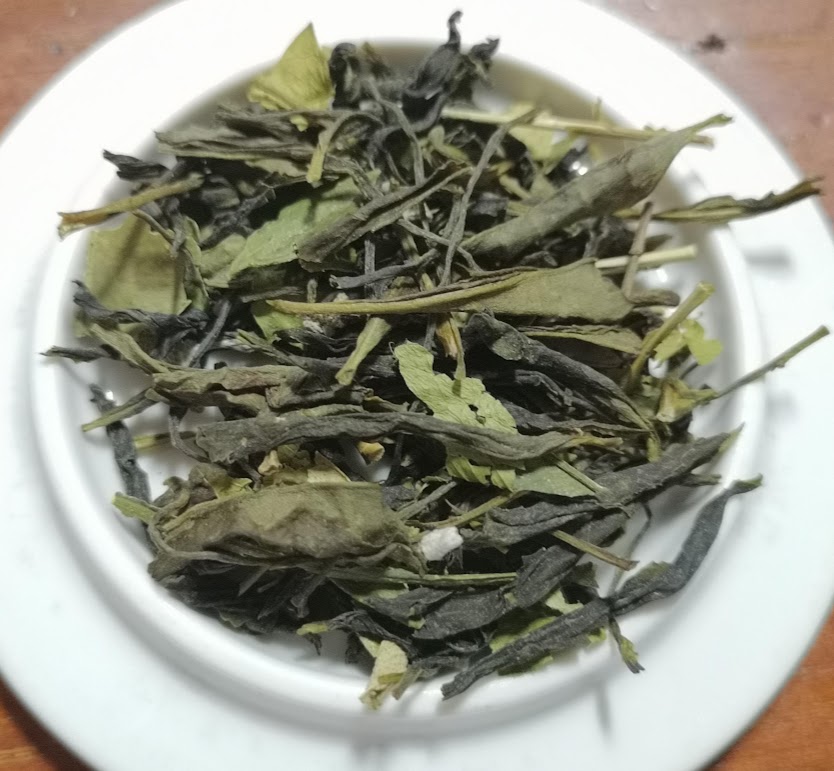
This tea uses a green tea base and is flavored with premium spearmint oil and blended with Kaffir lime and sage. 

1 rounded tsp per 8 oz. of 185F water. Steep for 3 minutes. 


That's not far from the process I used, maybe just a bit warmer, with a little higher proportion, and timing not far off that, so brewed on the strong side.


Review:  


Really nice.  It's unusual adjusting back to flavored teas but I've been mixing tisanes and tea enough that it's not so odd.  Even versions in a similar range; someone gave me some lemongrass and pandan leaf tisane that I had been using to mix with sheng pu'er for grandpa style brewing.  The mint makes this different but it's along a similar line.

It tastes like the ingredients, which makes flavor breakdown reviewing easy:  Mississippi Queen (a green tea), Spearmint, Kaffir Lime Powder, and Sage.  It all integrates really well.  At first I didn't love the sound of a mint tea version, probably why I tried this so much later than the others, but the other warmer and aromatic range really ties it all together.  I suppose this may have been slightly brighter and fresher nearly a year ago but it seems to have held up well.  Maybe that warmth that I've said is positive relates to settling in while stored in a hot environment, with humidity not really factoring in for it being sealed, and never opened in the half year since I've had it.  


As I see it it's really a myth that green tea is ruined by more than half a year's storage time.  It transitions, in ways that most people wouldn't necessarily see as positive, but as long as storage isolates it from air contact it's fine, just slightly different.  Losing that fresh edge is quite negative if that's what one values most in a green tea, of course.  A type like Longjing would be best drank sooner, and styles closer to sheng form, twisted, Vietnamese Thai Nguyen (fish hook style), or maybe even Taiping Houkui might be fine a year later, not really diminished.


The mint level and range is perfect in this; that is what would make or break this tea. This doesn't have a spice-like bite; it blends together well.

It's like a better version of a tea I tried starting out, Tazo Zen.  I'll compare the ingredients:

Green tea, lemon verbena, spearmint leaves, lemongrass, natural flavors


Not too far off.  I can probably appreciate tea quality in a different way than I did back when I would've drank that, on a lot of levels, related to identifying positive flavors differently, considering feel aspects, being familiar with astringency in different forms in tea.  Ground up material in a tea bag would brew much faster but wouldn't be as good.

One limitation of drinking just tisanes, which I still do, a lot more over the last two years than in the decade prior to that, is that the body / feel can seem limited, and complexity doesn't reach the same flavor aspects range.  This base tea version compensates for all that, adding plenty of depth, in a range that integrates with the rest.  Of course mint plays a significant role, just balanced and subdued for not blasting through as a dominant central aspect.  Lime integrates with the rest, and sage you can't notice, beyond what it must contribute for warmth, complexity, and depth.

So that's about it, a nice blend.  It's refined enough that it stands well above any sort of grocery store flavored tea, and it's probably a little better than what most online blend specialists sell.  That Tazo Zen probably wouldn't fare well in direct tasting comparison with this, but drinking both sweetened might even up the gap a bit.  It's still a tea and herb blend though, just a type and range that surely doesn't come up so often.  That's one of the impressive parts of this tea company's theme, to me, that they make products that are novel.  I can't imagine that the average American who would drink this could really fully appreciate the balance and quality level, but a general sense that it's good should still come across.


I rebrewed it; it's interesting seeing how flavor balance shifts in a tea version like this.  For flavored teas a lot of what you experience just rinses out the first round, but this is more of a blend instead.  It's not all that different.  The mint kick hits slightly differently, but it's hard to place exactly how.  Maybe it's a little cooler, or at least it carries across as aftertaste more.  General aftertaste is probably stronger, adding depth to the experience, instead of it thinning.  Astringency doesn't pick up, even though I brewed it for a longer round.  It's quite nice still, just as good.  

Even a third round didn't lose much; I tend to go with a much higher proportion and keep brewing time moderate in order to brew two very positive rounds and one that can seem a little stretched at times.


she keeps growing up


as close as he gets to posing


an unconventional look is coming along nicely


Saturday, December 4, 2021

Trying two Laos sheng versions


We talked to someone new to vending tea in Laos not so long ago, Danang Thorphialuang.  He's working on a vending site that I'll mention in a later review post.  This is a review of two of his teas, versions of sheng (just not sheng "pu'er," since it's from Laos).

For most of those meetups I wrote a summary of the discussion but in some cases people didn't want any exposure, or in very few the discussion didn't include central themes that made for a good story.  Laos tea in general is one of my favorite themes in tea exploration, but that discussion just didn't narrow down to a few central subjects well.  One of my first introductions to interesting tea related to visiting a coffee farm in Laos and buying some tea too, about 12 years ago.  Anna of Kinnari is one of my absolute favorite tea contacts, and Somnuc (a personal contact) passed on really interesting samples, and meeting Alexander of Laos Tea was a wonderful highlight in visiting Moscow.


with baby Keo visiting a Laos coffee and tea farm


Danang talked about his experiences with Laos tea, and we talked about Laos tea in general, and different trade and development issues.  I suppose I've covered those kinds of themes in more detail in lots of posts here.  We talked about a tisane he helps produce and sell that were new to me, a dried gooseberry version.  I'll review that again in another post, since he sent some to try (and these teas; many thanks to him for that).  It just didn't come together enough, without repeating a lot of what I've said about Laos tea development.  This is in a different area in Laos, towards where the "plain of jars" is, per my understanding.

Danang seems like a nice guy.  That may seem beside the point, since this post is about teas, but to me it's really not.  I've tried to do meetups with people that I deeply respect as individuals more than those I respect as authorities on tea, and it has worked out well to combine the two contexts.  It's idealistic to think that more people who share a beverage choice are more exemplary individuals than average, but in a better world than this one that would be universally true.  As it is I take comfort in it being mostly true.


Review:


#1:  The initial flavor for this includes characteristic bitterness, moderate in level, and complex somewhat earthy and vegetal range beyond that.  This includes a touch of mushroom, but the form seems to be of a type that might transition off after the first round.  I don't really love mushroom flavor in sheng but this is generally positive, and it will probably be much better next round, the typical initial "opening up" cycle.  I'll save the flavor list breakdown for then.


#2:  this is unique in style, in between a lot of other type ranges.  A warm sweetness and richness leans towards black tea and a vegetal edge, stronger than tends to come up in sheng, is more like green tea.  It's even more bitter than the other version, so it's clearly sheng.  I think it will also be much better the next round, but for a different reason, for allowing that bitter edge to settle a little.  I brewed these much longer than I tend to for first infusions, not in the 10 second or so range that might be optimum for a high proportion, but well beyond that to not be mentioning a slow start, and how I can't tell yet how they will develop.  Results were pretty similar for how much I'm getting covered in review notes anyway, just for a different reason.  

When people mention bitterness in sheng that's really talking about a range of aspect experience and intensity.  A most familiar form is from not yet aged, chopped leaf factory teas (Dayi or Xiaguan, or like that); those can be a little harsh.  Then a much milder form can complement typical above average quality sheng, balanced quite differently, or some better versions really are quite bitter, as this is.  It would only work well brewed fast, so I'll try that next round.


#1, second infusion:  a little light; I erred on the side of brewing these a bit fast, 5 seconds instead of longer than 15 the first round, maybe a little overshoot.  That mushroom is already almost completely dropped out.  For this being faint it won't be ideal for complete description, and a slightly heavier round will work better next time.  The rest balances.  Sweetness is ok, at a good level, and feel works, with other complexity supporting the experience.  Refinement and balance are good; for local made teas that's often not the case.  I think this is probably as good as versions presented with all sorts of quality level and style claims.  What I mean will be clearer in description next round.


#2:  sweetness and a floral perfume character really ramped up.  I knew this would improve but not like this.  It still has a bit of extra vegetal edge leaning towards green tea style but this is closer to standard sheng range (to me; I suppose that part is a judgment call).  Sometimes good versions of sheng that lean towards green tea style seem like they would work well as a replacement for green tea, an improvement on that range of experience, and this is like that.  Probably conventional Western brewing wouldn't get great results from this, until someone could really dial in infusion strength.  For this range I think it's much better to use hotter water and then low infusion times to adjust infusion strength; results are much better.  

The richness of that floral tone includes so much range and depth that it might include some fruit too.  Interpretation of which fruit is probably meaningless, given that heavier bitterness and floral intensity mask that part.  It's mostly floral, by a large margin, with rich and heavy floral tones, like lavender, and lighter and brighter range, like plumeria.  The point was that it's so complex and has so much depth that it seems like there's more to it.  It's interesting how proportion is similar for these (but this may include just a little more leaf) but this is on the strong side, while the other is light.  It might have to do with transition pattern as much as anything else.


#1, third infusion:  this is coming in nicely.  A bit of warm tobacco range picks up, adding to mild floral tones present before.  When a mediocre quality sheng ages significantly to taste a lot like a cheap cigar smells that's something else, related, but quite different.  Tobacco range is really complex; it covers a good bit of scope.  Probably somewhat mixed or non-distinct floral range stands out most.  Then a warm tobacco range joins that, which could easily be interpreted as a wood tone.  It's not mushroom; that faded away, or changed to be something else.  


#2:  floral range is really complex in this, and it comes across as much sweeter.  The vegetal range of that has all but faded away now, adding more depth across warmer range.  It's still mainly complex floral tones.  The rich feel complements that rich flavor profile, along with a relatively high level of sweetness.  It's still bitter, but in a much more moderate range, not even all that high as young sheng goes.  Faster (appropriate) brewing probably offset that as much as transition.


#1, fourth infusion:  not so different than last round.  The warm tobacco oriented range along with subdued floral tones is nice.  It's odd how this is a relatively subdued flavor intensity tea with the other on the opposite side.  I suppose for this including that other range it works better, that slight wood tone background and aspect category complexity works well as a lighter tea, where if the other was dominant floral but light it might seem thinner, or more limited.  Where the other is rich in feel this has some slight dryness and structure to it, again which I see as working well for matching both types.


#2:  also not so different than last time.  Sweetness difference stands out a lot in contrast, higher matching floral range flavors for this.  There is a background edge of warm bark spice that gives this complexity, that makes that one heavier dimension of complex floral range work all the better.  Mixed together these might be nice; for experimenting with adjusting proportion it could balance.  I poured the last of these two rounds into one cup and it does add up to a nice middle range.  The more forward floral tone and sweetness in this version probably stands out more but the other gives it better depth than just drinking the second alone.


#1, fifth infusion:  I'll probably drop taking notes here, since I tend to get bored with review process prior to a 10 round cycle.  As I always say late transitions can be very positive and interesting, so it's not about that lack of potential, I'm just over it, and putting readers through an 1800 word review is too much.  It's nice the way that in Mattcha's blog he lists out 14 or so infusions, with a different 3 or 4 flavor description for each round, but I never tend to notice that much shift.

Tobacco range really bumps up in this, a factor for giving it a much longer infusion time, again between 15 and 20 seconds (due to writing a bit and not minding the time, not so much a planned alteration).  It works well for there being other range.  Floral tone underlying that is mild, like chrysanthemum, but it plays a nice supporting role, acting as a base.  I could relate to people interpreting fruit aspects in this like raisin or dried orange peel, but they are subtle in comparison with floral and tobacco range, which I take to seem like a spice scope input.  No one is mixing part of a cigarette into their soup to season it, but the range and profile role is comparable in this.


#2:  again a little strong for using the longer time; the other version is well suited for this infusion time but this isn't.  It's a cool effect how rich the feel is.  Sweetness is a bit much in this too, at this strength, a little cloying.  Again for mixing the two the effect might be better than for either, although the first worked better brewed stronger than for the lighter rounds.

This reminds me of running across a typical idea about how blended sheng versions were traditional in the past, and the push towards narrower and narrower area and character type sourcing is new, and maybe not well-suited for aging transition.  I'll drop descriptions here, and never do much with conclusions, since my impression was probably clear enough already.  These are really nice, much better than I would've expected, as good as a lot of South East Asian sheng that I've tried adjoined with a lot more hype about quality and interesting background.


Tangent about narrow origin versus blended source sheng


This idea was expressed by Lawrence Zhang, in podcast interview with the owner of Crimson Lotus, and re-summarized in a blog post summary in Mattcha's blog (so with a extra layers to this citation, since it's a transcript from a summary):


33:35 “What young sheng puerh characteristics and qualities characteristics are best for aging?”  “Most of the good stuff gets made into single origin puerh which is mostly a function of cost.  It’s very hard to find anyone who wants to put some Laobanzhang material in a some regular old blend… because you can’t sell it for that much because no one will pay for that much  (see my post on Extinct Blends)… after 10 plus years of experience with some of these teas, I’m not convinced that single estate puerh will age that well… or not that interesting…. Old cakes are all blends.”  Old schoolers generally prefer factory teas and blends over single estate.  80% of what I buy and consume are blends.


This reference to "single estate pu'er" is only part or one description of that paradigm.  These two teas I'm trying are from two different production batches that might have come from a relatively limited and nearby source area.  I highly doubt this material was grown on any sort of "estate."  It's not as if re-planted tea farming is unheard of in Laos, but production from older naturally growing material is a common paradigm.  Not that the plants these were from were necessarily all decades old; it grows as a now-wild or feral plant type, so some plants are older and some younger.

Back to the blending versus single-origin theme, a producer could balance inputs in teas by combining versions from any scope of range, from different parts of Yunnan, or just from different relatively local production sources (as I would imagine these two teas are).  Of course lots of inputs like plant genetics, growing conditions, and processing factors all mix.  The paradigms people tend to be familiar with are wild origin tea versus plantation grown versions, differences related to broad or smaller source area regions, processing style varying (including how whole the leaf is), harvesting season related (mainly spring versus fall tea), and plant type age varying.  The "factory" part is about larger producers like Dayi, CNNP / Zhongcha, Xiaguan and many others sourcing tea from lots of places and mixing it. 

It could be a little misleading, what that says.  One might take it as an implication that 20+ year old teas all being blends, almost all made by large tea producers, is an indication that in the past this was regarded as the best approach.  It was just what sheng pu'er was, how it was processed and then sold.  Sheng was also a cheaper version of tea; there was no comparison 20 years ago to most of it now costing between $50 - 100 (standard sized 357 gram cakes), or for "gushu" material now typically being priced in a $1 / gram range, with high demand versions much pricier.  Sheng pu'er is a different thing than it was.  In another 10 years what Lawrence is saying will either be confirmed or proven false, about aging potential tied to styles, but with this "narrow origin" trend largely starting in the last decade it's too soon to call.  Of course since the pu'er boom was in the mid-2000s there would be plenty of exceptions to use as examples that are around 15 years old now, but it's my understanding that the broad style shift occurred a bit after that.

He seems to have addressed that; the claim is that he's already had 10+ years experience with some of these teas.  Fair enough; he's been at this awhile, so his personal experience is as good as any as an indicator.  Let's check for how long, since if it's 12 years that's cutting it close, but over 15 that's easier to accept (not that he couldn't have been drinking aged "narrowly sourced" teas 10 years ago).  This July 2007 Chadao blog post sets his public discussion of pu'er timeline:


The 'Constant Tea Meeting': MarshalN on Blogging about Tea

...It's been almost a year and half since I started my blog. 


So early 2006; almost 16 years ago.  He helps frame where blogging and tea discussion stood at that time:


Initially I had no idea how many people would read it. I figured that if I get 10 readers a day, I would be doing well, since according to some study the average blog is visited by 7 unique visitors every day. While my blog has certainly exceeded that expectation, the fact remains that it is merely a small project, comprising mostly of notes for myself and observations I have gathered along the way.

During this time, however, the blogosphere has blossomed. When I first started, only four of the links on the blog existed -- Babelcarp, CHA DAO, La Galette de Thé, and the LiveJournal Puerh Community. The rest, as far as I am aware, were still in gestation. Now any visit to any of these sites will bring you to even more blogs and journals out there, composed by dedicated tea drinkers like you and me. Just keeping up the reading would mean visiting a dozen or so blogs every week, at least.


So tea blogging and tea discussion really came online in a developed form between 2006 and the middle of 2007; odd that it seemed to shift so fast.  Given people weren't limiting that discussion to brand new teas then we are at a good place for lots of people to have developed impression of teas from 15 years ago, a typical threshold for relatively fully aged teas.  And again no one needs to limit what they try to what was produced right when they entered tea exploration; aged versions of these teas were a common theme in the last century, just not as developed.


The main problem then is going to be sorting out a consensus take on this issue ("after 10 plus years of experience with some of these teas, I’m not convinced that single estate puerh will age that well… or not that interesting...").  He's definitely one of the main experts to listen to for a developed opinion, but he's still just in possession of one more subjective preference.  Two different people could judge the exact same tea differently, based on varying preference patterns.  Lawrence Zhang is credited with accurately representing a traditional Hong Kong perspective and preference for tea styles, but I can't even guess at how accurate or limited that really is.


My son tried these teas with me and I was mentioning to him how that early bitterness in one version would fade and change over even 5 years, but that no one is going to age this particular tea to experience that, and become clearer on effect.  Probably mixing these two together would make sense, then aging that, and that won't happen either.  I did eventually pour the last of two rounds together and maybe they are better that way, more balanced.  I suppose something must get lost in the experience too, the distinctiveness.  

Surely a broad range of sheng versions we come in contact with offset initial input limitations in such a way, and were blended from different sources to create a more balanced and seemingly higher quality final version.  Not just "factory blends," I don't mean; it must occur with what is presented and sold as narrowly sourced off-area versions like these, again created by as simple an extra step as mixing these two types together.

Again many thanks to Danang, for providing a much more interesting tea experience than I expected.  Sheng from outside China can be pretty good, but higher quality, distinctive, and pleasant versions like these are really nice to experience.  I expected them to be a lot more ordinary.


Friday, November 12, 2021

Moychay tisane bars: Caucasus blend and Da Hong Pao with Willow Herb


the Caucasus herbs blend version


I've reviewed a few of Moychay's tisane bars in the past, including two from a recent set.  They were all really interesting and pleasant.  I wrote notes for one version two months ago and one a few weeks back but I've not collected them into a post, which I will here.  There is more on what is in these (although the one is fully defined here, the ingredients), and a vendor description, links, and pricing, all in this post, or their website tisane section is here.  These cost about $4 for 50 gram bars; not very much, especially for how good they are, and how unique.

It makes you wonder why the tisane / "herb tea" theme isn't something more common in "the West."  I was drinking mixes of tisanes back in the 90s, that just never evolved to be standard commercial products, or at least popular versions of them.  I remember drinking one called "Immuni-tea" blend from a local shop back then; they had health issues on their mind, and were already doing tea puns.  Chrysanthemum and a few others are around in Bangkok, but not so much back in the US.

I've also been using some of a pandan leaf and lemongrass tisane tea bag someone passed on for blending recently, mixing that with inexpensive Jing Mai sheng pu'er and adding a little chrysanthemum.  It works really well for something to brew "grandpa style" and drink while driving, since the tisanes can handle being brewed quite strong, and caffeine level drops out as a concern.  I'm still drinking plenty of caffeine doing that since the quantity I use is crazy; that should be scaled way back when you don't limit brewing time, and I just don't.  I'll often add room temperature or cool water to completely stop brewing, and to dilute it, so in a sense I am limiting brewing time, part of the time.


Back to the one Moychay real tea (oolong) and herb blend, this stood out because I really like their past pressed Da Hong Pao bar (this, but of course it's sold out now), and if I'm remembering right some earlier willow herb was also pleasant.  Any tisane can seem a little odd when you expect it to be like tea, or can give up complexity in relation to "real tea" character, but what I've tried of willow herb was complex and pleasant.  

I'm not sure how this half tea and half tisane blend works out to make sense for people, but then I guess I just did explain how I've been making a variation of that myself, and why results were positive.  Maybe it's as simple as that, that results are pleasant and limiting caffeine drops out as a concern, since the starting point is on the order of half that of tea (but I don't know the actual proportion).

The other Caucasus blend might have been my favorite of the set of a half dozen or so bars they sent.  It tasted like I remember Sleepy Time tasting, but I bet it was slightly better, given how complex and balanced it seemed.  Or maybe not; I'd have to re-try Sleepy Time, since it's been ages since I tried it (that Celestial Seasoning product).


Da Hong Pao and Willow Herb / Ivan Chay Review:


It's nice.  Again if you expect it to be just "real tea" it might seem off, or atypical.  There is a fairly limited astringency edge; not much of that at all.  There's an interesting warm and fruit flavor range, like dried cherry and cocoa.  Typical dark roasted oolong flavor doesn't stand out a lot in relation to those flavors, neither the higher end slight char edge or the warm mineral base.  To be clear DHP tend to not typically taste burned; the roast input usually settles at a lower level, but that does vary.

This is very nice if someone can appreciate that extra flavor complexity and range as a positive experience.  There's a lot going on, what I take to be cherry, cocoa, a mineral layer, and some non-distinct earthiness.  Intensity is fine.  It doesn't have much astringency edge, just a bit of fullness of feel, which is a little thin as regular teas tend to go.  There aren't flaws, beyond interpreting more that could be present as missing.  Tea expresses a broad range of sharp edge feel and taste effects that this lacks.  Even oolongs, which tend to be smooth and round, have a certain type of intensity of some flavor range, typically, an intense floral range, or creaminess, or other scope for more oxidized or roasted versions.  This is closer to how tisanes come across, but in the middle.

Using really hot water might bump intensity and edge a little; I used just off boiling point water, but skipped a step of prewarming a for purpose ceramic mug that comes with an infuser basket, my favorite device for Western style brewing.  Even then it seems like it's suited for a simple and easy to approach tea experience, like that blend of pandan, lemongrass, chrysanthemum, and Jing Mai sheng pu'er I mentioned brewing grandpa style out running errands.  Brewed light or really strong both would be nice, at the cost of this probably not supporting close scrutiny of Gongfu brewing transitions as well as a well above average quality Wuyi Yancha version would.  Not so different than most random Chinatown shop DHP or Shui Xian, in that regard.

It seems suitable to serve as a comfort tea, something to brew when you don't feel like messing around in the morning, or maybe more suited for afternoon break since caffeine level must be low.  For people not touchy about when they ingest lower doses of caffeine it could be an evening tea.  I would expect this to have similar stomach calming property as shu pu'er, since it's also earthy, smooth, and mild.  I never have stomach problems so in a sense I can't really tell for sure.


a second infusion I brewed a little less inky


I don't know about using it for blending; it's already a blend.  I bring that up because it's been interesting experimenting with the other two bars I've already tried that way, which work out to be better without mixing other things with them, but it's still interesting to try.  Someone could mess around adjusting balance by adding a little black tea or shu, but it's fine as it is.  I retried an inexpensive compressed Dian Hong version recently that might be perfect for that, a Yunnan Sourcing "drunk on red" version.  That tea was not a perfect match for my preference for being a bit tart (I hoped it would fade but it didn't drop out later), but that tartness wouldn't show up much mixed with this.


Caucasus Blend Review:


This is what this is:

Ingredients: Oregano, St. John's wort (Hypericum perforatum), alpine thyme, mint, Epilobium willow-herb, sage, raspberry leaf, rose blossom, hawthorn fruit, rowan berries, rose-hip (Fructus Rosae).


Really nicely balanced!  I think the intended health effect is the thing with this, but it's nice that it holds up to a flavor review as well.  Mint stands out for being mint, but it's well-balanced beyond that.  Warm floral tones and a neutral base joins it.  I'm not going to have a lot more to add to that; it's a complex effect, a lot like chrysanthemum with another 4 or 5 things mixed with it. It's a lot like the Sleepytime mix of herbs, maybe leaning a little to the "Zen" blend from there, or maybe I'm remembering wrong and it was Zen.

And that's it; layers of subtle but complex flavor experience combine nicely. But I'm not going to describe it; it just tastes like mild herbs I'm mostly not familiar with, except the mint, and the way chrysanthemum is similar to one part of it.  Sage is my overall favorite plain tisane, and that's in this, but I can't notice it mixed together like that.  

Something in this gives it a feel not unlike that of shou mei, a bit on the full side.  Related to the overall experiential effect I could drink this every other day forever.  Anyone ordering any kind of teas from Moychay should probably add one of these to their cart, or two, since it's about $4.

As to health effects, that's anyone's guess, but it's probably healthy.  I would love to look into that part, and I will try to [which I didn't, a month later].  

I have retried the tea since and my impression is about the same.  It seems relatively complex and balanced as tisanes go; even for mixing them they often come across as one-dimensional, giving up feel and aftertaste range that add a lot to real tea experience.  I couldn't place it but somehow this comes across as complex.  Maybe it's just that a warm and mellow base, other herbs, some light floral and fruit range tones, and a high note touch of mint all balance.  Or feel could be helping.  I don't think it's just that I want and expect to like it, because that's true of all these bars I tried, and I did like all of them but not as much as this one.  It just works.


Wednesday, October 13, 2021

Great Mississippi Tea Company Biloxi Breeze and Grilled Southern Peach


Reviewing two more blends from the Great Mississippi Tea Company.  There was more on this producer that I already shared in this discussion with the owners, or an interview post with Jason McDonald (one owner), and reviews of other tea blends and plain teas, with this the latest, including a yellow tea.  

Their teas are pretty good, especially for them being so new to production, something like a half dozen years in.  Especially the blends, maybe; they are doing truly novel things, creating what didn't exist before, partially in response to a US preference for teas with flavor range beyond standard oolong and such.  I suppose it's that Americans really just aren't as aware of Chinese, Japanese, and Indian teas as they might be, so strong-flavored and novel blends can stand out something new to experience, that those consumers also aren't currently aware of, but at least it's clearer what they are.

Onto review then, after also mentioning the Great Mississippi Tea Company descriptions:


Biloxi Breeze

Biloxi Breeze is our newest item for the summer. It is a blend of MS Queen, strawberries, Kaffir lime leaves, and jalapenos. 

You supply the ice and lime and this set comes with everything you will need to make a Biloxi Breeze. If you would like, add Tequila and Triple Sec for a little extra fun!

It is the perfect balance of sweet, refreshing, and a little kick to make it fun!

Each kit makes roughly 1/2 gallon. 

Tea blend ingredients: MS Queen (green tea), Freeze Dried Strawberries, Kaffir Lime, Strawberry Extract, Dried Jalapeno Peppers. 


I had no idea that was intended as an alcoholic drink mix, served cold, or a "mocktail / virgin" version of that.  I guess reading the directions makes sense sometimes.  It probably would work well for that, although I really don't drink alcohol (not that I wouldn't, I just don't), and not being into pepper spice in general would throw it off.


Grilled Southern Peach

Pecan Smoked Tea Blend Using US Grown Black Tea & Oolong Tea

This is a real stunner of a tea! Perfect iced with pulled pork at a barbecue or hot while sitting by a fire reading your favorite book. 

This is a pecan wood cold smoked black and oolong tea blend with dried peach pieces. The pecan wood smoke lends a vanilla note to the tea. 

1 rounded tsp per 8 oz. of 200F water. Steep for 5 minutes. 


I can see why they are designing and promoting teas prepared as iced tea; that's what is most accepted in the US.  That infusion strength and approach probably would work for hot tea but for iced tea it might work better to go stronger, and double proportion to 2 teaspoons, maybe bump amount to more like 250 ml, and let it "brew out," steeping for 6 minutes, then strain, and add ice to chill and dilute.  It's that last step that changes everything; it's going to nearly double the amount of water in the tea.  All that isn't best-practice guidance, of course, just off the cuff speculation, since I've not prepared the tea that way.  I tried this with a little sugar at the end, brewing it hot, so I can talk about how that changes results.

That critique of the brewing recommendations prompted me to go back and review what was listed for the Biloxi Breeze version:  no specific instructions.  I think that's actually the best solution, to let people experiment and see what works for them, given that it's an unconventional tea and an atypical final form (as iced tea, potentially used to make a mixed drink).  I think the same general approach I just mentioned for the peach version would work:  brew it strong, steep it for awhile, then let ice dilute it.  Brewing temperature could be hard to pin down as an optimum, since cooler water (eg. 175 F) works well for green tea, and hotter water (full boiling point) tends to work best for tisanes (herbs or fruit).  No one optimum would exist; it would depend on preference for balancing slightly more astringency and part of the vegetal range versus the extra fruit flavor that would extract brewed hotter.

I didn't mean to imply that after 6 minutes brewing time the infusion results would be negative (for the second, or both).  For a conventional tea like tea-bag black tea that's probably objectively true, but for whole-leaf brewing multiple Western style infusion rounds is normal, so total time of 4+5 minutes (9) wouldn't be so unusual.  Gongfu brewing a full dozen or more rounds would tell you how that late stage infusion character would work out, I just tend to stop listing notes after 5 or 6 rounds in these reviews, and used a Western brewing approach this time (it works better for flavored or tisane blended teas). 


Review:


Biloxi Breeze is lighter and paler, as expected from a green tea and tisane blend


Biloxi Breeze:  I hadn't noticed that this had jalapeno peppers in it, along with fruit and green tea.  That's most of what I pick up, the spice edge.  I think people would either love or dislike this tea based on how they relate to a spice edge offsetting other sweet and fruity range.  Since I'm the kind of person who skips putting black pepper in masala chai, because I don't like that addition, even though it really integrates in for that form, I lean towards not liking it.  I can still try to describe it objectively, to the extent it works to set aside personal like, for others who would be more on that page.

The pepper doesn't necessarily take over the blend but it's by far the strongest input.  That you can even notice it has fruit range beyond that means they tried to keep it moderate and balanced.  For someone with a very high tolerance for spice it could be a perfect balance.  Even though I've adapted to an above average ability to eat spicy foods, related to living in Thailand for 14 years, I don't love them, and to me there is no overlap with that type of experience and my tea interest or preference.  If a balance of food flavors really needs a spice edge to complete it I can appreciate that (eg. in Thai curries; those flavors wouldn't be nearly as good without spice as a main input).  But beyond that I skip eating anything spicy. 

It's hard to taste what is there beyond that spice, beyond it being fruit.  I think the lime is discernable, and the fruit might come across as towards berry range, but there's no way that could seem clear.  Maybe a high end berry hint does stand out, but dealing with heat as a main input makes it hard to be clear on other things.  Somehow it makes the rest seem savory, like sun-dried tomato, even though it's probably not really like that, it's probably just a perception error related to how a mix seems to present.  Pepper with some sweetness, lime, a faint hint of berry, and stronger sun-dried tomato effect isn't bad, especially if the pepper part sounds reasonable to someone.  

As a match to my own subjective preference goes this is a complete miss; I don't like it.  For someone really into spicy foods, and open to experiences like spicy candy, it would probably be a natural fit.  It might be that even how one takes those intense red and white mint disc candies could serve as an indicator, if that heavy hit of spicy mint is appealing, or candy canes (pretty much the same thing).  

I love the idea of a peppermint candy cane but not the actual experience of them.  I've tried to finish them after my kids start through the same experience, and hand them over, but it doesn't really work.  I love sweeter, lighter wintergreen and spearmint versions of mint candy but not peppermint, unless it's really dialed down, like in a Peppermint Patty candy bar.


Grilled Southern Peach:  that's pretty cool.  The crux for this tea was going to be getting smoke, fruit, and tea to balance, and I think messing around with infusion parameters would help for anyone to get it fully dialed in, but it works.  I essentially always brew Western style using a relatively high proportion for that form, and multiple rounds instead of one 5 minute version at more standard / lower proportion.  At least I can try it for a second round and say more about how it might work combined, which absolutely wouldn't be possible the other way, guessing at how one infusion would have divided into two, instead of guessing how two would seem if mixed together.  I did brew these for at least 4 minutes, so they're not light at all, if anything on the heavy side (stronger infused).

As to balance and how this comes across as a flavor list that's unusual.  Smoke is evident, but definitely not overpowering.  Peach stands out enough to be recognizable, although maybe without that in the title I'd be fumbling with what fruit this seems like, even though it's the only fruit flavor input.  It's a mix of black tea and oolong, which is different.  The tea part is a bit non-distinct then, but that works for it being a base, in this form.  

On the negative side the peach could "pop" a little more; that would change how it all integrates.  On the positive side it tastes natural, and it all does work together, and those three inputs are a great theme.  It has richness and depth, and no hint of the "cheap tea" input that grocery store blends, or related main website blenders, all need to work around.  I could drink this regularly as a breakfast tea; it works well enough that repetition would still be fine.  It's like how you don't really get tired of Earl Grey very fast; it makes that much sense.

Probably adding just a little sugar would get the fruit flavor to stand out more.  It's funny how that sweetness input changes the impression of the rest.  In a sense I should try it, but it's really not the page I'm on.  It's nice that the smoke is subtle, given that this is supposed to work together with a fruit aspect.  Anywhere near the intensity of typical smoked Lapsang Souchong and it wouldn't matter how much peach extract they added, it wouldn't be there, but this is balanced.  For people into heavy smoked teas I suppose that could be a disappointment, but this just isn't supposed to be that.

It will be interesting to see how the balances shift over a next infusion.  Often flavored teas just rinse off, and some of that might happen in this case.  But tisanes "open up" slower, and a natural smoke flavor could easily be an exception, so maybe not in this case.


Second infusion:


Biloxi breeze:  it's a pleasant surprise that the level of spice dropped; this might have been more balanced brewed as one infusion, at half this proportion for slightly longer.  Even more evened out, with fruit a little more noticeable, and on the same intensity level, I still don't like it.  Pepper spice in tea just isn't for me.  Maybe I will add sugar to both of these to check results; that might cut the effect.  For the kind of tea enthusiast I am that's sort of throwing in the towel, but then just drinking blends is way outside my most typical range too.  I've been drinking more tisane blends lately though, even beyond these samples, so relating to a broader range seems more familiar from that.

with sugar:  that does help.  The fruit (berry) pops a good bit more, and it drops back the heat effect a little.  This is within striking range of making sense to me now, but not quite there, I still don't like it.  Only during the final edit did I read that this was "designed" to work chilled, as either an alcoholic beverage base or as a "mocktail," and that does make more sense.  Hitting it with just a touch of lime juice if the alcohol is left out might give it other range that balances it, or with triple sec and tequila it might be good.  Or vodka, I guess, taking it one step closer to a kamikaze, which I did like back in my youth.


Grilled Southern Peach:  smoke might have picked up slightly more than peach; somehow I had expected that.  It doesn't work better as a result, or really that much worse either, it's just different.  I'll have to check these with a small spoonful of sugar added to see what that changes; it's a necessary part of a more complete review.  There's a raw sugar version handy that's probably perfect for the role, adding a hint of molasses warmth along with the plain sweetness.

with sugar: it's strange how much difference that makes.  Smoke input seems different, if anything slightly more pronounced, but also just varied in effect.  To be more specific it might have shifted the flavor so that fruit is stronger, but an after-effect or undertone of smoke plays a different role.  I didn't add a lot of sugar to either of these; one of those small coffee or tea spoons worth (like you get on an airline flight, which you really aren't supposed to keep), in a full 8 ounce / 200+ ml mug.  

Peach taste isn't more distinct but fruit range stands out more; funny how that works.  Chilled this would probably be one of the best versions of flavored tea someone ever had, beyond the range of what a standard ready to drink bottled version could even potentially achieve.  No, I'm not going to do that and write about it here.  The tea should be prepared slightly too strong for that use, to account for the water from the ice.  [Editing note] cool that this was intended as an iced tea; they're on it.

This is much catchier.  It integrated well enough before, but that bit of sugar really ties it all together.  There's a chance that stevia could play a similar role (an herb that can work as a natural non-sugar sweetener), someone would just need to be very careful to only add a little, or it would surely ruin it.


Monday, August 3, 2020

Liquid Proust 20 year old Hong Kong Sheng / Shu Blend


I'm reviewing the fourth sample from a Liquid Proust tasting set (with this the third), just one more to go.  Andrew's description:


...and the non-pictured emotional tea... each person will receive roughly 20g of a 20+ year blend of sheng and shou from Hong Kong. My first time going to Dimsum was just in the last few years when a local Ohioan tea friend came over and took me out. I decided to bring this tea with me and because of the great experience connected to the tea and the depth that it offer, this will always be one of my top teas in my life. I bought it up and I've decided that I will be putting it all into this group buy so everyone else can enjoy it. This is hard to do because I have a strong connection to this tea, but part of my mission is to do exactly what I am doing here.


That's fairly representative of what he's trying to do, and how he approaches it.  It's about sharing tea, making these sets.  It links to his own personal journey, which is how tea experience always works, you experience within the context of your own life and perspective.  I can relate to someone focusing on their own path, and wanting to share that experience.  

For hearing more about his journey and random teas his Instagram posts work.


Andrew, going through a recent style revision


I've heard of offerings related to mixing sheng and shu, but I've never tried one.  This should be interesting.  This kind of mix would seemingly only make sense in an aged version, and then varying starting points and storage conditions would probably throw off the results being remotely similar in different cases.  

It's not a new theme at all, and never really has been common, but apparently it's been around as something people or large producers experiment with.  A Yunnan Sourcing product description adds more on that background, and provides a lead to follow for further reading:


With this lovely cake we celebrate an age-old tradition of mixing raw and ripe pu-erh tea together to create a harmonious blend worthy of aging.  Like the famous "Purple Heaven" bricks and cakes from the 80's and 90's, we have blended ripe and raw Pu-erh tea together.  The raw and ripe pu-erh both came from the same area as the tea leaves used in our 2016 Spring Mengku Huang Shan cake.  The ripe pu-erh is fermented from Huang Shan 2015 spring tea leaves, but both are from the same organic garden!

The addition of raw pu-erh tea to this predominately ripe pu-erh tea cake results in a lovely experience.  It's not so different from ripe pu-erh tea, but there is a an additional layer of texture that enhances the overall taste/complexity of the tea but never detracting from it.  I tirelessly blended teas together and experimented with ratios to find the best possible outcome...  Recommended for longer-term aging!

Review:


First infusion:  definitely a bit earthy; this tastes like Liu Bao.  That's not necessarily a bad thing, and the slate / warm mineral / moderately dry basement range will "burn off" after an infusion or two, to some degree.  That's a little odd, because shu should fade to being mellow, not go towards this range.  It's definitely not unheard of for sheng to age to something like this, to include some early round storage related flavor that settles back out, but it's typically not exactly like Liu Bao, more just along that line.  

This flavor range might even lean a little towards char, as Liu Bao can.  Really old sheng can taste a bit like carbon but not usually exactly like char, even though the two are close.  The difference is that this is towards being smoky, it's just not smoky, and that over-aged sheng experience is character-neutral, beyond tasting like a clean form of charcoal.  

A Malaysian friend described that one Liu Bao aspect as being like Chinese barbecued pork (nothing like Texas or Carolina barbecue; no tomato or vinegar based sauce is involved).  If that dish isn't familiar then it's not helpful.  As chance has it I had that for lunch yesterday; I should've taken a picture.


Second infusion:  I gave this the better part of a 10 second infusion, a very long time for tea this intense in flavor.  It should help the third infusion get where it's going, but this will probably be a bit much.

It's softening in character already, moving closer to a standard shu, but with a bit of an edge.  It's still strange how close this is to Liu Bao.  It has a mellow depth that would be unusual in those, or at least present in a slightly different form in an older version.  Tasting it this round I'd still peg this as a relatively aged Liu Bao, maybe stored around 20 years old in conditions with substantial humidity, probably what this went through, just related to two different types of tea.  I don't notice anything clearly relating to a dual nature going on; it integrates.  It has a higher end warm mineral range and then deeper, earthier tones, but it all makes perfect sense together.

I talked to Andrew about impressions and he really didn't get the overlap with Liu Bao character.  It was fading in this round, and essentially cleared off by the next, on to an aspect range closer to aged sheng.


Third infusion:  the last description still works.  It's probably slightly cleaner, with a bit less earthiness / slate / basement range, more like an aged sheng than an actual Liu Bao at this point.  It's hard to place in relation to either sheng or shu; as I interpret this closer to an aged sheng, but the mix of inputs is different.  

I can see the two types of leaves in the appearance; that part is interesting.


Fourth infusion:    it's integrating even better, starting to work even more.  That apparent storage related flavor aspect has largely faded, related to the level in the early rounds, now transitioned to a warm mineral layer versus a dominant aspect range.  The flavor moves to more of a warm, dark wood range, what I'd imagine betel nut tastes like, but I never get around to trying that.  It's a little towards roasted chestnut, with a sweetness hinting towards dried fruit as well, jujube.  It's not bad.  

I'll bump infusion time just a little since there is nothing challenging about this, from a bit under 10 seconds to just over.


Fifth infusion:  not far off where it was last time.  It's odd that layered, subtle aspects working together give this decent balance, not really what I would've expected, even after the first two or three rounds.  I'm running these infusions a little longer than I often do, related to backing off the proportion just a little, and this not being challenging in any way.  There is no need to optimize results in relation to offsetting any problematic range, but I don't think I've got it just right related to experiencing the most out of it.

This is good; better than my description is making it sound.  The novelty has me doing more with trying to figure it out than just appreciating it.

How it will fade will be the story from here on out, if there is an interesting twist or two related to transitions, or how that later balance works out.  I'd expect this to start fading a little over the next couple of rounds, and not making it far past 10, if any.  I'm off to a swim class quite soon so I won't tell that story, probably not even in later notes (the whole day on Sundays tends to get busy).  I'll do one more round and leave off at that.

It's worth noting that it probably would've made more sense to stretch these first 5 infusions out to 7, to drink this in a much less intense form.  It would balance better.  I'm rushing this for needing to go somewhere, part of the trade-off of continuing to write a tea blog while maintaining the extreme demands of parenting.  It's not meditative.  Being mentally still in the midst of chaos could work as mindfulness practice, but usually I just block it out until it's my turn to shout.


Sixth infusion:  thinning just a little, otherwise not so different.  To me this works as a quite passable aged sheng version; the shu just gave it some extreme depth early on.  Or I suppose maybe the aged sheng needed that transition time to clean up; that would make more sense.  Either way this needed 2 or 3 rounds to move past tasting like Liu Bao, which I really didn't see as a flaw, just unusual, and now it's not so far off aged sheng.  It's odd that it makes as much sense as it does, that it all integrates this well.  Exhibiting a clean, balanced betel nut range has been quite pleasant.

"Aged sheng" means a lot of different things; that goes without saying.  It seems best to not really try to place it here.


Seventh infusion:  same as last round; I'll let this drop.  Mouthfeel has dropped out, and intensity, both of which I probably never really did much with describing for rushing this.  It didn't come across as the best example of aged sheng but for being decent, even well above average in character, depth, balance and quality level, the blend was quite successful.  

This "average" I speak of relates to me trying different samples and old CNNP cakes.  For some that would all be well below average, maybe even relatively undrinkable.  It's funny how preference and acclimation to types and quality levels works out.  

The second sample from this set I tried was an 2003 version of Dayi 7542 sheng; I guess that works as well as any tea for a baseline.  I liked this more.  Given how personal preference and storage as an input work out I'm definitely not saying that this is objectively better than a 17 year old version of 7542; the claim here is that to the extent I remember that tea--which I just tried a month ago--I prefer this.  It's more novel and interesting, easily tipping the balance, but maybe just related to aspects being positive taken alone I still do.  That "betel nut" effect is cool, and this ended up being clean, complex, and well-balanced.


the swim class warm-up


a good place to do some writing


Thursday, April 30, 2020

Tropical fruit flavored "wild" Assamica Thai oolong


named after the river that runs past Bangkok


Visiting with a friend awhile back the owner of Monsoon, who made this tea, stopped by and shared some samples with us.  It's the second time that I've met Kenneth Rimdahl (that owner); he seems like a really nice guy.  He talks about the forest-friendly theme here.

I could be clearer on the "Assamica" part in this title.  Old, wild-growing tea plants in the North of Thailand are exclusively Assamica variety, per my understanding, but my understanding wouldn't always be accurate.  There are so many tangents to get to in this post, along with the review itself, that I'll not dwell further on it here, or say more about the wild and "forest friendly" aspects.


Kenneth in white; Sasha (right) hasn't been mentioned here for awhile


I've written a little about that in this post, which related to meeting Kenneth the second time.  In that post I downplay the overall impact making a limited amount of tea from wild sources will have on the industry, but if the impact is still positive that's a good thing, and it sets up a basis for expanding that over time.  This post relates to meeting him in my favorite Chinatown shop prior to that, and we did talk about that background there. 

Of course wild sourced tea is a very positive theme; old tea plants really are growing in a natural fashion in different places (organically, in a biodiverse environment), and the tea from such plants tends to be mild in character (low astringency), intense in flavor, and very pleasant.  It's hard to not notice that the tin presentation, the container, contradicts the conservation theme, but this isn't a critique of how it all works taken together.


three years ago; the time flies


On the subject of tangents, I wanted to also share which flavored teas I've liked best in this post.  It's a subject that doesn't come up often here, not for a couple of years in any post, and one I tend to discredit or downplay.  But to be clear I think there's nothing wrong with people liking all sorts of different teas (even Lipton tea bags), and flavored teas can be interesting in diverse.  To me natural, better-quality, loose-leaf versions are more interesting, in general, but citing some exceptions helps place my take on all that.


I think this is lychee and mango


Review


The first infusion is really fruity; it tastes like lychee and mango. Taste is clean, more natural in effect than flavored teas would generally be. A bright citrus aspect is a bit lemony but mango often includes something like that naturally, and lychee isn't far off that range either. Lychee is my overall favorite tropical fruit, and mango might be a close second. It's hard to get much read on the tea itself in a light first infusion.


More of the same on the second infusion, brewed for close to 20 seconds, a bit strong as other tea types go, for this proportion. Flavor is really clean; aroma is pleasant. Sweetness and other aspect balance is good. It's still hard to pin down what the tea itself is like beyond the flavoring but it integrates well. It's a light oolong, not dissimilar to a Jin Xuan, but since this should be Assamica it should be quite different.

Normally I'd only only provisionally like any blend or flavored tea, it could be fine for what it is, but this works as an exception. It's good.


Vegetal range is picking up as fruit drops off but this is still sweeter and fruitier than a plain light oolong. It's not vegetal in the sense of green beans or pepper picking up, more a floral range with just a trace of green wood. For as clean and pleasant as this is it had to be fine plain, but I get it why a lot of people would prefer it flavored. I'd have to try a plain version to know which seems better.

A touch of butteriness picks up; that might have been what reminded me of Jin Xuan, even though I didn't notice it in the last round.


The fruit flavor is hanging in there, two thirds dropped out, or so, but still a main component. The overall effect is still really nice, bright, sweet, fresh, and complex. These flavors must be extracts of some kind; there's no way chemicals would taste this natural. I should ask Kenneth but probably won't; blog posts take forever with Q & A back and forth as an input.  I'll do an interview post later if I get to it.

It's hard to do much with evaluating this as an Assamica based oolong, in part due to the flavoring layer input. It's clean, with good complexity and feel, a lot like a well above average Thai oolong.  This other post covers trying two of the very rare Assamica based oolongs I've ever had that worked really well, versions from Hatvala from Vietnam.  But those were more-oxidized in style, a completely different thing (what people often call "red oolong," a popular but less common style imported from Taiwan).


Later rounds:  3 more rounds stayed pleasant and well-balanced, with fruit tones fading and woody flavor picking up.  Even after 8 or so infusions the tea was still quite pleasant; interesting an added flavor would hang in there that long, even if greatly diminished.  I put the leaves in the refrigerator with lukewarm water after those rounds, to cold brew for an extra infusion; they still weren't done yet.

It would seem more conventional for people to brew this Western style, of course, for people more into flavored teas to just brew 2 or 3 rounds in a teapot or some infuser instead.  That would work.

I really liked it.  The color shows it's a very lightly oxidized oolong, which is either a good or bad thing, depending on how that suites the final tea aspects and character, and for this it worked really well.


Other flavored teas


There's nothing necessarily wrong with flavored teas, or liking flavored teas, but inexpensive, low-quality versions are often more a gateway to better tea than a final preference destination.  Artificially flavored, low quality tea based versions aren't like this blend, closer to how flavoring gas-station coffee with those artificially flavored non-dairy creamer cups comes across (which can be ok, for a road-trip caffeine fix).

I'll list a few flavored tea versions I've really liked, with these exceptions intended to fill in what I think represents the best of this category.


Earl Grey:  no need to go to far with describing this; bergamot essential oil (citrus) blended black tea should be familiar.  If not go try some.  Twinings loose version isn't too bad, but even better versions than theirs can be really nice.  I've reviewed a good bit of Earl Grey here but none of those reviews shed any more light on what it is, or how it is.  An interesting version from the Cordon Bleu cooking school was really maxed out for that orange citrus flavor, right at the balance point for being too much.  That seemed like a natural place to set that level, upon drinking it.  I think they stopped making it though; a later search about it didn't turn it up.


Monsoon coconut flavored black tea:  this really stuck with me (that post was from 2005).  This same producer made a relatively natural version (per my understanding) that worked really well as a winter / Christmas seasonal theme experience.  Some extracted, essential oil version of coconut really captured the flavor of toasted coconut (presumably it was that), combined with what seemed like a pretty decent black tea.  I'll drink that again someday.


Jasmine black tea:  my overall favorite flavored tea, probably.  To me jasmine works much better with black tea than green, and balances and complements it even better than bergamot essential oil.  A bad version might seem off, but even Indonesian grocery store versions were good.  Hatvala, a Vietnamese vendor, makes my favorite that I've tried (reviewed here), but Moychay also produced a really exceptional example.  It's hard to describe further than just saying that this particular floral range and good black tea work really well together, even better than it sounds.


the cacao nibs on the lower right; they work better ground a bit more, like coffee


Chocolate flavored tea:  I've not done much with this popular flavored tea sub-theme (maybe well represented by David's Tea selection).  Two Christmas themed blends, based mostly on a masala chai base, did use cacao nibs and actual chocolate.  Both masala chai and Christmas blends are promising directions for blends that aren't really typical of flavor-added teas.  The most basic version of the latter is something along the lines of black tea, orange peel, cinnamon, and mint, or just a twist on a masala chai recipe, maybe adding pine needles or something such.  Cacao husks would be a good way to add real chocolate flavor to any tea, probably as well balanced with a mild black version as any (the nibs, the actual "bean," can be hard to infuse).


fruit peels dried for one of those Christmas blends


That seems like a good place to leave off.  Blending other flavors into teas is promising, it's just that drinking single-type, narrow-origin, high-quality plain versions of teas is even more promising.  None of those blends or flavored tea posts are from the last two years; I've just not been exploring that lately.  I made a mostly herbal version of masala chai that worked well when I was sick last year; that's an exception (and tried chen pi then, from looking that up, tea stuffed in an orange / tangerine peel).  I really like masala chai, it just takes some messing around to make a version, and I don't get to it often.