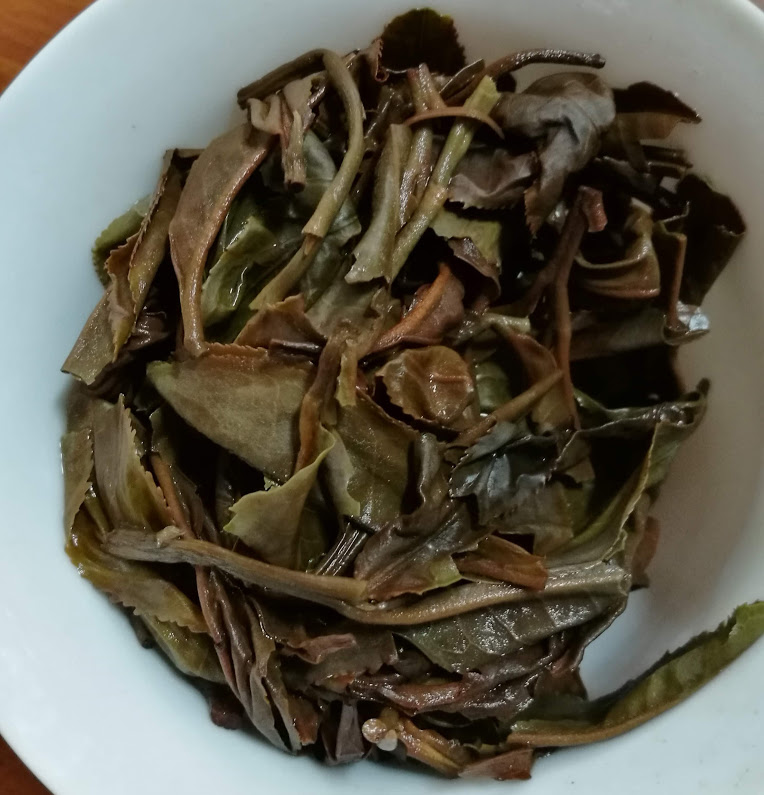
Showing posts sorted by relevance for query moychay yunnan black. Sort by date Show all posts

Sunday, May 13, 2018

Moychay sun dried compressed Dian Hong (Yunnan black)


Only partly connected to visiting two Moychay shops in Moscow and St. Petersburg over New years that vendor sent quite a number of samples to try, including this 100 gram compressed Yunnan black tea.  I really love a Nan Nuo sheng cake I picked up in St. Petersburg so I'm excited to try more of their sheng, but this tea goes along with an earlier connection to another similar version so I tried it first.

It turns out that the owner of the chain I had talked to is not just a tea merchant but also a tea enthusiast (Sergey; maybe I'll do more of a profile on him at some point since I've been considering tea culture in Russia quite a bit).  About more background on that, most of the Moychay and tea background content is in Russian but there is one blog video in English on their site with updates in Facebook and Instagram about tea themes and sourcing trip images.

Pretty much all tea vendors are tea enthusiasts, you might say, but it does seem to come in degrees.  Maybe it's as well to say that he's also a student of tea, although that brings up the same implications. There seems to be a divide--which I won't say more about--between tea vendors who are true tea lovers, and those who are certainly very interested in the subject but don't seem to know much about it, and others who seemingly would as soon be selling rat poison if the profit potential was there.


For whatever reasons I really loved a compressed Yunnan black tea I bought a brick of, from Teasenz.  Because I will say more about that tea version too, and sundried black tea aging potential, this post fails to stay simple; oh well.  I was just mentioning that tea and subject theme in an online discussion so I'll cite that vendor description here (with my own review here):


that other compressed Dian Hong; photo credit Teasenz vendor page

The colour of the brew looked like something between a black tea and a ripe pu erh tea. Pretty intense dark red, though we brewed it for only 10 seconds. Not strange, because our gaiwan was fully filled with leaves once they expanded.


The taste was really interesting and was 'confusing' because we couldn't really place it. The first sip told me it was the aroma of a Yunnan black tea, but then the after taste was kind of like a ripe sheng pu erh. The texture was indeed thicker as the grower told us, something that also reminded us of a shou pu erh. The smoothness is amazing and probably due to the 2 years of aging. We also noted that the aging allowed us to brew the leaves up to 9 brews, which is pretty amazing for a black tea. The aging seems to result in more yield. If the brick was made of full leaves and buds, the yield could even be higher.


It wasn't the texture that stood out so much to me as the flavor complexity but it was a thick feeling tea; that layer of rich mineral acting as a base for other dried fruit range seemed unique.  It did seem in between a Yunnan black tea and some sort of hei cha, all the more interesting for trying it blind, for not looking up what it really was before the tasting for that review.


The subjects of pressing teas and aging them tend to overlap.  I'm not sure how many kinds of teas beyond pu'ers, other hei cha, white teas (mostly shou mei, but also others) it makes sense to compress into bricks, cakes, or other shapes.  Doing the same with oolong isn't unheard of.  Traditional forms include Korean dokk-cha, which I can't draw a parallel to related to other types, and haven't tried any version of yet.  Falap (phalap) is a Northern Indian compressed tea that seems to just be a version of bamboo sheng pu'er.  I'm not sure where I'm going with this; just rambling a little there.  Teasenz no longer sells that other version as a pressed tea, but I'm not sure if that makes much difference in aging anyway.  Pressed tea cakes might seem cool; there's that.

I've mentioned before that sun-dried black teas are said to improve with age, as pu'er, hei cha, and white teas do, so with that as a common theme compressing Yunnan black tea makes perfect sense.  As chance has it there was a recent discussion of the subject of black tea aging in a Reddit tea subforum.

Review:


The look is dark with some bud material, and the smell is sweet and rich.  I tend to not review teas by dry tea scent much, so I'll move onto describing how that worked out infused.

The initial infusion I went a little light on; the next one will open up more.  I'm brewing it using a Gongfu style approach, in a gaiwan, with proportion just a little lower than I tend to use for sheng, and I'll see how timing works out best related to that.


It's nice and rich, sweet and earthy, with a touch of tartness.  I've mentioned in other reviews that I don't particularly seek out tartness in black tea but in the right balance a little could be nice.


I'll let the next infusion brew to a more typical black tea strength, more intense than a typical sheng or even oolong, the way I most prefer black teas of this type.  They work well very light too; the flavor range doesn't change much, and there is no astringency to be problematic.


In discussing brewing with someone they mentioned the practice of trying one infusion at higher strength could be seen as related to the Indian cupping practice of brewing teas uniformly and on the strong side, versus drinking tea for enjoyment, to "push" the tea and become more aware of flaws.  I sort of see it that way and sort of don't.  It's just a different look at the same tea, loosely based on that theme.


The tartness stands out more brewed stronger; I wouldn't be surprised if this falls into a more positive balance brewed lighter, in a more standard infusion strength.  A hint of dryness joins in with the fullness of the feel of the tea, in a way and a level that's positive, it complements the rest.


There is a bit of that same unusual character I noticed in that other compressed Yunnan black tea, an earthiness that's not necessarily easy to describe.  I'd go with richer versions of dried fruit as a main description for the most pronounced taste elements, but I'm talking about an underlying mineral layer instead.  It's nice.

I was going to look up how I described that mineral in the other tea version (not typical practice for me), which I'll cite more completely here:


One part reminds me of toasted pastry, another fruit, but so heavy and complex it would  have to be a mixed fruit jam.  The way minerals layer in is interesting; maybe that part is like volcanic soil.  Some of the interesting earthiness is out towards leather or even crude oil, just nothing like shou pu'er where those might be primary elements.  It has a nice thick feel too, thick in an interesting sense.  That fruit aspect may have been similar to dried persimmon instead of raisin, with some of the other complexity hinting towards spice range, just not cinnamon or something familiar. 


This tea is a little like that, maybe just a bit more tart, and not quite as earthy.


I definitely love the tea.  I'd probably like it even better if that slight tartness was swapped out for more of a richer, sweeter tone, but it's nice as it is and still early in the tasting; it could transition.  This tea will also probably develop a bit over the next couple of years, although I'm not sure how much I'll have around then; maybe I'll get another mini-cake at some point to hide from myself.  That other tea I keep referring to was two years old (or maybe even three between delay for them posting that reference and me trying it), and this may well evolve in a similar direction.


The feel is nice, and the overall fullness of the aspects together.  That one underlying mineral tone makes for a really nice drawn out aftertaste experience.  No flaws really come across, to the extent that was possibly one point to the brewing choice of doing a longer infusion.


I will guess at that mineral type:  it's somewhere in between artesian well (iron compounds) and Southwestern US slickrock, with just a hint of struck match.  It works better than it might sound because of how it pairs with the other flavor range aspects.  The dried fruit range is hard to specify but there's a rich, sweetness to it similar to a pipe tobacco.  When I'm describing older sheng as tasting like tobacco usually that reminds me more of cigar, but this is different, sweeter and more aromatic.  Then again there are surely much better and more interesting cigars out there than I've ever tried; that was never my thing.


I went lighter on this next infusion, only for around 10 to 15 seconds.  It all does balance much better brewed lighter, and doesn't give up much for intensity.  It's an intense tea for not having much time to infuse for that round.  I'm sure this wouldn't be that different brewed in a more straight Western style but I'd definitely recommend messing around with parameters the other way.


It could be just the infusion strength difference or maybe some transition but the tartness drops way back, and the sweetness and other complexity doesn't diminish much at all.


While I'm doing tangents in mid-review I'll mention the vendor's description (added mixed in with the tasting notes later):


The bouquet of brewed tea is warm and bright, woody-herbal, with biscuit, fruity and honey notes. The aroma is deep and warm, viscous, fruity-spicy. The taste is juicy, saturated, sweetish, a bit tart, with a light citrus acidity and spicy nuances, transforming into lingering finish.

Brew tea with hot water (95°C) in a gaiwan or a teapot made of porous clay. The proportion is 5 g per 100 ml. The first infusion should last for 6-8 seconds. After that do short steeps (just for 1-2 seconds), increasing steeping time for each subsequent step, if necessary. You can steep the tea up to 9 times..


Right, a bit off boiling point is good.  I'd agree with all of that description.  In agreement with this vendor description and the Teasenz directions related to that other compressed tea version a bit cooler yet might work well.  I messed around with it for this tea and the flavor profile just shifts.  I'll often use hotter water later in the cycle to draw out more flavor but it's easy to misjudge when this tea is fading; it just keeps going.  Really short infusions did work well.


Related to the rest of those details there is a good bit of fruit to it, in the dried fruit range, which is a little harder to sort out due to the rest of the overall complexity.  It would surely be interpreted differently by different people.


Conclusions


I stopped taking notes but I kept on brewing more infusions until I lost count, at least 10.  The tea works really well brewed lightly and even after fading and requiring longer steeps the character doesn't transition much.  It doesn't move towards tasting woody as most blacks tend to when more brewed out.  I lot of teas don't go "off" as you brew lots of infusions, if they even can keep producing flavor, but the results aren't necessarily positive, but this tea was pleasant even in very late steeps.


I love black teas, and Dian Hong in particular, and there's something unique about sun-dried versions I really like.  This tea could potentially be much better in a year or two, but per my understanding it's not typical to keep them around for more than a few years to draw out further transition.  I tend to not say much about value in posts but with this version costing just under $8 for 100 grams it's a great buy related to that.  Other Dian Hong do span a broad aspect range and judgment of how good any one version is depends on preference but I'd certainly recommend this one completely aside from that value consideration.


On the personal update side, my son has been pretty excited for about a week over seeing Infinity War.  My daughter started ballet lessons too; I'll have to add photos of that later.  For now I'll leave off with one image related to that movie instead.


the Infinity War happy ending that they didn't show


Wednesday, March 27, 2019

Compressed teas and tisanes beyond pu'er


First published in parts by TChing, with the last post of three in sequential order here


This subject is familiar to most related to sheng and shu pu'er; both have long since been pressed into cakes (bings), tuochas (dented ball shapes, kind of), bricks, "dragonballs," coins, and other shapes.  This will focus on scope outside of pu'er, since those are more commonly encountered.

The common understanding is that this form related to ease of transport from condensing the size.  Teas from Yunnan could be shipped across the Tea Horse Road to all sorts of regional destinations, processed to be easier to ship, distribute, and later store (with further reading about the modern forms of that history here).  Same for Hunan brick teas, and at some point the same compression process was also applied to shou mei white tea.

More recently compressed black teas and others have become somewhat fashionable.  Why press these, though?  We're at the stage now where modern packaging solutions can cover a lot of the same functional concerns with the tea still in loose form.  Pu'er needs air contact to ferment (to change over time), and to some extent that could apply to other tea types as well, even though the same storage approach and concerns are most typically only extended to white teas.  Compression isn't essential for aging but it does work well to store teas in that form and it helps moderate level of air contact at a suitable level.

Cakes of other tea types seem cool; that's a good reason.  To a limited extent the reshaping could also change tea character slightly, it seems, so there's a functional aspect.  For other teas "designed" for storage and aging it still makes sense on that first level.  Most recently I've tried two versions of this approach applied to tisanes (herbs and fruit), which I'll cover at the end.


shou mei (white tea), or other white teas pressed in different shapes:  really this form is common enough too, but it can be hard for one person to explore even the considerable list of most standard types.  Those teas can be mild but rich-flavored, including caramel or toffee tones with aging transition, evolving to include dried fruit or spice tones.  This post reviews two versions that seemed relatively standard, one from 2008 and 2012, along with a gong mei (same thing, different leaf grade), and candy-bar style pressed white.  Comparison reviewing four white teas together in that account turned out to be a bad idea; not so many rounds in I was blasted on all that caffeine.


Gong Mei cake, a Dayi / Tae Tea version


candy-bar style compressed white tea


a unconventional white tea cake described as pressed Moonlight White (details here)


Hunan region / Fu brick teas:  these seem kind of standard too, potentially very pleasant, flavorful, and typically relatively inexpensive compressed teas that are distinct in character from sheng and shu pu'er.  I've not experienced enough versions to generalize, but of that limited set I have tried pre-fermentation was either not used or not nearly as evident as in shu, and the teas didn't have the same intensity that younger sheng possess.

Then again I've not really tried new / young enough versions of compressed hei cha to really place starting points, related to typical use of a pre-fermentation step.  This Yi Qing Yuan factory version I reviewed with "yellow flowers" was produced in 2009, and this 2007 Xiang Yi "Hei Cha Zhuan" didn't have that version of mold present in it.  That general fungus category and specific "yellow flowers" input is identified in this reference passage:


...The genus Aspergillus is a group of filamentous fungi consist of more than 250 species, which is the most economically important of the fungal genera.  Many species of Aspergillus are used in biotechnology for the production of various metabolites, such as antibiotics, organic acids, medicines or enzymes, or as agents in many food fermentations. The fungal genus Eurotium, which is the teleomorph of Aspergillus, has been proved to be a rich source of novel bioactive metabolites. 

...species formerly included in the genus Eurotium  [a yellow-flowers related reference] are displayed with their Aspergillus name.. it is considered to be safe under low- and high-osmolarity conditions...


The typical hearsay account is that the various types of fungus are generally good for you rather than potentially harmful, not exactly confirmed in that research article passage but to a limited extent supported by it.

Hunan Fu brick tea with "golden flowers"


shai hong / Yunnan black teas:  now we're talking.  I first ran across a version of those and tasted it without reviewing what it was first two years ago, back in 2017, covered here.  Yunnan black teas / dian hong (or shai hong, a reference to versions of that being sun-dried) can vary quite a bit but the range is nice.

That version reminded me a little of those Hunan brick teas for character, beyond being compressed, for being so mild, and for including pleasant dried fruit, rich sweetness, and other earthy complexity.  I've tried a couple of other compressed Yunnan black teas since and they just vary.  This other version was pleasant, and included a bit of tartness, which can be nice in the right balance.  The two main US pu'er vendors are now producing versions, Yunnan Sourcing and White2Tea, with one of the latter's versions boasting the catchy name of Natural Redhead, and the former's branded "Drunk on Red."  The marketing factor being an input seems to show up in the product names.

This video interview with a Yunnan black tea specialist (conducted by William Osmont of Farmerleaf, a Jing Mai based producer and vendor) sheds light on the processing differences in various types of black teas, it just doesn't get into the factor of pressing those.  One take-away from that matching conventional understanding:  Dian Hong, the conventional Yunnan style black teas, are oven dried, and Shai Hong are sun-dried versions, which are milder in fragrance and said to possess the potential to improve with age.  I've tried the same versions across a broad span of time before (a year or more), and they did seem to gain depth and intensity.

chunk of compressed Shai Hong (sun-dried) Yunnan black tea


compressed oolongs:  I had heard of these long before ever trying one, and did get a chance to in the form of a Moychay (Russian vendor) Da Hong Pao roasted oolong bar.  You could tell it wasn't the refined and subtle style of Wuyi Yancha that leans towards an aromatic liqueur or perfume-like aspect range, more flavor-forward and roasted to include sweet, rich caramel flavors instead, positive in character but limited due to being comprised of relatively broken material.  It worked well for me.

I have no idea if the unusual character in that product is somehow common to other compressed oolongs, if others are as flavor-intense and distinctive as that version was.  Some are probably great and others terrible, and all probably vary in taste and other aspect range; that's how that usually goes.  This looks like an interesting version of one (that I haven't tried), a 2006 pressed Da Hong Pao brick from Wuyi Origin, a well regarded producer who sells directly.


one chunk (square) of the Moychay DHP oolong bar


tangerine or orange peel stuffed shu pu'er or black teas (chen pi):  I don't want to add too much about these versions because they really deserve more background discussion and description than I have space for here.  I've tried shu pu'er and black tea versions (and have a white tea stuffed citrus peel at home yet to try), and the were nice, unique and pleasant.  And supposedly very good for health, bordering on a form of Chinese medical practice input.  I'll leave off at citing a reference to claimed health effects, framed in Traditional Chinese medicine terms.  The tea could have positive effects without that description framework being the most accurate model, or some of the benefits could be valid and accurate even if some others aren't:

Actions: Regulates Qi; adjusts the middle Jiao (acrid lifts the spleen Qi, bitter descends the stomach Qi); dries dampness; resolves phlegm; helps the spleen to transport; relieves the diaphragm; directs Qi downward.


shu pu'er stuffed tangerine (I think; could be a mandarin orange)


compressed tisanes:  a final frontier not everyone even wants to venture into, or would have heard of.  Again I tried two completely different tisane bars from Moychay (they sent me quite a few samples to review last year, and I've even started contributing some review-article content to a their website).  One was compressed fruit that seemed to contain a bit of spice, really far from standard tea in character, but pleasant.

One was a pressed version of willow herb, which also goes by fireweed, and is also called Ivan chay.  This herb is really unique for being able to oxidize, in a way similar to tea (Camellia Sinensis), although the couple of versions I've tried wouldn't get mistaken for tea.  The other was a pressed version of dried fruits, definitely different.  A version I didn't try is made of rose petals and cherry leaves.

If the way it works out similar to "real tea" versions pressing the herbs would only change loose material character a little.  They're not the same as Camellia Sinensis but the wider range of materials input enables a different range of potential.  Any herb, flower, or fruit blend could be combined and pressed that way, in theory.  Or mixes of teas and other inputs, which is a popular theme in Western markets now.  One potential down-side is that there's no current market demand for such a thing (pressed tisanes and blends), since it seems to have just started existing, but in a different sense that only increases the potential.

compressed willow herb bar (aka fireweed or Ivan chay)


compressed fruit bar


I think the compressed tisane theme was more appealing to me because trying the one local shop white tea bar and Moychay Da Hong Pao (roasted oolong) were such positive experiences.  Both of those could be brewed Gongfu style, prepared in a gaiwan using lots of short infusions, or they worked well made Western style, and probably just as well prepared "grandpa style."  That's a reference from a well-known tea blogger to a very common Chinese brewing approach, adding tea into a tea bottle with hot water and drinking it together, unstrained, re-adding water after finishing each round.  I most often use it on road trips, and wrote a post about trying out results on different tea types awhile back.

The fruit tea version would even work well simmered with black tea, perhaps with a bit more spice added, to make a fruit-oriented version of masala chai.  Or these could be added to a thermos and left to brew that way, over any length of time.  That would seem to involve committing a thermos to the practice since cleaning after something that aromatic might be problematic, maybe even if the liner was made of glass or steel.  Tisanes have the potential to be even more flexible than teas to brew, with the exception of tea types that aren't astringent and work well at any infusion strength, versions like shu pu'er or shou mei.


Really there are too many types of tea to get to among standard types as it is, but all of these make for interesting tangents and additional range to explore.

Thursday, July 23, 2026

Thai Wawee Assamica black tea and Moychay Fengqing Dian Hong


I'm reviewing another black tea from Wawee Tea, a sample sent by them with an order of sheng and black tea, and a Moychay Dian Hong for comparison.  Reviewing two teas helps place each, through comparison and contrast, and doubles the pace that I get through teas I'm reviewing.  A large set of samples provided by Moychay helps with that first role (many thanks for that, even though it was a thanks for helping them with some editing).

The Thai tea is presented as "Assam."  It's normal for local producers to call Assamica plant type based black tea Assam, whether the style is close to that origin range type or not.  I think they kind of mean "Assamica" by that, but it doesn't matter what they mean, the teas are what they are.  

There isn't any description of that from them, since there isn't a conventional sales site to refer to.  They would have outlets on the local online shopping platforms, on Shopee and Lazada, but people in other countries couldn't use those, and people in Thailand would often already know of those if they like that style of tea.  I order from them by direct staff contact, kind of the old fashioned way, when I see posts about something that look interesting.  This is a related Facebook page; that's where I'd see such things, in others forwarding those.  I could look this up on Shopee, but I'm not going to.

I did look up another citation of a different tea bag version on that Facebook page though, here.  


Wild Assam Black Tea with Osmanthus Flowers

This is Wawee Tea's unique blend, currently served in major hotels in Bangkok.

🍂The main ingredient is Wild Assam Black Tea, produced from centuries-old wild Assam tea trees on Doi Wawee.

Guaranteed by a silver medal award in a black tea competition. International Black Tea Competition 2019, China

🌼 Blended with Osmanthus (Guihua) flowers Authentic variety from Dali, China. Grown 100% chemical-free on our own farm.

🍃 Packaged in tea bags made from corn fiber, microplastic-free.

Brewing Instructions:  Steep the tea bag in hot water for no more than 2 minutes.  For 250 ml.

20 Baht per piece


20 baht is about 60 cents, so that should be about 15 cents a gram.  The tea is pretty good; that's fair.  Again that's an osthmanthus flavored version, that looks to be made from the same black tea base, but I don't know that, and I don't know that the pricing is identical (although there's a good chance that it is).

Those brewing instructions would probably work, but it would be a real shame to throw away that tea bag after it had brewed for two minutes.  It could surely make a pleasant second infusion.


Of course Moychay lists what their tea is, and it would be sold on an online platform, here:


Black Tea DIAN HONG CHA, Chinese tea from Yunnan Province (Red Tea), 70g, 7g  (70 grams costs 7.34 Euro, or $8.35).


Dian Hong, or Yunnan Red Tea, originates from Fengqing County, Yunnan Province, a region renowned for its ideal tea-growing conditions. First developed in the late 19th century, Dian Hong transitioned from green tea production to meet the rising demand for black tea. Its unique flavor and consistent quality have earned it recognition both in China and internationally, even being gifted as a national tea to foreign dignitaries.

Cultivated at altitudes of 1800–2200 meters in Dasi Township, Fengqing County, this organic tea is hand-picked during the spring harvest (March 25 to May 5) using the traditional standard of one bud with three leaves. The tea is made from the Mengku Da Ye Zhong cultivar, and its production involves withering, rolling, fermentation, and multiple drying steps, ensuring a rich, full-bodied character.

Dian Hong brews into a deep red infusion with a complex aroma featuring honey, fruit, and floral notes. The taste is smooth and rich, with a satisfying balance of sweetness and a slight hint of bitterness. Its long-lasting aftertaste is sweet and lingering, offering a comforting experience over multiple infusions.


Let's start with that pricing; it works out to 12 cents a gram (or it would be $12 for 100 grams).  That's pretty favorable, on the low side of the range for this type.  Maybe that implies that the quality level is moderate, or maybe it's just a good deal; it just depends.  Skipping ahead maybe a bit of both, related to writing this after doing the tasting part.


atypical presentation, compared to what I'm accustomed to


Review:


Thai  Wawee Assamica:  it's pretty good.  Warm tones match what one expect from black tea of this range, the earthiness, also covering range like redwood scent.  A bit of berry also stands out, something like blackberry, but one could imagine it being interpreted as dark cherry.  Feel is full and structured, maybe more structured than full, without dryness, or being too harsh, so that part works well.  

This would be amazing as an English Breakfast Tea replacement; a much better version of that general type.  Or maybe one category over, and just better than that, but comparable in some ways.  For the leaf material being as chopped as it is astringency is still mild.  I brewed it for around 20 seconds in a 100 ml gaiwan (for 4 grams), plenty to get it started, and it's not really overbrewed, although it looks it, quite dark and red.  

This doesn't need milk or sugar, prepared like this, but you can put milk and sugar in black tea that doesn't need it, if you brew it strong, and it can still be nice.  I was in a rush yesterday and did that, brewing their Wawee tea cake extra strong, and adding milk and sugar so I could essentially gulp it down, in a very fast breakfast.


Moychay Fengqing Dian Hong:  this is brewed a little too strong.  It's 7 grams in a 100 ml gaiwan, so 20 seconds was a bit much, even though it takes 5 to 10 for teas to generally just get completely soaked.  It has more feel structure than the other tea; I didn't see that coming.  Being brewed too strong changes that; we'll see next round.  I thought that the other tea being chopped would make it brew fast, so the 4 and 7 gram proportions might balance, since this is whole leaf.

This includes a few flavors, a set that hasn't fully integrated yet.  One part is tartness, not a personal favorite in black tea range, but it can come up.  Another is fruit; that I do love.  It includes some of that conventional black tea range, I guess oriented towards malt, which I probably should've used as a description for the other one.  It seems to include a hint of black pepper; that's interesting.  Then there is also some roasted yam, or something along that line.  Maybe sweet potato instead?  Or both, combining.

It sounds quite complex, and it is, but the flavors don't combine and integrate well just yet, and there's a thinness in one part of the flavor or character profile I can't pin down.  It all might just relate to it getting started, not being there yet.  In retrying the other I'm not really noticing malt, but it seems I did miss cacao.  It will be interesting to see how it develops.


Wawee Assamica #2:  these are both all but flash brewed, using a very short infusion time, but both look kind of dark red.  This extracted faster, per the color and darkness, but we'll see.

It's actually pretty light.  It's unusual drinking this style of tea light, more of a conventional black tea, but it works, beyond not matching a brewing norm.  There's plenty of flavor, but the feel seems light.  The feel that is present works, including some richness and fullness.  Flavor includes cacao and whatever berry range that is.  This is almost a Christmas blend flavor profile, without any adjustment from other flavors.  Add some orange peel rind and cacao nibs to dial up the fruit and cocoa flavor and it's there.  Of course it's already fine as it is.

It can be hard to notice what is missing.  This doesn't taste like malt, and tea of this character would usually include much rougher astringency.  It's quite good, for the style and presentation.


Moychay Dian Hong:  this is slightly stronger, in a more conventional range, but then it is brewing 7 grams instead of 4.  I didn't adjust timing, beyond pouring the second gaiwan out first, when it had been filled second.  Tartness is dropping out already, it seems.  Even though it's really subtle that limited pepper note is cool, adding a nice effect.  Roasted yam or sweet potato is a main flavor now.  It's hard to settle on it being just one of those, even though they are different.  It's not as distinct a flavor as it could be.

Related to comparison to Dian Hong I'm familiar with this is fine, but something is missing.  It doesn't include a depth of feel, and a heavy mineral base input, to the extent those often do.  Often some versions will lack flavor intensity while they express that depth, which can seem a little strange, although that can be pleasant if you are accustomed to it.  

I experience that as a gap in what I expect.  You get a good hit of up front flavor, and it trails after some as aftertaste, but the feel just isn't there, and some flavor depth is missing.  I'm not saying that the other version includes all of that, but it covers a normal range better, so to a very limited extent it is.  But it's not a tea that could pass for a good version of Dian Hong either.  I'll push both a little more going back to a 15 to 20 second infusion, and see where they stand further along the cycle.


Thai Wawee Assamica #3:  this is holding up pretty well, for tea that I freed up from a tea bag.  The character isn't different enough to go back through it again; it's just a stronger version of what I experienced the last round.  The balance works, how it all comes together.


Moychay Dian Hong:  this is the best this has been.  Feel thickens, and mineral base picks up; that's more like it.  The black pepper note is stronger.  Or is that white pepper?  It might be.  A touch of berry like range adds to the roasted yam / sweet potato, giving it more flavor complexity, which works well with the richer feel.  

This still isn't a personal favorite style of Dian Hong example, for me, but it's much closer.  A bit of cacao and a little more sweetness would really tie the rest together better.  But it integrates the best it has, and it's fine like this.  Very limited tartness isn't as problematic (I just don't like tartness), but it's more shift in the wrong direction.

To be clear Dian Hong is my favorite black tea type.  It's very familiar.  Versions from South East Asia can be just as good, and can match typical Yunnan style very well, or they can also vary, a lot.  There are outliers in Yunnan versions and styles too.  This is sort of conventional, sort of not, in two different senses.  It lacks typical depth, mineral range isn't as pronounced as it usually would be, and the tartness isn't typical at all.  But the other flavor range is right, and the lack of harsh astringency, the tea being full but not rough or dry.  They generally don't taste malty, and this doesn't.

At this stage I like the other tea a little better.  The tartness alone might swing that balance, or it all just integrates a little better.  It's not nearly as good as the black tea cake I bought from them; for someone with my preferences it would be as well to skip this tea and just buy that.  But then this is a different thing, and for a tea to go, the tea bag form it came in, it would work well, much better than anything Twinings or similar producers make.


Both teas, infusion #4:  the Wawee tea thins a little, but then it has been a challenge brewing 4 grams of broken leaf well.  It's still good.  The Dian Hong is still the best it has been, picking up a little more depth and complexity.  

It's an overall good sign that it improves across rounds; better quality tea will do that, while lower quality versions express their best range early on, and then die.  Or maybe that also relates to material type; low elevation grown plantation tea should be more intense at first, then fade, and higher elevation or more natural grown tea tends to have more durability.  Sometimes older plant material teas can lack exceptional flavor intensity but express a lot of depth.

In the round after these, #5, the Thai Wawee tea was really dropping off, and the Dian Hong wasn't, kind of as one might expect, that whole-leaf tea would brew out slower.  But again it's also a good sign for the Dian Hong quality level.


Conclusions:


Both were pretty good.  Both had their own limitations.  For comparing to standard tea-bag tea, chopped material range versions, the Wawee tea was exceptional, but it's an odd starting point competing in that range.  It was better than that; it was fine as a conventional specialty tea.  But I suppose it could have been even better as a more whole leaf version.

The Moychay version I judged more negatively for coming into the tasting with a lot of expectations about Dian Hong style and character range.  It was good, but some early lack of some range (mineral taste, feel depth), and inclusion of tartness, seemed a lot more negative for me expecting it to be a certain way, to be different.  It's not necessarily that it compared negatively to the other version, but the other Wawee tea was better in a couple of ways.  And the Moychay tea was superior in other ways; it held up better to an infusion cycle, and came to express more complexity and depth than the other, in "later" rounds (this was a pretty short infusion sampling cycle).  

If I had to pick one that I liked more it would be the Thai tea, but they were both fairly equivalent, and that was about preference for specific flavor range, not quality.  Maybe the Moychay Dian Hong was a little higher in quality level, in spite of it also being limited in some ways.


I've been trying such exceptional teas lately that any that seem good but not great might come across as more limited to me now.  These were both good.  For anyone that actually likes a touch of tartness in black teas the Dian Hong review might seem wrong; too negative.  And without specific expectations about feel and mineral base flavor going in it could seem all the more positive.  

Dian Hong drinkers would know what I'm talking about, and anyone new to tea reading this might think it's all nonsense.  Trueness to type expectations aren't really a made up thing, but they do extend how people experience tea into an abstract range, moving beyond "how good; how pleasant?," into "does this match what I expect?"

The Moychay tea is a really good value, for as pleasant as this is.  It may not work well for spending an hour just focusing on it, for me, for it missing my main personal preference range by a couple of aspects, but this would still be a great breakfast tea.  For someone with different black tea preference it may seem much better than that.


Tuesday, July 25, 2023

ITeaWorld Yunnan and Yingde black teas


A vendor recently contacted me about trying their teas for review, ITeaWorld (or itworld), which they sent to me at no cost.  This comes up as a tea blogger, just not so much recently.  

In an interesting twist they've apparently used this form as a marketing drive, with some mentioning on the r/tea Reddit tea sub that they're sick of seeing posts about their teas.  The consensus opinion there was that as long as reviewers mention that the tea was provided free for review that there's no ethical problem, and no issue with posts about that conflicting with r/tea rules.

My own "policy" is that I do mention the teas being sent for free, and will only review teas that I like.  The idea is that not liking a tea isn't much of a story to tell; there's plenty of mediocre quality tea out there.  I suppose if it was just a mismatch to my style preference, and something interesting came up, I might post it anyway.  I will sometimes offer vendors a chance to review a draft, if there seems to be an issue with some of the ideas, and will offer to not post a review that I see as positive but not entirely so.  Again my justification is that if I like a tea but it's not exceptional it's still not that much of a story.  

In this particular case it's a little different, because if half of these samples (they sent a good number of them) are quite good and the rest are mediocre or flawed there's a broader story to tell about their inconsistent sourcing approach.  Or actually they're also involved with production, which I'll probably write more about later, separately.  There aren't very many cases of large vendors, or those of any size, moving from resales onto production and processing; Moychay comes to mind, and that's about it.  Companies like Yunnan Sourcing and White2Tea commission a lot of teas for production, having things pressed, maybe even branching into having sheng wet-piled to become shu, but it's different moving down to the level of growing and processing tea.

I'm trying two black teas, even though in a sense oolongs will make or break results even more, which I see as more of a flagship, quality-dependent offering.  I love black tea though, and it can either be average, good, or exceptional, and I'm probably a decent judge of that for trying an awful lot over a long time.  One is from Yunnan (so Dian Hong, by definition, I guess, since that means Yunnan black), and the other from Yingde, which is less familiar.  I could look up a most typical type and style range from there but won't to keep this post more basic and readable.  The tea is what it is, with or without match to some other normal style range.  I'll have to compare the Yunnan version to other Dian Hong range, since that's really my favorite black tea type range.

I highly doubt that all this will never see the light of day because I don't like the teas, but that is possible.  To adjust for that I can mention trying versions I don't review in other posts; I don't offer vendors the chance to make any changes at all to content, unless I've included mistakes, which comes up once in a long while, but not often.


I'll brew these Gongfu style, using a higher proportion than for Western brewing.  Backed off my normal Gongfu proportion, in relation to individual samples weighing 3.5 grams, when I'd usually brew about twice that much, over a dozen times, in short infusions, most between 10 and 15 seconds, depending on results for the prior round.  For oolong that requires a good bit of careful adjustment, to get equivalent results, but black tea is pretty flexible about giving good results from different approaches, and at different intensity levels, so I'm not concerned about the variation.

I don't tend to review dry tea scent but based on that and appearance of the leaves these teas will be good.  Real evaluation requires brewing it, but you can get a sense.


Their back-story, according to them, which I may review in more detail later on:


Hopefully all that is on the up and up.  The part about relocating tea plants reminded me of a problem coming up in Laos--I think it was Laos, but it's been awhile since I've heard that story--when a Chinese company offered what could've seemed a large sum for a lot of live plants, growing in the wild, and took them back to China.  Fair enough, from one perspective; the people owning (or tending?) the land sold them.  But if they weren't aware of the true value and potential of the plants it could easily seem unfair, especially if the sales price was actually below a reasonable market value, which is how that story was presented.

Probably this is the other kind of backstory; tea has been around a long time in China, and plants would be around in different places.  Tea plants turn up essentially growing in the wild in lots of local SE Asian countries, including Vietnam, Thailand, and Myanmar, because the history of tea is long and diverse.


Review:


Yunnan black tea:  I went with the 15-20 second or so time, not so different than what they advised, just longer, and this is still a bit light.  Using a rinse would make their 10-15 second first infusion time make more sense, since that speeds up infusion process more than one would expect later on, but I don't want to drink or throw away a rinse infusion.  


That "porcelain teacup" is surely a gaiwan, which translates as lidded cup.  All of this works ok for brewing advice, following one of two opposing lines of thought about drinking either tea brewed relatively lightly (what this would result in) or on the more intense side, which would emphasize mouth-feel and aftertaste aspects.  In a sense it's easier to separate out finer flavor aspects brewing a tea light, unless you don't normally prepare tea that way (as I don't), then the lack of familiarity would offset that quite a bit.


The tea is nice.  Cacoa notes come across, even brewed on the light side.  Complexity is ok, even though intensity isn't just yet, and there's good sweetness and depth.  I could guess further about aspects but a better flavor-list description will be possible next round.


Yingde black:  I'm "getting" less from this; at the lower intensity the other already showed good positive character and some clear aspects but this is more neutral.  I'll need to go with a full 30 second infusion time to make sure these show what's present, even though drinking them lighter would work as well without trying to breakdown flavor inclusions.  I think brewing while maxing out proportion, using 7 to 9 grams, probably (not that I weigh that, although I could, my wife has a kitchen scale) probably has me drinking relatively strong-brewed tea, even though an average infusion time might be only 10 seconds.  

This might include a little more astringency structure, a faint hint of dryness, but I like the rich and soft feel of the other, typical of Yunnan Dian Hong versions.  It's definitely not astringent; nothing like broken leaf black teas.


Yunnan black, second infusion (brewed for closer to 30 seconds):  brewing this lighter would've also worked, but brewing this a little strong sheds light on the rest of the flavor list.  It causes warmer mineral tones to stand out a lot more too, to become a more intense part of the experience, so it might not be a match to my optimum experience.

Cacao is still nice in this, with warm and rich fruity tones along the lines of dried Chinese date, with a good bit of roasted yam.  That warm mineral tone works as a nice base, filling in a role astringency can often play instead.  This has a nice rich and full feel, but it's not astringent at all.  Sweetness level is good; right where it should be.  Aftertaste experience is nice, not really extended, but it does fill in the experience further.

All of this is a description of pretty good Dian Hong; it's just not unusual, or representative of unusually high quality level.  It's good, probably a well above average quality version, per standard experience, if someone doesn't have sourcing dialed in, or I suppose for someone accustomed to drinking exceptional versions it might just be normal.  

This is my favorite black tea style; I completely get it why a lot of tea enthusiasts value this type of tea, since I do.  Even higher quality versions might include a bit more novel flavor range, but it's really intensity and balance than can improve from here, with feel and aftertaste range potentially a little more positive (even richer and lasting longer).  I value that character (aspects) are a good match to a standard range in this version; I see that as positive.


Yingde black:  sweetness and complex flavor range doesn't match the Yunnan version, but the tea quality is obviously pretty good, at least in relation to it lacking flaws.  A different kind of inky mineral range fills in, while the other Yunnan example relates more to earthy inclined mineral, like old tree bark decomposing, with this a little closer to slate range.  I miss the sweetness level from the other, the overall complexity, and the style that is my own favorite (which wouldn't apply in the same way to everyone).  This is still pretty good tea, but I'd be happier to own 100 grams of the other, valuing that experience as something special, and I would probably just drink this as a food companion tea.

Make no mistake, this is miles beyond blended tin-version black tea quality level, although also just different in style.  To me the flavor range is limited though, the complexity, limiting the range of the experience.


lighting variations will throw off camera setting inputs, shifting apparent infusion strength


Yunnan black, third infusion (brewed a little faster but essentially the same, not so much over 20 seconds):  evolving a little instead of fading; a good sign.  For pushing the teas this hard for brewing time that wouldn't last; they'll fade soon enough.  Drinking six cups at this size (90 ml or so) it's already plenty of tea, and I won't describe a longer cycle of more infusions, this will do.  Roasted yam seems to be standing out a good bit more than cacao or dried Chinese date at this point; whether that's positive, negative, or neutral would depend on preference, but to me those early flavors might've been a slightly better mix.  Only the balance changed; the same range is present, just shifting in level.  It's good.


Yingde black:  also positive, but again this is suffering in comparison.  It lacks the same intensity, and the flavors present aren't as interesting.  I suppose this is at the cut-off for where I might not publish a post, if I was only reviewing this version, because there's just not as much of an interesting story to tell.  It's good tea, but not distinctive, complex, or intense, so it's not good in the same sense as the other.  It lacks flaws, the overall character is pleasant, and I think pushing it by adjusting brewing technique might draw a little more out of it, so it has potential.  

Using full boiling point water might help; I use a filtering and heating system to brew water, and end up brewing using water temps a decent amount below full boiling point, after losing a little more to keeping it in a thermos.  For whatever reason my thermos (now still in Honolulu) retains heat a little better than one that belongs to my son (which I'm using now), so this is probably brewing in the 90 C range, some way through the infusion cycle now, at the bottom of what they recommend.  Close to 100 might work better, for this tea version.

As an aside close to 100 might work better for lots of tea types; those tea temperature tables you see in different places apply much better to Western brewing (in my opinion), and relate to getting the best out of lower quality, slightly flawed tea versions than these are.  There is no astringency or other negative range to "brew around" in these; it's about stripping out the most flavor you can extract from them instead.  Brewing for longer, the other approach for maxing out intensity, will weight heavier flavors in the tasting experience, the mineral base, or astringency, when that's more of an input.


Conclusions:


I probably wouldn't have mentioned the Yingde tea in a post if I'd reviewed it separately, because there wasn't much story to tell.  That tea is ok, lacking flaws, with decent basic character, but I never did get around to a clear flavor aspects list.  It would've been simple enough to make one up, to use imagination and extend what I experienced just a little, but it just tasted like mild and reasonably balanced black tea, covering that typical mineral base, towards dark wood or spice main range, hinting a little towards dried fruit but without anything clearly defined emerging.  

I liked the Yunnan version better, both in relation to matching my preference for style better, and for it seeming like a better, more intense, distinctive, and balanced tea version.  To an extent how good it seemed ties to how good it was supposed to be, how it was presented, and which kind of pricing range it falls into.  Standard black tea selling for $10 per 100 grams can be nice, but something billed as an exceptional version selling for 50 cents a gram needs to be much better just to fall in the range of normal expectations.  

Per their listing the Dian Hong (Yunnan version; I think of them as that, the Chinese term) lists for $10 per 100 grams, so it's being sold as good tea selling at a good value.  It's pretty good for that.

I just looked up the first version Yunnan Sourcing sells listed as Dian Hong, here, probably the main US online vendor in terms of sales volume and general awareness, listing for $11.50 for 100 grams.  That's from Feng Qing, the same origin cited as this iteaworld version.  $10 probably is right at the bottom end pricing range of anything similar they sell (but don't take my word for that, look around some if you want).  The advantage of buying a tea from them is the ability to buy 3 or 4 similar versions, to pick the one you like most, then you can buy more later.  If you like a version from another vendor just as much that benefit essentially drops out, and you don't need to go through drinking the others that you don't like as well.  

This sort of "curator" source theme, where a vendor sells one of each kind, puts pressure on a vendor to source very good versions every time, where the market vendors (YS and others) can be hit and miss.  For either using some form of reviews or online comments would help people sort through best options.  It comes up in online discussion that Yunnan Sourcing deletes any negative comments from their site, so you have to be careful about how you evaluate online input.  Interpreting reviews can be tricky too; until a reviewer tries exactly the same tea you've already experienced yourself it's all but impossible to place their judgment, and even that input would only go so far, related to how they're going to interpret anything else.

The "vendor as producer" theme offsets this vendor's ability to curate what they sell on their end; they could distribute versions that don't turn out so well in other ways, but for being involved in production their sourcing would have to be more fixed.

I can't really evaluate any other claims or input about the tea versions, with only the high mountain origin and a source area listed, beyond a spiderweb style graphic describing oxidation level, sweetness level, and such.  Some people might think they can taste their way to confirming inputs, but I tend to not value or overthink claims that teas are from a certain elevation, a natural growth area, from plants of a certain age, or even organic.  Hopefully that last claim is accurate, when it comes up, but who knows.


The teas were good, especially the Yunnan version.  It will be easier to zero in more on quality issues and a match of claims of aspect character to experience with the oolongs, which I'll probably cover next.


the outdoor tasting space at home, which I've shown before


Thursday, December 20, 2018

Semi-oxidized Jing Mai sun-dried black tea


This tea is interesting for an aspect mentioned in it's description, as "Hong Cha: semi-fermented tea." People get riled up about translation as fermentation instead of oxidation but the point is clear, and use of both terms was standard at one time. It's not fully oxidized, or at least that's implied; that could mean different things.

At the end (checked after writing these notes) again this tea isn't currently available.  It's interesting in style though, so I'll go ahead and post the notes as a finished review. 

I've been reviewing a good bit more Moychay teas lately because of one running theme:  clearing through trying what I didn't get to, so that older tea sample sets don't carry over to next year.  I still have more teas from Moychay, and lots from around South East Asia, from Anna and Somnuc, and from Tea Side (a Thai vendor), and another Liquid Proust set (finally the actual "sheng olympiad" version), but I'd rather review what is interesting from prior to all that before moving on.

The dry leaves are really dark but lighter streaks and an unusual coloring imply to me that the brewed leaves won't be that common pale brown color, and that brewed character will vary too. We'll see.


It does brew a bit lighter in liquid color, not the reddish of a standard black tea. And the aspect range is unusual, lighter, with a different form of mineral aspect, and not malty at all.  I have tasted this profile before, more commonly in unconventional oolong versions. It's not bad, but hard to place. I'll break down flavor more in the second infusion.


This tea type seems so unconventional that there wouldn't be an established demand for it (less oxidized black tea). Tea Side in Thailand and Farmerleaf in Yunnan sell enough black teas they might reference oxidation level but the low end for black teas is usually higher than this. Oriental Beauty oolong is often more oxidized. All the same it's interesting; different.


It's well-made good quality tea, definitely not something unintentionally prepared this way. It works.


The character is closest to black tea, per my judgement, but the lighter mineral character, floral range, and light vegetal aspect isn't. So maybe it's really in the middle. That vegetal range is a bit non-distinct; it could be interpreted as woody, or it might not be wrong if someone saw that as tying to some sort of similar range, eg. some type of grain.  To me green wood is closest.  The floral tone is nice, very rich and pronounced (orchid, or something such, towards lavender, or maybe just that). That gives it a perfume-like character that extends into feel and overall effect. Some lighter wuyi yancha are like that too; that part is in oolong range. It's hard to place what makes this seem just as much like a black tea to me, given only a flavor aspect list.

It might be mostly expectation making it seem more black; the label description. Oolongs aren't just backed-off oxidation black teas, the processing is different.  The only other "lightly oxidized black tea" that comes to mind relates to the trouble people have in placing some versions of Darjeeling, in particular the first flush versions, which typically aren't fully oxidized.  One odd way to get around that is not to commit; just call a version "first flush Darjeeling" and lead into aspects description instead of categorization from there.


More of the same on the third round. A lighter tone, different mineral range (lighter), and brighter floral tones are kind of in between oolong and black tea, and I could relate to an argument that it just is oolong (although it seems to not be, to me). It's a cool effect, which only works at all because it's good tea (all relative, "good," but the quality is evident).


The next round is similar again. The balance probably is shifting, with warmth picking up just a little.  The flavor gains complexity; floral tone covers a lot of ground and some fruit may be layering in with that.  That part is towards juicyfruit gum.

There's probably a slight savory component lending to that complexity effect, a trace of sun-dried tomato. Even though umami (related to that) is familiar with sencha and gyokuro (Japanese teas) in this aspects set and presentation to me it matches a black tea theme.


Next round the tea is still transitioning, but in a subtle way. Mineral is heavy, still in an atypical form. It probably tastes like some kind of rock, since that's how mineral goes, and to stretch imagination a little further maybe like volcanic rock, like a black sand beach or volcano crater might smell.  There might even be a faint touch of sulfur in it, struck-match, but it's positive in this since that fits in well with a pronounced range of other minerals.  Sweetness and floral tone also add to that balance.

All in all an interesting tea.  It's far from finished after 4 or 5 infusions, where these notes leave off, but that gets the general character across.


Moychay's description


Given this tea is unusual checking on the vendor description seems in order; what is it?  The first thing their website listing says is that it's out of stock.  That's been coming up lately.  They may sell some teas they've only been able to obtain in limited quantity, in which case they might just come and go.  That's probably not more of a limitation than vendors only selling what they can carry a large stock of, since then the range would scale way back to include only those in greater availability.

Here's their description:


Qing Wei Shaiqing Hong Cha (semi-fermented red tea)

"Fresh Fragrance" was made in the spring of the Yunnan large-leaf tea trees of Mount Jingmai (Puer County). It was under the sun.  [surely a reference to sun-drying in processing]

In appearance: large flagella of greyish-brown leaves and silvery biege buds. The aroma is a restrained, with spicy, woody and fruity notes. The liquor is transparent, meadow honey color.
The fragrance is a bit tart.


Odd this being semi-fermented didn't draw more discussion.  Being a sun-dried black from Jing Mai does add more real description, but it's nothing like a typical version of those.  It seemed more floral than fruity or spicy to me but woody definitely works, and a secondary aspect had shifted from the pronounced floral towards fruit later on.

This tea is unusual and appealing for being a bit unique.  It's not a great match for my aspect preferences in black teas, or in general, but related to offering a chance to try something different it's much more appealing.

In looking around for this product description Moychay does really do carry a lot of black teas; it's not the only black tea that's a bit unique listed.  The tea description wouldn't necessarily help someone place it but they do have a comments section that adds a bit.  The impressions are originally written in Russian, and automatic translation could be a little clearer, but still they work.  It's always funny hearing mixed impressions of teas; something unusual like this some people will love and some won't like at all.  There are examples of people who just didn't like it (to be fair and balanced), but I'll cite a comment of someone who did, mainly to make the point of how automatic translation goes:


Guy - super! Really surprised and pleased! Yes, it has both sheng and white tea to taste. And in general, the taste is not usually pleasant. It is a pity that it did not work out to take 100 grams, took 50 samples for testing. And it keeps the straits well. And if you overdo it a bit, then not much thermonuclear taste. The finish is long, refreshing. In dry form, the leaf has a caramel flavor, and when brewing it is even stronger and more intense. In general, tea is interesting, tasty and not ordinary!


I guess that floral tone really is more common to sheng than black teas; that part works.  But the overall character definitely doesn't remind me of sheng, or white; it was kind of its own thing.  I guess the "thermonuclear" part relates to this working brewed strong; it would still be fine, but in general would seem optimum back in the standard range.  This probably matched that person's aspect preferences slightly better than my own but we're in agreement over the novelty, and the generally positive impression overall.