Showing posts with label hong cha. Show all posts

Monday, August 10, 2026

Mi Lan Xiang and old bush Wuyishan black / red teas


I'm reviewing two teas from Moychay, provided by them for review (in part related to helping with editing, but still, many thanks!).  

I've been using their samples (they sent a good bit) as comparison for other "local" South East Asian teas, but it will be nice to just compare two of them instead.  All the other versions were good.  There were some issues related to them matching the standard type form perfectly, to trueness to type.  When a tea is made from wild origin material that seems to automatically come up; the starting point in the material itself varies (at least one of them was, and maybe two).  This concern led me to write about that theme separately, about trueness to type, in another post.

For a market-style vendor like that buying in significant volume and selling at moderate pricing could also be issues.  Of course I'm not going to overthink any of that here; I'll just describe the teas.  I'll add their product descriptions after writing the tasting notes.

Before that, the type-typical theme largely drops out here.  I would've had comparable teas before, but I still come in without the pre-determined expectations of a main set type.  It might come down to whether or not these express tartness, which I really don't care for in black teas, typically.


Honey Orchid Black Tea (105 Euro or $121 USD for 50 grams; that seems wrong, doesn't it?)


Grown in the highlands of Meizhou, Guangdong at 800 meters above sea level, this black tea comes from old bush tea gardens using the Phoenix Dancong cultivar. The gardens are free from pesticides and chemical fertilizers, relying instead on natural forest humus and ecological pest control. The Phoenix cultivar naturally carries the honey–orchid aromatic profile that gives this tea its name.

The tea is handpicked as one bud with two leaves during the early spring, when the tea plants have accumulated nutrients throughout the winter. The fresh leaves are processed using traditional black tea techniques. After natural sun withering and indoor resting, the leaves are gently rolled in bamboo machines, fermented in a high-humidity room until the signature honeyed aroma emerges, and slowly baked over wood fire to lock in flavor and aroma.

The dry leaves are wiry and dark with golden tips. The brewed liquor is clear and orange-red, with a rich honey fragrance and soft orchid notes. The taste is smooth, sweet, and lingering, combining depth and elegance.


Over $2 a gram for black tea?  That seems wrong.  50 to 80 cents should be the normal high end range, and any vendor charging over $1 / gram is usually messing with you.  If a tea type is rare enough and demand is high enough then the cost would climb, with no real ceiling on that, but a black tea couldn't be good enough for me to see that as decent value for anything.  It was pretty good, but there is no pretty good value related to that pricing.

I can clarify what I mean by that by citing a comparable listing from another favorite vendor, from Wuyi Origin (a business ran by a family who I'm friends with a member of, Cindy, to be clear about potential bias):


Wuyi Origin Mi Lan Xiang Black Tea 蜜兰香红茶 (2026)  ($17.60 for 50 grams, so 35 cents a gram)


Mi Lan Xiang, or “Honey Orchid Fragrance,” is one of the most celebrated cultivars of Phoenix Dan Cong. While most Mi Lan Xiang teas are crafted as oolongs, this unique version is processed as a black tea, combining the fragrance of Dan Cong with the richness of Wuyi-style fermentation. The result is a rare and elegant expression that blends the sweetness of Phoenix Mountain with the smooth body of Fujian black tea.

This 2025 harvest comes from Daping Village, where the 40-year-old Mi Lan Xiang bushes grow naturally in clean, high-altitude gardens. The leaves are fully fermented on-site to preserve the honeyed aroma and smooth mouthfeel. The liquor is rich, mellow, and entirely free of bitterness. As soon as it is brewed, a soft sweetness fills the air, reminiscent of warm honey and ripe fruit. It is a tea that soothes and delights in equal measure.


Comparing a highly atypical, high quality producer direct source is a little unfair.  These types of sources barely even exist, as Western facing outlets, but when one does it has a competitive advantage, for selling their own unique teas without any middleman resale costs.  But this is the right range, just on the low side of cost, for what that tea would be.  Normal vendors would sell it for 50 cents a gram or more, instead of 35.  Just as a guess, for as good as I expct that it probably is more than 50 cents per gram pricing would still be normal.

Maybe within Europe it's a problem to buy directly from China, in lots of places.  There are import duties to be considered, and testing protocols for imported goods.  This citation is not offered here as a competing option, more to identify the normal pricing range.  It probably is a fairly similar tea, but then one would have to try both to compare them.


Black Tea LAO CONG HONG CHA, Old Bush Red Tea from Wuyi Mountains, Chinese tea from Wuyi, Fujian Province (Red Tea), 60g (12 Euro or $14 for 60 grams)


Old Bush Red Tea is produced from 40-year-old Meizhan and Shuixian tea bushes in the southern foothills of the Wuyi Mountains, Fujian Province. The tea is cultivated at an altitude of 500 meters in from 2006 year certified sustainable agriculture tea gardens that are part of a 4000-acre estate managed by the producer.

Harvested in April and May, this tea is hand-picked, focusing on two or three leaves per sprout. The leaves undergo a traditional black tea processing method, including withering, oxidation, rolling, fermentation, drying, and refinement. The result is a tea with tightly rolled leaves and a robust appearance.

When brewed, this tea yields a bright red liquor with a sweet and mellow flavor, characterized by notes of caramel and a rich, full-bodied texture. The unique processing reduces polyphenols by over 90%, creating the distinctive red hue and smooth taste associated with black tea.


This costs just over 10% as much as the other version.  Could that first version pricing be a site listing error?

The first version seems better in quality level (related to trying them before adding this section), and Dan Cong material is in pretty high demand, but that pricing still seems wrong.  At 50 cents a gram it would be a costly tea, and at $1 / gram at the top of the high side, for the normal range.


Review:


Mi Lan Xiang Hong Cha / Honey Orchid Black Tea:  a little tart.  This tea is still fine, very exceptional.  Floral range is unique, heavy and distinctive, but also clean and refined (at only the first infusion).  Maybe that does taste like honey orchid; it's hard for me to tell, even though I've drank a lot of Mi Lan Xiang Dan Cong.  The tone is warm, so it leans a bit towards lavender.  

A fruit input is really exceptional.  It's not far off peach, which does come up a good bit in Mi Lan Xiang Dan Cong, but it might also have a citrus edge.  It could be broader than peach, including a bit of apricot as well (or maybe it's more apricot, with a touch of peach).

Feel is good, balance is nice, and refinement is a strength.


Lao Cong Hong Cha Wuyishan / Old Bush Red Tea:  not as intense, but this seems to express more depth.  It includes cacao; that's nice.  And more of the roasted yam / sweet potato / butternut squash range.  I'll try more of a flavor list next round; these flavors integrate, so it's hard to separate them apart.

This seems to be framed along the classic more forward, sweeter, lighter flavor aspects (the first) and a version including warmer tones, more mineral, and lots of depth (this tea).  The first includes a touch of tartness, which means more to me than it probably does to most people.  

In general I might like the second more, since Dian Hong is my favorite type (or rather it's the other way around; Dian Hong is my favorite type because I love the experience of depth and certain forms of complexity in black tea).  But it's not as good, in at least one other sense.  This Wuyishan version includes a limited enough forward flash of flavor and sweetness that it might seem like a gap, at this stage.  But then this is only the first infusion.  And it stands out a lot more for it being brewed alongside a tea that emphasizes that initial floral hit.


MLX #2:  this falls into a great balance.  All of the tones warm a good bit, and tartness backs off.  The intense floral range moderates a bit, but there's still plenty there.  It's not easier to separate the flavors into a list this way, but the complexity balances well.  It still includes warm floral tones, which probably does include rich orchid flavor, and fruit, now emphasizing a warm mineral base more.

One bright tone stands apart from the rest, and gives it a nice counterbalance.  It's like that juicyfruit gum flavor, or not too far from teaberry.  Or given this context one could interpret that as floral range instead of fruit, even though I've done the opposite here.  

Feel is good.  It includes a hint of dryness along with the structure, but that doesn't come across as a flaw, in the type and level, along with the rest.  It just has an astringency structure, which works.  It's still a soft and rich tea, nothing like a more challenging version of Assam, even within the better orthodox whole leaf range.


Wuyishan:  this is softer and richer, with more depth.  Again the flavor range seems to express a gap; there is a lot of warmer, deeper tone, and some more forward flavor (cacao?), but it's not continuous along the entire range in between.  One could interpret part of this as tasting like soft and warm malt (ovaltine or malted milk ball, not Assam malt).  Something along the line of roasted sweet potato fills in flavor depth.  But in between that initial flavor hit and the depth that comes later there is a short pause in the experience.

Brewing this stronger would offset that effect.  I've brewed these for 15 seconds or so, not long.  Intensity is still pretty good (they're brewing at 7 grams per 100 ml gaiwan), but I expect the profile would seem to "fill in" at a higher intensity, for this version.  The other was already intense enough.

Someone more critical of this tea's character might say it tastes like cardboard.  That's partly right, but it's an effect coming from heavier mineral and limited somewhat earthy tone.  I would imagine that positive or negative bias would have one "seeing" either the better parts that work well or else what might come across as gaps or flaws.  I try to see it as it is.

It's a bit strange but I tried mixing the last of both, to see how it would merge and blend.  In a limited sense it is better than either version, but it's also less distinctive and interesting, so in another sense both lose what makes them work.  


MLX #3:  I gave these just over 20 seconds this round, to see how that changes them.  This version had been intense using a shorter time, so it may be a little strong.  

It is.  That works though; the pronounced warm floral tones really pop, supported by pleasant fruit.  I think this is just what someone would be looking for in a Mi Lan Xiang black tea version.  Even that touch of early tartness is normal, as I recall from other versions.  Depth is really nice in this, the way warm mineral tones fill that in.  Flavor complexity and refinement are exceptional.  Some might not love that touch of structure and dryness in this version, but for others that could be a main strength.

Sweetness is a main positive, obviously.  I've not explicitly said that, and just describing sweetness related flavors doesn't necessarily connect with that, even though it does here.


Wuyishan:  this is better for being brewed stronger, more appropriate for this tea version.  A hint of cinnamon joins the rest, filling in a nicely complex flavor balance.  The rest has transitioned.  A touch of cacao grounds the rest, and there is still roasted yam and limited dried fruit input in this (or maybe it has evolved to where those stand out now, and there were only related flavors in the first two rounds, nothing identical).  

Simply brewing this a little stronger did seem to resolve an overall balance / range gap described earlier.  Or the evolution across rounds did; it would be hard to be sure.  


That seems like enough for notes.  These will shift a little more across two more positive infusions, and you could stretch them for two more beyond that.  I would probably mention another flavor aspect for both, or a different balance of what came earlier.  But the basic story has been told. 

Later editing note:  a liqueur or perfume like character stands out in the Mi Lan Xiang version, a good indicator of tea quality, and something that's pleasant to experience.


I really liked both.  The style of the second (Wuyishan origin tea) suits my main preference better, but the strengths of the Mi Lan Xiang version really stood out.  It would be normal for people to judge it as a better quality tea version.  But really their character just varies, looked at another way.  The Wuyishan version got a slow start related to brewing a full flavor range complex character, but that was just an early round anomaly, and could have related to it working better being brewed slightly stronger.

The only anomaly or concern here is the $2+ per gram pricing of the Mi Lan Xiang version.  That's a lot; probably too much.


Thursday, July 23, 2026

Thai Wawee Assamica black tea and Moychay Fengqing Dian Hong


I'm reviewing another black tea from Wawee Tea, a sample sent by them with an order of sheng and black tea, and a Moychay Dian Hong for comparison.  Reviewing two teas helps place each, through comparison and contrast, and doubles the pace that I get through teas I'm reviewing.  A large set of samples provided by Moychay helps with that first role (many thanks for that, even though it was a thanks for helping them with some editing).

The Thai tea is presented as "Assam."  It's normal for local producers to call Assamica plant type based black tea Assam, whether the style is close to that origin range type or not.  I think they kind of mean "Assamica" by that, but it doesn't matter what they mean, the teas are what they are.  

There isn't any description of that from them, since there isn't a conventional sales site to refer to.  They would have outlets on the local online shopping platforms, on Shopee and Lazada, but people in other countries couldn't use those, and people in Thailand would often already know of those if they like that style of tea.  I order from them by direct staff contact, kind of the old fashioned way, when I see posts about something that look interesting.  This is a related Facebook page; that's where I'd see such things, in others forwarding those.  I could look this up on Shopee, but I'm not going to.

I did look up another citation of a different tea bag version on that Facebook page though, here.  


Wild Assam Black Tea with Osmanthus Flowers

This is Wawee Tea's unique blend, currently served in major hotels in Bangkok.

🍂The main ingredient is Wild Assam Black Tea, produced from centuries-old wild Assam tea trees on Doi Wawee.

Guaranteed by a silver medal award in a black tea competition. International Black Tea Competition 2019, China

🌼 Blended with Osmanthus (Guihua) flowers Authentic variety from Dali, China. Grown 100% chemical-free on our own farm.

🍃 Packaged in tea bags made from corn fiber, microplastic-free.

Brewing Instructions:  Steep the tea bag in hot water for no more than 2 minutes.  For 250 ml.

20 Baht per piece


20 baht is about 60 cents, so that should be about 15 cents a gram.  The tea is pretty good; that's fair.  Again that's an osthmanthus flavored version, that looks to be made from the same black tea base, but I don't know that, and I don't know that the pricing is identical (although there's a good chance that it is).

Those brewing instructions would probably work, but it would be a real shame to throw away that tea bag after it had brewed for two minutes.  It could surely make a pleasant second infusion.


Of course Moychay lists what their tea is, and it would be sold on an online platform, here:


Black Tea DIAN HONG CHA, Chinese tea from Yunnan Province (Red Tea), 70g, 7g  (70 grams costs 7.34 Euro, or $8.35).


Dian Hong, or Yunnan Red Tea, originates from Fengqing County, Yunnan Province, a region renowned for its ideal tea-growing conditions. First developed in the late 19th century, Dian Hong transitioned from green tea production to meet the rising demand for black tea. Its unique flavor and consistent quality have earned it recognition both in China and internationally, even being gifted as a national tea to foreign dignitaries.

Cultivated at altitudes of 1800–2200 meters in Dasi Township, Fengqing County, this organic tea is hand-picked during the spring harvest (March 25 to May 5) using the traditional standard of one bud with three leaves. The tea is made from the Mengku Da Ye Zhong cultivar, and its production involves withering, rolling, fermentation, and multiple drying steps, ensuring a rich, full-bodied character.

Dian Hong brews into a deep red infusion with a complex aroma featuring honey, fruit, and floral notes. The taste is smooth and rich, with a satisfying balance of sweetness and a slight hint of bitterness. Its long-lasting aftertaste is sweet and lingering, offering a comforting experience over multiple infusions.


Let's start with that pricing; it works out to 12 cents a gram (or it would be $12 for 100 grams).  That's pretty favorable, on the low side of the range for this type.  Maybe that implies that the quality level is moderate, or maybe it's just a good deal; it just depends.  Skipping ahead maybe a bit of both, related to writing this after doing the tasting part.


atypical presentation, compared to what I'm accustomed to


Review:


Thai  Wawee Assamica:  it's pretty good.  Warm tones match what one expect from black tea of this range, the earthiness, also covering range like redwood scent.  A bit of berry also stands out, something like blackberry, but one could imagine it being interpreted as dark cherry.  Feel is full and structured, maybe more structured than full, without dryness, or being too harsh, so that part works well.  

This would be amazing as an English Breakfast Tea replacement; a much better version of that general type.  Or maybe one category over, and just better than that, but comparable in some ways.  For the leaf material being as chopped as it is astringency is still mild.  I brewed it for around 20 seconds in a 100 ml gaiwan (for 4 grams), plenty to get it started, and it's not really overbrewed, although it looks it, quite dark and red.  

This doesn't need milk or sugar, prepared like this, but you can put milk and sugar in black tea that doesn't need it, if you brew it strong, and it can still be nice.  I was in a rush yesterday and did that, brewing their Wawee tea cake extra strong, and adding milk and sugar so I could essentially gulp it down, in a very fast breakfast.


Moychay Fengqing Dian Hong:  this is brewed a little too strong.  It's 7 grams in a 100 ml gaiwan, so 20 seconds was a bit much, even though it takes 5 to 10 for teas to generally just get completely soaked.  It has more feel structure than the other tea; I didn't see that coming.  Being brewed too strong changes that; we'll see next round.  I thought that the other tea being chopped would make it brew fast, so the 4 and 7 gram proportions might balance, since this is whole leaf.

This includes a few flavors, a set that hasn't fully integrated yet.  One part is tartness, not a personal favorite in black tea range, but it can come up.  Another is fruit; that I do love.  It includes some of that conventional black tea range, I guess oriented towards malt, which I probably should've used as a description for the other one.  It seems to include a hint of black pepper; that's interesting.  Then there is also some roasted yam, or something along that line.  Maybe sweet potato instead?  Or both, combining.

It sounds quite complex, and it is, but the flavors don't combine and integrate well just yet, and there's a thinness in one part of the flavor or character profile I can't pin down.  It all might just relate to it getting started, not being there yet.  In retrying the other I'm not really noticing malt, but it seems I did miss cacao.  It will be interesting to see how it develops.


Wawee Assamica #2:  these are both all but flash brewed, using a very short infusion time, but both look kind of dark red.  This extracted faster, per the color and darkness, but we'll see.

It's actually pretty light.  It's unusual drinking this style of tea light, more of a conventional black tea, but it works, beyond not matching a brewing norm.  There's plenty of flavor, but the feel seems light.  The feel that is present works, including some richness and fullness.  Flavor includes cacao and whatever berry range that is.  This is almost a Christmas blend flavor profile, without any adjustment from other flavors.  Add some orange peel rind and cacao nibs to dial up the fruit and cocoa flavor and it's there.  Of course it's already fine as it is.

It can be hard to notice what is missing.  This doesn't taste like malt, and tea of this character would usually include much rougher astringency.  It's quite good, for the style and presentation.


Moychay Dian Hong:  this is slightly stronger, in a more conventional range, but then it is brewing 7 grams instead of 4.  I didn't adjust timing, beyond pouring the second gaiwan out first, when it had been filled second.  Tartness is dropping out already, it seems.  Even though it's really subtle that limited pepper note is cool, adding a nice effect.  Roasted yam or sweet potato is a main flavor now.  It's hard to settle on it being just one of those, even though they are different.  It's not as distinct a flavor as it could be.

Related to comparison to Dian Hong I'm familiar with this is fine, but something is missing.  It doesn't include a depth of feel, and a heavy mineral base input, to the extent those often do.  Often some versions will lack flavor intensity while they express that depth, which can seem a little strange, although that can be pleasant if you are accustomed to it.  

I experience that as a gap in what I expect.  You get a good hit of up front flavor, and it trails after some as aftertaste, but the feel just isn't there, and some flavor depth is missing.  I'm not saying that the other version includes all of that, but it covers a normal range better, so to a very limited extent it is.  But it's not a tea that could pass for a good version of Dian Hong either.  I'll push both a little more going back to a 15 to 20 second infusion, and see where they stand further along the cycle.


Thai Wawee Assamica #3:  this is holding up pretty well, for tea that I freed up from a tea bag.  The character isn't different enough to go back through it again; it's just a stronger version of what I experienced the last round.  The balance works, how it all comes together.


Moychay Dian Hong:  this is the best this has been.  Feel thickens, and mineral base picks up; that's more like it.  The black pepper note is stronger.  Or is that white pepper?  It might be.  A touch of berry like range adds to the roasted yam / sweet potato, giving it more flavor complexity, which works well with the richer feel.  

This still isn't a personal favorite style of Dian Hong example, for me, but it's much closer.  A bit of cacao and a little more sweetness would really tie the rest together better.  But it integrates the best it has, and it's fine like this.  Very limited tartness isn't as problematic (I just don't like tartness), but it's more shift in the wrong direction.

To be clear Dian Hong is my favorite black tea type.  It's very familiar.  Versions from South East Asia can be just as good, and can match typical Yunnan style very well, or they can also vary, a lot.  There are outliers in Yunnan versions and styles too.  This is sort of conventional, sort of not, in two different senses.  It lacks typical depth, mineral range isn't as pronounced as it usually would be, and the tartness isn't typical at all.  But the other flavor range is right, and the lack of harsh astringency, the tea being full but not rough or dry.  They generally don't taste malty, and this doesn't.

At this stage I like the other tea a little better.  The tartness alone might swing that balance, or it all just integrates a little better.  It's not nearly as good as the black tea cake I bought from them; for someone with my preferences it would be as well to skip this tea and just buy that.  But then this is a different thing, and for a tea to go, the tea bag form it came in, it would work well, much better than anything Twinings or similar producers make.


Both teas, infusion #4:  the Wawee tea thins a little, but then it has been a challenge brewing 4 grams of broken leaf well.  It's still good.  The Dian Hong is still the best it has been, picking up a little more depth and complexity.  

It's an overall good sign that it improves across rounds; better quality tea will do that, while lower quality versions express their best range early on, and then die.  Or maybe that also relates to material type; low elevation grown plantation tea should be more intense at first, then fade, and higher elevation or more natural grown tea tends to have more durability.  Sometimes older plant material teas can lack exceptional flavor intensity but express a lot of depth.

In the round after these, #5, the Thai Wawee tea was really dropping off, and the Dian Hong wasn't, kind of as one might expect, that whole-leaf tea would brew out slower.  But again it's also a good sign for the Dian Hong quality level.


Conclusions:


Both were pretty good.  Both had their own limitations.  For comparing to standard tea-bag tea, chopped material range versions, the Wawee tea was exceptional, but it's an odd starting point competing in that range.  It was better than that; it was fine as a conventional specialty tea.  But I suppose it could have been even better as a more whole leaf version.

The Moychay version I judged more negatively for coming into the tasting with a lot of expectations about Dian Hong style and character range.  It was good, but some early lack of some range (mineral taste, feel depth), and inclusion of tartness, seemed a lot more negative for me expecting it to be a certain way, to be different.  It's not necessarily that it compared negatively to the other version, but the other Wawee tea was better in a couple of ways.  And the Moychay tea was superior in other ways; it held up better to an infusion cycle, and came to express more complexity and depth than the other, in "later" rounds (this was a pretty short infusion sampling cycle).  

If I had to pick one that I liked more it would be the Thai tea, but they were both fairly equivalent, and that was about preference for specific flavor range, not quality.  Maybe the Moychay Dian Hong was a little higher in quality level, in spite of it also being limited in some ways.


I've been trying such exceptional teas lately that any that seem good but not great might come across as more limited to me now.  These were both good.  For anyone that actually likes a touch of tartness in black teas the Dian Hong review might seem wrong; too negative.  And without specific expectations about feel and mineral base flavor going in it could seem all the more positive.  

Dian Hong drinkers would know what I'm talking about, and anyone new to tea reading this might think it's all nonsense.  Trueness to type expectations aren't really a made up thing, but they do extend how people experience tea into an abstract range, moving beyond "how good; how pleasant?," into "does this match what I expect?"

The Moychay tea is a really good value, for as pleasant as this is.  It may not work well for spending an hour just focusing on it, for me, for it missing my main personal preference range by a couple of aspects, but this would still be a great breakfast tea.  For someone with different black tea preference it may seem much better than that.


Monday, August 29, 2022

Vietnamese black teas from Hoàng Su Phì and Lai Châu


First published in TChing here

Recently I've been trying pleasant wild origin material sheng versions from the Viet Sun vendor, passed on by an American contact who founded that business, Steve Shafer.  Those were distinctive and pleasant, and Vietnamese black teas can also be exceptional.  Or any types, really, but the rolled oolongs seem to clearly be a Taiwanese style input, and sheng are mostly varying copies of Yunnan style pu'er (with two of those three a little different in style).  As with Vietnamese green teas the black tea versions can vary a lot, some quite unique and distinctive.  I first visited Vietnam and tried versions from there before my blog started, but an early post was about picking up interesting versions in a second trip to Hanoi awhile back. 

The Viet Sun range seems to mostly relate to wild origin oriented material; let's start with if these are that:


Hoàng Su Phì Big Tree Black

A really pretty (all qualities) black tea from Hoàng Su Phì, Hà Giang.

This tea was produced from ancient trees growing at around 1600m in elevation. 

The first thing I notice when drinking this tea is the thick mouthfeel. The fragrance is quite sweet and builds after a few cups. The sweetness is also complex like caramel and forest flower honey... 

The qi builds slowly. It creeps up throughout the session. I usually feel it getting strong by about the 5th cup. 

Season: Spring 2022

Picking Standard: 1 bud, 2 leaves

Region: Hoàng Su Phì, Hà Giang

Elevation: 1600m


It looks like a Dian Hong style tea, like a related version made from Assamica plants.  At $21 / 100 grams the pricing seems value oriented, if this is as good as it looks.  I take the "ancient trees" part with a grain of salt, but it probably is from mixed age, wild origin context plants, which is generally positive for a few reasons.  Final product aspects can be nice from those, and it's unlikely that a producer would take chemical fertilizer and pesticide out into a forest to treat local plants already growing there.


Lai Châu Secret Forest Black ($26 / 100 grams)

This is another really interesting tea from Phong Thổ, Lai Châu.

Producing this tea requires a long walk into the ancient tree gardens at over 2200m in elevation. Picking the leaves to make this tea is also an arduous task as some of the trees here grow over 20m tall!

The tea trees used to make this tea are a non-Sinensis, Camellia varietal. Research on exactly which varietal they are is still pending!

This tea is more restrained initially in fragrance and flavor compared to Lai Châu Forest Black as more of the fragrance is hidden in the liquor.

This tea brews up with a thick pale copper colored soup. The flavor is really complex. You'll notice a woody- tree root caramel flavor that starts building in the throat after a few cups. Sweet almost chewy huigan lasts well after the session has finished. I like brewing it at 85-90 degrees for shorter and then longer steeps.

This is a strong tea with an intense qi. It puts me in a tea-drunken stupor every time I drink it. Not for the faint-hearted!

Season: Spring 2022

Picking Standard: 2-3 leaves and some buds

Region: Phong Thổ, Lai Châu

Elevation: 2200m


Of course the qi input won't be clear at all for trying these together, one trade-off to that approach.  I don't tend to notice that very much anyway, mostly only related to when it stands out in sheng pu'er versions.  The part about the plant type being unique and unidentified is interesting; that comes up a good bit here in Thailand too.  Genetics of plants can drift over time, and there are versions beyond standard variety Sinensis and Assamica around, I guess related to Taliensis and whatever else.  It's not unusual for tea from such plant types to express unique flavors.


Review:


Hoang Su Phi:  A bit light and twisted in style, similar in appearance to Dian Hong, a Yunnan black tea style.  The brewed liquid color is rich but slightly less red than the other, probably related to a backed-off oxidation level.  The flavor is subtle still; this will need another round to get started.  What shows up so far is really nice, in that roasted yam or sweet potato range common to Dian Hong, maybe with a bit of cinnamon beyond that.  Depth of this is good, richness and complexity.


Lai Chau:  This looks darker, more conventionally fully oxidized, as most black tea outside of Yunnan styles tend to be prepared.  It's more intense, which is just about starting faster, at this point.  An interesting savory range stands out, like sun-dried tomato.  It will also be easier to extend that to a flavor list next time.  

Overall effect in this is positive already, even for it being a bit light still, the rich feel, sweetness, and overall complexity.  It may include a touch of menthol edge, or mintiness; that can be a really interesting and positive inclusion in some tea versions.  For black tea I mainly remember it coming up for Ruby / Red Jade / #18, a Taiwanese cultivar, and a wild origin version from Laos, which may be closer to this context.  It was amazing in that version, more like wintergreen mint than menthol, which to me worked much better.


Hoang Su Phi second infusion:  these are both beautiful teas, the look of the leaves and brewed liquid.  The scent of just the wetted leaves is amazing, rich and deep for this version, with a couple of distinctive aspect notes in the other.  Depth of the experience stands out in this tea, more so than the intense, forward flavors.  It does include roasted sweet potato / yam (a bit light to be distinct, as one), and some cinnamon range, and a touch of fruit, maybe a bit towards dark cherry.  Wood or other spice tones add depth.  All of that is subtle though, compared to the rich depth of the total experience, and over-all effect.  

There's a pretty good chance that this is along the line of a shai hong style, backed off oxidation with sun-drying, a style that ages particularly well, picking up greater depth and even flavor intensity over a few years time.  It's good now; I don't mean that it needs transition to become better, only that it seems likely that it has the potential for it.


Lai Chau:  that sun-dried edge evolved into something much stronger and different, still tied to that range, but adding a lot of mineral depth, and fruit range that starts a bit towards sourness.  Not sour in the sense of a tea being off, I mean similar to how apple cider comes across, after darkening and picking up richer tones through moderate flavor transition.  It's unusual, and easy for me to appreciate, related to liking a broad range of tea types, but I guess it could be challenging for some.  The fruit, mineral, and slightly sour edge remind me more of a tisane experience, towards roselle or something such, but with more depth and savory base.  The menthol / mint edge didn't evolve, now hard to make out in relation to that other stronger flavor range.


Hoang Su Phi third infusion:  letting that brew slightly longer than the other version seemed to even up intensity, or it was probably ramping up anyway.  Depth of roasted sweet potato or yam, cinnamon, and fruit range are really pleasant in this, changing in intensity, proportion, and expression but not shifting in flavor-list form.  It helps that this is one of my favorite styles of black tea, or maybe my overall favorite.  That rich flavor intensity and great depth with no limitations related to astringency or negative range is really pleasant.  Feel has nice thickness, and some aftertaste experience extends the experience.


Lai Chau:  this balances better this round, with rich fruit and warmer tones balancing back out with that mineral and sour fruit range.  The savory edge is easier to appreciate again, and that hint of mint even stands out a little, not as a main part of the experience, but as an extra note adding complexity.  The part I'm describing as sour really isn't that, in the most conventional sense, but it works to describe it as in between the experience of sun-dried tomato and natural pressed apple cider.  It's fruity with some savory range and an edge extending further, with all that leaning towards a rich floral tisane.


Hoang Su Phi, fourth infusion:  as described, not really evolving, but really pleasant as that form.  This compares really well to Yunnan Dian Hong / Shai Hong for this character type, complexity, depth of experience, and value.


Lai Chai:  more of a one-note experience at this stage, with a lot of other range and depth filling that in.  This is better for novelty of experience, for being so unique, but related to pleasantness and match to my own personal preference the other is nicer.  For someone who loves Taiwanese black teas more than Yunnan versions that might be reversed.  Either way that sun-dried tomato range experience is cool, a nice effect, with the rest balancing it.


Later infusions:  the Hoang Su Phi held up for intensity, brewing another several positive infusions.  If anything the Lai Chai version improved, with the dominant slightly sour fruit aspect fading, with other range filling in and balancing nicely.  Both teas should be fine brewed Western style, given how brewing results worked out, but I would still use a Gongfu approach for them myself.


It's hard to summarize these in terms of quality, or character in relation to other versions, or match to my preference.  They're good; these were clearly well-made teas, prepared from good material.  The Lai Chau was unique and distinctive instead of matching a standard type form, which could be more or less positive depending on match to personal preference.  The Hoang Su Phi held its own against typical Dian Hong aspect complexity, intensity, and overall positive character, better than most versions you find.  I suspect it may be common for Yunnan producers to harvest sheng producing plants in the spring and fall, and to use a summer harvest in between to produce that black tea type, and the result is a low intensity, related to the plants being forced to produce too much material.  For both teas overall balance, refinement, and richness stood out.

Often Vietnamese teas can be inconsistent, in styles that can at times extend beyond the conventional type ranges, or with strengths and weaknesses that are unique.  One flavor character input in one of these was distinctive, probably tied to using a unique plant type input, but otherwise both fell within standard higher quality black tea range, not unusual or flawed in any ways.  As with the sheng both examples highlighted the unique appeal of exploring tea range beyond standard Chinese, Indian, and Japanese types.

Thursday, August 25, 2022

Thai wild origin black tea from Aphiwat of Gaw Khee Cha


I'm reviewing a Thai wild origin material black tea version sent by Aphiwat Kokhue along with Thai sheng that I ordered not long ago.  I reviewed that sheng here, with a second try of a related maocha version here, compared to another Thai and Vietnamese version, and with a Facebook business page for them here, for Gaw Khee Cha.  Other background relates to Aphiwat being from the Aker indigenous group; I'll share a few pictures placing that part at the end.

This is going to be good.  I've tried other tea from them a couple of years ago, and there was never any version that wasn't significantly above average in terms of being pleasant, well-made, and high in quality level.  Style can vary a bit, but positive results have not, at least so far.  It will be interesting placing these in relation to trying two Vietnamese black tea versions recently; I'll mention in the notes if anything stands out, parallels or contrasts, or a general quality comparison.  The posts will seem to go up in reverse order since I submitted that to TChing for use, but that review will still also appear here.  On with it then.


Review:


First infusion:  I gave this a long enough soak that I won't be saying that I'll be able to tell what it's like more next round, over 10 seconds, and it's probably a bit strong for infusing that long.  Different black teas infuse at different rates, and it's hard to tell from looking at dry leaf how that's going to go.  I would assume that it relates to how rolled / kneaded the leaf was, and oxidation level, but what would I know.

It is interesting!  In the other Vietnamese black tea review mentioned I kept going on about a savory note in one, which tasted like sun-dried tomato, and this includes such a thing.  I'm not sure if this will evolve to a sour fruit range with lots of mineral base, as that did, or if it will transition to something else.  This includes fruit too, a little towards black cherry, but the moderate sourness / tartness stops it from coming across as that.  That effect would probably be different brewed slightly lighter, and teas often shift in character over the first few rounds, so it's early to guess what it will be like.  Intensity is good, and balancing sweetness level, and warm mineral tones.   This is clean in effect, without notable flaws, unless one sees that one flavor aspect as a poor match for preference.  To me it's good, and I expect it will keep improving.


Second infusion:  better balanced, for being brewed quite fast, but probably erring on the too-fast side, a few seconds of infusion time.  I wanted to really place what that higher infusion strength input was contributing, and brewing a round a bit light will help with that.  It goes without saying in these reviews that brewing is Gongfu style and proportion is maxed out; it's just how I almost always prepare teas.  

This hits on so many levels that there isn't one aspect that stands out as primary.  Sweetness is there, but a fruit range that doesn't seem tied to sweetness stands out, maybe closest to a tart version of cherry right now.  Warm mineral depth isn't just a base, it's on an even level with the rest for intensity.  Complexity and flavor intensity is so developed that I think warm floral range and some limited degree of spice is present beyond those main ranges.  It's so intense in flavor that it carries across in aftertaste experience.  


Third infusion:  probably improving, but not so different than before.  There's an interesting feel I've not described yet, a fullness and dryness.  It reminds me a little of how really good Assam can come across, a hint of the feel that ties to cheaper, lower quality, maltier and rougher versions.  Now that I think of it this should be described as malty too.  Not malty in the sense of Ovaltine or malted milk balls, but malty in the sense that Assam is, a drier version of that.  This is closer to a really good version of orthodox Assam than to Dian Hong; strange.  I wonder if this material wasn't grown at lower elevation, and hot climate input didn't contribute to that.  Probably not, since this is from the Chiang Rai area, and it's typically a bit higher up, and cooler; it's probably just a coincidence that it worked out like that for style.

So far I've said that this is a bit malty, and slightly sour, like sour cherry, with plenty of warm mineral base, and other range more like other floral input.  All that works, but there is more to it than that.  The way those warm tones work together this almost tastes a bit like a lightly roasted coffee.  It's still in a good quality tea range, of course, but there's an intensity and depth across a warm toned range that matches that general theme, more than it tastes exactly like coffee.  It's a bit unique in that sense; I don't remember the same general effect coming up.  Sweetness level balances that well enough but with just a bit lighter tone, more sweetness, and a touch more warm fruit range this would be amazing, instead of just really novel and pleasant.  I guess someone could add sugar to it, and accomplish half of that transition, I'm just not in the habit of doing that to tea this good.  I just ate longan and banana for breakfast, before this tasting, it could also be that the really sweet breakfast shifted my palate in terms of expectations and judgment.


Fourth infusion:  this keeps getting better; that's an interesting effect.  I would say that it picks up depth and balance but it seems pretty deep and reasonably well balanced across the whole cycle.  It's that the proportion of aspects I've already described keeps shifting, with those integrating better now than in the earlier rounds.  Feel seems richer as opposed to a touch dry now too, with aftertaste more pleasant for being based on that feel and a more balanced flavor set.  

Other than being a lot better tea than one would typically eat breakfast with this would be perfect for that role, complementing rich and sweet foods, or I suppose it could even work with more savory range, as Thais tend to eat for breakfast.  It still does include a sun-dried tomato savory aspect range, it's just diminished and a secondary tone that balances the rest now, where it really stood out instead in the first two rounds.  I had thought fruit might evolve in some other way, but this is still tasting like a tart cherry, with warm floral tone developing as secondary range more.


the pictures get redundant but it was beautiful in appearance


Fifth infusion:  not evolving or changing much, but not fading in the slightest either.  This might have 5 more positive and intense rounds to go, and a late stage transition could be even more positive than it has been so far, which is already quite pleasant.  The warm tone shifts a little towards cocoa, and tartness eases up, so to a limited extent it is still improving, just less quickly than before.  Maybe I will give this one more slightly longer infusion and see how that goes, probably around 15 seconds.


Sixth infusion:  it seems like even minor shifts in infusion strength affect how that warm tone and feel come across, in relation to lighter tones, fruit, and floral range showing through.  It seems drier and heavier in tone brewed even that little bit stronger.  Aftertaste picks up too, and the intensity of the experience.  There's not enough range that one would tend to see as negative for this being stronger to seem like a problem, so it's down to optimizing effects and balance, not avoiding any.


Conclusions:


A unique and very good black tea.  It was interesting that the style leaned a little towards really good orthodox Assam, a version that included a good bit of fruit, instead of really good Dian Hong.  That probably related as much to a relatively random plant type input as anything else.  It was also interesting that the tea kept seeming better and better, that it evolved so much in character over so many rounds, and all the changes were from it seeming like a good tea to an exceptional one.  It wasn't done where these notes left off either; it made another half dozen very pleasant infusions, just as good as the fifth and sixth.

In the other post I had mentioned about Vietnamese teas (Viet Sun black tea versions) I talked about how novel plant type input probably caused one to be really distinctive, maybe in a way one could interpret as matching some aspects of good Taiwanese black tea.  Minor variations in processing steps and that plant material input difference, along with terroir / growing conditions input, all can lead to these types of wild origin input versions being quite unique.  Or at least I think that's what this is; I've only discussed the teas in general a little with Aphiwat, not a confirmation of this version's background.

I also mentioned that I would share some photos he shared of Aker indigenous people wearing traditional clothing, as follows.  There are more photos of the tea itself, and pictures of people and his family, in this post from three years ago.  It was interesting re-reading a naming convention issue related to his tribe name, which at first I thought was Akha, but that turned out to be wrong, per his description:


We are not Archer Arkhar. The real name is Aownye Gaokhue, or Aownyer Kokhue.  But other people call us Archer Arkha.


So apparently they end up designated as a sub-group of a main indigenous group, the Akha, but they see that as misidentification, since they're not related to that other group.  And then he later clarified that using Aker as a short version of designation is probably most accurate, or at least it's acceptable.


Sunday, February 16, 2020

Te Ji Tin Min Hong (like Jin Jun Mei, or maybe that)


It's interesting trying tea a bit blind again, it's been awhile.  That one friend I keep mentioning in Kuala Lumpur sent this, along with some gifts for my kids.  It's nice having an online pen pal to talk about things with but that level of sharing is really over the top.  To get a sense of who I'm referring to he offered thoughts on the original meaning of hui gan in this post (he's Cantonese).  He was contributing more about "gan," sort of related to the concept of sweetness tied to bitterness, but just unpacking that isn't as simple as it could be, never mind the "returning" part.

From the looks of it this is probably a black tea.  It really couldn't be that many other kinds of teas; they just don't look like that for dry leaf appearance.  Whatever it is seems to be very fine leaves and buds, probably a higher quality version of a black tea.  The darkness indicates full oxidation level, normal enough for black tea.  Leaves being this fine, as close to buds, reminds me of the general look of Jin Jun Mei, but that can also seem different.  Here's an example photo of a version, from here:


More golden (which could just relate to oxidation level), but also seemingly buds instead of very fine leaves.  When this brews and opens up that might offer more input about the leaf / material form.

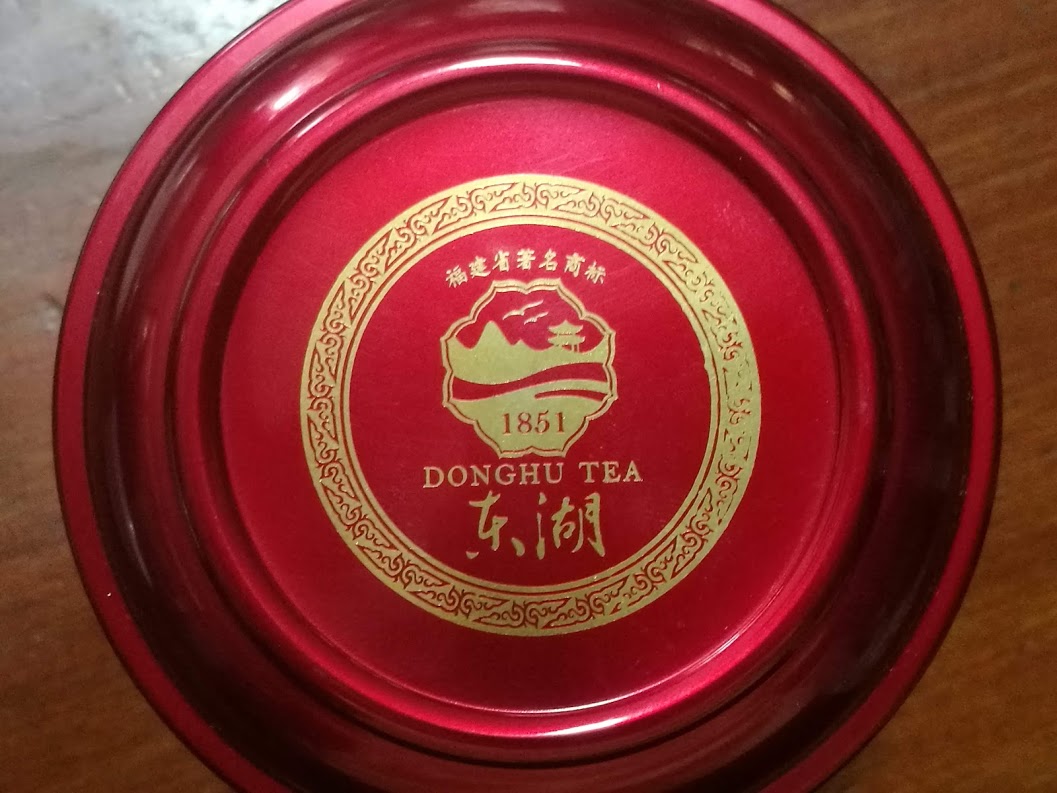
As to the maker and type it's labeled as Te Ji Tin Min Hong from Donghu Tea.  Googling that doesn't help clarify things, any of it--so strange.  Not all that unusual though, really.  Te or teh is probably the other form of "tea," with "cha" turning up a bit more often.  I ran across this pretty nice listing of main Chinese tea types trying to look it up and it wasn't on there, any form of it. 

Here are the labels, all I had to go on:


Never mind; it is how it is, with or without back-story.  It could just be a different looking version of Jin Jun Mei, or a related black tea, but it doesn't matter.


Review


It's sweet, malty, full in body, with a good bit of bees wax flavor aspect.  It comes across like a variation of Jin Jun Mei.  Those can vary in character some but the better versions have this kind of sweet, mild malt undertone with a bees wax and honey sweetness standing out.  It seems possible this is slightly more oxidized than the versions Cindy sends (Wuyi Origin's tea); I could comparison taste that and tell. 

Hers don't have a light oxidized flavor range in terms of expressing vegetal character (eg. they're not woody, or express mild root spice), but it seems like finely balancing that level lets them maximize intensity, sweetness, and bright character range.  All just guessing, of course.  For having a bit heavier flavor this works well too; that extra warmth matches the rest. 


Second infusion:  this wasn't musty or off in any way but it still cleans up and gains some intensity.  Bees wax is still present but it shifts into more of rich mineral and warm earthy tones.  It's one of those complex sets of flavor experiences that's in such a tight range it comes across as simple, and in one sense it is.  Feel is cool, hard to describe.  This isn't exactly thick but it has an unusual structure to it.  It's like a rich brewed aromatic bark spice with a bit of metal in it, both in terms of flavor and how that might end up feeling.  Flavor isn't exactly intense, in a limited sense, but it spans an unusual range.

It will be interesting looking this up and seeing how it's supposed to be, how conventional versions are for the same type [except that didn't work].  It comes across as a high quality level tea, well made, based on good material as an input.  As far as how different people would react to it, how much they would like it, that would depend on preference, as is the case for every tea.  Not everyone would appreciate how much is going on with this version; in a sense it's subtle, in a different sense refined and complex.


trying it out a bit lighter, brewed faster


Third infusion:  sweetness and flavor intensity have scaled back a little (likely also related to messing with infusion time), but it's still quite intense across a limited range.  That unusual clean, complex flavor is still just as pronounced, and the feel is still cool.  This will fade faster for me using a much lower proportion than I usually do.  This being a measured individual pack helps identify specifics in this case; it's 5 grams of tea leaf.  I had thought I'd been crowding more like 8 in a gaiwan in a typical session, quite a bit for a 90 ml or so gaiwan.  I tend to brew teas using very short infusion time as a result, with this stretched out a bit, towards or at 20 seconds instead of around 10.

That last description, that this covers mild, warm, rich bark spice range, along with underlying dark mineral, does capture the main flavor effect, but not so much how that really comes across.  The remaining bees wax in the background really works to balance that, to give it depth, and keep it interesting.


Fourth infusion:  it's tapering off already, that effect from using less tea and longer infusion times.  Bees wax is picking up a bit in the lighter profile, probably just relating to what shows through more at different infusion strengths than an actual transition in what's there.  It's easy to test that warmer mineral tones and heavier earthy flavors stand out a lot more in stronger infusions; just vary timing across rounds for any tea including that.


Lapsang Souchong (left) and Jin Jun Mei leaves for comparison, or buds in the one case


Conclusions


What to add?  It's pretty good black tea.  It would be really strange if I got that part wrong and it's not even black tea.  It's so close to Jin Jun Mei that even if it's completely unrelated this would probably end up being sold as that part of the time.  The overlap in the malt range and bees wax flavor aspects really stood out; JJM can be like that.  For being fine twisted leaves those never really opened up; it seemed more like bud content.

Whatever it is it's good.  Many thanks to that friend; and here's hoping I get a chance to return that favor appropriately.

Tuesday, August 13, 2019

2016 Simao (Pu'er county) black tea from Chawang Shop


I initially did this as a comparison tasting session between three black teas but the comparison made no sense, trying it along with two others that were just different in ways that wasn't informative.  I pretty much always publish that type of content anyway, but somehow it makes more sense to cut these notes down to a simple tea review instead. 

Since this isn't exactly a typical black tea I'll start with the vendor description, versus rambling on in a section first:

2016 Simao Gao Shan Hong Cha

This rare red tea come from high mountain in Simao area and picked in early April. Similar with Wuyi rock teas in taste. Some Chinese sellers offer this tea like "Yunnan Da Hong Pao". Dry leaves are dark and aromatic. Taste is smooth, thick, balanced and rich and not similar with classic Yunnan red teas. Aftertaste is fruity, sweet and long. 


Maybe it would've made sense to read that first and then evaluate if the character seemed like that to me, in this case.  I tried the tea over the weekend and drank it a second time with breakfast to get a second take, with these notes from a comparison tasting (edited down to include only the one type). 

The style is interesting, not exactly typical of Dian Hong forms (other Yunnan black), although maybe not that close to Wuyi "rock teas" either, the roasted oolongs.  Maybe to a Wuyishan area black tea; that could work, given those can be fruity in different ways.  I might clarify that Dian Hong is either used as a reference for all black teas from Yunnan (so this definitely is that), or as a style reference to a subset of those that is supposedly more typical.  Since black teas from Yunnan span a broad range of character it would be hard to isolate that intended meaning, but then people do tend to use terms in different ways, and with the right shared perspective any particular use could be meaningful.

Onto the review notes first though, with that covered as a summary at the end.


including this order excerpt is typically about confirming which version I'm reviewing (the last one shown)

the vendor photo; could this have darkened with age?


Review:


On the first round it's nice, a bit light for being a fast early round, but the complexity is really kicking in anyway.  It's sweet, with layers of complex flavors already emerging.  There's some cocoa, but it's not mostly about that.  A fruitiness is a little towards Welche's grape juice, with mild earthy components giving that great balance.  It's so complex that a number of different interpretations could all sound like they're describing different teas.  I'll leave off for a round to attempt a clearer list.


Second infusion:  flavors in between cocoa and cinnamon emerge, or I guess spanning both.  I really do like Dian Hong in that style, although this isn't clearly typical of Dian Hong versions.  Rich floral tones seem to join that, along the line of rose petals, which could as easily be interpreted as fruit instead, towards dark cherry.  This tea is complex.  The earthier or heavier mineral base that rounds out that experience is harder to identify.  It doesn't necessarily come across as overly intense; well-balanced instead, if anything a bit subtle, but the flavor spans a lot of range.  The feel has some pleasant thickness to it and aftertaste extends longer than is typical for black teas.


Third infusion:  for being subtle in character this is great.  It would be the right round to bump up infusion time next time.  It has settled in more to cocoa range, with some supporting floral, and extension in all sorts of flavor direction.  Even on the light side the feel isn't thin and aftertaste carries over. 


It's not completely fair to say that black teas are just simpler than sheng or oolongs.  In one sense the teas I tried during that tasting, and others, contradict that sweeping judgment, while in a different sense they confirm it.  The range they tend to span, individually and as a set, is very broad, and definitely not limited to flavor.  At the same time the levels of experience are still slightly simpler than for those in those other two categories (which vary a lot; it makes no sense to group them that generally, really).


Fourth infusion:  this round I brewed closer to 30 seconds but this is still quite subtle.  If this tea wasn't a sun-dried version, which it seems not to be (really only a guess, given all the more background I have with that) then it may have faded a little in the past three years, versus gaining depth and limited flavor intensity if it was "shai hong" instead (sun-dried tea).  It's still very pleasant but it's time to use 45 second to one minute rounds to draw out intensity in it. 


Fifth infusion:  not different.  This is on the way out for brewing out but not changing, which I guess in itself is a good sign.  I get the sense this has a couple of rounds left, that it will be pleasant at longer infusion times too.


This tea might be fading a little due to that age.  I'd be surprised if some of the character wasn't more positive, along with giving up a little intensity, and it's easy enough to compensate for that with a proportion or timing adjustment, and brewing a round or two less.


Second tasting input and conclusions 


Sometimes I'll try a tea again before a review write-up, just to get a second impression, without the burden of taking notes, which I did with this tea.  Without trying to pin down specific aspects flavors come across as subdued, but the feel stood out as more unique, not really how black teas often tend to go.  It's not as thick and rich as some sheng can be, not necessarily viscous, but a bit fuller than black teas often are.  And just different.  A mineral base or an earth-range equivalent, or set of both, plays more of a role than tends to occur, but the fruit and cocoa were typical flavors.

I interpreted all that as being related to this being a few years old, expecting that it probably had started as fuller in flavor but evolved to gain depth and more feel over that few years.  Maybe that happened, or maybe I got the causation all wrong, since the description (which I hadn't read in the last few months, since back when I ordered this tea) said it wasn't typical of black tea style, or at least Yunnan black tea version style.

It was more odd because the dry tea scent is so rich, sweet, and intense, covering a fruity range one would expect in a more conventional black tea.  Fruit does show up, but the flavor range aspect is subtle, with the feel and some general impression of depth--that's hard to pin down--occurring instead.

It's hard to place that potential connection with Wuyi Yancha / rock oolong.  Some of that matches, it's just not exactly similar to those Fujian oolongs, just not typical for black tea either.  For a slightly aged black tea it's probably closer.

This is yet another tea that's a good enough value I probably shouldn't even be mentioning it (not just the value, the tea itself).  It would be better if no one ordered it at all, and it remained an anomaly in the range of tea options, something unique in character, and selling for an absurd value.  Then again if it gets ordered up and lost as a potential experience to new customers it is just a novel black tea, and some people would've had a chance to try it.


after singing at a China-Asean performance competition