Showing posts with label Gaw Khee Cha. Show all posts

Thursday, August 25, 2022

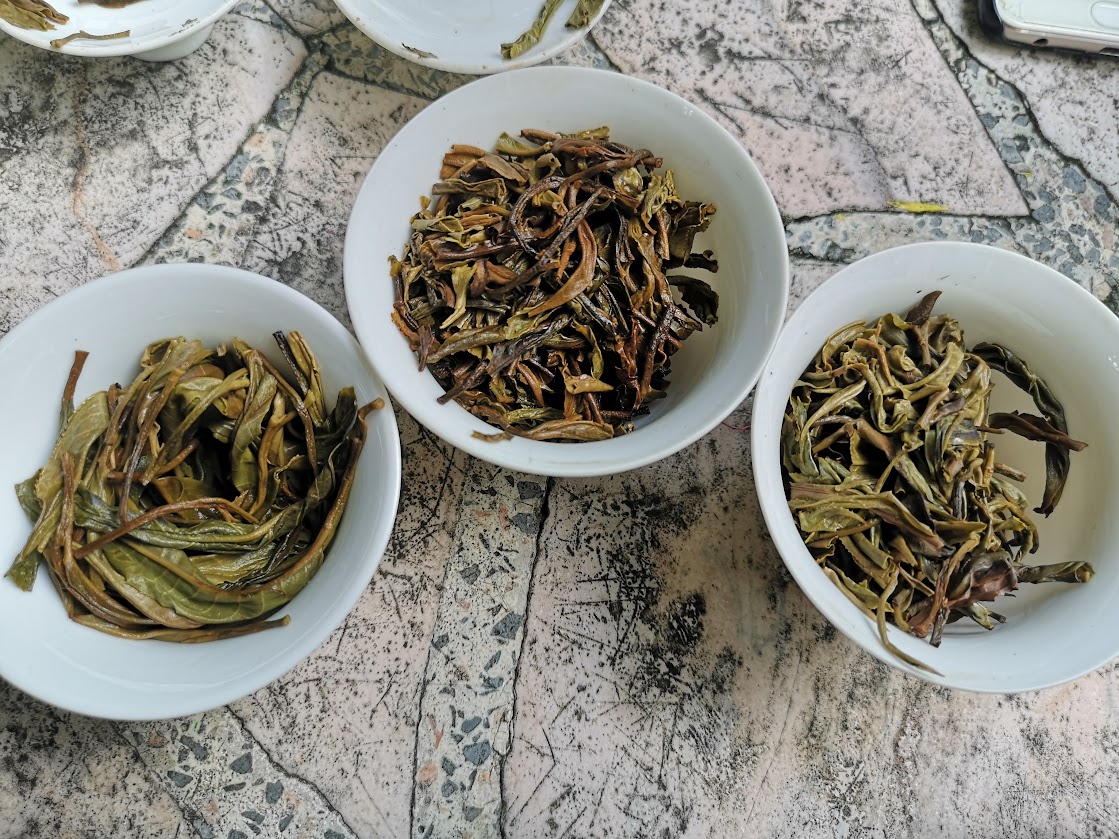
Thai wild origin black tea from Aphiwat of Gaw Khee Cha


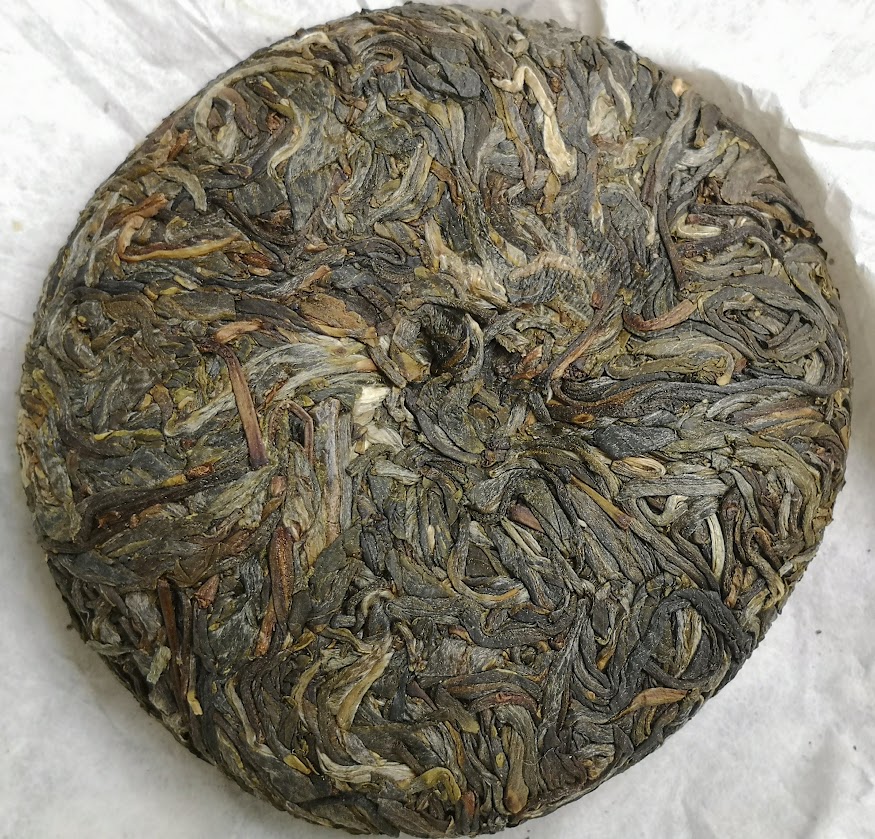
I'm reviewing a Thai wild origin material black tea version sent by Aphiwat Kokhue along with Thai sheng that I ordered not long ago.  I reviewed that sheng here, with a second try of a related maocha version here, compared to another Thai and Vietnamese version, and with a Facebook business page for them here, for Gaw Khee Cha.  Other background relates to Aphiwat being from the Aker indigenous group; I'll share a few pictures placing that part at the end.

This is going to be good.  I've tried other tea from them a couple of years ago, and there was never any version that wasn't significantly above average in terms of being pleasant, well-made, and high in quality level.  Style can vary a bit, but positive results have not, at least so far.  It will be interesting placing these in relation to trying two Vietnamese black tea versions recently; I'll mention in the notes if anything stands out, parallels or contrasts, or a general quality comparison.  The posts will seem to go up in reverse order since I submitted that to TChing for use, but that review will still also appear here.  On with it then.


Review:


First infusion:  I gave this a long enough soak that I won't be saying that I'll be able to tell what it's like more next round, over 10 seconds, and it's probably a bit strong for infusing that long.  Different black teas infuse at different rates, and it's hard to tell from looking at dry leaf how that's going to go.  I would assume that it relates to how rolled / kneaded the leaf was, and oxidation level, but what would I know.

It is interesting!  In the other Vietnamese black tea review mentioned I kept going on about a savory note in one, which tasted like sun-dried tomato, and this includes such a thing.  I'm not sure if this will evolve to a sour fruit range with lots of mineral base, as that did, or if it will transition to something else.  This includes fruit too, a little towards black cherry, but the moderate sourness / tartness stops it from coming across as that.  That effect would probably be different brewed slightly lighter, and teas often shift in character over the first few rounds, so it's early to guess what it will be like.  Intensity is good, and balancing sweetness level, and warm mineral tones.   This is clean in effect, without notable flaws, unless one sees that one flavor aspect as a poor match for preference.  To me it's good, and I expect it will keep improving.


Second infusion:  better balanced, for being brewed quite fast, but probably erring on the too-fast side, a few seconds of infusion time.  I wanted to really place what that higher infusion strength input was contributing, and brewing a round a bit light will help with that.  It goes without saying in these reviews that brewing is Gongfu style and proportion is maxed out; it's just how I almost always prepare teas.  

This hits on so many levels that there isn't one aspect that stands out as primary.  Sweetness is there, but a fruit range that doesn't seem tied to sweetness stands out, maybe closest to a tart version of cherry right now.  Warm mineral depth isn't just a base, it's on an even level with the rest for intensity.  Complexity and flavor intensity is so developed that I think warm floral range and some limited degree of spice is present beyond those main ranges.  It's so intense in flavor that it carries across in aftertaste experience.  


Third infusion:  probably improving, but not so different than before.  There's an interesting feel I've not described yet, a fullness and dryness.  It reminds me a little of how really good Assam can come across, a hint of the feel that ties to cheaper, lower quality, maltier and rougher versions.  Now that I think of it this should be described as malty too.  Not malty in the sense of Ovaltine or malted milk balls, but malty in the sense that Assam is, a drier version of that.  This is closer to a really good version of orthodox Assam than to Dian Hong; strange.  I wonder if this material wasn't grown at lower elevation, and hot climate input didn't contribute to that.  Probably not, since this is from the Chiang Rai area, and it's typically a bit higher up, and cooler; it's probably just a coincidence that it worked out like that for style.

So far I've said that this is a bit malty, and slightly sour, like sour cherry, with plenty of warm mineral base, and other range more like other floral input.  All that works, but there is more to it than that.  The way those warm tones work together this almost tastes a bit like a lightly roasted coffee.  It's still in a good quality tea range, of course, but there's an intensity and depth across a warm toned range that matches that general theme, more than it tastes exactly like coffee.  It's a bit unique in that sense; I don't remember the same general effect coming up.  Sweetness level balances that well enough but with just a bit lighter tone, more sweetness, and a touch more warm fruit range this would be amazing, instead of just really novel and pleasant.  I guess someone could add sugar to it, and accomplish half of that transition, I'm just not in the habit of doing that to tea this good.  I just ate longan and banana for breakfast, before this tasting, it could also be that the really sweet breakfast shifted my palate in terms of expectations and judgment.


Fourth infusion:  this keeps getting better; that's an interesting effect.  I would say that it picks up depth and balance but it seems pretty deep and reasonably well balanced across the whole cycle.  It's that the proportion of aspects I've already described keeps shifting, with those integrating better now than in the earlier rounds.  Feel seems richer as opposed to a touch dry now too, with aftertaste more pleasant for being based on that feel and a more balanced flavor set.  

Other than being a lot better tea than one would typically eat breakfast with this would be perfect for that role, complementing rich and sweet foods, or I suppose it could even work with more savory range, as Thais tend to eat for breakfast.  It still does include a sun-dried tomato savory aspect range, it's just diminished and a secondary tone that balances the rest now, where it really stood out instead in the first two rounds.  I had thought fruit might evolve in some other way, but this is still tasting like a tart cherry, with warm floral tone developing as secondary range more.


the pictures get redundant but it was beautiful in appearance


Fifth infusion:  not evolving or changing much, but not fading in the slightest either.  This might have 5 more positive and intense rounds to go, and a late stage transition could be even more positive than it has been so far, which is already quite pleasant.  The warm tone shifts a little towards cocoa, and tartness eases up, so to a limited extent it is still improving, just less quickly than before.  Maybe I will give this one more slightly longer infusion and see how that goes, probably around 15 seconds.


Sixth infusion:  it seems like even minor shifts in infusion strength affect how that warm tone and feel come across, in relation to lighter tones, fruit, and floral range showing through.  It seems drier and heavier in tone brewed even that little bit stronger.  Aftertaste picks up too, and the intensity of the experience.  There's not enough range that one would tend to see as negative for this being stronger to seem like a problem, so it's down to optimizing effects and balance, not avoiding any.


Conclusions:


A unique and very good black tea.  It was interesting that the style leaned a little towards really good orthodox Assam, a version that included a good bit of fruit, instead of really good Dian Hong.  That probably related as much to a relatively random plant type input as anything else.  It was also interesting that the tea kept seeming better and better, that it evolved so much in character over so many rounds, and all the changes were from it seeming like a good tea to an exceptional one.  It wasn't done where these notes left off either; it made another half dozen very pleasant infusions, just as good as the fifth and sixth.

In the other post I had mentioned about Vietnamese teas (Viet Sun black tea versions) I talked about how novel plant type input probably caused one to be really distinctive, maybe in a way one could interpret as matching some aspects of good Taiwanese black tea.  Minor variations in processing steps and that plant material input difference, along with terroir / growing conditions input, all can lead to these types of wild origin input versions being quite unique.  Or at least I think that's what this is; I've only discussed the teas in general a little with Aphiwat, not a confirmation of this version's background.

I also mentioned that I would share some photos he shared of Aker indigenous people wearing traditional clothing, as follows.  There are more photos of the tea itself, and pictures of people and his family, in this post from three years ago.  It was interesting re-reading a naming convention issue related to his tribe name, which at first I thought was Akha, but that turned out to be wrong, per his description:


We are not Archer Arkhar. The real name is Aownye Gaokhue, or Aownyer Kokhue.  But other people call us Archer Arkha.


So apparently they end up designated as a sub-group of a main indigenous group, the Akha, but they see that as misidentification, since they're not related to that other group.  And then he later clarified that using Aker as a short version of designation is probably most accurate, or at least it's acceptable.


Sunday, August 7, 2022

Wild origin sheng from Thailand and Vietnam


We spoke to another two interesting tea contacts two weeks ago, one a tea vendor in Vietnam, and another an anthropologist doing research into tea culture patterns.  This post isn't about that discussion, or really even about either of them.  Eventually I will probably say more about that anthropology theme, since it has caused me to reconsider some assumptions about why tea culture gets taken up in different places, and why it takes on the forms it does.  And that other contact is really interesting, and nice.


image credit Suzana


This is about a Vietnamese tea instead, which was sent by one of those contacts, Steve Shafer, to give feedback on what I think of the versions, and the limited exposure reviewing teas here provides.  I won't cover much for his background except to say that he's American, and an experienced chef, who had lived in other places earlier, including in China.  He comes to tea with a perspective and palate informed by that culinary experience.  And he embraces the organic foods, local production, farm to table theme that has been popular in the US for awhile, applying some of that to tea.  These are organic, naturally grown and produced versions, not that production methodology changes much in terms of involving chemicals or problematic steps.  But as Vietnamese local teas they will probably vary in style from the most conventional Yunnan sheng versions.

Steve mentioned other factors, about his approach to tea interest and evaluation, framed in comparison to local Vietnamese tea perspective, but I'll not include that here.

They're not pu'er, since that naming is associated only with Yunnan, per a Chinese registration convention.  I'll just call them sheng; use of the term "raw" isn't restricted, although eventually maybe it will be.

I had reviewed two versions of Thai "wild origin" teas in the past month or so, so I've included trying both together with one of these versions as a review tasting.  One was from a local contact Aphiwat, initially reviewed in a pressed cake form here, with this a maocha (loose tea) variation he also sent.  It's great tea; I already knew that.  The second is a cake form of a wild origin Thai tea from Leo Shevchenko, produced through a cooperative effort with Moychay, initially reviewed as a maocha version here.  Again it's very good tea, very pleasant and distinctive, without a hint of a flaw or limitation that would make comparison as relatively more positive, or even equivalent, easier for the Son La version.  It was a bit more oxidized than is standard, I thought, but that can work really well for sheng versions, it can just cost them some aging potential.  I'll say more about that factor at the end, and addressed it at length in that first review.

For what it's worth I bought the cakes related to the Thai #1 version, and Aphiwat provided extra maocha to try (a good bit of it to, not the usual 10-20 gram small sample), and Leo provided the second tea for review (many thanks for that, of course), with Steve providing this and other Vietnamese teas for review (again which is much appreciated).  I see myself as objective in judgement regardless of who provided what but it's best to be clear on that background.


I'm trying a maocha version today, but this was that pressed version from Apiwat


the Thai version from Leo; the opposite this time, I wrote about maocha and this is the cake


I didn't check any background on this Vietnamese tea before trying it, but I'll cite what is in a website here to introduce it:


Sơn La (listing for $27 for 100 grams, $96 for a 357 gram cake equivalent)


A special tea from Sơn La province in northwest Vietnam.

This is a tea from one of the best ancient tree gardens deep in the forest in Sơn La province... 

This tea brews up a thick floral sweet liquor. The moderate astringency and bitterness pairs really well with the heavy sweetness of this tea. The fragrance of this tea is also unique to the area.

You can expect this tea to go many rounds...  Rich, lasting Huigan with a strong focused qi.

Season: Spring 2022

Picking Standard: 1 bud, 2 leaves

Region: Sơn La Province

Elevation: 1900m


Sound good; onto the edited review notes.


in the same order as reviewed L to R, Thai #1 left to Vietnamese on right


Review:


Thai tea 1, from Aphiwat:  bright and fresh!  It's almost lemony, or really that specific description works.  There's some vegetal range too, but not much, and it integrates well with the brightness, sweetness, and other complexity, the very moderate bitterness and pronounced floral range.  This tea would be easy for a broad range of people to love.  A lot of green tea drinkers might regard the experience as a wake-up call, that there is other comparable range out there that's perhaps far more interesting, and pleasant in a different way.  

On purely a quality level scale, as much as separating out that kind of judgment makes any sense, really good Chinese green tea versions are just as good, or maybe better, but per my preference they would struggle to match this tea for pleasantness of experience.  It's so intense, high in sweetness, and clean, while at the same time approachable.  Bitterness is quite moderate, hardly noticeable as young sheng goes.  Flavor complexity stands out, that pop.  It should be interesting to see how the others compare.


Thai tea 2, from Leo Shevchenko, the Moychay forest preservation initiative tea:  this doesn't even taste like the same category of teas.  It's far more oxidized, even just from appearance, brewed color.  That is atypical related to the style, but the character works well, which is the main point.  This tea is slower to open up (it's pressed), but it's already showing lots more warmer range and depth.  Spice notes already emerge, and dried fruit tones.  There's a pleasant aromatic wood base that could be interpreted as spice bark range instead, or as cedar or redwood like, taken the other way.  

This is quite clean and well balanced too, it just lacks that bright, sweet, floral and citrusy front end, so it doesn't pop in the same way.  Not that it has to; it works well in its own form.  Depth of feel stands out already, and the tea is hardly getting started.  Part of this turning out this well had to relate to drawing on processing skill, not just luck, then it's odd that it was oxidized that much, that atypical in that one way in final form.  It works for me for experienced character and aspects, again the main thing.


Son La Vietnamese sheng, from Steve Shafer of Viet Sun Tea:  also darker than usual, maybe just not quite as amber as the second Thai version.  This contacted smoke, apparent in the taste, so that's going to stand out as a difference.  And it's in a more conventional range for bitterness, which to me isn't a bad thing, since I've been drinking sheng for some years, but for some it would be off-putting. It's just how sheng more typically is, with bitterness, sweetness, and flavor complexity often balancing each other.  Sometimes that relates to versions needing a couple of years to settle to be better, but this isn't like that, it's fine.  It helps that it's whole leaf, changing character for the better, and that it's clearly very good material.  

As for the rest floral tone stands out the most, but a light vegetal edge related to green tea range is also present.  I think that's the type of early character that tends to "burn off" over the first couple of rounds in some sheng, even though it's more often feel related more than flavor oriented.  Together with the smoke the sweetness, bitterness, floral range (intense and complex), and light green wood edge are all pleasant.  

In terms of comparing to experience pleasantness with the others--too early to do that, really, but let's go there anyway--this needs to open up to match the others' level.  That's about style though, how different versions evolve across transitions, not how good the teas are.  That first tea got a running start on the rinse step, which I also tasted, but didn't review.  I wouldn't recommend throwing away the rinse for tea #1 given how that worked out, never mind concerns about whatever someone thinks they are rinsing off.


Thai #1 second infusion:  a bit light; I brewed this round quite quickly to see how that would go.  It's probably as well to skip adding detail and infuse it a little longer next round.  I used less leaves for this than the second, and only slightly less than the third, an easy problem to create due to brewing maocha and pressed tea together.  Later edit:  oddly once all three "opened up" levels in filling the gaiwans were almost exactly the same again; strange how that goes.


Thai tea #2:  evolving woody range a little; as well to keep this description short and let round 3 tell more of the story.


Son La:  smoke may be easing up a bit already; imparted additional flavor can work like that.  It will stay for many rounds, I mean that it has lessened in relation to proportion.  Again let's see next round.


Thai tea #1 third infusion:  I really love that character.  It's sheng range, no doubt, but bright, fresh, floral, and lemony, a cool mix.  Aftertaste adds complexity; that's nice.  Feel isn't substantial, but not thin either.  The moderate weight and mouthfeel impact matches the light flavor tones well.  Aftertaste almost has a refreshing effect; it's strange how that carries over to lead an experiential interpretation, or at least seems to.  Without so much sweetness it wouldn't tie together and have the same impact, but it's nice and sweet.  Then it's interesting how the other two are also appealing, but in completely different ways.


Thai tea #2:  the prior wood tone / bark spice depth picks up lots more floral range input, and leads into an aromatic, essential oil sort of direction, like a natural wood conditioning oil blend might smell.  Spice range is picking up too, a sandalwood / frankincense sort of range, which I'm not well versed on enough to really pin down.  Feel becomes drier, with more structure (where the first was just light, with decent intensity, but lightness matching the flavor tone).  Again that feel wouldn't work nearly as well paired with different flavor character, but with this it's perfect.  Where the other left you with a light, intense, sweet, towards-citrus aftertaste in this version the warm tones, towards dried fruit, but really still back more on spice, pair with that drier, quite different feel.  Dried fruit might really evolve in this over more infusions; that happened on the last tasting.


Son La:  smoke continues to fade, at a nice place for evenly balancing with the tea character.  By "smoke" people might be thinking of a tea that's almost ruined by a heavy input, an accidentally smoked tea, like Lapsang Souchong, but I'm talking about a level that matches the other flavor range, it doesn't dominate it.  This tea came into contact with smoke, it's not smoked.  It seems to fade at a rate that will have it be quite secondary in another infusion or two.  Floral range stands out in this tea, more than for the other two, so complex that it's really a range of floral tone, not a simple form.  Then that bitterness edge is a bit like flower stem, or something such, with a vegetal edge to it.  

This is probably the only one of these three teas with significant aging potential, that might well be quite good in a decade, where the other two will peak now or in a couple of years.  It's the most conventional style of the three, related to Yunnan versions.  

Of course if I owned 100 grams of this tea it probably wouldn't see the end of next year, whether I wanted to save it to experience aging transition or not.  That might be a shame, because it seems a good candidate for moderate aging too, that it might deepen and evolve in form over 3 or 4 years, versus a fuller cycle.  I think all three of these teas would be fine in 3 or 4 more years, but the first is so bright and fresh now that it might be a shame to allow it to transition like that.  


Thai tea #1 fourth infusion:  I'll probably only drink this and one more round, giving up the second half of the cycle in note-taking as a cost of trying three teas together.  And being in a rush to do other things, but 15 small cups of tea is a lot.  This tea picks up some depth while the brighter and sweeter fresh range fades a little.  Going with a longer rinse that you drink instead would maximize having that early experience.  It's still great like this; the extra depth leads into a bit fruity range.


Thai tea #2:  while the first loses some of the initial main appeal this is just hitting its stride, the best it has been, which will probably continue for a good number of rounds, or I suppose could potentially even improve.  Dryness eased up, with feel richer, and earlier wood tone swapped out for more warm dried fruit, a bit towards apricot, or maybe persimmon, that different range of lighter plum.  It's quite nice.


Son La:  floral range and touch of vegetal edge overtook the smoke, still present, but quite secondary already.  Bitterness is still at a much higher level.  It's funny saying that, that it's relatively bitter, since this is still towards the conventional sweet Yiwu range in comparison with bitter Myanmar or Lao Man E range.  The other two teas are atypical instead, in a more "drinkable when new" sheng range.


Thai tea #1 fifth infusion:  really just in the main part of the cycle, but I'm pretty much wrapped up for tea input.  Bitterness actually increases in this, since I've added a bit of brewing time compensating for it fading a little.  It's odd how the character is closer to the Son La version than it has been across all the other rounds.


Thai tea #2:  honey flavor picks up in this, probably present over the last two rounds, I just wasn't noticing it.  Along with that dried fruit range it's quite catchy.  Feel is richer and fuller than earlier, maybe just structured in a drier form than the first still.  Across this many infusions the two are better matched for pleasantness, for the initial most positive range of the first fading, and this evolving in positive ways.  This probably has another 5 or 6 infusions that would be this positive to go, before stretching brewing time to compensate for it fading changes character.  At a slightly lower proportion, that would speed up a bit.


Son La:  bitterness seems stronger in this than it has been, probably really related to slight variations in how I'm brewing it more than actual transition.  Of course it's that bitterness with sweetness effect that happens in sheng, hui gan.  It's just not overly centered on a rear throat experience, more across the middle or even front center of your mouth and tongue.  For anyone seeking to avoid bitterness in sheng (kind of an odd approach, really) the first two versions are a suitable match, and this wouldn't work; it's more bitter.  Smoke is hard to even notice now; heavy floral range and that bitterness completely replaced it.  Flavors are complex enough that interpretation as fruit instead of floral range might work; that story would be clearer over a few more rounds, or better evaluated over multiple tastings.

I wouldn't mean to say that this tea needs aging but I think it would be better in 2 or 3 years, per my preference.  For people into bitterness in sheng experience the opposite would probably be true; it would lose some appeal.


Conclusions:


All three of these are so different in style that it doesn't work to say one stands out as better.  The version from Apiwat clearly won the early rounds for being a fast starter, and not needing to evolve past any bitterness or astringency edge, but the other two evened that up even across a limited tasting session range, five rounds worth.  Of course I came back to drink more of these later, and they had a lot of positive output to offer, but this summary won't really draw on that.

It worked out as interesting that the first tea is probably as good as it will ever be right now, and the second Thai version may settle into an even nicer place over another couple of years.  It's completely fine now too, and quite moderate in bitterness and astringency, what people often might hope to see transition, but given that brightness and freshness aren't as much of its appeal and depth and warm, sweet tones are all that range may deepen further, even over moderate time.

The Vietnamese tea will be even better in 3 or 4 years, I think.  Smoke input has a way of settling out, and bitterness, still not necessarily at a problematic level or form, will ease up as the tea gains depth.  It definitely has intensity to spare; that fading a little would be no problem at all.  All three kind of do, beyond the second Thai tea needing a couple of rounds to really open up.

I would need to keep re-trying these to accurately map them to my preference, and the aging potential issue complicates things, trying to fold that in.  

There's a catchiness to the first Thai tea that gives it a natural edge, and for the second Thai tea the late round fruit character really works for what I love in sheng.  For how the Vietnamese tea was I think giving it more focus over a full 12 to 15 round cycle would give a clearer impression, brewing it more carefully than I did to balance intensity and bitterness.  I suppose it's possible that the Son La tea would need a couple of years to settle to match my degree of preference for the other two, that if someone is more into drinkable sheng that they'll go through right now it loses comparative appeal, swapped out for greater aging potential.  I think saving the Son La tea for a dozen years would be overkill; it's just not like that.  A few years to transition some would be fine, maybe optimum at 4 or 5, depending on storage conditions and preference variation, but it would still surely be close enough after 2 or 3.

All three lacked limitations in terms of processing flaws or apparent limited potential related to material input.  They all started with very promising material, it seems to me, with initial potential differences and processing steps probably both causing the broad range of variety in outcomes.

These teas represent exactly why people should be trying South East Asian sheng versions, if variation from dialed-in optimums from their favorite Yunnan sources and narrow production areas is of interest.  If you could find "local" enough forms of Yunnan versions you could get close to how these turned out in styles, but it would be more typical to find blended-together, more conventional, and above average quality input mixes that are nice in their own ways, but not like this, not as interesting and distinctive.


really from tasting the next day, in the same spot


with the cat that keeps checking in to see how the tasting goes


Sunday, July 10, 2022

Doi Ngam Thai wild origin sheng


Awhile back I tried some really nice local Thai tea from Aphiwat Kokhue, a contact who is a member of a local indigenous group here, the Aker.  I wrote about a version here (compared to a Farmerleaf Jing Mai Dian Hong version for reference), and shared some other pictures of where he lives here.  After seeing a Facebook post about him selling recently produced sheng cakes I ordered some (through a FB contact, with that Gaw Khee Cha business page here).  I thought I remembered trying sheng from them before, but maybe it was only black tea, the one in that post, and I was mixing up that memory with another version.

This tea is good (jumping ahead to conclusions), interesting in style, very pleasant, and promising in relation to changes with aging.  It's not unlike other South East Asian "wild origin" versions that I've tried, which tend to be flavorful, sweet, complex in flavor range, and not so astringent.  Bitterness is more pronounced in this than in many other versions, but that can vary, which I would guess relates mainly to tea plant genetics and processing inputs.

I only have one concern about this tea, related to it being a bit pliable as you separate out leaves for brewing.  It may be more damp than is typical, and that potentially could be a risk, that it's not dry enough to store well, and may turn sour or mold.  I doubt that it will, but it's a significant concern, and one that connects with two earlier examples I'm familiar with of that happening, so I'm going to delve into that before the review.  

One well-documented example of this happening related to Mei Leaf communicating that a sheng pu'er and chen pi (tangerine peel) pressed cake they were going to sell molded.  That's a little different, because the producer just didn't account for including fruit peel properly, which probably would dry differently than only tea leaves.  I heard that a Thai producer making hand-made tuocha's experienced something related, not drying those enough, which caused big problems for them as they were stored.

The concern comes from the leaves being slightly pliable while pressed, which isn't common.  Leaves are always a bit crisp, maybe so compressed that they won't separate well, but never as flexible as these.  The tea won't naturally continue to dry out well here, even without humidity added as a storage environment control, because it's always humid here (in Bangkok), especially during this rainy version of a rainy season.

I could research how to make a low humidity salt pack and set this aside to dry, kind of the opposite of what everyone else does, conditioning cakes to add humidity.  This Tea Forum reference would be helpful for that.  I don't know that included moisture content is too high, and to be honest I'm guessing that it's fine, but if it is this tea could be worthless in a couple of months, and pose a mold risk for everything else.  Just balancing moisture level with the rest of the tea I have stored might do the trick; some kilograms of tea in large storage containers should act as a humidity level sink, equalizing and shifting to get back to local quite-damp Bangkok conditions, which are seemingly never damp enough to ruin sheng.  Or maybe just putting this in a small Lock and Lock style container with a baggie with some salt in it would do it, only drying it out, versus making some attempt at conditioning it to some level.  Nothing ever goes bone dry in Bangkok; that salt would already be conditioned to holding 60-some percent relatively humidity, because it's always that humid.  

Since it made for a cool science project sort of theme I did just that, roasting some salt in a steel bowl in a toaster oven for 10 minutes, to dry it, then wrapping that in a tissue and putting it and the cakes in a "tupperwear" container, more or less.  The rest will be all guesses, if that was enough salt, if the process is even practical, and how long to leave it.  I'm not so worried about over-drying it because whenever I open that container to check it plenty of moisture will enter, and it would re-condition automatically, when stored with the rest of my tea.

I doubt all that was necessary, but it doesn't really seem to involve adding any risk, and it may offset some.


Review:


First infusion:  unusual!  This has quite a bit of green tea edge, probably heated more than would be typical for a sheng (pu'er-like tea).  The labeling sells it as a green tea, and that may be accurate.  I'll still call it sheng in a title, and review it including commentary about which type it seems to be.  


other than proportion being vague and timing seeming long the brewing instructions sound ok


Bitterness is noteworthy; that part ties to sheng character.  Green tea can be a little bitter but essentially never like this.  It might be in between the two ranges in style, just heated a bit much, which could negatively impact transition potential.  Over 2 or 3 years that potential would be easier to estimate, and since full aging transition tends to take 15 to 20 years, or 20-25 under drier conditions, waiting to see how that goes is a long process.

Floral range is dominant, with some vegetal range.  Green tea can be floral but typically not as pronounced as this.  I'll do more of a flavor list next round, and continue to describe other aspect range.


Second infusion:  evolving a little, but essentially the same.  Bitterness definitely increased; I suppose that's a good sign, related to this seeming like sheng, and having aging potential.  Quite often wild material sheng versions can be sweeter, more flavorful, and milder, not astringent or this bitter, which could really relate to differences in plant types or processing inputs.  I'll often guess which in these reviews but I could never really know.  Let's do that flavor list.

Bitterness, floral range (some warm and deep, some lighter and brighter), vegetal range (green wood, towards kale, maybe not exactly that), limited mineral base, warmer tones that are harder to split out. Those last two inputs might be easier to describe after it transitions across some rounds, but then they would also change.  Sweetness level is fine, pronounced enough to balance the rest, with bitterness just a little heavy at this point.  Feel has good thickness, just not much edge, and aftertaste is very pronounced.  Most often bitterness will transition to a sweetness effect, the hui gan theme, but this is trailing the experience of bitterness over to aftertaste more than is typical.  It's like biting a dandelion flower or stem; it stays with you.  

There's a lot of contrast between this version and one from the Moychay joint forest preservation project, undertaken along with Leo Shevchenko.  That was a more typical "wild origin" sweeter, less bitter version, leaning a little towards how fragrant, approachable, and fruity similar white teas can come across, just a good bit more intense.  Per leaf coloring this could have oxidized a little, and the tea liquid isn't as pale a yellow as would usually be for a relatively brand new sheng, but that didn't ramp up warmth or heavier flavor range much, or offset bitterness at all.  I couldn't be sure why.  This material is a bit broken, versus that being about as whole leaf as possible; that would change things.  Some of that could relate to separating the cake out; it seemed a little more tightly pressed than is typical, harder to split to whole leaves.

Plant material (genetics) are probably quite different from that other Thai "wild origin" version too, a factor I'll never really be able to develop.  For processing difference who knows; maybe this just got a little hot at the very end, leading to some of that green tea vegetal range creeping in.


Third infusion:  bitter!  I might back off infusion times a bit.  I'm brewing this for something like 10 seconds, but for this proportion fast infusions may be suitable.  Warmth and balance is picking up though, it adds depth.  Along with that intense floral range and good sweetness makes it pleasant.  


Fourth infusion:  I used a true flash infusion this time, a few seconds of brewing time.  That still brews intense teas stronger than one might expect, since the leaves are still wet right now, after the water was poured off, just not submerged.   That is nicer; bitterness drops way back at lower intensity, and there's still plenty of flavor to experience.  That intense, complex floral range is able to show through better with bitterness blocking it less.  

There's definitely a warmer side of flavor range to this tea, one that at this point really does adjoin the floral tones.  As for the vegetal side minimal flavor seems to pair with the bitterness, maybe a trace of green wood or tree bud effect, with that largely dropped out already in relation to how heavy it was at first (strange).  This seems like sheng, it's just a slightly green edged version of sheng.  No green tea was ever this bitter or this intense, or as heavy on floral range, that I have yet to experience.

The leaf coloration I took to be oxidation caused by harvesting damage to leaves, bruising, which I would've expected to contribute even more warmer tone flavor range than I'm noticing.  It could be inconsistent pan-frying instead, that some of the rounds going into this were heated quite a bit, pan roasted instead of just mostly fixed, resulting in it really including some green tea input (some of each type mixed together, as batches), even a slightly roasted green tea version, maybe.  Then with that mixed with most of the material being processed exactly like sheng it would take on a sheng character with more complexity towards that other range, what I'm experiencing.  All guesses, of course, but it's interesting to guess.  There's one friend in particular I would like to have try this tea to pass on her thoughts, one who makes tea, but as she filters her image to a limited online profile I'll stop short of naming her.


Fifth infusion:  not changing so much.  A warm fruity tone is picking up, a complex version of it, like Fruit Loops.  That's nice!  Bitterness is finally easing up some, but then switching to faster infusions was part of that.  Intensity is definitely there even so; this tea would probably brew 15 fast infused rounds.  Bitterness and intensity is too much to go through all that without some food input to tone it down, so maybe a couple of years of aging really would help moderate character.


Sixth infusion:  warm tones did finally pick up.  That lighter fruit just shifted from Fruit Loops range onto dried apricot, maybe the strongest expression of that particular flavor aspect I've ever encountered.  I was just about to say that's enough for taking notes on these rounds since this might have one or two minor transition surprises left but I'll keep going.  The green wood range shifted too, onto more aromatic cedar or redwood range, or even a little towards spice.  For this shift to be so pronounced one more significant change wouldn't seem so unusual.


Seventh infusion:  oddly the way it balanced shifted, not individual aspects.  It comes together.  Feel seems a little more rich, and the fruit and aromatic wood range seems to integrate better, to work more as a set.  It might be that mineral depth seemed to increase a little, and that ties the two, providing a foundation or interim range to experience.  Bitterness has faded to a supporting aspect that's not at all dominant (related to sheng experience range; for an oolong drinker this is still as bitter as could be, with those early rounds unapproachable for that level, if someone strongly prefers oolong character instead).  This is leaning a little towards oolong character at this stage:  moderate bitterness, good sweetness, complexity, rich feel, but not a pronounced astringency edge, and limited range warm tones along with plenty of fruit.  

If my earlier theory that inconsistent (mixed) processing input helps cause this unique character it could be that some of that range tends to "brew out" a lot faster, with other parts still intense.  Or even green tea transitions across rounds, so it could just be that instead.  From the wet leaf and brewed liquid color looks of this I had expected oxidation to be a significant input, but I'm still not so sure.


Eighth infusion:  citrus tone picks up in this.  That's not completely different than what I've been describing over the past two rounds but it's still quite odd to not include citrus as a description until round 8, and then to have that be this pronounced now.  It's hard to identify as a particular citrus type, maybe closest to tangerine.  Together with the mouthfeel and other flavor intensity, and aftertaste carry-over, it's all a quite pleasant effect.  And of course strange that this is so different from the first four rounds.

At this stage it's not so different than more oolong character oriented younger sheng versions I've tried before.  I love that range, but I suppose it might not be for everyone.  It's not challenging at all, so I don't mean that, only that everyone could be on slightly different pages for main preference.  It's not completely unlike a Moychay Nannuo version I loved, one of the first teas I ever bought from them, a random guess purchase in a store in St. Petersburg (mentioned here).  That sheng style was not right for aging; the character did warm and deepen a little over a couple of more years but it was at its best right away.  That Nannuo tea included a pear-like fruit aspect, and this is not so far off that for shifting between Fruit Loops, dried apricot, and citrus.


Ninth infusion:  my patience is exhausted for taking notes, and this is finally fading just a little.  I'll still figure out how stretching infusion times just a little (I'm brewing it at 10 seconds still) affects outcome.  Often warm tones or part of feel range can increase as a result, but for this particular tea I have no idea.  It might go through one more unexpected transition.


Conclusion:


Really nice!  I'm a little concerned that they might've left this a little damp during processing, as I mentioned, but otherwise it's quite novel, interesting, and pleasant.  For anyone not able to relate to bitterness this tea is of no value to them.  That will fade some over a few years, but it's not as if it's going to completely drop out prior to a decade of aging transition.  

I just retried some of a Lao Man Er version, half a sample that I had left, not finished for no good reason,  that had been part of a Liquid Proust set.  That was from 2016, surely pretty bitter to begin with.  Aging one single chunk in a sample packet is far from ideal, so I'm not claiming that it represents an optimum or typical change process, but it was interesting how flavors had deepened and bitterness level was more approachable but still intense.  I probably got that set 3 or 4 years ago; who knows what else has settled to the bottom of a box of miscellaneous last bits.  Some that I do know about is pretty interesting stuff, and then it's always interesting trying teas I don't recognize, when labeling isn't clear.

If this does store properly I think it might have great potential for gaining depth over a 4 to 6 year stored time-frame.  That last Thai Moychay partnership wild tea sheng seemed better to drink just now, or might be optimum over 2 or 3, just settling and shifting some, but this has a lot of intensity and bitterness to support changing more.  It would probably be good in 15 years too, but whenever these kinds of atypical versions make that potential seem less certain it could be harder to justify setting much aside to find out.

It should be atypical.  Anyone trying Thai, or any SE Asian sheng versions, hoping to find one that is exactly like one standard form of Yunnan sheng would make no sense.  Yunnan sheng versions are so diverse that mapping back the other way could work; atypical versions across a broad and diverse range would come up there too.  But this doesn't seem like factory tea, or Western outlet commissioned versions, or higher end boutique styles, to the extent I've ever tried anything like that (essentially not at all for that third category, to be clear).

I tried this tea again the next day and it was really nice to experience without the extra work involved with making notes.  This is no green tea, and people buying it to experience it as that may or may not like it, depending on how their brewing process works out, and personal preference, but it's pretty good as this type of sheng goes.  It's not better than the Moychay project version, just different in style.  People who like approachable, sweeter, complex, floral and fruit-oriented sheng might like that better, and for someone able to appreciate all that combined with really significant bitterness might prefer this version.  

I think this will probably be amazing if it can rest properly over a couple more years, which is why I carried out that probably-unnecessary science project of drying out the two small cakes a little more.  It's good now, and I could really enjoy drinking straight through it, but I think it will settle quite well, maybe even over just a couple of years.


that movie was nice


Friday, March 29, 2019

Comparing Yunnan Dian Hong with Chiang Rai Thai black tea


Farmerleaf Jing Mai Dian Hong left, Thai Chiang Rai version right


Aphiwat Kokhue contacted me though Facebook recently to talk about Thai local teas.  I love that sort of thing, hearing about unusual tea versions from people working locally in production or sales, especially related to Thailand.  Or across South-East Asia, really, and to a similar extent elsewhere too.  Part of my interest in the subject of tea relates to taking related discussion and networking too far (like helping start a Facebook group).

It can be awkward if I agree to try a tea from someone for a review and then don't like it, or if it just seems really unexceptional.  But that usually goes the other way, and it sort of just is whatever it is, more typically positive and a bit unusual.

This post is mostly just a review, not about the story behind that tea.  I might get around to saying more about that part, and it would be interesting given how distinctive the tea turned out to be.  But for now I'll just credit who that contact was, Aphiwat Kokhue Aphiwat (probably only the first two names--funny it works that way on that Facebook profile), based out of the business ไร่ชา 720 (Tea Plantation 720).   The brand name is cited as Gaw Khee Cha instead on the label.  I can only translate the third of those words from my knowledge of Thai and I doubt that would be helpful to many readers.  That listed Facebook page location is getting pretty far out there in the Chiang Rai area; that's probably where they really are located.


credit their referenced Facebook business page


I don't know for sure that this tea is made from those young, conventional farming style plants in that photo.  There would be older local plant source teas around, they just may or may not be in that area.  I can't tell from photos if a tree is a tea plant or not, not without cross-referencing and some degree of uncertainty even if it's a close-up of the leaves, but pictures in their page do show what look to be older source tea plants:


At any rate I'd need more input from Aphiwat to know more about the background of the tea that he sent.  I suspect this wasn't from young tea plants, but it's as well I don't add to that, since that's a wild guess even compared to the typical baseless speculation here.  I can describe how it was brewed though, and probably will get around to discussing it more with him, and maybe trying later tea versions.  It's guesswork buying tea off chance online contacts who mention producing it, since there is no way to know what would show up if you did, but trying a version narrows things down a little, and the tea was pretty good.

It's odd leaving it at that, since I have talked to Aphiwat some, in spite of there being a language divide.  We didn't talk about ourselves but per his profile he has kids, and as a parent that one factor means a lot to me.  I respect people who take on that really important burden, although in a different sense I also respect people for not choosing that path.  Per the photos in his profile he is a Thai local in a completely different ethnic sense, part of a native Thai community, referred to as from a hill tribe.  That expression includes no negative judgement or connotation, not in my use here or in general in Thailand, it just describes background.  It's an interesting background story, to me, which means more to me personally than it makes sense to go into.


I reviewed it along with a Farmerleaf version I just bought, listed here as Spring 2018 Jingmai Sun-Dried Black -- Short oxidation (which of course is a reference to an area in Yunnan).  I can definitely judge how much I like a tea without direct comparison as an aid but that does help isolate where aspects stand in relation to another, and doubles the review pace, in a sense.

Here is some of their product description (William's, surely, who posts really interesting tea production background on Youtube worth checking out, with this discussion of Yunnan black tea styles and a video on black tea processing especially relevant to this scope):


Natural Tea Gardens from the top of Jingmai Mountain
Picked on April 11th, third flush
Processed in our tea factory, experimental
Loose leaf Yunnan sun-dried black tea

...As far as black tea goes, these leaves can be considered lightly oxidized. The tea soup feels very vivid and has an interesting depth in the mouth. The fragrance is complex and keeps coming out as the session goes.


Their black teas vary but I always like them, so I wasn't worried about that part.  The role of the Farmerleaf version in this was to serve as a positive benchmark.


Review


The Farmerleaf version is a little light the first round. Character that does show is nice, sweet, rich, and complex, but a description will work better next round. Earthiness might be centered on a sweet version of leather in this round, not bad, but adding complexity to that would help.

The Thai tea is also too light to review, but interesting. Sweetness is less, with an unusual wood tone incorporated, more in the range of sawdust. The main basic flavors are rich, earthy, and sweet but there is also a trace of sourness. It will make a lot of difference if that part passes or develops.


Farmerleaf tea left, Chiang Rai black right


The Farmerleaf version did add a good bit of complexity and depth on the next round. This complex profile could be interpreted in lots of ways, as including cocoa, dark wood, leather, and spice, towards cinnamon but more a root spice, or else a range. Even a little dark cherry wouldn't be a stretch.

The Thai tea version is more complex too, and better balanced. That hint of sourness has largely faded, transitioning to other range. It's woody in a different sense than the other tea, not an aromatic dark wood but more an aged hickory or oak lumber, so like a newly built barn. There isn't the same level of cocoa or spice or sweetness, but the balance and character works. The earthy depth is filled in more with a clean version of forest floor.


On the third infusion more of the same for the Farmerleaf version. With just a little more cocoa or fruit this would be great, but it's quite pleasant as it is.  The flavors are clean and the overall effect is balanced and positive. Feel is pleasant, just coming across as a little thin to me for being on sheng range for so long, with the same true for aftertaste. Those don't tend to have this catchy and easy to drink character, but this gives up complexity.

Fruit is developing in the Thai version; it's different and better. The specific fruit range isn't familiar, towards a warm version  of berry, which could be interpreted as blackberry, extending into roasted sweet potato. It's completely clean in this range, not sour or muddled at all. The wood tone is onto how a fall forest smells, more like damp sticks, but a clean version of that.

On the next infusion the teas were about the same so I skipped a round of description (three, for the Farmerleaf version; it's staying consistent, which works). It would be possible to brew this Western style, of course, to change proportion and timing to brew 2 or 3 rounds instead. I'm using between 15 and 20 second infusion times, strong for other teas but it works for these, mild and approachable as they are.


Farmerleaf left, Chiang Rai Thai black right


The Thai tea is shifting a bit. That fruit is a little towards grape now, but an earthy and sweet version of it, like Welches grape juice, with a touch more earthy range. It remind me of the fruit taste from a local grape plant version at my great grandfather's house. That dark purple grape version was unique and pleasant, thick skinned with a lot of seeds, with a very rich grape flavor. On the next infusion this Thai tea version flavor deepened just a little, with some of that grape flavor moving into raisin instead.  Both teas brewed more rounds but I left off the notes at that point since they were mostly just fading.


checking out a late round brewed strong, to see what that changes (not much)


Halfway through I had been ready to conclude that the Farmerleaf tea is good but could be slightly more intense across some flavor range, and the Thai tea wasn't on the same quality level but had some redeeming character.

The first part still works, but in light of this Thai black tea transitioning positively across late rounds it's better than that, and even more unique. It's probably a couple slight processing shifts away from being really exceptional tea, but it's nice as it is. It had been about as good as orthodox Assams tend to ever be (in my limited experience), but with that late round positive transition complexity it's at the top end of that scale instead.  It's seems possible that the Farmerleaf version might have lost some intensity over roughly a year of storage; sun-dried black tea versions are said to gain depth and range and oven-dried versions are supposed to be best after a couple months of rest, and then just fade after that.

Of course preference for aspects shifts interpretation. That Gaw Khee Cha version was earthy in a range that not everyone might love, especially before it transitioned to show more pronounced fruit, but even that part worked well for me. The Farmerleaf is more standard for decent Dian Hong character, which to me is not trivial since I love those teas. It was less novel (to me, having tried some of their Dian Hong and others in the past) but it might appeal to more people.

This experience reminded me of trying a Phongsaly, Laos area black tea version passed on by Somnuc Amnousinh not so long ago.   That tea was distinctive, with a trace of rough edge, but much better than more standard type teas for having more unique positive range, higher in quality than such locally produced teas might typically be.  I remember thinking when I tried that tea that I wouldn't really mind drinking a kilogram worth of it, and I think this Thai tea could work as a much better version of a black tea daily drinker than any grocery store in the world sells.


Right at the last moment Aphiwat got back to me with more detail on what the tea actually is; just in time (or just after I hit "publish," but an edit before anyone reads this is the same thing).  He claimed that the tea plants (trees) are estimated as 700 years old, sourced from a growing area of approximately 1200 meters in elevation.

I might have said what I only implied; there is no way this seemed remotely close to being made from young-plant source farm grown Chinese or Taiwanese (variety Sinensis) plants, and more the opposite of that whole set of factors.  The size of the leaves alone almost settles it.  One could take that 700 year old estimate with a grain of salt, since per my understanding it's only hearsay, but the sources are almost certainly from older tea trees growing in a relatively natural conditions.  It seems to go a bit far to claim that there's just something about the end result from that type of starting point that stands out, but at the same time that's exactly it.


that Laos version; you should try these teas