Showing posts with label Bai Hao. Show all posts

Wednesday, July 21, 2021

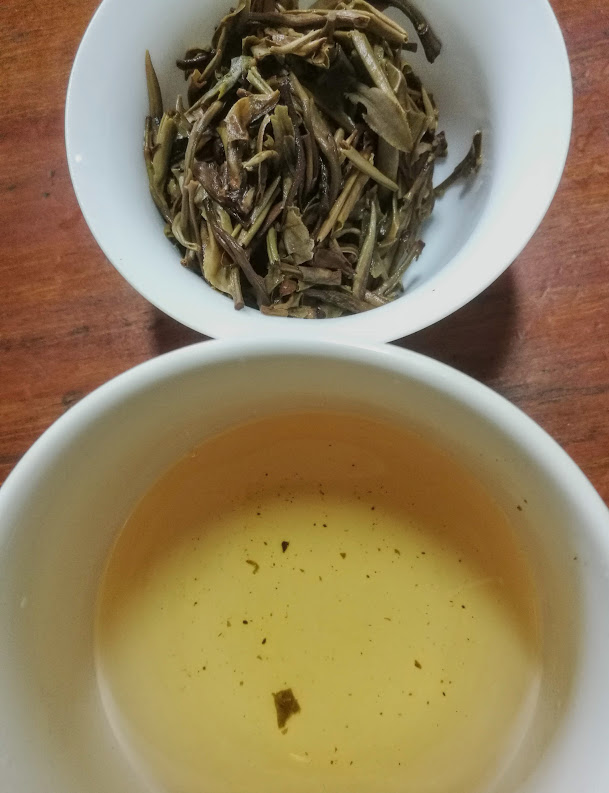
Thai Mae Salong Bai Hao Mei Ren (OB inspired type)


I reviewed a Thai sheng version from this source not long ago, and here move on to a type inspired by Oriental Beauty (Taiwanese bug-bitten, relatively more oxidized oolong).  This naming is a little odd, mixing two of the names for OB (Bai Hao and Dong Fang Mei Ren).  I'll look up a description of it somewhere in a final edit, but here I'm more concerned about how drinking it works out.

There is some contact information on the label photo shown, or they have a FB page, and a Shopee page (kind of a Thai version of Ebay, one of two, along with Lazada).


Review:


First infusion:  nice!  A bit light, as I always go on the first round, but sweet and creamy.  A cinnamon note stands out the most, and the rest does lean towards Oriental Beauty / Bai Hao / Dong Fang Mei Ren range, with a hint of grape / muscatel.  The tea could be thicker, and the experience lacks intensity and depth at this limited infusion strength, but the aspect range is nice.  I'll give the next round a solid 15 seconds or so and see how it fills in, and add more of a detailed flavor list.


Second infusion:  it's interesting how flavor intensity does pick up a lot across a narrow range, and then feel stays quite thin, kind of a gap in the experience.  That hint of creaminess drops back instead of increasing.  On the positive side warmer spice tone increases, the cinnamon.  That's normal for OB ("real" OB; this isn't exactly that oolong type, an isn't really supposed to be).  Fruit is present supporting that but it's subdued.  Other aromatic woody range fills in, like a light version of autumn dry leaves, just a bit fresher in nature than that.  I could relate to someone interpreting all this as floral tone but to me the background range is more fruity, towards mango, or tangerine citrus.  It's not pronounced enough to stand forward as much as the warm spice range.  

Sweetness is pretty good but it could be a little stronger.  Feel being on the thin side could be seen as a quite negative input, as a gap; it would depend on how much one values that input.  It stands out more for normal oolong range, across a lot of types, typically being a good bit thicker.  Aftertaste isn't missing but it's not really a positive input either, kind of moderate.  Some sweetness, that spice, and a hint of fruit trails over, but the experience is limited, and doesn't last long.  

All in all I like the tea but the depth of the experience is limited.  You drink it and then it's gone, and part is missing from the time it is in your mouth.  To me it still works well as an interesting and basic tea, and a pleasant and novel version at that, but someone trying to judge for "objective tea quality" really could find it lacking.  I suppose it varies in relation to whether someone is looking for a particular experience, appreciating a full, balanced range of positive characteristics, or can appreciate whatever is positive in any given tea, without needing some basic aspect set to match up.  Flavor range is very nice.  

This kind of tea version might work better for people who aren't experienced tea enthusiasts.  Or the kind of tea enthusiast who can still appreciate an Earl Grey once in awhile would probably love this, and the kind who can't relate as well to medium quality level Taiwanese Oriental Beauty, versus an even higher end, probably wouldn't care for it.  For having a "crocodile's tongue" it works for me.


Third infusion:  a bit lighter; maybe I went just under 15 seconds this round, or maybe it is losing intensity already.  I will probably need to switch it to 20 seconds or longer to get the same infusion intensity out of this, and might be really stretching the times to get it to go a half dozen rounds.  It's made of really thin, broken leaves, so it's not surprising that it's fading fast.  I expect that I used a lot less leaf weight this time than normal for that density being so low.  A bit more would fit in the gaiwan but it's two-thirds full of wet leaves; it seems inclined to fluff up as both dry tea and also when wetted.

Typically that broken presentation would add astringency, across a broad range of tea types.  It didn't, in this case.  Something about this tea really reminds me of a white tea, as a version bruised and broken a bit but not put through normal rounds of oxidation as oolongs are.  Of course I don't know.  Maybe there is a hint more astringency in this round, lending it more structure, which is kind of positive, just not the full, creamy feel often present in oolongs in general and in Oriental Beauty versions.  Even though that astringency range present isn't necessarily positive--or negative; more neutral--I see the effect as a positive input for lending some complexity to a very simple, approachable character.  

Flavor range is about the same, beyond that.  Cinnamon stands out the most, then some mild underlying fruit, along with light and warm earthy tones.  It might remind some of tree buds or some form of light bark versus fallen leaves; to the extent this is like autumn leaves it's a really dry, light version of those.  I would imagine that warm tones and feel structure will bump up for infusing this for over 20 seconds that next round.  It's the typical trade-off one encounters in brewing lighter intensity white teas; brewed light the pleasant flavors are a bit weaker but they "pop" better; brewed stronger you get more flavor intensity, and warmer tones, along with more feel structure, but the pleasant light flavors tend to come across as weaker in proportion.  


Fourth infusion:  "pushing" this tea is the way to go, at least at this stage.  The warmer tones pick up, and a hint of dryness, with the increased astringency, but it gives the overall intensity a boost.  It would be nice if there was a way to pick up the flavor intensity without stretching out that astringency and shift to warmer range; I suppose really maxing out the proportion might work better.  For people who aren't accustomed to pushing down on a heap of expanding leaves in a full gaiwan this is brewed 3/4th full instead of 2/3rds; there's not that much room left.

At least there is nothing significantly negative about the tea, beyond the gaps (potential gaps; those kind of only exist in relation to expectations, but expecting it to have a fuller feel is kind of a typical broad expectation).  There was a faint hint of an odd scent in the dry leaf, a bit towards plastic (not new-car smell, not like a storage container, more like a cheap Chinese plastic toy).  That didn't really seem to translate to a main input, although I suppose if someone was really looking for it they might find it in the experienced brewed aspects set.

There's probably not much point in reviewing further infusions, since this is only changing in relation to brewing it out longer.  I could try one more round to confirm that but it'll probably just stretch a few more from here, or a half dozen, if someone doesn't mind drinking it thinner and thinner, with more and more of an astringency edge tied to stretching out the times.


Fifth infusion:  sure, just more of the same.  The overall flavor intensity dropping back while astringency stays as heavy as it ever was--not heavy, just filling in some range of experience--isn't as positive as the early balance.  This is where a conventional Oriental Beauty version might be after 8 or 9 rounds, with those supporting much shorter brew times due to possessing a lot more natural intensity.  For total infusion time this has been through a longer than typical cycle for 5 rounds, in relation to my normal approach for a lot of tea types.


To me this is pleasant for what it is, it just has natural limitations.  The character that comes across is pleasant.  If you expect it to match up against an above average Oriental Beauty version then it's not nearly as good; some of the aspect range is mainly a gap in relation to those.  The next 5 or 6 rounds after this review scope worked out better than I expected, retaining a lot of that earlier positive character, even for intensity dropping off. 

I drank it once since and it's an even better experience for really maxing out the proportion and not thinking about feel structure potentially being thicker, and the rest.  The flavor is nice.  It really doesn't fade fast; it's good for over a dozen nice infusions, prepared like that.  It would probably be fine prepared Western style too, or grandpa style, probably flexible in terms of getting pretty good results made in different ways.


Vendor product description:


From their Shopee page (automatically translated by Google):


Mixed with the scent of honey and mixed with the fragrance of flowers.

Suitable for tea drinkers who prefer a light texture. but gives depth to the taste of tea.


The specialty of Baihao Meiren tea (白毫美人)

*** It is tea from the top of Doi Mae Salong, Chiang Rai Province, which is 1,350 meters above sea level.

*** Picked from the young sprouts of the first half-pink tea From the young tea tree (軟枝), one of the favorite cultivars of oolong tea drinkers. and very popular


🌳🌳🌳 Bai Hao Mei Ren tea Grown in an organic tea plantation It is 100% natural without any chemical additives.

--- Process of production ---

👌👌👌 Use hand massage (hand made), pay attention to every detail meticulously.

to control the quality of the aroma and flavor of the tea So the tea leaves come out in three colors: white, green and brown.

🌞🌞🌞 a full day in the light sun.

👌👌👌Massage and shake your hands for thirty minutes to get the distinct smell of honey 密香.

🌞🌞🌞 baking technique Use the slow dry method to fully bring out the floral scent.


Interesting to read, but it doesn't add a lot.  I would take that organic production claim with a grain of salt, given how that kind of thing goes in Thailand.  Maybe it is organic, or maybe not, and even a local version of certification wouldn't make that claim much more convincing.  

Related to value this sells for 480 baht, or around $15 for 100 grams.  That seems pretty good, for what this tea is, quite pleasant and novel.  It seems normal for local vendors to either underprice their teas (tying them to local product pricing), or to really swing for the fences. This might be an example more in the middle, even though this pricing is high in comparison with standard Thai oolongs.  

That sheng version was selling for 700 baht for 100 grams, more like $20, or equivalent to a $70 standard sized cake, which I guess is ok.  I've tried equivalent quality tea selling for less and also for more, but both of these are rare enough that there is no standard pricing.


not sure what that was all about, making the cats line up


just what that looks like; the kids Xeroxed the kitten


Sunday, December 8, 2019

2019 Taiwan "Oriental Beauty" Dong Fang Mei Ren


It's cold here, out of the 60s now (around 24 C / 75 F) at 10 AM, since I helped Keoni make breakfast and started a chicken roasting this morning.  Ordinarily we would go to a swimming class now but 75 F is too cold here to swim; funny how things work out in the tropics.


it doesn't look cold, or different


It's so cold the local pets even need to bundle up a bit:


I picked a tea that sort of matches cool weather, to me, and one I don't want to compare to anything since I'm not feeling like doing all that.  I have an interesting looking Oriental Beauty from King Tea Mall (a sample, provided by them) I've not tried yet.  It's interesting related to that type being a personal favorite; I have no idea how good it is, or how type-typical.  I hope it's above average so I can use this post, since I tend to just not write about teas that I don't like.  There's less of a story to those, although in some cases flaws in teas can be interesting.


This ties to a theme I mentioned in the last post, about why personal preference shifts over time as it does.  For example, why so many people experience sheng pu'er as close to the taste of taking an aspirin (or tasting like kerosene, I've heard), then still go on to keep trying versions until they like it.  I've been through that.  One read is that people try better versions later, so they're liking different things.  I think it's more that sheng is an acquired taste, like coffee, or beer, or lots of things.  My grandfather would eat smoked fish or cheese, and raw green onions, and all sorts of crazy foods and he had probably went through similar transitions.

In contrast a tea version like this would tend to appeal to everyone when they first try it; these are mild, sweet, complex in flavor, and lack significant astringency and any bitterness at all.  I can't place why so many people seem to like Oriental Beauty (per the comments that are made), and why it rarely ever comes up in discussion, and isn't really a main tea type.  There's the parts about bugs biting the leaves, and there only being so much of it, and good versions being expensive.  Somehow the general hype just never focused on it. 

Dan Cong gets good buzz, even though it's expensive, but sheng is a bit "hotter" as a tea type to like now.  Wuyi Yancha seemed more in that role in the past, between 5 and 10 years ago.  I'm not clear on how any of those levels work out, about preference transition, or public awareness and shared interest landing in different places.  Probably none of this will factor in much in a review description, so I'll just move on to that, starting with considering the King Tea Mall description:

Tea Name: Oriental Beauty (Dong Fang Mei Ren )
Harvesting Season: 2019 Year Summer
Production Area: Taiwan.
Level: Special Quality

The tea liquid has clear and clean amber like color.
Natural and elegant tea flavor which lasts long in whole mouth. After taste is honey like sweetness.


That's not very specific.  This tea type tends to be flavorful and pleasant and then vary across limited dimensions (flavor range, feel, level of sweetness, etc.), so detailed background matters less, as I see it.  There would be a more standard plant type and narrower source area but it's the final aspects that matter most.  As to pricing this costs $9 per 50 grams when purchased in the 100 gram amount; definitely on the low side for versions presented as above average in quality.

Review:


First infusion:  just awesome, perfectly type-typical, in the best sense.  Versions of this tea span a bit of range, covering different flavors, and this is well within the norm.  Those include heavy citrus, towards muscatel, or warm spice range, along the lines of cinnamon.  This particular version covers both:  there is pleasant orange zest citrus, and warm spice tones, not missing cinnamon but extending well beyond that.  Sweetness is great, mouthfeel is rich and full, soft and round (although that is all relative; there is probably a lot room for increase in that range).  Even a child would love this tea.

The heavy fruit tones aren't limited to citrus.  One part tastes a lot like apple cider, that warm, rich sweetness.  There's none of the sourness that cider can express (which balances well in the sweetness and flavor range, in even decent versions of that), but that warm, sweet, slightly fermented apple flavor is one of the main parts of the experience.  It leans a little towards raisin, I just don't think that would be the most natural interpretation.  After a minor shift in flavors across infusions, or caused by using slightly different brewing parameters, and it could be mainly raisin.

Why wouldn't people drink this?  Why don't I, related to seeking it out and buying it?  I've been exploring sheng for about 2 years now, and where for this type of tea you can appreciate it the very first time you drink it, in much the same way you might years later, that takes some doing.  It's not just about tolerating bitterness, or learning to like that; either that one part comes naturally or the whole venture would be a non-starter.  There's a lot of other range to consider, and lots of variations to explore.  Maybe it's as simple as that; after trying a dozen good versions of Oriental Beauty you'd be repeating the same experience, to some limited extent.  That wouldn't get you far for exploring the basic range of sheng, never mind sorting out aging and storage environment concerns.


Second infusion:  kind of similar, not shifting a lot.  The balance of those earlier aspects probably changed a little, but not in a significant enough form to make it worth the trouble describing that (spice gained a little ground on fruit, for example).  It's great; just what this should be.

Tied back to the idea of preference, one might wonder, why not just buy apple cider and throw a cinnamon stick, and a bit of orange zest in that, then simmer it?  That would be pleasant too, and that should happen.  The flavors would be in a similar range, but the overall balance and effect would be completely different.  This also "tastes like tea;" there's underlying mineral and a warm malt range that marks this as good tea (for lack of a better concept; it's not what most people associate with malt as found in Assam, which is dryer and as close to forms of mineral as fermented grain).  It's subtle, and well balanced. 

It's a similar answer for why this tea version is nothing like a Christmas blend featuring black tea, cinnamon spice, citrus, and some apple flavor.  You simply can't mix natural and artificial flavor inputs to get to this end point.  It would be nice if you could; then flavored tea blends found on grocery store shelves would be completely worth drinking.

It's not easy to say why it can't be replicated.  I just cooked a pumpkin pie from scratch, roasting a Thai version of a pumpkin (closer to Japanese pumpkin, or a bit more like squash), adding spices, making a crust, all of that.  In theory a version from canned pumpkin or one from a grocery store could be identical, or close enough, but they're just not the same thing.  Subtle differences add up.


Third infusion:  a mild vegetal range is picking up and the spice and fruit are dropping back.  I wouldn't say this has lost a lot of it's charm but it's not quite as good.  It's still very pleasant, just not great on the same level. 

It's interesting seeing an unusual level and type of oxidation on this, with a good bit of green showing through, and with other leaves or edges very darkened at the edges.  That probably means more to well-informed others than to me.  Related to final results I can't say that they "did it wrong" related to making this tea version; this is how this should be, in a positive case. 

The effect of a high level of sweetness is hard to place, and a rich feel that's almost an oiliness that covers your tongue and mouth, versus other kinds of structure in other teas.  Even though it has dropped back a little combining that much cinnamon, citrus, and slightly fermented apple is what makes this a unique experience.  If only two thirds of that was present this would still be a really pleasant tea.


Fourth infusion:  only faded slightly from where it was on the last round.  Often black teas and more oxidized oolongs tend to expend their flavor faster, to transition away from the most exceptional character over a much shorter brewing cycle, and that's going on with this.  Not all do; depending on type some black teas last a really long time, for a high infusion count, and keep transitioning in interesting and positive ways.

It's quite pleasant this round but two more infusions fading at the same rate will cost it a lot of what makes it exceptional.  It seems the more oxidized parts really did get a fast start, so now the parts of the leaves not as well oxidized are providing more input.  It will draw out how much tea this will produce but it might seem more like an ordinary, good oolong by the half-dozen infusion mark.  Since I've ventured into guessing about rounds transitions I'll have to keep going with the notes through a couple more.

Some of noting all this probably relates to being so focused on sheng for so long.  Young sheng tends to only "open up" and move past an initial edginess over the first two infusions, and stay consistent for the next half a dozen, maybe with some character transition but definitely no tapering off.  Older, more aged sheng (15 years old or older, to put a rough range to that) loses some intensity but it doesn't brew a lower count of positive rounds.


Fifth infusion:  still exceptional.  Some of the issue here is that I'm comparing these rounds against the benchmark of the earlier rounds, which were much more intense.  Lower quality Oriental Beauty tend to come across just as this one is on this fifth infusion, in the same general range but a good bit flatter.  Citrus seems to be ramping up in the balance again for some reason.  Even moderate shifts in infusion strength would cause that effect, switching which part seems stronger.  Lower quality Oriental Beauty (or moderate quality, really; what you would tend to buy from standard resale vendors) could include a slight mustiness or woodiness, not related to the tea being off or flawed, just as a part of the standard character for that version.  This doesn't include that.

A bit on infusion strength and brewing time is relevant.  This tea type you can prepare in lots of different ways; there is no astringency limiting that choice, no negative aspects to "brew around" at all.  It would work well wispy thin, how I tend to like lots of other tea types.  A relatively intense version of sheng pu'er can't be "wispy thin" in the most typical sense, even flash-brewed at moderate proportions.  The point here is that lighter often works better for appreciating some of the aspect range for some teas.  That's completely a matter of preference.  If someone values an intense feel aspect they may like teas prepared towards the other extreme. 

To me this works really well brewed in the middle, definitely not light, but also not so strong that it ramps up aspect intensity to well over what I consider normal.  Put in terms of timing, brewed for 10-15 seconds, closer to 15, across all these rounds, at a proportion that has the gaiwan just over 3/4ths filled with wet leaves (so most of what would fit).

That changes the transition cycle too, of course.  This same tea brewed for in between 5 and 10 seconds would be that much slower to change across rounds as this has.  The only way to really optimize that experience is to brew the tea exactly as you like it best, and not be concerned about how it plays out for a count.  It would make more sense to me to drink this really light than to brew it so strong that astringency, or at least stronger feel, really does ramp up, parting ways with experiencing those flavors as well-balanced, but that's just a statement about preference.  As transitions go it seems that people newer to better tea tend to like it prepared stronger, then lighter as they adjust to experiencing aspects at a different intensity level.


Sixth infusion:  still great, but still fading.  It wouldn't be nearly as good if that bright citrus wasn't hanging in there, but it is.  A lot of the other complexity has dropped out, narrowing the range of the experience, but the sweetness and positive balance remains.  The feel still has a nice thickness to it.  Pronounced aftertaste never was one of the positives of this experience, in relation to how some other tea types go.  It did prepare a few more infusions but those were light in intensity even brewed longer.


Conclusion


Pretty good Oriental Beauty, very nice.  It's been awhile since I've even tried one so I'm probably not the best judge of those (although I did try an aged version earlier in the year; that's different).  Earlier in my tea exploration these seemed to just come up more frequently, probably with a half dozen versions reviewed in this blog, maybe not even counting hybrid theme versions from other countries.  It helped passing through Taiwan on a trip once to gain exposure, but in other contexts too, buying samples, or teas from shops locally, or related to vendors sending tea to try.

Per my judgement this version was quite pleasant.  Related to placing it on a scale of the highest quality types I'm just not on this page enough.  I suspect someone much more familiar with this range could spot limitations or flaws better than I have here.  I tend to not see brewing a limited number of infusions as a flaw, as much as seeing the opposite as a strength, but that could relate to room for improvement.  Overall this seemed a well above average example of this tea type, probably more so for emphasizing flavor as the primary consideration.


at skating class, with a new haircut


experiencing snow in a form closer to shaved ice, by making it


limited Christmas decor at the rink


Friday, May 24, 2019

Moychay Wuliang 2018 Bai Hao silver bud sheng pu'er


I've been off reviewing Moychay tea versions for awhile, at least here, posting some to their own site instead.  Some of their pu'er cakes have tended to sell out so it seemed best to review this version while it's still available.  It seems to indicate on the label that it was harvested in 2016 and pressed in 2018, so it's really two years old, but since that part is in Russian I'd need to confirm that from their site.

To be completely transparent this tea was provided by them for review, and I did limited content writing for them as described in the last post.  I like to think that I'm still completely objective but you know that goes; life experience in general has a subjective character to it.

The label seems to reference two types of tea, since Bai Hao is often used as part of a reference to silver needle tea (Bai Hao Yin Zhen), but that could only be a reference to the material made into a white tea version, to the buds, with this a sheng pu'er instead, so processed differently with a completely different character.

I'll check their product description to see, which I didn't read prior to the tasting:


"Bai Hao Puer from Wuliang Mount" was compressed in the North-West tea region.

...twisted leaves and silvery tips. The aroma is intensive, spicy-herbaceous... with woody, nutty and floral notes... [similar to] a hot, juicy red apple.

Brew tea with hot water (80-95 ° C, the lower the temperature, the softer the taste) in a gaiwan or in a teapot made of porous clay. The proportion is 4-5 g per 100 ml. The time of the first steeping is about 5-7 seconds. For each second, increasing the amount of time for each subsequent step, if necessary. You can steep the tea up to 10 times.


I couldn't guess how much this tea would cost based on reviewing it, since I really liked it and quality seemed evident, but style was a little unusual and source area affects demand and price.  It lists for $36.50 for a 357 gram cake.  Of course how much anyone likes the tea determines if that's just about right, too much, or on the low side, and to me it seems the latter, quite low for this tea quality level and final character.  I've been trying teas that cost twice that amount that I don't like as much, or that don't seem any better (two different judgments, since personal likes and demand for types and styles are different subjects).

The catch is that the style is atypical, which could lead someone to really love it if it clicks for them (as I do), or else dislike it.  But either way the market demand isn't as clearly settled as for type-typical versions, for what people already expect and are looking to buy.  White teas tend to cost less than sheng (just not always), and although I see this as a sheng version with unusual character versus in between styles that could potentially just be a judgement call.


Review


The first infusion is a bit light but the character is already evident; it has a hint of smoke, some bitterness, and good structured feel, pleasant and mouth-watering but full.  It's not overly sweet, not light and mild, and on the intense side, so the style seems ideal for some aging.  Bitterness could be more intense but it's on the high side for teas I tend to prefer young.  This will probably soften and transition a bit over the next few infusions but I expect this is roughly how it will be.  A hint of fruit comes across early; that may well evolve.

Those next-changes speculations are meaningless because in the next lines I'll say instead how it actually is, but somehow it seems to frame what I'm experiencing just then, to describe it in a different way.


On the next infusion it just develops in the same direction, with a bit more intensity across the same range.  It's relatively intense, and it all balances reasonably well, it's just that between that punch of intensity across a range of aspects including medium level bitterness this really may work better in a couple more years, or may evolve well over another decade.  The fruit tone is pleasant in this, complex enough that a single description wouldn't capture it.  It seems closest to dried apricot to me.  Fruit is a little heavier than the smoke already; that's dropping out fast.  To me the bitterness and mineral undertone stand out even more.


Later edit:  I didn't make it explicit this far in but this style just struck me as clearly sheng while reviewing it, and I don't keep mentioning that for context, but I do keep commenting about unusual style aspects that sort of map to other range.


To me, and this part is a judgment call, all of this represents a relatively higher quality tea version.  I didn't check what it's selling for [at time of making tasting notes], or how Moychay describes it; those parts will express their opinion about it.

A couple of factors throw off making that kind of general quality level judgment.  I've drank some pretty good sheng lately but I've also been onto some pretty rough versions, decent but moderate in quality level, and I'm not sure where that leaves my judgment and expectations, if I'm really keeping it all well sorted.  Also demand for source area factors in a lot along with some general, objective quality level:  a tea from a known, in-demand area can demand a higher price, and can be described positively just for matching a typical local character, while another tea that's also roughly as good from elsewhere could seem more modest just for differing in pedigree.  Demand is inconsistent.  And personal preference could shift what is most desirable; that's always a main part of the background context.


It softens a little over the next round, the third infusion.  A trace of smoke is still present but that has mostly completely faded, with fruit giving way more to dominant mineral now.  It's nice the way that the feel is wet but also structured, and the bitterness level balances well.  Intensity stands out, and pronounced aftertaste, and the way that bitterness transitions into sweetness.


More of the same on the next infusion, but the sweetness and fruit edge are changing.  It's odd that the fruit tone matches up with typical white tea aspect range better, but the rest of the character is definitely sheng.  The feel is full and rich enough, versus structured, that it leans a little towards how round and full oolongs come across.  They're just not typically paired with bitterness in flavor range, and the aftertaste typically takes a different form.  The dried apricot is lightening up and changing, moving into dried pear range.  It could be my imagination but a faint hint of spice seems to be evolving, along with some other vegetal range I'll try to describe further in following rounds.  It'll be interesting to see how Moychay describes this tea, both what it is and the aspects.


It's a gradual process but it's cool how this tea keeps changing a little every round; not all sheng does that.  Some of the standard markers for quality sheng definitely show up in this version:  overall intensity, mouth-watering feel that includes moderate astringency  / feel structure, well-balanced bitterness that transitions to sweetness in aftertaste, a pronounced aftertaste effect (although to be fair only moderate as those go), pronounced mineral flavor as a base, and a clean, complex, and pleasant flavor range.

It's interesting to also consider drawbacks, weaknesses.  It's not really that but some people could prefer a different style, for any given tea type or version.  This isn't really an "oolong pu'er," or very drinkable modern style version, so much so that the bitterness could pose a challenge for some, but if anything that aspect could be a bit moderate related to supporting a good 15 year transition to positive full-aged character.  What do I know about that though; working through those cause-and-effects is where I am now.  I typically see smoke flavor as an aspect as a flaw, probably mostly due to just not preferring it, but that did drop out after early rounds.


A half dozen infusions or so in this is the best this has been, falling into a really nice balance.  The intensity is definitely not diminishing but the bitterness has leveled off to balance well, and the smoke is gone, leaving behind mild fruit over a pronounced mineral flavor base.  Some of the supporting vegetal range people might interpret differently, maybe similar to green wood, but without the edgy level of astringency bite that might naturally pair with that type of flavor range.  To some extent that range has edged out some of the fruit.  I suppose a floral interpretation instead might work, better at this stage than in prior rounds, but maybe even then.

More of the same on the next round.  There's really something else about this that reminds me of white tea that I'm not communicating, even though a lot of the aspect range obviously doesn't.  That taste range does, the mild fruit, and the smooth "roundness" I described as being similar to oolong feel can overlap with how full and rich some versions of white teas come across.  Not most, but it can work out like that.  The brightness of this character is interesting; I could relate to someone interpreting a trace flavor aspect as being a bit lemony, at least in this round.

It's a good thing I'm not comparison tasting this with anything; it wouldn't be like anything else and it really does seem to take trying 10 or so rounds to tell the story of this tea, given how much it has transitioned.  All the same I'll just try one more and let it go; I have a limited attention span and things to do.

It seems the same as the last round anyway.  Intensity might finally be tapering off a little, the profile finally thinning.  This probably only has another half-dozen rounds to go, up towards 15 infusions for the cycle, but then I do tend to typically go heavy on proportion as a personal preference choice.

Conclusions


[Original notes version]:  All in all it seems a very pleasant, positive, novel tea.  Most of these character elements aren't that uncommon in any given sheng but as a set it is really different, and the way it all balances together is very positive.  I wouldn't be surprised if they're selling this as upper-mid-range cost tea, around $70-80 per standard cake size, given how positive a lot of the aspect range is, but then in some cases they seem to sell really good tea versions for moderate pricing.  It might well relate to demand for tea from this area, and tied to the style being a little atypical, as much as how good they see the tea as, only the quality level issue.


[Later thoughts]:  Related to pricing the last comment got it; this is a $36 cake, as priced right now.  Given that it's three year old tea (only pressed in 2018, but harvested in 2016) this must have started out as more bitter and really intense.  It's definitely not white tea; the "bai hao" would make sense as a reference to being high in bud content.  Kind of unrelated, I just bought a high bud content sheng version in China that's about as far from this in character as it could be, tasting a lot like mushroom.  I'm not sure what I expect from that, why that seemed like a good idea given my normal preferences in sheng character (for not tasting like mushroom), but at a minimum I can check on adjusting to different range, and see how it ages.

I don't know where this tea is going related to aging past this 3 years, and into the more fully aged range, given it's not what I'm used to at all.  At least it's really pleasant now.  It's not at all that one "drinkable when young" style, given that it's more intense and more bitter than those would tend to be after a few years of mellowing out.  This might be unusually good in another 8 or so years or it might fade; as I keep saying I'm still working that part out.  It could be like an aged white but better, since it didn't start with a character so inclined to fade, so flavorful and sweet but in a different sense mild.  It's probably a good candidate for drinking half of and forgetting about the rest, then either seeing that as a wise move for getting good value out of it before it faded later on, or kicking yourself for not buying a cake to stash if the transition turned out to be really positive.


nice to add random pics of her here again; a "fierce" look


the range of different smiles really gets me


with her brother and a cousin


Sunday, January 13, 2019

Kinnari Tea sheng comparison (Nyot Ou district in Phongsaly, Laos)


I'm reviewing two sheng versions from Anna of Kinnari Tea; these should be really interesting.

They're Laos sheng, from the far North.  One lists it's from the "bai hao" cultivar, a tea plant type more typically used to make white tea.

William of Farmerleaf was also involved with an NGO project to conduct local training workshops in producing more standard and consistent sheng pu'er versions there, along with Anna and a supporting agency, with details about that in this video.

William mentions a link to more details about that project here, from the Comité de coopération avec le Laos (with an alternate Facebook page reference here).  Part of the introduction goes into that background:


In Nyot Ou, the northernmost district of Laos, tea trees grow in the wilds of the tropical forest covering the slopes of the mountains bordering the Chinese province of Yunnan. The wild tea stems from the variety Assamica, one of the two main varieties of tea. In China, this variety is called “the high tree with larges leaves”.

Growing tea has a long history in the Yunnan region: large tea leaves were used as medicine for at least three millenniums and seem to have already been a popular drink around the second century B.C.

Wild tea trees in Nyot Ou can grow as high as fifteen meters. Old pruning marks observed on some of them suggest that they could have be planted hundreds of years ago. In this case, they can be considered as “Ancient tea”, namely a tea tree resulting from a selection of wild tea varieties.


The rest of the background story is compelling.  I would highly recommend reviewing William's summary video explanation and at least scanning that NGO web page.

This really is the "wild, forest friendly" tea that comes up in discussion and sometimes in marketing claims.  The tea is something else; how it turned out depends on lots of factors, the plant type, growing conditions, processing, etc.  So I'll review it without adding more about all that, but I will pass on a few photos taken from that reference page to visually add more about it.

this photo set copyright of CCL, Comité de coopération avec le Laos.  see related link for content description.


Nammanoy village, Nyot Ou

more remote than where I've visited in Laos, which was already rough travel in spots


Review background


Something unusual came up related to this review; I was discussing my impression with Anna and it didn't match hers.  In particular that related to describing the level of bitterness in the Bai Hao version (sheng version made from a cultivar usually used for white tea production).  I decided to re-taste the teas, without referencing the notes, in order to see if my take was the same.  It was but it wasn't; related to that level of bitterness my impression was different.  

Instead of including the typical round-by-round description (which I now have two sets of notes on) I'll summarize findings for both from both notes.  I can't completely explain the discrepancy, the difference in interpretation or assessment of the aspects, especially that one, but I'll mention some possible factors in a section after the review summary.  It was interesting how even though the rest of the reviews seemed relatively consistent, beyond that one point about level of bitterness in one, interpretation of the flavor aspects did vary some.

Review


First tasting round, Bai Hao Left, Workshop version right


Workshop tea (I'll go tea by tea across rounds in this format).  This tea was on the subtle side but the character it did have was pleasant.  It was a little more intense than the other version related to flavor input, but the "Bai Hao" tea had a creamy fullness to the feel that filled in that experience more.  A warm tone stood out; described in different parts of both reviews as possibly related to autumn leaf or a warm version of mineral, like South-Western US sandstone.  Bitterness was very light; part of what might have been occurring related to seeing the "Bai Hao" version as bitter was noticing a relative difference (with more on that in the other review and explanation).

Some amount of floral tone was present in this version, which trailed into a light version of dried fruit in later rounds.  The tea was noticeably darker than the other version, related to the leaves, and the brewed liquid, which might indicate that it had oxidized a bit during processing (hard to imagine what else that could relate to).  That could also help explain the character.  It wasn't really like a black tea but the normal degree of bitterness dropping out and the flavors extending from light and bright into a warmer, softer, earthier range would all be explained by that.  It even had a mild savory quality to it (only picked up in one of the two review notes versions), a bit like sun-dried tomato.


Bai Hao plant-type sheng:  this tea was much milder in overall character, light in flavor intensity, with a degree of bitterness identified as very low in one tasting and only moderate in another, but the dominant aspect in the experience.  In the review where bitterness seemed stronger a flavor along the lines of green wood paired with that; in the other review the tea was described more as mild, light in flavor, and floral.  A flavor along the line of hay or mild version of wood was identified in the other set of notes; that would probably correspond, but seems interpreted as different in regards to level of bitterness and related flavor.  Feel seemed full in both review impressions, a bit creamy even, and the character pleasant, with enough sweetness to give the tea good balance, but a mild overall flavor.  A mild floral tone filled in background complexity, just light in tone, and subdued in character, how chrysanthemum or even chamomile can come across.

That cuts out a lot of the specific observations but covers the main themes and impression.  To be clear (and probably to repeat myself) the Bai Hao version didn't seem relatively bitter, as young sheng goes, but it did seem more bitter in the first tasting, and very mild in the second.  The rest of the aspect description generally matched.

All of this might be implying some judgement of bitterness as a bad thing, which doesn't necessarily work.  I made this observation in the first round, related to that:

The bitterness is at a great level; for some people less would always be more, but to me this balances well.  

That aspect seemed more pronounced than in the other tea, and stronger in one tasting than the other (the one this comment came from), but to me bitterness can work really well in sheng if the balance of the rest compliments it well. 

Second tasting session; Bai Hao left, Workshop tea right


Possible reasons for variation


This provides a good background for talking through why reviews might be inconsistent; these two in particular, but also in general.  I'll list individual potential reasons for variation and talk through background more within that format.


I'm not a consistent input:  teas can seem different depending on changes related to the person tasting them; energy level, mood, background conditions changing perspective, etc.  Even though I've tried a lot of teas over a long time and feel I probably have a decent taste-memory I suspect that trying a lot of teas of a certain range shifts an interpretive baseline.  For example, I'd guess that if I'm trying a lot of very mild versions of sheng for weeks that my impression of what is a bitter version would change to including a lot less of that aspect as an input.  Quality level probably also shifts as an expectation; if I'm trying a lot of exceptional tea of any type it would be harder for a version to stand out related to being well above average.  Background noise in particular is a very significant input; finer details related to tea aspects drop out with any degree of distraction as a factor.


Parameter variations:  this could make a big difference.  Shifting proportion or water temperature would change outcome, even if proportion difference was offset by infusion timing change.  Using even slightly cooler water would brew a milder version of tea, related to infusion strength and intensity of both flavor aspects and astringency.  Drinking a tea a good bit slower would actually change water temperature, giving the drained leaves a chance to shed more heat in between infusions.  The water used itself would vary results quite a bit, and using filtered tap water might introduce another potential variable, since mineral levels and proportion really could vary some day to day.


Guesses about this specific case:  I hadn't given it much thought at the time but I brewed the tea inside the first time and drank it outside the second, at a concrete table beside our driveway.  It's nice out there; lots of plants make for a pleasant background.  It was a bit cool both days, for us, but maybe as cool as Bangkok ever gets for the second tasting, around 25 C (77 F, or so).  Right, it's warm here.  I was using a slightly lower proportion the second time, not for any particular reason, but that parameter judgment is usually just based on immediate inclination.  Infusion times would have ran a little longer as a result, to even out brewed tea strength, but it's easy to not really compensate for that difference with the right degree of timing change, and to drink the tea lighter.

I think temperature may have been a factor.  I was drinking the tea in a cooler space, on a concrete table versus wood, which may have drawn more heat out of the teaware, perhaps a bit slower due to having more time.  Proportion probably also came into play.  I suspect I always vary at least a little as an input, in every review.  Sometimes I have a long block of free time for a review, setting up a good baseline for background, but I don't always.  I definitely sleep different amounts every night, more or less interrupted, and review teas on Saturday or Sunday mornings, but at different times in the morning.  That kind of input change should be minor, but minor changes could add up.  If kids are around (and half the time they are) the background noise changes things a lot.  Even expectation of finishing more quickly would be an input; working around having a set length of time.

I doubt the leaves varied, but it's worth at least mentioning.  Plantation tea would be made of very consistent plant material input, and probably processed very consistently.  I doubt the tea itself really did vary though, but it is conceivable.  In cases when it's known that multiple types of plants were used in making the tea it would be more a factor, or when evident processing variation would be a cause (slightly scorched leaves, a case of a processing flaw).  I'm guessing that the tea was probably relatively uniform in this case, not a main cause.


It was an interesting experiment.  I won't be running that too often because it takes a long time to do two tastings and to edit notes for that kind of thing.  It seems a good time to point out that I see these reviews as an impression.  It might be more of an objective take than someone with very limited tea exposure and review practice would pass on but I never intended them as amounting to a final analysis.  To really get to that, a balanced, final opinion, it would help to try a tea at least three times, and compare notes on impression from those three tastings.  Four or five would be even better, perhaps using the last round as an evaluation in comparison to the earlier findings.  

Interpretation of basic aspect levels (eg. bitterness, sweetness, level of astringency) really should be relatively more consistent, but interpretation of flavor aspects would naturally tend to vary.

Thursday, November 22, 2018

Hatvala Vietnamese Oriental Beauty

a local holiday theme; more to follow at the end on that


It'll be nice getting back to this familiar tea type, to do a review of a tea that's very pleasant, complex and subtle, but not challenging on those other levels (combined or blind tastings and such).

Geoff of Hatvala sent a few Vietnamese sheng to try, along with this version I'm reviewing (which is also from Vietnam).  I've tried previous years of their OB before, which were great, so it'll be interesting to try this one.  If it's the same version another friend talked about it's different this year, more subtle, complex and pleasant, but not as intense and forward related to the fruit and spice notes.

There is back-story to ramble on about related to the potential range of this tea type, how much versions vary, but I've been through all that.  Protests about Taiwan sharing the term "Oriental Beauty" do come up, but regardless of where someone stands on those naming convention issues the teas don't change.  Tea experience itself is more interesting to me than naming conflicts, history, and related rituals (even teaware, and that scope is completely functional).  Other functional issues like cultivar background or processing seem more interesting to me, since they're direct causes of how the teas turn out, but they can be hard to gain a clear picture of.

At best the debates over names and categories can be territorial disputes that are a bit irrelevant, people marking out their own space as special through holding onto their own words (beyond actual "counterfeiting" issues).  At worst it seems to just be trolling, about getting conversation stirred up versus actually making any point.  Language can be like that though; there is plenty of room for people to take use of labels differently than I do.  I suppose that relates to me not wearing that many labels myself.  I'm an American, and self-identify as a tea enthusiast, and beyond that different categories often get a bit hazy.

Review


On first sip it's clear the tea is great.  I can see how this comes across much differently than I remember the last version.  Some OB is bright and sweet, heavy on muscatel or other citrus.  Other versions can show more spice, earthy but in a sweet way, with lots of cinnamon and the rest showing up.  Both ranges tend to be more intense than subtle.  This is different.

Cinnamon does stand out; that is common with a familiar range.  Beyond that the main aspect seems to be a subtle melon range.  I don't like melon, any versions but watermelon, so it's odd that it tends to work for me in the more rare cases where it makes it across in teas (and I identify it; more rare yet).  Bai Mu Dan can include melon as a flavor aspect, for example, and that tends to seem pleasant to me.  Mineral plays a larger role than it often does for OB.  It's still soft, easy to drink, and very approachable, so it's not mineral as pairs with astringency and malt in a black tea; far from that.  It does include some corroded iron bar range though, which is common in teas that are typically a lot edgier.

The taste is still clean.  Really how well this particular tea works out, working from that aspects range, depends on that factor.  It will evolve and flavors will shift but it wouldn't take much tree-fungus or fermenting peat aspect to totally throw off other really pleasant effect.  I don't think this will go that way though.

That first infusion I went a bit over 15 seconds to get things started fast, to avoid saying "it's too light to be sure but..."  All that just depends on preference; that makes for a nice start to experiencing a tea too.

I was just thrown out of my tasting space by the family making too much noise, putting a new steam iron together nearby.  It's a nice change, to taste tea outside instead.  It would be nice if I were a full kilometer away from that home appliance project since some people have quieter fights than my wife talking through interesting things going well.  Luckily my wife has Keoni in there for common sense and mechanical aptitude; it'll still be loud but at least it will work out with him helping.


Keo made me this breakfast, French toast


somehow we had made it to a Tefal warehouse outlet sale


The way these aspects balance together have me not missing the more intense, brighter, and sweeter character of the earlier versions of this tea as much.  It seems closer to a soft, sweet, rich Chinese black tea in character, where fruitier OB might share a little space with second-flush Darjeeling (just not the tannin edge; even for soft versions of those Darjeelings there's a lot more structure to them than in the softer Taiwanese--or typically Taiwanese--more-oxidized oolongs).  The tea didn't transition that much in this first round; it still comes across as cinnamon, subtle but pronounced melon, probably a touch of citrus (just not a lot, maybe along the line of dried blood-orange peel), and mineral, in the range of corroded iron with rocks, I suppose.

That last mineral part has so much depth and complexity it comes across as a natural well spilling out of the side of a Pennsylvania hill does.  That's how my parent's house gets water, by the way.  It's filtered by miles of hills that it falls on as rain, and picks up the taste of the rocks it runs through.  One particular mineral is stronger in their source, but I forget which (which has little to do with this tea, it's just a tangent).  It may be that range that could make this tea very appealing to someone, or it might not if that doesn't click for them, and the brighter orange and other spice range is missed.  Either way it's not hard to relate to, to "get," unlike some subtle teas or intense teas that take more processing.


The idea of alternative interpretations of flavor aspects has been coming up, a little.  Not in online discussions so much, but as something that keeps occurring to me.  Someone could see this as floral in nature.  It's not a stretch at all to shift interpretation from melon, subdued citrus, and cinnamon, over mineral, over to including or being based on a rich, sweet, complex floral tone instead, maybe in orchid range.  Or I suppose it would be more natural to just add it to a list.

That cinnamon tone with mineral leans towards what people tend to identify as toasted pastry.  It's not like croissant, in this case, but more like a good version of danish, or even matching sticky-bun.  As to the fruit I'm interpreting as melon a different part of the range reminds me a little of dried longan, which has a sweet, rich flavor that's hard to describe.  Given all that the melon could be interpreted as an anomaly, a part that doesn't match the rest, but to me the tea including that range lends the experience complexity.


The tea isn't thin, and it doesn't leave your mouth as soon as you drink it; it's just not so noteworthy in those regards that I've ended up going on about that range.  If someone really valued full feel this might seem a little thin but it's not thin at all.  The aftertaste isn't localized or intense as it is for sheng, or even bright-stone mineral in Taiwanese high mountain oolongs, but that interesting mineral range stays with you, sweetened and deepened with the cinnamon doing the same.


However many infusions in it's not transitioning much.  Some teas do and some don't; at least it had nice complexity and balance going for it all along, and it seems to be holding up well across the first 4 infusions or so.  I've got things to do though, so I'll grab a couple more fast infusions and then get back to this later, leaving off taking notes for now.


That friend who had tried this mentioned he liked last year's version a lot better at first, since it's more typical of OB range:  brighter, a bit sweeter, more intense, heavier on fruit aspects like citrus.  He also said that after drinking this a few times he appreciates it more, as different instead of inferior.  I'd tend to agree.  I did like the version and set of aspects better from the version I tried before but this is interesting, well-balanced, and quite pleasant, just different.


As with any of the Hatvala teas this version is a good value for what it is.  Their rolled oolong versions sell for less but that's how the types work out in Taiwan too; this type is a lot more rare (good versions of it are), and in higher demand.  Versions from Taiwan vary so much it doesn't work well to say if it's typical of that general range or not.  To me it seems so, and it seems above average related to what I've tried of those, but again with a high degree of variability any one person's personal judgment about that means less.

Sharing Thai culture theme images


On a completely different subject I recently attended a traditional Thai version of a wedding, and on the same day the US celebrated Thanksgiving Thailand observed Loy Krathong.  It's probably closer to Easter in underlying theme than Thanksgiving; the idea is to float small "boats" (kratongs) made of bread or leaves and flowers to carry off your sins.  Originally it tied more to appreciation towards nature, per my limited and likely flawed understanding (so getting back towards being thankful), but it seems to relate more to personal observations now.

At any rate I'll share some pictures of both.


that "boat" is a krathong (which I helped make!)


it makes for a colorful setting


beautiful and environment-friendly but still a mess to clean up later


traditional Thai wedding look (the bride is my wife's cousin)


family photo; with a cousin and my wife's uncle


I've lost track of what this step symbolizes, pouring water


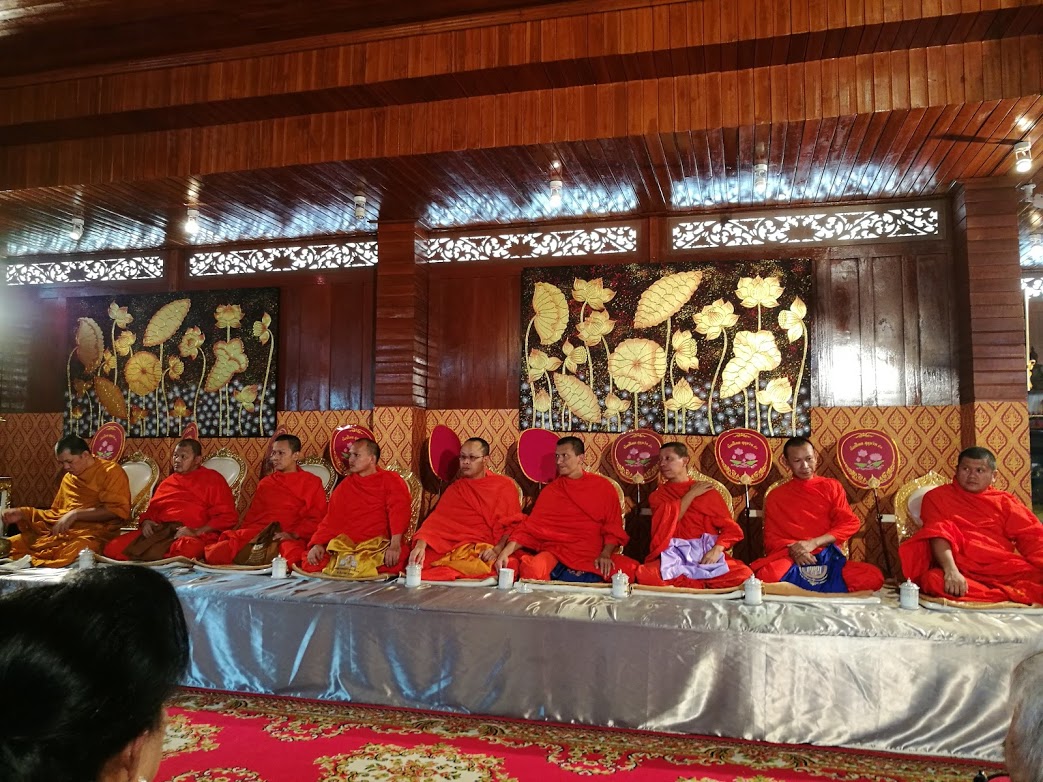
the Thai Buddhism equivalent of a priest or minister