Showing posts with label Son La. Show all posts

Saturday, August 3, 2024

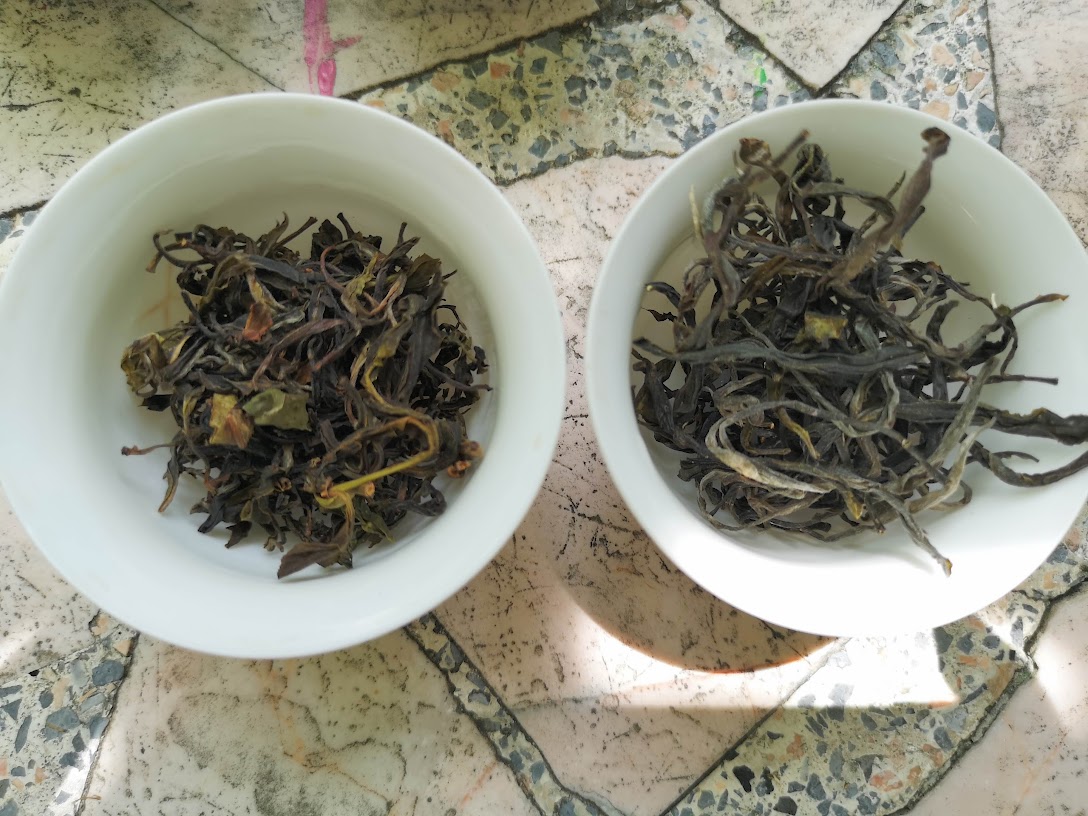
Comparing Son La (Vietnamese), Naka, and Bangwai sheng


Son La left, Naka middle, Bangwai right, in all photos


In reviewing two Tea Mania gushu sheng pu'er versions recently I felt as if I didn't really place quality levels and style as much as I'd hoped to.  In comparison reviewing a vendor's teas along with each other the main current benchmark, the other version, tends to be something similar in style and quality level.  This adjusts for that.

Of course there are flaws and limitations to the approach.  Style of tea varies a lot, and you need to take that into account in description.  Personal preference can favor a style most others would see as inferior to experience, related to their preference.  I try to make all that explicit in these notes, but I can't drill down too far across all the scope.  When reviewing a number of teas together it's natural to focus on flavor aspects more than mouthfeel or aftertaste range; that narrowing of scope of consideration happens automatically.

I want to keep descriptions short here because comparison reviews run long.  Let's let the vendor's descriptions introduce what these are.


Viet Sun Son La cake (the 2023 version, the one I tried, seems to be sold out; I can cover 2024 instead related to product description, and mention what I knew of the other).


2024, 200 gram cake, selling for $48


A very special tea from Sơn La province in northwest Vietnam.

This is a tea from arguably the best ancient tree gardens in Bắc Yên district of Sơn La province growing at 1400m. The people living and making tea here are of the H'Mông ethnicity.

This tea was made in an area called Tà Xùa, one of the more well known areas for old tree Assamica tea in Vietnam and is located just south of where the 2023 Sơn La tea was made. Tà Xùa mainly produces wok made green tea but we were lucky enough to have the chance to get some of the raw puerh version.

This tea has some aggressiveness and kiss of smoke from the wok which is typical of this area although subdued compared to the 2023 tea. This tea brews up into a rich gold green soup. Heavily floral, fruity and sweet with some citrus notes, medium bitterness/ astringency. This tea has a pleasant minerality with a rich lasting Huigan and strong qi.


Apparently the 2023 version listed for $77 for 370 grams, so 21 cents a gram instead of 24.  What is that, a 15% increase in a year?  Viet Sun teas always were going to increase in price once awareness and demand ramped up, and this is probably how this will go.  They'll outpace inflation for a half dozen years and level off as costing what main source Yunnan teas do now, $100-120 per cake.


Cheng Sheng Hao Naka sample, part of a sample set, selling for $79 per 195 grams.


That's not double the Viet Sun pricing but getting on towards that.  Some of their teas included were really exceptional, and some more ordinary, making it hard to assess value.


2022 Na Ka (那卡)

“Na Ka” is the sweetness representative of Pu-Erh tea. The soup has an attractive pale-gold color in the cup. The aroma and taste are alluring, exhibiting a noticeable peach-like flavor and strong sweetness in the later infusions. There is also a strong cup scent left behind in the early brews. 


Tea Mania 2022 Bangwai sheng, 200 grams for $111


Harvest: Spring 2022

Pressed: 2022

Typ: Sheng

Aroma: Spicy, much Cha Qi and sweet finish

Terroir: Bangwai, Lancang prefecture, Yunnan province, China


The rest of the description pretty much just says that it's gushu, from old plant material.  It includes description like this:


The Bangwai Gushu is celebrated for its meticulous, traditional handmade processing and the selective use of the finest tea leaves. This dedication to quality is evident in every sip, making it a treasured choice among collectors. Due to the limited availability, Pu-erh teas from the Bangwai region are released in small quantities each year, adding to their exclusivity and allure.


So these sell for 24 cents a gram (the 2024 Son La version, the only one available now), just under 40, and 55 cents a gram; quite a range.  

It's not a fair comparison with the Naka version because 3 of the 7 in that set were presented as more exceptional, higher demand, award winning versions, and the other 4 at representative of a local origin type.  There's no way to estimate how some better versions represent higher value for the average, without looking up other things that they sell, which I'm not going to do here.

These teas are from 2023 (the Son La version), 2021 (Naka), and 2022 (Bangwai); that will throw off comparison a little too.  I won't emphasize likely changes from aging input and storage conditions here, going more by experienced character, because again a three-way comparison tasting is a lot to cover, and to read.  

I really wanted to try a sample of a 2024 Son La tea with these, to get to tasting a little sent along with the last re-order of a 2023 cake, but to keep the aging input more consistent I didn't.


Review:


Son La #1:  this won't be a fair comparison at this stage because this version is loose, ready to start brewing right away, so I infused it for less time, 15 seconds or so, versus over 30 for the others.  It still won't balance; it will start faster.

This is ready to review for flavor profile description, even if a little light.  Floral range is pronounced and complex, sweetness is good, bitterness not really started yet, and feel is starting in.  There might be a faint hint of smoke but I think that drops out.  It's good, a personal favorite.


Naka and Bangwai:  I'll skip saying anything; even next round these might not be started yet.  Compressed forms are like that, and separating apart these forms is not easy.  

I'll use 10 seconds for the Son La version and a minute or so for both others again to get these to balance being wetted better, but that will probably even up more in a third round.


Son La #2:  intensity picks way up.  Bitterness does really enter in, and sweetness elevates to match.  Flavors range is mostly floral, although I'd interpret some of it as fruit as well.  Feel is nice, a bit full, not overly structured, and not challenging.  Intensity draws out aftertaste experience already, even though this has only been brewing for about 20 seconds so far.


Naka:  there's an odd woody flavor component to this.  I've always wondered if using cardboard as storage container wouldn't impart some flavor, if that's not what I pick up when some teas taste a little like cardboard or wood.  It will probably fade fast as the main tea flavors pick up.  I had an interesting experience with the earlier two Tea Mania teas I tried barely getting started in the first two rounds, as the tea opened up and wetted; that may be going on with this.  It's not soaked through yet.


Bangwai:  a really catchy fruit tone shows through.  It seems like it's probably coupled with a spice input, which makes it seem all the more complex and interesting.  It's still too light for clear evaluation though.  I'll again brew the Son La version for about 10 seconds and the other two for over 30, backing off the full minute I gave them last round.  Of course I'm breaking normal form and discarding most of these first two rounds, since tasting three teas will add up fast for volume.


Son La #3:  a bit strong; I've probably botched proportion for using an amount too close to my normal range, maybe backing off to 8 grams instead of 10, but it's still too much.  [later edit:  wetted leaf volume, a better indicator of amount, if you don't weigh the material, indicates there isn't as much difference as it seems through most of this tasting].  Warm tones pick up in this round, and intensity is high.  Bitterness is pronounced, and sweetness; they balance.  

It's clear from the leaf color alone that oxidation level varies in this tea, which some people would see as a flaw.  For me the final experience is the thing, and this works, so it's not really that, just unique in style.  That warmth and richer flavors in the profile must relate to that, at least in part.


Naka:  this tea is quite decent, but it's probably going to suffer in comparison with these other two.  Sweetness level isn't pronounced, but it includes some sweetness.  Floral range is there but it's also a bit muted.  Feel is decent, with moderate fullness, but it all seems a bit muted in comparison with the Son La version.  That tea is much further along for brewing, so it's not a fair comparison.


Bangwai:  flavor range is quite novel for this.  I'd place that mainly as root spice, at least at this round.  Floral range fills that in, but it's less distinct.  Bitterness and feel aren't so pronounced or challenging, but it works for balance.  It comes across as refined; there are no negative inputs or rough edges, and there's an experience of depth.  


A friend recently asked what I mean by root spice.  Does this taste like sassafras, ginseng, ginger, turmeric, or horseradish?  It's the first, a lot like sassafras, maybe leaning a little towards ginseng.  There are other roots that can be brewed as tisanes, just as there are plenty of other bark spices beyond cinnamon.  They can tend to group up across a common character range, even though many are very spicy, while others are mild.  I went through a decade long tisane drinking phase, during which I could've placed all that better.  As a placeholder, if someone is thrown off by this description, they can just swap in sassafras root, and if that's not familiar think of it as tasting like ginseng, or ignore the description.


The Son La version is dialed way up across most aspect range in comparison, with more intensity, flavor complexity, bitterness, sweetness, and feel structure, but there's something pleasant about a more limited flavor range, good balance, refinement, and depth.  It's a different kind of pleasantness.  Again this tea isn't fully wetted yet, so it might change a good bit over the next two rounds.  Some leaves will have been brewing for 5 rounds by then, so it will gain complexity by mixing inputs across an infusion cycle.  


Son La #4:  bitterness seems to stand out all the more.  How much I notice that might vary over time, depending on expectations, or just paying attention.  In comparison with less bitter teas it's hard to miss.  I'm still brewing this pretty fast but at a high proportion it's going to be intense; I would imagine most people might like it lighter, using less leaf and still a short infusion time.  Probably how I drink teas varies day to day, with mood, especially infusion strength.

Some of the plant-stem sort of flavor that relates to a connection with bitterness might divide people on preference for this.  I'm fine with it; it works for me.  Five years ago I probably wouldn't have liked it as much, but I've drank a lot of relatively bitter tea in that time.


Naka:  again this tastes like pretty decent sheng, and it balances ok, and has a decent profile, but it comes across as muted after trying the Son La.  It being two years older probably isn't helping with that.

It's probably better that high bitterness and edgier feel are not present, that it balances more at fullness.  It just doesn't have pronounced sweetness or strong floral range to fill in complexity.  I think tasted alone it would seem better.  No part of this seems like a flaw, beyond flavors being limited.  Feel is fine.  Given it was described as being unusually sweet I guess that's a let-down, but still it's ok.


Bangwai:  this stands out for being the opposite, in a sense, unusually distinctive.  It ties mostly to a limited range of flavor input, that's not all one thing, but is complex across a limited range.  It seems like mainly root spice, to me, with some floral input supporting that, and range that might seem more vegetal across a more medicinal range, like herbs.  Feel is smooth, full, and "round," not challenging at all, bringing across an impression of depth.  

For someone looking for the blast of bitterness, sweetness, feel intensity, and strong flavor in the Son La this could also seem muted, but to me there is a good bit going on.  It's just a very different kind of experience.


I've not been mentioning aging input differences, and that could be a factor.  The Son La is from 2023, the Naka from 2021, and Bangwai from 2022.  The Vietnamese version would pick up depth and lose sharper range and some intensity over two more years.  I see that as good and bad; to me those are positive, they work.  Maybe since intensity and complexity is so significant it will improve from that trade-off.  I've drank about two thirds of this cake, so it won't be around for me to know in two more years, but I bought a replacement of it to fill that role.

The Naka is most muted from aging longer, 3 years instead of 1 or 2.  That can bring across a positive experience of warmer tones and depth, and to some extent that occurs in this version.  It's just hard to appreciate when it's giving up intensity, complexity, and distinctiveness in relation to the other two versions, as described in detail in these notes.  If someone really loves a softer, richer, less challenging tea version it could be better, but the Bangwai also lacks rough edges.

I haven't finished all of these rounds, discarding some, but part of 12 cups was already a lot, right when the second two are finally fully wetted.  I'll need to take a break and eat something to offset the stomach impact.


Son La, #5:  again quite pleasant.  Strong intensity, even brewed quite fast, stands out, along with sweetness, bitterness, and a plant-stem sort of flavor input.  Floral range that I interpret as including some lighter, hard to pin down fruit component makes it complex and balanced.  I think match to what I like is more of the appeal than some abstract and objective quality level, but not much of this would be regarded as a flaw, as I see it.


Naka:  again I think this would come across better without the direct comparison, because it seems a bit muted and lacking in flavor complexity.  It has good depth though, and is clean in flavor range, with balancing bitterness and full feel.  Flavor range is fine, but it's just indistinct floral range.


Bangwai:  that distinctive flavor range, a set, really, is evolving.  It's still in root spice / Chinese herb medicinal range, but different now.  I suppose preference for this tea would depend on if someone loves that kind of novel flavor experience or not, that particular version of it.  I could imagine a lot of people loving this as a novel experience but not preferring to experience it over and over, as a 357 gram cake.  These are selling as smaller cakes; 200 grams isn't the same thing, since this would still be novel for the first half dozen sessions. 

I think it partly relates to having basic tastes, preference, but for drinking a tea version over and over I'd go with the Son La.  This Naka version isn't offensive in any way, maybe the most neutral of the three, with pretty decent overall balance and depth, so it could work well as a sort of plain tea to have with breakfasts.  Why not have that be lots more intense though?  Maybe that's what sheng pu'er is supplying that I end up craving.


Son La, #6:  it's interesting brewing this faster across the whole tasting, but part of that is getting the proportion wrong, using too much of this.  It's more intense than the others but not that much more intense.  

later edit:  there is a slightly higher proportion, as shown by wet leaf volume, but not that much.  It's a more intense tea than the other two.  That's normal for it being younger / less transitioned.  Astringency is higher too; I don't mention much of that as a trade-off, because to me it's not so negative, but it could be to others.

This is better than ever; the initial rough edges are smoothing out, and it picks up warmth and depth.  Richness of feel picks up, evolving from a slightly rougher structure earlier.  The rest is as described earlier.


Naka:  not evolving, as described before, pretty good and decently balanced, just not as intense and distinctive as the others.


Bangwai:  not really evolved in relation to the last round.  This is the most unique and distinctive as flavors go, and has the most refinement and depth.  

As objective quality level assessment goes this is probably the best, but match to personal preference is something else again.  That flavor set someone might love or else not like.  I have no idea about match to a conventional local origin type or standard character.  

It would seem odd to me that this could be typical, given how distinctive it is, but I really don't know.  Maybe versions from there tend to be distinctive in different ways, so it is a common generality, just not in terms of this exact aspect set.


Conclusions:


Going in this wasn't a fair test for the Naka version, from the Cheng Sheng Hao vendor.  The Son La tea is a personal favorite, and Tea Mania is sourcing some pretty good tea versions, and selling those at medium-high pricing rates because of that quality level and distinctiveness.  

This Naka tea wasn't presented as one of the best versions from that vendor, more as representative of a local origin type.  I'm not sure that it lived up to that.  I'm particularly bad at memorizing a matrix of typical local origin sheng pu'er aspect sets, but per description sweetness was the thing to look out for, and it was no sweeter than the others, and less so than the Son La version, which included other range some might find off-putting.

The story of the Bangwai version was novel flavor profile, along with depth and refinement.  It's a pretty good theme.  The last post comparing Tea Mania teas mentions a tasting set that they sell; that's probably a good way to assess some different versions to help place them in relation to preference, and to judge quality for yourself.


The one limitation I want to address here relates to people not being able to experience a volume of different teas, to costs really adding up.  Of course someone could spend over $100 on sets from each of these vendors (often free shipping starts in at around that price level), and they'd have their own impressions, but $400 might be most of a conventional annual tea budget for a lot of people.  Drinking tea every day for not much over $1 a day is pushing it, but it is practical to only drink 5 to 8 grams of a 20-some cents per gram tea per day.  


It can get a little annoying seeing people present photos of $500+ orders in tea groups, as if this isn't even a factor for them.  It seems to be about them promoting being ahead in some sort of exposure game.  It would be nice to be able to spend thousands of dollars a year on tea, but I'm not trying to set up a high level of spending as some sort of assumed norm here.  

No one is missing that much for not ever trying these three teas, or anything like them.  It's just tea.  If you acclimate to prefer what others regard as quality markers, and seek out rarer in-demand tea types, your required expense will escalate, but it's not necessary to spend $100 on a cake, or 30-some cents per gram, to get decent tea now.  But to buy tea that's in the highest demand that's probably not even close to enough.

On the other side of that if someone spends $8 a day on a coffee drink they have the same beverage experience, over and over.  To me that's $240 a month essentially wasted.  It's better to spend $70 to 100 on a 357 gram cake, drink 8-10 grams of tea a day worth, and have that cover more than a month of experience.  Sampling different sheng helps with placing where to go with that exploration.  

Spending $100 on a month and a half worth of tea still works out to an $800 per year expense; it's still too much for everyone at or under the average in income, both in the US and in Thailand, the two places that I tend to live.  I suppose that's just how it has to go, that people experiencing above average quality tea on a regular basis would face an above average level of expense.  That doesn't mean that good tea is only for the wealthy, but there is significant buy-in, when it comes to above average quality sheng pu'er range.

Friday, June 21, 2024

Son La and Giang Pang Vietnamese spring 2024 sheng


Reviewing two more very pleasant spring maocha Vietnamese sheng versions, "pu'er-style" teas from Viet Sun.  The last two were very nice, and these might be even better.

Tasting context is a little unusual; I'm trying them at mid-day on a hot Bangkok afternoon.  It must be around 35 C out, or in the upper 90s F.  Heat acclimation is one goal, and also getting out of the house, where my kids are playing video games, and shouting a bit.  I can turn on the room AC in a different part of the house or use outdoor space to get some distance from the noise.


Steve / Viet Sun's descriptions of these:


Sơn La Wild Tree Spring 2024 ($28 per 100 grams)


A very interesting tea from a newly discovered high mountain tea area west of Tà Xùa, Sơn La.

This tea is made from wild growing non-Sinensis varietal trees growing at 2300-2500m. The leaves and stems are bright green with a light purple hue.

The dry leaf has a nutty, raisin, earthy fragrance and brews up slowly into a rich golden soup. This is a gentle tea with a minimal bitterness and no astringency. I get notes of raisins, nuts, green vegetables, tree resin, forest leaves and honey. Long sweet finish and a relaxing qi.

This varietal has thick, hearty leaves so I like to brew a large amount of leaves and do long steeps at 95-100C. I recommend setting aside at least 30 min to fully enjoy this one as it starts off light and usually starts hitting it's stride around the 3rd or 4th steep for me.


Giàng Pằng "1 Big Tree" Spring 24 (had been $31 per 100 grams, now sold out)


A batch made from one really big tree in Lềnh’s father’s garden processed by Steve.

This tea brews up into a rich green golden soup. Heavily floral and vegetal with the characteristic melon/ plum leathery character that is prevalent in good teas from Giàng Pằng. This is a strong tea that goes many rounds with a deep huigan and energizing qi.

This tea performs best over a longer session with many infusions. Set aside 30-60 minutes to fully enjoy this one!


It's strange that Son La version seemed so conventional to me, and not so different than others I've tried.  It's possible that one flavor note in another tea I love also relates to it not being ordinary Assamica.  Often wild and atypical plant material versions have an odd sourness to them, as purple leaf versions can, just across different flavor scope, but what I'm talking about relates to deeper fruit tones instead.

In reading those descriptions I'm sure that I didn't get the most out of them in this tasting related to stopping in the middle.  My wife insisted on doing an errand on short notice, and I only got back to trying them the next day.  Teas don't hold up well here stored at hot and then warm room temperatures overnight; they were ok for drinking a few more rounds, but nothing like the day before.

I have the rest of 100 grams of each to keep drinking, but for others that second version is sold out, understandable since it was just one batch.  It was really lovely too; what Steve calls "the characteristic melon/ plum leathery character that is prevalent in good teas from Giàng Pằng" was just like that, and it was very pleasant.  Both were; readers might want to consider picking up some of the other, and have a look at the tea cakes too.  

And their "Other Category / Uncommon Teas;" I'm not sure what I'll be trying related to which samples Steve sent, or didn't send, but it's worth a look.  And of course their black teas.  Ordinarily I stop well short of explicit marketing but I've ordered teas three times from Steve over the past year or so for a good reason.  It's as well if the word doesn't get out too much, the favorite source gatekeeping theme, but with readership here limited it's fine to talk about it.


Review:


Son La:  bright, fresh, sweet, and complex, even for still opening up.  I gave both a 20+ second infusion time to speed that along but a rinse step seems to work better, I just don't do that.  This flavor profile is familiar, for drinking a lot of Steve's teas.  Honey stands out, and what would most likely be interpreted as floral range, but light fruit also kind of works.  Floral range is hard for me to break down, but fruit might be in between yellow watermelon and lighter citrus.  

There's one deep honey / floral / fruit note that I'm really stuck on now as a personal favorite that's in this, probably a catchy set of flavors, that complement each other.  Bitterness and astringency are very moderate, but then these are just getting started.


Giang Pang:  deeper, warmer flavors; that's interesting.  At first it strikes you as like plum, but then it seems there's more to it than that.  Again non-distinct floral tones could work as a description, but I should probably leave off to the next round to guess a longer set of descriptions.

As a reminder I never read the vendor descriptions before writing the review notes; that plum tone Steve also mentioned does really stand out.


Son La #2:  some limited bitterness and more fullness of feel joined in, right on schedule.  The same set of flavors is present.  This isn't so different than the 2023 Son La cake I just bought another version of, a tea that I've drank a half cake of; not the same, but as I remember with some common ground.  Re-ordering that is a good sign for expression of preference; it's quite good.  This may lean towards that other favorite tea I just ordered in relation to that one flavor set, rich honey, warm floral, and fruit tone that is hard to describe.  It's towards dried apricot, but not quite that.  I suppose if someone was "looking for" some kind of light herbal edge that might be there too, balancing the rest, something light like lemongrass, or holy basil.  

General tone is pretty bright; I guess preference for or against that might determine relation to preference.  I think I'm kind of preference-neutral about that; warmer or lighter and brighter tone ranges can be fine for me.


Giang Pang:  this has more depth; it has filled in some flavor range.  It might be a little more subtle.  Both are fine for sweetness, clean nature, intensity, and complexity though.  It's definitely warmer in tone / flavor range.  Both are pretty sweet, as young sheng goes, or any sheng, really.  Bitterness isn't a main factor for either, maybe just a little more for balance in the other.

Breaking this down to flavor aspects could be tricky.  It includes sweetness, also like honey, and some non-distinct floral tone, and maybe fruit.  Then that's what I said about the other, but they're quite different.  A warmer fruit tone here might resemble dried orange peel, shifting to be more complex than the early plum, and a very light spice range input might be like clove.  I'll brew both stronger and see if that helps with determination.  Often trying infusions quite light works better for that, for some reason, but it's still worth a try.


Son La 3:  not transitioning much.  Richness of feel stands out even more, and mineral edge almost includes a touch of salt.  Those are both positive things, to be clear, at least as I'm taking them.  Feel gains depth and body.  Aftertaste experience is positive, but it could be even more pronounced.  It's odd this isn't more bitter, but then that's also normal for more wild-origin new sheng.  [Later edit:  not so odd at all if it's either not Assamica or a mix of plants including other range; more strange that this is so close to conventional sheng character instead.]


Giang Pang:  greater depth in this stands out, even though that's a subtle higher-level emergent description.  The feel is nice and rich, and aftertaste trails slightly stronger.  Flavors are less intense and complex, and definitely warmer in tone.  

For this being on the subtle side I think a lot of interpretations could work.  One might go on about a mineral input; that's there, and is pronounced.  Warm honey and floral range stand out the most, to me, but interpretation as a dried fruit is possible, not just dried orange peel, but maybe onto something like dried mango.  This does taste like dried mango, now that I think that.  Then I think people more oriented towards spice descriptions might go in different directions with interpretation.  To me it's a touch of clove, but it could seem like other things.


Son La 4:  fruit range might extend a little, along the former lines; I bet that I could describe that differently over a few more infusions.  I'm going to have to go though; my wife is going to have me go to the orthodontist with the kids soon.  It's funny how that mineral shifts form too; that's kind of novel.  Saying it tastes like salt isn't the best description, but there's something novel about what that part contributes.


Giang Pang:  this main fruit tone is evolving too, and the general intensity along with it.  It's still towards dried mango or dried orange peel, but it's somehow shifted in form or balance.  Maybe I can try a few more rounds later in the day and shed more light on these changes.


I didn't get around to trying more rounds until the next day, and as I said teas don't hold up well for that in hot places.  I have tried both again since, and as is typical it has shifted my impression of both.  I think both are a good bit softer in feel and more moderate in intensity than more typical young sheng.  It probably seemed more normal for trying both together.  

Pushing the Son La version a little I could draw out more flavor complexity, towards that raisin range Steve described.  Both are mild enough that it would work to brew them hotter (although using full boiling point water is normal), at a higher proportion, or longer, to see what input shift changes what outcome.  The Giang Pang version expressed even more fruit tones, brewed a bit stronger, some rounds in.  These both might be perfect for people who find sheng too bitter, astringent, and aggressive.


Conclusions


Both are relatively great teas, everything I would've hoped that they would be, even the diversity of character.  It can be hard to remember back but as I recall I like both more than the earlier two I'd reviewed.  

That may not be the most objective conclusion, because this range is what I love most in sheng just now, either bright floral or rich fruit flavors, good complexity and depth, teas being approachable, full in feel, quite sweet, even rich and sweet like honey, and not bitter.  For some not including a typical amount of bitterness, a more standard taste mineral base, and astringency would ruin the effect; fair enough.


I've not mentioned that these were probably oxidized more than is typical, which is a recurring discussion theme in describing a lot of South East Asian sheng.  Maybe they were, maybe not; probably a little.  I get the sense that hot weather tends to make that happen faster, so that even when it's not quite pronounced it's an input.  It would cost versions aging potential, and I'm not sure these would be great in another 15 to 20 years.  

Someone would be crazy to not just drink them, I think.  That cake Huyen gave me in January is down to two sessions worth, a tiny chunk, and I've ordered more from that producer.  The 2023 Son La cake I bought from Steve is half gone, and it would be all but drank if I hadn't left it behind during those three months in Honolulu.  I re-ordered it anyway; I'll finish it this year.  

All of these cakes could pick up depth and even more sweetness over a year or two, so it's not as if the clock is ticking, but I doubt keeping them around for 3 or 4 years would be the best idea.  Or maybe it would be, but I might never find that out.


Running related tangent


That heat acclimation seemed to help a lot with running later that day; on my second run back here in the Bangkok heat it was comfortable enough to run 10 km (6 1/2 miles in freedom units).  My energy level was great, with no aches and pains, and breathing nice and slow.  Even with apparent heat stress showing up in my heart rate it wasn't uncomfortable at all:


I've never experienced any plateau of running at 160 bpm heart rate, and that felt normal.  I suspect it became normal during hill climbs in Honolulu, going uphill around Diamondhead, but I wasn't monitoring heart rate then.  Oddly that rate dropped sharply when I slowed the pace, but then my splits stayed relatively the same, bumping from 6:30 to 6:45:


Not really my normal pace, which is more like 6:20 / km, or lower for a flat course run, but for running in low-30s C / over 90 F that's fine.

The strange part is that I ran almost as fast a pace at a 160 bpm heart rate as later at 125-130, slowing just a little.  In Honolulu I would really be able to relax and run smoother and faster at around 7-8 km, out and back the Ala Wai canal, but even so this seemed extreme.  I thought the device might be having problems sensing input through sweat, but it seemed certain of the consistent results.


ice skating with the kids; that makes more sense here


Saturday, June 8, 2024

Viet Sun YTY Hmong and Dao village sheng


I bought a good bit of Vietnamese sheng from Viet Sun, to be sent to Bangkok while I was still wrapping up that stay in Honolulu.  We're back in Thailand, so I can try it.


I generally avoid "tea haul" photos because it seems like bragging, which is odd to me, emphasizing how your own tea experience has such depth because you spent some money on it.  I bought another of an earlier favorite Son La version (I'll be skipping diacritics / accent symbols in most of this, transliterating it all to Romanized text without that), and four fresh sheng maocha versions ("pu'er-style tea," working around the Chinese regional type designation).

Then four of those cakes are from a favorite Vietnamese version Huyen gave me in January, which I've already drank through, all but about two sessions worth.  I reviewed that, and also cited the source, in this post.  Steve was nice enough to manage shipping it with his teas, well beyond what one would ask of a vendor, but he is also an online friend.  So I'm biased in judgment, about his teas?  Sure, if you think so.  To me impressions written here don't vary with that input, but who knows.  I really love those other Vietnamese sheng but that's a story for another post.


I'm in the habit of citing descriptions from web pages when I edit posts; let's do that:


Y Tý "H'Mông Village" Spring 2024  ($31 for 100 grams)


Y Tý is a beautiful tea area in Lào Cai province right on the border with China. There are two villages that have old tea trees here, one is inhabited by H’Mông people and the other Dao.

This tea is from the H’Mông village. Although only a couple kilometers apart, this area has more clay rich soil and more humid days than the Dao village. The leaves are also darker than the trees in the other area. Tea trees in Y Tý have especially beautiful leaves.

The owner of these gardens said that in the past, there were tea trees covering the entire hillside but weren’t harvested until only the past 10-20 years. The locals chopped many of these trees down but luckily there are still some that survived and many of which were left to grow naturally.

This tea brews up slowly into a rich darker golden brew. I get cane sugar, herbal medicine, deep forest with some floral flavor notes. This tea also features a pleasant minerality with a medium bitterness and astringency. Quick huigan and strong relaxing qi.


I'm not comparing this review's descriptions with those; I added the citations later and won't go back and compare them during editing.

At a rate of $31 for 100 grams that would be a $100+ cake, which is essentially the modern standard for teas of this type and quality level.  I avoid buying tea at that high a full retail level; the Son La version was listed for $77 for a 370 gram cake, which is a little better value, especially given that I like that style so much.  

Trying fresh maocha is something else though, and these teas are distinctive.  Character match to preference is something else again, which is quite hard to judge from descriptions.


Y Tý "Dao Village" Spring 2024 ($31 for 100 grams)


Y Tý is a beautiful tea area in Lào Cai province right on the border with China. There are two villages that have old tea trees here, one is inhabited by H’Mông people and the other Dao.

This tea is from the Dao village. Although only a couple kilometers apart, this area has more rocky soil and more windy, dry days than the H’Mông village. The leaves are also brighter green than the trees in the other area. Tea trees in Y Tý have especially beautiful leaves.

This tea area is about a 45 minute walk from the village up through a forest of wild bamboo. The bamboo forest eventually ends and you reach the tea gardens. There are many old and ancient trees here but many have been pruned heavily to produce buds for silver needle tea. There are still about 15 trees that have been left to grow naturally and produce some really excellent puerh tea!

This tea brews up slowly into a rich golden brew. Heavily sweet with notes of cane sugar and meadow flowers with a light herbal character. Strong mineral note with low bitterness and astringency. Lasting huigan and strong relaxing qi.


I never know what to make of these qi descriptions.  Sheng affects me, but not as much as other people describe.  It's impossible to determine a single effect input in a combined tasting but I'm essentially never reviewing qi / drug-like effect anyway.


Tea tasting back in Bangkok; it's a bit hot but very nice outdoor space.


Review:


Hmong village 1:  the dry scent of these is amazing.  I'm not really starting a review there, but the scent of this tea is bright, rich, complex, and sweet, with the other showing more richness and warm tones.  Then the brewed color matches the opposite of what one would expect from that.  Let's start with brewed flavors though.

It is bright, fresh, sweet, and complex.  Pleasant rich fruit shows through right away, even though I brewed this too fast to really pick up the full profile.  There's a different character edge to fresh sheng, especially wild origin versions, that isn't there in any other types, and this has it.  Words like complexity and intensity don't capture it at all, and individual flavor descriptions also don't.  Maybe I'll think of how to describe it as I review.


Dao village:  there is a deep plum sort of note in this not present in the other.  It's too early to call but the other might be more complex.  Both of these are going to fantastic; let's just move on to that flavor list next round.  I should hold true to form and brew them a little too strong next round.


Hmong 2:   this is brewed light again; I was just joking.  Sweetness and freshness stands out, and complexity.  Even brewed light, not fully opened up yet, there's a wonderful aftertaste finish that continues on after drinking this.  Bitterness is slow to enter in, but more surely will.  Layers of flavors include fruit and mild earthy / vegetal tones, like hay early in the curing process, closer to fresh baled.  I could guess about the fruit range, or how floral tones mix in with that, but next round might be clearer.


Dao 2:  it's interesting how this profile centers around a narrower range, one particular fruit tone, and a bit of base that might be vegetal, as the fresh-cut hay was in the other, but different.  There's a note in this very common to that favorite tea cake that I've been going on about, that I ordered with this, and essentially drank through one full cake of already.  It's my current favorite tea.  Honey sweetness is part of that, but also a rich fruit tone that's hard to completely place.  Dried apricot is close enough; that will work as a place-holder.

I really will give these a little more time this next round.  I've been brewing them at 15 seconds or so, pretty fast for a normal proportion, for teas that weren't completely wetted yet.

I'm trying these back in Bangkok.  It's 9 AM, drinking outside at my favorite tasting spot, but it's 28 C already, or about 80 F, as hot as Honolulu tends to get, and maybe a little more humid.  Honolulu is humid but breezy, offsetting the heat, and the weather is providing me a nice breeze just now, even though that's less typical here.  It's hot though; it might be over 28 right where I am, and I'm a little jet-lagged.


Hmong 3:  I'm probably never going to arrive at a clear flavor list for this tea.  I think it's more difficult because fruit, floral, and spice range are all mixing, with a light mineral base below that.  Lemongrass and holy basil stand out as spice inputs (more or less; that's just an interpretation), with the fruit a bit towards lemon or grapefruit, or in between the two.  A light dry effect joins the feel structure; it works in this.  Sweetness is pronounced, and light mineral is contributing a lot.  

The overall complexity is more than all that; I think a lot of floral range joining that is part of it.  It's sweet like plumeria or orchid, like a tropical flower, maybe like the heavily flowered vines that tend to smell very sweet, but only for one part of the day.  There's not all that much bitterness, but some, which seems to connect with that light dry feel.  This isn't challenging at all in terms of bitterness or astringency, and not only because I'm not drinking it brewed very strong.  It's best on the lighter side; the flavors shine through better, and intensity is still on the high side.


Dao 3:  there's that primary dried apricot range again; so nice!  It's not one-dimensional; warm tones and a very different mineral base fill in beyond that.  That one flavor range is half what you experience though, where the other one is more complex, spread over a broader range.  I can relate to both.  

In the case of that other sheng, that I've finished a cake of, and am describing as comparable related to a main flavor aspect, I grew more attached to it over time, and it kept evolving to be more positive.  This is quite pleasant now.  Mineral range is typically hard to describe, but this version's is warmer, and depth of other flavor enters in as a warm and deep tone, similar to how driftwood tends to smell, cured in a very unusual way.

I'm back to using water a good bit off boiling point now, for using heated water from a filtration system stored for use in a thermos.  It will change things a little.  I've been using a kettle for 3 months, full boiling point water, and it makes a difference, but people tend to overstate how positive that is.  It probably is slightly better, but it's also just different.  To claim that the tea is completely different is absurd, but I guess people discuss narrower ranges of variation when they are looking closer and basing that judgment on unusual levels of exposure.  There's an electric kettle in the house; I could switch back at some point.


Hmong 4:  the balance of the same flavors and other input is shifting some, but not enough to justify spelling out how.  I'll probably take notes for one more round and then just drink these teas.  Bitterness is picking up a bit, a form similar to how flower stem comes across, a vegetal range of bitterness.


Dao 4:  still bright as ever; that fresh note stands out in both, common to fresh sheng experience in general.  These will settle to be different in a few months, but to me it's nice to experience them like this.  It's interesting how much warmer the tone is in this version.  You'd think it would be slightly more oxidized, but the liquid color tells the opposite story.


Hmong 5:  finally brewed much longer, 30 seconds or more, just checking, but also related to losing focus and looking at something online.  Bitterness ramps up a good bit.  This works well with that.  Warm spice tones have been gradually increasing; this exhibits more of an aromatic spice than anything else now, one of those incense spices that I can't differentiate between, frankincense and such.  For someone mainly on that page this would be amazing, but I'd expect many people could relate to it.


Dao 5:  warmer and richer, still centered on that main fruit tone.  I suppose this matches what I like best in sheng experience better.  And also people who are more into black tea or oolong--Dan Cong seems closest--would relate to this better.  Probably both will settle and deepen just a bit within half a year or so, losing some of that very positive fresh edge, but gaining some depth in the trade-off.  Complexity could be the same either way, since that fresh-tone range is part of a broader experience, and heavier deeper flavors also would be.


Conclusions:


No need to add more summary or an overview take; these were really nice, as described.

I can say a little about how I perceive the value, or place these in relation to quality level of a broad range of Yunnan versions that I've tried.  They're quite good; 30 cents a gram is fine for teas that are this good.  

Often for South East Asian sheng a main difference in placing them in relation to Yunnan sheng relates to atypical style, like a higher degree of oxidation, or less frequently a hotter than average kill-green will shift them to close to green tea character.  These fit fairly well within Yunnan processing input range, per my judgment.  Material is good quality, and aspects are unique to these particular versions.  Maybe someone with a much broader mapped-out awareness of local village teas across Yunnan could cross-reference them to somewhere else, but I can't.

I've surely implied personal preference related judgment quite a bit in these descriptions, but the second--Dao village version--matches what I like most in sheng just now better.  The Hmong village version was also quite pleasant, balanced, distinctive, high in quality level, with good intensity, appropriate sweetness, and so on.  

The Dao village version including rich fruit tones, interpreted here as close to honey and dried apricot, is exactly what I really like most.  Steve's description:  cane sugar and meadow flowers with a light herbal character.  That also works.  I'd probably be describing it as more floral if I'd read that first; it's funny how interpretation can shift like that, along with expectations.

I might add that my impression of these would probably change after trying them a few times.  Sometimes an unfamiliar character type really clicks once you try it more, or the experience could become less novel and one could seem less desirable instead.  Judgment about aspects, interpretation, would also shift a little.  For teas you like having 100 grams is a decent amount for trying them a number of times, not for use as a regular choice, but enough that it doesn't run out nearly as fast as 50 grams.

It seems as well to skip discussion of aging potential for these; they're quite pleasant now, and these won't be around in a few months, never mind a few years.  A fresh edge will fade from fresh maocha, over that few months, and to me it's pleasant drinking them when new.  

They'll be pleasant in a different way in a year, picking up some extra depth and complexity, just trading out brightness and freshness.  That would be interesting as a very different effect in 2 to 3 years but I'd probably not keep these for a long time, because they're fine now.  Wild origin material sheng being distinctive, flavorful, and approachable is normal; it's how one would hope these would be.


back with family, that one missing member (grandma / Yai)


I had missed Myra so much, and she's as sweet as ever


there's even one extra aunt here now, Tukkie


Saturday, April 13, 2024

Viet Sun Tả Củ Tỷ and Giàng Pằng Autumn 2023 sheng (pu'er)


photo lighting isn't dialed in where I'm trying the teas just now


I'm reviewing Tả Củ Tỷ and Giàng Pằng Autumn 2023 sheng pu'er-style teas from Vietnam, from Viet Sun.  There are plenty of earlier Viet Sun reviews of different tea types posted earlier; these were sent by Steve (the owner) as samples when I reordered a good bit more of a black tea that I loved (this one; a new version should be available for this year before too long).


Tả Củ Tỷ Autumn 2023, $36 for 200 grams, (equivalent to $64 per 357 gram cake)


This tea was made in early September from a mixture of medium, older and ancient trees growing in a few different gardens around the area. One of the most interesting parts of this tea is the varied terroir inputs. Some of the raw material was collected from higher elevation rocky/ boulder field gardens and some from lower elevation more clay-rich soil gardens.

This tea brews up quickly into a clear green-golden soup. The flavor is punchy with vegetal mossy and deep forest floral notes. Bitterness and astringency are moderate with a quick floral sweet huigan that develops after the first cup.

I like brewing it at 90-100C for short and then longer steeps.

I believe this is a good candidate for aging as the raw material is good and its aggressive edge should round out nicely after a couple of years.

Picking Standard: 1 bud, 2-3 leaves

Region: Tả Củ Tỷ, Lào Cai

Elevation: 1000-1300m


Giàng Pằng Autumn 2023, $38 for 200 grams, so $68 for 357 grams worth ($68)


This tea was made from ancient trees growing at about 1400m. It brews up slowly into a rich, hazy golden, green soup. Heavily sweet and floral with a melon fruit range and vegetal forest/ almost leathery notes. Low-medium bitterness and astringency. Rich huigan that builds after a few steeps and energizing qi.

Due to being an early season tea, we decided to go with a younger/ buddier pick to minimize huangpian. Expect a more fragrance/ flavor heavy tea this season.

Picking Standard: 1 bud, 2 leaves

Region: Giàng Pằng, Yên Bái

Elevation: 1400m


Review:


Tả Củ Tỷ Autumn 2023:  that's really nice.  The flavor is richer, warmer, and more complex than I would've expected, not the typical pronounced bitterness, vague floral, and underlying mineral a lot of pretty good sheng mostly covers.  

Mineral is warmer, onto almost a metal range, or at least like a mineral-intensive well water effect.  Bitterness is there but secondary to the mineral range, which isn't underlying.  Other flavor is harder to break down.  It reminds me of the scent of a damp forest in spring, but that's not a flavor list.  One part is earthy, like a damp fallen log or mushroom, and another is sweet, a little towards dried fruit, and some could be a spice note.  I'll keep going with breakdown next round.


Giàng Pằng Autumn 2023:  absolutely different, but with a similar effect.  Bitterness is pronounced but not dominant, and mineral stands out in an unusual form, and form of expression.  Sweetness leans towards citrus, and there is more of a vegetal spice input in this, less warm and rich earthy range.  I suppose floral stands out more in this, but that fruit and light spice range is stronger.

Both of those I brewed for longer than usual to skip the part about them being too light to identify, and as a result both were a bit strong, more so than optimum.  At least the initial progression is on track.  I didn't separate the large chunks as much as I normally would, not for a clear purpose, just not so clear this morning, and skipped that step.  Of course you don't want to tear and shred the leaves but it does work to twist them apart without breaking them, the part I didn't do.  

Both samples looked great; I could've done more justice to that taking a better picture of those too.  I've been really busy here (in Honolulu) for about a month, and I overdid it yesterday with a long run (12 km) and walking the better part of that far doing local errands, then cooking and cleaning at home.  Our apartment here is tiny and crowded and my mind feels crowded as well.  All of these are ok problems to have; I don't mind at all.


Tả Củ Tỷ, round 2:  lighter, a more conventional infusion strength.  Bitterness has picked up quite a bit; that's no surprise.  The warm tone, sweetness, and unusual mineral range are all quite pleasant.  This isn't all that oxidized, seemingly, but limited association with black tea range might be pleasant for many, that tone being this warm.  Thickness of feel really picks up, and aftertaste.

I'm still not having luck with flavor list style breakdown.  There's almost a Chinese medicinal herb quality to this, complex and diverse, with parts warm in tone, like unusual dried bark spice, or maybe even mushroom.  It's not mushroomy, tasting like fungus, so maybe that part is more like ginseng, a root spice with a hard to describe flavor range.  It's hard to justify why I'm saying this is warm in tone; it just is.  It tastes a little like dried fruit but that's a secondary and integrated component at most.  There's just a subtle warmth to it, less subtle in the mineral range.


Giàng Pằng:  fruit really picked up in this, and also bitterness.  I brewed these fast, around 10 seconds or so, counting all the pour times, but they're still too strong.  As usual I've used too much leaf material; if I complete that step on autopilot it ends up like this, probably using 7 or 8 grams.  For drinking a lot of one tea with breakfast that's fine, but I won't get as far in review rounds for doing that.  And moderating infusion strength relates to using flash infusions, instead of adjusting brewing timing.

The flavor is lighter and brighter in this.  Again it seems more floral to me, but part is something else, a little citrusy, maybe along the line of lemongrass as much as true citrus, but I could see this as tasting like lemon (dried peel more than the fruit, I think).  It's intense.  I love that effect, of a strong sheng really hitting hard, but people accustomed to other tea types might not.  The feel effect on my mind is hitting hard already, for wrapping up drinking four infusions worth, which really could've been 8, brewed much lighter.

I'm using goji berries that were soaking to clear my palate between rounds.  For wispy light rounds clearing the flavor would be a mistake, not necessary or helpful, but these are a bit strong.  I would recommend eating goji berries daily for health effect, offsetting aging impact and helping with eye and skin health, but then what do I know. 


Tả Củ Tỷ, round 3:   finally light enough to be in a normal infusion strength range, using more of a true flash infusion.  I can relate to strong brewed sheng but it's not ideal for review interpretation.  

Fruit range seems to show up more brewed this way.  There is still bitterness, warm mineral, and vague earthy tones, but a yellow watermelon sort of fruit aspect enters in.  If there is floral range it's on the warm and rich side, but if so it's a bit vague, easy to interpret as something else instead.  

The feel is really nice, full and smooth.  Neither of these has seemed astringent and harsh, as younger sheng can be, but they both give up no intensity at all.  Sweetness and bitterness balance really well.


Giàng Pằng:  bitterness is much more pronounced in this.  It's like that dandelion flower or stem effect; strong, with a corresponding flavor matched to it.  Bright and light floral range stands out more, and what I'm interpreting as a light fruit aspect, which could as easily be regarded as related spice.  It all balances well, but the bitterness isn't for people who aren't already on that page.  

That pairing of a specific type of bitterness and heavy floral towards fruit flavor should be quite familiar from some Yunnan version examples.  The vegetal edge, which I've described here as like flower stem, may not be as common.  I reviewed a version not so far off this that I bought in a Bangkok shop last year, somewhat bitter, sweet, and floral, from a location I don't think I ever mentioned or knew related to it being written in Thai on the label.


TCT, GP, #4:  probably a good round to skip notes; both are not so different, and as usual this runs long, and become repetitive.  10 cups of these is a lot though, so the next round might be the last for notes.


TCT #5:  this is transitioning nicely, even if I'm not going to be able to communicate that clearly in a changing flavor list.  It balances better and better.  To me it's nice that the bitterness is so moderate (relatively speaking; this is bitter as straight aspirin compared to any oolong, and the other more so), and that the sweetness offsets it.  It seems to evolve more towards a warm floral tone, which is rich and full enough that it also reminds me of fruit range.  Oddly the complexity of flavor range makes it hard to separate out 2 or 3 inputs that are causing those effects.  There's a lot going on, which could seem to come across as integrated and uniform, but when you try to describe it it's quite complex.


GP:  this warms in tone a bit, drifting closer to the other.  Bitterness is still more pronounced, but that eases up.  Floral tone is even more pronounced than for the other version.  It would be nice to specify a flower type, but that always has been a limitation for me, remembering how a couple of dozen different flowers smell for baseline reference.  There's one aspect that I've experienced in Yunnan sheng that's catchy, maybe a set of flavors that tend to relate to each other in a certain way, a honey sweetness, combined with a citrus effect, and certain floral range.  It's like a naturally matching set.  


Round 6:  The TCT version is better than ever, pleasant and not challenging at all brewed lightly.  Floral and fruit tones really pop, with fullness and depth supporting those.  A bitter edge hangs in there for the other, the GP version, which lingers as bitterness and residual sweetness, even brewed lightly.  It's pleasant.  For people avoiding bitterness it would be too much, for sure, but for those who love that pairing of bitterness and trailing sweetness it's just the thing.

For combined tasting you can't separate which has the stronger body feel or heady buzz effect but these were clearly strong teas.


Conclusions / comparison to vendor descriptions: 


It will be interesting to go back and check on Steve's interpretation of these and see how he placed them (since I add those after taking notes, during editing).  I feel like my descriptions aren't all that clear or descriptive.

The Viet Sun sales page descriptions work, with a couple of differences in interpretation.  For the Ta Cu Ty "The flavor is punchy with vegetal mossy and deep forest floral notes" really works well; that early warmer and earthier flavor was hard to capture, but reference to moss and deep forest floral goes there, even if it's really about two different themes emerging early and later, per my interpretation.  

Bitterness seemed more pronounced to me for the Giang Pang is described, but "heavily sweet and floral with a melon fruit range and vegetal forest/ almost leathery notes" kind of matches.  There is one part that can be taken as challenging, here referred to as vegetal and almost leathery, which I've compared to plant stem taste input.  The rest balances that nicely, making it seem less like a negative inclusion and more of an integrated set.

It's hard for me to guess about aging potential for these, mentioned in relation to describing the Ta Cu Ty version as aggressive.  Both might be even better after a year or two of settling, but I'm not sure how they would change as moderately transitioned versions (6-8 years), or as fully aged (15-20).  A related comment and tangent about intensity might help place that.

For as intense and aggressive as these have been I would expect the next 3 or 4 rounds to be as good or perhaps better than the earlier experience.  That doesn't relate to high bitterness or astringency, oddly, just overall intensity.  Fall teas are know for being a bit less intense than spring versions, one limitation of the type range, but that's not how these worked out.  

There's a decent chance that the trees weren't challenged by harvesting a substantial amount of summer material to make black tea, as can occur with plantation or somewhat natural growth versions in more developed areas, enabling them to continue to produce leaves naturally high in compounds relating to flavor.  But then again what do I know.


Comparing these to the Son La version I've drank half a cake of over the last year parts of the range is consistent and familiar, even if aspects and style vary quite a bit.  I really like that tea; something about it I can connect with.  Both of these could match it in terms of intensity, in two different senses, but the way those aspects balance is so nice for me.


those old-style buildings are common in lots of local schools


Wednesday, November 8, 2023

Steve Shafer on Vietnamese wild-origin teas


all photos but finished tea imaged credit Steve's FB page


The following is a series of questions and answers about Vietnamese teas, about variations in types, especially wild-origin sheng, and all sorts of related background issues with Steve Shafer of Viet Sun

For people who are touchy about how the pu'er / puerh designation is used outside of Yunnan, the regional type designation theme, I think it works here that his first reference is to "raw puerh style" tea, versus just calling it pu'er, and then he doesn't awkwardly keep repeating that long version.  I tend to include a similar designation statement in every related post, and then just call it sheng afterwards; there has to be some practical work-around.


Can you describe what high quality tea production looks like in Vietnam, related to the most interesting styles produced and general demand?

My experience is mostly with the old tree “wild-origin” type teas so I will comment mostly on that. For raw puerh style would be good raw material selection, wok processing compared to kill-green machine processing, single day sun-drying on bamboo mats compared to tarp drying, clean factory conditions. Factory design in these areas can be similar to what you would find in Yunnan and the other bordering countries.  

The most famous green tea in Vietnam is made in Thái Nguyên. Some people still use woks and make tea from older, seed-grown tea trees there.


What are your personal favorites?

I’m a raw puerh lover at heart so that makes up most of what I drink on a day to day basis. I’d say my favorite areas for Vietnamese raw puerh are Tủa Chùa, Sùng Đô, Háng Đồng and Lào Cai. I also really enjoy teas of all styles made from those wild purple varietal trees. They tend to be easy drinking, gentle on the body and have interesting physical and mental effects for me. 


What channels are selling the best teas in Vietnam now, which forms like dedicated website portals, Facebook groups, shops, etc.? 

Many tea producers are on Facebook and it’s quite common for customers to contact them directly to buy tea. There are many tea shops in major cities like Hanoi and Ho Chi Minh but it seems like only a few have success selling tea in-person to customers. Many physical tea shops have an online presence through a website and/ or social media channels which is where I’d bet most of the sales are taking place for them. 


What is next for even better tea production to develop in Vietnam?

A major factor driving this is demand. With higher demand for these good teas, more producers will focus their efforts on making them. Knowledge will be shared and the overall average quality of tea in a given area should rise. One of the most important factors in wild-origin tea production is raw material quality. Many of these tea tree areas have unsustainable management practices and a decreasing quality of raw material. With a higher demand for quality should bring about more farmers implementing more sustainable tea area management practices. The government might eventually get involved in offering protection and implementation of these more sustainable management practices as well.


If someone had already tried pretty good rolled oolong, fishhook style green tea, and sheng from Vietnam what would be next for them to explore?  New regions, even better versions, or something else?

Trying teas from other terroirs in those styles you have enjoyed and from other reputable vendors could be a good next step. Some of the classics for me would be Tủa Chùa/ Sùng Đô raw puerh, Tà Xùa green, Suối Giàng silver needle white, Hoàng Su Phì black, Cao Bồ ripe puerh. Those wild purple varietal teas from Lai Châu province can also be great but try your best to buy from vendors with sustainable tea making practices. 


Based on my experience lots of Vietnamese sheng is oxidized a little more than for mainstream Yunnan style, but in plenty of cases this can be exceptional, if drank as young tea.  Do you feel that this impacts aging potential?  Is it something that you think producers should correct for, or does it work matched with some material type, or as a local style variation?

Yes, that is quite common here. One of the biggest factors resulting in those higher oxidation teas is weather. The spring and autumn tea seasons are quite foggy/ rainy in many tea areas. Some teas could have been under withered and/ or have had a slow multi-day sun-drying stage. These two factors can both result in a higher oxidation and “reddened” tea. Another factor that results in those higher oxidation teas is lack of a good processing schedule. Some producers do not follow processing schedules conducive to making good tea. Some could be left too long after kill green/ rolling before drying, dried in a thick layer on nylon tarps etc… Weather is something we cannot change but having a good processing schedule is something we can! 

Those unintentional higher oxidation teas are very common but there are also some pleasant intentionally oxidized teas being produced. I’ve seen producers do everything that a typical high-quality raw puerh processing schedule would include but extend the time after rolling by a few hours. I’ve also seen some people dry the leaves about halfway, keep them overnight inside the factory, and then dry them in a thicker layer the following morning. 

For aging potential, I think these styles of teas are better young than aged. The oldest raw puerh in this style that I’ve tried was 5 years old and it was already almost like a black or long aged white tea. The balance of bitterness/ astringency/ sweetness was off for me but it would be interesting to see how these teas develop over longer periods of aging. These “reddened” teas could be suitable for people new to raw puerh and/or anyone looking for a more gentle, easier drinking raw puerh experience as the bitterness and astringency are reduced significantly.


Is development and increase in incomes in Vietnam proportional to awareness and demand expansion of better teas?

I think so. The economy is growing rapidly and there is a rising middle class. It seems like many people have more disposable income than before and are taking up hobbies. Healthy/ green activities are becoming more mainstream and high quality tea easily falls into that. There are new tea shops opening frequently in bigger cities like Hanoi and Ho Chi Minh. 


Are mainstream forms of better versions of teas expanding in any way?  Is there anything like a Vietnamese Dayi or Xiaguan, or a comparable large high quality tea production, marketing, and sales, across any main tea type (black, green, per region, etc.)?

A couple of larger scale companies have been around for a while and are popular in the country. Shanam, Bash Tea, Tân Cương Xanh and Trà Việt come to mind. Shanam and Bash Tea focus on wild-origin teas, Tân Cương Xanh focus on Thái Nguyên green tea and Trà Việt on a bit of everything.


Can you say a little about terroir differences in Vietnamese wild origin tea in relation to Laos or Yunnan tea?  It’s an impossibly broad theme, and one that mixes with too many other process related factors, but an example or two of how you see it would still be interesting.

I haven’t been to enough places in Yunnan and Laos to give you concrete answers but generally the weather in the tea areas in Vietnam is warmer and more humid than areas in Yunnan. Many tea areas here have foggy, humid, misty weather many months out of the year. There are more plants/ mosses/ lichens growing on and around the tea trees in Vietnam compared to Yunnan. The elevations of good tea areas in Vietnam are lower on average than the ones in Yunnan. This could result in different soil compositions/ quality?  But you’d have to ask someone with more experience than me about that. 


Can you add a little on the difference between a general wild origin “good material” theme and final prepared tea aspects varying?

In raw puerh, raw material really is king. I’ve had teas made from great raw material and rough processing that still ended up being pretty great. On the other hand I’ve had tea made from average/ lower quality raw material that was processed well and resulted in just mediocre tea. The “taste of the mountain” shines through unless the processing is really off. 


I’ve tried Thai wild origin material tea that was quite good, distinctive in different ways for different versions, but one example was unusually sour.  Is this familiar as a plant-type related input?  Of course it could also relate to a processing flaw, but it seems like an unusual flavor range approaching sourness from some purple teas isn’t completely unrelated.

Sourness is a common note in many of those wild non-Sinensis varietal teas here. That sourness can manifest as an unripe fruit, tamarind like note in certain tea styles that I really enjoy if it balances well with the other flavors. I’ve also had sourness Assamica black/ white/ puerh tea but that was due to processing issues. 


Can you say a little about purple plant type tea?

Purple tea seems to have a couple different meanings. One could be Sinensis/ Assamica tea trees that have purple leaves due to genetic defects, the other being non-Sinensis varietals.  I’ve seen the occasional Assamica tree with some purple leaves. I’ve never tried a tea made exclusively from those trees and I think it would be hard to get enough raw material to make much tea at all due to the scarcity of those trees. 

Vietnam has many varietals of those non-Sinensis tea trees growing at 1800-2500m+ in elevation. Many of these trees have purple/ red/ orange/ yellow-green leaves with different leaf shapes compared to the typical Assamica. All of those varietals could be lumped into the “purple tea” category. I really enjoy teas made from these types of trees as they are easy drinking (gentle, fragrant, sweet, low bitterness/ astringency) when produced as any style of tea. Many have a thick mouthfeel, lasting huigan and strong body effects for me.


An Assamica based oolong I’ve tried from Viet Sun was quite pleasant.  Can you add background about that tea type, if it’s prepared in a similar way as a Chinese or Taiwanese type, and how the Assamica plant type input varies?

Sure, that was made in Hoàng Su Phì, Hà Giang province. That area is high on fragrance and sweetness and lower on bitterness/ astringency. The processing combines elements of raw puerh, oolong and black tea processing. It undergoes a long withering, shaking, medium-oxidation, wok kill-green, rolling, sun-drying and roasting. It is a loose leaf style so would be comparable to a strip-style oolong but the raw material input makes it look more like a loose-leaf raw puerh. The tea maker who makes our tea recommends aging it for at least a year. He mentions that the aging period really helps settle it down and become more balanced. Seems like it can be difficult to make that raw material work as an oolong. 


A Western-facing outlet like Hatvala has built up better Vietnamese tea awareness over a number of years.  Do you feel that Viet Sun customers are generally coming from that prior exposure, or is it more that people learn of better Vietnamese tea more than continue earlier demand for it?

We have a handful of customers who have tried Hatvala teas, enjoyed them and wanted to explore other options from Vietnam. Many of our customers have never heard about (or at least anything good about) Vietnamese tea but have found out about us through word of mouth or social media/ chat forums. It seems like a good percentage of our customers are Yunnan tea enthusiasts and with our catalog being “puerh” heavy,  it makes sense that they might be more willing to try teas from vendors like us. 


Are you being contacted by Western (US or European) shops about them carrying Vietnamese teas, or are your customers only tea enthusiasts making direct purchases?

Yes, we wholesale to a handful of businesses in the US, Canada and Europe as well as International retail. 


Thoughts on this discussion


Really the point here was to share Steve's input, to allow readers to access some of the types of ideas I sometimes run across in talking to vendors or producers.  I wanted to add just a little on how I took these ideas though.

The last two questions about development of tea awareness and demand in Vietnam related to my curiosity about trends tending to come and go in tea circles, to versions from Nepal or Georgia becoming popular, and known for quality and good character, for example.  To me Vietnam is sort of a different case because plenty of range of tea has been produced there for a long time, and quality levels have certainly been mixed, but they didn't just start producing good versions recently.  Maybe some are more consistent and better recently, but I've tried great Vietnamese tea versions for years, and it was always odd that the word didn't get out faster.  

For living in Thailand I probably shouldn't add that Vietnamese teas at the higher end have been more diverse and just better than from Thailand for years, but at least the best Thai versions are now catching up and holding their own.  There were rare exceptions before, and sheng has previously been inconsistent from both countries.

I was wondering to what extent that awareness and demand shift is happening now, and Steve covered a few points that relate to that.  Hopefully it ramps up fast enough for Steve's business to do well, for him to keep offering interesting and pleasant teas, but maybe not fast enough to outpace production, so pricing stays as favorable as it currently is.


Sort of related, the two versions I bought recently I love more and more as I keep drinking them (a black tea and sheng).  Sometimes you can try something exceptional and it's the novelty that carries the experience, something like quality level markers showing through, and other times you can relate to more basic teas even better, because they match what you like, and the limitations mean little in relation to the positive aspects or overall impression.  The best case is when good teas click for you, not necessarily those matching a standard type the best, or showing off quality through the most rare or refined aspects, but just good, pleasant versions.  Those you can enjoy over and over.  

Dian Hong often tends to be like that for me, and to me that black tea seems related to that character range.  Slightly atypical versions of sheng, related to Yunnan character range, can relate to different terroir input, or to processing variations.  In some cases the balance seems off, and in others novel flavors and extra complexity really comes together.  For me the Sơn La version balance really worked.


The rest of what Steve said covers ideas that are familiar; we have discussed similar things, or they've come up talking to other friends in Vietnam.  His input expressed a lot of range clearly and concisely, extending what I've heard before.  The parts about concerns related to sustainability, sourness in atypical plant type versions, on purple teas, and on typical regional aspect character were particularly interesting to me.  It was great that Steve was open to discussing other source options as much as he did, to help place where the whole market stands; vendors usually aren't like that.

Many thanks to Steve for sharing these ideas!


this sheng brewed color matches part of the story told here