Showing posts with label ITea World. Show all posts

Sunday, March 2, 2025

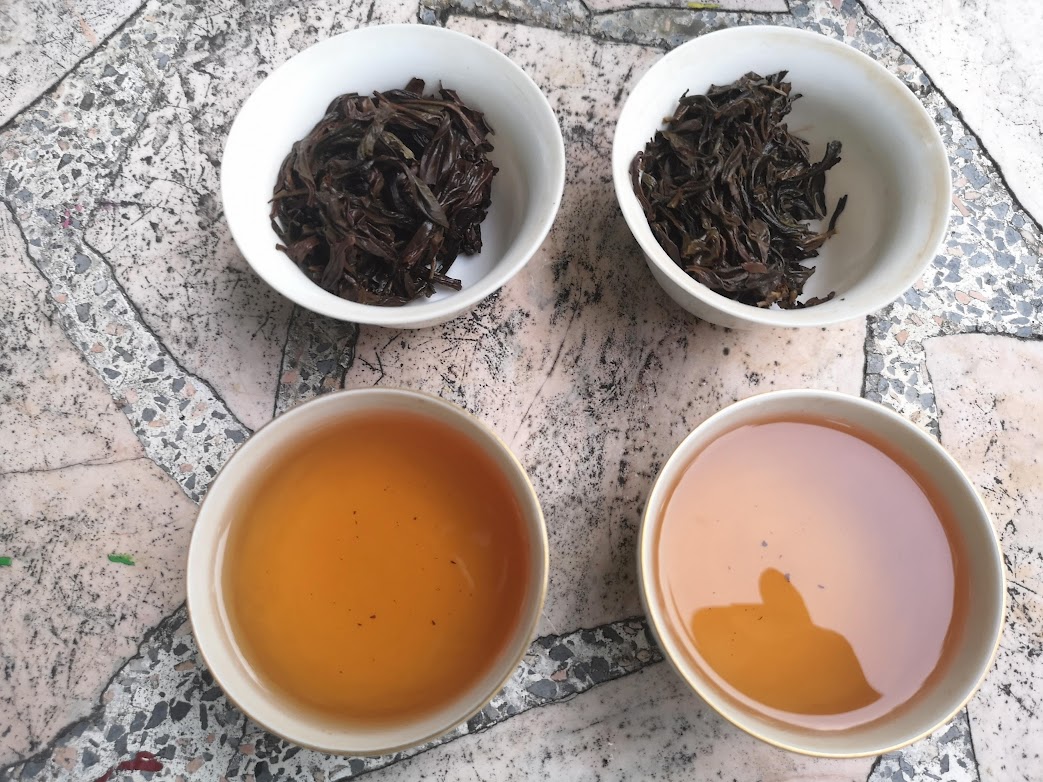
Cinnamon and Almond fragrance Dan Cong


This reviews two more Dan Cong versions from an ITea World sample set.  Earlier versions were amazing, much better than I could have expected.  This will continue that or not; we'll see.  This is from their website information about it:


That set lists for $80 ($79.99), but that vendor seems to routinely offer themed discounts, so it would be around that, maybe a little less.  Ordinarily 80 cents a gram is a lot for teas, of most types, but for really good Dan Cong that's probably fair.  These teas would be hard to find, at any price.

It's a little odd that the Chinese names for these aren't included; one would just expect that.  It doesn't mean that much to me, but I suppose others would feel differently about it.  It's easy enough to look that up, if you know where, cited here from the Tea Obsession blog (thanks Imen!):


Yu Lan Xiang - magnolia flower fragrance 玉蘭香

Huang Zhi Xiang - orange flower fragrance 黄枝香

Xing Ren Xiang - Almond flavor 杏仁香

Zhi Lan Xiang - Orchid fragrance 芝蘭香

Mi4 Lan Xiang - Honey Orchid fragrance 蜜蘭香

Gui Hua Xiang - Osmanthus fragrance 桂花香

You Hua Xiang - Pomelo/grapefruit flower fragrance 柚花香

Jiang Hua Xiang - Ginger flower fragrance 姜花香

Rou Gui Xiang - Cinnamon flavor (not the same as Wuyi Rou Gui) 肉桂香

Mi3 Lan Xiang - Milan flower fragrance 米蘭香 - tinny grain size yellow flowering plant from the southern provinces of China)


Interesting it would be called Rou Gui, but that makes sense.  That Wuyi Yancha type would be familiar to many (which translates as cinnamon).


Review:


Cinnamon:  that definitely tastes like cinnamon.  It would be nice if I could identify true cinnamon versus cassia (I think it is), the close variation that gets passed for cinnamon.  Beyond the cinnamon this is a bit vegetal.  Intuitively a cinnamon flavored version, one that naturally covers that range, would be a slightly more oxidized version, roasted to a medium level, using the extra warmth and sweetness to pair with and highlight that flavor.  That's not really the case for this.  

It's still good; the lighter style of Dan Cong is nice, and it shows off other parts of the tea character well.  Along with the lighter range there is a touch of tree-bud or green wood flavor, and a bit of astringency.  It's not pronounced, and integrates fairly well, so it's not overly negative.  Intensity is good in this; I'll need to keep brewing time limited or it could be too much.  I let this go a little long so it wouldn't be too light, but ended up brewing this round a bit strong.


Almond:  yep, almond.  This has much warmer, richer, deeper tones; it is more oxidized, and perhaps a little more roasted.  There isn't really vegetal range to speak of as a result.  Sweetness is good, as it was for the other version.  Depth of flavors beyond that almond range is nice.  There is good complexity to this, and it all balances well.  Feel might be slightly richer than the first as well.

It's that greater complexity and balance that makes it stand out over the other, at least at this point.  But the flavor range itself is interesting and positive too, beyond just covering some ground.  It leans a little towards spice tones, almost nutmeg, or actually that works as an interpretation.  To me nutmeg comes across as a fairly complex spice flavor, and this matches that, it's not simple.  It might even work to interpret one part of this as cinnamon.  The processing seems to have highlighted the potential of this tea very well.  The first lighter style can really draw out bright and fresh floral tones, but it may not be as suitable for this material version.  Of course that's on to guessing; I'm not qualified to conclude that.


Cinnamon #2:  this works better brewed lighter, which may also relate to the tea softening up a little on the second infusion.  In a recent tasting the subject of how different infusions vary came up, which we really didn't pursue far in talking then, but to me that just varies by tea type, and by version.  The old theme of "second is best" might work in a limited sense, but it's also too simple.  It depends on how any given version is transitioning across rounds.

A perfume-like floral range really kicks in for this.  Cinnamon isn't as noticeable this round.  It's still present, but only at the same level as other inputs.  Feel is richer even though this is brewed much lighter.  A vegetal edge has faded some, dropping to a more positive level.  To be clear this doesn't include a characteristic harsh edge some lower quality Dan Cong express, the type that you need to brew around by brewing rounds very light (even lighter than this, maybe).  I infused this for about 10 seconds, but a flash infusion would be different.


Almond:  this is so good.  The other is nice, very pleasant, complex, balanced, and interesting, but this is just better, across most of those dimensions.  Part of that could be my preference for this warmer toned style, but I also think it's just a better tea, or at least the processing optimized outcome better.  Everything stands out at once, all of those general themes, and sweetness, warm tones, complex pleasant flavors (almond and spice), rich feel, good intensity, etc.  

Almond with spice sounds like some sort of cookie range, doesn't it?  It's like that.  That warmth, richness, and depth almost comes across as a butter based shortbread cookie too.  This would be really fantastic to drink during cool weather, to actually pair with a winter holidays theme.  It's probably in the mid-80s F (30 C), and quite humid where I am now, but it's still nice, it would just match that cooler environment range better.  To me bright, sweet, aggressive but drinkable sheng pu'er matches the experience of heat well.


Cinnamon #3:  I'll stick with relatively fast infusions for now, again at about 10 seconds.  This is as good as the last round, still really hitting its stride.  The brighter, fresher, now only slightly vegetal edge, more into hardwood range, isn't really negative, but not necessarily positive either.  It integrates fairly well with the rest, but it's not as pleasant as the cinnamon and floral tones.  Overall balance is good.  To me this is still pretty good quality Dan Cong, but it doesn't match the level of the other version.  Again, maybe that's preference related?  Seems not, but maybe.


Almond:  the last description still works, all those positive things I was saying about this.  The almond flavor you notice early on, then a heavy and complex spice range kicks in, then as that fades the almond comes back out more again in the aftertaste.  It's funny how a tea experience can be like an almond cookie, as I mentioned, but the experience is so much more complex and refined.  Of course an almond cookie tastes exactly like an almond cookie, but the depth of feel, richness, layering of floral tones, and touch of liqueur-like character all go well beyond what a cookie could deliver.  Or maybe adding a little cognac in a cookie would be good?

I'm sure that these will transition a little more over the next couple of rounds, but I may not get back to making notes on that.  I had a big breakfast and don't feel ok with powering through 8 to 10 cups of these just now.  Breakfast was very pleasant, and quite healthy:  oatmeal with raisin and banana, two fried eggs, some fruit that seems like a cross of mango and plum, and a bit of goji berry.  I'll go do something related to getting all of this to digest some.


Of course I tried rounds later, and the teas were still very nice, but not varied enough to add much about that here.

The same is true of conclusions in general; the teas were as described.  The Cinnamon version was good and Almond version really good.  

The Almond version was good enough that it's hard to put it on a scale.  There are layers and sub-themes that come into play, beyond pleasant flavor.  These include feel (body), intensity, sweetness, overall balance, depth, aftertaste, and marker sort of aspects, like a liqueur-like quality.  I suppose that any tea could be better, but this is pretty far up there, beyond what I can place in relation to others.

Then the flavors were interesting too, and balanced well with each other.  It's still only tea, but the really interesting experiences are something else.


Sunday, February 23, 2025

Reviewing Farmerleaf (Jinggu), Viet Sun (Vietnamese), and ITea World aged shou pu'er


I'm comparing three shou / ripe pu'er versions, one from Farmerleaf (so of course from Yunnan), another from Viet Sun (Vietnamese), and an aged version from ITea World, part of a themed aged tea set.  Going in I kind of didn't know what to expect, but I expected the Farmerleaf version to have an edge, because they've been sourcing pretty good Yunnan teas for awhile.  

I suppose it worked out as one might expect; it was a little better, but the Viet Sun was pretty solid, and novel, and the ITea World version represented well-aged tea well enough.


2023 Ku Zhu Shan  ($140 for 357 gram cake)


Ku Zhu Shan old tea gardens, Jinggu area

Fermented in Menghai in Winter 2023, medium-heavy fermentation

Complex mouthfeel, a hint of aggressiveness

Ku Zhu Shan is a village located east of Jinggu town, it has a lot of 'teng tiao' gardens, in which the tea trees are allowed to grow tall with fewer long branches, it's a special way of pruning the trees. This tends to give a more powerful brew by limiting the amount of leaves growing. 

You can notice the leaves are big and rich in tea buds. This tea has a complex taste which will carry you through a long session. You could even find hints of bitterness if you brew it strong. 


This was pretty good (I add the citations after the notes).  There's no way I'd ever spend $140 on a cake of shou, but at least it's good.


Thượng Sơn Small Batch-Ripe Puerh 2024  ($52 for 250 grams)


A nice small batch production from a new ripe puerh making friend of ours in Hà Giang. The raw puerh used to make this tea is spring 2023 high quality old/ ancient tree material from Thượng Sơn that was wok processed which isn’t too common in ripe puerh production. 

This tea brews up slowly into a rich dark brown/ black brew with some mahogany red hues. Sweet with earthy fragrant wood, and herbal dark sugar notes. This tea retains a bit of bitterness which balances well with the heavy sweetness. Thick mouthfeel and a lasting finish with a relaxing qi effect. 

The high raw material quality of this tea shows over the course of the session and performs well over many rounds. This tea is med-low on the fermentation scale and should age nicely with proper storage. 


The description doesn't sound so different than the Farmerleaf version, but this does cost about half as much.  Note that the sample seems to say that was a 2017 tea version (in the following photo), while this is claiming 2023, so it may not be identical.  There wasn't much shou being produced in Vietnam 8 years ago so it seems likely that writing is wrong, or unclear, especially since this listing from the same location is on his site.  [later edit]:  this was a 2017 version of a tea they sell more recent versions of.  Strange it was produced that long ago.

Quality level, complexity, and depth gives up a little (assuming that it is this version), but for as good as this is I'd definitely buy it instead of that Ku Zhu Shan version.  For people into good shou, who value the difference, the opposite conclusion might make sense, but that's as hard for me to relate to as people drinking Japanese green teas.


For the ITea World sample the information will be limited.  It's from this set, 100 grams of mixed aged teas selling for $76 for 100 grams (so it's by far the most expensive, but it's the rarity of other versions driving that pricing, not so much this version).


iTeaworld 2025 New Year Tea Gift Set (Year of the Snake Edition) - The Collection of 10 Aged Teas: Includes 20-Year-Old Ripe Pu-erh, 40-Year-Old Hei Zhuan (Black Brick Tea), 30-Year-Old Oolong, and more


Not much in there about this tea, or even in the site background.  It's Yunnan shou pu'er; that's it.


Review:


Farmerleaf Khuzhu Shan (the rinse):  I'll just pass an on initial impression, prior to the actual real steeps.  For a flash infusion this is pretty good; it's intense and rich, with good depth and feel already.  This will be a challenge for the other two to match.

Viet Sun (Thuong Son):  much thinner and less intense, but then this is only the rinse.

ITea World:  it's smooth, and has depth, but it's not looking good so far.  But then for this being much older, 2003, it may come around quite a bit after a rinse, removing a lot of what isn't as positive fast.


Farmerleaf KS (first actual infusion):  that's pretty dialed in to good shou range.  Some cacao works as a base, along with general earthiness, and then a bit of spice and dried fruit stands out from there.  Intensity is good; I brewed these fast to try a light round, between 15 and 20 seconds, and it's already there.  Depth is good; feel is nice, pleasantly thick.  Aftertaste doesn't extend as with sheng but it does support the experience of complexity.  It's clean.  Even the early fermentation rough edges seem gone, within two years of this being made.  It's a shame that I don't like shou more; this is a really good example of one.


Viet Sun:  there's an interesting distinctive flavor range in this; thinking it through that was the one way that it could hold its own, given the first version is as good as it seems.  There's a perfume-like note (possibly a foreign input, but the rest of flavor is quite novel, so maybe not), and rich, warm, earthy tones, along with pleasant spice range.  It might be slightly thinner and less intense and complex than the first, probably giving up the most related to depth, whatever I take that to mean.  More fragrant flavor range is quite pleasant, and also clean, but the feel and base flavor range (depth, earthy and mineral tones) doesn't match it.


ITea World:  a pronounced aged furniture input is interesting, like aromatic woods and essential oils that have been resting for a couple of decades, or longer.  It's also relatively clean; I guess age does tend to soften rough edges, and this is 22 years old, with the Vietnamese version 8 years old, plenty of time for a shou to settle.  Related to the Farmerleaf version that lack of age could have limited positive nature, depending on the starting point.  Sometimes inky, petroleum or tar-like flavors can transition into a creaminess, over some time.  It seemed to be a bud-heavy version, that probably wasn't fermented to death (absolutely completely), so it probably retained brighter flavors when new.  Sometimes high bud content shou ends up tasting like cacao, as that did.

Richness and depth are fine, and intensity.  All of these are pretty good, really.  I expect a longer soak will really let the Farmerleaf version shine, and improve the Viet Sun results some, and this will just gain a touch more intensity.  This older version could fade faster than the other two; aging can convert flavors in interesting ways but different kinds of transitions can lead teas to "brew out" faster.  I'm probably using one gram or so less of this version, which won't help it in comparison.  

Related to this showing off what a 20+ year old shou is like this really works.  In terms of matching the complexity and quality of whatever this Farmerleaf version is, and the novelty of the Viet Sun tea, that's asking too much.  It's not noticeably inferior to either, it's on the same general level, and that's already a major victory.


Farmerleaf Ku Zhu Shan (#2):  these brewed for closer to 30 seconds, for a longish soak.  It's unusual how good this is, how positive all the layers of flavors and other aspects are, and how it all comes together.  It will be interesting to hear what this is.  

Plenty of cacao stands out.  That can taste like dark chocolate, or the actual powdered coffee bean, or I suppose even a little like cocoa, but in this it's like ground cacao bean, like what you bake with, or even how the nibs smell and brew out (fresh chunks).  Warmth stands out beyond that, a clean version of earthiness.  The rest blends a bit but warm mineral, some spice tone, and what I take to be limited dried fruit input all combine, along the line of a hint of dried dark cherry, but interpretations would vary.  Balance is good, the completeness of the experience.  As for intensity shou is only ever so intense but this is doing fine with that.  Feel is relatively rich, a little oily; it's positive.


Viet Sun:  actual flavor layers are even more novel in this.  It's expressing something more like novel and mixed spice range.  Warm tones are pleasant, and feel is nice, with some underlying mineral, but it doesn't strike that really unconventional balance of hitting every note in sync that the first (Farmerleaf) version does.  It's good, and it's balanced, just a little lighter and less complex and intense in overall effect.  I really didn't expect it to be this good.  I should be mentioning more of a flaw than a lack of intensity across some scope, like an off flavor, odd feel, something like that.  Vietnam just hasn't been producing high end shou for long, and it's not just a matter of piling up some decent material and keeping it wet but not too wet.

As a sheng drinker it's odd switching this back to personal preference as a filter.  I miss that hit of intensity, the high bitterness, sweetness, strong flavor, intense feel, crazy complexity, and I suppose although I don't acknowledge it often the body rush from consuming it.  These are just pretty good.  Maybe on a cold fall day it would really make more sense; it's probably about 31 out now (C; that's almost 90 F), and ridiculously humid.  You don't crave warm toned teas on a day like this.


ITea World:  aged effect, the old furniture theme, and some extra medicinal spice picks up, along the line of whatever that really diverse set of spices they sell you in Chinatown herb shops as medicine smells like.  Like ginseng?  But really complex; like a few different things.  This is warm too, but as with the Viet Sun version it lacks the same intensity and depth of the Farmerleaf version.  Which is odd, because it has pretty good intensity, complexity, and depth.

I think the high buds input in the Farmerleaf version might be impacting the outcome.  Buds-only white teas can end up relatively flavorless (not always), but even those usually have great depth.  You never drink good Jin Jun Mei and feel disappointed by the lack of complexity, intensity, and depth.  Probably finer leaf material are covering one aspect range, and buds input another, and they overlap to balance really well.  Or maybe that's completely wrong.

I'll do one more round and drop taking notes.  These will transition a little over more infusions, but not enough to make it worth writing or reading about.


Farmerleaf (#3):  not really different, but then it was pretty good over the last couple of rounds.  Maybe I'm making it sound like that good balance and complexity really matches my personal preference more than it actually does.  I appreciate it, and like it, but again I'm a sheng drinker.  For whatever reason I really crave black tea experience as well, and can also appreciate oolong novelty and refinement.  I appreciate that this is so good, but I don't love it.  I think pretty much all shou drinkers would, maybe even across liking different styles, since this has a lot going on, and it's essentially all positive.


Viet Sun:  that atypical flavor complexity shifts just a little but it doesn't change.  This probably wasn't affected by an external flavor input (eg. something nearby in storage), because all types of external flavor inputs fade faster instead of just changing in form.  It didn't really taste off, or adjusted, I'm just clarifying that.  You can probably get any tea to taste like old furniture by storing it in an old furniture cabinet for a half dozen years.  Maybe that's actually not a bad idea.  This just includes unusual flavor range naturally.  


ITea World:  this still tops the others in terms of "aged taste."  Warm slate mineral works as a nice base, sweetness and thickness is fine, then lots of flavor complexity joins that, again in an old furniture and Chinese medicinal / root spice range.  

Drinking this on a winter day could seem magical, in a rustic cabin, maybe with some neutral flavored butter cookies, and snow falling outside.  In comparison with two other good shou versions on a hot day in Bangkok, at 12:30 now, not even in the morning, it's more about comparing strengths, what aspect ranges stand out.  Probably I'm losing something in missing the intensity of experience in sheng, turning up the volume in exposure, while these tea inputs add depth to the set of things you already experience.  That, and warm tones match with cold weather.


Conclusions:


All simple enough, the Farmerleaf version is a little better than the other two, the Viet Sun tea is solid and novel, and the ITea World represents aged shou well, giving up some complexity, depth, and novelty.  For people who haven't tried a lot of 20+ year old teas that part would've seemed more novel than it does to me.  It doesn't come up too often, but pretty regularly.

I really can't relate to anyone paying 40 cents a gram for shou, but if that part is fine the Farmerleaf version is worth it.  To me why even pay 20 cents per gram; decent factory shou might cost two thirds that, and that can be fine, since all shou is as close to the same thing as is true for any tea type (just how I see it; obviously shou drinkers probably don't agree).  Here is an example:


2022 Menghai "7572" Ripe Pu-erh Tea Cake  ($36 for 357 gram cake)


This probably was a little rough-edged for the first couple of years, and may not have fully settled yet.  In Yunnan Sourcing's words:


A classic recipe from Menghai. This is an average blend of 7th grade material that was fermented last year, so the cake does not have that just fermented taste, rather it has already mellowed a bit. Another 6 months to a year down the road and it will make even more improvements in taste and liquor clarity. When brewed this cake will taste a little sweet and lighter than the creamy 7262.


That "7th grade" relates to the material being chopped in form, as much as some general quality level.  All three of these teas surely are better than this, but from a "shou is shou" perspective not by much.  Farmerleaf's equivalent value-oriented entry, 2023 Bangwai Ripe, sells for $36 per cake; I'd probably buy that instead.  

William gave me these samples I'm trying from them on a visit here (many thanks for that), and after checking I have some of a 2023 Mengku version yet to try.  Since it lists for $60 per cake it represents another variation of a good-value theme, just not tea as inexpensive as Dayi versions.  Shou really does vary, from heavier flavored from being fully fermented, to being lighter, or even heavier on cacao range if a version includes more buds.  All three of these being pretty good, and relatively novel, might've made it seem like it's normal for above average shou to work out like that.  If a version is from a reliable source and the character is positive one can be nice, complex and well-balanced, but including a bit more rough edge than these did would be quite normal.

For this ITea World version representing the more ordinary range in an aged tea tasting set it held its own better than I expected compared to two interesting and positive shou examples.  It definitely showed off aged effect the others didn't, and some people would value that more than I probably seemed to.


Sunday, February 9, 2025

Aged Lapsang Souchong (2014) and Dan Cong (1995)


Lapsang Souchong left, in all photos


I'm reviewing two more aged teas from an ITea World aged tea set.  Most have been pretty good so far, and a 1995 Shui Xian oolong was really interesting.  I've tried different aged teas in the past but covering different types at those sorts of early ages is still new ground, at least those particular iterations.  This will be something different too, a 1995 Dan Cong.  

The rest of this set is this:


That's definitely novel; it's hard to judge if a $75.90 pricing (for 100 grams) is about right or a really good value.  It depends on the teas, and some have been exceptional, others just interesting and characteristic for the types.  They seem to offer different discounts at different times, and I think for a reduced rate below that value is pretty favorable.  

As I keep mentioning related to lots of teas I don't buy tea at 70 cents a gram or so (they passed this on for review; many thanks to them!), so value really depends on what you like, and what budget you are working with.  It would cost a good bit to buy these from any market outlet sort of vendor, if they were even available.

To me aged teas can be hard to place, because experiencing them is definitely novel, maybe more so than for any other type range.  But then in terms of pleasantness, refinement (one level quality relates to), or intensity of the experience they're often not as positive.  For buying random versions of them online storage issues often all but ruin them; mustiness can be a main aspect.  

In the last week or two I've written about a 2010's version that had probably been stored near incense, picking up a flavor input that seemed foreign.  So far none of that has impacted these tea samples, and it has only been that quality was exceptional for some and more medium range for others, or so it seemed to me.  We'll see how these go, or rather I already have, since I often write intros and conclusions during editing.  One is really good, very novel and pleasant, and the other just good.


Review:


2014 Lapsang Souchong:  interesting!  That picked up a lot of spice tones with the aging, it seemed.  It almost tastes like a spiced tea version.  I was expecting this to not be a smoked version initially, and there is no smoke, but it's hard to say how that flavor input would've held up over 11 years.  

It balances pretty well.  There is mixed spice input, which I'll try to break down more next round, then a warm toffee sweetness beyond that, and some neutral warm-toned base mineral.  There is no sharp black tea edge, but even in newer, higher quality Lapsang Souchong versions there might not be much of that.  Feel is interesting, especially for it being the first light round, a bit rich.  It seems clean and refined.  All in all it's pleasant to experience.  

Going back and comparing it to the other version a touch of sourness stands out, which is more evident in comparison.  First impressions can miss things like that.


1995 Dan Cong:  there's quite different spice standing out in this.  I don't remember spice tones picking up that much in aged tea versions before, but then I've probably never tried an 11 year old Lapsang Souchong or 30 year old Dan Cong.  This is a little sharper and more pronounced, like clove.  

The other came across as a mix of different flavors, that were hard to separate.   There is some fruit or floral base beyond that spice in this, and warm mineral again, but the sharper and more pronounced spice range really stands out most, and kind of blocks experience of the rest.   It will be interesting to see how these evolve, how the flavors transition in relation to each other.


Lapsang Souchong #2:  I brewed that first round about 20 seconds, and I'm going to stay with using decently long infusion times, maybe 20-some this time instead.  Drinking these brewed light would also work, using faster infusions, and they would produce more rounds, but I expect the effect will be most positive with intensity bumped to a medium-high level.  Or at least infusion strength; we will see what extracts.

More spice, no surprise.  It's mostly in a cinnamon related range.  There is a little sourness to this.  From being stored a bit damp?  Maybe.  It's far from ruined; that kind of works with the sweetness, otherwise clean flavored nature, spice tone, and underlying warmth.  But I suspect that people would have different natural tolerances or preferences for or against that inclusion, the sourness.  It was off-putting in a Thai shai hong style black tea I tried with Huyen and Seth, for her, and I still love that tea.  It might be more common in Dian Hong range than for other black teas, related to some processing form input.  I don't remember ever trying Lapsang Souchong that seemed sour to me, but earlier on I probably wouldn't have noticed it.  

To me this tea is good.  For others reaction to that one flavor input might decide it.


Dan Cong:  an interesting spice and aged wood tone has picked up.  This is really interesting.  It tastes like really aged furniture, a bit towards Chinese medicinal spices, what those Chinatown shops tend to smell like.  One note is still related to clove, but there's a lot more going on, all across spice and wood-tone range.  

Some lower quality aged sheng pu'er tends to taste woody, in a completely different sense.  That tends to taste like well-cured lumber, while this is a hint of cedar, or towards incense spice range, just not exactly that either.  It tastes like what I'd imagine exotic Chinese medicinal root spices might taste like.

Would this naturally be appealing or off-putting for many people, the same question I just asked of the other tea version?  I would think the novelty would generally be positive.  The overall balance is nice too; it's not musty, or heavy across an odd flavor range, lacking body / feel, or too dry in some odd way.  A bit of toffee sweetness helps the rest tie together well.  For well-aged sheng two different problems can enter in, that haven't here.  Those can be musty and earthy so that they require a few infusions to clean up, or some versions just tend to fade.  This definitely changed due to aging input, but not in those ways.


Lapsang Souchong #3:  I brewed these a little longer, to see what happens when they are pushed a bit, on towards a minute.

Spice is still pleasant in this, still mostly centered around cinnamon range, but more complex than just that.  Sourness is reducing, even brewed strong.  It's not unusual for some aspects to "burn off" over a few initial rounds, and that seems to have happened.  It comes across as a little sweeter, cleaner, and more balanced, with warm tones playing a larger role.  A toffee sweetness stands out.  Other warm tones seem to include just a touch of leather, not the musty horse saddle range that can turn up in hei cha or some pu'er, but a lighter, sweeter note.  It's tempting to go on and on about types of leather, but ultimately not informative, so I won't.


Dan Cong:  this changes every round, which is an interesting effect.  A lot of the description I already covered still applies, but the overall balance is quite different, and I had been listing out a lot of range before.  Wood still stands out, but a very novel form of it, a touch of cedar, well-aged furniture, and then the overlap with Chinese medicinal herbs.  A sappy feel enters in, connecting with one part of that, the unusual herb or spice range.  There are bark spice tisanes one can seek out, not cinnamon, and not like cinnamon, that this might resemble.  There is a lot going on.

It's not so unusual for some aged teas to fade, but this absolutely did not do that.  It's unique, clean, complex, and balanced, expressing flavor range that isn't familiar at all.  I suppose this is what one might hope aged tea would be like, it just usually isn't.  I'm guessing that the sheng and shou versions in this set might seem kind of ordinary to me, which I'll get around to checking on, but this doesn't.  One more round will tell enough of this story.


Lapsang Souchong #4:  kind of the same.  This may be fading a little already; an input like aging might transition the material to include novel range but could also cost it intensity and the ability to brew a lot of rounds.  The same can come up with oxidation and roasting steps.  

This tea isn't done, but it might've passed the most interesting part of the infusion cycle already.  Or the next couple of steeps could still be regarded as more positive than the first 3, since the sourness transitioned out.  This one I brewed a little faster so the intensity dropped some, but it's still fine.


Dan Cong:  it's interesting brewed lighter; different flavor range comes out.  A lighter spice range emerges, almost including a citrus note.  Aromatic range is interesting.  It tastes like aged furniture, but not in the musty sense, instead related to those fragrant preservative oils that are used in some places (like here in Bangkok, where old traditions and practices sometimes stick around).  This also isn't better brewed so light, but it is interesting trying it in different ways.  It still works.


Conclusions:


Those teas really were on the way out; they kept brewing, but they were already declining by then.  The 10+ infusions theme relates more to younger, powerful teas, not those so transitioned by aging input.

The Dan Cong was a really unique experience.  I've been a little skeptical that it really improves teas much to age most for 10+ years, but it held up, and changed into something very novel.

The storage input to the Lapsang Souchong wasn't quite as positive; a light early sour note threw off results a little.  I'd expect that being stored with more humidity in the tea made that difference.  In the past people often talked about re-roasting teas, to keep them dry and positive in character, but it later seemed like storing them well-sealed at an appropriate humidity level works out much better.  They're not changing related to fungus and bacteria inputs, fermenting, as sheng pu'er and other hei cha are, so they don't need limited air input and a higher degree of humidity to support that microbiome.


I'm not sure that everyone can appreciate what a market value for a well-stored, high quality, novel 30 year old oolong might be.  There isn't much of that around; it could be hard to identify that.  I wrote about types and transition patterns in aging oolongs before, back in 2020, and mentioned reviews of a half dozen versions of different ages.  It had seemed a lot of what had been around was already sold by then, with some pricing getting a bit crazy.  The TeaDB blog wrote about that awhile back (this time in 2016, but I was looking for something else).  Pricing for everything mentioned was all over the map, in both posts, often way over $1 a gram, but one thing would be the same from both:  those aged teas selling in 2016 to 2020 are probably all gone now.

Or are they?  I looked up one I tried earlier on, well before 2020, a 1995 Thai Qing Xin oolong from Tea Side (a Thai vendor), and it's still available.  It sells for $40 for 50 grams, exactly the same rate as this sample set.  I thought it would be sold out, or would sell for more if available.  Two Moychay aged oolongs (one Qilan listed here, and another) from 2004 and 2006 sell for 24 and 30 Euro for 50 grams; a little less, but those are a decade younger.  I guess that it's still out there.  This vendor sells 70s Dan Cong, for around $300 for 50 grams.  If you have an open enough budget this 95 version isn't the far extreme.


For people seeking out this kind of experience this set has been reasonable, a mix of really exceptional and unique versions and others that at least represent the range fairly, and the value seems fine.


Sunday, February 2, 2025

Trying three grades of Huangshan Maofeng (green tea)


I'm reviewing half of a green tea sampler set from ITea World, three grades of Maofeng green tea.  It's represented as tying to a plucking standard and quality level:


6 Flavors Superior Green Tea Leaf Grade Collection Includes Longjing And Huangshan Maofeng 87G For Morning  ($36.90)


Introducing our Green Tea Leaf Grade Collection, a specially curated collection designed to help you discover how the picking grade of green tea leaves affects its flavor, aroma, and overall tea-drinking experience. This set includes two renowned Chinese green teas—Dragon Well (Longjing) and Huangshan Maofeng—both made from traditional heirloom varietals. The only difference? The picking grade of the leaves. You’ll be able to taste three distinct grades:

One bud, one leaf

One bud, two leaves

One bud, three leaves

Each tea is handpicked and processed by the same experienced tea master to ensure consistency in craftsmanship. By tasting the subtle variations from these different leaf grades, you'll develop a deeper understanding of green tea and find the perfect grade for your personal preferences.


I'll have to see how that bud theme works out for the Longjing; it usually just looks like small leaves.

In terms of value this seems fine; maybe 40 cents a gram for pretty good green tea.  It would be more in the Spring, and maybe it would make more sense to buy it then, even paying more, but for trying something novel (for people not already exposed to this range) they could catch back up on appreciating the fresh edge and intensity more later.

I wasn't keeping track of how many sample sets they've expanded to sell now.  It's a lot.  They're quite a bit better for this latest round of different sets than earlier on; the Dan Cong alone changes everything.  They cost more too; that's how it goes with higher quality, higher demand tea types.  Those earlier basic sets were great for just getting people started on basic oolongs and black teas, and such, but now these take another step.  An aged tea set has been pretty good, better than I expected, and another Longjing set was about as good as 8 or 9 month old versions were going to be.  Good Dan Cong is on another level, to me, and somehow theirs were way better than versions most often are.

Western vendors offer sample sets too, but they don't push into the range as far, or take up the same developed forms.  Most will offer one or two sets, so that you don't need to buy whole cakes of sheng or 50 grams of each type, and can go back and order more of what you like.  Yunnan Sourcing might sell 20 different sample sets, across a lot of types range, and maybe even more, but these are packaged in a novel way, set up to try each sample individually.  Does it make a difference?  Maybe not, usually.  But it's ideal for sharing them, or traveling with them, or not getting to some for a few months.


Review:


Level 4, 2 or 3 leaves:  fresh, bright, and vegetal, with pleasant sweetness and overall balance.  I don't want to overdo it with stating and re-stating that this must have been fresher when first produced, in April of 2024.  It's still good, this just wouldn't work for everyone into green tea.  The vegetal part tastes a little like green bean.  At least it's a relatively fresh version of green bean, not like well-steamed or canned forms.  Still, it tastes like green bean.


Level 2, 1 bud and 2 leaves:  slightly brighter and fresher, with a touch of nutty range.  This is more what I like best in green tea.  It's still vegetal, not that far off green bean, but it leans a little more towards sugar snap pea instead.  Feel might be slightly thicker; I'll have to focus on that as I go to tell better.


Premier, 1 bud and 1 leaf:  the flavor profile of this is different, with more separation from the other two than the first from the second.  There's a savory note in this.  That often reminds me of sun-dried tomato; maybe it's a little like that.  It doesn't necessarily seem fresher and brighter than the others.  The extra flavor range gives it more depth, but it's in a heavier and warmer tone.  

I don't necessarily like this more than the second version, where it did map like that in the middle round; it seemed better than the first.  It's just different.  There is different vegetal range beyond that savory note, that's hard to identify.  It's more like fresh soybean; back to coupling with some savory range.  It doesn't really express the nutty aspect in the second.

I hadn't mentioned brewing approach.  This proportion is moderate, for me, at maybe 5 grams per these 100 ml gaiwans (that probably fill to 90 at the most), so I used 20 or so seconds for the first round.  I'll bump that a little, on to 30.  Of course I didn't weigh or time any of that; I'm philosophically opposed to such things.  It's just to pass on an idea of it.


Level 4, #2:  a little grassiness is picking up, a fairly standard theme across a lot of green tea experience.  I wouldn't say that I hate that, I also just don't like it.  Flavors are generally clean, and decently fresh, but that grass flavor pulls it towards a steamed spinach effect.  I eat steamed spinach, to be clear; I like it.  And some seaweed, but this doesn't go there.  It expresses some umami but not enough that it stands out.  Feel is fine, but not full or rich, just present enough to support the experience.  It's not bad, it's just also not great.


Level 2:  this changed a good bit.  Nutty flavor range is replaced by a much greater depth.  It's a little towards the sun-dried tomato in the next version, just not a direct match.  Some degree of nutty flavor is still present.  I like the balance of this more, how it all comes together.  Feel is a little fuller than the first version.  Vegetal range is still in between fresh green bean and sugar snap pea, spanning both.  To me that's pleasant, but it would just depend on preference.  Someone else might interpret this as including kale as well, which I would take to be a more negative assessment (unless they love kale?).  

Being brewed stronger probably shifted how the flavors come across.  It's normal for some of that to happen across most tea types.


Premium:  steamed soybean is a much stronger flavor input now.  I actually like those, so this kind of works for me.  I'd probably rather experience Longjing of this quality level, but I already reviewed a set of those, and there are three more in this set.  I doubt that I'll be able to identify differences between the earlier one and that one, trying the teas weeks apart.  

When you taste in comparison like this the other teas tend to set a benchmark level, not an earlier experience, or all earlier experiences.  With enough tasting exposure you could place it against another range easier.  For me I would have better luck with that for other tea types, for sheng pu'er, black teas, and a range of oolongs.

Sweetness is pretty good in this, and thickness is fine, with a touch more aftertaste experience carrying over.  Some of that could serve as subtle quality markers.  That's more or less a working concept that I made up, one that helps me place what I'm experiencing.  The aspects that tend to identify tea quality the most don't necessarily directly overlap with those that make the experience most pleasant.  But then people could value different parts, or different aspects within a range, so that's subjective, and variable.

For green tea freshness would be a main concern, and these all are giving up a bit for being 9 or 10 months old.  From there distinctive flavor range would identify them as fully type-typical, kind of related to a quality issue, but different.  For green teas intensity, rich feel, sweetness level, and clean effect (like "refinement," an emergent property based on different aspects) would all identify quality.  Aftertaste expression kind of links with intensity, but it's something else as well.

To me this tasting a lot like cooked soybean and then sun-dried tomato and green bean beyond that is not an unusual theme (although I'm definitely no Maofeng expert), but back to preference it's also not completely positive.  The tea is good, but again I'd rather drink Longjing.  I'll brew these lighter next time, for more like 15 to 20 seconds, just to check on the difference that makes.


Level 4, #3:  lighter doesn't work as well for this; the sweetness seems to back off, and it comes across more like water vegetables were steamed in.  It's still ok, in one sense, but not as pleasant as the first two rounds.


Level 2:  again lower intensity isn't better for this, but to me the style and character hold up much better at this lower infusion strength.  Some intensity of flavor carries over better, even though it's also light.  The nutty aspect still stands out, in a nice way.  Vegetal range works well as a background input, not too focused on any one cooked vegetable theme.  I suppose sugar snap peas stand out most.  Grassiness doesn't enter in much.


Premier:  cooked soybean is now coupled with more cooked vegetables; this is a bit like a much stronger version of broth than the first was.  Warmth, depth, and some umami range stand out.  The Level 2 version covers brightness and freshness better, at this stage.

Nine cups of these teas is so much.  I'm curious about what one more strong round would be like, but it's getting to be a lot.  I'll take a break, and I may get back to that, or may not.  I would expect it will be more of that I've been describing, without much of a development or twist.


Fourth round, combined notes:  after a short break I did go there.  I do like these better brewed a bit longer, and they're holding up to this many rounds well.  None of the three are improving, or evolving in interesting and positive ways, more just hanging in there.  The descriptions from earlier rounds still apply.


Conclusions:


It's interesting liking the character of the Level 2 version the most, that flavor profile.  The Premier version is definitely a little more intense, with quite a bit more umami experience, but I don't like the taste of cooked soybeans with a little sundried tomato more than nuttiness with some brighter vegetal background.  The Level 4 version, the first, is more grassy, with more standard vegetable range.

I'm not sure this divide relates mostly to a plucking standard (what the material is made from).  They didn't confirm that plant types were identical, although they might be quite similar, or the same, and there's nothing in here about microclimate / terroir, them being from slightly different places.  Even being located on two different sides of the same hill could change things, a little, or broader inputs like elevation can.  Of course I'm not going to speculate about specifics.  They said that the same producer made them, implying that all other conditions were held to be as similar as possible, but who knows.


All in all this was an interesting experience.  It's hard to place in relation to Maofeng I've tried in the past; it's been awhile, and I've drank a good bit more Longjing, and not very much of that compared to sheng pu'er.  For a green tea drinker I think this would be all the nicer.


But then there's the freshness edge sub-theme; these must have had a little more of a fresh pop when first produced.  They're not settling into warmer, murkier flavors, necessarily, but it's quite possible that the comments here about cooked vegetables would've been about brighter or more floral range aspects when these were brand new.  I think exploring green tea right before the Spring harvest season is a little odd, but it could still make sense.  You would need to place it for what it is, considering that as one input.

It might be interesting for them to bundle left-over 2024 versions along with new 2025 teas.  I'm speculating about aging transition inputs, but in direct comparison you could try to sort that out, beyond different versions just varying for different reasons.  Aged green tea isn't a common thing, but to me transitions across different time-frames are interesting.  Black tea settles more over the first few months than people might expect, for example, and of course sheng pu'er does a lot more.


Friday, January 31, 2025

Ginger flower and honey orchid fragrance Dan Cong


honey orchid left, in all photos


This reviews two more Dan Cong from an ITea World sample set, sent by them for review. The last two were exceptional (orchid and magnolia fragrance versions).

One is the most commonly sold Dan Cong type, Mi Lan Xiang, or honey orchid fragrance (or aroma).  The other version, ginger flower fragrance, I've probably never tried. Their site description of that set follows:


iTeaworld 2024 Christmas Gift Sampler: Fenghuang Dancong Oolong Tea  ($109.90 for 100 grams)


Fenghuang Dancong Oolong Tea:  Huang Zhi Fragrance, Orchid Fragrance, Honey Orchid Fragrance, Magnolia Fragrance, Ginger Flower Fragrance, Osmanthus Aroma, Cinnamon Fragrance, Almond Fragrance, Night-scented Stock, Jasmine Fragrance


I might add a note on their brewing advice, before touching on the subject of value.  They recommend using Gongfu brewing, of course, starting at 6 to 8 seconds, and moving to 10 to 15 seconds, for up to 10 infusions.  That's fine, but I would brew these quite a bit longer, and only get about 6 to 8 rounds out of them.  If I was using a proportion of 8 or 9 grams I'd probably roughly match their parameters, but to me 8 seconds isn't long enough at 5 grams to 100 ml.  That's about preference, not really an optimum.  I'm a sheng pu'er drinker; I can't be brewing teas really light like that, but it is one common form of preference.  It might even work slightly better to isolate flavor aspects, even though that's counter-intuitive.

Is just over a dollar a gram justified for these?  I tend to state over and over that I just won't buy tea at a dollar a gram.  I probably wouldn't buy these.  But for what they are, the quality of the four versions I've now tried, that's about right.  At least they offer sales that could cut that back a little, 20% off if you spend over $100, so it seems this would drop automatically, at least now.  If these really cost 80-some that's a pretty good value.

It feels odd saying that.  Who spends over 80 cents a gram on tea?  People who don't care what the cost is, or who get hooked on types and quality levels of teas that they just can't get for less.  It's better not to do that.  This is where I usually say that other range of similar tea, for this type, isn't as good, in a sense, but it's interesting and pleasant enough that it doesn't matter, it's fine.  With Dan Cong you kind of take a hit.

I will say this:  I just bought decent Dan Cong for a gift at $20 per 100 grams.  It won't be this good, and this range of different DC versions doesn't turn up.  I bought that in a Bangkok Chinatown, and you can't match value or that version offering on the internet, oddly.  I didn't try that exact version I bought, to be clear, but I've bought Dan Cong from that shop three times, I think it was, so you can kind of get a sense of what they sell from that kind of history.  Upper medium quality Dan Cong can be really nice, if you can find it.  Online sources wouldn't sell that for less than $40, but it's still 40 cents a gram instead of 80+.  Other Chinatown shops here would probably sell lower quality Dan Cong for more; it was an exception, even for here.

These might all be that little bit better, or at least the first 4 were.  Maybe the honey orchid, Mi Lan Xiang, wasn't quite on the level of the others, but they were all pretty far up there for quality.  So I guess if you really feel that you need to experience what pretty good Dan Cong is like this is reasonable (given the other versions are like the first four, and I expect that there could be some quality variation).


Review:


Honey orchid:  that's nice.  I didn't use an extended first round for these to bump infusion strength to a normal level, so I'll be trying them light for a first infusion.  Character is good; these aspects are nice.  Tone is a little warm; it seems that oxidation level is balanced really nicely, probably supported with very moderate roast input, that is hard to fully place.  It all integrates.  Flavor is floral, of course, hinting a bit towards ripe peach.  The warmth comes across as a touch of cinnamon, at least so far.  Astringency hasn't emerged yet, but being on the light side that would be moderate.  It's a great start.

One might wonder if this seems really familiar, for this being the name for Mi Lan Xiang, the most common form of Dan Cong.  I guess so.  Those still vary a good bit, and this is a novel and positive version of one.


Ginger flower fragrance:  I guess that tastes a lot like ginger flower?  There is a light spice edge to it; it's really interesting.  The general tone is sweet, like jasmine, not even all that far from jasmine.  Again the moderate warmth works really well for this.  Floral tones are plenty bright and intense, and then it's grounded by warmer floral range, and what could seem like a bit of spice.  

This is so fragrant that it's perfume-like.  No tea this good is artificial, I don't think; I mean that volatile compounds give it a positive effect, what I often call liqueur-like, when the flavor context is slightly different.  It'll be interesting trying both slightly stronger.


Honey orchid #2:  I brewed these for about 15 seconds, or just over, not a long infusion time, but plenty for this proportion, for "only" using 5 grams.  Flavor is great.  Intensity picks up a good bit, but it stays in a similar flavor range.  A richness picks up, a thicker feel.  Astringency also does, but it's not sharp or edgy, only tied to that fuller feel.  Flavor definitely includes a lot of warm floral tone and some peach, and again I read the warmer part as being like cinnamon, just not exactly that.  

Ordinarily I'd be brewing 8 or so grams of this, drawing out even more intensity, even for using slightly cut back infusion times.  As long as you keep infusion timing out around 20 seconds that intensity would still be there.  There is no sharp edge to worry about; may as well push this tea a little.  Refinement and balance are great.  There could be a little more depth, and a little more pop, with aftertaste carrying over a little more, so I'm not saying that this is an ideal version, but it's pretty good.  It's definitely in the right range.


Ginger flower:  that ginger edge really comes out; it actually tastes more like ginger this round.  Maybe I was expecting that to be less of a literal description, or maybe ginger flowers also smell like ginger toot.  The sweetness is again like jasmine, with more warmth.  Where the other includes warm tone that's towards cinnamon this is really aromatic incense spice range instead, a set that I don't have clear enough memory of to distinguish between (frankincense, sandalwood, etc.).  

Feel seems a little thicker, and aftertaste does carry over just a little more.  It seems natural to push these just a little harder next round, infusing them for just over 20 seconds, to see what comes of that.  There's nothing negative to work around, so it will be down to trading off maxing out intensity for having them brew less rounds.


Honey orchid #3:  it's funny how someone unfamiliar with this tea type range could be absolutely blown away by this tea version, the strong floral tone, touch of fruit, sweetness, richness, depth, overall intensity, the way it all balances, and so on, and then the other version amps a lot of that up just a little.  Good Dan Cong is really something. 

"Good" is so relative; above average quality versions just tend to be like this, but from how people describe even versions they take to be positive many aren't.  That characteristic astringency edge people describe needing to brew around is a quality issue.  I suspect that low elevation, monoculture grown versions are pushed too hard with chemical fertilizers, leading to that, but of course that's just a guess.

Aftertaste does seem to pick up a little, for adding just a little more infusion strength.  Feel is generally good, it just seems less noteworthy with the other being a little richer.  Maybe the flavor being relatively familiar does cost it a bit in terms of novelty, but it's not as if I'm drinking Mi Lan Xiang versions all the time.  It's been awhile.


Ginger flower:  that's as far as this should be pushed for infusion strength, or maybe this is tipped a little over a natural optimum.  You know when something is enough when it's too much.  The ginger type flavor is still novel and positive, and other floral range is nice, but that jasmine sort of floral note is a little too strong in this.  

Could that flavor have been bumped by contact with actual jasmine flowers?  Sure, it's possible.  I'd guess that's not an input, but the effect would be like this.  It wouldn't draw out that much ginger flavor though.  And the supporting incense spice range warmth is really interesting and pleasant.  This is just how good Dan Cong goes; it's a little surprising that tea can be like that.  If added flavoring could be this clean, balanced, and positive I'd probably drink flavored teas.  Good Wuyi Yancha can be a bit surprising too, but not as much across this floral and fruit range, typically.  That liqueur-like effect can be really strong in some types of those though.


Honey orchid #4:  the feel isn't necessarily thicker or richer, but somehow it picked up a syrupy effect; the texture changed.  That's nice.  Intensity and complexity are good, and depth, but somewhere in that set is the closest thing to a limitation this tea has.  It could hit harder.  I suppose it could be slightly more intense and complex, and could express a little more depth.  It feels like splitting hairs saying that.  Someone could buy a dozen Mi Lan Xiang versions and not get one this good.  But there's a magic that happens when it's all dialed way up, and this quite good, but maybe just short of magical.

This is part of why I feel like chasing quality level optimums is a bad thing, to be clear.  If you need every new and different next experience to be better than all the last you set yourself up for disappointment instead of enjoyment.  This is already so good.  I'm just trying to place it, for people who are really on that page, into Dan Cong.  It would make for a bad goal trying to top this tea, and an expensive one, probably requiring some hit and miss, but it would be possible.


Ginger flower:  at just the right infusion strength this gets pretty close to magical.  The way all those flavors I keep describing come together, with the rich feel, warmth, depth, aftertaste trailing on--it works.  I suppose that ginger and floral mix, not so far off jasmine range, may not appeal to everyone, or that incense spice undertone people might see as less positive than I do.  To me it all really integrates.  I don't think it was a happy accident that made this tea turn out this good; I suspect that whoever made it really knew what they were doing.

That reminds me, in the last meetup at my favorite Bangkok Chinatown shop the owner, Kittichai, was describing how oolong is harder to make than sheng pu'er (in his opinion).  He said that to make sheng the material plays a lot of the role, and if you get the simpler standard steps right it will turn out as well as the material allows.  But oolong is different; there are more steps, more inputs, and more judgment required.  That matches my understanding too, even though I have zero experience with processing tea myself.  The timing for every step needs to be carefully determined, not according to a recipe, but in relation to the material and the conditions, related to how compounds are changing just then.  It's the same for withering, bruising, and oxidation, on to fixing, then later roasting; variable after variable requires tea maker input.

It seems funny saying that since over and over I've said that South East Asian sheng is typically just a little off Yunnan versions, probably related to processing differences.  Some of that could be intentional; people seem to draw out withering or add a limited oxidation step to offset the final bitterness and astringency, the harshness.  In Yunnan if the material is a bit aggressive after processing it just is; you age it some to offset that, not change the processing inputs.  What do I know anyway; I'm just a tea drinker.


Fifth infusion:  in order to not repeat those same aspect lists I'll just combine thoughts in one note for this round, and end this note-taking.

The honey orchid version has levelled off related to changes, not necessarily fading, but maybe giving up a little intensity.  It's quite pleasant like this, and not changed, but a next round would need to be infused longer to get this far.

That ginger tone is always surprising in the other version, when you first taste it each round.  And it being supported by so much floral and spice range is really something.  I suppose the feel could be a little thicker, but there's so much novel and well-balanced range that it's really splitting hairs to point out where it's weakest.


Conclusions:


These are much better than the earlier tasting sets from ITea World.  If you go back and read the wild origin material posts I did those teas are positive, mostly, but they're not complex, intense, balanced, and refined like this, none of them.  Then again this is Dan Cong (and they also cost more); that would be like trying sheng pu'er and saying that other type range just doesn't match it for intensity.  Of course not.  Just across that one dimension these aren't as full-throttle intense as the ordinary range sheng pu'er versions I often have with breakfast.  But across almost every other dimension the aspects really stand out.  

I suppose that only applies if someone loves floral-oriented teas with some fruit and spice range to add depth.  If someone loves green tea or hei cha, and not that range, these may not work as well for them.  To me the appeal seems relatively universal in form, but in practice personal preference isn't exactly like that.  People like whatever they like.


Sunday, January 26, 2025

2014 Shou Mei white tea, 1995 Shui Xian oolong


iTeaworld 2025 New Year Tea Gift Set (Year of the Snake Edition) - The Collection of 10 Aged Teas

1995 Shui Xian Oolong Tea

1998 Tie Guan Yin Oolong Tea

1995 Aged Phoenix Dan Cong

2003 Sheng Pu-erh Tea

2003 Shou Pu-erh Tea

2008 Double-Steamed Liu Bao Tea

2014 Shou Mei White Tea

2014 Zheng Shan Xiao Zhong Black Tea

1998 Jasmine Green Tea

1980s Fu Brick Tea


Listing for $75.90 for 100 grams, it's hard to determine relative value, given that this range is a bit rare.  It also depends on quality level; older teas aren't always pleasant, and didn't always hold up well to storage inputs.  These did; I'm including the product information after doing the review notes.  76 cents a gram is probably fine for good quality teas in this rare a type range.

Let's get right to the review then.


a slightly better look at the dry leaves


Review:


2014 Shou Mei:  this is nice.  It's not as intense as it will be for rounds after this, even though I brewed it for nearly 30 seconds, but it's started nicely.  A warm spice aspect stands out, and richness of feel, and depth.  Honey-like sweetness is pronounced.  Other warm tones might include pastry, like a danish tastes.  So far no dried fruit is standing out, but this includes most of the rest of the range aged white teas typically might.


1996 Shui Xian:  that's interesting.  On the one hand there's a much stronger age-related flavor than is typical in just about any tea version, aged books or furniture or whatever.  I've been drinking a lot of aged tea lately so that's familiar, in different forms.  Then other warm range is more like leather, or even towards coffee.  Only the long-faded remains of a probably initially high level of roast remains.  A dark caramel flavor aspect is promising; that might pick up.  Strong and dark mineral tones ground the rest.

It doesn't integrate as well as it might, but then this is only an early round, and some aspects tend to "burn off" within a round or two.  It's not very musty.  One part of that aged furniture or books range includes a little funkiness, but it's moderate for this being a 30 year old tea, and this being the first round.  It's not sour either; that could easily creep in, depending on storage conditions (included dampness).  This was stored fairly well.  It will be interesting to see how it evolves.  Of course it's a bit "stronger" than the white tea, in terms of intensity, but the other version has greater depth.  All that could still shift though.


Shou Mei #2:  richer and deeper in flavor and feel.  Still, this conveys what is positive and limiting about aged white tea, even though it's a pretty good version of one, type-typical and pleasant.  Flavors are nice, and feel is rich.  It balances well.  Sweetness is good, and it's clean in effect.  Then it's also a bit limited in intensity, in a couple of senses.  There is no astringency edge to offset the rest, only a rich feel.  Flavor is positive but the range it spans is limited.  To me this would be a nice tea to drink a few times, maybe even a half dozen times, but I wouldn't want to have it once a week for months.  For me basic black teas and my favorite young sheng range I would appreciate over and over.

I drink aged white tea when I fast; along with shou pu'er it's gentle enough to be fine even if you haven't eaten for a few days.  In that context it's nice experiencing any flavor, and any eating related process, even just drinking a tea, or tisane.  

Related to changes maybe the bread range has expanded a little in this, tasting like a sourdough sticky bun.  That's good, but the rest of the range is still limited.


Shui Xian:  this picks up depth too, and "cleans up" a bit.  The aged effect is still present, but the mustier side of that--which was already limited--drops back.  A spice note stands out more, one that's hard to place.  It reminds me of different parts of a favorite Chinese bean and dried fruit desert, served with ice, mixed together, like Chinese date and candied lotus root.  


I just saw this in a local Japanese grocery store, the day I posted this


This is interesting, and pleasant.  It didn't seem to fade over those years, but I'm getting the sense that this won't last, that it's already hinting towards fading from being brewed, under one minute of infusion time in.  

This range of tea isn't really familiar to me.  I've tried aged Wuyi Yancha, but never over a decade old, as far as I remember.  This is holding up for intensity better than I would have expected, and the flavor range is clean and pleasant, complex in a novel way.  Caramel or toffee sweetness does hang in there, along with earthier range that's hard to place, warm mineral tones, and dried fruit depth.


Shou Mei #3:  about the same.  I brewed that a little longer, maybe 45 seconds instead of just under 30, since there are no concerns about too much intensity or harshness related to both.  Brewing it strong will drop the infusion count, but I'll probably stop taking notes here anyway.  It's not transitioning, not changing.  

In terms of interpretation of flavors if you think about dried fruit when you drink it, one more flavor that tends to emerge in aged white teas, it does taste a little like dried raisin or date.  Not much, and part of that is probably a bias in "looking for it," but it's a little like that.


Shui Xian:  this did transition; an interesting bark spice aspect picked up.  Cinnamon is the one bark spice we are familiar with, but there are others.  For nearly 20 years I was into tisanes, before exploring "real tea," and I tried a lot within that range over that time.  It's odd that I don't bring it up more here, but that was a long ago, and it didn't work to commit a lot of the flavors and experiences to memory.  When I moved to Thailand 17 years ago I tried out some herb teas here, but explore more coffee, and then tea.  

I could struggle more placing a flavor list for this tea at this stage, or describe it fading some over a few more rounds, but I'm not going to.  For pushing these teas, using such long infusion times, the infusion count will be low, maybe at only a half dozen, and they'll be a lot more faded than normal by the 5th and 6th round.  I'd have a chance to list a new flavor aspect for one or both, but the main story has been told already.

I will also mention that on the next round a brandy-like flavor aspect seemed to pick up, something that had been present before then, but that was clearer at that point, easier to put a label on.  Again the white tea changed less.


Conclusions:


Both of these are good.  I would've expected more storage issues, and limitations, but these didn't express those much.  These two styles are limited, in relation to each tea style having a different character, and only covering so much scope.  Young sheng pu'er expresses crazy intensity, and fully aged sheng pu'er trades that out for other flavor range and complexity.  These are interesting, and novel, and not similar to either of those ranges.  Neither is in a range I'd want to drink a lot of the time, but they're both very positive experiences.  The "daily drinker" theme is always separate from other exploration range anyway.

I can't really say that the Shui Xian is completely type-typical, related to not being that familiar with such aged Wuyi Yancha.  It's more intense than I expected, and complexity is good, with novel flavor range expressed, which I did expect.  I might've expected more flaws; it's nice to be wrong about that.

In one sense I think aged white tea can be over-rated, but then preferences do vary, so that only works in relation to my own preference.  The same applies to well-aged rolled oolong; it's interesting, and some people love it, but I don't really, since it usually just picks up warmer tones and tastes a little like plum.  

Until someone tries a type-typical version they wouldn't know what they like or don't like, which is the whole point of this kind of sample set.  In these two cases it achieved its intended outcome; these were interesting and pleasant versions of these types.