Showing posts with label baozhong. Show all posts

Saturday, July 20, 2024

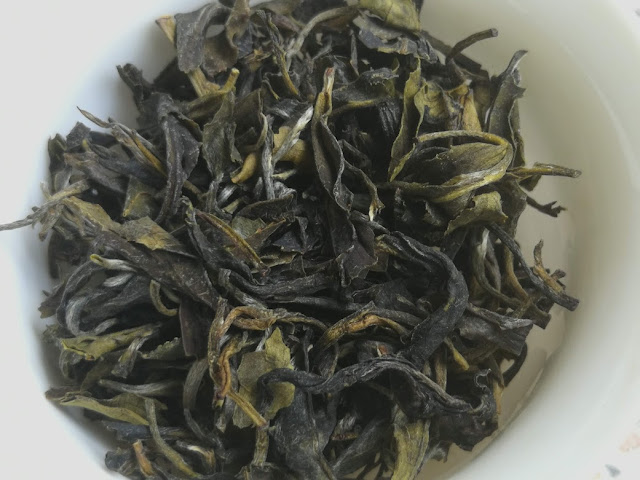
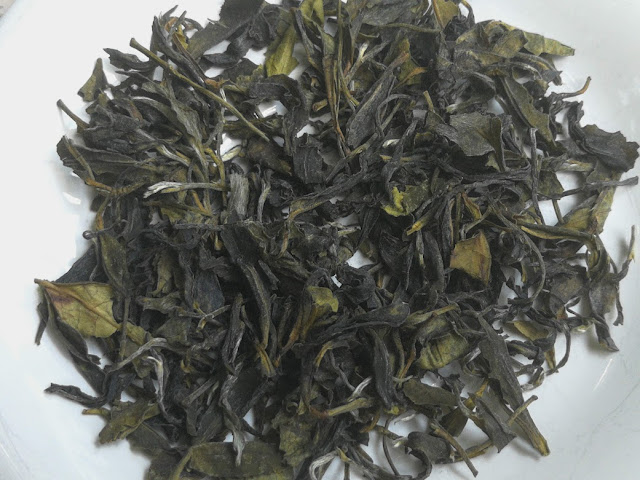
Baozhong comparison (Taiwanese oolongs), Lishan and Pinglin


A tea vendor friend recently visited Bangkok, Peter from Tea Mania, and he dropped off some samples to try (many thanks).  These are the first I've tried, Baozhong oolong, a light oolong style from Taiwan.

I've had great experiences with their teas in the past.  This was a main source I ordered teas from just a few years ago, but I've drifted on to trying and buying more local Thai and Vietnamese teas since.  Their earlier sheng pu'er versions were really nice; it will be particularly interesting trying some of those.  This oolong range I've tried some of but not that much in relation to other tea types; it should also be interesting.  In the past versions have been fresh, light, flavorful, and pleasant, novel in flavor aspect sets.

Ordinarily I'd cite the product listings to add more background but the site isn't pulling up just now, at least not to click through to the right page.  More information should be here, at some point.  There is another Baozhong sample with these that I didn't try yet; maybe I'll add a section about all three then, and talk through some background a little.  

It's interesting that one is 2021 and another 2022, and I didn't really go too far into what that limited aging input would've changed, not that I know.  It's often a habit to make things up and guess, but I didn't, beyond adding a couple of sentences at the very end.


I didn't comment on this nerd theme either; am I really a nerd?  I'm an engineer, and I take exploration of some subjects a bit far, and my personality is defined in some atypical ways, but I don't see much to gain from taking on a related label.  I suppose it would fit if I were into that.


Review:


Lishan #1:  fresh, sweet, and bright.  I'll need to be careful to give these longer steeps to compensate for using less, maybe 5 or 6 grams in these samples, but brewing a tea light the first round works for me.  This really is in between more conventional oolong and light and smooth green tea character, kind of as expected.  But it doesn't have the aggressive tone a lot of very light Tie Guan Yin can have, in the best cases straight floral, and then when not as positive maybe including sweet corn, or even new car smell.  This is floral, mostly, but there is a vegetal component to it, closer to sugar snap peas.  It's nice.


Pinglin:  this character overlaps a little but it's heavier, and different.  Floral tones are much deeper and heavier.  There's an aspect beyond the floral range that's hard to place as of yet, not unrelated to vegetal range, but not exactly that either.  It's aromatic and warm spice, I think, like incense spice, sandalwood or the like (I couldn't identify different incense spices, to be clear; my exposure has been very limited over the past 25 years).


Lishan #2:  being a bit stronger helps, although warming in tones is kind of neutral; the lightness and brightness of the first round was also pleasant.  Feel picks up.  Floral range fills in more depth, there is more of a broader set of floral tones, including some that are warmer.  The tea is still quite light, in comparison to other versions' range; I mean in comparison with the first round.  It's not exactly complex but there is enough going on to appreciate it.  

That one floral range that I associate with high mountain Taiwanese oolongs is present, a light floral scent.  In rolled oolongs that can be really intense, so that you might want to brew a tea lightly to offset it being a bit much, unless you really appreciate the rich feel and aftertaste parts more, then you'd just go for it.  Again this is pleasant.


Pinglin:  there's really something to the depth, complexity, and intensity of this.  Compared to the sheng versions I usually drink it's on the light side, in terms of feel and flavor impact, but there is a lot going on, more than in the other tea, I think.  Richer and warmer range makes it come across as more intense, although I suppose maybe it's just an illusion that it's more complex, tied to how I interpret a warmer and deeper flavor set.  Probably it's both though.

That one aspect I tried to describe might not be a spice input, as much as just an unusually strong and rich floral aspect, that stands out against a field of others.  It's like lavender, close enough that it works to call it that.  There is also a broad range of other lighter floral tones, and warm depth, some sort of base that's harder to separate out as specific flavors.  Often that would be underlying mineral range, but it's not so clear in this.  

It may really be a hint of a few things, underlying mineral, warmth tied to spice, and even some sort of vegetal note, which I'm not really pinning down.  Then for being so complex it's interesting how that one particular floral note is stronger than the rest, the lavender.  Not so much that it dominates the experience; in fact the opposite.  It's just stronger, so it sets up an unusual harmony, not really even a "foreground" effect, but just something standing out a little.


Lishan #3:  this transitioned some; somehow a fruit tone seems to be evolving.  Whenever that kind of thing happens it makes you wonder to what extent it had already been there, and you'd just missed it.  It tastes a good bit like yellow watermelon.  I suppose that it could taste exactly the same and it's just an association or new interpretation that I'm adding.  It seems a little more complex as a result.


Pinglin:  this may have just flattened out just a little, the opposite.  It seems possible that warm tone range is picking up slightly, while floral range fades, but it's a subtle shift.  Mineral seems more pronounced too, giving it just a little extra depth.  It comes across as a heavier range and stronger tea than the other.  Someone really into that one light floral note that's pronounced in Taiwanese oolongs might like the first better, pushing it harder than I have been to get intensity up.  I would imagine plenty of sheng drinkers could relate to the second better, for coming across as slightly more complex and intense, with the warmer tone range just depending on individual preference.

This seems like a good place to give these a longer soak and then leave off the notes, since I'd expect them to fade as much as to keep evolving from here.  I've been giving the half a minute infusion times, which is a lot longer than I use for a packed-out gaiwan proportion.  I'll only infuse them for a minute, nothing too crazy.


Lishan #4:  this really shines at this stage.  Intensity isn't so pronounced; soaking that for two minutes might have been even better.  It's fine for an experience though, strong enough.  There aren't really new descriptions to add.  Light and sweet floral tones are giving way to more depth of other range, with mineral picking up, and non-distinct vegetal range playing more of a role.  I could see this as including fruit but it's not as natural an interpretation this round.  Maybe that light vegetal input is close to fennel.


Pinglin:  fading, in a sense, but this still has plenty to offer.  It's possible that a 3 or 4 minute soak for both could be the best yet, although I would imaging trade-offs would enter in, and aspects that pick up wouldn't all be as positive as the first rounds' range.  

It's interesting how these are light in effect but also have a depth and odd kind of intensity to them; it's an interesting contradiction.  They're what I expected from minimal exposure to related types range in the past, among the least of any main tea types that I've tried.  Baozhong would be "main" in a limited sense; listing out the main half dozen types of oolong to me it may not make that list (Wuyi Yancha, Dan Cong, Tie Guan Yin, high mountain rolled Taiwanese versions, Oriental Beauty, then I'd go with "red oolong" as more standard, oxidized versions up near the black tea boundary).  That's even without dividing up types; more oxidized and roasted Tie Guan Yin is completely different than very light versions.


Lishan #5:  more vegetal range does pick up, brewing this for 2 1/2 to 3 minutes instead.  It's still pleasant, just not improved.


Pinglin:  that one floral note comes back stronger brewed longer; that is nice.  Vegetal range, mineral, and whatever else doesn't pick up much.  I suppose it regains more intensity and fullness, and that's it, nothing stands out as negative, or even pronounced.  

It's odd that I've not mentioned oxidation level.  It seemed as well to just focus on the tea experiences, since going on with guesses about causes wouldn't add much.  Sure, this may be oxidized a little more.  And it's from 2021 instead of 2022, but I'd expect that transition didn't include that much shift to warmer and deeper tones, although it should've been some.  I'd guess that it started out different, and then both might've changed in different ways over 2 to 3 years as well.

Probably one more long round will close out most of the positive range these have to offer, although who knows, maybe they'd keep going, or an extra cold brew from them could be good.  I'll leave off the notes here either way.


No extra conclusions this time; those descriptions seemed clear enough.


Monday, February 13, 2023

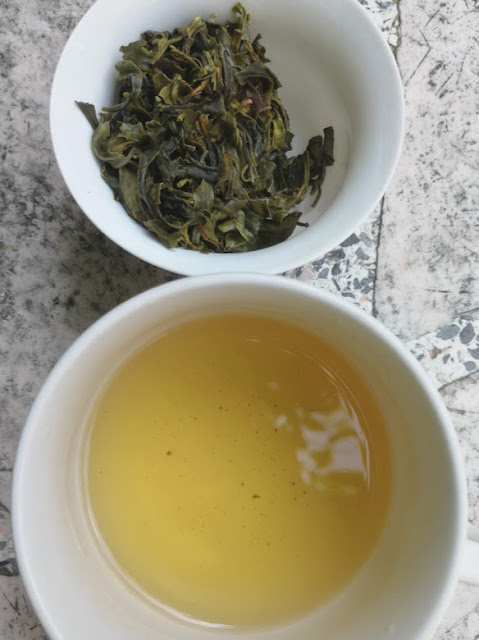
Wawee Thai Baozhong (light Taiwanese style oolong)


This is another from a set of teas sent to me by that friend from the Iris Cafe Nimman in Chiang Mai (on Instagram here), which are mostly Thai teas, but not all that.  Baozhong--pouchong in the older transliteration form--isn't one of the oolong types I've had much exposure to but the few versions I've tried have all been very pleasant.  They tend to be light in style, sweet, maybe a bit vegetal, but with floral and other positive flavor range that sets them far apart from green teas.  So like light Tie Guan Yin versions but completely different, I guess.  

This tea version isn't listed on Wawee Tea's website, but it's made by them.

I don't think that type description is far off the mark but let's check a Teapedia page reference:


Baozhong (包種) is a lightly oxidized oolong tea with twisted shape, floral notes. Baozhong is mostly only light or entirely unroasted. It is produced mainly in Fujian, China, and in Taiwan.

Its name in Chinese, literally "the wrapped kind", refers to a practice of wrapping the leaves in paper during the drying process that has largely been discontinued due to advancement in tea processing. At its best, Baozhong gives off a floral and melon fragrance and has a rich, mild taste.

Usually around the end of March, begins picking of this famous Taiwan "spring tea" (春茶).


If I would've read this before making these notes I probably would've mentioned melon; so that kind of suggestion influence goes.  It's not a shock that a Taiwanese tea type could've originated in China but in this case that's completely unfamiliar.  

In Google searching a second reference a mainly Taiwanese vendor, Te Company in NYC, doesn't mention the connection back to Fujian, but they do say that "Typically, the Boazhong oolong in Taiwan uses either the Qingxin variety or the TRES no. 12 (milk oolong) to be the base of their production."  Interesting.  Of course the #12 cultivar is Jin Xuan.


Review


first infusion:  a little light, but still very pleasant.  Creaminess stands out most, that feel, and how it seems to tie over to sweet, light, and floral.  There's even actual cream-like taste, not exactly like a milk-oolong effect, like a Jin Xuan version that tastes creamy, but towards that.  There's a nice nutty range that compliments all the rest, rich, light, and sweet, maybe closest to macadamia nuts.  

Since I did brew this for between 15 and 20 seconds it's not necessarily very light only due to short infusion time.  Against my natural inclination I backed off proportion a bit, more in a normal range, so I'll need to keep using timing around that range to keep infusion strength up.  I think this could stay on the subtle side related to bright and intense floral aromatics, but we'll see.  For now all that depth and complexity lends it a nice balance.  The sweet, light nature is really novel and pleasant.  I suppose vegetal range at this stage is closest to very fresh sugar snap peas.


intensity is great for these rounds; it's light because oxidation level is moderate


second infusion:  not transitioned much; everything in the first round description still applies in the same way.  This tea is very appealing for reasons that might not describe well.  There's an initial pop of brighter flavor, even though it's not as intense as the other parts of the experience, that creaminess combined with that one vegetal tone and more subdued floral range.  The sensation of creaminess occurs on more than one level, so that's interesting and novel.  Warmer tone range, the macadamia nut, gives it depth, so there's a lot to take in at the same time; it's complex.  Sweetness level is really nice, and an extra finish / aftertaste aspect gives it even more complexity.  All of that is really clean; there isn't a single hint of off flavor, dullness, muting from storage input, odd wood or mineral tone, etc.  It's really nice.


third infusion:  infusing this for slightly longer, out towards 30 seconds, may have changed the character as much as typical infusion transitions.  Depth and warm tones stand out even more.  It will be interesting trying a really light round next time to see which input led to what.  

Creaminess and sweetness back off a bit, and although it's still quite pleasant that earlier balance was really catchy.  Warm tone related to nuts shifts some; this resembles cashews as much as macadamia nuts at this point.  A creamy effect didn't drop out, it just changed, with less cream flavor input, less bright in flavor character.  Mouthfeel is still very pleasant, rich and light at the same time, and interesting mix.  I've been drinking mostly sheng for quite awhile so it's odd, and also nice, to switch off that very intense bitterness, intense flavors, and strong feel structure range.


fourth infusion:  I brewed this the shortest time of any infusion yet, down at 15 seconds or so, so the difference should be interesting.  Brighter flavor range does stand out more again, the sweetness, non-distinct floral range, and even the sugar snap pea again, but it comes at a cost of the tea feeling thinner, with less creaminess and depth.  Someone might prefer to drink every round prepared this way though, to maximize that light and sweet flavor range experience.  In the middle would be fine for me, trying to maximize both ranges to the extent that's possible, drawing out this sweet range and also including more warm tones and depth, without brewing strong enough to overshadow the first part.

It's interesting that I drink this tea differently than sheng pu'er; I find myself slurping it to maximize that volatile range experience.  Sheng often just smacks you in the mouth, so that there's not necessarily an instinct to maximize intensity.  And I kind of like that; there are days when I'll drink a 10 year old Xiaguan tuocha--way too intense, not age-transitioned enough to be ready--because I want to experience that hit.  This tea isn't subtle, like some wispy white version where you are struggling to pick up what's there, so it's more about maximizing the experience instead, wanting to experience what is apparent in as strong a form as possible.  The gaiwan is a bit over 3/4 full, so there isn't much range to bump that by adding more tea, but looked at another way  it's nearly 1/4 empty, so there still is.

That will do it for notes; this will shift just a little over another half a dozen infusions, but that's most of the story, and it's nicer to enjoy teas without writing half the time.


Conclusions


Just fantastic tea!  It's a little simpler and less intense than all the sheng pu'er I've been drinking for a long time but the intensity was fine, and character very novel and pleasant.  That flavor range and effect of creaminess were great, with nothing like a flaw entering in.  Adjusting brewed intensity would let you shift experienced aspects a bit, even though you don't get that from round to round transition.  It really did brew another half dozen very positive rounds, fading some, but quite pleasant through those, and nice enough to keep stretching after that.

I've never had a Thai tea version in this style.  Thinking back one from Indonesia wasn't all that far off it, from Toba Wangi, even though I think I didn't get that clarified for the review being so long ago (7 years back; that was a bit early in my blogging for it to reflect a developed perspective, but at least I was already checking out interesting teas).

To an extent Thai teas can be unfairly pigeonholed as most often copying Taiwanese styles, beyond the newer sheng range, and hit and miss efforts at black teas, most typically not as successfully as the best Vietnamese versions.  I think that's because "plantation teas" only need to be as good as they have happened to be in the past, with emphasis on stretching production volume instead of developing better and better versions.  This is something else altogether, and in one sense these kinds of exceptions aren't so rare now, if you can keep turning them up.  I've reviewed some amazing Thai teas over the last three years, and a more limited set in the three years before that, but some then too.

Would this version "hold its own" against above average Taiwanese range?  I'm not the right person to weigh in on that; my exposure to that scope is way too limited.  I would guess that it would be a problem to narrow down expectations in any fair or broadly meaningful way.  I can pass on the opinion that it's quite good tea, novel and very pleasant, obviously high in quality level, and that will have to do.


Wednesday, February 2, 2022

Georgian light oolong, probably similar to baozhong style


I'm reviewing the last of a set of tea samples from that tea contact in Georgia (the country), Nika Sioridze.  There was no particular reason for waiting months to get to it, I just tapered off reviewing in the last couple of months of last year and have a few more varied teas around to try as a result.  Most are really interesting too, including Wuyi Yancha from Cindy (of Wuyi Origin), another US tea from Jason of the Mississippi farm, and a bit of Gopaldhara Darjeeling.

I didn't know what the tea was prior to trying it but the color is a clue; it was probably green tea or light oolong, resembling a baozhong style in appearance.

It makes sense to include a little more about Nika and Greengold; I think this tea might be one that goes by the name Greengold (the company name).  That description doesn't mention oxidation level so I'm guessing by dry leaf appearance, which changes a lot just in relation to lighting and camera settings.  

We talked to Nika in an online meetup summarized here.  That included a comparison tea review of two of their black teas, not normally how I do that.  This post reviews what I interpreted to be two of their oolongs, but one thing confusing this (beyond the samples not being labeled) is that they use local branding names for the teas, not tea type names.  So there are some descriptions for them online, and a presentation through the site with more details, but the mapping is to a separate name type (eg. Fire of Dragon oolong goes by Daisi on their site, I think).

As with any other person or vendor you could reach out with questions about types through their Facebook page, and I did talk to Nika about what this probably is, probably a light oolong.  Or maybe it's that they aren't even trying to replicate a particular Chinese or Taiwanese style, so a partially oxidized but quite green tea is essentially an oolong, but not necessarily a copy of baozhong style.


a more spread out arrangement shows off the leaf color variation better


Review:


first infusion:  really light; brewed fast.  Results are promising but this will need a longer infusion time to tell more of a story, and often the first infusion is more about wetting the leaves, since I wouldn't use a rinse with a tea like this.  Flavors are bright, floral and creamy, with a touch of vegetal edge.  This seems closest to very lightly oxidized oolong range, baozhong / pouchong, but it really could be a green tea for all the more I'm picking up so far.  If it is a green tea that ended up oxidizing a little along the way it might not be far off really light oolong range anyway.  A citrus like edge in this is especially interesting, bright and intense, out towards lemon.  Great sweetness helps it all really pop.


second infusion:  vegetal range is stronger than I'm accustomed to, for being off green teas for so long.  I may never conclude if this is a green tea that oxidized a little or if they intentionally oxidized it, since it seemed like a light oolong last round and further towards green tea this one, but still like a light oolong.  There's a really catchy aspect in this that makes it work well.  It's probably a set of flavors, that towards-lemon citrus, combining with a bright and light underlying warmer range, like some kind of grain, and also complex floral tones.  The vegetal part isn't like bell pepper or bean or anything like that, closer to the sweetness of a sugar snap pea.  

Then there's also a touch of astringency edge that compliments the rest well enough, that is hard to tie to making the most sense with a certain flavor, that seems to link to it.  For example floral range often seems to tie to something like plant stem.  This isn't exactly that, but it's close.  It has a little bitterness and sourness to it, not enough to really throw it off, since the sweetness, freshness, and intense and complex other flavor range integrates well with that.  There's a lot going on.  Nothing in it seems like a clear flaw; even that sourness is clean in effect, and links with the rest.


third infusion:  not transitioning so fast, so similar to last round.  I brewed this faster and lighter, using under a 10 second infusion time, and the intensity and complexity is fine in this, slightly better than using a longer time.  The flavors are so intense that it carries over as a nice aftertaste experience.  

I suppose it wouldn't be perceived by everyone as being how pleasant I judge it to be.  I'm not into standard green tea range, really, and that's the part that should be objectionable, but there's a lot more going on with this than the standard floral + vegetal range.  Astringency gives it some structure but it's still smooth and full; to me that part resembles a very light oolong.  That bright citrus note is unusual for green tea; I think that would make more sense tied to a light oolong too.  Then the floral and snap pea sort of flavors do overlap with green tea range, which can occur in both.  

There's a mineral base to this, and that warm tone I've interpreted as like a grain, that really help the rest tie together, and come across as a complex experience.  The main potential negative would be someone not liking this tea style range.  I think if someone loved oolong-style sheng pu'er (not exactly a universal terminology), versions that are very bright, sweet, fruity and floral, moderate in bitterness and astringency, and drinkable when young then this would really appeal to them.  

People not really into sheng might wonder what I'm talking about; what part of that description is supposed to be negative?  After some exposure you can come to crave the blast of intensity and extended aftertaste that can come with more intense feel and flavor range, with teas that are much more bitter and astringent.  Some people dislike both types (and aspect sets), and mostly only drink aged sheng, or just stick with oolong or black tea.


fourth infusion:  I do anticipate that this will brew a lot of pleasant rounds, and will transition some over the next 3 or 4, but I don't feel like writing a lot more notes, so I'll probably drop that after this round and mention later changes in comments in a conclusion.  Tone is warming a little; that bright lemony citrus edge shifted to seem more like orange.  The sugar snap pea might be shifting to a little deeper and richer range like fresh green bean.  Underlying mineral range is also warming, it's just not as easy to pick that up as the brighter flavor inputs shifting.  

Maybe I should do one more round of notes, letting it brew a little longer to change effect.  Aftertaste range is still pleasant but the bright and sweet floral and fruit range mixes with the vegetal tones in that too, mirroring all of it in a lighter form, so how much someone likes the flavors would map to how they take the aftertaste experience.  It's not a hui gan / bitterness to sweetness effect, because it's not that bitter to begin with, and the taste is already sweet while you drink it.


fifth infusion:  interesting!  I think brewing this stronger had just as much effect as the transition pattern.  Feel is heavier brewed stronger, with more edge, and bitterness experience is much more intense.  This effect does seem to resemble a hui gan kind of carry over more, for bumping up bitterness experience while you drink it.  That citrus part carries over in a really interesting way, more so than how you experience it while drinking it.  

This seems like better tea than it really should be.  I'm not saying that they're just monkeying around with processing inputs to see what comes of it, but they're early in the stages of developing these styles.  Nothing in this experience resembles a flaw to me, and per my understanding that tends to not happen by accident, or through a short period of experimentation.  Intensity, novelty, clean character, and pleasant overall experience are all really well developed in this.  

That plant stem sort of edge might make or break the experience, if someone doesn't tolerate that typical green tea range well.  If it helps placing that it's not so far off the taste of a green tomato, or it works to just say that's it.  Without complex fruit and floral range, warm undertones, grain-like depth, and good sweetness and mild bitterness that would be awful, if it was a main flavor input.  As one part that balances the rest, and emerges more as you brew it stronger over later infusions, to me it's fine.  I would stop short of saying it integrates and complements the rest, making it better, but it all works together.  Brewed lighter that edge diminishes, but then the heavier aftertaste experience, which someone might really value, also drops off some too.

Related to later rounds and longevity this did brew a number of additional positive rounds, but it didn't transition to improve from there, or change in any interesting ways.  Bitterness and that vegetal edge kept standing out more and sweetness and the fruit and floral range just receded, so the first half dozen infusions really were the best.

All in all really nice, and a real surprise.  I'd be more surprised if their other teas weren't so good.  I still think their "Fire of Dragons" version would still be my favorite, but this really works too.