Showing posts with label seoul. Show all posts

Saturday, July 29, 2023

Most exceptional international airports


A Reddit discussion of US based airports led me to write about this subject, related more to international airports instead.  Any airport flying to another country is an international airport, so many in the US are, so this really mostly relates to airports outside the US, although it does compare the list to American examples, a little.

The context for this is me living and traveling quite a bit in Asia over the last 15 years.  I lived all over the US prior to that, in Pennsylvania, Texas, Maryland, Colorado, and Hawaii, so I visited a lot of US airports earlier on, but 15 years is a long time for conditions and experiences to change.  I've flown in and out of Honolulu twice in the past year; that's the only American airport I have recent experience with.  In the mainland I last flew through JFK, maybe a half dozen years ago now.

My family didn't travel abroad during covid so I'm most familiar, in recent experience, with wherever I've traveled through since, in Tokyo, Osaka, and Seoul, in Haneda, Kanseda, and Incheon.  Prior to that we visited Hong Kong and Shenzhen (China) in 2019, and that Hong Kong airport was fine, but I didn't mention it in this list.  It's about airports that were modern and efficient, pleasant to travel through, but also about interesting features or appearance in them, whatever might make them unique.  It's not as much a ranking of airport services efficiency or completeness as it might sound, more about what stood out to me as interesting.


Cited Reddit post:


I just saw a post about worst airports (in the US, in that version), and although this kind of question comes up all the time I'd like to weigh in on it. I'm living in both Bangkok and Honolulu over the past year (a long story), and I'll add a little about other prior US airport experience, but I've been traveling in Asia a lot more over the past 15 years. My own best list:


Changi in Singapore: in online expat discussions this is always ranked first, for good reason. Everything works so well there that it's crazy, and they include extras beyond efficient services, clean and modern design, good food options, places to sleep, etc., extended out to including a butterfly garden in one terminal building. It feels comfortable there, like a positive place to spend time, or almost utopian in spots, a bit of overkill. The subway system might be the best in the world; it's easy to use, inexpensive, and fast to get anywhere.


the butterfly garden at Changi.  I've seen this, but I think they may have added a new terminal since I've been to Changi, which would've been something like 7 years ago.


this turns up labeled online as from Changi, but it's a mall space.  I think I've been there, awhile back, but that vegetation and the water access parts weren't there then, as I remember.


Haneda and Narita in Tokyo: I love Japanese flight experiences and airports; they're efficient, comfortable, and complete in terms of services offered. I flew through Kansai in Osaka once this year and it's not on that level, but it was fine, clean and expansive in terms of seating, with some food options. Little things one might nitpick, about a security process seeming inconvenient, but general processing and services seem exceptional in these two places, and the look and feel. 


 a play area in Narita, April of 2015


It's been awhile since I've been through Narita, which did include limited reclining chairs for sleeping then, and kids' play areas (shown in photos here), but Haneda includes so much seating space that it's easy to lay down and get solid sleep there, which to me changes a lot. Food options are just good in these places, not amazing, but it's enough. For Westerners there are usually donut and bakery places, Starbucks, sandwiches, or fast food, so it's not as if eating local Asian foods is required.


benches and charging station at Haneda in Tokyo (with many rows / areas as priority seating, and so much seating picking emptier sections is an option)


it's hard to capture how much space and seating there really is (Haneda again).  this is a long, linear style airport layout.


Incheon in Seoul: on par with the main Tokyo airports, with good, efficient services, a nice internal space, very clean, good food options, extensive seating, far more than probably makes sense, and even a place to shower (for free, when I last used that). I suppose a different kind of traveler would be evaluating airport hotel space or sleep-pod options but for me if there's a long layover as long as I can get a nice nap I'm fine. I ate some Taco Bell the last time I passed through there; that's a terrible idea, related to consideration for fellow travelers, but it can be nice having comforting Western food / fast food options.


Incheon airport; crazy amounts of seating, lots of charging stations


cultural role-play demo at Incheon; kind of overkill


a kid's play area, a common theme in Japanese airports too, along with good gift shopping


a robot offering information (Incheon again); an information booth works better, but those touches can give places a different feel


Suvarnibhumi in Bangkok: it's ok; it is what it is. It's a modern, spacious building but it's not a great place for food options, efficient internal walking travel (you need to walk a kilometer to pass through), extensive seating (forget about taking a nap anywhere but the floor), easy wifi-access, or broad access to electronics charging stations (all of which I barely mentioned related to the others; to me it goes without saying it's there). 

Internal counter registration, security checks, and immigration are all not very streamlined compared to the others I've mentioned. But the basics are all covered; you can use free wifi, if you figure out how to register for it (which might require internet access; it's funny when a Catch-22 comes up), you can eat, there are options to buy a phone SIM (data access), money exchange and so on, and there's an efficient train into the city, and inexpensive and easy to use taxis. If you know about it there's a good food court where $3 can buy you a decent light meal; good luck finding that anywhere else.


registration area and Thai minor deity statue in Suvarnibhumi


Hanoi airport: it's ok, updated and modernized. I'm mostly mentioning it here because really poor planning had us spend overnight there on a crazy layover once, so we got a feel for the place better. It's not set up for that to be comfortable; we ended up camping out in a nursing room, which was kind of ok. It's modern, with decent food options, and places to buy gifts, so it's fine.


Hanoi airport at night; kind of an odd feel when they're quiet and empty


US airports: Honolulu just isn't supposed to be on the same level, related to being a transit hub like those other places. You fly in and out, and it works for that. Changi makes it incredibly easy to use public transport to get to the rest of Singapore, as the Korean and Japanese airports would, but in Honolulu you can either take a public bus (which is fine, without much luggage) or a more expensive shuttle, which is also fine, if you don't mind spending $50, or whatever that was.


Honolulu's airport is dated in theme and style, but I don't care about that either way


Honolulu's airport makes you miss what you are leaving, in a nice, open-air space


garden space in the Honolulu airport; nice and relaxing


I've traveled most through NYC (JFK), LAX, DFW (Dallas), the Denver airport, and through Pittsburgh and DC, and all the modern versions of US airports are ok, they work. You really don't need an inviting, comfortable feel, lots of food options, places to sleep, shower facilities, internal garden spaces, and so on. Good transportation is nice, clean bathrooms, and efficient processing, and if the latter are limited, as in Bangkok, then you just add some planning time and give up the extra hour of your life to a few queues. 

I definitely wouldn't want to spend 8 hours or more in any US airport, if I could help it (or any, really), but they're not exactly set up for that, as international travel hub versions might be. In the US you show up early and have a couple of beers and that's it, and only hang around when something went wrong.


Russian airport (Moscow, St. Petersburg, or Murmansk), decorated for Christmas


that Russian airport; nice for us to see snow, for living in the tropics


family on the way to the airport, 2014


Kalani and I traveling then, 9 years ago


Keo and Eye in Suvarnibhumi airport in 2009


family picture traveling in Singapore, 2009


recent family photo for comparison


Tuesday, August 7, 2018

Seogwang Woojeon first flush (South Korean green tea review)


This is another post related to reviewing samples from Tea Mania, Peter Pocajt's Switzerland based online tea company.  I'm only seeing a reference to a similar second flush tea on the site, versus this being labeled as a first flush version; that's funny.  I have no idea how similar or dis-similar those would be.

I want to guess anyway, because Americans can be like that, eager to have an opinion about things they know nothing about, but I'll skip that part.  It couldn't really be as extreme related to the difference in Darjeeling flushes because they don't fully oxidize the first flush version but then almost always make the second as a true black tea, and both of these are just typical green tea. 

They do that to get the most out of the inherent character in the leaves in Darjeeling, per my understanding.  The first flush lends itself to making a brighter, lighter, intense floral tone version, with a different second flush mineral intensity, earthy aspect, and muscatel / citrus range lending itself to being made into a more oxidized tea, a true black tea.  Of course I'd have to try a fully oxidized comparable first flush or lightly oxidized second flush to really pull it all together, to see what initial leaf character contributed apart from the processing differences.

I'm going to keep this simple; these posts have been running too long.  I will mention some background location details since I've not been reviewing much from South Korea for awhile, from that Tea Mania link I just mentioned:


Origin: Seogwang farm, Jeju Island, Korea.

The tea garden of Seogwang Farm is located on the Korean island of Jeju. It's located in the triangle Korea - China - Japan and is of volcanic origin. Through the 1950m high volcano Halla, which is a UNESCO World Heritage Site, clouds accumulate and therefore it rains often and is foggy. Combined with mild temperatures and mineral rich soils, these are ideal conditions for the cultivation of high-quality tea.


a very cool looking related farming area photo (credit Tea Mania's site)


Review


I brewed this tea on the cool side, maybe too cool, down around gyokuro temperature, closer to room temperature than boiling. It wasn't exactly to optimize the tea, just guessing out parameters.  For that second flush version they recommended 70 to 80 C, but I'm guessing this might've been down around 65 (just a guess, not measured).  I prepared it Western style; something different.

For familiarity with type I'm about as far off as I could be.  I've tried Korean green tea before, that I picked up in South Korea three years ago on a visit there (more a travel theme account of that), but it wasn't sold as an above average quality version.  I did buy tea sold as better quality yellow tea there, and I've tried North Korean green tea made in a Longjing style that was better.  I vaguely recall discussion hearsay that a typical flavor profile might include some type of roasted squash; that's it.


In tasting the tea that's the main flavor that stands out, roasted butternut squash.  Beyond that there's a little pine needle, or rosemary, and beyond that the umami and other vegetal range common to Japanese green teas.  But the balance is sweet, heavy on the butternut squash, with limited umami as some Japanese teas go.  I'd expect that using a bit hotter water would draw out a lot more of that, and the balance of other vegetal range might shift.


I guess that I like it. Green tea isn't my thing but it is quite unique as those go.  That bit of pine is nice, the sweetness is good, and the flavors are clean and bright.  For being brewed using really cool water and a moderate proportion and timing the intensity is good.  The thickness is nice, smooth and full, a bit creamy even.  A little of that sweetness even reminds me of the taste of fresh cream.  I might have did well for final results, but I will try slightly warmer water next round to experience that shift.


in a standard coffee mug too; totally slumming


Using hotter water did change things.  For a tea this good it would be respectful to actually measure that water temperature but I didn't, again.   The shift is what I expected:  there is still plenty of sweet roasted butternut squash as a main aspect but pine picked up, and seaweed, and the flavor became a bit more savory. It's not astringent; brewing even closer to boiling point might draw that out but this didn't.

kind of a cool look, plenty green and bright


A bit of mineral base joins in, like the light rock mineral flavor in better Vietnamese green teas.  It's in average versions of those too but the form and the way it comes across shifts in better versions, a small step towards how Japanese green teas balance.  Upon reflection some of the roasted squash swapped out for green bell pepper too.  For someone who loves green tea this would probably be fantastic; for me it's just good, and interesting.  Again it's the overall balance that works so well, the sweetness, full feel, intense and clean flavors, and the brightness.

Guessing from what I remember of tea shopping experiences in South Korea I bet you'd have to pay dearly to buy this there, maybe even on towards $1 a gram.  The market conditions are the opposite of here in Thailand, it seemed; they don't produce that much tea and it's in high demand. The best Thai oolongs are resold as Taiwanese oolong instead to balance that out here, or at least that's the general understanding that comes up.  I checked the price for this second flush version (the one on the site) and it's CHF 9.9 for 100 grams, or $9.95.  If that tea is anything like this one that's probably a really good deal, less than you'd probably be paying in Seoul.  It sounds like I must be making that up, doesn't it?


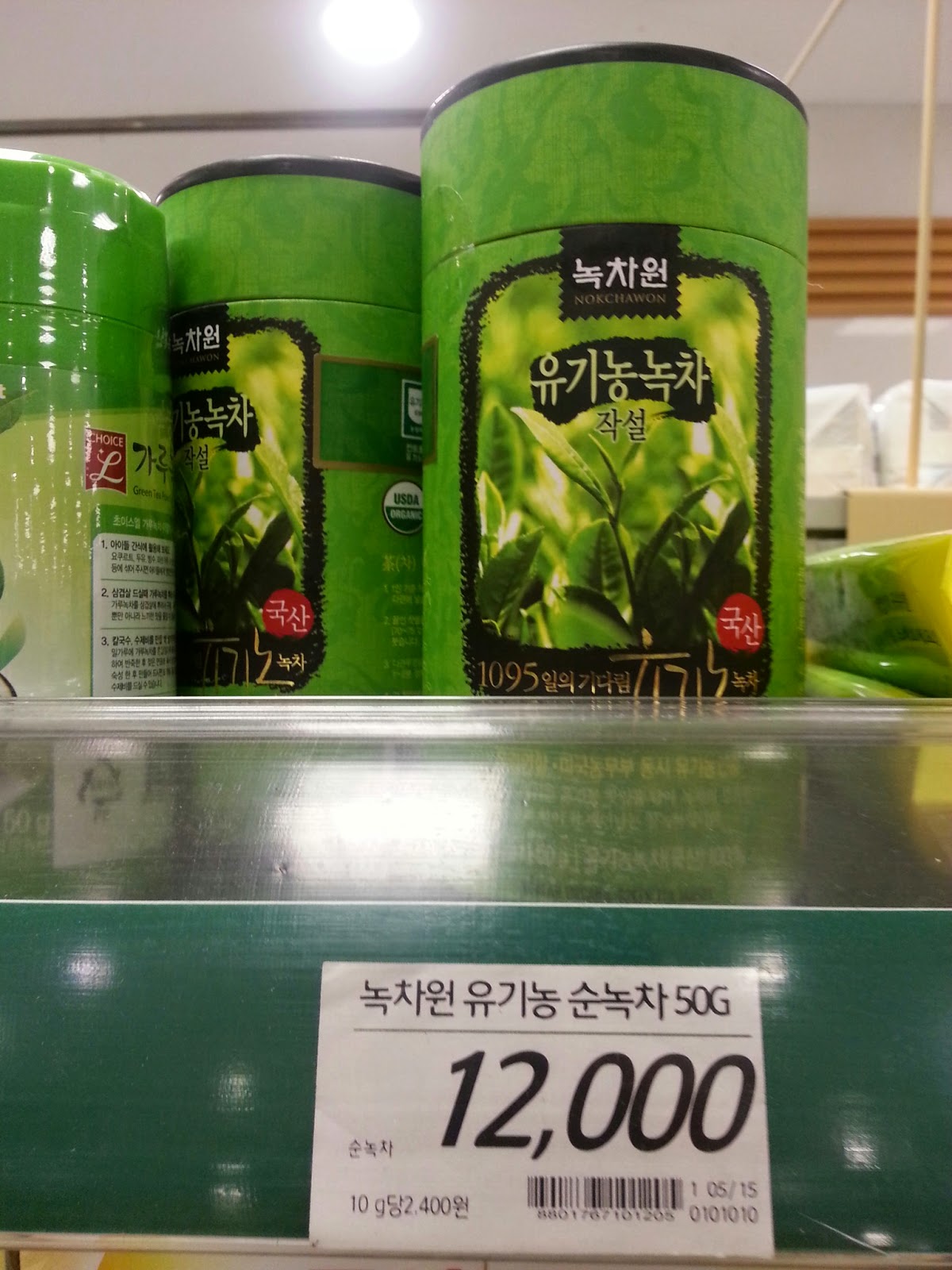
There you go; Seoul grocery store tea selling for around $12 for 50 grams back in April of 2015.  Seoul could be different but I've not had great luck with grocery store teas in a good number of different countries.  Those can be ok but not like this tea I'm reviewing, not on this level.


I get the impression that this will probably brew a couple more rounds in its main aspects profile and keep going beyond that. Since I'm used to far more messing around than doing a few Western style infusions amounts to I can keep going.  I like the messing around, doing 7 or 8 rounds of comparison Gongfu style, but it's nice being on break from all that too.  For the last three Saturdays I've been out on tea tasting gatherings and today I'm just off on break.


brewed a little stronger (also darker for being a full cup)


kind of a cool look while brewing


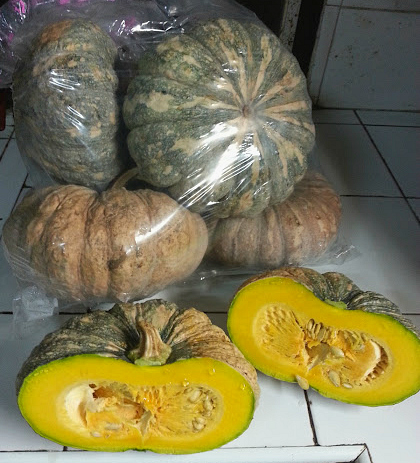
The next round hasn't transitioned that much. I think from the aspects the water was slightly cooler; the sweetness and light range picked back up and the mineral undertone and bell pepper dropped back.  The intensity is just as good, and the roasted butternut squash plays a slightly larger role.  Given how many kinds of pumpkin in between butternut squash and the US version of pumpkin this might be as close to one of those, maybe as much like roasted Japanese pumpkin, a sweet version of the Thai one, with a completely different skin appearance.


I was living on these after visiting a wholesale market in Isaan


I'll probably drink at least two more rounds, maybe after a break, since these are large mugs of it I'm preparing. But this is a good place to leave off the notes.  I have no doubt that shifting parameters more would draw out much different aspect sets; it would be interesting hitting this with much hotter water to see what happens. Kind of a shame to do that too, maybe, depending on what comes of it.  It might just seem more like a sencha, with more astringency and umami stripped out, but it would have to give up some of that cool aspects set balance.


I did drink more of this later but never added to these notes.  On the whole it seemed a really pleasant and interesting tea, definitely different than any other I've tried before.  It changed quite a bit related to using different water temperatures, so I'd imagine that dialing in any proportion, temperature, and time parameters would take some doing, gauging those to preference.  It didn't have the grassiness that tends to throw me off green teas, and the umami being there but in a lower proportion than for some Japanese tea versions worked better for me.  The umami effect is cool but I'd gladly swap some of it out for a sweet version of roasted squash and a hint of pine needle.


obligatory kids-doing-stuff photo, at the Dusit zoo


some serious looks before swim class the next day


Friday, April 17, 2015

Searching for tea in Seoul


I'll write more about what I actually found--review of two different teas, one black tea and one yellow--but this is more a travel guide part about where the search for tea in Seoul led.

I don't mean to even imply Korean tea has anything over Japanese teas for emphasizing that search in the last post, or starting with it here (I just got back from both countries).  Even accounting for varying preferences that would seem silly.  Tea from Japan is justifiably famous, and it doesn't all taste like you've brewed seaweed.

In both countries I focused more on destinations like Disneyland so this also isn't meant as a guide to what someone else might find, if they put more ground work in.  And it goes without saying, Japan has an incredible look and feel, and the people there are great even if a bit reserved.


before starting on tea, Korea in spring is worth a look (Japan too, for that matter)


the kind of places I visited most--not so bad


Tea search in Seoul


A tea shop!

I had the best luck wandering around Insadong, a tourist / art / traditional area. It would take a full day to really do that type of search any justice at all but in an hour I found a few tea cafes and two shops selling loose tea (actually one was pu'er, compressed Chinese tea; close enough).


I bought a Korean black and yellow tea, so I did find interesting types. The downside: I paid through the nose, about as much as I've ever paid for tea, $30 for 40 grams of tea for one, if I'm remembering right (one third that price or less is more standard, for decent tea).  I didn't have a great feeling about grabbing the first teas I saw, of course, but that was how timing went (I did spend two full days at amusement parks though, based on someone else being a higher priority than my tea habit).

A later check on teas in a higher end grocery store, under the O'Sulloc brand I was supposed to check out in their cafe, turned up even more expensive teas, so maybe I wasn't missing so much.  Would've been nice, though.


Insadong!  Cool vibe, even when rainy and cold

I didn't go to any of the other places I'd mentioned in the reseach post because I didn't have time to spend on running down shops; just enough to go take a look (it was a family vacation).

I'm not completely sure what to make of it but there seemed to be a lot of tea cafes in Seoul compared to tea shops.  Walking into a few--looking for the other kind of shop, given the tight time-line--and browsing the menus turned up a second interesting point:  they were selling more tisanes (herb teas, if you're ok with that expression) than tea made from tea leaves.  Along the same line, Wikipedia lists lots of things in an article on "Korean tea," just not any made from the camellia sinensis plant.

Nothing wrong with tisanes, to me, it's just a phase I was on years ago, and now more into the other kind of tea.


Another online contact mentioned another tea store I didn't make it to (in addition to the others I didn't go to in the last post), Ancient Futures Tea Lounge (their Facebook page), but according to them they specialize in Chinese teas.


In summary, Koreans don't seem to drink tea as they do in Japan or China, which explains the emphasis on herbal teas / tisanes. In retrospect that makes sense; it's too far north to be ideal for tea production. Japan isn't much further South--the Southern parts; the north is at the same latitude--but obviously tea demand has to do with culture more than what can grow everywhere. Since the supply is limited and there is some demand the cost is high, and I saw teas selling for even more in a higher end grocery store. More than a dollar a gram for tea is a bit excessive, to me, but to put it in perspective it still costs less than a Starbucks habit.


Tisanes in Seoul--there's a market for that


Based on another recommendation I checked out an interesting traditional medicine market, but there was only a bit of loose tea being sold there, not the compressed disk teas I'd hoped to find (dok-cha). Here's a link about the Gyeongdong Market, which seemed a great place to buy all sorts of other things, like fresh ginseng:

Visit Korea guide reference on the Gyeongdong Market

The look of that market wasn't what I expected, a bit more of open stalls than medicine shops, but it's a familiar format here in Bangkok.  Usually in Bangkok those places have an unusual smell to them (as expected, for having fresh fish sitting out with a little ice to preserve it) but this market smelled like potpourri mixed with food spices, only a lot better.

Gyeongdong Market!  (probably)


Fascinating selection, to me at least.  But not really about tea.


I never did find the Korean compressed tea disks I was looking for, dok cha (pictures references here).


Other options:  tea expo in Seoul, grocery store tea


Another online contact mentioned a tea expo / convention as the best place to find and stock up on Korean teas.  Here is a link about one this June (too bad I won't be there).

As I recall from the conversation the point was that better Korean teas are available in places like higher end grocery stores or specialty tea shops but due to how supply and demand balances out these can be quite expensive (which was my experience), and the range of offerings making it to such markets could be limited.  I've been to this type of event in Thailand but Thai oolongs tend to be a bit consistent, so although it was a great place to buy a lighter oolong it didn't seem to get much further.

Of course on-line sales is another short-cut I'm skipping, but based on lots of Google search it might work a lot better if you can read and type in Korean.

Which leads to one other possible outlet, grocery stores (right--somehow that never works for decent tea, maybe better in China or Japan but even there better to go to a shop).


at a glance not expensive (1000=$1, appx.), but these are 10 and 25 gram packages


These teas and others I didn't photograph show part of the problem:  these are some expensive teas.  Both of these on the right come to close to $40 per 50 grams worth, and there's no guarantee it's even "good" as mid-range teas go.  

It was the same for the O'Sulloc brand in a different store; maybe decent pricing for a very open tea budget but I'd just been to Japan where the scale was sort of different (hard to factor in quality, of course, to some extent even when tasting the teas but much more so for looking at a package in a foreign language).  Glass jars are nice for getting a look, and probably a great storage solution, but nothing like drinking a sample.


I almost bought this but didn't, mostly to keep looking

back to a realistic price range at least.


Getting around Seoul


One more step towards just travel blogging, right.  The obvious way to get around Seoul is to use the subway, and get a tourist SIM (phone card) with data support and let Google Maps take you the last few blocks, after research has already "starred" where you want to go.  Easy peasy lemon squeezy, as my son says (right, some British school influence there).


looks complicated, but in Japan this would only be one of many networks


Looks pretty easy, right?  Zooming in a level in Google Maps even tells you which door to get off at the station, and more street names, so how could you go wrong?  Easy.


In fact I think I was there but may not have been.  I saw information signs in the different intersections (helpful, especially the part about including some English text) that actually conflicted each other about where that market was.


People on the street standing less than a block away seemed to have no clear idea where it was, and pointed in different directions (nice of them to try and help, though; people in pretty much all countries are great about that).  To top it all off there was no way a sign was going to say "Gyongdong market" in English / Roman lettering to make it clear you are there.


The subway map version:  again really clear (nice work adding some English words; you take that for granted until it's not there).

One interesting semantic point ends up being a stumbling block:  what is a "market"?

Here in Thailand it usually refers to a group of lots of stalls in one building area, usually with a bit of an industrial look to it, or maybe even vendors selling things outside in stalls without boundaries or maybe even tables.  A "night market" might just be sidewalks or blocked off streets.


I was thinking of the shops areas in Chinese markets, like a very old version of a mall, similar to Korean clothing stores in a different part of town.  Unless I'd missed it this was a little more open, in the earlier pictures, with distinct "stores" and a common roof, but still not really shops.


priorities conflict, but great seafood Udon
If the mission was wandering around Insadong then just finding the main street and wandering in would do the trick, provided spending one day and taking many steps wasn't an issue (both things I would love).


One co-worker who was in Seoul just now when I was said she thought the next neighborhood over might be a better place to look (based on living there for a year--but then she's not into tea).  And there's the problem:  it could always be just one more more block to find the holy grail, the perfect shop, with a selection you just can't believe, great pricing, friendly staff tasting the teas with you, etc.


more important to me than tea


More on how that goes in a different country in a later post on the same type of search in Yokohama, Japan.


The final conclusion:  do research, ask Google, network and get advice, and walk a lot, but most of all be lucky.  If you can't enjoy the sights and smells along the way for not finding what you're looking for then you should just be searching online anyway.


Friday, April 3, 2015

Online tea exploration: preparing for a trip to Tokyo and Seoul


One might read of well organized tea-theme group trips (if you haven't then read about this one, organized by Tealet, or there is a more obscure one in Korea this May), but you typically don't see so much about how to turn up tea leads on your own going places (in Asia, presumably, but of course tea is in lots of places).

I'm about to go to Japan and Korea (Tokyo and Seoul, to be specific), and while my wife plans for outings like Disneyland and Unesco World Heritage sights, or maybe to see sakura blooming (cherry blossoms), I'm looking into tea.  But how would one go about that?

I guess this will be worth a look too (this week, from FB friend)


I'm no travel expert but here are some thoughts, also related to this subject coming up before and in Vietnam and Cambodia last year (in Singapore it seems easier; go to Chinatown).


Tea contacts:


Having friends where you travel would make for a great lead, and a guide.  Even an online contact could help, a forum friend, or someone from a Facebook group (etc.).  I indirectly "know" a number of people in different places and this is still not so simple since you need the right person in the right place to help answer relatively specific questions.

But it could work.  If you come to Bangkok feel free to ask me.


Google:


Almost should be first in this list, right.  Google knows a good bit about lots of things, and combined with Google Maps it's possible to be very specific about locations, and even search by location.

One catch:  Google works much better searching in English in English speaking countries.  Even here in Thailand, where English use is much more common than in Japan or Korea (my take, but kind of an informed one) lots of blind spots turn up.  But the highest profile places Google will know about aren't always the best options.


Tea farms:


This gets into a different kind of trip than I typically take, more related to the Amazing Tea Race subject.  I go on family vacations where I try to stop by tea shops, or even tea districts if a city is set up for that (like Beijing).  I guess the same type of search could apply, just supported by a lot more effort and networking, and without relying on direct internet search quite so much.

A more indirect approach could still work, but there would have to be a way to find people that know people that are hard to contact, willing to act as leads and share contacts that are hard to come by.  That last part would probably be the catch.  Just finding your way to a tea growing region wouldn't be so difficult--no secret where the main ones are--and the subject would come up a lot there, along with lots of related shops and tour options.


Trip advising sites:


For example, the one called Trip Advisor, which posted this entry about the O'Sulloc Tea Shop in Seoul.  The Lonely Planet is another familiar reference, where you might find something like this entry for the Yetchajip Tea House in Insadong, Seoul, or this one for the Beautiful Tea Museum, not far from both others.

Sounds great, right, three places to buy tea.  Maybe, maybe not.  A cafe or museum theme might not be the best place to buy tea, even if both sell loose tea, and the main places tourists go might not match the selection and pricing available somewhere else.  Would be great to talk to a local that loves tea that's spent years working on all that instead, rather than other tourists using the same types of references.  How to do that; good question.


Blogs:


This should be obvious enough to a blogger, right; why couldn't there be someone else sitting at a keyboard in those cities typing out what they experience related to a tea obsession.  I did try that type of lead.

Here is a site dedicated to referencing expat authored blogs in different countries, which could help get around the issue of blogs being written in Japanese of Korean.  I focused more on Korean teas and blogs out of Seoul just because I'd been reading more about Korean teas lately.  I also think we'll have more free time in Seoul, and I'm hoping to have better luck due to everyone drinking tea in Japan.  Also references on Korean oxidized teas sound so interesting, like this one by the World of Tea.

You'd think I would be about to explain how this approach cracked it, but not really so.  Other than references to the three places Google mentioned others cited only tea cafes, which didn't seem promising as loose tea shops (like this one, about a tea cafe, with the cool blog name "cute in Korea.")  If anyone is going to Seoul in June you are absolutely set because there is a tea festival / expo then,  related to information in this blog post / reference site, but that doesn't help me.

Or there are Western oriented blogs that talk about Korean teas, like this one on tea types (Tea at Morning Crane Tea blog), or this blog that covers lots about such teas (Mattcha's blog).  The problem is that typical tea blog entries don't lead back to physical tea shops very often (certainly not if written by an online vendor), so these could more often help you order tea but usually not to find it walking around Seoul or Tokyo.  Of course there could be exceptions, but looking up and reading dozens of tea blog entries is problematic.


Forums, discussion sites:


I don't think Steepster or Teachat is going to help--although maybe, but I didn't try them--but there are countless other forums covering countless other topics.  Again as an expat I thought expats might be one way to get around language problems, so I looked in places like an online penpals site.

Get the impression I have too much free time yet?  Or maybe also that wasting it is sort of a hobby.  Of course that didn't work, but it is one of many ways to talk to strangers, if that sounds like a good thing.


Conclusion:


I went through all this not so long ago, actually, in Hanoi (not all of it; I've escalated the online research part, sort of my thing, trying new research directions out).  There I had the best luck in talking about it on a forum afterwards (the expat blog one I already mentioned), and someone told me about a great reference online, a shop in Ho Chi Minh City, Hatvala, which is not even where I was in Vietnam, or probably all that close to where most of the tea is grown.


I ran across some really nice teas in Hanoi by luck (see a few other blog posts in the last few months), and Google Maps pointed out some other shops (many I didn't get to; gotta go back to Hanoi at some point), so a relatively standard approach and some luck can work.  Time is a part of it; if I had a couple of days to dedicate only to the search for tea it would be easy, but different family members have different agendas, and I'm the only one inclined to focus on tea.


China was a similar story, but I was much less obsessed when we visited back then (a year and a half ago).  My first work trip there started me on tea and a later vacation helped push me over the edge.


I guess there is more to life than tea (really!) and places like World Heritage Sites and Disneyland deserve attention too.  It's nice the travel planning can extend so far into the online world as it does but in my experience the last steps are in real life, and not just related to actually drinking the teas, but often also to finding the best places to get them.  Or there are online shops; of course that works too.

I didn't get far in this particular search beyond identifying the shops I mentioned, which might work out.  A real-life friend will help me find tea shops in Seoul (good luck having one in that city).  The posts that follow about different teas, or lack of such posts, will tell the rest of the story.