Showing posts with label dry. Show all posts

Friday, April 22, 2022

Sheng pu'er storage, wet, dry, and optimum

first published in TChing here

I've been giving sheng pu'er storage conditions some thought lately, and recently ran across examples of teas altered by the two extremes.  One paradigm was in the form of two different 2005 and 2014 sheng pu'er versions stored dry, in Kunming, that were very well preserved, and the other related to two 2009 cakes that were far more fermented than either of those.  That 2014 version was from Laos, so I usually call the type "sheng" but not "pu'er," a naming convention theme I don't revisit every post.

I don't know where the second more fermented versions were stored, but since I live in one of the hottest and most consistently humid places in the world, in Bangkok, I can draw on plenty of experience about how wetter storage tends to go, and speculate about how artificially maintained conditions might be different than here (although I don't do much with that in this).  I've posted about an even more extreme example in trying a 2010 Nan Jian (Tulin) mini brick, after writing this draft, so I'll leave that out of this discussion.

that 2005 Menghai sheng pu'er; a bit age transitioned


the Nan Jian / Tulin 2010 version, kind of at a similar level


Of course all of this is speculation, pulling together perspective based on partial inputs.  I've only mostly been drinking sheng pu'er for 4 or 5 years, so I don't have any examples of cakes that I've seen transition through even a decade of aging cycle myself, with 15 years cited as a more common fully aged starting point.  I did buy a few sheng and shu cakes around a decade ago but finished them.  Of course that range of experience is all relative to conditions, mapping fermentation level to time period, as more about those examples shows.  This could run long, like a short booklet on these themes, so I'll try to offset that by breaking thoughts up by short section, and really only offer input about humidity as a factor in relation to these cases, even though more than one input came into play, with temperature and air contact other main concerns, and starting point, the tea material, is just as critical as storage factors.  

A bit of an aside, I first wrote about pu'er storage conditions when researching that subject in 2016, and updated that adding a bit on what relative humidity is all about in 2017, with more on natural climate area ranges there.  As you read those posts they shift from only referencing external input to adding more about what I've experienced.  I wrote about sheng storage in a summary post comparing Kunming, Hong Kong, and Malaysia standard natural humidity levels back in 2019 (with local area tables in that post from the Weather Online site); I guess it is time to get back to updating comments on this subject.


Let's start with filling in what those examples covered, then a few definitions, then on to those thoughts about transition patterns.


Two "wet stored" 2009 sheng cakes (reviewed here):  it's a shame not knowing the storage conditions, but those two had to be stored right at the edge of as wet as possible to get to well transitioned in 13 years.  They still had a touch of younger character in limited senses, a bit of vegetal range left, but heavy fermentation related flavors stood out a lot more (mushroom, geosmin--essentially dirt, heavy earth, wood, and mineral flavors, warm dried fruit, dark wood and aged furniture).  Lots of teas I've reviewed here shared some of that scope, but it takes a different kind of input to get that much geosmin emerging.  For intense, bitter and astringent teas, like Xiaguan tuochas tend to be, you really need a lot of transition to move off that range some might see as unapproachable, so 15 years of relatively fast aging might be just the thing.  I suppose that's jumping ahead though, on to the patterns.


2009 versions, much more fermentation transitioned than the other two teas


1980 and 1993 versions color comparison (from here), relatively fully transitioned, brewed fast


Two well-preserved dry stored cakes:  a 2005 Menghai version and 2014 Laos tea.  There's a common discussion point that a trade-off for drier storage, beyond not transitioning (fermenting) is that a sour or wood-like aspect can develop, and I keep coming back to whether that happens or not in examples like these.  Both were really well-preserved, aged to a relative degree of half that if they'd spent the time here, or even less.  Some degree of bright, floral, aromatic, and fresh aspects remained in both, of course more so in the 2014 version, with that 2005 more in a "teen years" sort of middle ground for aspects present.  Starting point changes a lot, and I can't be sure how they were initially, but Laos teas are essentially never challenging to begin with (per trying at least a dozen sheng versions from there), and for Menghai versions that definitely can come up, intense character early.  


2014 Laos version, a little washed out by high lighting level, but also light


Is that really a regional character aspect theme though?  I'm not sure.  Laos teas have to be made from wild-grown, naturally occurring material because they're not farming teas in the same monoculture forms that are common in China there yet.  Surely someone is replanting and growing tea through more standard farming, but I mean in general.  Mountainous areas in Laos tend to be cool as SE Asia goes, not like the hotter lower flatlands in Laos.  It's unlikely that heavy pesticide and fertilizer use would come up as often as in standard monoculture farming; the trees have been living naturally for decades, or more likely centuries (a general 400 year age range comes up for the tea growing practices, often extended to saying that the actual plants are often 400 years old, which isn't right, they would vary in age, most much younger).  Then plant types would vary; although parts of Laos close to Yiwu that's no guarantee that plant types growing overlap so much.

To keep this moving back to that one storage input range let's consider what those wet and dry ranges really mean.


Dry storage:  


Based on reviewing average local climate conditions it doesn't seem that dry in Kunming, varying from low 50s (RH %) up to nearly 80, as a monthly average.  It's not necessarily the outdoor humidity level as a relative value that's a problem in temperate locations (the US, Europe), but that if it's cool out and heated indoors then that relative humidity level of heating air that can hold a lot less moisture is dry, relatively speaking.

For indoor storage it's commonly accepted that if the range falls below 50% the tea fermentation will become inactive (whether that's actually right or not, but that sounds like a reasonable conventional understanding to me).  In March and April, stored at natural local humidity levels, Kunming stored teas wouldn't be fermenting much, but that's still perhaps not bone dry.  Since it's an average it's harder to say, and it's not easy to factor in how indoor temperature moderation would work out, if real indoor conditions wouldn't tend to be drier.


Wet storage:  we can cite Malaysian values as an example here, and compare that to indoor controlled conditions:


Malaysian local climate shows humidity level in the mid 70s to low 80s, all the time, that's humid.  That's based on an average temperature window of 24 to 31 C (75 to 88 F, surely often hotter at mid-day).  That's a little more humid than here (Bangkok), where it's quite hot and humid, but weather varies a little more, with both are in a similar ballpark.  


I was going to use here as an example, about how it's cooler now because it's 10 AM, and the value will dry a bit as temperature increases, but it's 32 C (89 F) and 65% now, pretty hot and humid (when I wrote the first draft).  Maybe the point would've worked better at 6 AM, back when it was still in the 20s (closer to 80 F).  I'm first editing this on the Thursday shown and it really did get up to 37 C yesterday, which is hot, human body temperature, so the units conversion to 98 F comes easily.  I ran yesterday, in the afternoon, and was really feeling it.  Due to bad judgment I doubled my normal route length, from 4 km to 8, and I still felt the impact in the evening as a result of both.


People discussing controlling temperature for sheng storage tend to fix on specific humidity level they feel is high but still safe from mold, often using 70% RH for that, or sometimes less.  70% is kind of the edge, although other conditions factor in too, temperature, and degree of air contact.  I don't think you could hold stored sheng at the Malaysian local maximum, 84%, without experiencing problems.  If temperature shifts just a little it would take time for the salt pack to adjust and any condensation is a worst case for tea (sheng pu'er cakes; other teas don't need to be stored in contact with humidity, perhaps with shu pu'er and hei cha as possible exceptions).


Ideal / natural storage (two different things):  I'll have to mostly speculate a little about this but wave off the subject more than I address it.  One idea behind "natural storage" is that you aren't holding the humidity and temperature at one set value, and normal fluctuations in range allow the tea to experience a more normal, organic sort of environment.  If I'm remembering right Marshal N, of the Tea Addict's Journal blog, has speculated that some degree of change could be beneficial, having moisture move in and out of the tea, letting microfauna experience more normal circumstances.  I'm not sure, even if that attribution is completely accurate, since I've not been reading that blog as much for awhile.

"Ideal" would be a tricky concept, since people might naturally want different outcomes based on having different preferences.  Or something that gets less attention, it might depend on the tea character starting point, with more aggressively bitter and astringent teas really needing a lot of transition, and others that don't changing more positively when the shift is slower.  I won't get far with speculating about that second point here, except to say that I have liked some teas that weren't changed much over time, like those two I mentioned earlier.  

That 2010 Nan Jian / Tulin version is probably an even better example, the one I didn't go into here.  But then maybe I would've liked both just as much "younger" and stored wetter, and the 2005 Menghai version did seem to need more time to get to a likely more optimum aging level.  I'm trying it again with breakfast, and after, as I edit this; it will probably be better in 5 more years.

It would be nice if I had more exposure to what others see as optimum results, trials of 20 year old teas stored in different ways, starting from different characters, that turned out very well.  I'll only ever get so far with that; I don't have the tea budget to approach it in the most efficient ways.  This is a hurdle that many could find problematic in relation to feeling like they have a moderate degree of exposure to the subject, that trying 100 aged sheng versions wouldn't necessarily seem like a good background, because then someone might just want to try 100 much better versions.  Or too see the patterns play out for themselves for a few dozen cakes, a project that would take that 15 years or so.

On the one hand this is exactly what I love about sheng, beyond the direct experience of drinking the tea itself, that the experience of these transitions and inputs is never-ending.  In a recent video interview (where I was interviewed, odd) I answered that this is what keeps tea experience so new and interesting to me, even though I've been drinking a lot of teas over the past 8 or 9 years, that sheng versions can change every time you check in on them.

It was interesting talking to a well-known US tea enthusiast about these issues recently in a meetup, with "Mr. Mopar," but it's hard to drill down to discussing these levels of inputs and outputs.  As general patterns you can, but not in relation to getting a sense of how any one tea shifted, where it ended up (at one given time), and why.  Online group tasting is better for that, but it would still go one or two examples at a time.


All this reminds me of a tea enthusiast commenting about trying to break into sheng pu'er in a group post, trying out 15 or so versions from Yunnan Sourcing.   He referenced that as his "ante."  It seemed that if he chose 15 of the same type of versions, younger or medium aged factory teas, dry stored so not age transitioned, he wouldn't really experience much of the broader range of sheng pu'er.  Acclimation to bitterness takes time, and the main way people seem to adjust to that, beyond continuing to try bitter tea versions over time, is to approach sheng through shu experience.  Or it can work to try aged forms first, or milder, sweeter sheng versionss earlier on (with Yiwu origin teas often more like that).  He didn't like many of the teas.

I wouldn't have liked the 2005 Menghai version I'm trying now five years ago, and I guess I still have mixed feelings about it now, about bitterness and green wood vegetal range standing out a lot.  Without knowing the background context I might have expected this to represent relatively aged (fermentation transitioned) sheng, but it's definitely not that.  Dabbling in sheng over time might be a better approach, rather than letting one set of samples from one vendor determine your final take.  

A local friend recommended getting a cake and drinking all of it, just to adjust to the range, and to get brewing down.  Oddly that's good advice, but it also delayed my exploration of sheng quite a bit, because in not understanding types I bought something comparable to this Menghai tea when it was relatively new, based on a recommendation from another contact who probably had little exposure to sheng, with no communication about that context.  I could endure the bitterness and astringency by the end of that cake, brewing it fast, but it wasn't a helpful experience.

Needless to say very little of this is actionable guidance, just scattered discussion instead.  Maybe eventually I'll be able to write a post that goes that next step, on to practical advice and promising approach points.

Thursday, April 14, 2022

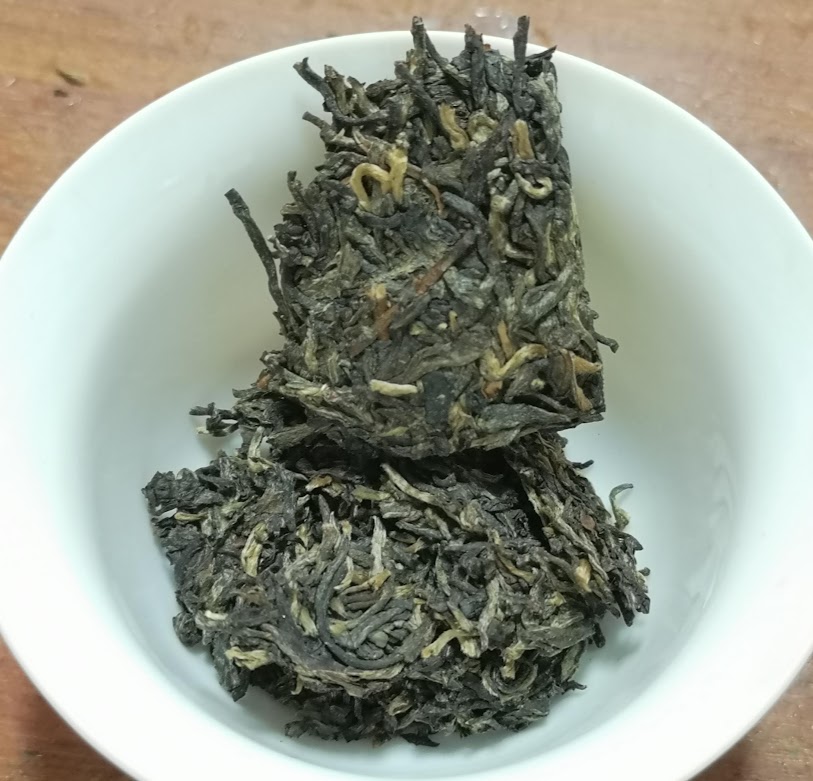
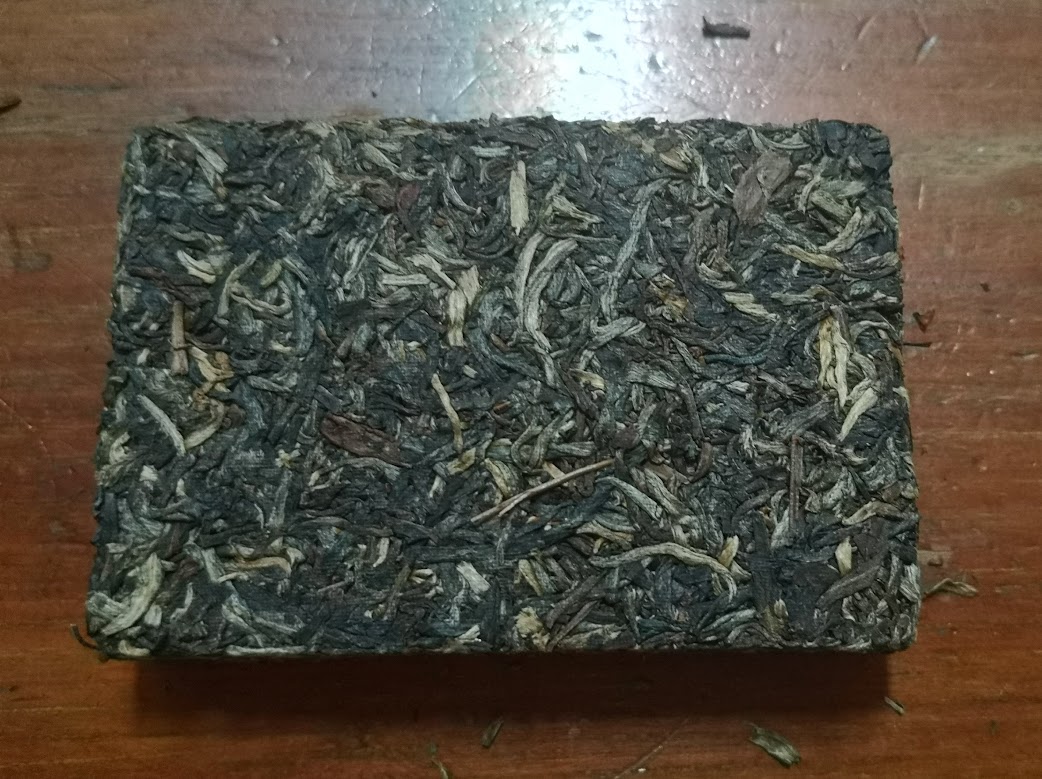
2010 Tulin (Nan Jian) Wuliangshan sheng pu'er brick


Trying another of a Chawang Shop order, with maybe two more teas to go from that.  It's this:


2010 Tulin Wuliangshan Organic Raw Puerh Brick 100g


This raw puerh brick is made of 2010 spring material from Wuliang mountain. Wuliang mountain is one of high mountains in Yunnan. Selected large-leaves and sun-dried material come from organic tea gardens. The same material were used both inside and outside this brick.

Brewed tea is aromatic, sparkish and yellow. Balanced, powerful with great floral sweet aftertaste.


I've liked a Tulin tuocha version that I keep buying in a local Chinatown shop, and that sounds interesting.  Again the dry storage issue will come up; this will be well-preserved for a 2010 tea.  It doesn't sound like it necessarily needed 15 years of moderate pace aging to be in a good range, so it might be fine now.  Or the usual could occur, that it has great potential for mellowing and shifting a few more years of mellowing here in hotter and wetter environment.  I would guess that this is about as fermented as it would be after 3 years of storage here, just getting started, but we'll see.

One might wonder how moderate cost factors in; this had been listed for $10, now out of stock.  I wouldn't expect it to be much worse based on that low pricing, as if it could only stay in their stock if it had been limited in quality in some way, or that Chawang Shop per gram pricing corresponds to their interpretation of tea quality.  It's probably just that they don't raise pricing that much year to year, which is for the best for a consumer.


Review:


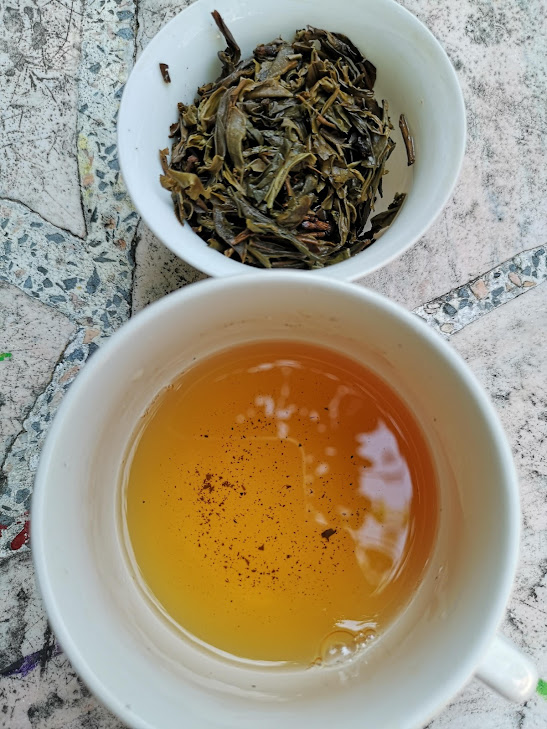
First infusion:  color is a dark gold, so at least this has aged past the brighter yellow stage.  For this being 12 years old that limited degree of fermentation is amazing, or at least it would be if I hadn't experienced it in other versions, two fairly recently.  For many people that's a worst-case outcome, but I'm still sorting out if this is better or worse than it would be if it was much younger but stored wetter.  Maybe not so different, at least as far as total outcome is concerned, in the sense of added up positives and negatives.  I think the outcome is probably quite different though, a lot of small variations in what changed.

Interesting!  There's a lot going on.  A warm honey-like range stands out, and some floral tone, with a rich cured hay depth, and a warmer structure that's harder to place.  Mineral range would be a normal interpretation, and there is that too, at least.  There's an odd, warm, rich smell that a softball gives off, similar to that of a baseball, the smell of leather and cork (I think?)--it's like that.  It's odd saying that this tastes like drinking a baseball; it's more that it reminds me of that.  I guess then I'm saying that it reminds me of leather, that one range.

It would be easy to interpret that as saying that it's bad, sour, towards musty, in relation to the leather, cured hay, and cork description, but it's quite clean and pleasant.  There's a way that an aged Yiwu can gain a lot of depth and then sort of fade across a lot of range, a smooth richness that those can pick up, between floral range and something else, like cured, light wood, or some light spice.  This is like that, in relation to that depth, but the edge that remains is something else.  I interpret it as positive, because it gives the sweeter, lighter, and richer range some real punch, but it's just outside a range of what one would normally describe as astringency.  

Tons of honey comes across in the aroma, the kind of experience you get from smelling the empty cup, and that is one layer in the drinking experience.  It's really that complexity and the way it all integrates that's positive about the experience.


Second infusion:  this wasn't brewed long, not over 10 seconds, but I'd already had the impression that it was brewing fast, and this is intense.  It works "brewed strong," because the astringency is moderate, and bitterness has mostly faded, to the extent it included that.  Richer floral range picks up a lot, even a bit towards lavender.  Some of the deeper tone seems like warmer floral range, maybe chrysanthemum as a base, with some sunflowers filling in richer and sweeter tones (or what I'd imagine those to smell like; I don't have much reference to go on).  It tastes like bee's wax as a result of that input, if that helps, a flavor I find really appealing.  Feel effect and aftertaste experience are both pronounced and pleasant.

Now that I've considered that a vendor like White 2 Tea or Mei Leaf could market this under a bee's wax theme, it tastes so much like it.  "Bee's Knees Semi-aged Sheng," or something like that.  It's odd talking about this astringency level when it's not exactly in a conventional astringency range, more a fullness to feel that includes some drier range.  People would be divided on loving this or disliking it, I think.  If someone expected sheng to be either bright, intense, sweet, bitter and astringent floral range when young or warmer, deeper, complex, heavy and rich, dried fruit / camphor / aged input range when older this wouldn't fit either paradigm.  It's just something else.  I'll try a round brewed lighter, pulling timing back closer to 5 seconds, and see how that changes an aspect list.


Third infusion:  lighter, for being brewed faster.  Flavor intensity loses nothing; at a quick flash infusion this would still be quite strong.

What I've said worked better for describing what I like about the tea, now maybe I can fill in what others could see as more negative than I tend to, beyond just expecting something else, or not loving the general range.  That dry edge could be interpreted as connecting with a woodiness, or even with a touch of mustiness, although I don't see it that way related to the second.  This had to be more challenging when new, of course, and the astringency has only faded quite a bit and changed form, it's not gone.  Often I'll describe an aspect like that as similar to biting a plant stem, or tree bud.  You couldn't really experience positive feel and flavor in this range without some type of feel like that though.


Fourth infusion:  shifting a little, but it's hard to describe how.  Intense floral range still stands out, and a lot of bee's wax warm depth beyond that, with that dry edge filling out feel.  This most definitely doesn't seem anything like a low cost tuocha tea, punchy and intense, hopefully aging to be quite pleasant once all that settles out 15 years later, more where the Tulin version I've drank a bit of was.  This tea is better than it should be, related to my expectations.


Fifth infusion:  more of the same, which is good.  That floral intensity is crazy.  I suppose feel is cleaning up, not that it was off before.  The dry edge is moving more into a sappy / resinous range, which always had been part of it, I just didn't get around to expressing it that way.


Sixth infusion:  I was just thinking about a Tea Forum post about teas being flavored, about how this much floral could be interpreted as from an additive.  It seems too clean though, and too persistent, not rinsing off a bit.  And it's a 2010, sealed package (no guarantee there), super inexpensive tea, from a producer known for making solid and consistent but moderate quality tea versions.  It seems like they just used pretty good material for this.


Seventh infusion:  intensity is finally dropping so that a fast infusion (under 10 seconds) finally starts to come across as a bit light.  I like it this way, since flavor intensity is fine and aftertaste range is quite intense and pleasant.  Feel is rich now with no dry edge.  I'll try a 15 second + time and see how that goes.


Eighth infusion:  really nice this way, losing intensity but with longer time bumping that back to normal.  The list of aspects I've described shift in proportion but it's not worth going through how.


Ninth infusion:  bitterness is ramping up, as the balance of what extracts shifts with longer brewing times.  There was always some bitterness, I've just not typed out that inclusion because it's so moderate, in relation to sheng experience in general.  For a 12 year old sheng it's relatively bitter, but compared to most in the 3 to 4 year old range (not stored so dry) it's still pretty low.  I didn't mention sweetness either, even though that was pronounced, because I was focused more on floral and warm range being interesting and novel.  If I re-wrote these notes in a new tasting I'd probably include it all in a different order, and maybe stretch it out to 2000 words, if I tried to describe everything.  Better not to.


Conclusions:


My own impression is surely already clear, that I really liked it, but I wanted to find out more about this, how it was "supposed to be" in some sense, or what others thought of it.  

I found a Yunnan Sourcing listing for a 2012 version of this, theirs selling for $11.50 (over 10% more, but in terms of cost difference not much at all).  Comments about it from others who bought it mention smokiness; this might've included that too, and it just dropped out over the dozen years of aging.  Those review comments were from 2018-2020, so not so old or new compared to the 2012 to 2022 current age of that version, but towards more recent.

This 2008 Nan Jian "iron cake" (listed by Yunnan Sourcing) sounds interesting too, and still reasonable, $60 for a 400 gram version, sourced from Wuliangshan and Lincang.  Aged in Guangdong, that one says; that might offset the effect of high compression cakes aging slower, but it could probably still use another decade to transition further.  Or it might be like this, at an interesting in-between state, pleasant without entering a more fully aged range.  My friend Ralph reviewed a variation of that in his Daily Tealagraph Instagram page, but it was the 912 version (which is now sold out), and that was 902.  His notes make it clear that aging input was a significant factor, perhaps part of a transition process that's not finished yet:


The deep fruity raisin notes are obvious with some hay and tobacco notes.  Bitterness joins while sipping the first cups. A very deep and intense aroma, although it stays very clean and kind of simple at the same time like factory teas usually do. It features some mushroom flavor as well, not so different to bitter mushroom tea like reishi (ling tsi) or Chaga.

Later steeps bring out an additional flowery camphor aroma that joins the fruitiness and a "chewing gum" flavor that I can only rarely find in some 15 year old factory cakes...


Looking around further it's interesting reading comments about a 2010 version of the one I'm reviewing (sold by YS) on Steepster.  So this same tea I guess, just surely stored in a similar way, with room for slight variations in outcome.  None of the people commenting really liked it.  It sounds like they're not even describing the same tea:  smoky, hard to brew, challenging astringency, limited complexity, bitter, vegetal, sour.  

So what's that about?  Hard to be sure.  I'm sipping this right now; I know what's in the cup, and I'm not insecure about my own preference or judgment being atypical, even though everyone's take is going to be a little different.  There's not much for negatives in this.  That feel wouldn't be for everyone, but dryness coupled with sappy character and rich feel is fine, to me.  Flavor range is good; sweet, intensely floral, adding warm bee's wax for complexity, with some vegetal range, with just a hint of underlying mushroom, so light I'm only noticing it as flavors shift now.

We can't assume that the teas are identical, and they probably do vary a little, due to the storage inputs (especially that; only one review was recent, from half a year ago).  I don't want to move on to conclude that these four people could only appreciate limited range in tea (in sheng pu'er, really).  Other preference and context issues must be factoring in.  Every person mentioned low expectations related to low cost, in their notes; they may have went into this looking for what was wrong with the tea, versus what they might like.  

Not using a (standard to me) Gongfu brewing approach would give bad results for this, for example, Western brewing it.  First comment listing preparation notes mention this, from that most recent tasting:


Steep times: 45, 15, 15, 20, 45.  I drink the wash, hence why my first steep is so long. Brewed in a clay teapot. [using boiling point water, 5 grams per 100 ml]


This would be hard to drink brewed for 45 seconds, and 15 is still a bit long.  Their flavor aspect summary includes "bitter, hay, astringent, vegetal," and hay matches the best to my experience, with not listing floral range as inexplicable if their experience was the same as mine.  Which it wouldn't be, even using the same brick of tea, for brewing it completely differently.  Let's check a second review, from 4 years ago:


The risky buy of the month. It is the cheapest 100g-brick of puerh on Yunnansourcing.us and for a reason.

First, the good stuff: it smells good. The wet leaf has a complex, multi-faceted aroma that is very enjoyable. No fishy smell, no pure decay.

Now, the bad part: it needs at least 5 more years to develop because the acidic taste of the fermentation is there, ready to pounce and overpower everything else. Which is a shame, because there ARE a number of more subtle, interesting flavors. Unfortunately, the only way to bring them all on the scene together is to do super-short steeps of 5-10 secs, and avoid the boiling water. So, you end up “savoring” a weak puerh for a 2-3 steeps – after that regardless of your efforts the sourness pushes everything else in far corners of the palate...


Sourness?  It's not as unreasonable as the two different interpretations make it sound, theirs versus mine.  Concern or expectations of fishy or decayed range from an 8 year old, dry stored sheng is odd (related to the review being from 4 years old).  It's possible that they were mostly right, and for me drinking this 4 years later a lot of what they thought might drop out after 5 more years already did.  One of the other reviews was also from 4 years ago, and not completely different than that one, and the other from 7 years back, which would be a considerably less transitioned version of this tea.

They all emphasize the tea being chopped material, and it is, one going so far as to say they had trouble separating out some to brew.  Chopped material can be fine, but it is typical for more aging input to help with the astringency that results from that, the way different compounds are extracted as a result.  I'm probably drinking a much better version of this for getting to it 4 years later than those last two.

I suspect that I appreciate a broader range in sheng than all of them, that I can enjoy drinking a youngish Xiaguan or Dayi Jia Ji when I feel like it, one 5 years old or less, which would include a lot more astringency edge and bitterness than this, although for this version 7 years ago who knows.  It's not necessarily better to be open to different astringency and bitterness exposure, just a difference.  This isn't astringent though, compared to younger teas, most kinds that are within 2 or 3 years old.  

Just expecting that dry storage is going to preserve the tea might make a lot of difference; if I expected this to be transitioned to a more typical 12 year level of fermentation, under moderate humidity conditions, versus dry, I could be put off by it not being what I thought it would be.

I found this tea to be significantly better than I expected it to be, kind of the opposite of those other reviews.  I thought there would be more limited quality material concerns, that it would lack that sweetness and floral range, replaced by smokiness (which others did pick up, earlier, and in a differently stored version), or mushroom, odd mineral, etc.  It's not strange that there was no mustiness; I expected dry storage to not lead towards that result at all.  I didn't expect it to be anything like the 2008 Nan Jian version Ralph reviewed, which is considerably age-transitioned.

Saturday, April 9, 2022

2009 Qiaomu Qi Zi and Xiangxi Kongque sheng pu'er comparison


Qiaomu Qi Zi left, Xianxi Kongque right, in all photos


Moychay sent some sample of aged sheng to try awhile back, which I've reviewed a couple of, but haven't got so far with.  That is a favorite and fascinating tea category; it was really about illness (covid), vacation, and catching up on other samples that slowed getting further.

I didn't check what these are prior to tasting, beyond what was clear from the labels, and them being from 2009.  It seemed like a likely theme might be these being heavily fermented, even for being 13 years old, since that came up in the earlier aged sheng samples.  I don't know where any were stored but it wasn't dry there.  That did come up again, but let's check the Moychay information first, prior to the review notes:


Qiaomu Qi Zi Bing Sheng Cha (2009), 360 g.


Sheng Puerh from Changning Mentong Yinshan Factory. The shoots from the tea trees of Yinshan Mountain (Baoshan County) of the 2009 harvest were used as raw materials.

360-grams teacake of medium density easily separates into twisted brown leaves, buds and thin cuttings...  

The aroma is vibrant, fruity-balsamic. The taste is rich and strong, silky, sweetish, slightly spicy, with juicy woody astringency, herbaceous bitterness, sourness of green apples and a refreshing aftertaste.


Cost stands out in that listing, $63 for 360 grams.  Unless I'm wrong they've shifted the site prices to reflect the current weaker Russian ruble exchange rate, so this may well have been around $100, or over that, at the beginning of the year.  Still, inexpensive as 13 year old sheng goes, depending on quality level.  That depends on source too, and what the tea is, experienced aspects in addition to reputation of the branded version.  I didn't add a conclusions section yet, when editing to add description to notes, so I'll add a take on quality level and match to personal preference there.  

It's interesting scanning through customer site comments there but I'll skip mentioning that part here, since there is plenty in the post already.  Customers really liked it, and to me it was ok in relation to my preference, just not great, but with value factored in maybe a bit better.


Xiangxi Kongque Sheng Pu (2009), 360 g.


“Xiangxi” (“Lovesickness“) is an aged sheng Puerh from Changning Mentong Yinshan Factory (Baoshan County), harvest 2009.

360-grams teacake of medium density easily separates into twisted brown leaves, buds and thin cuttings...

The bouquet of the ready-made tea is mature, woody-balsamic with notes of autumn leaves, oak moss, herbs and fruits. The aroma is deep and warm, fruity-balsamic. The taste is rich, silky, sweetish, slightly spicy, with woody astringency, sourness of green apples and a refreshing finish.


This lists for $57, even less, but again part of that being so low probably relates to an exchange rate anomaly.  Still, it would be fair to judge this as a presented as medium quality, value oriented, somewhat aged sheng pu'er.  A vendor like Yunnan Sourcing would list teas like this, but they wouldn't get the same amount of attention that their younger in-house versions would, so it would take some paging through listings to even find them.  Kunming storage is dry, the opposite of what these seemed to experience, so while these teas are relatively far along for fermentation level I'd expect most YS 13 year old sheng to be well-preserved, for better or worse.  This 2005 sheng version from Chawang Shop highlights that tendency and divide; it is much less fermented than these two teas, even though it's 4 years older.

I don't think we can accept as an assumption that either range is better, fairly well fermented (more wet stored), or fairly well preserved (on the dry side).  It varies by preference, and outcome might well depend as much on the starting point character of any given tea as a general preference for type.  Some people might think they want ideal storage, not wet or dry, but what that is would vary by preference, and skill in managing conditions might factor in as much as local geographical climate.

One last point, on review perspective:  I tend to only review what I like most, since that makes for the most interesting story to tell.  I'm a little more mixed on how these work out, per match to preference, but there is a story to be told about how moderate cost, mostly-aged sheng versions tend to be.

On with tasting results, and comments on how it all plays out in these cases.


Review:


Qiaomu Qi Zi:  heavy on mushroom initially.  That kind of aspect can fade fast but this is strong enough that it's going to be a few rounds before it drops out, if it does.  That's not my favorite range for sheng flavor.  To me it tastes like tree fungus smells, more than mushroom, but dried wild mushroom is close enough.  

It has other depth "behind" that letting it show potential, sweetness, warmth, complexity, aged furniture range, maybe even warm spice.  But that mushroom is going to need to ease up for me to be able to appreciate that.  It's cleaner than all this probably makes it sound, not really musty, or overly earthy, just quite fermented for being 13 years old, with one flavor aspect that I don't necessarily see as positive.


Xiangxi Kongque:  maybe a trace of mushroom, but none at all in comparison with that dominating the other.  Slightly earthy, heavy, even a touch musty other range is probably more like one would expect from how I'm describing the first tea.  I get a sense this will "clean up" fast though, that a lot of that will be present during the next round but that for this I'm tasting early round effects that will clear.  

One particular heavy earthy and mineral flavor stands out; both of these are so fermented for being this age.  Storage had to be on the wet side, I guess.  For them being so heavy in flavor there isn't really much musty or off range (a subject that I could say a lot more about in relation to local Bangkok storage experiences), so apparently that was carefully controlled, not pushing over into a set of conditions that could ruin the tea.  That's unless someone doesn't like tea like this, then it was actually ruined, just in a more limited sense, "not matching preference."  It's not "off," as I see it.  I think the next round will be about a lot of transition, at least for this version, and what I mean by all that will be clearer during a third infusion.

It's not that my friend Ralph (of the Daily Tealagraph page on Instagram) dislikes teas fermented heavily, but more that he describes having a somewhat negative symptom reaction from the effect.  These may or may not trigger that; I'm not sure of how that cause and effect works out.  For taste preference not favoring heavy flavors from high degree of fermentation input these wouldn't be good, and based on the opposite I think they might turn out to be quite favorable.  But character transitions across infusions will tell that story.


Qiaomu Qi Zi, second infusion:  I'm not brewing these quite as fast as I would tend to for younger versions, I guess related to trying to keep that transition pace moving through these early rounds.  It's going to make them come across as even heavier in tone and more intense, not that I would confuse these for being faded, subtle aged sheng versions if I brewed them lighter.

Heavy mushroom, again.  I think the balance is shifting, that all that other range I described as behind or supporting that has drawn even.  There's no way mushroom (or fungus) taste will drop out by the next round but the balance could be quite different.  It's cool the way that heavy earth flavor, even in the range of peat or geosmin (dirt), still seems clean in a sense.  Complex mouthfeel and aftertaste really starts to kick in for this.  It'll be interesting seeing how a more favorable balance works out next round.


Xiangxi Kongque:  I'm going to need some sort of palate cleansing food or drink to get through all this and retain any sense of taste; this is intense and heavy, again.  The last description still works, I could just make more of a start on whether the extra flavors gaining ground in terms of expression are really aged furniture, aromatic oils, or dried fruit, versus how much this tastes like dirt, cement blocks, or rocks.  It's still good though, in a sense, and again I think the third round is really where this review more or less starts, on the more positive evolved character for both.  So let's skip ahead.  It's time to moderate infusion time, back to less than 10 seconds, to stop pushing through extraction to drive transition and see how these are brewed more optimally.


Qiaomu Qi Zi, third infusion:  right on schedule, the mushroom input eases up, letting other aspect range express itself.  Still heavy flavors, of course, even for brewing this fast, not much over 5 seconds.  Going with a lower proportion to make dialing in timing easier would make sense; it wasn't any optimum that led me to use this "full gaiwan" approach, just daily brewing practice habit.  

These heavy flavors could be interpreted in lots of ways, as including aged furniture, heavy mineral base, towards spice range, as peat or geosmin, including dried fruit, etc.  I think they will clean up to become more distinct next round, all mixing with the last traces of that mushroom "burning off" this round.  Complexity is certainly good in this, and again the range is much cleaner than before, which wasn't murky or musty beyond so much dried mushroom standing out. Thick mouthfeel and aftertaste extension of the experience are nice; those will probably carry over as positive inputs across a lot of rounds.


Xiangxi Kongque:  this seems a little limited in comparison, covering a narrower range, with a bit less of the sweet complexity filling in (aromatic wood, spice / aromatic oil, dried fruit).  It's not a subtle tea, and intensity is fine, there is just less aspect range.  Heavier mineral and earth tone stands out across a limited scope, warm rock into cement range and then towards dark aromatic wood, or really maybe towards how tree roots tend to smell.  I don't see that as positive or negative, more just interesting.  With it having so much depth it could easily evolve to include more positive complexity, but the other is already there, if it can "clean up" just a little more.

Moving through rounds of teas this intense is going to affect my mental state a bit.  I don't tend to talk about that, never mind shifts in internal energy patterns, even though for some people that is the point, not sensory experience.  Doing combined tasting trades off being able to isolate the effect of any one tea, which to many people reviewing sheng would be unthinkable.  The upside is being able to place one sensory experience against another, and getting through samples and tea experience faster.  If I can only review tea once a week that's 50 or so reviews a year, which is a lot, but I tend to try to cover even more versions than that.  This process and the editing afterwards takes time, so doing two reviews per week is pushing it.


Qiaomu Qi Zi, fourth infusion:  mushroom returns; I've probably brewed this slightly stronger, letting heavier flavors stand out more.  The overall balance is interesting though, and pleasant.  There is a lot going on beyond that.  The richness of feel is nice, not really something I would call astringency, but even this form of body is related to that.  A cleaner caramel sort of range emerges, joining aged furniture and dried fruit tones, just very heavy dried fruit, starting from dried Chinese date but extending into warm spice range.  It's interesting how it covers so much scope but seems unified, integrated.

I'm wondering why this tastes this much like mushroom.  Is that a storage conditions related input, or does a different kind of intensity naturally transition to that, regardless of pace or form of change?  If I had experienced a lot more cases of teas changing from one thing to another, with a broad range of storage conditions background, then I would know better.  I should at least find out where these teas probably spent this past 13 years, if that's not in the product descriptions, which is generally not listed in Moychay sheng descriptions.


Xiangxi Kongque:  it's interesting the way that heavy flavor I described in different ways shifts to seem a lot like coffee in this round, even a medium level roast.  A bit of geosmin remains, that's a big part of the effect, but it has been joined by other flavor range, which I guess one may or may not describe as cleaner.  A touch of vaguely musty mushroom edge is present too; that would probably seem a lot stronger an input to me if it wasn't a much higher proportion input in the other (not as much this round; I mean in general).  

Both of these teas are definitely only suitable for people who like strong fermentation range input.  At a guess it may work to store these quite a bit drier for a few years and a lot of that heavier, potentially objectionable range could clear up.  In 2 or 3 it might be possible to see that change occurring, but it's possible that a relatively complete transition might not occur that fast.  If I try teas that have a pronounced musty edge from storage here, which I think often relates to a combination of hot and humid storage and getting essentially no air contact at all, I can experience the bulk of that clear up within half a year, but this seems to be a different and deeper level input, a main part of what these teas are now, and perhaps will always be.  The point was that the heaviest flavor range might still fade, while these pick up depth, but I don't know.  

If both could transition to become clearer, sweeter, smoother, and more complex after a few more years in relatively dry storage both could become more exceptional in relation to what I prefer most.  Or if one values heavy earthy flavors, even including geosmin and dried mushroom range, they could be seen as in a great place now.  It will be interesting to see how website page comments place them.  Usually input doesn't lead to that depth, and certainly doesn't relate to future potential, and half the people commenting say they like the teas just as they are, and the other half find them flawed and limited, regardless of how any teas are.  Surely a really good or bad tea could push towards drawing out one take or the other instead, but half and half comes up a lot.  Comments were like that, and here's an interesting example on the positive side:


It combines an old damp barn, a wet garden, some perfume, beetroot sweetness, dustiness, apple notes, but all these parts are very lapped and smoothed. The taste is balanced and pleasant.


Not the exact same aspect interpretation I arrived on, but this kind of works.  Connection or gap with preference is something else, if someone sees this as balanced or pleasant or not.


On a site like Yunnan Sourcing 90% of the consumer input is positive, which I think relates more to bias and expectation about what one should communicate than people being more positive and negative.  People barely offer any justification or detail to why they feel as they do there, where on the Moychay site at least one detail is always included explaining why they arrive at an opinion, again probably relating to standard communication form instead of them not having more to say on the YS site.  

This part is more my own speculation--not the rest wasn't--but I think that people offering Yunnan Sourcing product commentary see themselves as a good judge of tea for describing why they appreciate and like products, and the same is true of Russians criticizing Moychay teas, that they could also place themselves as experienced good judges of tea for noticing why versions are flawed or limited.  I don't think it's just optimism or pessimism driving that, instead that it's a local tea culture factor, but I can't really unpack it further.


Qiaomu Qi Zi, fifth infusion:  I'll keep this short, trying to get through one more round after to do something with my kids.  I like the balance in this, how all those previously described aspects are coming together in an even level, including warm tones, sweetness, earthy aspects across a broad range, with geosmin replacing mushroom now, heavy mineral, aged furniture / aromatic wood, and dried fruit.  There's a lot going on, and a general sense of richness really stands out.  It's not musty but for people preferring clean, sweet, lighter flavor range it would have to be too much.  Sheng can age to fade to include depth but not that heavy range; it's not just about fermentation transition level.


Xiangxi Kongque:  this seems to lack complexity in relation to the other tea, but I think taken without that side by side comparison it would fare better.  There's plenty going on, not in dis-similar terms of how I've described the other, just maybe less.  Somehow richness level doesn't match, but that's an emergent interpretation based on a lot of the rest, not just one thing.  Maybe the caramel / toffee range in the other helps it seem that way, and this lacks that.  Feel isn't as smooth and full, including a dry edge instead.  What I've described as a coffee taste is positive, I think, but the rest doesn't extend as far.


Qiamou Qi Zi sixth infusion:  still improving, but only marginally.  Spice range emerges as the rest cleans up.  The best of this tea I'll probably skip reviewing for not doing a dozen round description of it in notes.  Pounding through more than a dozen combined infusions and writing notes for over an hour and a half are too much for these review sessions.  I ate some steamed peanuts between rounds to give my palate a rest and settle my stomach but that wouldn't be enough to offset drinking 20 cups of these teas.


Xiangxi Kongque:  not changing that much.  It's in an interesting place, in between a lot of relative extremes, leaning towards a heavy, earthy, but still balanced experience.  It's funny that these could age transition this much in 13 years, but I expected that based on others in this set being like that.  Wherever they've spent that time it had to be quite warm and humid.  Like here in Bangkok, I guess.  Or I cave environment sort of storage could've pushed these to age faster through humidity input without the temperature as a factor, potentially explaining why some of that mushroom and geosmin developed to the degree it did, for them being in an active microfauna environment.


Later infusions:  nice for being cleaner, balanced, still plenty intense, and generally more positive than the first 3 or 4 were.  I would guess that these both represent good value-oriented examples of ways to access relatively fully fermentation transitioned teas, instead of drinking 20+ year old examples that tend to cost quite a bit more.  Those early rough edges are probably the cost of taking this alternative path, the mushroom and geosmin being a bit pronounced.

These will both probably express at least one more interesting aspect over the next few rounds, which I'll make no notes for (this is based on interpreting the seventh).  Longevity is an issue too, how they work out past a dozen infusions.


Conclusions:


It's interesting trying to place this experience in relation to preference, how good the teas seemed, related to how pleasant.  I can appreciate and enjoy but don't love sheng that is fermented to this degree, or in this way, if that makes sense.  It's ok, an interesting experience, just not a personal favorite.  It's not that the negative (or potentially negative) aspects seem problematic, or that it's too limited in some way, it just doesn't click as much as other range.

Someone else could easily tie this back to what they see as objective quality markers, and set up a divide in terms of expecting whatever other positive aspect range, maybe body feel related, which again you lose for comparison tasting, or tied to camphor or whatever else, about mouthfeel or aftertaste, and so on.  Maybe this form of heavy fermentation effect could be seen as a flaw.  To me it's just not a personal favorite range; that's it.  The teas are interesting and generally good but not that kind of preference match.  It will be interesting seeing how that relates to value concerns, going back and adding that in an intro section after the note taking / tasting phase.


[Later]:  for these being value-oriented teas I think they're fine.  I've bought teas as moderate quality, relatively aged sheng versions in the local Bangkok Chinatown and the trade-offs you encounter in character for those are similar, giving up a rough edge here or a little depth there.  It's nice owning a couple of older, inexpensive sheng cakes to see how they keep changing, and to have that to drink when you feel like it.  Others wouldn't have the same Chinatown shop access in a lot of places, so teas like these would fill that gap.

As to value the cost of these prior to what I think was an exchange rate general pricing drop matches what I tend to pay for those here, around $90.  

To be as transparent as possible I'm not tracking how much a lot of items cost on the Moychay site, but happened to look up what their pressed tisane bars cost in relation to making a social media post comment in the past week or so.  Listed price went down, considerably, from around $4.50 to just over $3, exactly what one would expect in relation to ruble devaluation, even after the Russian government propped that level back up to a somewhat recovered rate.  

Or then again checking on that exchange rate maybe all that is completely wrong:


They managed to prop it up almost back to where it had been; interesting.   This post isn't supposed to be about finance or current events, so I won't speculate further, but I'm still guessing that currency value fluctuations are shifting the Moychay prices, at least related to listings in dollar values.


Tuesday, April 5, 2022

Laos Ban Payasi 2014 sheng cake


I'm trying a next tea from a Chawang Shop order, this one from Laos, one of the main reasons I wanted to order from them.  I really liked another from Myanmar I tried awhile back and saw this that I had missed.  I'll let them describe what it is:


2014 Laos Ban Payasi Raw Puerh Cake 200g


Phôngsali is a province of Laos, bordering Yiwu, Yunnan. It is located high in the mountains, approximately 450–1,800 metres above sea level. Phôngsali is well know as ancient tea caravan in the past, is also one of the important origin of yunnan puer tea in history. In recent years, with the ancient tea market continued to heat up, more and more people set their sights on the border tea that come from unknown villages in Myanmar or Laos. 

The ancient tea trees resources in mountain area are extremely rich, but the local tea making techniques are poor. Laos pu'er tea is seldom seen on the market. Many raw materials are bought by Yunnan tea makers and sold as more expensive Yiwu tea...


Ban Payasi is another village, deep in the mountain. This place has many ancient trees and 50-100 years old tea trees. 

...If compare with other two cakes from Ban Komaen, the character of taste is quite different. Tea soup is light yellow with light herbal scent, this tea has unique cool feeling in mouth. Bitter-sweet and powerful, great tea for long term storage !

...Production date : Early March 2014, pressed 19.3.2014

Harvest Area : Ban Payasi, Phongsaly, Lao


It's interesting hearing that, comparing it to what 8 years of relatively dry storage have changed about it.  The review notes tell that story.  

I don't think I've ran across any Laos sheng that seemed overly bitter to me, so I'm not so sure about their impression of a starting point.  I've tried at least a dozen versions so far, I'm sure, so it's not an endless sample set, but that's a bit, probably from some different areas there.


Review:


this round was light but color is washed out in all these photos, for setting being bright


the leaves slightly wetted, still a bit green


First infusion:  warm range indicates that this is partly aged (fermented), as one would expect after 8 years.  It would be much more fermented if it had spent that time here; it will be interesting seeing the difference in transition form, to a limited extent.  Not knowing the starting point that can only go so far.

This is light, so early for breaking down a flavor list, but it's pleasant so far.  Warm tones include mineral undertones, and soft floral range.  It's hard to pin down the warmer range, as spice or something else, which will be easier across more rounds, based on stronger infusions.  I'll skip ahead to the next one then.


Second infusion:  a little strong, even for brewing for about 10 seconds; it's started now.  It's in an interesting place, for green tones still standing out, and warm tones also entering in.  The greener range links to pronounced and aromatic floral range, which hasn't diminished much in relation to how old this tea is (seemingly; maybe it was much stronger, but the typical range only varies so much).  A warmer tone is woody and also aromatic, towards cedar.  Warm mineral tones support both.  Astringency is pretty limited; it has a light edge to it, but it's more a dryness, a type of feel that doesn't include much bite.  Sweetness is nice; it supports the rest too.

The determining factor for how someone likes this tea--at this stage--would be that dryness, which seems to connect with the woody range.  That may be related to what people describe as a sourness entering in when teas are stored quite dry.  It's not sour, so in a sense that would be wrong, but the woody range might be an output from the relatively dry conditions, since dry-stored sheng can tend to include that.  At the same time that it picked up some character some might not like it also retained a lot of floral range that would've faded and transitioned over 8 years stored wetter.  This is "green" enough that it has fermented about as much as sheng would tend to over 3 to 4 years here.


Third infusion:  the vegetal range transitions some in this; lighter and fresher floral tone has linked with a plant-stem sort of input.  To a limited extent the warmer wood tone has faded, so it's as if that replaced it.  Warm mineral stays in place, like the scent of Utah slick-rock.  

How could a mineral range taste be carried in a smell?  Hard to say; the way that we end up tasting in practice seems a bit complicated.  It seems that what we link through association can be interpreted as something it's really not.  That reminds me of a recent interesting input about astringency tying to taste range, through that kind of expectation connection; maybe I'll cite that after the tasting review part.


Fourth infusion:  sweetness seems to stand out even more; odd that would transition.  Aftertaste range is also picking up, the same kind of lingering sweetness that usually accompanies a much higher level of bitterness, but without that.  There's some bitterness in this, but a low enough level I've not even mentioned the concept yet.  Maybe bitterness ramped up some too.  It's odd that the character shifted that much in that way, for sweetness, some bitterness, and aftertaste to all jump a few rounds in.  Brewing it slightly stronger could cause that effect but timing was really limited for that round, under 10 seconds.

So how do I like it?  It's different, at an unusual place for fermentation transition.  I like it, but it might have made more sense to drink this as a younger tea to experience more intense floral range, along with more astringency and bitterness, or as a more aged tea, letting those warmer range tones really develop.  It's right in the middle.  It hasn't "gone quiet" as people describe for teen years sheng pu'er versions; maybe that's still ahead for it.


Fifth infusion:  not so different; I'll take a round off and describe it more on the next.


Sixth infusion:  the floral tones are rich in an unusual way; they seem to be picking up depth.  They're a bit warm, like rose and lavender, but it's more about how they come across than specific flavors.  Wuyi Yancha oolongs of a good quality level pick up a perfume-like aromatic quality, a little towards liqueur in how it comes across, and this is a little like that.  In a slightly different form and context this would seem artificial, like something added to the tea.  

It can't be that for a few reasons; one of them is that it would show up first if so, and rinse out fast, not occur as something that develops across infusions.  And this tea just isn't anything like that; it's above average quality, "off-area," plain sheng.  There was no "plantation tea" to be sourced in Laos in 2014, and not much of it there now.  Wild origin claims are much more believable when that's essentially all that's growing in an area.

I don't love the term "border tea," but I suppose it kind of works.  It trivializes an entire region as being distinctive for being near and somewhat similar to Yunnan, when really all those South East Asian areas are just what they are, not defined by China or the Chinese tea tradition in any way, without that being externally applied.  It's probably the case that Yunnan plants and tea processing did make its way into Laos, Vietnam, Thailand, and Myanmar, perhaps even peaking at a time of greater influence 300 or 400 years ago.  But still, beyond the present dominance of Chinese tea production, ongoing borrowing of processing knowledge, and that sort of lost history there isn't so much connection.  Tea has been in Laos for hundreds of years, and we really don't know what form local production and consumption took 100 years ago.  Inputs like terroir made this tea what it is, along with plant genetics, processing inputs, and so on.

We ran through discussion of all this, related to modern sources and forms, in a meetup discussion with "Mr. Mopar" recently.  Most Laos and Vietnam sheng has been shipped to China to be mixed with and sold as Yunnan sheng, which people can interpret differently, however they like.  I added that vendor citation after writing that; it's pretty well known, not just speculation.  

As I see it the demand for Chinese teas are much higher, so it's simply about the Chinese market extending sourcing of very similar material, which in many cases would be better than equivalent mass-produced, mono-culture farmed, low elevation Yunnan production.  Local Laos processing would be inconsistent; we talked a little about what people like my friend Anna, of Kinnari Tea, have been doing in an NGO project to bring tea processing experts in to conduct training, including William of Farmerleaf, a familiar figure in tea circles.  His videos on that experience are here and here, with the second really cool for being filmed on-site there in rural Laos.

It's interesting that it's hard to see an image of Anna, or to catch a voice or video talk of her describing that process.  She avoids that sort of coverage.  But is she Google-proof?  Here is a video of her talking about Laos teas, the context and specific versions, back in 2016, but of course she's not actually in the video, her appearance.  She did a great voice interview / seminar talk on the Farmerleaf Discord server last year, and I've seen another video version that was similar awhile back, but Google doesn't turn up anything like that.  If you see a seminar notice with her included watch it; she's great, a real asset to that country.

The more general point, which I won't do justice to here, is that Laos tea is relatively undeveloped compared to status in China, but it's not as if it's a range that follows suit and just happens to be just across a border.  I've tried some exceptional and novel Laos teas, including a wild black tea version with a mint aspect that was unlike anything else I've ever encountered (from Anna).  That was like Taiwanese Ruby / Red Jade / #18 but with a spearmint mint input instead of that harsher menthol range typical of those.


Sixth infusion:  I'll probably leave off the notes here; to me it's not as interesting hearing about the second half dozen infusions.  For whatever reason I see them as transitioning a lot less than they are described to in Mattcha's blog posts, mostly just some tapering off.  And this round isn't so different than the last, so there isn't much to add.  That perfume-like heavy floral range is nice, so strange that it joins a much less pronounced warm tone range, and that it hung in there at this intensity for so many years.  To me that's dry storage for you; it preserves the tea, enabling minimal aging transformation, in forms that aren't necessarily more positive or negative than a more conventional humidity range.


Later rounds:  of course it was far from finished.  A pronounced citrus aspect really stood out to me in those later rounds; either I had just missed noticing it before or else transition really seemed to bring it out.  It's odd that kind of thing evolved so late like that, but I could see how pronounced sweetness and floral range might shift in such a way.  You don't think of citrus as likely to be a primary theme in 8 year old semi-aged pu'er, but then this was low in fermentation level.


Conclusions:


I've been considering if dryer conditions and slower fermentation transition process might not be positive for some types of teas.  I really don't think this was bitter and intense to start in the same way Menghai teas often tend to be, but of course I didn't actually try it.  It would be nice to find a trustworthy review of the exact same tea, from years back, and as luck has it Google mentions such a thing:


2014 Chawangpu Ban Payasi (Northern Teaist 2017 review)

(sourced through What-Cha, identified as from Chawang Shop; strange)

The rinse had a smoky, floral aroma, all heavily perfumed hothouse flowers, with a papery kind of note that reminded me of newsprint somehow.

The early steeps showed a medium body that straddled the border between milky and creamy, with that flowery thing sat on top of the typical sheng woody, earthiness.

There was a wee astringent nip in there, too, the kind that tickles the roof of the mouth, but nothing more.

By the second steeping I’d started to sweat profusely in the whole upper body region, especially the back of my neck for some peculiar reason... 

[section about qi cut out; there was more]

During the back-half of the session I got the feeling of bracken covered moorland on a hot summer’s day, and as the astringent note began to tail off it let a sugarsnap pea like sweetness through.


For that tea, the exact same one I reviewed, being 3 years old then, and not so bitter, astringent, or challenging, it seems like it didn't start out that way.  This wasn't really a flavor list or feel intensive review, kind of saying a little about a lot of scope, but a general impression comes across.  

I've read reviews by that guy before, and we've spoken, with his input on tea interest included in a random blog post exploration of tea culture in Sweden awhile back.  He seems fairly balanced and reliable. His writing and approach reminds me a bit of Mattcha's Blog, which I consider to be high praise, since to me that's one of the better tea blogs.

All in all I really liked this tea, the style, and even where it's at for softening and picking up depth due to aging transition, without giving up much of the bright floral intensity.  It helps that I probably would've liked this the first year it was made, so it being relatively preserved works out.  I'm not sure if any negative change occurred related to the storage being dry, or if this would've been better transitioned to a similar level over 3 or 4 years stored here (or 2; this wasn't very far along).  Liking the tea is the main point, and that part worked out.