Showing posts with label wuyi origin. Show all posts

Monday, October 20, 2025

Tea China unsmoked Lapsang Souchong


Reviewing a good quality unsmoked Lapsang Souchong from Tea China (provided by them for review; many thanks!).


Lapsang souchong Black tea Wuyi Rock tea ($15.67 for 50 grams, $40.67 for 200)


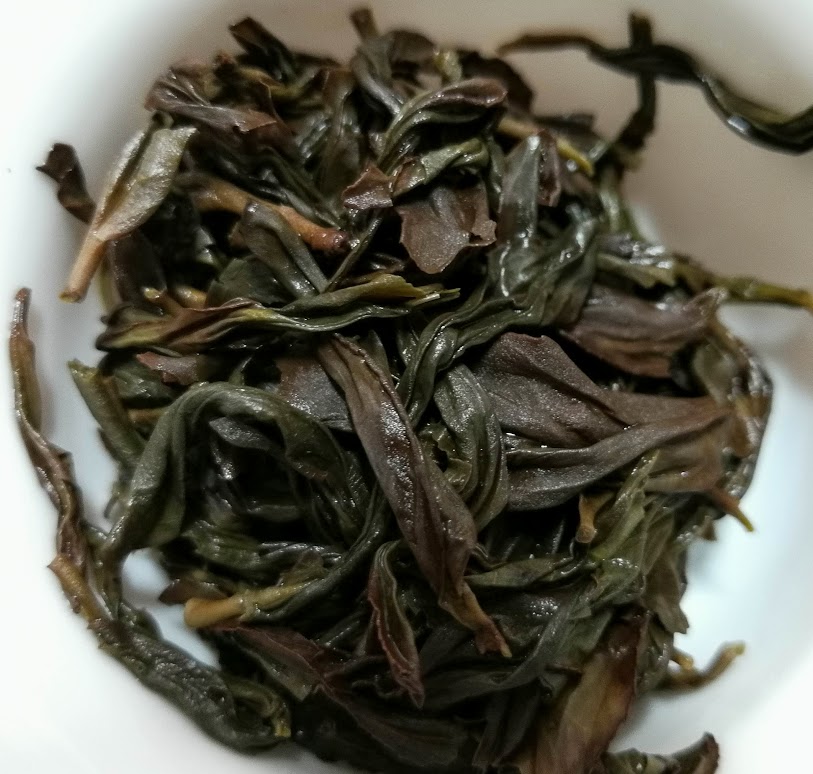
In terms of appearance, the tea leaves are plump in shape with a dark, glossy texture. When dry, they emit a unique pine resin aroma and the fragrance of dried longan. After brewing, the tea liquor presents a bright red color and maintains its flavor well even after multiple infusions—its distinctive characteristics remain noticeable even after 4 to 5 infusions. The taste of the tea is mellow and rich; upon sipping, the fragrance of dried longan lingers in the mouth, accompanied by a honey aroma, and the pleasant scent persists for a long time.


This is an unsmoked version.  Other parts of the description mention it can be smoked or not smoked, and doesn't really clarify which this is, but it's clear enough when you taste it.


Review:


First infusion:  I thought this would be smoked, but it turns out it's the other version, unsmoked.  That's typically higher quality material, often a bit fruity, and complex, and this is like that, it's pretty good.

Flavor range is kind of what I'd expect, for a good quality version.  There's fruit, which is kind of hard to identify, something dried, maybe, or possibly 2 or 3 inputs.  One part seems like warm and rich malt.  There's a mineral layer, but it's not pronounced, more a supporting element.  A complex woody range stands out.  It's aromatic, so interpretation as dark wood plus spice would make sense.  To me it seems like some kind of incense spice, maybe like sandalwood, but my incense burning days are pretty far behind me.

It's complex enough that interpretations could vary from there.  Someone thinking that this tastes a little like citrus, like a tangerine peel, would make sense.  I'm not really "getting" cacao but it's not so far off that.

It's clean in effect, and sweetness level is good.  Feel is rich.  It could be more full, but then this is brewed on the light side, and that may emerge better in a longer second infusion.  I went with a lower proportion than I typically ever use, maybe 4 grams, maybe 5, which is a good bit for Western brewing, but I tend to usually overdo it.  There aren't really flaws to mention, although a balsa wood sort of note bordering on a trace of sourness some might not like.  It's not really tart, one black tea aspect that I tend to not care for, but I don't remember that coming up in Lapsang Souchong before anyway.


Infusion 2:  brewed stronger.  Mineral base and heavier tones come out more, replacing some of the light fruit.  That would be partly from brewing it stronger and also a transition related change, I'd think, just how later rounds often go.  Dryness picks up, or feel structure does; to me those are two ways of saying very similar things, or they could be seen as overlapping.  

The spice note is interesting in this, one positive transition.  It's not really better or worse, just different, since the heavier tones and swapping in some spice for some fruit all depends on preference, in order to judge it.

I brewed a third infusion and it was still pretty good, which is good for longer duration Western brewing.  I just didn't write notes on that round.


Conclusions:


It's good.  Mixing some of the second round back into the first balances it really well.  It's cooler than the too-hot second version, stronger than the slightly light first version, and the heavier tones balance the rest nicely.  I guess that's the opposite of Gong Fu brewing, mixing your Western infusions to get more complexity and improve balance, while truncating the transition effect.

I've tried a good bit of better quality Lapsang Souchong, it's just been awhile.  I probably last tried a version on this level 3 or 4 years ago.  I think the best of what I tried from Cindy Chen (Wuyi Origin) was a bit better, more distinctive, with more pronounced fruit inputs, but then this might compare better with their more ordinary batches.  The material character varies from year to year, based on growing conditions inputs, per Cindy's comments.  It's not really a fair comparison to describe this in relation to the best tea of this type from the best source I've tried, for this general range and others, but that does help place it.

Related to buying random Lapsang Souchong described as this style from a conventional resale vendor this is pretty far up the scale.  You might find better, but it would often tend to take a few tries to do so.  Most versions from marketplace vendors wouldn't tend to be quite this good, although they could be comparable, in a similar general range.  If a vendor carried enough tea versions--across a broad quality range--one might be better.

It would be a stretch for me to put a fair market value on this, so maybe I'll just critique the selling point version they present.  It's $15.67 for 50 grams, $40.67 for 200.  So either 30 or 20 cents a gram, at those two different volumes.  I guess that's about right.  Let's check the Wuyi Origin pricing, to see how it compares to that.


Their wild Lapsang Souchong lists for $16.50 for 50 grams, and $49.50 for 150 grams (no volume discount at all; that's odd, but it does work that way for their site's pricing, which I guess lets it make sense to buy smaller amounts of different teas at pretty good values, for what they are).  They describe the flavor as "Natural citrus notes with creamy and peach fragrance."  Right, so good and fruity. 


In relation to that comparison it makes the most sense to buy this Tea China version at the higher volume, more reduced pricing option.  Unless someone is unfamiliar with good quality unsmoked Lapsang Souchong the results are what you'd expect.  On average other versions wouldn't be this good, but even better range is out there, but the cost for it tends to be higher.

To be honest I'm surprised that they are sourcing teas this good.  That sounds like a statement about a lack of confidence, doesn't it?  This version might be better than three fourths of what is out there, at a guess, or more if you also consider higher volume, more broadly marketed teas, not just versions from dedicated specialty tea outlets.  Most of that other range would probably be cheaper for them to source; for sure they picked this version because it's that good.  It's surely that balance that they're looking for, connecting quality and value, and it seems to fall in a favorable place.


Sunday, January 14, 2024

ITea World Dan Cong and Tie Guan Yin oolongs


Greetings!  It's been awhile.  My kids spent winter school break here in Bangkok, visiting back from Honolulu, so I took a couple of weeks off this blog, and most of the internet in general.  I should probably never return to the same level of use, but this isn't about the digital detox theme.

I had tried tea versions from ITea World before, samples sent from a new mainstream Chinese vendor for review, in 2023.  They were pretty good; kind of medium quality level, but for being moderate cost versions the value and experience in relation to expectations was fine.  They asked if I wanted to try more, better versions of oolongs this time, and it's always interesting revisiting such themes.  I drink a lot more sheng pu'er than anything else now, but it's interesting checking in with types I've focused more on in the past.

In this review I tried to sort out just how good the versions are.  Better than the last ones, unless I've got that all wrong, this time more upper medium quality, or at the lower end of the highest quality range.  It probably gets tiresome hearing that spelled out in detail, but it does also pass on my take on what differentiates really good tea versions from medium or slightly above average versions, so covering finer points at length serves two different purposes.  

I don't lean into the theme of "quality markers" too much here, something I've not ran across used in exactly the same way I've developed it, but surely a theme that's not unheard of.  Some specific aspects identify what is most desirable in some tea versions; that's it.  For this it's enough to specify what stands out as most positive and what represents limitations in these versions.

They're not listed on the website, except in the sampler version they sent me.  The versions are from different harvests than the earlier oolongs offerings, or else they seem the same, of the same types.  I've not discussed how these are better with the vendor, in any detail.

The set sells for $40 for a 100 gram set of samples, all 5 grams each (so there must be 20--yep, I just counted them), so only that price point will serve as a cost baseline.  40 cents a gram for pretty good oolong is not so bad, as a starting point.  For baseline reference I can buy really good versions of it in the Bangkok Chinatown for $30 for 100 grams, but you would almost have to live in China to have access to the same or better degree of options as there, to be able to buy good versions at low cost.  Cost of teas tend to vary some by type, with some higher in demand, and the Dan Cong in this set may be the kind of version that sells for a good bit more than Tie Guan Yin or Shui Xian (for example).  

What about comparison with online sales options though?  That gets complicated, because online vendors set price points in a broad range of ways, which vary by the value they buy tea at, and their markup, all adjusted quite a bit for their costs, the volume they sell, and what works out well for profit for them.  There is no standard range of norms, really; it varies.  In this I talk as if there is, estimating what comparable quality versions to these would tend to sell for online.  That can be hard to estimate based on product descriptions, because essentially every vendor exaggerates quality levels, describing their own teas in glowing, positive terms, as they kind of should, since a sales function just doesn't couple well with excessive humility about experienced aspects and quality level.

Let's push that consideration a little further, then cite their description, then get on with review notes.  This is a medium quality (or at least medium range price) Mi Lan Xiang Dan Cong from Yunnan Sourcing, not the obvious place to buy teas from provinces outside of Yunnan, but a standard option, selling for $17.50 per 30 grams (so $58 per 100 grams), with their highest quality / cost offering selling for a lot more, more than double that:


This is a lovely middle mountain (中山) elevation Mi Lan Xiang (蜜兰香) from Da An village, grown at an altitude of roughly 900 meters from decades old tea bushes growing wild.

Strong and thick tea, golden yellow tea soup, powerful honey and orchid aroma.  Perfect balance of sweet, bitter and umami with a long lasting mouth-feeling.  Cha Qi is powerful and clean.

This is a high quality Mi Lang Xiang that will surely please even the most discerning Dan Cong connoisseurs!


It sounds good.  One point here in citing that is that tea descriptions should focus on the positive, and another is to spell out a type-typical range:  including floral range, good balance, good mouthfeel, and intensity.  Bitterness and umami not so much; I'm not sure what that's all about.  Sheng is bitter, and umami is found in Japanese green teas, or maybe Mao Feng Chinese green tea, but typically not Dan Cong.  Maybe this Yunnan Sourcing version is better than the one I've already wrote notes for, or maybe it's not as good; you can't tell from a description.


This version from Wuyi Origin, a very, very well regarded direct sales producer site, lists for $60 per 100 grams; it's almost certainly significantly better.  But it's not really fair, comparing tea from a mainstream resale outlet--what both ITea World and Yunnan Sourcing are--with the relative best quality and value source for this oolong in China that I'm aware of.  

This kind of oolong sampler is for a different kind of customer, someone wanting to explore better oolongs than you typically ever find in broad-type online outlets or any local tea shops.  From there people might eventually go on to seek out what pushes on towards being as good as any versions typically get.  The Wuyi Origin cost isn't that much higher but moving on to spend $200 on a tea order isn't for everyone; I personally try to avoid that.  300 grams of the tea I mentioned gets you pretty close, and if "free" shipping isn't built into their pricing you're there.


Let's check that ITea World listing:


Again that's listed for $40 ($39.99) for 100 grams of those samples, packaged in 5 gram samples.  That site shows free shipping kicking in at $39.98, so in theory you could just buy this set.  That would be amazing self-discipline, ordering $40 of tea from a China-based vendor, but you could.

It does say a little more about specific local harvest area, growing elevation, and oxidation level on that page, but it seems as well to get on with describing the teas.  Elevation does matter, and plant age (supposedly over 100 years old for the Dan Cong), but it's as well to go by final outcome, the experienced aspects, and you need to try the tea to determine that.  Or hear from someone you trust on that, I guess, but then even given that kind of input verbal descriptions only go so far.


Review:


Dan Cong:  it's good.  As so often tends to happen this first round is a little light, and therefore harder to really judge, but this is quite nice.  The oxidation input and roast balance is very medium, just as it should be to get to a very positive outcome for this type, complementing the floral range very well.  I'll fill in the standard list of aspects and finer quality level assessment the next time, but this is probably as far up the quality scale as it should be for what I'm expecting of it, fairly far along.  Style is zeroed in, especially roast level, I think; not pretty good but right there.  

This probably is Mi Lan Xiang again, and again it's odd that the package doesn't say that, as with the first version that I reviewed.  I'll cite a website listing after making review notes, and that may fill in this detail (it seems to not; a little odd, really even something that could be taken as a red flag, but again experienced aspects and quality are what matter most, as I see it).  I'm brewing 5 grams, the package amount, which really should be relatively ideal, but I tend to use about 8 grams normally, so I'll have to make an adjustment.


Tie Guan Yin:  the same; this will be easier to evaluate next round, once it has opened up and is more intense.  I think this is better than their last version too, in the range better versions fall into.  Not for traditional style more oxidized and roasted tea versions; this is still the bright green kind.  Markers for quality level include very sweet floral input, ranging into an odd taste sensation form, which I'll describe further next round, almost oddly strong, with a somewhat thick, full feel seeming to emerge.  

I really won't be able to make out the feel brewed lightly and not really opened up but the flavor is fine.  It might include a very light off trace, drifting every so slightly into new car smell range, but that may just be an early round anomaly that drops out right away.


Dan Cong, #2:  brewed much stronger, really a bit excessive, for trying to err on the side of definitely getting this strong enough.  

Feel structure really ramped up as a result, and heavier, earthier flavors.  That's actually better for evaluating feel, but flavor experience isn't optimum like that.  It doesn't include a common harsh astringency edge some Dan Cong does, or many do.  People can make the mistake of thinking that's actually type-typical, when it's my impression that it's really not, that it's common but not a marker of correct style and aspect range.  

People also tend to get astringency and bitterness mixed up, which I find odd.  It doesn't take that much exposure to tea aspects to see them as completely different things, which just happen to sometimes occur together, or maybe they come up together often.  Bitterness is a flavor aspect; that's what aspirin tastes like.  Astringency relates to feel; it's the roughness of texture that occurs in a range of tea types, especially in very chopped or ground up black tea.  Black teas are essentially never bitter (although there would always be exceptions), so if you think your tea-bag tea is bitter you might want to give this some thought.  Taste an aspirin, which is bitter (and also causes an astringency sensation; that's confusing), and see if the flavor part is common to what it experienced in chopped material black tea.  Here I'm claiming that the feel is comparable but not the taste.

At a guess lower elevation, younger plants grown using a lot of fertilizer tends to be very intense, including that strong feel edge (astringency), and older plant, higher grown, less chemical-stressed plants include fantastic flavor and feel character but they're not as intense, at least not in the same ways.  Floral flavor and sweetness can be very pronounced, but a harsh feel edge often isn't (the astringency).  If both flavor and feel are intense in a Dan Cong version it works better to use really short infusion times and hot water to optimize the experience, more so than cutting the brewing temperature, which works, but in a different way.  Don't take my word for that, try it and see what you think.

This would be easier to place if I'd been drinking more Dan Cong over the last few years.  I think it's pretty good, in a well above average quality range, but finer differences mark the highest levels from there.  Different vendors sell what are described as the best of the best range, hyping tea plant age claims, using elaborate descriptions of refined, diverse, and unique feel and flavor experience, but it can be hard to separate hype from likely accurate description.  Only with tasting does one arrive at any subjective impression of that, but online discussion inputs about this or that vendor selling the most optimum versions contradict each other.  As I suppose they should; different versions would vary quite a bit, maybe even as sold by the same vendor, and preferences would vary.

To distill this to a flavor list a perfume-like floral sweetness dominates the experience, along with warm tones surely drawn out through extra oxidation and roast input.  The two ranges really balance.  Warm mineral tone ramps up right at the end of the experience, leading into a sweet aftertaste experience including all of that range.

Even though it's all very positive, about as pleasant, refined, intense, complex, and balanced as it probably would be, for higher volume, diverse type outlet sales, it's my impression that dialing up all of those just a touch is still possible.  Feel thickness is more moderate; there is room for more change in that, and aftertaste intensity is also positive but not at the high end of that range of potential.  It all seems like splitting hairs, but that's how evaluating quality for above average quality versions go.  

At a rough guess this should retail for 50 to 60 cents a gram but not more (or it could sell for less; it's hard to pin down what the best value, quite good quality range versions out there are like).  The 70 or 80 cent per gram range is something else, or $1 or over.  Or maybe that's being a little harsh; this is quite good, and Dan Cong seems to reach $1 per gram quickly enough for a generally good quality range, and this is that.  It certainly doesn't taste like a medium quality tin-packaged version, although the best of those, the atypical examples, fall fairly close, or could be this good.  We'll see how their pricing places it [that never did become clear, because all together sell for 40 cents per gram].


Tie Guan Yin:  I have mixed feelings about this quality assessment too.  If I was evaluating this as either inexpensive, medium range, or higher quality Tie Guan Yin it would easily surpass that first level, and fall either in the higher end of the second or lower end of the third.  Sweetness is good, floral range is pleasant, and dominant, and it contains a catchy towards-plastic aspect that I'm interpreting as generally positive, even though per that description it wouldn't sound it, and someone might really hate that, or else could like it.  Then feel is a bit thin, aftertaste is limited, and intensity and the balance / complexity part isn't bad but not in the highest range.  

Evaluating this against all TGY it's quite good; trying to match it with the highest quality end of the range gives the opposite results, and gaps stand out.  As long as pricing is favorable per quality, the value is good, if the idea is to try above average quality TGY this easily provides that experience.  If the intention is for this to compete with the best of the best it doesn't seem to hold up.  

Then one would wonder about pricing, and I'm not really even sure where the high level range for pretty good TGY stands.  For lots of in-demand and more rare tea types, for any Dan Cong version beyond Mi Lan Xiang, the most common one, the best versions are at or above $1 per gram, fairly universally.  That may not hold as true for Tie Guan Yin, although given how demand patterns work out in China, that the best teas are sought out and competed for, maybe it still works, even though TGY is really the main universal oolong type out there, or one of them, sold as a most-common tea type.  Shui Xian fills that role in Fujian / Wuyi Yancha versions, and TGY from Anxi is even more ubiquitous.

I'll try brewing these for more like 20 seconds, to try them lighter.


Dan Cong #3:  forget about that project of placing this in relation to the highest possible quality levels; related to purely subjective experience value this is solid tea, that works well for me.  The way the warmth and deeper tones integrate and balance with the sweet floral range is great.  Sure it's possible to consider if there shouldn't be a bit more thickness of feel (or quite a bit more), or if complexity and intensity couldn't be dialed up just a little, but this still totally works.  Feel is a bit velvety, just not thick.  

Flavors are complex and balanced, just perhaps leaving limited range for improvement.  But it's quite good.  If this sells for under $1 per gram I think it's probably a good value for that, whether or not you could explore and eventually find a slightly better version at the same cost; for quite near, at, or over $1 per gram and they're probably pushing it a bit.


Tie Guan Yin:  this is nice too.  Mind you I'm working around Tie Guan Yin not really being a personal favorite range, so I'm not going to refer back to that subjective preference assessment, beyond quality.  It's good though, and pleasant.  I don't think it matches the Dan Cong version for how good, even though comparing different types brings up problems in equivalence.  For this style of oolong, lighter rolled versions, thickness of feel is all the more critical, and this seems just a trace thinner than the other, not better in relation to just that aspect.  Sweetness is good, and floral range is fine, but that one slightly off taste aspect trace, which I find to be both catchy and also slightly negative, even though that's odd, a plastic sort of taste, also throws off highest level quality assessment.  

Again if the point is for it to be quite good it's there, well above average, but within the top third of the quality range potential it's near that bottom of the top.  If this is 40 to 50 cents a gram, selling as a next level breakfast tea, that's fair, again even if somewhere else on the internet better tea sells for less.  For anywhere near $1 a gram, or even 60 to 80 cents, it's just too much for what this is.  

For me personally I'd not drink much really light style rolled oolong at all, but I should clarify that I was really on that page very early in my tea exploration, and I would have loved this back then.  Preferences naturally evolve over time, and this is better as a place to start, or explore in early rounds.  

I don't think this holds its own with the higher quality level range from Taiwan, but then a lot of oolong versions from there marketed as such would be generally equivalent, but not better; almost anything selling through high volume mainstream outlets probably would be.  Specialty vendors known for selling only the best range of Taiwanese oolongs would only sell better quality versions than this, but the cost for those would tend to be double or triple what you would buy pretty good Anxi Tie Guan Yin for.


Dan Cong #4:  floral range might develop a bit, picking up more intensity.  That's a good sign; this might continue to evolve positively.  I'm not going to write more notes though; I don't have time to spare for that.  If I remember to I'll add a comment from memory later on how that worked out.


Tie Guan Yin:  this is good, it's just not great.  It's very pleasant, and all the aspects are generally where they should be, just not at the optimum level for many.   Sweetness, freshness, floral range, mineral range adding depth, aftertaste follow-through are all positive, although aftertaste intensity is limited.  Feel gives up a good bit.  For people not experienced in evaluating higher quality versions that wouldn't stand out at all, since you tend to explore and appreciate flavor first.  This is pleasant, likeable.  It will be interesting seeing the cost and the website description, matching both versions up against those.


Later rounds:  these held up fine for a couple of more infusions but then died a bit quickly, which I guess also related to using a lower proportion than I usually do, and longer infusion times.


Conclusions:


These are better than I remember the 2023 ITea World versions being.  Again they're good value, good quality in relation to the selling price, maybe best described as the highest level of upper medium quality range versus the low end of the highest quality scope.  As I'd mentioned for people newer to tea experience what I'm experiencing as significant gaps may not be all that noticeable at all; early on people typically haven't learned to evaluate or value thickness of feel and aftertaste experience.  Related to only flavor they're much better, than when you include review of those aspect expectations.

I liked the Dan Cong a lot more.  I like Dan Cong more than Tie Guan Yin in general, but them getting the oxidation level and roast dialed in made a big difference, and I've not mentioned aspects that stand out as flaws because there weren't any, beyond what could've been more pronounced, feel, complexity, and such.  Flavor range was pretty good for that.  

I am pretty sure it's Mi Lan Xiang, the most common Dan Cong type, for what that's worth.  There is room for improvement in the flavor complexity, intensity, balance, and refinement but all that is fairly positive.  I say that, but if you try this version side by side with a much higher quality version the difference would seem striking.  If you aren't experienced at evaluating teas if you tried both 3 or 4 weeks apart it might be much harder to notice it; it's funny how that works.  It could've been a couple years since I've tried any Dan Cong; after awhile the whole range just becomes familiar, with enough exposure, drinking dozens of versions over many years.

The Tie Guan Yin is pretty decent Tie Guan Yin; I suppose that's good enough.  If you would taste it side by side along with anything from a specialty grocery store this version would seem fantastic in comparison.  Then trying it along with standard $1-$1.50 per gram Taiwanese rolled oolong it would seem to fall way short; it's funny how that works out.

I can respect what ITea World is doing with these teas, making above average versions available at fair pricing.  This is perfect for someone new to exploring oolongs.  Even if someone had been dabbling in trying them for awhile, but wasn't clear on their baseline quality expectations, these could be pleasant and helpful.  Even if the best of all the other versions someone had already tried had been slightly better it would still help place that range.  For people way past both exploration levels maybe trying these wouldn't make any sense, although I guess they could still work as a gift, for someone just getting started.

It's a little bizarre related to my own personal use but these come with a set of tea bag sleeves you can put them in; you can convert this loose tea to bag versions, just using what they've provided.  For a loose tea enthusiast you'd end up considering how else you might use those, since it wouldn't make sense to put this oolong in them to brew it (any other devices you already have around would work better).  

Some people keep sheng pu'er cake dust and small bits aside in a separate jar and brew only that from time to time; those bags might be perfect for that, to take a blend of extra scraps of cakes to the office to drink there.  Or it all works even better together as a gift, in case someone absolutely couldn't figure out how to brew loose tea.  For a non-tea drinker that's less unlikely and absurd; there is a learning curve to go through, and having some related gear definitely helps.  If you took only this sample set to a hotel you'd be set for having some decent tea every day for three weeks; not bad.  Drinking tea only from tea bags for three weeks would seem so strange to any tea enthusiast; the point is that it would work.


reunited with the cats (2 of 3 of them)


lots of errands, play outings, and pausing to enjoy the little things


they got some things for Christmas, just not much


family dinner at a hot pot and sushi buffet place


Saturday, November 4, 2023

Wuyi Origin 2019 Rou Gui


A friend recently sent a few interesting teas to try, including a 2019 Wuyi Origin Rou Gui.  

I wrote review notes before looking up what he said it was, beyond remembering it was Rou Gui, and it probably is the same version I used for this water type testing back in 2019, or maybe it's not.  Not much comes of looking back to compare character; it sounds similar, but that was focused on minor differences between using Volvic bottled water and filtered local tap water for brewing.

It's interesting that this isn't the fruitier style of Rou Gui I have tried more of in the past.  They make and sell both versions; I'm not sure what that difference relates to.  It would seem that it would have to be a slightly different plant type variation, that they couldn't use processing differences to cause that much of a main aspects range shift, or that terroir input would cause that particular change.  Or maybe that's completely wrong, and it is more related to one of those inputs.  Cindy has mentioned before that the exact same plants can be especially fruity some years, which they can notice even when picking the leaves, from the scent of fresh oils on them, so for sure growing conditions each year play a role.


Wuyi Origin sells a 2023 version that seems likely to be similar, citing all they say about it here:


Location: Qing shi yan (青狮岩)

Harvest: 2023.May.3rd

Cultivar:Rou gui  cultivar

Roasting level:  Medium Roasting ( 3 times charcoal fire roasting )

                                    The first time :  20th of June

                                    The second time : 24st of July                              

                                    The thrid time : 10th of September

This cinnamon is in Qingshiyan Zhengyan Mountain Farm, and the tea garden is on the flat ground. The sunshine shines from morning till night, and there is plenty of sunshine time. The unique growth environment makes this cinnamon have a very direct and sharp cinnamon. The first infusion  is full of fragrance. Cinnamon aroma is flamboyant, strong and lasting. Cinnamon fragrance always exists from beginning to the end, and there is no  any fertilizer and pesticide using  in this tea garden 

Medium charcoal roasting,  stewed this tea has ripe fruit flavor, its tea soup is fragrant and pure, and its taste is mellow, thick and sweet.

This Rou Gui was hand-made the totally steps  We made it by hand from picking fresh leaves, Oxidation, and then the last Maocha sorting . The tea strip is very compact and complete. The raw fresh leaves is from Qingshiyan garden ,it is  part of Zhengyan Farm in WuYi National Garden Park . 

Highly recommended, this is a very standard  taste of the Rou Gui Cultivar with "spicy " and "ripe fruit" fragrance.

The Feature of this tea is quite direct ,you can get it easily .

Suggestion: 7-8g / 80 ml gaiwan or Pot . 100C


I last reviewed a Rou Gui that was supposedly from the Zhengyan park area in September (and I think it was), a sample from a local Chinatown shop, from Jip Eu.  It wasn't on this quality level.  That doesn't necessarily mean that the origin area was mis-represented; just being from a famous origin area, where conditions are generally quite favorable for growing those plant types, doesn't mean that a tea will achieve a certain quality level.  That tea was really good, clearly better than the medium quality re-sale outlet version I compared it to in that post, but this version is the next step up.

It's a little early to be getting into conclusions but this website version--not the one I'm tasting--sells for $15 for 25 grams, not discounted when buying more volume as their site is set up.  

There is some room for improvement in the version I'm trying; it could be slightly more complex, or refined, with slightly extended aftertaste experience.  

But all of those aspects are already so positive that it wouldn't necessarily be easy to notice that improvement; this contains no flaws, and all the positive aspects are pretty far up the scale.  And I suspect that aging (this being a 4 year old version) has muted the higher end / more aromatic flavor range, bringing out more smoothness and depth, so part of what I'm saying could be more intense relates to a difference in tea type instead, to how somewhat aged versions vary from newer ones.  Then it's down to what people value most in tea experience, whether that's an improvement or it's not as good.


Review:


first infusion:  that's heavier on cinnamon than Cindy's Rou Gui usually are.  Somehow there are two different styles or versions of them, with one quite fruity, including citrus, or even peach, and the other the more familiar cinnamon.  Per an input from a local Chinatown shop owner it's even similar to a specific version of cinnamon; as I recall one type is regarded as true cinnamon and another a related variation.  Maybe he said similar to Vietnamese cinnamon?  That would probably only be a confusing form of reference to a secondary plant type.  Anyway...

This tastes like cinnamon.  Maybe there is some fruit tone included, but it's really mostly that, with some warm mineral base.  It's clean, and balanced; pretty good Rou Gui (with "pretty good" used here in the understated sense).  Oxidation level must be a little higher than I'm accustomed to in their fruity style Rou Gui, or I could easily be mixing up a roast input, or it could be both.  

This comes across as balanced and complex for one flavor note standing out so much.  The mineral tone includes an ink sort of character, not uncommon for Wuyi Yancha, but a marker for better versions.  That effect can be interpreted as leaning towards a liqueur or cognac nature.


second infusion:  cinnamon gets even stronger; interesting.  It includes so much earthiness and warmth it's on to folding in some tree-bark range.  I get it that cinnamon is tree bark, but I mean how more common tree bark smells, aged or cured versions of hardwood stored for firewood.  Hickory wood has a nice rich smell; maybe like that.  I grew up in the forests of PA and spent a lot of time cutting firewood but I'm not claiming here that I could actually identify cut wood by smell; that's just a guess.


trees, snow, and wild turkeys at my parents' house


This is so interesting and pleasant that I'd like to add more, but that's it; it tastes like cinnamon, a specific wood tone, and mineral base.


third infusion:  I tried this brewed faster to see how aspects would vary but it's mostly just lighter.  Brighter cinnamon flavor and sweetness stands out more, so a vague hint of citrus seems more intense, but it's still pretty similar.  For me optimum intensity is more medium; that bright character is nice, and aftertaste is still pronounced, but the strong hit of balanced and intense flavor is nicer.


fourth infusion:  warmer tones pick up, probably more from brewing this slightly longer than a natural transition cycle.  It's great the way a simple range of flavors comes across as so complex and intense.  In between the cinnamon and mineral depth, separate from the supporting fruit range, there is flavor range tying it together, along the lines of other spice or tisane.  Then a pronounced aftertaste extends the experience, makes it longer and adds a sensation of depth.  This is really clean in character too; it's hard to describe how the complete absence of flaws and great balance work together.  

The roast level in this is so perfect that it's easy to lose track of that even being an input.  I wonder if it's not aged a couple of years?  That would settle a roast input, leaving behind positive transition while smoothing over rougher edges. [later edit:  it's 4 years old, so sure, that input changed it a little].


fifth infusion:  it's changing slightly, but not enough that it's going to be easy to describe, not in terms of identifying separate flavors.  The spice input seems to shift from straight cinnamon more onto root spice.  A light touch of citrus might be getting heavier, moving from fresh orange peel to dried orange peel.  

It's still quite pleasant; it's not changing in terms of losing intensity, balance, or appeal.  I went with a high proportion, brewing all that Bruce sent me, which has to be around 8 grams.  That's a lot to brew at one time in a 90 to 100 ml gaiwan, even though that is my standard approach.  For someone using a more typical 5 or 6 gram proportion this would probably transition faster, since infusion times would probably be a little longer, unless someone likes their tea wispy light.  It works for that; it was fine in that very lightly brewed round.


Conclusions:


I drank more rounds but it continued on in a similar way.

I'm curious what this is, what it was sold as by them.  The Wuyi Origin lists a separate now sold-out version they describe as "boutique," that had sold for $32 per 25 grams instead of $15, for twice as much.  Material quality and potential can vary quite a bit, from year to year, or location to location, depending on what the plants experience that year.  

From how vendors and producers often market teas it might seem like one main lot of given year and season's tea is produced but really it's not like that.  Teas are harvested and processed in batches, and in cases where a vendor is trying to make a uniform and consistent version from year to year they might mix batches to arrive at a certain effect, a certain balance of aspects.  That would align with yearly named-type branding, how teas are sold.  Tea from a higher level specialty producer is something else; it would be produced and sold as different versions like this.

Which leads back to me not knowing exactly what this is, how it was presented.  It's clearly quite good, but it might be that it was a more standard offering 4 years ago, sold as a more ordinary type.  The balance of oxidation level and roast input seem very favorable, so by ordinary I mean truly exceptional but sold as their more moderate priced range, possibly even selling for less than 50 cents a gram 4 years ago.

Then to me the fruity range style versions can be even more distinctive, because for Rou Gui with cinnamon as the dominant flavor aspect it either balances or it doesn't, either including plenty of other complexity and refinement or not.  But fruity Rou Gui can be completely novel, expressing a set of flavor aspects that you'll only experience in that one version that one time.  Unless it comes up in a similar form again, but it's usually not like that; peach, citrus, floral tones, or whatever else can balance in a unique way.  

Well-balanced and high quality cinnamon-dominant Rou Gui is still very nice, a pleasant experience.  It's a tea quality range that one might never get around to experiencing, depending on the sourcing approach they take.  This may have lost some intensity across the four years; it may not be as good as it was two years ago, per my preference.  For heavier roast levels aging really is a positive input, even across 3 or 4 years, but surely this was moderate in roast level earlier on, not low, but not beyond medium.  All that is just guesses though.  

This is still truly exceptional tea, so I'm splitting hairs here a bit, comparing it to as good as I think Rou Gui character could possibly be.  This is relatively close to that, for this style, perhaps with some limited range for improvement.


Sunday, May 1, 2022

Wuyi Origin Jin Mu Dan (wuyi yancha)


Wuyi Origin Jin Mu Dan right; the comparison DHP on left looks ok too


This is the last of a few teas that Cindy, of Wuyi Origin, passed on for me to drink last year.  It seems those were more intended to share tea as a friend than for review, but of course it works for both, since discussing interesting tea versions is my hobby interest.  That reminds me, Cindy described some changes in tea awareness, demand, and vending patterns in China in an online meetup last year (not so directly related to this tea or a review theme).

We visited the local Buddhist temple we go to most regularly recently (2 weeks ago now, and also since) to check in with an astrologer monk (a long story), and he gave me some tea that someone gave him a lot of, a Da Hong Pao.  I've tried it; it's good, better than I remember trying from him a few years ago.  One might wonder if it's not a problem for monks to receive that sort of a gift, well above average tea, that has considerable value (not like 50 cents a gram; it's not that good), in some quantity.  It's not a problem.  Monks live by a broad set of rules (227 or so?), and owning much of any value isn't allowed, but as far as grey areas go they're fine, and possessing tea is ok.  He would just share some with other monks or visitors if it was more than he would drink, as I experienced.

I never look up tea details before reviewing them but I thought maybe I'd make an exception, just to change things up.  It balances things a bit, since I've actually drank that second tea I'll use as comparison (the Da Hong Pao).  The Wuyi Origin listing:


Jin Mu dan 金牡丹 2021

location : Shui lian dong (水帘洞) zheng yan garden 

Picking date: 2021.April 28th

Roast level :   Medium (roasted on June 23, July 7, and August 10)

Feature : Golden Peony is a new type of tea developed by the Fujian Tea Research Institute in the 1970s, with Tieguanyin(铁观音) as the female parent and Huangdan (黄旦)as the male parent. Growing in the protected area of Wuyi Mountain,the soil is rocky and rich in minerals. The soil is loose, conducive to water transportation.

The dry tea sticks are tightly tied, the color is dark and the aroma is restrained. The tea soup is orange-red and bright, the soup is clear and transparent, and the tea aroma is perfectly integrated into the tea soup. The entrance is smooth and thick, the rhyme of rock surrounds the throat, the sweetness is long-lasting, and the lips and teeth retain fragrance. Smell the fragrance of the bottom of the cup, such as honey, the hanging cup is long-lasting and full of tea. Very obvious taste of ripe peaches.


Interesting, that background.  The plant hybrid type is interesting, and I can see how it goes with picking up peach flavor.  This really should be better tea than the other, but that's part of the point, to pin down how it varies.  Style will be relatively completely different too, given that is within the normal earthier, slightly heavy, mineral intensive range of a blended DHP (maybe Shui Xian with a little Rou Gui, or it could be anything).


Review:


Da Hong Pao (left in photo):  much darker than the other tea.  Flavor is pleasant, as I'd experienced before, not so far off normal Shui Xian character, that one mineral and wood flavor range, with one inky sort of effect tying more to mineral.  The wood range isn't a conventional hardwood sort of effect, or aromatic wood, like cedar, but more like the smell of a wet-environment tree bark, or even tree bark in curing cut wood.  It tastes fine until you try the other tea, then not as good in comparison.


Jin Mu Dan:  wow that's good.  Cinnamon, floral tones, and fruit really jumps out, with the overall character just on another level of the other tea.  It's easy to try pretty good wuyi yancha, as this example is, or one I've recently bought for gifts from a local Chinatown shop, and say this is good enough, I can really appreciate this.  Then when you try a good example from a much higher quality level it's something else altogether, and what really didn't seem like limitations in the other range of versions stands out.

The flavor profile is completely different, and the feel, and aftertaste experience.  The roast level in the first example is fine, kind of medium, something that complements that tea, but this comes across as absolutely dialed in.  It's a lower level of roast, just perfect for highlighting the strengths of this tea.  There's no flaw to compensate for; it's not masking that kind of thing.  I really love their Rou Gui, for balancing fruit, warm tones, and mineral input, and this is a completely different expression, only sharing a vague general tea category range.  Floral tones are strongest, at this infusion, but there is plenty there that could emerge through later transitions.


Da Hong Pao, second infusion:  slightly better; the mineral that was a bit dry, or just not so pleasant, mellowed, and sweetness increased.  Depth picked up, and that towards-ink aromatic range contributes more.  It's picking up more of a perfume-like quality.


Jin Mu Dan:  it's not fair, trying an ordinary quality DHP along with this tea.  Depth picked up in this tea too, warmer tones, but the heavy floral aromatic range is still really impressive, very pleasant.  Peach starts to pick up, from range that was just non-distinct fruit in the first round.  A warm tone I interpret as cinnamon, but that's not a given, it could be interpreted in different ways, or just described as a general underlying warmth.  Someone could see that as connecting to the floral range, with heavier floral tones like lavender or rose petals included.  I don't see it as related to mineral range, which is evident, but that would also make sense.

The main thing that stands out is how intense all of these positive aspects are, how complex the tea is, and how it all balances together.  It's less unusual for a few very positive aspects to be expressed by a tea, but when it comes together as an integrated set and experience that's something else.  You could try 1000 wuyi yancha versions from other kinds of sources and never encounter a version as novel, high in quality, and well-balanced as this one.  The best of what I tried from my favorite local Chinatown shop wasn't so far off this, but the limited difference, the extra refinement, really sets this apart.

It makes you think about how cost ties to those issues, doesn't it?  This sells for $22 for 50 grams, so on towards 50 cents a gram, but not there.  If I remember right the best I bought from that Chinatown shop had sold for about $30 for 100 grams, so less, but the move up in quality level might seem like money well spent.  Then when I buy teas I have to also factor in that my own budget is limited.  I could buy a good value sheng cake for not much over the $44 100 grams of this would cost, or quite decent Dian Hong (my favorite black tea category) often costs $10 per 50 grams for pretty good versions.  It would be nice to not worry about whether I spend $300 a year on tea or a couple thousand.


Da Hong Pao, third infusion:  really not so different than the last round.  Since this is about comparison to the other I'll not add more.


Jin Mu Dan:  cocoa flavor seems to pick up a little, as it warms and fills in yet more complexity.

Keoni joined and asked what smelled like chocolate in here, and smelled the empty cup from last round, and said that's it.  He tried both teas and really loved this version, and didn't care for the other.  He even passed on an assessment that this is one of the better teas he's ever tried, and I agree that the quality level does stand out.  Kalani tried both and like the other better, the DHP; personal preference can be like that.  It is a lot closer to this other in general level of appeal in these rounds, for evolving to drop out most of a heavy tree-bark range flavor, with pleasant aromatic inky mineral picking up.  I'm adding this during editing, but after another couple of infusions they kind of evened out more, since the bright and intense flavors in the Jin Mu Dan kept fading, and the Da Hong Pao retained its depth and kept seeming more pleasant.


Later infusions:  peach may well stand out more in the next couple of infusions for the Jin Mu Dan, and some of the most striking floral aromatic range fades a little.  It's still great for picking up a little more warm depth.  The Da Hong Pao works as well as it has across any rounds, for that inky mineral range and some vague floral tones hanging in there.  Aftertaste is pleasant for both, it's just a matter of which flavor range carrying over one prefers.  Both could be a little richer in feel but they're definitely not thin, so it doesn't come across as a flaw.

Both kept going for lots of additional infusions, more than four extra shown in pictures and mentioned here.  Both stayed pleasant too, fading in ways that didn't shift feel or flavor balance into a negative range, maintaining enough intensity and complexity to still seem nice.  For the Wuyi Origin tea starting out so clearly high in quality that seemed normal, and versions backed off a little in terms of oxidation and roast level might last a little longer.  For the DHP it was more of a surprise; it seemed to be better quality tea than I had expected, or noticed in the first rounds of the two sessions I tried it.


Wednesday, November 10, 2021

Wuyi Origin Wuyishan benefit black tea


Cindy sent me some samples to try, really related to acting out of friendship more than for review, but of course I'll mention my impression of some of them here.  

She was kind enough to meet with my friends and I twice this year in that meetup series, in one of those explaining a lot about issues related to Chinese tea production, tied to changes in perspective or demand there for teas:


Tea processing and demand shifts in China


Cindy is just great.  I wish that everyone who is interested in tea could make a Chinese friend like her at some point, in order to gain more perspective and feel more connected to that culture.  Maybe the tea producer or expert part is a bit much to ask, so here I just mean to know someone from that country to add context and perspective.  Three families of my kids' best friends were Chinese, two temporarily working here from there and one just visiting long term, which also involved that kind of exposure, just not focused on tea.


five years ago, but it seems like longer


I miss this girl every time I see her picture


Permit me one more short aside, and I'll get back to the tea theme.  This year I wrote about foreigners' living in China perspective on China, here:


Those Youtubers told two different stories, about a culture that's not so different than anywhere else, very positive in general, and also about a government that keeps a close eye on citizens and foreigners, a bit restrictive in terms of who can say or do different things.  One Youtuber told both stories, related to his own experience shifting from very positive to relatively negative.  I've visited China three times, and it just seemed normal to me, so I'll leave that out as discussion input. 

The issue for the one guy seemed to be that once you gain Youtube following and draw views from criticizing aspects of Chinese society, and government controls, while living in China, the clock is ticking on your welcome there.  It's not necessarily the same in the US, but then maybe if someone was on some sort of temporary visitor visa and they were critical of the US on a public forum like that visa renewal may not go as well.  Probably not though; you could probably be in the US as a student or chef or whatever and actively protest the government and still stick around, and they would never even try to make the connection.  China isn't like that; if foreigners protest government actions there they aren't welcome, and for citizens it would just depend on what they were saying, and who and where they were.

Americans do make it a point to discuss political views online, maybe too often, but in other places criticism is generally ok but only across a limited scope.  Here in Thailand no one can criticize the monarchy (which is illegal), and foreigners probably shouldn't express controversial political views in public social media statements.  Oddly Russians can criticize Putin, per my understanding, but people tend to know the limits.  Free speech isn't one of China's things.

Again this means nothing in relation to the vast majority of everyday life.  People aren't living in fear, oppressed, they just can't set up public inquiry and protest over potential minority rights issues, and they certainly can't research such things for publication on Youtube, to draw views to earn income on what is essentially a banned platform.  They wouldn't necessarily be "disappeared" if they did, but people observe societal norms, as much as they are concerned about risks.  Someone just commented roughly the same thing about Vietnam online (someone from there), that it's a norm to seek out societal problems and publicly criticize the government in some places, but not there, it's just not part of their culture.  That part of it seems to get lost in US based discussion.  Ok, back to the tea.


Cindy described it this way on their website:

Benefit tea ($10 / 50 grams)


This is a black tea that I use my rock tea raw material to process. The variety is Chunlan (春兰)which is a high-flavor variety in Wuyishan rock tea. I use this raw material to process oolong tea every year, and then I processed a little  into black tea version in 2020 and sent it to WuYi Origin Tea Club numbers . This year I also processed a little as benefit tea  which is affordable and you can drink it every day. But the quality is definitely higher than the  regular Tea .


I'm a bit surprised to see that listed at $10 for 50 grams, based on trying it.  This is roughly Yunnan Sourcing upper medium quality Dian Hong pricing, and it's clearly a full level beyond that in terms of tea quality, or maybe two levels, depending on how one arranges them.  "Quality is definitely higher than the regular tea" is an understatement.  I'll just edit the notes to make them readable and that will be the rest of this post.


Not so different than a really good unsmoked Lapsang Souchong. The fruitiness is backed off a little, further into other range, but the rest is similar, the balance and style. There's a nice inky mineral tone, pleasant warmth and underlying mineral, and leather or spice tones. It's the refinement that stands out the most. This is the best black tea I've tried since I last had one of theirs.


[editing note]:  I drink more sheng than oolong or black tea at this point, and I'm definitely not spending much on tea these days, just mostly drinking what I already had or samples, so I've bought no moderately expensive black tea in the past year, or even much at any price.  All the same other notes place just how good this tea seemed to me, and it's not just "above average" tea, it's better than that.


An aspect like a refined wood tone picks up, vegetal, but hard to describe in range. There's spice along with that, and it's not far off fruit range, a hint of citrus with other dried fruit depth, like tamarind. In a different style and quality of tea that one edge might seem like a roast effect but in this it's complex and refined, layered.

Aftertaste effect is much cleaner, more pronounced, and longer than I'm accustomed to. Feel is smooth, not edgy, and just a bit full, not as much to talk about.


Warmer yet; this could really pass for a great version of Lapsang Souchong, if it's not that. There's one distinct set of flavors that matches, what I've already tried to describe. 

Rich sweetness fills in more than I could do justice to. It's like a lot of the flavor range of tasting real maple syrup, that sweetness, richness, and wood tone, especially the effect right after you swallow it, the aftertaste range. Although it is towards wood tone it's very refined, pleasant, and catchy, the opposite of the woodiness in trying to get a second infusion out of a Lipton tea bag.

The fruit is on towards closer to dark cherry too. It's quite good.


Conclusion:


That was it, some short notes for being rushed that day, as usual, and fairly burned out on writing 1500 word tea reviews.  I drank other very pleasant rounds but had stopped taking notes.

It was refined, balanced, pleasant, and distinctive.  For that to be selling as an intended moderate cost tea was shocking to me.  That's 20 cents a gram, a bit higher than the standard list of 15 cents a gram mid-range versions, but it's an altogether different thing.  Another vendor could easily turn around and sell this for double or triple that, and even for that higher end pricing people without sourcing as dialed in might be so happy to get it for that.


I consider Cindy a friend, so you should take what I say with a grain of salt.  Maybe I'm hyping it to get people to place an order, or maybe I really think it's fantastic because I want to experience and think that, tied to expectations.  Or maybe they did make and offer crazy good black tea at the completely wrong pricing level to thank her customers.

This is probably better than any tea that I've ever tried from Thailand, of any kind, to put that in perspective (maybe setting aside an aged sheng; it's just too different to compare that range).  It doesn't usually work to extract out an objective quality level judgement like that but in some cases it seems clear enough.

I'd be interested to hear what you think, if you end up trying it, or already have.  It's also possible that I've been drinking so many slightly rustic style teas for so long that moving a bit beyond that, while still retaining part of a related flavor theme, is exactly what I would want to experience.  Again it's the balance, refinement, and depth that makes this so exceptional to me though, not just about a set of flavors, or lacking some other flaws.  


8 year old Kalani


13 year old Keoni


Saturday, April 17, 2021

Setting the record straight about Mei Leaf


The subject of this vendor won't end.  The back-story should be familiar:  Mei Leaf is either regarded positively, as a good source of tea and informational videos, with a personable owner (Don Mei), or else negatively, as a vendor prone to exaggeration, overcharging, PR mis-steps, or even lying and making false product claims.  Some people see Don Mei as annoying instead, as a tea vendor version of a used car salesman.  Can both perspectives be right?  Probably, in this case, but I do settle more on the second myself.

I've written about Mei Leaf before, reviewing their teas, and speaking about this controversy, and about published product details that look a little off.  Really all this takes some unpacking.  In general I'm not the person to tell people who not to buy tea from; I have no interest in that.  The problem comes in that I do discuss tea issues in a variety of places, and informing people of options also overlaps with conveying negative impressions of some of those.  Let's start with an example that's not Mei Leaf, and unpack the Don Mei controversies one by one after that.  


Some of all this maps onto either mentioning, or else not telling people, that Harney and Sons is a limited range option in beginner tea groups.  It's probably not bad as the actual tea products go; probably as good as tea that comes in tins tends to get, selling at a good value.  But moving past cinnamon spice flavored versions and mass-produced conventional types is a standard step people take in tea exploration, or else don't, if they never really dig deeper and branch out.


First, for further reading in this post I said a bit about a tea issue, obvious contradictions in that product listing (not directly related to the roasting sheng issue, but indirectly related).  And I've reviewed a tea from Mei Leaf here, a long time ago, 5 years ago to be specific, back when the brand was named China Life.  I went to a tasting where a number of their teas were served in February of 2017, 4 years ago, and I'm not sure if the re-branding had went through then or not, but at a guess it already had then.  

It doesn't matter, to me; changing a company name doesn't wipe the slate clean, related to then selling different things or using a different approach.  Obviously sourcing could have improved since then (it really should have), and pricing strategy could have changed (although it probably didn't), so let's start there.


1. Sourcing, quality level, and pricing


The typical discussion claims aren't that Mei Leaf tea is bad.  The often expressed theme is that their tea is overpriced for as good as it is.  There's an easy answer to that, but it's a little too easy:  teas sold out of physical shops are almost always higher in cost, because you pay extra overhead for the site rental, staffing, related costs, etc.  I'm open to paying a bit more in physical shops from time to time, to support all that, and keep shops open as a valuable option.  Luckily it doesn't work out that way related to Bangkok Chinatown shops, because overhead there is so low, but that's a tangent I won't address further here.

To me a primarily online business cannot use that as justification for describing teas as better than they really are, or selling well outside a standard price range.  But then there is no standard price range, to some extent; vendors can charge whatever they want for tea.  Vendors can state how good they think a tea is but that's always vague, and every tea is always described as good tea, in one form or another.  Pricing tends to imply a quality level, but it's not a direct connection.

Let's look at an example of how one particular tea type stacks up related to this, to get a feel for how well what I'm claiming really works (which is partly based on echoing a hearsay claim, and partly on making that same claim based on personal experience).  I picked a standard, well-known tea type to compare across different vendor sources, a type of Dan Cong (Chaozhou, Guangdong origin oolong).  This wasn't an example cherry-picked to show this difference, but instead one that should be easy to find versions of elsewhere, since no single tea type has been the subject of as much hype as this one:


Mei Leaf Duck Shit (Ya Shi) Dan Cong oolong, 1.14 cents per gram (30 gram quantity)

Wuyi Origin Ya Shi / Duck Shit Dan Cong, 48 cents a gram (25 gram quantity)

Tea Drunk (NYC shop) Ya Shi / Duck Shit Dan Cong, $2.25 / gram (28 gram quantity)**

Seven Cups (online shop) Yu Lan Xiang Dan Cong, 56 cents per gram (per 50 g; the most expensive Dan Cong they currently list, with no Ya Shi in stock now)

Yunnan Sourcing King of Duck Shit Dan Cong, 55 cents per gram (per 10 grams)


**Note:  this Tea Drunk citation was an error in the first published version, mixing up a 7 gram and 28 gram pricing for the calculation.  $2.25 is getting up there for tea pricing, but for the highest physical shop overhead cost range and most expensive tea type it might be a more reasonable value than it seems in comparison.  Really tea pricing depends on quality, and it's not as if there is any clear ceiling on those levels (quality or market price), as if $3-4 per gram for an unusual type of rare and high-demand product couldn't possibly make sense.


some Wuyi Origin already brewed Ya Shi / duck shit leaves


See a pattern?  The "two" physical shop locations are priced higher (with an error in the original write-up related to one), and the rest around 50 cents a gram.  The Seven Cups example isn't actually Ya Shi, but since they sold a half dozen types of currently listed Dan Cong, and that was the most expensive example, it probably works to assume their Ya Shi, when back in stock, would be around that range.  If it was really 10-20% higher that doesn't change the story being told here.

But what about quality level?  That's really what determines value in relation to price for any tea.  Is it possible that Mei Leaf sells the best Ya Shi version of these five vendors?  Technically yes, but in practice no, not really.  

Anything is possible, but Wuyi Origin is an incredibly well regarded, award winning direct from China vendor (don't take my word for that; do a search in any tea forum or group of that vendor name and confirm it yourself).  Seven Cups is a very well regarded online US site; the owner of that business played a formative role in developing current specialty tea awareness and culture to what it is now.  

Tea Drunk I'm a little less comfortable making claims about. That shop name comes up, as one of the best positioned shops in NYC, but someone would have to try the tea versions to get any decent input.  Nicole Wilson of Tea for Me Please says that their teas are good; that means something to me (even mentioning this type in that post).  Yunnan Sourcing probably isn't buying Dan Cong of the same quality level as Wuyi Origin and Seven Cups (which Wuyi Origin is making, not buying), but again tasting the teas would be better input than anyone's guesses.  It's standing in here as an extra comparison anyway, as a standard online vendor example.


Let me be clear on part of this context:  hearsay is valid input; it just has limits.  A longstanding tea acquaintance who lived in London passed on his evaluation that Mei Leaf teas aren't bad, but also not good, and definitely not worth what they cost.  That kind of input needs to be evaluated in relation to the source, and I trust that guy's opinion about as much as any others.  He said that Post Card Teas (a physical shop there) are also a bit pricey, but at least better in quality level.  

I've tried more than a half dozen versions of Mei Leaf teas myself, some just before the roughly 4 year back re-branding, and that really described all of them; good but not great, and not a good value.  To be clear if I don't like a tea I typically won't review it, so everything appearing in this blog doesn't represent everything I've tried.  

That reminds me to look up the first tea I ever tried from China Life (re-branded as Mei Leaf), a Dian Hong (Yunnan black) version, to check on cost and value for that buds based tea, reviewed in 2016, so 5 years ago.  I didn't mention value then; as is common for most bloggers I will only do so when a tea seems to be a great value, or if there is a concern that one is outside a standard pricing range on the high side.  I wouldn't have as easily evaluated value 5 years ago, especially for a less common tea type.  I looked up that pricing on the Wayback Machine internet page history:  it was selling for 14.50 British pounds for 30 grams, or equivalent to about 65 cents per gram converted today.  That's a good bit for a black tea, even a buds based version, but 5 years ago that would've been sky high pricing.  Over time people have acclimated to approaching $1/gram for rarer, higher demand versions, but it wasn't always like that.

This dated pricing issue--all these personal experience references from 4 years back or older--brings up an obvious problem:  no one who has spent years figuring out sourcing preferences and has noticed that Mei Leaf's pricing runs high, per quality of tea, or just in general, really, is going to have sampled a lot of their prior Spring lineup to keep on confirming that.  Unless they just figured this out.  They would move on, source-wise.  Let's check one more tea type that is familiar to me, Jing Mai sheng pu'er, one of the main origin regions, known for approachable character and somewhat moderate cost versions.


2. Second tea type comparison, Jing Mai origin sheng pu'er


A bit of a problem, since Mei Leaf only lists a blended version, but in a sense that should be instructive.

Paradise Snapper, He Kai & Jing Mai Sheng Gushu Spring 2020 (47.5 cents per gram, $95 for a 200 gram cake)

One of the most crisp, physical and zesty PuErh teas, made from a blend of He Kai and Jing Mai Gushu trees (estimated 300-400 years).

We wanted to create a tea which was bright, bracing, physical and delicious. Jing Mai is well known for its bright, high and zesty aromatics and we love this area for this character. This year we wanted to add a more adult edge to this lighter tea region by blending with another of our favourite regions - He Kai.

He Kai is in the West of Xishuangbanna and has a resinous, creamy and mineral character. Blended with the Jing Mai, the result is a very unique and powerful tea. The orange, apples and sweet flowers of Jing Mai combine with the mastic cream and rocky quench of He Kai to make a tea which is one of the most engaging teas.

Bright, zesty, crisp and quenching with plenty of physical bite and a deep Hui Gan sweetness. A wild and untamed tea with potent effects.


Who knows about the colorful description part; we can really set that aside.  Both teas are estimated to originate from 300 to 400 year old tea trees; that's dubious.  It's just not possible to date tree ages like that, for reasons that are explained in that video.  Good gushu versions of sheng are typically sold for around $1/gram, and I've never heard of a gushu version being used in a blend; that just doesn't happen, typically.  Blending is usually used for moderate quality material, to offset flaws in multiple versions, and to create something better than more than one limited-appeal input.

I've recently reviewed Jing Mai versions selling for around $30 (kind of low) and $70-some per 357 gram cake, and bought one sold for closer to $90 last year, but this "gushu" issue throws that off.  I just doubt that it is that.  Let's check in with a standard, known, reasonably well-regarded source on what their high-end Jing Mai is selling for, and in what form, from Crimson Lotus, a main US vendor:


Elemental Puerh - 2020 Jingmai Old Tree Sheng Puerh Tea Dragon Balls $ 16.99 (6 8-gram dragonballs, so 48 grams of tea, selling at 35 cents a gram, or $126 for a standard sized cake).


To start, I wouldn't buy dragonballs.  Those never brew well, related to the first several rounds brewing the outside layer while the middle unfurls.  This is described as from "old tree material" but that's it; I would assume that means "gushu," in excess of 100 years, or however one uses a timeframe cut-off for that term, but not necessarily 300 to 400 years old plants.  That comparison really didn't help a lot, but it is limited input, an indirect sort of baseline.

A reasonably well-regarded Jing Mai based vendor, Farmerleaf, tends to sell "wild arbor" presented teas from Jing Mai in the $80-100 per cake range, with gushu material selling for that more standard $1/gram range.  Here's an example of that, maybe a great-value tea for selling for $58 per 100 grams (so 58 cents per gram):


Spring 2020 Jingmai Ai Ban, $58 USD (100 gram pouch)

Every Spring season, we're busy making tea in Jingmai Mountain. We pressed most of our ancient garden productions into the Jingmai Gulan cake. We also keep a few batches from our favorite gardens in loose leaf form.

Ai Ban is located on the South-Eastern slope of Da Ping Zhang, it is cultivated by one of our uncles and grows leaves of consistently high quality.

This tea has an amazing mouthfeel, a mix of minerality and flowery freshness that makes it distinct from other tea gardens in Jingmai. On top of this special mouthfeel, you'll get a deep and lingering sweetness in the throat and a complex fragrance.


That "Gulan" cake they just mentioned had listed for $268 for 357 grams; not quite $1/gram but approaching that, 75 cents instead.


So what should we make of a blended, well-known source area cake, with old plant material selling for 50 cents a gram?  It's open to interpretation.  It sounds fishy to me, related to this needing to be a high-quality blend versus a mix that compensates for flaws, but if someone wanted to believe it is "real" they could.  And that is really the gist of the last blog post I wrote that talked about Mei Leaf; if someone is looking to accept what any given vendor says they don't need a lot of evidence to just go ahead and like a tea, maybe even especially an expensive one.

About blending, I don't mean to imply that it's an invalid practice, or that results can't be spectacular, with great material used as input.  That's seemingly the theory behind Farmerleaf mixing sources for that Gulan cake, and Crimson Lotus specializes in making sheng versions based around this principle, as White2Tea does, and Kuura (an Australian source); lots of vendors.  To me it's not unrelated to how very good Cabernet can be sold on its own or else blended as a Bordeaux style blend, not necessarily considered a lesser wine for being mixed with other grape type inputs, or necessarily selling for less.  In the world of tea a 50 cent per gram blended sheng is unconventional, but it's not as if it couldn't possibly make sense. 


Of all these Jing Mai versions I've discussed (that I've tried) this second one listed from Tea Mania, a 2016 tea without the age shown, might be the best (per my judgment, which is a bit subjective).  But then different versions have different strengths, and are at different places in an aging cycle, making it harder to judge a favorite.  It was a great value at $65 per 357 gram cake, reviewed here along with a Moychay version comparing the two.  But then I liked the freshness related to being newer in the Moychay version, and the Tea Mania version has settled and aged really well since that tasting.  I think the two were just made in different styles.


3. Exaggerated tea descriptions


I don't care about that part.  Description is a subjective process, and obviously Don has a good imagination, and continuing on and on with tea description is up to him.  Maybe it's even accurate.  In general vendors, bloggers, and people just discussing tea tend to only list a few main aspects of a version, maybe up to a half dozen, often including some feel and aftertaste coverage, so it's atypical.  

You can't really criticize the elaborate "cha qi / feel" descriptions, unless you are very sensitive to such things yourself, and have tried the teas, so who knows about that part too.  I suppose it's all a bit much.


4. Scandals, obvious lies


I really want to include this part in order to mostly set it aside.  One of the most recent scandals related to Mei Leaf related to them including Native American image themed stickers along with products, which of course caused outrage.  In a sense that's not even about tea.

An earlier claim that tea came from 1600 year old tea plants was the highest profile claim problem.  The oldest documented tea plants are right around that age, so to say that a moderate cost produced tea is from essentially the oldest tea plants in existence reflects a clear lack of awareness of that background.  Maybe the source was over 100 year old plants (gushu), and maybe it wasn't, but anyone making 1000+ year old tea plant claims is just pushing fictional story lines to an absurd degree, most likely just repeating what some farmer told them, which never made sense originally.

Then almost every sheng pu'er Mei Leaf sells is gushu (old plant sourced), even if it's blended or roasted, or shu.  Some matches a price that might make sense, and some is obviously too low, because source area wholesale costs do settle to known levels.  The general price levels are high enough to cover some relatively exaggerated claims (like selling Ya Shi for $1.14 per gram; if it was great tea that would be high enough, but not unfair), but once the claims become outrageous enough the $1 a gram range no longer applies, for example trying to say a Spring LBZ is selling for that (which I don't think Mei Leaf would do, but other somewhat related examples do come up).


The roasted sheng I mentioned in the earlier post works as an example: supposedly that starting point material was 500 year old Lao Man E plant source sheng, which they were selling for 80 cents a gram, which they then roasted on a whim.  The source and pricing claim is a bit of a stretch (kind of absurd to the point of impossible), but then using a roasting step for a tea like that makes just as little sense.  It's conceivable that it was flawed tea, explaining the unlikely rare source origin and for-type moderate cost, and roasting it "saved" it, but that's not much of a practical story line that makes sense of an odd mix of ideas.

I don't see the obvious scandal issues as problematic as these other details not adding up.  If you watch Don's videos you can spot obvious mistakes or errors, if you know what you are looking for, and in essentially all cases those are sales points for his own teas. This is a bigger problem, that small omissions or bigger errors point towards details not always being right.


5. Taking advantage of tea "newbies"


This bothers me.  People claim that "I've learned a lot from Don's videos," and I agree that well over 95% of the content is completely accurate, maybe 99% of it.  He has done a lot for tea awareness.  Then he also exaggerates tea descriptions, includes errors obvious enough to spot in some product descriptions, and surely includes many errors that you can't easily identify in others (although some you can spot, if you know the content as well as he does). Would it matter if most sheng he sells is really from the next village or region over, instead of as described, or from younger plants instead of older ones?  Sort of.  Maybe not, in a different sense.  

It makes sense to use vendors that you think you can trust to help identify those issues for yourself as you learn, and if a vendor is including obviously false claims then they are also probably including harder to identify ones.

Setting that aside, the value issue alone makes Mei Leaf a bad source of tea.  At a guess his Ya Shi version really probably is on par with Yunnan Sourcing's (it's probably harder for a business based out of Yunnan to source great Chaozhou origin tea), and not as high in quality as the other three sources I listed.  Two of those three sell tea that's probably better for around half as much.  At best the quality level is equivalent, but I doubt that's true, given the reputation of at least two of those vendors.  This is back to where you can benefit from following the input of others who have been through this vendor review process long before you ever even started.

One problem with that approach is that if you ask around in places where most people are new to tea, like in this Reddit question, you won't be drawing on that kind of experience.  People on the newer side of the experience curve are active there, in general, with notable exceptions in a more experienced core group there.

Someone could raise the argument that all this isn't fair to Don, that if he's going through a learning curve himself then his business practices and tea quality level from 4 to 5 years ago don't apply to what he's doing today.  Maybe.  That still requires that someone accept that he's selling tea versions that are so much better than the best regarded US sources that they are worth twice as much, per that one Ya Shi oolong example.  Or it shifts emphasis to wanting to support Don, to pay extra to help him, for producing good online content (let's say), like a tea vendor Patreon sort of theme.  I follow that line of reasoning myself, in supporting local shops, I just see Mei Leaf's main business as online sales.


To be clear I have nothing against Don personally.  He runs a business, he's trying to make a profit, and that's valid.  As I see it my role of trying to support tea awareness--which he also does--directly contradicts his apparent business practices, which as I interpret it relates to charging higher than normal market rates for tea.  Again, it's possible, just seemingly unlikely, that Mei Leaf is selling the best quality tea available on the Western market, and that pricing practice is justified.  More likely it's that physical shops tend to charge more to cover overhead, and they hold to that.