Showing posts with label Cindy Chen. Show all posts

Wednesday, November 10, 2021

Wuyi Origin Wuyishan benefit black tea


Cindy sent me some samples to try, really related to acting out of friendship more than for review, but of course I'll mention my impression of some of them here.  

She was kind enough to meet with my friends and I twice this year in that meetup series, in one of those explaining a lot about issues related to Chinese tea production, tied to changes in perspective or demand there for teas:


Tea processing and demand shifts in China


Cindy is just great.  I wish that everyone who is interested in tea could make a Chinese friend like her at some point, in order to gain more perspective and feel more connected to that culture.  Maybe the tea producer or expert part is a bit much to ask, so here I just mean to know someone from that country to add context and perspective.  Three families of my kids' best friends were Chinese, two temporarily working here from there and one just visiting long term, which also involved that kind of exposure, just not focused on tea.


five years ago, but it seems like longer


I miss this girl every time I see her picture


Permit me one more short aside, and I'll get back to the tea theme.  This year I wrote about foreigners' living in China perspective on China, here:


Those Youtubers told two different stories, about a culture that's not so different than anywhere else, very positive in general, and also about a government that keeps a close eye on citizens and foreigners, a bit restrictive in terms of who can say or do different things.  One Youtuber told both stories, related to his own experience shifting from very positive to relatively negative.  I've visited China three times, and it just seemed normal to me, so I'll leave that out as discussion input. 

The issue for the one guy seemed to be that once you gain Youtube following and draw views from criticizing aspects of Chinese society, and government controls, while living in China, the clock is ticking on your welcome there.  It's not necessarily the same in the US, but then maybe if someone was on some sort of temporary visitor visa and they were critical of the US on a public forum like that visa renewal may not go as well.  Probably not though; you could probably be in the US as a student or chef or whatever and actively protest the government and still stick around, and they would never even try to make the connection.  China isn't like that; if foreigners protest government actions there they aren't welcome, and for citizens it would just depend on what they were saying, and who and where they were.

Americans do make it a point to discuss political views online, maybe too often, but in other places criticism is generally ok but only across a limited scope.  Here in Thailand no one can criticize the monarchy (which is illegal), and foreigners probably shouldn't express controversial political views in public social media statements.  Oddly Russians can criticize Putin, per my understanding, but people tend to know the limits.  Free speech isn't one of China's things.

Again this means nothing in relation to the vast majority of everyday life.  People aren't living in fear, oppressed, they just can't set up public inquiry and protest over potential minority rights issues, and they certainly can't research such things for publication on Youtube, to draw views to earn income on what is essentially a banned platform.  They wouldn't necessarily be "disappeared" if they did, but people observe societal norms, as much as they are concerned about risks.  Someone just commented roughly the same thing about Vietnam online (someone from there), that it's a norm to seek out societal problems and publicly criticize the government in some places, but not there, it's just not part of their culture.  That part of it seems to get lost in US based discussion.  Ok, back to the tea.


Cindy described it this way on their website:

Benefit tea ($10 / 50 grams)


This is a black tea that I use my rock tea raw material to process. The variety is Chunlan (春兰)which is a high-flavor variety in Wuyishan rock tea. I use this raw material to process oolong tea every year, and then I processed a little  into black tea version in 2020 and sent it to WuYi Origin Tea Club numbers . This year I also processed a little as benefit tea  which is affordable and you can drink it every day. But the quality is definitely higher than the  regular Tea .


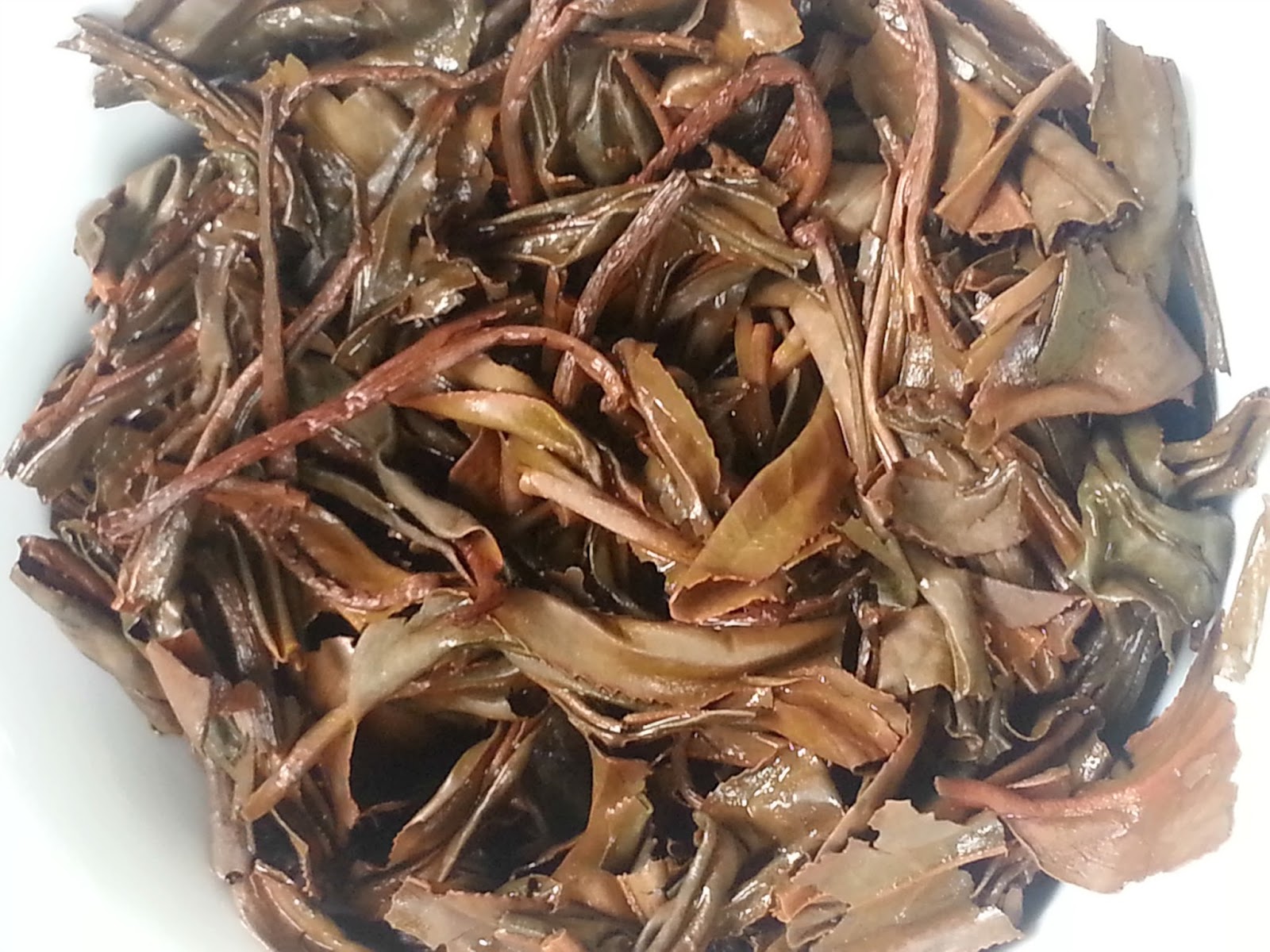
I'm a bit surprised to see that listed at $10 for 50 grams, based on trying it.  This is roughly Yunnan Sourcing upper medium quality Dian Hong pricing, and it's clearly a full level beyond that in terms of tea quality, or maybe two levels, depending on how one arranges them.  "Quality is definitely higher than the regular tea" is an understatement.  I'll just edit the notes to make them readable and that will be the rest of this post.


Not so different than a really good unsmoked Lapsang Souchong. The fruitiness is backed off a little, further into other range, but the rest is similar, the balance and style. There's a nice inky mineral tone, pleasant warmth and underlying mineral, and leather or spice tones. It's the refinement that stands out the most. This is the best black tea I've tried since I last had one of theirs.


[editing note]:  I drink more sheng than oolong or black tea at this point, and I'm definitely not spending much on tea these days, just mostly drinking what I already had or samples, so I've bought no moderately expensive black tea in the past year, or even much at any price.  All the same other notes place just how good this tea seemed to me, and it's not just "above average" tea, it's better than that.


An aspect like a refined wood tone picks up, vegetal, but hard to describe in range. There's spice along with that, and it's not far off fruit range, a hint of citrus with other dried fruit depth, like tamarind. In a different style and quality of tea that one edge might seem like a roast effect but in this it's complex and refined, layered.

Aftertaste effect is much cleaner, more pronounced, and longer than I'm accustomed to. Feel is smooth, not edgy, and just a bit full, not as much to talk about.


Warmer yet; this could really pass for a great version of Lapsang Souchong, if it's not that. There's one distinct set of flavors that matches, what I've already tried to describe. 

Rich sweetness fills in more than I could do justice to. It's like a lot of the flavor range of tasting real maple syrup, that sweetness, richness, and wood tone, especially the effect right after you swallow it, the aftertaste range. Although it is towards wood tone it's very refined, pleasant, and catchy, the opposite of the woodiness in trying to get a second infusion out of a Lipton tea bag.

The fruit is on towards closer to dark cherry too. It's quite good.


Conclusion:


That was it, some short notes for being rushed that day, as usual, and fairly burned out on writing 1500 word tea reviews.  I drank other very pleasant rounds but had stopped taking notes.

It was refined, balanced, pleasant, and distinctive.  For that to be selling as an intended moderate cost tea was shocking to me.  That's 20 cents a gram, a bit higher than the standard list of 15 cents a gram mid-range versions, but it's an altogether different thing.  Another vendor could easily turn around and sell this for double or triple that, and even for that higher end pricing people without sourcing as dialed in might be so happy to get it for that.


I consider Cindy a friend, so you should take what I say with a grain of salt.  Maybe I'm hyping it to get people to place an order, or maybe I really think it's fantastic because I want to experience and think that, tied to expectations.  Or maybe they did make and offer crazy good black tea at the completely wrong pricing level to thank her customers.

This is probably better than any tea that I've ever tried from Thailand, of any kind, to put that in perspective (maybe setting aside an aged sheng; it's just too different to compare that range).  It doesn't usually work to extract out an objective quality level judgement like that but in some cases it seems clear enough.

I'd be interested to hear what you think, if you end up trying it, or already have.  It's also possible that I've been drinking so many slightly rustic style teas for so long that moving a bit beyond that, while still retaining part of a related flavor theme, is exactly what I would want to experience.  Again it's the balance, refinement, and depth that makes this so exceptional to me though, not just about a set of flavors, or lacking some other flaws.  


8 year old Kalani


13 year old Keoni


Friday, May 28, 2021

Tea processing and demand shifts in China


photo credit Suzana, as usual


that one cup has an interesting story, here


This is really about input from another meetup, but since the points I found most interesting relate to tea processing and demand shifts in China the focus is on that.  Cindy Chen, the Wuyi Origin producer--also ran by her husband and family--talked about these issues mostly related to Wuyishan (Wuyi Yancha "rock oolong") and Chaozhou (Dan Cong) production, but really more related to Wuyi Yancha.  Earlier discussion on other themes was interesting too, and I'll add a little about infusing tea in oil and alcohol at the end, another main point.  To back up a bit related to this meetup context, we invited a number of people we've talked to in small previous group discussions to join together, which included one session with Cindy.  Eight people attended altogether; not bad.

Cindy started telling us about their business, about volumes produced, general background, how specialized orders work out, tied to general processing themes, and about changes in tea awareness and demand in China over the last decade.  Truly fascinating stuff!  Some of it was familiar but the part about a shift in demand and awareness was not.


we saw just a little tea sorting going on


She mentioned some production issues related to different teas, about how Wuyishan growing areas are laid out, and how micro-climate, especially in terms of sun exposure, changes final tea character a lot.  I wrote an interview post about those factors--Making Rock Oolong--based on her input awhile back, which overlaps, and shared some pictures of a harvest season since then.  

The short version is that not only do plant types and ages matter, and rainfall and other local climate issues, and local soil conditions, but sun exposure also does.  The same plants growing on a small valley floor and on ledges, or at the edge of that valley, would produce different character tea.  An example:  initial intensity varies, and the more forward oriented aroma notes, with those ranges more pronounced with greater sun exposure, with tea with more depth and subtlety resulting from partly shaded conditions.

Josh was trying to place this in relation to Japanese green teas, but we never really made a clear connection in discussion.  For those, per my understanding, partial shading prior to harvest greatly increases chlorophyll production, increasing flavor intensity across one range, and to some extent increasing bitterness.  But Wuyi Yancha oolongs are not bitter, at all, given how processing changes compounds that probably would come across that way if you chewed a fresh leaf.  It seems to contradict, to say that sun exposure increases oolong intensity, but restricting sun exposure increases Japanese green tea intensity, but it all must map out in a more complicated form than that.

Onto the awareness changes part.  It's my impression that Cindy was talking about awareness and demand shifts (increases) among a very limited subset of Chinese tea drinkers and consumers, her own customer base.  They are becoming more knowledgeable, and making more specific demands.  I think that the "average Chinese person" doesn't see tea so differently than they did 20 years ago, beyond more young people drinking coffee and bubble tea now.  

I'm basing that on visiting China three times (which is very limited input), and knowing three Chinese families, living here in Bangkok, as more in-depth feedback.  All three were close friends of my kids, and all three we joined for dinner parties, sports outings, attending local Thai holiday events, and to restaurants and the local zoo.  Those kinds of contact give you more time to talk about daily life.  All three drank tea but essentially knew nothing about the subject. They drank whatever local types were in a grocery store or local market, and couldn't describe those types in much detail.  The same was true of a Japanese friend, again the father of my daughter's best friend; he may or may not have been familiar with the concept of "sencha," and drank whatever he happened to buy at a grocery store.


two of those friends; they are missed, back in China now


looking like this isn't about cultural immersion, in the normal sense


Cindy's customers are at the other end of the scale; they know tea.  According to her it has went beyond just ordering much better versions for gifts and such, or liking those for daily consumption, some are onto special ordering very specific versions.  I'll get back to that gift idea, which ties to a broader transition theme.  In some very limited cases Cindy's family do produce "single bush / tree" tea versions, but that makes a lot less sense for Wuyishan oolongs, which tend to be from relatively small plants, that never grow to a size that supports that.  We've discussed how that works in relation to Dan Cong before but I'll stick to what was covered yesterday.  

Over time a limited set of her customers have learned how varying growing conditions inputs can change tea, and can specify which exact type they want.  Not just in relation to oxidation and roast level, but related to ordering specific versions from limited range growing areas, eg. from a certain growing field location.  On the broader scale a lot of customers are appreciating better tea too, without taking those kinds of next steps. They can seek out the types and higher quality levels from producers like Cindy, replacing earlier preference for well-known and mass-marketed volume production blended teas.  


my favorite picture of Cindy, showing one growing area


Cindy said that the status of giving main commercial brand teas as a gift has at least partly been replaced by giving better quality tea. That seems a positive step.  For those unfamiliar with truly high end Wuyishan oolongs, or Dan Cong, it won't work to describe what Cindy sells.  It's so good that I recommend that people exploring such oolongs don't start there, that they experience more moderate quality versions first, to identify the range, and experience some flaws, then move onto what the true potential is.  It doesn't work as well exploring in the other direction, and there's learning involved with drinking medium quality or even flawed teas.


All of this reminds me of some interesting input from a Chinese-Malaysian friend about tea service in a business context, more a formal entertainment theme than related to gifts.  It might seem like I'm jumping the track a bit, changing countries, shifting from personal preference and gift-giving to a third tea drinking context, but Cindy did actually bring up that tea can also play an important role in business interactions.  I'll cite part of what that friend said, a lawyer in Kuala Lumpur, William.  

The tl;dr version is that in business it's normal for higher executives to make an elaborate show of preparing tea for guests; it's expected.


In this message, I would like to share something about the various settings Chinese in mainland China drink teas.

Setting 1:

This setting is deemed to be the most elaborate form, favoured by the chairman, the chief executive officer 'CEO' of a corporation, for having a large room for workplace. The office is usually divided into two section, one part is for work, the other is designed into a room that resembles a teahouse. There is a desk, the height of and shaped like a dinner table, a seat is placed at one side, whilst two more seats are positioned on the opposite side of the desk. A thorough accessories, complete with a hot water kettle, tools and equipment for gongfu tea preparation is placed on the table.

The chairman or the CEO would be the host, serving tea via gongfu style, when meeting another colleague, discussing company matters or seeing a guest to talk over business partnership. It is through such reception with another entrepreneur or industrialist that business deals are entered into. Besides opting for a game of golf or to meet in a restaurant over a six course meals with tea or red wine, both outings are well-liked in Malaysia, as well, inviting another captain of industry for tea into this section of the office of a highest-ranking person in the company is also a very popular form of arrangement, allowing a formal dialogue be serenely engaged between both the host and his guest in the most private manner.

A man who holds directorship in his guest's company would also entertain his guest in similar environment if he himself is also the head or owner of his own company located elsewhere, away from his guest's home or workplace and has similar detailed set up for tea drinking, too, making conversation and even giving of advice and imparting his knowledge to his guest if his visitor is his junior or a newly appointed figurehead. The tea brewing could be put together, simply for the exchange of ideas or brainstorming for business planning and development between an 'uncle' and his 'nephew'.


not even close to the same theme, a corporate presentation I attended in China


This clearly ties into an elaborate gift-giving culture common in China.  There are three other cases (settings) that he described, extending to lower level managers hosting much less elaborate versions of the same process, onto tea house or cafe forms and expectations.  Suffice it to say that the elaborate nature of the forms and device use is only scaled down, but expectations about very particular types of experience remain in place, just in more casual forms.  The most informal form he describes is what goes by the name "grandpa style" brewing in Western enthusiast circles, coined by an influential tea blogger:

In China, the ongoing and trouble-free tea infused in a flask or teapot at home would be '龍井茶' or 'Loong Jeng Cha', also known as 'Dragon Well tea', a renowned roasted green tea from '杭州' or 'Hong Jau' or 'Hangzhou', using a huge wok for '殺青' or 'Saat Cheng', a process literally means 'to kill-green' those tea leaves with bare hands. It is observed that Loong Jeng tea has been a leading tea variety and a household name in China, prepared and served in many a Chinese home. I had personally witnessed Chinese strolling all over the streets in Guangzhou, China, carrying glass canisters of all shapes and sizes made for seasoning paste and sauce, being recycled into drink container, all filled with teas.


Of course we know that green tea type as "Longjing."

Rest assured that my friend is immersed in a form of sub-culture that's much more Chinese in origin than Malaysian, with plenty of direct contact within China.  He communicates that in every such message about those cultural issues.  We last discussed traditional Chinese medicine approaches to healing bone fractures, related to a US friend breaking her ankle recently.  He passed on a version of the Guan Yin origin legend in this post about reviewing two traditional Tie Guan Yin versions (which he gave me, along with a good bit of Liu Bao; he's both generous and informative).


Back to Cindy's input, I'm missing some ideas that connect these themes, about processing steps, and other broad demand shift details.  She mentioned that the main shift seemed to occur beginning about 10 years ago, when better tea uptake really took off, which has gradually increased ever since.  Kind of off subject, she said that the latest spike in demand seems to relate to white tea instead, with prices in Fuding-produced white teas shooting up about 30% this year.  For growing up so embedded in the tea industry and culture she would tend to hear about other areas and types, beyond producing both Wuyi Yancha and Dan Cong herself (her husband and his family is from Chaozhou).

This post is already running long, and heavy on tangents, but I wanted to share a description of Cindy I ran across awhile back, from Jeff Fuchs' Tea and Mountain Journals.  It will help fill in the part I can't do justice to, about how Cindy is, which I very much appreciate every time I interact with her:


Cindy is made of tea it seems. Rampant energy, talking of nothing else, she knows tea from the soil to the very skin of the leaf and through the various stages it is a subject that is part of her. Her entire family for generations has produced Rock teas (called ‘yen cha’ locally), named for the fact that the teas generally grow in small terraced plots amidst stone and shadows where the teas must struggle to find a root-hold in the soils...


She's like that, energetic, and a very pure and humble soul.  She shares this experience and information from a place of shared interest, not as a vendor promoting products, and not as an expert passing down wisdom from on high.  Jeff covers that context too:

On this morning Cindy uses a simple white ceramic gaiwan, or flared cup vessel, for ease of examining colour and rapid fire infusions. Rapid fire they are, but with Cindy every serving is something fresh and perfect, though she in all of her modesty claims that she is “only someone who knows tea a little”.


She was born into knowing and experiencing more than a little of tea.  Her young daughters could teach me about tea right now, a lot more than we could cover together in a lengthy span of time.  It's probably as well to move on to touch on a second sub-theme.


learning about roasting oolong as a toddler, with an unrelated boo-boo


Infusing tea with oil and alcohol


Josh--that Canadian tea somellier--and Suzana discussed this more than the rest of us, for Josh attempting repeated trials along this line, and Suzana experimenting with it just a little.  You can infuse tea in oil; who knew?  The tea cocktail theme, and infusing tea in alcohol, is familiar enough, even though I've never actually tried it out myself, since I really don't drink.  This is a nice summary interview article on the alcohol infusion / tea cocktail theme by Tony Gebely.

The main idea is that you can actually infuse tea leaves in oil, and get slightly different results than using water.  Of course that would relate well to cooking, but they seemed to be discussing it more as a way to just check how it works out.  Knocking back a small gongfu cup of tea infused cooking oil would seem a little strange though, and drinking a dozen probably wouldn't digest well, no matter what you ate with that.  They really did go into detail about which aspect notes came out the most related to using different oils, teas, and approaches, but I suppose I was tuning in and out of that for not planning to try it.  I'll just stick to using hot water.  

Josh mentions where he sees this approach going, which is a novel vision:

In my mind how I see my process working is that the taster will begin a session with an infused oil made from the tea leaf their session will be based on. They move it around to coat their mouth and swallow it. Then I make the tea, and using an atomizer to mist the alcohol essence onto or in the vicinity of the tea or taster I can combine the every soluable aspect of the tea in one sitting.


Infusing tea with alcohol seems more promising to me, if someone already drinks alcohol, I'm just not so sure about using it to scent the air.  It could add a lot of potential flavor range to cocktails, and I suppose the caffeine could be a positive input, like drinking Red Bull and vodka, which came up after my drinking days.  Earl Grey is described as suitable for that use, in Tony's article, and gin is described as a popular alcohol input.

Huyen mentioned trying tea infused alcohol in a separate message discussion after that meeting.  She was having some technical problems with sound coming through; not including it in the session may have related to that.  I don't have much to add about that but a picture she shared tells part of the story.  She claims that wine is used as in input in at least one of these, which would explain why the "gunpowder" version is amber, instead of the yellow-gold one would expect from a green tea infusion.  Then again the liquor used in these isn't specified, on the bottle labels.  Sugar and alcohol content are specified. 


photo credit Huyen; that tea infused alcohol she discussed


It's not as if we only talked about tea themes in China and the oil and alcohol infusion issue.  This session ran long, and Narendra provided thoughts and discussion related to other tangents, especially as they related to Nepal teas, which he produces.  An interesting sub-theme came up about how family production and sales seem common in China, with tea production based on a plantation / large-scale model in places like India instead, and in Thailand and Indonesia.  Tea just seems better integrated in Chinese culture, beyond forms like masala chai being prevalent in India.

Only Alexander Zhiryakov also joined, beyond my set of friends and the others I've mentioned, but he was balancing attention with some other demand. We never drifted onto Russian oriented tea issues, or Laos Tea, or the Tea ID testing program theme we talked about in that other session.


Alexander is really pulling off a pandemic look


I haven't mentioned that Ralph was married in the last week; congratulations to both of them!


I'm not sure where this meetup form will naturally evolve next, but this was a cool step, expanding range to include more participants and broader discussion scope.


Huyen wasn't in the other photos.  Teams mixes framing formats when people use phones.


Monday, November 16, 2020

Wuyi Origin Shui Xian, exceptional Wuyi Yancha / rock oolong


This post reviews a Shui Xian version from Wuyi Origin, sent by Cindy for review.  Really for me to try, since she's a friend, but I'll review it too.

I'm probably biased in relation to how I expect their teas to be.  To some extent if you expect a tea to be really good or instead flawed that could lead to a more positive or negative interpretation.  At this point I think I'm able to get a relatively clear, neutral read on whatever I try but I guess you never know for sure.

I don't think this tea is listed on their site.  Two versions are, of Wuyishan Shui Xian oolong, but this was identified as roasted twice, and in those descriptions both are said to be roasted three times.  This may be somewhat similar to what is listed, and I can pass on how they describe their teas:


Gao Cong shui xian 高枞水仙

Gaocong Shuixian , first of all, it is also a Shuixian Cultivar , but has not been pruned for more than 10 years. Therefore, the tea tree is relatively tall, but the age of the tree is about 50years, so its taste is still the standard taste of Shuixian . Due to the difference in roasting fire, its aroma is not as high as Huaxiang Shuixian , but the Yan yun is more obviouse , more mellow, the taste is quite soft . and clean  . Its content is rich, and the taste is more layered. Half of the aroma is condensed in water, and half floats between the walls of the cup, the texture is very silky.


Let's check the other description, which looks a lot lighter, related to the photo shown on the web page, at least:


Shui xian (Narcissus) 2020 (hua xiang 花香)

Since ancient times to present , Shuixian is like a house keeper tea in every tea family. It is famous for its mellow soup and it's suitability for aging. After some years of keeping, its soup can be like rice water, sticky and mellow. the age of the tea bush in this garden is about 40 years old ,but every year in October we did the tea tree pruning , so the tea tree is no so tall , of 2020 harvest , the roast fire temperature is no so strong , keep its  original aroma ,  very Hua xiang  (floral )  . 


These cost $54 and $38 per 100 gram, respectively, so it's not "cheap" tea.  The best versions of Wuyi Yancha that I can buy locally aren't nearly this good, although some are quite decent, and a standard price for the highest level in my favorite Bangkok Chinatown shop is 1000 baht ($30) per 100 grams.  That is more or less completely irrelevant to people anywhere else, just offering that for comparison.  

Really appropriate price depends on quality level, and for teas in the range of as good as theirs tend to get presented in different ways and sold for different prices.  A lot of vendors would be selling "teas so good that they almost never make it out of China" that aren't this good for more.  But don't take my word for it; look up "Wuyi Origin" in your favorite tea group search function, and see what others say.


Review:


Just amazing. I won't do this tea justice with a description.  To be fair I've not tried related oolong anywhere near this good since whenever I tried theirs last, so the differential in quality level is probably making this seem all the more impressive.  I've been focused on sheng pu'er for about three years, trying to get that complex type sorted, and beyond that being impossible, a never-ending task, I think I've made enough of a start that I could move on, to some degree.

It tastes like good Wuyi Yancha, smooth, rich, complex, intense, and balanced. It's hard to describe a main flavor, never mind a set. I suppose interpretation as floral wouldn't be wrong but there's an earthier, towards-spice flavor that dominates. It's like how dark tropical wood furniture smells, sweet and complex, with layers of input.  

I think it's really a complex group of flavors causing this end effect: rich floral tone, dark wood, aromatic oil, fragrant spice (like frankincense, maybe, but I don't keep up with that range). It's so clean in effect; absolutely no trace of mustiness. Of course mineral stands out too, as a base. To me that mineral is like Utah desert slickrock, warm and slightly sweet. Of course anyone else's interpretation would be likely to vary, especially about a part as difficult to split out as the mineral tone.


2:  a bit more range towards sweet leather emerges, probably the tea opening up. This is better tea than 99% of all Da Hong Pao, or what is sold as that.  Saying that a DHP version might "just be Shui Xian" doesn't do justice to how good this plant input results can be. I'd expect that this flavor is exactly what many people think DHP should taste like, at best.

In this round the mineral reminds me a little of the smell of ink. The sweetness, cleanliness, complexity, and sophistication makes that work really well. The feel is great; not rough, but with some structure. The aftertaste is very pleasant, the way that mineral carries over. It's strange to think that a couple of the other oolong samples Cindy sent will be better than this, more subtle, complex in a different way, and more novel. For what this type is there might not be that much room left for improvement; it should be exactly like this.


3: Strange that it could still be improving. The level of roast is perfect in this; I'm sure that helps.

As I contemplate the flavor more roasted chestnut is quite close to the main flavor. Those usually pick up a little char flavor, and this didn't, so maybe it's light roasted chestnut, or one cooked at a moderate temperature. The  bumped mineral and slight shift in other flavor may have prevented me from making that association earlier, or maybe it's just a gap in my ability to describe the experience.

I may let note taking go after another round. This isn't changing much and I'm a bit under the weather, just a cold. Since my sense of taste seems fine it shouldn't be covid. That's not really here in Thailand at this point anyway; we've only had 2 or 3 cases of in-country transmission in four months.


4: not so different.This includes a hint of cinnamon spice I've not yet mentioned, probably increasing in this round to become more noticeable. This probably has 3 or 4 really exceptional rounds left in it, the another 3 or 4 tapering off, then for as good as this is I'll stretch it for more after that.

It's strange that pu'er gets so much focus, for as good as teas like this are. I like sheng too, and drink shu sometimes.  The intensity and range for those is amazing, and it's cool how they change with even moderate ageing. But Wuyishan oolongs are amazing for other reasons. Lots of people know, but it may be that the rarity of versions this good detracts from their image.


5: still great, similar to last round.

The picture of the wet leaves looks greener than it does to my eyes; interesting. This does taste like the oxidation level and roast level are moderate. To me it works really well. The quality level is so evident it's hard to split out a guess at objective quality level from preference. It seems high on the scale for both.

That lighter part seems to tie to the floral component of the complex flavor range that I've not said much about. Maybe like lotus flower? That set or list of flavors integrates much better than it sounds like it would, coming across almost as on broad-scope single flavor. Such a nice tea experience.


Friday, October 12, 2018

Fruitier style Rou Gui from Wuyi Origin (from Cindy)


I've not been buying as much tea as I'd like this year (ever, really), ordering some online but sticking to picking up a little here and there to supplement trying more tea than ever sent as samples.  All that is a long story that I'll skip telling, but it ties in here.

Cindy Chen of Wuyi Origin sent some of my favorite tea to drink, more to share it than for review coverage, really.  How do I know that?  It would've been easy to send a small amount of a half dozen versions instead, and of course I'd have written about most of them or all of them, since their teas are among the most interesting I get around to trying.  She didn't do that; she just sent a good bit more than just a sample size of my favorite, this fruity style of Rou Gui.

I'll be clear about personal bias related to this tea source; beyond her sending teas to try I consider her a friend, even though we've never met.  I'm not impartial.  I'd like to think that doesn't change the tea aspects I experience and write tasting notes about but who knows, really.  We kind of experience what we expect to and want to experience, to some degree, don't we?  There was a test awhile back related to people trying white wine colored to match red wine appearance with subjects evaluating the flavor as if it were red wine, reporting that separate aspect description range:


The research, later published in the journal Brain and Language, is now widely used to show why wine tasting is total BS. But more than that, the study says something fascinating about how we perceive the world around us: that visual cues can effectively override our senses of taste and smell (which are, of course, pretty much the same thing.)


I'm saying it might work to extend that, that maybe we don't just experience taste affected by visual cues but that maybe different levels of expectations could factor in.  That "wine tasting is BS" part is surely an oversimplification; I'm guessing that trained professional tasters would be able to tell you that the wine tasted like white wine, that something seemed wrong with the test.

Tasting sensation isn't so simple that a machine could do exactly the same thing we do (although I did just write about to what extent machines can taste and describe teas now).  Related to the part about my impression being positively biased, and adjusting for that, it can help to read multiple reviews of the same tea (this Rou Gui) to read across different impressions, which is easiest to do using Steepster, the main tea review site.  One of the reviews (of last year's version) captures how flavor aspect descriptions really don't do the tea justice:

I think this is an art piece from a Rou Gui that combines an excellent ground, beautiful leaves and a careful baking process. The perfect combination between nature and human creativity.


Another review captures the same idea and places the tea related to others:

Multiple roastings combined with well-sourced leaves make for a complex and well structured tea...  I’ve had only a few teas like this, but for a much higher price, so I definitely intend on grabbing another bag of this one.


There are other great versions of Wuyi Yancha produced and sold, with tea quality coming in levels.  A version related to this tea did win a Wuyishan competition a couple years ago, so I guess that relates to another form of moving towards objectivity.

About that value issue mentioned, this lists for $58 for 75 grams ($38 for 50, divided out, since that quantity rate is more familiar).  There are plenty of versions out there selling for half that, but this is probably still be a very good value for what it is, only potentially available since it's sold directly by the producer.  I'll also mention their website description here before the review:

Location: Ma tou yan (马头岩)

Harvest:2018.5.4th

Roasting level : Medium Roasting (4 times charcoal fire roasting ) complete tea leaves, uniform looking, a superb workmanship, a unique mountain field, careful -Charcoal baking techniques . The cinnamon of this garden has been a favorite of my family tea guests year after year. The taste of tea is quite rich. In addition to the cinnamon taste of cinnamon itself, you can feel the very obvious taste of fruit. It is sweet and delicate. The taste of tea soup is mellow and smooth, the endurance is lasting, the lips and teeth are fragrant, and the Yanyun (岩韵) is very obvious.


That location sounds familiar, translating to "horse head rock," a famous area inside the park there.  It was funny that if you put that in the Google online translator to check it they transliterate it to ma tou yan, not so helpful, but the Yandex version confirmed the meaning.

Review


Per typical process I went light on the first infusion, as kind of an introduction to the tea, to let it get started.  Some people would rinse most teas but I don't, only fermented versions, sheng, shou, Liu Bao, and other hei cha.

The dry tea scent was interesting, complex, with a bit of roast coming across, but after brewing really complex aromas emerged, even before tasting.  This will have some fruit to it.

It's brewed fast, so light, but it's really intense as it is.  The balance is perfect; plenty of fruit, peach along with citrus, but with enough warm, sweet aspects that lightly carmelized toffee and toasted almonds stand out.  This is fantastic tea.  I suppose if someone didn't like fruit aspects in Wuyi Yancha it might not even seem good, and I have heard someone mention that fruity oolongs seem too much like hot fruit punch to them.  Our preferences definitely vary on that point; fruit aspects in roasted oolongs are my favorite across the range of all teas.  I guess they couldn't appreciate lot of Dan Cong either; kind of strange to even consider that.


Having opened up the tea is even more intense on the next round.  Again I used a very moderate infusion time, around 10 seconds, with tons of flavor emerging in that infusion time.  The fruit is in the same range, ripe peach with citrus, maybe in between tangerine and tangerine peel.  It's the balance of flavors and overall complexity that makes it special though, not any one or two components.  Roast level is moderate but enough to draw out warm aspects to support the brighter, sweeter fruit.  There's nothing to it I would label as ''char."  Warmth might have picked up a little, with roasted almond flavor edging into a more roasted range, not quite getting to that more char-like character that's a part of roasted chestnuts.

A lot of mineral serves as a base, hard to isolate as tasting like any one thing, but complex and intense, providing a foundation for the rest of the experience.  For feel the tea isn't really thick or thin, in the middle, with aftertaste standing out more.  The fruit and mineral range trails off after you drink it, very pronounced as oolongs go (not so much for Taiwanese high mountain oolongs, but that mineral aspect type is completely different).


People sometimes ask what my favorite tea type is and I can honestly say I appreciate lots of different teas for lots of different reasons.  I once considered Wuyi Yancha as a favorite overall type but others have drawn even.  If I had to pick just one tea that's a favorite out of everything I ever tried it would be this one.  It's much better than almost any other Wuyi Yancha versions that I've tried, which is part of it, but really it's probably more about that style clicking with me.

I can see why people might be more accustomed to earthy, mineral intensive, and subtle aromatic variations of Wuyi Yancha instead of this fruity range, maybe associating fruit more with Dan Cong (or other floral range; those cover both), but I expect not having a related preference could tie to just never trying a version on this level.  I'd put different range of Wuyi Yancha as a close second, more subtle and aromatic Qi Dan, probably with that tied with good versions of Ya Shi / duck shit Dan Cong.  For any of those if you try a version that's as good or better than any other you've had during and just after that tasting experience each might naturally seem a favorite overall type.


I went a little longer on this next round, a bit over 10 seconds, more to see how that changes it than to optimize it.  Fast infusions would probably be best, between 5 and 10 seconds, not to limit astringency or any negative factor, but just related to tastes coming out better in teas brewed lighter once you adjust to that.  The mineral picks up; the fruit is still pronounced but the warmer, earthier tones seem more pronounced brewed stronger (still light, as some people would tend to brew most teas Western style; it's all relative).  The bright tangerine range citrus edges more into dried peel range, versus fresh fruit and zest, and the ripe peach expresses a little more edge related to peach skin.  Of course it's still quite sweet.  This is far from astringent, or challenging in any way, but complex in a different sense.  I think most of that minor character change relates to being perpared slightly stronger this round but the tea would naturally transition over infusions.  I'll go back to really light next round to sort out which input was which.

Even brewed lightly the warmth had been picking up.  If someone hasn't experienced this sort of combination of peach, citrus, warm toffee, and underlying mineral it's hard to describe how it balances, why it all works so well together.  It occurs to me I was missing the most obvious warm spice-related aspect present, which serves as a base for the brighter, more forward flavors:  cinnamon.  That's what "Rou Gui" translates as, the literal meaning, and that's typically the most dominant flavor in this oolong type.  I tend to think of cinnamon as the warm, sweet, mild spice we use in apple pie in the US, which is lighter, not so far from cocoa in character (it just tastes different), but this is much different.  My favorite local shop owner says this cinnamon, which is more intense, mineral related, and slightly "darker," is similar to a version of cinnamon from Vietnam.  I've went through that tangent plenty of times though; cinnamon is really one thing, the "true" version, and then related cassia plant types barks it's something else, but those are also sold as cinnamon.  To be honest I'm not sure which version this aspect is closest to across all those potential plant types.


Enough messing around; I'll give this around 15 seconds infusion time to try to optimize it, and probably after another infusion at around that length of time it'll be time to extend those times a little.  Some of the brightest fruit has faded some and the cinnamon spice and mineral has picked up; it's still great, just different.  The feel is still just medium, not thin and not overly thick, with a nice extended aftertaste, just dropping a little in intensity and duration.  Citrus still stands out as the main fruit range at this point, mostly a sweet version of dried tangerine peel, which balances with the warm tones really well.


I have no further conclusion to add; the tea is amazing, with that description definitely not doing it justice.  It prompted me to try another version of Wuyi Yancha I'd been meaning to get to, and maybe a comparative description of the range of styles within that type in that review can help place it.

Cindy shared this picture; she's like a little angel


her older sister is really growing up


Sunday, July 23, 2017

Ya Shi (duck shit) and Mi Lan Xiang Dan Cong from Wuyi Origin


Mi Lan Xiang, honey orchid aroma Dan Cong


Ya Shi (duck shit) Dan Cong


I've been drinking some Dan Cong relatively recently so I decided to start with these teas before moving on to oolong samples sent by Cindy (from Wuyi Origin, their brand name).  Of course I've been drinking Wuyi Yancha too (Wuyishan oolong), but I decide what to review next by way of immediate impulse, the same way I pick what to drink with breakfast.  I already said plenty about Cindy and the source in the last post so I'll skip that part, and ramble on about other things instead before the review.

An online friend passed through town recently and gave me some samples of other Dan Cong, after visiting a few tea regions in China.  He's a vendor, but with regionally limited business scope, and I don't think it would matter if I mention his business here, so I'll skip that part.  The samples were interesting; one a maocha, a tea that isn't completely finished, so interesting related to that.  Two others were quite good, and one a bit off, so it made for an interesting refresher for the type.  Of course trying only exceptionally good versions also makes for a pleasant reminder or initial introduction, but it's informative in a different sense to try teas across a range of quality.

I had planned to try one of his samples along with one of Cindy's, since I've been on the page of doing comparisons, and it helps to point out differences in body and minor aspects.  After thinking it through I really don't want to write a half dozen different reviews of Cindy's teas, since that would get repetitive, both for me to do and for readers, so trying two of Cindy's together resolves that.

Most people reading a tea blog would be quite familiar with these teas.  Mi Lan Xiang is honey orchid aroma Dan Cong (oolong from the Chaozhou area), although those tend to taste a lot like peach sometimes.  Ya Shi is duck shit (just a funny name; no connection to actual duck shit), and those can be harder to pin down in terms of a characteristic flavor element.  They tend to be warmer, fuller, with more going on, and more subtle, maybe bridging ranges of floral, fruit, and spice instead of coming across as one or two main flavors.  Per only trying a few they do tend to taste like one thing, it's just not as easy to say what that is related to it being just like a honey orchid flower or peach.  They're more complex, heavier on aroma than flavor.

Related to a recent online discussion about flavor being identified as taste (what the tongue does) versus aroma (related to sensors in the lower rear of the nasal passages, where most subtle distinctions in flavors are identified) I'm not using "aroma" in a conventional sense here.  I think I covered what I mean by that in the last post, about how Chinese producers tend to use the term as a distinction within the range of what we would call aroma based flavor.  You can read back to that last post to reference it, or just read past it here; it's not critical to the explanation.

As to tasting process a blogger friend--who I only know online; maybe should I be saying "acquaintance" until I meet these people?--has been considering if long term effects of caffeine are getting to him.  I've had some problems with comparison tasting adding up related to caffeine intake, so I'm going with small gaiwans for this, which probably should have been an obvious step for tasting multiple teas all along.

On to these version specifics in tasting then.


Review


Skipping the appearance and scent parts, the initial infusion--more a rinse that I didn't discard--shows the characters to be like that expectations summary I just covered.  The Mi Lan Xiang is bright, sweet, intense, and complex, mostly in the range of peach with a good bit of supporting floral tone.  The Ya Shi (I should probably just say "duck shit" instead, since it's catchy) is warm, full, complex, and aromatic, and won't be so easy to describe in terms of two or three main flavor elements.  I won't even start on that until the first real infusion.

The Mi Lan is the same but more pronounced in aspects intensity at the normal infusion strength.  It's brewed to a medium level of infusion concentration to me, but people might well tend to drink Dan Cong either on the lighter side compared to some other types, or on the much lighter side, and this could be in between those ranges.  The peach really ramps up in intensity.  It's interesting the way that the astringency (which is moderate, but one of the main defining aspects) seems to mimic the way that peach skin comes across, the separate flavor of that from ripe flesh.  It trails into that unripe fruit range, with a slight bite of an unusual type of astringency, nothing like that found in black teas or sheng pu'er.  But it's in great balance, not negative, even if it would be a matter of preference deciding if that added or took away from the effect of the other aspects.

The roast is not heavy but you can notice it, a bit of caramel or light toffee in the back, or really not exactly that but in that range.  Maybe if you fire-roasted a peach and it picked up a brown-sugar to cooked fruit tone that's closer to what I mean, although of course there is no smoke aspect in this tea, so the "fire" part might just be for descriptive color.  With some allowance for preferences varying this is more or less exactly how this tea should taste, to me.  It's tempting to try and put it on a scale of good to unbelievably good but I would need more experience with very high end Dan Cong to reference against.  It's a lot better than typical generalist specialty versions would be, teas typically sold in the $15 dollars per 50 grams range, described as great examples that are really just not that bad, only in the general range of type-correct.  I suppose there is always room for improvement but it's quite good.

The Duck Shit version is warm, complex, and subtle; a totally different kind of experience.  It's also aromatic, not pronounced in terms of flavor, although there is plenty going on with that, as much as in a broad range that covers sensation trailing off into sensory ranges that you sense but don't fully capture.

I'm having trouble assigning specific flavors to the experience, but it has to come to that if I'm going to review it; it would be strange doing a tea review and never getting there.  The main range is floral, but not in the same sense as bright, sweet, pronounced flowers, so I suppose just an earthier, richer, more subtle flower range.  Tropical flowers here seem to be bright, sweet, and intense, the different orchids, plumeria, and such, more like wildflowers back in the US.  This tea's range is on the opposite side of all that.  It's not far from how I'd imagine a sunflower to be, but I can't think of a flower type I actually have smelled that's a close match, something warm and complex.  It's towards chrysanthemum but not that, with more depth and richness than that flower blended with chamomile, but in that general range.

With all the complexity it wouldn't be wrong to say it also tastes like some warm, subtle, earthy but light fruit, maybe in the range of dried longan.  But the flavor range is well integrated, so it doesn't come across as tasting like a few different things.  I'll keep tasting, since that complexity may well also related to extension into mineral and spice ranges.


Ya Shi left, Mi Lan Xiang right


On the next infusion I probably went a touch longer on the time--not long at all though, around half a minute--and the strength and astringency of the Mi Lan Xiang picked up.  It would be more conventional to use slightly hotter water and go with really fast infusions instead, ten seconds, and the astringency would be light along with the flavors being less pronounced too.  This was brewed at 80 C; I tend to like teas prepared a little cooler than some if offsetting astringency is a concern.  It's really about personal preference more than one approach being objectively best, or at least that's my take.  It would've balanced better brewed for ten seconds less but it's still nice, but at this strength the astringency starts to pick up enough to be more pronounced than the flavors.  Nothing like a young sheng, not that type or on that level, I mean related to the balance per what I like to experience.

This same infusion time worked better for the duck shit; without astringency as much of an input at all, not even to the extent of filling in structure.  The flavors just intensify and the feel thickens a little.  It comes across as richer, almost buttery, just in a completely different sense than for Jin Xuan oolongs.  I tried a decent one of those I bought for the staff at the office, a Thai version, so related to me always going on about how mediocre Thai oolongs are I was going to review that and put the record straight.  But that tea is not on this quality level, not even close.  It may be two full levels down, but for what it is drinking that tea makes for a nice experience, good as a "daily drinker," as people tend to say, as something to have with lunch.

The sweetness and rich flavor changes for this duck shit version, a little, more towards a lightly browned butter effect, which isn't so far from a really light caramel.  Someone that absolutely prefers intense floral aspects might not appreciate that but the complexity, fullness of flavor and other range, and the way it all balances makes for a cool effect.  It's a good tea.  Again I can't map it to best of the best; it's about as good as the best duck shit Dan Cong I've tried, more or less, but I haven't put effort into exploring the highest range.  Or expense, more to the point; better Dan Cong moves to $1 a gram or beyond much faster than most other tea types.


Ya Shi left, Mi Lan Xiang right


On the next infusion I went more like 15 seconds for the Mi Lan Xiang and around 30 for the duck shit; brewing and tasting different teas at the same time can go like that.  The balance is back to great for the Mi Lan version; the flavor is plenty intense, quite sweet, nicely complex, and the astringency level compliments the tea instead of taking away from it.  If someone absolutely loves soft teas instead something like the duck shit version might work better, or another style of tea altogether might, or possibly just a different version.  Then again it's hard to imagine someone not liking these teas.

The duck shit version aspects haven't changed.  I've tried a version before where the aromatic / complex effect cost the tea in terms of flavor complexity but this one strikes a nice balance, covering a lot of range but still offering up plenty to taste as flavor.  It's definitely warmer than the Mi Lan, and richer, in one sense, but perhaps less intense for being more complex.  It makes consider how level of roast comes into play, but I really won't venture much about that, since I don't know.  The Mi Lan brews darker but the brewed leaves look about the same; I'd guess it's roasted a bit more but that isn't much in the way of an informed guess.  With Wuyi Yancha it's possible to tell that medium to darker / heavier roasting occurred because the teas taste more or less charred, slightly toasted in a normal sense if not a bit burnt in cases where it goes too far.  It's not possible to pick up anything like that effect in these two teas.

I could keep going for a couple more infusions to talk about transitions, or to pin down a few more flavor aspects, or to stretch this out to some vague, potentially invalid analogy (astringency effect like biting a tree bud, etc.), but I'll skip all that.  The teas aren't close to finished but not transitioning a lot.
I will try to mention which I like better, but that's hard to say too.  They're both great for what they are expressing, for being so different in type.  In different senses I like both best.  I think they work really well for tasting two teas that don't overlap all that much in character together, for comparison tasting related to contrast instead of shared range.  Usually the opposite works much better, picking out finer levels of aspects related to them sharing common ground, and I may well have missed some levels of range for going against that.  This said next to nothing about "feel" aspects, for example, and when two teas share a lot in taste range and that differs your attention tends to drift there (or didn't get that far with taste description, really).


My final assessment:  two more great teas from Cindy.  Someone that has been drinking the best of the best Dan Cong available for some time might disagree, and these could seem quite ordinary to them, but that's how tea tends to go.  I would expect that for someone only exposed to a conventional, typical-supplier quality range of Dan Cong these two teas would be a step up in quality instead, teas that they would really enjoy.  For someone only exposed to so-so versions or new to the type they could open a whole new world.  I've tried Dan Cong sold as relatively higher end versions--at upper medium level pricing--that wasn't nearly this good.  It will be interesting to look around at other reviews and see what other people think, if I get around to that.


my girl surfer at swim lesson with some kid


Thursday, July 20, 2017

Wild unsmoked Lapsang Souchong from Wuyi Origin (Cindy Chen)


Just when I've been feeling a bit burned out on trying different teas, tea research themes, discussion, moderating a tea group, and writing about tea Cindy Chen sent some of my Wuyishan favorites.  Her teas are always some of the best I ever get around to trying.  I think one of her Rou Gui versions and this wild version of Lapsang Souchong may be the two teas I've liked the most of any.  Of course that relates more to a preference match than them being outrageously good teas (I like fruit aspects in teas more than floral tones), but they are exceptional, so I picked one of those to try first.


Don't take my word for it; read up on some Steepster reviews here, or about that Lapsang Souchong version in this review.  Cindy started selling teas online not so long ago, here, with a Facebook page here.  They actually make the teas, so that's an unusual thing, for a tea farmer and processor to set up a web page and direct sales.  It was a step that followed on years of her talking to people online and gradually selling more directly.  I've written lots of reviews of their teas (which include Dan Cong, since she has family in that area too), but just shared some pictures of making them this year, and first wrote an interview post with her about making teas back in 2015.


Tea Explorer photo (credit Jeff Fuchs' Tea and Mountain Journal, from this post)


I remember reading one account of Jeff Fuchs meeting Cindy, himself a familiar name in tea.  His own tea movie is coming out right about now (the Tea Explorer documentary, click to a newer post than this citation to check on that, per that post first airing on television on July 23rd, so worth looking into right away).  His Tea and Mountain site post introduction of Cindy:


...She is in the midst of tea production season and the shift work (fresh tea leaves are impatient fellows) has left its mark on her. She is blearly eyed, clearly ripped on tea, but still as generous and welcoming as a family member...

On this morning Cindy uses a simple white ceramic gai wan or flared cup vessel for ease of examining colour and rapid fire infusions. Rapid fire they are, but with Cindy every serving is something fresh and perfect, though she in all of her modesty claims that she is “only someone who knows tea a little.”

Cindy is made of tea it seems. Rampant energy, talking of nothing else, she knows tea from the soil to the very skin of the leaf and through the various stages it is a subject that is part of her. Her entire family for generations has produced Rock teas...


Cindy!  and tea (my favorite picture of her)


That's her, to me, a bright spirit, kind and humble, while working from a different level of knowledge and experience; something of a tea saint.  That whole passage / article is well worth a read, and that documentary covers part of the living history of tea through the mountains of the great tea road.


Pre-review review review (it's like a stutter)


I never read other reviews of teas before I try them, but I thought to mix it up I'd try that.  If this tea is like the version I tried last year it should be quite fruity as Lapsang Souchong goes, more in the citrus range, with amazing complexity and great balance of aspects beyond that.  From one of those Steepster reviews I just cited, for the same tea I'm about to try (the only one posted for this year's version so far):


Initial taste is a cacophony of fruits. It’s syrupy like fruit punch mix. Important to note, there is no chemical, or artificial taste. The tea soup is viscous. It feels oil like on the tongue. Taste develops into an intense sugarcane, fruity sweetness There’s also a bit of citrus taste in the finish. More shaddock, than, say, lemon. This citrus flavor also comes through on the lips. The finish starts off sweet. That sweetness is joined by an undertone of citrus, and a cool sensation towards the back of the mouth.


I had to look shaddock up; that's another name for pomelo, a type of grapefruit--or similar to a grapefruit, maybe that goes--that's common in Asia.  It's less descriptive than it might seem because there are lots of versions of pomelo, some sweet, some quite sour, some with white-ish flesh (fruit), others more yellow (not exactly yellow; tan, like dried wheat), or red.  Red versions are usually sweet but some yellow ones are too.  As an aside, apparently there are lots of different versions of oranges, grapefruit, bananas, pineapple, and mangos, lots of tropical fruits out there, because we eat different versions of all of those here (even different types of lychee, my favorite).

That's fine for an aside; I'll get on with tasting.

Review


On first sip this tea really meets the expectations.  I totally get what that guy was saying about grapefruit; there is lots of citrus in this but it's not in a typical range for orange.  Then again there are lots of types of oranges too.  I'm not going to have much luck pinning down which type of pomelo this reminds me of but it's not bitter, and has some sweetness, so I suppose closer to a red version.

There is great complexity, it's just not so simple to unpack what's going on.  Saying "mineral" works in general for most kinds of tea but it doesn't describe much.  I wouldn't say the tea is woody but there is an earthiness that's hard to spell out, nothing like wood or peat, not tobacco, out towards cinnamon or dark wood but not so close to either.  The thickness, complexity, and balance makes the tea exceptional.


the tea works well at different strengths


More of the same the next infusion; the balance has transitioned some, but I'll have trouble filling in how, or more specifics.  A citrus element is still the most pronounced aspect but other complexity ramps up.  It's interesting the way the mild malt range identifies this tea as black tea but there is very little astringency along with that, just enough structure to give it a fuller feel.


It could be wrong but I get a sense that stopping short of full oxidation allowed the tea to retain some degree of freshness and vegetal range, just not in any sense of any other tea that's coming to mind.  It's coming across mostly as citrus in terms of flavor, which is really unique, not so much related to her teas but I've not experienced the same degree in other similar versions.


That vegetal range I'm trying to describe is almost below the range of flavor, more exhibited in the feel and general effect of the tea, a hint of the experience of tasting a fresh tea bud or the top of a green wheat plant.  Right, tasting those things just doesn't ever come up.  But if it did there would be a sweet, mild, complex flavor involved that is vegetal but not in the sense of tasting anything like any vegetables.  I suppose some version of an edible flower might be as close as one might get, but who is familiar with the taste of different edible flowers.


There might be a bit of a straightforward floral aspect to this, one that's just not so simple to tease out for the rest of the complexity.  There's a lot going on in the tea, but at the same time the effect is that it's simple, clear and direct, and very clean in effect.  It's the kind of tea some people might not get, it might not match their preferences, and for them it would just taste strange.  But for others this would be an eye-opening experience, exactly the way tea should taste in a better world than this one.  I love fruit aspects in black teas or roasted oolongs so to me it's perfect.

On the next infusion things aren't changing much; the citrus is still wonderfully pronounced, maybe back to closer to where it was on the first infusion in terms of balance though.  Just a trace of woodiness is creeping in; I suppose that will be more pronounced in the next infusion, and will be a significant part of the profile after that.  That mild malt tone ties this tea to the other better Lapsang Souchong that I've tried but it's quite different, except for last year's version of the same thing.  Someone else probably could pin down a floral aspect, more than just saying it's there, and floral.  The sweetness really makes it work well, although it would still be ok if that was less pronounced.

I never really did address the complexity in the tea, to spell that out.  I get the sense different reviewers would pass on all sorts of different lists related to this tea.  So far I've covered citrus, malt, floral, earthiness and vegetal, in the sense an edible flower is that (not so clearly defined, some of those).  That fruit tone might extend into something warmer and deeper, along the lines of a dried longan.  The earthiness I was struggling to pin down is not that far from cocoa.  It would be interesting to hear reads from a couple of my favorite bloggers that tend to extend tasting all the way into the range of imagination.

I never said much about the feel or structure of this tea, the way the "body" aspect worked out.  As with most Chinese black teas it's on the softer side, to the extent that it didn't vary in character that much depending on the infusion strength.  It works well brewed relatively lightly but is fine brewed stronger.  It's hard to completely pin down what the "full feel" aspect range means so I just skip that here.

On the next infusion the tea just thins, but the citrus stays pronounced.  It loses a little for giving up some complexity and fullness but it's still the same amazing tea, four infusions in.  It did make another couple of nice infusions but there isn't much more to say for description.  I was brewing it on the stronger side, related to how light I prepare some teas, since it worked well at different intensities and those flavors were amazing experienced at higher intensity, but the tea really could brew closer to ten infusions if someone liked it prepared lightly instead.  Or a standard Western brewing process would work; the results probably wouldn't change that much for this particular tea, and then it might be back to three or so.  I wouldn't prepare this tea Western style but there's really no reason not to, if someone was more on that page.


Conclusion, and about related tea pricing


This is again one of the best teas I've ever tried.  I'm sure that relates as much to me preferring fruit aspects in teas as much as anything else, but it's also clearly an exceptional tea, not all that similar to any other version I've tried of any others.

A friend just mentioned checking out the Wuyi Origin website, specifically about how much he liked those teas, and we discussed pricing.  That's a subject I normally don't even touch on, more taboo than other taboo subjects for tea bloggers, especially since I consider Cindy a friend (online friend, if that matters, but I will get around to visiting).  I'm not good with observing taboo restrictions so I'll pass on some thoughts.


Some of their prices are higher than they were last year.  I suspect the higher demand for winning some local tea competitions is driving up the prices of some oolongs, the main tea types from Wuyishan.  Per my guess--given that I can't really judge the range of what a lot of other vendors sell--the most costly products on their site are still in the normal retail range, and still a good value for the quality level.  It's easy to see a tea selling for $10-15 for 50 grams on one site as a better value than another described as identical for $15-20 on a second but it really just depends.  The latter could really be a much better value, while the former might not be worth that, if it's mediocre tea, or might not even be all that pleasant to drink if the source choice is random.

A lot of her teas are probably still slightly underpriced, per my guess.

There may be some confusion over what teas would sell for in China versus in "the West," the US or Europe, and although I can't completely do the subject justice I've been to China a couple of times (and twice that if you count Hong Kong, but that's different), so I'll venture a guess.  The selling prices are not so different than in those other places.  Demand for tea is high, and awareness related to tea is better (although the average person isn't a "tea enthusiast," per my take, but that concept wouldn't transfer over directly).  It probably is possible to get great deals on the lower end for inexpensive, low to medium quality teas, especially if someone was interested in putting effort in, visiting wholesale markets, or chasing down more direct sourcing there.  But retail of better teas doesn't relate to selling them for any less, per my limited experience, with some exceptions for what "better" tends to mean, and for different types of sources using different supply chains.


this is really in Seoul, in 2012; my old Google Photo back-ups are patchy


It's important to keep in mind that personal preference is more a factor in how much you'll like a tea than it being a good deal, related to fair market value, or to what another vendor would charge for the same teas.  If you look through those Steepster reviews anyone that mentions cost or value there only does so related to saying that the tea was inexpensive when considered against comparable versions.  If they happened to not prefer a tea style they might not have felt that way; it can be tricky sorting out objective quality level and other factors that go into liking teas.

It would take some doing to sort through all the range of products they make and sell (having family that lives in Chaozhou making Dan Cong adds to that range), but I'd bet some are both unique offerings and great values.  I've not tried her white teas yet but those stood out for looking interesting.


Take all that for what it's worth; I can only share one person's opinion, and I'm biased.  Check out a related Steepster discussion thread too for a broader take, and see what those people say about them.  They don't know her, and aren't having free samples sent to them.


Singing Head, Shoulder, Knees and Toes (not about tea)