Showing posts with label Mei Leaf. Show all posts

Thursday, June 2, 2022

Basic gongfu brewing parameters advice


Two recent threads / questions on Reddit (r/tea) brought up the subject of gongfu brewing basic parameters.  Both work as a good intro to the basic starting points, and how minor differences in preference make it a quite complicated subject beyond that.  My own take is not presented as an objective best practice, or maybe even as a particularly good starting point, instead as just as one more opinion to consider.  The comments probably don't read like that, although I do mention that "it's all subjective" every time this comes up.

I wrote out a summary of how I brew tea gongfu style in one answer, which is such a basic approach that for some it wouldn't really count as formal or ceremonial enough to fit the form:


my own brewing approach:  I tend to use a high proportion, maybe 8 grams per 100 ml (I don't weigh it), water just off boiling point (for all types but green tea, but I drink the least green tea, and would brew most green tea versions Western style).  then I base every round timing on the results of the last. for some intense teas it's under 10 seconds, for others it's more like 20. I don't use a staggered time interval as is often shown (15 seconds, +5 seconds per infusion). teas don't seem to lose intensity that fast, or consistently enough that using a lower number works (+3 seconds instead).


The first post asked some pretty basic questions that outlined a standard approach (related to a gaiwan, but that doesn't matter so much, since a different device using the same proportion would be similar):


I'm new to brewing tea in the eastern style, and I struggle a lot with brewing good tea. I think it would be waaay easier with answers to these questions.


1. How do I keep the water the same temperature, in a thermal flask or something?

2. How much leaf do I add to gaiwan? I think mine is 120ml, is it scalable with proportions for a cup on the tea package? If so what are the proportions?

3. How long do I brew in the gaiwan, assuming that for a cup (250ml) I have to wait 1 minute?  Is that also scalable?

4. Do I keep the lid on, while the tea is brewing?

5. How many times do I brew the leaves, assuming that on the package it says that I brew it 3 times for a cup?

6. How much water do I add to the gaiwan?


I answered with my own thoughts on those points, as follows:


1. maintaining water temperature:  some people just use an electric kettle to heat water, or it can work well to use a thermos, so that you can take the tea session outside, or wherever else. it's normal for some people to always use water at or just off boiling temperature for most teas brewed gongfu style, or if you prefer the variable temperature approach a kettle designed to heat to a number of levels would help.


2. amount of dry leaf / proportion:  you will really need to experiment to see which parameters you like, related to proportion of tea to water and other factors, and those might not be consistent even within a broad tea type (eg. rolled oolong; it's possible that you could prefer completely different parameters for lighter or more oxidized and roasted versions). since online advice is going to span a broad range surveying that to find a median norm seems unreliable; it would depend on who happened to answer, which would vary in different places you might ask online. for 100 ml gaiwan a normal range might span 4 grams to 8 grams, and some people could go even heavier.


3. infusion time:  the other parameters define brewing time, since adjusting proportion will change the timing required to get to a certain infusion strength. brewing temperature shifts things just a little too, but that's more about altering the proportion of compounds extracted than serving as an input to the timing. preference for infusion strength varies this a lot, and that's completely subjective, probably varying some by tea version, not just type. 


4. brewing with the gaiwan lid on:  yes, you keep the lid on while the tea brews. it's common for people to recommend keeping the lid off or at least offset when not brewing, to avoid steaming the leaves, but I'm not sure if that really changes much.


5. number of infusions:  brew more rounds until the tea is no longer pleasant to drink; this part is subjective too. in cases where it's still pleasant into later rounds you might use long infusion times, out towards a minute, or potentially even longer, and go up to 15 infusions, or more. of course this depends on infusion time used, and how durable the leaves are (eg. even partly broken leaves brew out faster), and how pleasant late round results happen to be. 

if you do happen to be using cooler than boiling point or just off boiling point water you might experiment with bumping temperature to stretch number of rounds at the end of the cycle. a heavier range of flavors can extract at the end of a cycle, and feel can change, so that may or may not be as pleasant, it would depend on the tea.


6. amount of water used:  fill the water it to where it meets the lid, so that it's full, after the lid is replaced. if it's slightly too full water will collect just above the lid, and until you get the hang of how to hold the gaiwan that will make it harder to not burn yourself with the water or related to the top sides of the gaiwan being hot. it doesn't take much practice before it's easy to fill it to the same level every time.


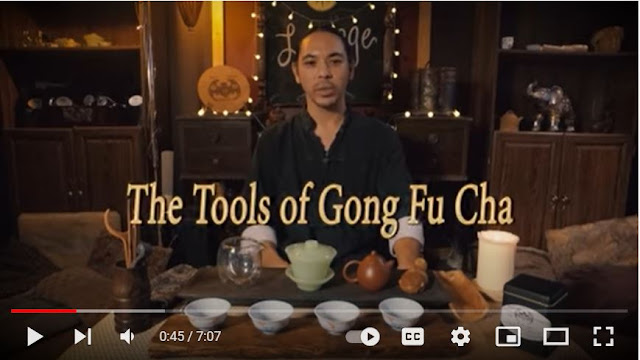
I just ran across a good video practice demonstration of this theme created by William of Farmerleaf.  It's not mostly about parameters, in relation to discussing proportion, temperature, brewing time, and such, but it does include recommendations about all that.  It applies more directly to sheng pu'er than other types, since he is brewing that, his comments there relate to that type, and he mostly drinks that.

William mentioned that he thinks green tea isn't suitable for gongfu brewing, and in general that seems to work.  It is possible to just use cooler water and still use the other parameters, and I probably would for good Longjing, but in general I brew green tea Western style.  I would add broken leaf black tea to that list, for not being suitable for gongfu brewing, and also flavored teas, and teas blended with herbs / tisanes.  To me shu pu'er turns out similar prepared both ways, maybe only slightly better gongfu brewed, so it would depend on the version I was using and my mood at the time which approach I would use for that type.


On the same subject, another question post asked Where to find gongfu brewing parameters?


For a year or so I've been brewing almost all my teas in a 100ml gaiwan. I love it, but I'm still confused about good starting point with brewing parameters (tea to water ratio, water temperature, steeping times)... 

I wonder: Are there some places you can find gongfu brewing parameters for different kinds of teas?

I know big idea around gongfu is experimenting and finding parameters that suit you personally. But having some starting point, especially when trying a new tea, is helpful nonetheless. Also you can always learn a lot seeing how other people do the same things you do.


Mei Leaf's guidance table was mentioned, and Yunnan Sourcing offering input per type they sell (just not in table form, I don't think), and a Steeped App developer mentioned it's part of their app function.  I'm just posted about discussing that app version with one of the founders. 

I mostly discussed the Mei Leaf table there, as comments on that post.  Their table is actually pretty good, as starting points go, probably the best reference for that I've seen, at least in that form.  That's not saying much, because I don't remember ever seeing a brewing table broken out by gongfu and western parameters, so it's also the only one related to detailed gongfu parameter advice, and therefore also the worst, but to be fair it's pretty good.  Varying temperature using a gongfu approach isn't necessarily standard, but it's hard to get a feel for preference by vote / uptake, by how many people prefer which approaches.  This is that table:


Right away one might wonder what information from this works really well, and what isn't as good.

On the positive side, using a 100 ml gaiwan is a good starting point, or using a small glass pot would be identical in practice, really.  Someone could scale that up or down based on minimal experimentation, and 100 ml is relatively standard.  I think some 100 ml gaiwans end up holding only 90 ml of volume in the brewing area part but again that can get sorted out in a testing against preference phase.


a friend's (Sasha's) gongfu brewing set-up, using small glass pots


The categories in that table seem generally ok, since it would be hard to keep breaking them down further.  For example hei cha was left out, and how broken leaf material is makes a difference, how oxidized an oolong version is, white and sheng pu'er are really diverse categories, etc., but still it's fine like this, the basics are there.  Skipping yellow would've made sense, for all the more often that comes up, but it adds a feel of completeness (making it odd that they didn't add hei cha, to lean into that).  

I don't care for the base time + added time per round approach; to me that doesn't work.  In comments there in that discussion about what doesn't work as well that was the main critique:


timing, the +5 or 10 theme: this is the biggest error on the chart, it seems to me. there is no way infusion strength fades as fast as many of those timing cycles. adding 5 seconds for small leaf black tea per round and 5 seconds for rolled oolongs is a good example; the black tea would actually lose brewed strength much faster than the rolled oolong, and I think in this case it's that the black tea instruction is closer to right, and the oolong advice is not as good, but I just don't use that general approach.  it works to adjust each round timing based on how the last turned out. 


proportions: a bit arbitrary, since it's not as if the lower range they specify seems to map to that working better for those teas, or why using 4 grams per 100 ml for most makes more sense than 6 for every tea type.  I prefer using 8 grams per 100 ml gaiwan, maybe even a little more (I don't weigh it), because that makes it easy to judge related short infusion times without timing them, most somewhere between 5 and 15 seconds, most not over 20 even for later rounds.  you could try to learn to internally time 30 to 45 second infusion times but you might end up using some sort of timer instead, which, to me, would be a far less organic and enjoyable brewing process.


white, brew at 85 C: white is a broad range; to say that you would brew aged and young (new) shou mei, buds only versions (silver needle / silver tips), white Darjeeling, or white Nepal tea at the same temperature might not be ideal. you could, but later after experimentation that might change.  I've shifted to the practice of using just one temperature for all tea types, pretty close to full boiling point, but that's as much because it's simple and easy as related to optimizing results.  Maybe some of the white tea I drink would be better brewed at 85 C, with extracted compounds and aspect balance shifted a little.


green: I might brew Longjing gongfu style, but for most green tea types it's as well or better to use a Western approach. that's not a criticism of this chart, more a concern that the charts tend to drop out a lot of relevant context. I wouldn't brew broken leaf black tea gongfu style either, but this doesn't reference that, it only makes a distinction between large and small leaves.


oolong at 99 C: I think that's fine for a gongfu approach, but there's a reason why a lot of people back off that temperature for western style brewing oolongs. since personal preference is the final guide neither starting point is right or wrong. the quality of the oolong makes a difference, and these charts can only go so far in mapping out inputs.  one commonly expressed idea is that for better quality oolong using boiling point temperature water works best, and then for working around flaws the lower temperatures, that many parameter tables recommend, might work better, especially related to using a Western approach.  

related to them mentioning 99 C versus boiling point a little heat will escape related to cooling of a kettle, and transfer between devices, so it's as well to not overthink that.  pre-heating vessels would keep temperature higher, so that's not just a formality in the gongfu brewing approach.


oolong, infusion count per category: it's strange they are referencing 1 1/2 more grams per rolled oolong, versus twisted style, and saying that they'll both brew 9 infusions. timing is slightly longer for rolled versions, which do take longer initially to get started, and might brew a little slower later, but adding 5 seconds per the rolled version wouldn't even back out that proportion difference for durability. number of rounds relates to different factors, so that might be seen as minor, since it's a rougher than average estimate even within this starting point theme.


raw pu'er (sheng): actually not that bad, but the +3 timing change per infusion isn't right (per my opinion), it's better to brew based on how the last round worked out. many people prefer full boiling point and others 95 C, as shown, but that goes in their favor, since the point here is advising a starting point. "raw pu'er" is a very broad range of things, since aging changes a lot, and character varies quite a bit beyond that. I use timing differences to offset outcome differences, based of results of the last round, which makes it simple, but this approach of treating every version range as the same wouldn't work well.


shu, brewing for 20 infusions: generally not, and stretching timing by 10 seconds per round isn't how intensity difference progresses. it would work better to use more consistent timing for the first few rounds then stagger timing more after that, bumping it even more once it loses intensity past a certain point. temperature is ok, full boiling point, and the proportion and starting point at 10 seconds is ok.


So all in all those parameters are fine, for a starting point, just oversimplified or a bit off in those few ways, as I see it.  Others would see it all differently; gongfu approach is a subjectively guided process, steered towards matching individual preference.

There really isn't that much difference between what Don of Mei Leaf recommended, how I brew tea, and what William of Farmerleaf suggested.  Or related to placing more emphasis on finer points we are all preparing teas completely differently.

In terms of gear and steps I don't use a gong dao bei / cha hai, a fairness pitcher, as an interim step between brewing the tea and pouring it into a serving cup.  Of course that relates to using a larger teacup, one that matches the size of liquid volume the gaiwan holds, beyond the space the leaves take up.  William isn't using any sort of strainer for that step, which is a common practice (to use one), because he is using more whole leaf tea, is familiar with how to hold the lid to reduce material pouring out, and can just dump out a spare leaf fragment with the last of the liquid from the pitcher if it comes up.  

Functionally using some sort of sharing pitcher would absorb some of the heat, which is a good thing when it comes to trying to drink an already prepared tea at close to boiling point, after the concern of maintaining a brewing temperature at the earlier step has dropped out.  If I'm brewing tea gongfu style (or a variant of that) in a rush with a breakfast before work I'll use a similar step of pouring the tea from one cup to another, to remove enough heat to enable drinking it faster.  I'm not into smelling empty cups too often but when a particular tea leaves a heavy honey scent behind in an empty cup that can be nice. 

To me those details and mechanics don't matter so much.  Someone can keep smelling leaves and empty cups at different stages, as he recommends, or you can skip all that.  As with parameter specifics all that can be varied according to personal preference.


extra basic; just a gaiwan, cup, and thermos, for brewing outside


one of my introductions to tea interest was a Huawei on-site brewing demonstration, this


one of my favorite tea friends, Huyen, is into the more aesthetic and elaborate form


then she can  also scale that back when having tea in different locations


Thursday, January 20, 2022

Tea vendor bias and group identification


Sergey Shevelev in the Moychay Amsterdam shop


I had mentioned talking about tea vendor perspectives in a meetup session summary post, about appreciation for or bias against Moychay by Russian tea enthusiasts.  I'll go into more on that here, reviewing how I see cases of vendor support or negative impressions.  I think it might have more to do with embracing shared group perspective and association than what one might take to be more intuitive inputs, about range of selection, best quality offerings, or about value issues.

Alex said that the further along tea awareness exposure among Russians you go, relating to people with more developed preference and awareness, they tend to have a more negative opinion of Moychay.  But why?  It could be because they are better informed to judge, but that's not what Alex added as his main take.  He thought it's because as a vendor grows, gains a lot of exposure, and seems more "corporate" opinions naturally become more divided on them, including significant negativity.  To interpret that a little, it could be that tea "beginners" appreciate supporting introductory content, and haven't yet sorted into preference related groups.

We can see that in cases like Yunnan Sourcing and Mei Leaf, although maybe there's not a direct parallel to the layers of controversy surrounding Mei Leaf.  Or maybe we can set aside problems with plant age claims, exaggerated descriptions, and that one glitch related to branding through a Native American cartoon image, and perspective issues might start to match back up across vendors again.


I've noticed myself being more critical of Don Mei's content than may be justifiable (explained at length related to causes and limitations in this post).  In some cases his Youtube content contains minor gaps or errors, but even when a number of statements aren't wrong, but aren't clearly objectively right either, and that's all presented as background to sell a specific tea version, it seems a bit dodgy to me.  It could be like that with Sergey (the Moychay owner), that people are overly sensitive of tone in presentation, suspecting that a lot of the range is as much indirect marketing as it is genuine background content.  

Back to Don, I'll cite an example to place what I mean.  In one post about a Rou Gui he mentioned how the link between that type and cinnamon flavor--what Rou Gui translates as--is often overstated, that it doesn't necessarily taste like that.  Some do taste like cinnamon, or cassia, and some don't.  But if he had said exactly that it would be providing good background information content that could support selling the version he was discussing (which didn't taste like cinnamon), but as I interpreted his statement he implied Rou Gui just doesn't really taste like cinnamon, which is wrong.  Then probably if he had been selling a version that happened to include that flavor the opposite would have been emphasized.  Maybe I'm wrong about that; I tried to look up that video to re-watch it to evaluate that again, but I'm pretty sure that video has been deleted.  He did upload another on judging Rou Gui and Wuyi Yancha (Wuyishan area "rock oolong"),  but it's not the one I'm mentioning.

In that second video on judging Wuyi Yancha quality most of his ideas seem fine, it's just not how I would put similar interpretations.  He doesn't really get into mouthfeel and aftertaste as considerations, which to me leaves a lot out in terms of describing what people experience and value.  Complex flavor is part of it too, and I tend to frame descriptions a little differently than he would, but I can't say that he's wrong about what he said in that.  


There is an intensity and hard to describe character to good Wuyi Yancha that isn't exactly about flavor, feel, or aftertaste, but spans those.  I see it as a liqueur like or perfume like fragrant and aromatic quality, which comes across and balances differently in different versions.  His take is more about a long flavor list occurring, including subtle flavors, which is ok.  Different people can focus on different things, flavors really can be complex, and they do tend to transition over rounds, further complicating things.  People new to tea do tend to focus on flavor as the main experience, which never completely drops out later, but it's often seen as only part of what one is experiencing.


It's interesting how Yunnan Sourcing avoids this particular range of objection by Scott (the owner) not really using Youtube content as marketing, and erring on the side of limiting written product description of teas, just saying a little to give a bit of sense of what they are.  There's a good chance that half of his Yunnan Sourcing Fans Facebook group--which kind of is a sales tool, but a different subject, since Scott isn't really active there--aren't familiar with his Youtube content, because they just don't emphasize it.  

Different people do pass on thoughts on teas there in that group, so that's not different and could support sales, and marketing could still be the main point of the Youtube product description videos.  Part of this point relates to Yunnan Sourcing having 6000 subscribers on their Youtube channel, compared to 3900 members in that Facebook group; just promoting videos there would surely add to that viewership and follower count, but they don't do that.


Scott Wilson (of YS) making light of image issues, through a "caption this" contest, as I see this


Mei Leaf has almost 90,000 Youtube followers, and Sergey Shevelev of Moychay has 105,000.  Mind you I see nothing wrong with vendors producing tea background content to serve as both marketing and information for customers, and others.  It promotes the industry and general awareness, in addition to one vendor's products.  Everyone else selling or promoting tea should be grateful that both are successful at it.  

The point here is that in developing a lot of content, and being successful in gaining a following, even without self-promoting as a tea expert a vendor would automatically seem to take up the mantle of being an authority, one step towards being a "tea master."  To me it seems to help a little if there is less marketing angle and they are de-emphasizing their own reference content, as Yunnan Sourcing seems to.  William of Farmerleaf strikes a really great balance; nothing in their Youtube background information material seems geared towards sales, more just on background, but of course it could still support sales in that form.  He has 6000 subscribers too, as YS does; you can make of that what you will.

I can't really offer any opinion about most of Moychay's video content, related to that factor of balancing general information and promotion, because I've only seen a half dozen of their videos, mostly geared towards a Western audience, the translated versions.  It seems sales emphasis neutral, but there could be indirect marketing concerns with the more viewed Russian videos, for all I know, with that content open for critique.  It's sort of a slippery slope.  One might say that Wuyi Yancha is good, and then that this particular version is, and then that you should buy this through our shop.  It takes a deft touch to offer informative background but to not take the last step, so that it doesn't feel like watching an ad.


Alex's point that people are just going to be divided makes sense.  

Next one might consider whether or not there are broad quality or value issues that could trigger negative reactions from some Russian tea enthusiasts.  I'm not sure.  Moychay's product quality and value don't seem so different than Yunnan Sourcing's, to me; pretty good in general, covering a lot more range than is normal for standard vendors.  Some is exceptional, above average tea selling at a great value, or representing really novel offerings, with other examples just kind of normal related to all that.  Eventually a below average quality or value product might turn up from any source.  

For teas that are completely unique it can be hard to identify value, for brand new types, hybrid style versions, or rare aged teas.  For example, this yellow tea from Khosta, Krasnodar region, 2021 sells for $20 for 100 grams.  Sounds kind of low to me, but who knows, it might also depend on how well it turned out.  I doubt that there is a second yellow tea from that Russian area being produced to set a market value, not that I would know if there was.  I tried a yellow tea from Mississippi last year, from Jason McDonald's farm, which listed for $14 per ounce (50 cents a gram instead of 20), but production overhead in the US would probably be much, much higher, and the tea could be better, or the target audience could vary.

The main opinion expressed about Mei Leaf is that their tea is good, which is the main thing, but that value isn't very good, that you could get the same quality level of products elsewhere for less.  Then some Mei Leaf fans reject that last part, seeing the teas as unique and positive enough for above average level pricing to be fair.  A sub-theme about people liking or disliking Don Mei almost eclipses whether or not his teas are good, or a good value, as discussed in this Facebook group thread.


Where am I going with all this?  How vendors present themselves and end up being perceived is an interesting theme to me, especially related to forms and causes.  My final take may be way off, that people are really looking for a way to self-identify and connect with others in a lot of cases, even though they may or may not see it that way, framing their own outlook as a normal shopping perspective.


Group identification related to tea vending


For one particular reason I think Mei Leaf probably doesn't get fair treatment, in retrospect, maybe even from what I've communicated, even though I think their tea is probably generally overpriced too.  I think Don "rubbing people the wrong way" as a video persona factors in a lot.  I don't think Scott Wilson of Yunnan Sourcing gets too beat up online, but it seems like any successful vendors can easily become targets for criticism, justified or not.  Maybe justifiably so?  A bit of pushback here and there might keep them honest.  Reddit comment discussion sometimes tends to go a couple steps beyond that.  Scott did get involved with a messy discussion issue there once, but then that's Reddit for you, not much better than Twitter for sometimes being harsh.  

That's only half the story though.  People love Don Mei more than seems justified too, clear from that Facebook group post I mentioned:


*In Mei Leaf's most recent video*

Commenter: "Why does the Facebook Gong Fu Cha goup hate you so much?"

Don: "🤷‍♂️ Maybe I would dislike myself if I was on the outside"

Lololol I don't buy Mei Leaf teas because of shipping costs, but I love Don so much.


I guess that he loves Don because of his sense of humor?  I'm not sure that comment was offered as humorous.  The comments there talk about appreciation for his teas, his online content, and for him being an interesting and charismatic person, the part that people are divided over.

I think group inclusion is the extra component that's not as evident.  Why would almost 4000 people join a Facebook group to talk about tea from one vendor (Yunnan Sourcing Fans)?  To be fair Q & A discussion does go better there than in most places, but cutting off discussion at one vendor's selections seems limiting.  Why are there lots of vendor specific Discord servers now, with varying degrees of engagement?  I only belong to Farmerleaf's and Liquid Proust's, because I was just checking those out more than participating, since I wouldn't have anything to add for not being a regular customer for either.


Moychay's tea clubs theme is something else, but it connects.  That adds in drinking tea in a setting that goes a long step beyond a cafe for being decorative and establishing a vibe, and it supports a more ceremonial take on tea experience.  All the same it is also shifting individual tea experience to social experience.  


this is more a tasting area than a club, but Moychay's club theme is an interesting subject


The online group case is more interesting to me though, because then it's reduced to being abstract, having more to do with self-definition and text message discussion contact than real life.  Or the "main" Discord group, Communitea, is big on voice / audio based meetups; I guess that's more in the middle.

In a podcast comment discussion someone once mentioned being "on team Xiaguan," not just saying that they like Xiaguan, but emphasizing how that put them in a group.  To me that's odd, even though that form of expression comes up more and more now.  Podcast creators tend to lean into this social dynamic, making their audience feel like part of a group, by establishing specialized use of slang, or even a nickname for group members (as "teaheads" is used).  Theo Von and Chris Delia are good examples of comedians using this form.  Oddly on one Reddit subforum Joe Rogan podcast followers connect and unify related to seeing Joe Rogan as an idiot, reveling in dumb things he says, or making fun of him for using steroids, for being short, or for his anti-vaxer position.  It still works, I guess, it just seems backwards, unifying as fans connected by partial dislike.

Vendors could make use of this, the positive part, right?  That's essentially what the Discord groups represent.  It's not negative really; to the extent someone wants to feel like they are a part of something for liking Don Mei's teas, or those from Yunnan Sourcing, Moychay, Farmerleaf, and so on, that's fine, and it really is also about sharing information.

Next more experienced and older tea enthusiasts might look down on all that, and see it as silly how younger and newer participants cling to odd forms of association.  But it happens in more subtle ways across a broad spectrum, even when people don't feel a need to formalize the link.  If someone loves Essence of Tea, Teas We Like, Tea Encounter, or Hou De you won't tend to hear about it, but there's no reason why someone couldn't value "being in the know" in a similar form, just with less post comments for interaction.  Without even taking up the external role as an elite, experienced, "higher" form of tea enthusiast the more subtle social role as isolated participant may still be regarded as meaningful.  Not joining a group or talking about it could be seen as just following a different code:  those who talk don't know, and those who know don't talk.


Let me pass on a thought that ties to this, that might clarify it.  To an extent I get the impression that some more introverted expats--foreigners living abroad, somehow implied as higher in status level than "immigrants"--like the social role because it defines them as different, and as being a certain way, without any need for setting that up or interacting.  Just being white is a stereotype, where in the US you need to pair that with class / economic status to make a start, and then it still doesn't go far, and you also have to add political affiliation.  Here in Thailand, where I live, foreigners are respected but also disliked a little, seen as quirky and odd but likely to be intelligent, and interpreted as probably having questionable morals, related to paying for romantic relationships.  It's not quite that simple, but basically you are a type, just for being white.  Let's set aside how that would go for other races; that's not the point.

The point is that stereotyping, and to some extent group inclusion, is almost freely granted, and some people seem to value that.  In tea groups you just need to adopt shared perspective, which isn't quite as easy, but which may not be very difficult.  

Tied to Mei Leaf support expressing or just feeling that "I love Don" is more than enough; you're in, even without buying the tea, as that guy explicitly stated in that post.  As a Yunnan Sourcing fan you just need to have placed one order, and to have liked one tea version, and to express intention to keep going.  If you want to feel at home among 10+ year experience tea snobs on Tea Forum--no offense intended; those people are nice--it's not quite so simple, but parroting what others say goes a long way.  In the Gong Fu Cha Facebook group you just need to buy a gaiwan, and to be looking into yixing, or post any photo of drinking tea outside.  R/tea on Reddit isn't a unified social group, but posting a picture of a half dozen boxes of grocery store tea-bag tea in a cabinet will draw at least 100 upvotes.

Why are we like this, group oriented to a strange degree?  With me included, surely.  An online contact put it well in a Quora answer about how social interaction is evolving: 


There's a broad emphasis on smaller and more detailed clustering, which in turn relies on people having a firmer sense of self and on them defining themselves in certain ways. We assign ourselves to many categories which are smaller and more specific than perhaps they've been in the recent past.


Right! A half dozen years ago people might group together in relation to tea interest, but that has pushed down to which teas people like now, or how they brew and experience them, and on further to which vendor sources of those teas they prefer.  Embracing or rejecting someone with a high profile online as an information source, or sub-culture leader, is just an extension of that.  


there's nothing wrong with combining being charismatic and informative, as So Han does


People can even now unify, to an extent, in relation to shared dislikes, not just personal associations and likes.  So this seems to be the last component of the negative mixed feelings related to many tea vendors; it's attractive to dislike a lot of things, and even to identify through that.  It automatically places you above that subject or person, for looking down on them.  If you dislike Dave Chappelle for making transgender jokes that identifies you as more sensitive to minority perspective than him.  If you can criticize the people who make that criticism, for being "woke," then you are implied to have a broader view of how social commentary works than they do.  Even not liking a movie can place you socially.

Never taking up these kinds of connections and oppositions would be a very reasonable and functional option.  But then there wouldn't be that much to talk about on social media, so that perspective would tend to not be expressed, or wouldn't seem interesting if it was.  There's normally a strong inclination to like or dislike things, to agree or disagree with ideas, so remaining neutral isn't so simple.  It's natural to react, and to place yourself in relation to that kind of perspective.


William Osmont of Farmerleaf


Saturday, April 17, 2021

Setting the record straight about Mei Leaf


The subject of this vendor won't end.  The back-story should be familiar:  Mei Leaf is either regarded positively, as a good source of tea and informational videos, with a personable owner (Don Mei), or else negatively, as a vendor prone to exaggeration, overcharging, PR mis-steps, or even lying and making false product claims.  Some people see Don Mei as annoying instead, as a tea vendor version of a used car salesman.  Can both perspectives be right?  Probably, in this case, but I do settle more on the second myself.

I've written about Mei Leaf before, reviewing their teas, and speaking about this controversy, and about published product details that look a little off.  Really all this takes some unpacking.  In general I'm not the person to tell people who not to buy tea from; I have no interest in that.  The problem comes in that I do discuss tea issues in a variety of places, and informing people of options also overlaps with conveying negative impressions of some of those.  Let's start with an example that's not Mei Leaf, and unpack the Don Mei controversies one by one after that.  


Some of all this maps onto either mentioning, or else not telling people, that Harney and Sons is a limited range option in beginner tea groups.  It's probably not bad as the actual tea products go; probably as good as tea that comes in tins tends to get, selling at a good value.  But moving past cinnamon spice flavored versions and mass-produced conventional types is a standard step people take in tea exploration, or else don't, if they never really dig deeper and branch out.


First, for further reading in this post I said a bit about a tea issue, obvious contradictions in that product listing (not directly related to the roasting sheng issue, but indirectly related).  And I've reviewed a tea from Mei Leaf here, a long time ago, 5 years ago to be specific, back when the brand was named China Life.  I went to a tasting where a number of their teas were served in February of 2017, 4 years ago, and I'm not sure if the re-branding had went through then or not, but at a guess it already had then.  

It doesn't matter, to me; changing a company name doesn't wipe the slate clean, related to then selling different things or using a different approach.  Obviously sourcing could have improved since then (it really should have), and pricing strategy could have changed (although it probably didn't), so let's start there.


1. Sourcing, quality level, and pricing


The typical discussion claims aren't that Mei Leaf tea is bad.  The often expressed theme is that their tea is overpriced for as good as it is.  There's an easy answer to that, but it's a little too easy:  teas sold out of physical shops are almost always higher in cost, because you pay extra overhead for the site rental, staffing, related costs, etc.  I'm open to paying a bit more in physical shops from time to time, to support all that, and keep shops open as a valuable option.  Luckily it doesn't work out that way related to Bangkok Chinatown shops, because overhead there is so low, but that's a tangent I won't address further here.

To me a primarily online business cannot use that as justification for describing teas as better than they really are, or selling well outside a standard price range.  But then there is no standard price range, to some extent; vendors can charge whatever they want for tea.  Vendors can state how good they think a tea is but that's always vague, and every tea is always described as good tea, in one form or another.  Pricing tends to imply a quality level, but it's not a direct connection.

Let's look at an example of how one particular tea type stacks up related to this, to get a feel for how well what I'm claiming really works (which is partly based on echoing a hearsay claim, and partly on making that same claim based on personal experience).  I picked a standard, well-known tea type to compare across different vendor sources, a type of Dan Cong (Chaozhou, Guangdong origin oolong).  This wasn't an example cherry-picked to show this difference, but instead one that should be easy to find versions of elsewhere, since no single tea type has been the subject of as much hype as this one:


Mei Leaf Duck Shit (Ya Shi) Dan Cong oolong, 1.14 cents per gram (30 gram quantity)

Wuyi Origin Ya Shi / Duck Shit Dan Cong, 48 cents a gram (25 gram quantity)

Tea Drunk (NYC shop) Ya Shi / Duck Shit Dan Cong, $2.25 / gram (28 gram quantity)**

Seven Cups (online shop) Yu Lan Xiang Dan Cong, 56 cents per gram (per 50 g; the most expensive Dan Cong they currently list, with no Ya Shi in stock now)

Yunnan Sourcing King of Duck Shit Dan Cong, 55 cents per gram (per 10 grams)


**Note:  this Tea Drunk citation was an error in the first published version, mixing up a 7 gram and 28 gram pricing for the calculation.  $2.25 is getting up there for tea pricing, but for the highest physical shop overhead cost range and most expensive tea type it might be a more reasonable value than it seems in comparison.  Really tea pricing depends on quality, and it's not as if there is any clear ceiling on those levels (quality or market price), as if $3-4 per gram for an unusual type of rare and high-demand product couldn't possibly make sense.


some Wuyi Origin already brewed Ya Shi / duck shit leaves


See a pattern?  The "two" physical shop locations are priced higher (with an error in the original write-up related to one), and the rest around 50 cents a gram.  The Seven Cups example isn't actually Ya Shi, but since they sold a half dozen types of currently listed Dan Cong, and that was the most expensive example, it probably works to assume their Ya Shi, when back in stock, would be around that range.  If it was really 10-20% higher that doesn't change the story being told here.

But what about quality level?  That's really what determines value in relation to price for any tea.  Is it possible that Mei Leaf sells the best Ya Shi version of these five vendors?  Technically yes, but in practice no, not really.  

Anything is possible, but Wuyi Origin is an incredibly well regarded, award winning direct from China vendor (don't take my word for that; do a search in any tea forum or group of that vendor name and confirm it yourself).  Seven Cups is a very well regarded online US site; the owner of that business played a formative role in developing current specialty tea awareness and culture to what it is now.  

Tea Drunk I'm a little less comfortable making claims about. That shop name comes up, as one of the best positioned shops in NYC, but someone would have to try the tea versions to get any decent input.  Nicole Wilson of Tea for Me Please says that their teas are good; that means something to me (even mentioning this type in that post).  Yunnan Sourcing probably isn't buying Dan Cong of the same quality level as Wuyi Origin and Seven Cups (which Wuyi Origin is making, not buying), but again tasting the teas would be better input than anyone's guesses.  It's standing in here as an extra comparison anyway, as a standard online vendor example.


Let me be clear on part of this context:  hearsay is valid input; it just has limits.  A longstanding tea acquaintance who lived in London passed on his evaluation that Mei Leaf teas aren't bad, but also not good, and definitely not worth what they cost.  That kind of input needs to be evaluated in relation to the source, and I trust that guy's opinion about as much as any others.  He said that Post Card Teas (a physical shop there) are also a bit pricey, but at least better in quality level.  

I've tried more than a half dozen versions of Mei Leaf teas myself, some just before the roughly 4 year back re-branding, and that really described all of them; good but not great, and not a good value.  To be clear if I don't like a tea I typically won't review it, so everything appearing in this blog doesn't represent everything I've tried.  

That reminds me to look up the first tea I ever tried from China Life (re-branded as Mei Leaf), a Dian Hong (Yunnan black) version, to check on cost and value for that buds based tea, reviewed in 2016, so 5 years ago.  I didn't mention value then; as is common for most bloggers I will only do so when a tea seems to be a great value, or if there is a concern that one is outside a standard pricing range on the high side.  I wouldn't have as easily evaluated value 5 years ago, especially for a less common tea type.  I looked up that pricing on the Wayback Machine internet page history:  it was selling for 14.50 British pounds for 30 grams, or equivalent to about 65 cents per gram converted today.  That's a good bit for a black tea, even a buds based version, but 5 years ago that would've been sky high pricing.  Over time people have acclimated to approaching $1/gram for rarer, higher demand versions, but it wasn't always like that.

This dated pricing issue--all these personal experience references from 4 years back or older--brings up an obvious problem:  no one who has spent years figuring out sourcing preferences and has noticed that Mei Leaf's pricing runs high, per quality of tea, or just in general, really, is going to have sampled a lot of their prior Spring lineup to keep on confirming that.  Unless they just figured this out.  They would move on, source-wise.  Let's check one more tea type that is familiar to me, Jing Mai sheng pu'er, one of the main origin regions, known for approachable character and somewhat moderate cost versions.


2. Second tea type comparison, Jing Mai origin sheng pu'er


A bit of a problem, since Mei Leaf only lists a blended version, but in a sense that should be instructive.

Paradise Snapper, He Kai & Jing Mai Sheng Gushu Spring 2020 (47.5 cents per gram, $95 for a 200 gram cake)

One of the most crisp, physical and zesty PuErh teas, made from a blend of He Kai and Jing Mai Gushu trees (estimated 300-400 years).

We wanted to create a tea which was bright, bracing, physical and delicious. Jing Mai is well known for its bright, high and zesty aromatics and we love this area for this character. This year we wanted to add a more adult edge to this lighter tea region by blending with another of our favourite regions - He Kai.

He Kai is in the West of Xishuangbanna and has a resinous, creamy and mineral character. Blended with the Jing Mai, the result is a very unique and powerful tea. The orange, apples and sweet flowers of Jing Mai combine with the mastic cream and rocky quench of He Kai to make a tea which is one of the most engaging teas.

Bright, zesty, crisp and quenching with plenty of physical bite and a deep Hui Gan sweetness. A wild and untamed tea with potent effects.


Who knows about the colorful description part; we can really set that aside.  Both teas are estimated to originate from 300 to 400 year old tea trees; that's dubious.  It's just not possible to date tree ages like that, for reasons that are explained in that video.  Good gushu versions of sheng are typically sold for around $1/gram, and I've never heard of a gushu version being used in a blend; that just doesn't happen, typically.  Blending is usually used for moderate quality material, to offset flaws in multiple versions, and to create something better than more than one limited-appeal input.

I've recently reviewed Jing Mai versions selling for around $30 (kind of low) and $70-some per 357 gram cake, and bought one sold for closer to $90 last year, but this "gushu" issue throws that off.  I just doubt that it is that.  Let's check in with a standard, known, reasonably well-regarded source on what their high-end Jing Mai is selling for, and in what form, from Crimson Lotus, a main US vendor:


Elemental Puerh - 2020 Jingmai Old Tree Sheng Puerh Tea Dragon Balls $ 16.99 (6 8-gram dragonballs, so 48 grams of tea, selling at 35 cents a gram, or $126 for a standard sized cake).


To start, I wouldn't buy dragonballs.  Those never brew well, related to the first several rounds brewing the outside layer while the middle unfurls.  This is described as from "old tree material" but that's it; I would assume that means "gushu," in excess of 100 years, or however one uses a timeframe cut-off for that term, but not necessarily 300 to 400 years old plants.  That comparison really didn't help a lot, but it is limited input, an indirect sort of baseline.

A reasonably well-regarded Jing Mai based vendor, Farmerleaf, tends to sell "wild arbor" presented teas from Jing Mai in the $80-100 per cake range, with gushu material selling for that more standard $1/gram range.  Here's an example of that, maybe a great-value tea for selling for $58 per 100 grams (so 58 cents per gram):


Spring 2020 Jingmai Ai Ban, $58 USD (100 gram pouch)

Every Spring season, we're busy making tea in Jingmai Mountain. We pressed most of our ancient garden productions into the Jingmai Gulan cake. We also keep a few batches from our favorite gardens in loose leaf form.

Ai Ban is located on the South-Eastern slope of Da Ping Zhang, it is cultivated by one of our uncles and grows leaves of consistently high quality.

This tea has an amazing mouthfeel, a mix of minerality and flowery freshness that makes it distinct from other tea gardens in Jingmai. On top of this special mouthfeel, you'll get a deep and lingering sweetness in the throat and a complex fragrance.


That "Gulan" cake they just mentioned had listed for $268 for 357 grams; not quite $1/gram but approaching that, 75 cents instead.


So what should we make of a blended, well-known source area cake, with old plant material selling for 50 cents a gram?  It's open to interpretation.  It sounds fishy to me, related to this needing to be a high-quality blend versus a mix that compensates for flaws, but if someone wanted to believe it is "real" they could.  And that is really the gist of the last blog post I wrote that talked about Mei Leaf; if someone is looking to accept what any given vendor says they don't need a lot of evidence to just go ahead and like a tea, maybe even especially an expensive one.

About blending, I don't mean to imply that it's an invalid practice, or that results can't be spectacular, with great material used as input.  That's seemingly the theory behind Farmerleaf mixing sources for that Gulan cake, and Crimson Lotus specializes in making sheng versions based around this principle, as White2Tea does, and Kuura (an Australian source); lots of vendors.  To me it's not unrelated to how very good Cabernet can be sold on its own or else blended as a Bordeaux style blend, not necessarily considered a lesser wine for being mixed with other grape type inputs, or necessarily selling for less.  In the world of tea a 50 cent per gram blended sheng is unconventional, but it's not as if it couldn't possibly make sense. 


Of all these Jing Mai versions I've discussed (that I've tried) this second one listed from Tea Mania, a 2016 tea without the age shown, might be the best (per my judgment, which is a bit subjective).  But then different versions have different strengths, and are at different places in an aging cycle, making it harder to judge a favorite.  It was a great value at $65 per 357 gram cake, reviewed here along with a Moychay version comparing the two.  But then I liked the freshness related to being newer in the Moychay version, and the Tea Mania version has settled and aged really well since that tasting.  I think the two were just made in different styles.


3. Exaggerated tea descriptions


I don't care about that part.  Description is a subjective process, and obviously Don has a good imagination, and continuing on and on with tea description is up to him.  Maybe it's even accurate.  In general vendors, bloggers, and people just discussing tea tend to only list a few main aspects of a version, maybe up to a half dozen, often including some feel and aftertaste coverage, so it's atypical.  

You can't really criticize the elaborate "cha qi / feel" descriptions, unless you are very sensitive to such things yourself, and have tried the teas, so who knows about that part too.  I suppose it's all a bit much.


4. Scandals, obvious lies


I really want to include this part in order to mostly set it aside.  One of the most recent scandals related to Mei Leaf related to them including Native American image themed stickers along with products, which of course caused outrage.  In a sense that's not even about tea.

An earlier claim that tea came from 1600 year old tea plants was the highest profile claim problem.  The oldest documented tea plants are right around that age, so to say that a moderate cost produced tea is from essentially the oldest tea plants in existence reflects a clear lack of awareness of that background.  Maybe the source was over 100 year old plants (gushu), and maybe it wasn't, but anyone making 1000+ year old tea plant claims is just pushing fictional story lines to an absurd degree, most likely just repeating what some farmer told them, which never made sense originally.

Then almost every sheng pu'er Mei Leaf sells is gushu (old plant sourced), even if it's blended or roasted, or shu.  Some matches a price that might make sense, and some is obviously too low, because source area wholesale costs do settle to known levels.  The general price levels are high enough to cover some relatively exaggerated claims (like selling Ya Shi for $1.14 per gram; if it was great tea that would be high enough, but not unfair), but once the claims become outrageous enough the $1 a gram range no longer applies, for example trying to say a Spring LBZ is selling for that (which I don't think Mei Leaf would do, but other somewhat related examples do come up).


The roasted sheng I mentioned in the earlier post works as an example: supposedly that starting point material was 500 year old Lao Man E plant source sheng, which they were selling for 80 cents a gram, which they then roasted on a whim.  The source and pricing claim is a bit of a stretch (kind of absurd to the point of impossible), but then using a roasting step for a tea like that makes just as little sense.  It's conceivable that it was flawed tea, explaining the unlikely rare source origin and for-type moderate cost, and roasting it "saved" it, but that's not much of a practical story line that makes sense of an odd mix of ideas.

I don't see the obvious scandal issues as problematic as these other details not adding up.  If you watch Don's videos you can spot obvious mistakes or errors, if you know what you are looking for, and in essentially all cases those are sales points for his own teas. This is a bigger problem, that small omissions or bigger errors point towards details not always being right.


5. Taking advantage of tea "newbies"


This bothers me.  People claim that "I've learned a lot from Don's videos," and I agree that well over 95% of the content is completely accurate, maybe 99% of it.  He has done a lot for tea awareness.  Then he also exaggerates tea descriptions, includes errors obvious enough to spot in some product descriptions, and surely includes many errors that you can't easily identify in others (although some you can spot, if you know the content as well as he does). Would it matter if most sheng he sells is really from the next village or region over, instead of as described, or from younger plants instead of older ones?  Sort of.  Maybe not, in a different sense.  

It makes sense to use vendors that you think you can trust to help identify those issues for yourself as you learn, and if a vendor is including obviously false claims then they are also probably including harder to identify ones.

Setting that aside, the value issue alone makes Mei Leaf a bad source of tea.  At a guess his Ya Shi version really probably is on par with Yunnan Sourcing's (it's probably harder for a business based out of Yunnan to source great Chaozhou origin tea), and not as high in quality as the other three sources I listed.  Two of those three sell tea that's probably better for around half as much.  At best the quality level is equivalent, but I doubt that's true, given the reputation of at least two of those vendors.  This is back to where you can benefit from following the input of others who have been through this vendor review process long before you ever even started.

One problem with that approach is that if you ask around in places where most people are new to tea, like in this Reddit question, you won't be drawing on that kind of experience.  People on the newer side of the experience curve are active there, in general, with notable exceptions in a more experienced core group there.

Someone could raise the argument that all this isn't fair to Don, that if he's going through a learning curve himself then his business practices and tea quality level from 4 to 5 years ago don't apply to what he's doing today.  Maybe.  That still requires that someone accept that he's selling tea versions that are so much better than the best regarded US sources that they are worth twice as much, per that one Ya Shi oolong example.  Or it shifts emphasis to wanting to support Don, to pay extra to help him, for producing good online content (let's say), like a tea vendor Patreon sort of theme.  I follow that line of reasoning myself, in supporting local shops, I just see Mei Leaf's main business as online sales.


To be clear I have nothing against Don personally.  He runs a business, he's trying to make a profit, and that's valid.  As I see it my role of trying to support tea awareness--which he also does--directly contradicts his apparent business practices, which as I interpret it relates to charging higher than normal market rates for tea.  Again, it's possible, just seemingly unlikely, that Mei Leaf is selling the best quality tea available on the Western market, and that pricing practice is justified.  More likely it's that physical shops tend to charge more to cover overhead, and they hold to that.


Tuesday, October 29, 2019

On roasting sheng pu'er, and tea culture confirmation bias


A friend who has been visiting from Germany recently, Ralph, author of the new Daily Tealegraph blog, discussed the theme of roasting teas with me.  It came up in relation to him trying some moderate quality oolong.

this actually looks pretty cool (details and photo credit)


Ordinarily rolled oolong would be ideal for messing around with roasting, to see how that changes aspects, or to improve it related to a flaw.  It would work with any oolong (or other tea types, I guess) but I've barely considered it since I don't tend to buy teas that require adjustment in any way.  Oddly I'm partly through an exception now, a very inexpensive light Tie Guan Yin I bought in Shenzhen on that visit there, which is so-so, and I have considered that step.  I've only tried roasting an oolong once before, that I remember, and results were relatively positive.  I just don't usually keep inexpensive oolong around to mess with.

meeting at Jip Eu; I did like the higher grade of those basic oolongs


those less expensive packs convert to around $3


All of this is headed somewhere, so I'll get on with it.  We also talked about roasting green teas, or even pu'er.  I've heard of re-frying Longjing to freshen up the character, I've just not tried that myself.  Roasting pu'er is something else; that leads onto the theme I wanted to get to.

I first saw mention of it related to Don Mei of Mei Leaf selling a version.  It's unconventional.  After some discussion it came up that the practice is not unheard of in China, just not common practice (per a single claim that wasn't completely verified, to be clear).  I didn't turn up that discussion I'm remembering, but this one works as an example of people questioning if that's a good idea, and what would become of the micro-fauna (bacteria and fungus) that allows sheng pu'er to age transition / ferment.

That Mei Leaf version will work as a starting point for that starting point, with a video reference here, and their website description including this:


Psychic Stream Seeker:  Lao Man E 500 Year Old Gushu Raw Spring 2017


This is made from Gushu Lao Man E tea trees aged between 400-500 years old and house roasted by Mei Leaf in London.

Lao Man E is well known amongst PuErh lovers as an area producing potent tea with nuanced fruits and sweetness fighting their way through layers of bitterness... 

Many people find Lao Man E PuErh to be crude and overwhelmingly bitter to begin with but Love and Hate are two sides of the same coin and there is something about Lao Man E that keeps you tasting until it captures your enthusiasm. Lao Man E has shifting flavours and complex subtleties that you often have to discover through later infusions - after the bitterness is manageable...

For many, the best way to temper Lao Man E is to age it for several years or longer. This will calm some of the bitterness but the tea will lose some of its youthful fragrances...  After all it works for Oolongs...

...This PuErh has all the punch and strength of the original, raw Lao Man E, but the bitters are rounded and shortened to allow a crescendo of woodsy fruits and starchy sweetness to fill the mouth. The roasting has added a depth of colour and caramel warmth similar to a roasted Oolong. It has tempered the rushiness of young PuErh to leave you feeling high without any jitteriness...


I'll be frank:  I might have seemed a little hard on Mei Leaf in some online comments because their teas seem overpriced to me.  Quite decent, based on what I've tried, but probably exaggerated in description framing, and just not sold at standard internet outlet prices.

Physical shops tend to charge more for teas, often in the range of 30-50% more, which to me is reasonable, since they need to cover location rent and staffing costs.  I'm happy to pay a little more in a shop, to support them, especially since that adds extra valuable services for customers.  Mei Leaf seems to primarily be an online shop outlet that retains physical shop pricing, which isn't completely fair. 

It's up to them to decide what to charge, so "fair" isn't part of it, but at some point it moves from an arbitrary marketing decision to mis-representing the quality level, which is a main input related to a likely market rate for a tea.  If you sell an oolong at 50 cents a gram that amounts to an implied claim that it's relatively high quality, unless it's Dan Cong, and then that might just be normal for decent versions.  If a vendor sells the same kind of Tie Guan Yin that routinely sells for $12-15 per 50 grams for $25 instead it would be a bit misleading, especially with marketing content filled with superlatives describing the tea (even if that reads about the same as the conventional priced version descriptions--there's another odd part).

Mei Leaf provides great online video content for people new to tea; it would be fair to interpret that as a value addition.  This isn't going to be about all that, so I'll move on, after mentioning how price stacks up in this case.

That tea had been selling for $76 / 100 grams.  Gushu pu'er from an in-demand area, what it was sold as, often sells for the range of $1 / gram, so if anything it's a lower than average selling point.  Is it from 400-500 year old trees, or even from Lao Man E area?  Who knows.  Tea plant age claims are the main point of contention in discussion circles, and there is a conventional understanding that it's impossible to accurately date tree ages over 100 years old, and that most claims about such things wouldn't be accurate.  Personally I doubt it's even gushu, 100+ year old plant sourced tea, or from anywhere near Lao Man E village, but who knows.

I wanted to move on here to the idea that when word of this came out the discussion consensus was that it made no sense at all, to roast sheng pu'er.  Of course the degree to which it does really relates to the results.  Is it pleasant?  Is it anywhere near the level of appeal in relation to other options of a similar type and expense level?  Novelty can be nice in tea, and this type and preparation just doesn't come up.

In the one discussion it later emerged that it's not unheard of in China, just not all that conventional there either, and that changes things a little.  If a Western vendor decides to apply a processing step or advocate a brewing approach that seems to make no sense that's looked at negatively.  If they instead adopt an uncommon Chinese practice reserving judgment is a more natural initial starting point.

If you Google "roasted pu'er" (looking for a discussion of the topic, or other reference) the first entry that comes up on my results relates to the exception for a main pu'er-related type from Yunnan that is roasted, a Yunnan Sourcing bamboo pu'er.  I just tried falap for the first time, what I take to be a relatively identical Assam (Indian) variation of this same tea.  That was great, kind of in between conventional hei cha range and how sheng normally is, not bitter or astringent, or even smoky, which I expected.

This is Scott's description of the version I just mentioned a link for:


First flush of spring Dehong area tea is gradually steam softened and tamped down into bamboo sections in fire pits.  This aromatic bamboo is unique to Mangshi area of Dehong and must be harvested in August.  Small fire pits are dug in the village ground and are stoked with bamboo charcoal.  The bamboo sections are placed closed end down into the fire pits, as the bamboo heats up the aromatic water vapor in the bamboo sections is released as steam.  The sun-dried mao cha is gradually pushed into the hot steaming section of bamboo, and tamped down as it becomes softened by the steam.  

Once the bamboo sections are filled with tea the sections are allow to roast in the fire a while longer before being removed to a kind of oven room where they are allowed to dry for 2 or 3 days.  The charred bamboo sections are then removed and will be processed into bamboo charcoal for further use.The tea itself is subtly aromatic with floral tones.  The tea brews easily and isn't too fussy.  The tea liquor is golden yellow and transparent.  With aging this tea will develop orchid aromas with a hint of sugarcane.

falap cross section, the one that I tried


Of course applying a typical roasting process to a Lao Man E conventional sheng is something else altogether.  It's still interesting to consider, to what extent there might possibly be any overlap.


Acceptance related to a separate case


Moving on a little, maybe it's only my own way of organizing ideas, but I connect the acceptance of what goes by the name "Grandpa style" brewing with the original Chinese origin too.  The results for that can be fine; it works.  But it's my impression that if the approach didn't have the same credentials it would be completely rejected in Western circles, but as things stand it's not.

To back up and explain, that's the practice of just putting some leaves in a tumbler or jar with hot water, drinking it while still mixed, then re-adding hot water, maybe a few times.  It's a counter-intuitive approach because it doesn't control infusion time at all, so it's the exact opposite of both the standard Western and Gong Fu approaches in that one regard.

It's my understanding that the author of The Tea Addict's Journal popularized this in Western tea enthusiast circles, but it really is how many people in China make tea, maybe most of them.  That term "popularizer" can be a bit of an insult, in some uses, but it's way too long a story to get into what I mean, about bringing down ideas or theory from academic sources to the masses, in simpler form.  He didn't do that, he just mentioned a normal way to brew tea in China.


grandpa style brewing in a tea bottle, and child eating ice cream


Versus a standard meaning of confirmation bias


This isn't exactly an example of confirmation bias, of selecting what information you accept based on a predisposed understanding.  It's a source-type bias that accepts things much more from within a foreign culture instead.  Applied the right way that actually makes sense; Chinese people have been brewing tea for a long time, and it's worth at least considering their preferences.  If they fry their green tea, re-roast an oolong, or even roast a sheng pu'er then why not try it and see if they're onto something. 

The part about automatically rejecting Mei Leaf doing it works better as a match for the acceptance / rejection basis.  Their standard customers might think it sounds great because they've embraced other novel products and story lines from them with positive results.  Rejecting them roasting sheng falls under this scope too; it confirms what some other people already "know," that they are an opportunistic vendor who seeks to promote and sell any number of products or make any claims to turn a profit, if possible playing on customer ignorance, regardless of how positive final results are.  Even though they contradict to some extent both perspectives about Mei Leaf might be accurate.

Of course the main drawback related to sheng roasting is that the tea version probably should never age the same again.  That's not to say it couldn't still age-transition / ferment positively, it just seems less likely.  Good-case fermentation results occur based on carefully prepared versions exhibiting a standard range of initial compounds that are favorable to this transition, along with exposure to bacteria and fungus responsible for fermentation, and storage within an environment conducive to that biome thriving.

Anyone could roast some sheng and wait a decade to find out how that goes, testing out only roasting some and leaving the rest as it was, but short of trying that the most likely outcome would be anyone's guess.  If someone bought one 100 gram cake (as this was sold) it seems unlikely they would plan to set that aside for a few years to see how it changes; that's a good amount to drink over a relatively short period of time.  Nothing would stop someone from buying two cakes, one to save, that would just be a relatively expensive experiment, given the indeterminate nature of any expectations.

I haven't yet mentioned if I think this would work, that you could adjust the bitterness in a version of sheng by roasting with the same effectiveness and positive results of using aging for the same purpose.  I really don't know.  I'm familiar with how oolongs transition when roasted, but there wouldn't necessarily be a close parallel.  Oolongs aren't bitter and astringent in the same way young sheng are; partial oxidation changes the character, with the raw tea leaves starting out different anyway, made from different types of plants.

Ralph should check on all this for the good of the tea community.  I could toss some sheng in the oven myself but it seems disrespectful to the tea, even for inexpensive, moderate quality versions.  I rarely even write opinion posts here lately, never mind experimenting with something like that, or a water type tasting, something I've been meaning to get to for a couple of years.  Once I get through the next dozen or so reviews I'll be caught up, and maybe then I'll get to it.  But then I always think that, and then I come by more tea.


A separate non tea related case, beyond confirmation bias


That tendency to embrace all practices related to tea from China, but not so much from other sources, wasn't exactly confirmation bias, more another form of carrying over expectations.  I've ran across an interesting example of this recently I'll only touch on here.  One might think it's odd that people could embrace Trump as a wacky, abrasive, off-the-cuff reality TV show star, then also as a US President, but I don't mean that.

Online discussion brought up an odd sub-culture case of Roosh V, a celebrity of sorts, and advocate sex tourism / hook-up culture.  It's a little like the incel or mens-rights themes; shocking that it even exists in the forms those do, when first exposed to them.  That part was interesting, but a twist all the more so:  at one point that founder (Roosh) dropped those practices and converted to a conservative form of Christianity.  And he didn't lose all of his following for doing so.  It was interesting for me to check out his perspective in national speaking tour related travel videos, and I wrote about his take that America is in decline in a post on a work-space blog, which is supposed to be about Buddhism.  The short version:  I think the US is just in a time of transition, and the social-perspective issues will moderate, although I am concerned about the long term health of the economy.

Roosh V; maybe the beard ties to a monk-themed appearance?


Back to the point, how could that be, that promoting opposing views could draw following from the same people?  How could there be overlap in treating women like objects in that way, developing strategies and practices related to having sex with strangers, without forming any relationship, and the moral values of conservative, traditional Christianity?  I'd be guessing to speculate about that, but it seems there isn't as much of a contradiction in these perspectives as there first seems.  Gauging online following is difficult, relating to judging level of acceptance.  His videos level off at around 11,000 views.  Is that a lot?  By tea blogging standards, sure, but compared to podcasts or travel blogs not at all.

One might wonder, how does this relate to tea?  It doesn't, but the underlying theme seems to connect.

It seems like people start with conclusions a lot more often than they probably think they do, and then work back to why they arrived at them in the first place.  They already liked and followed Roosh, so any change he proposed, including completely rejecting the basis for the community he founded, could somehow be acceptable, even appealing.  No pu'er enthusiast is going to be quick to embrace roasted versions that tea type, but if someone followed and related to Mei Leaf teas they may well be open to trying something they would never consider otherwise, even at the commitment level of paying $76 per 100 grams.

Other examples would keep coming up.  Tea enthusiast purists uniformly reject flavored teas (not all of them, but it's as universal a running theme as any other), but due to them being part of a Chinese tradition shu pu'er stuffed tangerines / oranges are well accepted as an interesting novelty.  Outside of that context, if a Western vendor decided they wanted to stuff a dried fruit peel and store tea in it, that appeal would be much more limited.  Not to say it couldn't "fly;" using whisky or rum barrels to store and flavor tea seemed to have its moment not so long ago, and I'm not familiar with there having been a traditional basis for that.

sometimes they look strange, sometimes really strange


Bug-poop tea and civet coffee seem like related examples.  Drinking a brewed beverage made from animal feces sounds about as unappealing as anything one might dream up, but these being traditional practices at least opens people up to trying them out.  Just not me; once an animal or human digests something I've lost interest in repeating that process.

Sometimes starting point issues could go either way; people might be open to accepting or rejecting sources, practices, or products in relation to how appealing the theme is to them, to prior bias.  I wrote about possible tea cults not so long ago, citing Global Tea Hut as the most likely example of one.  In a case that like it would either elevate or reduce the appeal of their teas, even though the tea itself would have to be relatively separate from the religious-practices themes.  It's either good tea or it's not. 

to me sub-cultures varying is a good thing; how could it not be?


Reading a discussion of them as a source recently in a Tea Forum thread reminded me of this connection.  There is no consensus there, not even enough input to frame competing views, just one relatively positive and one negative take.  I wouldn't be surprised if judgment of the tea often corresponded to acceptance of their sub-cultural / religious theme, even though comments there explicitly made that separation.  The right person could completely ignore the context a tea was presented in (related to source, not consumed in; I don't mean atmosphere as a real factor), but it would seem more common for that to play a significant role.


All of this isn't headed for a tidy conclusion; that last idea is about as close as it comes to that.  It was interesting to me the way the ideas seemed to link, to some extent, beyond roasting sheng pu'er seeming interesting and a little strange.  Preconceptions are a funny thing.