Showing posts sorted by relevance for query maddhurjya. Sort by date Show all posts

Tuesday, March 27, 2018

An Assam tea grower on orthodox processing and sustainablity


Originally published by the TChing site here.

at my favorite tea shop, Jip Eu, with Maddhurjya second from the right


I recently met an Assam tea grower who was visiting Bangkok, and we talked a bit about his personal history with tea, about sustainability, organic production, and development of orthodox tea processing in Assam.  His name is Maddhurjya Gogoi.

I mentioned more about that meeting in this post about sharing tea with a Thai princess, and covered a lot of his personal and tea-oriented biography in this post.  As for contacts he's on Facebook, with another business page there, and a website contact here.

Sharing the ideas will require some summary on my part, and it introduces error for one person to re-summarize what another has already condensed, especially based on communication from a perspective of personal business interest.  Take it all for what it's worth.  Passing on a little topic by topic will help with covering ground faster.

Small growers and co-ops in Assam are developing orthodox tea production.


This isn't really news, or controversial.  The extent to which individuals are successful, and the overall volume of tea being produced seem to require more development to fill in this story.  Other parts relate to how demand changes relate to supply changes, to the end-effect difference it makes for tea growers and very small producers, and how this all fits in with what major producers are doing.  


I've reviewed a number of teas from Halmari, a large plantation producer, and those were fantastic (with more description on their site).  According to Maddhurjya that sort of an organization represents a different kind of success story, and progress on a related but different front.


his family farm (credit his FB business page)


Organic farming related


Maddhurjya told a funny story about how they started producing tea organically because they couldn't afford fertilizer.  That surely is one part of that broad theme.  He is more concerned about how chemical fertilizer really does increase plant productivity, weighed against there being other approaches that are more sustainable, and perhaps healthier for consumers.  

It doesn't summarize well but he sees the whole range of issues as connected.  If growers are barely able to survive on what they produce their choices about growing methods, or any other aspects, have to reflect their best interest commercially.  Such conditions make it harder to consider the long term.  If demand is higher for organic products that can even out the plant material production issue, related to use of chemicals being more cost-effective.  In short, it's complicated.


Maddhurjya's tea; pretty good, but he said the spring production is much better


Higher quality tea orthodox production method related


Growers and small producers want to produce better tea, in order to make more from their final products.  Per my own understanding (which is limited; I'm not following the Assam tea industry) tea production has only relatively recently been de-regulated, with limitations on processing cooperative development still in effect in the recent past now being lifted.  

According to Maddhurjya the knowledge of methods and access to the machinery just weren't there in the past.  I wouldn't expect him to personally represent a lot of the range of paths to change and modernization for all of Assam, but he has played a personal role in importing equipment from Taiwan used in newer forms of orthodox tea production (with more about that in his life story).

The future


It's not written yet, but people are working on that.  He's trying to help with making changes himself, related to a limited scope business interest.  I reviewed a number of teas by Assamica Agro, which is based on more of a small cooperative model than a small producer model, what Maddhurjya and related small farmers are pursuing.  

To a tea consumer and enthusiast it all might boil down to one main concern:  how good is the tea?  The answer to that will change year to year, and company to company, as better production and processing methods are developed.  Even amounts of rain falling will change that, with changes to climate on major input and concern.  Right now the teas are pretty good, but plantations like Halmari are setting the bar pretty high, and Darjeeling is much better known for orthodox tea.  As for what I tried I'd give the edge to the teas from Maddhurjya over Assamica Agro's teas (which were still pretty good), with Halmari's slightly better, but as much just different in style.


Halmari oolong; it's not TKY or DHP but it's really good


"How good is the tea" misses a lot of scope of concern, doesn't it?  If you could drink tea that's really good, but not the absolute best you could find, at a great value for that quality level, and it helped a small production farmer raise the quality of life for his children and community, then those would make for other valid factors, wouldn't they?  All of that is the case right now.  These limited scale producers selling more tea helps them take the next steps.  

Of course as with tea production and sourcing anywhere believing stories is a concern, about who benefits most, an original producer or reseller, and organic claims, and so on.  Not all the stories everyone is telling are true.  But I believe there are common threads and general truths emerging from people like Maddhurjya, along with other exaggeration and marketing spin, and as a groundwork for all of it some real progress is being made.  

Wholesale vendors and supply chains aren't necessarily the "bad guys" in the story but new options can and will help local producers.  These are people whose standard of living really could stand to improve.  Of course Assam isn't the only tea producing region facing such issues, or even the one that tends to get talked about most.  But it is interesting hearing more direct versions of such accounts from different places and different types of sources.

Friday, August 13, 2021

Meeting Susmit and Maddhurjya, Ketlee vendor and Assam tea farmer


Back to India for a meetup series, a sort of exercise in networking and idea sharing.  This was interesting for combining a vendor and producer perspective.  A vendor who sells tea directly is both (Maddhurjya does, but he mostly sells wholesale to other outlets), but they are really different things.  Per usual I'll go through what we covered that stood out to me, but not really summarize everything.  A short bio introduces both people who joined first (with Ralph, Suzana, and Huyen also hosting as usual).


Susmit:  founder of Ketlee tea, an online vendor based in India, selling unique Indian teas.  These include an Indian version of sheng, which is particularly unique, and also smoked teas, Indian oolongs, and other range.


Maddhurjya:  Assam tea farmer and producer.  I've met Maddhurjya visiting here in Bangkok, so I've already written about him (in an interview post about development issues, beyond the reviews).  He is trying out new processing methods and equipment, based on traveling and training in China and Taiwan, and importing tea processing equipment.  The main sub-themes seem standard enough now but they are still quite timely and important, developing a small producer based alternative to larger scale tea production, and moving towards organic, whole-leaf, higher quality tea production. 


Maddhurjya is beside me in blue, beside Kittichai, the Jip Eu shop owner


capture with cats


Susmit and Indian sheng development


Before most others joined Ralph, Susmit, and I talked for a half hour about Ketlee's sheng, about how it is, and how development of a type new to India worked out.  As far as he knew sheng--not "pu'er," according to most, but the same type, just without the name that's reserved for Chinese versions--was never produced in India, and I'm not aware of it existing elsewhere either.  We discussed how Singpo falap might be similar, ending on agreeing that it's not the same at all.  I've tried only one version and it was good though, and not so different than a bamboo sheng version from Yunnan (not that everyone would use that type description there), and really not so far off sheng style, even though processing isn't the same.


what it looks like, photo credit the Ketlee site


To summarize, the version Susmit sells is from wild, old-plant sources, plants for which he couldn't identify a clear history.  And he sells other wild origin Manipur material teas, and Indian region versions that aren't so common, from Sikkim and elsewhere.  Good accounts and records go back 250 years or so but the plants were almost certainly there before that.  With better dating attempts some of the living plants there might be older than that; kind of an odd way to revise a limited historical account.

As to that tea version character he said that it's not bitter like Yunnan sheng (maybe just a little?), different in aspect character.  That comes up for wild teas even in Yunnan, and also for variations in South East Asia (a recurring theme in this blog; I've written about that at least a dozen times).  Beyond that we didn't get far for a review flavor list description, or speculation about aging potential, the kinds of issues people would experience by trying the tea.  He did mention how processing development worked out, that making "dragonballs" had been breaking up leaf material so they switched to small cakes.  And producers needed to iron out other processing details along the way, like processing the tea leaves fast enough to limit natural oxidation.

It really makes you wonder how it will age, doesn't it?

A venture in producing and selling local versions of specialty teaware is interesting, especially for including gaiwans.  These are porous clay versions, raising a conditioning issue (some people would use only one tea type per device related to that form), but it's a smoothed finish porous version, so I don't know how that interrelates.  Helping develop a new teaware tradition is a good match with exploring new tea types.


Indian and foreign demand for higher quality--and more expensive--teas


This was a really interesting theme, how ramping up awareness goes.  It's bit by bit, according to Susmit (and Maddhurjya, to some extent, but his less direct consumer exposure narrows experience down to one producer's sales case).  Within India it's developing; that's something I have relatively little feel for, even though I hear a little about how that goes about every other week.  From the sound of it his business being viable at this early stage also depends on foreign sales and demand, since few Indians are open to changing tea types and consumption habits.  But the process has started.


2019 versions of Maddhurjya's tea, or maybe that was 2018


We discussed how to develop that, drawing on examples of other cultures where it either moved faster or was also slow to take.  Susmit's impression is that physical shop infrastructure in countries like Russia--the Moychay case I keep writing about--enables them to support customer tasting, or events, and facilitates learning about brewing and gear.  Selling tea online he can just post descriptions or images, or discuss themes in groups, which only goes so far.  That make perfect sense, and matches my experience, that discussion and posted content can only have a limited reach or impact compared to helping people prepare and try tea.  I've tried to support the same function in holding local tasting events, even setting up a Bangkok based Facebook group for that, but it was inactive even before the 2020 pandemic shut down social gatherings.

Ralph shared how in Germany there are layers to tea interest, vending source scope, and types demand, which is how that would more or less go everywhere, just mapped out differently.  Here in Thailand there are specialty tea enthusiasts, but so few that businesses based around catering to demand are slow to develop.  Outside of Chinatown I'm familiar with two higher end specialty tea vending businesses, with two other exceptions, Peace Oriental (a chain now relying on pre-made blends sales) and Monsoon (a long story; a Thai tea producer making something novel, mostly blends and also wild-origin tea, so it overlaps).  

There are other mall shops, or booths, so maybe we're not running so far behind other places outside China, Taiwan, and Japan.  That one level of German small vendors selling familiar high quality teas (Wuyi Yancha, sheng pu'er, Taiwanese oolongs, etc.) is probably much smaller in scale than the first levels of more mainstream outlets, just perhaps more developed there than here.


Assam tea production issues


I won't do justice to conveying everything Maddhurjya shared, but I'll mention some highlights.  He makes high quality whole-leaf tea, versions of which I've reviewed here, but it's been a couple of years since I've tried them.  He says that he's still adjusting technique and improving them, which I don't doubt, but they were already pretty good then.  That approach is a somewhat small movement in Assam but other producers and vendors have also been headed in that direction.  The awareness and demand side trails that direction, it seems, so that producers also need to develop foreign sales channels to make the business viable (so the same issue for producer level and direct retail sale level).

Related to production, needing to use the same types of equipment foreign tea producers do has been a limitation in the past, rolling or drying machines and such.  To some extent more hand made tea is potentially better, but it's not practical to make tea completely by hand at significant scale (even low volume compared to main plantations), and for some steps results are better from machine processing.  This Farmerleaf reference on processing Taiwanese style oolong adds detail to that.  Maddhurjya encountered significant personal expense in traveling to places like China and Taiwan to study production methods, and to import equipment, and per his account he's not quite to the point to where established volume of production and sales covers that earlier expense.


This is a good place to clarify a broader point: developing a brand new range of tea products is cost intensive.  Kenneth of Monsoon Tea has discussed this with me in the past (the Thai wild tea producer that I mentioned).  Years of exploration and work can precede profitable product development.  It seems this must skew the early supply and demand factors relating to cost of those new-form teas.  Market rates are going to limit what they can be sold for, unless teas are so novel that there is no established market rates, and even then demand patterns have to match up for sales to occur.  

I'm not necessarily saying that Ketlee sheng and Maddhurjya's teas are more expensive now than they will be once ramped-up production covers initial investment and overhead better; demand will shift and increase along with supply-side cost issues leveling out.  I'm just pointing out that if a tea seems a bit pricey that doesn't necessarily mean that a producer or vendor is making a significant profit on it, at least initially.  Or maybe any profit at all, depending on those early expenses.  

To tie all this back to basic economics, as any given producer or vendor gets initial expenses sorted out pressure from market entry from other sources should moderate market rates and set prices for the related goods.  Other factors can disrupt that.  A spike in demand, for any reason, could support keeping prices high, and entry of a large supply of products identified as comparable could drop market rates, potentially making sustainable business difficult.  In an odd twist specialty tea sold as high cost versions can sometimes imply the product quality is high, shifting demand pattern positively just by raising pricing.  I guess that part is marketing, not economics.


We also discussed organic production issues.  It's problematic that certifications can really mean less in places like India and Thailand; testing steps can be avoided, replaced by personal payments.  Maddhurjya knows that he isn't putting chemicals on his teas (pesticides, at least; we didn't discuss fertilization), but for having large plantations located around his farm that doesn't necessarily mean he could pass the most strict forms of testing, due to incidental contact with sprayed compounds applied nearby.  For real forest grown tea the issue more or less drops out; it wouldn't be practical to apply pesticides to plants already growing in a stable and natural local ecosystem.  Per discussing testing with Jan in the Netherlands awhile back completely naturally grown tea may not be completely clear of any tested compounds risk, since some natural compounds can be identified as posing a health risk, and levels of those may vary still based in natural growing conditions.

Maddhurjya cleared up some points in later discussion, about how they stopped using any chemical pesticides, herbicides, or fertilizers since 2002 on their farm.  It originated with a practical concern, his family putting any available funds toward his father's medical care when he had cancer, and education expenses.  Then later that negative turned into a positive, since they learned exactly what the trade-off would be in terms of production impact, and moved on to supporting organic and limited input growth related to potential health impact concerns instead.

Maddhurjya also mentioned that he is developing limited direct sales, just not on the scale or form of setting up a webpage, or exploring in-person channels, opening a shop or attending markets.  At first demand for higher priced tea versions had been a significant limitation, he said, but the relation to other forms of food expenses and potential for a different form of tea experience has opened some people up to the experience of orthodox specialty tea, even at significantly higher costs than for CTC tea versions.


Next steps, future direction


Maddhurjya is helping other local farmers develop their processing capabilities, both in relation to processing steps and equipment use.  At least some; we didn't discuss details, but seemingly in the sense of limited knowledge sharing versus co-op development.  He's focusing on making narrower plant-type input tea versions related to his own production, tying to previous mention that the plant types his farm had already been growing were mixed.  He mentioned potential for new areas of wild tea development; it's not limited to where it is already known and in limited use.

Susmit is really at the cutting edge of sourcing unusual types and new source area products (new to some markets; local teas have been around in India), so his business model is already about new directions.  To the extent possible, increased Indian awareness of other tea range and demand will support further developments.  The sheng is already somewhat well received, but per his account demand in places like the US and Singapore leads demand from other places, with that balance related to India not so clearly narrowed down in this discussion, to be clear.


In discussing these things, and pricing issues, and comparing that to my own preferences and buying habits, it makes me consider to what extent specialty tea is a luxury good, and what that means.  I've posted in an online group about specialty tea types recently and met with comment about how the cost is really high in comparison with tea-bag tea.  For the average person, maybe even in the US, this could be a factor.  

A tea bag can sell for significantly less than 5 cents, and moderate quality loose tea might cost 20 cents a gram, with someone often brewing 3-5 grams per session (with 5 grams producing several cups worth of tea).  $1 for two large mugs of high quality tea (or a dozen tiny cups) seems pretty good to me, but it's not as if this is a limit. 50 cents to $1 per gram really represents the higher end cost of higher quality teas, and it keeps going from there.

Where am I going with this?  None of those numbers is quite to the level of a $20 bottle of wine, or even $10, but it's worth keeping an eye on to what extent people may not have access to this form of interest.  It seems possible that perception is as much a concern as the actual cost.  

Susmit mentioned that with higher end coffee appreciation the equipment costs can really add up, specialized grinders or espresso machines, or even the more basic pour over devices.  In some online tea groups there is a natural acceptance that to really have the full experience you need to buy a tea tray, several $100 or more clay pots, a number of cool looking cups, and so on from there, onto using charcoal to heat a cast iron pot.  You really don't need all that (no offense intended, to people on that page), only a way to boil water and a $10 porcelain gaiwan, which I buy for less that that in the local Chinatown.  But a shared group acceptance that you should own it all is potentially enough to set it as an implied requirement to play a normal role in that specific subculture.  You might need some handmade natural fabric clothes too, later on.


I doubt that cost is main concern.  A lot of people might need a more direct motivation to explore a beverage range, and accept the costs, beyond "it tastes better."  It has to be a relevant part of a culture, or at least regarded as a somewhat mainstream option.  Once it enters personal experience scope, once someone sits down and tries better quality tea, that could become less relevant.  Then specific starting points for types become important, and introductory gear issues, brewing approach, and so on.


Thursday, July 19, 2018

Assam Teehaus orthodox Assam, and about a Bangkok tasting


probably a 2017 Assam version, but that wasn't clear


It's been over a year since I met Maddhurjya Gogoi and Bulu Deka along with Sasha Abramovich in the Bangkok Chinatown.  The time just flies.  I met with Sasha again for a trial run at making tea in the park for an event next weekend and he passed on more tea from Maddhurjya (from Assam Teahaus).  I'll say more about that tasting event at the end. 

I talked to Maddhurjya not so long ago, about how things go with him, and it was the usual mix of ups and downs, about new directions and positive steps taken, including processing step and equipment improvements, along with set-backs and typical problems, like local power supplies being a bit unstable.  In an earlier review of one of their teas I covered more of his earlier story, and I'll have to get back to passing on an update about those other later steps.  The main running themes are about small Assam farmers trying to produce better orthodox tea and to sell more directly, to get away from the wholesale middlemen and tea wholesale market models, which are very interesting subjects to me. 

I'll share a few pictures for a start:

Maddhurjya's home; what Assam looks like


Assam region rice field; looks a bit like Thailand


Assam local tea gardens


another local tea garden


It'll be nice to get back to trying good Assam.  Sasha actually passed on three versions, one that looks and smells a little like Jin Jun Mei.  Before you start, of course it's not supposed to be Jin Jun Mei, and if you like we could start with a premise that I've never actually tried a "real" version, even though it's my impression that I have.

The one other sample I'm not trying yet may well be this year's version, and I may still be on last year's version for this session (I think this probably is a 2017 tea).  Either way I have two others to try, and I can sort that out more in the next post.  Black tea that's well sealed won't lose much over the course of the first year, as a green tea definitely would, so it may have faded slightly (if that's the case), or depending on how it was produced it may have improved slightly (the sun-dried tea case).

It'll be nice to try a tea brewed Western style for a review.  I'm just getting over a cold (which goes well; I've been resting a lot this weekend) and this tea type is perfect for that.  That note and context was from tasting last weekend, when I wrote this post's notes; I'm ok now, towards the end of the week. I might miss a subtle flavor or two but I'm not working with a significantly diminished palate since I'm almost over that already, and never was actually congested.  My immune system and I have reached an understanding:  my body lets me know I'm getting sick early on, and if I give it the rest and extra fluids right away that resolves it, and otherwise things go the hard way, and half the time I end up with a secondary infection too.  Onto that tasting.

Review


I think this version improved over the last that I tried, although it is hard comparing a tea against another version from just over a year ago.  I was trying the 2016 version last year, which was nice, but they were still working out optimizing production steps.  Whatever I try today might be surpassed by the next version I already have on hand too.


It has good sweetness, good flavor complexity, nice aspect range for flavor, and it's very clean in effect, no woodiness or trace of anything odd at all.  The flavors are so complex and sweet they lean a little towards fruit, but it doesn't seem like a fruity tea.  There is some malt but it's very tame compared to most of what is produced as Assam black tea, a soft but full feeling tea. 


Some people would miss that citrus / pine needle / malt kick that was present in the Halmari versions I tried a long time back but this does well for working more in a Chinese black tea style, softer and less intense.  I'm using water just a bit off boiling to brew this and ramping that up to right at that level would draw out more of an edge, if that were desired.


After all that I've still not really mentioned a flavor yet.  The main range seems to be cocoa, with a bit of malt in between the typical edgy malt of Assams and the softer, mild and sweet malt in a malted milk ball or milkshake, or Ovaltine.  The trace of fruitiness hints a little towards fig but doesn't quite get to that.  The depth in terms of flavor and the rest doesn't come across as a list of flavors.  It's not complex in that sense, not intense in flavor, just positive in character, not thin, and pleasant for what it does express.  I went light on this first infusion though, a habit carried over from how I prepare tea using a Gongfu approach, so it may develop a bit in the next round.


Pre-warming the infusion cup to bump up brewing temperature this time did seem to shift the aspect range a little, drawing out that more caramel or toffee range sweetness that using hotter water results in.  The dryness and feel picked up just a little too; it's better this round.  It's still towards mild malt and cocoa for main aspects, with some degree of mineral and mild fruit underlying that, not a pronounced or distinct enough aspect to identify as one thing.  Along with that flavor range and feel shifting a little the aftertaste picks up too, the way the tea gains some fullness by leaving your palate a little slower.


There is still a little room for this tea to improve related to adding a little more complexity and a bit more for specific flavors to stand out but it's pretty good as it is.  Most people who think they like Assam probably don't know it can be like this, even though this is just a well above average version, not quite as good as they get.  It works well as a tea to drink with breakfast, tying back to a comment I just made in another post about how most shou pu'er comes across; as pleasant, complex, and enjoyable, good enough to appreciate with food or without but not so complex and refined that you need to just focus on it to really appreciate it.

It's nice to relax about brewing parameters a little, and not just focus on tea for an hour, and handy to have good tea that doesn't require that level of attention for with breaks or breakfast.  I won't brew a lot of the teas I normally drink at work because I won't go through all the Gongfu brewing steps there, both because it looks like a lot of messing around and to an extent it is a lot of messing around.  I will drink tea that needs some focus with a half-hour breakfast, going through a fast 7 or 8 infusions using a clay pot or large gaiwan, because it has become that automatic.

I think the other two versions are the better ones; one made with finer buds, and one the latest version, the 2018 batch.  It was nice doing a simpler version of a review today, and I'll try to keep those reviews simple too, even if there ends up being more to say.  I actually did try one of them, so I know how that's going to go, to some extent, and that tea was closer to what I've tried of other very good Assam versions, a little heavier on bud content, a bit drier, and maltier, and more intense.  One part of the taste is a bit towards pine needle, a little resinous, which is nice.  But I'll get back to that; I didn't make any notes on it yet.


Trying tea in the park


There should be a rare tea-event description post for next week too (related to this event on the 21st), since that meeting with Sasha was to try out brewing in the park (Benjasiri, the one beside the Emporium mall in Bangkok, near the Phrom Pong BTS station).  I can say a little about how the trial went.

Sasha, middle, his wife Nok (right), and Joseph (left)


Hot water was the main concern, and of course they don't have outlets around for people to plug a kettle into.  It is possible to buy a tumbler or thermos refill at the one vendor station by the door near the BTS exit.  At best that's filtered tap water, and it may not even be filtered, which is safe--to drink local tap water boiled--but not ideal, especially for tea.  For space there's a lot, just not in case it rains, and the temperature was fine for drinking hot tea yesterday, just getting a bit warm around 1.

Sasha brought his wife, Nok, and we ran into an interesting local guy, Joseph.  He's originally from Ireland, and we ended up talking through some interesting ideas about spirituality and how it overlaps with normal life experience with him.  I've sort of left off the theme of being a religious seeker but that is still familiar ground, interesting to get back to.  We tried some of that Thai Moonlight White tea from Lampang, and some sheng and shou that Moychay sent, which made for plenty of interesting ground to cover.  As far as what to taste with a larger group next weekend (maybe larger; I don't know how many will show up) sheng may drop out, since it's trickier to brew and harder to appreciate without acclimating to that aspect range first.  We might try shou mei white instead.  This being Thailand I was thinking of trying a Thai black tea from Tea Side too, with those more or less made in a Yunnan Dian Hong style.  We'll see.

this seating area might come in handy, or maybe the ground will do


Beyond the water issue and seeing how brewing in the park went it was interesting seeing what could be different.  I forgot a tray, which would help, and small towels might work well along with paper towels.  It was interesting to see how preparing tea with a gaiwan wasn't necessarily easy for me, due to the mechanics of holding the cup changing when sitting on the ground versus at a table.  I spilled more than usual, even though I prepare tea in a gaiwan almost every other day.  I'll need help; that I already knew, but the limit of what I could do for preparation and how the water heating issue work out made all that clearer.

Two people volunteered to help already, that one Lampang Tea vendor, Noppadol, and a random contact responding to that notice.  It should be interesting.  I plan to shift the format based on how many people are there.  I'll do more pouring tea myself with emphasis on Gongfu approach if it's smaller, and more managing others helping out with Western style brewing if more turn up.  Of course I'll mention how it went here.

a Thai scout


wearing something a bit different


Monday, June 29, 2020

Aran Tea Thai "Assam," compared to an Assam version


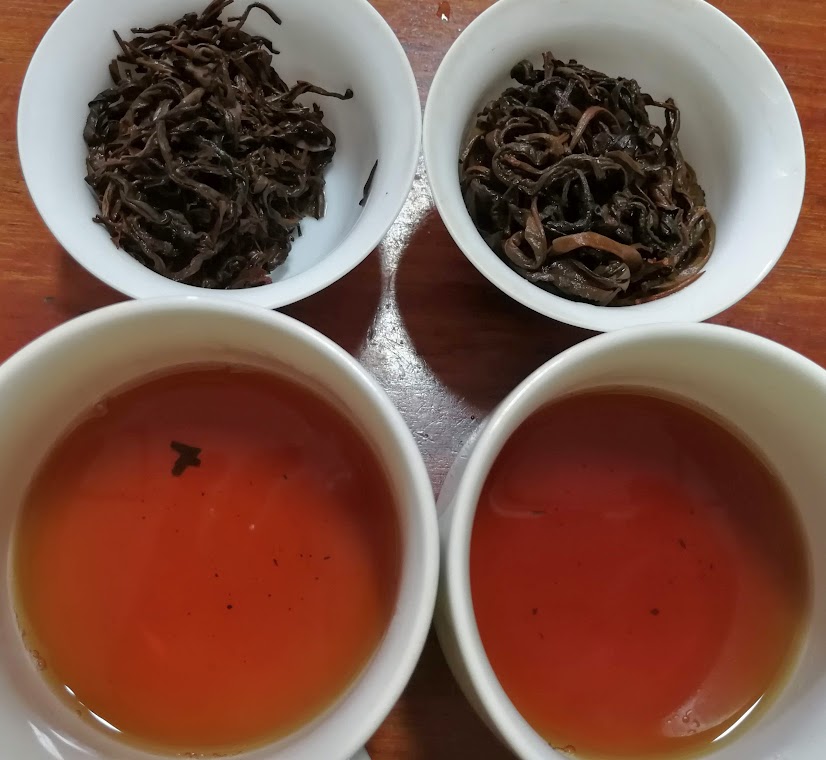
Assam Teehaus version left, Aran Thai "Assam" right


both used nice multi-layer packaging, and graphic stickers (not that such branding helps the tea)


I'm comparison tasting a Thai version of Assam along with an Assam version; that seemed a good way to establish a baseline.  I really liked the Thai sheng version from Aran (reviewed here); it just seemed a bit like green tea to me, in between type categories in style.  This struck me as quite close to an orthodox Assam, when trying it a week before doing a review, with this comparison filling in just how similar.  The outcome:  quite similar.

The Assam Teehaus product was a version that Maddhurjya Gogoi sent me last year.  His teas are pretty far up the scale for as good as orthodox Assam gets.  I think maybe versions from Oiirabot and Lautimi, sold by Tea Leaf Theory, might have matched my preferences just a little better, but that may have just related to being that much closer to Chinese tea versions in style, not to actually being better.  Dian Hong, Yunnan black tea, is a personal favorite, and tea really close to that in character might seem better to me, versus that actually relating to some objective improvement in quality.


meeting Maddhurjya (second from right) along with Sasha and Kittichai two years ago


I reviewed those Assam Teehaus versions here.   Comparing the label that version he had described as a "blended Assam orthodox."  From that review it sounded like I liked the other version slightly better, that a citrus aspect worked better for me than a more pronounced aromatic spice aspect.

For anyone into reviewing other range further this review from last year covered that Oiirabot version I mentioned,  and the Tea Leaf Theory Latumoni producer version.  Really good Assam is out there, there just can't be that many producers' versions on the level of all these.


Review:


Assam Teehaus version left, Aran Thai version right (in all photos)


I'll describe the Assam version--the one from Assam, India--first, since I'm using it as a baseline.


Maddhurjya's Assam (Assam Teehaus):  I didn't let this brew for long so it's a bit light.  The flavor is nice, complex and balanced, earthy with good sweetness.  Distilling that to a list will go better next round.  Some fruit and a hint of spice indicate it will show even better complexity as it evolves.


Aran Thai Assam version:  hard to evaluate in comparison for both being so light this early but this holds its own.  It's clean and full flavored, with some decent feel kicking in already, even though it's not fully wetted yet.  It's not so far off the other in character; more on that as a listing next infusion.


I tried to back off the proportion just a little from what I usually use to brew teas Gongfu style but in the end this was essentially that; the amount that would all but fill a gaiwan once the leaves saturated.  Too much tea to drink in one go too, especially since I just had some fruit with breakfast (fresh mango and banana with yogurt, a personal favorite), and drinking loads of Assam along with that doesn't work well.  Pastry stands up to lots of tea input better, or breakfast cereal.


Second infusion:


Assam Teehaus:  that is nice.  Warm sweetness kicks in, with lots of flavor complexity.  There is malt but it's relatively subdued compared to the level in a lot of Assam versions, that main-aspect, dry-feel related form.  Beyond the malt some molasses sweetness adds a dimension, and warm tones like aromatic wood or even mild spice contribute.

It would be possible to interpret some flavor as dried fruit, towards dried tamarind, but it's not pronounced, so it would be just as natural to leave that off a list.  I don't see it as floral but that also wouldn't be an unreasonable interpretation, along the line of rose petal.


Aran tea Thai version:  this experience overlaps a good bit with the other tea, more than I expected.  That malt is so subdued in this, and slightly different in form, that it stands out as a difference, but it is still common space, to a limited extent.  Complexity is on a similar level but the flavor range is different.  This leans more towards aromatic wood, or even cured leather.  That could easily be musty, but in this version expression it's quite clean.  It also hints towards a good bit of other range, the floral, towards warm and sweet dried fruit.  A little more dark wood tone seems to show through in this.

In tasting each back and forth the first (Assam Teehaus version) tastes more like dried cherry than it had without that direct comparison, a deep, rich flavor, more into fruit range than the other extends.  The feel for both is nice, and the way there is some pleasant depth of structure to them, but they're just soft and full, not astringent at all.  Even aftertaste range adds just a little depth to both, just not so much compared to how that often goes for oolongs and sheng.


Third infusion:


Assam Teehaus:  a warm aspect seems to bump up a bit, towards spice, but it's a little non-distinct.  The rest is similar, maybe just shifted a bit in aspect range.

This is pretty good tea, quite far up the scale of how Assams go.  Tea blog reviews tend to be about making minor distinctions, and that's what's going on here.  There's a good chance that I like this tea better than I did in the original review for brewing it Gongfu style instead.  For a lot of black teas it kind of doesn't matter, but for better quality versions being able to adjust outcome a little round to round, and experiencing the minor transitions, really can be more positive.


Aran tea:  similar; this is picking up a bit of depth too.  Given that I'm infusing both without using a timer that could also be it, a shift in brewing time.  Or maybe that's just how it would go for a tea like these being infused for around 1 1/2 minutes previously, where they would tend to be in a cycle.

Tasting one after the other the first (Maddhurjya's) is slightly sweeter and brighter, and the second (Thai version) a little heavier on dark wood tone, but again they are a lot closer than I remembered from the first try.  I tend to not frame interpretation as a clear "how good" judgement since that's just subjective, tied to preference, versus trying to communicate details of the experience, but both are good.


Fourth infusion:


I'll let these go longer to check on that effect, and probably let this drop after.  These will brew a couple of additional rounds, for sure, maybe even another three or four, but the point here is comparison, not adding every last detail.


Assam Teehaus:  more of the same, if anything slightly better, smooth, sweet, rich, and complex.  This tea really is better than I remember it last year.  Maybe it improved with age, or maybe brewing it this way worked out better than trying it prepared Western style in the first review.  Or other subjective differences always come into play, how I feel on any given day.

This house is a little chaotic this morning, making it hard to generate long aspect lists.  It would seem odd if that translated to liking the teas better, a slightly higher degree of background noise, but I guess you never know.


those noise-makers with cousins on a recent trip (mine are in the center)


Aran Thai black tea:  side by side differences stand out but tasted a week apart these could seem relatively identical.  The Assam version is slightly sweeter, a little towards dried cherry fruit versus dark wood tone, but they overlap more than they are different.

Both are good.  For the Assam I'd expect that; Maddhurjya has been working at making better and better Assam versions for a few years.  It's odd that a Thai producer could get so close to that in outcome.  Again I think there may still be just a little room for improvement related to the absolute best Assam versions I've tried, but these are definitely very pleasant.


I think the posing is about looking fabulous


Conclusions:


Really good tea!  The Aran Thai version, I mean; the Assam Teehaus I liked slightly better but both were quite good.  In terms of value this tea is more than worth the modest pricing that I paid for it.

It works on so many levels; this style of tea is forgiving related to how you prepare it, with relatively little astringency to brew around.  Brewed very light the intense flavor still comes across, and relatively strong still works, although some sort of medium is best.  I suppose you could even add milk to this, although it seems better to adjust your preference to appreciate how it doesn't need it, and wouldn't be improved by that.  Brewed at really high infusion strength it would probably be great with vanilla ice cream, at the risk of disrespecting the tea.

This mentioned that I like this style best prepared Gongfu style, but really using a Western approach is fine.  For lacking much astringency it would also work made "grandpa style," brewed in a tea bottle, and drank without separating the leaves back out, adding more water for a second or third round.  That's a great way to bring tea for car travel; carrying a half-liter thermos along even gets you that next round without running across hot water somewhere.

I just tried that with the Aran green tea version yesterday (at time of editing this post), and it worked well, it was just a little bitter.


on a road trip way back when


Friday, August 10, 2018

Assam Teehaus Spring 2018 black tea review


I tried another orthodox Assam version from Maddhurjya Gogoi, that Sasha passed on when I met him a couple weeks ago (from Assam Teehaus).  I've tried a couple, and it's hard to keep track of which one is the absolute best, or how different the batches are, so I'll just go ahead and review the one I got around to writing about.  It was good tea.  "Good" means a range of different things, which is where these wordy tasting notes come in.

I just re-read a post about trying a 2017 version a month ago.  This description is pretty close in general type, just a little off on a detail or two.  I can't say if it sounds better or not; when a tea is kind of similar you really need a side-by-side tasting to help sort that out.  For some types you can base a judgement on a couple of specific attributes, which will make it clear in your memory where you thought it stood for quality level and match to preferences.  These Assam Teehaus teas are pretty good quality overall, with a limitation of being a little non-specific, of mixing a lot of aspect range instead of being as narrow in character as some types.

I haven't described the tea yet, but in a sense all the complexity that I will describe almost comes across as a blend, with some clear common aspect threads through that character.  From what Sasha and Maddhurjya mentioned this may stem from an interesting input: the teas are made from locally sourced plants, so they know the farmers and growing conditions, but a limited variety of tea plants have grown alongside each other.  The tea plant source itself isn't based on monoculture, in terms of growing alone (only tea plants), or in the other sense of being made from a very genetic-specific plant version.  The "terroir" or growing condition inputs are relatively uniform but plant genetics vary. To me that's cool, and surely is a factor that changes the end effect.


This Halmari orthodox Assam version works as a contrast to that.  As a standard plantation tea they would control growing inputs and plant type very carefully and completely, achieving a much more uniform outcome, and a narrow set of aspects.  In general that's a good thing, especially since it can correspond to an experience of aspect intensity.


More than one being better though the two types of tea are different.  That Halmari version really did express a much sharper and more pronounced form of malt, which did come across as the main flavor aspect.  Some of what the Halmari version gained in perceived intensity in a limited range it gave up in terms of losing complexity of flavor. 


For some people the softer, slightly sweeter and broader flavor range in the version I'm reviewing here would be preferable, and for others it might not be nearly as pleasant.  I think Maddhurjya's teas are improving, so while I might have said Halmari's are just better last year--beyond being different--now that's not quite as clear now.

The detailed description will fill in what I mean.

Review


The tea is really nice, complex, sweet, layered, and pleasant.  When people describe Assam as having really intense malt as a dominant aspect this isn't that; it balances a range of different aspects.  There is some malt to it but it doesn't stand out more than other sweetness, earthy aspects, and some dried fruit.  A warm mineral layer provides a base for the rest too.  Breaking all that into a more detailed description is a bit of a task.


A mild form of malt stands out as much as anything, but it integrates with the rest.  Usually that aspect pairs with an edgy astringency but this tea is soft, but with good body.  I've brewed it perfectly, for my preference for the type, using a really heavy handed proportion for Western style (probably more like 5 grams versus 2, but I didn't weigh it), and around a 2 1/2 minute steep.

nice to get back to simpler tea tasting

Next in intensity is fruit.  It's a dark, rich fruit tone that overlaps with earthiness, tamarind or fig (really dried tamarind; the "fig" is to help place that, for people who don't eat it).  Earthiness is hard to place; between a cured leather and aromatic tobacco.  The sweetness level and rich body really make it work, along with all those flavors being really clean.


I went a little shorter on the infusion time next round, to see how drinking it lighter changed it. The first thing that I noticed was that I used hotter water, shifting the flavor to add that one sort of dark toffee aspect.  That came from not prewarming the infusion device cup the first round, I think. 


It reminds me of that post on oolong brewing temperature, where a couple main themes emerged, so I'll do a tangent and talk through some of that (again related to oolong, but some ideas carry over).


Reddit's Tea subforum version (credit)

There was a split between the "always use boiling point" side and the lower temperatures you see on reference tables side, with almost everyone going with boiling point given where that took place (in the Gong Fu Cha group).  I think lower temperatures might work better for Western brewing but I agree that to get the most out of good oolongs you shouldn't do that.  Personal preference muddled there being one final conclusion, except for the "boiling point only" side.  I think using Western style brewing changes things, and I also tend not to go with that for oolongs, although it works better for rolled-style examples than for Wuyi Yancha or Dan Cong (in my opinion).


A friend made an interesting observation, that if someone is a cigarette smoker they would naturally want the most intensity they could get, which still even relates when brewing a tea very lightly, in this divide related to drawing out the one edgier aspect range.  As I take it there is a parallel in the difference between these first two black tea infusions; a slight edge showed up due to pre-warming the brewing device.  Or maybe I'm over thinking all this.


Again in this round the complexity is good, even brewed a little lighter.  The malt comes out more in this infusion, tied to different, richer mineral and earth tones.  The flavor is quite intense but the feel is still full but soft. It would be hard to screw up brewing this tea, and that rich, full flavor would go well with different kinds of food.  For tea enthusiasts into sitting and contemplating a dozen Gongfu rounds of refined, complex aspect tea that could be quite an insult to a tea, to say it's good with food, but then this style wouldn't be for everyone in a way that does seem to dove-tail with that factor.


For people moving on from lower quality loose black teas it would be perfect, and for more experienced tea drinkers it would just depend on the range they could appreciate. Not everyone drinks black tea, never mind individual styles.  I like it, but then I seem to appreciate diversity quite a bit, teas being pleasant in completely different ways.  Sometimes I do brew very subtle, complex, or sophisticated teas Gongfu style with breakfast, but more often I like something more simple that's going to work well as two or three mug-fulls brewed Western style, something I don't have to think about.

More input from Maddhujya


In the last post I mentioned some difficulties that Maddhurjya communicated having in ramping up orthodox tea production:  stable power supply, problems with rough roads, the typical difficulties with sales and marketing.  A lot of that would be common to anywhere.  He did comment on specific forms related to some of the issues in discussion, for example about the power supply:

The biggest challenge is paucity of electricity. The processing unit in our village is almost 1 km away from the Grid Transformer so we don't get proper voltage. And everyday there is power cuts for hours...... We were depending on a diesel fueled genset but unfortunately that also broke down at one point.


I asked him about the mix of different plant types.  That particular issue is interesting to me, not something that necessarily makes a difference in final outcome mapped to consumer preference until you really know a lot about it, but it's still interesting.  He mentioned the range of plant types grown at different sources they use, and which relate to this tea version:

We have TV1, TV9, Panitola 126, TiniAli 17, some wild seed variety and some vegetative clones.  The major input percentage for this tea version is Panitola 126, with Tiniali 17 and TV 1 also mixed in.


That definitely makes my review evaluation sound better, since I'd guessed a mix of plant types had been an influence on the character.  I tried to explain how I saw that to him in discussion, about how a narrow type or a broader input of sources doesn't necessarily seem better, but the outcome seems different (quoting myself this time; a bit odd, that):

Some Darjeeling and plantation Assam teas seem to have a very specific, limited aspect set output, probably through control of both narrow plant type sourcing and processing factors.  That gains something in terms of intensity and being novel, and gives something up in terms of broader aspect range and overall balance.  It's not that one is better than the other, they're just different.   To me it's not that different than a single grape wine versus a blend.  It's a trade-off; one isn't better than the other.  French people seem more inclined towards blends but Americans produce and drink both, only exploring and developing blends more recently.


Oddly I'm talking to someone about sheng just now and this all works in that discussion context too.  But enough with the tangents.

It's also hard to be clear on what differences the various processing step inputs make.  In particular Maddhuryja has been mentioning use of certain machines.  This comment doesn't shed that much light on the broad range but it does work for indirectly pointing towards some of it:

Our Taiwan rolling table is not like Indian rolling tables. The stainless steel used in the rolling table is FoodGrade Steel.  And it has copper teeth on the table to give its tight roll.


I guess these parts add up to what you'd expect for developing tea processing; there are lots of potential improvements to be made and lots of small challenges to hurdle.  The teas are quite good, and still getting better, so in that one important sense it's already working out.  They'll just need to keep making the growing, harvesting, and processing details come together, and ramp up the commercial side.

If any readers would like to play a more active role in promoting local, sustainable tea production this might be a good opportunity, by checking into buying tea from Assam Teehaus.  It's strange for a blog post to express marketing so directly, isn't it?  I think it might get by people that not only small vendors could order this tea, that anyone anywhere in the world could look up Maddhurjya and ask about picking up a kilo of it.  The numbers really wouldn't work out to buy 200 grams of tea from the opposite side of the world but as quantity increases a bit shipping is offset by lower per-unit cost.  This is all familiar ground for Yunnan Sourcing China customers, but I'm not sure how many higher quality Assam drinkers have explored this direction.


Oddly I'm going to be saying something similar related to a very small start-up tea producer in Nepal over the next two weeks.  Not the sales pitch part; the rest, about history and development status.  It's good to see sourcing options development move beyond people only saying they wish there was an alternative to multiple-resale wholesale supply chains and large corporation tea production.  Now there is.  But I don't think the pull on the demand side is enabling this to work well just yet.  Some things just take time, and sometimes multiple variables need to come together for a paradigm shift like this to happen.  It may be that small local retailers play a crucial role, even online versions of those, versus completely direct sales working out.  Time will tell.


with Kalani, dressed for a school presentation


wearing make-up for that event


posing at home beforehand


Sunday, August 6, 2023

Specialty whole-leaf Assam from Maddhurjya


Maddhurjya Gogoi, a tea producing friend in Assam, recently sent me some tea to try and review.  It's been awhile since I've tried Assam on this level, or any Assam, really.  I've been through a few cycles of checking out teas from there, so the range is familiar, but I've been mostly on sheng pu'er for a number of years now.  I've already tried this tea, before tasting it to write review notes, so I know how it works out; it's pretty good, as I would've expected.

I met Maddhurjya on a visit here once before; he's such a nice guy.  Their tea production theme and philosophy is a familiar one, moving to create much better quality, organically produced teas from plants that were producing more ordinary versions earlier on.  They've been at it awhile, allowing time for experimenting with different processing techniques, changing processing equipment use (much earlier on), or even changing plant type inputs.  We didn't discuss all that again; this will just be about the tea.


Maddhurjya is second from right, beside Kittichai, the Jip Eu shop owner


The packaging mentions a number of branding and company names; it's described as Lu Ma Whole Leaf Assam Orthodox, Hand Crafted Black Tea, from MG TE, produced by Chah Bari, operated by Gogoi and Sons, under Assam Teehaus.  The last one is familiar.  They're in Dabohibil Village (Assam, of course).


In the past their tea versions have held their own against any other highest quality Assam I've tried.  Next one might wonder about placing that in relation to Darjeeling, or Chinese teas, or from elsewhere.  Assam is interesting and novel for including a variation of maltiness that comes across much differently in whole-leaf, higher quality versions than in relatively ground leaf tea forms.  The astringency drops out almost completely, reduced to a fullness of mouthfeel effect, so that flavor input stands alone more, combined with better sweetness and other range.  Flavors tend to include dried fruit along with a mineral undertone base.

I've still not covered if the quality level or general appeal can match that of good black tea elsewhere.  Style and aspect variations stand out more than quality level, which varies within any kinds of categories.  To me it's fair to either associate or separate whole-leaf tea production from other quality inputs, depending on what you mean, how you want to use that umbrella term (quality).  Broken leaf tea tends to not be as good as whole leaf versions, although there would be plenty of exceptions to that on both ends, just amazing broken or cut up leaf tea (like most tea from Japan, for example), or plenty of whole leaf versions that just aren't that good. 

Beyond that, comparing like for like, more whole leaf versions from Assam versus Darjeeling, China, Taiwan, Thailand, or wherever else, quality can vary, but in general aspects shift by local plant type, growing conditions, and processing inputs, more than some from a location tends to be better or worse (as represented by the best versions, of course).  Darjeeling doesn't express the same flavor range, or as much intensity (at least in one sense), but refined and very pronounced fruit flavors with good sweetness can stand out more.  Nepal teas can be fantastic in a different way, maybe a little closer to Darjeeling in character, but also just their own thing.

This tea description will help place all that.  I'll brew it Gongfu style, which is a normal approach for me for higher quality, whole leaf black teas.  Water is not far off boiling, and proportion higher than most people would use, probably 7 grams for a 100 ml gaiwan, brewing in less water than that, since that measurement tends to relate to the volume to the top, not how much you use.


Review:


First infusion:  malt hits you first; the usual.  Of course it's a soft and mild version of malt, not the type with a bit of edge, that seems to somehow pair with the astringency.  The depth of this tea is nice, the way layers of aspects combine to provide a really complex experience.  Warm mineral tones seem to support it as a base, but there is range one might interpret as either aromatic tropical wood or spice.  Mind you this tea is just getting started; it's not even fully wetted yet.

Fruit isn't as pronounced, at least yet, but one part tastes a little like dried tamarind.  Even though this first round is brewed a little light the feel is already rich and full, and aftertaste lingers on.  It's hard to describe why that matters in tea experience; how it supports a more complete experience.  The tea drinking experience can seem more limited without those extra dimensions, as a quick flash of a few positive flavors, versus an experience of more depth, when they're present (fuller feel and aftertaste).

I just reviewed two Chinese oolong versions, presented as being two different quality levels by the vendor, or at least that was implied in a cost difference.  A Tie Guan Yin version didn't include any more aftertaste experience than this, even though usually that's more noteworthy in that range of oolongs than in good Indian black teas, and then the other, a Dan Cong, compared more favorably.  


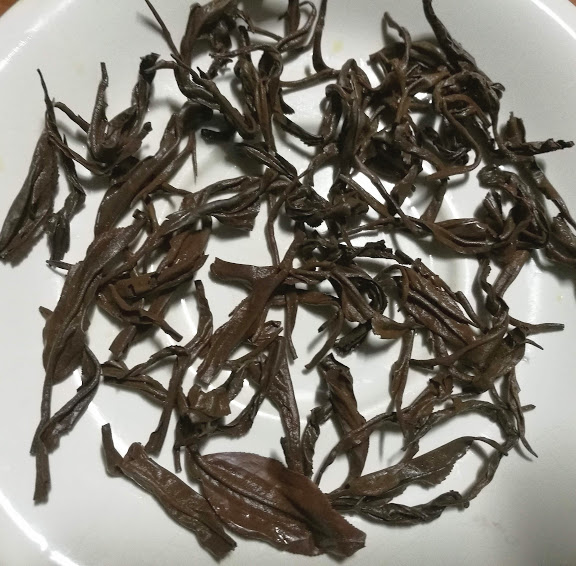
some color difference is from inconsistent camera settings, which I'm not editing to correct


Second infusion:  depth picks up, which wasn't exactly a limitation that first round.  What I'm describing as warm mineral tones, working as a base, combined with dark tropical wood or spice range, similarly more a context background than forward element, really needs even more unpacking, but I'm not sure if I can add a list of extra descriptions or concepts to help with that.  It's interesting how really good Darjeeling can seem to dazzle you with a complex range of pronounced, higher end fruit and floral tones, with pleasant deeper range supporting and balancing that, along with great sweetness, and then this is the opposite; the depth itself stands out.  The higher end might be drifting some to a warm dried citrus peel aspect, with dried tamarind fruit still present, but not overly pronounced.  Then that deeper range is more complex and intense.


I hadn't really thought of all this in those terms before but this may relate to what I love so much about Dian Hong, Yunnan black tea, that it covers both ranges equally.  Some versions can have a nice forward aspect, with less base, and it's more common for others to include a lot of warmer, deeper structure, mineral tones, mild and deep fruit elements, earthy range, etc., missing balance in what I'm describing spatially as a high end.  But often it just balances.  The different flavor range of roasted yam, roasted sweet potato, cacao, and mild spice is well suited for expression as pronounced aspects and deeper tones.


Back to this version, it's not unbalanced, because sweetness and lighter flavors are also present.  But one more cacao element, a touch of raisin, or a little extra other fruit or spice would balance it to expressing forward notes just as much as depth.  Often the more forward aspects can fade while depth picks up over rounds; it will be interesting to see how this changes in relation to that, if the deeper tones really dominate more later, or if the opposite somehow occurs.


third infusion:  the more forward flavor aspects transitioning round to round offsets some of the pattern I'm describing here, the depth standing out more.  There is still a faint edge of warm dried citrus in this, and more that relates to something like dried tamarind (more to place that range; it might differ slightly from that), but more of an autumn leaf tone is picking up, a sweetness and richness across an unusual vegetal range, that's really in between fruit and vegetal ranges.


Permit me a tangent about fallen leaves; the scent of tropical tree and plant leaves is much different than the range of those I experienced living in places like Pennsylvania and Colorado.  PA had deep and rich, very complex, tree vegetation range, so the fragrance of walking in the woods in the fall, or even spring and summer, was very layered and complex.  It's drier and less heavily forested in the high mountains in Colorado, so more spice-like, subtle, lighter fallen leaf scents would stand out.  Since you adjust to the scent range you happen to be in, just as your eyes can relate equally well to a broad range of light levels, to some extent all this would become transparent, just the intensity range you're within just then.  

The tropics are something else.  Vegetation has a sweeter, more floral oriented scent range.  It gives up the depth of a heavier, richer PA forest tone, and doesn't settle on the same lighter, almost spice-like range of CO forests, but in one sense fragrance is much more pronounced.  Sweeping the leaves in the driveway almost makes you want to brew that and try it out.  Some of that is from a range of types of flowers thriving at different times, or aromatic components of trees covering more range.  Back in Hawaii that tied to seed pods seemingly related to tamarind or other fruits, but here in Bangkok the gardens at the house grow dozens of kinds of plants, papaya, banana, lime, and mango, flowering vines, palms, basil, and so on.  

The depth of this tea ties to all that; in a sense it might be a mix of layers of tones that comes across as a base due to the diversity, since it's not that 3 or 4 of those stands out to seem more forward.


fourth infusion:  I brewed this a little lighter, not varying infusion time to see how results vary, but it did work out like that.  Brewed light the lighter flavors stand out more, and the warmer depth is less pronounced.  I think this is more in line with how a lot of people brew most Chinese teas, to try to be clear.  Intensity is still fine, but it would be easy for someone acclimated to mild black tea to like theirs brewed stronger.  

Getting back to a flavor-list approach a round later might help keep this reading length in check, and describe transition patterns better.  I'll get back to a 20-some second infusion time next round, brewing it on the stronger side again, since that works better as an experiential optimum for me.


fifth infusion:  fruit range seemed to shift the most.  What had been dried tamarind with some dried citrus peel might have transitioned a little towards plum.  Of course heavier flavors picked up too, from increasing brewed strength, back to warm mineral tone standing out.  

I'm not mentioning malt so much, for starting out by saying that's the main flavor aspect, right?  It's there too, but it settles into more of a mid-range background context; all the rest stands out in relation to malt.  Malt in CTC Assam seems to link to very dry flavor and astringent feel range, to astringency experience, and that's not present in that form here, since this has good feel structure but not that kind of edge.  Here it's a little more like malted milk ball range, or the malt that gets added to a milkshake (not often enough; I miss that from my childhood), or in Ovaltine.  That blends in better than the stronger and harsher variation; it's easier to almost miss it as one part that integrates with the rest.


sixth infusion:  probably a good place to leave off; this is long enough, and it won't be as interesting a story how this fades over the next half dozen rounds.  For brewing it strong it won't make it far past a dozen infusions.  The more forward, higher end range is definitely not dropping out; there is plenty of fruit left in this, and other more vague but complex aromatic range.  


Conclusions:


This is a really solid, high quality tea.  In terms of a general quality level I don't think this is giving up much to other black teas anywhere.  Flavor range and other character is different, varying naturally along with a range of inputs, but it's "as good" as any other black tea I've tried.  

That's a real accomplishment; it can drop into the background as a natural outcome, that of course any tea can be really good.  But so many inputs had to be controlled to go just right for that to happen.  The tea plants themselves, growing conditions, processing choices, processing equipment used, storage conditions; it all had to go really well.  Weather had to contribute positively; it's not as if all the conditions were something producers can control.  Maddhurjya and his family did a great job.

There is always going to be one more version out there that's distinctive in some other way, or finer and finer quality level steps to climb.  I'm not trying to say that this is the best possible orthodox Assam that could reach the market.  It's pretty far up the scale; interesting, distinctive, balanced, and refined, lacking any noticeable flaws.  

Sometimes I'll mention that pricing relates to the assumed quality level, that teas can be presented as one thing or another, like a Tie Guan Yin oolong version being sold as upper medium range, or a Dan Cong oolong selling as a similar thing, implied as better since the standard type quality range doesn't match directly, the scale of typical offerings.  I don't keep up with how higher quality Assam maps out, or how many alternatives would be anything like this, or some even better (there always is more range).  I suspect that awareness and demand for teas anything like this in both Indian and international markets is still limited, with the same being true in very different senses for Darjeeling, better Nepal versions, good Chinese black tea, and so on.  For whatever reason sheng pu'er awareness and demand "blew up," just in a very limited sense, and oolongs have always been a favorite category of many.  

Someday maybe specialty tea will have its moment, or maybe it will always be a niche interest.  Either way in the meantime this is a good example of what most people are missing out on.  That's too bad but not so bad, given how good Darjeeling and Chinese black teas, and the rest, all are in their own ways.


the last time I saw these guys, just a few days ago, with more separation to follow