Showing posts sorted by relevance for query moychay. Sort by date Show all posts

Sunday, September 27, 2020

Moychay 2020 Jing Mai sheng pu'er (Wengji village)


I'm reviewing the first of a large set of Moychay teas, provided by the producer and vendor, a 2020 Jing Mai sheng pu'er from Wengji village.  I might say more about the set and the context for them sending teas to review later but for this post I just want to focus on tasting results.

That's a bit more complicated in form because I'm starting it as a comparison tasting, using a tea from what I consider to be one of the best sources for sheng as a benchmark, a Tea Mania version.  Even that praise is probably an understatement; I think Tea Mania stands out as the best sheng source for both quality and value that I'm familiar with.  There's always better teas out there, so that statement is weighted towards the second part, that it's the only source I'm familiar with that sells sheng versions of that quality level for the $40 to $60-some range.

What about Moychay, one might wonder?  I've tried and reviewed some really good versions of sheng from them.  Some were incredible values, even those towards the bottom side of that cost range.  But Tea Mania teas have always been on a slightly higher level, the kind that drink well when you get them and have amazing aging potential.  More than that it's about price-range; for what they are they sell at below market value rates.  That will change at some point, for sure.

Related to Moychay one of my favorite overall sheng versions was from them, a Nannuo sheng version I reviewed some time back (first here).  As chance had it that was one of the the first teas I bought from them, walking into a St. Petersburg shop.  As I remember it had cost around $70, so not really outside that range, so it really does work as a counter-example, but just barely, as the value claim goes.  Since that was 2 1/2 years ago and I'm talking today's pricing maybe just outside the threshold instead.  

Then supply and demand factor in; Nannuo origin teas are in demand, as lots of Yiwu versions are, and holding the price to a lower range wouldn't work as well, when keeping quality level up.  The character of that tea made it a personal favorite, so to me that value was great.


I was concerned going in that maybe I'd like the Tea Mania version a lot more, or that maybe it would sell for considerably less, and then this wouldn't be a great way to start a review of a large set.  But the benchmark function was important to me; it's a lot easier to place character when tasting one tea against another, and how these stack up in relation to each other really does help me determine relative value, the cost per quality issue.  Also aging transition and potential to age well is an important factor in assessing sheng pu'er; how good a version is right now is only part of a longer story.  Since the Tea Mania version is four years older (2016) comparing transition effect should tell part of that story, even for the Moychay version, even though it hasn't happened yet.  The contrast will make it easier to "talk around" that factor. 

Value really is something that consumers should be aware of.  Even if someone's tea budget is loose, and they really don't mind parting with $1 / gram for a good tea version, then they should still be considering value, getting what they are paying for related to that expense.  Paying extra for a nice looking wrapper, a moving story, or smooth sales pitch makes no sense to me.  Moychay does produce great looking wrappers; that's not to say that I don't appreciate that.

It's a huge challenge for this Moychay tea, because as I say Tea Mania has more or less stood alone to me related to those factors.  Farmerleaf had been selling versions based on great value, but the last Jing Mai cake I bought from them was around $90 instead, quite good tea, but no better than the $65 or so Tea Mania version I bought this year was.  I'm guessing that Farmerleaf's material costs went up significantly, as they moved into slightly higher quality product range.  Yunnan Sourcing sells good tea, but they've moved to place their "wild arbor" themed better versions at $80-100 instead.  They're probably worth that; it's fair market value, for as good as the tea is.  Chawang Shop focuses on selling pretty solid teas at a great value, but I'd need to buy more of their young versions to really see how they stack up.  That source is definitely a contender.  

Obviously this one example isn't intended to represent how quality and value go across Moychay's line.  In the past I've been pleased to see that higher costs did seem to relate to better quality versions, and that the lowest price teas were still great values, for not giving up much for solid quality level.  "Gushu" versions tipped towards being pricey, but that's just how that goes.  That's how high original material cost translates to retail sale, and the character for what I tried seemed in line with expectations.

Let's consider these details, then go straight on to tasting (per usual I'm adding this during later editing):

Sheng puer from the trees of Wengji village, Jingmai mountains, 2020, selling for $62.43


Raw Puer "Tea trees of Wengji village" was made in a small tea farm in Jingmai Mountains (Puer County) in the spring of 2020.

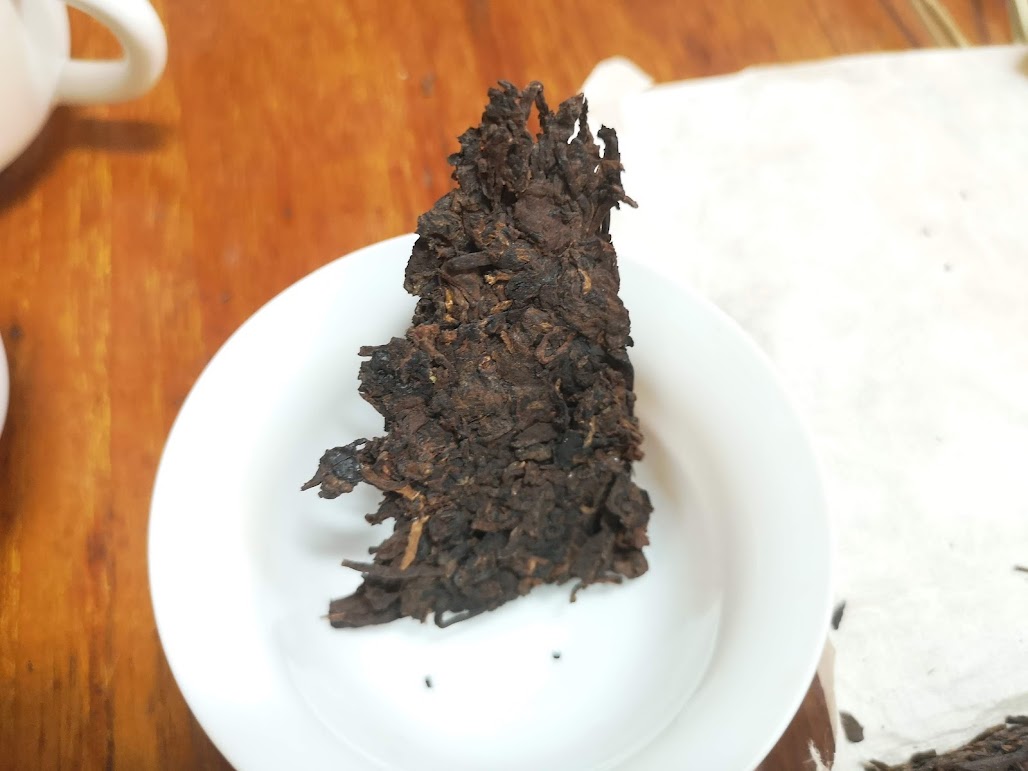
The teacake of 357 grams composed of brown, flagellum twisted leaves with thin cuttings and silvery tips. The fragrance is restrained, herbaceous. The infusion is transparent with a yellowish-green hue.

The bouquet of the brewed tea is fresh, herbaceous, with nutty and woody notes. The fragrance is tender, herbaceous. The taste is full-bodied and pure, oily, a bit tart, with a fine fruity sourness and lingering finish.


It's a little odd that I don't have a recent review of this Jing Mai version, even though I bought a cake of it this year.  I did review an autumn harvest variation that I also bought, from 2018, but I only have a review of this 2016 spring version as a sample, that I tried a couple of years ago.  No need to make this more complicated than it has to be anyway, cross-referencing multiple old reviews.


the Tea Mania version cost $3 more, so essentially the same, for slightly aged tea (2016)


I won't be sticking with this cross-vendor comparison theme in later posts; I'll probably do comparison reviews between Moychay samples and that's it.  To me it's an interesting place to start though, and it could help clarify the overall context.


Review:


Moychay version left, in all photos


Moychay:  that's great.  It's a little unusual, but in ways that really work for me.  I never really read vendor reviews before tasting but I just scanned this one, more curious about the selling price, and it mentioned tartness.  This is slightly tart.  I don't like tartness in black teas, and it's rare enough in sheng that I don't give it much thought.  But tartness isn't the main story to this, so far.

Flavor complexity and intensity stands out a lot, overall.  Some flavor is in floral range, with that tartness tied more to fruit.  One part reminds me of pine, and a good bit of mineral comes across.  Sweetness is good; pronounced.  There's more to the flavor range than I'm getting too; a pleasant more subdued part seems closer to butter cookie.  It will be interesting to see how that set evolves.

Feel is nice, with aftertaste effect standing out a lot more than the feel, at this stage.  It really lingers on.  That mineral range ties with a bit of dryness to the structure (feel), but it's not really overly astringent, even though it does have some structure.  Bitterness is present but a moderate level of that.  A very high level compared to how oolongs come across; I mean moderate related to very young sheng range.

This isn't what some people might refer to as "oolong pu'er" though; it has plenty of bitterness and astringency structure to indicate that the changes that would occur in this over the next few years would be positive.  Or it's nice right now.  As far as long-term potential, what this would be like after 15 more years, stored with medium level humidity, it's hard to say.  It might be better suited for that if it were more challenging now.  At a guess this will continue to improve for a number of years but would drink as well as it ever will within the next 5, varying most in relation to humidity level of storage.  That's just a guess though.  

To keep guessing, way past the range I have enough experience to justify saying anything, I would guess that with dry storage, in the range of 50% RH, or slightly below, this would be really interesting and positive after another decade, still fresh, but mellowed.  There is a dryness level below which teas are said to turn sour but I've not been exposed to examples to say more about that.  Living in Bangkok I would have to de-humidify storage quite a bit to get to that.


Tea Mania:  warmer, richer.  That's to be expected; this is four years older.  It's funny how these really share a lot of common ground.  A lot of that floral / fruit / mineral range matches up.  This tea is still aging towards where it would be best, I think, still evolving out some bitterness and astringency edge.  The brighter tones are already warming, with that fruit moving towards dried fruit.  Or floral moving towards a warmer floral tone; the way it all combines makes it harder to pick out distinct descriptions for those.  There's something unusual in the flavor profile of this, something generally positive, along the lines of Juicyfruit gum.  Again a pine aspect seems to tie to the mineral and astringency.

One might wonder which is better.  It's hard to get a sense of that; they're similar more than they are different, except for having a slightly different flavor profile.  The Tea Mania version probably started with more astringency edge, to be roughly even with the Moychay version at this point.  It wouldn't be wrong to say that this would bode well for it being better after a dozen years of aging, versus the Moychay tea, and that it wouldn't drink as pleasantly within the first 2 or 3 as a trade-off.

I'd expect this tea to be further along in terms of fermentation transition for being 4 years old but it probably spent that time in a much cooler and drier place than Bangkok.  Which is fine; a slower shift through that cycle could possibly work out better.


Second infusion:  


Moychay:  even better; I sort of saw that coming.  Bitterness did pick up a good bit, now in the range of biting a flower stem, but that other flavor range is really cool.  Warmth picked up, and depth.  This tea is going to be a lot better in another two years once it settles and evolves, so it would be a shame to drink a lot of it now, but it is nice like this, especially if people value bitterness in sheng.  It's not like the bitter version of a Lao Man E type; way less than that.  

I didn't give this a long infusion time but around 10 seconds was too long; I'll need to keep it moving.  Bright and intense floral with some fruit is nice.  The intensity and aftertaste adds a lot to that experience.  To be where I'd enjoy it most I'd need to cut that infusion time back to 5 or 6 seconds; the balance of bitterness and astringency isn't right for me.  The richness that I was interpreting as butter cookie makes the divide between the bright, sweet, intense flavors and the bitterness work better; it bridges those.  There is still some tartness but it kind of integrates with the rest.


Tea Mania:  That aging effect seems to be making a world of difference.  I can guess about to what extent the changes will also occur in the same form in the Moychay tea, just keep in mind that would only be guessing.  And I'm biased towards experience with how a hot, humid environment changes teas, which shifts them fast, and in a different way than drier conditions.  It was interesting trying a good sized set of different in-house versions from the Chawang Shop awhile back, aged in Kunming, to "see" more of the opposite effect, teas that were 4 years old or so but not all that transitioned.  

I'm not in the "more humid is better camp" at all; it depends on the sheng, what will suit it.  You read about those "hot box" experiments, that Marco of Late Steeps seems to have came up with, and they tend to imply that warmer and more humid is better, at a quick read.  But I think what is happening is that warmer and more humid is shifting teas a lot more, so if you "run" that process for a year for a test you end up getting one twice as aged as the other (progressed further in fermentation; of course the time is the same, and it's not a linear scale, the effect differs).  

For teas that absolutely need to get where they are going, like a really challenging Xiaguan tuo, or a Dayi Jia Ji tuocha, then more kind of is better, as fermentation level goes.  That's not where we are with these two teas.  They're not the type that you should be drinking straight through, best when brand new, but they don't absolutely need a decade to get in the drinkable range, since they're in it now.

Anyway, a bit more description before moving onto the next round.  Both teas are catchy in different ways.  The Moychay version retains that bright intensity that makes fresh sheng versions special, when the style makes them drinkable like that.  This other is picking up warmer fruit tones that are really cool, with the entire flavor profile warming.  Bitterness isn't an issue with this tea, although some is present, but the astringency level is still on the high side, coming across as both feel-structure and a little dryness.  I think this will mellow into something really special over the next two years or so.  It's taking time to get to a relative "peak," but my sense is that it's not at its complete best yet.


Third infusion:


Moychay:  one flavor aspect in this is really catchy.  The immediate impression is that there is one thing behind that, one note, but it's probably really how a set of flavors comes together.  Tartness has evolved away, for the most part, and warmth is picking up.  Floral and fruit range combine, with mineral and a trace of pine playing a supporting role.  It all integrates, coming across as just one flavor, but really it's a set.  It's like when a symphony plays, with a lot of inputs merging completely (in a selection where that's the intention).  It all heads a little towards a ripe banana flavor, a sweet, rich, warm and complex flavor that I only tend to experience in my favorite banana type here (which isn't what Americans are eating; per my recollection those tend to be a bit flavorless).  


Tea Mania:  warmth and a different fruit tone stands out in this.  It's still like the "Juicyfruit gum" flavor, which isn't that far off dried mango.  There are lots of types of mangos though, so only the one that I happen to mean.  It's interesting how the astringency and dryness stays pronounced in this, even using a faster infusion time.  If anything the balance of that may have increased, with flavor intensity dropping a little but the astringency level not.  The Moychay version might be slightly more drinkable at this stage (strange, right?), although both really would shine with another year or two of mellowing.  I think for the longer term the Tea Mania style is more suitable, but of course that's mostly a guess.

To be clear, for some people's preference this Moychay is probably as good as it will ever get.  It's a trade-off, letting some of that freshness and high end flavor go to evolve towards softer, richer, deeper tones, with astringency and bitterness fading.  If someone sees significant bitterness and astringency as a critical part of the experience, as complementary, then this is where it should be.  

Personal preference defines what the ideal balance is for different people.  Having started out as an oolong and Chinese black tea drinker I can really appreciate teas that are quite soft, rich, flavorful, and approachable, not challenging at all.  I can also relate to some bitterness and appreciate some astringency structure, but I suppose my own preference isn't for teas as edgy as some would prefer.  I don't "get" the bitter form of Lao Man E, for example.  Someone just mentioned buying a 2017 Dayi Jia Ji tuocha in a group and I passed on that I would probably like that tea better in a few years, based on the 2015 versions I have not seeming quite ready yet, to me.


Fourth infusion:  for doing a combined tasting I won't run through 10 infusions worth of notes; maybe only a couple more rounds.


Moychay:  it's funny how bright sweetness drops back this round, and a plant-stem range bitterness picks up.  It's still good, just different, shifted quite a bit in balance of aspect inputs.  I suppose that will keep happening, transitions.  Pine seems a little stronger for associating more with that range, but I think it's an effect from interpretation, not an actual change of what is present.  It still has good complexity, that just thins a little.  There's a good chance this will just be different within a couple more infusions, so it's not "playing out" at this stage, just changing instead.


Tea Mania:  this is nice with a lighter intensity balance (I probably went that bit faster on infusion time, or maybe the initial intensity of the first rounds is letting up).  As both of these drink right now, tied to personal preference, I might like the Moychay a little better.  That brighter intensity is quite pleasant, and the more challenging astringency edge is about at the same level for both.  Per my experience with the 2016 "Lucky Bee" Yiwu version that particular form of astringency represents a transition potential that won't take long to change to a creamy fullness, nothing like a decade, these will both soften and deepen relatively fast.  

I'll try to be clearer; someone reviewed what is probably a 7542 (questions of authenticity come up) within 7 or so years of production, and they described it as "still brutal."  That's not what is going on with these.  Warm mineral is a lot stronger in the Tea Mania version, than the mineral range in the Moychay, but bitterness level is a lot lower.  They overlap less in character at this point than they did in the first round.


Fifth infusion:


Moychay:  flavors are warming a little; this hints towards spice range.  It's not just a slight trace either, both the warm rich flavor of cinnamon and the deeper, softer, "rounder" range of root spice seems to be evolving (sassafras or something such, or maybe ginseng, there is a dry mineral sort of theme going on too).  The brightness seems more lemony than floral at this point.  I suppose that was probably a decent interpretation last round, or maybe even initially, but a stronger floral theme stood out more to me then.  This overall balance is pleasant.


Tea Mania:  it's interesting tasting this and seeing how much common ground there is, since I've somehow found it more natural to notice differences over these last rounds, in these notes.  There is a base set of flavors and other character that is still common to both.  Feel for both has an interesting structure, and that form of astringency is a bit unique.  In the Moychay version it pairs with brighter flavors, and couples with more bitterness, shifting the overall effect.  It's strange that I'm claiming that flavor range affects feel, isn't it?  I mean that the overall effect seems to pull how you interpret the parts.  In both cases there is a common base of shared range but the rest stands out more, and shifts how that central theme and grounding context comes across.  This could be "lemony" too if you expect that, just less so for being less intense as more forward, brighter flavors go.


Sixth infusion:  this might be a good place to leave off; 12 of these cups of tea is plenty for me.


Moychay:  not changing that much since the last round; I've been waiting to say that.  If anything this is as positive as it's been yet; the aspects really integrate well together.  That bodes well for the next half dozen rounds.  I think bitterness will pick back up as infusion length extends, to compensate for fading, with that having faded from the original form in these middle rounds.  It's nice how clean and integrated this comes across.  It's clearly pretty good tea.  

This is what I would associate with a general Jing Mai character, just an interesting expression of it.  Bright flavor intensity stands out more than it sometimes does, and pine can be a stronger input than it has been in this.  I've not really tried to pull apart what I've meant by the floral or fruit descriptions here much, partly a casualty of doing a combined tasting, and partly in relation to these expressing a range of complex flavors that could be interpreted in different ways.  That and I'm not good with floral scent memory.  


Tea Mania:  this is as positive as it has been too, but for different reasons.  That astringency balance is as moderate as it has been, and the cool dried fruit / Juicyfruit gum flavor range still stands out.  I think I've adequately brought across that I think this would improve a lot more over a bit of aging transition, only 2 more years.  That's probably  also true of the Moychay version, but with it probably a more neutral trade-off.  This tea has already lost some of it's most pronounced, highest end youthful flavor intensity, but the challenge of the astringency is about even for both.


Conclusions:


This is quite good tea.  I was concerned that the Tea Mania version might have been better, which is no way to start a series of reviews of Moychay versions.  They were just different.  Both are probably at least as good as the last Farmerleaf Jing Mai version that I bought two years ago, or maybe both slightly better, at lower cost ($60-some versus that around $90).  Both are very good value teas.

The part about considering aging differences and potential worked out.  I think both of these teas would be better in two more years, which I've already discussed at length.  It was a little odd to me that the Tea Mania version didn't transition more than it had, for being that age, but then I am accustomed to the "hot box" local climate effect of living in Bangkok.  It's 35 C / 95 F here right now, at 51% RH, and it doesn't feel hot to me, because that's just the normal temperature and humidity.  It's the rainy season but it hasn't rained for 24 hours; that level will bump a lot once it does again, which may occur later today.

People would probably feel differently about buying brand new tea versions versus those already aged a bit.  I like experiencing the whole transition, so to me it's positive trying them when new, even if I think the best effect would come from waiting another year or two.  At least you can make that decision if you own it new.  For this 2016 version I think it's still improving, so that matters less.  As for it being a few years old adding value, I guess, maybe.  This Moychay Jing Mai version is quite drinkable at this stage, so it would really depend on how someone likes the tea best, based on expressing what aspect set.

It's possible this Moychay version really is slightly better.  I think in terms of long-term storage potential the opposite is true, that the Tea Mania version started out with a character more suitable for long-term aging.  In terms of which drinks best after an optimum amount of transition time I'd really be guessing.  The Moychay version has lots going for it in terms of bright character, clean and positive flavors, intensity, and good balance.  The Tea Mania version had more astringency that wouldn't have been nearly as positive for a brand-new version, but it's headed into a very positive character range.

So far so good for tasting from this large set (many thanks to Moychay for contributing that).  The experience was very positive, and the tea holds its own in a tough test of value comparison.

Lots of what is to come is in much less familiar range; this should be really interesting.  Willow herb (Ivan chay / fireweed) is a part of that, and interesting looking black teas; even some blends.  

I skipped an interesting story about these getting stuck at Thai customs, but it was more novel to go through than it would be pleasant to hear about.  Imagine going to the DMV to get a driver's license, then filling out some extra forms, struggling with website process description, and then going back a few more times.  I think it was a reasonable karmic price to pay to get to this tea set.


not on the Trip Advisor list of places to go in Bangkok


Saturday, March 19, 2022

Moychay Krasnodar (Russian) shu and Chawang shop Jinggu shu pu'er


the Chawang Shop Jinggu brick version


This is a novel form of review, trying two shu pu'er versions that I expect both will need some more time to settle, related to not being very old.  I thought that earlier covid taste sensation impact would still be a problem at this point but it's been clearing up fast over the last 4 or 5 days, and that's pretty much behind me now.


Here's what they are:


Krasnodar shu puer, 2021 (from Moychay, a Russian vendor)


An experimental tea made in Khosta region from local tea cultivars (harvest 2019) using the Menghai Shu Puer «wodui» technology.

In appearance: medium sized curved flagella of dark brown leaves and buds, a small amount of thin cuttings and sticky lumps of «chatou». The aroma is intense, with notes of baked chestnut, toasted bread and spice. The infusion is transparent, with a chestnut-yellow shade.


Since this is listed as unavailable (out of stock, or perhaps to be returned to stock again later) there is no pricing listed, which I suppose is as well given the current events context, which I'll add more about after the other tea's details.  It's interesting seeing the tasting comments; as usual some people really liked it and others didn't at all.  The style is a bit unconventional, and I think the tea needs time to rest to really be at its best.  It doesn't say when it was fermented (wet piled), which is really most relevant with regards to when it will be rested from that process, not the harvest date.


2021 Chawangpu Jinggu Lao Shu Zhuan 400g


Material for this brick come from two villages in Jinggu and collected from 2018-2020. Larger leaves from spring and autumn harvest, also called huang pian, are pure old tree material. Fermented in Menghai during winter 2020 by well experienced master and the result is very good! 

Dark and clean tea soup with some dry fruit notes. Sweet and smooth.

15USD per 400g brick is special offer !

Manufacturer : Cha Wang Shop

Production date: Harvest 2018- 2020, pressed 11/2021

Harvest Area : Jinggu area, Puer


That pricing is unusual, per a separate post notice a special offer related to the tea not being fully rested yet, and as a kind of bonus to regular customers, not selling at that value related to a conventional business practice.  This tea is probably better than some of the shu cakes Yunnan Sourcing sells for $60 (at a guess; I've tried versions of their Impression sheng cakes, and at least one other in-house version, which were all nice, but not their shu).  I'm basing that guess related to placing a lot of shu versions, and to me this is well above average, rated against my preference.  That does include that it really seems to need a bit more rest, maybe even another year of it.  There's one standard style of heavy, peat-intensive, fully fermented shu, that can transition to lighter flavors and creaminess with some age, and this isn't exactly that, which I see as positive, since I like that, but I like positive variation from that more.  

Lots of shu made now seems to be maxed out for fermentation level, but this might be backed off a bit from that.  It's possible this has good potential for a 10+ year old version as a result but to me that would only make sense to check out related to buying a few of these cakes tied to value, not so much in terms of seeking out absolute best results.  It's decent shu, at a minimum, but to me aging shu doesn't usually tend to make enough difference to warrant a decade worth of storage oversight and wait.  The first year or two can really straighten out newly made character, letting it settle, but to me the whole point of shu is that it's easy to drink and really doesn't need time to reach an optimum.


There's not much to add about this one tea being Russian, related to that war, currently the main news item.  Obviously my full sympathy goes to Ukraine, and the sympathy I have for Russians suffering economic impact is a bit tempered by the comparison to that far more severe case, and the cause, that their own government initiated an unjust war, and what I see as murder of a neighboring country's civilians and ongoing war crimes.  All the same citizens of Russia didn't cause this, any more than citizens of the US caused a relatively unjust war against Iraq (the second one; them taking over a neighboring country that first time wasn't ok, just as it's not for Russia to do that now).  Some Russians might believe state propaganda and see it as a just war but everyone I hear from online expresses the opposite.

Russia, the US, and China really need to move past all this, and do their best to work towards the common good of their own citizens and that of other countries.  Of course that's not the kind of world we live in.  What Russian leaders are in the process of doing goes a couple steps further than the horrors that are the norm, and the most severe economic sanctions in history are a natural outcome from that.

I'm a fan of all three of those countries' cultures, and others.  Visiting Russia four years ago was one of the most memorable experiences of my life, as visiting China three times was.  It's a shame that appreciation can't extend to the leadership of any of the the three.


a friendly Russian offering guidance in the Moscow subway; how I remember the people there


friendly Russian tea shop staff; there were no exceptions from that theme


Moychay will take the same hit the rest of Russia does.  This post isn't intended as implying that Westerners should be ordering tea from Russia at this time; how that works out per a standard perspective is obvious enough, and it would make sense to get back to that only after this war gets resolved.  Supporting a foreign Moychay branch wouldn't necessarily offset the end goal of these sanctions, since there must be few Russian companies not operating at a loss just now, outside their oil and gas industry, so tax revenue trickling back to the Russian economy wouldn't be much of a factor, related to companies operating at a loss.  

These posts are never actually intended as direct marketing, I'm just passing on what I think about teas.  If I say that I think a tea has a really unusual character, is of unusual quality level, or represents an exceptional value, then I guess that could be implied, but even then it's just sharing perspective, not a sales pitch.  It goes without saying that personal preference, quality judgment, and impressions about value would tend to always vary.  The judgments here about shu needing a rest period to offset fermentation related aspects probably wouldn't be all that universally accepted either; it's just one person's opinion, based on trying moderate amounts of shu (only dozens of versions versus hundreds).


Review:


Moychay left; coloring is washed out related to light level for that image


both teas were normal shu color, brown


Moychay version left, Chawang right, in all images


Moychay Krasnodar shu:  nice!  I think this will clean up a bit with more time to settle, but it's nice like this.  A warm, dark bread tone dominates it, complete with dark rye and fennel seed tones.  Fermentation related funkiness isn't on the level I would've expected for this being less than a year old [if it is; fermentation timeline is implied in that 2021 date], but that does vary.  

A nice cocoa range supports that grain scope.  It has enough sweetness and complexity that it seems likely that fruit will fill in more once this settles a bit.  That mix sounds nice, dark grain, earthy seed range spice, cocoa depth, with good sweetness, and it is.  There's a little off-malt fermentation related flavor, which could be interpreted as in mineral range, not so far off cement block scent, but I'd expect that to only be an early round theme in this.


Chawang shop Jinngu:  the first aspect that hits you is an odd flavor input, not exactly like that cement block taste in the other but related, more towards wet slate, with a bit of mortar cement mixed in.  Again I think age will mostly drop that out, but for being stronger and more dominant than in the other tea it might take longer.  This version is from late last year, apparently packed at the end of November, so it is a bit early to be tasting this.  In looking at the description it was fermented in the winter of 2020 (which can mean two different things, that it's two years old or else more like one), and only re-steamed and pressed over the last 5 months.  But then it's not as if the "settling" step occurs on a fixed timeline.

Beyond that moderate level of funky range there is interesting scope.  It seems a little lighter, maybe less fermented than the other, with a lighter fruit and spice range potentially showing through.  It should be easier to describe next round.  Sourness stands out more in the first version when finishing this round of both together; this tea isn't sour, but there is an odd flavor aspect present.  Fermentation tastes should fade for both over the next year, or maybe even six months, given how the hot and humid Bangkok climate tends to speed up any transitions teas might go through, positive or negative.


Moychay Krasnodar shu, second infusion:  the sourness that stood out more in direct comparison seems stronger this round.  I suppose it works better for me because that flavor range, mostly around dark bread, naturally pairs with some sourness in the dark bread form, so it's easier to accept for sort of being expected, or even easy to overlook.  The cocoa tone is already starting to give way to a heavily roasted coffee input; this will probably finish an early transition cycle and be different next round.


Chawang Jinggu:  this is brewed stronger; that's apparent from just the appearance.  I didn't get the proportion (weight) to match, which is easy to get wrong when pairing compressed and loose teas, estimating amount by eye.  It's not that far off, and how fast these brew at different phases probably came into play as well.  The fast rinse for the Moychay tea was strong; it would make sense to be careful to only use a very fast rinse for that tea to avoid stripping out too much flavor.  I actually drank part of that rinse to check it, versus just tasting it, not that afraid of toxins as by-products from the fermentation process, even though they are present.

This is cool for being so distinctive.  That cement range mineral is moving towards struck match already, a lighter mineral tone, with plenty of warmth, richness, and depth filling in behind that.  It's better than my description implies; the complexity is good, and overall balance is nice.  It really probably does need a half a year to a year to keep settling, not really showing its full potential yet, as is probably true of the other version too.  This particular tea might be even better in two or three years.  Fermentation effect just varies, and even for this seeming to be a little on the light side, or maybe more accurately backed off a little from being completely fermented, the funkiness from it is significant.  It tastes much cleaner side by side with the other, tasted one after the other, for that sourness missing in this version, but that one flavor tone range is pronounced (cement moving towards struck match).


Moychay Krasnodar shu, third infusion:  someone's take on dark breads really would determine whether they love or hate this.  I'm on board; I really like it, about as much as I love shu in general.


Chawang Jinggu:  this is cleaning up a little, which is nicer.  It's hard to say that it's a fruitiness that comes across, but it's along that line, mild spice and dried fruit.  The warm aspect range is a bit neutral in this presentation, not clearly any one thing or another.  Mild root spice seems the closest match, which tends to be a neutral range, in some forms.  I can give both a slightly longer infusion time next round and see how that changes things, since the early transition away from odd flavors seems somewhat complete.

It's a little odd reviewing what isn't present, versus what is, but there's a lot of range of fermentation related flavor that could have occurred but didn't.  People describe shu as fishy, and I tend to not notice it in that form as much as many do.  Heavy peat flavor is more common, and some can taste like petroleum or tar.  Musty range flavors don't come up as often as one might expect, but of course they can.


Moychay Russian shu fourth infusion:  I brewed this round for around 20 seconds, versus around 10 for earlier rounds, although these would be fine brewed inky strong doubling that longer time too, to 40 seconds.  Fennel seed jumps to a much higher level input balance again, and this seems better this way.  Sourness has faded quite a bit but those other stronger flavors are probably also overpowering it.   This seems fairly clean at this point, not really off in any way.


Chawang Jinggu:  interesting how this changes, brewed stronger.  Warm and pleasant tones ramp up, and that cement range odd character has largely faded, but an aromatic floral range ramping up connects with a soapy effect now.  It's not enough to really throw off the experience, but different.  Those non-distinct woody or spice range warm tones are nice.  It's a little closer to cedar this round, versus spice.  

I don't know if it's apparent from the description but this seems like it would be a good tea to drink with food, with pleasant complexity and depth, and a neutral enough flavor range that it could adjoin and pair with lots of other range.  This would be good with toast and jam.  The other tea is a bit more distinctive, probably pairing with a more narrow range for that, but still probably decent with some foods related to reminding me a lot of dark bread.

Permit me a short tangent:  the last great dark bread I experienced I bought visiting Russia, some years ago, which I bought in Murmansk. It seemed like it was just a typical version to them, nothing presented as special, but it was fantastic with some cheese I bought there, truly memorable.  Ordinary pumpernickel is great in the US, not that I've had it in a long time.  There are specialty bakeries here, and I could be seeking out much better bread than I tend to experience, but I eat more Thai food than Western, and tend to buy better lighter bread in Japanese bakeries here, where they're really not into dark bread.


Fifth infusion:  not changed enough to write more notes.  Both versions are the best they've been though, very nice at this round, and probably not yet finished, although the Moychay version is dropping out faster.   Both are good, I think.  Both clearly reject the "shu is shu" theme of all versions tasting similar, one critique I've made about the tea type in the past.  The general type varies less than sheng, or even oolongs, I think, but these are both positive and distinctive in novel ways.  And I think both will be even more exceptional in one more year; it would be a shame to drink through too much of them before they're really ready, even though both are fine to drink now.


Conclusions:


Both were pleasant, interesting, and novel.  The Chawang Shop version kept improving over rounds, and held up to a higher number of rounds at higher intensity, with a lot of the most positive range of the Moychay tea extracting earlier.  I think the Chawang Shop version included a bit thicker feel, which I really didn't focus on due to combined tasting often limiting the range of aspects considered.  It will probably settle into being a more conventional, balanced shu version, with this Russian version staying a bit unusual, which could be good or bad depending on match to preference, and how it changes over the next year of rest.


Tuesday, March 30, 2021

Meeting Amsterdam based tea enthusiasts online


that meetup, comparing chen pi (photo credit Suzana; hers are usually better)


There's no need for me to keep writing every time that group of friends and I have an online meetup, a video version of a phone call, or social get together, but I'll briefly mention one more, and others that follow as long as it makes sense to.  We met two very interesting tea enthusiasts based in Amsterdam this past weekend, discussing tea themes there, and even more about general experience.

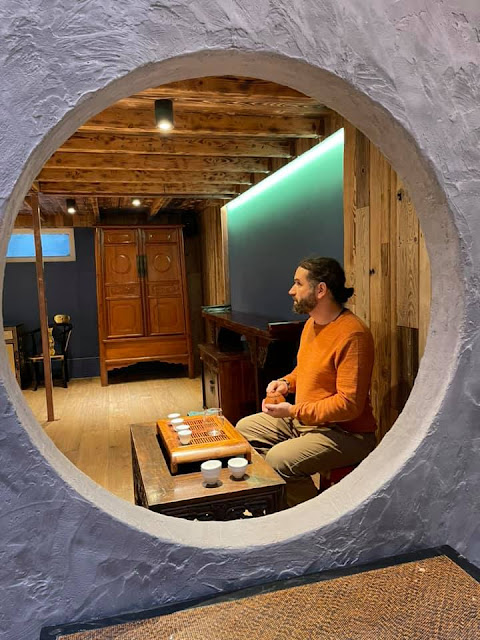
The contacts are Daria and Dmitry, real-life contacts and friends of my friend Ralph.  Daria is an artist, whose work can be seen on Instagram and Telegram.  They talked about visiting the new Moychay tea club and shop there in Amsterdam, their first in Europe, which I also wanted to mention, since I may or may not have brought that up before.  I'll add a bit more about the Moychay theme in a later section, some photos.

The rest was what you'd expect, personal introductions, talking about tea experiences and preferences, what we were drinking just then, local cultures, etc.  It's all the more interesting because people in different countries naturally experience different local tea culture based on varying personal exposure.  Even something relatively central, like contact with a somewhat original Chinese tea tradition, varies in form and content quite a bit.  

Tea perception in India has been serving as an example paradigm, beyond China and these local areas (Amsterdam and Russia, over the last two meetups), based on Suzana's input, and related to that serving as a good example case.  German tea enthusiast subculture would be like that in Amsterdam, and in an online environment like a Discord group actual contact could overlap.

It was particularly interesting that Daria and Dmitry had the experience to fill in some of what we had covered about Russian tea culture the last time.  The topic of Russian "prison tea" or chifir had come up on a Reddit post recently, and Dmitry described actually trying that (incredibly potent over-brewed tea, intended to cause a drug-like effect).  His take:  pass on that; it's not a pleasant experience.  In looking up that recent thread link it was interesting how it was also discussed there four months ago and four years ago.  There's nothing new under the sun, at least on r/tea.  

And we talked about Ivan chay / willow herb / fireweed, and tea club forms in different places, variations in local preferences, about masala chai versions; all very interesting.  Ralph offered that licorice root served as a secret ingredient that made masala versions served at German music events especially tasty.  Suzana rejected that this works as a conventional masala chai variant, even though it might be pleasant.


One extension of that meeting form we've been considering, and never really resolve, is how to expand that kind of discussion to include more people, versus one or two different additions each weekend session.  Recording and sharing the sessions would work, but since they are just social meetups, not really formatted for that, it's not appropriate.  It's not an interview, as in a podcast form, just people talking.  

Adding more members is an option, letting another few--or many--people join, but that's also problematic.  We've had 5 people meet together this past weekend, and 6 the weekend prior, and that felt like a practical limit, so many participants that not everyone was as actively involved.  Having 10 people meet would require some sort of change in form, something like basing discussion around a central panel or guest, with some form of moderation.  Unstructured informal discussion is better, in a sense, more comfortable.  But it would be nice to share the experience, if we figure that out.

With even 4 people discussing tea it's hard to dig far into personal favorites, brewing practices, and exposure background, and then new findings beyond that, about recent events and such.  Over the course of most of a year it did work to go into that, in talking with Ralph, Suzana, and Huyen in weekly sessions.  Huyen took us a cool step beyond that recently, sharing live video of tea processing in Ha Giang, a prominent tea production region in the far North of Vietnam.  That wasn't one of these meetups, just a spontaneous call, which I'll add more photos of along with the Moychay theme in a  following section.

As I mentioned sharing these summaries partly relates to potentially evolving and opening up this form of discussion later on, but related to just continuing on in the same form, it would connect organically to continue on to exploring Eastern European tea culture.  Really there's a lot going on in different places that it would be interesting to hear about.  Latvia in particular comes up as a center of local tea culture, and I've written about tea culture in Poland, and run across chance contacts in lots of countries (Italy, Spain, Indonesia, South America...).  

Some of that local culture contact relates to posts in the International Tea Talk FB group I moderate, or elsewhere.  Beyond discussing local culture it would also be nice to get back to exploring tea producer contacts.  It never did work out to include an online friend from Nepal, and it would be interesting to hear about status in a few other countries, after earlier discussion with producers from India, China, and Laos (two from there).  Maybe even the US.


More on the Moychay Amsterdam club and Ha Giang tea processing


Moychay's local club and enthusiast Facebook page shows more photos of that space (with this their main site).


just amazing (credit that FB page for all photos here)


the Moychay founder, Sergey Shevelev, in that shop space


only partly related, they've explored creating handmade teaware lately 


Huyen's photo of a Ha Giang, Vietnam visit (credit her FB page, also on IG)


meeting a tea farmer / processor by Whatsapp call


with Huyen, cheerful as always


tea growing where she was visiting (or maybe on a different day, but roughly the same thing)


Thursday, July 23, 2026

Thai Wawee Assamica black tea and Moychay Fengqing Dian Hong


I'm reviewing another black tea from Wawee Tea, a sample sent by them with an order of sheng and black tea, and a Moychay Dian Hong for comparison.  Reviewing two teas helps place each, through comparison and contrast, and doubles the pace that I get through teas I'm reviewing.  A large set of samples provided by Moychay helps with that first role (many thanks for that, even though it was a thanks for helping them with some editing).

The Thai tea is presented as "Assam."  It's normal for local producers to call Assamica plant type based black tea Assam, whether the style is close to that origin range type or not.  I think they kind of mean "Assamica" by that, but it doesn't matter what they mean, the teas are what they are.  

There isn't any description of that from them, since there isn't a conventional sales site to refer to.  They would have outlets on the local online shopping platforms, on Shopee and Lazada, but people in other countries couldn't use those, and people in Thailand would often already know of those if they like that style of tea.  I order from them by direct staff contact, kind of the old fashioned way, when I see posts about something that look interesting.  This is a related Facebook page; that's where I'd see such things, in others forwarding those.  I could look this up on Shopee, but I'm not going to.

I did look up another citation of a different tea bag version on that Facebook page though, here.  


Wild Assam Black Tea with Osmanthus Flowers

This is Wawee Tea's unique blend, currently served in major hotels in Bangkok.

🍂The main ingredient is Wild Assam Black Tea, produced from centuries-old wild Assam tea trees on Doi Wawee.

Guaranteed by a silver medal award in a black tea competition. International Black Tea Competition 2019, China

🌼 Blended with Osmanthus (Guihua) flowers Authentic variety from Dali, China. Grown 100% chemical-free on our own farm.

🍃 Packaged in tea bags made from corn fiber, microplastic-free.

Brewing Instructions:  Steep the tea bag in hot water for no more than 2 minutes.  For 250 ml.

20 Baht per piece


20 baht is about 60 cents, so that should be about 15 cents a gram.  The tea is pretty good; that's fair.  Again that's an osthmanthus flavored version, that looks to be made from the same black tea base, but I don't know that, and I don't know that the pricing is identical (although there's a good chance that it is).

Those brewing instructions would probably work, but it would be a real shame to throw away that tea bag after it had brewed for two minutes.  It could surely make a pleasant second infusion.


Of course Moychay lists what their tea is, and it would be sold on an online platform, here:


Black Tea DIAN HONG CHA, Chinese tea from Yunnan Province (Red Tea), 70g, 7g  (70 grams costs 7.34 Euro, or $8.35).


Dian Hong, or Yunnan Red Tea, originates from Fengqing County, Yunnan Province, a region renowned for its ideal tea-growing conditions. First developed in the late 19th century, Dian Hong transitioned from green tea production to meet the rising demand for black tea. Its unique flavor and consistent quality have earned it recognition both in China and internationally, even being gifted as a national tea to foreign dignitaries.

Cultivated at altitudes of 1800–2200 meters in Dasi Township, Fengqing County, this organic tea is hand-picked during the spring harvest (March 25 to May 5) using the traditional standard of one bud with three leaves. The tea is made from the Mengku Da Ye Zhong cultivar, and its production involves withering, rolling, fermentation, and multiple drying steps, ensuring a rich, full-bodied character.

Dian Hong brews into a deep red infusion with a complex aroma featuring honey, fruit, and floral notes. The taste is smooth and rich, with a satisfying balance of sweetness and a slight hint of bitterness. Its long-lasting aftertaste is sweet and lingering, offering a comforting experience over multiple infusions.


Let's start with that pricing; it works out to 12 cents a gram (or it would be $12 for 100 grams).  That's pretty favorable, on the low side of the range for this type.  Maybe that implies that the quality level is moderate, or maybe it's just a good deal; it just depends.  Skipping ahead maybe a bit of both, related to writing this after doing the tasting part.


atypical presentation, compared to what I'm accustomed to


Review:


Thai  Wawee Assamica:  it's pretty good.  Warm tones match what one expect from black tea of this range, the earthiness, also covering range like redwood scent.  A bit of berry also stands out, something like blackberry, but one could imagine it being interpreted as dark cherry.  Feel is full and structured, maybe more structured than full, without dryness, or being too harsh, so that part works well.  

This would be amazing as an English Breakfast Tea replacement; a much better version of that general type.  Or maybe one category over, and just better than that, but comparable in some ways.  For the leaf material being as chopped as it is astringency is still mild.  I brewed it for around 20 seconds in a 100 ml gaiwan (for 4 grams), plenty to get it started, and it's not really overbrewed, although it looks it, quite dark and red.  

This doesn't need milk or sugar, prepared like this, but you can put milk and sugar in black tea that doesn't need it, if you brew it strong, and it can still be nice.  I was in a rush yesterday and did that, brewing their Wawee tea cake extra strong, and adding milk and sugar so I could essentially gulp it down, in a very fast breakfast.


Moychay Fengqing Dian Hong:  this is brewed a little too strong.  It's 7 grams in a 100 ml gaiwan, so 20 seconds was a bit much, even though it takes 5 to 10 for teas to generally just get completely soaked.  It has more feel structure than the other tea; I didn't see that coming.  Being brewed too strong changes that; we'll see next round.  I thought that the other tea being chopped would make it brew fast, so the 4 and 7 gram proportions might balance, since this is whole leaf.

This includes a few flavors, a set that hasn't fully integrated yet.  One part is tartness, not a personal favorite in black tea range, but it can come up.  Another is fruit; that I do love.  It includes some of that conventional black tea range, I guess oriented towards malt, which I probably should've used as a description for the other one.  It seems to include a hint of black pepper; that's interesting.  Then there is also some roasted yam, or something along that line.  Maybe sweet potato instead?  Or both, combining.

It sounds quite complex, and it is, but the flavors don't combine and integrate well just yet, and there's a thinness in one part of the flavor or character profile I can't pin down.  It all might just relate to it getting started, not being there yet.  In retrying the other I'm not really noticing malt, but it seems I did miss cacao.  It will be interesting to see how it develops.


Wawee Assamica #2:  these are both all but flash brewed, using a very short infusion time, but both look kind of dark red.  This extracted faster, per the color and darkness, but we'll see.

It's actually pretty light.  It's unusual drinking this style of tea light, more of a conventional black tea, but it works, beyond not matching a brewing norm.  There's plenty of flavor, but the feel seems light.  The feel that is present works, including some richness and fullness.  Flavor includes cacao and whatever berry range that is.  This is almost a Christmas blend flavor profile, without any adjustment from other flavors.  Add some orange peel rind and cacao nibs to dial up the fruit and cocoa flavor and it's there.  Of course it's already fine as it is.

It can be hard to notice what is missing.  This doesn't taste like malt, and tea of this character would usually include much rougher astringency.  It's quite good, for the style and presentation.


Moychay Dian Hong:  this is slightly stronger, in a more conventional range, but then it is brewing 7 grams instead of 4.  I didn't adjust timing, beyond pouring the second gaiwan out first, when it had been filled second.  Tartness is dropping out already, it seems.  Even though it's really subtle that limited pepper note is cool, adding a nice effect.  Roasted yam or sweet potato is a main flavor now.  It's hard to settle on it being just one of those, even though they are different.  It's not as distinct a flavor as it could be.

Related to comparison to Dian Hong I'm familiar with this is fine, but something is missing.  It doesn't include a depth of feel, and a heavy mineral base input, to the extent those often do.  Often some versions will lack flavor intensity while they express that depth, which can seem a little strange, although that can be pleasant if you are accustomed to it.  

I experience that as a gap in what I expect.  You get a good hit of up front flavor, and it trails after some as aftertaste, but the feel just isn't there, and some flavor depth is missing.  I'm not saying that the other version includes all of that, but it covers a normal range better, so to a very limited extent it is.  But it's not a tea that could pass for a good version of Dian Hong either.  I'll push both a little more going back to a 15 to 20 second infusion, and see where they stand further along the cycle.


Thai Wawee Assamica #3:  this is holding up pretty well, for tea that I freed up from a tea bag.  The character isn't different enough to go back through it again; it's just a stronger version of what I experienced the last round.  The balance works, how it all comes together.


Moychay Dian Hong:  this is the best this has been.  Feel thickens, and mineral base picks up; that's more like it.  The black pepper note is stronger.  Or is that white pepper?  It might be.  A touch of berry like range adds to the roasted yam / sweet potato, giving it more flavor complexity, which works well with the richer feel.  

This still isn't a personal favorite style of Dian Hong example, for me, but it's much closer.  A bit of cacao and a little more sweetness would really tie the rest together better.  But it integrates the best it has, and it's fine like this.  Very limited tartness isn't as problematic (I just don't like tartness), but it's more shift in the wrong direction.

To be clear Dian Hong is my favorite black tea type.  It's very familiar.  Versions from South East Asia can be just as good, and can match typical Yunnan style very well, or they can also vary, a lot.  There are outliers in Yunnan versions and styles too.  This is sort of conventional, sort of not, in two different senses.  It lacks typical depth, mineral range isn't as pronounced as it usually would be, and the tartness isn't typical at all.  But the other flavor range is right, and the lack of harsh astringency, the tea being full but not rough or dry.  They generally don't taste malty, and this doesn't.

At this stage I like the other tea a little better.  The tartness alone might swing that balance, or it all just integrates a little better.  It's not nearly as good as the black tea cake I bought from them; for someone with my preferences it would be as well to skip this tea and just buy that.  But then this is a different thing, and for a tea to go, the tea bag form it came in, it would work well, much better than anything Twinings or similar producers make.


Both teas, infusion #4:  the Wawee tea thins a little, but then it has been a challenge brewing 4 grams of broken leaf well.  It's still good.  The Dian Hong is still the best it has been, picking up a little more depth and complexity.  

It's an overall good sign that it improves across rounds; better quality tea will do that, while lower quality versions express their best range early on, and then die.  Or maybe that also relates to material type; low elevation grown plantation tea should be more intense at first, then fade, and higher elevation or more natural grown tea tends to have more durability.  Sometimes older plant material teas can lack exceptional flavor intensity but express a lot of depth.

In the round after these, #5, the Thai Wawee tea was really dropping off, and the Dian Hong wasn't, kind of as one might expect, that whole-leaf tea would brew out slower.  But again it's also a good sign for the Dian Hong quality level.


Conclusions:


Both were pretty good.  Both had their own limitations.  For comparing to standard tea-bag tea, chopped material range versions, the Wawee tea was exceptional, but it's an odd starting point competing in that range.  It was better than that; it was fine as a conventional specialty tea.  But I suppose it could have been even better as a more whole leaf version.

The Moychay version I judged more negatively for coming into the tasting with a lot of expectations about Dian Hong style and character range.  It was good, but some early lack of some range (mineral taste, feel depth), and inclusion of tartness, seemed a lot more negative for me expecting it to be a certain way, to be different.  It's not necessarily that it compared negatively to the other version, but the other Wawee tea was better in a couple of ways.  And the Moychay tea was superior in other ways; it held up better to an infusion cycle, and came to express more complexity and depth than the other, in "later" rounds (this was a pretty short infusion sampling cycle).  

If I had to pick one that I liked more it would be the Thai tea, but they were both fairly equivalent, and that was about preference for specific flavor range, not quality.  Maybe the Moychay Dian Hong was a little higher in quality level, in spite of it also being limited in some ways.


I've been trying such exceptional teas lately that any that seem good but not great might come across as more limited to me now.  These were both good.  For anyone that actually likes a touch of tartness in black teas the Dian Hong review might seem wrong; too negative.  And without specific expectations about feel and mineral base flavor going in it could seem all the more positive.  

Dian Hong drinkers would know what I'm talking about, and anyone new to tea reading this might think it's all nonsense.  Trueness to type expectations aren't really a made up thing, but they do extend how people experience tea into an abstract range, moving beyond "how good; how pleasant?," into "does this match what I expect?"

The Moychay tea is a really good value, for as pleasant as this is.  It may not work well for spending an hour just focusing on it, for me, for it missing my main personal preference range by a couple of aspects, but this would still be a great breakfast tea.  For someone with different black tea preference it may seem much better than that.


Thursday, January 20, 2022

Tea vendor bias and group identification


Sergey Shevelev in the Moychay Amsterdam shop


I had mentioned talking about tea vendor perspectives in a meetup session summary post, about appreciation for or bias against Moychay by Russian tea enthusiasts.  I'll go into more on that here, reviewing how I see cases of vendor support or negative impressions.  I think it might have more to do with embracing shared group perspective and association than what one might take to be more intuitive inputs, about range of selection, best quality offerings, or about value issues.

Alex said that the further along tea awareness exposure among Russians you go, relating to people with more developed preference and awareness, they tend to have a more negative opinion of Moychay.  But why?  It could be because they are better informed to judge, but that's not what Alex added as his main take.  He thought it's because as a vendor grows, gains a lot of exposure, and seems more "corporate" opinions naturally become more divided on them, including significant negativity.  To interpret that a little, it could be that tea "beginners" appreciate supporting introductory content, and haven't yet sorted into preference related groups.

We can see that in cases like Yunnan Sourcing and Mei Leaf, although maybe there's not a direct parallel to the layers of controversy surrounding Mei Leaf.  Or maybe we can set aside problems with plant age claims, exaggerated descriptions, and that one glitch related to branding through a Native American cartoon image, and perspective issues might start to match back up across vendors again.


I've noticed myself being more critical of Don Mei's content than may be justifiable (explained at length related to causes and limitations in this post).  In some cases his Youtube content contains minor gaps or errors, but even when a number of statements aren't wrong, but aren't clearly objectively right either, and that's all presented as background to sell a specific tea version, it seems a bit dodgy to me.  It could be like that with Sergey (the Moychay owner), that people are overly sensitive of tone in presentation, suspecting that a lot of the range is as much indirect marketing as it is genuine background content.  

Back to Don, I'll cite an example to place what I mean.  In one post about a Rou Gui he mentioned how the link between that type and cinnamon flavor--what Rou Gui translates as--is often overstated, that it doesn't necessarily taste like that.  Some do taste like cinnamon, or cassia, and some don't.  But if he had said exactly that it would be providing good background information content that could support selling the version he was discussing (which didn't taste like cinnamon), but as I interpreted his statement he implied Rou Gui just doesn't really taste like cinnamon, which is wrong.  Then probably if he had been selling a version that happened to include that flavor the opposite would have been emphasized.  Maybe I'm wrong about that; I tried to look up that video to re-watch it to evaluate that again, but I'm pretty sure that video has been deleted.  He did upload another on judging Rou Gui and Wuyi Yancha (Wuyishan area "rock oolong"),  but it's not the one I'm mentioning.

In that second video on judging Wuyi Yancha quality most of his ideas seem fine, it's just not how I would put similar interpretations.  He doesn't really get into mouthfeel and aftertaste as considerations, which to me leaves a lot out in terms of describing what people experience and value.  Complex flavor is part of it too, and I tend to frame descriptions a little differently than he would, but I can't say that he's wrong about what he said in that.  


There is an intensity and hard to describe character to good Wuyi Yancha that isn't exactly about flavor, feel, or aftertaste, but spans those.  I see it as a liqueur like or perfume like fragrant and aromatic quality, which comes across and balances differently in different versions.  His take is more about a long flavor list occurring, including subtle flavors, which is ok.  Different people can focus on different things, flavors really can be complex, and they do tend to transition over rounds, further complicating things.  People new to tea do tend to focus on flavor as the main experience, which never completely drops out later, but it's often seen as only part of what one is experiencing.


It's interesting how Yunnan Sourcing avoids this particular range of objection by Scott (the owner) not really using Youtube content as marketing, and erring on the side of limiting written product description of teas, just saying a little to give a bit of sense of what they are.  There's a good chance that half of his Yunnan Sourcing Fans Facebook group--which kind of is a sales tool, but a different subject, since Scott isn't really active there--aren't familiar with his Youtube content, because they just don't emphasize it.  

Different people do pass on thoughts on teas there in that group, so that's not different and could support sales, and marketing could still be the main point of the Youtube product description videos.  Part of this point relates to Yunnan Sourcing having 6000 subscribers on their Youtube channel, compared to 3900 members in that Facebook group; just promoting videos there would surely add to that viewership and follower count, but they don't do that.


Scott Wilson (of YS) making light of image issues, through a "caption this" contest, as I see this


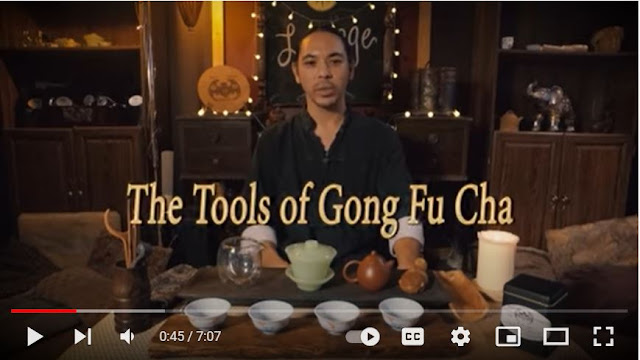
Mei Leaf has almost 90,000 Youtube followers, and Sergey Shevelev of Moychay has 105,000.  Mind you I see nothing wrong with vendors producing tea background content to serve as both marketing and information for customers, and others.  It promotes the industry and general awareness, in addition to one vendor's products.  Everyone else selling or promoting tea should be grateful that both are successful at it.  

The point here is that in developing a lot of content, and being successful in gaining a following, even without self-promoting as a tea expert a vendor would automatically seem to take up the mantle of being an authority, one step towards being a "tea master."  To me it seems to help a little if there is less marketing angle and they are de-emphasizing their own reference content, as Yunnan Sourcing seems to.  William of Farmerleaf strikes a really great balance; nothing in their Youtube background information material seems geared towards sales, more just on background, but of course it could still support sales in that form.  He has 6000 subscribers too, as YS does; you can make of that what you will.

I can't really offer any opinion about most of Moychay's video content, related to that factor of balancing general information and promotion, because I've only seen a half dozen of their videos, mostly geared towards a Western audience, the translated versions.  It seems sales emphasis neutral, but there could be indirect marketing concerns with the more viewed Russian videos, for all I know, with that content open for critique.  It's sort of a slippery slope.  One might say that Wuyi Yancha is good, and then that this particular version is, and then that you should buy this through our shop.  It takes a deft touch to offer informative background but to not take the last step, so that it doesn't feel like watching an ad.


Alex's point that people are just going to be divided makes sense.  

Next one might consider whether or not there are broad quality or value issues that could trigger negative reactions from some Russian tea enthusiasts.  I'm not sure.  Moychay's product quality and value don't seem so different than Yunnan Sourcing's, to me; pretty good in general, covering a lot more range than is normal for standard vendors.  Some is exceptional, above average tea selling at a great value, or representing really novel offerings, with other examples just kind of normal related to all that.  Eventually a below average quality or value product might turn up from any source.  

For teas that are completely unique it can be hard to identify value, for brand new types, hybrid style versions, or rare aged teas.  For example, this yellow tea from Khosta, Krasnodar region, 2021 sells for $20 for 100 grams.  Sounds kind of low to me, but who knows, it might also depend on how well it turned out.  I doubt that there is a second yellow tea from that Russian area being produced to set a market value, not that I would know if there was.  I tried a yellow tea from Mississippi last year, from Jason McDonald's farm, which listed for $14 per ounce (50 cents a gram instead of 20), but production overhead in the US would probably be much, much higher, and the tea could be better, or the target audience could vary.

The main opinion expressed about Mei Leaf is that their tea is good, which is the main thing, but that value isn't very good, that you could get the same quality level of products elsewhere for less.  Then some Mei Leaf fans reject that last part, seeing the teas as unique and positive enough for above average level pricing to be fair.  A sub-theme about people liking or disliking Don Mei almost eclipses whether or not his teas are good, or a good value, as discussed in this Facebook group thread.


Where am I going with all this?  How vendors present themselves and end up being perceived is an interesting theme to me, especially related to forms and causes.  My final take may be way off, that people are really looking for a way to self-identify and connect with others in a lot of cases, even though they may or may not see it that way, framing their own outlook as a normal shopping perspective.


Group identification related to tea vending


For one particular reason I think Mei Leaf probably doesn't get fair treatment, in retrospect, maybe even from what I've communicated, even though I think their tea is probably generally overpriced too.  I think Don "rubbing people the wrong way" as a video persona factors in a lot.  I don't think Scott Wilson of Yunnan Sourcing gets too beat up online, but it seems like any successful vendors can easily become targets for criticism, justified or not.  Maybe justifiably so?  A bit of pushback here and there might keep them honest.  Reddit comment discussion sometimes tends to go a couple steps beyond that.  Scott did get involved with a messy discussion issue there once, but then that's Reddit for you, not much better than Twitter for sometimes being harsh.  

That's only half the story though.  People love Don Mei more than seems justified too, clear from that Facebook group post I mentioned:


*In Mei Leaf's most recent video*

Commenter: "Why does the Facebook Gong Fu Cha goup hate you so much?"

Don: "🤷‍♂️ Maybe I would dislike myself if I was on the outside"

Lololol I don't buy Mei Leaf teas because of shipping costs, but I love Don so much.


I guess that he loves Don because of his sense of humor?  I'm not sure that comment was offered as humorous.  The comments there talk about appreciation for his teas, his online content, and for him being an interesting and charismatic person, the part that people are divided over.

I think group inclusion is the extra component that's not as evident.  Why would almost 4000 people join a Facebook group to talk about tea from one vendor (Yunnan Sourcing Fans)?  To be fair Q & A discussion does go better there than in most places, but cutting off discussion at one vendor's selections seems limiting.  Why are there lots of vendor specific Discord servers now, with varying degrees of engagement?  I only belong to Farmerleaf's and Liquid Proust's, because I was just checking those out more than participating, since I wouldn't have anything to add for not being a regular customer for either.


Moychay's tea clubs theme is something else, but it connects.  That adds in drinking tea in a setting that goes a long step beyond a cafe for being decorative and establishing a vibe, and it supports a more ceremonial take on tea experience.  All the same it is also shifting individual tea experience to social experience.  


this is more a tasting area than a club, but Moychay's club theme is an interesting subject


The online group case is more interesting to me though, because then it's reduced to being abstract, having more to do with self-definition and text message discussion contact than real life.  Or the "main" Discord group, Communitea, is big on voice / audio based meetups; I guess that's more in the middle.

In a podcast comment discussion someone once mentioned being "on team Xiaguan," not just saying that they like Xiaguan, but emphasizing how that put them in a group.  To me that's odd, even though that form of expression comes up more and more now.  Podcast creators tend to lean into this social dynamic, making their audience feel like part of a group, by establishing specialized use of slang, or even a nickname for group members (as "teaheads" is used).  Theo Von and Chris Delia are good examples of comedians using this form.  Oddly on one Reddit subforum Joe Rogan podcast followers connect and unify related to seeing Joe Rogan as an idiot, reveling in dumb things he says, or making fun of him for using steroids, for being short, or for his anti-vaxer position.  It still works, I guess, it just seems backwards, unifying as fans connected by partial dislike.

Vendors could make use of this, the positive part, right?  That's essentially what the Discord groups represent.  It's not negative really; to the extent someone wants to feel like they are a part of something for liking Don Mei's teas, or those from Yunnan Sourcing, Moychay, Farmerleaf, and so on, that's fine, and it really is also about sharing information.

Next more experienced and older tea enthusiasts might look down on all that, and see it as silly how younger and newer participants cling to odd forms of association.  But it happens in more subtle ways across a broad spectrum, even when people don't feel a need to formalize the link.  If someone loves Essence of Tea, Teas We Like, Tea Encounter, or Hou De you won't tend to hear about it, but there's no reason why someone couldn't value "being in the know" in a similar form, just with less post comments for interaction.  Without even taking up the external role as an elite, experienced, "higher" form of tea enthusiast the more subtle social role as isolated participant may still be regarded as meaningful.  Not joining a group or talking about it could be seen as just following a different code:  those who talk don't know, and those who know don't talk.


Let me pass on a thought that ties to this, that might clarify it.  To an extent I get the impression that some more introverted expats--foreigners living abroad, somehow implied as higher in status level than "immigrants"--like the social role because it defines them as different, and as being a certain way, without any need for setting that up or interacting.  Just being white is a stereotype, where in the US you need to pair that with class / economic status to make a start, and then it still doesn't go far, and you also have to add political affiliation.  Here in Thailand, where I live, foreigners are respected but also disliked a little, seen as quirky and odd but likely to be intelligent, and interpreted as probably having questionable morals, related to paying for romantic relationships.  It's not quite that simple, but basically you are a type, just for being white.  Let's set aside how that would go for other races; that's not the point.

The point is that stereotyping, and to some extent group inclusion, is almost freely granted, and some people seem to value that.  In tea groups you just need to adopt shared perspective, which isn't quite as easy, but which may not be very difficult.  

Tied to Mei Leaf support expressing or just feeling that "I love Don" is more than enough; you're in, even without buying the tea, as that guy explicitly stated in that post.  As a Yunnan Sourcing fan you just need to have placed one order, and to have liked one tea version, and to express intention to keep going.  If you want to feel at home among 10+ year experience tea snobs on Tea Forum--no offense intended; those people are nice--it's not quite so simple, but parroting what others say goes a long way.  In the Gong Fu Cha Facebook group you just need to buy a gaiwan, and to be looking into yixing, or post any photo of drinking tea outside.  R/tea on Reddit isn't a unified social group, but posting a picture of a half dozen boxes of grocery store tea-bag tea in a cabinet will draw at least 100 upvotes.

Why are we like this, group oriented to a strange degree?  With me included, surely.  An online contact put it well in a Quora answer about how social interaction is evolving: 


There's a broad emphasis on smaller and more detailed clustering, which in turn relies on people having a firmer sense of self and on them defining themselves in certain ways. We assign ourselves to many categories which are smaller and more specific than perhaps they've been in the recent past.


Right! A half dozen years ago people might group together in relation to tea interest, but that has pushed down to which teas people like now, or how they brew and experience them, and on further to which vendor sources of those teas they prefer.  Embracing or rejecting someone with a high profile online as an information source, or sub-culture leader, is just an extension of that.  


there's nothing wrong with combining being charismatic and informative, as So Han does


People can even now unify, to an extent, in relation to shared dislikes, not just personal associations and likes.  So this seems to be the last component of the negative mixed feelings related to many tea vendors; it's attractive to dislike a lot of things, and even to identify through that.  It automatically places you above that subject or person, for looking down on them.  If you dislike Dave Chappelle for making transgender jokes that identifies you as more sensitive to minority perspective than him.  If you can criticize the people who make that criticism, for being "woke," then you are implied to have a broader view of how social commentary works than they do.  Even not liking a movie can place you socially.

Never taking up these kinds of connections and oppositions would be a very reasonable and functional option.  But then there wouldn't be that much to talk about on social media, so that perspective would tend to not be expressed, or wouldn't seem interesting if it was.  There's normally a strong inclination to like or dislike things, to agree or disagree with ideas, so remaining neutral isn't so simple.  It's natural to react, and to place yourself in relation to that kind of perspective.


William Osmont of Farmerleaf