Showing posts with label Thai tea. Show all posts

Saturday, September 12, 2026

Thai tea, the Cha Tra Meu orange colored version


I'm reviewing Thai tea, the standard orange colored, flavored, black tea version.  I'll drink it as hot tea, with milk and sugar, but it's more common to drink it iced, or blended with ice instead.

I've reviewed a relatively identical version of this tea before, here, in 2018.  Here was my input from that review:

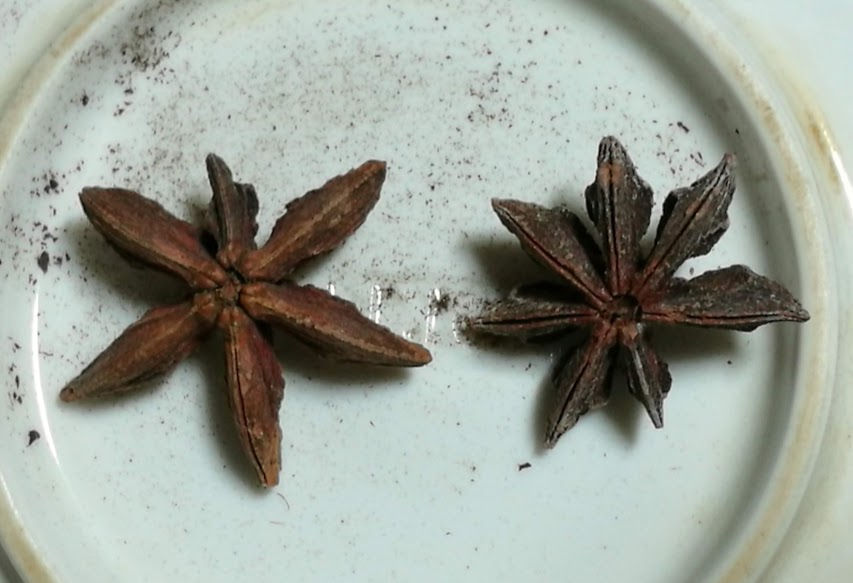
Thai tea tastes like mild black tea with star anise and artificial flavoring added. It's not that far from orange creamsicle. 


a DQ Thai tea blizzard; it's for the best for my health that they don't sell this often


Review:


it's more colorful in real life


It's good; it tastes like Thai tea.  A little astringency stands out, related to brewing chopped black tea leaves for over 5 minutes, at a pretty high proportion, maybe 4 grams for a 14 ounce / 300 ml amount.  All that is a guess; this is weighed, and the volume is an estimate.  But the flavor is good, and that feel input is softened by milk being added, so it's not at all negative.

In describing it I'll be describing a standard Thai tea flavor; the review would be the same for almost any decent version.  Cha Tra Meu is the standard brand, so in many cases people would just be drinking this.  That translates as "hand brand tea," or literally word by word as tea brand hand, for what that's worth.  There is a "gold" version, and I've reviewed both in the past, the original and the gold, but they're not so different.


It tastes like there's a floral input in this, and some depth that's harder to place.  I've heard before that the original version was black tea, orange blossoms (flowers from an orange tree), and crushed roasted tamarind seeds.  I wouldn't really know if it tastes like that.  It might resemble vanilla a little, but to me it tastes more like star anise.  

The flavors are somewhat artificial, I think, although I should take a photo of the package to confirm that.  According to a label image cited in that much earlier review it was:


It's not so different if they are natural flavors, extracted from different inputs.  In that case they're just not completely made in a lab, from chemicals, but some of the same compounds would be included.  I suppose it would be like the case of vanilla, where the main compound can be synthesized using chemical inputs, or the real spice input includes a lot of that and also other range, so it should be more complex.

I suppose if one could discuss the "roasted tamarind seed" range more that might work as a flavor description.  It's hard to place though.  There's no other roasted seed range, or the like, that I can compare this to.  It's not completely different than roasted pumpkin seed, but also not that close to that.  I've considered trying to roast tamarind seeds before, since it's a common fruit type here (sold as a dried version, usually), but I don't think we have a good version of a spice grinder for processing something that durable.  It's not like a coffee bean; those have a shell that resembles wood.

I don't drink much Thai tea, even though it is pleasant.  There's a branch of Cha Tra Meu in my office building, and in lots of other places.  I could have this every day, without making it, but I've never bought it there.  I think I skip it because I don't want it to become a habit.  The flavor is fine, and it's not that unhealthy, probably, but sticking to plain, good quality tea just makes sense to me.

My son drinks a good bit of this sold through Cafe Amazon, a main coffee chain here.  Of course Starbucks is also prevalent, but there are probably more Cafe Amazon shops.  A standard drink costs around 60 bath there, with around 70 baht converting to $2, so it's inexpensive.  Starbucks charges more like 150, or around $5.  For something like Thai tea or matcha drinks there may not be that much difference in different versions, and how much coffee drinks vary would depend a lot on subjective preference and perspective, on judgment.  I buy coffee from Cafe Amazon from time to time, but not Starbucks.

It's interesting how where people get drinks seems to vary by social class identification more than the drink quality or type.  There's another level above Starbucks, presented as higher in quality, that's usually reflected quite a bit by well developed shop aesthetics.  A very clean looking off-white interior is common now, although industrial looking coffee shops based on more grey tones also come up.  The old theme of wood panel and plant input is mostly finished.


the Flat+White coffee shop in Bangkok (their FB page)


I might add that I often have Thai tea in a slushy form, how my son drinks it.  We went to a suki place that had this (suki is a soup version that you cook yourself, adding ingredients they provide, like meat and vegetables, or dumplings).  Maybe it's a little better blended with ice?  It's good hot too.


These ideas I've presented bring something to mind.  Am I not drinking Thai tea because of some social positioning input, maybe not as a class theme, since I'm just kind of middle class here, but because I see myself as more developed or sophisticated in relation to tea preference?  It could be that, instead of the health related input.  But I'm concerned that I already eat some ice cream, most often from Dairy Queen here, and more often Ben and Jerry's or else Breyer's in the US, and don't want to add other high sugar, significant artificial flavor input to that.  The dairy part should be fine, but in shops it's usually sweetened and condensed milk, so not a very natural form of that.

If I were to drink this even every other day then a significant part of my diet would move to this minor sugar and flavoring input.  I see specialty tea as probably being healthy, and positive (more whole leaf, naturally grown, etc.).  In moderation, drinking one or two of these a week, it probably wouldn't shift the balance that much, but those choices can add up.

Is this relatively low quality, mass produced black tea probably made with a good bit of chemical pesticide and fertilizer?  Yes, that's my guess.  But you never really get to know.


It works to conclude that Thai tea is one of my favorite flavored tea versions, or maybe my overall favorite.  I like it so much that I avoid drinking it, if that makes sense.  It could shift to become a regular habit, and I'm already using my own self-imposed unhealthy foods allocation on ice cream and donuts.


Thursday, November 15, 2018

Cha Tra Mue gold label Thai tea


I first reviewed the standard red label Cha Tra Mue brand of Thai tea not long ago, and a friend recommended that the "gold label" version is better.  I'm only now getting around to trying it.

It probably is slightly better.  This won't amount to much of a detailed review or comparison because I didn't try the two versions in direct combined tasting, and there isn't that much to say about how it tastes.  I had owned the two versions at the same time (hence the photo of both), but gave away that earlier version before I got around to trying this other one.

it works well brewed strong since milk dilutes it


made in a conventional Western infuser device


It tastes like any version of the orange Thai flavored tea.  Once you get the preparation details down, the level of infusion strength, and amount of sugar and milk, it's all in the same range.  There's a bit of a trick to that since it works well to brew it stronger than you would normal black tea and dilute it with milk.

The part about potentially using multiple infusions is strange too, since ordinary black tea will just transition (vary) across multiple infusions but the added artificial flavoring in this mostly comes out in the first round.  I'll usually brew it twice and mix them, but there would be different ways to address that.  I suppose brewing a lesser amount for longer for only one infusion makes the most intuitive sense, but that's not what I do, since I carry over habits from brewing other types.

All the same I'll step through what it tastes like, how it compares to the other version they make, and what other experiences I've had with related preparations.


Review, what it tastes like


As described in a post about making a version from-scratch it tastes a bit like tea and spices.  Per that research the original version may have combined Assamica black tea with roasted tamarind seeds and orange blossoms.  Modern versions taste more like star anise than anything else.  Now that I think of it that other "red label" version of Cha Tra Mue flavored tea tasted best with a bit of star anise added to it, bumping up that flavor range a little more, but I've not tried that with this one.

calories from fat are listed; what's in this stuff?


You can tell by the taste this result is achieved through artificial flavoring additives.  For some that's a deal-breaker, for others just an ordinary, harmless part of modern life and diet.  Tea enthusiasts tend to not go for that, although the other range of people who love tea but like flavored versions, boba, and all sorts of blends would disagree, and they could still also self-identify as "tea enthusiasts."  I'll fill in more about specific taste in relation to the other version.


Comparison with the red label version


It seems like the artificial flavoring is identical but the back tea used is different.  There is no description of that difference so I'll be speculating it in describing it.  There is a difference visually; the other tea is ground up less, with some lighter tea material included, with this version's more black and uniformly finely ground.  My impression is that the other version may be made with Thai produced black tea while this may well be Ceylon, or at least a different version of Thai produced black tea that is closer to a standard Ceylon.

this gold label version


the red label version; a bit more sticks and light leaves


not bad tea for the price, just not typical of other versions

I'm guessing that about the input differences in part because of how a specific version of Thai black tea looks and tastes to me, which matches what I've experienced in these versions.  That black tea was on the soft or mild side compared to other commercial / CTC (crush-tear-curl) black teas, a bit woodier in flavor, less astringent, with less pronounced malt and mineral aspects.  It wasn't bad for those differences but not really a standard commercial black tea profile.


To back up to generalities about commercial black teas, Assam versions tend to be quite malty, and astringent, strong-flavored and often very astringent.  Ceylon range (and all commercial tea range, really, including Assam) varies a good bit, but in general those black teas are slightly less malty and heavier on mineral aspect range, and just a little less astringent.  That Thai version was unlike either, a bit atypical as black teas go, as described.


A fellow tea blogger once described Ceylon black tea as "tasting like blood."  I guess that could be in a good sense but it was being used as a criticism there, as describing a mis-match between typical aspects and her personal preference.

Combining all those ideas this flavored blend doesn't seem noticeably more astringent than the other version but there is more malt to it (just a little), and more mineral undertone.  I do like it better; those differences seem positive.  It would probably still be better for bumping the star anise effect a little by tossing a star, or half of one, into an infusion device along with the tea.


Other experiences with flavored Thai tea


I'll start with my favorite:  the local Dairy Queens ran a promotional extra flavor of Thai tea blizzards for over a month earlier this year.  Those were amazing.  It's for the best that they stopped offering that because I was eating too much of it; I couldn't walk by a branch without buying it.  That flavor just balanced perfectly with that soft-serve ice cream.  I did my best in suggesting that Dairy Queen offer it in the US (trying to help you fellow American readers out), but of course DQ did what any large corporation would do; they never answered back.


a latte version; this was brewed in an expresso machine

Coffee shops tend to sell iced Thai tea versions or blended ice versions, probably with cream content bumped up a little with use of half-and-half in some cases, and soft serve ice cream was just the next logical step.  This mix would also work well with milkshakes, although it would be tricky to get that right, since you don't tend to add any water to milkshakes.  The powdered tea version would have potential for that but adding powdered milk to ice cream also seems odd.  However DQ did it they got it right.


I've also had a Thai tea version made in an espresso machine before, twice, as I recall, but probably other times I'm forgetting about or didn't notice.  That works better than one might expect, although I suppose it's not ideal.  That steaming process stripping out astringency from the tea without really getting all the flavor doesn't matter as much with Thai flavored tea since the artificial flavoring is part of the equation, and since it all needs milk and sugar to work anyway; those make it balance.


The only time I've tried a nespresso version of any tea was a Thai flavored tea, which wasn't very good since I tried drinking it without milk and sugar (at a Bangkok convention / expo).

I would definitely recommend anyone into tea to try Thai tea.  I wouldn't drink a lot of flavored teas myself but it's an interesting and pleasant way to mix up the tea habit a bit.  Here in Bangkok those can be bought in any coffee shop but this commercial loose product is also a decent version.

Saturday, August 25, 2018

Reviewing Thai tea (ChaTraMue brand, one orange version)


not this, but Thai tea Blizzards are even better than the drink


this version, along with a complete breakfast


I've written about making a spiced Thai tea from scratch before but never about drinking the commercial product, at least that I've brewed from loose tea myself.  Here in Thailand that would be a little like reviewing Starbucks coffee, or a McDonald's milkshake; everyone knows what they're like.  Except they seem not to sell McDonald's milkshakes here, so I mean they know back in the States.


There are other commercial versions of Thai tea.  I'm not really trying to explain the range of those here.  All flavored black Thai teas of this type taste a bit similar, so the idea is to describe that, with just a little comment on variations.  This does seem to be the standard producer, Cha Tra Mue, also going by Number One brand instead.


This is the first time I've bought the loose blended Thai tea here, in nearly 11 years of living here.  I do have it in cafes sometimes so it's kind of strange that never seemed like a good idea. I was really into exploring better plain teas, I guess, just setting that aside for an Earl Grey or jasmine black once in awhile, or more recently for trying those tea stuffed mandarin orange peels.


The review part won't be formal or long.  Thai tea tastes like mild black tea with star anise and artificial flavoring added. It's not that far from orange creamsicle.  Beyond that separating out flavor aspects doesn't work well.  Someone asked about it in a group once thinking it was peanut butter tea.  It's not that far off that, in a limited sense, but to me tastes nothing like peanut butter.  The flavor is like a mix of spices but seemingly also based on artificial flavors.  Research cited in that other post indicated that the original version may have been black tea, roasted tamarind seeds, and orange blossoms, and it may taste like that.


In coffee shops it's usually better.  Sometimes they brew them in an espresso machine instead there, as covered in this cafe review post awhile back.  That improvement is probably due to using a good version of a tea mix, plenty of sugar, or maybe sweetened condensed milk, and half and half instead of whole milk.  It works better cold, or even blended with ice, but then you might as well eat ice cream.  I did just eat a lot of Thai tea flavored soft serve when the local Dairy Queen ran that flavor as a special for a month.  I think I put on a little weight from that, maybe an extra 2 kilos / 4 1/2 pounds.  It's probably healthier for me that they discontinued that.  I suggested to the Dairy Queen corporation to run that as a promotion in the US but you can imagine their response; there wasn't one.


Review (a short version)


I've been making this Western style; that would be crazy to make a finely ground black tea Gongfu style.  It's so finely ground that even though I'm using a very fine strainer in a basket-style infuser some tea dust gets through.  It's a nice "For Life" brand version device, with a ceramic lid matching the cup, to hold in the heat and then hold the basket as a saucer.


The trick is getting the balance of sugar and milk right, as much as sorting out proportion and timing.  Whatever the artificial flavoring and coloring is that brews through relatively quickly (or just dissolves), so if you try to make two infusions--which I always do; I just never get to dialing back proportion and going with a single 5+ minute steep--then the flavor changes a lot in the second round.


I can tell this is probably Thai black tea.  It has a distinctive mild earthy taste, not bad or good necessarily, just different.  I bought a bag of it to make blends with however many months ago, and made it a few times to check on black tea with milk again, so it's relatively fresh in my memory.  It's almost time to get that tea back out to make fall or winter blends, even though we really have no fall or winter in this climate.  The rainy season ends and cool season begins around November but it's not all that cool.

Thai CTC tea; very inexpensive


It's hard to be more specific than I was in the intro in reviewing this particular version; the general flavor profile is always what Thai tea is, give or take some limited variation.  I added some star anise to it the last two times I made it to correct for that flavor input being too mild in this brand version (two stars worth seems to work well), and it's pretty good after that adjustment.  It tastes like a very mild black tea, kind of woody, not astringent at all, then like that star anise, and from there like some artificial version of spice.  It's odd that any of that approaches "creamsicle" but it does.


red when brewed, orange with milk added

This style of tea is prepared and sold here mostly as powdered tea.  That's probably not that different than a brewed version.  It's the mix of some limited amount of tea, artificial flavor, and milk and sugar that works, so brewing a subtle and complex version of loose tea doesn't matter much.  Given the quality of black tea typically used that's not even really possible.


It makes you wonder, what tea type would be ideal for this?  I'd think even modest quality Ceylon would work even better, and Assam wouldn't match as well for that maltiness and astringency.  Mostly Ceylon with a little Assam might be good.  But it hardly seems to matter that black Thai tea typically isn't very good on its own.  I think I like it for it not reminding me that much of normal tea.  It's like eating matcha ice cream; not supposed to be like the rest of "tea."  Or like an even more amazing version of hojicha soft serve I've tried.


I don't think it would be possible to duplicate the artificial flavor by using actual spices, but then I never could find roasted tamarind seeds and orange blossoms to try to make that original version.  I can definitely buy tamarind in lots of places, it's just a lot of work to try roasting, shelling, and grinding them.  Making one batch would probably be plenty of work and experimenting with the roasting process could take awhile.


The version I made from scratch was nice, but just as close to masala chai as this.  The flavor profile doesn't exactly seem to include vanilla but that is close enough to part of it.  Mixing that and star anise, the main flavor that stands out, and whatever other herbs would get you most of the way.  I don't think it is possible to completely duplicate the exact taste though, since it's based on artificial flavoring, as the orange coloring is.

You would think Amazon would sell this pre-prepared product but I'm only seeing the tea powder mix or tea bag versions there.


what's in the powdered version of that tea


On meeting people and sharing tea


I recently met an online tea contact who was visiting here, Suzana Syiem of the Tea group / FB page.  I guess this does relate, since we met at a coffee shop at my office building and she had a Thai tea there.


Now that I think of it we didn't talk about that tea.  I bought this can of flavored tea in part to pass on some to her, but it's not as if that didn't serve my interest just as much.  It cost next to nothing, something like $2.50 (what a single prepared drink usually costs), and I've drank it a number of times, since I only shared a good bit with her in one of those multi-layer envelopes that seal.  It would've been very little extra expense to buy two cans instead but lugging that can--like a small coffee can--doesn't match with a short trip / traveling light theme, and the other samples took up some space too.


Tea culture in different places has become an interest I'm pursuing, and she and I have talked about tea in India more online than we got around to that day.  Indians tend to like CTC black tea (commercial mass-produced versions), either with milk and sugar or those plus spices, as masala chai.  She shared some of something else entirely with me though, a high altitude organic black tea from Shillong, a 2018 first flush.  Very cool!  I'll say more about that later.

It was great meeting her.  It's usually nice meeting people you only know online; typically not too strange to connect in that other format.  She and her friend were really nice; it felt like I knew them both already.  Hearing a little about their short visit here was interesting, the ups and downs of navigating an unknown and slightly chaotic city.  For them it felt kind of orderly, it seemed, but there's still a learning curve to work through.

One funny part was comparing notes on politics, trying to see who's country is under worse leadership.  Of course I claimed the US is a clear winner.  Trump might go to jail within the next two years instead of serving out his term, and he's destroying the US as fast as he possibly can (with 40% still buying that MAGA story line; kind of pathetic).  They said that their country is also ran badly, under an anti-corruption theme that's not good enough with management details to do better than the corrupt version did (or only less corrupt, if India is anything like SE Asia).  One comment might've tipped the contest to be the worst in India's favor; the people there support that leadership, the majority, not just a sadly misguided large minority.

I had passed on some tea to her earlier, a good bit, and I've been giving away a lot of tea lately.  Often that's been connected with those tastings, but I share a little at work now and again, and just gave a doctor we visit some.  I just sent some to an online contact in the North of Thailand too, a guy who had ran his own version of an expat forum I was sort of active in before.  That experience showed how such a thing might not always be well received.  I sent this, from Farmerleaf (one of my favorite Yunnan pu'er and Dian Hong vendors), ordered directly from that vendor to him:


That might seem a little odd; even though the expense was limited, why buy tea for someone you don't even know in real life?  Part of it was about pushing that tea evangelist role to an extreme, to check on the outcome, and part about thanking him for contributing an interesting forum to talk in for a number of years.  Most of the expat forum versions here run a bit rough.  His only feedback:  I'm kind of busy these days.  I took that to mean he didn't like the tea but didn't want to put it that way.  I suppose it could mean that he didn't want to admit that Chinese tea is better than British versions, I just don't think so.

I'll surely buy that same set for me too at some point since I don't feel closure related to someone who could appreciate what that tea is drinking it instead.

I never could relate to that other part, about British people feeling a connection to tea that's not from Britain, with the style somehow making it their own.  Traditionally British tea was keemun / qimun (Chinese black tea), Assam (Indian), and Ceylon (Sri Lankan), although I'd imagine more comes from Kenya than any one of those other sources now.  Blending can influence a final tea style, and adding bergamot essential oil in the case of Earl Grey is a change, but it's odd to me that buying tea as loose Assam and Ceylon never really seemed to catch on to the degree commercial blended tea-bag version brands did there.


on that short list

Even though not all the examples of sharing tea made sense making those personal connections has been nice.  There is a good long list of people I've talked to I'd love to meet in person, and for a short list worth that step seems to be running late.


Initially when I used tea to research social media, as a shared subject interest theme, I thought that maybe most people into tea would be more interesting, broad-minded, and generally better people than average.  Maybe it didn't work out that way, but some certainly are.