Showing posts with label bing. Show all posts

Tuesday, September 7, 2021

Ketlee Indian wild plant source sheng


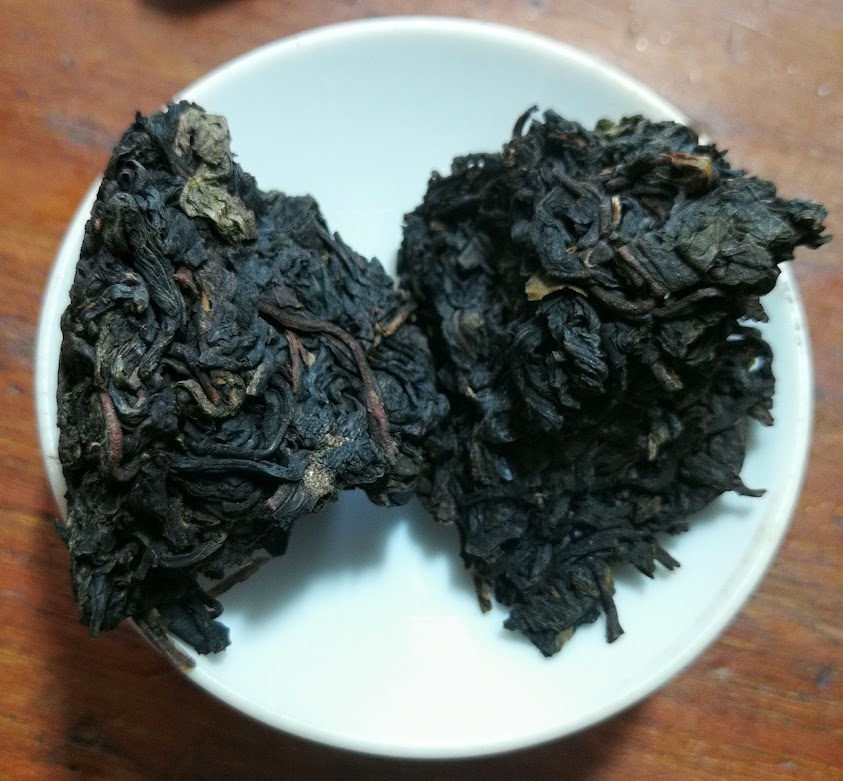
Those friends I keep mentioning and I met with Susmit Pratik online not so long ago, hearing about how new tea types and region developments go.  I've received a really interesting looking set of samples since, and this is the first review of those, of an Indian version of sheng.  That's right, sheng, but from wild growing Assamica plants in India.  


before the others joined that session


It's going to be that much further from Yunnan sheng (which is really pu'er) for terroir differences, and especially related to the two versions of Assamica not being at all the same.  Or so hearsay consensus goes.  Genetics studies are something else; it's hard to place how the differences they cite would relate to processed and brewed tea.

I'll just say that it looks dark in the dry form, and get on with tasting.


Review:


first infusion:  a little light, the standard approach, but enough to start on description.  Even light it's clear this is different.  It's not bitter, not really astringent, but a warm dried fruit aspect stands out, which I think might be closest to fig.  Earthiness and warm tones fill in beyond that, including a good bit of mineral.  There's enough bitterness to it that it seems in the general range of sheng but the flavors seem much different.  

Terroir differences often seem to work out like that, that flavor range is what shifts across a tea type made in different places, and then base character beyond that can stay more common.  Bitterness varies by a lot of factors, with tea plant type a main one of those.  I should probably say more along with the impression of the next round. I could unpack the flavor that does come across more, which seems to include some cocoa, but that tends to shift over the first three rounds anyway, and what the tea expresses across a main infusion cycle seems more relevant.


second infusion:  I let this brew for around 15 seconds to get through the early part of the transitions, even though it would've been more optimum to go with 10, at the typical high proportion I tend to use.  Astringency and warm base mineral really come out in this; those will taper back brewed a little lighter.  Bitterness is present but hardly at all in comparison with the level of those other aspects.  

It's hard to describe what I mean by "astringency and warm base mineral."  This tastes a little like water coming out of a rusty iron pipe, but in a good sense.  I think there is more of that pleasant dried fruit and cocoa range beyond that, but the mineral really stands out.  This mouthfeel is really in between what is typical of sheng and some kinds of black tea, along with the flavor tones mapping back to that just as well.  I'm not saying that this is highly oxidized sheng, but I will add more about that.

When you first see this tea you wonder how it can be so dark.  Black tea isn't always that dark, or shu typically isn't, and aged sheng might not get that black after 20 years.  It's almost impossible for a typical sheng version to turn that color in 3 or 4 years time, regardless of storage conditions or starting point.  So what caused it?  I don't know.  It almost can't be high oxidation level; it's too dark even for that, and they must have processed this in a way somewhat similar to sheng.  If the leaves started out a dark purple that could be part of it.  I really don't know; I'll try to ask Susmit.

Then I'm not saying it's not like sheng, or that it's right in between sheng and black tea.  It seems mostly like sheng, but unique.  I wouldn't expect oxidation as an input to lead to this result, or at least not that alone, so I'm not intending to even imply that was it.  More oxidized sheng should lose most bitterness, and pick up sweetness, and maybe warm in tone a little, but not shift into black tea character range at all.  It would have to almost be shai hong to get to that point, really in between sheng and lightly oxidized black tea.  I think the next infusion, brewed lightly, will tell more of the story of where this is headed.  I haven't really filled in how much I like it yet, and I'm still placing it, but that should work then too.


brewing to be intense in short infusions (and dark, for young sheng)


third infusion:  the balance comes together brewed properly, and through an early opening up phase.  That fig range fruit is present, and it leans a little towards cocoa.  Warm mineral is really pronounced but in a nicer balance with the rest, not dominant.  Bitterness is essentially as strong a factor as the mineral in this, not how sheng usually goes, with mineral more of a supporting base tone.  And that's pretty much it.  The astringency / feel is novel, a little heavy and structured, seemingly tied to the warm mineral tone.  Something about the way it covers your whole mouth, towards the front as much as anything, feels like a black tea effect as much as sheng, but maybe I'm stretching interpretation a bit in saying that.

I like it.  Novelty as an input is hard to place.  I like novelty, so that makes this experience positive for me, but for others it could be off-putting.  If it was supposed to be identical to Yunnan sheng it didn't work.  Given plenty of allowance for terroir and plant type input difference, which I think one should expect to make the tea different, it's just as it should be, still sheng, but a unique version of it.  Not "sheng pu'er" for the OCD purist language users out there, since it's not from Yunnan, but to me it's still sheng, "raw [something-similar]."


fourth infusion:  more of the same, maybe evolving to a slightly smoother range, or the flavor could be picking up some depth.  It's interesting considering what else what I've described as warm mineral might seem like to someone.  It could be interpreted as a towards-inky spice range, or just ink, I guess.  It's not completely unlike fruit, just way into a deep and rich dried fruit range.  Fig is close enough, but it's heavier, warmer, and sharper.  It's like that one warm catchy flavor in apple cider, but then many times over more intense, until it comes across differently.  

It's hard to notice but sweetness is making this unusual balance work.  Since it's not pronounced it's easy to miss, but drop that out and it wouldn't be the same.  Adding just a little sourness might make it much harder to relate to as well; it's not sour.  I suppose it could be interpreted as quite sour, but I don't parse interpreted flavor experience that way.  I've stopped including cocoa / cacao in the description here because it's heavier into mineral flavor, or as I've been going on about something at least related, like a very warm bark spice.


fifth infusion:  I see it as still improving.  Bitterness has eased up, and astringency and the heavy mineral, leaving space for the other pleasant range to shine through.  I think bitterness, astringency, and warm mineral had worked in this before in earlier infusions, but balanced more evenly with fruit it's even better.  The fruit is close enough to dried Chinese date, jujube, which--unless I'm getting those wrong, which is possible--come in different varieties, with this more like the sweet version that's close to date than a more sour version.

Feel and aftertaste balance a little better too.  It's coating more of my mouth than seeming sharper in limited range, and warm and pleasant aftertaste persists better.  It's nothing like that bitterness turning to sweetness, or focus on the rear of the throat, so judged against a standard sheng pu'er expectation it might not seem a close match.


sixth infusion:  catchier yet; this might have a few nice rounds of change ahead.  I'll describe it more at 7 and probably not list out 5 or 6 more rounds of notes.


seventh infusion:  this seems to be leveling off; it's still pleasant but the catchiest range might be thinning a little.  Some of the mineral and astringency form seems to be drifting towards normal sheng range, towards a green wood flavor and feel, versus that very heavier mineral.  Since I'm not really one for explaining late round infusions in the same detail, and tasting for over an hour isn't in my schedule, I'll probably leave it at that.


Conclusions:


Definitely different!  I really liked it, but it was hard to place if that related mostly to novelty or if it would seem even better once I adjusted to it more (or both, I guess).  I think results could be even better with brewing adjusted to try it even lighter.  I do adjust infusion time and strength round to round but I suspect that this particular tea might be good brewed very lightly.

I talked to Susmit, the vendor, about why this tea is so dark, and he thought it had to be mostly related to the novel plant type.  That's really the only interpretation that makes sense, since this could be a bit more oxidized than typical sheng, but it still shouldn't be this dark, and the level of oxidation that would account for color and character difference should've dropped out the bitterness that still was present.  It's just something different, related to plant type, terroir, and whatever else.


To reference Ketlee's description, I'm not sure which sheng version this was, and they have a few.  I originally guessed it was their 2019 autumn version but it turned out to be their spring 2020 version, so this is revised:


2020 spring cake:  


The dry leaf smells sweet with notes of honey and almond desserts dominating it. The wet leaves after the wash have aroma of red berries and Indian gooseberry. The first infusion is of pale yellow colour and has notes of black grapes and walnuts. From the second infusion you start getting notes of ripe red berries, black raisin and a woody dryness on the finish. The woody character is more apparent in the third infusion with a stark cedarwood note which is minty as well as woody. The fourth infusion has a bit of spice, specifically cloves. These spice notes are present in all our wild teas and there is no doubt about the fact that they present themselves wildly different in different teas. The fourth infusion is also thicker in texture and you can notice that the leaves have opened themselves for a complete infusion. 

As you go further into your gongfu session, you are greeted with various sweet and fruity notes like ripe plum, honeysuckle, raisins and honey. The woody notes are also better explored in later steeps with interesting woody notes such as sandalwood, cedarwood and even agarwood which develops into a lot more intense version of itself with an year of age!


That's about as close as vendor descriptions tend to ever get to what I write, which would always vary some related to varying interpretations of aspects.  Brewing it a little lighter might make it easy to pick up fruit aspects, and would moderate astringency, which was at a good level as I experienced it.  

Readers here would be familiar with how to relate to brewing instructions, but I should mention how I interpret their brewing guidance (which I didn't even check prior to preparing it; I just don't):


Steeping Time : 3 minutes western style, 20 seconds gongfu style adding 10 seconds every subsequent steep

Leaf Quantity: Treat it as a classic Indian tea, 3 gms per 120 ml for gongfu and 5 grams for 400 ml western style

Recommended Steeping Temperature : 90-95°C

Recommended Steeping Method : Gongfu style


Those last two lines work; I wouldn't expect this to give as good results brewed Western style, and using water a bit off boiling point temperature is probably fine (which a lot of tea drinkers have almost have philosophical differences in opinion about).  It goes without saying but brewing this for one infusion only Western style would be madness; this is a really durable tea, as any variation of sheng always is.  

Using 3 grams for 120 ml for a Gongfu approach is probably on the order of half the proportion I use, but I take it that the difference can be adjusted back out in changing infusion time.  I tend to use around 10 second infusion times, adjusted in relation to how the prior round went, in some cases shorter.

I can never relate to those staggered progressions (add 10 seconds a steep), since the tea won't change intensity that fast.  A 20, 30, and 40 second cycle of three rounds wouldn't be so different than brewing double that tea to water proportion for 6 infusions, but doubling infusion time over the first 5 and 6 rounds isn't how that normally works, even for teas that are less durable than this one, that "brew out" faster.  Anyway, it's easy to adjust timing based on the last round, regardless of whether you are trying to follow a vendor's guidelines or just winging it.

Related to price this works out to 32 cents a gram (at full cake price; the 2019 version had been 25 cents a gram in the first write-up version).  Since there are no other examples of this kind of tea there is also no market price.  That seems fair, for as novel and pleasant as this tea is, and in relation to that not being atypical of Yunnan sheng pricing range, maybe just high in relation to the range of most Indian teas.  That would work out to over $115 or so a cake (a standard 357 gram version).  That would've come as a shock to me a few years ago, but that's in the general range of what vendors charge for good quality sheng pu'er versions now [a statement that worked better for the $90 range for the other 2019 version; over $100 is a bit high for upper medium quality Yunnan sheng].  

That general pricing shift for sheng seems more fair if you consider that the range of "good quality" probably is different than teas offered a half dozen years ago.  The range of versions offered shifts over time, and demand increasing pushes that pricing up too, so in the end it just is what it is.  


Saturday, May 9, 2020

Shipping rest issue; re-trying a 2007 Bailong Jinggu sheng


I tried a 2007 Bailong Jinggu sheng pu'er not so long ago, an inexpensive version from Chawang Shop, reviewed here.  Part of that review theme was to taste the tea right away, just after getting it, without letting it rest, then to get back to it a month later.  This is that part 2.

I had liked the tea but it seemed a bit subtle, with a generally low intensity that would definitely be seen as a flaw in the character.  But then not letting the tea rest after shipping is said to cause that, which I have noticed before, but never reviewed in the form of doing a split review (like this).  On to it; I never will quote that earlier post, so if someone is interested they can read it too, or there is a summary take on it in the conclusions part.

Review:


First infusion:  a little rough; some dry mushroom and wood / cardboard mustiness.  On the positive side that dry character seems like it will probably fade and transition over the next two rounds.  The appearance of the tea could be a little clearer too, although it's not so cloudy, just not completely clear.  As for flavors beyond that some light molasses sweetness shows promise, and cleaner woody tones seem more positive.

To be clear I've tried this tea between the initial review a month ago and now so I know where this is going to go.  I didn't refer back to the old review notes first, but I have tried this in the last week so it's familiar.  It did improve; I'll mostly leave it at that.  As I remember it seemed like it might have room to transition positively with more age, or at least there was indication that might occur, which I'll add more about along with tasting details.


Second infusion:  much cleaner.  This will be in a more typical part of its cycle next round but it's much more positive that fast, which is a good sign.  I wouldn't interpret this as tasting anything like mushroom, although a woodiness close to aged wood or furniture picked up.  The main range is aromatic wood, cedar or the like.  That's close enough to cigar tobacco; an interpretation as that would also seem natural.

It's relatively clean in taste, although it will probably be even cleaner during the next round.  The main story of this tea will seemingly be how it will keep shifting over the next few years, finishing out age transitioning.  That and how someone relates to that aromatic wood or tobacco range related to personal preference; some people would probably really like that, and others would hate it.

It's my impression that it wouldn't be well-regarded by some experienced sheng enthusiast general convention, but I don't try to prefer what others like.  Such conventions seem to evolve based on both shared-experience preference development (influence within a group), and a natural pattern of preference evolution that occurs, so I'm mostly rejecting the former as important to me, but I must tend to experience the second, to some degree.


Third infusion:  that's even better.  It's completely clean now, with a much improved feel, only a little dry, but more along the lines of showing a pitch-like resin feel.  Tobacco and aromatic wood evolved a small step further towards molasses, matching the warm, rich sweetness and the warm underlying mineral tone.  The resinous feel matches up with a pine-bark woodiness in this round, missing that herbal sharp note in the pine needles but not completely unrelated.

As I remember a distinct lack of intensity was problematic in the first tasting, and that's not the case for this.  I'm using a high proportion (the usual, maybe 8 grams in a 100 ml gaiwan) and quite short infusion times, a bit under 10 seconds.  It's plenty intense at that infusion strength, and would work well using flash infusions at this proportion, or for using only 6 grams for the same timing.


on the green side for this age, normal for relatively dry stored sheng


Fourth infusion:  flavor range shifts a bit towards roasted chestnut, moving off aromatic wood a little.  The feel is nice, with a little room for improvement.  It's not thin but not as substantial as for many sheng versions at this age, with the resinous dryness giving way to a smoother feel, but one with only moderate structure.  Aftertaste is similar; it doesn't linger in a very positive fashion, or for an extended length of time, but the experience doesn't drop away either.

The most positive part of the effect (aside from the limitations) is the way the experience balances together.  The flavor is in a relatively positive range, with no negative aspects.  Intensity is good (reasonable, in a positive range), and feel works for me, even if it could have more richness and depth.  Warm mineral tone is a little towards struck-match character, but bridged between molasses and that; it works.

I get the sense that some of this aged wood, not so far off a greener version of aromatic wood, is close enough to or partly through transitioning to something else.  That fresh edge seems to be what some people value in dryer aged sheng, that it seems to never completely drop out, even though over a long time the sheng will keep transitioning.  I kind of get it; if this tea had spent the last 13 years here in Bangkok it would be relatively completely fermented, but the earthiness would quite likely resemble damp basement character or geosmin (like beets or dirt; with more on that general effect or aspect related to beets here).


Fifth infusion:  balance keeps improving slightly, but it hasn't transitioned so much.  I like the overall effect.  Warm underlying mineral stands out quite a bit, and decent sweetness, with the rest just shifting in relation to proportion of other flavors (pine bark or resin, tobacco, roasted chestnut, molasses, aromatic wood).  Feel isn't really dry, as it had been in the first three rounds, with that remaining more moderate resinous feel matching a seemingly paired flavor coating your tongue, and showing up as feel aspect in the rear sides of your mouth.


Sixth infusion:  this might be fading already, moving back to a slightly drier woody tone that's closer to where it started.  Or it might just be that feel and flavor effect vary by infusion strength, and dropping timing a little doesn't seem to work as well for me.  I'll check one more round and let this go.  Late rounds do tell a different part of the story, and I don't get the sense this is remotely close to the end.  But it seems like enough for this purpose, identifying how it changed due to resting for a month.


Seventh infusion:  I didn't really let this run longer, still trying it infused for around 10 seconds, to keep that consistent.  Intensity may be dropping off slightly but it's far from finished, and isn't into late-round transitions just yet, it would seem.  The same profile applies, not even really shifted in balance much from 2 or 3 rounds ago.  The character transition I had mentioned in the last round did seem to relate to using a slightly shorter infusion time.


Conclusions:


Again the idea was to compare the character to what I thought of it a month ago, reviewed here.

It didn't seem all that different related to flavor and other aspects description, but it did seem a lot more intense in this review session.  I've tried it again in the middle and that was my take then too; it didn't seem as muted as initially.  Feel intensity seemed to pick up a decent amount; per that description and my recollection it was a bit thinner then.  Of course interpretation is hard to pin down; what I've been drinking recently might set a standard benchmark, so whether it's in the better or worse range of what I own might matter.

Beyond flavor intensity ramping up just a little this might have picked up a trace more depth, a little more warm tones and underlying mineral.  This review mentions richness that borders on roasted chestnut, and that earlier version only talked about light cured wood tones, pine resin, and tobacco range.  In late rounds that shifted to root spice range in the first review, but I've dropped taking notes prior to that point here.

Within another year or two those warmer, more complex tones will probably pick up, as the green wood and lighter tobacco notes transition.  Or it could just go to straight tasting like a cigar; it's not as if the transition patterns are that familiar to me yet.  Often even faded flavor in more-aged sheng can pick up a cool root-spice effect, a depth that's not necessarily intense (in terms of flavor) but that seems pleasant anyway.  It's not completely unlike roasted bamboo flavor, mild but with pleasant depth.


It seems like people might use "menthol" in different ways in descriptions (and some even describe themselves doing so), as a way to place what isn't necessarily familiar, or to capture an unusual range that is as much feel as flavor, or in a strange place that relates to both mapped together.  I tend to not interpret aged sheng as tasting like menthol.  It's completely possible that I'm not drinking good enough aged sheng, or that I've not experienced some of the most positive range of potential age transitions.

That's going to keep being a limitation as I progress through more experience.  I won't be buying the standard, well-received, favorably stored $150 aged cakes that draw attention for combining good value and positive character.  My tea budget just isn't there to support that.  For that limitation this almost seems like a good place to leave off most exploration of aged sheng range.  The subject will come up again but all of the most obvious next steps I won't take, escalating quality level and expense of versions.

I really don't mind; it has been interesting to get as far as I have.  I have a bit of tea around, just not much as pu'er enthusiasts go, so I'll keep seeing how it changes over time.  That probably won't relate to doing many "progress check" posts, unless something triggers that.

There's more sheng on the way now, if it ever actually makes it here (transit time is drawing out), and there are always samples as an option, so I'll keep doing reviews.  The general point was more that a typical next-level direction seems to keep coming up, but I don't plan to escalate spending to pursue it.  Cakes like this are nice for enjoying variety and basic range, also covered by a few 2006-range CNNP versions I have, and a good bit of Xiaguan and Dayi cakes and tuos, and an occasional Yunnan Sourcing in-house production cake.


Pandemic theme photo sharing:


On a completely different subject I returned to working in my office (versus from home) at the end of last week.  The pandemic experience was interesting, but we're down to wearing masks a lot, and reducing group activities, with local restaurants facing an odd mix of restrictions that make it hard on them.  Bangkok malls aren't re-opened but that seems next up.  It's been different, and we've been really lucky that impact here has been minimal.  I'll share a few photos that cover what that was like for me.


beating the heat in a kiddie pool


me too


Kalani didn't let being shut in get in the way of looking fabulous


Keoni with a chalk image of me


growing a "pandemic beard" was a nice sub-theme


abstract chalk art


they made it back through a lot of their old toys, with focus on Duplo and also smaller Legos


visiting a grocery store in a closed mall


PPE overkill; I'm walking around like that when out now myself


that cat has mixed feelings about all the extra attention


Sunday, September 22, 2019

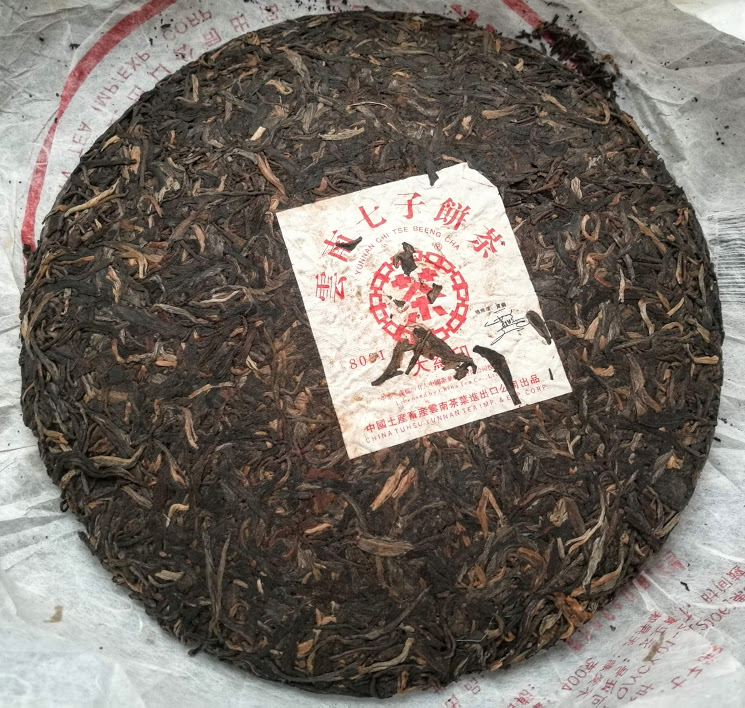
2006 China Tea (CNNP) 8001 sheng pu'er


This tea version goes back to when that new friend visited from Germany, Ralph.  He bought this China Tea Company / CNNP / Zhongcha 2006 8001 sheng pu'er tea cake at my favorite Chinatown shop, Jip Eu.  Not only did he say that he liked it but another friend visiting from Germany backed that up (if I know you a little and like you then to me you're my friend, as I use the concept, a bit loosely).  The curiosity got to me, and I also bought a cake.  This is the third version of a similar cake I'll have bought, with more on that in the following.


with Ralph and Jaba at that shop, and Kittichai, the owner


The research on what it is could have went better.  A few online sources mentioned the same version, but then you can find online references to tea cakes that are clearly not what they're labeled as, like that LBZ version I bought from a Chinatown shop here, or most of what's sold on Ebay.  That wasn't even supposed to be LBZ, given the pricing, just a random tea that happened to be mislabeled as that.  Next it becomes a concern not just if a cake is what labeling says that it is, but if that's even a reference to anything that it might actually be.  I'm not going to dwell on all that, but the number system story helps cover what I mean.

8001 refers to specific information, if it follows the convention, which not all cake numbers do.  The first two digits reference the year the tea recipe was developed, serving as a type number, the last a producer number, and the third a grading of leaves, more or less wholeness, but perhaps used in different ways.  So this was--if that holds--a type developed in 1980, from the "1" producer, Zhongcha, CNNP, or China Tea (one of the names of which dropped out at some point, no longer applying, if I'm partly remembering right), with a leaf grade of 0, the highest possible level.  Per input from that other friend, Jens, the third digit is also used to evaluate leaf quality in some instances, not just form / wholeness.  The date is something else; this has 2006 stamped on the label.

Sounds reasonable, right?  So why would I be uncertain that's it?  That probably is what this tea is, what it looks to be.  I just didn't turn up any familiar references, vendors like Yunnan Sourcing selling it, online discussion, and so on.  Dodgy looking Chinese vendors selling seemingly identical cakes isn't conclusive.  All the same the proof of the pudding is in the eating; it's real enough if it's pleasant to drink.  And this would be aiming a bit low for a tea to fake, since it wouldn't have been costly at all back when it was made, and it's not as if this shop just purchased it, so it can't well have been a very recent recreated version. 

There is a second concern, about image of this blog if I review or support a tea being something when in fact it's not that.  I'm not losing any sleep over that; as far as I know I don't have all that much public image to be worried about.  All this part is just framing what I'm thinking about the background.  Obviously I'm still exploring aged sheng, kind of just starting, even though there have been at least a couple of dozen reviews in that general range here.  It takes awhile to start on this particular subject.


I'm reviewing it alongside a 2007 red mark version from Yunnan Sourcing (reviewed here); that will help serve as a baseline.  I remember that tea being a bit rough-edged, extra earthy, but pleasant if someone was ok with that theme. 

This tasting was rushed , conducted in just over half an hour, limited in time due to a swim lesson occurring at 10 AM.  I had woke up early enough to use a full hour for it, about as long as note taking for a half dozen rounds would take, but used a significant amount of that time making French toast.  One has to keep priorities in order.  It wasn't mostly for me but the French toast was quite pleasant; we had it with ham, spiced with cinnamon, nutmeg, clove, and cardamom, so a slightly non-standard version.


More sort of related background:


I'll cite a lot of that Yunnan Sourcing description of that first tea I tried with it here, not all that directly relevant to this different version, but it will describe half of what I'm tasting, the benchmark version:

8891 Red Mark is one of two 8891's released in 2007 by the China Tea Co (aka Zhong Cha/CNNP)... 

...Most importantly this tea is incredibly good tasting and has a very unique flavor profile. It's been stored in Guangdong since 2007 in a dry-wet storage condition (wet stored but on the dry side of the wet storage spectrum). The raw material is from Nan Jian area of Yunnan which is technically part of Dali prefecture. I suspect the given the name "Da Li Cang Shan Xue Yin Yuan Cha" (Dali Town, Cang Mountain, Snow Mark Round Cake) and the font used that this was pressed for the CNNP company by the Nan Jian Tu Lin tea company. The material is fairly tippy, large leaf and obviously pure assamica. Not only that, but the raw material used is not from young plantation bushes as it's quite burly and large in scale.

Compression is medium, not too tight at all and the leaves easily separate in layers from the cake. The tea brews up an orange-red tea soup with a pungent aroma of flowers, mushrooms and earth. The taste is clean with no musty wet storage notes, but does have some some earthy notes. There is a kind of pronounced spice and cloves taste and aroma with a strong viscous sweetness throughout...


It's great that Scott tells you so much about what you are buying, beyond the tea just being what it's supposed to be. 

I really rush the flavor break-down here so I don't get far with interpreting the spice notes, or pinning down earthiness level or type, and skip over doing much with describing feel.  I reviewed that tea initially here, in April, and used it as a benchmark against a similarly aged tea brick I bought in a market in Shenzhen (China) in June, but I won't go too far with cross-comparing the different impressions.  I mention at the end it's not exactly as I remember it, even though I've tried it again a few times between June and now.  The purpose here is for comparison, more than for determining if it's transitioning.

I briefly mention how this compares with another CNNP / Zhong Cha / China Tea company version I've tried again in the last couple of weeks or so, another 2006 version I bought in Chinatown at Sen Xing Fa last year, reviewed here.  That review doesn't say how much I bought that for; if I'm remembering right a bit under 2000 baht / $60, but then that tea is slightly flawed related to storage mustiness (or so it seems to me).  It cleans up in character after the first 4 rounds or so but it's not really as pleasant as this tea through the first 5 rounds, based on these initial tasting notes and my memory of it.


I mentioned the apparently identical listings of it that turned up online weren't promising related to offering background or clear descriptions, but didn't add that Ralph also reviewed the tea in his tea blog (the Daily Tealegraph).  He also lists three Chinese vendor references relating to this tea; anyone interested in checking on that can click through to those.

Review:


2007 8891 left, 2006 8001 right


8891 left, 8001 right (in all following pictures)


2007 8891, red mark:  first infusion is too light to do much with, but it should start to tell something about storage conditions.  This tastes really clean, light in flavor, a sign it wasn't stored overly wet, or even moderately wet-stored, I'd imagine.  To some extent I'm speculating here, in claiming that storage flavor would stand out immediately, pushing past experience into the range of guessing a little.  Flavor that does come across is pleasant, towards tobacco (not matching everyone's preference, surely, but pleasant as aged sheng tasting like tobacco goes).  Within a round or two that will probably shift some.


2006 8001:  completely different; pronounced mushroom and mustiness comes across immediately.  That's not a terrible sign; per past experience that might well clean up a lot over the first two rounds.  Other flavor is along the lines of old barn smell, versus tobacco in the other.  Of course it's not nearly as clean in effect as the other version but to me this is still very promising.  It has intensity and depth, and with some degree of transition it could be quite nice.

Second infusion:


2007 8891:  much improved, probably not completely ramped up yet but getting there.  Sweetness increased, in a toffee-like range.  Tobacco gives way to other flavor complexity, warm mineral base, rich dark wood tone, hinting a little towards aromatic root spice.  It's nice, just a little light still.


2006 8001:  cleaning up but not there yet.  Mustiness fades; it's no longer in the range of mushroom (as much, at least) but there's definitely an aged character to it, like stored items in an old garage or barn.  It's still promising, a bit clean for being that musty, with a lot of depth and complexity.  I expect it will be a good bit cleaner next round, and then more where it's going to be the one after.

Third infusion:


2007 8891:  this could've been brewed slightly longer than the 8 or so seconds I gave it.  Flavor level is appropriate and pleasant but it would be fine a little stronger.  Earthy range is evolving, but since time is tight I won't put effort into unpacking that.  It's clean enough, and pleasant.


2006 8001:  this version is around optimum for intensity level, brewing slightly faster, or else just more intense flavored tea.  It has cleaned up a lot; probably one more round to go for that process to complete, but the character balance is fine now.  If I had an extra half hour for this review (taking notes) it would be interesting to do a more detailed comparison of flavor, adding more about feel differences and aftertaste, but I'm running out of time, off to that swimming class.  Mustiness is still on an even level with the other flavors, even though I could enjoy it like this; we'll see if that keeps tipping next round.  I'll give these over 10 seconds to try them a little stronger.


Fourth infusion:


2007 8891:  more of the same, clean and pleasant, more into light toffee and root spice range now.  Earthiness is present but not necessarily woody or like tobacco, just adding some depth, along with warm mineral.  I think this might have improved since I've first tried it, cleaned up a bit. 


2006 8001:  much better; this did just tip over to tasting less musty and more into warm mineral, earth, and spice range.  It's similar to that other CNNP / China Tea / Zhong cha sheng cake I bought--at least that seems to be that--that needs 3 or 4 infusions to really settle off that initial musty range, but then brews another 10 or so positive infusions.  We'll see about that part, in the case of this version.  Complexity is quite good; that might include a bit of dried fruit, along the line of date, or maybe jujube, Chinese date.


Fifth infusion:


2007 8891:  nice, just a bit light as flavors go.  It's positive, what is there, and feel has a bit of thickness to it, but it's subdued.  Warm earth and mineral give it great complexity, it's more the front end that's a bit light.  It's not how I remember this; I thought it was earthier [and in going back to glance through a first review that description seems to say that].


2006 8001:  this tastes a bit like jujube, dried Chinese date.  It might keep evolving; that main flavor might be a phase it's going through.  Warm mineral is strong beyond that.


Conclusions:


It's more or less what I'd hoped it would be.  I often end up saying an aged sheng version will probably be great when it just has a few more years to finish aging, and this is ready now.  The first two infusions are slightly musty, and that's still evident in the third, but beyond that the taste is relatively clean, balanced, and quite complex. 

It's comparable to the other CNNP version in character, seemingly just relatively different, probably partly tied to storage background.  It seems more fermented, further along in aging, but at the same time a bit more intense than the 8891, just not as clean in aspect range.  But then that other version did seem to improve related to earthiness mellowing out, and maybe some mustiness could fade from this.

It's interesting comparing this to Ralph's impression, from his blog review (an excerpt):


Out comes a dark orange liquid, which reminds of leather, honey, sweet-sour exotic stone fruits, sugary notes, a warm and comfortable tobacco aroma (not to be confused with a colder smokey flavor which I personally dislike) and a typical aged sourbittersweet aroma.

The brewed leaves have a leathery brown color, you can really see the 13 year dry warehouse aging process as this is a very post fermented tea already.

The brew is strong and thick, the steeping times can be kept short for 7-10 seconds. The aroma is wonderful, the honey sweetness in this one is outstanding and it should be a perfect product for further aging...


It seemed fine to me, a lot like that.  Where I left off the notes it was closer to a dried Chinese date than stone fruit but that flavor range was transitioning a good bit per round.  The tobacco distinction he makes is nice; there is a dry, light, flintier range smoke aspect common in some sheng that I also don't care for (although some people do), and this did include a warmer, sweeter, closer to pipe tobacco earthiness instead of that.

I tried both teas another half dozen rounds after the swim class.  The 8891 was still positive but fading, and this 8001 version picked up more mushroom again, maybe somehow related to lengthening infusion times a little, which can shift character, emphasizing some aspects over others.  It was really positive except for that one flavor aspect (dried wild mushroom, to be more precise, close enough to shitake).  The sweetness, depth of flavors, supporting mineral balance and light earth tones, complex fruit range, thickness of feel--all that was fine.  I don't necessarily expect that mushroom is going to drop out over aging for any reason, but I suppose stranger things have happened.


I hadn't mentioned cost, did I?  It sold for 2000 baht, $60, for a 400 gram cake.  I just checked the Yunnan Sourcing 2007 8891 (which I bought about 6 months ago) and it lists for $67 for a 500 gram cake; not so different.  Character is quite different, probably related to aging conditions as much as to the teas not being the same thing.  The leaves in this 8001 version are much more whole than the 8891, although it seems odd that both would be at the far ends of that scale (the 0 and 9, the third digits), odd related to appearance in both cases.

It raised the question, which do I like better?  They're kind of just different.  Not in completely different ballparks for character, but not really similar.  For being more intense and complex this 8001 is better, even though I didn't love that one mushroom aspect.  For being more subtle, a bit cleaner, and not including any rougher earthy aspects in the first three rounds, or towards the end, the 8891 is better.  Feel was fine for both, maybe with the 8891 thinning more later on.  It would really require a slower, more complete tasting session through a dozen rounds to pin down more differences.  I think the other Zhong cha / CNNP cake I'd mentioned might have been more positive in later rounds than both, maybe with this 8001 only clearly the best of the three for 2 or 3 infusions in the middle.

It will be interesting to see what I make of it over more tastings.  And nice to have over a kilogram of similar teas to mess around with, drink over a long time, check on aging transitions, and give away samples of.  It's nice having aged sheng that works as a daily drinker, as something to have 10 quick infusions of with a breakfast, stacking (mixing) some rounds during brewing to speed that along, without worrying about fully appreciating the nuances of the tea.  Shu works for that too, for rushing brewing as an easy to drink tea, but it's nice having a range of types on hand, to pick whichever sounds best that morning.

with her best friend at the swimming class (from that set of kids)


adding some silliness to a warm-up  walk