Showing posts with label specialty. Show all posts

Saturday, June 27, 2026

Placing different kinds of tea vendors in relation to types


Over and over people ask online about others' favorite vendors, and one part that gets lost is that there are different kinds of vendors, with different focuses.  Value can vary a lot, and quality level of tea.  Range of what is available from each varies.  

I'm going to try to place different kinds of vendors by category, mostly through the lens of trying teas from a few sources in the past half a year.  I'll need to extend that, to get to other main types and source examples, because I've only bought tea from four sources this year, that come to mind (online; I keep buying tea from a favorite local Chinatown shop, mostly to give away, but also for myself).  That's a lot compared to last year; more than for the whole year.  Of course these aren't intended to represent optimum sources; they just match my own preferences.

Related to the Reddit tea vendors list capture, the image at the beginning, it's strange that there is only three categories there, for beginners, US sources, and teaware.  That leaves out most applicable range, for the rest of the world, and for everyone who isn't a beginner (although it still probably works for 90% of that sub / group).  It's interesting that one cited source, for beginners, mentions curated tea selling for 10 to 30 cents per gram.  That's something of a contradiction, for reasons this further content will describe.


I'll start with a couple main types of sources I didn't get to, and then move on to examples of what I've tried, and how I see those mapping to categories and other comparable source options.  There are pros and cons of using different kinds of sources, that relate to what someone is looking for, in terms of type / style, and value, which I'm describing as cost in relation to quality level.  

A relatively low quality version of tea can still be a great value, if selling for a very low and fair price.  Of course that's only if someone is ok with drinking that tea.  A really costly tea can still be a great value, if quality level, rarity, and market demand all support that it's worth it.  

To put a rough price range to that anything under 10 cents a gram is selling at the low end, for specialty tea.  Under 5 typically relates to a different quality range entirely, for mass-produced, pretty limited in quality tea versions.  You can generally buy really good quality, in-demand versions for 60 or 70 cents per gram, and it all levels off quite a bit around $1 / gram (which is the first reference to why "curated" tea selling for 30 cents a gram or less makes no sense; you can only curate the medium quality level range for that pricing, which is still pretty good tea, but "curation" implies that it's better than that).

This won't mostly be about evaluating value for different kinds of sources, but as I see it that's one main running theme, along with how good the teas actually are, and how unique the teas being offered are.  You can buy above average Anxi Tie Guan Yin from lots of places, or Jin Xuan rolled oolong in Thailand; this is mostly about teas that are more unique, and harder to find.


Places I don't shop


Online market outlets:  in the past Chawang Shop was sort of an exception to this, and I had great experiences buying tea from them.  Yunnan Sourcing is really the main example (and I've had positive experiences buying tea from them too).  King Tea Mall is a well-known and typically favorably regarded source, but according to some Yunnan Sourcing products may be a little more consistent.  King Tea Mall is probably buying and selling more online, and Yunnan Sourcing would use pretty well established upstream sources at this point, since they were already around 20 years ago, operating out of Kunming.


These kinds of vendors offer everything under the sun.  That's less true of Chawang Shop, but I'm using this categorization in a positive sense for them, claiming that they offer a broad range of tea types across a range of quality levels at decent value.  Here's an interesting in-house Jinggu shou pu'er I bought from Chawang Shop 4 years ago, probably not typical of what they sell, but then I'm claiming here that they sell different things, varying grades of sheng and shou, and hei cha, so in a sense it is.  That tea was unusually inexpensive ($15 for 400 gram brick), because they were selling it before it was settled (from fermentation funkiness) as a special offering, and you really need to hold onto it for a couple of years to get good results out of it.

Filtering related to what you want to find is a requirement, and there would be hits and misses, related to quality level and value.  Getting input from others through online group discussion could be helpful.  In the past text blogs or sites like Steepster filled this role, but now Discord discussion is probably more helpful.  Facebook is more or less dying, in relation to tea discussion, and Reddit tea subs tend to be stuck on people repeating the exact same beginner questions every single day. 

Especially related to Yunnan Sourcing the option to buy at sample quantity is a main benefit of using such a source type.  You can buy a couple of dozen samples for the same price as buying a lot of just a few kinds of tea, which you may not like.  Per gram value isn't as good, but it's not a great value buying a tea you don't want to drink.

It would sound as if I've moved on to narrow down sources that work even better for me, and I guess that's fair.


Higher end producer direct sites:  there aren't many of these.  Wuyi Origin is a main example, ran by a family member--as a frontperson--by Cindy Chen, selling great quality Wuyi Yancha, Fujian black tea, and Dan Cong, Chaozhou oolong.  Usually a source selling a broad range is a bad sign, because then they're typically just reselling wholesale outlet sourced teas, or else Taobao sourced versions, but that vendor has family in both places (Wuyishan, Fujian and Chaozhou, Guangdong).


I would buy tea from them, but I've drifted into preference for sheng pu'er.  It happens to people.  They're a fantastic source for really good quality oolong and black teas, which are great ranges for almost everyone.  But tea that good is on the costly side, typically above 30 or 40 cents per gram, with many at 60 or so.  That's still a great value, given that other "curator" sources would sell the same quality level versions for around $1 / gram instead.  

I did just buy tea from a Thai producer, which is another example of a different form of producer-direct sourcing, but I'll list that in the next section.

Gopaldhara is a good example of a Darjeeling garden that sells directly, both within India and outside it (through two different pages).  Their teas are exceptional; they fit the "higher end" description in this category heading.  There are other resale outlets that buy and distribute Indian teas, like Vahdam and Golden Tips, and those are ok too, but buying directly is generally better.  You can find better tea and better values.


really good first and second flush versions from Gopaldhara, reviewed in 2020


Curator sources:  there are a few different variations of these, and they kind of run together with ordinary broad type online sources.  A favorite I recommend is Trident Bookseller and Cafe, in Boulder.  They evolved to source award winning and otherwise amazing versions over time, to sell in-house, and eventually expanded that to limited online sales.  They don't push to expand volume, to contend with other larger outlets; it supplements their other business themes and income streams.

Value is great through them; for what they sell the pricing is really low.  That's only possible because they're a lot more producer direct than almost any other sources.  In a sense they're doing what Tealet had set out to do more than a decade ago, but left off at becoming just another wholesale vendor instead (which is fine; that's the model that ended up working).   I suppose their business model might be problematic, for ramping up volume and earnings.  Trying to sell the best teas at a good value would cut into your potential profit margin, and it might be hard to really ramp up volume.

Why do you never hear of a source like Trident then?  In part due to gatekeeping; people wouldn't mention it to help prevent ruining their own source.  In part because their existing consumer base is probably limited.  And then they don't use a lot of standard broad-form advertising to help with exposure, as a larger volume oriented source like Rishi does.

Other curator or specialty themed vendors are out there, but I can't mention any related to using them as a source.  Floating Leaves for Taiwanese oolongs gets mentioned as an example, but again I've not purchased anything from them.  A good quality curator source in the US would need to sell at high market value just to profit, so their teas would end up all being priced around $1 / gram, which I can't afford.  In terms of old-school, established outlets Tea Habitat has been a known Dan Cong vendor for a long time, since US tea enthusiast circles first came to be back in the early 2000s.  

An example of an established online vendor who blurs this line, with that of an ordinary mixed-types source, might be Seven Cups.  They started as a Wuyishan area main source, and probably retain that focus, but as I recall they were positioned in between the range of curator (selling the best versions at high cost) and an ordinary source (more average quality, selling for less to emphasize value).  This really could be the sweet spot for a lot of people.


Why would you buy tea from them, if you could get better versions for less through Wuyi Origin?  I suppose you wouldn't, if that were true, and you knew about it.  But they would carry more range, and at some point people find sources they like and stop looking.  They don't always want to make it their life's mission to buy the best teas for the best value; they just want to be able to order good tea for good value.  

Most people also aren't going to read 2000 or so word blog post about the subject, which is fine, very understandable.


Where I buy tea (mostly this year, as an example)


I'll use where I've been buying tea as an example, starting with kind of an anomaly.


Rishi / larger outlets:  I only bought two versions from them this year, Thai and Lao sheng versions (pu'er, if that was from Yunnan, but lacking any type name if from South East Asia).  I kept wondering what their versions were like, so finally just ordered some to see (even though they don't represent where I usually buy tea).  They were ok.  They don't hold up well in competition from producer direct sources, but then that's kind of a main running theme here, that you get the best value buying as directly as possible, or from specialized vendors, when possible from sources outside the US.

They would still be fine for buying decent value, higher volume, broad type range, surely better than the average mall outlet that might be nearby.  There aren't that many mall outlets nearby now, since many malls failed in the US, and Teavana folded (was bought by Starbucks, then largely shelved).  

Some of Rishi's other sheng could be better than what I tried; it probably is.  You can't judge a source or a producer from one or two tea versions.  Or a tea type; you see that happen a lot in online discussion, and it just doesn't work.


Wawee Tea / direct Thai sourcing:  oddly I'm not mentioning this as a good option for most readers; they typically wouldn't sell directly outside of Thailand.  But I've just bought really exceptional Thai sheng and black tea from them, and reviewed both here.  


That's a normal, running theme in South East Asian countries; you can buy local versions from very small outlets, or even good sized producers, that wouldn't be readily available / Western facing, through Facebook pages and such.  

Thailand has two online shopping platforms, variations of Amazon or Ebay, in Shopee and Lazada.  Existing small vendors would often sell their teas through there.  There would be even more such sources in Vietnam, another favorite broad origin for me, so let's move on to a Western facing outlet from there next.  I should mention first that 101 Plantation is an example of a main, high volume producer in Thailand, for buying rolled oolong and such, and my favorite Chinatown shop is Jip Eu.  You could buy their teas through Shopee, I think (both of them), but not from abroad.


Viet Sun:  I've bought the most tea from Viet Sun over the past 3 or 4 years, of any source.  They're "Western facing," meaning set up for international shipping, and in the past for credit card payment use, although they mentioned preferring other payment options when I last ordered from them, just a month and a half ago.  Their teas are great.  


Y Ty (Lao Cai) indigenous village produced Viet Sun sheng (reviewed here)


these are so complex that they seem a little different every time I try them


There's a common theme among new, great value, new format vendors that they tend to sell range that's hard to find at great pricing, then later as demand catches up it's more in a normal Western market range.  Their sheng cakes might be priced from $80 to $120 now, or 200 gram versions for half of that; just normal price range, for lots of outlet types.  That would've been $60 to 80 3 or 4 years ago.  Part of that is inflation, and a lot is demand for that supplied tea bumping up.  I doubt that any of it is them increasing their mark-up rate, although that's at least possible.  People find out about types ranges and sources, then demand increases, and costs, starting at producers demanding more.  Usually quality becomes a little more consistent too, so better value is filled in a little on the other end, maybe just not enough to offset higher pricing.

Hatvala had been the earlier more market oriented source I used from Vietnam, and they're still there, and would still be a good source.  That change related in part to me switching to pu'er preference.  They sell some Vietnamese sheng, as maocha (loose versions), but Viet Sun specializes in it, and seeks out a broader range of perhaps more novel offerings.


Back to Thai themes:  Tea Side would be "our" equivalent source.  Their pricing is probably higher than either of these two Vietnamese sources, perhaps related to them leaning into the mark-up a bit more than is the case for those two Vietnamese sources.  As a unique source option whatever they set is the standard market price, because there aren't alternatives.  You have to by sheng for 40 or 50 cents a gram instead of 25 or 30 if there aren't any other options, or just don't buy it.  Maybe it's that limited production at the quality range they sell pushes that same theme "up" a level, and those few higher quality option producers can keep demanding more, as I said was probably now occurring in Vietnam.

Let's check on that, by reference to their pages and offerings.


These are Viet Sun's brand new cake offerings, selling for $45 to 53 for 200 gram versions, so for between just under $90 per standard 357 gram size--which they don't sell--and around $100 on the higher side.  That's actually not bad; that tea is better than just about any Western source version for $100 per standard cake size.


Tea Side's 200 gram cakes are selling for $65 to 85, based on the first four listings, for 32 cents to 42 cents per 100 grams, or $115 to $150 per 357 gram cake quantity.  Is it better than Viet Sun's versions?  I really don't know; it has been awhile since I tried it.  Maybe only equivalent, based on what I last tried however long ago, maybe 5 years back or more.

For someone less concerned about value, about price per gram, and for whom spending a few hundred dollars on tea isn't that much of an expense, then buying a good bit of both teas would make sense, and comparing the two.  It's not like when you order too much fresh green tea, and then a half a year later it's not as good.  Oolongs hold up well to even a couple of years of storage, and sheng changes in ways that are often seen as improvements, as hei cha do.

To me these types of teas evolve well over the first two years, even for styles that aren't favorable for even middle time frame aging, transitioning some over 6 to 8 years.  You can't really buy a 200 gram cake and plan to drink some and then keep some for 20 years, to see a full transition, or at least if you did there wouldn't be much for either consumption purpose.  

I personally wouldn't age these styles of teas anyway (SE Asian sheng, in general).  I tend to only ever experience such teas as 10 or so year old versions, and we can't be sure that the styles from 20 years ago were identical.

Here are some examples of how that has went in practice; reviewing a 2014 Wawee Tea Thai sheng version, and a 2017 version, in 2023, so 6 and 9 year old versions.  Those teas were good, and not really through a more complete 20 to 25 year transition cycle just yet, so it was early to judge them.  This review covers two 2006 Hong Tai Chang versions, reviewed in 2018, with one from Tea Side, so those two were a dozen years old then, just a little further along.  One of those I own a cake of, unless I've got the version wrong, and it's a similar one.  Not so much of it is left now, but I have some I could try as a 20 year old tea.  It's fine, but it would be better if I was more into aged sheng.

I think I'm really referencing three different styles of tea.  The old HTC versions were made by a foreign (Thai) based Chinese producer back then, and Wawee Tea was making their own versions, without direct outside input, back in 2014 to 2017.  The plant material may be the same today, the same exact plants, but we can't be sure that the style is exactly the same.  Presumably they would've only improved processing over time, but there could've been some style shift, to being just different, versus better.  For "better" we need to include "better how," better to drink as new tea or more suitable for 20+ year aging.

Even if someone tries all of these teas just mentioned, as I have, it's difficult to say exactly what you are experiencing is better, worse, or different in style a decade later.  In this writing in 2015 I'm reviewing 2004 Thai "pu'er-style" versions, again from Tea Side, but I can't place how much my own perspective on the same teas has varied in 11 years.  So we make of it what we can.


Unconventional but standard vendor sources:  Tea Mania is the main source that comes to mind related to this (based in Switzerland; that's different).  

That vendor has shared samples with me a couple of times over the last few years, and I've bought more tea from them than from almost any source over the past decade, probably more in total than from Viet Sun.  Not so much recently, because I've been focusing on South East Asian versions and sources.  The styles coming out of Thailand, Vietnam, and Lao have become personal favorites.  Myanmar teas are great too; I've tried a good bit of those, and still own some, some of which has been aging at home for around a decade.

Tea Mania is one of the best sources online, per my judgment, even if only based on their Lucky Bee value oriented Yiwu cakes line.  Their other gushu range versions are more exceptional, of course, but not in terms of value, of quality and pleasantness in relation to prices.  You just can't buy decent Yiwu at low prices.


Tea Mania 2021 Jing Mai and 2022 Yiwu sheng pu'er


Since the main theme here is where I've been buying tea recently I might mention some tea that's in-transit.  I bought a couple of value oriented cakes from Chen Sheng Hao, after reviewing a cool sample set of mini cakes from them a couple of years ago.  Those were higher end, more exceptional teas, but I can't really be buying 50 to 80 cent per gram versions, so this order was about following up on someone commenting online that their lower cost blends are really good.  We'll see; I'll be writing about that a couple of times over the next few weeks.

Some other vendors have been sending me tea that fall into this range.  By "unconventional" I mean outside the normal Yunnan Sourcing / Crimson Lotus / etc., etc. paradigm.  You don't tend to see Chen Sheng Hao mentioned in places like the Reddit r/tea recommended vendors list.  Oriental Leaf, a vendor based in China, sent some exceptional hei cha versions over the past couple of years, novel variations of Fu zhuan or Fu brick teas; they work as another example.  Or Legend of Tea, a Malaysia based vendor, sent some Liu Bao and sheng to review, and they're probably as good a source as any for aged Liu Bao.


Oriental Leaf Fu zhuan hei cha (based on white tea)


Atypical naming stands out about one of those sources; the term "oriental" fell out of favor in "the West" about 15 years ago, regarded as pejorative (as negative).  Here in Bangkok they don't keep up with that kind of political correctness; businesses still use that term in business names, and the average person wouldn't be aware of that change.  But then people mostly only use English as a second language, which changes things.

It could seem odd to buy tea from abroad, in other countries than where it is from, from vendors who aren't producer sources.  But it would make sense to, if they could source better tea than standard US or European vendors are selling, and sell it for less than those places.  You would be "getting in on" lower local pricing in other markets, in this case in China and Malaysia.  Shipping would add extra cost, but it costs money to ship within one country, so it's only adding the difference between that and international shipping.  If it's $20 more then buying at volume could offset that, by a lot.


Let's add a reviewed example of that, from one of those sources, from Legend of Tea (out of Malaysia) to make that point clearer:


Legend of Tea 2024 Mengsong sheng pu'er (reviewed in this blog here in 2025)


This tea sells for 118 RM (Malaysian Ringgit), which is equivalent to $29, for a 200 gram cake.  That price looks like a citation mistake, doesn't it?  3 or 4 years ago it would've been more normal.  Their description:


This year's Xiao Ba Wang is sourced from ecological tea trees in the high mountains of Mengsong Da Man Lü, this sheng Pu-erh boasts a fresh, sweet aroma complemented by the distinctive alpine forest fragrance. Its naturally refreshing profile is soft, sweet, and intricately layered, offering a gentle yet rich tea-drinking experience. Each sip reveals a long-lasting sweetness with a refreshing, full-bodied aroma that lingers delightfully.


That's $50-some for a 357 gram amount that sounds like Yunnan Sourcing's higher end $110-120 or so current Impression cakes.  My review notes adds my impression:


#2:  depth and complexity pick up.  Bitterness starts, but that's still moderate.  Mineral undertone is pronounced, of course in a light mineral range, nothing like in Wuyi Yancha or other roasted oolongs.  Flavor seems to include floral tones, and a creamy sort of feel is adjoined by a touch of creamy flavor.  Sounds like oolong range, doesn't it?  But the feel structure of this is sheng, and the included bitterness, even if it's not challenging...


#4:  more of the same; it isn't changing quickly.  Aftertaste and bitterness may both dial up slightly.  Intensity is definitely good, and again the balance and overall effect is nice, the lack of flaws.  Flavor range doesn't extend to anything so interesting, but it comes across as good tea, pleasant and intense.  

I think I'm feeling the effects already... 


So it was pretty good, which I was characterizing as on the basic side, because I'd been drinking a good bit of distinctive, high quality, kind of expensive gushu around then, teas more in the 80 cents a gram range, $150+ for 200 gram cakes instead of $30.  

I've tried that since, and it's pretty good tea, relatively speaking.  It's much, much better than any standard factory tea; maybe two full levels above that.  I mean in relation to Dayi 7542, and also to many others that don't have the external image of being benchmark versions.  For $50-some for a standard size cake it's underpriced by a lot; from just about any other sources it would cost closer to $100, or maybe over that.


What are standard vendor sources then?


This last category description raises a question:  if those are unconventional exceptions, as sources go, what are the most conventional options?

Yunnan Sourcing comes to mind, but that's only a conventional, standard option related to a category, to what I'm calling a market style vendor, one who sells many produce categories and product versions (thousands, in their China based site, and still a lot in their US site).

For pu'er other main vendors are Farmerleaf, White 2 Tea, Crimson Lotus, and Bitterleaf (beyond King Tea Mall and Chawang Shop being good options, again what I'm calling market style vendors).  They would "only" sell a few dozen versions at any given time, a good selection, but limited enough that you could page through it.  

Rishi, which I mentioned, and Adagio are examples of older form, generalist, medium quality, higher volume outlets.  There's nothing wrong with preferring some relatively conventional rolled oolong, or whatever else might seem a bit standard.  People often like some teas as a comfort tea, or to drink with food, and preferences change over time.


To me Teasenz is a good example of a generalist vendor, based out of China, one who sells a little of different things, that is well-regarded and a good value.  Why them, when there are probably 100 relatively similar outlets online?  It's just an example I'm familiar with, and they've put the time in to be somewhat established as a known brand.  I've bought tea from them at least a couple of times, and it was good, nothing too amazing, but good for what it was represented as.  Actually a shai hong pressed cake I bought in 2017 was well beyond that, this tea; they could also find versions that stand out.


Really there aren't standard generalist vendors, typically.  One builds up an image related to a main theme and type range, if at all (like Yunomi for Japanese teas, or those other pu'er vendors already mentioned).  In some cases they grow to be well-regarded standard options, but more often their businesses just succeed, and they do a little better year to year.


Sunday, March 29, 2026

Vietnamese tea status, according to two experts


Steve of Viet Sun!


Seth and Huyen, visiting Bangkok


The tea industry in different countries in South East Asia can be dynamic, and Vietnam has a broader range of good tea to offer than any of its neighbors, except for China, and styles and higher quality levels seem to be developing there.

I asked two friends to share input on this.  Steve of Viet Sun is a main Western facing vendor, focusing on pu'er, or the local equivalent type.  Seth is a tea researcher, working on very developed writing on tea, along with Huyen, one of my favorite tea friends.  Seth is too; they're both great, and knowledgeable to a degree that's hard to relate to.


How does the perspective and demand on tea seem to be changing in Vietnam (by consumers)?


Steve:  I work mostly with old tree assamica teas (what many people in Vietnam call trà shan tuyết or shan, snow shan tea in English) as well as wild varietal non-sinensis teas so I’ll only speak on that segment of the industry. I see a lot of people getting into these types of tea, many just over the past few years. There are more and more tea shops opening and offering many styles of higher quality teas in bigger cities like Hanoi and Ho Chi Minh City. The demand is still quite low compared to green tea from Phú Thọ and Thái Nguyên provinces though. 

Many tea makers are experimenting with different styles. For example, you can go to villages in Cao Bồ, Hà Giang and find multiple teamakers who make halfway decent- good versions of many different tea styles, while 5 or so years ago it was difficult. Many producers see other producers making new styles of tea (raw puerh, black, white) and they start producing it themselves with varying degrees of success. 

An example of this is some time in the past couple years, a couple tea makers started making tea stuffed wild tangerine tea. Now many tea makers all over Hà Giang are making them. Many however, apply that higher volume “export tea” mindset into making these other styles and often fail to sell these teas due to competition from higher quality similarly priced options. 


Yt Y local area tea trees; photo credit to Steve


that tea, prepared as a tea cake, or bing


the right spelling (accent / diacritic)


Seth:  Matcha has exploded in popularity among the general public. Matcha products are now widely available in cafes all around Vietnam, and many tea factories have started producing matcha. This fits easily into the milk tea trend that started more than ten years ago. 

In terms of tea shops offering specialty teas or a general trend of specialty tea consumption in Vietnam, that is still only a small part of the overall market. Most locals middle aged or older drink green tea produced in Thai Nguyen, but there’s a rising demand for teas that use less industrial production techniques, which has created an opening for teas from Vietnamese heritage varietals like the various Assamica varietals locals call “Shan.” 

On the higher end, there are a lot more players in the market than there were ten years ago. These are mostly business people from Hanoi who see opportunities to invest in tea as a luxury product for higher income brackets in Vietnam. Some of the tea makers who focused on the Chinese market in the past have started expanding into the Vietnamese market since COVID forced them to look for new markets due to border closures. The shift to local markets seems to be enduring. There is also a rise in Chinese teas being sold in Vietnam, and some Vietnamese are making major investments in bringing Chinese tea to Vietnam, teas like Wuyishan wulong, Liubao, and Yunnanese teas. This is a small trend but seems to be prominent.


Editing input:  just a random tangent, but it's interesting that "oolong" always should have been "wulong," that the original transliteration was pretty far off (per my understanding, at least).  Now the right term depends on how you see language use conventions and transitions, and it really doesn't matter.


How is the industry changing in response to that, or do industry changes lead that other consumer perspective change?  Are producers exploring new styles, or is awareness of traditional tea styles broadening?


Steve:  The general attitude of many tea makers I know seems to be to focus more on higher quality tea or at least higher quality compared to the high volume “export grade” tea they were making for China. The Chinese tea industry seems to be quite unstable at the moment so many people are focusing their efforts locally as well as internationally in countries besides China. 


Seth:  Traditional tea styles in Vietnam are mostly dead or dying out. Most are extremely localized, within a few towns or districts, and they are not something that most Vietnamese people are even aware of, or would have an opportunity to try. In the specialty tea community in northern Vietnam, there is some interest in reviving tea production methods for Vietnamese yellow tea, which is made using an older technique for making Puer tea. Some are using this as material for making lotus tea, which is closet to the techniques that were used to make lotus tea about 100 years ago. 

The most popular traditional Vietnamese tea is still boiled fresh tea leaf. Locals will buy it at morning markets and drink it throughout the day. But this is mostly the older generation. The younger generation doesn’t tend to drink fresh tea leaves because there are lots of other beverages to choose from now. 


Editing input:  without some context it may seem like this input contradicts his last comments about people tending to drink Thai Nguyen green tea (sometimes branded as "fishhook" style).  Seth is surely aware of a range of very local tea styles that most of us will never hear about, even though I don't intend to add too much here to clarify what he really meant.  Western marketing tends to make it seem like there is really a much narrower subset of types out there than we see in online markets, even related to Chinese teas, which get the most exposure.


-are Facebook pages or online platform shops changing how tea is sold in Vietnam?


Steve:  Yes, many tea producers are on Facebook and many customers buy tea directly from them. Many tea shops have websites but they are often not updated. You usually have to contact them directly to see what their current offerings are.


Seth:  More rural tea makers are able to sell their teas directly to customers via Facebook. This offers the possibility of much higher income that they would make selling tea harvests to factories. However, the quality is not always consistent, and some of the tea can be quite rough, so Facebook marketplace doesn’t always translate to long term economic benefits for rural tea makers. In some cases, they wind up with bags of tea that they struggle to sell because of quality issues. Customers also have a higher risk of getting a product that isn’t satisfactory.


Editing input:  I've had very mixed experiences trying to buy tea locally, more in Thailand, but also from Vietnam.  Sometimes it works well, especially with others' help related to awareness of types and options, but you never see clear product listings, and issues like communication (language issues), money transfer, and shipping are all typically quite problematic.


-has foreign Western tea demand changed (consumer purchasing from outside of Vietnam)?


Steve:  I see interest in Vietnamese teas in the West growing year after year. Many people both tea business related and consumers travel to Vietnam to visit tea producing areas and tea shops in the cities. I don’t know exactly how other tea businesses are doing here but our sales have been growing gradually year after year.


Seth:  Changes in Chinese demand are pushing Vietnamese tea makers to look for new opportunities in the local market. The exact numbers are unclear.

The market for specialty Vietnamese tea is still miniscule outside of Vietnam, but awareness of Vietnamese tea is continuing to grow as tea enthusiasts introduce it more regularly to markets in the US, Europe, and Japan. Overall, this is still pretty small scale.


-can you add a little more about what is of interest to you related to Vietnamese tea experience or tea culture development?


Steve:  I really enjoy spending time in the tea mountains. The scenery is beautiful, there are many regional food and drink specialties and the culture of the different groups of people living in these areas is very interesting. Some tea areas have tea trees but there is little or no tea making happening there. Some areas just sell raw leaves to factories in other areas. I work with the local people and share what I know about tea processing and the tea industry in Vietnam. The state of protection of the tea trees is quite depressing in many tea areas here so It’s important to demonstrate the value and potential of what tea can provide with the people living there. 

I am currently focused on exploring new tea areas, learning more about tea production and the history of tea culture in Vietnam especially in the different tea producing areas. My favorite style of tea is raw puerh so I really enjoy getting to appreciate teas from many different terroirs in northern Vietnam. It’s also always fun to meet people interested in Vietnamese tea and share with them what I think are good examples of teas that represent the current state of tea in Vietnam. 


Seth:  There are more efforts now to create a unique Vietnamese tea identity by encouraging local ceramicists and potters to make tea ware, and locals tea enthusiasts are putting a lot of effort into spreading Vietnamese tea to an international audience, and pushing to improve the quality of Vietnamese tea products. 


Thoughts on this input


A Vietnamese tea friend, Huyen, who any longer term readers would be familiar with, just posted photos of a new tea shop in Hanoi (or a relatively new place; it could be an update about a renovation, or new space).  It's my understanding that shops are developing, especially in Hanoi, as mentioned in comments.  Huyen and her family (Tra Viet is a family business) sell a broad range of teas, of course, but they also focus on sharing demonstrations of traditional tea brewing practices, which are essentially the same as Gong Fu Cha, but surely also slightly different.


Huyen and her brother (her family is also great)


that shop, in Hanoi


It's a great time to explore Vietnamese teas, before that trend for higher demand catches up with expanding production supply, and costs rise.  

More basic range is also high in potential for exploration, so one might stay open to that side too.  That range isn't as widely available online as one might expect; Chinese, Japanese, Taiwanese, and Indian teas draw a lot of online focus, and Chinese and Japanese green teas are more popular.  It's kind of a shame, because even basic Thai Nguyen region "fishhook" style green tea can be nice (and I don't even love green tea), and higher quality, more novel types all the more so.


tea meetup with them in Bangkok


Wednesday, January 22, 2025

Tea booth event in a Bangkok mall


it has been great seeing more of Huyen and Seth


Last year I wrote about attending what seemed to be the first dedicated tea convention / expo event in Bangkok, a Tea Atlas event (the branding name), held in Central Embassy.  It was packed with a good representation of everything related to specialty tea in Bangkok.  Not every vendor, cafe, or shop, but an extensive representative set of them.


Then the next couple Taste of Tea events, seemingly connected to an earlier tea shop brand, were kind of different.  These were just booths set up in a mall, with focus more on bubble tea and matcha drink sales.  That's fine, there's nothing wrong with that, but it's not the same thing, not really a move towards higher quality tea awareness and acceptance.

This event was a bit in the middle, limited in size, and covering both scopes.  A vendor we had just met in that recent Vietnamese tasting was there, the Qing Fu Cha owner, Charlie (I think; he might have more than one nickname, maybe also Yee?).  Thais always have a formal name and a nickname, so the multiple names theme is universal here.  

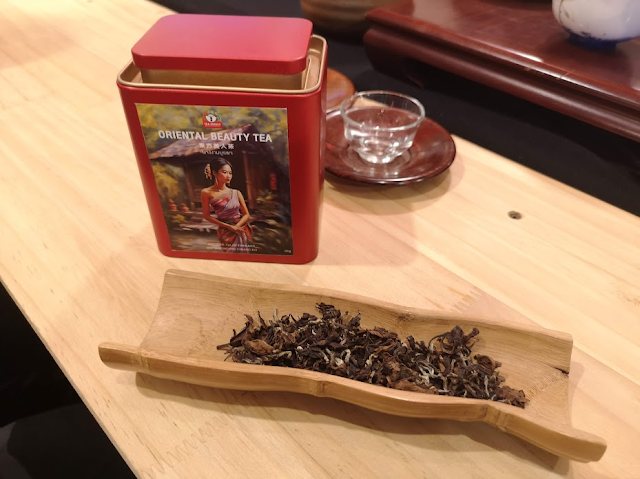
It was nice checking out the first day of that event, in the Central World Mall, more or less the main mall in Bangkok, and visiting that vendor's booth to try some of his tea.  We tried a Jing Mai pu'er and a Thai version of Oriental Beauty oolong; both were nice, type-typical and pretty good.  It was also nice meeting a few people from that tea tasting.


From there other vendors sold interesting versions of different forms of tea.  Araksa Tea Room (cafe) had a booth, which I didn't spend much time at, but that name comes up as providing a nice cafe space.  Two others sold novelty iced or tea and milk blends, based on better quality original style teas, which isn't normal for that theme.  Bubble tea is usually just ordinary black tea, as a base.  Some of the drinks were clearly distinctive; a Da Hong Pao and a Taiwanese oolong example stood out, from two different booths.


What does this mean?  I really don't know.  Maybe that kind of theme will catch on, or maybe it won't.  Maybe they'll diversify back into a more original form of those teas, or maybe they'll shift product form and sell novel flavored versions instead.  I suppose it's still interesting to see, instead of just matcha, bubble tea, and "Thai tea," the orange colored, flavored version.

It might seem like there should be another couple of points to touch on, about what else was there, and other possible directions local tea themes could take.  Really joining that event was more for seeing Huyen, Seth, and the others I'd just met, more than about those teas.  

I'm not sure what could've been there that would have been so personally interesting for me.  Even if the types matched what I love most in teas, like distinctive and intense Thai sheng, or rich and complex Thai versions of Dian Hong style black tea, I'm not sure if it would've changed much.  I have that tea at home, in lots of versions, especially if you count stocking up on somewhat related Vietnamese versions.

If this is what Taste of Tea is and will be it's ok.  It would be nice to see a real tea expo instead, producers gathering to share what they've been working on, and importers or foreign producers there covering what neighboring countries are up to, Laos and Myanmar tea and such.  Short of that this is good, trying some novel iced teas.  I think it's worth swinging by to check it out.  Matcha and Japanese teas tend to get better representation, but since I'm not into that I tend to not notice it as much.


For where I am in tea experience now meeting others into tea is more interesting than the actual tea.  In one sense, to me, that relates to burning out on over a decade of tea types and quality level exploration.  It's a little tiresome.  But that doesn't make it any less interesting or relevant for others who are new to it, or only a few years in.  Part of what I'm expressing is that it would be nice for them to have easier access to the rest of the range too.

I can be clearer.  Nearly a decade ago I went to a Seven Suns tea tasting, highlighting a broad range of tea types, mostly Chinese, or maybe all Chinese, in a shop in Ekamai that's now gone.  It was 8 years ago; I looked it up.  That business founder was trying to set up something that didn't exist yet, true specialty tea awareness and appreciation in Bangkok.  He was a nice guy, and I'm sure still is.  I'm not sure we can conclude that he failed; that business morphed into focus on sales of matcha, which was practical, and in demand.  Specialty tea awareness and demand has gradually expanded here; it just took time. 


Then it's odd to expect that lots of other vendors should keep repeating that pattern, making it stick where it didn't work out for them.  But there are Thai teas at a high quality level out there, that could support an even more interesting experience than that one; I've tried them.  And surely I've only tried a fraction of what exists.  There are online Thai tea groups with thousands of members, tea cafes and shops have a following, and these tea events I'm writing about draw visitors.

It would be sad if it takes another ten years for what I'm describing to come about, a variation of Taste of Tea focused not only on what is readily available, vendors already interested in this form of promotion, but instead on the best of what exists.  The Tea Atlas function was a little closer; maybe it will repeat again this summer.  To be clear two of these vendors were really breaking new ground with high quality cold tea drinks, based on traditional styles, and Qing Fu Cha is a solid vendor option, so I'm expressing that the overall volume and range was limited instead.  No producers were represented, for example, there was no Taetea booth, and so on.

I've heard the point made that low tea demand benefits us tea consumers, because it keeps pricing in check, and availability open.  I'm not so sure.  When demand increases quickly that does lead to rapid pricing expansion, but it also seems like gradual shifts in demand could see the production side respond.  Pu'er cake prices doubled in the last half dozen years; maybe that's a good example of the first case.  And limited Japanese tea production leads to that tea pricing staying high.  

Then again maybe it's easier to argue for the opposite of the point I'm trying to make here; economics is a strange theme.  Anyway, I'd like for more others to have access to interesting tea experiences, even if it relates to me shifting what I focus on and buy, as has occurred continually over my past anyway.  

This Taste of Tea event runs through the 30th; maybe stopping by there is a good starting point for that.  Even when searching I don't see an event notice on social media for this; strange.  This is Qing Fu Cha's event notice version, but there's not much to know; information booths in Central World know where it is in there, and everyone knows where Central World is.


Thai Oriental Beauty is not bad, but then it's all relative


Monday, July 1, 2024

Thai tea expo / function in Bangkok Central Embassy


I checked out a local Thai tea event at one of many Bangkok malls, at Central Embassy, at the Open House area on the 6th floor.  It's the first such function I've ever been to in Thailand, beyond there being a few tea related booths at coffee and tea related events.  It was nice.

A series of special presentations is one part of that; a tea expert of some sort was presenting about Gongfu brewing and aged Shui Xian, it seemed.  I didn't catch that much of that; the point is pointing out that it extends beyond sales booths.  For people considering visiting they may want to check out that schedule and get in there; it all only runs for another 6 days.  There is also plenty to see and experience from the vendor booths.


The sales booths were fine, representing a broader range of tea vending than one might ordinarily hear of.  They were split between producer booths and other types of vendors, cafes and such.  I talked to the Taetea booth staff, to Emerald Thai Tea (a local producer who make different kinds, including some older plant pu'er), and to another specialty producer who makes a lot of types of teas in the North (Sawan Bondin).  I tried some teas at all three booths; that's a nice part of such an event, that people hosting sales booths are happy to share small cups of tea and talk about the products and background.

An old tea friend had a display there, Danitha / Pop of Chai Jin, a Japanese tea sales and ceremonial brewing themed place.  Zhennan is a familiar local cafe that had a booth, but I missed them being at the booth when I went by.  There were others; Pop was talking to another small shop owner who I've met before, Eastern Tea Concept, that I also said hi to.


So what would be the best draw there for people who are really into tea, or just curious to explore further?  Probably mostly just seeing the range, in case some of it really matches your own interest, and then you could buy some tea from them.  Being able to try the teas makes all the difference.  

It would be nice to support local Thai companies promoting better quality specialty tea.  My tea budget is deep in the red related to my family living in a high cost of living city on a Thai salary, in Honolulu, and I've spent more than normally allocate on Vietnamese teas recently, so my own tea spending is severely limited just now.  It was still nice meeting and talking to people.


I was asking one Thai producer and vendor about how sales would go through Myanmar, since of course they're having problems with civil war there.  He didn't know, but I met a private importer from China who was working with Myanmar tea just after that.  It made for a really interesting discussion, hearing about how things go there.  

A bit rough, of course; he said that I shouldn't be visiting Myanmar any time soon, but that with the right preparations, connections, and support he can still go there.  He said that the tea plants growing there are quite old and now integrated with old-growth jungles, kind of a common theme everywhere, whether or not it actually matches the marketing spin descriptions.  This is an interesting tangent, to me, which I discussed more in relation to Thai ancient trees and forests.


Emerald Thai Tea booth, worth checking out


those ancient forest sheng versions; it was interesting trying them there


How would someone really know tea plant ages?  You can't, really.  Variety Sinensis plants grow to be large shrubs or small trees and age to reduced productivity over a century or less, but variety Assamica plants (both Camelia Sinensis) can grow to giant trees, and some can live for over 1500 years.  Size isn't the best indicator of age; they will grow at different rates and to different sizes depending on conditions.

But with the right local context background you can at least place when tea was growing there locally, which should set a very general earlier original time when plants were introduced there.  I forget how many hundreds of years ago that related to the teas being sold from Northern Thailand; I think 300 years and 700 years, for two different versions, carried by the Emerald Thai Tea brand producer.

It sounds impossible, right?  Thai history must have been quite vague just 2 or 300 years ago.  People know who the King was, of course, and some broad details about industries and lifestyle, but drilling down to tea production is something else.  

But there was an earlier empire in the North that supposedly had clear ties to the tea production (per that discussion at the event, at least), the Lanna Kingdom.  Dating that time-frame and knowing of local tea production couldn't tell you any given plant's age, but it could support a real claim that tea was there in a given area then, or at least probably was.  That's a long time ago; who knows.  Let's check Wikipedia's input on that timing:


The Lan Na Kingdom or The Kingdom of Lanna (Northern Thai:, pronounced [ʔāː.nāː.t͡ɕǎk láːn nāː], "Kingdom of a Million Rice Fields"; Thai: อาณาจักรล้านนา, RTGS: Anachak Lan Na, pronounced [ʔāː.nāː.t͡ɕàk láːn nāː]), also known as Lannathai, and most commonly called Lanna or Lanna Kingdom, was an Indianized state[broken anchor] centered in present-day Northern Thailand from the 13th to 18th centuries.

The cultural development of the Northern Thai people had begun long before as successive kingdoms preceded Lan Na. As a continuation of the kingdom of Ngoenyang, Lan Na emerged strong enough in the 15th century to rival the Ayutthaya Kingdom, with whom wars were fought. However, the Lan Na Kingdom was weakened and became a tributary state of the Taungoo Dynasty in 1558. Lan Na was ruled by successive vassal kings, though some enjoyed autonomy. The Burmese rule gradually withdrew but then resumed as the new Konbaung Dynasty expanded its influence. In 1775, Lan Na chiefs left the Burmese control to join Siam, leading to the Burmese–Siamese War (1775–76).

Following the retreat of the Burmese force, Burmese control over Lan Na came to the end. Siam, under King Taksin of the Thonburi Kingdom, gained control of Lan Na in 1776. From then on, Lan Na became a tributary state of Siam under the succeeding Chakri Dynasty.

Throughout the latter half of the 1800s, the Siamese state dismantled Lan Na independence, absorbing it into the emerging Siamese nation-state.[3] 


That goes on to say that an important development step was consolidating local rulership and establishing Chiang Rai as a capital in 1262.  Of course it doesn't really relate to when tea was being produced.  If a local tea producer could somehow connect that political history with the tea industry history it could establish that production on the order of 700 years ago, or even a bit earlier, maybe 750.

Two people showed me pictures of old, giant tea tree plants; that's something.  No one really knows how old those are though.


Tae Tea / Dayi; it was nice trying some familiar range sheng pu'er there


Sawanbondin; a brand selling different ranges of teas and herbs


the Sawanbodin booth was especially nice for trying different versions


The state of better quality specialty Thai tea


I tried some relatively interesting Thai specialty tea versions back when Huyen visited in a local shop back in January, a higher quality level than I usually run across.  I've been buying and liking Wawee Thai sheng pu'er (or pu'er-style tea) for a few years, and my local friend Aphiwat makes fantastic local sheng, based somewhere near Chiang Mai.  

Plantations have been developing new styles for years, like Oriental Beauty / Dong Fang Mei Ren and red / ruby oolongs, long after producing Jin Xuan and other varietals from Taiwan as rolled oolong back in the 90s.  I keep hearing of new developments in making local gaba versions, and Thai shu pu'er.  Tea Side made small batch, basket fermented shu a number of years ago, maybe 5 or 6, so that's not really new.


So what else is new?  It would be helpful if awareness and demand for these teas developed.  People can keep on making better and more novel styles of teas, and I guess profiting from selling them when demand enables pricing spikes (I've seen them selling for the better part of $1 / gram).  But for it to become a normalized, developed market theme that exposure needs to broaden.  

I guess events like this one can help.  I might've saw a few dozen people there, not bad for one of the least consumer populated malls in Bangkok (nicknamed "Central Empty," I've heard).  There were more people throughout the mall too, hundreds of them; maybe it is finally catching on with a target consumer base.

Small cafes have been cropping up here and there more and more for years.  Then again some fail as businesses too.  There was a pu'er themed shop in Sathorn near where I worked, that's now gone, and the closest specialty tea shop, general in form, also went out, I think even prior to Covid.  There was a specialized Liu Bao shop nearby; I never did get around to checking that out, and it could still be there.  My favorite Tae Tea outlet shop closed, the one in Belle Condominiums, and another relocated, the one in IT Square, if I remember right.

I see notices for some places, new form cafes, hosting 2 or 3000 baht per person special tea type tasting events (($90 or so, on the high side), and if a local market audience could support that expense level specialty tea would be doing ok.  Peace Oriental, the main local hybrid-culture style place from years back, opened a relatively opulent branch in Gaysorn, essentially the highest end mall here, on the Central Embassy level, and kind of around the corner from it.


No one would ever know to what extent general specialty tea awareness and demand are picking up now since most sales would occur through an outlet like Shoppee or Lazada, the Thai versions of Amazon and Ebay.  I just reviewed two amazing green teas selling from there, and I would imagine that many of the outlets in this tea event would have online shops in those places.  

It's hard to get any feel for business level for sales channels like that.  Yunnan Sourcing, a main US vendor based there and in China, has a related Facebook customer interest group, and many vendors host Discord servers (groups), so you can tell, a little by the discussions, what the following is like.  I suppose if a vendor expands offerings over time they're doing ok, and if they go out of business they weren't.

It was odd not seeing teaware producers represented there; there was at least one of those at the last coffee and tea event I visited, last year.  Then again it's odd just seeing this kind of event being held anywhere, as the first and only tea specific event I've heard of in Bangkok, beyond tastings and such.  It's a good sign.


completely unrelated, a vlog style video Kalani (my daughter) made about it raining hard, more to show her take on it than the weather event


Friday, June 28, 2024

Lao Cai Vietnamese and Nanning Chinese wild origin black teas


Vietnamese tea left, in all photos


I'm reviewing the second wild material tea from ITea World in comparison with a version from Viet Sun.  Citing their descriptions will fill in more about that origin, but it is whatever it is.

It's a challenging context for the Chinese tea version, because the 2023 Lao Cai version has been one of my favorite teas.  It's complex, well-balanced, intense, and positive across flavor and other aspects.  A wild origin material hei cha from ITea World was pleasant but atypical in hei cha style, like a smoked version of Liu Bao, sort of.


Chinese Wild Black Tea  ($25 for 40 grams)


Indulge in our Chinese Wild Black Tea. Using a non-smoked Zheng Shan Xiao Zhong process, this tea boasts a rich floral aroma and a thick, smooth taste. It leaves a refreshing sensation under the tongue and a clear, lingering throat note. The aftertaste is deep and lasting, with a prolonged sweetness that brings joy


At 60 cents a gram that pricing is a little aggressive but that's how it can go with rare and desirable forms of tea.  There probably isn't any easy way to buy something similar, or maybe there are no close alternatives at all.


Lào Cai Black Spring 2024  ($19 for 100 grams)


A buddy hồng trà from medium, old and ancient trees growing at 1200-1500m in Y Tý, Lào Cai.

A fruity, honey cacao fragrance emerges upon first infusion. This tea brews up quickly into a rich crimson golden soup. The flavors I pick up are fruit jam, chicory, malt, cacao, honey with warming spices. This tea has a chicory dark chocolate bitterness with a rich lingering effect in the throat and an uplifting, focused qi.

Medium oxidation, medium rolling time/ pressure, lower than average air drying temp/ longer drying time. A great option for a morning pick me up or any time when you need a burst of clear headed energy.


At $19 for 100 grams this costs one third the per-unit weight of the other version. (or the ITea World site sells an 80 gram version for $42.50, working out to 54 cents, probably a more fair comparison).  

Again that's not so atypical for more direct from producer sales from Vietnam, versus China or another highest demand origin, like Japan or Taiwan.  If it's identical to the 2023 version that's more than fair, a great value.


Review:


Lao Cai Vietnamese:  pretty similar to the 2023 version.  It's so close that I'm probably not going to be able to do separation justice from memory.  I drank that tea yesterday, so it's not a distant memory, but this is similar.  Berry or dried dark cherry range might be a little stronger; a warm-toned edge might stand out just a little more.  This might include a bit more cacao; it's fairly pronounced.  Astringency effect is different but this is the first round, and that probably will shift some.  

The tea is great; that's the same.  I own a lot of the 2023 version and it's not enough.  I keep giving it away to people I care about, so that they can have the experience too, but I'll try to mostly hold onto it from here.


Daming Mountain, Shanglin County, Nanning wild black tea:  that's really novel, and quite pleasant.  Flavor is pretty intense, warm, sweet, complex, and unusual.  Feel is giving up a lot in terms of fullness, but then again it's early, and I expect feel to shift for both.  This tastes like dried elderberry, or rather as that would taste, if I'd ever had it.  I ate a lot of elderberry pies as a child but never experienced that berry dry, even though since it grew wild locally we could've just kept picking it, and then dried it.  It would've been a shame to not make it all into pies though, so my Mom did.

There is a very faint musty input in this, hard to place that it's so subtle, connecting with warm mineral tone.  From here that could develop, but I'd expect it to drop out instead.  Feel is rich and smooth, just not as structured and full as the other.  

In tasting between the two it includes mineral that ties to feel that's more astringent, causing a slight mouth puckering effect.  That comes across as fullness of feel initially, not remotely as a flaw, but in tasting between the two the effect is that it seems more "rustic," less refined.  But also better, in a few senses, more intense, with more flavor complexity, not just hitting a narrow range of a few flavor inputs.  It will be interesting seeing how both evolve.

Based only on the first round the Vietnamese version takes it, but that's only according to my own preference.  In a way this Chinese version is more novel and more refined, so people might value that more than the additional complexity and intensity.


Lao Cai 2:  that's so good!  This is clearly more complex, layered, and refined than the earlier 2023 version, I think.  I don't feel badly about owning quite a bit of the other instead of this one; they're both similar, and both great.  A brandy-like effect comes across in the flavor profile, tying to the cherry range more than the cacao.  The feel is just wonderful, full, structured, rich, and not rough at all.  It's velvety, not light.  A clean, sweet aftertaste effect carries over.  I can easily recommend that anyone buys as much of this as they feel comfortable deciding on.

It would be possible to interpret this flavor as including tartness, in which case the berry range might seem more like cranberry than dark cherry.  I'm not a fan of tartness in black tea, actually a bit sensitive to that, and it's so moderate (limited) in this I don't interpret it that way.  The feel including a bit of astringency edge I see as normal, positive black tea experience.  Framed in positive terms it represents complex and full structure; framed negatively it's dryness instead.


Nanning:  this filled in as well; flavor complexity filled in what seemed like a thin spot before, and feel structure is richer and fuller.  It's crazy that both these teas are this good.  I thought the 2023 Lao Cai version would be an unfair starting point for comparison for me loving it so much, then this next year's is better, and the Chinese tea holds its own.  

This tastes like Christmas; I can even explain why.  Elderberry has shifted to taste more like teaberry, a flavor that won't ring a bell to many.  It's a mix of berry flavor and mint, which balances really well with a lighter cacao tone than the other includes.  

I suppose that if someone felt that a medium degree of feel structure is needed to balance warm, rich, complex flavors that could still seem like a gap for this version.  Or the opposite could occur in judgement, and the lightness could make this seem more refined.  To me they both work, just in different ways.

It looks like I'm brewing a bit more of the Vietnamese tea, because it expanded more.  The tightly twisted leaves in this version have expanded, but not as much.  I'm not at all concerned that it might be an unfair test of them; there isn't that much difference.


Lao Cai #3:  the same, not changing.  Warm mineral supports rich dried cherry, cacao, and range that could be interpreted as tartness, with a pleasant brandy-like effect setting context.  I see this as more refined than rustic, or maybe those concepts add nothing to practical description.  The feel is great, full and rich, with pleasant structure, but still smooth.  I could drink this tea most of the time and wouldn't tire of it, even though I'm mainly a sheng pu'er drinker.  It would be great drank alone or with food, lots better than necessary for a daily drinker, but it could serve that role well in this style.


Nanning:  not evolving too much; maybe flavor complexity is tying together better, and feel keeps evening out to not include thinness across a feel range that's impossible to describe.  This flavor set is novel and pleasant.  

Maybe the other is more standard, more typical, and that would serve it better as an input one might be open to repeating countless times.  Maybe this one is more novel, and that would come across better as a unique experience, something to savor or share.  Who knows about all that; it would just depend on the subjective impression one gets from either.  

This tea being lighter in feel, to the extent that could be interpreted as a gap, makes it a less suitable pairing with food, but for some that could be regarded as a strength, for it to be a more refined stand-alone experience.  A black tea drinker might miss the extra feel structure but an oolong drinker could prefer this version for being rich and full enough as it is.  Either of these would be pretty flexible about range of potential brewing approaches; they would both be great brewed Western style, and could work out brewed "grandpa style," left in contact with water in a tea bottle.


Lao Cai #4:  last round; I'm off to yet another pressing errand.  Dried dark cherry is stronger than ever in this, supported nicely by cacao.  That could taste like a Christmas theme, couldn't it?  I think this might be a perfect tea to get someone new to better tea started, and also one someone almost the entire way through an experience curve would love.  That's the magic of a range of different black teas, that anyone could appreciate them.  

To put it in perspective that hint of feel structure and dryness isn't completely unlike Assam, but it's at a fraction of the proportion that tends to occur in the best quality versions of those.  Those are malty instead, used in a different sense than one would mean related to describing Ovaltine, or the malt in a milkshake.  It would work to say this tastes like malt too, but to me fruit and cacao stands out more.


Nanning:  it's interesting how flavor intensity, complexity, and fullness of feel structure keep gradually ramping up in this.  It matches the other.  That one especially catchy flavor aspect range people might describe differently.  Here I've pegged it as elderberry, then teaberry, referencing a brandy-like quality, with cacao as a secondary input.  As usual that wouldn't be a universal interpretation; if I tried this a couple of more times I might vary it.  It works as a well-grounded and descriptive initial impression.


Conclusions:


This gets a little strange, because I want to conclude that both are very positive, simply unique in different ways.  Then I preferred the version that costs one third as much as the other, aligning value and my own personal preference with that one.

It is still fair to say that they're simply two different types of tea.  The Chinese version is a bit more refined, subtle and distinctive in a different way, and unique in terms of flavor profile.  It evolved positively across rounds; later in the tasting they were more equivalent.  The Vietnamese tea also has a very positive flavor profile, and higher intensity of flavor, with more intense feel structure and aftertaste, all in a positive range.  For someone really into mild feel and refined flavored black tea they could like the Chinese version better, but to me that feel structure in the Vietnamese version was so moderate that I don't see it as a negative factor at all.

As I mentioned earlier there's often an option to get better value teas from origins outside of the highest demand areas, from places like Vietnam, Thailand, Georgia, Nepal, or even Indonesia.  Then it just depends on the sales channel too.


The ITea World vendor stands out in relation to offering a lot of standard type or more unique and interesting versions as samples or sample sets; potential customers should probably make the most of this option range.  Then if a version introduced through this approach really stands out as a match to preference ordering more volume of it would be a clearly defined option.  For having a tight tea budget I tend to react quite a bit to per-volume sales value, but for many others spending $25 on high quality tea that you can drink a significant number of times would already be acceptable value.


The Viet Sun source is where I've been buying tea for the past couple of years.  For tea enthusiasts there shouldn't be a need to add to that; the meaning should already be clear.  Teas are good, value is good, and the styles are positive, distinctive, and interesting.  

Often new or newish vendors will sell teas at great value for a relatively long initial period, build up following and demand, and then will often suddenly shift that pricing structure, turning over a lot of customers who are attracted by value, but continuing to build on sales volume by marketing to attract others.  Whether or not Viet Sun follows this pattern value is pretty good now, and products are high in quality and distinctive; it's a good time to explore what they sell.  

The only downside is that many people don't buy $100 worth of tea at a time (really!), and their free international shipping threshold is set at $88.  It's a great option for people who are already focused quite a bit on tea experience, but for people just considering expanding out from drinking $15 per tin mass produced teas it may seem like a bit of a step.