Showing posts with label #12. Show all posts

Wednesday, July 26, 2017

Thai Royal Project Jin Xuan oolong (#12)


I wanted to pass on an impression of a Thai Royal Project Jin Xuan that I mostly bought for staff in my office to drink. This was one of the teas I started out on, along with light oolong made from the #17 hybrid from Taiwan (Bai Lu, although it's often incorrectly referenced as Ruan Zhi).  I like the tea, so part of the point is explaining why I keep saying Taiwanese versions are better, both to defend Thai teas and also put that in proper context.


The main reason I say that:  better versions from Taiwan are better, a whole level above this one.  That generalization is based on years of trying every Thai oolong I could find, from all different types of producers and from different types of end sources.  But there aren't that many Thai tea growers, per my understanding, and there are an even more limited number of central tea processors, which is why the oolongs seem so consistent.  I'll skip ahead to reviewing in detail and add more about that origin and general quality level comparison there.


Review


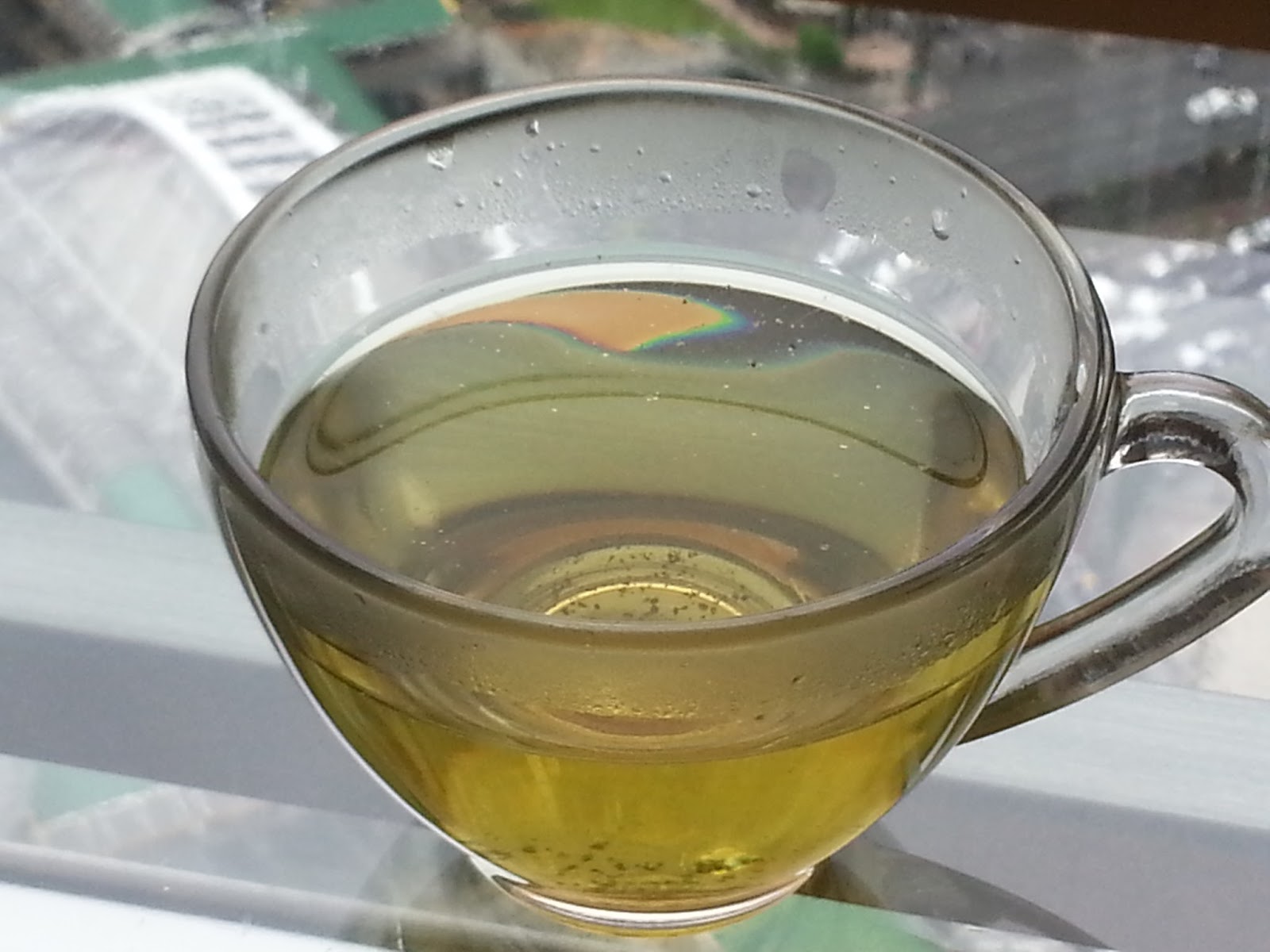
The tea is bright in character, sweet and fresh, floral and a little vegetal.  I'm brewing it Gongfu style in a gaiwan this time and I could swear it turned out a little better prepared Western style in the past week, just a little brighter.  It's a bit creamy, in feel and in a butteriness coming across, but all that range can be more pronounced than it is in this version.

There is a characteristic taste of Taiwanese oolongs that comes across, although that was much more pronounced and positive in this other oolong version from there, a Shan Lin Xi version from the Lin Hua Tai shop in Taipei.  I guess to put labels to it the flavor range is a combination of mineral undertone, floral higher end, and a touch of different brighter mineral tone, all combined with good sweetness.  A typical feel for Taiwanese oolongs is a bit full, with lingering aftertaste also normal enough.


brewed lighter, with leaves in gaiwan


Some light oolongs express even more pronounced floral aspects, with this one extending a moderate degree of that into other vegetable range, not far from fresh green bean (uncooked).  The sweetness is almost like that in very fresh snap peas or green peas, which are nothing at all like a frozen version.  That better earlier session version seemed to emphasize flowers more.  I might have backed off the water temperature just a little then; sometimes I do that, but I'm brewing it this time using just below boiling point water.  Or maybe I just liked that overall effect better; usually Gongfu brewing works out the same or better but not always.  At a guess it was the effect of those things together; backing off water temperature works better, and the lower proportion and longer brewing time also did.


Other


So that was it; basic stuff as reviews go.  It was nice but it could have been a little brighter, a little more floral, a little creamier, or could have expressed a bit more mineral tone.  The level of sweetness was fine, and the flavors were quite clean in effect.  I didn't notice pronounced aftertaste, and the feel wasn't particularly full, but it wasn't thin in effect either.  This is all how Thai oolongs tend to go.  They start to express some nice attributes but then you realize you've had Taiwanese versions in a relatively identical style that expressed them much better.  Part of that could relate to the hearsay-based idea that the best Thai oolongs are shipped to Taiwan to be sold as "counterfeit" teas from there.  Given that I've tried so many versions from so many sources it's hard for me to imagine there is another whole quality level out there that I didn't get to but I suppose it's conceivable.


To me they are a great beginner's tea, or could work as a nice, inexpensive daily drinker.  I just had that tea with lunch, with duck noodle soup, and it works better with something lighter and less earthy, maybe with a pastry, or with apple pie and ice cream, or even with a ham and cheese sandwich.  As for pairing with Thai foods it would be fine with anything that's not too spicy or not too far in any other direction for strong flavor, like herb and garlic roasted fish.  For spicy food something like sweetened bael fruit "tea" (tisane infusion) might be better, or really water pairs better with any kinds of foods than it's often given credit for.

It would work really well as a blending tea, but blending makes more sense with black teas, to me (adding flowers, or mixing a tea with spices, making masala chai and such).  This tea cost 100 baht, around $3, for 100 grams, so not very much at all.  I've seen closely related versions (or maybe this one) selling in online Western vending outlets for around double that. That's typical for here though, although sometimes other versions can cost somewhere around 350 baht for 200 grams (around $10), or still not much at all.  #17 / Bai Lu isn't so different from this but the character does vary just a little, usually lighter on the creaminess, with a bit more influence in a mild earthiness leaning towards a spice aspect.  It's probably better than it sounds; I don't mean it tastes like actual earth, or "forest floor," or cork, it's just a little warmer, with spice range moving towards nutmeg that typically stays non-distinct.


Thai oolongs at Central Embassy Mall grocery store

There are Royal Project stores in different places here; this was from one in the Future Park mall, way on the North side of town, almost up to Ayutayah.  They sell different versions of Royal Project oolongs and other teas though, and this version is the one I've liked the best, the one that comes either in octagonal shaped boxes (see an image of those) or red or gold foil packaging.  I've seen shops selling this version in both the main Bangkok airport (Suvarnibhumi; good luck finding it though, over by domestic departures), and in the Chiang Mai airport, and in the Central Embassy grocery store, but it's also sold in lots of places.  I can't remember if the Royal Project store in the Paradise Park mall had it (I think it didn't) but there are two other tea shops there that would carry something similar enough.


You would think there would be a website related to this, a central Royal Project version, but I didn't find it.  That's probably related to using English to search, and to there not seeming to be one singular Royal Project, there are multiple initiatives.  Here is one version though.  I did also find another nice review of a similar or perhaps identical tea by the Tea Squirrel blog.


One might wonder, why review it here at all, only to say that it's a mediocre tea that's not on the same level as the other few dozen teas that I've reviewed this year.  Partly because I don't think I have reviewed one exactly like it, and it's a basic staple here in Thailand.  I did review a similarly sourced Royal Project black tea not so long ago, tied to the same general idea, describing the local teas landscape, what an ordinary quality level Thai tea is like.  There are some better examples of black teas and oolongs out there; they're just not so easy to come by.  I've had the best luck with Tea Side as a source, an online vendor.  Winter harvest versions of oolong tend to work well for my individual preference, warmer and a shorter step closer towards a spice aspect.  Jin Xuan based black teas can be very nice, or they can be not so good, it just depends.


I had all but put this general type aside by the time I started this blog, but seeing them in a grocery store was part of my own introduction to decent loose tea years back.  Part of mentioning them again relates to recently writing an article for an expat site / forum on where to buy tea in Bangkok, and to a lesser extent Thailand in general, which I was thinking of sharing here.  It would make sense to describe this tea first related to that, to set the general range for local basics.  I could link to where that is already posted but they edited down the details of mentioning most specific locations, which would be helpful to readers here, and without that there isn't nearly as much point.  Shops here are like anywhere else, they come in a range of different types, but it works best to describe those general types related to specific incarnations.


The tea is ok; I'll probably drink it once a week until the staff here gets around to finishing it.

Monday, February 20, 2017

Doi Inthanon Thai oolong review, and re-roasting experiment


I'm trying a Doi Inthanon oolong, from the Doi Inthanon Tea Partnership.  It's described as a #12 oolong, Yun Bi, with that number of course matching the main Taiwanese TRES cultivar made in Thailand, Jin Xuan.  A co-worker bought the tea for me on a trip up North.  I do tend to keep buying and trying Thai teas even though a very small number of those prove interesting, as this one did.

There isn't much in their website about the tea, beyond this description of who they are:


The Doi Inthanon Tea Limited Partnership is a small family business located on Thailand’s highest mountain just below the peak and at the foot of Pha Ngaem rock formation. We have chosen the name of the mountain as our business name due to us being the first cultivators of tea in the area...   Thailand’s highest known cultivated tea. We are located in Bahn Khun Wang, Tambon Mae Win, Amphoe Mae Wang, Chiang Mai Province.


The generality is that most oolong is made around the Chiang Rai area, and black tea in the Chiang Mai area, with older tea production in the remote parts of the far North, including pu'er-like teas.  In the "history" page it says the cultivation occurs at 1500 meters.  I ran across an interesting Tea Journeyman review of the same tea, from a couple years ago, but it didn't shed much light on that type name.  The review sounded a little like I experienced it, but then I reviewed the same tea twice and the experience varied some between those.


First tasting notes


It's good, different.  The flavors are a little earthy, not as refined as some finished teas, but it really does work.  It's clearly oolong but not in a conventional style.  The leaves are twisted and brown, so not unlike lots of types.  Wuyi Yancha and oriental beauty fit that general description,  it's just different than those.  It looks a little like a Bi Luo Chun preparation (a Chinese green tea), with leaves twisted in circles, it's just not finished to complete that effect as much.


I'll go flavor by flavor; that's one way to go with description.  An earthiness stands out, a light woodiness, clean but still towards autumn forest floor range.  It's floral, and as usual the sweetness probably could also be interpreted as fruit, but to me more floral.  That range really does work in this case.


stronger infused version; yellow-gold when brewed lighter

It's not completely unrelated to spice tones, to the way nutmeg is warm in the same sense.  It's definitely not astringent but it has a bit of body similar to how building lumber comes across (so that would be pine, but the wood tone might be closer to a hardwood, maybe cherry).  Or it sounds like I'm probably just daydreaming that part, doesn't it?  Maybe.


I've had local Thai teas made in unconventional styles that were interesting, that sort of worked, but this being marginally better than those makes a difference.   Add a touch of cinnamon aspect to this tea and it would really be something; add a little tree fungus aspect instead and it would be terrible.  It's in the middle to start, and the novel character depends on the final balance to work.


A second infusion is still plenty woody, and still floral, not easy to pin down related to flower type, but might drift a little into spice.  It's not so clearly a spice that it's easy to pick one, still more towards nutmeg, but not exactly nutmeg.


It's interesting to compare to other standard tea types since it's not all that close.  It seems possible it's just not roasted (baked) or the result could be more like a familiar oolong. I'll try that, roasting it.  It's definitely on the lighter half of the oxidation scale but not that close to a green tea.


Roasting experiment, comparison tasting


A friend re-roasted a rolled oolong in Indonesia last year and the results sounded interesting.  I've read of people trying out re-roasting finished teas before but the process isn't familiar, so I just guessed it out.  I tried out baking the tea at 100 C for half an hour, checked the status, and then 120 for a second half an hour.  I'm not claiming that's an ideal approach, it's just what I tried.  It would seem much better to enclose the tea in something very suitable for being heated, something that seals a little but not enough to function as a bomb, to offset all the volatile components evaporating off.  But I didn't.  We have metal food containers that might have worked, which look to be stainless steel, but it could quite easily impart a metallic taste to the tea.

Of course the idea is to taste-test the original version against that baked version.  They look about the same, maybe just more stems in the roasted version due to some accidental sorting, and it's slightly darker.


The original version is even more floral than I remember.  I'm making the tea in a style closer to gongfu (modified, seems to typically be a light-proportion version of that), after using a relatively standard Western style preparation in that first tasting.  I'm noticing less spice and it's quite floral, a heavy and sweet version of floral at that, more lavender than rose.  Fruit is a little heavier, peach, or close to that, but that's a very minor aspect compared to the floral range.  It's much better prepared gongfu style, or maybe I'm just picking up more for whatever other reasons.

It's not quite as soft, not really astringent but with a bit of an edge, like a light version of how Dan Congs can be (with that effect varying a lot in those too).  It's a bit sweet, but not in exactly the same way as I usually mean by that.  I guess it comes across as closer to a green tea.  Of course the shape always had been a bit unconventional, and the colors were different than I would have expected, darker, compared to how it comes across, so some of the typical clues to the style matching a conventional version didn't work.


The roasted version isn't too far off, a little richer, shifted just a little into a light toffee.  The sweetness backs off just a little, giving way to a richer tone.  It changed a little, not a lot though, still essentially the same tea, the same aspects presented only slightly differently.  Better?  Maybe.


initially only slightly different colors

It's an odd tea to begin with.  It's not exactly like a conventional oolong.  It's floral, but not like other oolongs tend to be, sweeter and heavier, a bit of a different range.  Thai oolongs don't taste anything like that, so odd.


The next infusion (third) improves, perhaps as much from not screwing up preparation as an actual transition (I brewed it a little lighter).  The floral eases up in the character and a more pleasant balance of softer tones comes out, finally some of that wood and spice range I'd been going on about.  The astringency eases up, although it hadn't been pronounced, not really in green-tea range.


The warmth and caramel / light toffee sweetness of the roasted version works well, I'm just not as sure about the rest of the balance.  I like it better.  It gives up a lot of floral range for making that transition.  It still seems like a pretty light roast, like it would have changed a good bit more with more cooking.  The main shift was giving up floral aspects to transition to caramel / light toffee sweetness and move towards fruit, in the range of peach or apricot, a little harder to separate out for still including plenty of floral scope.


later infusion; the color shifts

Across another infusion the color difference in the two teas becomes more pronounced, with the roasted version moving to a peach colored versus the bright yellow of the original, with flavors not changing much.


Both teas drink better prepared relatively lightly; some teas are like that.  The flavors are intense enough that brewed as what might be "normal" for some oolongs or black teas it's too much.  Of course that's all down to preference, and some people might tend to drink every tea so wispy light that only hints of the flavors emerge, and someone else might like strong tea.


roasted brewed leaves left, a good bit darker


From there I'll leave off chasing the last couple of tastes in a transition series; the general point is mapped out.  For whatever reason this tea brewed a lot of infusions, just kept going, which seems to relate to the general character of more lightly oxidized oolongs.  The brewing experiment seemed a success, since the tea changed, and per my preference improved.  There would seem to be potential for the producer to use a more controlled and professionally applied roasting step to adjust the tea style with better results than I achieved in an oven.