Showing posts with label Royal Project. Show all posts

Wednesday, July 26, 2017

Thai Royal Project Jin Xuan oolong (#12)


I wanted to pass on an impression of a Thai Royal Project Jin Xuan that I mostly bought for staff in my office to drink. This was one of the teas I started out on, along with light oolong made from the #17 hybrid from Taiwan (Bai Lu, although it's often incorrectly referenced as Ruan Zhi).  I like the tea, so part of the point is explaining why I keep saying Taiwanese versions are better, both to defend Thai teas and also put that in proper context.


The main reason I say that:  better versions from Taiwan are better, a whole level above this one.  That generalization is based on years of trying every Thai oolong I could find, from all different types of producers and from different types of end sources.  But there aren't that many Thai tea growers, per my understanding, and there are an even more limited number of central tea processors, which is why the oolongs seem so consistent.  I'll skip ahead to reviewing in detail and add more about that origin and general quality level comparison there.
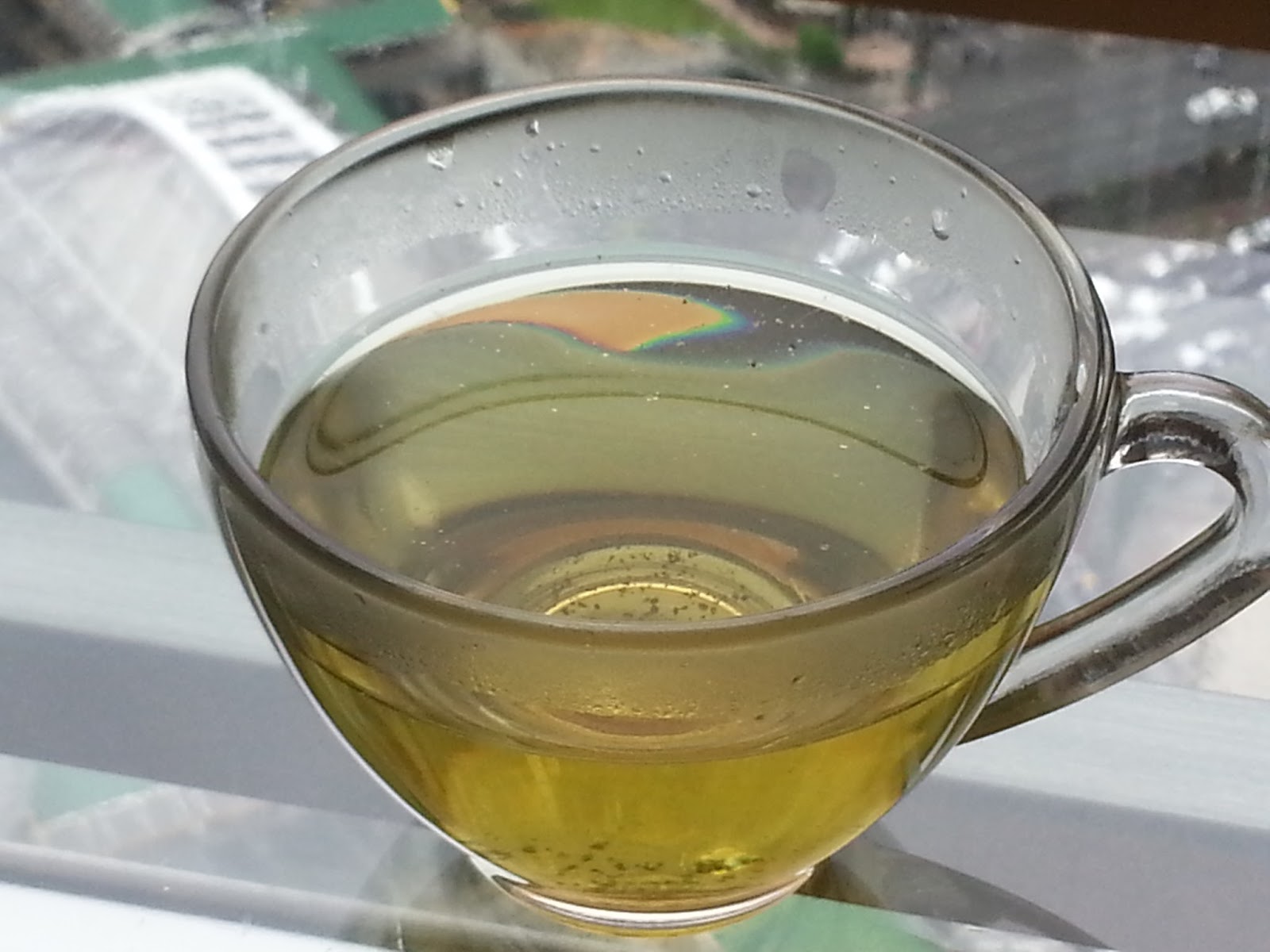


Review


The tea is bright in character, sweet and fresh, floral and a little vegetal.  I'm brewing it Gongfu style in a gaiwan this time and I could swear it turned out a little better prepared Western style in the past week, just a little brighter.  It's a bit creamy, in feel and in a butteriness coming across, but all that range can be more pronounced than it is in this version.

There is a characteristic taste of Taiwanese oolongs that comes across, although that was much more pronounced and positive in this other oolong version from there, a Shan Lin Xi version from the Lin Hua Tai shop in Taipei.  I guess to put labels to it the flavor range is a combination of mineral undertone, floral higher end, and a touch of different brighter mineral tone, all combined with good sweetness.  A typical feel for Taiwanese oolongs is a bit full, with lingering aftertaste also normal enough.


brewed lighter, with leaves in gaiwan


Some light oolongs express even more pronounced floral aspects, with this one extending a moderate degree of that into other vegetable range, not far from fresh green bean (uncooked).  The sweetness is almost like that in very fresh snap peas or green peas, which are nothing at all like a frozen version.  That better earlier session version seemed to emphasize flowers more.  I might have backed off the water temperature just a little then; sometimes I do that, but I'm brewing it this time using just below boiling point water.  Or maybe I just liked that overall effect better; usually Gongfu brewing works out the same or better but not always.  At a guess it was the effect of those things together; backing off water temperature works better, and the lower proportion and longer brewing time also did.


Other


So that was it; basic stuff as reviews go.  It was nice but it could have been a little brighter, a little more floral, a little creamier, or could have expressed a bit more mineral tone.  The level of sweetness was fine, and the flavors were quite clean in effect.  I didn't notice pronounced aftertaste, and the feel wasn't particularly full, but it wasn't thin in effect either.  This is all how Thai oolongs tend to go.  They start to express some nice attributes but then you realize you've had Taiwanese versions in a relatively identical style that expressed them much better.  Part of that could relate to the hearsay-based idea that the best Thai oolongs are shipped to Taiwan to be sold as "counterfeit" teas from there.  Given that I've tried so many versions from so many sources it's hard for me to imagine there is another whole quality level out there that I didn't get to but I suppose it's conceivable.


To me they are a great beginner's tea, or could work as a nice, inexpensive daily drinker.  I just had that tea with lunch, with duck noodle soup, and it works better with something lighter and less earthy, maybe with a pastry, or with apple pie and ice cream, or even with a ham and cheese sandwich.  As for pairing with Thai foods it would be fine with anything that's not too spicy or not too far in any other direction for strong flavor, like herb and garlic roasted fish.  For spicy food something like sweetened bael fruit "tea" (tisane infusion) might be better, or really water pairs better with any kinds of foods than it's often given credit for.

It would work really well as a blending tea, but blending makes more sense with black teas, to me (adding flowers, or mixing a tea with spices, making masala chai and such).  This tea cost 100 baht, around $3, for 100 grams, so not very much at all.  I've seen closely related versions (or maybe this one) selling in online Western vending outlets for around double that. That's typical for here though, although sometimes other versions can cost somewhere around 350 baht for 200 grams (around $10), or still not much at all.  #17 / Bai Lu isn't so different from this but the character does vary just a little, usually lighter on the creaminess, with a bit more influence in a mild earthiness leaning towards a spice aspect.  It's probably better than it sounds; I don't mean it tastes like actual earth, or "forest floor," or cork, it's just a little warmer, with spice range moving towards nutmeg that typically stays non-distinct.


Thai oolongs at Central Embassy Mall grocery store

There are Royal Project stores in different places here; this was from one in the Future Park mall, way on the North side of town, almost up to Ayutayah.  They sell different versions of Royal Project oolongs and other teas though, and this version is the one I've liked the best, the one that comes either in octagonal shaped boxes (see an image of those) or red or gold foil packaging.  I've seen shops selling this version in both the main Bangkok airport (Suvarnibhumi; good luck finding it though, over by domestic departures), and in the Chiang Mai airport, and in the Central Embassy grocery store, but it's also sold in lots of places.  I can't remember if the Royal Project store in the Paradise Park mall had it (I think it didn't) but there are two other tea shops there that would carry something similar enough.


You would think there would be a website related to this, a central Royal Project version, but I didn't find it.  That's probably related to using English to search, and to there not seeming to be one singular Royal Project, there are multiple initiatives.  Here is one version though.  I did also find another nice review of a similar or perhaps identical tea by the Tea Squirrel blog.


One might wonder, why review it here at all, only to say that it's a mediocre tea that's not on the same level as the other few dozen teas that I've reviewed this year.  Partly because I don't think I have reviewed one exactly like it, and it's a basic staple here in Thailand.  I did review a similarly sourced Royal Project black tea not so long ago, tied to the same general idea, describing the local teas landscape, what an ordinary quality level Thai tea is like.  There are some better examples of black teas and oolongs out there; they're just not so easy to come by.  I've had the best luck with Tea Side as a source, an online vendor.  Winter harvest versions of oolong tend to work well for my individual preference, warmer and a shorter step closer towards a spice aspect.  Jin Xuan based black teas can be very nice, or they can be not so good, it just depends.


I had all but put this general type aside by the time I started this blog, but seeing them in a grocery store was part of my own introduction to decent loose tea years back.  Part of mentioning them again relates to recently writing an article for an expat site / forum on where to buy tea in Bangkok, and to a lesser extent Thailand in general, which I was thinking of sharing here.  It would make sense to describe this tea first related to that, to set the general range for local basics.  I could link to where that is already posted but they edited down the details of mentioning most specific locations, which would be helpful to readers here, and without that there isn't nearly as much point.  Shops here are like anywhere else, they come in a range of different types, but it works best to describe those general types related to specific incarnations.


The tea is ok; I'll probably drink it once a week until the staff here gets around to finishing it.

Sunday, May 7, 2017

Comparing Thai Royal Project black tea and a Farmerleaf Dian Hong


Farmerleaf Black Matai Dian Hong


Thai Royal Project Highland black tea


I'm comparison tasting another Farmerleaf Dian Hong, which they refer to as Black Matai, after the area name within Yunnan, along with a Thai Royal Project black tea I just ran across.  I'm not sure why I missed trying this Farmerleaf tea until now (a sample provided by the vendor), but it works out as a comparison reference for this Thai tea.

I've been routinely criticizing Thai teas as not on the same level as better Chinese or Taiwanese versions, a pattern I kind of expect to repeat with these, or it might just work out that the teas are different in style.  Typically that's a commentary about the Thai oolongs, so it's nice to at least be considering black tea versions instead.  Really mid-range teas aren't such an awful thing, better tea than a lot of casual tea drinkers are aware even exists.  But one tends to get spoiled drinking better versions, with the next quality level still not all that expensive or difficult to turn up.

In other posts I'd mentioned that it only works to comparison taste similar teas, most recently related to a tasting where they weren't that similar (both Taiwanese oolongs, in that case).  I'm not sure about the source plant type or style for this Thai tea; it really could be a local variation of Assamica or an imported variety Sinensis tea.  I don't expect it to be that close in style to a Dian Hong, although that would be good if it was.


Review


The Thai tea is quite dark, with twisted leaves, not necessarily whole but intact enough that the effect of largely unbroken leaves should come across (the astringency should be moderate).  The scent is a bit rich, if not strong, light malt with sweetness and a touch of cocoa.  The Farmerleaf tea is presented as long, twisted whole leaves, with some tips evident, with a really sweet and rich chocolate scent.


The first infusion of both was a little light, typically how I prepare black tea on the first steep, but strong enough to show where this will go.  The Thai tea is ok, a nice surprise.  The depth, aspect range, and balance aren't amazing but the tea is fine.  There is some sweetness and complexity, with a primary range that's woody.  The Dian Hong is intense, even light, pretty close to chocolate covered cherries.  The chocolate / cocoa is even in that sweet and rich range of cacoa nibs, towards dark chocolate.


On the second infusion the Thai tea works a little better stronger, still nice, it's just going to suffer in comparison with the other.  The flavor is a bit woody, with some complexity and good sweetness.  It might even taste a bit like chocolate and cherry, a good range for black tea, just far less so than the Yunnan version.  The flavors are clean and the overall effect is nice, it's just a little thin in body and flavors profile.  With no off tastes or notable astringency to work around ramping up infusion strength to offset that thinness is an option.


Farmerleaf tea, different layout


The Dian Hong is the opposite; lots of great flavor range stands out, and it has a fuller feel and notable extended aftertaste.  The chocolate and cherry is still pronounced, joined by more earthy range.  It's not so far from woody too but quite different, a darker wood tone, more towards bark or bark spices (not so much cinnamon, an unfamiliar range).  More mineral tones underlie that, with a clean, balanced, and unified profile.


I love tea in this style, which makes it hard to separate how positive the aspects are from that style preference. You never drink the best possible Dian Hong, since tea in general just doesn't work that way, and in a sense black teas tend to give up a little in sophistication that they gain for being approachable, but this one is good enough that anyone on that general page would love it.


Farmerleaf Dian Hong left, Royal Project Thai black right


More of the same on the next infusion;  the Thai tea is ok   Brewing it even stronger yet could add more flavor intensity, but it wouldn't work to add flavor complexity or more depth to other aspects just by ramping up infusion strength.

The Dian Hong has a lot more going on than just flavors range. It doesn't need to be brewed strong to express better complexity on different levels, so there's more flexibility related to making it however you like it.  On the lighter side works well, with the positive flavors still pronounced, still with good body and aftertaste, but it could be prepared fairly strong before that earthiness would blot those out.  Prepared lighter the sweetness and chocolate / cherry-fruit stands out, transitioning a little towards earthier range in later infusions, and brewed a little stronger the body fills out and gains structure, with a toasted character element and heavier tones picking up.  It would work well brewed Western style or Gongfu, with the latter allowing for more adjustment and variation.

Again I'm concluding the Thai tea isn't bad, and shows plenty of potential for future improvement with this character as a starting point, it just really isn't on the same level.  For an inexpensive tea it's better than I expected, not the best Thai black tea I've tried but ok.


Farmerleaf Dian Hong left, Royal Project Thai black tea right


More on the teas


It's my understanding that both of these teas are a great value.  The Farmerleaf tea is priced very fairly for the quality level, maybe still a reasonable deal if it wasn't quite as good, something they might adjust later once consumer brand awareness ramps up.  Or they could continue to sell on value, since costs are cut by removing at least one resale and distribution step.  The Thai tea I just picked up in a local Royal Project shop nearly for free.  It was on sale to buy two packs and get a third free (in the Future Park mall shop, in Northern Bangkok) so 150 grams was selling for 120 baht, around $4.  If I'd known it was really decent tea I'd have bought a pack at double that size for just under double the cost, but it's really enough of this tea as it is, I'd just give away more of it instead.

The Thai tea didn't cost more than I've paid for Thai CTC version, machine processed ground-up tea.  That's not something I tend to buy, but I do try lots of things.  This tea might work really well as a blending base, to mix with flower petals or whatever else, or I guess with other black teas, or even alone as a daily-drinking breakfast tea.  It's not "brisk," malty and astringent, which is typically a good thing, since you can drink it without milk and sugar, but I guess that depends on what someone expects or wants out of their tea.

I won't really know what the Thai tea is since the package writing is in Thai, and next to nothing turns up about it through Google search.  In a Thai language search more probably would, and it is possible to use Google Translate to search for terms you really can't read, and then translate back page results, but it's too much work.


Matai tea garden (credit Farmerleaf)


There's more on the Farmerleaf tea on that page, with some basics as follows:


Above 50-year-old natural tea gardens, 1 bud/3 leaves from Matai Xiang, Lincang county.  Picked from early March to late April 2016... The tea gardens of Mrs. Pu are located at a high altitude (1400m to 1600m)...  the density of plantation is low, which allows the tea trees to grow a large root network and reduces the need for fertilization.


That write-up mentions that the toasted aroma of the tea relates to a processing step, to the temperature the tea is exposed to during the drying step.  The final outcome worked well for me, producing a complex and pleasant black tea.


vacation look, with silly kids