Showing posts with label Walmart. Show all posts

Monday, November 14, 2022

The US retail apocalypse


My wife and I went to a department store closing within the last week, reminding me of a subject I've been concerned about for awhile.  The earlier mall form of retail shopping is dying in America.  It's just supply and demand playing out, right, just as small mom and pop stores gave way to supermarkets, and Walmart disrupted those (and malls), along with other big box stores shuttering local hardware and electronics stores and the like?  Sure, but for many nostalgia plays a role in seeing it differently, seeing a part of their earlier life experience come to an end.  


a dying mall in Bangkok, MBK, but the return of tourism may save it


That was the third department store in a local (Bangok) mall that closed, that I know of, so the process runs well behind entire malls going empty and later being demolished in the US.  But it seems to be coming.  Online shopping runs behind Amazon and Ebay development here, but for sure every year Shoppee and Lazada do more business here, and packages arriving in homes replaces trips out to physical stores.

I'll refer to a lot of what is routinely covered in a favorite Youtube channel about this trend, Ace's Adventures.  I just won't scan through hundreds of hours of videos to find individual statements to support the generalized overview here.  Per my understanding that video content producer, Anthony, didn't start that channel form, and he did credit one main person who did.  In scanning a Wikipedia "dead mall" topic page it seems that maybe it was Dan Bell who developed that, in this series.

To be clear what I'm going to summarize here is really my own take on ideas I've been exposed to, and may not faithfully represent the facts of the matter, or interpretation by any "dead mall" enthusiasts.  I've seen videos by others, but this is only one of many themes I've checked out and let go, so I'm far from an expert on it, or even a well-informed follower of this topic.  I've watched a couple of dozen related videos; that's it.


in my hometown, Cranberry, PA


Why are malls dying?

No single set of reasons, but speculation tends to settle on a few.  Online shopping has been having an impact.  In some cases too many malls were built, some quite close to others, and older versions tend to lose popularity in that situation, and later become vacant.  Wal-Mart had an impact, but Wal-Mart has been impacted by online shopping, bulk shopping options (Costco, with Sam's Club their own version), and other "big box" retailer popularity too.  In some cases disruptive behavior of some mall regulars, crime or harassment, made some malls feel less inviting.  Smaller "lifestyle centers," updated versions of earlier strip mall themes, replaced some demand, by updating restaurant version options and including more up to date activity related businesses, eg. yoga or tae kwan do studios.


fantastic aesthetics!  photo credit to Ace's Adventures Facebook page.


Is dated style a main concern, or poorly maintained mall conditions?

Maybe not as much as one might expect.  Some interiors definitely do have a distinctive 80s or 90s look and feel, which could relate, but many of the videos cover malls that were renovated to return to pristine and somewhat updated appearance conditions (which can only be changed so much), and the business still never returned.  The local mall in my home area, in Cranberry, PA (with a video showing that here), did reportedly have problems with roofs leaking, which certainly wouldn't help, and could be one more reason for major tenants to move out, but it seems like it was economics driving the process, reduced demand.  Covid pushed many malls over the edge, for obvious reasons, but for most the process was already quite progressed by 2019.


malls were literally closed here during 2020, except for grocery stores


Why do people create these videos, what is the interest about?

The appeal that gets cited is an interest in preserving a video record of what these 70s, 80s, and 90s malls were like, before many are demolished.  Some are actually closed during the filming, but more often they're just essentially vacant, with only a few minor stores left.   Nostalgia seems to drive that, personal interest in that earlier cultural form.  Many really do have a novel look, and those that peg earlier standard design themes have a different kind of appeal, for capturing a moment in time, in terms of public shopping space design.  

What I like most about Anthony's (Ace's Adventures) tone and style relates to a true appreciation for these places, not a morbid curiosity about decline itself, but an appreciation for the style and earlier experiences that are no longer available in the same form.


Is there a typical progression in malls dying?

Sure.  Main anchor tenants go first, places like Sears and JC Penney, which first closed as individual locations, and later closed many of their stores nationwide.  These tend to be replaced by other major tenants, with something like a sporting goods store often moving into that larger space.  But there is a process in place that's hard to disrupt at that point, with decreasing foot traffic leading to other store closures, which leads to less mall visitation, and so on.  Gaps in mall maintenance can come up, but again that often doesn't seem to be a critical step in the progression.  Higher cost, volume intensive facilities like ice skating rinks tend to close earlier on, as it becomes impossible to offset high operating costs.  Businesses like a cinema might close later on, or parts of a food court might remain open, with limited customer volume funneling down to a smaller set of food outlets as some close.


This last point ties back to dated style being a concern, and newer small lifestyle centers replacing mall based options.  Older food outlets, like Auntie Anne's pretzels, or Orange Julius booths, can still be appealing related to the nostalgia factor of people remembering enjoying that, but over time food preferences tend to shift.  Since we tend to run a little behind in what exists and is in demand where I've been living in Thailand--a subject I'll get back to--Auntie Anne's pretzels are doing just fine here, as Dairy Queen booths are, and Mr. Donut stores.  Time catches up with that last chain though; it's now being replaced by Krispy Kreme and Tim Horton's stores.

In the end it's a struggle to keep to keep any businesses open.  For whatever reason American Eagle Outfitter type clothing stores and Bath and Body works stores seem to hang in there longest.  Then malls tend to try to convert to using space for offices and such, most often unsuccessfully.


Is this happening elsewhere, for example in Hawaii or Thailand?

Yes and no.  The main malls in Oahu seem to be doing ok, for now, but with many having a dated look and some locals switching over to online shopping it may only be a matter of time.  A Sears just closed there in one main mall, which is how that starts.  The main mall in the Waikiki (tourist resort) area is the Ala Moana Center, the largest open air mall in the world (I think it was), and that seems quite healthy (as of a number of visits in October), even with the somewhat reduced tourism level from covid impact tapering off over time.


Ala Moana; a little dated in design, but it's nice


Christmas in October in a Thai mall, that is doing ok


a large Japanese store went out of Central World, a thriving Bangkok mall


There was a progression of overbuilding local malls in some areas in the mainland of the US that is probably also happening in Thailand, with the main build-out of malls in the Bangkok area only relatively complete in the last 5 years or so.  In other smaller cities new malls are being developed in close proximity to older versions, which could lead to the same cycle occurring there.  Older types of shopping centers close from time to time in Bangkok, but in general those places tend to experience long, slow deaths instead, drawing on limited local shopping support to hang in there.


one predecessor to malls in Thailand, roofed shops areas


the Nightingale Department store, the first in Bangkok, which may or may not still be there


Can standard format malls still thrive in the US?

Of course.  These tend to be newer facilities, with a less dated look and feel, but really local shopping support depends on a number of factors, including what other options are around.  It's not as if everyone in the US decided that walking around a mall is a bad idea at the same time; again instead a number of factors seemed to lead towards that end point.


the Pearl Ridge mall near Pearl Harbor; a bit dated, but it's doing ok


Are there ways for struggling or healthy malls to avoid this pattern?

This part is less clear, something I've been considering quite a bit myself.  If "lifestyle centers" can help cause mall decline it should be possible for malls to utilize the same type of specialty store option availability to preserve their own traffic, even if visitors really don't want to experience the process of parking in a large lot and walking a moderate distance to visit a store.  I would guess that updating restaurant options and adding newer form shops and services might help, places like yoga studios, or moving off the theme of including dated food shop chains onto unique restaurant options instead.

All that is easier said than done.  The overhead malls had to contend with isn't reduced just because visitor demand drops; maintenance costs would actually rise over time.  If a mall valued at $200 million is sold for $50 presumably shop rents could be cut as well, but if a mall is working with less and less visitor traffic cutting store rents is only going to go so far to offset the decline, and there would be a natural trend to try to retain revenue by charging full prior rent rates to all existing businesses, even though many would already be in the process of failing. 

It seems conceivable that a mall could get ahead of this curve and move to switching over to some office use space before the stores are mostly gone, preserving the life of some by adding that related foot traffic.  There is no mention of any such successes in any of the dead mall videos I've seen.


Kahala Mall at the edge of Honolulu; dated in style but still appreciated


a spectacular vertical theme mall in Hong Kong, bustling in 2019


a St. Petersburg (Russia) mall, decorated for Christmas


Wednesday, October 21, 2020

Tea group themes; Great Value black tea


It has always been interesting to me how some tea group participants, self-admitted tea enthusiasts, can prefer lower quality grocery store teas.  Most typically their preference would evolve beyond Lipton, on to Harney and Sons blends, for them to feel connected enough to the interest to go out and join a social media group.  Not always though.

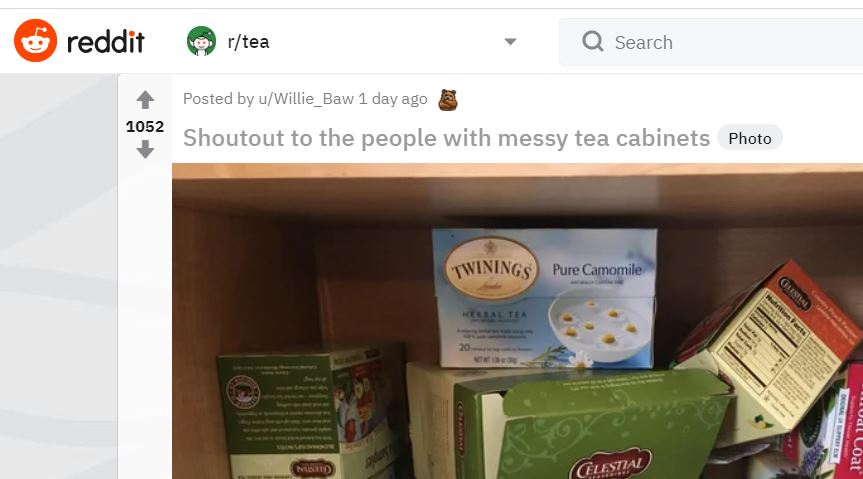
A recent Reddit post brought all this to mind:


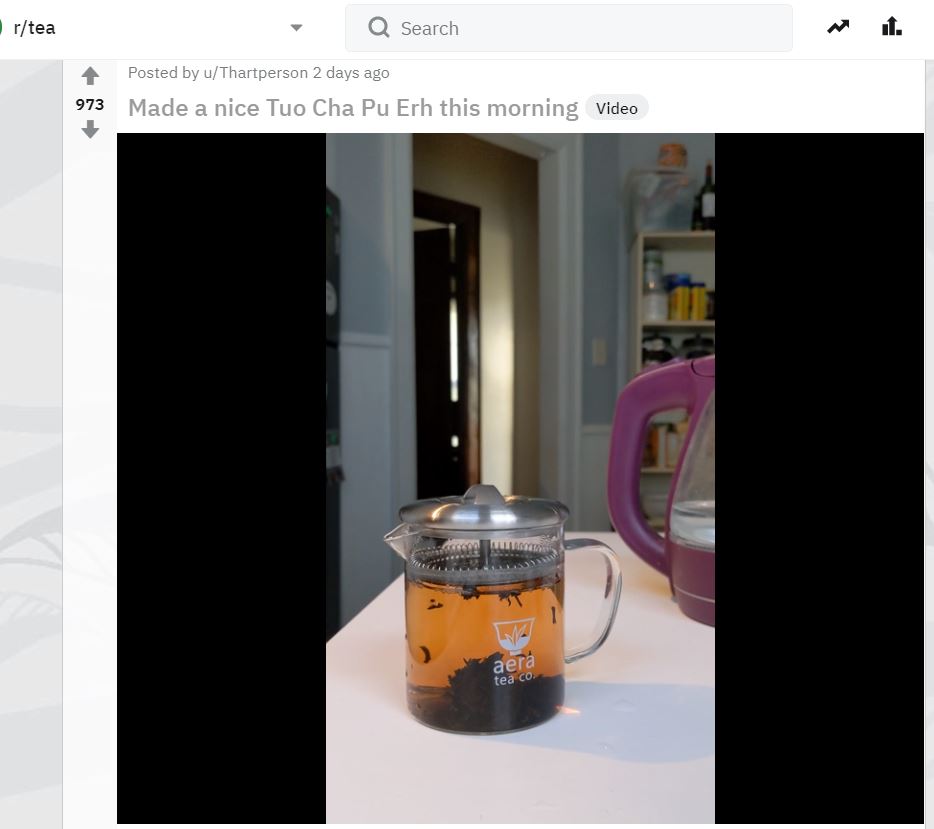
The one other part that strikes me as odd is how that resonates with so many others.  This post could as easily have drawn 1000 upvotes by the time it drifted out of feed sorting.  I'll get back to critiquing the tea preference shown in the photo more after checking in on another post that just brought this up:


This was actually cool for showing a time-lapse brewing process.  But the tea itself was almost certainly awful, one of those tablets of highly ground and compressed shu pu'er.  All the versions I've yet to try, that were presented that way, tasted like drinking hot water out of an ashtray that had been wiped out but not completely cleaned.  Almost no one who drinks shu prefers it at that infusion strength, brewing to the similar color of lightly brewed black tea, versus turning out darker.  If that person had swirled the tea in that French press at a minute or so in results would've been much better.  Probably using better tea would be better too.

I reviewed a shu pu'er version recently that's a good example of a very low cost tea that's much, much better, a Moychay (Russian vendor) version selling for around $20 for a 357 gram cake.  More typically outlets like Yunnan Sourcing would sell good, standard versions for $30 or so (or less; this is a standard-source standard type version for $24).


I don't care that these people drink low quality tea, or that others feel positively about that, and no doubt share their preference.  The only thing that strikes me as odd is that they join and follow a social media group to express that.  It would be like drinking instant coffee and joining a Facebook group to express that shared interest.  Why do that?  Are there groups out there for people who drink instant coffee, boxed wine, or Coke?  I looked it up on Facebook:  no.  There is a Coke drinker's group in Argentina but the focus is on collecting limited edition cans and such.  Of course I could cite other tea groups with a focus on what I might see as "lower quality" teas, but that would come across as more negative than I would intend it.

To some extent I'm critical of these types of preferences because the people expressing them haven't put in any time or effort to improve their awareness, to explore better versions of teas and then change the form.  But maybe there's a gap in my reasoning.  They would need to add expense too, and maybe "leaving off" at that level of expense and type-preference is fine.  In some limited sense of course it's fine; it's their beverage.  If they want to drink instant coffee or Kool-Aid that's on them.  Or if they want to drink hot water out of a mostly clean ashtray, savoring that smoky aroma.

Maybe even the step before the social media participation seems strange to me:  self-identification as a tea lover, or tea enthusiast.  I can relate better to the people who feel that way who are onto high-tier grocery store tea and tisane blends, but not related to someone buying the cheapest black tea on the market.  Is it really that bad though?  I looked into that.


Great Value tea review:


Let's start with more critique of that first photo.  The "messy shelf" theme is fine.  Leaving two of the tea boxes partly open is less functional; the tea would air out a lot even with the boxes closed, and lose flavor, and that's a good way to make sure that happens as fast as possible.  The Celestial Seasonings preference I can actually kind of relate to; it's not the highest quality tisane blends one could buy, but their products are novel, and decent.  An inexpensive tea-bag version of green tea sounds awful to me.  And then there is Great Value black tea.

I've not tried it; maybe it's not bad.  If it's a lower-cost and slightly lower quality version of Lipton then it's probably quite bad.  Walmart lists a 100 bag box of that tea for $1.94; at least in terms of low cost it is a great value.  The same size (count and volume) Lipton product Walmart sells for $3.48, coming up on twice the cost.  I guess it depends on how good it is.  This review shares one opinion on that:


Rate Tea Great Value black tea review:

The small bags are well-packed with tea that has been ground practically to dust. Still, my low expectations were met or slightly exceeded. First, it tasted like tea and not some other substance or chemical. That's a fair start. The aroma was weak, the color and flavor each moderate in strength, but the taste rather bland in character. 

While not competitive in overall flavor with most branded black teas I've tried, it's actually a decent value for the price. I recommend it for those who are addicted to tea and have run out of everything else, and the aisles at WalMart have likewise exhausted all their supply of name-branded teas.


So it's not as good as Lipton, in their opinion, but if saving that $1.50 on a box of 100 makes a lot of difference then it's fine.  Opinions on teas are subjective, so I looked up a second review, to get a more complete take:


Tom's Tea Reviews, Great Value black tea

...As teas go, Great Value black tea equals the best I’ve tasted.  I like its clear, deep orange-red color with virtually no bitterness.

...Great Value black tea resembles the Red Rose Original Tea (reviewed here) in terms of taste, aroma, and appearance in the cup.  For most intents and purposes, this tea appears to be a less costly version of Red Rose.  Yet it does not shirk on flavor or overall tea quality.

...Particularly when I’ve not taken any tea in recent days, I can become “wired” when I again consume it, and can feel sick when riding in a car after drinking it.  It can make me feel quite nauseous when I’m gone without it for several weeks.

...It’s a perfect beverage and a great buy.  So I’d therefore rate it at 99 out of 100.


He loves it; a different take.  The tea potentially making him feel sick doesn't factor in; presumably all tea that he drinks makes him sick if he's been off tea for awhile.  Switching to a more whole-leaf version would probably drop out that stomach effect, and experienced astringency (mouth-feel related to some types of polyphenol content, what end up being called tannins, which really could be flavonol types, or else may be theaflavins and thearubigins).  His review for Lipton is almost identical, so for costing two thirds as much the Great Value brand really is a good deal, per his opinion.


That's probably saying enough about tea-bag teas.  At this point it may help to point out a favorite of my own, to provide a different benchmark.  I bought a couple of Dian Hong versions earlier in the year from a China-based vendor; one of those will do:


2019 Bao Shan Ye Sheng Hongcha (Dian Hong), my review, and vendor listing


The Chawang Shop vendor description:

Baoshan is one of largest wild tree (ye sheng cha) area in Yunnan. Growing wild and naturally in the forest. This material come from April harvest, processed as red tea in small batches.  The taste is rich, full, sweet, no astringency. Complex and rich aroma. 


Part of my review:

It includes sweetness, and some fruit in that peach range, but also a lot of warm mineral depth, which extends towards a mineral effect close enough to table salt.  The fruit comes across as dried fruit.  I guess potentially as dried peach, matching the dry leaf scent, but warmer, more like dried tamarind (or both; it's complex).


That tea cost $6 for 50 grams, on the outrageous side compared to just under $2 for 226 grams of the Great Value version.  For not being ground to dust one would typically use 3 grams or so to brew a couple of strong infusions (the process take longer, maybe using 3 and then 4 minute infusion times), versus one tea bag (2.26 grams) being mostly brewed out to make one large mug.  So kind of even for output?  Cost is more a factor; this Chawang Shop version costs 12 cents per gram, while Great Value costs under 1 cent per gram.  It's almost free; 1.94 cents per bag.

Then there is shipping cost to content with, if you buy a tea from China.  Let's check on a tea I'd expect to be roughly equivalent from a US source, which to be clear I've not tried:


High Mountain Red Ai Lao Mountain Black Tea (from Yunnan Sourcing)


Scott's take (the vendor):

High mountain tea grow at 2000 meters on Ai Lao Shan in Zhenyuan area of Simao.  Picked and processed only from the first flush of spring this black tea is lightly oxidized and processed similiar to Taiwanese black tea or Wu Yi Rock tea.   There is a still a greenish tinge left to the leaves!  The brewed tea is rich and thick with hints of dried Longan fruit with a protracted mouth feeling!

The tea is grown at almost 2000 meters making it one of the highest black teas we offer.  Mr. Guo was born and raised in central Taiwan and his father had a black tea factory there.  Mr Guo, traveled to Thailand and eventually decided on Yunnan.  He was always a big Pu-erh tea fan and decided to spend time learning about Ai Lao area pu-erh since it's one of the remotest and untouched places in all Yunnan.  He met many local pu-erh growers and worked with one in particular (Mr. Feng) to introduce a Taiwanese style processing which marries black tea and oolong in a sweet and fruity style!


It is helpful to hear other takes on teas, since all that can be subjective.  Oddly Stephen Colbert (the talk show host) passed on his thoughts on this version, in a Tea 4 Tuesday segment they do.  But he usually just confirms which parts of the vendor description he agrees with, eg. if it really seems fruity or not.

Reviews on the site all pretty much liked it, but that would be a biased set of opinions, since mostly only fans of the vendors tend to share reviews.  I'll cite one anyway:


This hongcha is one of the best I've tasted so far, and definitely the best bang for your buck. Strong and fruity aroma, super smooth, roasty and buttery taste with a looooong and delicious after taste reminiscent of nuts and pastry. Forgiving to brew, and probably my number 1 recommendation for people who are new to proper black teas. Everyone who is new to the world of tea and Yunnan Sourcing should order some of this stuff! 


Only two reviewers gave it 3 of 5 stars, with the rest 5, and only one made a negative comment (it's a little sour).  No doubt it's lightly oxidized black tea, as the vendor description claimed, which wouldn't be familiar to everyone.  It may or may not actually be sour; people unfamiliar with reviewing often mix up interpretations for the flavors that they really do experience.

With both these Yunnan black teas (Dian Hong) costing $6 for 50 grams, coupled with my own claim that 3 grams or so can brew two pleasant and intense cups, each cup would cost about 18 cents.  For a college kid that could be a significant expense, but for most others spending $6 on 30 or so beverage servings is on the low end for cost.  Walmart sells 12-packs of Coke for $5; that's lots more.  It would be better to never drink any Coke, related to the sugar content, and tea probably is healthy, but sorting out any health claims is essentially impossible.


On tea evangelism


I think this tea evangelist role I've taken up works out, but I'm not reaching very many people.  One by one people might see a post, or check out a review, and tea awareness and interest spreads.  Maybe Stephen Colbert is helping with that too.  Not so much in the Reddit r/tea group; people seem to be on whatever page they are already on there.  They might eventually try something different that they see in a grocery store, or maybe not even that.

One might wonder, why try to convince others to drink better tea?  On the positive side it could be to share an experience that I found to be positive.  That could pair with health interests, helping others make better choices related to that goal.  Not as positive, people tend to validate themselves based on being seen as knowing more, or making better choices, so maybe I'm only doing that.  

I could go on to make the claim that I'm more aware of my own motivations than most due to practicing an unusual degree of introspection, guided by formal meditation and study of Buddhism, but that just shifts ground to another unsupported claim.  I see it as trying to help others, but it really is whatever it is.


I tend to share tea in person too; anyone visiting Bangkok could look me up


Follow-up:  one day later that post did cross to well over 1000 upvotes; algorithms in social media platforms tend to show what is popular to more people, pushing results to either draw no feedback and response or else to receive a lot of it: