Showing posts with label controversy. Show all posts

Saturday, April 17, 2021

Setting the record straight about Mei Leaf


The subject of this vendor won't end.  The back-story should be familiar:  Mei Leaf is either regarded positively, as a good source of tea and informational videos, with a personable owner (Don Mei), or else negatively, as a vendor prone to exaggeration, overcharging, PR mis-steps, or even lying and making false product claims.  Some people see Don Mei as annoying instead, as a tea vendor version of a used car salesman.  Can both perspectives be right?  Probably, in this case, but I do settle more on the second myself.

I've written about Mei Leaf before, reviewing their teas, and speaking about this controversy, and about published product details that look a little off.  Really all this takes some unpacking.  In general I'm not the person to tell people who not to buy tea from; I have no interest in that.  The problem comes in that I do discuss tea issues in a variety of places, and informing people of options also overlaps with conveying negative impressions of some of those.  Let's start with an example that's not Mei Leaf, and unpack the Don Mei controversies one by one after that.  


Some of all this maps onto either mentioning, or else not telling people, that Harney and Sons is a limited range option in beginner tea groups.  It's probably not bad as the actual tea products go; probably as good as tea that comes in tins tends to get, selling at a good value.  But moving past cinnamon spice flavored versions and mass-produced conventional types is a standard step people take in tea exploration, or else don't, if they never really dig deeper and branch out.


First, for further reading in this post I said a bit about a tea issue, obvious contradictions in that product listing (not directly related to the roasting sheng issue, but indirectly related).  And I've reviewed a tea from Mei Leaf here, a long time ago, 5 years ago to be specific, back when the brand was named China Life.  I went to a tasting where a number of their teas were served in February of 2017, 4 years ago, and I'm not sure if the re-branding had went through then or not, but at a guess it already had then.  

It doesn't matter, to me; changing a company name doesn't wipe the slate clean, related to then selling different things or using a different approach.  Obviously sourcing could have improved since then (it really should have), and pricing strategy could have changed (although it probably didn't), so let's start there.


1. Sourcing, quality level, and pricing


The typical discussion claims aren't that Mei Leaf tea is bad.  The often expressed theme is that their tea is overpriced for as good as it is.  There's an easy answer to that, but it's a little too easy:  teas sold out of physical shops are almost always higher in cost, because you pay extra overhead for the site rental, staffing, related costs, etc.  I'm open to paying a bit more in physical shops from time to time, to support all that, and keep shops open as a valuable option.  Luckily it doesn't work out that way related to Bangkok Chinatown shops, because overhead there is so low, but that's a tangent I won't address further here.

To me a primarily online business cannot use that as justification for describing teas as better than they really are, or selling well outside a standard price range.  But then there is no standard price range, to some extent; vendors can charge whatever they want for tea.  Vendors can state how good they think a tea is but that's always vague, and every tea is always described as good tea, in one form or another.  Pricing tends to imply a quality level, but it's not a direct connection.

Let's look at an example of how one particular tea type stacks up related to this, to get a feel for how well what I'm claiming really works (which is partly based on echoing a hearsay claim, and partly on making that same claim based on personal experience).  I picked a standard, well-known tea type to compare across different vendor sources, a type of Dan Cong (Chaozhou, Guangdong origin oolong).  This wasn't an example cherry-picked to show this difference, but instead one that should be easy to find versions of elsewhere, since no single tea type has been the subject of as much hype as this one:


Mei Leaf Duck Shit (Ya Shi) Dan Cong oolong, 1.14 cents per gram (30 gram quantity)

Wuyi Origin Ya Shi / Duck Shit Dan Cong, 48 cents a gram (25 gram quantity)

Tea Drunk (NYC shop) Ya Shi / Duck Shit Dan Cong, $2.25 / gram (28 gram quantity)**

Seven Cups (online shop) Yu Lan Xiang Dan Cong, 56 cents per gram (per 50 g; the most expensive Dan Cong they currently list, with no Ya Shi in stock now)

Yunnan Sourcing King of Duck Shit Dan Cong, 55 cents per gram (per 10 grams)


**Note:  this Tea Drunk citation was an error in the first published version, mixing up a 7 gram and 28 gram pricing for the calculation.  $2.25 is getting up there for tea pricing, but for the highest physical shop overhead cost range and most expensive tea type it might be a more reasonable value than it seems in comparison.  Really tea pricing depends on quality, and it's not as if there is any clear ceiling on those levels (quality or market price), as if $3-4 per gram for an unusual type of rare and high-demand product couldn't possibly make sense.
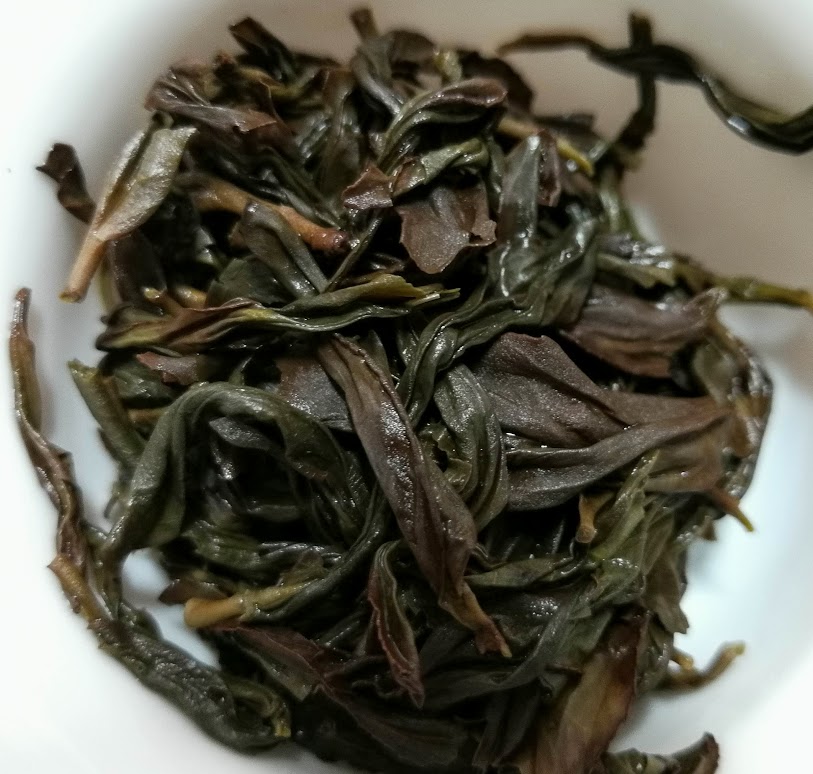

some Wuyi Origin already brewed Ya Shi / duck shit leaves


See a pattern?  The "two" physical shop locations are priced higher (with an error in the original write-up related to one), and the rest around 50 cents a gram.  The Seven Cups example isn't actually Ya Shi, but since they sold a half dozen types of currently listed Dan Cong, and that was the most expensive example, it probably works to assume their Ya Shi, when back in stock, would be around that range.  If it was really 10-20% higher that doesn't change the story being told here.

But what about quality level?  That's really what determines value in relation to price for any tea.  Is it possible that Mei Leaf sells the best Ya Shi version of these five vendors?  Technically yes, but in practice no, not really.  

Anything is possible, but Wuyi Origin is an incredibly well regarded, award winning direct from China vendor (don't take my word for that; do a search in any tea forum or group of that vendor name and confirm it yourself).  Seven Cups is a very well regarded online US site; the owner of that business played a formative role in developing current specialty tea awareness and culture to what it is now.  

Tea Drunk I'm a little less comfortable making claims about. That shop name comes up, as one of the best positioned shops in NYC, but someone would have to try the tea versions to get any decent input.  Nicole Wilson of Tea for Me Please says that their teas are good; that means something to me (even mentioning this type in that post).  Yunnan Sourcing probably isn't buying Dan Cong of the same quality level as Wuyi Origin and Seven Cups (which Wuyi Origin is making, not buying), but again tasting the teas would be better input than anyone's guesses.  It's standing in here as an extra comparison anyway, as a standard online vendor example.


Let me be clear on part of this context:  hearsay is valid input; it just has limits.  A longstanding tea acquaintance who lived in London passed on his evaluation that Mei Leaf teas aren't bad, but also not good, and definitely not worth what they cost.  That kind of input needs to be evaluated in relation to the source, and I trust that guy's opinion about as much as any others.  He said that Post Card Teas (a physical shop there) are also a bit pricey, but at least better in quality level.  

I've tried more than a half dozen versions of Mei Leaf teas myself, some just before the roughly 4 year back re-branding, and that really described all of them; good but not great, and not a good value.  To be clear if I don't like a tea I typically won't review it, so everything appearing in this blog doesn't represent everything I've tried.  

That reminds me to look up the first tea I ever tried from China Life (re-branded as Mei Leaf), a Dian Hong (Yunnan black) version, to check on cost and value for that buds based tea, reviewed in 2016, so 5 years ago.  I didn't mention value then; as is common for most bloggers I will only do so when a tea seems to be a great value, or if there is a concern that one is outside a standard pricing range on the high side.  I wouldn't have as easily evaluated value 5 years ago, especially for a less common tea type.  I looked up that pricing on the Wayback Machine internet page history:  it was selling for 14.50 British pounds for 30 grams, or equivalent to about 65 cents per gram converted today.  That's a good bit for a black tea, even a buds based version, but 5 years ago that would've been sky high pricing.  Over time people have acclimated to approaching $1/gram for rarer, higher demand versions, but it wasn't always like that.

This dated pricing issue--all these personal experience references from 4 years back or older--brings up an obvious problem:  no one who has spent years figuring out sourcing preferences and has noticed that Mei Leaf's pricing runs high, per quality of tea, or just in general, really, is going to have sampled a lot of their prior Spring lineup to keep on confirming that.  Unless they just figured this out.  They would move on, source-wise.  Let's check one more tea type that is familiar to me, Jing Mai sheng pu'er, one of the main origin regions, known for approachable character and somewhat moderate cost versions.


2. Second tea type comparison, Jing Mai origin sheng pu'er


A bit of a problem, since Mei Leaf only lists a blended version, but in a sense that should be instructive.

Paradise Snapper, He Kai & Jing Mai Sheng Gushu Spring 2020 (47.5 cents per gram, $95 for a 200 gram cake)

One of the most crisp, physical and zesty PuErh teas, made from a blend of He Kai and Jing Mai Gushu trees (estimated 300-400 years).

We wanted to create a tea which was bright, bracing, physical and delicious. Jing Mai is well known for its bright, high and zesty aromatics and we love this area for this character. This year we wanted to add a more adult edge to this lighter tea region by blending with another of our favourite regions - He Kai.

He Kai is in the West of Xishuangbanna and has a resinous, creamy and mineral character. Blended with the Jing Mai, the result is a very unique and powerful tea. The orange, apples and sweet flowers of Jing Mai combine with the mastic cream and rocky quench of He Kai to make a tea which is one of the most engaging teas.

Bright, zesty, crisp and quenching with plenty of physical bite and a deep Hui Gan sweetness. A wild and untamed tea with potent effects.


Who knows about the colorful description part; we can really set that aside.  Both teas are estimated to originate from 300 to 400 year old tea trees; that's dubious.  It's just not possible to date tree ages like that, for reasons that are explained in that video.  Good gushu versions of sheng are typically sold for around $1/gram, and I've never heard of a gushu version being used in a blend; that just doesn't happen, typically.  Blending is usually used for moderate quality material, to offset flaws in multiple versions, and to create something better than more than one limited-appeal input.

I've recently reviewed Jing Mai versions selling for around $30 (kind of low) and $70-some per 357 gram cake, and bought one sold for closer to $90 last year, but this "gushu" issue throws that off.  I just doubt that it is that.  Let's check in with a standard, known, reasonably well-regarded source on what their high-end Jing Mai is selling for, and in what form, from Crimson Lotus, a main US vendor:


Elemental Puerh - 2020 Jingmai Old Tree Sheng Puerh Tea Dragon Balls $ 16.99 (6 8-gram dragonballs, so 48 grams of tea, selling at 35 cents a gram, or $126 for a standard sized cake).


To start, I wouldn't buy dragonballs.  Those never brew well, related to the first several rounds brewing the outside layer while the middle unfurls.  This is described as from "old tree material" but that's it; I would assume that means "gushu," in excess of 100 years, or however one uses a timeframe cut-off for that term, but not necessarily 300 to 400 years old plants.  That comparison really didn't help a lot, but it is limited input, an indirect sort of baseline.

A reasonably well-regarded Jing Mai based vendor, Farmerleaf, tends to sell "wild arbor" presented teas from Jing Mai in the $80-100 per cake range, with gushu material selling for that more standard $1/gram range.  Here's an example of that, maybe a great-value tea for selling for $58 per 100 grams (so 58 cents per gram):


Spring 2020 Jingmai Ai Ban, $58 USD (100 gram pouch)

Every Spring season, we're busy making tea in Jingmai Mountain. We pressed most of our ancient garden productions into the Jingmai Gulan cake. We also keep a few batches from our favorite gardens in loose leaf form.

Ai Ban is located on the South-Eastern slope of Da Ping Zhang, it is cultivated by one of our uncles and grows leaves of consistently high quality.

This tea has an amazing mouthfeel, a mix of minerality and flowery freshness that makes it distinct from other tea gardens in Jingmai. On top of this special mouthfeel, you'll get a deep and lingering sweetness in the throat and a complex fragrance.


That "Gulan" cake they just mentioned had listed for $268 for 357 grams; not quite $1/gram but approaching that, 75 cents instead.


So what should we make of a blended, well-known source area cake, with old plant material selling for 50 cents a gram?  It's open to interpretation.  It sounds fishy to me, related to this needing to be a high-quality blend versus a mix that compensates for flaws, but if someone wanted to believe it is "real" they could.  And that is really the gist of the last blog post I wrote that talked about Mei Leaf; if someone is looking to accept what any given vendor says they don't need a lot of evidence to just go ahead and like a tea, maybe even especially an expensive one.

About blending, I don't mean to imply that it's an invalid practice, or that results can't be spectacular, with great material used as input.  That's seemingly the theory behind Farmerleaf mixing sources for that Gulan cake, and Crimson Lotus specializes in making sheng versions based around this principle, as White2Tea does, and Kuura (an Australian source); lots of vendors.  To me it's not unrelated to how very good Cabernet can be sold on its own or else blended as a Bordeaux style blend, not necessarily considered a lesser wine for being mixed with other grape type inputs, or necessarily selling for less.  In the world of tea a 50 cent per gram blended sheng is unconventional, but it's not as if it couldn't possibly make sense. 


Of all these Jing Mai versions I've discussed (that I've tried) this second one listed from Tea Mania, a 2016 tea without the age shown, might be the best (per my judgment, which is a bit subjective).  But then different versions have different strengths, and are at different places in an aging cycle, making it harder to judge a favorite.  It was a great value at $65 per 357 gram cake, reviewed here along with a Moychay version comparing the two.  But then I liked the freshness related to being newer in the Moychay version, and the Tea Mania version has settled and aged really well since that tasting.  I think the two were just made in different styles.


3. Exaggerated tea descriptions


I don't care about that part.  Description is a subjective process, and obviously Don has a good imagination, and continuing on and on with tea description is up to him.  Maybe it's even accurate.  In general vendors, bloggers, and people just discussing tea tend to only list a few main aspects of a version, maybe up to a half dozen, often including some feel and aftertaste coverage, so it's atypical.  

You can't really criticize the elaborate "cha qi / feel" descriptions, unless you are very sensitive to such things yourself, and have tried the teas, so who knows about that part too.  I suppose it's all a bit much.


4. Scandals, obvious lies


I really want to include this part in order to mostly set it aside.  One of the most recent scandals related to Mei Leaf related to them including Native American image themed stickers along with products, which of course caused outrage.  In a sense that's not even about tea.

An earlier claim that tea came from 1600 year old tea plants was the highest profile claim problem.  The oldest documented tea plants are right around that age, so to say that a moderate cost produced tea is from essentially the oldest tea plants in existence reflects a clear lack of awareness of that background.  Maybe the source was over 100 year old plants (gushu), and maybe it wasn't, but anyone making 1000+ year old tea plant claims is just pushing fictional story lines to an absurd degree, most likely just repeating what some farmer told them, which never made sense originally.

Then almost every sheng pu'er Mei Leaf sells is gushu (old plant sourced), even if it's blended or roasted, or shu.  Some matches a price that might make sense, and some is obviously too low, because source area wholesale costs do settle to known levels.  The general price levels are high enough to cover some relatively exaggerated claims (like selling Ya Shi for $1.14 per gram; if it was great tea that would be high enough, but not unfair), but once the claims become outrageous enough the $1 a gram range no longer applies, for example trying to say a Spring LBZ is selling for that (which I don't think Mei Leaf would do, but other somewhat related examples do come up).


The roasted sheng I mentioned in the earlier post works as an example: supposedly that starting point material was 500 year old Lao Man E plant source sheng, which they were selling for 80 cents a gram, which they then roasted on a whim.  The source and pricing claim is a bit of a stretch (kind of absurd to the point of impossible), but then using a roasting step for a tea like that makes just as little sense.  It's conceivable that it was flawed tea, explaining the unlikely rare source origin and for-type moderate cost, and roasting it "saved" it, but that's not much of a practical story line that makes sense of an odd mix of ideas.

I don't see the obvious scandal issues as problematic as these other details not adding up.  If you watch Don's videos you can spot obvious mistakes or errors, if you know what you are looking for, and in essentially all cases those are sales points for his own teas. This is a bigger problem, that small omissions or bigger errors point towards details not always being right.


5. Taking advantage of tea "newbies"


This bothers me.  People claim that "I've learned a lot from Don's videos," and I agree that well over 95% of the content is completely accurate, maybe 99% of it.  He has done a lot for tea awareness.  Then he also exaggerates tea descriptions, includes errors obvious enough to spot in some product descriptions, and surely includes many errors that you can't easily identify in others (although some you can spot, if you know the content as well as he does). Would it matter if most sheng he sells is really from the next village or region over, instead of as described, or from younger plants instead of older ones?  Sort of.  Maybe not, in a different sense.  

It makes sense to use vendors that you think you can trust to help identify those issues for yourself as you learn, and if a vendor is including obviously false claims then they are also probably including harder to identify ones.

Setting that aside, the value issue alone makes Mei Leaf a bad source of tea.  At a guess his Ya Shi version really probably is on par with Yunnan Sourcing's (it's probably harder for a business based out of Yunnan to source great Chaozhou origin tea), and not as high in quality as the other three sources I listed.  Two of those three sell tea that's probably better for around half as much.  At best the quality level is equivalent, but I doubt that's true, given the reputation of at least two of those vendors.  This is back to where you can benefit from following the input of others who have been through this vendor review process long before you ever even started.

One problem with that approach is that if you ask around in places where most people are new to tea, like in this Reddit question, you won't be drawing on that kind of experience.  People on the newer side of the experience curve are active there, in general, with notable exceptions in a more experienced core group there.

Someone could raise the argument that all this isn't fair to Don, that if he's going through a learning curve himself then his business practices and tea quality level from 4 to 5 years ago don't apply to what he's doing today.  Maybe.  That still requires that someone accept that he's selling tea versions that are so much better than the best regarded US sources that they are worth twice as much, per that one Ya Shi oolong example.  Or it shifts emphasis to wanting to support Don, to pay extra to help him, for producing good online content (let's say), like a tea vendor Patreon sort of theme.  I follow that line of reasoning myself, in supporting local shops, I just see Mei Leaf's main business as online sales.


To be clear I have nothing against Don personally.  He runs a business, he's trying to make a profit, and that's valid.  As I see it my role of trying to support tea awareness--which he also does--directly contradicts his apparent business practices, which as I interpret it relates to charging higher than normal market rates for tea.  Again, it's possible, just seemingly unlikely, that Mei Leaf is selling the best quality tea available on the Western market, and that pricing practice is justified.  More likely it's that physical shops tend to charge more to cover overhead, and they hold to that.


Monday, March 8, 2021

Cancelling Dr. Seuss


I get it that Dr. Seuss wasn’t cancelled, 5 or 6 of his early books were instead.  And maybe that was appropriate, and reasonable; that’s what I’m going to discuss.  Obviously this is my take; that goes without saying.  

For issues like this I think it makes sense to keep any potentially objective conclusions or stances separate from personal opinions that are subjective, that could as easily be taken in different ways, that only represent preferences or differences in perspective.  It's helpful for mapping out complex or problematic issues, keeping the layers of baseline context straight.  There's nothing wrong with having strong personal preferences, feelings, and opinions, but it's best to keep that clear as not necessarily "right for all," since the project here is to identify finer points of perspective and communication.

The background is simple enough:  Dr. Seuss’s publisher dropped distribution of some of his works.  They were deemed racist, and unacceptable to today’s audience, primarily because they depicted racist images.  In particular depictions of black people and Asians drew on offensive stereotype images.  A Snopes review fills in more of that scope, effectively concluding that he was racist (implicitly).  Was he racist?  Maybe, but let’s not jump ahead.  And let’s call Dr. Seuss just Suess from here on; he wasn’t really a doctor, and that was some sort of pen name (presumably).


not so much better after the white-washing, but maybe not that bad initially


Part of what informs my perspective is being alive for awhile; I’m 52, so I can vaguely remember some of the 1970s, and I’m really a product of the 80s.  Living in a different country gives you a different perspective on race or nationality issues, as I do now, in Thailand.  I'm the minority here.  In Hawaii too; that was interesting.

Edit:  in this initial post form I didn't cite much for external sources, besides images from a Snopes article showing the background and two quotes framing Seuss's own take and some background.  A number of additional image and background citation in an end section add to that, identifying Seuss's own take on this matter even more completely. 


Before getting into sides or perspectives let's consider if "cancellation" is right context for what is occurring.


Questioning the cancel culture framing


In a good discussion of this someone quite familiar in tea circles asserted that this isn't a case of cancellation, as the football player kneeling in protest losing his career was (kind of the general culture-war theme; opposing liberal and conservative versions of rejections).  Instead it was just eliminating media content that is no longer relevant and acceptable.  

I'd cite that post link and give credit but people are as likely to not want to be mentioned in relation to sensitive views, and it doesn't change things adding an attribution.  And this doesn't reflect a proprietary creative contribution, it's just a framing statement.

To me that assertion kind of works, at first glance, but we still need to question if it's as well to update old media by removing access to it (effectively cancelling it; all of this just moves around the terms).  And it stops at the first glance.

I wanted to start here with Seuss’s side.  It’s backwards, intuitively; it would make more sense to flesh out the two different ways of looking at this first (or however many ways there seem to be).  Maybe I’ll just sketch a few stances as context then go straight to a statement from him that seems to imply where he stood on racism.

A few potential modern perspectives could apply:

-One extreme:  racism is ok; I’m a racist.  This really should be a minority view but it’s out there.  Obviously I'm not going to discuss that much here.

-Conservative, but not as extreme:  stop cancelling things, and ease up with the political correctness.  People could filter what they expose themselves and their children to without this complete removal of access.

-The other extreme:  anything remotely racist or inappropriate by today’s standards should be relegated to the scrap-heap of cultural history.  Maybe Tom Sawyer would get a pass, because it was clearly sympathetic to the slave / black perspective, or maybe not, maybe that should go.  Probably that works as a cut-off; anyone as far on the correct / liberal-left / inclusive side as Samuel Clemens had been is probably fine.  The general idea is that children shouldn’t be exposed to anything that doesn’t match modern sensibilities, which could distort their own.  Adults could view such material within the scope of studying cultural history but otherwise it’s irrelevant in relation to modern appreciation.  We should basically cancel it.

-Moderate (as I see it):  we should be able to look past or re-interpret past perspectives that don’t match our own, and view that material from our own lens and worldview, instead of cancelling it.  It may even be helpful to expose children to such content and explain what it is, to keep them open and primed to identifying and experiencing what doesn’t work in the modern world, and how perspectives change over time.  Analyzing older content that doesn't work now could turn up a different perspective than the black and white "racist / not racist" sort of divide we generally accept.


Suess's own position

This passage cites an interesting Seuss quote addressing a related issue, framed as a citation, which might be interesting to look up as well, so I'll include that part too:


How Dr. Seuss Responded to Critics Who Called Out His Racism


...Seuss actually has an essay, which I put up on my blog, where he thinks about racist humor and argues against it. It’s titled “ … But for Grown-Ups Laughing Isn’t Any Fun” and was published in 1952. He argues that writing for grown-ups is less interesting because they’re culturally conditioned. They have something called “conditioned laughter.” Here’s the passage.

This conditioned laughter the grown-ups taught you depended entirely upon their conditions. Financial conditions. Political conditions. Racial, religious and social conditions. You began to laugh at people your family feared or despised—people they felt inferior to, or people they felt better than.

If your father said a man named Herbert Hoover was an ass, and asses should be laughed at, you laughed at Herbert Hoover. Or, if you were born across the street, you laughed at Franklin Roosevelt. Who they were, you didn’t know. But the local ground rules said you were to laugh at them. In the same way, you were supposed to guffaw when someone told a story which proved that Swedes are stupid, Scots are tight, Englishmen are stuffy and the Mexicans never wash.

Your laughs were beginning to sound a little tinny. Then you learned it was socially advantageous to laugh at Protestants and/or Catholics …


That same work adds more depth to the images and framing that is problematic, related to the image I already included:

There are racist caricatures of people of African descent, people of Asian descent, of Arab descent. For example, at the end of And to Think That I Saw It on Mulberry Street [1937], the version that was published in the 1930s had a page that said, “I’ve seen a Chinaman who eats with sticks.” The man was colored yellow and had a pigtail, wearing one of those triangular hats. He cleaned that image up a bit in the 1978 edition, cut off the pigtail and removed the color, changed the language to “I’ve seen a Chinese man who eats with sticks.”


Unless that citation is completely wrong there must have been three versions, because the two already shown here change from "I've seen a Chinese boy who eats with sticks" to referring to a Chinese man.

In the first passage he’s basically saying that racism is bad, and also rejecting quite a bit of political division based on shared culture and learned bias.  That latter point is probably even more relevant today than it was in 1952 when he said it.  He doesn’t say that he’s not a racist there, and that he never was.  Whether or not the part about a Chinaman was an expression of racism requires more interpretation than it first seems to, to me.  I don't think it makes racism any more acceptable for it to have been expressed in 1937 but the dating is still an interesting factor in this story, something that needs to be considered further.


It’s also interesting how in today’s world someone might feel a need to explain that they aren't racist; it wouldn’t go without saying.  Can I justify that I’m not really opposing this cancellation (where this will sort of land, conditionally) because I’m sympathetic to racism?  Or that I’m not a racist?  Let’s make a start on that.

What if I could claim the following:

-I was raised as a liberal, including not tolerating any expression of intolerance from others, taught to openly and clearly reject such expressions when hearing them.  Too vague, right?  What if some of my perspective is still not up to date, or fully corrected?  That first part reminds me of one of my earliest childhood memories of my parents causing quite a stir at my grandparents' house because my grandmother called a Brazil nut a "nigger toe."  That was just the common term for them when she grew up, but my parents weren't having it, that being expressed to us.  I never heard "the N word" there again, but then I never had in relation to people before then.

-I’ve dated an African woman and married a Thai; my kids are half Asian.  That doesn’t seem to go far, does it?  Someone could be quite racist and do those things; it would just relate to how they related to those people.  A black person could be racist against black people, under the right circumstances.

-I don’t really know many white people as in-real-life friends now; I’m living within an Asian culture, for quite awhile.


And so it goes, on from there.  It’s hard to build up the proper credentials to really put yourself in the liberal right (probably only a bit easier for conservative scope), hence virtue signaling does actually have a functional purpose, if you see group inclusion as a function.


The point related to Seuss, tied to defending him, can take a few forms.  Let’s break that down.


1. He may have been somewhat racist in his younger years but clearly moved past it, related to being instrumental in teaching against it later on in his works.  It’s a subtheme of that to conclude that he was only a little racist, adopting imagery that wasn’t extreme at all in his time, in the same way that US Founding Fathers didn't completely reject slavery back in the 1700s. I’m skeptical that either works as a reflection of likely reality, but that is where most people seemed to move to right away.  


2. Regardless of his perspective the work is useful as a teaching point for kids, even if clearly and simply just racist, so cancelling it is inappropriate (already touched on earlier).  It’s not actually a defense, it just sets aside his own take as irrelevant, and by-passes the cancellation move.


3. He may have been trying to oppose those racist images by pointing out the problem with them.  I suspect some form of this is the actual case.  He might have became a lot clearer on what he was opposed to or accepted later on, and more than that he might have gained skill at expressing this opposition.  Or both.  He couldn’t really reject racism so directly, because on the earliest side it was nearly half a century before political correctness and those forms of images and expressions became commonly rejected by society.  He would've needed to take a less direct approach to rejecting norms that he saw as not ok (if that was the intent, which all this never does finally conclude).  It's relevant to keep track of the main context being cartoon images in kids books, which is not the right place for a text discussion of social norms.  

Edit:  he expressed regret later in life for creating these images, so it seems like option 1 is essentially how that went.  He was a racist by late 20th century standards, just perhaps within a mainstream perspective of his day.  But that's still a position of accepting unfair and inappropriate racial bias that could have been identified as wrong, even at that time, even if it fell within a general norm.


photo credit USA Today article; this was published around 1929


The Civil Rights movement in the 60s definitely related to the same rejection of racism theme becoming mainstream (Rosa Parks actually rejected a seat in the back of the bus in 1955; it started earlier), but it didn’t evolve to take that form of rejection until some time later.  My grade school mascot, an "Indian," was changed in the late 70s, so it had started then, only a decade and a half after the start of that broad movement.  The mascot became a "Super-Berry," a superhero version of a cranberry; different.

Seuss used animal or fictional creature images later on, since he couldn’t work with minority images to express or reject the same themes.  I see this as a development of maturity in his form of expression, his choice of communication method.  In this he could also by-pass addressing gender issues indirectly, because these animals or fictional characters didn’t need to have clearly expressed gender, when it wasn’t relevant to what he was expressing (in that same Slate article):

...He was also really resistant to criticisms of his work as sexist and wouldn’t change it on those grounds. He most famously said of Alison Lurie, who wrote a critique of gender and Seuss’ works in the New York Review of Books, something along these lines: Tell her most of my characters are animals, and if she can identify their sex, I’ll remember her in my will!


It seems like this modern discussion of this book cancellation is missing considering these levels of details and perspective.  The discussion I’ve seen, even from media commentary, has moved straight on to “wow, Suess was a little bit racist.”  I’m just not convinced.  I’m not even convinced he expressed bad judgment; it depends on his intention. 

By today's standards of course he did use terrible judgement, but I mean that in setting up opposition to images that were common then using those images wouldn't be problematic at all.  Getting back to the conclusion of that Slate article, that's exactly what they concluded:


Some people look at that and think, “We just must be wrong about Seuss.” That’s because they see racism as an either/or—like, you’re on Team Racism or you’re not. But you can do anti-racist work and also reproduce racist ideas in your work. And Seuss wasn’t aware that his visual imagination was so steeped in the cultures of American racism. He was doing in some of his books what he was trying to oppose in others.


This interpretation is definitely one possibility.  It's worth keeping in mind that the people who created the US Constitution also owned slaves, and surely were very clear on that contradiction.  I can't say why more of them didn't reject it more completely or more often than they did, but they didn't.


Placing cultural norm critique in recent examples


It's hard to find a comparable example of this somewhat blatant racism being ingrained in the mainstream today, isn't it?  Inclusiveness has extended far enough that low-hanging fruit of most striking examples isn't around.  Some people are still completely racist; I don't mean that.  I mean that within the least racist half it's hard to find comparable themes.  

Someone might see being ageist or ableist as new frontiers for subtle discrimination, or not so subtle but still accepted examples.  But a caricature version of old or disabled people shouldn't be used in similar unacceptable ways.  Shouldn't be; of course it still could happen.  Eventually saying "you kids get off my lawn" in jest might be seen as the same kind of inappropriate framing as comparing a Brazil nut to a black person's toe.

It's possible to go a step further, to look at examples of humor from the last 20 to 30 years that was designed to reject stereotyping through humor, but in a form that just wouldn't fly in terms of todays sensibilities.  

Two examples of 90s comedy come to mind.  In Living Color did comedy sketches about gay and disabled people that were intended to both poke fun at and reject negative images, using an approach that wouldn't be tolerated today (about gays in the military or a "handiman" superhero character).  Saturday Night Live did an Ambiguously Gay Duo sketch apparently intended to lampoon gay stereotypes.  Or maybe it was just in very poor taste (the last, I mean, or maybe all of it).  It could be hard to tell the difference between being in poor taste and not "pulling it off," just not being funny.  That Gay Duo superhero example was kind of a stupid premise; it's odd that it made it on the show at all.  Somehow it was supposed to be funny that maybe Batman and Robin were really a couple.

Edit:  in adding to this I'm reminded of an "Airplane" movie skit about interpreting "jive talk" of black people, adding subtitles to that scene.  In retrospect that was a clear expression of racism, just as the "blaxploitation" films of that era could rightfully be interpreted.  It didn't violate a social norm at that time.  Including Kareem Abdul-Jabbar as a positively framed character doesn't necessarily offset or resolve this depiction; it just was what it was.


Can we conclude that those television based examples were clearly trying to oppose extremist stereotypes that they were rejecting, through comedy, highlighting that absurdity? Maybe, maybe not. Today they would definitely be interpreted as an expression of that unacceptable bias instead, of racism.  Why the difference?  In general that societal norm is no longer so universal (bias against homosexuals or the disabled), so the indirect opposition just doesn't work. Of course we already know that gay people may or may not express the stereotypical mannerisms, and that handicapped people are exactly like everyone else, except within the scope of their disability.  That should have also been the case in the early 1990s but it definitely wasn't as universal a perspective.

In short, you can't make fun of a universal misunderstanding that has already been largely resolved.  Today SNL could do a skit making fun of Muslim stereotype preconceptions, because those are more universal, but the current cultural climate rejects use of such form in general.  It couldn't portray the characters negatively in any way, eliminating part of the form.  I've seen that kind of skit produced by SNL, about random airport security screening.  But it had to be so positive and limited that it eliminated most of the form typical of the Sacha Baron Cohen characters, like Borat, or the lesser known "Aladeen," related to Muslim stereotype.  

All of those Cohen character examples may or may not work as comedy or effective social commentary, depending on your perspective.  I think the Adam Sandler "You Don't Mess With the Zohan" movie is a good example of a film getting all that completely wrong.  It's not clear there was any somewhat indirect social commentary implied; it only made use of stereotypes, versus making fun of them, without offering any plausible redeeming observations.


The connection back to the Seuss theme is clear enough, right?  It seems likely to me that this was an expression of social commentary and critique, not racism.  Maybe just not an effective example of it.

Between the time he wrote the problematic Mulberry Zoo work in 1937 and the Cat in the Hat in 1957 maybe his skill at addressing such issues changed, or maybe a conventional framing of the ideas and images shifted.  Or both.  Maybe he was only trying to reject racism the whole time, in different forms.  Or it's conceivable that he could have went from being a bit racist to not as racist, or not racist at all, the common current media take.

It's really hard to tell what was happening on his end, but it helps to at least think it all through a bit before passing judgement.


Post-script:  referencing other research and discussion


Mentioning this link brought up more commentary about other media review of this subject, that adds good input about Seuss's later life feelings about these images, and a timeline for when different types of racist or racially insensitive depictions were published.  The earlier depiction of a black person with apelike features was probably published around 1929, but a clear date wasn't cited for that, just references to what seem to be related works.  This similar cartoon was dated:


photo credit Snopes article


The idea here isn't that racism was ok and normal back in the 1920s, although it probably was a lot more accepted and universal than in the 1950s or 60s.  It's to set up a timeline for a transition of Seuss's views and image publication practices over time.  Early works were more racist; that seems clear enough.  But this image from wartime is only more subtle in comparison, and targeted at a different group of people, not free of the same concern.


published in February, 1942 (BBC article source)


This BBC article citation lists indirect input from Seuss and direct statement from him about this issue and these depictions:


“I think he would find it a legitimate criticism, because I remember talking to him about it at least once and him saying that things were done a certain way back then,” Ted Owens, a great-nephew of Geisel, told The New York Times. “Characterizations were done, and he was a cartoonist and he tended to adopt those. And I know later in his life he was not proud of those at all.”

Seuss followed up a 1976 interview for his former college, Dartmouth, with a handwritten note in which he partially apologised for the cartoons. “When I look at them now they’re hurriedly and embarrassingly badly drawn, and they’re full of many snap judgements that every political cartoonist has to make… The one thing I do like about them, however, is their honesty and their frantic fervor. I believed the USA would go down the drain if we listened to the America Firstisms… I probably was intemperate in my attacks on them. But they almost disarmed this country at a time it was obviously about to be destroyed, and I think I helped a little bit – not much, but some – in stating the fact that we were in a war and we damned well better ought to do something about it.”


It's not exactly an apology or expressed regret over using racist imagery.  It's probably telling to include both the date, 1976, and the context, that of political cartoons, in this account.  It was common for cartoonish and overly exaggerated forms and images to be used in political cartoons at that time, not just of a wartime enemy or "hated foreign race."  Current political leaders and essentially every character in those works would be drawn as exaggerated cartoons.  It's highly insensitive by 2021 standards, or even the perspective of the mid 1990s, but drawing Herbert Hoover or Roosevelt in a similar way wouldn't be regarded as racist, even though it would essentially be the same thing.


FDR cartoon from 1935 (credit)


modern Carter and Obama cartoon, not different than those in the 70s of Carter (credit)


So it seems Seuss did go through a personal perspective transformation, and one that paralleled changes in standard American perceptions of race.  Highly negative black image depictions and racism itself were probably far more common in the late 1920s through some of the 1930.  Seuss didn't completely leave behind this type of imagery, using a related form as wartime propaganda in advocating that the US enter World War 2.  In retrospect that was the right call; staying out of that war was not a practical option, not in the long term best interests of the US.  The Japanese bombing of Pearl Harbor caused that shift in popular perception, not political cartoons.  But then it wouldn't have really fit with the style of political cartoons to not depict the Japanese characters in an exaggerated and cartoonish way, as shown in the 1935 and modern era political cartoon versions prior.


the transitions happen in Thailand, but they are behind (photo credit and story)