Showing posts with label unsmoked. Show all posts

Monday, October 20, 2025

Tea China unsmoked Lapsang Souchong


Reviewing a good quality unsmoked Lapsang Souchong from Tea China (provided by them for review; many thanks!).


Lapsang souchong Black tea Wuyi Rock tea ($15.67 for 50 grams, $40.67 for 200)


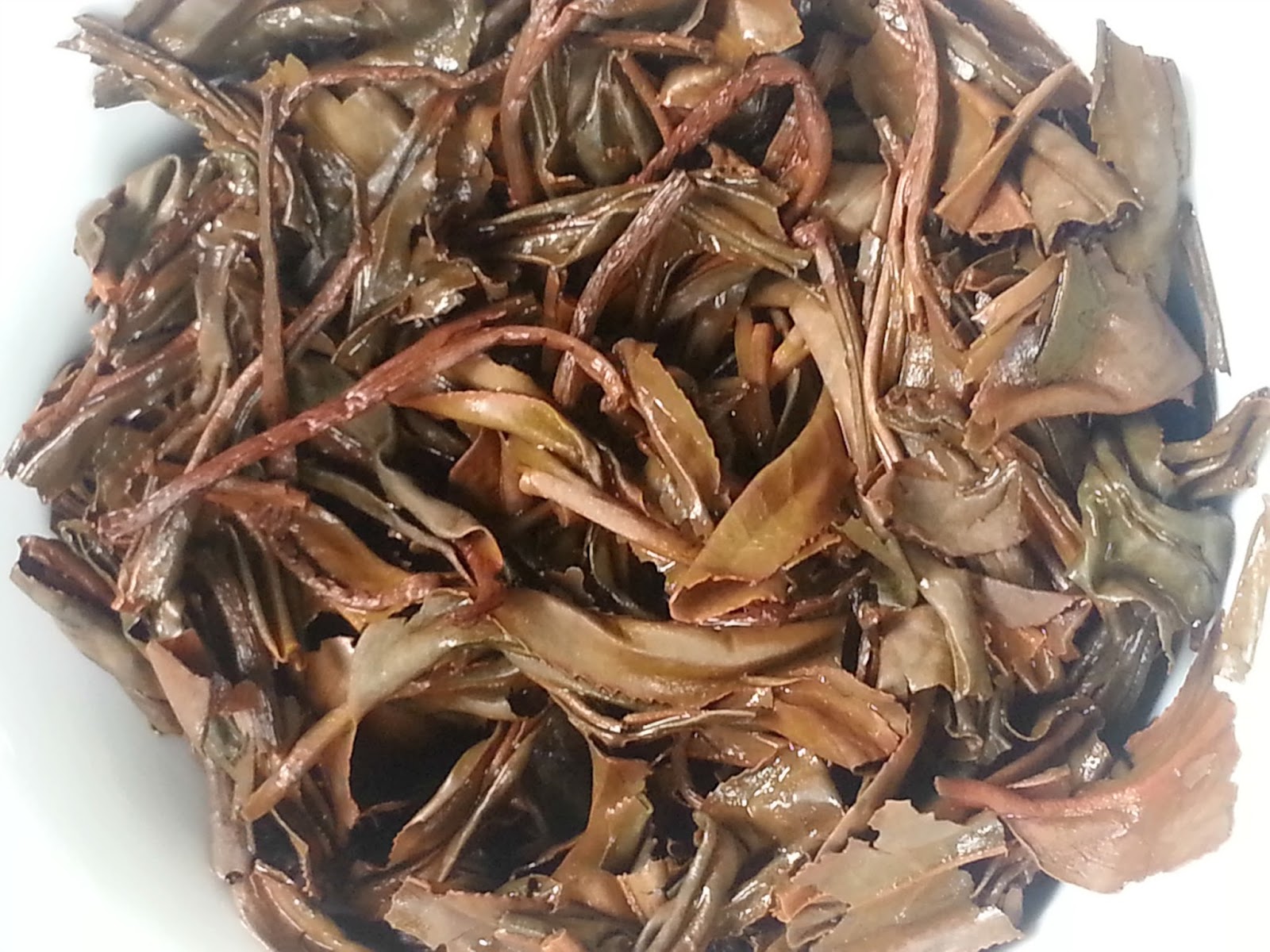
In terms of appearance, the tea leaves are plump in shape with a dark, glossy texture. When dry, they emit a unique pine resin aroma and the fragrance of dried longan. After brewing, the tea liquor presents a bright red color and maintains its flavor well even after multiple infusions—its distinctive characteristics remain noticeable even after 4 to 5 infusions. The taste of the tea is mellow and rich; upon sipping, the fragrance of dried longan lingers in the mouth, accompanied by a honey aroma, and the pleasant scent persists for a long time.


This is an unsmoked version.  Other parts of the description mention it can be smoked or not smoked, and doesn't really clarify which this is, but it's clear enough when you taste it.


Review:


First infusion:  I thought this would be smoked, but it turns out it's the other version, unsmoked.  That's typically higher quality material, often a bit fruity, and complex, and this is like that, it's pretty good.

Flavor range is kind of what I'd expect, for a good quality version.  There's fruit, which is kind of hard to identify, something dried, maybe, or possibly 2 or 3 inputs.  One part seems like warm and rich malt.  There's a mineral layer, but it's not pronounced, more a supporting element.  A complex woody range stands out.  It's aromatic, so interpretation as dark wood plus spice would make sense.  To me it seems like some kind of incense spice, maybe like sandalwood, but my incense burning days are pretty far behind me.

It's complex enough that interpretations could vary from there.  Someone thinking that this tastes a little like citrus, like a tangerine peel, would make sense.  I'm not really "getting" cacao but it's not so far off that.

It's clean in effect, and sweetness level is good.  Feel is rich.  It could be more full, but then this is brewed on the light side, and that may emerge better in a longer second infusion.  I went with a lower proportion than I typically ever use, maybe 4 grams, maybe 5, which is a good bit for Western brewing, but I tend to usually overdo it.  There aren't really flaws to mention, although a balsa wood sort of note bordering on a trace of sourness some might not like.  It's not really tart, one black tea aspect that I tend to not care for, but I don't remember that coming up in Lapsang Souchong before anyway.


Infusion 2:  brewed stronger.  Mineral base and heavier tones come out more, replacing some of the light fruit.  That would be partly from brewing it stronger and also a transition related change, I'd think, just how later rounds often go.  Dryness picks up, or feel structure does; to me those are two ways of saying very similar things, or they could be seen as overlapping.  

The spice note is interesting in this, one positive transition.  It's not really better or worse, just different, since the heavier tones and swapping in some spice for some fruit all depends on preference, in order to judge it.

I brewed a third infusion and it was still pretty good, which is good for longer duration Western brewing.  I just didn't write notes on that round.


Conclusions:


It's good.  Mixing some of the second round back into the first balances it really well.  It's cooler than the too-hot second version, stronger than the slightly light first version, and the heavier tones balance the rest nicely.  I guess that's the opposite of Gong Fu brewing, mixing your Western infusions to get more complexity and improve balance, while truncating the transition effect.

I've tried a good bit of better quality Lapsang Souchong, it's just been awhile.  I probably last tried a version on this level 3 or 4 years ago.  I think the best of what I tried from Cindy Chen (Wuyi Origin) was a bit better, more distinctive, with more pronounced fruit inputs, but then this might compare better with their more ordinary batches.  The material character varies from year to year, based on growing conditions inputs, per Cindy's comments.  It's not really a fair comparison to describe this in relation to the best tea of this type from the best source I've tried, for this general range and others, but that does help place it.

Related to buying random Lapsang Souchong described as this style from a conventional resale vendor this is pretty far up the scale.  You might find better, but it would often tend to take a few tries to do so.  Most versions from marketplace vendors wouldn't tend to be quite this good, although they could be comparable, in a similar general range.  If a vendor carried enough tea versions--across a broad quality range--one might be better.

It would be a stretch for me to put a fair market value on this, so maybe I'll just critique the selling point version they present.  It's $15.67 for 50 grams, $40.67 for 200.  So either 30 or 20 cents a gram, at those two different volumes.  I guess that's about right.  Let's check the Wuyi Origin pricing, to see how it compares to that.


Their wild Lapsang Souchong lists for $16.50 for 50 grams, and $49.50 for 150 grams (no volume discount at all; that's odd, but it does work that way for their site's pricing, which I guess lets it make sense to buy smaller amounts of different teas at pretty good values, for what they are).  They describe the flavor as "Natural citrus notes with creamy and peach fragrance."  Right, so good and fruity. 


In relation to that comparison it makes the most sense to buy this Tea China version at the higher volume, more reduced pricing option.  Unless someone is unfamiliar with good quality unsmoked Lapsang Souchong the results are what you'd expect.  On average other versions wouldn't be this good, but even better range is out there, but the cost for it tends to be higher.

To be honest I'm surprised that they are sourcing teas this good.  That sounds like a statement about a lack of confidence, doesn't it?  This version might be better than three fourths of what is out there, at a guess, or more if you also consider higher volume, more broadly marketed teas, not just versions from dedicated specialty tea outlets.  Most of that other range would probably be cheaper for them to source; for sure they picked this version because it's that good.  It's surely that balance that they're looking for, connecting quality and value, and it seems to fall in a favorable place.


Sunday, October 4, 2020

Wuyi Origin Wild Lapsang Souchong


I'm reviewing the 2020 version of Wuyi Origin's Wild Lapsang Souchong, one of several samples Cindy sent, really to share tea, not so much for review.  Looking back this will be the fourth year in a row I've tried this tea (with others here).


It goes without saying that the highest quality versions of Lapsang Souchong are not smoked, but I’ll still say it.  That's not a knock on smoked versions, they're just not made from teas like this.  The traditional story is that this was the first black tea type in China, "discovering" the processing approach, with leaves left in the middle of processing when a hostile group passed through.  Then the partly finished leaves were later dried over pine smoke to salvage the harvest, already oxidized, and the effect turned out to be desirable.  This is a fairly common theme in Chinese tea myths, that of accidental discovery.  It’s missing the input of a local deity or statue come to life, the other most common theme.  

It’s hard to imagine that with tea being consumed for centuries (or millennia, really) and oxidation occurring relatively naturally that it wasn’t long-since apparent that more oxidized versions of black or white tea could be produced.  Black tea differs by adding a rolling or kneading step to bruise the leaves, then air contact, with a heating step used at the end to fix the oxidation at a certain level (or sun-drying, depending).  Cindy mentioned that their Lapsang Souchong is also roasted, which I don't remember being typical for any black teas.

Before too much more rambling on I'll also mention Wuyi Origin's description of the tea:


This wild lapsang souchong  , We call it as  wild tea, because it does not have a fixed tea garden, just in a hill, and the tea trees are scattered around every corner. Before harvest picking every year, we have to go up the mountain several times to see the growth of the germinated tea tree. Our tea pickers always look for leaves in the weeds when picking this tea garden. I think there should be 2-4 different varieties in this tea. The spring of 2020 is relatively dry, and the germination of tea is also uneven. This year, the output of my wild lapsang souchong  is 20% less than last year.

Black tea is picked and sorted  by hand, so in terms of appearance, the tea strips are relatively uniform. 

It was specially selected to pick the tea leaves in the sunny day , and after 12 hours of withering, half an hour of rolling  and then 6 hours of oxidation  The tea has a very obvious natural citrus and creamy aroma, slightly milky feel. Tea soup is as sweet as honey water.


That description works.  There's a pronounced mineral base flavor input too, but the citrus, sweetness, and creamy feel really stand out.  There's more on the different types and processing steps in this blog post by Cindy.


I wanted to mention how bias works out for me with vendor sources.  Of course I’m biased towards vendors I’ve had a long and positive history with, as is the case with Cindy, who I consider a friend.  To some extent I see my own reviews as objective, as not relating to bias as an input, but of course that probably comes into play.  We tend to experience some of what we expect to.  At times that can relate to a contrast from what is expected, adding the opposing type of input, potentially shifting a perspective to be even more negative if very positive results were expected, or vice-versa.  

That extends all the way to the experience of individual tea aspects in tasting; if you expect to pick up citrus in a tea then if anything remotely like citrus is present then you’ll identify it as that, when a neutral, blank-slate take wouldn’t include noticing that.  I wrote these notes before reading that description, to be clear; all the going on about citrus may have related to remembering it from last year, but it couldn't have tied to reading the vendor description that I only added here during editing.  

That effect can relate to sequences of themes emerging across multiple reviews.  Another tea blogger once mentioned getting into a cycle where he noticed cherry in every black tea review.  He said that he had to go back and pull that back out of notes in cases where it wasn’t most pronounced, because his own expectation was adding it as an interpretation, along with the flavor aspects actually present.  I tasted apple in this tea, similar to cider, and probably wouldn’t have noticed that if it hadn’t been present in a much stronger form in a black tea version that I reviewed yesterday.


Bias aside, Cindy’s teas, Wuyi Origin’s, are some of the consistently best teas that I ever have a chance to try.  I tend to not buy teas on this quality level, because with significant awareness and demand paired with that quality--as would be the case for any main tea category type, as for these--the market price is higher than my budget tends to support.  As an aside this tea sells for $34 for 100 grams, an absolute steal given that almost no tea I've tried selling for around $1 / gram is ever this good.  General and specific type also affects demand, and pricing, but I don't think another version that's much like this would turn up on the Western tea market, anywhere, at any price.   

In rare cases I’ll buy something that's not on the inexpensive side anyway, but that tends to apply more to impulse or special-case buying in person, when a tea that I’m seeing in front of me is priced beyond what I would normally spend.  Shopping online the entire internet is the competitive environment, the marketplace.  It’s easy to compare how $100, or whatever sum, would spend out in different places.

I wouldn’t even recommend people new to tea try versions at this quality level.  It’s not that someone couldn’t appreciate the experience, and how the aspects come together, but instead that to me it makes more sense to explore a broader range and get personal preferences and brewing practice sorted out first.  For example, it’s only a judgement call and not an objective truth, but to me brewing this particular black tea Western style would be a waste.  That said if someone was committed to that approach and wanted to explore better tea range it would definitely work, and results wouldn’t be that different.  They would be slightly, marginally more positive if you could control the brewing results more carefully, but the tea would be fine either way.  

Someone could pick up a gaiwan and experiment on that with this tea, but it would seem more reasonable to explore other teas first, then get to this one once some of those themes are in order.  To some extent I’m talking about getting the most value from it, so tied to cost, but really as I approach teas price is a factor but I’m talking more about what is appropriate for each tea.  If you could happen to find an amazing Nepalese black version that is somehow on this general quality level for cheap, at the same cost as an upper-medium quality level Assam (which can happen; source types vary, and demand per region can be inconsistent), then that brewing advice would apply to it too.  No tea of any type I've tried from Nepal is quite this good, but I mean in the general range, and Nepalese teas can be quite pleasant and refined, and distinctive.

Sometimes supporting a specific vendor can be of interest, even for reasons that fall outside tea quality concerns, or trust in relation to products being as-described.  To me that range applies quite directly to supporting Cindy’s family, a true case of a tea producer selling products directly, so they are what they are said to be.  It’s hard to imagine wanting any producer or reseller to fail in their business, but it’s also harder to feel a connection to supporting larger corporate operations, or tea vending based on multiple steps in a resale chain.  

This also connects with a very pragmatic concern; once a tea has been bought and sold a couple of times--how that often works--the true history of what it is would most likely be lost.  If this wasn’t a real example of wild Lapsang Souchong, or grown where it was said to be, or if pesticides were used in making it, then the harm in the difference would probably be limited (as long as your pesticide contact remained moderate), but the final experience wouldn’t be the same.


Review:


It's odd trying these teas out of the two different cups (per the last review Moychay sent me three devices along with some teas to try, two cups and a gaiwan).  It seems it comes across as earthier, for using more earthen forms of cups.  Then of course it's brewed a little light, as the first round almost always is as I brew teas.

It's great tea; that part never changes.  The sweetness and refined flavors are amazing, the fruit hit, over a very positive other deeper toned flavor structure.  Fruit includes a great balance of warm and sweet citrus, trailing into ripe peach.  That earthier undertone is hard to describe.  It's like molasses or dried fruit gives the rest depth.  Mineral plays a role, but that part is harder to pick up in this round, at this light infusion strength.  Of course there is nothing remotely resembling a flaw present, no sourness, no mustiness, or rough edged aspect.


Second infusion:   intensity picks up. That fruit tone balance is just perfect.  It's not fair comparing this to any other version of tea I've ever tried, so I won't.  Saying things like citrus, peach, or honey doesn't make a start on describing the actual experience.  A rich fruit tone with more depth reminds me of apple cider, probably in part carried over from experiencing a tea more like that yesterday, with more actual tartness and sourness.  One part of what is going on in this tea could be described as tart, but not in the same sense those Russian and Yunnan black teas were.  It's so moderate that it would be odd to make such a reference.  Achieving this degree of balance, of flavor complexity, may have depended on including a little of that range, that is so well integrated and faint that it doesn't come across as tartness at all.

The feel seems to merge with the rich taste, as a smooth fullness that coats your mouth, a creamy feel.  Then that carries over to an aftertaste range that still includes some of that creamy feel, along with the rich, sweet, intense fruit flavor carrying over.  This is an exceptional tea.  It may even be better than prior versions of it, although I can't judge across years like that, and temporary subjective impression varies for different reasons (mood, what I've been drinking, how much sleep I got).


Third infusion:  this tea is just fantastic; it insults it in trying to break that experience into parts to describe it.  Mineral is really picking up, adding depth.  A rich range of mineral adds a nice base, with part of that coming across a bit like salt.  The fruit tone moves off the sweetest, brightest range, but isn't less pleasant for transitioning to slightly deeper tones.  A bit more fruit like dried mango is coming out.  It gets repetitive saying that a tea version is among the best I've ever tried but this is definitely there.  It's hard to imagine this particular style being any better.  

That citrus tone really makes it all work, as all the parts do, integrated together.   The citrus alone is complex, covering a higher end zest range, and deeper tones, some type of warm orange.  Then there's slightly warmer apple, the dried mango, a rich mineral base, and some other aromatic tones rounding out the rest.  It's a lot going on but it comes across as tightly integrated, and simple.


Fourth infusion:  I think that mineral is maxed out; it can't increase any more.  The rest hasn't changed so much since last round, so I'll leave it at that.  I won't be able to cover the remaining rounds, at least until later, for going to a swim practice, and I usually just leave off the review notes at that point then, not picking it back up.

It's interesting using different teaware.  I expected to not like using a different gaiwan but it's fine.  The rougher cup is interesting, the way it feels, and it pulls out so much heat that tasting it immediately is fine.  Being new to me I don't have a developed opinion on either cup.  The smoother version has a much more conventional feel; I really do like it.


Conclusions:


Just fantastic tea, one of the best versions of any tea that I've ever drank.  I think this was marginally better than earlier versions, which were also fantastic.  A few more rounds lost some range and intensity but the mineral really came out in later rounds, making those extra pleasant in a different way.  I suspect that dry weather limited leaf growth (tied to Cindy's comment about picking less) but increased flavor intensity.  But what do I know.


A bit of tragedy to round out this post:  my wife broke the more conventional looking cup, on the very first day that I drank out of it.  I'll go with the standard next thing to say and interpret that as a lesson in impermanence.  The sting that remains is a further lesson in attachment, about how I'm not above feeling regret that serves no purpose.  I loved that cup, just not for long.


Saturday, November 16, 2019

Wuyi Origin wild Lapsang Souchong and honey Jin Jun Mei


Lapsang Souchong left (or both, in a sense, but JJM is on the right)


I recently mentioned using a Wuyi Origin Rou Gui version in a water type comparison test, which sort of worked as a review, but not as an overly detailed account.  That kind of made sense but kind of didn't; to a degree that was disrespectful to that tea version.  Here I'm trying two really exceptional black tea versions from them (provided for review by Cindy, or really probably more related to sharing tea to try, since she is an angel among tea producers and vendors).

For anyone familiar with their teas or really exceptional versions of these two tea types these need no introduction, but I'll add their descriptions all the same:


Wild Lapsang Souchong 2019

Location: Tong Mu guan (桐木关)
Harvest date: 4/10/2019

This  harvest we did a more standard  picking, one bud and two leaves, more uniform  looking. It is from a more late harvest than most normal Lapsang souchong, so the leaves are quite thick. Using the traditional un-smoked Lapsong souchong processing skill we kept its natural essence.

Feature: Un-smoked with a ripe peach aroma, it has a very obvious Milky flavor. It last more than 10 infusions. There's no bitterness even when you steep the tea for a long time. It has a quite bright tea soup that's orange color.  


Thinking back on my review description(during the editing) I bet "caramel" would describe part of the range I didn't do justice to capturing, the warm, mild sweetness along with that creaminess.


2019 Jinjunmei (honey aroma)

Location: Huang gang shan (黄岗山)  of Tong mu guan 
Harvest time: 2019.3.19th
Cultivar: Fu yun #6  
Fermentation level: full-fermented 
Picking standard: Early spring buds ,using all the first infusion buds to be processed 


Feature:  Huang guang shan is the highest moutian in Tong mu guan (桐木关)which is the original place of the Jinjunmei and Lapsang souchong. It is about 1600m height, the whole year with foggy weather.  The special growing environment  creates this very exquisite tea.

Carefully picked and processed, each leaf is compact.  The liquid is bright orange color. With strong fragrance of Orchids, and the sweet "charm of Honey" after taste. Enduring many infusions, and stand steep, no any bitter feel. This is my competition grade Jinjunmei of 2019 harvest in my family. In 2017 and 2018 harvest this one Jinjunmei won different Titles in USA and Australia Tea Competition. This one 2019 Harvest I  think it  is excellent, from the looking, aroma, tasting, brewed leaves looking. Very delicate and exquisite tea. 

4.5g -5g  tea  into 100-110ml gaiwan  by 85-90 C water to brew.


Even though it might not seem possible both are a lot better than the descriptions make them sound, even the second.

These list for $18 and $16 for 50 grams of each, and as I see it that's almost giving them away.  Selling for double that these would be a great value for tea this good.  On my limited tea budget ordinarily I can't relate to spending 50 cents a gram and up on tea versions, even if variations in quality level and demand have that make sense for some versions, but these are that good but still selling in a different pricing range.  I just hope the people who buy it can appreciate what these are.

Reviews:


Lapsang Souchong:  it's always surprising how good this tea is; maybe it would be no matter how many times I tried versions of it.  Talking about tea quality levels drifts into discussion of versions being true to type, expressing clean and balanced flavors, appropriate sweetness, or thick rich feel, maybe onto aftertaste effect, or related to quality markers, aspects that serve as an indicator for that type.  Beyond all that teas that are truly on a next level just come together, and breaking it down doesn't explain anything, if anything leading away from describing the actual experience for boiling it down to a word salad of descriptions.  This tea is like that.

A primary aspect is a rich, warm sweetness, a fruitiness paired with a really well balanced lighter earthy range.  The fruit isn't so far from a warm version of citrus, not identical to the chen pi effect, but not so far off it.  It extends into something like ripe peach, just richer and warmer than that.  The earthiness is so clean, well-balanced, and distinctive that it's hard to describe.  It's a little towards a malted grain, leaning from there to a lighter cured leather, but it's none of that.

I'll do more with describing aspects next round, or take the opposite approach and switch over to writing poetry, describing only indirectly related experiences and feelings.  This tastes like a warm fall day feels; something like that.


JJM (right) brewed slightly stronger, but looked similar first round


Jin Jun Mei:  this has more body and warm mineral than I expected.  It's still sweet, similar to honey, and the closest aspect description I could give to that is the scent of fresh bees' wax.  Processed bees wax smells kind of the same, in a candle or a lip balm, but when you are near a piece or a large section of honeycomb a kind of different impression comes across.  Again this is clearly one of the best teas I've ever experienced.  It's funny how that's hardly even about subjective preference or a judgment call with these, it's just what they are.  If you don't absolutely love them then you just can't relate to that type range, but it's not a shortcoming on the tea's side.

This is slightly overbrewed, per an optimum.  I was thinking that as I was starting, that I've roughly matched the amount of dry tea but this will come across as more intense, throwing off a parallel approach to brewing.  It doesn't matter since this isn't that kind of comparison anyway; I just happen to be tasting them together.  I brewed these for around 10 seconds or so, which was roughly ideal for the first, but too long for this one.  It's not ruined, or off, or astringent, but an optimum would be slightly lighter.

Honey and bees' wax stand out, with a warmth and sweetness similar to malted grain beyond that.  It's not the malt in Assam, or Ovaltine, but still related to that broad set.  The feel is a bit thick in a unique way, that's not the exact same form you usually experience in other teas.  The body hints towards a light form of dryness but stops short at just being full, perfectly balanced.  Level of sweetness, overall intensity, complexity; as with the first tea version it's all perfect. 

Going back and trying the first version again it's nice how it trades out some of that warmth for a fruit tone that really pops, but both are amazing in their own ways. 

This is the kind of tea that people buy but don't talk about, loving it but not saying a word online, because there's only so much out there.  As demand goes up and it sells out faster pricing would probably creep up too.  I've reviewed these before; I have no concerns about letting the cat out of the bag.  Some of those people have me to thank for letting them know about it, not that I ever hear much of that kind of feedback. 

A bit on my understanding of how all that goes: Cindy (and her family) are selling most of what they produce within China, probably not really for any less than what these are selling for, because demand and awareness of tea is much, much higher there.  It's not as if the wealthiest level of society there can't afford tea that costs a lot more than this, or if that's a very small set of people.  Price could go up a little if level of demand shifts but producers like them could just sell more to "the West" instead. 

Related to an online discussion subject I didn't add a lot of input to, there's a different story about how there are other types of producers out there who could ramp up production if demand shifts a lot more than I'm talking about.  Countries like Vietnam, Nepal, and Indonesia are making a lot of quite good tea, but it would be possible for them to ramp that up fast.  The amount of old-tree tea that's growing wild and unharvested throughout South East Asia is only now coming to a lot of small producers' attention. 

No other country will be producing tea as good as these versions any time soon (except Taiwan and Japan; different cases), but it's just a matter of time until growing, harvesting, and processing skills draw closer to even, a trend that already shifts a little year by year.  This one Laos black tea was a bit stunning but that had to be a fluke.

Second infusion:


Lapsang Souchong:  this is brewed a little light, using a fast infusion time (maybe 8 seconds), and the balance is still great.  Probably closer to 15 seconds would be optimum, but this tea will work well at a range of intensities.  Feel is still full even brewed light, not structured, dry, or astringent, just with a light fullness.  I'm not really doing that fruit aspect range justice; it seems complex, but at the same time simple.  I just had a nice ripe mango with breakfast; those are similar, covering bright citrus range and deeper warm fruit.  It didn't taste that much like mango though, the comparison works better to describe the general range and complexity. 

There's a distinctive light wood tone that comes across in better Lapsang Souchong that this includes.  It's a little like balsa wood, a warm, kind of muted tone, hinting towards dryness, not far from aged hay.  In some versions without as much sweetness and fruit range that can make the tea seem a bit flat, emphasizing that particular aspect, in a less pleasant form.  In this it balances really well.  There is mild, underlying mineral range as well, and a darker wood tone closer to a spice or tree bark.  It comes across as simple but also complex, in a different sense, very clean and well balanced.

Jin Jun Mei:  warmth picked up even more in this.  It's still closest to bees' wax, along with a dark version of honey, but there's something else to it, another way to describe that.  Malted grain kind of works, it just seems a bit non-specific, and it's more helpful to use descriptions of actual common food items.  It starts in towards the rich depth of molasses, it's just hard to describe how that works at a much lighter level, well-integrated with other subtle flavor range.  It's interesting how the warm honey and wax range extends in one direction and a separate brighter tone gives it lots of range and complexity.  It doesn't quite extend to citrusy but part might relate to a warm, light floral tone.

Third infusion:


I'll try to brew the Lapsang a little longer and the Jin Jun Mei shorter this round, optimizing both.  To some extent one could arrive at similar results by adjusting proportion but for me it works well just varying infusion time round to round to get the level right.


Lapsang Souchong:  the balance of the earlier aspects may have shifted a little but this is most changed for getting infusion strength right, letting go just over 15 seconds.  The hit of well-balanced flavors is a great experience.  This isn't really what I'm talking about when I'm telling people still on tea bags or grocery store teas about how good better specialty / orthodox teas can be; it's at least a full level above that.  It would almost be a waste to even try this before exploring more of a medium level range of teas.  One wouldn't appreciate it in the same way, and then later on other teas wouldn't be on the same level (in some ways) before it was possible to even appreciate why it is exceptional.

I tend to recommend Dian Hong (Yunnan black tea versions) as a good starting point for better black tea instead, because those span a range of character types, are positive in lots of different ways, and lots of decent versions don't cost a lot.  Pretty good unsmoked Lapsang Souchong that doesn't cost very much would turn up but versions that taste more like cardboard would probably be more common.

Jin Jun Mei:  this does work better slightly lighter, although a balance right in the middle would be better yet.  It's a forgiving tea in terms of being very pleasant slightly too strong or too weak, without astringency as a concern, but optimizing it relates to letting it shine brightest.  There's a lot going on that could strike a great balance when dialed in properly, not just work well.  Buds-only black teas can not only be intense (although the opposite can be true, often more so for large bud versions) but they can also usually produce a lot of pleasant infusions, so this tea should be far from finished, probably not even half finished.

I don't intend to keep describing rounds though; aspects tend to shift in later rounds for black teas but it's typically not as with sheng pu'er, where transition can move into different ranges (or become far less pleasant, depending on the tea).  I'll try a couple more and if anything stands out I'll note it, but let the round by round approach drop.


the teas kept brewing lots of great infusions


I did brew more Lapsang Souchong leaves, but the JJM was more intense


Conclusions:


Not much to add; these did produce a lot of additional amazing infusions, but it was nice drinking those without making notes, focusing on the experience instead.  I've lost count and the teas aren't finished; it must be around 10 infusions already.  Out towards that the character changes a little for drawing out infusion time to keep the intensity up but they're both still exceptional.

I don't regret focusing a lot more on sheng pu'er over the last two years; it has been nice getting that partly sorted out.  I would've expected to get further so many examples and reviews along but exploring that range takes some doing.  Teas like these are great for cutting out that sort of process.  There are some variations for aspect range within these two types of teas but the main thing is trying higher and lower quality versions.  No tea is ever the best possible example of a type, there's always something else out there, but these are towards the high end for sure. 


my favorite picture of Cindy


Thursday, July 20, 2017

Wild unsmoked Lapsang Souchong from Wuyi Origin (Cindy Chen)


Just when I've been feeling a bit burned out on trying different teas, tea research themes, discussion, moderating a tea group, and writing about tea Cindy Chen sent some of my Wuyishan favorites.  Her teas are always some of the best I ever get around to trying.  I think one of her Rou Gui versions and this wild version of Lapsang Souchong may be the two teas I've liked the most of any.  Of course that relates more to a preference match than them being outrageously good teas (I like fruit aspects in teas more than floral tones), but they are exceptional, so I picked one of those to try first.


Don't take my word for it; read up on some Steepster reviews here, or about that Lapsang Souchong version in this review.  Cindy started selling teas online not so long ago, here, with a Facebook page here.  They actually make the teas, so that's an unusual thing, for a tea farmer and processor to set up a web page and direct sales.  It was a step that followed on years of her talking to people online and gradually selling more directly.  I've written lots of reviews of their teas (which include Dan Cong, since she has family in that area too), but just shared some pictures of making them this year, and first wrote an interview post with her about making teas back in 2015.


Tea Explorer photo (credit Jeff Fuchs' Tea and Mountain Journal, from this post)


I remember reading one account of Jeff Fuchs meeting Cindy, himself a familiar name in tea.  His own tea movie is coming out right about now (the Tea Explorer documentary, click to a newer post than this citation to check on that, per that post first airing on television on July 23rd, so worth looking into right away).  His Tea and Mountain site post introduction of Cindy:


...She is in the midst of tea production season and the shift work (fresh tea leaves are impatient fellows) has left its mark on her. She is blearly eyed, clearly ripped on tea, but still as generous and welcoming as a family member...

On this morning Cindy uses a simple white ceramic gai wan or flared cup vessel for ease of examining colour and rapid fire infusions. Rapid fire they are, but with Cindy every serving is something fresh and perfect, though she in all of her modesty claims that she is “only someone who knows tea a little.”

Cindy is made of tea it seems. Rampant energy, talking of nothing else, she knows tea from the soil to the very skin of the leaf and through the various stages it is a subject that is part of her. Her entire family for generations has produced Rock teas...


Cindy!  and tea (my favorite picture of her)


That's her, to me, a bright spirit, kind and humble, while working from a different level of knowledge and experience; something of a tea saint.  That whole passage / article is well worth a read, and that documentary covers part of the living history of tea through the mountains of the great tea road.


Pre-review review review (it's like a stutter)


I never read other reviews of teas before I try them, but I thought to mix it up I'd try that.  If this tea is like the version I tried last year it should be quite fruity as Lapsang Souchong goes, more in the citrus range, with amazing complexity and great balance of aspects beyond that.  From one of those Steepster reviews I just cited, for the same tea I'm about to try (the only one posted for this year's version so far):


Initial taste is a cacophony of fruits. It’s syrupy like fruit punch mix. Important to note, there is no chemical, or artificial taste. The tea soup is viscous. It feels oil like on the tongue. Taste develops into an intense sugarcane, fruity sweetness There’s also a bit of citrus taste in the finish. More shaddock, than, say, lemon. This citrus flavor also comes through on the lips. The finish starts off sweet. That sweetness is joined by an undertone of citrus, and a cool sensation towards the back of the mouth.


I had to look shaddock up; that's another name for pomelo, a type of grapefruit--or similar to a grapefruit, maybe that goes--that's common in Asia.  It's less descriptive than it might seem because there are lots of versions of pomelo, some sweet, some quite sour, some with white-ish flesh (fruit), others more yellow (not exactly yellow; tan, like dried wheat), or red.  Red versions are usually sweet but some yellow ones are too.  As an aside, apparently there are lots of different versions of oranges, grapefruit, bananas, pineapple, and mangos, lots of tropical fruits out there, because we eat different versions of all of those here (even different types of lychee, my favorite).

That's fine for an aside; I'll get on with tasting.

Review


On first sip this tea really meets the expectations.  I totally get what that guy was saying about grapefruit; there is lots of citrus in this but it's not in a typical range for orange.  Then again there are lots of types of oranges too.  I'm not going to have much luck pinning down which type of pomelo this reminds me of but it's not bitter, and has some sweetness, so I suppose closer to a red version.

There is great complexity, it's just not so simple to unpack what's going on.  Saying "mineral" works in general for most kinds of tea but it doesn't describe much.  I wouldn't say the tea is woody but there is an earthiness that's hard to spell out, nothing like wood or peat, not tobacco, out towards cinnamon or dark wood but not so close to either.  The thickness, complexity, and balance makes the tea exceptional.


the tea works well at different strengths


More of the same the next infusion; the balance has transitioned some, but I'll have trouble filling in how, or more specifics.  A citrus element is still the most pronounced aspect but other complexity ramps up.  It's interesting the way the mild malt range identifies this tea as black tea but there is very little astringency along with that, just enough structure to give it a fuller feel.


It could be wrong but I get a sense that stopping short of full oxidation allowed the tea to retain some degree of freshness and vegetal range, just not in any sense of any other tea that's coming to mind.  It's coming across mostly as citrus in terms of flavor, which is really unique, not so much related to her teas but I've not experienced the same degree in other similar versions.


That vegetal range I'm trying to describe is almost below the range of flavor, more exhibited in the feel and general effect of the tea, a hint of the experience of tasting a fresh tea bud or the top of a green wheat plant.  Right, tasting those things just doesn't ever come up.  But if it did there would be a sweet, mild, complex flavor involved that is vegetal but not in the sense of tasting anything like any vegetables.  I suppose some version of an edible flower might be as close as one might get, but who is familiar with the taste of different edible flowers.


There might be a bit of a straightforward floral aspect to this, one that's just not so simple to tease out for the rest of the complexity.  There's a lot going on in the tea, but at the same time the effect is that it's simple, clear and direct, and very clean in effect.  It's the kind of tea some people might not get, it might not match their preferences, and for them it would just taste strange.  But for others this would be an eye-opening experience, exactly the way tea should taste in a better world than this one.  I love fruit aspects in black teas or roasted oolongs so to me it's perfect.

On the next infusion things aren't changing much; the citrus is still wonderfully pronounced, maybe back to closer to where it was on the first infusion in terms of balance though.  Just a trace of woodiness is creeping in; I suppose that will be more pronounced in the next infusion, and will be a significant part of the profile after that.  That mild malt tone ties this tea to the other better Lapsang Souchong that I've tried but it's quite different, except for last year's version of the same thing.  Someone else probably could pin down a floral aspect, more than just saying it's there, and floral.  The sweetness really makes it work well, although it would still be ok if that was less pronounced.

I never really did address the complexity in the tea, to spell that out.  I get the sense different reviewers would pass on all sorts of different lists related to this tea.  So far I've covered citrus, malt, floral, earthiness and vegetal, in the sense an edible flower is that (not so clearly defined, some of those).  That fruit tone might extend into something warmer and deeper, along the lines of a dried longan.  The earthiness I was struggling to pin down is not that far from cocoa.  It would be interesting to hear reads from a couple of my favorite bloggers that tend to extend tasting all the way into the range of imagination.

I never said much about the feel or structure of this tea, the way the "body" aspect worked out.  As with most Chinese black teas it's on the softer side, to the extent that it didn't vary in character that much depending on the infusion strength.  It works well brewed relatively lightly but is fine brewed stronger.  It's hard to completely pin down what the "full feel" aspect range means so I just skip that here.

On the next infusion the tea just thins, but the citrus stays pronounced.  It loses a little for giving up some complexity and fullness but it's still the same amazing tea, four infusions in.  It did make another couple of nice infusions but there isn't much more to say for description.  I was brewing it on the stronger side, related to how light I prepare some teas, since it worked well at different intensities and those flavors were amazing experienced at higher intensity, but the tea really could brew closer to ten infusions if someone liked it prepared lightly instead.  Or a standard Western brewing process would work; the results probably wouldn't change that much for this particular tea, and then it might be back to three or so.  I wouldn't prepare this tea Western style but there's really no reason not to, if someone was more on that page.


Conclusion, and about related tea pricing


This is again one of the best teas I've ever tried.  I'm sure that relates as much to me preferring fruit aspects in teas as much as anything else, but it's also clearly an exceptional tea, not all that similar to any other version I've tried of any others.

A friend just mentioned checking out the Wuyi Origin website, specifically about how much he liked those teas, and we discussed pricing.  That's a subject I normally don't even touch on, more taboo than other taboo subjects for tea bloggers, especially since I consider Cindy a friend (online friend, if that matters, but I will get around to visiting).  I'm not good with observing taboo restrictions so I'll pass on some thoughts.


Some of their prices are higher than they were last year.  I suspect the higher demand for winning some local tea competitions is driving up the prices of some oolongs, the main tea types from Wuyishan.  Per my guess--given that I can't really judge the range of what a lot of other vendors sell--the most costly products on their site are still in the normal retail range, and still a good value for the quality level.  It's easy to see a tea selling for $10-15 for 50 grams on one site as a better value than another described as identical for $15-20 on a second but it really just depends.  The latter could really be a much better value, while the former might not be worth that, if it's mediocre tea, or might not even be all that pleasant to drink if the source choice is random.

A lot of her teas are probably still slightly underpriced, per my guess.

There may be some confusion over what teas would sell for in China versus in "the West," the US or Europe, and although I can't completely do the subject justice I've been to China a couple of times (and twice that if you count Hong Kong, but that's different), so I'll venture a guess.  The selling prices are not so different than in those other places.  Demand for tea is high, and awareness related to tea is better (although the average person isn't a "tea enthusiast," per my take, but that concept wouldn't transfer over directly).  It probably is possible to get great deals on the lower end for inexpensive, low to medium quality teas, especially if someone was interested in putting effort in, visiting wholesale markets, or chasing down more direct sourcing there.  But retail of better teas doesn't relate to selling them for any less, per my limited experience, with some exceptions for what "better" tends to mean, and for different types of sources using different supply chains.


this is really in Seoul, in 2012; my old Google Photo back-ups are patchy


It's important to keep in mind that personal preference is more a factor in how much you'll like a tea than it being a good deal, related to fair market value, or to what another vendor would charge for the same teas.  If you look through those Steepster reviews anyone that mentions cost or value there only does so related to saying that the tea was inexpensive when considered against comparable versions.  If they happened to not prefer a tea style they might not have felt that way; it can be tricky sorting out objective quality level and other factors that go into liking teas.

It would take some doing to sort through all the range of products they make and sell (having family that lives in Chaozhou making Dan Cong adds to that range), but I'd bet some are both unique offerings and great values.  I've not tried her white teas yet but those stood out for looking interesting.


Take all that for what it's worth; I can only share one person's opinion, and I'm biased.  Check out a related Steepster discussion thread too for a broader take, and see what those people say about them.  They don't know her, and aren't having free samples sent to them.


Singing Head, Shoulder, Knees and Toes (not about tea)