Showing posts with label Jin Jun Mei. Show all posts

Saturday, February 28, 2026

Bangkok Chinatown shop Tie Guan Yin and Jin Jun Mei


I'm reviewing two more tea samples from my favorite Chinatown tea shop, Jip Eu.  I was there to buy some other teas and they gave me them (many thanks).  

It turned out they're low-medium oxidation level / high roast level Tie Guan Yin (Chinese Fujian rolled oolong) and Jin Jun Mei, buds based black tea from the Wuyishan area, as opposed to the TGY being from Anxi.  I don't know the full producer details and back-story, so those are the primary origin areas, not a solid claim about the origin of these, but they're probably from those places.  That shop owner has family in those two parts of Fujian, so of course they would be from there.


These are kind of standard tea types.  That oxidation and roast combination for the oolong isn't the most standard form, but it comes up.  Jin Jun Mei is a well known black tea type, just a higher tier sort of theme tea, the opposite of a daily drinker.

This is their Facebook page, one potential contact for them (with their location here).  They have a Shopee outlet page (online sales platform), but it probably doesn't work to cite a link because the web page link details won't apply, but it's here):


I've bought some of that before.  I think the hexagonal tin three over from the bottom right is what I just bought, which I think was Da Yu We Dan Cong oolong, to give to a few monks.  Here's a somewhat recent Da Yu We Dan Cong review, if that background is of interest.

One might expect there to be a good bit of generality related to how pre-packaged tin based teas turn out, related to quality level.  It doesn't work that way.  It's just a packaging and distribution form; the teas can vary a lot, and do.  

In Western outlets we're accustomed to teas being presented in a certain way, then packaged and sold in certain ways (in multi-layer zip sealed bags, with printed labeling), but that kind of form doesn't really improve or detract from tea quality.  We're also accustomed to typical story telling.  Those stories definitely don't make the tea any better, and often if you know tea background well parts tend to be self-contradictory.  Some descriptions work as red flags:  tea master, 1000 year old tea tree, forest origin, etc.  A tea could still be really good even if many of the details a vendor passes on are wrong, if the plant type doesn't match, plant age story, the "master" part makes no sense, they describe oxidation level wrong, and so on.  It's better to go by how the teas are, but you need to try them to know that.

It's nice when Chinatown shops let you try tea after tea, so you know exactly what you are buying, but they don't at Jip Eu.  All of those teas in that image are sold as pre-packaged tins, and they wouldn't have very many of those open to taste from.  They're more of a local wholesale outlet for different grades of Wuyi Yancha, Fujian oolongs like Da Hong Pao, Rou Gui, and Shui Xian.  And then there are lots of versions of teas there no one would know about if they only visited a few times, and after visiting regularly for more than a half a dozen years I still usually try something I've never heard of there.

Shops set up like tourist attractions, where you can taste a lot of things, like Sen Xing Fa, tend to sell teas at higher mark-ups, so you get charged fairly directly for that tasting process.  Sometimes that's in your favor, since you only buy teas you like, but if you pay 25% more for teas that aren't quite as good then that's not favorable.  

It takes a long, long time to be able to judge trueness to type and quality level quickly and accurately.  I drank some of a sheng pu'er with them at that shop that day, an 8281 CNNP yellow label 2007 sheng pu'er, from Mengku, and reviewed a sample at home a week or so later, and my impression was not the same.  How could that be, since I've been drinking mostly sheng for 8 years or so?

Lots of factors enter in.  I was on a fast that day; what you've eaten or haven't eaten changes your sense of taste.  If you are in a hurry that makes your impression less clear.  In a shop they may brew tea slightly differently than you do, which changes things.  Using different water makes a difference.  

Some teas that come straight out of a warehouse storage area will be much better after they rest a few weeks, and air out a little.  Now that I think of it vendors always frame that as the teas needing rest from the trip when shipped, as if temperature and humidity variations affect them during travel, but especially for sheng pu'er it could be that being packed in with tons of other teas is good in one sense and temporarily negative in another; a musty edge picked up from that can fade fast.  The jet-lag theme for teas is usually about intensity being limited at first, for a couple of weeks, or longer.

If you try a half dozen teas at one time that can muddle your impression, especially if you keep mixing stronger and lighter types and versions.  If you can side-by-side taste a tea along with a benchmark version you know, at your home, taking time to settle down and focus in, you'll get a much clearer impression.  

Most of those tins are between $10 and $30, usually for 200 gram amounts, but in some cases for 100, which is on the low end of a normal range, 5 to 30 cents a gram.  Better quality oolong I've bought there was $30 (1000 baht) for 100 grams, at 30 cents a gram, which again is about right, for high demand, high quality Wuyi Yancha.  I've had good luck with Mi Lan Xiang Dan Cong there in the past, I just wanted those monks to be able to try something else, so I didn't buy them that.

I'm pretty sure that I own a part of a cake of the 8001 CNNP tea shown in that photo, a 2006 version.  I'd go with the 8281 over that, because that 8001 is on the intense / heavy / burly side, unless someone loves that kind of character.  Or this 8653 Xiaguan cake (from 2006).  That's going to sound strange, to people who know these teas, because that 8653 has a strong barnyard sort of theme, with lots of saddle leather and old barn scent, but to me it works.  Much better than it did in 2022, 4 years ago, when I first reviewed it; that style range of tea can really use the full 20 years or more to age-transition (ferment).

On with this review then.


Review:


TGY:  this isn't really opened yet; the next round will work better for a description.  It's clearly quite roasted, which is a good sign if that balances well with a medium-high level of oxidation (not like black tea; I mean for oolong range), and a bad sign if it's used to cover up flaws, or to re-condition a stale tea version.  We'll see.


JJM:  this is pretty good.  There are a few different styles of Jin Jun Mei, or the range covers some scope, however one wants to frame that.  One style is bright, heavy on honey.  Another is warmer toned, a little closer to a conventional black tea, maybe including more dried fruit range, and slight earthiness or spice.  This is the second.  It does include some honey, and a touch of beeswax, along with a characteristic light dry edge that seems to pair with that beeswax.  Then the rest of the tone is warmer and deeper.  It's closer to rich spice, but hard to place.  There are bark spices out there that aren't cinnamon; maybe that.

Sweetness is good, it balances well, and feel is relatively full, even though this is just getting started.  It's good tea.  I'll need to keep brewing this quickly, at less than 10 seconds, even though this is probably 5 grams in a 100 ml gaiwan, a little less than I usually use.  The other will need to infuse for much longer to get it to open, more than 20 seconds, then probably backed off to 15 or so once it's brewing normally.


TGY #2:  this is much more complex, even though it's still not fully opened.  It's going to be nice.  It includes a bit of cinnamon, so it's not so far off the other in flavor range.  Rich floral tones are a little stronger, quite warm related to the roast effect pulling the whole flavor range to warm mineral.  I'd guess oxidation level wasn't all that high, since bright floral is still present too.  It's probably mineral tone that's warmer, and the two mix, making it seem like warm floral tone, when it's really not.  Sometimes teas like this can seem really out of balance, when there's a lot going on that doesn't completely match, but this is good, just not great.  

A friend shared a decent but moderately plain roasted oolong from Taiwan, that he bought in the airport there on the way back, and this is similar in style but slightly better.  It's not completely balanced, because inky mineral, some warm spice, and some lighter floral range are all mixing, and they don't sync together perfectly.  But it's pretty decent tea.  Maybe on the higher end Taiwanese scale not that good, but that's already filtering versions down a lot for a comparison range.  As teas go you would find in a Chinatown shop, anywhere, this is good.  It would've been nice if just a little more oxidation input had made it balance better.


JJM:  this is on another level, compared to the other.  A bit of sourness, that is picking up, offsets that high quality, very pleasant assessment, but it's still in a different range, just better.  Warm tones add a lot of complexity.  The honey and beeswax, now a lot more subdued, lend it complexity, as spice tones do.  The sourness is a bit much this round, related to it coming across completely positively, but people would have different tolerances for that, or preference range that makes it seem a neutral input, or else awful instead.  Apparently I'm in between; it's worse for including that, but it's not something that ruins the experience.  It would be nice if that evolves back out.


TGY #3:  this might just be where this is settling.  The balance of all of those inputs last round have shifted, but they're all still the same, beyond that.  A cinnamon note is nice; it kind of links the rest.  Warm mineral tones serve as a base, and decent sweetness.  It seems like the floral tone range probably is warming a bit.  Feel has some fullness, which is pleasant, but that's limited; an even higher quality range would probably feel thicker and fuller.  Same for aftertaste expression; it improves the tea including it, but it could be a little stronger.  All in all this is pretty good tea though, with a balanced, pleasant character.  Not perfectly balanced; in between a relative ideal and a tea that's a little off for lacking balance, again good but not great.

If someone loved this high roast, medium-low oxidation style, adjusting TGY character, they would probably assess this more positively.  I'd love a little more oxidation and a little less roast input more, and probably some variation of the Taiwanese Qing Xin cultivar instead.  It's pretty good for what it is though.  A pronounced ink sort of mineral note someone might love, or else dislike.  I don't see it as more positive than neutral, maybe even as a slight negative.


JJM #3:  this is balancing much better; that sourness is fading fast.  Tones have warmed; it includes lots of rich spice and now comes across more as warm mineral.  Brighter honey more or less dropped out.  This probably won't last long, before it's brewing much thinner infusions.  A lot of flavor has extracted out already.  The other took the first two infusions just to open up, and it's only brewing most of the material now, which was true of this much finer black leaf form within seconds.


TGY #4:  for people who haven't explored these ranges of tea a different theme would enter in that I'm not experiencing:  novelty.  I've not tried that many versions of teas in these styles and types, but maybe a half dozen quite roasted, medium-light oxidized TGY, and at least a half dozen JJM versions (not a half dozen in this narrower style range within that type; it's not like that).  It's really nice trying new tea range, but I have to be experiencing something unusually unique to include that.  

Then your favorites it's fine to repeat, over and over.  I could drink decent but ordinary Dian Hong (Yunnan black tea) half of the time, forever, and I tend to like sheng pu'er a little more than that, I just wouldn't tolerate repetition as well for any one version of that.  I suppose that I could drink just one of those relatively basic Vietnamese sheng versions I've been trying two days a week, all year.  These two teas I'm reviewing are nice but not my personal favorite types.

This round improves just marginally; it all hangs together in slightly better balance.  It probably will hold up that way for a few more rounds.  It has to be decent quality to do that (which is early to call, since this is still only a couple of rounds into being fully wetted).  


JJM #4:  this is as good as it's been as well; I suppose it could make a couple of more very positive infusions, and stretch on beyond that.  Warm tones stand out, but there's a lot going on.  The same flavor list applies, but that would be open to different interpretations.  A toffee note seems to be picking up, replacing the earlier honey, settling in where spice and limited mineral covered before.  The spice leans a little towards cacao now; that would make for a more reasonable interpretation, at this stage.  Warm mineral supports and balances that, so that it doesn't just taste like a candy bar.  You wouldn't associate it with sourness in this balance, but I suppose a very light part of it still is that.  


This is a pretty good place to leave off note taking.  These will change a little more over the next two rounds, and they're in a solid part of the infusion sequence now, very positive.  But 8 cups usually feels like a good bit at one time, and the intensity of that Jin Jun Mei has me really feeling these.  It's trivia that most people know, but buds only teas contain the highest amount of caffeine, and processing (the oxidation) barely offsets that any, so this black tea version may well contain 1 1/2 times as much as the older leaf oolong I'm comparing it to.  

At a guess sheng pu'er probably kicks in related to feel related to other compounds also contributing to the experience.  Or maybe it's just magic, "cha qi," the spirit of the earth carried by deep roots from tea trees.  Probably that takes on the form of specific compounds, but that's not as cool a story.

I'd recommend these to others to try.  Jin Jun Mei is an interesting and novel black tea type.  Unsmoked Lapsang Souchong can also be really nice.  I really like rolled oolongs made to balance more oxidation and less roast input, as I've mentioned, but that more traditional style is more rare now.  It might come up more in Taiwanese versions, than for Anxi origin Tie Guan Yin.  Inky mineral and light floral can be ok, evolving into richer spice tones, as this did, but the balance works better for the other style I'm describing, as I see it.


Sunday, February 25, 2024

Sweetest Dew / Dylan Conroy sharing exceptional Qimen


This is a second review of teas sent by Dylan Conroy for me to try (after reviewing a white tea here), as much sharing experience as for review exposure, but both.  These are Qimen, a main black tea type he has been focusing on.

That type should be familiar as an older tea type, more original, often now sold as high volume production and moderate quality versions.  Of course there are exceptional versions out there, but they don't make it to the West so often.  People might demand Lapsang Souchong, Jin Jun Mei, or Dian Hong more, as Chinese black teas go, then onto Golden Monkey or whatever else.

These two tea versions were amazing.  I'll let the review description go on more about that, not really even doing much with conclusions beyond that account.  He sent a third to try, but I tend to avoid doing three way comparison reviews these days, so I'll get back to that.  It's too much tea to try, and I don't brew tea without actually drinking it.  I'll let his Sweetest Dew vending page description of both types serve as an introduction:


Old Style Qimen (listing for a bit under $30 per 50 grams, I think, 911 baht, although I'm not seeing that volume clearly defined)


Qimens originally were picked around Gu Yu, late April, underwent no shape making step and Then were then baked using charcoal. The maker of this tea is replicating the original Qimen.

Because the tea is a late pick, it is mostly leaves. And while you may expect a dark bitter brew, what you get instead is a medium-light brew that is very clean and has notes of natural honey and nuts. The profile isn't very complex but the flavor is simply enjoyable.


Qimen Mao Feng (the same price, 911 baht, or under $30 for 50 grams)


Qimen Mao Feng is the smoothest out of all the Qimens.

Contary to popular belief Qimen Mao Fengs are not made with the mao feng cultivar or use the Mao Feng picking standard. Mao Feng simply means there is no shape making step, the leaves hold the natural shape they took on during the making.

Qimen Mao Fengs, the original Qimen black tea, is the smoothest of all the styles. It also boasts the the most savory body. This particular one is rich and deep with a whismical floral aroma to it. While boasting no loud flavor notes or aromas, this Qimen will sooth you with a calm but rich body that is reminisent of Mao Feng green tea.


I looked for a picture of Dylan on his sales site but didn't find one.  Maybe I'll show what he looks like in one last review post.  I did see a cool looking travel set there, a small gaiwan and four cups, for about $20.  That might be worth looking into if someone is going to order tea, since shipping works out better if get more stuff, since the value gets better and better, the ratio of what you buy to cost of sending it, if the selling price is good to begin with.


Review:


Old Style Qimen:  I've not had even a basic version of qimen in so long I can't place how this relates to that.  I remember it as basic black tea, maybe a bit inky as flavor ranges go, but then I never tried anything presented as exceptional.

This is exceptional.  It's inky too, with good sweetness, good flavor complexity, great balance and depth.  Flavor might center on something along the lines of roasted sweet potato.  Mineral depth really stands out; it's complex.  Feel is nice and rich, especially for this being a first relatively light round.  I tend to go back to Dian Hong range as a baseline, for style, aspects, and match to preference, and this doesn't overlap that much with that typical range.  It's more refined, which is good, with a lot of depth and complexity, but it's not as basic in a sense that's both good and also limiting.  Depth comes across as much as the flavor, at this point, it's not as flavor-forward, which really could relate to it being a first round.  It's too early for those kind of conclusions anyway.


Qimen Mao Feng:  before that fully registered it stood out that it's good.  This has pretty good depth too but there's a range of intense flavor that really stands out.  This reminds me a little of the more oxidized style of Jin Jun Mei, the warmer, honey-toned versions of those.  Not a little either, an awful lot.  I mean like this version.  The strong honey note is common with those, ranging from honey taste into beeswax.  There is some general roasted sweet potato / yam range too; let's just say it's more yam in this version, even though at some point these interpretations tend to be guesswork.  Warm mineral tone also stands out.  Not like in the other, exactly, where that base layer and depth is a good half of the overall experience, but it supports the rest.  

Both of these are very complex and refined.  This is a quality range in black teas that doesn't come up that often.  To say that neither includes any flaws is technically correct, but it's discussing a range of concerns that doesn't even come to mind.  These are carefully and well made teas, the product of a long tradition, for sure.  It is also interesting trying versions from new places, people originating new styles, or borrowing from other areas, and this doesn't seem to be that.  

Maybe "Qimen Mao Feng" is a reference to exactly what I'm describing [later edit:  it's not], but even if so it's not a case of a new tea maker sorting out processing.  It couldn't be.  I can love the results from such a set of inputs, or possibly even prefer a version to these, but it never results in tea this refined.  The unusually fine leaf and bud material is surely a related input; that's not typical of almost any black tea types.  It's normal for Jin Jun Mei, and that's about it, of what I've tried.

I'm curious how this version can brew darker liquid when the leaf oxidation level seems much lighter (the color), and this includes a lot of fine bud content.  Intuitively both would seem to lead towards the opposite outcome.  For once no speculation goes with that observation; I just don't know.


Old Style Qimen #2:  intensity picks up in this, not that it was overly subtle the first round.  I'm not going to do justice to unpacking this complex flavor.  Warm mineral is definitely the base; that part is easy.  Roasted sweet potato is still dominant, but there's a lot more going on this round.  It seems like floral range joined that, a very rich, deep, and heavy floral range, like rose petals.  Dried fruit might relate to some of the rest, in a type range that's hard to pin down, along the line of dried tamarind, but that's not it.  It's so intense that it seems like there's more to it yet, maybe something like caraway seed spice, tying this to how a dark rye bread might come across.  

It's pleasant; it all really integrates.  It comes across as all one thing, but then when you try to describe what that is it seems like there's a lot to it.  Feel is rich and some aftertaste experience adds depth.  I would expect the other to be considerably different too; this will be a lot to experience in just two rounds.


Mao Feng Qimen:  it's more that the balance of the flavors from the last round changed, but something is fundamentally different in how it comes across.  It tastes like brandy; it has that richness, intensity, and depth.  Teas taking on a liqueur- like quality isn't new, but this form of that isn't familiar.  A high quality Wuyi Yancha oolong might start into that range, but not like this, in a lighter range form, like a touch of cognac versus this resembling brandy.  

Intensity, refinement, and complexity for this tea version are all off the charts.  There's a "wow!" effect, a simple response of appreciation, that goes beyond the attempt to evaluate aspects or describe it in terms of liking it to a certain degree.  This is better tea than I would tend to try to drink on a regular basis, even cost aside; tea just doesn't need to be like this.  Versions that are more basic, with simpler character and more rough edges, essentially almost all black teas, compared to this, can be appealing for being approachable, for not requiring or implying that you should fully experience and appreciate them.  


It would seem absurd to drink this tea along with toast and jam.  It would be good though, once you moved past that set of expectations.  I just never would have this tea with a rushed breakfast, which to me isn't necessarily the core of tea drinking and appreciation, that role as a mundane beverage, but somehow that helps me connect with teas, in a sense.  

Anyone who has tried a very exceptional, refined, complex, and unique Jin Jun Mei knows what I'm talking about.  I want to stop short of saying that some teas can be too high in quality, since I don't mean that, but moving past all "basicness" in style can almost seem to come with some limitation.  Very refined Wuyi Yancha can be similar; it calls for a different kind of experiential approach to really take it in.  I'm not an aesthetic setting / ceremonial approach / mystical tea experience kind of guy; for people on that page this could take black tea experience to another level.


Old Style Qimen #3:  brewed lighter it comes across as less intense, but not so different otherwise.  The depth and refinement are really nice.  Complexity would stand out more if this wasn't compared to the other version.  This is definitely nothing at all like the low-medium quality commercial versions of Qimen I've tried before.


Mao Feng Qimen:  the way the balance of the aspects I described shift is really novel and appealing, but hard to describe.  Different parts stand out more brewed at different intensity, or else it's just evolving through rounds, or both.  That beeswax note is really catchy, and the overall effect, the balance of complex flavors, is very appealing.  Higher end and forward flavor range balances so well with depth and a mineral base.  

Refinement is exceptional, not just a lack of flaws, but the opposite.  That last set of comments is the closest I've ever came to complaining that the quality level is too high.


Old Style Qimen #4:  a dark wood tone base picks up.  It's not like when teas get brewed out, and become woody, more that aromatic / aged furniture range that can come up, in between the flavor of rich dark tropical wood and aromatic oil that might be used as a preservative.  The thickness and richness of this tea is really something.  After you swallow it the aftertaste experience almost seems stronger than the taste while drinking it.  Rich mineral base seems to connect with a warm spice aspect, an aromatic incense range of spice, which of course is not separate from what I'm describing as aged furniture / tropical dark wood / essential oil that I can't place.  It's closest to an aromatic bark spice range but it also includes root spice sort of depth.  It's all quite nice.  


I doubt this tea is close to finished but I'll need to stop taking notes to go run an errand, and drinking 8 fast cups of hot tea on a ridiculously hot Bangkok afternoon is pushing it.  I ran 10k this morning, up early anyway to take our cat to get a bandage changed, an outcome from fighting a street cat, and experienced some mild heat stroke even at 10 AM.  

It's nice being able to see that on a heart rate graph now.  I don't need to, I can feel it internally, but there it is in stats, that I was running a slow pace (6:30 km or so) at 160 bpm heart rate, for the last 6 km.  The actual experience had more immediacy and depth than the stats; I felt a lot like walking instead.  But I didn't; I kept running "slow," and toughed it out.


for me doing 5k at 150 bpm is a rough go


what struggling looks like (note device distances don't match--strange)


Mao Feng Qimen:  floral range picked up a lot.  The earlier flavors are still there, but this continued that trend of the balance completely shifting round to round.  That's pleasant, and novel.  Transitions across infusions is normal but it's usually not that extreme.  New flavors can join, or some from the earlier set can drop out, but that kind of thing is more common for sheng pu'er than for black tea.

I don't feel like this version is completely eclipsing the other but I do like it more, and it's more unique, complex, and novel.  


From drinking upper-medium level quality oolong I've gotten into the habit of guessing what a normal price range would be for tea versions, for a style and quality level, and for this tea being so unique that really doesn't work.  For this version it's more about if the higher end of pricing can still make sense.  If this sold for much under $1 a gram it would be underpriced, but in general I just wouldn't consider buying much of anything for $1 a gram.  Most of what self-styled "curator vendors" are presenting as high quality, unique, exceptional, refined teas surely aren't on this level.

Let's consider a reference:  that "honey style" Jin Jun Mei from Wuyi Origin, that I mentioned earlier, somehow sells for $40 for 100 grams (that seems low).  Their "wild Jin Jun Mei" sells for $74.60 per 100 grams, that might be even better.  I can't place this tea version in relation to those two, although it's tempting to try, but it's exceptional enough that the second typically unheard of higher price range--high for black teas--might be about right.  Or if a tea style and version barely exists at all, which is probably true of that wild Jin Jun Mei too, then market rate is whatever a source says it is, because there is no second option out there.  

If smaller vendors tip towards a $1 / gram price range because their mark-up practices are different that's not necessarily unjustified.  Competing on value with a direct-from-producer outlet isn't practical.  Larger outlet vendors will sometimes describe not quite as novel and high quality teas in similar ways and sell them for that just under $1 / gram range.  Maybe that's fair too; not everyone is combing the internet for the best value for unrealistic novelty and quality level teas.  

Only a limited subset of tea drinkers could even appreciate what these are, really.  And I don't see that as a bad thing; I personally don't need for the teas I experience and enjoy to be anywhere near this good.  When I drink Wuyi Origin teas I have a similar experience, that I can tell they're that much better than everything else I ever drink, but that in some limited sense that must still be wasted on me.


Conclusions:


There doesn't seem to be much more to cover, really, since I wrote some conclusions into the notes.  The Old Style version was quite good, only seeming less interesting for the Mao Feng version being that extra bit better.  I really didn't expect these teas to hold their own with Wuyi Origin's (Cindy's) Jin Jun Mei versions.  Maybe only the one did, but quality level, complexity, refinement, and novel style were all really far up the scale for that tea version.  It holds its own with anything else.

For people considering ordering this that might pose a dilemma:  it's quite interesting to compare different styles or versions of novel tea types together, but for sure the Mao Feng version is better.  It would help shift the psychology of that decision a little if they weren't priced the same.

They were both pleasant to try; Dylan sharing these samples was much appreciated.

Saturday, April 3, 2021

Bangkok Chinatown store Jin Jun Mei


I visited my favorite Chinatown shop not long ago, Jip Eu, the first time in ages.  A really nice local tea enthusiast me me there, someone I've been planning to meet for a few months.  We may have started talking through that now-inactive Bangkok tea tasting group.  Pandemic exposure seems kind of minimal now, dropped back out by everyone doing a couple more months in isolation earlier this year, so it would be fine to meet in real life.

I didn't take pictures of the shop or her.  That visit was rushed, and not everyone likes for their image to be circulated.  I'll introduce her more completely in another post about a real life event, hopefully.  It was great seeing Kittichai and his wife again. 

He let us try a Jin Jun Mei version he described as unconventional for being made of larger bud material, but the same as JJM in other regards.  It was nice, much better than a gaba black tea version I brought for him to try.  Then again I just don't care for gaba teas, maybe related to part of that theme being about a varied feel effect, that I don't really "get."


maybe the last person I met there, Alex Panganovich


a rare picture with both shop owners, and with Ralph


Review:


First infusion:  it's definitely along the lines of Jin Jun Mei.  There are variations within that main type, different oxidation levels or other processing inputs, or maybe tied to plant types or terroir, I'm not clear on that.  But it's not exactly all one thing.  Cindy sells a honey intensive version and another (Wuyi Origin does), and this is warmer and more towards a conventional black tea range than those.  This looks a lot like a version she sells that I've not tried.  It's made from larger plant material, not only that very fine bud, so if anything this is probably atypical, but then it was presented that way.

There's a honey-like flavor in this that is common across a lot of what I've tried for JJM, or at least that I think I recall.  It's a warmer, less bright flavor than in some in this version, like a dark version of honey.  It's quite appealing in both forms, to be clear.  This leans a little towards a softer and milder version of what could rightfully be called malt, not the one that's in Assam, but the range in Ovaltine.  It includes a bit of cocoa too.  As I see it these three inputs balance and define this tea, with more about an underlying warm mineral tone filling in some context.  That's probably going to be the basic review but I should come back to that flavor list theme and fill in more about other aspect range, feel and such, in the next round, once this is properly "opened up."  It is already infused stronger than the typical light round I often start with but it will probably evolve and transition.

It's good; pleasant and complex.  That I already knew from trying it in the shop; just being clear.


Second infusion:  nothing really changed; maybe the mineral tone warmed just a little.  Sweetness is still really nice, and honey and cocoa notes work just as well.  It's nice how this has a relatively rich feel too, and a hint of dryness and those warm tones carry over to a pleasant aftertaste.  It makes the experience seem more complex.  I might be able to strip out some other aspect to describe, especially across a few more infusions, but I think I'll keep this simpler today, stopping short of a 1200 word description.  A bit of some sort of richer dried fruit might fill in a little range beyond the rest, towards dried tamarind but not quite that, or maybe exactly that with the effect of the other flavors mixing with it.  It reminds me a little of the richer versions of dried mango too, if that rings a bell more.

I think since I'm not so in the mood to write out a six infusion cycle today I'll take this review off the rails a bit and compare this to an aged sheng that's not quite brewed out yet, from breakfast.  

But why!?  Probably for no good reason.  It might be interesting seeing a contrast in character, something clear in one that's missing in the other, easier to appreciate for the contrast.  It's an older 2004 version of Dayi 7542 from this shop, or an alleged version of that, given how the first reaction so many people have to such a version presentation is "that's not real!"  Maybe it is, maybe it's not, but whatever experience I'm obtaining from it is real enough.  That tea was at least a half dozen infusions in, on the backside of the infusion cycle, and this is only on it's third, but I was brewing these a lot longer for not pushing the proportion quite as much as I usually do, to absolutely all that fits after the leaves are wet.

A lot of people might not mix these teas related to mixing the secondary "cha qi" feel effects, but since I tend to not really clearly perceive that it's not a concern.


Third infusion:  more of the same for this Jin Jun Mei, but it is evolving.  A bit of sharper edge picks up, not the faint hint of dryness.  It's still definitely nothing comparable to a more conventional black tea range, a solid astringency structure, but the honey and cocoa pull back a little and some tree-bark tone sets in.  There's still a sweetness and smoothness to the base that really sets the context for the rest of the experience.  That part tastes like Jin Jun Mei, for those familiar with that.

Since it's a contrast the aged edge of the 7542 really stands out.  Drank alone that's one input along with others, but alongside this it tastes a lot more like old barn for including it.  Bangkok storage is hot and wet, of course, with an end effect different than what I have experienced as a main theme in Malaysian storage, but towards that.  That never amounted to enough examples to draw the broad conclusions that even rookies tend to express.  Or maybe tea newbies are more likely to go there, to try 3 or 4 examples across a broad range and think they've really got it mapped out.  Compared to older, best-established reference perspectives I am a tea newbie, but at this point it might be fair to say in the middle now instead for exposure, just not far along. 

There's an aged-wood tone that works in this 7542, a variation on what I tend to call aged furniture.  Someone could like that or hate it, but it seems like people tend to develop likes related to aged sheng based on story lines they take up as much as original or even developed preference.  I'm not sure how this fits into any "experienced sheng enthusiast narrative."

Tasting back and forth the honey sweetness and richness of the Jin Jun Mei stands out all the more.  Part of that edge comes across as a hint of sourness more in comparison, for whatever reason.  I think the 7542 is a little thinner in profile, giving up a bit of complexity for being 8 or so infusions along, and a little richness in feel, which might also relate to how some aggressive storage conditions affected it.  It has been through a lot of heat and humidity.  

It's interesting how an underlying mineral tone in both almost matches, but really doesn't.  The version in the 7542 is more like wet stone, leaning a little towards struck-match, with the JJM more like dark wood.  The JJM definitely seems "fresher," it's just strange using that description for this type of tea.


Fourth infusion:  these both brewed for way too long, due to me messing around online versus pushing them to identify flaws, or something such.  At least it will provide a different kind of look at them.

The Jin Jun Mei is good this way, and interesting for being different.  That edge didn't push further towards dryness or sourness, and honey-like sweetness, a touch of cocoa, and dried fruit character is still there, holding its own against a stronger tree-bark edge related to overbrewing it.  By tree-bark I'm thinking something like birch, or maybe closer to cherry, not as light and dry, but not the heavier, earthier thicker oak-tree bark.  Cinnamon starts to pick up, but it's even more noticeable in the next round, after I stopped taking notes.

The 7542 is interesting for really bumping up that one input I'm botching describing, an underlying mineral (a different one) that connects with an aged wood / furniture tone.  That would probably get described in lots of different ways by different people.  I don't see it as related to camphor but that a broad range of aspects seem to get swept together and referred to as that.  The longer infusion worked equally well for both of these; that thinness drops out for this aged sheng, and the overall effect is cool.  It was still slightly strong (brewing them for over a minute), but at this point a 45 second to one minute time might make sense.


Conclusion:

It is what it is!  To me this tea works as a cool variation of a more conventional Jin Jun Mei, a very nice black tea that stands on it's own merits.  It is JJM related to seeming like one (so "very nice" here is intended in a relatively strong sense), just a little different for being made from a related but different material, from larger buds instead.  Unless I've got it wrong Cindy has explained how the two aren't just different age versions of the same plant component, they're a different thing.  But this isn't a research or expert interview oriented reference post, so I'll leave off at saying that.

I could be clearer on whether or not Kittichai even sells this.  He may or may not; they often enough give me interesting teas to try that aren't a part of that theme.  They're not impossible to get ahold of, so someone could phone them up or send an online message to find out. 


Sunday, February 16, 2020

Te Ji Tin Min Hong (like Jin Jun Mei, or maybe that)


It's interesting trying tea a bit blind again, it's been awhile.  That one friend I keep mentioning in Kuala Lumpur sent this, along with some gifts for my kids.  It's nice having an online pen pal to talk about things with but that level of sharing is really over the top.  To get a sense of who I'm referring to he offered thoughts on the original meaning of hui gan in this post (he's Cantonese).  He was contributing more about "gan," sort of related to the concept of sweetness tied to bitterness, but just unpacking that isn't as simple as it could be, never mind the "returning" part.

From the looks of it this is probably a black tea.  It really couldn't be that many other kinds of teas; they just don't look like that for dry leaf appearance.  Whatever it is seems to be very fine leaves and buds, probably a higher quality version of a black tea.  The darkness indicates full oxidation level, normal enough for black tea.  Leaves being this fine, as close to buds, reminds me of the general look of Jin Jun Mei, but that can also seem different.  Here's an example photo of a version, from here:


More golden (which could just relate to oxidation level), but also seemingly buds instead of very fine leaves.  When this brews and opens up that might offer more input about the leaf / material form.

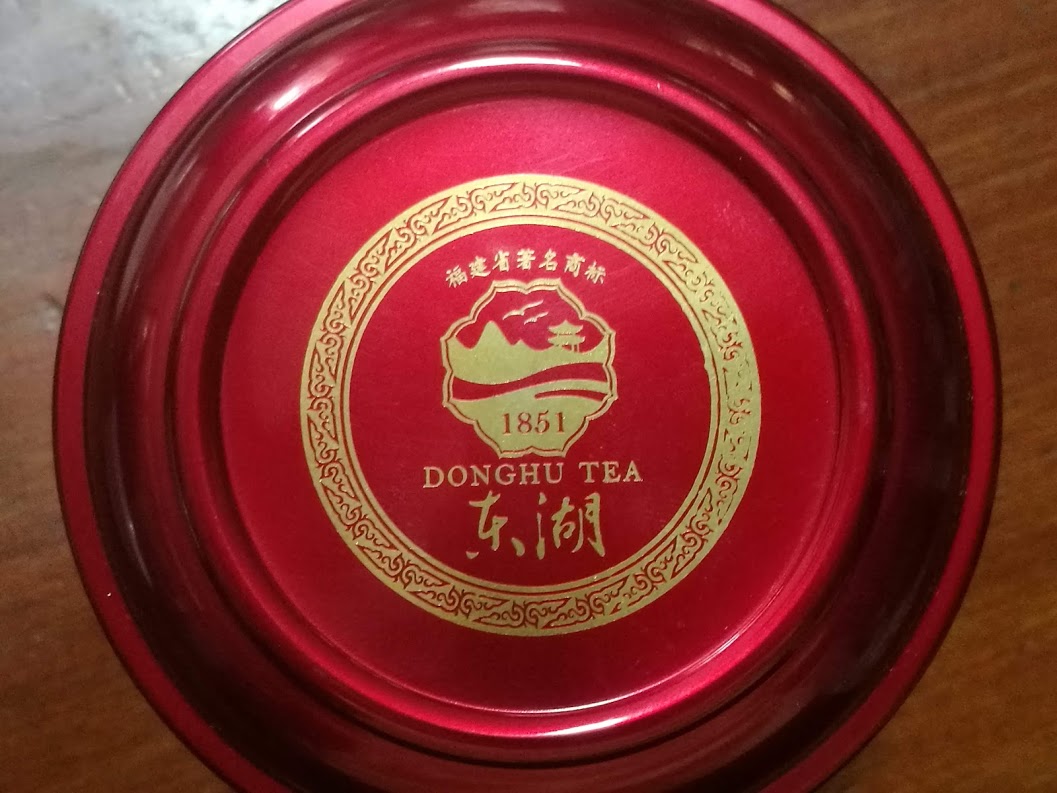
As to the maker and type it's labeled as Te Ji Tin Min Hong from Donghu Tea.  Googling that doesn't help clarify things, any of it--so strange.  Not all that unusual though, really.  Te or teh is probably the other form of "tea," with "cha" turning up a bit more often.  I ran across this pretty nice listing of main Chinese tea types trying to look it up and it wasn't on there, any form of it. 

Here are the labels, all I had to go on:


Never mind; it is how it is, with or without back-story.  It could just be a different looking version of Jin Jun Mei, or a related black tea, but it doesn't matter.


Review


It's sweet, malty, full in body, with a good bit of bees wax flavor aspect.  It comes across like a variation of Jin Jun Mei.  Those can vary in character some but the better versions have this kind of sweet, mild malt undertone with a bees wax and honey sweetness standing out.  It seems possible this is slightly more oxidized than the versions Cindy sends (Wuyi Origin's tea); I could comparison taste that and tell. 

Hers don't have a light oxidized flavor range in terms of expressing vegetal character (eg. they're not woody, or express mild root spice), but it seems like finely balancing that level lets them maximize intensity, sweetness, and bright character range.  All just guessing, of course.  For having a bit heavier flavor this works well too; that extra warmth matches the rest. 


Second infusion:  this wasn't musty or off in any way but it still cleans up and gains some intensity.  Bees wax is still present but it shifts into more of rich mineral and warm earthy tones.  It's one of those complex sets of flavor experiences that's in such a tight range it comes across as simple, and in one sense it is.  Feel is cool, hard to describe.  This isn't exactly thick but it has an unusual structure to it.  It's like a rich brewed aromatic bark spice with a bit of metal in it, both in terms of flavor and how that might end up feeling.  Flavor isn't exactly intense, in a limited sense, but it spans an unusual range.

It will be interesting looking this up and seeing how it's supposed to be, how conventional versions are for the same type [except that didn't work].  It comes across as a high quality level tea, well made, based on good material as an input.  As far as how different people would react to it, how much they would like it, that would depend on preference, as is the case for every tea.  Not everyone would appreciate how much is going on with this version; in a sense it's subtle, in a different sense refined and complex.


trying it out a bit lighter, brewed faster


Third infusion:  sweetness and flavor intensity have scaled back a little (likely also related to messing with infusion time), but it's still quite intense across a limited range.  That unusual clean, complex flavor is still just as pronounced, and the feel is still cool.  This will fade faster for me using a much lower proportion than I usually do.  This being a measured individual pack helps identify specifics in this case; it's 5 grams of tea leaf.  I had thought I'd been crowding more like 8 in a gaiwan in a typical session, quite a bit for a 90 ml or so gaiwan.  I tend to brew teas using very short infusion time as a result, with this stretched out a bit, towards or at 20 seconds instead of around 10.

That last description, that this covers mild, warm, rich bark spice range, along with underlying dark mineral, does capture the main flavor effect, but not so much how that really comes across.  The remaining bees wax in the background really works to balance that, to give it depth, and keep it interesting.


Fourth infusion:  it's tapering off already, that effect from using less tea and longer infusion times.  Bees wax is picking up a bit in the lighter profile, probably just relating to what shows through more at different infusion strengths than an actual transition in what's there.  It's easy to test that warmer mineral tones and heavier earthy flavors stand out a lot more in stronger infusions; just vary timing across rounds for any tea including that.


Lapsang Souchong (left) and Jin Jun Mei leaves for comparison, or buds in the one case


Conclusions


What to add?  It's pretty good black tea.  It would be really strange if I got that part wrong and it's not even black tea.  It's so close to Jin Jun Mei that even if it's completely unrelated this would probably end up being sold as that part of the time.  The overlap in the malt range and bees wax flavor aspects really stood out; JJM can be like that.  For being fine twisted leaves those never really opened up; it seemed more like bud content.

Whatever it is it's good.  Many thanks to that friend; and here's hoping I get a chance to return that favor appropriately.

Saturday, November 16, 2019

Wuyi Origin wild Lapsang Souchong and honey Jin Jun Mei


Lapsang Souchong left (or both, in a sense, but JJM is on the right)


I recently mentioned using a Wuyi Origin Rou Gui version in a water type comparison test, which sort of worked as a review, but not as an overly detailed account.  That kind of made sense but kind of didn't; to a degree that was disrespectful to that tea version.  Here I'm trying two really exceptional black tea versions from them (provided for review by Cindy, or really probably more related to sharing tea to try, since she is an angel among tea producers and vendors).

For anyone familiar with their teas or really exceptional versions of these two tea types these need no introduction, but I'll add their descriptions all the same:


Wild Lapsang Souchong 2019

Location: Tong Mu guan (桐木关)
Harvest date: 4/10/2019

This  harvest we did a more standard  picking, one bud and two leaves, more uniform  looking. It is from a more late harvest than most normal Lapsang souchong, so the leaves are quite thick. Using the traditional un-smoked Lapsong souchong processing skill we kept its natural essence.

Feature: Un-smoked with a ripe peach aroma, it has a very obvious Milky flavor. It last more than 10 infusions. There's no bitterness even when you steep the tea for a long time. It has a quite bright tea soup that's orange color.  


Thinking back on my review description(during the editing) I bet "caramel" would describe part of the range I didn't do justice to capturing, the warm, mild sweetness along with that creaminess.


2019 Jinjunmei (honey aroma)

Location: Huang gang shan (黄岗山)  of Tong mu guan 
Harvest time: 2019.3.19th
Cultivar: Fu yun #6  
Fermentation level: full-fermented 
Picking standard: Early spring buds ,using all the first infusion buds to be processed 


Feature:  Huang guang shan is the highest moutian in Tong mu guan (桐木关)which is the original place of the Jinjunmei and Lapsang souchong. It is about 1600m height, the whole year with foggy weather.  The special growing environment  creates this very exquisite tea.

Carefully picked and processed, each leaf is compact.  The liquid is bright orange color. With strong fragrance of Orchids, and the sweet "charm of Honey" after taste. Enduring many infusions, and stand steep, no any bitter feel. This is my competition grade Jinjunmei of 2019 harvest in my family. In 2017 and 2018 harvest this one Jinjunmei won different Titles in USA and Australia Tea Competition. This one 2019 Harvest I  think it  is excellent, from the looking, aroma, tasting, brewed leaves looking. Very delicate and exquisite tea. 

4.5g -5g  tea  into 100-110ml gaiwan  by 85-90 C water to brew.


Even though it might not seem possible both are a lot better than the descriptions make them sound, even the second.

These list for $18 and $16 for 50 grams of each, and as I see it that's almost giving them away.  Selling for double that these would be a great value for tea this good.  On my limited tea budget ordinarily I can't relate to spending 50 cents a gram and up on tea versions, even if variations in quality level and demand have that make sense for some versions, but these are that good but still selling in a different pricing range.  I just hope the people who buy it can appreciate what these are.

Reviews:


Lapsang Souchong:  it's always surprising how good this tea is; maybe it would be no matter how many times I tried versions of it.  Talking about tea quality levels drifts into discussion of versions being true to type, expressing clean and balanced flavors, appropriate sweetness, or thick rich feel, maybe onto aftertaste effect, or related to quality markers, aspects that serve as an indicator for that type.  Beyond all that teas that are truly on a next level just come together, and breaking it down doesn't explain anything, if anything leading away from describing the actual experience for boiling it down to a word salad of descriptions.  This tea is like that.

A primary aspect is a rich, warm sweetness, a fruitiness paired with a really well balanced lighter earthy range.  The fruit isn't so far from a warm version of citrus, not identical to the chen pi effect, but not so far off it.  It extends into something like ripe peach, just richer and warmer than that.  The earthiness is so clean, well-balanced, and distinctive that it's hard to describe.  It's a little towards a malted grain, leaning from there to a lighter cured leather, but it's none of that.

I'll do more with describing aspects next round, or take the opposite approach and switch over to writing poetry, describing only indirectly related experiences and feelings.  This tastes like a warm fall day feels; something like that.


JJM (right) brewed slightly stronger, but looked similar first round


Jin Jun Mei:  this has more body and warm mineral than I expected.  It's still sweet, similar to honey, and the closest aspect description I could give to that is the scent of fresh bees' wax.  Processed bees wax smells kind of the same, in a candle or a lip balm, but when you are near a piece or a large section of honeycomb a kind of different impression comes across.  Again this is clearly one of the best teas I've ever experienced.  It's funny how that's hardly even about subjective preference or a judgment call with these, it's just what they are.  If you don't absolutely love them then you just can't relate to that type range, but it's not a shortcoming on the tea's side.

This is slightly overbrewed, per an optimum.  I was thinking that as I was starting, that I've roughly matched the amount of dry tea but this will come across as more intense, throwing off a parallel approach to brewing.  It doesn't matter since this isn't that kind of comparison anyway; I just happen to be tasting them together.  I brewed these for around 10 seconds or so, which was roughly ideal for the first, but too long for this one.  It's not ruined, or off, or astringent, but an optimum would be slightly lighter.

Honey and bees' wax stand out, with a warmth and sweetness similar to malted grain beyond that.  It's not the malt in Assam, or Ovaltine, but still related to that broad set.  The feel is a bit thick in a unique way, that's not the exact same form you usually experience in other teas.  The body hints towards a light form of dryness but stops short at just being full, perfectly balanced.  Level of sweetness, overall intensity, complexity; as with the first tea version it's all perfect. 

Going back and trying the first version again it's nice how it trades out some of that warmth for a fruit tone that really pops, but both are amazing in their own ways. 

This is the kind of tea that people buy but don't talk about, loving it but not saying a word online, because there's only so much out there.  As demand goes up and it sells out faster pricing would probably creep up too.  I've reviewed these before; I have no concerns about letting the cat out of the bag.  Some of those people have me to thank for letting them know about it, not that I ever hear much of that kind of feedback. 

A bit on my understanding of how all that goes: Cindy (and her family) are selling most of what they produce within China, probably not really for any less than what these are selling for, because demand and awareness of tea is much, much higher there.  It's not as if the wealthiest level of society there can't afford tea that costs a lot more than this, or if that's a very small set of people.  Price could go up a little if level of demand shifts but producers like them could just sell more to "the West" instead. 

Related to an online discussion subject I didn't add a lot of input to, there's a different story about how there are other types of producers out there who could ramp up production if demand shifts a lot more than I'm talking about.  Countries like Vietnam, Nepal, and Indonesia are making a lot of quite good tea, but it would be possible for them to ramp that up fast.  The amount of old-tree tea that's growing wild and unharvested throughout South East Asia is only now coming to a lot of small producers' attention. 

No other country will be producing tea as good as these versions any time soon (except Taiwan and Japan; different cases), but it's just a matter of time until growing, harvesting, and processing skills draw closer to even, a trend that already shifts a little year by year.  This one Laos black tea was a bit stunning but that had to be a fluke.

Second infusion:


Lapsang Souchong:  this is brewed a little light, using a fast infusion time (maybe 8 seconds), and the balance is still great.  Probably closer to 15 seconds would be optimum, but this tea will work well at a range of intensities.  Feel is still full even brewed light, not structured, dry, or astringent, just with a light fullness.  I'm not really doing that fruit aspect range justice; it seems complex, but at the same time simple.  I just had a nice ripe mango with breakfast; those are similar, covering bright citrus range and deeper warm fruit.  It didn't taste that much like mango though, the comparison works better to describe the general range and complexity. 

There's a distinctive light wood tone that comes across in better Lapsang Souchong that this includes.  It's a little like balsa wood, a warm, kind of muted tone, hinting towards dryness, not far from aged hay.  In some versions without as much sweetness and fruit range that can make the tea seem a bit flat, emphasizing that particular aspect, in a less pleasant form.  In this it balances really well.  There is mild, underlying mineral range as well, and a darker wood tone closer to a spice or tree bark.  It comes across as simple but also complex, in a different sense, very clean and well balanced.

Jin Jun Mei:  warmth picked up even more in this.  It's still closest to bees' wax, along with a dark version of honey, but there's something else to it, another way to describe that.  Malted grain kind of works, it just seems a bit non-specific, and it's more helpful to use descriptions of actual common food items.  It starts in towards the rich depth of molasses, it's just hard to describe how that works at a much lighter level, well-integrated with other subtle flavor range.  It's interesting how the warm honey and wax range extends in one direction and a separate brighter tone gives it lots of range and complexity.  It doesn't quite extend to citrusy but part might relate to a warm, light floral tone.

Third infusion:


I'll try to brew the Lapsang a little longer and the Jin Jun Mei shorter this round, optimizing both.  To some extent one could arrive at similar results by adjusting proportion but for me it works well just varying infusion time round to round to get the level right.


Lapsang Souchong:  the balance of the earlier aspects may have shifted a little but this is most changed for getting infusion strength right, letting go just over 15 seconds.  The hit of well-balanced flavors is a great experience.  This isn't really what I'm talking about when I'm telling people still on tea bags or grocery store teas about how good better specialty / orthodox teas can be; it's at least a full level above that.  It would almost be a waste to even try this before exploring more of a medium level range of teas.  One wouldn't appreciate it in the same way, and then later on other teas wouldn't be on the same level (in some ways) before it was possible to even appreciate why it is exceptional.

I tend to recommend Dian Hong (Yunnan black tea versions) as a good starting point for better black tea instead, because those span a range of character types, are positive in lots of different ways, and lots of decent versions don't cost a lot.  Pretty good unsmoked Lapsang Souchong that doesn't cost very much would turn up but versions that taste more like cardboard would probably be more common.

Jin Jun Mei:  this does work better slightly lighter, although a balance right in the middle would be better yet.  It's a forgiving tea in terms of being very pleasant slightly too strong or too weak, without astringency as a concern, but optimizing it relates to letting it shine brightest.  There's a lot going on that could strike a great balance when dialed in properly, not just work well.  Buds-only black teas can not only be intense (although the opposite can be true, often more so for large bud versions) but they can also usually produce a lot of pleasant infusions, so this tea should be far from finished, probably not even half finished.

I don't intend to keep describing rounds though; aspects tend to shift in later rounds for black teas but it's typically not as with sheng pu'er, where transition can move into different ranges (or become far less pleasant, depending on the tea).  I'll try a couple more and if anything stands out I'll note it, but let the round by round approach drop.


the teas kept brewing lots of great infusions


I did brew more Lapsang Souchong leaves, but the JJM was more intense


Conclusions:


Not much to add; these did produce a lot of additional amazing infusions, but it was nice drinking those without making notes, focusing on the experience instead.  I've lost count and the teas aren't finished; it must be around 10 infusions already.  Out towards that the character changes a little for drawing out infusion time to keep the intensity up but they're both still exceptional.

I don't regret focusing a lot more on sheng pu'er over the last two years; it has been nice getting that partly sorted out.  I would've expected to get further so many examples and reviews along but exploring that range takes some doing.  Teas like these are great for cutting out that sort of process.  There are some variations for aspect range within these two types of teas but the main thing is trying higher and lower quality versions.  No tea is ever the best possible example of a type, there's always something else out there, but these are towards the high end for sure. 


my favorite picture of Cindy