Sunday, October 8, 2017

Visiting Bangkok Chinatown (Jip Eu shop); review of an Oriental Beauty


hanging out with Ethan in an old school tea shop


I've written about the local Chinatown before, so no need to go back through all that.  I wanted to say a little about the last visit and then move on to discussing a tea.

I picked up four teas there on that visit, two Liu Bao I just reviewed from Double Dogs Tea Shop (a cafe there), and a Ya Shi (duck shit) Dan Cong from the Jip Eu shop, and sample of a Horse-head area Rou Gui they gave me.  I met a friend there, Ethan, the reason to go.  And I ran into someone I had only knew online before, the guy who had recommended the Jip Eu shop to me; cool that worked out.


I took an Express ferry down there; I love those.  If you visit Bangkok you should find some reason to take one.  It's like a bus, and costs around 50 cents per trip (something like 15 baht), and to me it feels like being on vacation just to be on it, and they can't get stuck in traffic.


Picking up some extra ziplock-seal style packaging (envelopes?) for sharing tea samples came up, since I'm almost out, and to my amazement I found the store I was looking for, right where I remembered it.  That Chinatown is a bit of a maze so it usually doesn't go like that, at least off Yaowarat, the main street.  Other sidewalk vendors and shops were selling all sorts of things, but I was kind of on a timetable so I didn't do much looking around.  We stopped by a temple on the way back to the MRT (subway) on the way out, and Ethan's girlfriend had a chance to pray a little, all normal enough in Bangkok, like walking by a 7-11.


the main row of signs starts on Yaowarat; pomegranate in the forefront


In one sense I love the Chinatown here and in another I don't.  I don't find the food vending options inviting.  It's not about the way that the kitchens are a tiny steel table with a wood fire or propane flame, but the way that seating areas are typically a couple tables about the size of a menu, or nothing at all.  If I was more into meat on a stick it would work better.


a sidewalk seafood vendor


I don't buy a lot in Chinatown, but I will pick up things there I wouldn't buy elsewhere, like chrysanthemum (tisane), or dried persimmons.  It's a good place to pick up low quality Chinese toys, or really any number of things from China.


Tea can be hit and miss.  I bet there are a few really good shops scattered in with others selling low to medium quality Thai and Chinese teas.  It takes time to sort through options, and some degree of gambling (as in this case of trying out a fake tea). 


I wasn't so into that fake pu'er (bargain LBZ) when I first tried it but after having some nice Yiwu versions over the weekend I'd like to check it out again, and with tweaking brewing just a little it may work better than it had at first.  There's a second factor about modest quality level teas somehow making more sense once you try a better version that shares some aspect space that I won't get into.


a tisane that shop owner was blending with

Per past experience it's not that unusual for Chinatown shops mostly selling teas out of huge jars to have some decent longjing in a refrigerator off to the side, but so far I've ran across nothing related to other better teas, outside of the places I'm already mentioning.  I'll get to more of them later.


There is a one way to tell if a shop vendor is really interested in sharing tea experience above and beyond profiting off you as a customer:  if they share a tea that they don't even sell.  The owners of Tea Village (shop in Pattaya) used to do that.  The Jip Eu owner has before, a nice black tea he made himself last time, and this time he let us try some of a tisane blend he only drinks himself.  That tisane blend was ok, different; I could relate to how it wouldn't work to just drink tea all day long.  And passing on a sample of Rou Gui he doesn't sell was really a little over the top.


Review of a Lin Hua Tai Taipei shop Oriental Beauty


Kind of strange to be adding this to a Bangkok Chinatown shop visit post, isn't it?  My friend Ethan passed on a tea from Taipei during that visit, so it was central to the visit.  I had him pick up that tea for me so I could try to reconnect with the Lin Hua Tai shop owner a bit, who isn't active online, which sort of didn't work (their website lists a phone number, and an unofficial Facebook page doesn't provide contact options).  And since he ended up liking the tea and I mostly wanted to cover that Ethan shared some of the tea instead of re-selling me the whole package.  Someone giving you a good sized sample of decent OB is a very nice thing.

Grade B version, purchased Sept. 2017 (the one I'm reviewing)


Grade A version, purchased January 2017 (for comparison)


Ethan tried both the highest grade and the second level and thought the second was roughly as good, just different in character, really even better suited to his preference, so he bought that one.  It'll be interesting comparing it to their other highest level version (the one from January; I suppose it could be quite different year to year, especially for that tea type).  I drank all that tea, so I can only compare it related to memory and notes though.  Onto review then.

The look, dry tea scent, and initial rinse / short infusion (which I didn't throw away) is in the right range:  it's a bit bright, sweet, and complex, towards citrus, spice, and muscatel.  It'll be easier to separate that out in a more standard infusion.


The tea is nice, brewed stronger.  I've got a touch of a cold again (I'm not an especially healthy person, in general) and I think a slight flatness in the flavor profile is more from that than from the tea.  Beyond that it does come across as clean, sweet, pleasant, and quite complex.  There's so much going on that the flavors tend to mix a little, but it does include citrus, a trace of muscatel, and some spice range, towards cinnamon but not exactly cinnamon.  The oxidation level is noticeable, but not as high as that sometimes is for this type.  It's definitely a more oxidized oolong but not pushing the edge of a black tea as some do.  So 70%?  I never was completely clear on those sorts of numbers.

On the next infusion the spice picks up a little, and I suppose the fruit drops back just a little too.  I like Oriental Beauty that has a lot of spice aspect to it so this version definitely works for me.  The exact description is hard to place; it's not far off cinnamon, just not exactly that.  That same aspect trails into a light, aromatic woody range too, towards cedar.  Someone really looking for bright fruit versus spice might be disappointed, or that extra bit of oxidation in some versions can lend them a different kind of complexity this doesn't have, pushing into the grey area between more oxidized oolong and black tea.  This retains a brightness and lighter feel those wouldn't have, so at some point all that gets to be stylistic and aspect trade-off.

I can see why it might be regarded as a next-level-down version though; the complexity is good, and the aspect range is positive, but the best versions really do possess an intense fruitiness that this doesn't have, or at least to the same degree.  I have tried other OB versions claiming to be the best of the best, most type-typical, etc., that weren't quite this good, with some being passed off as dollar-a-gram teas.

Unless I'm mistaken this tea is a great deal for the type and cost.  This tea (and their second-level teas in general) sell for 2400 Taiwan dollars per jin, or around $80 US for 600 grams.  So Ethan bought this tea for $13 for 100 grams, or half what any mid-range version would be on the US market, although it's definitely better than most of those (per my limited experience).  This is tea from a wholesale oriented shop in Taipei, though, so it should cost less.  The highest level version cost 4000 Taiwan dollars, which works out to $130 / jin (600 grams), or $22 / 100 grams.

Tea drinkers in the US might wonder about that selection process, choosing a next-level-down tea version to save $9 for 100 grams, when both sets of numbers are in a very moderate range.  An online friend living in Taipei mentioned buying tea from the shop next door (Lin Mao Sen; more or less the same type of outlet, with a family relation between the two), and buying "grade B" teas because they seemed essentially the same to him.  It's conceivable someone could like the style of the "lower" version better, based on personal preference differences, which is part of was going on for Ethan.  That "A" version was just a little higher in oxidation level, both of which are standard for the type, and to him that seemed not as preferable.


an old-school wholesale oriented shop


On the next infusion more of the same:  the fruit keeps dropping out, really well faded a couple of infusions in, and in not so many more the spice went to wood tones.  I guess that's the main thing that seemed to separate this from a next-level tea, to me, that it had some really nice character but that it transitioned away from that relatively quickly.  The first two infusions had fruit, then next couple mainly spice, and from there it was mostly just wood.  Cindy (Wuyi Origin Cindy) has mentioned that before, related to copy-cat versions of teas, that they can do a lot better at achieving the right profile over the first couple of infusions but they fade fast, and the feel probably also suffers quite a bit from being lower quality tea. 

This version isn't a "fake" tea (I don't think, although I can't tell for sure that bugs bit the leaves); the point is that in both cases the grade seems to relate to starting out positive and shifting from there.  In the case of those off-location origin Wuyi Yancha Cindy meant that the teas would just completely drop out quickly, which is a familiar experience, and one runs across the idea that Wuyi Yancha don't brew many infusions because people have yet to try better versions.  As I'm remembering an Oriental Beauty version from Vietnam was much fruitier and brighter than this one, moving into spice after a couple of infusions, but staying positive through a full cycle.  That would be an exception though, a case where a copy of a tea type made elsewhere matches up with good versions of the original.

This was still good tea, with the typical aspects profile, it just didn't seem to brew a lot of positive and consistent infusions as well as some others.  To some extent that is a bit of a trap, though, trying to experience better and better versions of every tea, as if each competes with all the others.  It's good to appreciate each tea for what is pleasant about it, and there is plenty to appreciate about this tea.  There are two more really interesting teas to talk about from this visit too, one that's likely to be one of the best Rou Gui I've ever tried, and a commercial (mass produced) Ya Shi (duck shit) Dan Cong, which is kind of a strange idea.  It'll be interesting to see how that works out.

Tuesday, October 3, 2017

Liu Bao from Double Dogs tea shop (Bangkok Chinatown)


Double Dogs shop Liu Bao, 2015 version (5105)


2014 version (no additional description)


I'll have more to say separately about an outing to the local Chinatown, but one short stop was at the Double Dogs Tea Room there.  For whatever reason it's the only tea cafe in this local Chinatown, as far as I'm aware, and as far as Google and other references seem know of.  It's a nice place; a bit casual and plain, but per my limited exposure there the teas are fine, good versions that are typical for the types they're described as.  And the pricing is reasonable, around 250 baht per a tiny pot, as I recall, so not that much more than a Starbucks coffee price for a completely different type of experience. 

Since we'd been drinking tea for over an hour at my favorite local shop there, Jip Eu, more a tea take-away place, we mostly just stopped by to grab a tea, which worked out to be a Liu Bao.


street tea; poor storage but low price ($25/kilo; I should have bought some)


I did a survey of some hei cha lately, initiated by a Malaysian online friend being into Liu Bao (which they call Luk Bok instead, the Cantonese name, I think).  The version I tried from Yunnan Sourcing was a bit musty (reviewed here).  It will probably be good after airing out for another half year or so but that did throw off the full round of trying some hei cha types.  I tried a nice Liu Bao from Thailand awhile back but it's not the same; even if it was completely type-typical and a good version since it is from a different country than the original I'd need more exposure to recognize that.  So now I can check.

They had a 2015 version that per the staff they only sell by half kilogram (labeled with a product number, 5015).  As I recall it sold for 650 per 100 grams (if they had sold it that way, so 3200+ per half kilogram, or around $95).  That does turn out to be retail for the tea (with more on what it is following).  For Liu Bao it could be on the high side compared to more modest versions, but then tea sold out of physical shops generally costs a little more than that bought online, which to me is fair since their costs are higher, and having a person talk about tea and show you it can add more value.  Perhaps more importantly, inexpensive Liu Bao can taste awful, so a bargain version still may not be a good value.

The other tea is a 2014 version (not labeled in any way I kept track of; that's what the written label says).  They did sell that tea in parts, per lesser quantity, and it cost half as much.  I'm sure it is a lower quality version then, which tasting will fill in details about.  The staff wrote a 2015 date on the package but I'm sure it was labeled 2014 on the container, which really doesn't make all that much difference either way.


What those teas are


My impression is that these might just be commercial teas, so I'll try and sort out what they are through research.  This AliExpress reference lists a 500 gram commercial Liu Bao as 5105, with their description:


500g Loose China Tea GuangXi Liu Bao Tea Dark Tea China Tea Wuzhou LiuBaoCha 5105 with Jinhua


Not much of that rings a bell.  They're selling it for $85, for what that's worth.  An Ebay vendor seems to sell the same product, with the details a little clearer, in this case listing a 50 gram sample for $7.99 (so again half a kilo for $79.90, $5 less).  These price mentions aren't so much to determine if I paid online-vendor market price, more to set a range, and help indicate that they really are the same thing.  If the same tea cost $95 in a shop, $10-15 more, by the time you factor in shipping it's about the same.


There's no need to say lots about it but it's common knowledge that you may not get the tea you actually try to buy through Ebay, Amazon, or Taobao purchasing (or in a physical shop, for that matter, but I don't think that concern applies at this shop).  It's only a good deal if you actually buy the tea you think you are buying, and not something else that really should cost a lot less.


They list a description on that last Ebay page, which is interesting, if not really completely clear:

                                                                                
Name:Liu Bao Cha 5105
Brand:China Tea
Product Packing Year:2013
Tea Production Year:2013
Packing:Loose
Weight:Approx. 500g per piece
Category:Liu Bao Tea - Dark Tea
Origin:CangWu, GuangXi, China
Storage Time:Taste improves with age


Liu Bao tea is dark tea, specialty tea of Guangxi. Quality characteristics of Liu Bao tea:

  Shape: coarse and fat
  Color: brownish auburn bloom
  Soup color: red bright, like amber
  Aroma: stale and mellow, fragrant with betel nut
  Taste: mellow and thick, sweet after taste
  Tea leafs: brownish auburn and evenly
  
Liu Bao tea produced in Liubao of Cangwu, Guangxi. Tea area is local in the mountain or canyon, vertical and horizontal streams, beautiful, sunshine short, year-round misty, fertile soil, very suitable for tea growing.

Liu Bao tea leaf picking a bud and two, the beginning of the system by sharing green, low-temperature fixing, rolling, and steep heap, dry made. Replication process, including screening shaping, pick stems pick films, fight heap, cold fermentation, drying, steaming on, step baskets, and cool set aging.


Whatever automatic translation they were using was breaking down towards the end, not doing processing steps justice, but the rest of that is clear enough.  It's not made from older leaves, per that description, or with a lot of stems, and of course it's a pre-fermented hei cha, not all that different than a shou pu'er.  Per my understanding--per some hearsay--shou processing was derived mostly from Liu Bao.  I'd need to try betel nut to really relate to that part.  And I was probably just in the right place for that, too, in that Chinatown.


It's odd that I didn't snap a picture of a label for the other tea, and the sample didn't say what it was, aside from the year (2014).  In a sense it doesn't matter; it's some version of Liu Bao.  It seems quite possible it's a common type, not impossible to look up, but this was never intended as that sort of reference post, a definitive review of these teas, more just a further impression of the type.

I also didn't snap a single shot of Double Dogs, due to the context of us rushing in and out of there, with the place just a little busy right then.  Here are a couple from a visit and post two years ago:


It didn't seem to have changed.  I kind of like that basic vibe, really, I'm just not exactly the tea cafe type, and I don't get down to Chinatown as much as I'd like.  And when I do I'm grabbing some tea and moving on, maybe pausing to drink some tiny cups over at the Jip Eu shop, but not really even hanging out long there.


Here's a shot of that friend I went to visit with.  He has a cool look (waiting on his girlfriend to pray, in this shot, maybe feeling just a little impatient right then).  I do want to say more about the Chinatown outing, but this is going long as it is just talking about Liu Bao, so next time I will.


Review:


The 2014 version is nice enough.  I'll just go by year for this writing, with the "5105" version from the other year, the 2015 tea, per my understanding.  I tasted the rinse and threw it out, but I won't start on that, and a fast rinse really should be discarded for fermented tea types. 

On the first infusion it tastes a good bit like an old blackboard smells, so mineral-like in the range of slate.  There is a hint of a charcoal element to it, and a trace of mustiness, but in general the flavor is clean and sweet (as a tea that tastes mostly like slate goes).  It's not really complex in the sense of some other tea types, but it does have a richness to it.  The flavor complexity is fine, there just isn't that much going on beyond those elements, nothing towards fruit or spice or other range, at least not yet.


2015 left (5015), 2014 right.  Some dark teas.


The 2015 version is a good bit better tea.  It's sweeter, and more complex, with a good bit more going on.  It also tastes a little like slate, with hints of charcoal behind that, but without much at all for mustiness, and some other sweet and complex range folding in.  It strikes your palate as one element that's standing out but after focusing on it that's really a range of different flavors.  I would guess it does resemble just one type of thing that I'm not familiar with (betel nut?); sorry that's not more helpful. 

It comes across a little like a sweet, warm, darker wood, with a bit of that mildly fruity and sweet element in some chewing tobacco.  That's better than it sounds; chewing tobacco can smell great, the taste and overall experience just tends to let you down.  I don't mean the ground-up snuff version (like Skoal), the other loose leaf type instead (like Levi Garret, or Red Man).  Those products are sweet and distinctive, which makes me wonder what else is even in them.  Per this reference those are fermented and sweetened, some with a high sugar content, and some sweetened with licorice.  I looked this up after the actual tasting but maybe that tea did taste a little like licorice.

It's the type of flavor range that has enough going on that it really could be a few different aspects, but they're integrated together.  It's also unusual enough that I'd expect lots of people to describe it in completely different sets.  Going back to the first lower cost version (the 2014) and trying the same infusion the flavor range makes more sense after trying the other, as if I see how it fits together better.  I think it might also clean up a little over an infusion or two.

Second infusion


The 2014 version did transition a little.  The slate-mineral effect is still most pronounced, with the same touch of charcoal char behind that, but the mustiness did ease up.  It gains some complexity too, in a really earthy range, I guess along the lines of peat.  Peat always sounds a bit more negative than I mean it; "spring forest floor" isn't far off that.  With that in mind it reminds me of that rich vegetal scent of moss too, which is also better than it sounds, to me.  That might even be a bit like a dried wild mushroom, close enough to shitake.  It comes across as cleaner than it would sound.  This tea wouldn't be for everyone but it's nice, to me, just in a different kind of range.

The 2015 version cleans up a bit too, with that nice earthy-range aspect moving a little towards spice, similar to root beer.  The char more or less drops out, at least most of it, and there wasn't much mustiness to contend with before anyway.

I tend to let feel and aftertaste range aspects drop out when I'm doing comparison posts, focusing on flavor instead, but I'll say a little about that.  This better version is full and rich, just in a different sense than for other tea types.  It's toward how some teas come across as oily in feel; maybe actually oily or maybe not.  The aftertaste doesn't linger to the extent as for nicer sheng pu'er and high mountain oolong but it doesn't vanish immediately after tasting either.  Again even this tea--even the better version--wouldn't be for everyone, but it's that little bit easier to relate to than the other, with more positive aspects range making it approachable.


2015 left, 2014 right.  Some dark broken up leaf teas.


Third infusion


Both teas have shifted just a little further in those directions but essentially aren't changing much, so I'll wrap this up.  The teas are nice.  They're not all that far from shou pu'er, really.  I suppose the range is a bit different, and distinctive, but also with plenty of overlap.  I could imagine drinking a half kilogram of that better version, and at a price range of 640 or so baht per 100 grams ($18) it seems fine for the tea type, a little more than I would have expected, but then better versions of teas are priced higher for a good reason.  I actually did buy 100 grams of the lower priced tea, which cost 320 (or so) baht per that quantity, around $9.   They just gave me the sample of the other, which is much appreciated, and added a lot to this review.  It would be nicer to get the shop to agree to sell 100 grams of both versions, and then to take up Liu Bao as a daily drinker if it really does ring a bell.

Per that Malaysian friend people there do drink this as a main tea type, as the one type of tea they always drink.  I keep running across references to people drinking basic versions of shou in Chinese restaurants, and some of that really could be Liu Bao (or Luk Bok, the other name).


There was a discussion about Liu Bao in a Steepster thread, with the post claiming what they tried tasted like dirt.  I can relate to that.  The Yunnan Sourcing version I reviewed tastes like a musty root cellar, and this more modest version tastes like slate.  Dirt sounds worse, but those are all in an earthier range.  This reference of a higher end supplier of teas was mentioned in that thread, Essence of Tea, a vendor I've been inclined to not even try out since almost all the teas on their site sell for a dollar a gram.  Some teas are definitely worth that, of course, some tea quality levels keep on extending to higher levels, it's just outside my tea budget.  The Liu Bao section is more reasonable, of course, and interesting to review related to the range it spans.


Per the standard take this type of tea does improve with age (with lots of those EOT versions from the 90s; probably a good source for checking on that).  It would work to set aside most of a half a kilogram of it and drink only a part instead, to keep coming back to it over a period of years.  That Malaysian friend (the one that gave input about "gan / kam," by the way), buys it by kilogram and just keeps sticking with that type, drinking it with food, or as a breakfast tea.

In relation to how pu'er is aged it wouldn't even need to be carefully sealed; some limited degree of air contact would be fine.  I don't know that it's going to continue to ferment though.  My understanding is that shou really doesn't, but per the typical take both would mellow further, clean up, and become more complex with more age.


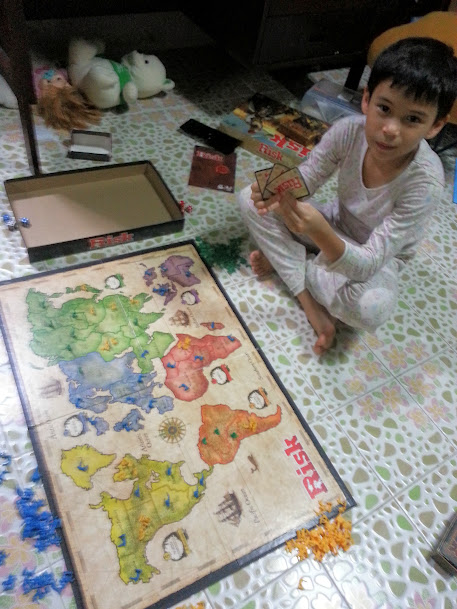
one of my blog mascots, getting beat at Risk


Sunday, October 1, 2017

Kandy Ceylon black tea (BOP)


Broken Orange Pekoe (BOP), the listed type / grade / leaf presentation


A vendor sent a sample of Ceylon tea to review, not such an unusual thing, but it does come up here more frequently related to other countries.  Kandy Tea is actually selling tea out of Sri Lanka in this case, with a FB contact here, and a website here.  It's odd this doesn't comes up more, people taking up resale-vending local teas in producer countries, versus lots of various themed tea businesses in the US and Europe (and Australia and wherever else too; other places than where the teas are from). 

Per discussion with that local Bangkok Ceylon vendor, SNSS, it's not that simple to buy tea directly from Sri Lankan plantations, related to an auction sales process that isn't just convention but also regulation-restricted forms of sales.  I wouldn't know, from my own experience; just passing that on.


This part of Sri Lanka that the company is named after played a role in the early history of tea there, explained in this CNN article citation:


In 1867 Scottish coffee planter James Taylor, the man who would be recognized as the pioneer of Sri Lanka's tea industry, planted 19 acres of tea near Kandy at an altitude of around 500 meters...

Within 10 years, this lethal fungus led to financial ruin for the island's British coffee planters. Roughly 1,700 left for England while the remaining 400 or so switched to growing tea...

By 1890, the year Thomas Lipton arrived to purchase tea estates, 23,000 tons of tea were exported to London's tea auctions. Ceylon had become an island synonymous with tea.


The description of the location of the tea source could be more specific, but that elevation citation reminds me of their website product description claiming it's coming from higher up:


The Broken Orange Pekoe range falls into the category of High grown and medium grown tea, hailing from the centre of the country’s hills, grown at an elevation 6000ft to 2000ft above sea level. 


To me this particular tea ties to the theme of checking out better Ceylon and Assam versions earlier in this year; I'll be forever really getting to what the best examples of these teas offer. On to this specific version for now.

Review, prepared Western style


I tried this tea twice for this review, first prepared Western style, then a second time Gongfu style (both at work; a bit different).  The results weren't so different, with more details covered later.


from the second tasting instead, of course


The dry tea scent is nice, warm, rich, sweet, a bit malty, and complex, maybe a bit heavy in a nice dried fruit range.

Brewed initially (Western style) the tea is like that, positive, complex,  and well-balanced.  As with other better versions mineral structure plays a role that's hard to describe.  I tend to talk about different kinds of rocks or mineral springs to pin that down but I'm not sure that's ever clear.  It reminds me most of other Ceylon teas I've tried.

It includes a bi of malt, just a softer and lighter presentation than in the Assams I reviewed not long ago. Part of the flavor range is a bit like tamarind, not completely off raisin but not that, maybe extending a little into dried fig.  It could be interpreted as woody but to me that's not right either, something along the lines of leather captures that part better.  I tried the tea again later, brewed a different way, to see if I could dig deeper related to flavors assessment and overall judgement.


Brewed Gongfu style


Some types of black tea make more sense to prepare Gongfu style than others.  I can pass on my thoughts and experience related to that but it seems it would vary with preference quite a bit, different per person. 

I recently tried a Taiwanese black tea, a "honey black," prepared Gongfu style, which worked out much better that way than earlier Western style attempts.  I tasted it that time along with a Dan Cong black, (a Chaozhou area black tea; I'm not sure if that "Dan Cong" description is commonly used for black teas or not).  That second type also probably does work better prepared that way, but I've not also brewed that Western style to check on that.  Sometimes Gongfu style seems to work better for Dian Hong too, for Yunnan black teas, but in some cases the outcome is more the same for both approaches.  For some decent orthodox Assams I tried recently it didn't seem to make much difference.  It almost has to do as much with the tea being touchy about parameters as it being so good that it somehow makes more sense, although it's hard to connect causes to working better with more short infusions versus a lower proportion and longer steep time.


The aspects didn't seem all that different for this tea; the main flavors were still along the lines of mineral, fruit in the range of dried tamarind, hinting towards fig, and earthiness not so far off leather.  It seemed possible to shift around parameters and shift the balance of those, to soften and sweeten the tea using slightly cooler water and lower infusion times, or to emphasize the earthiness by going the other way.  That tone would then move into the range of feel more, picking up a resin-like quality that occurs in some versions of Dian Hong. 

As far as taste goes when pushing the tea a little, brewing it slightly stronger, or using hotter water, it reminded me a little of the woody, unique scent of pine cones.  If the smell of those isn't familiar it's hard to think of anything remotely similar; a bit like that smell of almond or brazil nut shells, but stronger, and a little sharper.  Once I think of that this tea reminds me more of the scent of an almond shell, but that could just be imagination.


Conclusions


So in conclusion brewing it Gongfu style the tea wasn't necessarily better, but it was possible to shift the character a bit within a limited range.  Brewed faster and a little cooler it's possible to accentuate the lighter flavors and sweetness of the tea and using hotter temperature and slightly longer times to draw out a balance of more feel-related aspects.


If I'm describing a high mountain oolong from Taiwan, or a Dian Hong, or other familiar Chinese black teas, once I get through a list of aspects, and how those match up with typical expectations (including flavors description, and some mention of feel and aftertaste, etc.), then bit by bit I would have already said how good the version is.  At the end of reviews sometimes I'll clarify that, even if I don't try to put a particular tea on some sort of scale.


I hoped to guess a bit more at just how good this tea really is, even though doing that really is optional, and atypical in most blog reviews.  It doesn't helped that I've only tried a single-digit count of better versions of Ceylon teas (described in a number of separate posts).  Of course it's worlds away from CTC versions (ground-up machine-processed tea), but that's not saying much.  It's like saying that it's better than any orthodox teas one buys in a grocery store; of course it is, but better Ceylon doesn't turn up in grocery stores, per my own experience.  It's on a similar level as those better Assam versions I'd recently been drinking.  It's "good tea," but I suspect still in the middle of a range of what I would consider good teas, with room for improvement related to the best orthodox Ceylon.

How would I know that, since I'm really only claiming that this tea is about as good as the best of the other Ceylon I've tried?  I don't know it, for sure.  I'm extrapolating what I've experienced from Chinese black teas, and others.  At this quality level the flavors and other aspects balance is quite nice, positive and distinct, good on different levels beyond flavor, with no noticeable flaws in the tea.  For even better teas aspects tend to become more refined though; complexity can pick up, and style differences related to exhibiting unique character can improve.  Feel won't improve that much, for black teas, but it can still thicken and venture into different textures. 

It is a bit bizarre for me to say this isn't as good as the best Ceylon has to offer, while at the same time claiming that it's as good as any I've tried, but so reviewing in this blog tends to go.  At times I try to explain what I don't know.  Perhaps that last extrapolation analysis is a case of a "fool rushing in, where angels fear to tread."


one of the two blog mascots, even posing a little