Showing posts with label wine. Show all posts

Saturday, June 13, 2020

Tea and food pairing


This is a subject that hasn't even been mentioned in this blog.  I eat food with tea all the time, most typically with breakfast every day, but they are never intentionally paired, in that one limited sense.

To some extent I must take that into account if I'm having a tea with lunch, but essentially the tea is whatever I feel like having, and maybe one that doesn't conflict with the food.  But not necessarily a version that complements or matches the food; I just don't think along those lines.

It's perhaps most common for tea enthusiasts to claim that they never eat any food at all with better versions of tea, not even a neutral form of cracker, or maybe only something like that.  Then again that depends on the tea preference too.  People into English Breakfast Blends probably would be more inclined to have snacks with them than Chinese sheng pu'er or oolong drinkers.


I was recently talking to a new online contact about this theme, Joshua Linvers.  He is a tea enthusiast who works related to food and tea pairing (and with wine), associated with the Q Haute Cuisine restaurant.  There's more on that direction and theme on his own website, with this article on pairing tea and food a good starting point.

I'll start with his input on some general pairing themes.


Joshua's comments on tea and food pairing


The aspects of young sheng that I enjoy are when they come off as particularly fruity once the bitterness fades. Fruity such as apricot, papaya, or perhaps dried mango. From that starting point I would have to consider what else is going on -- is it also related to tobacco, or walnut, or is it root-like and autumnal?

A Xi Gui Pu'Erh paired dish we made at the restaurant was Venison jerky with cured duck, pickled figs, walnut chutney, a whiskey gastrique, and crostinis. [That origin isn't familiar, but a Hojo post covers what it's about].  

With a young puerh from Lincang we made a course which was pork and shiitake mushroom broth with walnut gnocchi, dried apricots, and pancetta.


Ultimately I think the way I like to do pairings is try to adjust for 'shortcomings' or things about the tea or food that might be a bit alienating for some people.

For example, if someone doesn't like bitterness you can do a pairing with strong saltiness or strong sweetness to make it seem less intense. If a tea has a bitter apricot flavor and you make a bitter apricot pie, you're going to screw it all up and end up tasting nothing from either of them. If you choose a complimentary flavor to apricot --- say nuts for example. If you're eating a pecan pie, or a bowl of salty pecans, the tea wont taste as bitter, and the apricot flavor is really going to resonate because you're putting two complimentary flavors together.

If you would consider pairing fruit with meat, I think people have some standard opinions of what works -- pineapple and pork for example, cranberries and turkey, applesauce with beef bolognese, etc.

It stands to reason that if you're someone who likes the match of pineapple and pork that having a tea which reminds you of pineapple is a good start for a pork based pairing.


Interesting!  One part reminds me of a tangent that's so unrelated I probably shouldn't mention it, about my niece and I both screwing up a Mongolian grill meal by adding too much spice to it (where you choose ingredients and they cook it for you).  I told her there wasn't much of a way to remove the heat (although you can add a little sugar and cook it a bit, if you have that "do-over" form available), but adding salt could at least make the spice level make more sense.  She agreed, and we both ate our meals slightly better balanced, but still too spicy.


The mention of teas tasting like fruit is unusual, but it's a bit complicated why that is, how patterns in flavors work out.  Floral aspects or other range more dominant in some types, and mouthfeel (astringency) and aftertaste aspects often tend to be emphasized more than flavor.  I do like fruity teas the best in general myself, but lots of other range comes up as much or more.

The basic premise and theme seems to work, that at some level pairing would have to be about setting up complementary patterns.  More on wine will extend to why that doesn't necessarily typically relate mostly to flavor, although that is one range that could be emphasized in an approach to pairing.


I'll add a few of those pairing menus Joshua had mentioned here for reference.


There's a problem in reviewing specific pairings:  teas aren't as consistent as they might potentially be by general type.  There is often a singular "type-typical" style, but any given tea can be a great version and still not be exactly like that.

With a lot of general range a continuum of variation enters in, eg. oolongs can be roasted or oxidized to different levels, even when there is a narrow conventional-type window to shoot for.  Sheng pu'er varies a lot across a few different dimensions, and aging (storage) factors can change teas a lot, in addition to varying starting points.


My impression of food and wine pairing, in comparison


It's not something that I've covered here at length but I did work in the restaurant industry for awhile, as a server.  I did some informal training in wine background, and drank different wines for a few years, as I mentioned in this post about preference change patterns in comparison with tea.  But I was a better snowboarder than waiter.


I owned that mountain


Pairing flavors that would complement each other did come up, in the wine and food, and as much emphasis on getting the character, the feel and weight, balanced for specific dishes.  At some points discussion of a wine being acidic enough to complement a certain dish would be mentioned, but at a guess the ph of wine isn't varying all that much, and that was really about feel aspects (astringency, weight) and dryness versus sweetness matching.  Since that was just a guess I'll look up a Wine Spectator reference to see if that's mostly right or completely wrong:


PH is the measure of the degree of relative acidity versus the relative alkalinity of any liquid, on a scale of 0 to 14, with 7 being neutral. Winemakers use pH as a way to measure ripeness in relation to acidity. Low pH wines will taste tart and crisp, while higher pH wines are more susceptible to bacterial growth. Most wine pH's fall around 3 or 4; about 3.0 to 3.4 is desirable for white wines, while about 3.3 to 3.6 is best for reds...

While these numbers might mean something to chemists and wine geeks, it's important to remember that the way a bottled wine tastes is about the relationship of things like pH and TA to other factors like alcohol, tannin, extract and sweetness. There's no chemical formula to make great wine—not yet, anyway.


So maybe it does make a lot of difference.  Joshua would know more about that, but this really does have to focus mostly on tea, and only associate back to wine related to pairing themes, not character  or aspect inputs.

Customers usually kept it basic; they seemed to buy wines they were familiar with and liked, and must have expected them to work well enough with what they were ordering.  Some had no idea what they liked and then I would usually recommend really approachable wines.

It did seem to make sense to match a general type of wine with the food (color, and sub-type within that broad range, and character beyond that), especially related to an experienced lightness or heaviness of both.  I worked in a traditional Italian restaurant once and Chianti really did stand up well to a heavy, strong flavored, tomato-based food range (although of course there were cream sauces and pestos).  Most of those wine versions were probably a little rough.

White wines would be nice with lighter foods, and Cabernet or heavier reds with beef and other grilled meat; I never really made it past those kinds of basics.  Working in a wild game restaurant heavier flavored reds came up a lot.


I was usually only drinking wine with a snack, at most, with wine experience as the main theme.  I cooked a lot back then but I wasn't a foodie, in that one sense, and I'm still not.  As my wife says I have a "crocodile's tongue."  I can sort of tell how good the food is but I'm really happy to eat a grilled cheese sandwich with sauteed mushrooms for dinner, or even just fruit, or breakfast cereal.


Wine pairing input from a wine-maker friend


To me this still really isn't doing justice to comparison to wine and food pairing (not that it has to).  To fill in that gap I asked a friend who has long since worked as a wine maker, working for some well-known producers.  From that friend, Dan Senkow:


Not going into specifics on wine, that would be confusing to many. The first and most important rule is drink what you like. If the quote un quote best pairing for a dish is something one doesn’t like then it is not going to work. 

Second there is no such thing as an expert for all people. Everybody is the expert for what they like. No one is the arbitrator of taste. It is true some people may know more about the way a wine is produced from a technical standpoint. However, they do not know more about how it makes the individual feel.

In simple terms one may either use an element in the wine to compare or contrast. So, this may be done with flavors, textures, weights, or a mixture of the above. Example a heavy lobster bisque with a light crisp wine or a rich opulent creamy one. 

Remember it is the marriage of food and wine, they both have to make each other better or they shall split apart. The wine and the food must have a place to fit in. If the dish is a complete package all on its own, the wine has to fight for a spot to fit in. We know how that works in relationships.Together greater than the parts they must be.


Dan's sense of humor stood out more than the bottomless wine knowledge; some part of everything was funny


Lots of that seemed really insightful to me, especially the the examples about the two broad strategies for pairing, and how it helps for gaps to exist in the food profile to complement.  The last part about relationships can be a touchy subject, being married to a Thai.

I can't evaluate which strategies Joshua's restaurant was using, since I just don't have that background or degree of imagination.  But it all works well together as a starting point for thinking the subject through.


Maybe all this could've hung together a little better but the different threads did seem interesting, some of which overlapped between the two scopes.  I can cite a bit more from Joshua's blog post on tea and food pairing that might help with that, with linking it all together:


Tea in a pairing behaves differently than wine, if for no other reason than sheer amount of ‘sensations’ wine can be bountiful in, be that acidity, tannin, and alcohol or the flavor sensations of sweet, sour, bitter, pungent, umami, and spicy (although spicy not so much)...

With pairing tea, you are often forced to take a different approach because you can’t go head to head with a lot of foods and expect the tea to come out on top or even equal. It plays the gentler, more passive role in the marriage...

With tea you need to take another approach — you either use the tea to cleanse the tongue afterwards and highlight nuances in the food that you’ve observed and hope that the pairing might bring in focus; or you use the tea as a set-up to put the food in a better light...


He adds a lot more context there, and a number of pairing examples.  That post includes a tasting exercise, how to use a few basic food inputs tested against a tea to work out how the coupling can be positive, or take different forms.


To be clear on context all of this still just isn't for me.  Eventually I might try it, but I could live without ever going there.  For as broad and complex as tea experience is for me it works to only take up a limited range as it connects with the last theme I was on, evolving scope organically.  If I ever take up more of a food interest beyond eating the three meals a day that might make more sense.

Friday, June 5, 2020

Tea preference transition compared to wine


I was talking to an old friend about tea experience, and started in on comparing the natural preference transition cycle to what tends to occur with wine, typical exploration and changes in what people like.  I think I've typed all this out here before, but I'll run through it all again anyway, since that was probably years ago, and my perspective would have shifted.

The idea is this:  I tend to recommend certain kinds of teas to people as a good place to start beyond Lipton and flavored blends, and see some kinds as more of an acquired taste, as a much less natural place to start.  Standard patterns of exploring types would be normal.  The same happens with wine.  I was a restaurant server working with that friend then, in one of the two main ski resort areas in the US (the Vail Valley), so wine experience is familiar to both of us.

A lot of times it helps to write something to a specific person, because it sets a clearer context than just writing to an abstract, general audience.  This is formally written for that general audience but it will help writing what I would tell him.  It was what I was going to write to him, but I'll tell everyone else here too.


not so reassuring for subject expertise; red wine with the wrong glasses in a Utah park camping area


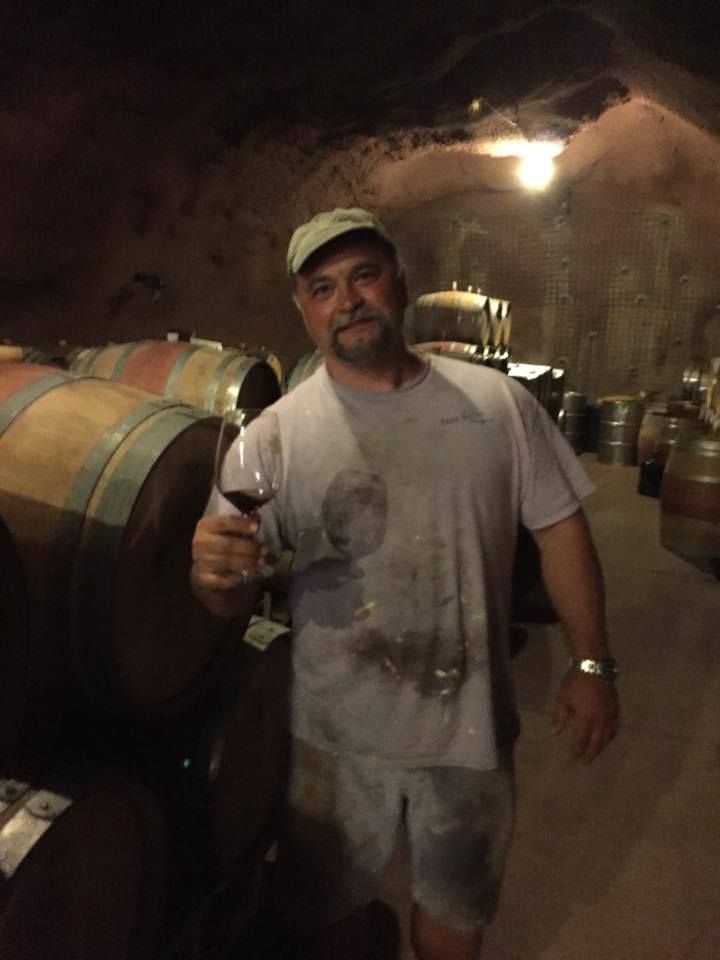
a friend who shared wine knowledge in the past; just the salt of the earth, a great guy


A natural wine preference curve (based on my own, really)


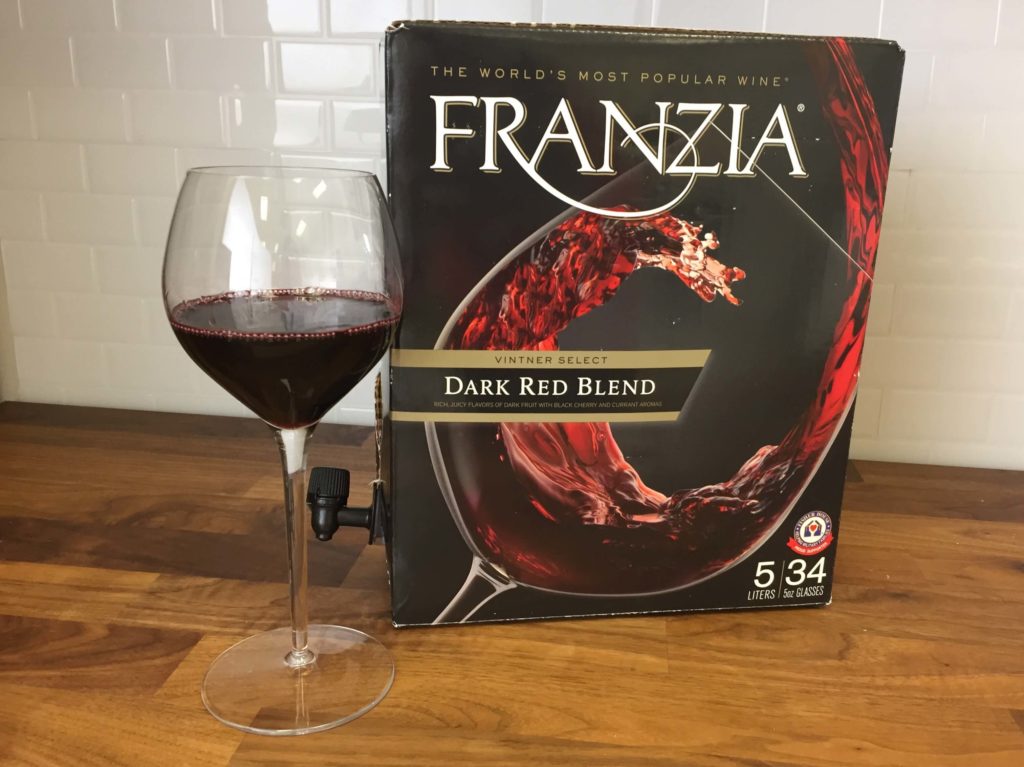
It's natural to start in on wine from really inexpensive versions, for more than one reason.  One part is the cost, but also some versions are "designed" and marketed for people who more or less don't drink wine.  "Box wine," or wine that literally comes in boxes (in a thick bag inside that box, with a nozzle device), are very inexpensive, sweet, and often oak-chip flavored, perfect as an introduction, close enough to soda or a fruity mixed drink.  That's what I mean.


evaluated very positively, by this article reference where the photo is from


This will run through a natural pattern in what someone might explore next, and entire "typical" cycle, although personal experience would always vary.  Different experience or preference "paths" would make sense.  This example will circle back to how one example route applies to tea experience.

Then moderate quality merlot is a reasonable next step (as red wine goes; it's going to help to narrow this to one broad type and color, so I will).  Those tend to be fruity, drinkable, not challenging in any way (not astringent or "structured"), and quite sweet.  They're not an ideal pairing with most foods, per how that theme is often said to go, but definitely easy to drink, maybe even for people who don't like wine.

Then next maybe Red Zinfandel would work; they're a little stronger flavored, often including some sort of berry or spice aspect, maybe even a trace of black pepper.  "Zin" isn't challenging, but then that applies across the next couple of steps too.  It's probably challenging enough that the merlot would've worked better first, but really that does depend on general food preference.  In rare cases someone might be able to just start straight in with dry, hoppy pilsner beer or peat-intensive single-malt Scotch, skipping the intermediate steps that would often tend to make the most sense related to liking those.


Next maybe syrah / shiraz would be appealing (Australians use that second name instead).  That typical range is not hard to appreciate but someone might move off liking an intense, sweet red wine and desire something different, if not actually a wine that is more subtle.  From there they could go more subtle and get into Pinot Noir.  It goes without saying, all this works only to the degree that expressing these types of broad generalities does; for sure they are partly accurate, but they also drag in almost as much error as accurate generalization, in order to make a point.

Wine blends trade off a narrower set of aspects found in single-type wines, and can be very balanced and well structured, so maybe Bordeaux blends would work well next, that set of five grape inputs, from there or places like California.  I kind of "left off" at Californian Rhone-style blends myself a long time ago (according to this reference maybe I was ahead of my time, since that was forever ago).

Skipping ahead, cabernet seems like a later-preference range. Those are more astringent, heavier on tannins, often coming across as slightly less sweet, but really it's more about the balance varying.  French reds can be something else altogether; even good versions can taste like there's a rusty nail inside the bottle.  People adjust to liking different things in wines as they explore, and move away from needing a lot of sweetness and soft feel, and actually crave complex structures and takes-exposure-to-like flavor aspect range.  Tea is like that too.


Early preference for teas


I typically tell people that light rolled oolongs, like Chinese Tie Guan Yin or Taiwanese oolongs, or soft, sweet, complex black teas, like Dian Hong, are good places to start.  They are approachable, pleasant, good in inexpensive versions (usually--not always), and easy to brew (of just harder to screw up, really).  Even a Wuyi Yancha, Wuyishan-area "rock oolong," can be harder to appreciate, and harder to brew, even though most versions of those really don't take that much getting used to.


Dian Hong; relatively large leaf Yunnan black tea


a light rolled oolong.  I only have old pictures of those, nothing very clear.


This "hard to brew" theme can relate to a split between Western brewing (using a teaspoon per cup in a pot, or making it the same way in a French press or infuser device) and Gongfu style brewing.  I'll have to leave that part out, since that level of tangent would derail this theme, but this intro-themed post goes into that.


a gaiwan, or lidded cup, my favorite brewing device


The parallel with the early wine preference curve scope, box wine, and even to some extent the drinkable merlot, would only equate to lower-medium quality versions of these first two tea types.  Then again, there definitely could be such a thing as a very high quality version of merlot.  The grape itself doesn't necessarily limit it to a certain style range, it just favors one, and demand themes also parallel that.  The same is true of "basic" teas, especially lighter style Tie Guan Yin; some can be great.  Adding a bit of oxidation and roast adds potential to develop a lot more depth and balance, a sub-theme that comes up again here in related to a slightly different but related scope.


Next branching into other oolong types seems to make sense, to me.  Wuyi Yancha and Dan Cong come to mind; both are quite pleasant across a broad range of styles and aspects.  Above average Dan Cong is pricey, so maybe if budget is an early determining factor skipping that might work better.  Taiwanese oolongs span an interesting range too.  Oriental Beauty--bug-bitten, more-oxidized oolong--seems a rare kind of tea that could appeal to a lot of people who aren't into tea at all, or to people fairly far through a preference development curve.  Those can express a lot of fruit flavor, maybe in citrus or muscatel range, along with grape or cinnamon spice.  They can be intense in flavor but reasonably well balanced at the same time.


an aged Oriental Beauty; leaves always tend to darken over time


More-oxidized rolled oolongs, which people might equate with a Dong Ding style (Taiwan region) could also work for a broad range of people.  Those can be complex, within a limited scope, novel, good value across different quality levels, and somewhat easy to brew.  Hatvala (a Vietnamese vendor) sells a Red Buffalo version that is essentially this.  More oxidized oolongs, sometimes referred to as "red oolong," based on black tea being called red in China, aren't exactly the same as better Dong Ding, which tend to carefully balance oxidation and roast inputs.  Better quality tea usually relies on very high quality tea to start, not necessarily depending mostly on oxidation level closer to black tea to change the theme to a warmer, earthier, still quite sweet agreeable character.


a "red oolong," a tea type that's often just as close to black tea as conventional oolong


Where are we on the mapping back to wine?  I think Syrah / Shiraz might still be similar to this Oriental Beauty / more oxidized rolled oolong range.  Levels of sublety and positive balance can vary, but the range still seems a bit basic (even if there often is something refined about OB that's hard to pin down, the way the aspects balance together).  Syrah can be subtle and balanced, but Pinot Noir moves on from there, or at least has the potential to.  Those can be very refined, not as sweet in some cases, expressing more light structure and earthy undertones in others.  That was especially true in Northwestern US versions, based on what I tried long ago, probably when the global wine industry wasn't nearly as developed as it is now.

This range might still map back to where Dan Cong oolongs land; higher quality versions of those are really positive and distinct.  Or better Wuyi Yancha; it's funny how you can keep drinking lower medium quality Da Hong Pao for a long time, only to later discover that you had never really experienced what the category range is all about.  Maybe to stick with the parallel structure here a tea experience might move onto more subtle range at this kind of point; you might first "get" white teas.  A lot of silver needle seems to just be flavorless, and it's hard for me to relate to appreciating feel and only feel.  Bai Mu Dan, a version with buds and fine leaf content, works better for me, for being more complex.


Maybe around this comparable stage better Darjeeling or Nepal white teas would come up; that works well as a parallel.  Oddly those are two relatively completely different things, even though they aren't so far away from each other as growing regions.  Darjeeling spans a range, with more progressive plantations continuing to experiment and see what works (notably a favorite related set, Gopaldhara and Rohini, are like that).  Nepal white teas have a characteristic style with a lot of pronounced underlying mineral and citrus pop.  It's possible to appreciate them mostly for flavor but it helps a lot to be able to relate to a more refined and subtle tea character, related to a lot of other oolong scope at least.

white tea comparison, versions from Nepal and Laos


a Nepal white (which do vary in appearance)


It's hard to draw a close parallel to tea with better blended wines.  I can think of what is probably the most obvious connection, but the parallel structure between the two beverage scopes has to fail in a sense to use this example:  that of sheng pu'er.  Sheng is not approachable, in general; it takes exposure to appreciate, for the most part.  I guess this draws us onto the parallel with Cabernet in one sense then, an interesting and less approachable red wine version that most typically takes some getting used to.  Of course I generalize; a child could probably drink Silver Oak and appreciate it, and that brand / version isn't exactly inexpensive.

Anything in the lower half of all sheng quality is probably hard for anyone to appreciate, unless they get started into that range and just stay there.  Cheap or bad sheng is often described as tasting like kerosene or chewing tobacco, the dip / snuff kind, not the larger and more whole leaf version.  It's rough.  Even good sheng can have pronounced bitterness in younger versions, and an unusual form of astringency, both of which work better after some exposure.


Laos loose sheng (maocha) from old plant sources


how sheng often looks, pressed as a cake or bing


sheng or shu (all pu'er) can come in different shapes, like this tuocha (a 2009 Xiaguan, not quite ready yet)


So the idea here is that although a Bordeaux wine blend is typically very easy to relate to the way in which that mixing can achieve very balanced and positive results is going to map over.  The general style and target audience theme is just different.

An inexpensive, lower quality wine blend would be compensating for flaws in inputs instead; getting the most out of relatively bad wine.  To me that's closer to what goes on with English Breakfast Blend black teas (no offense intended, if that's your thing, but I'll need to speak plainly here to say anything).  Inexpensive versions of Assam can be a bit rough, intense in flavor (malty) but also rough in feel, and lacking depth.  Inexpensive Ceylon versions can be lighter and more subtle but can lack intensity, or have other gaps or flaws.  Mixing the two can make a better mixed version, in some cases.  Let's move on to the other range though, about how all this maps out on the higher end, and in relation to a completely different tea type.

I don't really need to even say that some Bordeaux blends, in France and in California, are not just covering up for flaws in the wines, right?  They are shooting for an end product that is novel and exceptional, unusually well balanced, based on using wines that may not stand alone as well but that are definitely not flawed.  Assume that all that is clear to you already, even if it's not.

It's going to help to set aged sheng aside for this.  That's a little odd, because for many with advanced preferences in sheng that's what they drink.  Even at the very beginner level a common understanding is that all sheng is better when older, regardless of type or age.  I disagree.  To me some sheng is best very new (young), and it's much more common for some very exceptional types to hit a sort of peak for character within a few years of being produced, and then other versions with other character really need that transition.  I can circle back to sheng aging cycle later, and how transitions go, and just assume that I'm talking about relatively young (new) sheng here, without being clear on any of that.


a 2007 sheng photo from this year


There are two main ways in which sheng is produced and presented, as single-origin teas, most often sourced from a very narrow area (eg. one local farm, or arbor, a set of somewhat natural-growing tea trees), or as a mix of inputs, a blend.  Just like that we're back on theme.

The narrower source area has the benefits you would expect:  positive, interesting aspects stand out as distinct.  It has the drawback you would expect too:  any limitations or flaws in that tea really stand out (missing a character / aspect range, like sweetness, or mouthfeel, inclusion of a negative flavor element, etc.).  Using a range of inputs allows producers to compensate for any of those limitations, and balance them out, and get the most out of lower or medium quality tea material.  I suppose it's possible that the mapping to a very high end blend could occur but in general a lower or medium range is represented, and that paradigm related to the best Bordeaux production, and going for a great result using very good source material, more or less drops out.

I suppose for being less common exceptions might be no less valid, cases where the result is making something truly exceptional.  This seems to relate to production and marketing for White 2 Tea, for example; that producer seems to try to make much better than average tea by mixing inputs.  Or at least that's the story.  Since another part of that strategy relates to keeping inputs and product descriptions vague (unknown, really) it's hard to be clear on that.  Still, maybe it's that the exception proves the rule.  Since I've never tried any of their teas all of this is just passing on hearsay anyway, to be clear.  Maybe they aren't so great, in general, and it's all smoke and mirrors, until you get to generally unidentified versions based on single-source inputs, which could sell for a lot more in their product range than the blends.

Two other examples will clarify what is typical (back to upper-medium level quality blends as a theme).  Dayi / Taetea 7542 (a numbered-type example) is often held up as a benchmark version.  That large producer would sell teas from within a broad area that is identified, maybe like the US wine example version of Napa Valley, but essentially large scale producers mix inputs to get the result they want to achieve.  Or at least they make a tea that will sell, that seems somewhat similar to past years' versions. 

Yunnan Sourcing, another main Western vendor, sells a few different lines of blends, and their "Impression" series is presented as an attempt at making a better alternative to 7542.  I've only tried two years of their Impression versions, 2017 and 2018, and only own the 2018, but based on that limited sampling I would say that they've succeeded (although the style is a little different).  The tea is cheap, and pretty good.  It's not as distinctive and narrow in aspect range as some narrow source versions but it works.  The targeted blending result works out.


the 2018 Yunnan Sourcing Impression label; pretty cool design


I never got there myself, with wine, but this is more or less onto what natural end-points in tea preference might be.  Constant exploration might work, but I'd think people might naturally settle in on one or more ranges for preference.  Maybe just one, for primary preference, and then they might also mix it up.  Sheng is one of the main end-points, for sure, probably more represented by aged sheng than younger version preference.

Oolong range is another likely natural end-point, settling on something like Wuyi Yancha or Taiwanese oolong scope as a favorite, with plenty of range to explore within both.  Or Dan Cong, but to me those seem to cover a slightly narrower range; there is just less scope to focus on.  And they cost more, and finding very high quality examples is as difficult as with any tea type.  That's always how it goes, across all types, but I mean that there are divides between lower quality, medium, higher, and very high that somehow seem all the more distinct for that particular tea type, and versions of the last two levels can be hard to turn up.  Other types seem to work out as more of continuum, so that the middle and higher ranges can be quite distinct.  Across quality scope many tea versions still seem to share a lot of common ground, just adding some effect, better balance, a bit more thickness in feel or aftertaste, or different flavor range.


Now that I think of it, how would I know if I'm there with tea, closer to an end-point for preference, or what would be typical?  I "only" started into tea interest 8 or 9 years ago, and really only shifted to put a lot of focus on exploration around 7 years ago.  Even for trying a lot of versions a decade of input is just getting started.  My attention span for hobbies and food interests is on the short side so I almost never put that decade in, regardless of the subject.  But maybe I'll stick with this theme for awhile.


Thursday, March 2, 2017

Why review tea? Part 1: comparison with wine tasting


my friend, drinking on the job


An online friend recently brought up an interesting question:  why review tea?  Of course my response was that because it’s a general activity different people in different contexts would have different reasons.  But still there’s something to this question; it leads in some interesting directions.


She was thinking along the lines of why people review wine, which leads directly onto how they go about it, about approach and specific goals.  It’s a natural comparison, reviewing aspects of wine tasting or appreciation to tea, something I've written a little about in the past.  It might work better to start back at who is reviewing tea and why, before going into that comparison.  Tea vendors review tea, but what about others?


After thinking it through the deeper question seemed to be why people that aren't industry professionals feel so attached to tea that they want to go beyond just drinking what they like, and research related to that.  A good example:  why am I writing a blog about tea?  It's complicated, really.  The rest, about approach and specific goals, is more about how reviews are conducted.


Even though it’s backwards I’m mostly going to cover more of that “how” range here, about process, starting with overlap with wine tasting.  Part 2, another later post, will cover more of that other underlying “why,” about what drives tea bloggers to express anything.


But lets do a rough start on that first set of ideas anyway, on who reviews tea:


Vendors:  for marketing, sales-related description.


Other professionals:  as a function of doing whatever they do (consulting, training, to a limited extent also journalism).  The term sommelier is also used for tea, as with wine perhaps related more to passing on individual advice related to teas than write-ups, but both could come up.  Tea subject-area trainers would deal more in general background content but reviewing might come up there too.  All of these are cases of people employed related to tea, paid to do those activities.


Novices / bloggers:  of course there is some overlap here with the other categories but this is an odd twist.  I and others review tea for no clear reason, just out of interest to do so.  It’s essentially similar to travel or lifestyle blogging.  A limited commercial angle comes up (free tea samples, traded for the writing promotion function) but it’s probably more an extension of an usual level of interest than a means to save on purchasing costs.  I suppose there are some patterns among people that write blogs about tea but it seems as well to not make too much of that.

Lets leave all that for the follow-up post and get back to goals in reviewing tea.  A good starting point is why it makes any sense to compare wine and tea review.


random picture of teas


Wine review / tasting:


The initial introduction to Wine Tasting:  A Professional Handbook gives us a start on why to taste and review wine, but it’s a bit general:


As befits one of life’s finest pleasures, wine deserves serious attention.  Nevertheless, no wine tasting procedure has achieved universal acceptance.  Most experienced wine tasters have their own sequence of steps they follow.  Although essential for critical tasting, these steps are too detailed for the dinner table.  The difference is equivalent to the gulf that separates the analysis and enjoyment of music.  Critical tasting compares one or several wines against a real or theoretical standard.


This is the introduction to the work, and it moves on to lots more on methodology, and later onto scoring.  It was interesting, related to reviewing teas myself, how at the start it was more about just passing on what I thought of a tea, or notes about reading up on a subject, and it became more and more formalized from there.  Methodology shifted to adjust brewing for review, and to changing the environment, the description format and writing process, a number of things.  If I'd had more experience with wine I could say more about that progression related to wine but I really was a casual drinker that happened to join some introduction classes.


Related to saying more about wine tasting, the main reference I’ll cite further is Wikipedia, with the obvious limitations for that source (it’s not authoritative, and generally not complete).  For general subjects, eg. the American Revolution, it’s not a bad reference for broad strokes, but when you read about a specialized subject in more detail (like specialty tea) it can be a bit odd.  It's not typically wrong as much as limited, and the range of scope that's included can vary.  That reference will work for this limited purpose.


blind tasting (photo credit)


Related to the original suggestion, purposes for tea review versus wine review, my friend mentioned some of these ideas (with this version from Wikipedia):


Vertical and horizontal wine tastings are wine tasting events that are arranged to highlight differences between similar wines.

In a vertical tasting, different vintages of the same wine type from the same winery are tasted. This emphasizes differences between various vintages.

In a horizontal tasting, the wines are all from the same vintage but are from different wineries.  Keeping wine variety or type and wine region the same helps emphasize differences in winery styles.

Tasting flight is a term used by wine tasters to describe a selection of wines, usually between three and eight glasses, but sometimes as many as fifty, presented for the purpose of sampling and comparison.


wine making processing, completely off the subject

In those introductory wine class settings a good long time ago I don’t remember using either approach, vertical or horizontal.  That was all general stuff, or else tasting some different wines from one winery, or based on other mixed-type themes.  I’d expect this approach didn’t crop up in the last twenty years, I just wasn’t exactly doing that type of training.


There’s no reason why both spatially described approaches couldn’t apply to tea, they just don’t, at least not as well.  Related to the first, comparing years, wine ages, as tea does, but tea ages fast enough that separating yearly version distinctions in character from the aging effect would be problematic.  Comparing production years (vintages, for wines) could still apply, but in general that makes less sense related to tea.


Some teas actually improve when held a year (eg. more heavily roasted Wuyi Yancha, or shou pu’er), and of course it’s not typical to keep green teas around for that long.  More gradual aging and improvement of sheng pu’er may be more comparable to wine but the tasting would still identify changes related to both aging and year variations, maybe with too much input from the aging for it to be as informative about production year differences.  I did taste three consecutive years of shou pu’er at one point but it just happened to work out that way, it wasn't designed.  I was so new to tea then (three years ago) that I didn’t have much shou experience to compare it to.  For what it's worth they seemed to vary a good bit, within a limited range.

Teas also vary by a lot more than main production runs.  In a purchasing context one might compare lots of a producer's batches from small growing areas instead.  Related to the second idea, comparing one representative product per producer from different makers, this is a typical theme for tea competitions.  The practice is common in Taiwan, developed as a basis for how teas are sold, and they have an annual Wuyishan area tasting competition to do just that, and it must also occur in other places.


Here’s a bit more of the basics of wine tasting while still on that subject (again from Wikipedia):

The results of the four recognized stages to wine tasting:

Appearance;  "in glass" the aroma of the wine; "in mouth" sensations; "finish" (aftertaste)
– are combined in order to establish the following properties of a wine:
complexity and character; potential (suitability for aging or drinking); possible faults


All interesting enough.  Again these speak directly to “why” to review in the sense of what they are judging the wine related to, the categories.  Of course all of this eventually lands on a numerical scoring system, with a good bit of centralization of that set up for wine.  That one main set of ranking numbers rates wines out of 100, with numbers representing an added rating of different categories.  Altogether it objectively evaluates how close the wine is to an ideal, or at least that's the intention.  When a wine is rated near 100 that’s exciting stuff, I guess, but in my wine drinking days it wasn’t a subject that came up a lot.

Lets move back to tea then.


Tea tasting versus wine, subjectivity versus objectivity


old-school tea tasting (photo credit Dilmah)


A theoretical standard for ideal tea version characteristics may make a lot more sense to some people in some limited contexts than it does to me.  It does make sense to refer to trueness to an ideal type, I suppose more sense for some tea types than for others.


I stay stuck on this subject of objectivity versus subjectivity, the potential for there being right answers in evaluation.  I’m curious if reviewing can determine objective characteristics of a tea at all, basically what the wine review methodology implied as a starting point.  It’s not a given that assumption completely holds for wine, necessarily, but it is more developed and better accepted for that subject.  It’s more justifiable for wine because they test people trained to taste wine to determine they can identify characteristics and even origin of wine from blind tasting, so to some extent it does work, there just must still be a lot of role for subjectivity, for preferences.


a small scale tea tasting


Really, why couldn’t a tea be completely objectively evaluated?  To me it’s a more interesting question than how that would work if they could be.  If a tea is astringent, or tastes like peach, or a certain flower, then any experienced taster should agree on that, even the degree to which it occurs, given very similar storage and brewing processes.  Those last factors are not really a given, especially since the varying minerals in water impact tea aspects, beyond the rougher level of inputs, eg. related proportions and temperature.

Beyond those variables, variations in reviews of the same teas are interesting.  Preference would always vary, but the question I'm asking is how similar evaluations could or should be.

It’s not hard to test how this would play out in practice, real variations in assessment.  Pick a relatively better known tea source, and a tea version good enough for reviewing it to be of interest, and then read multiple reviews of the same tea.  They vary.  The obvious question:  is that error in evaluation, and to what extent are real variables a factor (the storage and brewing differences again, or others).

Maybe the differences are just error, or maybe not.  It seems at least possible that objective evaluation is a stretch, given the subtlety of what is being identified.  Identifying primary characteristics and minor aspects, eg. a flavors list approach, are sort of two different things.  At the very least subjectivity comes into play related to the scope of how well the same identified aspects work out, how positive most characteristics are, or how well they work together.  Consensus agreement--versus getting it all right--could potentially narrow down range of "right answers" even within such subjective judgment scope.


tasting for a regional competition in China


It’s interesting how approach varies so much within bloggers.  Most will follow producer or vendor instructions for preparation (not that these always exist, or that I always do, but most will).  This drops out one variable, for the most part.  I suppose proportions could vary within the Gongfu and Western paradigms, unless vendor instructions included measured amounts to really narrow that down.

Beyond all that, tasting approaches and descriptions vary a good bit.  Some bloggers will identify a list of flavors as the primary output, and others will really describe a much more basic set.  Some pass on one general description and others emphasize transitions over infusions.  Some reviewers rely on comparisons based on other types, or separate the experience into parts more (initial taste versus slightly later, while held in the mouth, then aftertaste), or focus on feel aspects, etc.  It's not as common to see “qi” descriptions in most reviews, related to reviewing effects, but for pu’er this can be seen as relevant as taste, or even more so.

One of my favorite blog authors, in the Steep Stories blog, often compares tea as positioned in a hypothetical space between other styles, usually related to a particular aspect, not so much in general.  Coupled with taste and other aspect descriptions this supporting information can be very effective at conveying an impression.

Another type of review take strips aspects mentioned down to bare bones, only covering the most pronounced characteristics.  This isn't just related to laziness or uncertainty on the part of the authors; that really is probably the level at which everyone could agree those aspects are present, and judge the teas in the same way.  Per this read it's limiting description to what would most likely be objective.

One assumed higher-level “why” is to communicate a general impression of the tea, isn’t it?  In that respect the different approaches might sensibly refer back to what interested readers or viewers are interested in.  If a reader / viewer is drinking pu’er primarily for effect, or if they appreciate feel-related aspects most, then a flavors-list review is of limited value to them.

It seems unconventional to reference it, but it may be helpful to describe my own limited experience with observing my own error, or what could be error.  From starting into reviewing tea and being slightly more acquainted with it now--still very far from an expert, towards the beginner end--I’ve changed approach and perspective quite a bit.  It’s possible for a reviewer to not “get” something that’s there, and interesting how that works out.  Sometimes I notice different aspects when tasting teas over multiple sessions.  I can offset that to some degree by paying more attention the first time.

Lately I’m turning up more confirmation of similar opinion on teas with vendors, even at the level of detailed aspect descriptions, but it’s not always like that.  I just reviewed a tea--a Rou Gui, from Cindy, if that means anything--that she described as fruity, which really didn’t seem that fruity to me.  Odd, since that’s a fairly rough level of analysis to vary.

I’m still not really informed enough to say exactly how good a tea is in relation to a “99” score for wine, which is more or less also related to the trueness to type issue.  Of course even experienced tasters vary in opinion on particular teas, quite a bit, and it makes sense to stop short of evaluating exactly how good teas are in that sort of objective sense.


all tea drinking is tasting, just not review, unless it's pretend tea


It’s funny how taste and tasting works out.  It seems quite plausible that variations in background that would go unnoticed could potentially factor in, for example, the temperature and relative humidity where the person is tasting.  I keep saying noise level drops off taste identification sensitivity, which is back to the general category of error.  Oddly a lot of these ideas came up in an online group discussion recently, just after I wrote some of them in the draft version of this.  I hadn’t mentioned natural palate shifts, which a chocolate blogger mentioned in an interview post, which can occur based on eating strong flavored or spicy foods, even earlier in the day.


All this rambling doesn’t fill out the parallels between wine and tea tasting so much, or exhaust issues related to the latter scope, but it seems like one post worth of discussion, if a bit unfocused.  The next related post will cover the deeper “why:” why are people compelled to get into these types of subjects so deeply.  If it's not for commercial reasons there has to be more going on for motivation.

Tuesday, April 19, 2016

Imagination and subjectivity in tea tasting, with blogger and expert input


I've been considering a crazy idea about how internal mental processing of tea tasting goes, and decided to ask some favorite bloggers for input on tasting process.  The following is where that led.


Starting point, request for input, and some crazy initial ideas of my own


I'll start with a description I passed on to one of them with the request for input, a mix of some odd ideas that never did summarize particularly well:


I'm working on a blog post that is based on input about tea tasting, one very narrow and unusual aspect, and I'm asking you for help with that.  It's about something I've been considering for awhile, the possible role of imagination as an interface between more raw sensory input and description, analysis.

The standard take, per my understanding, is that flavor description for tea is essentially a memory function supported by practice and training, so no mental function related to imagination needs to be invoked.  Of course taste is only one aspect of tea, but this limitation--considering only flavor descriptions--seemed a good way to narrow scope for discussion and input.

Even if imagination does play a role that function should be subconscious, I shouldn't be able to notice it, but I could swear I seem to. Of course I'm still talking about objective experience, picking up flavor elements others would be likely to agree are there, although variations in perceptions related to this are interesting, people noticing relatively different aspects.


So the initial question wasn't really if tea tasting and evaluation is subjective, but rather if it's possible to say more about how it works, the internal mental processing of taste into description.  Actually liking tea aspects has to be subjective, and to some extent comparisons of flavor aspects must be objective, with more coming up about that in the input.


Geoffrey Norman:  author of one of my favorite blogs, Steep Stories


Most discussion input I'm citing from him here isn't about internal tasting process but it does work for a nice intro to a standard review approach, along with a description of how he deviates from that:


When I first got into tea reviewing back in 2008, I was contributing to another website - Teaviews. When I was on there, I tried to stick to the typical review format, but I tried to add my own flare to the introduction. Of course, I always began with a background about the tea, about the company selling it, a personal anecdote of some sort. 

Then this was followed by tea leaf descriptions - size of leaf, aroma, color, etc. 

That was then followed by brewing instructions.  Next after that, taster notes,  And lastly, closing anecdote. 

For the most part, I still stick to that sort of format, but I've now structured the narrative to be more story-like. It's what I prefer, aesthetically. What few readers I have seem to appreciate it, too. 

As for how my taster notes evolved . . . they really haven't. To tell you the truth, I deviate from the standard taster practices almost as a personal mandate. Sure, some standard notes are in my lexicon - floral, chewy, herbaceous, etc. - but for the most part, I like to record what my sensations are in real-time. What you see on the page is EXACTLY how I'm feeling about that tea - right that moment. 


Really that's what I like about his writing, the story-based aspect, and also the non-standard use of descriptions that enable you to share in his experience by any means necessary.  He doesn't push the flavor-list style of reviewing, and sometimes will rely on comparing a tea as in between two other styles, which is unconventional, but it can really work.

I'll add a bit more he passed on about the subject I had described as a starting point, about an internal process:


Taste, like a person's memory and imagination, are purely subjective. 

I think [the ideas about the role of imagination] also has something to do with what I heard about from a Taiwanese tea seller.  It's not just about the taste, it's also about the sensation.  And that triggers the imagination.


Interesting, right?  He is either saying that taste preference is subjective (most likely, or at least including that), or that there could even be variances in what is tasted, with completely different aspects described.

In truth we see in reviews that people experience teas in vastly different ways, not just related to preference but in how they describe teas in terms of basic flavor components. Of course the experience itself isn't just about a list of individual aspects, it relates to the feeling the experience invokes, the last part mentioned.  More on all that follows.


Amanda Wilson; another favorite blogger (My Thoughts are Like Butterflies)


Amanda writes very detailed blog post tea reviews, with a good bit of rambling about whatever else comes up in them, to me an interesting mix.  She talks about one thing that might help her write reviews in a different way:


I think due in part to the way having autism wired my brain, I perceive the world primarily through taste (this gets me into trouble at times) my memories of tastes are significantly stronger than any other sense. Not sure how much help I will be since I am 'special.'

I get asked a lot how to train to make taste as strong as mine, so to speak, and I never really know what to say other than go experience a lot of things. It comes off better than 'be born with a broken brain.'  

The exact term for it is Sensory Processing Disorder, I go on the 'over stimulated' end of the spectrum.  It is a comorbidity with Aspergers.  Autism is an annoyingly complex spectrum.


Cool!  And definitely different, a line of thought I had never considered.  Really there is too much there to go deeper in this type of post so I'll just leave it as some interesting input about the way people's minds and sensations really can and do differ.  Leaving objectivity and subjectivity aside, with the basic experience varying the description and response to that experience would naturally also vary.


Micheal Coffey (Tea Geek blog, and he's got other things going on); input from an unusually well informed tea enthusiast


After some initial discussion of that background Michael recommended looking into a great resource:  "Taste What You're Missing" by Barb Stuckey.


Taste is influenced by all kinds of things.  One example that Stuckey uses is that of airplane food.  It sucks, right?  Well that has more to do with how loud the engines are than with how cheap the company is.  If you tasted airplane food with the engines quiet it would have a totally different flavor.

And that's the big difference.  You don't experience "taste" (the raw sensory input), you experience "flavor" (a mental construct that blends multiple sensory inputs into whatever you experience).  This may be where your idea of imagination comes in.  

Also, the need to "refresh the palate" because you've been tasting too much tea, or one flavor is bleeding into the next is a similar effect.  It doesn't have anything to do with your actual taste organs, but with how the mind is putting them together.  When you smell a funny smell but eventually it fades?  That's your brain just ignoring that input, not a change in your olfactory nerves.


I've heard that first point before, and have considered it related to trying to taste tea with the sounds of Legos crashing together in the background at home.  It seems to not just relate to noise but stimulus in general, so that the more engaged I am in whatever is causing the problems (like two kids fighting versus them just breaking toys) the further I get from a full experience of tasting.

All in all some great input, some connections one might not normally make, really what I'd hoped to get out of this sort of input process.  This digs a little deeper into how if the basic experience of tasting varies with environment and related to factors in individual processing even any one person might experience a tea differently at different times, beyond differences that could relate to different people having varied impressions.


Citing a chocolate blogger on subjectivity in tasting (Lisabeth of Ultimate Chocolate Blog)


A chocolate blogger gave some great input on an earlier blog post that is worth considering here, that fits in with some other ideas, presented in that earlier blog post in a Q & A format:


my question:  To what extent do these seem like subjective judgments to you, that different people would cite different taste elements for the same chocolate?


Lisabeth's answer:  Certainly chocolate tasting is subjective to some extent. Everyone tastes food differently, and so will relate the flavours they taste in chocolate to different foods. In the case of Madagascar-origin chocolate, for instance, the chocolate is so clearly fruity that most people will identify that as a flavour in chocolate made from cocoa beans grown in Madagascar. But whether they taste raspberry versus grape or lemon, is a whole other thing. 

What we taste is also dependent on what we eat prior to tasting. It is important to give yourself one-to-two hours without eating or drinking (other than water), prior to tasting chocolate.


More on subjectivity and yet another input; our sense of taste will vary based on what we are eating, not just then but for hours prior.  This is probably a good place to mention that Lisabeth is not just a veteran chocolate blogger but also a chocolatier, a chocolate maker, so her experience with tasting extends beyond review blogging into daily experience.

Time of day seems to make some difference to me too.  That haziness some people experience in early mornings seems to extend to my sense of taste as well.  All the same I tend to write notes for tea reviews when it comes up, not by tuning my sense of taste based on optimum time of day and eating patterns.  I try to compensate by tasting teas more than once for reviews, and often different aspects will come up, but I really see my review role as providing an informed impression of a tea, not laying out an objective last word.


My wine guru input; advise on tasting from a wine maker


looks like, but not him


My friend Dan, a very experienced professional wine maker, independently mentioned a point that overlaps with Lisabeth's, that prior personal history is a factor in tasting.   Related to his wine making resume, I could mention some wineries and then you would be impressed, but only if you follow higher end wines.  According to Dan people taste what they expect to taste, to some extent, which depends on lots of factors.  Preconceptions and the other senses' input come into play, and their history of tasting other things.  This ties in to a common idea cited in taste-testing process articles, of even experts getting attributes completely wrong when white wines or pale beers are dyed to look like a different type.

It's odd how much Dan restated Barb Stuckey's ideas about how tasting works in general, but I guess that makes sense since they're both working from the same current awareness.  If you don't get around to reading her books there is a nice Google Videos reference of her presenting a summary of some ideas.  In particular he essentially repeated the parts about the role of taste versus other sense elements, and the description of what astringency is.  The main point is that astringency is not a taste element, definitely not the same as bitterness, and not even a flavor aspect, it's a "feel."  She described astringency as an irritant that can be pleasant in moderation (towards the last parts of that Google Videos reference).  Of course Dan took that same line of thought in the direction of this element adding body and structure to a wine or tea. This is familiar in the world of wine and to a lesser extent common in tea description.  Even if the description is typically not clearly defined people are noticing the same effects, that feel and taste are two different things, of course with some relation in the final overall impression.

In discussion with him I never did get to the point of breaking tasting process analysis down to some manageable defined subset.  His approach to wine tasting is intentionally holistic, leaving space for subjectivity in the tasting process, and he sees enjoyment as the main goal and condition.  In discussing objectivity, or the limitations of that, Dan wouldn't say that people generally taste things that aren't there, although he said that can happen.  Instead he said that judgment and experience are based on past experience and preferences, so that different people won't prefer or even notice exactly the same things.  The issue that identified lists of flavors can vary--whether or not there is a "right answer" for taste analysis--seemed essentially separate from the main point to him, the experience of subjective preference.


Dan!  I'll leave in his stand-in picture for comparison though

Of course I'm coming to the problem from a tasting and review writing background, so in the end written description has to occur in some form.  It serves as an assumed goal to make the review as objective and descriptive as possible, although people go about that in different ways.  


Dan didn't seem to see a relatively complete and objective description as a workable goal, but then we didn't extend discussion to the number scoring system for wines, the natural place that would lead.  I would expect that his feedback about that gets a bit complicated, not completely rejecting objective analysis, but likely limiting how relevant such a thing can be to pinning down subjective preference.


To clarify all this he drew an analogy to physical beauty:  what defines a beautiful woman or man for one person is not the same as that preferred by another.  This did lead to an interesting related point; beauty in people does relate to one absolute, to preference for symmetry.  He compared this to the balance that people seek in wine, or tea.  Their preference for type and characteristics could vary widely, and certainly does, but in some sense the different elements coming together in a balanced form is a general underlying preference.

Of course the physical symmetry is a bit more clearly defined, the left eye looking like the right eye, and so on, whereas taste balance is about things like sweetness existing in proper proportion to level of astringency, which all lead back to a more subjective realm.  But it's a nice analogy, the kind of input only a guru would end up bringing up.


Kevin Craig; former author of the Tea Journeyman (a great review blog)


Kevin isn't actively reviewing these days, but when he was his reviews were so detailed and clear and flavor-description oriented that they really got the sense of the teas across, even the feel, to some extent, which is not so easy to do.  He gave some good input on the process:


I would be able to separate the tastes, and individually identify that there were a certain number of tastes that I was experiencing. Yet, some of the tastes I could not specifically define. For example, was the taste lemon, or another citrus fruit? Was it papaya, or another tropical fruit? Is that wet stone, or another mineral?

I agree with you that when you are familiar with specific tastes more than others, you tend to identify those familiar tastes, perhaps even when they are not truly there. Case in point, the cherry taste, which is easily identifiable. I swore I was able to taste cherry in so many teas that I began to intentionally leave it out of reviews just to avoid redundancy. Like you, I began to question if I really was tasting cherry, or just convincing myself that I was.

Additionally, I recall tasting the same tea months separated from writing the original review, and I experienced totally different tastes. Same steeping parameters, same exact tea kept in proper storage, but my taste had evolved.


I have this experience from time to time, catching something that I had missed, sometimes even something that seemed obvious.  But I could never be sure it related to my taste evolving, or somehow really "getting" the tea after more introduction, or exactly what variation led to it.  This almost seems to supercede the idea that objectivity may or may not be available across multiple reviewer inputs, if tasting can vary according to an individual at different times.

Conclusion

me!  that really should be tea, not ramen


There is too much here to really wrap up.  I had planned to include more on research of the initial subject, how internal taste evaluation actually works, a bit about brain functions and such, and there is a little out there as references on that, but this is already a bit much.  I'm much indebted to these people, who have each been my teachers in different ways, for that previous help and for helping bring these unusual observations together.


If more turns up I'll continue this review, perhaps further in that original direction, or to wherever else it leads.