Wednesday, May 29, 2019

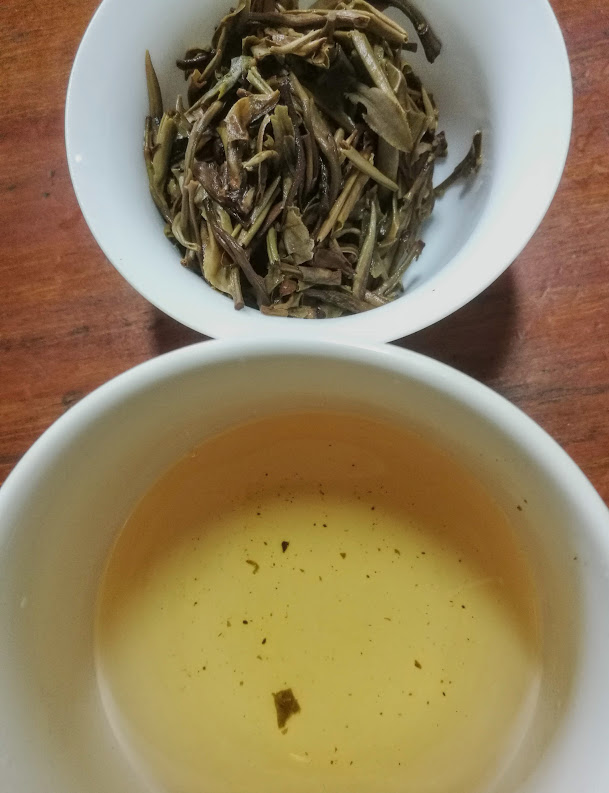
Guangbie and Hekai 2019 maocha from Chawang Shop


Guangbie left, Hekai right


On to two really fresh this-year sheng from Chawang Shop, described as from Guangbie and Hekai. Both of these teas were a last minute addition to this order, not the main theme I was looking for (young, old, and middle range versions to check on aging process).  Given that I only bought a little I won't see how they age, and may or may not get around to sharing any.

Per usual I reviewed the teas without checking a detailed vendor description first, but based on later copy and paste from their sales pages that follows.


Guangbie: 

Guangbie belongs to Hekai tea mountain. The price of ancient tree tea here is also very high because it is close to the Lao Ban Zhang. We chose this small trees tea with good quality and reasonable price. The tea made from tea trees of different sizes grown in ancient tea gardens. Compared with pure ancient tree tea, this tea is more bitter, but it's very comfortable after drinking.


This tea lists for $9 for 50 grams, so equivalent to a $63 357 gram cake (although this might more naturally be pressed as a 200 gram version; that's just for comparison).  As far as trying tea goes a $9 good-sized sample is perfect.  In these posts I'm often thanking vendors for giving me tea for review purposes but since I've purchased these that doesn't apply.  It's nice that they make interesting teas available though; I'm still grateful.


Hekai:


The origin of this maocha is the same as the cakes we made a few years ago. It comes from the same ancient tea garden in Man Nan Lao Zhai, Hekai.

The palate is fresh and fruity, with notes of wild flowers. Sweet and round, slight bitter and long lasting pleasant aftertaste.


That sounds odd, given what I remember of the tasting notes, since I've just added this days later in an editing process.  This tea was $12 for 50 grams.


Xishuangbanna prefecture, copied from the King Tea Mall site, original image credited to this site


Sure enough He Kai is in the mid-lower left, not far from Lao Ban Zhang and some other familiar place names.  I just did draft notes of a Bada version, and reviewed a Ban Pen tea recently, and some of those other names keep coming up.

Review


Guangbie: really bright and sweet, fresh tasting. Bitterness isn't an issue, in the first light infusion at least. There's a butteriness to the flavor profile, which may extend to a soft and rich feel, that's more common range in oolong. Even the rest of the floral and mineral range reminds me a little of Taiwanese high mountain oolong, that bright, intense pairing of both that's characteristic. It's interesting.


Hekai: totally different; warm mineral range along with deeper, richer flavors. I often say tasting only very similar tea versions together makes sense but the contrast in these might be interesting and pleasant, it just won't help in placing either. I keep going on about teas reminding me of cedar; this is back to that. In the right balance I really like that and it works well here. Sweetness and warm floral tones support the cedar flavor range but that part really stands out.


It's too early for a judgment call, but since I'm adding this comment during the editing I can point out that the Guangbie seems closer to the review description for the Hekai, but there was no aspect description in the Guangbie to match up or else not.  I liked both teas, and it's interesting how much they vary for having a similar local origin, so that part doesn't really matter. 


Guangbie left (as also shown in the following photos)


Second infusion


Guangbie: the butteriness, sweetness, freshness, and floral nature is still present but mineral and bitterness pick up. The level of bitterness is still moderate since I'm going with a 10 second infusion time, but intensity level is more than enough. For some this might've been brewed for too long. Given the mineral range warms a little (towards copper, I guess, but still clean in effect) it's closer to the second, but still closer to where it started.

It's good. The feel works well, wet but with a little fullness, with good after taste. The brighter range and overall balance define the experience, along with that complexity.


Hekai: this is even more intense; 10 seconds was pushing it. It's not bitterness that comes across as strong but instead the entire aspect range. Character shifted more than for the other tea. It still includes warm notes, and floral range, but cedar transitioned to include more green wood tone, again as with the other balanced by sweetness, moderate bitterness, and plenty of mineral. That green wood range tips a little towards dill pickle, not so much the vinegar sourness part but the other flavor. The feel might be less catchy in form than for the other tea but both have lots going on, across that and other range.


Third infusion


Guangbie: more of the same, but this already had been a really unique and positive experience. The floral character may have deepened a little into fruit range, a white grape / pear flavor range close to what was dominant in one of my favorite sheng versions, a Moychay tea from Nannuo. I just tried that again two days ago to see how it was transitioning and I think I did like it the best brand new (to me), less than a year old then. At some point I should buy the next year's version.

Again the flavor is positive in this, and the complexity, and feel, but it's the overall balance that clicks.


Hekai: more warm mineral and cedar for flavor (now less dominant). This covers less range than the other, with less unique character, but on it's own it's a very nice tea, positive and well balanced. I can't really say for sure this tea isn't as good as the other version because there's a type-typical concern for regional origin I can't place, and it's hard to divorce the other Guangbie tea character matching my preference from being good in general.  That tea seems a little atypical per the broader range of other sheng, which makes that kind of call even harder, although it's not all that far off another presented as LBZ (which may or may not have been; I always take that kind of seemingly unlikely claim with a grain of salt, but that tea was nice).

This version isn't far off a Vietnamese sheng version I've been drinking and reviewed. That other tea might be slightly simpler yet but I like it. Right about now brewing a round stronger to check for feel and flaws might make sense but I think I'll skip doing that.


Fourth infusion


Guangbie: it's an insult to a sheng to compare it to an oolong, in general, typically meaning the style is a newer sort not intended for aging, with softer feel, low in bitterness, etc. In a limited sense that really works though, with the flavor profile matching most, but with the type and level of mineral and bitterness clearly placing this as sheng. On the subject of flavor maybe even oolongs never tend to express this white grape / rich pear aspect that I like. Beyond that the brightness, freshness, intensity, and feel all really balance well; even the mild bitterness helps with that.

This probably wouldn't be for everyone, but I mean that in a relatively opposite sense of describing earthy aged versions that literally taste like dirt as positive (or beet, or geosmin; different ways to put that).  A good bit of sheng shows intense floral, a slightly different kind of mineral tone (lighter and dryer, as I use concepts for that), a certain kind of feel structure, and really long aftertaste, and this is just something else.


Hekai: pretty much an opposite range, and not transitioning much. Warm mineral, copper, and cedar come across as more balanced and pleasant than that might sound. This would probably seem even more pleasant if I didn't like this other version as much.  I think that mostly relates to it clicking with personal preference, and linking with one of my favorite prior tea experiences. Even for that Nan Nuo version the first time I tried it (using Moscow filtered tap water from a hotel lobby; far from ideal) it was clear that random selection cake buy had been blessed by the tea gods.  That tea balanced nicely but the intensity really stood out, in the flavor range, with a soft and rich feel for a younger sheng version.


Fifth infusion


Guangbie: bitterness is picking up a little, at a level of balance that still works well. It's a little off the fruit range more into green wood.


Hekai: wood is picking up in this too, but an aged wood tone instead. That cedar had faded back but never really dropped out so it links with that, or at least seems to. Both are onto taste range shifting to be stronger than aroma, not that it would always have to work out like that around this point.

Conclusions


Both are really nice. It's interesting how both really reminded me of other individual teas I'd recently been drinking. It's hard to guess how both would age (that recurring theme), but both are really positive now, one just matching my preference better.  Since I've not posted (or edited) the review for the Vietnamese sheng I'm remembering as similar in character to this Hekai maybe I'll try them together before completing that.  It's easier to catch more in a direct tasting than relying on memory.

I've been saying about different teas that they seem good examples of a medium quality range that could fairly justify selling for more than a moderate standard $40 per 357 gram cake and these seem like that to me, at a rough guess worth double that.  Of course the final version of this post included a price, cited earlier, with both equivalent to a $63 and $84 "standard" size cake.  As I read back through this part I'm reminded of teas I've recently bought priced in that general range, and really these two compare favorably to them; they might well be better.

Of course that also depends on the demand side, tied to an area and typical type preferences, all subject scope that I'm far from sorting out.  A match to personal preference seems more relevant anyway.

Sunday, May 26, 2019

Shenzhen tea market witch's broom style Da Hong Pao


sheng bundle top, Da Hong Pao lower two


includes a few sticks, otherwise looks fine


We visited Hong Kong and China something like 6 weeks ago (a trip summarized in this post), and I've only reviewed a couple of the lower cost sheng picked up from there so far (here).  I've made notes on a couple other sheng tastings I've not posted yet but it seemed about time to mix it up and write about something else, since I've been relentlessly posting about that tea type for a long time.


This is definitely something different; what I expect to be moderate quality Da Hong Pao (Wuyi Yancha, rock oolong), presented as a bundle instead of loose, twisted leaves.  There was a bundle of sheng pu'er we bought at the same shop; eventually I might mention that here, although maybe I won't too.  It would probably be more going on about the scope moderate quality sheng can cover, as in the only bundled sheng review I've written, about a local version from Vietnam, which they call trà chít or trà bó.


anyone know what I bought?  a 2005 sheng version?


Review


The flavor is ok, nice. It gives up the subtlety some versions possess for mostly covering that one characteristic sweet caramel or toffee range some versions express. Beyond that there's the typical warm leather earthiness. It's not "good Da Hong Pao" in the same sense unusually high quality or well balanced versions are, like this one would be, but this is the characteristic simple profile that gets people hooked on exploring the type. It would almost be a shame to lose appreciation for it due to discovering other range, what better versions are like.

For going with a lower proportion (and not brewing sheng) this will work better at a longer infusion time. The initial round I brewed for over 20 seconds but I'll go a bit short of a minute on the second round, in order to try it in a different form.

Second infusion


Cardboard picked up a little; that doesn't help. I'm still not ready to say that I don't like this. I've been off of mediocre quality Da Hong Pao for so long, or even the better versions range, that it's a nice break. There's still plenty of toffee sweetness and rich leather flavor, so it works, still pleasant. It's simple and basic in effect but that can be a good thing. The feel isn't thin, just not particularly structured, and the aftertaste isn't extended but also not non-existent. It's better than I would have guessed it would be.

The bundled presentation is just a novelty, and not one that adds more function than it eliminates by making you tease apart a bundle to brew part of it. It could work like a tea bag, to brew the whole thing, but that's a good bit for a single serving. Throwing it in a ceramic teapot for a few people to drink a few rounds from would work.  These would be cool for gifts just because it's not how people usually see tea presented, and it's a very reasonable quality version, which I wasn't able to judge with any confidence by sniffing the dry bin of tea.

Third infusion


Still nice, but already fading a little. The next round brewed significantly longer might do it. It's funny how this tea could be so many different things for different people with varying prior exposure. For someone new to Wuyi Yancha it could be great, a positive start of a new chapter. Unless their natural preference didn't go that way, then it would probably just seem like a strange tea. Someone further down the path still might like it, or look down on it for being too basic a version. For a breakfast tea this sort of aspect range and quality level is perfect; something you don't need to brew carefully to get exactly right, but still pleasant enough to compliment lots of foods well.

I really like it; to me it's the tea equivalent of comfort food. It's like a steak lover eating meatloaf and mashed potatoes; it's not that other thing but still pleasant in its own way.  Eat enough meatloaf and you'd want to set it aside, but take a few years off and a good version is an experience of nostalgia beyond taste and the rest.  And sometimes you'd feel like having meatloaf instead of steak.


It makes me wonder why some of these versions can be this sweet, since that really stood out, especially in the first round. Without any trace of char or roast effect that input of roasting the tea to ramp up cooked-sugar flavor and sweetness would seem to not be it, but then that char range does fade over time. This version might be a fortunate case of a tea hanging around awhile and improving, which is not always how that goes.  The leaves being that tightly twisted probably enabled it to endure more air contact than really good tea should ever be exposed to, again seeming to work out to somehow balance overall character in this case.


typically a high roast level blackens leaves this much; char must have faded


The fourth infusion is also pleasant; that bodes well for extending to a fifth. The dark wood tone (which gets described in different ways in reviews, I think) still has a touch of cardboard edge to it but the sweetness, toffee flavor, and overall complexity make it work. It all extends a little to malt range, not like Assam black tea, but how malted milk balls or the shakes are, that mild, rich, almost creamy flavor.

On the next infusion it was spent, and not as pleasant as the fourth, with char ramping up due to longer infusion time required to draw out intensity.


I'd have bought more of these if I knew it was this pleasant.  I was just focused on sheng, and it was hard enough snapping out of that tunnel vision to grab these samples. I stopped short of exploring chen pi, the shu stuffed tangerines / oranges, but those were around too, and a vendor gave a sample of a couple with some sheng.  My wife bought a good bit of chrysanthemum, which seemed odd at the time, since it's here too and we tend not to drink that much, but it's really come in handy since my kids have taken a recent interest in tea (or tisanes, in that case), and they can drink as much as they like.

dim sum restaurant a half block from the market, with fishtanks out front


I'd definitely recommend visiting that market to anyone visiting Shenzhen, and beyond that anyone visiting Hong Kong to set aside time to stop by that other nearby mainland city too.  We dropped in using an on-arrival visa, not exactly the ideal process since who knows how long the queue that day would add to travel time, or if worsening relations with China due to a senseless trade war would narrow back approval of those.

As to travel time Shenzhen is an extra hour by train up the local Hong Kong rail line, easy to access.  Just make sure to download a local version of a Shenzhen Google Map, if that's even possible, or to switch over to an app version that will actually work online inside of China (or set up a VPN; you get the idea).


a chrysanthemum "tea" party; they can both use a gaiwan


Friday, May 24, 2019

Moychay Wuliang 2018 Bai Hao silver bud sheng pu'er


I've been off reviewing Moychay tea versions for awhile, at least here, posting some to their own site instead.  Some of their pu'er cakes have tended to sell out so it seemed best to review this version while it's still available.  It seems to indicate on the label that it was harvested in 2016 and pressed in 2018, so it's really two years old, but since that part is in Russian I'd need to confirm that from their site.

To be completely transparent this tea was provided by them for review, and I did limited content writing for them as described in the last post.  I like to think that I'm still completely objective but you know that goes; life experience in general has a subjective character to it.

The label seems to reference two types of tea, since Bai Hao is often used as part of a reference to silver needle tea (Bai Hao Yin Zhen), but that could only be a reference to the material made into a white tea version, to the buds, with this a sheng pu'er instead, so processed differently with a completely different character.

I'll check their product description to see, which I didn't read prior to the tasting:


"Bai Hao Puer from Wuliang Mount" was compressed in the North-West tea region.

...twisted leaves and silvery tips. The aroma is intensive, spicy-herbaceous... with woody, nutty and floral notes... [similar to] a hot, juicy red apple.

Brew tea with hot water (80-95 ° C, the lower the temperature, the softer the taste) in a gaiwan or in a teapot made of porous clay. The proportion is 4-5 g per 100 ml. The time of the first steeping is about 5-7 seconds. For each second, increasing the amount of time for each subsequent step, if necessary. You can steep the tea up to 10 times.


I couldn't guess how much this tea would cost based on reviewing it, since I really liked it and quality seemed evident, but style was a little unusual and source area affects demand and price.  It lists for $36.50 for a 357 gram cake.  Of course how much anyone likes the tea determines if that's just about right, too much, or on the low side, and to me it seems the latter, quite low for this tea quality level and final character.  I've been trying teas that cost twice that amount that I don't like as much, or that don't seem any better (two different judgments, since personal likes and demand for types and styles are different subjects).

The catch is that the style is atypical, which could lead someone to really love it if it clicks for them (as I do), or else dislike it.  But either way the market demand isn't as clearly settled as for type-typical versions, for what people already expect and are looking to buy.  White teas tend to cost less than sheng (just not always), and although I see this as a sheng version with unusual character versus in between styles that could potentially just be a judgement call.


Review


The first infusion is a bit light but the character is already evident; it has a hint of smoke, some bitterness, and good structured feel, pleasant and mouth-watering but full.  It's not overly sweet, not light and mild, and on the intense side, so the style seems ideal for some aging.  Bitterness could be more intense but it's on the high side for teas I tend to prefer young.  This will probably soften and transition a bit over the next few infusions but I expect this is roughly how it will be.  A hint of fruit comes across early; that may well evolve.

Those next-changes speculations are meaningless because in the next lines I'll say instead how it actually is, but somehow it seems to frame what I'm experiencing just then, to describe it in a different way.


On the next infusion it just develops in the same direction, with a bit more intensity across the same range.  It's relatively intense, and it all balances reasonably well, it's just that between that punch of intensity across a range of aspects including medium level bitterness this really may work better in a couple more years, or may evolve well over another decade.  The fruit tone is pleasant in this, complex enough that a single description wouldn't capture it.  It seems closest to dried apricot to me.  Fruit is a little heavier than the smoke already; that's dropping out fast.  To me the bitterness and mineral undertone stand out even more.


Later edit:  I didn't make it explicit this far in but this style just struck me as clearly sheng while reviewing it, and I don't keep mentioning that for context, but I do keep commenting about unusual style aspects that sort of map to other range.


To me, and this part is a judgment call, all of this represents a relatively higher quality tea version.  I didn't check what it's selling for [at time of making tasting notes], or how Moychay describes it; those parts will express their opinion about it.

A couple of factors throw off making that kind of general quality level judgment.  I've drank some pretty good sheng lately but I've also been onto some pretty rough versions, decent but moderate in quality level, and I'm not sure where that leaves my judgment and expectations, if I'm really keeping it all well sorted.  Also demand for source area factors in a lot along with some general, objective quality level:  a tea from a known, in-demand area can demand a higher price, and can be described positively just for matching a typical local character, while another tea that's also roughly as good from elsewhere could seem more modest just for differing in pedigree.  Demand is inconsistent.  And personal preference could shift what is most desirable; that's always a main part of the background context.


It softens a little over the next round, the third infusion.  A trace of smoke is still present but that has mostly completely faded, with fruit giving way more to dominant mineral now.  It's nice the way that the feel is wet but also structured, and the bitterness level balances well.  Intensity stands out, and pronounced aftertaste, and the way that bitterness transitions into sweetness.


More of the same on the next infusion, but the sweetness and fruit edge are changing.  It's odd that the fruit tone matches up with typical white tea aspect range better, but the rest of the character is definitely sheng.  The feel is full and rich enough, versus structured, that it leans a little towards how round and full oolongs come across.  They're just not typically paired with bitterness in flavor range, and the aftertaste typically takes a different form.  The dried apricot is lightening up and changing, moving into dried pear range.  It could be my imagination but a faint hint of spice seems to be evolving, along with some other vegetal range I'll try to describe further in following rounds.  It'll be interesting to see how Moychay describes this tea, both what it is and the aspects.


It's a gradual process but it's cool how this tea keeps changing a little every round; not all sheng does that.  Some of the standard markers for quality sheng definitely show up in this version:  overall intensity, mouth-watering feel that includes moderate astringency  / feel structure, well-balanced bitterness that transitions to sweetness in aftertaste, a pronounced aftertaste effect (although to be fair only moderate as those go), pronounced mineral flavor as a base, and a clean, complex, and pleasant flavor range.

It's interesting to also consider drawbacks, weaknesses.  It's not really that but some people could prefer a different style, for any given tea type or version.  This isn't really an "oolong pu'er," or very drinkable modern style version, so much so that the bitterness could pose a challenge for some, but if anything that aspect could be a bit moderate related to supporting a good 15 year transition to positive full-aged character.  What do I know about that though; working through those cause-and-effects is where I am now.  I typically see smoke flavor as an aspect as a flaw, probably mostly due to just not preferring it, but that did drop out after early rounds.


A half dozen infusions or so in this is the best this has been, falling into a really nice balance.  The intensity is definitely not diminishing but the bitterness has leveled off to balance well, and the smoke is gone, leaving behind mild fruit over a pronounced mineral flavor base.  Some of the supporting vegetal range people might interpret differently, maybe similar to green wood, but without the edgy level of astringency bite that might naturally pair with that type of flavor range.  To some extent that range has edged out some of the fruit.  I suppose a floral interpretation instead might work, better at this stage than in prior rounds, but maybe even then.

More of the same on the next round.  There's really something else about this that reminds me of white tea that I'm not communicating, even though a lot of the aspect range obviously doesn't.  That taste range does, the mild fruit, and the smooth "roundness" I described as being similar to oolong feel can overlap with how full and rich some versions of white teas come across.  Not most, but it can work out like that.  The brightness of this character is interesting; I could relate to someone interpreting a trace flavor aspect as being a bit lemony, at least in this round.

It's a good thing I'm not comparison tasting this with anything; it wouldn't be like anything else and it really does seem to take trying 10 or so rounds to tell the story of this tea, given how much it has transitioned.  All the same I'll just try one more and let it go; I have a limited attention span and things to do.

It seems the same as the last round anyway.  Intensity might finally be tapering off a little, the profile finally thinning.  This probably only has another half-dozen rounds to go, up towards 15 infusions for the cycle, but then I do tend to typically go heavy on proportion as a personal preference choice.

Conclusions


[Original notes version]:  All in all it seems a very pleasant, positive, novel tea.  Most of these character elements aren't that uncommon in any given sheng but as a set it is really different, and the way it all balances together is very positive.  I wouldn't be surprised if they're selling this as upper-mid-range cost tea, around $70-80 per standard cake size, given how positive a lot of the aspect range is, but then in some cases they seem to sell really good tea versions for moderate pricing.  It might well relate to demand for tea from this area, and tied to the style being a little atypical, as much as how good they see the tea as, only the quality level issue.


[Later thoughts]:  Related to pricing the last comment got it; this is a $36 cake, as priced right now.  Given that it's three year old tea (only pressed in 2018, but harvested in 2016) this must have started out as more bitter and really intense.  It's definitely not white tea; the "bai hao" would make sense as a reference to being high in bud content.  Kind of unrelated, I just bought a high bud content sheng version in China that's about as far from this in character as it could be, tasting a lot like mushroom.  I'm not sure what I expect from that, why that seemed like a good idea given my normal preferences in sheng character (for not tasting like mushroom), but at a minimum I can check on adjusting to different range, and see how it ages.

I don't know where this tea is going related to aging past this 3 years, and into the more fully aged range, given it's not what I'm used to at all.  At least it's really pleasant now.  It's not at all that one "drinkable when young" style, given that it's more intense and more bitter than those would tend to be after a few years of mellowing out.  This might be unusually good in another 8 or so years or it might fade; as I keep saying I'm still working that part out.  It could be like an aged white but better, since it didn't start with a character so inclined to fade, so flavorful and sweet but in a different sense mild.  It's probably a good candidate for drinking half of and forgetting about the rest, then either seeing that as a wise move for getting good value out of it before it faded later on, or kicking yourself for not buying a cake to stash if the transition turned out to be really positive.


nice to add random pics of her here again; a "fierce" look


the range of different smiles really gets me


with her brother and a cousin