Showing posts with label 2018. Show all posts

Saturday, April 4, 2020

Kokang 2018 Myanmar sheng "pu'er," compared with YS Impression


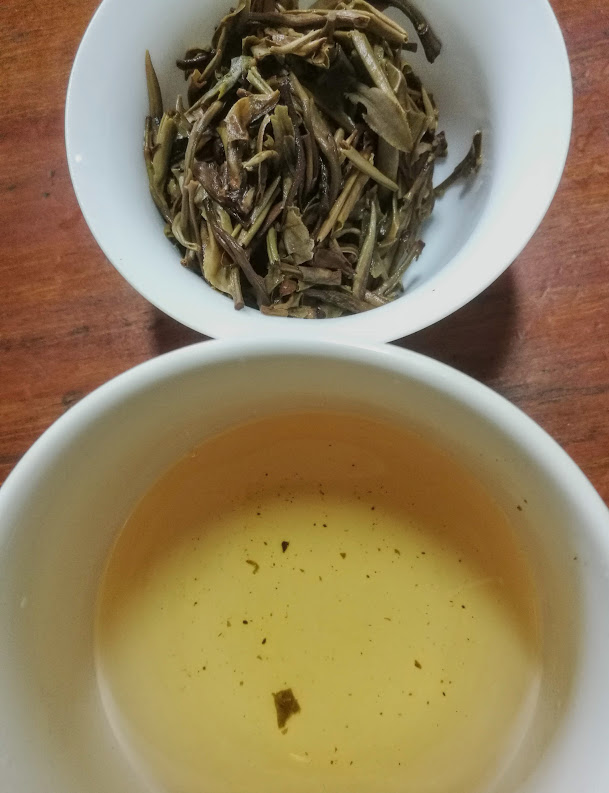
Yunnan Sourcing 2018 Impression left, Kokang Myanmar dragonball right (2018, I think)


I found a set of sheng pu'er dragonballs I'd misplaced, passed on by the Kokang Myanmar vendor about a year ago (many thanks again for that).  Tying back to the theme of combined tasting, I just saw a post about the 2018 Yunnan Sourcing Impression cake selling out, and thought to try this Myanmar version along with it.

Why that makes sense:  both are from 2018 (I think), but both should be quite different teas, one from Yunnan, designed to be an inexpensive but well-balanced blend, the other made from narrowly sourced local tea (presumably).  So the contrast is the theme, to see if I can tell how much local character differs, along with spotting aspect differences related to a blend and narrowly sourced material.

Shape will throw things off; dragonballs aren't well-loved in tea circles because it takes some messing around getting them to open up.  You can only brew that one quantity, and even then the first few rounds don't match how fast other loose tea from a cake or tuocha saturates and opens up.  A lot of the early rounds tasting is going to relate to looking past infusion strength differences and these being at different places in an infusion cycle.  On to that though, with the usual amount of chatting about tangents.


It's odd that I just took a month off reviewing teas.  It sort of related to the pandemic, and also to running low on tea samples yet to try.  I could write another half dozen posts if I went back through everything, or an endless series with re-tasting as a theme.  I've been trying spare teas on hand that aren't interesting enough to write about, random sheng samples friends passed on, medium quality oolongs, or green teas from here or there.

I've been doing a lot of retasting too; I typically drink a sheng version that I've had around for a year or longer with breakfast, something different every day, with other teas mixed in.  Yesterday I re-tried a Vietnamese sheng version I really liked with breakfast (this one), and went off-script and had a wild plant version Thai sheng with lunch, produced by Kittichai of the Jip Eu shop.  That last tea has evolved to be much more positive since I reviewed it last year, dropping out an odd sourness, and touch of storage mustiness, and picking up floral tone that has somehow shifted over to fallen leaf character over the last two months.  I'll get back to that, passing on those sorts of updates in a review.

I can add a little about this Kokang tea from their website (not this specific version, but in general):

KoKang is one of the six self-administered zone in Myanmar located in northern part of Shan state... 

KoKang area being situated at elevation of 1800 to 2000 meters above sea leave, tea plants grow into century-old, big leaf tea trees since they were left undisturbed and no cultivation. KoKang tea plants are grow in perfect ecological system with no use of pesticides which can harden the soil and degrade the quality of tea leaves. Due to it remote location, poor transportation and special political condition and administrative situation, KoKang was left alone in undeveloped and therefore KoKang teas were left unknown to the world. 


The other teas I've tried from them really were worth checking out.  It's produced quite close to Yunnan, but I agree with the idea that comes up that it's not fair to think of this as "border tea."  It's just not from Yunnan, or China; related but different.  The tradition is older than the modern border; I think this had been part of China at one point, not that long ago.  And to me sheng being from other places gives it an edge for being novel, versus being close enough to the same thing.  Where it is from might be of interest, from their website:


Review:


a somewhat long soak for the dragonball really barely started it brewing


2018 Yunnan Sourcing Impression:  these first 2 or 3 infusions will really be about getting these to even up in a brewing cycle.  I infused this for around 10 seconds, plenty of time to get it started after a rinse, letting the ball sit for longer.  I'll probably use a flash infusion next time, for the Impression, to even out differences, since the dragonball still looks like a ball, only wetted related to outer leaves.  I last re-tasted this first Yunnan Sourcing tea in the last few days, so this will be familiar.

It's nice, a little light, slow to get started but pleasant.  Bitterness is moderate, and an interesting mineral and sort-of-towards-spice tone stands out.  Mineral is like rusted iron pipe, which is probably more pleasant than it sounds.  It would be natural to interpret the other flavor range as closest to cured hardwood, and that's part of it, but it leans towards spice in an interesting way.

To be clear I wouldn't expect anyone trying or reviewing this tea in the US to experience exactly the same character since this has been stored in quite hot and humid conditions here in Bangkok for the past year (related to reviewing this along with the 2017 version a year ago).  Teas transition fast here.  They tend to lose bright, fresh character quickly, which wouldn't be positive for everyone or in all cases, but if a tea (sheng) would've benefited from some transition that happens quick.  It seems to draw out warm tones, comparing changes to what I see in dryer storage versions I buy. 

Malaysian storage can easily include a musty edge, onto slate mineral, or the range of damp basement character, or even geosmin (beet / dirt) over a longer time period.  But to some extent air flow seems to be a critical factor along with storage temperature and humidity, so final effect can vary.  I think sheng stored by the local shop I keep mentioning, Jip Eu, is stored without significant air contact (relatively sealed up), so they tend to be a bit musty right away, which fades nicely over a few months.  All of this is speculation, just guessing, but it is based on experiencing a modest number of teas changing over a few years of time, and trying versions that have been set aside by others for a decade or longer.


2018 Myanmar Kokang sheng:  there's not really enough flavor extracted to say much about this yet.  It seems bright and sweet, with pleasant floral nature, but that could just relate to how a very light brew comes across.  I'll need to tear this apart and give it two more rounds to get a decent read.  To be clear I don't hate dragonballs, as some do, but to me they're not exactly the ideal form for experiencing sheng; they don't brew quite as well.  For moderately above average quality sheng examples it doesn't matter so much, but I get it why people really into optimizing experience could see that as a problem.  These are about the same amounts of tea (8 grams), but it doesn't look like that in the early pictures.

Second infusion:


2018 YS Impression:  I really brewed this for a half-dozen seconds, fast but not a flash infusion.  Bitterness has ramped up but this level works for me; it balances well.  Feel is reasonably full, with flavor complex.  Aftertaste could be more pronounced but it's enough to round out the experience, to add to it.  Flavor range isn't so different than last round:  bitterness stands out, and there is some floral range, and cured wood tone, underlying mineral (with a bit more dry mineral along with the warmer rusted iron in the first round), and a nice hint of a spice range.  I never really did clearly identify what that was in tasting it a few days ago, but then I was "off the clock" as far as even trying goes, just drinking the tea.


2018 Kokang:  a decent hit of smoke joins in this.  From the character I'd guess that will probably fade over the first few infusions.  There's one related smoke flavor aspect that tends to drop out, which I would guess is from charring the leaves in processing, an actual smoke taste, which is how this seems, and another different version of smoke that seems natural to some leaf input.  Again, just guessing.

Bitterness level isn't so different than in the Impression but the character is way different, across all the aspect range.  This is thinner, which probably relates more to it still opening up.  Floral tone is present too, as another primary range.  It seems as well to hold off on more breakdown a round or two until it gets wet.  I did manage to pull apart the outer half of the ball after the last infusion but that means that the inner core of the tea still isn't completely soaked yet, and won't be past a first infusion until the round after next.  The next round might be a good place to describe how that shifts early character differences.


Third infusion:


There is still an inner core of the dragonball, but due to pulling it apart that should get soaked over this next round (the fourth).


Impression:  to me this balances really well.  It's only as good a tea as it is (pretty good, I think, but upper medium), and it's a blend, but for being that it's quite positive, maybe better than it should be for the moderate pricing.  Scott had mentioned in one place the early idea was to create a moderate cost blend to compete with teas like the Dayi 7542 and I think it's better than that, or maybe it's just that I like the character type better.  7542 is barely drinkable to me within 2 years; it's more set up for drinking it as a young version after 3 or 4 years, with better character after 15.  Of course a lot of that has to do with the leaf not being nearly this whole; chopped leaves express more astringency, and come across as more bitter, requiring more aging time to mellow.

The base primary wood tone might not suit everyone, but there is nice floral aspect (a little), and that hint of spice as interesting and positive forward range, and a nice broad mineral base to add complexity.  Moderate and balanced bitterness, good sweetness level, rich feel (relatively), and some trailing aftertaste add to the overall effect.

Out of all that there's something novel about the feel, the way in which that is thick.  Without that cool hint towards a spice note (something along the line of nutmeg, but that probably isn't it) it wouldn't be as interesting, but it would still be positive.  It would be natural for people to interpret the flavor complexity and mild spice range as tied more to a root spice instead, I think.  The woody tones cover both cured hardwood, a richer, deeper range, and the bitterness seems to tie to a tree bud type of experience, a fresh sappy note with a bit of bite.


Kokang:  smoke is still dominant.  Even if that would tend to transition away to other range naturally in this dragonball presentation it's going to take a fourth infusion for all this tea just to start infusion (although the first round hardly counts; it had barely started), so the normal transition cycle is delayed.  Some of the leaf content has had two complete infusions already, so that transition will be inconsistent. 

The tea seems pleasant; it doesn't seem like interesting character and quality is an issue. I think it will pick up a bit of intensity on the next round once it's all brewing.  It shares some of the woody scope with the Impression, but that comes across more as green wood.  Bitterness level might be lower, although it is tricky identifying that apart from infusion strength differences, since changing infusion strength will shift the balance of which aspects you pick up the most.  Flavor comes across well beyond bitterness and astringency even in a lighter version.  Next round should work better for a fuller description, and it will also tell how that smoke effect is going to play out, if it really will drop out.

Fourth infusion:


Impression:  more of the same, really; I'll skip repeating all that.  Nice though.  I'm thinking I notice a bit of fruit, but then I did just eat a banana in between rounds, and someone is eating crackers and strawberry jam beside me, so maybe that's from thinking about fruit.


Kokang:  smoke is fading; it's a minor aspect now, maybe not even something one would pick up without "looking for it."  Mineral is really strong in this, again a much dryer version of it than stood out in the Impression at first, which shifted from warmer range to lighter in that tea too.  Sweetness is good, and a touch of floral range works.  The balance is good.  It comes across as slightly narrower in range than the Impression does, especially covering a little less flavor scope, with good feel structure but one that's less rich.  Level of bitterness isn't high but it's definitely substantial.  I get the sense this is still transitioning to where it will really be over the next two rounds.

It seems pretty good; I'd be open to buying a story about older plants and natural growth related to this.  The narrow-source versus blended tea character (in the other) didn't result in as pronounced a difference as one might expect.  I think this did naturally balance without the mixing that helped the other version, that it wasn't thin across any particular aspect range to begin with.  It was probably just a coincidence that there are as many parallels in the aspects present in both.

Fifth infusion:


Impression:  it's not transitioning fast, not changing to be something else, and the aspects present aren't weakening.  Sometimes an early-rounds bitterness and astringency will ease up over the first 3 or 4 rounds, and to some extent that probably did happen.  It probably is similar but slightly more approachable, which was never a problem anyway.   There's still a nice balance between the mineral range, warm wood tones, lighter floral range, and something hard to place, a lean towards spice.  It might be something along the line of dried tamarind, so really a darker (or warm), unusual fruit tone.


Kokang:  smoke seems slightly more notable than I remember from last round, probably shifting with infusion strength change.  Mineral is really strong, towards flint or limestone, almost leaning a little towards chalk, without that feel.  Vegetal range, only a minor supporting aspect in this, is in between green and warmer cured wood tone, with some vague floral range balancing that out.  All that balances and works better than it might sound.  It's clean, and sweetness and bitterness levels work well.  Flavor intensity is good.  That heavy mineral is characteristic of older plant input, and the moderate bitterness matches how that usually works out, more natural growth.

Later rounds can still tell a story, and a tea transitioning positively across more than a dozen rounds is a good sign for tea quality.  But I get bored making notes, even if those are limited to a half dozen words per series of rounds.  I'll probably taste these one more time and let the writing drop.


Sixth infusion:


Impression:  hanging in there; this is thinning just a little in range but it's still quite pleasant. As I remember from drinking this recently it will retain positive character for plenty of additional rounds but will keep thinning (in aspect range, and thickness of feel), and will pick up woodier tones.  Or the other range will drop back, and wood that's present will show through more, however one sees that.


Kokang:  smoke is quite faded again; strange.  I think the light mineral seems to form a linked range with that, so with minor shift in intensity it can come across different ways.  It would be possible for someone to interpret this wood tone as being more vegetal than I have, to say it leans a little towards kale or green tea.  I see it as more just wood, adjoined by floral tone, which is more dominant in many other sheng versions. 

It's interesting how the intensity of this is really standing out in comparison with the Impression.  Some of that could relate to getting a slower start, to being a couple of rounds behind, but I think it's also part of the natural character.  It covers a slightly narrower range (in flavor and thickness) but expresses a good bit more intensity across that scope.


Later rounds:


I tried a couple of rounds later and didn't take notes, but I can pass on a general impression.  The Impression version seemed closer to aromatic wood than I remembered from earlier, towards cedar or redwood.  That's not bad, just a slightly different interpretation than I'd been repeating, but still quite close.  The Kokang version included a relatively pronounced pine needle aspect; I think that was new, a late-stage flavor transition.  I probably liked that better than the series of aspect ranges that came earlier; it's nice when a tea keeps improving over late rounds.


Conclusions:


I kept considering which tea I liked better.  I do like that Impression cake, and up until the later rounds I probably did like it better.  Right at the end it was fading a bit and the other Myanmar tea was still going through positive transition, so it was better, at that stage.  I'd expect that tea to work out well stretched for a long count of infusions.  The Impression hangs in there; it was just fading a little, and beyond the flavor moving into wood range it keeps brewing.

Maybe overall I liked the Impression better at this point, but I think the Myanmar tea probably has more aging potential.  Maybe brewing both another 3 or 4 rounds would change that (which I'll get to); if the Myanmar tea is just as positive over that many rounds, in a form I like even better now, my overall take on both might be even. 

I don't know why someone would want to keep 8 dragonballs around for a long time, but if they did those would probably keep improving.  They were wrapped in a light foil wrapper under that paper cover so maybe they wouldn't transition fast at all, isolated from air contact that much.  Aging 64 grams of tea packaged to take up a lot of space would seem strange anyway.  That tea is probably better than it was when first produced but I think this is probably a decent time to drink it, at this relatively early stage of changing with age.

It seemed like the Myanmar tea was probably made from really good material.  At a guess the processing worked out to make a quality tea but didn't exactly optimize that potential.  The tea was smoky originally, probably from being charred a bit during the frying step, and just slightly cloudy early on, which could relate to it not drying optimally at the end of processing.  Of course I'm guessing; I don't make tea.  I liked it, and it was interesting, clearly a good version of sheng, so I don't mean all that as criticism of how well it comes across in general.


having pizza for dinner outside during lockdown, with a good group to be isolated with


Friday, May 24, 2019

Moychay Wuliang 2018 Bai Hao silver bud sheng pu'er


I've been off reviewing Moychay tea versions for awhile, at least here, posting some to their own site instead.  Some of their pu'er cakes have tended to sell out so it seemed best to review this version while it's still available.  It seems to indicate on the label that it was harvested in 2016 and pressed in 2018, so it's really two years old, but since that part is in Russian I'd need to confirm that from their site.

To be completely transparent this tea was provided by them for review, and I did limited content writing for them as described in the last post.  I like to think that I'm still completely objective but you know that goes; life experience in general has a subjective character to it.

The label seems to reference two types of tea, since Bai Hao is often used as part of a reference to silver needle tea (Bai Hao Yin Zhen), but that could only be a reference to the material made into a white tea version, to the buds, with this a sheng pu'er instead, so processed differently with a completely different character.

I'll check their product description to see, which I didn't read prior to the tasting:


"Bai Hao Puer from Wuliang Mount" was compressed in the North-West tea region.

...twisted leaves and silvery tips. The aroma is intensive, spicy-herbaceous... with woody, nutty and floral notes... [similar to] a hot, juicy red apple.

Brew tea with hot water (80-95 ° C, the lower the temperature, the softer the taste) in a gaiwan or in a teapot made of porous clay. The proportion is 4-5 g per 100 ml. The time of the first steeping is about 5-7 seconds. For each second, increasing the amount of time for each subsequent step, if necessary. You can steep the tea up to 10 times.


I couldn't guess how much this tea would cost based on reviewing it, since I really liked it and quality seemed evident, but style was a little unusual and source area affects demand and price.  It lists for $36.50 for a 357 gram cake.  Of course how much anyone likes the tea determines if that's just about right, too much, or on the low side, and to me it seems the latter, quite low for this tea quality level and final character.  I've been trying teas that cost twice that amount that I don't like as much, or that don't seem any better (two different judgments, since personal likes and demand for types and styles are different subjects).

The catch is that the style is atypical, which could lead someone to really love it if it clicks for them (as I do), or else dislike it.  But either way the market demand isn't as clearly settled as for type-typical versions, for what people already expect and are looking to buy.  White teas tend to cost less than sheng (just not always), and although I see this as a sheng version with unusual character versus in between styles that could potentially just be a judgement call.


Review


The first infusion is a bit light but the character is already evident; it has a hint of smoke, some bitterness, and good structured feel, pleasant and mouth-watering but full.  It's not overly sweet, not light and mild, and on the intense side, so the style seems ideal for some aging.  Bitterness could be more intense but it's on the high side for teas I tend to prefer young.  This will probably soften and transition a bit over the next few infusions but I expect this is roughly how it will be.  A hint of fruit comes across early; that may well evolve.

Those next-changes speculations are meaningless because in the next lines I'll say instead how it actually is, but somehow it seems to frame what I'm experiencing just then, to describe it in a different way.


On the next infusion it just develops in the same direction, with a bit more intensity across the same range.  It's relatively intense, and it all balances reasonably well, it's just that between that punch of intensity across a range of aspects including medium level bitterness this really may work better in a couple more years, or may evolve well over another decade.  The fruit tone is pleasant in this, complex enough that a single description wouldn't capture it.  It seems closest to dried apricot to me.  Fruit is a little heavier than the smoke already; that's dropping out fast.  To me the bitterness and mineral undertone stand out even more.


Later edit:  I didn't make it explicit this far in but this style just struck me as clearly sheng while reviewing it, and I don't keep mentioning that for context, but I do keep commenting about unusual style aspects that sort of map to other range.


To me, and this part is a judgment call, all of this represents a relatively higher quality tea version.  I didn't check what it's selling for [at time of making tasting notes], or how Moychay describes it; those parts will express their opinion about it.

A couple of factors throw off making that kind of general quality level judgment.  I've drank some pretty good sheng lately but I've also been onto some pretty rough versions, decent but moderate in quality level, and I'm not sure where that leaves my judgment and expectations, if I'm really keeping it all well sorted.  Also demand for source area factors in a lot along with some general, objective quality level:  a tea from a known, in-demand area can demand a higher price, and can be described positively just for matching a typical local character, while another tea that's also roughly as good from elsewhere could seem more modest just for differing in pedigree.  Demand is inconsistent.  And personal preference could shift what is most desirable; that's always a main part of the background context.


It softens a little over the next round, the third infusion.  A trace of smoke is still present but that has mostly completely faded, with fruit giving way more to dominant mineral now.  It's nice the way that the feel is wet but also structured, and the bitterness level balances well.  Intensity stands out, and pronounced aftertaste, and the way that bitterness transitions into sweetness.


More of the same on the next infusion, but the sweetness and fruit edge are changing.  It's odd that the fruit tone matches up with typical white tea aspect range better, but the rest of the character is definitely sheng.  The feel is full and rich enough, versus structured, that it leans a little towards how round and full oolongs come across.  They're just not typically paired with bitterness in flavor range, and the aftertaste typically takes a different form.  The dried apricot is lightening up and changing, moving into dried pear range.  It could be my imagination but a faint hint of spice seems to be evolving, along with some other vegetal range I'll try to describe further in following rounds.  It'll be interesting to see how Moychay describes this tea, both what it is and the aspects.


It's a gradual process but it's cool how this tea keeps changing a little every round; not all sheng does that.  Some of the standard markers for quality sheng definitely show up in this version:  overall intensity, mouth-watering feel that includes moderate astringency  / feel structure, well-balanced bitterness that transitions to sweetness in aftertaste, a pronounced aftertaste effect (although to be fair only moderate as those go), pronounced mineral flavor as a base, and a clean, complex, and pleasant flavor range.

It's interesting to also consider drawbacks, weaknesses.  It's not really that but some people could prefer a different style, for any given tea type or version.  This isn't really an "oolong pu'er," or very drinkable modern style version, so much so that the bitterness could pose a challenge for some, but if anything that aspect could be a bit moderate related to supporting a good 15 year transition to positive full-aged character.  What do I know about that though; working through those cause-and-effects is where I am now.  I typically see smoke flavor as an aspect as a flaw, probably mostly due to just not preferring it, but that did drop out after early rounds.


A half dozen infusions or so in this is the best this has been, falling into a really nice balance.  The intensity is definitely not diminishing but the bitterness has leveled off to balance well, and the smoke is gone, leaving behind mild fruit over a pronounced mineral flavor base.  Some of the supporting vegetal range people might interpret differently, maybe similar to green wood, but without the edgy level of astringency bite that might naturally pair with that type of flavor range.  To some extent that range has edged out some of the fruit.  I suppose a floral interpretation instead might work, better at this stage than in prior rounds, but maybe even then.

More of the same on the next round.  There's really something else about this that reminds me of white tea that I'm not communicating, even though a lot of the aspect range obviously doesn't.  That taste range does, the mild fruit, and the smooth "roundness" I described as being similar to oolong feel can overlap with how full and rich some versions of white teas come across.  Not most, but it can work out like that.  The brightness of this character is interesting; I could relate to someone interpreting a trace flavor aspect as being a bit lemony, at least in this round.

It's a good thing I'm not comparison tasting this with anything; it wouldn't be like anything else and it really does seem to take trying 10 or so rounds to tell the story of this tea, given how much it has transitioned.  All the same I'll just try one more and let it go; I have a limited attention span and things to do.

It seems the same as the last round anyway.  Intensity might finally be tapering off a little, the profile finally thinning.  This probably only has another half-dozen rounds to go, up towards 15 infusions for the cycle, but then I do tend to typically go heavy on proportion as a personal preference choice.

Conclusions


[Original notes version]:  All in all it seems a very pleasant, positive, novel tea.  Most of these character elements aren't that uncommon in any given sheng but as a set it is really different, and the way it all balances together is very positive.  I wouldn't be surprised if they're selling this as upper-mid-range cost tea, around $70-80 per standard cake size, given how positive a lot of the aspect range is, but then in some cases they seem to sell really good tea versions for moderate pricing.  It might well relate to demand for tea from this area, and tied to the style being a little atypical, as much as how good they see the tea as, only the quality level issue.


[Later thoughts]:  Related to pricing the last comment got it; this is a $36 cake, as priced right now.  Given that it's three year old tea (only pressed in 2018, but harvested in 2016) this must have started out as more bitter and really intense.  It's definitely not white tea; the "bai hao" would make sense as a reference to being high in bud content.  Kind of unrelated, I just bought a high bud content sheng version in China that's about as far from this in character as it could be, tasting a lot like mushroom.  I'm not sure what I expect from that, why that seemed like a good idea given my normal preferences in sheng character (for not tasting like mushroom), but at a minimum I can check on adjusting to different range, and see how it ages.

I don't know where this tea is going related to aging past this 3 years, and into the more fully aged range, given it's not what I'm used to at all.  At least it's really pleasant now.  It's not at all that one "drinkable when young" style, given that it's more intense and more bitter than those would tend to be after a few years of mellowing out.  This might be unusually good in another 8 or so years or it might fade; as I keep saying I'm still working that part out.  It could be like an aged white but better, since it didn't start with a character so inclined to fade, so flavorful and sweet but in a different sense mild.  It's probably a good candidate for drinking half of and forgetting about the rest, then either seeing that as a wise move for getting good value out of it before it faded later on, or kicking yourself for not buying a cake to stash if the transition turned out to be really positive.


nice to add random pics of her here again; a "fierce" look


the range of different smiles really gets me


with her brother and a cousin


Monday, May 6, 2019

Comparing 2017 and 2018 Yunnan Sourcing Impression shengs


I just bought a cake of the Yunnan Sourcing 2018 Impression sheng, and had part of a sample left over from a 2017 version from a Liquid Proust sample set, so I'll try them together.

Per the earlier description of the product series these teas were intended to be something like the 7542 classic Dayi sheng series; a blended tea on the intense side, appropriate for aging, versus what most people would like best right away.  The actual character of the 2017 version didn't remind me of what I've tried of 7542 (although to be honest I only own one cake of that, a 2014 version, last reviewed in 2017 but I've tried it again since, so others' opinions might serve a better reference).  This 2018 product reference clarifies that background:


This year's Impression cake is a blend of tea leaves from Spring and Autumn, originating from Mengku, Bang Dong, and Jing Gu tea gardens. Unlike previous years this is a 400 gram cake (not 357 grams).

The tea has been grown naturally and processed in the traditional method. We blended various teas together to achieve a powerful blend that has strong mouth feeling, cha qi and a balanced sweet, bitter and astringent profile.

In 2012 I created the first impression blend to be an alternative to a Xiaguan or Da Yi 7542, but it has far surpassed those mass market teas in both quality and value!  I also feel strongly that this tea being very strong in aroma, mouthfeel, bitter/astringent, infusability and Cha Qi, makes it a good choice for long-term aging!


It crossed my mind that it might be interesting to compare the two side-by-side, Impression and 7542, but with that age difference (related to the version I own) it just wouldn't work.  It also doesn't work to compare sheng that is well-chopped leaves and whole-leaf tea; it's a lot to factor back out as a difference.  It's normal enough to think that more whole leaf is always better, and to an extent that seems right, but in a different sense I think that much more astringent character, from different levels of some compounds being extracted from chopped leaves, may contribute a lot more intensity, and that might well work better in a version that's been sitting for more than a decade. 

I should phrase that as a guess instead:  to some extent the difference in character and intensity may cause aged versions that are the same in other regards but different in that one (how whole the leaves are) to work as well as chopped leaf versions, conceivably even better (although that might seem a stretch), even though in general teas across most types processed that way aren't as good.  This is one more variable I'd have a better guess on in another decade, with an intermediate level of experience versus just getting some basic exposure now.

I say that about the tea (2017 Impression version), that it didn't seem as well-suited to long term aging as it might be, because it was mellow, not that bitter, and not necessarily intense related to astringency, flavor, or other character.  That worked well for me for a blend, for something not presented as a higher-end single-type character; the balance was nice and it was quite approachable, even one year old.  I'm still sorting out how autumn source teas factor into character but including such material may have toned down some of the intensity, but in speculating across what aspect range I'd be going too far.

The versions comparison here is the thing, and I'll surely get around to mentioning how I think a year of age has factored in, and how both might change over coming years.


Review

color difference evident already (2017 left)


2017:  it's not completely opened up yet, on one relatively longer infusion after a short rinse step, but it's pleasant already.  A good, moderate balance of bitterness with plenty of sweetness works well.  Mineral range supports that. 

Someone just pointed out that I tend to include mineral description in most sheng, but that they're not noticing it as pronounced in many versions.  To me mineral is part of the standard sheng profile, like considering degree of bitterness or sweetness, or to what extent floral range plays a role, or doesn't.  The flavor complexity is nice in this tea, and the feel works well, and overall balance.  Even the aftertaste isn't bad, moderately long for a tea just getting started.  I want to go ahead and describe the taste since I still tend to focus on that but it seems as well to wait a round to instead.


2018:  on the similar side; that works, given how nice the 2017 version was and the series context.  There's a pronounced wood-tone / pine flavor range that comes across in both, the main part of the flavor aspect.  2017's seems a little richer, milder, and slightly less bitter, but age alone could account for that.  Given this is a blend I'd expect them to vary, that putting together a very similar tea two years in a row wouldn't work out, even using the same exact inputs, since weather and harvest conditions are one of many main inputs to final outcome, but it's a little early for general conclusions.


Second infusion


2017:  more of the same, woody and piney, with decent intensity, sweetness, and bitterness working along with that.  As weaknesses go it's all a bit non-distinct; those aspect ranges give it complexity and balance in a sense but it's all a bit more vague than a single-source tea might be.  On the other hand there's a part to feel and flavor aspects that seem to relate to each other, on the flavor side that pine note, which seem to connect and stand out.  Aftertaste isn't missing but it's not notable; I never do get around to saying much about that range here because of that.

Based only what I'm experiencing so far I'm not sure when this tea would peak, at what point in aging it might be best, but this could be it.  Another year in hot and steamy Bangkok storage conditions will age it fast, and initial brightness, intensity, and some flavor range will become more subdued.  It's not as if the bitterness and astringency need time to fade; it's fine as it is as those go.


2018:  if you project back to a guess at where the 2017 started a year earlier you'd be pretty close to this tea.  They're very similar, it's just a bit more intense, with a bit more brightness, lacking a little smoothness and depth, but not much.  It's so close in character that minor changes in initial fermentation over a year could account for all the difference.  The feel is a little drier, which goes along with this version including a good bit more pine flavor, the same flavor present in the other version but stronger.


Third infusion


lots of color difference with leaves wetted (2017 left)


2017:  there's a catchy aspect to the feel and flavor profile I've not done justice too yet.  On the feel side it never works all that well to describe those; if I say it feels juicy, sappy, resinous, or oily that would mean something clear to me but others would probably use different concepts, or use the same ones in different ways.  "Thick" is a bit vague since feel varies in so many ways. 

On the flavor side there is some green wood, more cured wood, and pine tone, and mineral, but what I'm talking about now is something else.  People tend to jump ahead and just match it to the closest fruit, since a catchy aspect that's somewhat paired with sweetness is halfway there, even if it maybe hasn't really covered the second half.  I think in this case that works; it's around the range of dried pear, warm and rich, soft and a bit subtle, but with depth to it.

I probably should have bought a cake of this when it was still available (it's sold out now).  As for alternative interpretations since "floral" is even more of a default it would be possible to interpret a vague, secondary fruit aspect as towards that.  Or one might interpret mineral input as covering some of the range I'm calling pine here; it's as much a feel paired with an unusual flavor as just a taste, and there is other mineral to pick up as well.


2018:  this flavor is warming as well.  I'm working with two slightly different proportions in these samples, which is going to throw off any direct comparison, related to not having as much as usually use left over from the 2017 version sample.  The year of age difference already did that, threw off a truly direct comparison of versions, but I mean comparing including that as a factor.  Very minor differences in infusion strength, brought about by proportion and timing differences, shift the character, in ways one learns to expect and appreciate as related to that.  To help flesh that out I'll do a flash infusion next round, trying both very light, describing how that changes things.  This is sticking more to pine range as flavor goes, but again I think it will cause that to become less noticeable doing that next fast infusion, and shift the feel.

These two teas might well be best after 2 or 3 years of aging (or where the 2017 version is now), versus right away, or storing them for over a decade.  Time will tell for this one, since I just bought a cake, since I'll keep part around for that purpose of experimenting.  One of many sheng truisms comes to mind related to that, that "a cake is a sample," which I think is from "Marshal N" of Tea Addict's Journal, the pen name attribution for one of them most classic tea blog authors.  The idea is that to really explore a tea a cake isn't enough to work with, since you can't both drink it many times and leave it to age, and then experience it at different ages.  That kind of works.  I see what I'm doing as sampling as much as drinking these teas I'm now buying for daily drinking stock, or for truly holding any significant quantity for long term collecting and later drinking.

I'd like to get to that, to keeping a dozen or so tongs around for later consumption, but I haven't yet.  My daughter is 5 now; if she takes up drinking a lot more tea at 18 then 13 years is a decent time-frame for aging sheng.  It would still be a decade away from what a lot of people would consider fully aged, even here in this heat and humidity, but it would be a nice place to drink teas regularly to keep tabs on that later transition cycle.


Fourth infusion


2017:  it's actually a little light for being brewed as a flash infusion this round (a long version of one; brewing two teas at once slows things), but that kind of was the point.  Feel thins down to a range that doesn't work but the flavor is still positive.  Really checking on the other tea was more a concern, seeing if that different flavor and feel range moved closer to where this one had been over the last couple of rounds.


2018:  pine flavor is just as intense (it really stands out) and feel is much softer, although you can still tell it's completely different than the other version, drier as opposed to just having a different form of thickness in the 2017 version.  The dryness works better lighter like this but the relative proportion of it didn't change; I don't notice as less prominent (versus me saying that's what would happen).  This could be a bit of a special case because it's not as if a number of aspects stand out and I could shift the proportion of what I notice by varying infusion strength; this tea version is all about that pine and dryness, it's what you experience.


Fifth infusion


2017, 2018:  more of the same really.  It's interesting how similar these are, except for that difference in one pine aspect and feel that I keep going on about.  The 2017 seems slightly sweeter, with just a little more flavor complexity, across a broader range.

Back to that idea of interpretations running towards what one expects, or tends to notice, that reminds me of a recent exchange in a FB post thread comments.  I'm noticing pine because a sheng recently tasted so much like pine that I couldn't miss it, but before that I easily could've written a similar aspect off as other types of wood tones.  Another blogger mentioned tasting cherry in a lot of teas at one point (probably in reviewing black teas instead), to the extent that he was taking it back out of notes for final edited and posted versions of reviews.  Tea tastings tend to be interpretations, and what reviewers notice tied to expectations is probably as significant as any skill in objectively reporting experienced aspects.


Sixth infusion


The 2017 tea is probably better than it had been earlier in the cycle, but not so different.  Holding up well across infusions and even transitioning in interesting and positive ways can be seen as a marker for tea quality, but to some degree teas just vary by aspects, including that.  I'd see extended length of aftertaste, pronounced mineral base, and bitterness transitioning to sweetness as clearer quality markers for sheng.

The 2018 version might be thinning a little, but softening works well for evening out the balance.  That hint of dryness is really a version of astringency, not an unpleasant version of it but not necessarily positive either.  These teas have rounds more to go but I'll brew a slightly longer infusion, more like 15 seconds, and leave off with final thoughts on that.  These teas aren't transitioning so much in character there's a lot of story to be told there but how well a tea holds up through a full infusion cycle does indicate something about it.


Seventh infusion


Again the sweetness and that one catchy flavor aspect in the 2017 version stands out.  In an earlier review of multiple teas from a Liquid Proust set I interpreted that as citrus; that works.  It would be closest to dried orange peel as those go, maybe even tangerine peel.

The pronounced pine in this 2018 version is diversifying, warming and changing, maybe as close to spice tones now.  Citrus would be a stretch for interpreting that but if one was so inclined it would be closer to a red version of grapefruit, or that fruit combined with the dried peel of that same fruit instead.


Conclusions


Both are nice; I liked both.  The 2017 seemed a little better, and I can't be sure but at a guess the extra year of aging did improve it.  Both are pleasant, mild, and drinkable now, and it would depend on preference for aspects and character how much someone like them.  Blends tend to be a bit more non-distinct but these aren't bad as that trade-off goes; single-types tend to allow specific aspects to come across clearer, but these still have their own interesting character, and don't seem too averaged-out. 

As value goes the tea works really well; I paid $28 for a 400 gram cake of the 2018 version.  Unlike with the random inexpensive Chinese tea market cakes I've just bought this version was tested for pesticides residues, with details referenced in that product write-up.


If the 2018 version swaps out some astringency (dryness in feel, in this case) and what I've interpreted as pine flavor for warmer and deeper flavors, and a slightly less dry texture, it will improve.  I don't see both as bitter, astringent, and generally intense enough to be good candidates for aging into really exceptional tea in another decade, but to be honest I'm guessing about that.  And the aged sheng versions that I've tried that did seem to lose a lot of intensity, to really flatten out and fade as much as just transition, others may have liked more than I did. 

It's not as if more is necessarily better when it comes to those aspects being present, since a couple of the aged sheng I've been trying recently include plenty of intensity but also a good bit of "dirt" flavor aspect (or geosmin, to put that more positively, with more on what that really means here).  A little dirt flavor can balance well enough, to me, just as a touch of tar or petroleum in a shu can be fine, or char in a roasted oolong.  It just doesn't take much of any of those to throw off the balance and positive effect, to me. 

I've been wondering if some of that present in one of those aged sheng (which I've not mentioned in a review, but will) might not relate to rapid aging, to being pushed to transition faster in a more-humid environment to be sold as an older tea than it really is.  A Chinatown-purchased version I did write about improved a lot over the course of months due to some of that fading relatively quickly, which may be the case related to that other tea version I bought in China instead.

Since I can't really pass on a well-informed guess about what this 2018 version's character and flavor profile will be like in 10 years I'll have to only drink a little here and there to observe the progression and then wait and see.

Tuesday, April 23, 2019

Farmerleaf 2018 Mengku and Autumn Jing Mai gushu


I'm trying two samples sent along with a Farmerleaf order from not long ago.  To be clear only the second is presented as "gushu," with their naming as follows:

Spring 2018 Mengku Xiao Hu Sai

Autumn 2018 Jingmai Gushu


I bought a cake of Farmerleaf sheng in that order and reviewed a different Jing Mai sample of tea presented as a higher quality version, so this is tying up that cycle.


An autumn version tea should be less intense, and maybe slightly warmer in aspect tone, if what I've tried in the past carries over.  But I've not been through so many trials that all the typical patterns are clear just yet; it can be possible to include impressions only relating to coincidence across a limited sample size for aspect causation.  I'll add a Farmerleaf description here during editing, and do the tasting based on that much input.


Spring 2018 Xiao Hu Sai ($95 for 357 gram cake)


Xiao Hu Sai is located on the western mountain range of Mengku area. This village has the largest old tea gardens in Mengku. They grow between 1700 and 2000m of altitude. They are planted in inequal density and grow in open fields...

Xiao Hu Sai tea has a very good thickness and a delicate fragrance, which, unlike most other mengku teas, is not high-pitched but rather reveals itself slowly as the session goes. This is a tea enjoyed for its mouthfeel, heavy Huigan and calming Qi. Very brewable, it features a light bitterness which changes fast into sweetness. If you like Yiwu teas, you will very likely love this one!


Autumn 2018 Jingmai Gushu  (357 gram cake selling for 80 USD)


We sourced leaves from the ancient tea gardens that surround Jingmai village (Mang Guo, Weng Bo and some Da Ping Zhang gardens). Due to the good weather, the harvest was made at the beginning of the growth cycle, when the flushes are still tender. Therefore, we could source 1 bud/2 leaves and avoided having too much yellow flakes in the tea, this is why this cake has more buds than what is common in Autumn.

As usual, this Autumn tea has a good fragrance typical of the season. A medium-light body and good sweetness. It is more astringent than the Spring harvest and has a light bitterness.


Odd, it didn't strike me as very astringent, although the feel did have an unusual character to it, a dryness.

Review

Mengku left, Jing Mai right


Mengku Xiao Hu Sai:  there's a really catchy fruity aspect.  It's in between a conventional fruit (a fruity or light version of one, something like peach or pineapple), a mixed artificial range like Froot Loops, and a mild and sweet spice instead.  For liking fruitier teas this really works for me.  Mineral rounds that out nicely, and a touch of bitterness.  The feel and structure seem decent too, although I'm still working from a limited strength infusion.  It's a bit juicy as feel goes, with some fullness, with pretty good aftertaste experience for a tea just getting started.


Autumn Jing Mai Gushu:  quite different; this is warmer in tone, still relatively soft and a bit subtle, but with a lot more mineral range than the other.  Mineral is not only intense but complex; it seems to span a lighter flint / limestone mineral range and extend into a warmer dark clay / Southwestern US sandstone range.  There's still some sweetness, and flavor complexity extends into a bit of floral range, which leans towards fruit, but with fruit essentially nonexistent in comparison with the other tea's level.  Both teas will probably show more of their real nature next round and evolve some after.

Second infusion


Mengku:  to me that flavor set is really catchy, although I guess maybe not everyone would even like it.  Fruitiness has dropped off a little already, moving towards a mild vegetal range, but it's still fruity.  The vegetal range includes a green-wood character and then some mild leaf vegetable flavor beyond that, maybe bok-choy.  It's pleasant but a little less catchy, hinting a little towards tartness or sourness in line with how green wood would taste, just not exactly tart or sour.

The way the feel comes across as "juicy" is nice, if that seems to mean anything.  I suppose it gives up some degree of structure for that, since it's a variation of being lightly textured, just in an unusual way.  Bitterness and sweetness round out the flavor positively, and again the aftertaste is reasonably well pronounced.  I wouldn't say it's "extended" but enough to add a little depth to the experience.


Jing Mai:  vegetal range picks up in this too, again towards green wood, and floral tone, but with that warm and complex mineral and a slightly higher degree of bitterness filling in beyond that, versus a fruit and lighter vegetable tone in the other.  This feel is quite different, a bit more structured.  In a slightly different form I'd describe it as dryness but as presented here it's just a tenseness across your tongue and mouth, which remains long after drinking it.  The actual flavor is a bit subtle so the feel remains more as an aftertaste than the actual flavor; that's different.  The mineral is so pronounced I could relate to someone interpreting that as including metal range as well.

Third infusion


Mengku:  not transitioning a lot, but the balance of those aspects does keep shifting.  It works well at this stage.  I bought a Yunnan Sourcing tea that I just reviewed, a  2017 "He Bian Zhai" Wild Arbor cake, that this reminds me of in some ways.  The feel is juicy or slightly sappy in a similar way, not structured in the normal sense but full.  The flavor isn't so different either.  That may be slightly more straight-vegetal, more along a wood and green-wood line, so this might work slightly better for adding that other depth.  It's probably more what I expected from that tea, although again the two are similar.  This still includes a hint of fruit and spice, even though it's more in the vegetal range now, which gives it a nice complexity.  I could imagine people really liking this or not liking it; it's different enough that it would just depend on a link to individual preference.


Jing Mai:  the intensity that I'd expect from a gushu and subtlety that I'd expect from an autumn tea play out in this version, kind of as one might expect.  It has a depth to it, a lot of mineral, and fullness of feel that extend relatively far.  On the other hand the flavor intensity, feel structure, and aftertaste are all limited.  It would be a lot brighter in character in a spring version, I think; floral would pick up and feel would have more of an edge to it, while retaining all the depth in this.

The warmth of the flavor tones kind of works for me.  That part might be extending from warm mineral to include something like tree bark instead, or along with it.  Tree bark itself can have a lot of different types of character, depending on the tree and it's condition, and this is more how slightly damp and aged firewood comes across, with a warmth, sweetness, and slightly cured character.  The other tea is also woody but in a completely different sense, more along the lines of green wood, maybe extending a little into a dry cured hardwood, but more the wood part of a cherry or hickory.  Both of these tea characters work but in different ways.


Fourth infusion


I'd been letting the infusion times run for closer to 10 seconds than to 5, a bit heavy given the proportion (the typical gaiwan 3/4ths full with leaves wetted), so I'll try a round brewed faster, still around 5 seconds for the pouring taking time.


Mengku:  this works better that little bit lighter, and it would still be fine pushing the tempo even faster, using closer to a flash infusion.  In a lot of cases that's used due to needing to moderate bitterness or astringency but in this case the flavor is plenty intense enough as it is, and the feel character doesn't necessarily dilute, so lighter is just better, even though both versions are drinkable. 

It has moved off of tasting a lot like Froot Loops but there is still a touch of that.  To me the sappy, juicy feel really works.  The green wood flavor has pushed a little into a resinous range, a bit like pine tree pitch, like the smell of rosin on a violin bow, I'd expect (although that's not exactly familiar to me).  It's not all that piney, there is just a hint of that. 


Jing Mai:  again for this tea being prepared light is better.  It had been intense in flavor and the feel was already full, so although again there wasn't bitterness level or astringency to work around it has decent intensity.  I might've been interpreted as just saying the opposite but I was talking more about a specific range.  That mineral specific earthy / metal component extends even further to seem to tie to a feel structure, especially given this is brewed so lightly, maybe now coming across as a hint of dryness.

I'm wondering how these teas would age but that I really don't know, and given that I'm working with samples I won't find out.  I've got enough other sheng around to check on transition patterns that I really don't feel regret about that.  Maybe I'd regret it more if I was more certain that either would improve a lot at some point with more age.  They both have plenty of intensity for enjoying aspects at this level and nature but swapping some out to achieve character change might have them come across as thin.  Or is it just a myth that teas need to be bitter, astringent, and over-bearing in intensity level to age well?  I'll know better in another decade; I'll get back to you.


Fifth infusion


This will probably be it for notes, even though these would easily go another 5 rounds, probably more.  I have a couple other things to do online and then in real life.


Mengku:  I've said enough about this tea that "complex" probably comes across as a description, but really the character seems simple and unified, just with depth over a couple of aspect type ranges.  The flavor is pleasant and the feel works.

It's not completely different in style than the Yunnan Sourcing  "He Bian Zhai" Wild Arbor Cake I mentioned.  I'm not sure that relates to this being "wild" in origin.  Tea grown more naturally tends to be more pronounced in flavor, milder in feel structure, giving up some overall intensity for more unique character.  Maybe that's the cause for this outcome too or maybe not.


Jing Mai:  Bitterness might be picking up just a little, but it's still at a level that just gives the tea balance.  Often that's a transition that occurs in later rounds, and it might be a lot more pronounced in two or three more infusions.  Oddly sometimes it's not even related to using longer infusion times to draw it out; whatever compounds tie to that impression can ramp up without that.  Which to me is counter-intuitive.  Caffeine is a compound that causes bitterness in tea and we know from studies of infusion rates that it extracts out relatively fast in the earlier infusions, and diminishes later, so that effect from that compound alone would cause the tea to be less bitter in later rounds.  We'd need to call in a tea geek expert to get more input on this; I just notice what I taste.

Feel still works well, in that form described, and aftertaste is more pronounced in this tea version.


Conclusions; about sourcing and value in mid-range priced sheng


Which is "better"?  Of course that depends on preference.  The Mengku version seems more unique, related to unusual flavor and feel.  The Jing Mai strikes an unusual balance for being intense in some ways but still soft and moderate in character in others.

Both seem like decent tea.  Neither seems to show the character appeal or markers for well above average quality tea, but both are pleasant and positive in their own way.  As an example sometimes transitioning a good bit across rounds can be regarded as a sign of a better tea (sheng), or overall intensity can be, or specific aspects like pronounced aftertaste, or a certain range of mineral component.

I only checked the vendor description and pricing after writing all the prior notes and description and it's all more or less what I'd expect.  The Mengku tea lists for $95, the autumn gushu for $80, both for full-sized 357 gram cakes.  I wouldn't be surprised if both are slightly better teas than Farmerleaf tended to produce 2 or 3 years ago.  If memory serves that price is 50% higher than their standard range back then, maybe because of that, and probably also because they've built up following and demand.

It just is what it is; you can't easily find teas that are equivalent for less either.  I've been trying versions from Yunnan Sourcing, Crimson Lotus, and Bitterleaf (some--not that many from each) and there are different trade-offs involved with buying cakes down in the $40-some range instead.  Vendors use lower grade material for blends to achieve that lower price level, combining inputs with slight flaws or limitations that balance well together, and you give up distinctiveness in character.  Autumn teas cost less, and are seen as less desirable, and reputable vendors usually would say when that's what a tea is, as in this case.

Mind you I still think Farmerleaf sells good tea at fair prices.  They probably are sourcing slightly better (and costlier) material now, and fine-tuning processing.  When I started reviewing their teas I didn't have the same baseline for comparison, and memory of versions from 2 or 3 years back only goes so far, even with reviews to go on, so all that is a bit speculative on my part.


It is possible to buy better, narrower material origin tea for less but it's not generally how that goes.  I just reviewed King Tea Mall versions that are on par with these, and also roughly equivalent in cost, so that doesn't work an example.  Only one source like that comes to mind.  I probably shouldn't say what it is because it's bad form in reviewing, and I want to order more teas from that vendor at some point, to stock up on some of their cakes, and getting the word out could jinx that.  I'll mention it anyway:  this works as an example, Teamania's Lucky Bee Yiwu (this tea the 2017 version, but maybe I've only tried the 2016).


I just bought a similar range $79 cake from Farmerleaf these sample came with, and liked it, reviewed here, but due to my budget being limited I won't be repeating that type of purchase pattern regularly.  Converted to sourcing advice, Farmerleaf is good about offering moderate cost samples and spans such a broad range of teas (including nice Dian Hong, Yunnan black tea, like this one) that it would make sense to try a dozen versions of what they sell first as samples, and then decide if any of those match preference enough to buy a cake.  It's a low cost approach that lets you evaluate the value proposition.


Related to that, I sent teas to a friend / acquaintance from Farmerleaf last year.  I'd kind of meant to go back and order the same for myself but never got to it.  This graphic shows that order:


Those particular tea versions are inexpensive due to mostly being black teas (Dian Hong, which either just means Yunnan black tea or can imply a style, with sun-dried versions often referred to as Shai Hong instead).  Pretty much all those teas are sold out, so the same approach--for black teas--would only be possible between when more 2019 versions are listed.


I've been helping water the plants this hot season, keeping it green


my outdoor tasting station; the shade makes it feel cooler than it is


the crows aren't all that concerned about this make-shift scarecrow


Monday, April 22, 2019

Comparing 2018 Yiwu sheng versions from King Tea Mall


Yiwu Ma Hei left, Huang Tian right


John of King Tea Mall recently shared some samples to try, with two 2018 Yiwu versions as part of that set.  These samples will help with knowing what I like best to buy later; starting with samples is a good strategy versus buying cakes based on descriptions.  Some of the samples look really interesting, since there is a Naka included, and Lao Man E, and a Nannuo version, an area I've had good results with.

I've tried a good number of shengs from Yiwu but it is a really broad area, and tea versions vary by lots of other factors beyond that.  The local area references don't mean much to me yet; I'm not there for trying to map out patterns:


2018 Spring "Yi Wu Ma Hei" gushu 200 gram [cake / bing size] sheng sample

2018 Spring "Yi Wu Huang Tian" gushu 357 gram sheng sample


There's a convention for tea presented as better material to be sold as that smaller size cake, with standard pricing for those often up around $200, with more medium level quality teas sold in the $40-$80 for a 357 gram version general range instead (or at least medium cost, but those should correlate).  I'm tempted to check the listings before trying them but it seemed as well to taste them without further input, so I didn't.


I did go back and add the descriptions and pricing after the tasting though, as follows:


2018 SPRING “YI WU MA HEI ” GUSHU 200G CAKE PUERH SHENG (listed at $52.99 for 200 gram cake)

MaHei(麻黑) is a popular tea region under YiWu town... located in the central tea area of YiWu... 

This tea is made from 2018 year spring gushu tea materials of MaHei.

Both the softness and fragrance are classical characters on this tea.

Bitterness and astringency are on low level even hard to notice that...


2018 SPRING “YI WU HUANG TIAN” GUSHU 357G CAKE PUERH  (listed at $56.99 for a 357 gram cake)

There are both pressed cake and loose leaf option for this tea.  It comes from wild GuShu in YiWu.

Character:  Wild flavor.  Lingering tea flavor.  Soft and sweet tea liquid.

The sub village of MaHei village, please refer to map below. [that part is interesting, so I'll add it here]


credit King Tea Mall site


It's jumping out of order to add a conclusion here but my tasting impression agrees with those descriptions (although they are a bit general), and the pricing of each seems fair for how good the teas are.

Review


Ma Hei version left, Huang Tian right


Ma Hei:  even at the first sip it's nice to be drinking better sheng again.  I've been trying moderate quality versions related to picking up some low-cost options in China.  Those teas were interesting and show promise, and were a good value, but this is decent tea.  It's a little early for an aspect list to do it justice since it's just starting out, but it is clean and intense with pronounced floral flavor.  A vegetal tone joins that, along the lines of green wood, better presented than in what I've been drinking, integrating well with pronounced floral range.  Sweetness has a honey-like flavor.


Huang Tian:  this strikes me as similar to the other tea, with pronounced floral range and a secondary vegetal scope, both over some degree of mineral base.  Even brewed light and not really showing their full range yet the cleanness and intensity comes across for both.  Mineral is stronger in this version, in an unusual range, a sort of flint tied to a hint of fruitiness.  It'll be interesting to see how both evolve further.

Second infusion


I brewed both the first two rounds at around 10 seconds to get the process moving, and will probably shift that to faster for a number of intermediate rounds since I expect intensity will be optimum at less time.


Ma Hei:  this will do better with that infusion time cut in half, but altering infusion strength works for getting a look at the tea from different perspectives.  The character of this tea is unusual.  It's floral, but that really pronounced sweetness and unusual vegetal range make it novel.  There is some underlying mineral but it would be easy to miss that in a description, and bitterness isn't notable compared to a lot of young sheng versions.

The mineral is a stronger input than it seems at first; a warm version of it joins a lighter flavored version, tasting like two different kinds of rocks, so it comes across as mineral range complexity.  The vegetal range is hard to isolate and describe, and also the floral range, since that often comes across simply as bright or warm floral tone to me.  We've been eating a lot of Chinese vegetables with dim sum on that trip to Shenzhen and Hong Kong; it tastes like one of those, a relatively neutral version of a type I don't really recognize to put a name to.  Similar to bok choy maybe?  I can describe this further in a lighter infused version, and it will probably transition some.


Huang Tian:  this version is catchy in a way that will also defy description.  There is mild bitterness but the level is very low; floral tone is also a bit subdued.  Sweetness stands out, and a mineral range contribution.  It's all warm in tone, not that far off bees wax flavor, but it's not exactly that.  For lack of a better description dried persimmon is also not so far off.  A light astringency seems paired more with a warm wood-tone range, a feel aspect that comes across as a hint of dryness.  One of those inexpensive sheng versions I'd mentioned was piney and really dry; this expresses a small fraction of a related feel aspect, but in a more moderate balance and type that works better.


Third infusion


I brewed both versions for about 5 seconds.  Faster is possible, and these teas would probably still be fine brewed for only 2 or 3, an in and out pour time, but typically that fast moderates infusion strength enough for a tea that isn't challenging.  Using a slightly lower proportion would also work; I'm just in the habit of going with a similar proportion and using infusion time to adjust for varying tea character.


Ma Hei:  this infusion strength is about right, although shorter really would still work.  Astringency is picking up a little, or rather it's as pronounced brewed lighter this time.  Where the other feel aspect comes across as pairing with a warm mineral tone this vegetal related aspect comes across as a trace of flower stem, what it would be like to bit the stem or petal, but very light.  It's not really negative since the floral range and pronounced sweetness lend the tea a nice balance. 

I'm accustomed to some better Yiwu versions blasting straight floral tone, paired with sweetness, and light mineral range (moderate strength, I mean light in character, like limestone versus basalt or whatever else), and these two teas aren't exactly like that.  The vegetal nature in this, now coming across more like green wood, given how the astringency has picked up and flavor balance shifted, might not work for everyone.  I'd expect that the really pronounced sweetness would tend to universally be seen as positive.


Huang Tian:  this version is slightly more straightforward and narrower in aspect profile range but it's catchy.  There is plenty of sweetness, just not quite as much, and the warmth comes across as mineral, but again it trails over into what might be interpreted in different ways.  Dried fruit seems to work best to me but that's just an interpretation.  It sounds better to me, warm mineral and dried fruit, versus green wood or plant-stem range, but it is slightly thinner in aspect range, slightly lower in sweetness and intensity, trading off some character there.  Both are nice though; both are clearly better tea versions than I had been drinking on that vacation. 

That Farmerleaf version I tried not all that long ago, the one I bought a cake of, was pretty nice tea but it had its own issues, well-balanced but including a trace of character that might be seen as comparable to green tea, an unusual edge to it.  I still liked it but it seemed a little atypical.  That kind of result highlights why it can be better to show patience and drink rounds of samples prior to committing to cakes, since it could've as easily not seemed as positive to me, with just a little shift in mis-match to preference.  I'm in a slightly different place for wanting to see how sheng versions with different characters change over time, so having some that don't clearly match what I like best could be a good thing.  One of those Shenzhen teas tasted a good bit like mushrooms; maybe that works as an example, since I don't love sheng that tastes a lot like mushrooms.  Or maybe I'll come to, drinking more of that.

It's hard to really bring across how positive I see these aspects, how well it all works for me, since a list-style description does nothing for clarifying how well it all works together.  The part about seeing these teas as generally quite pleasant to experience and well above average in quality is about that, but it doesn't pin down why.  The aspects work together, the teas balance.  I'll use one more round for final thoughts, since I'm all but melting tasting this tea in 95 F or so Bangkok hot-season weather (at 35 C), and have stuff to do.  These teas will not be halfway finished yet, so in a sense that's leaving off early, but typically late-round transitions are subtle enough that there is less to say.


Fourth infusion


Ma Hei:  so much for that last idea; this tea did shift in character quite a bit.  The vegetal aspect drew way back and the overall flavor range warmed.  It had been tasting somewhat like a warm, rich version of honey and this shows through as a main aspect in this infusion.  The vegetal range seems to have mostly been swapped out for a warm version of floral (again with that description limitation).  The tea had been ok up until that transition but it's much improved in this round.  I will try one more after this to see how it changes, if at all. 

Sheng versions transitioning across the infusion cycle could be seen as a sign of quality but I'm not sure it actually directly means that.  Some do and it can be cool that they do; it can make for a more complex experience.  Some don't as much and I'm not clear on that meaning that they're not as good.  It gives up one more range of complexity if they don't.


Huang Tian:  that mild, warm fruit tone seems to be picking up a hint of dried citrus peel; this tea is better now too.  Astringency is limited to contributing a full feel in both of these versions since they're not edgy brewed lightly.  Aftertaste isn't insignificant for either but not as pronounced as "gushu" tea versions often can be; it doesn't really stand out.  It's as well to take plant age claims with a grain of salt anyway, but often vendors do sell better quality tea as that, whether the plants are actually older or not.  In the best case the description matches the tea inputs but in the end it's about results. 

Overall intensity is positive in both, and balance and character in general.


Fifth infusion


Ma Hei:  not so much change since that last shift in character.  This may have picked up a little depth.  It's probably just my imagination but it seems to be evolving to be similar to the other in some ways, gaining a hint of warm dried fruit and dried citrus peel, or really that could be a slight lean towards root spice.  It's definitely complex.


Huang Tian:  this has left off where it was too, maybe with the citrus aspect picking up just a little.  It could still be slightly narrower in range than the other version, covering less aspect scope, or less complex, but it has a good bit going on too.  The hint of dryness is moderate now but still noticeable.


Conclusions


I never did write this part up with the notes, so it's hard to reach back to the tasting a week ago and clarify a general impression, or place them in relation to each other, or compare value for each, to say if one costing more seemed justified.  I liked both.

From the review the Ma Hei didn't necessarily start out as more positive than the other tea but it transitioned to become so, showing more depth and aspect complexity, and moving from a more vegetal nature to include more floral and dried fruit range and more sweetness. 

The Huang Tian was a bit less complex but I did like the flavor and profile.  It's interesting looking back and seeing it was listed as having a "wild flavor."  I'm running through a lot of teas in a row since my kids are on vacation in the US, opening up time to do reviews, and that reminds me of another Vietnamese "wild source / old plant" sheng I've made tasting notes on, and had again a second time with breakfast this morning (or maybe third; I'm not keeping track, and it's not a sample, I bought 200 grams of the tea as maocha).  It was really complex and soft, with a lot of fruit, warm tones (it was a 4 year old version, 2015 tea--that can soften and warm character), and a citrus edge.  It wasn't all that different than this Yiwu version, at least as general character range goes.

I should probably hold off on saying more until that review but it was sold for $19 for 100 grams, equivalent to around $70 for a full-sized cake.  Given how Western vendors bump pricing year to year it would cost about the same as the other more expensive Yiwu version among these two, which equates to $94 for a 357 gram cake.  It's not fair to compare pricing and value for another reason, that supply and demand vary, it's not just about comparing tea quality or match to preference (although the last does relate to how you experience a version).  Yiwu sheng is in demand and not so many people are even familiar with Vietnamese sheng versions.  Kind of a shame, that.


Anyway, these teas I'm actually reviewing here both seemed quite nice, and quite reasonably priced for what they are, obviously pleasant and good-quality tea.  I've tried mid-range priced sheng and thought that I could sort of see why the vendor thought the tea should cost over $45 per standard sized cake, and could also relate to why it shouldn't, and this experience wasn't like that.  Then again some people just wouldn't spend $60 - 80 on a young sheng cake, and others would scoff at people wanting to drink such cheap tea (and do, in some tea groups).  It's all relative.


happy Easter!  it was yesterday anyway.