Showing posts with label mint. Show all posts

Tuesday, March 22, 2022

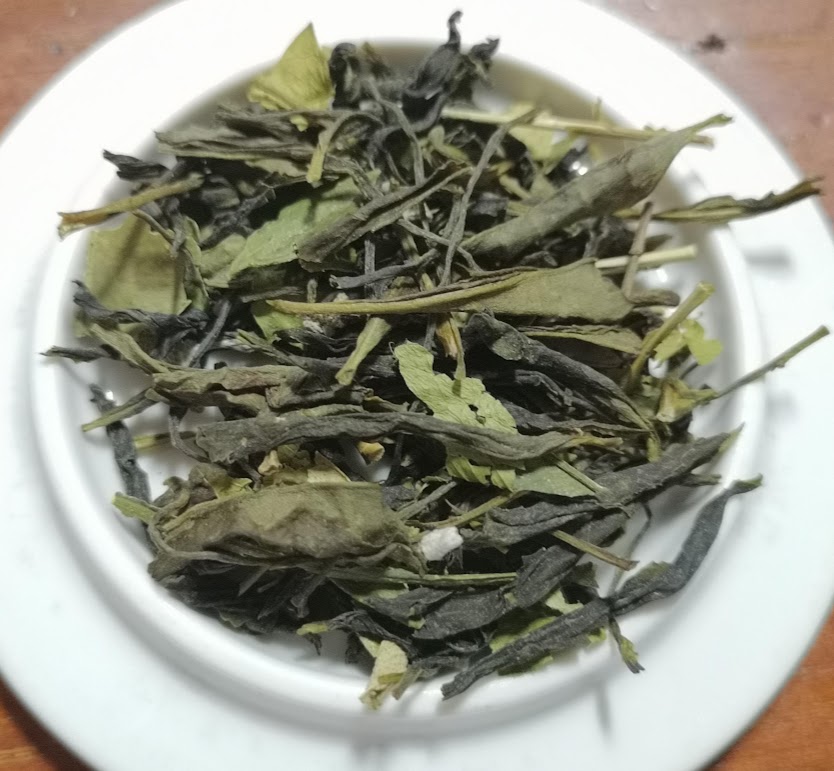
Great Mississippi Tea Company Mississippi Mint blend


On with the theme of trying random samples around, the last of a few from Mississippi.  It's this:


Mississippi Mint ($11.00, I think per an ounce, but it's out of stock so hard to check)

This tea uses a green tea base and is flavored with premium spearmint oil and blended with Kaffir lime and sage. 

1 rounded tsp per 8 oz. of 185F water. Steep for 3 minutes. 


That's not far from the process I used, maybe just a bit warmer, with a little higher proportion, and timing not far off that, so brewed on the strong side.


Review:  


Really nice.  It's unusual adjusting back to flavored teas but I've been mixing tisanes and tea enough that it's not so odd.  Even versions in a similar range; someone gave me some lemongrass and pandan leaf tisane that I had been using to mix with sheng pu'er for grandpa style brewing.  The mint makes this different but it's along a similar line.

It tastes like the ingredients, which makes flavor breakdown reviewing easy:  Mississippi Queen (a green tea), Spearmint, Kaffir Lime Powder, and Sage.  It all integrates really well.  At first I didn't love the sound of a mint tea version, probably why I tried this so much later than the others, but the other warmer and aromatic range really ties it all together.  I suppose this may have been slightly brighter and fresher nearly a year ago but it seems to have held up well.  Maybe that warmth that I've said is positive relates to settling in while stored in a hot environment, with humidity not really factoring in for it being sealed, and never opened in the half year since I've had it.  


As I see it it's really a myth that green tea is ruined by more than half a year's storage time.  It transitions, in ways that most people wouldn't necessarily see as positive, but as long as storage isolates it from air contact it's fine, just slightly different.  Losing that fresh edge is quite negative if that's what one values most in a green tea, of course.  A type like Longjing would be best drank sooner, and styles closer to sheng form, twisted, Vietnamese Thai Nguyen (fish hook style), or maybe even Taiping Houkui might be fine a year later, not really diminished.


The mint level and range is perfect in this; that is what would make or break this tea. This doesn't have a spice-like bite; it blends together well.

It's like a better version of a tea I tried starting out, Tazo Zen.  I'll compare the ingredients:

Green tea, lemon verbena, spearmint leaves, lemongrass, natural flavors


Not too far off.  I can probably appreciate tea quality in a different way than I did back when I would've drank that, on a lot of levels, related to identifying positive flavors differently, considering feel aspects, being familiar with astringency in different forms in tea.  Ground up material in a tea bag would brew much faster but wouldn't be as good.

One limitation of drinking just tisanes, which I still do, a lot more over the last two years than in the decade prior to that, is that the body / feel can seem limited, and complexity doesn't reach the same flavor aspects range.  This base tea version compensates for all that, adding plenty of depth, in a range that integrates with the rest.  Of course mint plays a significant role, just balanced and subdued for not blasting through as a dominant central aspect.  Lime integrates with the rest, and sage you can't notice, beyond what it must contribute for warmth, complexity, and depth.

So that's about it, a nice blend.  It's refined enough that it stands well above any sort of grocery store flavored tea, and it's probably a little better than what most online blend specialists sell.  That Tazo Zen probably wouldn't fare well in direct tasting comparison with this, but drinking both sweetened might even up the gap a bit.  It's still a tea and herb blend though, just a type and range that surely doesn't come up so often.  That's one of the impressive parts of this tea company's theme, to me, that they make products that are novel.  I can't imagine that the average American who would drink this could really fully appreciate the balance and quality level, but a general sense that it's good should still come across.


I rebrewed it; it's interesting seeing how flavor balance shifts in a tea version like this.  For flavored teas a lot of what you experience just rinses out the first round, but this is more of a blend instead.  It's not all that different.  The mint kick hits slightly differently, but it's hard to place exactly how.  Maybe it's a little cooler, or at least it carries across as aftertaste more.  General aftertaste is probably stronger, adding depth to the experience, instead of it thinning.  Astringency doesn't pick up, even though I brewed it for a longer round.  It's quite nice still, just as good.  

Even a third round didn't lose much; I tend to go with a much higher proportion and keep brewing time moderate in order to brew two very positive rounds and one that can seem a little stretched at times.


she keeps growing up


as close as he gets to posing


an unconventional look is coming along nicely


Friday, November 12, 2021

Moychay tisane bars: Caucasus blend and Da Hong Pao with Willow Herb


the Caucasus herbs blend version


I've reviewed a few of Moychay's tisane bars in the past, including two from a recent set.  They were all really interesting and pleasant.  I wrote notes for one version two months ago and one a few weeks back but I've not collected them into a post, which I will here.  There is more on what is in these (although the one is fully defined here, the ingredients), and a vendor description, links, and pricing, all in this post, or their website tisane section is here.  These cost about $4 for 50 gram bars; not very much, especially for how good they are, and how unique.

It makes you wonder why the tisane / "herb tea" theme isn't something more common in "the West."  I was drinking mixes of tisanes back in the 90s, that just never evolved to be standard commercial products, or at least popular versions of them.  I remember drinking one called "Immuni-tea" blend from a local shop back then; they had health issues on their mind, and were already doing tea puns.  Chrysanthemum and a few others are around in Bangkok, but not so much back in the US.

I've also been using some of a pandan leaf and lemongrass tisane tea bag someone passed on for blending recently, mixing that with inexpensive Jing Mai sheng pu'er and adding a little chrysanthemum.  It works really well for something to brew "grandpa style" and drink while driving, since the tisanes can handle being brewed quite strong, and caffeine level drops out as a concern.  I'm still drinking plenty of caffeine doing that since the quantity I use is crazy; that should be scaled way back when you don't limit brewing time, and I just don't.  I'll often add room temperature or cool water to completely stop brewing, and to dilute it, so in a sense I am limiting brewing time, part of the time.


Back to the one Moychay real tea (oolong) and herb blend, this stood out because I really like their past pressed Da Hong Pao bar (this, but of course it's sold out now), and if I'm remembering right some earlier willow herb was also pleasant.  Any tisane can seem a little odd when you expect it to be like tea, or can give up complexity in relation to "real tea" character, but what I've tried of willow herb was complex and pleasant.  

I'm not sure how this half tea and half tisane blend works out to make sense for people, but then I guess I just did explain how I've been making a variation of that myself, and why results were positive.  Maybe it's as simple as that, that results are pleasant and limiting caffeine drops out as a concern, since the starting point is on the order of half that of tea (but I don't know the actual proportion).

The other Caucasus blend might have been my favorite of the set of a half dozen or so bars they sent.  It tasted like I remember Sleepy Time tasting, but I bet it was slightly better, given how complex and balanced it seemed.  Or maybe not; I'd have to re-try Sleepy Time, since it's been ages since I tried it (that Celestial Seasoning product).


Da Hong Pao and Willow Herb / Ivan Chay Review:


It's nice.  Again if you expect it to be just "real tea" it might seem off, or atypical.  There is a fairly limited astringency edge; not much of that at all.  There's an interesting warm and fruit flavor range, like dried cherry and cocoa.  Typical dark roasted oolong flavor doesn't stand out a lot in relation to those flavors, neither the higher end slight char edge or the warm mineral base.  To be clear DHP tend to not typically taste burned; the roast input usually settles at a lower level, but that does vary.

This is very nice if someone can appreciate that extra flavor complexity and range as a positive experience.  There's a lot going on, what I take to be cherry, cocoa, a mineral layer, and some non-distinct earthiness.  Intensity is fine.  It doesn't have much astringency edge, just a bit of fullness of feel, which is a little thin as regular teas tend to go.  There aren't flaws, beyond interpreting more that could be present as missing.  Tea expresses a broad range of sharp edge feel and taste effects that this lacks.  Even oolongs, which tend to be smooth and round, have a certain type of intensity of some flavor range, typically, an intense floral range, or creaminess, or other scope for more oxidized or roasted versions.  This is closer to how tisanes come across, but in the middle.

Using really hot water might bump intensity and edge a little; I used just off boiling point water, but skipped a step of prewarming a for purpose ceramic mug that comes with an infuser basket, my favorite device for Western style brewing.  Even then it seems like it's suited for a simple and easy to approach tea experience, like that blend of pandan, lemongrass, chrysanthemum, and Jing Mai sheng pu'er I mentioned brewing grandpa style out running errands.  Brewed light or really strong both would be nice, at the cost of this probably not supporting close scrutiny of Gongfu brewing transitions as well as a well above average quality Wuyi Yancha version would.  Not so different than most random Chinatown shop DHP or Shui Xian, in that regard.

It seems suitable to serve as a comfort tea, something to brew when you don't feel like messing around in the morning, or maybe more suited for afternoon break since caffeine level must be low.  For people not touchy about when they ingest lower doses of caffeine it could be an evening tea.  I would expect this to have similar stomach calming property as shu pu'er, since it's also earthy, smooth, and mild.  I never have stomach problems so in a sense I can't really tell for sure.


a second infusion I brewed a little less inky


I don't know about using it for blending; it's already a blend.  I bring that up because it's been interesting experimenting with the other two bars I've already tried that way, which work out to be better without mixing other things with them, but it's still interesting to try.  Someone could mess around adjusting balance by adding a little black tea or shu, but it's fine as it is.  I retried an inexpensive compressed Dian Hong version recently that might be perfect for that, a Yunnan Sourcing "drunk on red" version.  That tea was not a perfect match for my preference for being a bit tart (I hoped it would fade but it didn't drop out later), but that tartness wouldn't show up much mixed with this.


Caucasus Blend Review:


This is what this is:

Ingredients: Oregano, St. John's wort (Hypericum perforatum), alpine thyme, mint, Epilobium willow-herb, sage, raspberry leaf, rose blossom, hawthorn fruit, rowan berries, rose-hip (Fructus Rosae).


Really nicely balanced!  I think the intended health effect is the thing with this, but it's nice that it holds up to a flavor review as well.  Mint stands out for being mint, but it's well-balanced beyond that.  Warm floral tones and a neutral base joins it.  I'm not going to have a lot more to add to that; it's a complex effect, a lot like chrysanthemum with another 4 or 5 things mixed with it. It's a lot like the Sleepytime mix of herbs, maybe leaning a little to the "Zen" blend from there, or maybe I'm remembering wrong and it was Zen.

And that's it; layers of subtle but complex flavor experience combine nicely. But I'm not going to describe it; it just tastes like mild herbs I'm mostly not familiar with, except the mint, and the way chrysanthemum is similar to one part of it.  Sage is my overall favorite plain tisane, and that's in this, but I can't notice it mixed together like that.  

Something in this gives it a feel not unlike that of shou mei, a bit on the full side.  Related to the overall experiential effect I could drink this every other day forever.  Anyone ordering any kind of teas from Moychay should probably add one of these to their cart, or two, since it's about $4.

As to health effects, that's anyone's guess, but it's probably healthy.  I would love to look into that part, and I will try to [which I didn't, a month later].  

I have retried the tea since and my impression is about the same.  It seems relatively complex and balanced as tisanes go; even for mixing them they often come across as one-dimensional, giving up feel and aftertaste range that add a lot to real tea experience.  I couldn't place it but somehow this comes across as complex.  Maybe it's just that a warm and mellow base, other herbs, some light floral and fruit range tones, and a high note touch of mint all balance.  Or feel could be helping.  I don't think it's just that I want and expect to like it, because that's true of all these bars I tried, and I did like all of them but not as much as this one.  It just works.