Showing posts with label willow herb. Show all posts

Friday, November 12, 2021

Moychay tisane bars: Caucasus blend and Da Hong Pao with Willow Herb


the Caucasus herbs blend version


I've reviewed a few of Moychay's tisane bars in the past, including two from a recent set.  They were all really interesting and pleasant.  I wrote notes for one version two months ago and one a few weeks back but I've not collected them into a post, which I will here.  There is more on what is in these (although the one is fully defined here, the ingredients), and a vendor description, links, and pricing, all in this post, or their website tisane section is here.  These cost about $4 for 50 gram bars; not very much, especially for how good they are, and how unique.

It makes you wonder why the tisane / "herb tea" theme isn't something more common in "the West."  I was drinking mixes of tisanes back in the 90s, that just never evolved to be standard commercial products, or at least popular versions of them.  I remember drinking one called "Immuni-tea" blend from a local shop back then; they had health issues on their mind, and were already doing tea puns.  Chrysanthemum and a few others are around in Bangkok, but not so much back in the US.

I've also been using some of a pandan leaf and lemongrass tisane tea bag someone passed on for blending recently, mixing that with inexpensive Jing Mai sheng pu'er and adding a little chrysanthemum.  It works really well for something to brew "grandpa style" and drink while driving, since the tisanes can handle being brewed quite strong, and caffeine level drops out as a concern.  I'm still drinking plenty of caffeine doing that since the quantity I use is crazy; that should be scaled way back when you don't limit brewing time, and I just don't.  I'll often add room temperature or cool water to completely stop brewing, and to dilute it, so in a sense I am limiting brewing time, part of the time.


Back to the one Moychay real tea (oolong) and herb blend, this stood out because I really like their past pressed Da Hong Pao bar (this, but of course it's sold out now), and if I'm remembering right some earlier willow herb was also pleasant.  Any tisane can seem a little odd when you expect it to be like tea, or can give up complexity in relation to "real tea" character, but what I've tried of willow herb was complex and pleasant.  

I'm not sure how this half tea and half tisane blend works out to make sense for people, but then I guess I just did explain how I've been making a variation of that myself, and why results were positive.  Maybe it's as simple as that, that results are pleasant and limiting caffeine drops out as a concern, since the starting point is on the order of half that of tea (but I don't know the actual proportion).

The other Caucasus blend might have been my favorite of the set of a half dozen or so bars they sent.  It tasted like I remember Sleepy Time tasting, but I bet it was slightly better, given how complex and balanced it seemed.  Or maybe not; I'd have to re-try Sleepy Time, since it's been ages since I tried it (that Celestial Seasoning product).


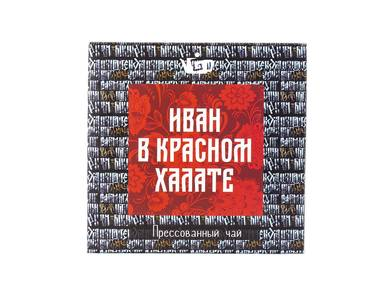
Da Hong Pao and Willow Herb / Ivan Chay Review:


It's nice.  Again if you expect it to be just "real tea" it might seem off, or atypical.  There is a fairly limited astringency edge; not much of that at all.  There's an interesting warm and fruit flavor range, like dried cherry and cocoa.  Typical dark roasted oolong flavor doesn't stand out a lot in relation to those flavors, neither the higher end slight char edge or the warm mineral base.  To be clear DHP tend to not typically taste burned; the roast input usually settles at a lower level, but that does vary.

This is very nice if someone can appreciate that extra flavor complexity and range as a positive experience.  There's a lot going on, what I take to be cherry, cocoa, a mineral layer, and some non-distinct earthiness.  Intensity is fine.  It doesn't have much astringency edge, just a bit of fullness of feel, which is a little thin as regular teas tend to go.  There aren't flaws, beyond interpreting more that could be present as missing.  Tea expresses a broad range of sharp edge feel and taste effects that this lacks.  Even oolongs, which tend to be smooth and round, have a certain type of intensity of some flavor range, typically, an intense floral range, or creaminess, or other scope for more oxidized or roasted versions.  This is closer to how tisanes come across, but in the middle.

Using really hot water might bump intensity and edge a little; I used just off boiling point water, but skipped a step of prewarming a for purpose ceramic mug that comes with an infuser basket, my favorite device for Western style brewing.  Even then it seems like it's suited for a simple and easy to approach tea experience, like that blend of pandan, lemongrass, chrysanthemum, and Jing Mai sheng pu'er I mentioned brewing grandpa style out running errands.  Brewed light or really strong both would be nice, at the cost of this probably not supporting close scrutiny of Gongfu brewing transitions as well as a well above average quality Wuyi Yancha version would.  Not so different than most random Chinatown shop DHP or Shui Xian, in that regard.

It seems suitable to serve as a comfort tea, something to brew when you don't feel like messing around in the morning, or maybe more suited for afternoon break since caffeine level must be low.  For people not touchy about when they ingest lower doses of caffeine it could be an evening tea.  I would expect this to have similar stomach calming property as shu pu'er, since it's also earthy, smooth, and mild.  I never have stomach problems so in a sense I can't really tell for sure.


a second infusion I brewed a little less inky


I don't know about using it for blending; it's already a blend.  I bring that up because it's been interesting experimenting with the other two bars I've already tried that way, which work out to be better without mixing other things with them, but it's still interesting to try.  Someone could mess around adjusting balance by adding a little black tea or shu, but it's fine as it is.  I retried an inexpensive compressed Dian Hong version recently that might be perfect for that, a Yunnan Sourcing "drunk on red" version.  That tea was not a perfect match for my preference for being a bit tart (I hoped it would fade but it didn't drop out later), but that tartness wouldn't show up much mixed with this.


Caucasus Blend Review:


This is what this is:

Ingredients: Oregano, St. John's wort (Hypericum perforatum), alpine thyme, mint, Epilobium willow-herb, sage, raspberry leaf, rose blossom, hawthorn fruit, rowan berries, rose-hip (Fructus Rosae).


Really nicely balanced!  I think the intended health effect is the thing with this, but it's nice that it holds up to a flavor review as well.  Mint stands out for being mint, but it's well-balanced beyond that.  Warm floral tones and a neutral base joins it.  I'm not going to have a lot more to add to that; it's a complex effect, a lot like chrysanthemum with another 4 or 5 things mixed with it. It's a lot like the Sleepytime mix of herbs, maybe leaning a little to the "Zen" blend from there, or maybe I'm remembering wrong and it was Zen.

And that's it; layers of subtle but complex flavor experience combine nicely. But I'm not going to describe it; it just tastes like mild herbs I'm mostly not familiar with, except the mint, and the way chrysanthemum is similar to one part of it.  Sage is my overall favorite plain tisane, and that's in this, but I can't notice it mixed together like that.  

Something in this gives it a feel not unlike that of shou mei, a bit on the full side.  Related to the overall experiential effect I could drink this every other day forever.  Anyone ordering any kind of teas from Moychay should probably add one of these to their cart, or two, since it's about $4.

As to health effects, that's anyone's guess, but it's probably healthy.  I would love to look into that part, and I will try to [which I didn't, a month later].  

I have retried the tea since and my impression is about the same.  It seems relatively complex and balanced as tisanes go; even for mixing them they often come across as one-dimensional, giving up feel and aftertaste range that add a lot to real tea experience.  I couldn't place it but somehow this comes across as complex.  Maybe it's just that a warm and mellow base, other herbs, some light floral and fruit range tones, and a high note touch of mint all balance.  Or feel could be helping.  I don't think it's just that I want and expect to like it, because that's true of all these bars I tried, and I did like all of them but not as much as this one.  It just works.


Saturday, August 7, 2021

Moychay pressed tisane bars


I'm reviewing two pressed tisane bars from Moychay.  I've tried a couple in the past, which I really liked, so it was great seeing that they sent some along with some tea to try and review.  Again many thanks!

When I first looked up the versions the pricing seemed low ($4 per 50 gram bar, or about that).  Really tisanes tend to not cost a lot, so it's just a normal price, but for a well-designed blend and easy access processed form it seems quite fair.  I'm not familiar with such things being available here in Thailand or in the US market.  Tisane blends maybe, they just wouldn't be all that common, but those pressed as bars maybe not.  

For teas compressed forms are often used as a way to support convenient storage for aging, which I guess could relate to these, but in general it just seems like catchy and convenient form.  A half dozen bars take up very little space that way.  We bought a good bit of chrysanthemum in China two years ago and it's interesting seeing how it changes with age.  It's probably better now instead of worse, but really just different.


four more bars to try; nice


I never will really critique or evaluate these in relation to the mix of herbs.  I've tried looking up tisane health benefits before, and it's possible to make a start on that, but it would be really hard to check if a certain mix of herbs makes sense, or is likely to be healthier than taking any one random version.  I might look into that again, related to these.

I drank a lot of tisanes for awhile, for the better part of 20 years, but I just wouldn't overthink that part.  I bought versions and mixed them as seemed pleasant, hoping that maybe that health benefit part would work out on its own.  Sage was by far my favorite back then; I loved it so much that I wouldn't blend that, so I could enjoy it alone.  I was mixing all sorts of plant leaf, root, and bark versions beyond that, with some flowers mixed in but not nearly as much of that.  I should be able to say a lot more about other favorites but I gave up that habit when I moved here, 14 years ago.  Kind of a shame, since Thais drink other nice tisanes, but I got into tea as a result, so it worked out.

I'll put a description of everything they sent at the end, including the list of herbs and their descriptions, and just copy the ingredients part here for framing:


Romantic Blooming Sally, Ginger, Juniper berries, Red root, Anise, Hibiscus, Rose hip, Rowan chokeberry, Elder, Acacia inflorescences, Cardamom


Cherry Sea Fermented cherry leaf, Willow-herb, black, large-leaf, Tver region, Linden blossom, Hibiscus flowers (Karkade), Calendula


"Romantic" left, in all photos


Reviewing Romantic and Cherry Sea tisane blends:


a bit extra light, my normal approach


It goes without saying that Gongfu brewing herb blends is a bit strange.  It would be much more conventional to use a Western approach, to use a basket strainer or teapot and give them a 4 or 5 minute soak, and then another.  One would have to try both approaches to see what gets gained or lost in using either.  

In mentioning trying these online someone suggest that simmering it may work out really well.  It could; people tend not to simmer tea because what gets extracted after the first 8 to 10 minutes of hot water steeping isn't as positive, but in this case that may be the best approach.  Or just simmering it when mostly spent might be worth trying.  Then it occurred to me that if you simmer this mixed with an even amount of tea and then add water to dilute to a suitable level you would essentially replicate samovar brewing.


Romantic:  first infusion is so light a real review will start on the second, but I'll mention first impression anyway.  This is a bit tart, like a cranberry.  It's going in a really positive direction already though, sweet and complex.  The one trade-off related to tisanes, in comparison with "real tea," is that they include less flavor complexity, intensity, and other aspect range depth, less feel and aftertaste.  Blending can offset that, since brewing any one tisane (herb, flower, spice, etc.) only goes so far towards that.


Cherry:  again, tart.  What I interpret as hibiscus stands out, but there is more going on.   This reminds me of something I'm probably not going to place, some herb blend or single type I had much earlier in my tisane exploration.  Maybe Red Zinger, maybe something else.  I suspect that tartness is brewing out faster for some reason but these will pick up a lot of depth and balance soon enough.  Comparing the two some balancing warm tone really works better in the "romantic" version; I wonder what that is?  Again it's too early to call these.


a bit too strong; tisane infusion timing isn't very familiar


Romantic, second infusion:  I let this infuse for a bit over 20 seconds, a long soak by "real tea" standards.  It's a tisane; it will be fine.  I don't know what optimum will be but at least this will get transition moving [after trying it optimum is a shorter time].  Tartness still stands out but that warmth is strong enough that it contributes in an usual way.  It's a little like fennel seed; that kind of thing.  A cranberry sort of tartness and fruit range flavor is strongest, most pronounced.  There's a minty aftertaste.  And a lot of other aftertaste; usually tisanes don't work out like this.  Something in this is really naturally sweet.  I'd expect it all to come together even better once the parts all get infusing next round, but it's pleasant and interesting now.


Cherry Sea:  cranberry tartness is giving way to a tart cherry tartness.  It doesn't have quite as much depth as the other but plenty is going on.  Again I get the impression that this is still settling into where it will go for balance of inputs coming together.  For using a 4 minute soak at a much higher proportion all that would get combined, much like combining or "stacking" these first 4 or 5 infusions.  20+ seconds is a bit long though; 15 would be fine for this proportion.

It's interesting switching back to try the "Romantic" version after the cherry.  That warmer spice range makes it seem to have a lot more depth.  If the tartness eases up the blast of fruit in this second tisane blend could be really nice in a different way, but it sort of works for me tart like that.  It would be hard for one single tisane input to have the depth or range of either of these.


Romantic, third infusion:  I might have went too fast with these, under 10 seconds, but that will enable describing how infusion strength difference adjusts what comes across.  It's kind of unrecognizable, drinking the same blend infused half as long, with some transition for developing.  It's enough flavor, I think, but completely different.  Tartness is all but gone, probably much less pronounced at this infusion strength (what you taste shifts a lot with infusion strength, not just relative intensity).  

That warm tone is nice.  It comes across as linked to a warm and sweet aftertaste that lingers on the rear of your tongue.  Feel aspects tying to a tongue location is normal, but it's odd feeling like a taste sensation is there.  Not the rear of the throat either, as people describe over and over in relation to sheng pu'er, at the rear of the tongue in front of that part.


Cherry Sea:  much closer to how it had been last round than the first, just lighter.  Tartness isn't dropping out in the same way.  I suppose if someone hated tartness this just wouldn't work for them; a preference take on cranberries should determine that as well as anything.  It's coming across as complex in relation to a single tisane, but the other has lots more depth and range.  I suppose it could be that tartness will fade in this too, revealing something else, but it's just running behind the other.  

In tasting the first after the second it's not just the warmth and depth that comes across, it's a sweetness and flavor range I associate with either a bark or root spice (I'm guessing bark, but those two things come in such a broad range you can't really combine them).  One might think they know all about bark spices from cinnamon and root spices from ginger and ginseng but it's not like that, a lot more complicated.


Romantic, fourth infusion:  for once I'll need to wrap this up to go to bed; that's a novel potential related to drinking tisanes.  Or putting the kids to bed first, one last test of my patience before the end of the day.  To cite an example they are running a small floor vaccum in the other room now because the kitten hates it, so they're doing that to see how it reacts.  It's growling; we have a really grumpy older cat who taught her that vocabulary range.

This is actually starting to flatten out a bit, although I'd guess that it's far from spent.  Mixing those 4 infusions might have been better.  I'll stretch one more infusion for longer, over 30 seconds instead, and let this drop.  Warm range and spice depth is nice in this; that spice wasn't present in the same way before.  It's like a touch of black pepper, that kind of spice.  Since those bars break up into a good number of squares (9 per 50 grams, so 5 1/2 grams each) it's worth considering trying both mixed together.


Cherry Sea:  tartness will go the distance in this version, but it is subdued, as all the flavor intensity is dropping off a bit.  Going extra long on one early infusion probably pushed back where these would be by one infusion count.  This really could just be cranberry and willow herb, based on how it comes across.  I think lighter range inputs are giving it depth that's hard to appreciate as distinct flavors.


Both, fifth infusion:  largely faded, but a depth is hanging in there.  A trick from brewing "grandpa style" could probably draw more out of these, adding a touch of a fresh "tea" input to restore the rest of the experience range, without giving up the thinner base these can still provide.  I'm not sure what would work best for that; it wouldn't just have to be more of the same herb blend.  A bit of cacao husk with one of these would be really nice, or ground cacao nib (dark chocolate flavor, more or less, two parts of the plant used to make that).  That sounds like an American take on everything, doesn't it?  It's all better with chocolate, gravy, or cheese, just probably not all three together.

These bars really should have fantastic potential for cooking too.  Either one of these simmered and then used to make oatmeal would be great.  Or any number of other things I usually wouldn't even consider in relation to "real tea;" infused in white vinegar to make a salad dressing, or infused in vodka to make a mixed drink.  As for blending with tea I'm not so sure; that could be pushing it.


these photos cited from the Moychay site


Forest Silence:  

Blooming Sally green, Melissa, Tutsan, Raspberry, Medicinal lungwort, Badan, Rose hip, Pine buds

Healing and harmonious composition, heals the whole body, soothes and collects. The taste is not obtrusive, with the aroma and taste of a taiga forest, conveying the calmness and silence of a pine forest. 


Romantic (no site product description; a friend translated this one for me from the label)

Blooming Sally, Ginger, Juniper berries, Red root, Anise, Hibiscus, Rose hip, Rowan chokeberry, Elder, Acacia inflorescences, Cardamom


Caucasus herbal tea cake 

Ingredients: Oregano, St. John's wort (Hypericum perforatum), alpine thyme, mint, Epilobium willow-herb, sage, raspberry leaf, rose blossom, hawthorn fruit, rowan berries, rose-hip (Fructus Rosae).

All ingredients are harvested by experienced herbalists in the Caucasus Mountains. The components and their respective proportions provide a balanced healing effect - immunity enhancing, digestion-normalizing and a strengthening of the nervous system. The bouquet is herbaceous-minty-fruity, the taste is rich, but without bitterness and astringency.


Cherry Sea

Fermented cherry leaf, Willow-herb, black, large-leaf, Tver region, Linden blossom, Hibiscus flowers (Karkade), Calendula


Calming

“Calming” is our pressed herbal blend made from wild plants.  Composition:

Willow-herb (Ivan-tea); Melissa; Rose hip; Linden flowers; Hibiscus sabdariffa flowers; Oregano; Hop (Humulus lupulus); Chamomile; St. John's wort (Hypericum perforatum); Calendula

The recipe for blend and illustration was compiled by an expert of wild plants and a famous botanist in Russia - Natalia Georgievna Zamyatina.

Ivan (willow herb) in a red robe (Ivan-fermented Tea, cut leaf Da Hong Pao),

Willow-herb, black, large-leaf, Tver region; Da Hong Pao, broken leaf

The bouquet of the finished tea is warm, grain-spicy with floral, berry and woody notes. The aroma is rich, multifaceted. The taste is strong, juicy, silky, sweet, with a slight bitterness and a spark of spices.

Editing notes: that sounds fantastic.  I've tried a Da Hong Pao pressed bar from them that was just great before, and it could match really well with willow herb / Ivan chay.


Wednesday, March 27, 2019

Compressed teas and tisanes beyond pu'er


First published in parts by TChing, with the last post of three in sequential order here


This subject is familiar to most related to sheng and shu pu'er; both have long since been pressed into cakes (bings), tuochas (dented ball shapes, kind of), bricks, "dragonballs," coins, and other shapes.  This will focus on scope outside of pu'er, since those are more commonly encountered.

The common understanding is that this form related to ease of transport from condensing the size.  Teas from Yunnan could be shipped across the Tea Horse Road to all sorts of regional destinations, processed to be easier to ship, distribute, and later store (with further reading about the modern forms of that history here).  Same for Hunan brick teas, and at some point the same compression process was also applied to shou mei white tea.

More recently compressed black teas and others have become somewhat fashionable.  Why press these, though?  We're at the stage now where modern packaging solutions can cover a lot of the same functional concerns with the tea still in loose form.  Pu'er needs air contact to ferment (to change over time), and to some extent that could apply to other tea types as well, even though the same storage approach and concerns are most typically only extended to white teas.  Compression isn't essential for aging but it does work well to store teas in that form and it helps moderate level of air contact at a suitable level.

Cakes of other tea types seem cool; that's a good reason.  To a limited extent the reshaping could also change tea character slightly, it seems, so there's a functional aspect.  For other teas "designed" for storage and aging it still makes sense on that first level.  Most recently I've tried two versions of this approach applied to tisanes (herbs and fruit), which I'll cover at the end.


shou mei (white tea), or other white teas pressed in different shapes:  really this form is common enough too, but it can be hard for one person to explore even the considerable list of most standard types.  Those teas can be mild but rich-flavored, including caramel or toffee tones with aging transition, evolving to include dried fruit or spice tones.  This post reviews two versions that seemed relatively standard, one from 2008 and 2012, along with a gong mei (same thing, different leaf grade), and candy-bar style pressed white.  Comparison reviewing four white teas together in that account turned out to be a bad idea; not so many rounds in I was blasted on all that caffeine.


Gong Mei cake, a Dayi / Tae Tea version


candy-bar style compressed white tea


a unconventional white tea cake described as pressed Moonlight White (details here)


Hunan region / Fu brick teas:  these seem kind of standard too, potentially very pleasant, flavorful, and typically relatively inexpensive compressed teas that are distinct in character from sheng and shu pu'er.  I've not experienced enough versions to generalize, but of that limited set I have tried pre-fermentation was either not used or not nearly as evident as in shu, and the teas didn't have the same intensity that younger sheng possess.

Then again I've not really tried new / young enough versions of compressed hei cha to really place starting points, related to typical use of a pre-fermentation step.  This Yi Qing Yuan factory version I reviewed with "yellow flowers" was produced in 2009, and this 2007 Xiang Yi "Hei Cha Zhuan" didn't have that version of mold present in it.  That general fungus category and specific "yellow flowers" input is identified in this reference passage:


...The genus Aspergillus is a group of filamentous fungi consist of more than 250 species, which is the most economically important of the fungal genera.  Many species of Aspergillus are used in biotechnology for the production of various metabolites, such as antibiotics, organic acids, medicines or enzymes, or as agents in many food fermentations. The fungal genus Eurotium, which is the teleomorph of Aspergillus, has been proved to be a rich source of novel bioactive metabolites. 

...species formerly included in the genus Eurotium  [a yellow-flowers related reference] are displayed with their Aspergillus name.. it is considered to be safe under low- and high-osmolarity conditions...


The typical hearsay account is that the various types of fungus are generally good for you rather than potentially harmful, not exactly confirmed in that research article passage but to a limited extent supported by it.

Hunan Fu brick tea with "golden flowers"


shai hong / Yunnan black teas:  now we're talking.  I first ran across a version of those and tasted it without reviewing what it was first two years ago, back in 2017, covered here.  Yunnan black teas / dian hong (or shai hong, a reference to versions of that being sun-dried) can vary quite a bit but the range is nice.

That version reminded me a little of those Hunan brick teas for character, beyond being compressed, for being so mild, and for including pleasant dried fruit, rich sweetness, and other earthy complexity.  I've tried a couple of other compressed Yunnan black teas since and they just vary.  This other version was pleasant, and included a bit of tartness, which can be nice in the right balance.  The two main US pu'er vendors are now producing versions, Yunnan Sourcing and White2Tea, with one of the latter's versions boasting the catchy name of Natural Redhead, and the former's branded "Drunk on Red."  The marketing factor being an input seems to show up in the product names.

This video interview with a Yunnan black tea specialist (conducted by William Osmont of Farmerleaf, a Jing Mai based producer and vendor) sheds light on the processing differences in various types of black teas, it just doesn't get into the factor of pressing those.  One take-away from that matching conventional understanding:  Dian Hong, the conventional Yunnan style black teas, are oven dried, and Shai Hong are sun-dried versions, which are milder in fragrance and said to possess the potential to improve with age.  I've tried the same versions across a broad span of time before (a year or more), and they did seem to gain depth and intensity.

chunk of compressed Shai Hong (sun-dried) Yunnan black tea


compressed oolongs:  I had heard of these long before ever trying one, and did get a chance to in the form of a Moychay (Russian vendor) Da Hong Pao roasted oolong bar.  You could tell it wasn't the refined and subtle style of Wuyi Yancha that leans towards an aromatic liqueur or perfume-like aspect range, more flavor-forward and roasted to include sweet, rich caramel flavors instead, positive in character but limited due to being comprised of relatively broken material.  It worked well for me.

I have no idea if the unusual character in that product is somehow common to other compressed oolongs, if others are as flavor-intense and distinctive as that version was.  Some are probably great and others terrible, and all probably vary in taste and other aspect range; that's how that usually goes.  This looks like an interesting version of one (that I haven't tried), a 2006 pressed Da Hong Pao brick from Wuyi Origin, a well regarded producer who sells directly.


one chunk (square) of the Moychay DHP oolong bar


tangerine or orange peel stuffed shu pu'er or black teas (chen pi):  I don't want to add too much about these versions because they really deserve more background discussion and description than I have space for here.  I've tried shu pu'er and black tea versions (and have a white tea stuffed citrus peel at home yet to try), and the were nice, unique and pleasant.  And supposedly very good for health, bordering on a form of Chinese medical practice input.  I'll leave off at citing a reference to claimed health effects, framed in Traditional Chinese medicine terms.  The tea could have positive effects without that description framework being the most accurate model, or some of the benefits could be valid and accurate even if some others aren't:

Actions: Regulates Qi; adjusts the middle Jiao (acrid lifts the spleen Qi, bitter descends the stomach Qi); dries dampness; resolves phlegm; helps the spleen to transport; relieves the diaphragm; directs Qi downward.


shu pu'er stuffed tangerine (I think; could be a mandarin orange)


compressed tisanes:  a final frontier not everyone even wants to venture into, or would have heard of.  Again I tried two completely different tisane bars from Moychay (they sent me quite a few samples to review last year, and I've even started contributing some review-article content to a their website).  One was compressed fruit that seemed to contain a bit of spice, really far from standard tea in character, but pleasant.

One was a pressed version of willow herb, which also goes by fireweed, and is also called Ivan chay.  This herb is really unique for being able to oxidize, in a way similar to tea (Camellia Sinensis), although the couple of versions I've tried wouldn't get mistaken for tea.  The other was a pressed version of dried fruits, definitely different.  A version I didn't try is made of rose petals and cherry leaves.

If the way it works out similar to "real tea" versions pressing the herbs would only change loose material character a little.  They're not the same as Camellia Sinensis but the wider range of materials input enables a different range of potential.  Any herb, flower, or fruit blend could be combined and pressed that way, in theory.  Or mixes of teas and other inputs, which is a popular theme in Western markets now.  One potential down-side is that there's no current market demand for such a thing (pressed tisanes and blends), since it seems to have just started existing, but in a different sense that only increases the potential.

compressed willow herb bar (aka fireweed or Ivan chay)


compressed fruit bar


I think the compressed tisane theme was more appealing to me because trying the one local shop white tea bar and Moychay Da Hong Pao (roasted oolong) were such positive experiences.  Both of those could be brewed Gongfu style, prepared in a gaiwan using lots of short infusions, or they worked well made Western style, and probably just as well prepared "grandpa style."  That's a reference from a well-known tea blogger to a very common Chinese brewing approach, adding tea into a tea bottle with hot water and drinking it together, unstrained, re-adding water after finishing each round.  I most often use it on road trips, and wrote a post about trying out results on different tea types awhile back.

The fruit tea version would even work well simmered with black tea, perhaps with a bit more spice added, to make a fruit-oriented version of masala chai.  Or these could be added to a thermos and left to brew that way, over any length of time.  That would seem to involve committing a thermos to the practice since cleaning after something that aromatic might be problematic, maybe even if the liner was made of glass or steel.  Tisanes have the potential to be even more flexible than teas to brew, with the exception of tea types that aren't astringent and work well at any infusion strength, versions like shu pu'er or shou mei.


Really there are too many types of tea to get to among standard types as it is, but all of these make for interesting tangents and additional range to explore.