Showing posts with label Jason McDonald. Show all posts

Tuesday, March 22, 2022

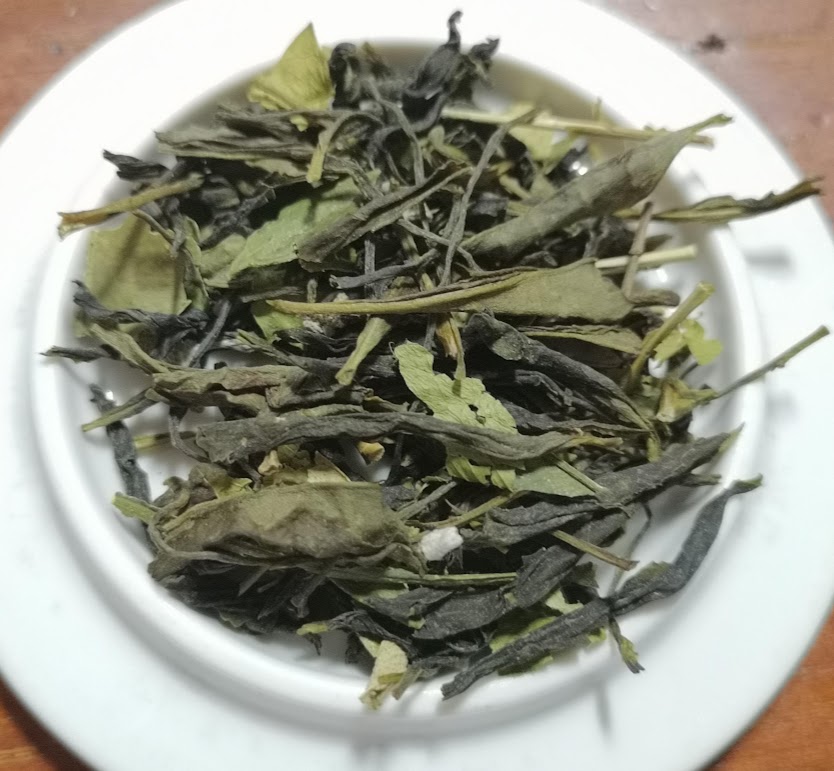
Great Mississippi Tea Company Mississippi Mint blend


On with the theme of trying random samples around, the last of a few from Mississippi.  It's this:


Mississippi Mint ($11.00, I think per an ounce, but it's out of stock so hard to check)

This tea uses a green tea base and is flavored with premium spearmint oil and blended with Kaffir lime and sage. 

1 rounded tsp per 8 oz. of 185F water. Steep for 3 minutes. 


That's not far from the process I used, maybe just a bit warmer, with a little higher proportion, and timing not far off that, so brewed on the strong side.


Review:  


Really nice.  It's unusual adjusting back to flavored teas but I've been mixing tisanes and tea enough that it's not so odd.  Even versions in a similar range; someone gave me some lemongrass and pandan leaf tisane that I had been using to mix with sheng pu'er for grandpa style brewing.  The mint makes this different but it's along a similar line.

It tastes like the ingredients, which makes flavor breakdown reviewing easy:  Mississippi Queen (a green tea), Spearmint, Kaffir Lime Powder, and Sage.  It all integrates really well.  At first I didn't love the sound of a mint tea version, probably why I tried this so much later than the others, but the other warmer and aromatic range really ties it all together.  I suppose this may have been slightly brighter and fresher nearly a year ago but it seems to have held up well.  Maybe that warmth that I've said is positive relates to settling in while stored in a hot environment, with humidity not really factoring in for it being sealed, and never opened in the half year since I've had it.  


As I see it it's really a myth that green tea is ruined by more than half a year's storage time.  It transitions, in ways that most people wouldn't necessarily see as positive, but as long as storage isolates it from air contact it's fine, just slightly different.  Losing that fresh edge is quite negative if that's what one values most in a green tea, of course.  A type like Longjing would be best drank sooner, and styles closer to sheng form, twisted, Vietnamese Thai Nguyen (fish hook style), or maybe even Taiping Houkui might be fine a year later, not really diminished.


The mint level and range is perfect in this; that is what would make or break this tea. This doesn't have a spice-like bite; it blends together well.

It's like a better version of a tea I tried starting out, Tazo Zen.  I'll compare the ingredients:

Green tea, lemon verbena, spearmint leaves, lemongrass, natural flavors


Not too far off.  I can probably appreciate tea quality in a different way than I did back when I would've drank that, on a lot of levels, related to identifying positive flavors differently, considering feel aspects, being familiar with astringency in different forms in tea.  Ground up material in a tea bag would brew much faster but wouldn't be as good.

One limitation of drinking just tisanes, which I still do, a lot more over the last two years than in the decade prior to that, is that the body / feel can seem limited, and complexity doesn't reach the same flavor aspects range.  This base tea version compensates for all that, adding plenty of depth, in a range that integrates with the rest.  Of course mint plays a significant role, just balanced and subdued for not blasting through as a dominant central aspect.  Lime integrates with the rest, and sage you can't notice, beyond what it must contribute for warmth, complexity, and depth.

So that's about it, a nice blend.  It's refined enough that it stands well above any sort of grocery store flavored tea, and it's probably a little better than what most online blend specialists sell.  That Tazo Zen probably wouldn't fare well in direct tasting comparison with this, but drinking both sweetened might even up the gap a bit.  It's still a tea and herb blend though, just a type and range that surely doesn't come up so often.  That's one of the impressive parts of this tea company's theme, to me, that they make products that are novel.  I can't imagine that the average American who would drink this could really fully appreciate the balance and quality level, but a general sense that it's good should still come across.


I rebrewed it; it's interesting seeing how flavor balance shifts in a tea version like this.  For flavored teas a lot of what you experience just rinses out the first round, but this is more of a blend instead.  It's not all that different.  The mint kick hits slightly differently, but it's hard to place exactly how.  Maybe it's a little cooler, or at least it carries across as aftertaste more.  General aftertaste is probably stronger, adding depth to the experience, instead of it thinning.  Astringency doesn't pick up, even though I brewed it for a longer round.  It's quite nice still, just as good.  

Even a third round didn't lose much; I tend to go with a much higher proportion and keep brewing time moderate in order to brew two very positive rounds and one that can seem a little stretched at times.


she keeps growing up


as close as he gets to posing


an unconventional look is coming along nicely


Thursday, November 18, 2021

Tea producer meetup, representing five countries


I debated not writing about this last meetup since the most interesting parts of the discussion, the details about growing and producing tea, I won't be sharing, since most of that is confidential.  Some parts might not be proprietary and related to business differentiation enough that I could share them, but to get the cut-off right I'll only mention general range of what was discussed here, not details, which really were the best part.  Let's start with who joined and why that was even possible.  First, my deepest thanks to all who participated, for sharing information that was really interesting to me and probably directly helpful to others in many cases.

Who joined:  Jason McDonald of the Great Mississippi Tea Company, Rishi Gopaldhara of the Gopaldhara Darjeeling producer, Anna of Kinnari Tea of Laos (a vendor, but also a tea production consultant across broad scope), Nika Sioridze of Georgia--the country--and the Greengold producer, and Narendra Kumar Gurung of Nepal, a private tea grower and processor.  What an honor to meet with them all, really.  My other tea clique joined as well, Ralph, Suzana, and Huyen.  Huyen has experimented some with making tea but it didn't take that many leading questions to move through a range of interesting scope.


To be clear all these people make great tea (or Anna sells it, but she's also involved with processing consulting).  Nika is a bit closer to the starting point than the rest, and that shows up in styles he hasn't perfected yet, but in general his teas are much better than one would expect, already above the level of some much more developed forms.  Even the one oolong, still being worked out, has a great distinctive roasted bamboo flavor aspect that makes it very positive to experience as it is now.  It's also possible to see some degree of ongoing transitions in what Jason is producing, even for trying one set as just a snapshot, but their teas work well for exactly what they are right now too, and don't come across as a work in progress.  In both those cases very positive inputs define their teas as distinct and unique, so it's not just a matter of copying forms and versions elsewhere.  

Rishi and Narendra aren't finished with making adjustments to styles, probably, but both make good representative forms of Darjeeling and Nepal teas, which is a positive thing.  It's almost not fair for Gopaldhara to have such a developed starting point in relation to a lot of other producers and types, but that's how tea goes.  There's another level of Chinese or Japanese producers drawing on even longer term prior production and processing, but I suppose to some extent more developed cultural tea tradition enables a better starting point and established demand but also well-developed competition.

So how and why did we end up meeting in this form?  In talking to Nika about processing issues, about them making adjustments to styles, it occurred to me that we have talked to a lot of people with a lot of exposure to those issues.  Getting them all together to share very proprietary, hard to come by information seemed a stretch, so I initially approached asking them in terms of how they felt about such a thing.  Everyone was completely open and positive; which was really surprising.  To my understanding it's not that none of the others was a direct competitor, although that might have helped, but more than that it seemed like "giving back" related to others having helped them in different ways, which caused them to be more open to sharing knowledge.

It probably didn't hurt that Jason and Rishi had met.  The rest my friends and I have met, in the meetups I keep talking about, but I'd imagine their contact was quite limited.

I won't add details here but the scope of what we covered was interesting, and I can at least share categories, and one very interesting general theme that emerged.  They discussed growing tea quite a bit, challenges that come up in different places (and natural environments), along with issues with market demand, sales channel development, and labor support.  I suppose it's not going too far to say that Jason experiences as much problem with getting staffing for farm labor as anyone else, and what he contributed about research and use of automated harvesting was interesting.  That's not a new subject but the actual approach and equipment does keep evolving.  

Jason also mentioned how climate change is a huge potential challenge for them.  Again it's not a secret that the climate in the US is shifting quite fast, with unusual storms, temperature extremes, periods of high rainfall, and droughts.  They'll make the best of it in compensating for drought, and beyond that the plants will have to try to endure most of the rest, and some plant types just won't.  He didn't talk about hard freezing occurring that far south in the US yet but it's probably only a matter of time.

To skip ahead to a general conclusion, or theme that was interesting, it was fascinating how the different producers were sharing detailed knowledge based on a range of different kinds of experiences and sources.  Of course Rishi was drawing on the inherited knowledge of a very developed business and growing region, even though he's making changes and experimenting with pushing forward from that starting point, adjusting tea styles and processing.  Jason had access to great research derived information; some of what he shared was really interesting, even for being isolated ideas from different scopes (their whole story for tea growing and processing would take a long time to tell).  Anna has broad exposure to what a lot of Laos producers are doing, at a very detailed level, and to how their industry is developing to respond to a lot of internal and external changes.  Nika is newer to tea business but it's fascinating how they've made a fast start based on reclaiming and renewing an older Soviet era plantation, which was interesting to hear about.

Narendra had a conflicting family issue to deal with and was less involved for joining towards the end.  In a sense that's a shame, because Nepal doesn't necessarily stand below other countries in terms of produced tea quality and novel character, in spite of working within a less developed tradition.  The farming and production that Narendra carries on was started by his father, so it's not really new.  He has attempted to translate his own production into a co-op theme, which I've not heard much about in terms of results since we discussed that last a couple of years ago.  I suspect that it was significantly disrupted by the pandemic, as many things were.


a capture version with Narendra


It was nice not talking very much about pandemic disruption and concerns.  We mostly stuck with basic tea growing, harvesting, and processing themes, with just a little added on the distribution and sales side.  If you could talk with a close tea producer friend, and you knew a lot more about those issues than I do, it's the kind of discussion that you might have, but with multiple inputs instead.

One concern is always how it's going to work in terms of flow of conversation; we've never tried to get nine people to meet and converse.  I suppose we never had nine present this time, since a couple joined late and Huyen was called away.  It went really well though, with the odd zig and zag for theme, or missed comment, due to that many joining.  I think Anna might have been able to add more about processing but naturally slipped into a coordinating role, and it was probably as well to lose some input from one member to enable three others to share a lot.  The knowledge and experience everyone was drawing on wouldn't fit in an hour or two of discussion, but what did get covered was a great sample, with some points very relevant and actionable for others.


an early capture with Huyen included; it's hard to get 7 or 8 good images at the same time


The differences in their businesses were interesting, not just about climate and historical / cultural context, but scope and scale, and type.  Jason is ramping up very developed and advanced production for being a half dozen or so years into moving past a background and design review, and initial steps.  They push forward on lots of fronts, at the same time they are ramping it all up, across scope like environment design, equipment use, and sales channels.  

We didn't even touch on combining plain, high quality tea production and blend / flavored tea development, which I see as both a response to a market condition and also "the tail wagging the dog," them proactively changing their tea market as they expand into it.  Tea blends / flavored teas aren't new but their approach to them seems to be, to me.  Rishi is on the opposite extreme, also making a lot of the same changes for experimenting with new range, but drawing on tea tradition that goes way back. Their website mentions that they were founded in 1955, but that's the year his family took over the plantation, which was founded in 1881.

One really interesting difference came up in Jason's approach of drawing on modern research inputs that identify compounds in teas that transition in different ways during processing.  In the end best-case growing and processing practices that derived from that input seemed to map to traditional practices developed from received knowledge and personal experimentation.  

I suppose that theme of transitioning from a very old, grounded tea tradition to it being necessary to make a lot of radical changes just to make a business and "local" tea production theme work was common to everyone.  Laos was a completely isolated and undeveloped country 20 years ago; when I first visited there around 14 years ago they had just finished wiring the more populated half of the country with electricity access.  Nepal might have started on development a little earlier but must be in a roughly equivalent place.  Nika and Georgia's case is fascinating to me, related to their economy going through a reset after the 1990-91 end of the Soviet Union.  He invited all of us to visit there, and I would really love to get to that.  

Without climate change, a pandemic, general economic disruption, and large scale staffing issues a lot shift would be required for tea producers to keep up, but with those factored in ongoing success will require aiming at a moving target.  None of them seem to be getting caught flat-footed, trying to keep on with what tea production had been before; instead quite the opposite.

One part that helped make this possible, that I appreciate even more than the fantastic knowledge sharing, is how these are all people that I respect, admire, and can look up to as good examples of human beings.  None of them are taking short cuts, "doing what they have to do" in difficult circumstances; they're not that kind of people.  They are all paying dues in full, putting the work in, not trying to benefit from others' disadvantages, instead only seeking out successes that they've earned.  I only partly joked with one about how I would trust any of them with watching my kids, the one thing I value most in this world. 

All in all it seemed very successful to me.  I don't doubt that a much longer version wouldn't have ran out of discussion scope, so maybe we will be able to break past form and repeat that meeting version.


Wednesday, October 13, 2021

Great Mississippi Tea Company Biloxi Breeze and Grilled Southern Peach


Reviewing two more blends from the Great Mississippi Tea Company.  There was more on this producer that I already shared in this discussion with the owners, or an interview post with Jason McDonald (one owner), and reviews of other tea blends and plain teas, with this the latest, including a yellow tea.  

Their teas are pretty good, especially for them being so new to production, something like a half dozen years in.  Especially the blends, maybe; they are doing truly novel things, creating what didn't exist before, partially in response to a US preference for teas with flavor range beyond standard oolong and such.  I suppose it's that Americans really just aren't as aware of Chinese, Japanese, and Indian teas as they might be, so strong-flavored and novel blends can stand out something new to experience, that those consumers also aren't currently aware of, but at least it's clearer what they are.

Onto review then, after also mentioning the Great Mississippi Tea Company descriptions:


Biloxi Breeze

Biloxi Breeze is our newest item for the summer. It is a blend of MS Queen, strawberries, Kaffir lime leaves, and jalapenos. 

You supply the ice and lime and this set comes with everything you will need to make a Biloxi Breeze. If you would like, add Tequila and Triple Sec for a little extra fun!

It is the perfect balance of sweet, refreshing, and a little kick to make it fun!

Each kit makes roughly 1/2 gallon. 

Tea blend ingredients: MS Queen (green tea), Freeze Dried Strawberries, Kaffir Lime, Strawberry Extract, Dried Jalapeno Peppers. 


I had no idea that was intended as an alcoholic drink mix, served cold, or a "mocktail / virgin" version of that.  I guess reading the directions makes sense sometimes.  It probably would work well for that, although I really don't drink alcohol (not that I wouldn't, I just don't), and not being into pepper spice in general would throw it off.


Grilled Southern Peach

Pecan Smoked Tea Blend Using US Grown Black Tea & Oolong Tea

This is a real stunner of a tea! Perfect iced with pulled pork at a barbecue or hot while sitting by a fire reading your favorite book. 

This is a pecan wood cold smoked black and oolong tea blend with dried peach pieces. The pecan wood smoke lends a vanilla note to the tea. 

1 rounded tsp per 8 oz. of 200F water. Steep for 5 minutes. 


I can see why they are designing and promoting teas prepared as iced tea; that's what is most accepted in the US.  That infusion strength and approach probably would work for hot tea but for iced tea it might work better to go stronger, and double proportion to 2 teaspoons, maybe bump amount to more like 250 ml, and let it "brew out," steeping for 6 minutes, then strain, and add ice to chill and dilute.  It's that last step that changes everything; it's going to nearly double the amount of water in the tea.  All that isn't best-practice guidance, of course, just off the cuff speculation, since I've not prepared the tea that way.  I tried this with a little sugar at the end, brewing it hot, so I can talk about how that changes results.

That critique of the brewing recommendations prompted me to go back and review what was listed for the Biloxi Breeze version:  no specific instructions.  I think that's actually the best solution, to let people experiment and see what works for them, given that it's an unconventional tea and an atypical final form (as iced tea, potentially used to make a mixed drink).  I think the same general approach I just mentioned for the peach version would work:  brew it strong, steep it for awhile, then let ice dilute it.  Brewing temperature could be hard to pin down as an optimum, since cooler water (eg. 175 F) works well for green tea, and hotter water (full boiling point) tends to work best for tisanes (herbs or fruit).  No one optimum would exist; it would depend on preference for balancing slightly more astringency and part of the vegetal range versus the extra fruit flavor that would extract brewed hotter.

I didn't mean to imply that after 6 minutes brewing time the infusion results would be negative (for the second, or both).  For a conventional tea like tea-bag black tea that's probably objectively true, but for whole-leaf brewing multiple Western style infusion rounds is normal, so total time of 4+5 minutes (9) wouldn't be so unusual.  Gongfu brewing a full dozen or more rounds would tell you how that late stage infusion character would work out, I just tend to stop listing notes after 5 or 6 rounds in these reviews, and used a Western brewing approach this time (it works better for flavored or tisane blended teas). 


Review:


Biloxi Breeze is lighter and paler, as expected from a green tea and tisane blend


Biloxi Breeze:  I hadn't noticed that this had jalapeno peppers in it, along with fruit and green tea.  That's most of what I pick up, the spice edge.  I think people would either love or dislike this tea based on how they relate to a spice edge offsetting other sweet and fruity range.  Since I'm the kind of person who skips putting black pepper in masala chai, because I don't like that addition, even though it really integrates in for that form, I lean towards not liking it.  I can still try to describe it objectively, to the extent it works to set aside personal like, for others who would be more on that page.

The pepper doesn't necessarily take over the blend but it's by far the strongest input.  That you can even notice it has fruit range beyond that means they tried to keep it moderate and balanced.  For someone with a very high tolerance for spice it could be a perfect balance.  Even though I've adapted to an above average ability to eat spicy foods, related to living in Thailand for 14 years, I don't love them, and to me there is no overlap with that type of experience and my tea interest or preference.  If a balance of food flavors really needs a spice edge to complete it I can appreciate that (eg. in Thai curries; those flavors wouldn't be nearly as good without spice as a main input).  But beyond that I skip eating anything spicy. 

It's hard to taste what is there beyond that spice, beyond it being fruit.  I think the lime is discernable, and the fruit might come across as towards berry range, but there's no way that could seem clear.  Maybe a high end berry hint does stand out, but dealing with heat as a main input makes it hard to be clear on other things.  Somehow it makes the rest seem savory, like sun-dried tomato, even though it's probably not really like that, it's probably just a perception error related to how a mix seems to present.  Pepper with some sweetness, lime, a faint hint of berry, and stronger sun-dried tomato effect isn't bad, especially if the pepper part sounds reasonable to someone.  

As a match to my own subjective preference goes this is a complete miss; I don't like it.  For someone really into spicy foods, and open to experiences like spicy candy, it would probably be a natural fit.  It might be that even how one takes those intense red and white mint disc candies could serve as an indicator, if that heavy hit of spicy mint is appealing, or candy canes (pretty much the same thing).  

I love the idea of a peppermint candy cane but not the actual experience of them.  I've tried to finish them after my kids start through the same experience, and hand them over, but it doesn't really work.  I love sweeter, lighter wintergreen and spearmint versions of mint candy but not peppermint, unless it's really dialed down, like in a Peppermint Patty candy bar.


Grilled Southern Peach:  that's pretty cool.  The crux for this tea was going to be getting smoke, fruit, and tea to balance, and I think messing around with infusion parameters would help for anyone to get it fully dialed in, but it works.  I essentially always brew Western style using a relatively high proportion for that form, and multiple rounds instead of one 5 minute version at more standard / lower proportion.  At least I can try it for a second round and say more about how it might work combined, which absolutely wouldn't be possible the other way, guessing at how one infusion would have divided into two, instead of guessing how two would seem if mixed together.  I did brew these for at least 4 minutes, so they're not light at all, if anything on the heavy side (stronger infused).

As to balance and how this comes across as a flavor list that's unusual.  Smoke is evident, but definitely not overpowering.  Peach stands out enough to be recognizable, although maybe without that in the title I'd be fumbling with what fruit this seems like, even though it's the only fruit flavor input.  It's a mix of black tea and oolong, which is different.  The tea part is a bit non-distinct then, but that works for it being a base, in this form.  

On the negative side the peach could "pop" a little more; that would change how it all integrates.  On the positive side it tastes natural, and it all does work together, and those three inputs are a great theme.  It has richness and depth, and no hint of the "cheap tea" input that grocery store blends, or related main website blenders, all need to work around.  I could drink this regularly as a breakfast tea; it works well enough that repetition would still be fine.  It's like how you don't really get tired of Earl Grey very fast; it makes that much sense.

Probably adding just a little sugar would get the fruit flavor to stand out more.  It's funny how that sweetness input changes the impression of the rest.  In a sense I should try it, but it's really not the page I'm on.  It's nice that the smoke is subtle, given that this is supposed to work together with a fruit aspect.  Anywhere near the intensity of typical smoked Lapsang Souchong and it wouldn't matter how much peach extract they added, it wouldn't be there, but this is balanced.  For people into heavy smoked teas I suppose that could be a disappointment, but this just isn't supposed to be that.

It will be interesting to see how the balances shift over a next infusion.  Often flavored teas just rinse off, and some of that might happen in this case.  But tisanes "open up" slower, and a natural smoke flavor could easily be an exception, so maybe not in this case.


Second infusion:


Biloxi breeze:  it's a pleasant surprise that the level of spice dropped; this might have been more balanced brewed as one infusion, at half this proportion for slightly longer.  Even more evened out, with fruit a little more noticeable, and on the same intensity level, I still don't like it.  Pepper spice in tea just isn't for me.  Maybe I will add sugar to both of these to check results; that might cut the effect.  For the kind of tea enthusiast I am that's sort of throwing in the towel, but then just drinking blends is way outside my most typical range too.  I've been drinking more tisane blends lately though, even beyond these samples, so relating to a broader range seems more familiar from that.

with sugar:  that does help.  The fruit (berry) pops a good bit more, and it drops back the heat effect a little.  This is within striking range of making sense to me now, but not quite there, I still don't like it.  Only during the final edit did I read that this was "designed" to work chilled, as either an alcoholic beverage base or as a "mocktail," and that does make more sense.  Hitting it with just a touch of lime juice if the alcohol is left out might give it other range that balances it, or with triple sec and tequila it might be good.  Or vodka, I guess, taking it one step closer to a kamikaze, which I did like back in my youth.


Grilled Southern Peach:  smoke might have picked up slightly more than peach; somehow I had expected that.  It doesn't work better as a result, or really that much worse either, it's just different.  I'll have to check these with a small spoonful of sugar added to see what that changes; it's a necessary part of a more complete review.  There's a raw sugar version handy that's probably perfect for the role, adding a hint of molasses warmth along with the plain sweetness.

with sugar: it's strange how much difference that makes.  Smoke input seems different, if anything slightly more pronounced, but also just varied in effect.  To be more specific it might have shifted the flavor so that fruit is stronger, but an after-effect or undertone of smoke plays a different role.  I didn't add a lot of sugar to either of these; one of those small coffee or tea spoons worth (like you get on an airline flight, which you really aren't supposed to keep), in a full 8 ounce / 200+ ml mug.  

Peach taste isn't more distinct but fruit range stands out more; funny how that works.  Chilled this would probably be one of the best versions of flavored tea someone ever had, beyond the range of what a standard ready to drink bottled version could even potentially achieve.  No, I'm not going to do that and write about it here.  The tea should be prepared slightly too strong for that use, to account for the water from the ice.  [Editing note] cool that this was intended as an iced tea; they're on it.

This is much catchier.  It integrated well enough before, but that bit of sugar really ties it all together.  There's a chance that stevia could play a similar role (an herb that can work as a natural non-sugar sweetener), someone would just need to be very careful to only add a little, or it would surely ruin it.


Sunday, August 8, 2021

Great Mississippi Tea Company black and oolong


I've written an interview themed post about the Great Mississippi Tea Company teas, talking to Jason McDonald, and we met both Jason and Timmy in an online meetup not so long ago.  It was great trying some of those teas (which they provided; many thanks!), the first of a larger set.  Beyond them expanding tea options made in the US, which would be enough, they also specialize in making novel tea blends, flavored with other natural ingredients, with those and other products described here.  Those might be even more interesting, but it made sense to start with the plain teas.


I think they sent some of these too


These are the first teas I've ever tried from the US.  That's strange, since I've lived in Hawaii, but I was only into tisanes then.  A local "uncle" has sent tisanes from Hawaii a few times, so in the broadest sense I have tried tea from there, but in general I only use the concept in the narrower sense.

Let's check in on their descriptions of these, starting with the black tea:


Black tea is the most popular type of tea among Americans. This particular black tea is lightly oxidized to allow for its more delicate flavors to come to the forefront of the tea... This has flavor notes of sweet potatoes, molasses, malt, and stone fruit. 


I did say a lot about the low oxidation level but didn't duplicate any of those descriptions.  Alternate interpretations of the same flavors is a normal theme in vendor description, review, and online discussion.  Using a different brewing approach changes a lot, and even changing the version of water used can shift aspects.  I didn't brew this Western style; that will cause essentially the same flavors to come across much differently.  If I get around to it I'll mention how that works after trying it later. 

There is no description of this newer Empress Oolong version on that sales website, but they do describe it in a Facebook post introducing the type:


This tea is a lightly oxidized oolong using older leaves to give it a rich mouth feel and a floral aroma. It is similar to Taiwanese High Elevation Oolongs...  This tea has flavor notes of floral (jasmine and lilac), sweet green (watercress or green beans), and mineral with a buttery after taste.


I'm not great with identifying floral flavors, even jasmine, which is quite common here, but the rest matches what I describe following.


Review:


Black Magnolia:  interesting, quite pleasant.  It seems a bit atypical for black tea range in general, which is usually a bad thing, but this aspects set seems to really work out.  One might move right to a guess that oxidation level is a bit low, even just based on color, and that's one main variable, but it seems like a few inputs cause this to seem different.  

Since the first infusion is light (my typical approach) it's too early for a developed flavor list, which never is going to do it justice later either.  There's an unusual depth to this, and smoothness, and flavor range across a mild root spice range.  The normal astringency, sweetness, and higher end flavor notes are fairly mild.  It swaps out warm depth for those edgy, sweeter, and sharper tones, which per an early take is going to be pleasant and reasonably well balanced.  One wood tone range aspect (or maybe spice) seems a little odd at this stage, which may turn out to be a flaw, but it's also not unusual for some early aspects to drop out over the first infusion or two, so it might be a non-issue.


Empress Oolong:  it's odd how the one characteristic note in Taiwanese oolong is actually the first and main thing you notice in this.  I'm not saying that it's completely type-typical in relation to those, but it shares some of the main aspect range, which is a part that's quite positive.  That main flavor aspect is hard to specify; creaminess and underlying mineral compliment and probably help define it, but they aren't it.  It's closest to floral range but really not that.  

I suppose for it being hard to describe floral kind of works.  It's that but a little towards a new car smell, not like plastic, but aromatic and distinctive in a similar way.  From there one would next evaluate the whole flavor profile, overall balance, how an extra warm tone factors in, and if there are any flaws or limitations.  I'll get to all that.


Black Magnolia, second infusion:  oxidation level definitely was a part of it; this isn't relatively fully oxidized black tea.  That's fine, of course, that level normally varies in black teas.  This is at a lower edge for being in the category but that's fine too.  

I'm not noticing any flaws in this related to flavor aspects; it did clean up.  The depth is really nice, smoothness, richness, and flavor complexity.  One could easily miss the edge usually present in black teas, a bit more astringency, higher sweetness level, sharper or more pronounced higher end flavors, but it's good as it is.  Warm wood and spice tones give it a good complexity, and it balances.  Sweetness level is fine, it just comes across differently, that milder form, which integrates with richness.  Feel thickness and aftertaste are fine, not limitations.

From there developing a clearer flavor list would fill in description.  But that's the part that no two people would ever identify in exactly the same terms.  For someone else root spice could be wrong, and this could clearly be mainly almond flavored instead.  Or listing both would make sense.  A rich flavor out towards sweet potato or yam is hard to identify, integrated with the rest.  I'll give it a slightly longer steep and try a clearer list next time.  I think I'm noticing a touch of cinnamon; I'll see if that develops.


Empress oolong:  it's funny experiencing that Taiwanese oolong flavor in this.  If I were judging this as a high altitude Taiwanese oolong I would say that underlying mineral should be a little more pronounced, creaminess and fullness should be slightly higher, and that floral range flavor edge should pop just a little more, with more intensity.  That it's really in the range to be criticized exactly as a Taiwanese oolong is cool.  Some of the variations could relate to a balance that's not diminished, to an aspects set that overlaps but works in a slightly different way, so let's look at it through that lens instead.

This adds a smooth wood-tone layer to all that, which diminishes those specific notes' intensity.  Whenever I mention wood it seems like an insult to the tea, but wood really covers a lot of range, of types, bark versus aged or fresh wood, sweet versus warm and rich, clean or else musty, like aged sawdust (which would be a flaw), and so on.  Someone could easily "see" that same aspect as herbal in nature, more like chamomile, or similar to a root spice or nut (Brazil nut, versus almond in the first black tea version).  The floral range here is really covering a lot of scope.  One part more similar to Taiwanese tea is brighter, sweeter, and a little more forward, with a part overlapping with this range more like chrysanthemum, much deeper and more neutral.  Complex floral and clean root spice / nut / light wood tone is nice.


Black magnolia, third infusion:  this keeps improving, adding intensity and range.  Some of that could relate to variations in infusion time but I think it's also transitioning nicely.  That cinnamon spice note did increase again.  One could easily interpret part of the range of this as cocoa, I just wouldn't tend to, since I'm accustomed to some versions of black teas really including a cacao / chocolate blast, and this is subtle.  There's more I'm just not placing.

This is really a lot like I expected the oolong to be, to be honest.  From there other range is what I'd already mentioned, mild tones that could be interpreted differently, as almond, root vegetable, or even root spice, a warmer tisane range (not very descriptive, that part; maybe like chamomile), or even wood.  Just a touch more astringency and that sweeter and sharper black tea edge might help this a lot, but it's nice as it is.


Empress oolong:  not varying.  If anything this shifted closer to standard Taiwanese light oolong range.   There is actually a range related to those, with factors like growing elevation, plant type, and degree of oxidation making a big difference.  It would be cool if I could pin that down, for example saying this tastes like Qing Xin from a certain area and elevation, with a light but notable oxidation input.  Someone more focused on Taiwanese oolongs really could; I drank more of that range 5 years ago.  I just never really moved on to become a sub-type expert, gaining enough exposure to a high quality range and repetition to learn patterns.  I suppose that I have drank more oolong versions from Thailand, Vietnam, and Indonesia than most, but that doesn't clarify simple cause and effect sequences at all.


Fourth infusion, black tea:  cinnamon is getting even more pronounced in this black tea version; I bet it will be better and better as it's stretched for more rounds, brewed a bit longer.  this isn't necessarily even beyond a halfway point yet, but I'll stop making notes in order to go do things, the weekend routine.  Usually the stronger astringency edge that comes out from that isn't positive, but in this case it has been so mild I think it will be.  This being more subtle than black teas typically are could come across as a lack of intensity, but it does have a depth to it.  Probably adjusting brewing process and infusion strength would help it come across even better.


oolong:  more of the same, not really evolving, which is fine.  A trace more green wood edge might be picking up.  Floral range probably is shifting slightly round to round, but this description of that has been so vague it doesn't do it justice.  I'm noticing more rose petal range than I think it had before.


Conclusions:


Both are good tea, both distinctive and pleasant.  I really expected more flaws; maybe I was being pessimistic.  I suppose someone could experience all of this black tea character as a flaw if they don't love the range and balance, but really it's not that, just how it is.  For it being uncharacteristically low in astringency level I thought it worked.  It's really not my place to judge style choices or make suggestions but just a bit more of that--astringency edge, and related sharper flavor intensity--might have been good.

It was surprising that the black tea wasn't really in the range of a true black tea, probably most related to the low oxidation level, but the oolong had matched the main flavor aspect in Taiwanese oolong, which would seem to be a lot more challenging.  Both were good, the main thing.  

All in all quite pleasant and a great start.  It will be interesting trying others.


a school cooking assignment


Keo and the cats


Sunday, May 16, 2021

Meetup with Jason and Timmy of the Great Mississippi Tea Company


photo credit Suzana


That running meetup theme took a cool turn hearing about US tea production, in relation to meeting Jason and Timmy, owners of the Great Mississippi Tea Company.  As in other write-ups about meetups here this isn't intended as a complete or indicative summary of all we talked about, just some interesting parts.  Their general background is cover more in this prior interview post.

US tea production isn't a theme I'm well informed about.  I've never actually tried a US produced tea.  That's especially odd since I lived in Hawaii in the States last, where some tea is produced, but I wasn't into tea then, drinking tisanes instead.  I've tried some tisanes from Hawaii since leaving, sent by an "uncle" from there (reviewed here and here), a local family that more or less accepted my wife as extended family while looking out for her during our grad school stay there.


traditional Hawaiian tisane blends emphasized health benefit, covered in the one post


One main starting point for US tea production (beyond the background about preferences, awareness, types produced, and so on) is where the Charleston Tea Garden stands (also on FB).  They do sell loose tea, but it's not the range familiar to specialty tea enthusiasts, more about blends, with two basic, plain versions along the lines of English Breakfast Blend.  It is what it is; there are US based specialty tea enthusiasts, but not many by total count.  It's great that tourism can bring visitors to that garden (formerly a plantation, I thought), that US production can take one developed form like that.

The Great Mississippi Tea Company seems to be the second largest US tea producer, which to me is quite an interesting accomplishment.  To some extent they have to work around US tea preferences that lean more towards blends and teas that would seem "basic," or even low quality, to specialty tea enthusiasts.  It's great that Jason and Timmy split the difference though, producing interesting and higher quality blends and also plain and higher quality teas.  I'll cite more about that range at the end.

As typically happens conversation was a bit diverse, focused on different preference issues, stories, and tea culture tangents.  I suppose in relation to tea production in places like China or Taiwan, or even Vietnam, there just isn't much diversity in what is coming out of the US for tea.  In the sense of there being a lot of very small producers doing their own thing that's wrong, but in relation to the range and quality level of Chinese tea the US hasn't even started yet.  Or even compared to India, Thailand, and Indonesia, really.


without Timmy and Suzana but Kalani joined just then


The biased view I have towards tea awareness and preference in the US stands in direct contrast to that.  Facebook groups like Gong Fu Cha and the Puerh Tea Club collect together the limited number of people really into better tea, and make it seem like there are lots of people here and there exploring really good tea.  Those groups have thousands of members, as the International Tea Talk group I moderate does, so it's not as if there are only a few hundred such enthusiasts in the US.  But I suppose to some extent better Chinese tea is "sucking all the oxygen out of the room" related to preference focus.

Related to what teas they make a website or Facebook page content could cover, which I'll cover more in a following section.  They sounded nice, the blends and single type orthodox teas.  Jason also talked about ways they might expand on the business in the future as they are able to scale up production volume, maybe getting into making soap or such.  The production volume he mentioned already seemed scaled up, expressed in tons instead of the grams or kilograms I'm accustomed to.

We talked a good bit about the direction of tea preference in the US, if that really did seem to be expanding, or what would cause it to.  He didn't seem to be interested in changing the tide, maybe just putting enough information out and networking to distribute what they produce.  I think for being very active in online groups or platforms I experience a rosier picture of awareness transition, for seeing examples of it in personal accounts essentially every day.  But it's little by little, person by person.  I've done what I can to support that, adding thousands of suggestions and links in thousands of post discussions. 

The regular articles saying that tea is going to be the next big thing in the US never really describe a different situation from one year to the next. It's always something about to happen, or just beginning to.  For those individuals just getting into tea that's accurate; as a broad food preference trend maybe not.

Another interesting point was about how minor smaller waves of awareness can be caused by individuals.  It's a recurring theme most typically related to a local vendor putting a lot of effort into holding classes, doing tastings, creating content, and whatever other promotion goes along with all that.  Steven Smith was an example he mentioned, a familiar name from earlier pioneering in broad tea awareness recognition and development in the Portland area.  In glancing through his bio he founded Tazo in 1994; that was right around that time period that I first tried anything other than Lipton in the form of those blends.  I remember liking "Zen."  It didn't lead to exposure to better plain loose tea; that would wait a lot longer, after another very long cycle through drinking tisanes.  Anyway, Jason mentioned a few such influential tea teachers and the areas where uptake was stronger due to that input, areas where his tea is now sold.

I essentially never talk to people who have the same degree of impact as Steven Smith but we have been talking to "tea influencers" frequently this year, to people like Jason.  It seems like at some point that influence should pick up steam.  It probably has been; some teas that would've seemed quite rare a half dozen years ago are gaining limited traction today.  Huyen has mentioned that an increase in Vietnamese tea demand caused their wholesale level prices to spike, with teas that sold for way under $100 per kilo--closer to zero than that--now extending to whatever vendors can get, to lots more than that.

Broad US specialty tea demand is just something else, a more distant potential threshold.  But again, hearing a slight buzz in "online tea circles" may not amount to a shift in demand that really impacts farmers that much.  Interest in Nepal tea drew some attention some years back but I'm not sure that my friend Narendra, a small producer there, benefitted much from that.  It seems like as demand grows so does supply, and temporary imbalance that limits producers' commercial success is just as common as the opposite.


Great Mississippi Tea Company teas


I'm not going to run through their entire line, but I'll say a little about a couple of versions, which was part of what we discussed.  Later on I'll try some and say more in review form.  Let's start with flavored teas:


photo credit their Faceook page


The point here seems clear enough, to make flavored tea versions that aren't completely identical to what is already on specialty grocery store shelves.  Their description of these:  Mississippi Mint, Grilled Southern Peach, Mississippi Mud, and Colonel Grey.  Their Earl Grey variation describes how that works (from a sales page):

This is a Black Magnolia based tea that is flavored with premium bergamot oil then blended with orange peel, lavender flowers, and sage.


So a variation of Twining's "Lady Grey," using lavender versus cornflower, adding orange peel to the bergamot, and sage.  Plain sage is actually my overall favorite tisane.  It's nice to get a slightly better version than the ground stuff typically found in a spice jar but it's still well worth it to try dumping a teaspoon of that spice-jar version in hot water to see what comes of it.  This Earl Grey sounds nice; sage would complement the rest, and the two other inputs sound positive.  Maybe one more description of a smoked tea version before considering a plain one:


Grilled Southern Peach:  This is a pecan wood cold smoked black and oolong tea blend with dried peach pieces. The pecan wood smoke lends a vanilla note to the tea. 

So a Russian caravan blend theme with dried peach for fruit input; nice.  I don't think I need to tell any readers here how hard it can be to find a well-made and well-balanced smoked tea version.  The tea that sounds the best to me is a black tea version, kind of a personal favorite range, even though I'm more on sheng pu'er these days, and oolong might be a second favorite, in general:

Black Magnolia: This particular black tea is lightly oxidized to allow for its more delicate flavors to come to the forefront of the tea... This has flavor notes of sweet potatoes, molasses, malt, and stone fruit. 


their Black Magnolia, photo credit their sales page


It's always a judgement call whether or not to address value as an issue but let's do that.  This black tea sells for $45 for 4 ounces, or around $20 for 50 grams.  Is that a good value, in relation to a good Chinese black tea version?  In a sense no, but in a broader sense that's not really the right question.  You can find quite good Chinese black tea for around $10 for 50 grams, and $15 opens up the range to most of what's out there that's getting on towards as good as it gets.

Of course I'm mixing subjects here.  Saying that $8-9 can buy you upper medium level quality Dian Hong on Yunnan Sourcing isn't the same as comparing an option for what might be the best black tea being produced at any significant scale in the US (or maybe the only decent orthodox / specialty black tea version made in volume, so the best by default, and also the worst).  Let's compare it to the lowest price black tea out of a well-known Austin, Texas shop, the West China Tea Company--to those familiar with him, the one ran by So Han Fan, who creates nice Youtube content):  


Nannuo Sun-Dried Red 曬乾紅茶 (30 grams for $11.99)

...The oxidation gives this tea its refreshingly light astringency and its deep, sweet woody character. This tea was our introduction into the world of Shài Gān Hóng Chá ("Sun Dried Red Teas"). The juicy freshness of this uncooked red makes it a great starter red tea for folks just beginning their red tea journey or who might be unaccustomed to the astringency of small-leaf, cooked red teas.


I'm quite well accustomed to a broad range of black teas but I still like this style of Dian Hong; it's not necessarily mostly a "beginner tea."  But I do tend to recommend Dian Hong and light rolled oolong as two main starting points, so I agree.  The Great Mississippi black tea just mentioned is selling for 43 cents per gram (at the lowest volume), with this at 40 cents per gram, as the West China Tea Company least expensive loose black tea.  Fair enough.  

Comparing final tea experience results, the quality, between higher end, curated, Chinese specialty tea and that from a producer who started within the last decade isn't fair.  They should be granted a full decade of learning curve time prior to going head to head with the best from a 1000+ year old tea tradition.  Where the Mississippi tea actually stands for quality, in general, you need to brew and taste to find out.  That sales page mentions winning an award, which is a good start, but I say over and over here that I trust my own experience over stories, and recommend that others do the same.  

Novelty is something else though; you sometimes pay more to try something different.  I remember visiting Korea once, hectically looking for shops in an older part of Seoul, and in a rush I bought a couple of versions that cost in the range of $1 / gram.  In terms of experienced quality level versus all teas from other origins they weren't that good, but related to novelty they were worth it, to me.

Then you also have to consider how I'm still stuck in the context of someone who knows what Yunnan Sourcing and the West China Tea Company sells, and a crazy range of other vendors.  For $12 buying one ounce (28 grams) of tea you can brew a dozen large cups, the same expense for two Starbucks drinks.  Or maybe more cups than that; it gets complicated about brewing tea twice and people liking different infusion strengths.

It all sounds good to me.  The blends sound unique enough to bring something slightly different to the table, and even with a touch of minor flaw here or there, if it works out that way, the orthodox teas would make for a novel experience.


Monday, May 25, 2020

Jason McDonald on The Great Mississippi Tea Company story


Jason; all photos from their business FB page or his personal profile there


If you look into modern trends in US-based tea production Jason McDonald's name comes up, and The Great Mississippi Tea Company (also on FB).

I keep seeing interesting posts about what he's up to, and eventually asked him to explain that background, and where US tea production stands.  He tells that story so clearly and completely here that no further introduction is required.


How did you get into growing and producing tea?


I was on a trip to Savannah and was served a Charleston Tea Plantation teabag. It said “The Only Tea Garden in America” and I was intrigued. I just figured tea grew somewhere in among the corn in Iowa. I had never really given it much thought. I wager that most Americans never really think about where tea comes from—they just drink it.

When we found out it was a camellia that needed high heat, humidity, acidic soil, and ample rainfall, we figured it may work here in MS. We bought 5 plants off of Amazon and made a deal that if 1 survived by the end of the summer, we would look into tea growing. Two survived and we went into the MSU County Agent’s (Rebecca Bates) office and said, “Don’t think we are crazy but we want to grow tea.” She responded, “Well, you are in luck! I know it comes from a camellia.”

It all went from there. We ordered 60,000 plants, were on the nightly news, and met Nigel Melican [a well-regarded authority and consultant on growing tea]. By December of that year (2012), we had our first in-person visit from Nigel. We had already begun breaking ground in November. We were well on our way.


Jason and Timmy with Nigel Melican (right)


processing equipment


Where does your production stand now?  Where you are in a journey, related to where you plan or expected to go, and what you are producing?


We have a little under 7 acres planted. We plan to get to 10 acres and stop for a while. We feel like that will be a sustainable number both physically and economically. We are at year 8 so we are starting to see a break-even point on some of our investment. We haven’t been able to draw salaries yet, but it is at least paying for itself now, which is nice.

We had envisioned hundreds of acres of tea by year 11, but that just really was not sustainable without a lot of other farmers involved. That is starting to make a turn in MS and LA (Louisiana). We have a nice little group of growers starting up. You never know, we may be an up and coming new producer region in a decade’s time.

We are currently producing 250-400 lbs a year. That number grows each year as our plantings are coming in to bearing each year since we are so new. We have produced 6 award winning teas (TOTUS pre-commercial: 1st black, 1st green, 2nd green, and 1st oolong, as well as Global Tea Championship: Delta Oolong- Silver, Mississippi Queen- Silver) in 8 years. We are also featured at Fortnum & Mason’s Rare Tea Counter and Diamond Jubilee Tea Salon at their Piccadilly location in London.

So, we have really raised the standard level of US teas in a very short time.


Colonel Grey:  black tea with lavender, orange peel, sage, and bergamot


Does the style of tea you produce (or styles) relate directly to others produced in known areas?


Quite often, we are compared to Chinese and Taiwanese teas. We aren’t aiming for this on purpose, but it may happen, depending on who you ask.

Our technique of making tea absolutely does not mimic most people—or perhaps anyone at all. We use science based technology to try to best maximize the flavor and aroma compounds in the tea leaves. Although the tea world has started utilizing these sorts of “leaf hacks,” it is not at all widespread.

We like to think of ourselves as our own American Producing region with our own style. We are shaping what is to be expected of US Grown Tea.


Timothy Gipson working with tea leaves


Related to pursuing tea production in Hawaii as well as in Mississippi, are both pursuits currently active?  How does it work to cover such broad work scope at the same time?


At this time, both areas are active. The venture in Hawaii restructured and I am no longer in an ownership role, but I am still involved to some extent. They are nurturing the tea that remains planted and will begin harvesting, I imagine, in the next couple of years. That is the joy of tea plantings—once established, they can live for a hundred years or more.

Hawaii truly was a dream for tea growing. It grows year round and the conditions are just right for growing. Mississippi has a harsher climate (both cold and hot) but the right stress is good for tea flavor and aroma. However, in both places, tea can almost nativize itself after establishment. It can grow fairly unassisted for decades on end. We have run into abandoned gardens in both MS and Hawaii that have not been tended for 10 years.

I believe the most challenging pursuit in tea would be growing where tea just wouldn’t naturally grow. I have had a taste of it in Scotland. I was hired to help a group of growers troubleshoot some of their plantings. I continue to help along the way with that as well. Tea can grow anywhere in the world—the question becomes, “Are you willing to do what it takes to make sure it has what it needs?”

We chose tea as a crop because it suited our natural environment in MS. We do not have to make our natural environment suitable to tea. We get the question all the time that goes something like this, “We are in Upper Peninsula Michigan and we want to grow tea outdoors. Do you have any cold hardy plants that we can buy that won’t die in our winters?” I think people think if they find the right cultivar that it will grow, but sometimes, sadly, the answer is that tea just won’t grow where they are naturally.


with a bit of ash from a volcano eruption, per a photo comment


 A latest venture relates to tea education; can you say a little about that?


So, here is the official media bit about it:

The US Tea Experience was created as a way to extend agri-tourism during the age of COVID-19. With more people sheltering in place and with fewer people traveling, we wanted to create something fun, informative, and entertaining. We envisioned this for an audience of all types—beginners, enthusiasts, growers, processors, merchants, and many more.

The courses will become available every 4-6 weeks through August. These courses will take the participant on the journey from the field to the cup and all the things that go into producing and enjoying a U.S. grown cup of tea.

These courses are self-guided and include different media types-- videos, audio, pdfs, podcasts, etc. Once purchased, the courses and course materials are available to you indefinitely.

The focused tea courses will feature a box that will be sent to the participant to follow along with the course. It will bring the course to life through interactive activities which will appeal to all of your senses.”

It is a way that we have devised to introduce people to tea—namely US Tea. We are starting at the very basic level with a course starting June 1. It is called US Tea Basics. It will cover topics like brewing methods, water boiling, tea types, etc. We will also have a class that goes in-depth into our black tea, Black Magnolia. It will begin to be pre-sold on June 1 as well. It has a box that will be sent with the tea and other teaching aids that will make the course interactive. I can assure you—no one has gone this in-depth with black tea as we have with the details of this course.

It is all very exciting and we  hope it brings joy to folks who are indoors more with COVID-19.


Did some of the factors related to growing tea surprise you, related to those being different from other agricultural issues?  What tools or resources helped resolve difficulties or unique challenges?


I think everywhere in the world has unique challenges for growing crops. We did have to adjust some of the traditional growing areas’ advice on planting times and germination times because we have different conditions.

Nigel Melican and MSU [with more on cultivar study here] have been great helps in all of this. However, a lot of what we have learned has truly been trial and error and keeping good notes. We tried multiple pot sizes and shapes in the nursery. We trialed various fertilizers in the nursery and field. We trialed cuttings vs seedlings. We have trialed all sorts of data points and settled on the ones that worked.

If you aren’t keeping notes and trying new things, you can’t get better at what you do. If you fail or if you succeed, you can’t trace back where you went right or wrong if you don’t have notes. We also data log every point about our processing. I can’t stress the need to take notes enough!


If someone wanted to grow and produce tea can you offer some practical advice about that, at moderate scale or a plant at home? 


You know, I don’t really know on this because the terms of hobbyist vs moderate vs large scale are so vague. Most people think we are this huge producer, but it is two guys and a field. We sometimes have one other part time, seasonal worker to help in the summers. We would be a “small grower” to some producers and a “large grower” to hobbyists. It is all very subjective.


Moderate sized grower: If you are looking to grow commercially, put in a quarter to half an acre of tea properly spaced and planted. That would give you between 1250-2500 plants. See if you can manage that before you get larger. It is way more work than you realize. We ordered 60,000 plants out the gate. Don’t do that. Ha!


Growing at home: My main pieces of advice for hobbyists/backyard growers would be to plant atleast 20 plants. If planted properly, that will only be a 25 ft long hedge that can be trained to grow 6’ wide. If you only plant a bush here or there, you will never have enough leaf to really be useful enough even for personal use. You actually need enough leaf to get a proper roll because they roll off of each other. I get questions all the time about not being able to get a good roll and I ask how much leaf they are processing and they send me a picture of a handful of leaf. Main point of advice—commit to the hobby.


Some readers might be familiar with exploration of a freeze-drying processing step you were experimenting with.  Is this still something you utilize?


I am under an NDA on this. “No Comment”

One thing I can comment on is that there is a whole new world to tea processing and some of the science based experiments that we are conducting are resulting in some interesting new discoveries in the world of tea processing. We are understanding what tea qualities and aspects truly are geographical terroir and what is processing related. We will get into some of these discoveries in our classes at The US Tea Experience.


How do you see tea awareness and demand growing in the US? 


I don’t really know. I have been at this about 8 years. When we got into tea, Teavana had just been bought by Starbucks for a ridiculous sum and Harrods was selling Big Island Tea’s teas for huge sums. Everyone was proclaiming that tea had arrived in the US. It was about to explode in the US. Upward and onward! There’s gold in them thar hills. Ha! Well, we all know how the Teavana deal turned out.

While there has been a uptick lately for tea in the US because of health related claims, I am not sure if it is a trend or a blip on the radar.

I think what works well for us, being US producers, is more the farm to table movement. People want to know and support their local farmer. There are others who appreciate the artistry of what we do as well. I am not sure if it is more this influence or the influence of more people wanting tea in the US as the question supposes. Either way, we are seeing moderate sales and growth and we run out of tea each year so those are all good things!