Showing posts with label Kinnari. Show all posts

Thursday, November 18, 2021

Tea producer meetup, representing five countries


I debated not writing about this last meetup since the most interesting parts of the discussion, the details about growing and producing tea, I won't be sharing, since most of that is confidential.  Some parts might not be proprietary and related to business differentiation enough that I could share them, but to get the cut-off right I'll only mention general range of what was discussed here, not details, which really were the best part.  Let's start with who joined and why that was even possible.  First, my deepest thanks to all who participated, for sharing information that was really interesting to me and probably directly helpful to others in many cases.

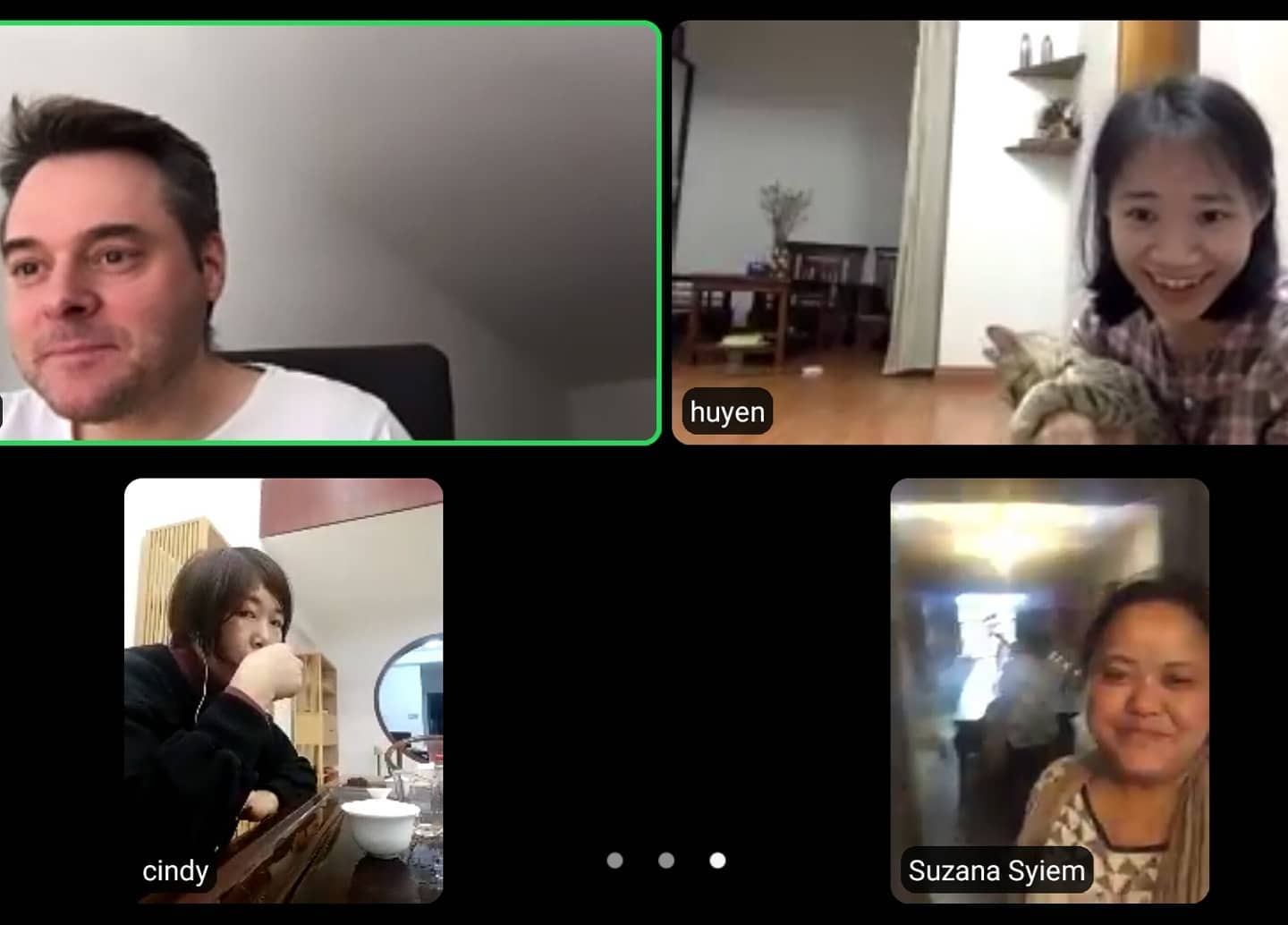
Who joined:  Jason McDonald of the Great Mississippi Tea Company, Rishi Gopaldhara of the Gopaldhara Darjeeling producer, Anna of Kinnari Tea of Laos (a vendor, but also a tea production consultant across broad scope), Nika Sioridze of Georgia--the country--and the Greengold producer, and Narendra Kumar Gurung of Nepal, a private tea grower and processor.  What an honor to meet with them all, really.  My other tea clique joined as well, Ralph, Suzana, and Huyen.  Huyen has experimented some with making tea but it didn't take that many leading questions to move through a range of interesting scope.


To be clear all these people make great tea (or Anna sells it, but she's also involved with processing consulting).  Nika is a bit closer to the starting point than the rest, and that shows up in styles he hasn't perfected yet, but in general his teas are much better than one would expect, already above the level of some much more developed forms.  Even the one oolong, still being worked out, has a great distinctive roasted bamboo flavor aspect that makes it very positive to experience as it is now.  It's also possible to see some degree of ongoing transitions in what Jason is producing, even for trying one set as just a snapshot, but their teas work well for exactly what they are right now too, and don't come across as a work in progress.  In both those cases very positive inputs define their teas as distinct and unique, so it's not just a matter of copying forms and versions elsewhere.  

Rishi and Narendra aren't finished with making adjustments to styles, probably, but both make good representative forms of Darjeeling and Nepal teas, which is a positive thing.  It's almost not fair for Gopaldhara to have such a developed starting point in relation to a lot of other producers and types, but that's how tea goes.  There's another level of Chinese or Japanese producers drawing on even longer term prior production and processing, but I suppose to some extent more developed cultural tea tradition enables a better starting point and established demand but also well-developed competition.

So how and why did we end up meeting in this form?  In talking to Nika about processing issues, about them making adjustments to styles, it occurred to me that we have talked to a lot of people with a lot of exposure to those issues.  Getting them all together to share very proprietary, hard to come by information seemed a stretch, so I initially approached asking them in terms of how they felt about such a thing.  Everyone was completely open and positive; which was really surprising.  To my understanding it's not that none of the others was a direct competitor, although that might have helped, but more than that it seemed like "giving back" related to others having helped them in different ways, which caused them to be more open to sharing knowledge.

It probably didn't hurt that Jason and Rishi had met.  The rest my friends and I have met, in the meetups I keep talking about, but I'd imagine their contact was quite limited.

I won't add details here but the scope of what we covered was interesting, and I can at least share categories, and one very interesting general theme that emerged.  They discussed growing tea quite a bit, challenges that come up in different places (and natural environments), along with issues with market demand, sales channel development, and labor support.  I suppose it's not going too far to say that Jason experiences as much problem with getting staffing for farm labor as anyone else, and what he contributed about research and use of automated harvesting was interesting.  That's not a new subject but the actual approach and equipment does keep evolving.  

Jason also mentioned how climate change is a huge potential challenge for them.  Again it's not a secret that the climate in the US is shifting quite fast, with unusual storms, temperature extremes, periods of high rainfall, and droughts.  They'll make the best of it in compensating for drought, and beyond that the plants will have to try to endure most of the rest, and some plant types just won't.  He didn't talk about hard freezing occurring that far south in the US yet but it's probably only a matter of time.

To skip ahead to a general conclusion, or theme that was interesting, it was fascinating how the different producers were sharing detailed knowledge based on a range of different kinds of experiences and sources.  Of course Rishi was drawing on the inherited knowledge of a very developed business and growing region, even though he's making changes and experimenting with pushing forward from that starting point, adjusting tea styles and processing.  Jason had access to great research derived information; some of what he shared was really interesting, even for being isolated ideas from different scopes (their whole story for tea growing and processing would take a long time to tell).  Anna has broad exposure to what a lot of Laos producers are doing, at a very detailed level, and to how their industry is developing to respond to a lot of internal and external changes.  Nika is newer to tea business but it's fascinating how they've made a fast start based on reclaiming and renewing an older Soviet era plantation, which was interesting to hear about.

Narendra had a conflicting family issue to deal with and was less involved for joining towards the end.  In a sense that's a shame, because Nepal doesn't necessarily stand below other countries in terms of produced tea quality and novel character, in spite of working within a less developed tradition.  The farming and production that Narendra carries on was started by his father, so it's not really new.  He has attempted to translate his own production into a co-op theme, which I've not heard much about in terms of results since we discussed that last a couple of years ago.  I suspect that it was significantly disrupted by the pandemic, as many things were.


a capture version with Narendra


It was nice not talking very much about pandemic disruption and concerns.  We mostly stuck with basic tea growing, harvesting, and processing themes, with just a little added on the distribution and sales side.  If you could talk with a close tea producer friend, and you knew a lot more about those issues than I do, it's the kind of discussion that you might have, but with multiple inputs instead.

One concern is always how it's going to work in terms of flow of conversation; we've never tried to get nine people to meet and converse.  I suppose we never had nine present this time, since a couple joined late and Huyen was called away.  It went really well though, with the odd zig and zag for theme, or missed comment, due to that many joining.  I think Anna might have been able to add more about processing but naturally slipped into a coordinating role, and it was probably as well to lose some input from one member to enable three others to share a lot.  The knowledge and experience everyone was drawing on wouldn't fit in an hour or two of discussion, but what did get covered was a great sample, with some points very relevant and actionable for others.


an early capture with Huyen included; it's hard to get 7 or 8 good images at the same time


The differences in their businesses were interesting, not just about climate and historical / cultural context, but scope and scale, and type.  Jason is ramping up very developed and advanced production for being a half dozen or so years into moving past a background and design review, and initial steps.  They push forward on lots of fronts, at the same time they are ramping it all up, across scope like environment design, equipment use, and sales channels.  

We didn't even touch on combining plain, high quality tea production and blend / flavored tea development, which I see as both a response to a market condition and also "the tail wagging the dog," them proactively changing their tea market as they expand into it.  Tea blends / flavored teas aren't new but their approach to them seems to be, to me.  Rishi is on the opposite extreme, also making a lot of the same changes for experimenting with new range, but drawing on tea tradition that goes way back. Their website mentions that they were founded in 1955, but that's the year his family took over the plantation, which was founded in 1881.

One really interesting difference came up in Jason's approach of drawing on modern research inputs that identify compounds in teas that transition in different ways during processing.  In the end best-case growing and processing practices that derived from that input seemed to map to traditional practices developed from received knowledge and personal experimentation.  

I suppose that theme of transitioning from a very old, grounded tea tradition to it being necessary to make a lot of radical changes just to make a business and "local" tea production theme work was common to everyone.  Laos was a completely isolated and undeveloped country 20 years ago; when I first visited there around 14 years ago they had just finished wiring the more populated half of the country with electricity access.  Nepal might have started on development a little earlier but must be in a roughly equivalent place.  Nika and Georgia's case is fascinating to me, related to their economy going through a reset after the 1990-91 end of the Soviet Union.  He invited all of us to visit there, and I would really love to get to that.  

Without climate change, a pandemic, general economic disruption, and large scale staffing issues a lot shift would be required for tea producers to keep up, but with those factored in ongoing success will require aiming at a moving target.  None of them seem to be getting caught flat-footed, trying to keep on with what tea production had been before; instead quite the opposite.

One part that helped make this possible, that I appreciate even more than the fantastic knowledge sharing, is how these are all people that I respect, admire, and can look up to as good examples of human beings.  None of them are taking short cuts, "doing what they have to do" in difficult circumstances; they're not that kind of people.  They are all paying dues in full, putting the work in, not trying to benefit from others' disadvantages, instead only seeking out successes that they've earned.  I only partly joked with one about how I would trust any of them with watching my kids, the one thing I value most in this world. 

All in all it seemed very successful to me.  I don't doubt that a much longer version wouldn't have ran out of discussion scope, so maybe we will be able to break past form and repeat that meeting version.


Sunday, March 7, 2021

Extending an online meetup social circle


There's something new related to tea I've not mentioned yet, that meetup circle of three other friends and myself trying out extending that form to include other people joining.  This describes how that goes, and introduces those others, all with really interesting background related to tea, more than it covers the discussions content.  I wrote some notes on the specific content of one of the meetups but I'll hold off on that post until some later news adds to that.

One issue with even meeting with those four friends is dealing with the online form.  Work meetings are like that over the last year, of course, from working from home for nearly half a year, but social meetups are different.  The feel and pacing, and potential to embrace tangents, all vary a lot more than a structured work-meeting form.  For background context those friends are Ralph Rauschert, Huyen Dinh, and Suzana Syiem, all experienced, committed tea enthusiasts and active social media participants from Germany, Vietnam, and India, respectively.  

Encountering all these contacts relates to writing this blog, of course, and also to experience in moderating a tea group that I helped found, International Tea Talk.


Let's start with who we've already met with; that part is amazing.  We talked first with Jaba Borgorhain, from a tea producing family in Assam, next with Anna of Kinnari Tea, a Laos tea vendor and development consultant, and Cindy Chen of Wuyi Origin, who needs no introduction for many.  She is a very well regarded Wuyishan based producer, from a traditional tea producing family there.  She's in a very unique position for being part of a Chaozhou, Guangdong tea producing family; her husband's background. 


I've met all these friends and the meetup attendees in person with one exception: Cindy and I haven't crossed paths yet.  That's a real shame, because she's as kind and genuine as anyone could be, and experienced with the subject of tea on a level we conventional tea enthusiasts can't really relate to, born into it.  Cindy's daughter could Gongfu brew effectively at the age of two.  That girl probably could've taught me a good bit about tea at the age of four, and I'll never catch up to her current exposure level.  Cindy must have been like that, steeped in an amazing degree of tea exposure by early childhood, which kept on going from there. 


the meetup with Jaba


meetup with Anna (photo credit Suzana Syiem)


Going into these sessions one open question was how well the form would work.  It was never set up as any sort of interview session, with no fixed format or scope.  As those months of online meeting with my other friends went on over 2020 we talked more about what was going on than tea, of course always passing on local pandemic updates.  Meeting new people for the first round raised a concern over how introduction would go, and theme focus, versus actually getting to what those joiners had to contribute about their tea experiences.  

In all three cases their exposure runs incredibly deep, maybe more so for Cindy being in those unusual circumstances, but really just more different in type than degree for each.  Anna's background spans tea vending, running a shop, producing an RTD kombucha, helping producers adjust processing, and onto NGO coordinated development issues.  Jaba is from a tea producing family and covers some of that same diverse scope, with an interest in tea history and fair trade issues.  Laos and Assam are seeing changes in longstanding tea traditions as they become something they never were before, versus Chinese forms being more grounded in history and consistent, both in terms of the tea itself and the culture.  Plenty of change and disruption happens there too; I mean relatively speaking.

Talking to Jaba stuck with the subject of tea more.  Ralph and I met her here in Bangkok the first day that I met both, so that bit of introduction was already complete.  The Indian / Assam context being so familiar to Suzana probably helped.  Development issues were interesting, about what is changing, and what will continue to change.  That's the part I expect to report more on in the next couple of months, so I'll set it aside here.  One thing I didn't necessarily expect was discussing local tea preference issues and import and shipping concerns in Vietnam, Germany, and Thailand, the conversation scope going in both directions like that.


with Ralph and Jaba at Jip Eu, my favorite Chinatown shop (and Kittichai, the owner)


Meeting Anna was more of a personal introduction.  Her tea background extends to significant awareness across a broad range of traditions.  The development themes about Laos tea are perhaps even more fascinating, for starting from closer to scratch, in an odd twist based partly on use of tea plants from an older tradition that are far older than anyone living today.  That mix of inputs can result in production of some amazing forms of tea.  But we didn't get too far into that.  Interpersonal inputs can play into discussion scope, without a clear theme or central moderation keeping it on a limited track.  Anna seemed genuinely interested in finding out about the others, instead of just talking about her history. It's not as if that introduction scope is a bad outcome, or one that falls short in some sense, even though it would replace some novel potential related to the subject of tea.  

Some of the same happened with Cindy; we didn't get far talking about her tea.  At one point she discussed her personal favorites, and it even drifted into discussing pu'er versus Chinese oolongs, but it never settled into a Q & A scope, about processing or tea types, or into much history.  Cindy did mention how Wuyishan tea demand has transitioned over the last 20 years; that was really interesting.  One cool part about Cindy, which really applies to the other two friends as well, is how tea expertise and related perspective is amazing but she shines as a person even more.  If I had to choose between never talking to Cindy again or never trying any of their tea I wouldn't miss the tea, even though it consistently represents the best quality versions of any tea that I've ever tried.


my favorite picture of Cindy, as the red riding hood of tea


The complete meetup potential was never clear, if the form would turn up some novel further direction.  For now I think it's  little too chaotic and unfocused to shift to include more scope, for example to add more participants at the same time, or record sessions for sharing through video with others, or to add more structure in any way.  

It's a potential problem to look back at each session and regret what wasn't covered or expressed, a bit of which I'm guilty of passing on in this write-up, and in immediate perspective after.  That seems to be looking at the glass that's half empty.  A social meetup is about the social part first, or else it's a topical interview or whatever else.


it's nice seeing Huyen's kitten play, and just catching up


Meeting any or all of those three again would be nice.  For not getting into that much about tea we left a lot of ground uncovered in the last two sessions, but the introduction was more a main theme.  Jaba has more to cover about tea too; there will be plenty of updates about local changes we only touched on in general that time.

Maybe the most interesting potential relates to online contacts who have agreed to join but haven't yet.  Russian tea culture has been a favorite theme for a long time, since visiting there three years ago, and trying a lot of great tea from Moychay.  We've not been able to connect yet with a friend in Nepal who makes great tea, and tries out some new related themes, co-op processing and agricultural tourism.  I know some other tea producers, and Eastern European tea culture is interesting; lots of places are.  It's funny how it works out that it would be interesting to hear more about American tea culture, an interesting subject that gets far more attention online than the related Chinese experience, at least in the "Western internet."

Since I've not did justice to introducing these meetup visitors I'll share some links that go further with that, prior writing about them and what they've been up to, with an extra reference contact added.


Making rock oolong (Wuyi Yancha): an interview with Cindy Chen

Making tea in Wuyishan; sharing pictures and video from Cindy Chen

Wuyi Origin site based blog


Kinnari Tea sheng comparison (Nyot Ou district in Phongsaly, Laos)

Kinnari Tea Laos Moonlight White (maybe quite out of stock, but an example of an interesting tea)

Kinnari - ຊາຈາກລາວ Tea of Laos Facebook page


Oiirabot Assam hand made black tea

Trying Assam falap, a variation of bamboo sheng (from Jaba, an interesting tea, but I'm not sure if they actually sell it or not)


a rare off-tea theme, visiting Wat Pho, the Bangkok temple where I had ordained


Sunday, October 20, 2019

Kinnari Xayaboury black and white Laos teas


white tea left, black tea right


This reviews teas passed on by Anna of Kinnari Teas awhile back.  I did really like the sheng versions I tried then (reviewed here and here). 

It's impossible to keep up with trying everything I have on hand and this omission stood out, all the more so for these being two of the better teas I have yet to try.  Not everyone would love them as much as I did, or like the one of the two I liked best versus preferring the other; so it goes with subjective preference.

As far as I know neither is commercially available; so much for these posts mostly serving as thinly veiled marketing.  Since they were experimental versions (per my understanding) more of them may have been produced, or next year they might be developed further.  But Kinnari isn't selling teas via website or retail order in any form, as far as I know.  Maybe I'll edit all that after posting this and talking more to Anna about it.

It's questionable to pass on what I remember of her discussion of these, something along the lines of trying out different processing methods for a tea plant type she was unfamiliar with, that hadn't been made into white or black versions that she had tried.  It's an understatement to say that the experiment was a success.

I did this review without much for electronics support, initially tasting teas and making notes on a piece of paper (funny that system still works).  The photos will be quite limited, and the review format is more sparse.  That last part is probably an improvement; sometimes less is more.  It is kind of a shame the photos are limited; those teas were quite photogenic.

Review:


white left, black right; brewed a bit dark to compensate for being a late steep, after these review notes


Xayaboury white (Spring 2019), by infusion:


1.  Fruity, distinctive, unusual.   A primary flavor is essentially teaberry, berry and mint.  It's also towards a creamy version of peach, with a hint of spice.

2.  An unusual flavor shift occurred, with it much more subtle this round, similar to the first infusion in aspect range and character, but much less intense.  Aspects include fruit / berry / mint (as described), toasted pastry, and a light vegetal touch, maybe close to teaberry stem, or dried moss.

3.  Still unusually subtle, at least light in flavor range, but at the same time rich, full, and creamy.  Berry and mint is still present, and toasted pastry, but the profile has shifted towards caramel custard, like flan.

4.  A slightly longer infusion increased the intensity, with the pastry effect picking up a little.  It reminds me of Swedish tea ring pastry my mother used to make.  A very light savory aspect joins in, along the line of sun-dried tomato, but it's only a minor supporting aspect, not at all primary.

5.  (Infused towards 30 seconds, versus around 20 prior).  Still quite subtle in flavor, rich across other range.


Sun-dried Xayaboury black tea (listed as originating from 1200 meters in elevation):


1.  The flavor overlaps with the white tea range, but it's different, with a touch more menthol effect in the mint and berry (teaberry).  It's slightly closer to how #18 Red Jade / Ruby Taiwanese black teas come across, just a lot more mild in mint / menthol range compared to a typical range for those.

2.  Just as intense, similar to the initial round, maybe just slightly warmer.  This is already one of the best black teas I've ever tried, per my preference.  The overall balance is just amazing.  Sweetness, rich feel, positive mild structure with no significant astringency.

3.  Similar, exactly how one would want a Red Jade / Ruby black tea to balance, but they're just never quite this positive.  Combining mint or menthol with black tea character sounds interesting, and it can be pleasant, but it never integrates and balances as well as this, at least in the versions I've tried.  The level of warmth, flavor complexity, and sweetness is perfect.  I never use that word in this blog, perfect, because it implies a preference basis or type framework, but it's just ideal.

I visited a friend, Sasha Abramovich, a few months back, and tried what was probably the best balanced, most positive version of Red Jade / Ruby black tea I have yet to experience, per my preference.  That tea version wasn't even close to as pleasant as this one.


4.  Intensity tapers off--towards the white in character for that shift.  The teaberry effect drops off a little.  Rich warmth and toasted pastry picks up.

5.  Thinning a little; it could be stretched more, but it's quite pleasant as it is.  It's similar to the earlier infusions but narrowed in aspect range slightly.


Later rounds:


These brewed another half dozen very positive infusions; they just wouldn't quit.  Even then they could've probably stretched for a couple more.  Both teas were amazing, very pleasant in completely novel ways, with much different character for each that also overlapped quite a bit. 

I could imagine someone not loving the white version for it being subtle, in terms of flavor, but for me it wasn't hard to appreciate how the flavor that was there was great, so well balanced, and well-supported by a pleasant rich feel.  For some silver needle versions feel stands out as much as the flavor, and that can sometimes be a bit neutral, in addition to being light, but this white version's flavor range was great.

The black tea would easily stand in as the best version of Taiwanese black tea I've ever tried, and I've liked a number of those that have crossed my path.  Ruby / red jade versions tend to be too heavy on menthol to me, not well-balanced, and this more than covered that potential flaw.


Wednesday, August 21, 2019

Pu'er-like teas in South East Asia


First published by TChing in three parts (here, here, and here).

I tend to talk about teas version by version, or maybe source by source, or at most type by type.  A question came up in a tea group (in the Facebook Pu'er Tea Club) about trying versions equivalent to Yunnan pu'er from South East Asia (so not pu'er, since that's a regional tea name).

In response I mentioned a number of sources, which works as an introduction to what the teas are.  I'll reference the general feedback there and what those sources sell, which will outline what is out there too (most of it; the range is quite broad).


The different versions vary a lot. Not all the styles are exactly the same as in Yunnan, and of course those vary a lot too, just in a different sense. Some versions can be just as similar to green or white teas, depending on the source. For all the ones I just mentioned the general style would tend to be familiar, quite continuous with the Yunnan processing and style conventions. 

It's hard to separate local character from processing variations, especially given that context. It had seemed to me that Myanmar sheng were very bitter, in general, but I just tried a 2018 sheng version that wasn't, necessarily, from Kokang. Compared to a Yiwu maybe it was but I mean it was quite drinkable and well-balanced for a young tea. More "local" sourced shu varies quite a bit. I've had great luck with Myanmar and Thai versions, and less with what I've tried from Vietnam [related to shu; sheng versions were generally quite pleasant], and less shu comes out of Laos.

It's a bit much to cite all those vendors but who they are and what they sell tells the story.


Hatvala, in Vietnam:  one of my favorite vendors for selling an interesting range of different local teas at a good value.  Vietnamese sheng is something of an anomaly, but really the tea traditions in this region extend back to well prior to when modern country divisions were settled where they are now.  Vietnamese versions vary but they're similar to Yunnan pu'er and in general a good value, from the right sources.  I have reviewed versions of their sheng but citing a description of one I've not tried might give some insight about the sources and into how unique those can be:


...from Y Ti in Lao Cai province. Produced in a Red Dao community where families live either side of the Vietnam/ China border which is separated by a simple stream here. This is another complex tea with a broad range of flavours – green plum, raisin, moss, stone, floral, mild spice and dried hay – that take turns to explode in the mouth. Pleasing bitterness and a very long sweet aftertaste make Forest Genie an extremely refreshing tea.


a Hatvala and local Hanoi shop sheng


That's marketing content, of course, but it adds depth to how flavor range can vary a lot in teas from vastly different sources.  That "Dao" reference relates to an indigenous people who live throughout the region, including in China.  I'm mixing themes a bit here but this Farmerleaf (Yunnan source) video about a Laos development project sheds more light on how local producers in SE Asia aren't necessarily as well organized and compensated as Yunnan pu'er producers.  This NGO reference covers more about that from a non-commercial perspective; the images communicated alone make that worth a look.

credit the Comite de Cooperation avec le Laos site


Tea Side, Thailand:  this is the main source for well above average Thai tea versions, selling a much broader range of sheng and shu than I've encountered across all the rest of all sources (and Myanmar versions, just not as many).  Again Thai versions can be distinctive but aren't necessarily uniformly different than those from Yunnan.  I own what's left of a 2006 sheng cake from Tea Side; Hong Tai Chang was an old Chinese producer who processed local Thai teas some time ago.  They're also working on small-batch shu production (well along with that, since 2013 per this 2017 article on the subject), and their newest sheng product line expanded a lot, so production of that must have changed recently too.

on Tea Side producing small-batch shu pu'er (photo credit and article)


Lamphang Tea, Thailand:  a real exception, a very small local producer.  There are actually a lot of these sources through Facebook pages, especially out of Vietnam, since tea culture and production is more mainstream there.  Such teas would less often be compressed, but this vendor does sell versions as tuochas.  Lamphang isn't in the remote North, where the older trees would tend to be found, so I'm not clear on how a producer from there makes sense, but the tea is nice.


Lampang sheng tuochas (credit their page)


Kokang, Myanmar "pu'er":  I just met this producer at a Bangkok expo, and reviewed the sheng and shu.  It's quite good.  The first two blog posts that turn up from searching that location are about a version a tea-expert contact passed on (Olivier Schneider), and a 2006 version I bought this year from Chawang Shop.  The 2017 shu and 2018 sheng I just tried are clearly well-processed teas made from good material, distinctive for expressing local character, but not quite as bitter as prior sheng versions have seemed.

meeting the Kokang producer at a Bangkok expo (description and review)


Kinnari Tea, Laos:  I love Laos teas.  This producer is a friend, and another friend and tea enthusiast travels in Laos passing on interesting versions that he turns up (Somnuc).  As with Vietnamese versions styles and quality levels vary a lot but also common to there the best examples can be distinctive and very pleasant, giving up nothing to Yunnan teas.  Kinnari isn't selling direct retail at this point (except for a new kombucha RTD venture) but reaching out to her online might work, instead of taking a flight to Vientiane to pressure her to sell some directly.  I just met Anna a few days ago; this first post is a start on reviewing some very interesting Laos versions from them in the next couple of weeks.

a small sheng cake Anna of Kinnari Tea passed on


I mentioned three other sources in those discussion comments, about buying a nice sheng from a Hanoi shop online, Hein Minh (old-tree slightly aged versions), about Farmerleaf (as I'd just mentioned), and about Moychay, a Russian vendor, selling really good Myanmar shu.  Options are around.  In an odd twist I tried Laos tea from another Russian producer in a tasting in Moscow once, but Laos Tea isn't so broadly available that it would be likely to turn up.


Laos Tea tasting in Moscow (with a rare Laos shu review here)


Black and green tea are produced in those countries too, and oolongs, even white teas; sheng and shu are just the page I've been on for around two years now.  It might seem like I would have SE Asian options somewhat sorted out but I'm not so sure; quite likely sources and types completely new to me will keep coming up.  I've heard of local Taiwanese sheng recently, and bamboo pu'er coming out of Laos (a version of falap, which is also produced in Yunnan), and sheng cakes from Assam (just outside the edge of SE Asia, really).

It's a shame that very few Thais know these teas are out there, or appreciate better quality teas of any type, but I'm working on that.

Sunday, August 18, 2019

Kinnari Tea Nyot Ou (Laos) Forest Sheng


with a more complete description (it's maocha, loose, on the right)


I'm trying the second sheng that Anna passed on, the owner of Kinnari Tea of Laos.  The first pressed version I reviewed not long ago (here).  It was pleasant, unusual for being slightly oxidized.  Or at least seeming so, with her take on that confirming it, already mentioned in a Myanmar Kokang dragonball review draft (which I'll post out of order), so I'll not go further with that idea here.

I didn't have long to try this tea before a swim lesson this morning.  I'm doing most of the editing on the same day; not how that usually goes, but I do have two hours to spend during the lesson, since I'm joining it.  It made for a strange call then to comparison review it, since that would add to the time demand, but I was curious about common ground with the other sheng, and if the difference related to the extra oxidation would stand out.

Anna mentioned the pressed version's background and it seems nearby but not completely local, from near different villages in the Phongsaly province:

That sheng is a forest gushu from autumn 2018, from Ban Nammanoy in Nyot Ou dirstrict, one of the villages we're working with for CCL project where William is involved too [of Farmerleaf]. They just started making cakes - they are likely among the first in Laos to stone-press their own cakes.


this version left, compared with the one already reviewed, right


Micro-climate, soil type, plant type, and processing could all be nearly identical or completely different whether the tea was from a relatively close area or far away.  One would expect the common causes to correlate to proximity but that wouldn't be necessary at all.  Rainfall patterns can be quite local, or soil coverage and type could vary with terrain features, and so on.  I focus on how teas come across most as a result, de-emphasizing background that really is interesting and relevant, because even in this special case where someone knew the producers and saw the trees there's only so much detail that can be included anyway.

You might think you could look up those places on Google Maps and see how they fit together, the two villages mentioned, but it seems to not work that way:


zooming doesn't help; that North-West area stays blank


I can mention lots of other references, if looking up related pictures is of interest.  Why wouldn't it be; remote Laos has a cool look. 

Here's a Farmerleaf FB post of being on the related same visit (they also support the NGO development project), with more in Kinnari's FB page if you look around (although maybe none so directly related, more on the other two teas I've not checked out yet), and a page with lots of photos from the CCL NGO involved (William stands out a bit in those; he's the guy that doesn't look Laotian).  This Farmerleaf video is from the village this tea is from, Tungkualin Noy; it's fascinating hearing that local farmer's perspective.

Review:


this Ban Tunkgualin (sp.) village sheng left, Ban Nammanoy right


The first round is just a first impression, a little light to go far with descriptions.  It seems interesting.  Floral doesn't stand out as much as it might, or any flavor or other aspects, since the tea is quite subtle still.  Mineral is already showing up, with a bit of vegetal range, and an unusual pleasant spice-like note.

The other version (the tea cake pressed tea that I had already reviewed) is warmer in range already, with a lot of warm mineral and a hint of dryness.  Since it won't do both justice to say a lot related to this round I'll add more in the next.  I've given this first round around 10 seconds time and will go slightly longer on the second to get this moving. 


Second infusion:


This Nyot Ou version is still on the subtle side; that's interesting.  The thicker feel is there, and aftertaste hangs around, what there is to taste, and it seems like sheng, but it's not strong flavored at all.  Bitterness is very mild, sweetness is also limited, and other range doesn't stand out, to an unusual degree.  The flavor present is pleasant.  It has a root-spice theme going, it seems; that's what I wasn't placing.  Vegetal range is hard to pin down, and people would surely interpret that in different ways.  A light but warm and sweet version of autumn leaf is close enough.  Maybe it's odd that teas don't resemble the scent of dried forest (tree) leaves more often than they do.  Some light mineral supports that.  It all works; it's nice, just unusual for being light across those different aspect ranges.

The other sheng is much different, although there seems to be some common ground that stands out more for trying them together.  It's brewed a little too strong at just over 10 seconds; astringency picks up as a result, with that dryness and mineral coming across closer to how black teas do for character, just a very mild version of that.  Bitterness is much stronger but still light for young sheng.  Sweetness could be more pronounced but the balance isn't bad.  I'm probably missing a couple of flavors, or one other character aspect (I could go on about feel, for example), but time is tight so I'll rush past all that.  I'm off to swimming lessons soon; it's always something with the kids.

I mis-matched these proportions slightly for rushing, going too heavy on the second version.  It's odd it's even possible to get as close to judging tea amounts by eye and feel as seems to be typical in these.  They're not so far off it will make it hard to get a feel for that as an input, and the point wasn't about identical comparison anyway, just to get a feel for similarities and differences.


Third infusion:


Again, interesting for being subtle.  More wild grown tea versions can be mild, and interesting in flavor range, so a lot of variation across related type versions isn't unusual.  No real change to that list though; if an accurate read root spice is a main component, with a good bit more filling in the rest given how subtle the tea is.  Bitterness probably picked up a little but it's still very light.

A warm version of dried leaf stands out a lot in the second, which has a bit dryer, warm mineral character.  It's quite pleasant tea too, just unusual in character across some different range.  Some background wood character might be common between the two, harder to recognize for these being so different in other ways.  The first tea comes across as slightly sweeter for having the balance it does but it may or may not be.  It could just be an effect related to how the different aspects combine together.

It's almost time to swim; we're at the stage where my wife is shouting.  One more infusion might be it, for now.


Fourth infusion:


I like this tea more than I would have expected for getting so little to experience out of it.  That subtlety works better for all that's there being so pleasant, and slightly novel.  The root spice aspect (or one I'm interpreting as such) is nice, and balances well with the rest.  The feel has a thickness to it, and there is some bitterness and sweetness, just not much.  I think seeming sweeter probably is an effect from other aspects in trying the teas one after the other.  In a way this reminds me of an oolong, the way that a thick feel and pleasant complexity can go together with a tea that's not intense in flavor, although most oolongs are stronger in flavor than this too, just not like young sheng.  It might resemble a typical white tea character as much or more.

More of the same for the other:  interesting warm mineral tone, autumn leaf aspect, some hint towards spice range, a little harder to pin down, maybe an aromatic bark spice.  A slight dryness to the feel is different.  Dropping infusion time to relatively fast pulls that into a good level; it balances with the rest.


Fifth infusion:


I did squeeze in one more round, not so different though.  Bumping time just a little drew out more intensity out of the Nyot Ou tea, but it wasn't lacking something to experience, and hadn't seemed out of balance.  That root spice aspect leans a little towards a dried fruit, maybe along the line of dried longan.  It's hard to separate if that's from going slightly longer or a natural transition across rounds, but at a guess it's the second.  The second version transitioned aspects and balance a little, which I'll leave off deconstructing, since I'm out of time.


Conclusion


Rushing the tasting didn't do that justice, especially given that main version I wanted to try is one of the more subtle sheng versions I've experienced.  I liked that though; it helped that the aspects pleasant were positive, well balanced, and that thickness of feel filled in some of the experience.  The freshness of young sheng still seemed to come across, a bit odd given that it was conveyed by a tea with a very light flavor.

I'm often considering aging prospects in teas, sort of the page I'm on for learning now, and this is harder to place than most.  Often it seems flavor intensity, bitterness, and astringency represent character that could transition positively over time, probably shifting a good bit in character over just one year in a warm and humid enough storage environment.  Or conversely, being preserved in original form in a cool and dry enough storage environment, it seems.  This doesn't have much for flavor to "swap out," and minimal bitterness, with astringency limited to a moderately thick feel, which is related to what people often mean by astringency but kind of different.

I would guess that in a year or two it would still be subtle, and it's hard to imagine that flavor intensity or any of the rest could increase so much.  I'm not sure it would fade quickly though.  Brewing this stronger, going with a higher infusion strength than is typical, would ramp up aspects across the whole range, and there is no bitterness or other aspect limiting using such an approach.  It would be natural to try that, to go with 20 second infusions instead and see how it goes.  With feel (thickness) in a light but normal range brewed more conventionally that would really ramp up if doubling infusion strength, and those subtle flavors would have to strengthen.  Often bitterness, feel, or specific flavor aspects aren't positive in simply doubling timing, but in this case it would probably taste slightly more like it already did. 

I did try brewing it longer in later rounds after returning home (from swimming).  Maybe it did concentrate the fruit flavor a little, but it had already started to pick up a slight woody flavor common in later rounds across sheng types.  It was still nice for a few more infusions.


the kids playing up being exhausted prior to the lesson


she graduated to the next training level; hard work paying off


it's not all work; they get play-time in between training sessions


it's cool how chaotic it looks with groups at different levels separated out


Saturday, August 10, 2019

Kinnari Tea Phongsaly Laos local sheng


nice looking leaves, a little dark for being so new


I met Anna of Kinnari Tea of Laos not so long ago and she passed on some really interesting looking teas.  I don't remember the background of this one so clearly, but as I recall it was from an NGO led development project in the Phongsaly area, not made after any processing tutorial for local farmers (part of what that was about), instead representing their prior production techniques.  Sounds good.

It seems there should be more about Laos tea, development issues, or Anna, but I planned to skip that this review.  I wrote more about all that in this post.  Since Anna keeps a moderately low profile online the posts never really go too far into her bio, or show much of her.  I could mention that she's been developing a commercial kombucha product line over the past year in Laos; that's different.

A Facebook page is probably as good a place as any to try to check on that.  And to ask her about getting ahold of some Laos teas.  Why wouldn't someone be interested in Laos teas, and why wouldn't they want to bother her about it?  She's a tea enthusiast first and a vendor second; that helps, and that distinction will be familiar to many.


Review:


Before even trying the tea (after tasting the rinse, actually) the color looks unusual; this tea has oxidized some.  That's the thing with unconventional sheng processing, common in some versions throughout South East Asia (outside China); the inconsistency can make for pleasant surprises or shifts in methodology that don't work so well.

I just shared some of a Vietnamese sheng with Anna that she said seemed like green tea to her.  That would explain why it's supposedly three or four years old and not really age-transitioning.  I like that tea, but it is unusual.  I reviewed that tea here; it's odd how much South-East Asian sheng and black tea I've tried and reviewed this year.  I'm not sure I consider myself some sort of regional specialist but no one else is trying more, I wouldn't think, including vendors.


This one is nice.  The flavor is a bit warm, as young sheng goes, but it works, at least this early on.  That touches on warm mineral tone, versus a range that's more commonly lighter and towards flint / limestone.  Of course that kind of difference varies by source region, among other things.  Cedar stands out; that can be nice.  There's plenty of additional complexity to give it a nice balance, moderate bitterness, decent sweetness, all the usual.  The feel is slightly dry but it still works; being a bit structured is fine, versus rich and smooth.  It certainly doesn't seem like a black tea (related to the color, to it probably oxidizing a little).  Part of the rest seems floral; it covers a good bit of range for aspects.

Different forms of being off the norm in sheng processing tend to cost a tea in terms of aging potential, as I already mentioned related to that other tea's case.  That doesn't matter when drinking one young, as in trying this.  Since both white teas and sun-dried black teas (shai hong) can improve and transition in interesting ways with age it wouldn't necessarily always be true of variations; some might retain novel forms of aging potential.  One might want to guess that overheating a tea in processing, or heating it for too long, would make it more like a green tea, and that wouldn't work as well for aging potential, but I'm not sure that green teas can't age in ways that are positive in some cases.  Conventional wisdom definitely makes that claim though; that counts for something.

I'm not clear on why letting a sheng oxidize a bit during processing would necessarily be a bad thing; it might just change the character.  There would be less of the compounds present that transition to other forms through a more complete aging process, so maybe in the longer run it wouldn't be good, related to the form of a version that's 15 years old.


This is even more intense along the same lines the next round.  Warmth picked up a little, as did dryness in that feel.  Sweetness and bitterness are still working out, balancing those parts of the experience in a reasonable way.  Aftertaste is pleasant, that warm mineral and cedar range (or maybe redwood; I might mix up those more aromatic woods).  I'd go with judging floral tones to fill in depth from there, but those are harder to make out for being less pronounced.

I might mention that I don't think Anna will sell this tea.  That's odd, isn't it, a tea turning up that's just not available?  Closely related Laos teas will be on the market soon enough, just maybe versions produced after they tweaked processing, and put the new facilities developed there for that into practice.  As I'd mentioned before William Osmont of Farmerleaf is also supporting those Laos development efforts; a related tea might turn up there.  This version isn't a can't-miss experience anyway, but it is interesting, novel, and pleasant.  It's nice tea.  I like it as much as some teas I've bought off established vendors presented as intermediate quality, relatively higher value versions, as teas that cost in the range of $70-90 per cake, with the typical back-stories attached in support of that.


On the third infusion sweetness picked up a little and flavors shifted some.  I was drinking some varied source area black teas yesterday; it's not like that.  It's also not exactly typical for young sheng, although given how much those vary that isn't a meaningful thing to say anyway.  Some are a lot like this.  The range I'm interpreting as warm mineral and cedar is expanding to include tree bark, a thicker, softer, richer form of those, and gaining depth, along the line of a dry autumn forest floor.

Floral tone is still there, in the background for being a supporting element, while usually that stands out as a high note instead, as a main aspect feature.  With this being so sweet it might be natural to flag that as something fruit related instead, like nectarine at this point.  With these different-range dimensions combining interpretation is trickier; the complexity is nice.  Other than the mineral dryness it's quite clean in effect, and I don't see that as muddled or off.  Swap that out for a richer, thicker feel and this would really be an exceptional tea, but as it is it still works.


More of the same on the next round (4, I guess).  This might be an interesting tea to age a little since although it doesn't have excessive bitterness or astringency that would improve by fading there is some of each, and the astringency present is in an unusual form.  The other sweetness and flavor potential might be really interesting in another year or two.  It would seem a gamble to set this aside for a decade, but then that's how that goes in general, until someone is really familiar with aging transition patterns.

This would have seemed a lot more bitter to me two years ago, before I stuck to drinking sheng versions over and over.  It doesn't necessarily transition directly to sweetness after you swallow it, the hui gan effect, but it has sweetness already, and that carries over in aftertaste.  It's unusual the way that dry feel doesn't leave your mouth in the aftertaste phase.  When that's a richer, thicker feel that effect is quite positive, and in this it's not positive or off-putting, just different.  That one aspect would be just as common in black tea, that slightly dry feel, or maybe more so.  At the same time this is most definitely sheng; the bitterness, other feel structure, aftertaste, floral range; it's all straight, standard sheng.  Even the aromatic wood tone, and pronounced mineral.

these are all going to look similar, but it's cool looking tea


It's less dry the next round, although I can still tell that aspect is there.  The smoother feel works better.  Those flavors may be shifting a little in balance but it's not worth sorting out how; it wouldn't be meaningful.  It's nice the way that sweetness could really be tied to a fruit flavor (maybe a dried stone fruit); that matches well with the rest of the range.  It's enjoyable.  I'll probably only drink one more round due to doing a combined tasting yesterday and getting blasted on caffeine, an experience I don't care for.  I had stopped at just the right point, when it was just a little too much, but went back to try a couple more rounds not too much later, which was way too much.  Erring on the side of not feeling any of that today will seem nice.


a bit of color for such young sheng


This isn't changing that much (next round), and even if it is it's not doing so in an interesting way, just shifting around aspect balance.  That dry astringency dropping back works better, but it's at the point now where adding infusion time might come up, if only a little this far in (7 rounds or so).

It's positive and interesting tea.  She passed on three other versions, I think it was, that sounded really pleasant and even more novel.  I really should get more background on that source area before posting about that since those weren't from Phongsaly, as I remember, from the next province over instead.  From a different tea plant type for which the origin history has been lost, as I remember her describing it, probably one that came over from China around a century ago, but details about from where didn't stick in the oral history.  She said the flavor range is really unique; that should be interesting.

Some of her teas are so good that I can't drink them alone; it's a waste if I'm not sharing them, spreading out the experience to include others.  It's not a bad problem to have but some teas have stacked up a bit.

sweetness and attitude at the swimming pool; how it goes with these two


the warm-up laps

one of several waiting areas by the pool; looks good for tea tasting


Wednesday, March 6, 2019

Comparing Laos and Nepal white teas


Moonlight white lower left, Laos top, Nepal tea bottom left


This tasting was about getting to a few teas I've been meaning to try for awhile.  Anna of Kinnari Teas passed on teas at the end of last year, some versions that were sold as Kinnari teas and some that she had ran across in travels in Laos.  Her teas are great.  Laos teas are great, in general.  If this government initiative to support that industry works out you'll have broader access to try some, but don't hold your breath; SE Asian government projects take time.

Another friend, Somnuc Amnousinh, passed on some Laos teas I've written about as well.  He's not a vendor, just a tea enthusiast who gets out, and related to that he shared some great versions from Laos.  This black tea version works as a good example; it's a crying shame that anyone being able to order that tea online is only a distant dream.  If it sounds too good to miss then you need to get on a plane and fly to Laos.

The third is a Nepal tea, shared by a small producer friend there, Narendra Kumar Gurung.  His teas are produced through a Highlanders Farmers Private Limited tea-coop, which I said more about in this post, sold labeled as Barbote teas.  This review of a black tea version conveys how unique and well-made those teas are, just amazing they could be that good so early in their production history.  It's not as if he is new to growing tea though, and processing very good tea is nothing new in the local Nepal industry.  "Very good" is all relative; in this case I mean in the sense of not giving up much in terms of Darjeeling quality standards, or maybe as good but just different in style.  To me that's impressive.


It is nice knowing such interesting and diverse people through exploring tea interest.  Now that I think of it I've written about all three of these people in one other post about meeting interesting tea friends, here.

I've not actually met Narendra in person yet, and there really is an extra depth to that form of experience.  But it can still be nice sharing ideas through messages, and I've tried his teas, which have all been very nice.  It's probably luck of the draw as much as anything but all of the Nepal teas I've tried, not just his, were very pleasant, distinctive, and somewhat consistent in style ranges.  I won't add more about that background, though, since there's plenty of review to get to.

One of these is a Moonlight white and two are silver tips style teas (buds-only white, not so different than silver needle, but I take that to be a more type-specific reference).  It's odd comparing diverse tea types like that, just sharing being white tea.  The plan was for the contrast to make sense, for the Moonlight White to stand out for being type-typical and nothing like the other two, and then for them to make sense related to each other, with the contrasting descriptions as a base that fills in more about character.  It sort of didn't work out like that, but that's part of it too, seeing how things go.


Review


I used about a 30 second infusion time for the first round, which would be way too long for the shengs I've been drinking more of lately, but for these they'll just be getting started infusing in that time.

Laos Moonlight White (Kinnari Tea):  the tea is great, as expected.  It leans more towards spice than I thought it would, since I was expecting more fruit, but that works too, and the fruit will probably develop more over the next two rounds.  This is warm and earthy enough that it could easily be an aged tea version, it's just not, similar in some limited ways to a well-transitioned shou mei.  It's nice, distinctive and sweet.  As near as I can tell based on drinking a light initial infusion it's well balanced.  I'll do more with an aspect list next round.

I didn't take a picture of the dry teas before reviewing them, a bit of a lapse.  As memory serves this looked similar to Oriental Beauty in color scheme as these teas go, with dark, reddish, and brown leaf colors, not limited to silver and black as is typical for Moonlight White.  I really should take another photo since I have more at home, and may edit this to include one if I end up posting it before I do. 

I didn't do much with photos at all in this tasting; I'm not sure why not, since I am in the habit.  It probably related to family-originated background noise; I can't always wait for the kids to clear out somewhere to try and write notes about teas, and it's really hard to focus with piano playing, banging around, and screaming in the background.  It's like having wild animals in the house.


the sweet little noise makers out for pizza recently


Laos silver tip (or silver needle, if you like):  this is labeled "Yanchaw W;" I don't know what that part means).  For once this silver tips version doesn't taste vaguely like straw and flowers.  A good bit of spice comes across in this tea, even more so than in the Moonlight version, which included more spice than anything else.  Strange.  If anything the proportion is slightly lower for this white and it seems more intense than the Moonlight (although without weighing the teas that's just a guess, a guess that will be more informed once I see the fully saturated leaf volume, when it will still be just a guess).

I'm wondering if this wasn't contaminated by being stored too close to something else, the taste range is so unexpected and intense.  There were tisanes in that storage box too and one in particular was aromatic, an unusual form of compressed fruit tisane bar.  I had some pu'er and other long-term stored teas well isolated in a cabinet, and other samples and in-progress versions in a moderately sealed box in that same cabinet, and miscellaneous samples and boxes piling up all over the place, and my wife collected the strays into one storage box.  It would be odd if this whole review was about flavor the tea picked up along the way, and it's as much an actual possibility as a funny thing to say at this point.  These Laos sample teas from Somnuc were stored in plastic bags similar to ziplock bags, and those are a bit permeable, not a great moderate-term storage solution, and this has been around for a few months now.


Nepal silver needle:  this is interesting, distinctive, and pleasant; not on the weak side for being an initial round.  It does taste floral and like dried hay, so it is what I expect as a default from bud-only white teas, but a touch of unique range mineral seems to give away the Nepal origin.  There's a hint of citrus in it too, a dried peel that could be tangerine versus a sweet version of orange:  that's nice.  I'll leave off the longer descriptions to do a full list for all next time.


Laos Moonlight White left, Laos white middle, Nepal tea on the right


Second infusion

Moonlight white:  fruit isn't necessarily filling in yet but a nice savory sweetness similar to sundried tomato is.  That's primary; the spice range isn't as noticeable, and really at this point it requires imagination to split out the rest further.  Free associating a little to get to that:  milder spice is present, and some degree of light floral, but a sweet version of it, something like violet, or instead like a light version of lavendar.  Fruit is closest to dried apricot; to me that part does stand out.


Laos silver needle:  I hate to say it but this does taste like the spice in a tisane blend I tried not long ago, something really novel from Moychay, a pressed fruit bar that was quite heavy on spice (listed here with a description cut short since it's sold out).  This might be a rare case of an aborted review, leaving off as a warning about combined storage, especially if one of the teas isn't well-sealed.  Using ziplock style bags can be a problem; not much of the rest of how teas are stored is as open to being affected like that.  The tea is quite nice, for what that's worth; that hint of spice works well with the rest.  If it is natural it's a unique, positive aspect of this tea.  It's probably not (more guesswork), and most likely a happy accident that the flavor cross-contamination was positive.


Nepal silver needle:  the mineral, light floral, sweetness, hint of dried citrus peel, and dried hay all works together.  It's a distinctive profile that seems familiar.  I'd probably have to brew it stronger to draw out a thicker feel but it doesn't necessarily come across as thin, I've just accustomed to sheng lately, which are even more multi-dimensional.  I will let this run over another 30 seconds to get plenty of infusion strength out of it.


Third infusion

Kinnari Moonlight White:  more of the same, mainly savory, towards sun-dried tomato, with a bit of spice under that.  Or it could seem more like autumn forest floor:  warm, sweet, and rich, clean flavored but earthy.  Using either as a main flavor-range interpretation (or more likely seeing it as covering both for range) there's a hint of spice as well, closest to cinnamon, but also not so far off nutmeg.  Reviewers with a great imagination would add a lot to that, aspects like warm floral tone or rich berry, like blackberry, maybe closer to that than apricot in this round.  I thought it might be even fruitier but at least it does get to a little of that.


Laos silver needle:  I'm dropping this out of the review process; it tastes like warm spice and fruit, way too close to that Moychay tisane pressed bar.  Now that I think of it that tisane bar would be perfect for mixing with an inexpensive white tea to convert it to a flavored version.  To some that would seem like an unnatural act, way off their own preference, and I tend to not drink teas along that line much myself.  But it seems to work in this, and it's not even brewed together, seemingly just picking up a trace of flavor transferred across two layers of packaging.


Nepal silver needle:  the mix of flavors seems to evolve to include a bit of fruit.  The light tangerine peel aspect already was that, but it seems more pronounced and complex in this round.  It's a bit non-distinct, since it is coming across along with all the rest (mineral, dried hay, etc.), and since the profile extends to light floral too.  I'll guess out a range for that fruit as dried citrus fruit itself, versus the peel, maybe closest to blood orange, quite warm and sweet.


apparently I didn't feel like taking pictures that day


Fourth infusion


This will do for a final take; it's enough tea, even though these are probably only more or less half finished.  Using the longer infusion times would limit the count, so it won't make it to over a dozen as sheng tastings have (which brews a lot of tea too).  White teas are often durable related to what can be brewed from them compared to black teas.  Oolongs are in the middle; it just depends on the type.

Moonlight white:  other than fading a little the general effect is the same.  Even that change could result from a variance in infusion time, from not keeping track.


Nepal silver needle:  still in the same range, but the balance keeps shifting.  Mineral might be stronger than the rest in this round (a flinty / limestone sort of range mineral, lighter stone), with light citrus, dried hay, and floral tone standing out, more or less in that order.  It's quite flavorful as buds-only white teas go, in a range that's pleasant.


Conclusions


I really liked all three teas.  The Moonlight wasn't what I expected but it was nice.  For amounting to a tea storage glitch the Laos white was very pleasant.  I probably never will carry through on using that tisane for making a homemade blended version, mixing it with tea, but it would be great for that, and I tend to just not think along those lines.  I did mention in writing about it elsewhere (another story I'll get to) that the fruit tisane bar might work well for adjusting the flavor of a masala chai, doing a fruit-adjusted version of spiced tea.  That I might get to; it's interesting messing around with versions of those.

The Nepal tea was better than I expected, although I probably should've expected that character.   Buds-only whites so often come across as relatively flavorless to me that I don't start with high hopes but Nepal teas are often on the intense side, and Narendra's other versions have been really pleasant.  Someone with more exposure to Nepal white teas would've done more with placing that, comparing it to other range.  In the past I've been more of a fan of the really intense bud and fine leaf Nepal white versions, which can be heavier yet on citrus fruit with a cool mineral undertone, as Narendra's version of that type was.


Many thanks again to those three friends for sharing those teas.


at a local temple with a visitor recently


probably time to get back to a haircut theme


same week, same temple (Wat Pho), different visit


a photo with my wife and a very respected local monk