Showing posts with label shou. Show all posts

Sunday, November 9, 2025

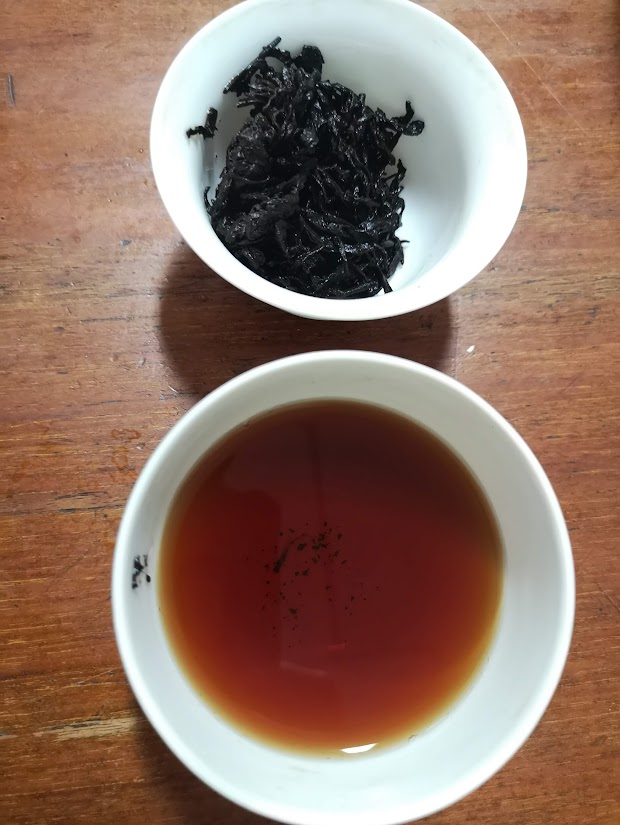
Tea China 7572 Dayi (Taetea) shou / shu pu'er


I'm trying the last sample from a small Tea China vendor's set (sent at no cost for review; many thanks!).  

The posts need to have some sort of story that they tell, and often that's about something completely novel, a new style or origin.  This isn't that; this is a very standard type.  But it could be interesting referencing back to what that standard is.  I was still looking into types and background back in 2014 when I wrote a bit on what Dayi / Taetea 7572 is, in 2014, and on storage issues with tasting notes on multiple versions in this post.  I can't directly compare back to experiences 11 years ago, but I can try to look at this experience based on trying dozens of versions of shou / shu since.  

I'll just call it shou here, but I have trouble deciding which is more correct.  If whichever version matches the best standard Romanization practice is less conventional then it would be hard to say.


Their site listing:


Yunnan DaYi Pu’er Tea 7572 Classic Ripe Pu’er Tea  ($18.53, for 250 grams)


Pu’Er ripe tea from the famous Yunnan Menghai Pu’Er Tea Factory (Dayi). 7572 is a classic formula for Pu’Er tea and a benchmark for Pu’Er ripe tea.  We purchased these Pu’Er teas in 2022.

Dayi 7572 is a bulk Pu’er ripe tea from Menghai Tea Factory, which has been produced since the mid-1970s. It undergoes moderate fermentation, featuring the iconic reddish-brown and thick liquor color as well as a mellow taste.

Taste Profile:

In the new tea stage, it has a rich caramel aroma with a sweet scent, and after brewing, the lingering sugar aroma at the bottom of the cup is rich and full-bodied.

As the storage time increases, its aroma gradually changes. For example, after 3 years of storage, the aged aroma and sugar aroma begin to emerge and become more prominent, while the pile fermentation smell and woody aroma fade away. For ripe teas aged over 7 years, the aroma is mainly dominated by the aged scent.


I suppose that works.  One part of the sales listing says it's 250 grams, and the other 150, so I take that to be a typo / accidental mistake.  It's 150; that's listed on the packaging they show.


Review:


First infusion:  brewed a bit strong, using maybe 4-5 grams of tea to brew over 250 ml, maybe nearer to 12 ounces instead.  I did use a quick rinse this time; that's relatively standard, and it could cut back mustiness or funk a little.

Level of funk stands out most.  Shou often has a damp cardboard sort of scent to it, which others could associate as still within the range of peat.  It's pronounced in this.  Moychay shou versions, which are typically pretty good, tend to have a characteristic form of that, which I guess someone could love or else dislike.  Storage conditions input would enter in.  I think that aspect is mainly coming from the original tea character, which transitions over time, but storage would change how it is expressed, especially if a tea is stored very dry or very wet (diminishing that range, if quite dry, and changing it and increasing it, if stored wet or damp).

It has always been interesting how Hong Kong is considered quite damp storage, with Malaysia also described as such.  From online discussion it sounds like these are two consistent themes, based on conditions in those areas, but in reality vendors could, and probably typically would, adjust humidity level in storage conditions.  Malaysia, and Bangkok, are both much warmer and more humid than Hong Kong.  I've written about that here, and I wrote so much on that subject that I wrote a summary of it all here.  But the second of those was in 2019; I've learned a lot more through experience since.  And I write less now; that's how that tends to go.


Back to the tea, flavor is complex in this.  It's generally positive.  I think these benchmark Dayi / Taetea numbered shou are a great representation of good, basic shou character, and are positive to experience.  Of course they would vary.  Beyond the heavy earth baseline in this some hint of dried fruit and rich spice stands out, or aromatic dark wood.  It all mixes; it's hard to express as a list.  Maybe this does taste a bit like betel nut, the traditional Chinese herb input used for chewing, maybe like how people experience chewing tobacco.

This wouldn't be completely separate from the flavor range of chewing tobacco, just not all that close to it either.  Probably the larger leaf version, with a richer, deeper flavor, than the sharper, lighter, more stinging version of "snuff," the ground version.  I've never experienced much of either, but I did do a tour of vices back in my teens, as was common in the 1980s.  Right, I'm getting old.

That's already describing most of the flavor, but in unusually general terms (like spice, like dried fruit or dark wood).  Maybe I can narrow that down a bit, along with describing transitions, in a next round.  But since I'm brewing this Western style it would typically only make about three strong infusions.  This would also be pleasant to experience brewed Gongfu style, and you would see more transition between rounds.  Not a lot, typically, for this tea type, but some.  

Most people seem to like shou brewed inky black, and there is no limit for astringency or other limitations entering in, so it can be as strong as you like.  It's good for thermos brewing, which is just what it sounds like, using a very low proportion and the longest possible infusion time in a thermos, that you take with you.  It's so gentle on your stomach that it's the only tea I drink when fasting, beyond a little aged white, and I'm on day 1 of a planned 5 day fast today.  It's no problem to have this without breakfast.  Rushing through an extra strong brewed 12 ounce mug to write notes on the next part is a little more questionable.


Second infusion:  lighter, brewed faster.  Some of the peat range drops out.  It wasn't really musty before, kind of clean in effect, but describing a fermentation input like peat is hard to clarify related to that.  I think this may really relate to what people describe as like betel nut, as a main flavor.  I really should try that; it's out there in the local Chinatown (in Bangkok; I'm not in Hawaii now, where I also live sometimes).

The rest is still complex, but still not so distinct.  Warm tones do seem like dark wood, and some supporting range like dried fruit or spice.  Maybe sandalwood?  Dried fruit is perhaps closest to jujube, dried Chinese date.  And then it's hard to make any of that more specific.

Feel is decently rich and full.  Aftertaste expression is limited, but it doesn't clear from your mouth immediately, so those two parts give it some complexity.  It doesn't come across as amazing quality tea, but it's solid, and pleasant.


Conclusions:


On to guessing, limited to age, since I already know what it is.  As I see it shou tends to undergo two main transitions related to aging, related to the early fermentation related off notes clearing, typically over 3 years or so, then within 10 to 15 a version can pick up depth, and a less fermented style--which is more rare now--can transition even more.  I would guess that this is around that 3 year age range, that whatever off notes remained have had time to clear.  That's a bit unreliable, because some shou expresses less of that within the first couple of years.  And some more; some is better after about 4 years, which is really long enough for most of that to settle.

That just leaves placing the quality level, or match to what I like in shou.  It's as good as it's supposed to be, lacking significant flaws, so it's already in the top 50% of the range.  I'm just not sure it's better than 7572 would be from most sources, given it had some age, in appropriate storage conditions.  

All shou seems to resemble all other shou more than for most other tea types, to me, kind of like how there is low, medium, and high quality light Tie Guan Yin, and the versions don't vary as much as you'd expect between examples at the same level.  Of course plenty of people would reject both assertions.

So it's good; it's how it should be.  It's down to pricing and considering aging input, related to where to get it.

Monday, October 6, 2025

2022 Tea China Liu Bao compared with a 2004 Legend of Tea version


Tea China version right, in all photos (both are so dark, right?)


I'm reviewing a Tea China Liu Bao tea, from a set that I've already tried a 7542 from (Dayi sheng pu'er).  Of course the 7542 was pretty much what I expected, except for it seeming to pick up a bit of smoke somehow.  I should add that this tea was a sample sent for review; many thanks for that.

This version I'm using for comparison, from Legend of Tea, I've reviewed before, a "Hilltown Tea" producer version, reviewed here.  It's quite good, so this isn't supposed to be an easy challenge, for the other to compare well to it.  There are other Liu Bao versions in the Legend of Tea set I haven't got to yet; I've fallen a bit behind in reviews.

The earlier Tea China information was a little limited, but then for it being Dayi 7542 it didn't need that much introduction.  This is what this tea is:


2022,GuYun01 Aroma Aged Liubao Tea


This sells for around $20 for 100 grams, or $30 for 200 grams.  It seems better to bump volume, given that discount rate.  20 cents a gram is a bit for Liu Bao (with pricing always varying along with quality and availability), and 15 cents a gram naturally sounds better.  Their description:


This aged aroma Liubao Tea GuYun01 is an exclusive product of Teayucafe Teachina, is steeped in heritage. Hailing from the very birthplace of Liubao dark tea, this 2022 vintage has been aged gracefully for 3 years to develop its remarkable character. Has enormous potential for aging

Taste Profile

It boasts a rich, earthy aroma that is characteristic of well-aged Liubao tea. The infusion presents a deep, reddish-brown hue, reflecting its quality. On the palate, it offers a smooth, mellow taste that lingers, embodying the classic “red, thick, aged, mellow” traits.


I'll add a spoiler here and mention that it's a more pre-fermented version of Liu Bao.  That can be a very good thing, depending on results, but I suppose personal preference always factors in.  To me, related to my own preference, young, harsher Liu Bao is generally not so nice, and it takes 10 to 15 years for versions that are more "raw," more matching sheng pu'er in that vaguely related divide, to mellow out and soften.

This is Legend of Tea information:


Chun Xiang 031 Liu Bao 10G | 100G | 250G | 1KG ($65 for 250 grams, available as a 10 gram sample for $4.16)


Lovingly matured for 19 years, this tea has mellowed out with a rich and velvety profile. A true testament of its age, its tea liquor is bold deep red accompanied with an enchanting aged aroma upon steeping.  The taste is a harmonious blend of smoothness and depth, leaving a satisfying aftertaste. Over time, the tea's character intensifies, becoming even more full-bodied and mellowly sweet, making it a prized addition to any tea collection.


That's 26 cents a gram, but again it's a different kind of thing.  It's actually from 2004, now 21 years old.  It's problematic for vendors to cite age like that in their descriptions because they'd need to go back and edit that page every year to keep it accurate.  Not a big deal though.  It may not be that we can call this completely fermented, or fully fermentation transitioned, but 21 years is a good start on that.


Review:


Legend of Tea 1 (a rinse, really; I'll taste it, write notes, and discard most):  definitely in Liu Bao range, heavy on that one set of minerals, a touch of pine, and medicinal herbs.  It's good.  It might "clean up a little" over the next round or two; it's not really musty, but there's a less clean sort of range sort of adjoining the mineral tone.  Mineral is like slate, I guess, or alternatively and less positively you could describe it as like cement block or still-curing cement.  It's fine though, not bad, not negative at all.


Tea China version:  interesting!  Flavors are less intense, but there's a depth to this.  I thought that it would probably not stand up well in comparison, and that may still be the result, but so far so good, even though flavor is less intense.  Tones are warmer.  This is probably more pre-fermented?  Or it could be older; the other I think is a 2011 version, which I'll confirm by checking the Chinese language packaging image later.  It's presented in a small box, which does list Hilltown Tea Company, Liu Bao Tea, and a packing date of December 2024, but that's not the tea production date.  [later edit:  I was remembering the wrong date, from having looked up a version that it turned out not to be during that first review; it's from 2004].

I think this is the shou / shu pu'er equivalent for Liu Bao tea, which is fine.  I could be clearer on how close the processing steps are to sheng for the less pre-fermented Liu Bao versions.  It's definitely not the same, but it's a gap in what I've researched before.  Or actually I have read a bit on it, but not everything sticks in my mind now.  I skimmed through a good reference in an older Global Tea Hut magazine, which I should have already mentioned elsewhere, but that I can link to again here.

That December 2017 Global Tea Hut issue is here; I really need to read through that.


Legend of Tea #2:  I'm brewing these fast because I'm using a really high proportion, brewing the entire 7 or 8 grams both vendors sent as samples.  Using half as much would be fine for Liu Bao, stretching out times a little.  Or maybe better.  

The picture for these I used as the initial image, and it's really dark, even though these brewed for not much longer than 10 seconds.  Later it turned out that this Legend of Tea version really is from 2004, so it aged a good bit to darken brewed liquid appearance, and the Tea China version really is more pre-fermented, more "ripe."  The Legend of Tea vendor is based in Malaysia; that could be a huge factor.  Teas ferment much, much faster here in Bangkok than when stored pretty much anywhere in Yunnan, and Malaysian climate is pretty close to here.


That distinctive set of flavors is pronounced in this, in a well-balanced and pleasant form.  This is Google AI's description of that list, which I'm forgetting part of:


Traditional Liu Bao tea flavors include the distinctive betel nut aroma, along with woody, medicinal, honey, jujube, fungal, ginseng, and pine smoke aromas. The unique "golden flower" (a healthy mold) can also contribute a sweeter taste and is considered a sign of quality.  


I'm not so sure about the golden flower part; that seems to come up more in other hei cha.  Betel nut was what I was forgetting; that's hard to place because I've never tried it.  Maybe I have some limited idea of what that's about from trying teas described in that way, or maybe not.  Jujube is quite familiar; that's Chinese date, usually referenced as the dried version.  It's great.  That's a part of my favorite Chinese originated desert here, a mix of dried fruit and beans with ground ice and longan juice.  Candied lotus is especially pleasant in that, and the beans are better than they sound.

Pine is definitely present, and mineral herb, which I guess could be in the ginseng range (that's familiar, but I've not had the brewed root version for quite awhile).  Wood, I'm not sure.  Mineral one could go on about, trying to narrow down.  It's not completely different than the warm, odd flavor of golden flowers, one part, which includes a yeast sort of flavor, and other range.


Legend of Tea:  this tastes a lot like shou / shu pu'er.  I'd guess that it's Liu Bao, tasting it blind, so not exactly like that, but much closer than the other.  The whole list I've just described for the other one might identify as secondary supporting elements, so it's complex.  But that distinctive warm and rich tone of shou is present, and earthier sort of range, like peat, or dark wood.  This is fairly clean, balanced, and complex, better than I thought it might be.  

Lots of Liu Bao versions are edgy, heavy in mineral, a little too far into cement range.  The complexity can be limited, and a mustiness can enter in.  These warm tones are only present in more fermented versions, which I think can relate to pre-fermentation.  Even though the other is from 2011, probably, that warmth hasn't developed to that level yet, and maybe it never will [later edit:  it's from 2004; being 21 years old it seems even more likely that the tones will only ever become so "warm."] 


Legend of Tea #3:  not transitioning too much, but then I'm using fairly fast infusion times for these, just a 10 second or so brew.  It's probably brewing more within the still damp leaves between rounds than during that 10 seconds, and it's just long enough to get the somewhat dissolved solids to extract out.

What to add?  This is clean, complex, well-balanced, and it has good depth.  Sweetness is fine; it's not really a sweet type of tea, but there's enough for it to balance.  The flavors list is right, in a type-typical range.  Feel is rich, and it expresses some aftertaste.  It's clearly pretty good.  

It's hard for me to put Liu Bao on a scale, as I could with some other types, but I've kept trying it over the last decade.  I've drank about a kilogram of it in that time, probably, even though it's not really a personal favorite.  It's a great tea to have with food, and sometimes you just feel like certain experiences.  And a friend passed on a lot of it, a Malaysian pen-pal friend I've mentioned lots of times here.  I should check in with him again.


Tea China:  this does transition a little; that dried fruit note is coming out, as close as anything to jujube (dried Chinese date).  I'm surprised that this essentially holds its own with the other version.  I didn't lack faith in Tea China's sourcing, it's more that Liu Bao is often not this good.  It's standard to run across harsh-edged, less fermented versions, that are fine after 15 years of settling.  Unless I'm way off, which could happen, this has been pre-fermented, so it wouldn't need nearly that long to shine.  But if Liu Bao is like shou then it would need 2 or 3 years for the funkier range flavors from fermentation to settle back out, a range that can vary a lot (peat, petroleum, etc.).  

I tried a standard brick version of a factory shou once that tasted unusually strong of petroleum, thinking that it was ok, but not the best experience, and then a couple of years later that dropped out, and it was creamy, rich, complex, expressing flavors across a different earthy and warm range.  Then that vendor had went out of business, a Tae Tea / Dayi outlet, selling some other range, so I couldn't buy more.  I don't think that was Dayi or CNNP (Tae Tea or Zhong Cha); another producer instead.

It's hard to judge if this completely different range is better or worse.  It's just different; I think that kind of subjective interpretation would relate to preference.  Quality is pretty good for both.  The first definitely matches what one might expect of Liu Bao better, but a shou pu'er drinker would probably love the second more.  It's not as if there is no pine, related mineral edge, and medicinal herb in this, it's just focused more on warmer range, now into dried fruit.


This has been a lot of tea to drink.  I threw out half the first round, treating it as a rinse, but still 5 cups of relatively intense Liu Bao is a lot.  I broke form and ate a relatively neutral pastry along with these, which I think is a natural fit for Liu Bao, to have it with food.  Anything with strong flavor will throw off a tasting, but it can definitely help your stomach to either eat first or along with the tea.  I'm rushing reviewing now, trying to "catch up" a bit.

Completely another tangent, I just started eating (or drinking) the infused goji berry I have every morning, another part of that Chinese dessert I mentioned.  It would be a natural segue way to say that one of these teas tastes like this, but the second really is closer to Chinese date (jujube).  So why mention these berries?  There's a chance that I'm typing this out not wearing reading glasses, which I don't need or use, because of the dietary input of zeaxanthin and beta carotene from those berries, in part (since I'm pretty far into middle age now).  Lutein is also associate with eye health, but then I already eat a lot of leafy green vegetables, which is normal in Thailand.  


Conclusions:


Most of it is already in the notes.  It's interesting that the comparison version is that much older than I thought, 21 years old now.  This Tea China version is 3; it might settle and improve more over the next 2 or 3 or so, but I wouldn't expect it to change that much in the decade after that.  That's just a guess though, and I've not drank that much "ripe" style Liu Bao for it to be a good guess.

It might seem like as a sheng pu'er drinker I would strongly prefer the first, from Legend of Tea, for being closer to that in theme, if not aspects and style.  I might have liked it a little more, but it was pretty close, for me.  I just don't love Liu Bao enough for that type-typical, somewhat aged range to really stand out to me.  It's good; that seems clear.  I can appreciate it.  But I'm more on a young or moderately aged sheng pu'er page just now for main preference.  That's a complicated subject, and it makes it sound like I'd prefer 10 year old sheng, which of course is not true at all, related to a very different set of transition patterns applying to sheng pu'er.

I tend to emphasize value, in some posts, and then let it mostly drop in others.  These two seem to be priced fairly, for what the teas are.  The other being older, and a "raw" type version seems to probably relate to a natural higher selling point.  It's not so easy to find good "ripe" Liu Bao versions, per what I've experienced (which of course is a bit random), but unaged teas tend to sell for less, given the opportunity and storage costs of keeping a tea around for 21 years. 

This comparison worked out better than I'd hoped.  I was just worried the Tea China version might not compare well, because the other version is pretty far up the scale for Liu Bao experiences I've had, but it turned out to be different in style, and also quite pleasant.


Monday, August 4, 2025

Sheng pu'er aging transition patterns: bringing it all together


I've been writing a good bit about this subject lately, related to trying a couple more sample sets.  But it has been a running theme for the past decade or so, even though I really only completely switched over to mostly drinking sheng pu'er within that time, maybe something like 8 years ago.

I still only guess about transition patterns, and the effects of varying storage environments on teas of different character, expressing different aspects.  But I've been guessing about it for a long time, based on varying exposure.  I first bought sheng right around the time I started this blog, maybe within a year of then, so I've been dabbling in that exploration for around a dozen years (or looking back the first post about sheng pu'er was 13 years ago).  

It's interesting thinking back to how badly some of those initial trials went, the earliest of which wouldn't have been covered here (although buying that one cake 13 years ago was an early venture).  It's no wonder lots of people don't like sheng early on, given how new factory teas or bad versions can go.

I'll separate this out by individual topics to make them approachable.  These won't be in any particular order, maybe starting with more of what comes up first, and some of what I like best.  

The context that I've been trying two different sample sets recently is interesting; that never goes exactly how I expect.  One was from a favorite vendor, mostly newish versions of "gushu" from a Swiss vendor, Tea Mania, and the other was known Yunnan area versions from a Malaysian vendor, of even more varying age, with storage occurring there adding an interesting twist.  Final outcome is always complicated, and in between 3 and 4 years or 15 to 20 there's a broad range of fermentation levels that make less sense, that vary a lot by starting point.  It would be nice if I could summarize that more clearly than I'm able to.


wet versus dry versus natural storage:  this is really a better topic for an entire 1500 word post on the one storage conditions input.  But I'm limiting this discussion to quickly framing a lot of related inputs, so it makes sense to only add a little about it here.  I don't necessarily think that cooler and dryer storage is really a bad thing, but that kind of environment does preserve tea, slowing it from changing in any way.  Maybe a slow, gradual change is better under some circumstances, and there might be typical negative trade-offs related to that, other aspect input experienced as less favorable.  A limited sourness or cardboard flavor can come up in dry-stored teas, but long-term storage in cardboard boxes may be a part of that.  

For factory tea, aggressive, intense, unapproachable tea that really needs at least 15 years to be approachable, more humid storage is better.  The effect of temperature can be a bit complicated; reading up on some Late Steeps blog post experiments on that is interesting.  I think teas I keep in Bangkok change fast and change differently because of both the humidity and the heat, but I can't really break that down, even to the extent he does there based on testing.  The heat might cause heavier flavor range to emerge, just to add something.

I've not really said much about more conventional cases; what about boutique style teas, or factory teas that aren't as clearly in need of lots of transition, as a Dayi 7542 cake or Xiaguan tuo demand?  How variations of styles and character age in general is a bit complicated, and my own guesses aren't much of a clearly acceptable baseline.  I'll add more about types and get back to those later on.


factory tea:  this is what people encounter first, not my own main preference.  Dayi / 
Taetea 7542 is a main example (a "recipe" number), and Xiaguan tuocha versions I see as the other main example (and the cakes they produce).  This general style, as much as it represents one, typically requires a full 20 years of aging to enter a pleasant and drinkable range, and under conventional conditions 30 years might be better.  You can get away with rushing that when hot and humid storage conditions rush the process, as occurs here in Bangkok, or someone maintaining high humidity in a cooler place would work, just not in the same way.  I think the faster transitions happen the better for these teas, since in cooler and dryer storage they may not be well-transitioned even after 30 years.

The change is what people expect, what they think of related to pu'er transition in general:  harsh, astringent, bitter and intense general character gives way to smoother, deeper, warmer tones, that is much more drinkable.  There is no partially aged stage that also makes sense for most factory teas, in general, as occurs for versions that can be exceptional with some rough edges smoothed out, after "only" 3 to 5 years of limited change.  Then again that's probably a statement about my own preference, over-extended a bit related to what could possibly occur.  There was just a Reddit thread about someone liking some 5 year old Dayi 7542, and that preference opinion isn't invalid.


nearly 20 year old Xiaguan, aging fast due to storage time in Bangkok


A truism comes up that aging won't turn bad tea into good tea.  This can be taken as meaning completely different things, all of which may only apply to a limited extent.  One potential meaning is that if a tea tastes bad originally it may never recover from being of bad quality (which already mixes different inputs as assumptions).  A limitation of this is that aging potential doesn't necessarily always relate to a tea being approachable when young; factory teas are the main counter-example of this.  Another factor is that maybe being approachable when young relates to good aging potential, and maybe it doesn't.  Considering the relatively opposite style of sheng categories can help place this.


drinkable when young pu'er:  this is the opposite extreme.  It's not really a single, unified category, because sheng can be more drinkable for a number of different reasons.  Autumn harvest versions can lack intensity, or more wild origin material can seem quite different, less bitter and astringent, and quite flavorful.  Processing variations could lead towards this general nature, but the result wouldn't be the same as when these other two causes were primary.  Breaking this range down by these distinct inputs makes sense, even when they would tend to combine, and not enter in as just one input.

Some areas tend to produce much more drinkable versions, probably related to a combined set of these kinds of inputs (plant genetics, local climate input, typical growing conditions, and processing choices).  Yiwu area teas might be interpreted as mostly sweet, approachable, and floral, but saying that brings in a limitation and risk of over-generalizing:  that's a broad area, and the teas would surely vary a lot from different places there.  That general pattern might often hold because expectations have evolved in that direction, again for different reasons.  Then it wouldn't necessarily have to be accurate.


autumn harvest versions:  spring teas are typically more intense, often more flavorful (range is greater, not just intensity), and are more desirable.  They'll often have more aging potential, and can reach favorable intermediate age stages that work out better, in some circumstances.  So why drink autumn tea?  Mainly because it costs less.  Sometimes a vendor will obtain and sell a highly in-demand origin area tea version from the autumn, because they have trouble finding a version they can afford to buy and resell from the spring.  Once their applied mark-up involves trying to sell a tea at over $1 a gram they might naturally see market demand as a likely problem.

Could an autumn harvest version be more favorable in some way, beyond just being less intense?  This goes beyond my experience range to answer.  Those kinds of absolutes seem to never fully hold up, but you don't hear much about exceptions either.  It brings to mind a Chinese Wuyi Yancha producer describe how they never do more than one harvest per year for their teas (from their plants), because the cost is too high related to offsetting positive character of the tea and general intensity.  I think pu'er material sources are often harvested three times a year, twice for pu'er, in the spring and fall, and once in the summer for making black tea, although who knows, maybe that's completely wrong.  I'm passing on standard hearsay.


wild origin / varying genetic material teas:  this mixes two radically different inputs that tend to go together, growing conditions and plant types.  It's hard to say why a tea plant growing in the midst of other types of trees would produce more flavorful, more distinctive, and less intense and less challenging tea.  Maybe a lot of shading would reduce intensity.  Maybe plants do carry over flavors of what is growing around them (this generality is often repeated).  It could be that plantation tea tends to be more managed, weeded, and fertilized, the types of inputs that allow plants to grow at maximum speed and produce a lot of leaf compounds.  Who knows.  

We tend to want one or two causes to explain any given thing but in the real world a mix of lots of inputs can enter in.  Maybe it works out that monoculture oriented, high volume production plantations are often located at lower elevation, and more natural gardens higher up, and this one input alone changes things.

Genetic variation of tea plants is an even more complicated subject.  Some plants probably would interbreed with other Assamica or Taliensis versions, as people often speculate.  Just the normal range of variation of genetics by different locations is hard to place. 


effect of varying pressed forms on tea aging:  there isn't as much effect as one might expect.  A very tightly packed tuocha, or larger well-pressed cake, probably would age slower than a smaller, looser packed cake.  I've not seen much speculation about how dragonballs or tea coins age differently, but in general those aren't as favorable for brewing for other reasons, per my experience.  Maocha, loose versions, could potentially age a little faster, but it's still much more standard for vendors to carry and sell pressed versions.  

Related to shapes like dragonballs and tea coins, you end up taking 4 or 5 rounds to get all the material wetted, so you are brewing the outer material well into the transition cycle before the stuff in the middle gets started.  That still works, but out at 10 infusions in or so you have relatively spent material having been infused for longer than normal, to push the pace of wetting the inside, and to get enough intensity out of a fraction of the tea in early rounds.  So that starts contributing characteristic bitterness and off flavor before the infusion cycle ends, maybe green wood, as brewed-out sheng still produces well past 10 rounds.

This is more about aging, and I'm not sure how that would be different.  It might age faster in small forms, since most of the material is relatively near an edge.  For a hard-pressed dragonball maybe that's not as true.  A loosely pressed 357 gram cake might afford a lot more air contact exposure.  It makes sense to me that vendors have moved on to pressing everything a bit less tightly, making the tea easier to access, and potentially enabling more uniform fermentation.


optimum fermentation transition range for different types of tea:  this comes down to preference, as everything does.  Some people might only love well-aged sheng.  To me for factory teas, of a conventional style range, those really do work much better fully aged, so it's on to considering a now more dominant style range, more whole-leaf, higher quality, often narrow origin sourced (versus blended) range of teas.  Sometimes these are referred to as boutique style teas, but people probably mean different things by that reference.  Some would fold in quality concerns, not just style.  Some of these can be much more drinkable when young, and intermediate aging levels may make more sense, drinking them new, or within 3 or 4 years.

There are too many variables and potential outcomes to frame it all as being that simple though.  To me, as a general rule, a high level of bitterness and pronounced astringency, a rough feel versus fullness and richness, are the kinds of starting points that enable positive transitions, and to the extent these are very pronounced maybe more transition could be better for a tea.  I've kind of already said that, and this is more about the opposite range.

People sometimes criticize young sheng for being unapproachable (typically early on in their exploration), which could relate to different things.  Maybe they're just not acclimated to any bitterness yet, or a significant level.  Rough astringency feel can correspond with broken leaf or lower quality material; that's usually not so pleasant.  It's funny hearing different descriptions for off flavors in young sheng, like describing it as tasting like kerosene.  That kind of thing might relate to a quality issue.  A brand new 7542 cake doesn't taste great, per my exposure to those at different ages, but it might not actually taste like kerosene (like it smells; people don't end up tasting that).

The generalities only go so far; to some extent you need to try different types of tea at different ages to see what you like.  Something might really click that you don't expect, doing so.  Interesting flavor changes can occur, beyond the transitions that you might come to expect.  


a few intermediate range patterns:  I've been trying teas of different ages lately, and lots of different patterns emerge.  These are higher quality, relatively whole-leaf, origin specific, relatively less blended versions, again which one could think of as "boutique" versions.  Or not, the label doesn't change much, beyond narrowing things a bit further for some people.

One pattern is that some teas just fade away after a medium-long storage time, within 15 to 20 years.  Some can lose lots of intensity within a decade, even if the character doesn't change over to a relatively aged form.  I suspect that it's not so difficult to experience and identify a range of initial aspects or character that relates to the negative or positive transitions, it's just hard for me to draw clear and conclusive links.

Another negative pattern is that some teas end up expressing off flavors, eg. tasting like wood.  This is separate from less favorable storage conditions either adding negative flavor input (eg. mustiness), or suppressing fermentation transition altogether.  In general I think a range of styles and initial aspects probably tend to link to this outcome as well.  I'm not sure it's a one-to-one mapping of what you might taste in a new tea shifting to that later; it may work out that non-standard initial character could change negatively in different ways.

Then there are a range of positive transition patterns.  This can relate first to some teas being quite pleasant after very limited transition time, maybe 2 to 3 years of storage.  Rough edges can settle, and some depth can emerge, with bitterness and astringency mellowing.  Usually flavors won't completely shift over this short a time, but teas can change a lot.  The next two ranges of concerns are more complicated, an intermediate in-between stage, where it all can make less sense, as younger and older (more transitioned) aspects mix, and then finally, after 15 to 20 years, the final aged form can emerge, which is often interesting and pleasant, but not always remotely close to optimum.


atypical processing inputs:  this relates to a theme I've encountered a lot in South East Asian teas, with sheng pu'er often more oxidized (only one pattern, that overlaps with another topic already mentioned, drinkable when young versions).  That makes it sweeter, a little warmer in tone, and more approachable, at the cost of swapping out some aging potential (my take, at least, which does tend to keep changing).  How do I know that oxidation level was higher, in any given case?  You can taste it, and also see it in browning of the leaves, often more noticeable in the stems.  

Per input from one vendor (a main one in China) this can relate to not drying the tea to a normal level at one step.  Per input from another tea producer, and a researcher, this can be a very intentional style choice.  One producer even mentioned that they add more rest time to allow for oxidation after the heating / kill-green / fixing step, which isn't something I would expect.  I would've expected a long wither and initial oxidation to be a main input instead.  I suppose both could come up, used differently by different producers.


two examples of that, subsequent years from the same Vietnamese tea producer, both young


Some of my overall favorite teas have seemingly been processed in this way.  They can be sweet, warm, fruity (which relates to different inputs), and less bitter and astringent right away, very approachable and pleasant as relatively new tea.  I've not tried much of this range of tea aged for a decade to confirm that it wouldn't age well, or maybe none at all, it can be hard to keep track, since I've not been buying and tracking aging progress for lots of tea versions for over a decade.

Some other versions don't have this included as a noticeable input (although that may be hard to identify), and those other versions can also be sweet, mild, complex in flavor, and approachable over the first year.  I have confirmed that one of my overall favorite sheng versions--from Yunnan, sold by a main vendor--was best within the first year, still ok by the second or third, and then not as positive when I tried it later on.  I suppose that could have related to a processing input I've not identified, or mostly to plant type, or some other cause.  Even when you see interesting transition patterns play out you don't always sort out a clear cause or set of causes input that explains what had happened.

If some tea versions are a blend of lots of different versions of material, balancing out initial character, offsetting flaws, making the most of positive contributions from several, then it might be quite complicated what led to what as such a tea changes over time.

If a tea version is heated too much during the kill-green / sha qing step it will just seem like green tea.  That can still be ok; I've tried a version that worked out well for.  Related to input from a vendor it's possible for a cake pressing vendor--that kind of thing can be outsourced by producers--to overheat cakes during a drying step, and a comparable effect can occur, pushing the style towards green tea.  Again it's conceivable that the outcome could be positive, but more likely that wouldn't be regarded as a positive input, by the tea producer or by a endpoint customer.


problematic teen-age middle years:  I comment on this all the time, but left it out of the initial posted version.  People often mention that there are years in between early fermentation and final aged form that just don't make sense.  The tea can come across as flavorless, or else aged and young flavors can not match together.  It's such a standard theme that just mentioning that adds nothing new to the discussion, so I'll extend this line of thinking a little.  

This can happen at different actual ages, at a different number of years, because dry and humid storage happen at different paces.  A tea can be a decade old and still express young character, when dry stored (often in Kunming, but anywhere).  Where I live, in Bangkok, natural humidity is often around 70% RH, sometimes higher, and the heat seems to change and speed up transitions as well.  Within 5 years all of the newer characteristics have transitioned, and teas take on a relatively aged character within a decade, a bit ahead of a normal schedule.  It still takes about 15-20 years for a full transition process to occur, but this can take 25 to 30 under different circumstances.

Can a tea character be positive right at this stage; could preference lead to someone liking this character?  There's no reason why not, but in general no.  Teas just don't make a lot of sense at this stage.  Some greener aspects mix with warmer tones, but it all doesn't really integrate.  Flavors can come across as muted.  Feel doesn't transition over yet, and bitterness can be at an odd level, not gone, not pronounced as when young, but not matching the level of the older, more developed, transitioned range (jujube, medicinal herb, incense or root spice, etc.).

It wouldn't even be easy for people to evaluate how the next step would go at this stage, per my experience.  With enough practice maybe to a limited degree, but it seems to me that it might be easier to identify how a tea will age within the first 5 years than in between 10 to 12.


real cases being a bit complicated:  people tend to not write meandering, overly general descriptions of this sort of range like this, because too many variables enter in for the presented ideas to be cohesive and helpful.  The last half dozen posts about sheng versions highlights how that works, but I can't really extract an extra helpful few hundred words of description to pin it all down.  When you try a half dozen teas you see a range of outcomes, snapshots at a certain point in time, but you can only ever guess about specific inputs, or next steps, the further potential.

It makes it all the harder that the goalpost is a match to personal preference, not some range of objectively desirable outcomes.  Maybe shared consensus about what is positive lets those two themes map together, to some extent, but probably variations add up to as much range as the shared space.

This can seem to contradict what some online tea discussion expresses.  People more than a decade into exploration, more experienced than me, tend to discuss tea in shared, common ways, and agree on patterns and outcomes that they prefer.  Often these people learned those preferences together, even if they weren't sitting at the same tea tables regularly.  Tea groups discussing teas tend to collect and form into informal "classes," self-sorting to end up that way.


What does this leave out?  Probably as much as it includes, with parts included on the "getting it all wrong" side.  Whatever I write I often second-guess as my opinion and understanding evolve over time.  It seemed like a good time to collect some thoughts, but these will keep changing.

I didn't commit to whether gushu material tea really will typically offer more aging potential; lots of limitations like that must be included as well.  At a guess that depends on the tea style, largely tied back to processing choices, and other factors, more so than that one plant related input (plant age).  Probably in another 10 years I'd express that completely differently.

I think people with different exposure, with more budget to throw at their sheng pu'er habit, and draw on more input from a group of fellow pu'er enthusiasts, might be onto different patterns and outcomes I've yet to experience.  Or maybe they could "poke holes" in some of what is offered here.  I never do get much feedback about writing; that part of blogging never worked out.  It's understandable; I should be part of a set of friends who explore together so that more-interested parties read the content.  Even if we've never spoken it would be interesting to hear from you, about how your experiences work out, whether they're the same or different.  Or not; the standard paradigm of just putting ideas out there has been ok for me.

If you are a vendor who has sent me samples, supporting my exploration, then many thanks for that contribution.  This wouldn't have went as well without your help.


Friday, June 20, 2025

Tea Side 2021 "Chocolate Noir" small batch shu pu'er


I've written about Tea Side small batch shu / shou pu'er before.  It was exceptional.  Valerie of Tea Side recently mentioned finding some of an old batch that is also exceptional.  "Old" here means 4 years old; that's always relative.  A year or two is plenty to air out most shu, to get most of the fermentation effects to settle.  In some cases longer might make a positive difference.  Four years is definitely suitable.

The backstory:  Tea Side experimented with making small-batch, basket fermented shu some years ago.  Typical shu processing involves wet-piling a lot of tea, maybe tons, in a large room environment.  Small batch shu isn't unheard of; they definitely didn't invent that theme.  In theory it can produce very novel results, where larger batch processing is oriented towards achieving a standardized positive result.

I considered tasting this in comparison with another exceptional shu version, which might have shed more light on it, but to save time and keep this simple I won't.  Maybe I can refer to the other range of shu I've tried from memory.  I've reviewed a couple of very exceptional versions this year, one from Vietnam (really an anomaly), and another a great version from Farmerleaf, of course a Yunnan pu'er.  

[Later edit:  this was distinctive enough that comparing it to other versions or making general quality level assessments didn't seem so relevant, so I didn't].


Review:


1:  yep, there is dark chocolate.  Impressions and interpretations can vary, so maybe someone could make it through a whole tasting without placing that, but when you expect that it stands out quite a bit.  This is roughly as good as shu tends to get, sweet, complex, and balanced.  It will pick up intensity on the second round, once it's fully wetted, but it's already good.  Of course there is a pronounced mineral layer beneath the dark chocolate / cacao.  I'll save the rest of the breakdown for next round.

Sometimes I don't mention parameters, but I might as well.  Of course I've not measured an amount, but this looks to be 7 or so grams to me, a good bit, but not maxed out for a 100 ml gaiwan.  Water is hot, but not full boiling point, since I'm using a filtered version that is heated by a hot water dispenser, which wouldn't quite make it to that temperature.  Transferring it through a thermos would drop out a little more heat.  I brewed that for 15 seconds or so, and this next round a little longer, although shorter would also work. 


2:  Marshmallow really ramps up in this.  I've encountered that a half dozen or so times in trying teas, and it's pretty much always really pleasant, as nice an herbal input as one generally encounters.  To me this tastes more like marshmallow than cacao / chocolate at this point, but both are there.  I've included some background on the plant input that marshmallow is copying, or originally included, which is exactly what you'd expect, the root of a plant that grows in marshes used to make a candy version similar to but different from our modern marshmallow form.  If memory serves it was used more as a thickener than for the taste, but both could be pleasant together.

The flavor list seems a bit short, even though this comes across as complex.  It includes marshmallow, cacao, and limited dark-toned mineral.  Some of those warm tones resemble a really light roasted coffee.  Of course it's not bitter, astringent, or harsh in any way, instead smooth and rich.  Sweetness level is nice; the rest combines better for that being present.


3:  I'm brewing this a bit faster, around 15 seconds, mostly to experience variation, if that comes up.  One thing I might've already mentioned is that there is a particular sweetness and flavor to clumps of tea that form in the wet-piling process, called cha tou, or tea heads, and this resembles that particular sweetness and flavor.  For people who haven't tried that it wouldn't necessarily be informative, but if you like shu it should make your list of things to get to.  

There isn't that much variation in shu to try, so I'll list out what I see as other types or themes here.  Small-batch versions can be different, like this one.  High buds content versions taste different, and can be pleasant, sometimes referred to as Gong Ting grade, or imperial or palace grade.  Aged lower fermentation level shu is another type that is valued, often sold as CNNP / Zhongcha versions from the late 90s or early 2000s, usually as bricks instead of cakes.  There are lots of claims about gushu shu, or versions made from desirable material locations, even up to range like Bing Dao, but those claims can be hard to place.  One might try something offered as from a decent Jing Mai source, and let the more exotic range go, since it could be fake more often than real.

This round is slightly less intense for being brewed faster but it's still quite intense.  Aftertaste expression actually increases, for whatever reason, and it might seem a little sweeter.  Thickness of feel and complexity drop a little, brewed less strong.  Flavor range doesn't vary so much; only the balance or proportions of the prior list shift.  Marshmallow is really strong, but that was probably true last round too.

There may be one type-typical description of the cha tou / tea clumps / tea heads standard flavor that I'm missing, a different way to place that.  It's so bright, sweet, and complex that it leans a little towards tangerine flavor, but it's definitely not that.  Like vanilla?  That seems to work better.


4:  Not so different, but a bit more intense and complex.  Since I'm describing this as tasting like cacao and marshmallow one might wonder if it tastes like a s'more.  It does.  I don't think much of the graham cracker carries over, but that's probably still open to interpretation.  

This is already about as much as I'm going to interpret, without trying another half dozen rounds to explain later stage transitions, which would occur.  This already covers the basic, early infusions, main flavors.  Earthy range will probably pick up as this needs to be stretched a bit more to get the same intensity.  Brighter, lighter cacao and marshmallow should keep fading, but probably not that much over the next 3 or 4 rounds, only in the later stage.


As for conclusions, it's pretty good.  The way they describe it works; it's distinctive, complex, pleasant, and exceptional.  It's as good as shu gets.  Related to value or fair cost range people would have to place that for themselves; options and pricing ranges vary from different kinds of vendors.  

It's hard for me to relate to the very highest quality and most distinctive style range of shu, or for that matter for any tea type.  Different versions out there, of different types, sell for $1 a gram or more, but typical shu range is at the opposite extreme, or more in the middle for the best versions.  It's interesting checking Tea Side's listing and seeing where it falls, and how they describe it:


2021 “Chocolate Noir II: A Long-Forgotten Stash” Craft Ripe Pu-erh Tea ($22 for 50 grams)

This shou pu-erh I crafted from old Thai trees, averaging around 300 years in age—the very same material I always used for "Raspberry Pine." The fermentation was completed on December 5, 2021. And the tea then went off into aging to develop the right, well-rounded profile.

Over the following year, I checked in on it regularly, but wasn’t quite happy with the flavor. So I shelved the box higher up in our warehouse and, honestly, forgot about it. After 3.5 years of storage, it resurfaced during an inventory check—and now, I’m completely satisfied with the profile.

This tea unfolds gradually, requiring water as hot as you can get it, and a generous steeping time. We didn’t separate tea heads from loose leaves: the leaves infuse fast, while the heads maintain excellent steeping durability.

The dry aroma is classic—slightly salty, woody. Once rinsed, the scent transforms into soft, sweet woodiness, with notes of chocolate and raspberry jam.

The flavor profile is smooth, dense, and even: teak wood, a solid chocolate body, and a pleasant coffee-like bitterness finishing each sip.

This shou distinctly recalls our “Chocolate Noir”, which was produced later, from different material and slight adjustments in processing. Over years of aging, the raspberry-berry nuances have faded, replaced by a harmonious, rounded fusion of chocolate and wood. However, if your nose is keen, you might still detect faint traces of berry jam in its fragrance.

The aftertaste is lovely: like a childhood chocolate candy, with the gentlest touch of coffee.


It probably would've been better using the hottest possible water, instead of in the 90-some C range, as I brewed it.

It's interesting that I did mention chocolate (also in the marketing) and coffee in this, leaving out reference to jam or dried fruit, and adding that it tasted a good bit like marshmallow to me, and maybe just a little like vanilla.  Interpretations would always vary; that's normal.  The general impression seems about the same.

If someone was open to spending nearly 50 cents a gram on a shu I guess this version might justify that as well as any.  It's probably as good as any shu version I've ever tried, and I've tried a lot, some presented as exceptional.  Still it's just shu.  I never could relate to people focusing on that type range as a primary preference, but then preferences do vary.  

Even for people not so interested in the type it might make sense to buy a little to see what the high end / most distinctive range is all about.  I probably wouldn't, but then having a tight tea budget narrows a lot of choices down to very few.  I wouldn't buy sheng for 40-some cents a gram either, and that kind of offering is a lot more common.


Asking The Expert: Choosing Pu’er Tea (Michelin guide)


Someone commented this on a Quora post I added about a Vietnamese tea shop, some writing I did for Tea Journey magazine a year ago.  It's what the title says, a Michelin guide to pu'er from a pu'er expert.  

I'd expect some inconsistency and error in such a guide, even if written by a relative expert, and I wasn't disappointed.  Most of it was fine, but the exceptions stood out.  And what they didn't say also seemed odd; they referenced shou / shu / ripe pu'er processing, but never called it any of those names.

Since a lot of the content is good background information, and since selection of what to include or not include is a bit arbitrary, I don't want to be too negative about this source.  By highlighting what doesn't work I'll be implying that it's full of errors, and low in quality or accuracy, but it's really not.  It's just not 100% correct.  Since it also lacks clear framing, what range the ideas fall within relative to the rest of pu'er experience scope, to me it's a bit more deeply flawed, even though most of it is ok with that framing added back in.

Let's start with the intro to the author, which places it as likely to be completely reliable:


For newcomers to the tea-drinking culture, how should they select the right pu’er tea? Ann Sit from Fook Ming Tong gave us some valuable insights.

Sit is a tea sommelier and Fook Ming Tong’s general manager. She began learning about Chinese tea as a teenager, and her qualification in tea connoisseurship has been recognised by the government of Mainland China. At the moment, she dedicates her time scouring tea plantations around China to source the best teas for her customers.


Sounds good.  I don't know what Fook Ming Tong is, and that makes a lot of difference, but let's move on from that (after pointing out that the first Google search entry describes it as a Hong Kong tea shop).


What’s the distinguishing characteristic of pu’er? 

Tea leaves are mainly categorised by the degree of fermentation. The production process of pu’er involves procedures such as picking, withering, fixing, kneading, drying. In the end, it’s heaped up and stored before it gets fermented. In comparison to oolong, green tea, shoumei, tieguanyin and other tea varieties, pu’er is fermented the most. Industry professionals call it black tea or post fermented tea.

In fermentation, the stimuli in tea leaves like chlorophyll are decomposed. Pu’er is usually dark brown in colour. It tastes mild and smooth. Thanks to the long fermentation period, there’s also a deep fragrance to the tea.


At first read this is all wrong, but taken in the right way it works better.  Fermentation is a main input to pu'er, but it's not clear that she doesn't really mean oxidation here, or isn't mixing the two terms and inputs.  Pu'er isn't typically oxidized, but any background on pu'er should make it a bit clearer which process is being referenced, since fermentation is often used incorrectly to specify oxidation.

The processing steps are fine.  Kneading should really be shaping, since it's more conventional to call a different leaf bruising step in black tea processing kneading, intended to break open the plant cells to allow air contact with the cell contents, and resulting oxidation.  Pu'er is made using the other steps, then after a pan-frying fixing step it's shaped into that twisted leaf form.  It's probably not so bad to call that shaping step kneading; the different use of terms is minor.

In the next sentence, about tea types, Tie Guan Yin is a type of oolong, and Shou Mei is white tea, so it mixes types and broad categories in an odd way, but that's still fine.  Saying that pu'er is a type of hei cha--black tea, or dark tea, from the Chinese categorization system that calls oxidized teas red instead of black--sort of works, and sort of doesn't.  Some people think it's a version of that, but it's more common in China to use hei cha to designate a range of other types, like Liu Bao, Fu brick teas, and so on.  Again this is sort of splitting hairs; plenty of people use this categorization that she mentions, it's just that others wouldn't see it that way.  In "the West" people argue if sheng pu'er is really hei cha, since it's only fermented after aging input, but they seem to miss some background too, as I see it.  We can just call pu'er pu'er, and leave the broad categories out of it.

The next part skips over that sheng pu'er exists, that not all pu'er is fermented in any way.  It circles back to including that, so it's just an odd initial framing choice, to get that mostly wrong.  Really you need to read those sentences a few times to sort out what she's really saying, and later it gets more confusing when sheng and shou descriptions are mixed together in different places.


How many types of pu’er are there?

Pu’er can be roughly divided into loose tea leaves and tea cake. After fermentation, tea cakes can be made using steam and machinery to flatten. Without shaping, it would be sold as loose leaves.

Some pu’er teas can be fermented longer than others. The dry room method puts leaves in an airy space for natural fermentation. Alternatively, some tea makers would ferment the tea manually by placing it in a room with high temperature and humidity. This step is called piling. The wet room method has the tea in a humidity-controlled space to speed up fermentation.

Loose leaves or tea cake can be further categorised into many more varieties. For example, raw (sheng) or green pu’er have a shorter post-fermenting period and would display a light green colour after brewing. As for tea cakes, there are many shapes available. Tea bricks are pressed into rectangular blocks, while tuo cha carries the form of mushroom caps.


This is all more right than wrong, but the degree of error included is puzzling.  Of course someone can see the distinction of loose and pressed pu'er as primary.  Most people would see the divide between sheng / raw and shou / shu / ripe / pre-fermented tea as more fundamental, but this part is still ok.  

The piling description of pre-fermentation of shu is too far off to accept in this way.  It's piled wet, with water added, not just stored in a humid room.

The reference to a "shorter post-fermenting period" really makes no sense.  You can sell sheng as completely unaged, as soon as you make it, not fermented through ordinary storage at all, so there is no period to reference.  Just referencing post-fermentation is misleading, as if there is some other treatment step.  You just hold onto the tea.  Within one year it's not really all that age / fermentation transitioned, regardless of storage climate, and after 25 to 30 years the process is relatively complete, with other changes happening in between.

Note that the light green reference is the wetted leaf color.  Sure, they're a bit green, where shou pu'er is brownish.  The brewed liquid color would be a pale yellow, and this isn't clear on which it's referencing.  Not much brewed tea liquid is actually green, but that can come up with Japanese green tea versions.

I like this reference to mushroom caps; tuos do look like that.  Usually they're referenced as bird's nest shaped, and I guess that also works.


the bottom is sort of cupped, so from the top it just looks like a ball


In the next section she says that people new to sheng should buy loose tea, which is fine, even though that's not how it usually tends to go in practice.  The she comments this, which doesn't work:


A tea cake costs at least $300. Some are even priced at several thousand dollars.


I wouldn't own a tea cake if it costs $300; that's way outside my budget.  That Xiaguan tuo shown (two different pictures of different versions) would often cost between $10 and $30-some for different versions of different ages, in online outlets.  They're not tea cakes though; those are 100 grams of tea, instead of a standard 357 grams for cakes (which varies).  I've just ran across mention that a famous Hong Kong shop, Yee On Tea, sells one of their aged Xiaguan tuos at the same age range (around 20 years old) for $60; that kind of thing would depend on different factors, like preferred storage input, and initial quality of the material.

I'd say the range of factory cakes, large-scale producer versions, is between $40 and 60, for new, moderate quality versions.  Those aren't ready to drink yet though, because that kind of tea requires aging.  Most Western boutique-oriented vendors sell their cake versions between $80 and $160, with fully aged versions falling into a higher level and broader range.  You can find high quality, limited production, high demand young (new) sheng cakes for $300 and up, but they are very much the exception.


What to look out for when buying loose leaves?

The most important element is that the leaves remain intact. There shouldn’t be too many broken leaf fragments, branches and petioles. You need to also give it a sniff. The leaves should smell fragrant instead of dull or sour. If you spot green mould, it means the leaves have gone bad and should not be bought. It would be ideal to taste the tea on the spot. The brewed tea has a rich and bright red colour. However dark the tea is, it should be clear enough for you to see the bottom of the cup.


If you spot any color of mold you shouldn't buy a tea.  Again this works ok for shou or aged sheng but for younger sheng the color range isn't right.  I just reviewed a Xiaguan tuocha from 2006 that's in a decent place for aging input, not fully through the process, but quite pleasant, and it's not "red" yet:


It's pretty far off the initial pale gold infusion color, but will seem closer to red in another decade, at 29 years old.  It might seem more desirable then, so maybe saying that at an optimum aged sheng should be darker works, but this isn't clarifying things for people who can't place those specifics.  Let's consider a 20 year old version stored in Malaysia that I reviewed a couple of years ago:


It's more fermented, redder, related to being stored in a humid place, but then the other 19 year old Xiaguan also was (stored in a different humid place, Bangkok instead of Malaysia).  Well-pressed tuochas seem to ferment a little slower, as hard-pressed iron cakes also do.  Oddly younger teas stored in the right way can darken (ferment quite a bit) even faster, as these 6 and 9 year old Dayi / Taetea 7542 sheng pu'er versions did:


Just brewing a tea light or strong will affect coloration quite a bit, so I don't mean to make too much of this tangent.  And loose stored sheng might well transition faster, making 20 year old versions more fermented and darker colored, as those two considerably younger cake versions--aged for less than a decade--just shown were.


Rating her content and input


Most of it is fine.  I don't think it works well as a general guide as it could, since so much is left out, and what it all means is only clear when you already know what it's saying.  The description of what shou pu'er is (a ripe or pre-fermented type) doesn't work at all here; it could hardly be less clearly explained.  The premise of it talking about higher quality range pu'er should be made clearer, which really doesn't work well for shou, since even better quality, higher demand versions aren't all that expensive, so it's a different theme.

Shou tends so much less expensive that finding any cake that costs significantly over $60 to 80 is a rarity, unless it has been extensively aged, which doesn't really help much with shou.  Of course there are plenty of outliers out there that cost over $100, but the average of what's on the market would be under 100, maybe even counting many aged versions.

The implication that she is mostly covering high quality tea range shifts things quite a bit.  I can go and buy good factory shou cakes for $40 to 50 in lots of places, but she's talking about other range, what is better yet.  Those same cakes would be kind of expensive in 15 to 20 years, so people see value in significant aging, even though it makes less and less difference past 3 or 4 years of early transition, for shou.  

Let's go back to the initial framing, the intro, and see what is implied:


Pu’er tea is arguably one of the most popular Chinese teas. Its pervasiveness across all social groups is reflected in the price difference of various options in the market.

Pu’er can be seen at any dim sum restaurant for ten dollars a pot, but the same tea can also be sighted in the form of a cake at auctions, with connoisseurs splashing hundreds of thousands dollars for it.


That last part seems high; spending thousands on a cake should be enough.  A desirable version from the 1930s might go for an outrageous price.

What does it tell us that the most basic range is ten dollars a pot?  That could be about right, for low-medium quality pu'er, sold at a medium cost scale restaurant.  

To discuss the quality range you are talking about you really need to specify what tea is selling for by cake, or as a price per gram, and from what kind of outlets.  That level of detail isn't brought up in this, beyond the vague claim that tea cakes might sell for $300 or more, in general, which again doesn't really work.  For higher demand, 20 or more year old cakes that's about right, or even some new material cakes from the more sought after origin areas, but for most of the market range that's way too high.  She was focused more on generalities related to pu'er, and the experience, not cost and buying issues, but to invoke the cost theme at all it's necessary to place whatever range you are describing.

Maybe this fails the most related to the implied purpose:  covering "Choosing Pu'er Tea."  The main advice this gives is to buy loose tea versions (called maocha, which is also a reference to semi-processed teas of other types), which sort of works, and also sort of doesn't.  Without it being clearer on the distinction between shou and sheng it couldn't possibly succeed.  You need to outline why brand new--unaged and unfermented--sheng might be a viable selection, and why plenty of other range is only consumed as well aged tea, back to the boutique versus factory tea theme.  It would help to treat the cost issue a bit, versus just saying that it all might be expensive.  Xiaguan tuochas selling for between $10 and 30 are not so costly; standard cakes priced between $80 and $120 are less affordable, even though the per-gram higher end range of both isn't so different, which brings up the sampling theme, that vendors often sell smaller quantities for people to try.

Maybe I should re-write a better version.  I've written sheng and shou basics posts before, (on exploring sheng pu'ersheng pu'er aging exploration, but it's been years, so I could run back through that, with an eye towards how to source tea during the exploration phase.


I ran across this looking for another photo; the visits are a favorite memory of those tastings


Sunday, February 23, 2025

Reviewing Farmerleaf (Jinggu), Viet Sun (Vietnamese), and ITea World aged shou pu'er


I'm comparing three shou / ripe pu'er versions, one from Farmerleaf (so of course from Yunnan), another from Viet Sun (Vietnamese), and an aged version from ITea World, part of a themed aged tea set.  Going in I kind of didn't know what to expect, but I expected the Farmerleaf version to have an edge, because they've been sourcing pretty good Yunnan teas for awhile.  

I suppose it worked out as one might expect; it was a little better, but the Viet Sun was pretty solid, and novel, and the ITea World version represented well-aged tea well enough.


2023 Ku Zhu Shan  ($140 for 357 gram cake)


Ku Zhu Shan old tea gardens, Jinggu area

Fermented in Menghai in Winter 2023, medium-heavy fermentation

Complex mouthfeel, a hint of aggressiveness

Ku Zhu Shan is a village located east of Jinggu town, it has a lot of 'teng tiao' gardens, in which the tea trees are allowed to grow tall with fewer long branches, it's a special way of pruning the trees. This tends to give a more powerful brew by limiting the amount of leaves growing. 

You can notice the leaves are big and rich in tea buds. This tea has a complex taste which will carry you through a long session. You could even find hints of bitterness if you brew it strong. 


This was pretty good (I add the citations after the notes).  There's no way I'd ever spend $140 on a cake of shou, but at least it's good.


Thượng SÆ¡n Small Batch-Ripe Puerh 2024  ($52 for 250 grams)


A nice small batch production from a new ripe puerh making friend of ours in Hà Giang. The raw puerh used to make this tea is spring 2023 high quality old/ ancient tree material from Thượng SÆ¡n that was wok processed which isn’t too common in ripe puerh production. 

This tea brews up slowly into a rich dark brown/ black brew with some mahogany red hues. Sweet with earthy fragrant wood, and herbal dark sugar notes. This tea retains a bit of bitterness which balances well with the heavy sweetness. Thick mouthfeel and a lasting finish with a relaxing qi effect. 

The high raw material quality of this tea shows over the course of the session and performs well over many rounds. This tea is med-low on the fermentation scale and should age nicely with proper storage. 


The description doesn't sound so different than the Farmerleaf version, but this does cost about half as much.  Note that the sample seems to say that was a 2017 tea version (in the following photo), while this is claiming 2023, so it may not be identical.  There wasn't much shou being produced in Vietnam 8 years ago so it seems likely that writing is wrong, or unclear, especially since this listing from the same location is on his site.  [later edit]:  this was a 2017 version of a tea they sell more recent versions of.  Strange it was produced that long ago.

Quality level, complexity, and depth gives up a little (assuming that it is this version), but for as good as this is I'd definitely buy it instead of that Ku Zhu Shan version.  For people into good shou, who value the difference, the opposite conclusion might make sense, but that's as hard for me to relate to as people drinking Japanese green teas.


For the ITea World sample the information will be limited.  It's from this set, 100 grams of mixed aged teas selling for $76 for 100 grams (so it's by far the most expensive, but it's the rarity of other versions driving that pricing, not so much this version).


iTeaworld 2025 New Year Tea Gift Set (Year of the Snake Edition) - The Collection of 10 Aged Teas: Includes 20-Year-Old Ripe Pu-erh, 40-Year-Old Hei Zhuan (Black Brick Tea), 30-Year-Old Oolong, and more


Not much in there about this tea, or even in the site background.  It's Yunnan shou pu'er; that's it.


Review:


Farmerleaf Khuzhu Shan (the rinse):  I'll just pass an on initial impression, prior to the actual real steeps.  For a flash infusion this is pretty good; it's intense and rich, with good depth and feel already.  This will be a challenge for the other two to match.

Viet Sun (Thuong Son):  much thinner and less intense, but then this is only the rinse.

ITea World:  it's smooth, and has depth, but it's not looking good so far.  But then for this being much older, 2003, it may come around quite a bit after a rinse, removing a lot of what isn't as positive fast.


Farmerleaf KS (first actual infusion):  that's pretty dialed in to good shou range.  Some cacao works as a base, along with general earthiness, and then a bit of spice and dried fruit stands out from there.  Intensity is good; I brewed these fast to try a light round, between 15 and 20 seconds, and it's already there.  Depth is good; feel is nice, pleasantly thick.  Aftertaste doesn't extend as with sheng but it does support the experience of complexity.  It's clean.  Even the early fermentation rough edges seem gone, within two years of this being made.  It's a shame that I don't like shou more; this is a really good example of one.


Viet Sun:  there's an interesting distinctive flavor range in this; thinking it through that was the one way that it could hold its own, given the first version is as good as it seems.  There's a perfume-like note (possibly a foreign input, but the rest of flavor is quite novel, so maybe not), and rich, warm, earthy tones, along with pleasant spice range.  It might be slightly thinner and less intense and complex than the first, probably giving up the most related to depth, whatever I take that to mean.  More fragrant flavor range is quite pleasant, and also clean, but the feel and base flavor range (depth, earthy and mineral tones) doesn't match it.


ITea World:  a pronounced aged furniture input is interesting, like aromatic woods and essential oils that have been resting for a couple of decades, or longer.  It's also relatively clean; I guess age does tend to soften rough edges, and this is 22 years old, with the Vietnamese version 8 years old, plenty of time for a shou to settle.  Related to the Farmerleaf version that lack of age could have limited positive nature, depending on the starting point.  Sometimes inky, petroleum or tar-like flavors can transition into a creaminess, over some time.  It seemed to be a bud-heavy version, that probably wasn't fermented to death (absolutely completely), so it probably retained brighter flavors when new.  Sometimes high bud content shou ends up tasting like cacao, as that did.

Richness and depth are fine, and intensity.  All of these are pretty good, really.  I expect a longer soak will really let the Farmerleaf version shine, and improve the Viet Sun results some, and this will just gain a touch more intensity.  This older version could fade faster than the other two; aging can convert flavors in interesting ways but different kinds of transitions can lead teas to "brew out" faster.  I'm probably using one gram or so less of this version, which won't help it in comparison.  

Related to this showing off what a 20+ year old shou is like this really works.  In terms of matching the complexity and quality of whatever this Farmerleaf version is, and the novelty of the Viet Sun tea, that's asking too much.  It's not noticeably inferior to either, it's on the same general level, and that's already a major victory.


Farmerleaf Ku Zhu Shan (#2):  these brewed for closer to 30 seconds, for a longish soak.  It's unusual how good this is, how positive all the layers of flavors and other aspects are, and how it all comes together.  It will be interesting to hear what this is.  

Plenty of cacao stands out.  That can taste like dark chocolate, or the actual powdered coffee bean, or I suppose even a little like cocoa, but in this it's like ground cacao bean, like what you bake with, or even how the nibs smell and brew out (fresh chunks).  Warmth stands out beyond that, a clean version of earthiness.  The rest blends a bit but warm mineral, some spice tone, and what I take to be limited dried fruit input all combine, along the line of a hint of dried dark cherry, but interpretations would vary.  Balance is good, the completeness of the experience.  As for intensity shou is only ever so intense but this is doing fine with that.  Feel is relatively rich, a little oily; it's positive.


Viet Sun:  actual flavor layers are even more novel in this.  It's expressing something more like novel and mixed spice range.  Warm tones are pleasant, and feel is nice, with some underlying mineral, but it doesn't strike that really unconventional balance of hitting every note in sync that the first (Farmerleaf) version does.  It's good, and it's balanced, just a little lighter and less complex and intense in overall effect.  I really didn't expect it to be this good.  I should be mentioning more of a flaw than a lack of intensity across some scope, like an off flavor, odd feel, something like that.  Vietnam just hasn't been producing high end shou for long, and it's not just a matter of piling up some decent material and keeping it wet but not too wet.

As a sheng drinker it's odd switching this back to personal preference as a filter.  I miss that hit of intensity, the high bitterness, sweetness, strong flavor, intense feel, crazy complexity, and I suppose although I don't acknowledge it often the body rush from consuming it.  These are just pretty good.  Maybe on a cold fall day it would really make more sense; it's probably about 31 out now (C; that's almost 90 F), and ridiculously humid.  You don't crave warm toned teas on a day like this.


ITea World:  aged effect, the old furniture theme, and some extra medicinal spice picks up, along the line of whatever that really diverse set of spices they sell you in Chinatown herb shops as medicine smells like.  Like ginseng?  But really complex; like a few different things.  This is warm too, but as with the Viet Sun version it lacks the same intensity and depth of the Farmerleaf version.  Which is odd, because it has pretty good intensity, complexity, and depth.

I think the high buds input in the Farmerleaf version might be impacting the outcome.  Buds-only white teas can end up relatively flavorless (not always), but even those usually have great depth.  You never drink good Jin Jun Mei and feel disappointed by the lack of complexity, intensity, and depth.  Probably finer leaf material are covering one aspect range, and buds input another, and they overlap to balance really well.  Or maybe that's completely wrong.

I'll do one more round and drop taking notes.  These will transition a little over more infusions, but not enough to make it worth writing or reading about.


Farmerleaf (#3):  not really different, but then it was pretty good over the last couple of rounds.  Maybe I'm making it sound like that good balance and complexity really matches my personal preference more than it actually does.  I appreciate it, and like it, but again I'm a sheng drinker.  For whatever reason I really crave black tea experience as well, and can also appreciate oolong novelty and refinement.  I appreciate that this is so good, but I don't love it.  I think pretty much all shou drinkers would, maybe even across liking different styles, since this has a lot going on, and it's essentially all positive.


Viet Sun:  that atypical flavor complexity shifts just a little but it doesn't change.  This probably wasn't affected by an external flavor input (eg. something nearby in storage), because all types of external flavor inputs fade faster instead of just changing in form.  It didn't really taste off, or adjusted, I'm just clarifying that.  You can probably get any tea to taste like old furniture by storing it in an old furniture cabinet for a half dozen years.  Maybe that's actually not a bad idea.  This just includes unusual flavor range naturally.  


ITea World:  this still tops the others in terms of "aged taste."  Warm slate mineral works as a nice base, sweetness and thickness is fine, then lots of flavor complexity joins that, again in an old furniture and Chinese medicinal / root spice range.  

Drinking this on a winter day could seem magical, in a rustic cabin, maybe with some neutral flavored butter cookies, and snow falling outside.  In comparison with two other good shou versions on a hot day in Bangkok, at 12:30 now, not even in the morning, it's more about comparing strengths, what aspect ranges stand out.  Probably I'm losing something in missing the intensity of experience in sheng, turning up the volume in exposure, while these tea inputs add depth to the set of things you already experience.  That, and warm tones match with cold weather.


Conclusions:


All simple enough, the Farmerleaf version is a little better than the other two, the Viet Sun tea is solid and novel, and the ITea World represents aged shou well, giving up some complexity, depth, and novelty.  For people who haven't tried a lot of 20+ year old teas that part would've seemed more novel than it does to me.  It doesn't come up too often, but pretty regularly.

I really can't relate to anyone paying 40 cents a gram for shou, but if that part is fine the Farmerleaf version is worth it.  To me why even pay 20 cents per gram; decent factory shou might cost two thirds that, and that can be fine, since all shou is as close to the same thing as is true for any tea type (just how I see it; obviously shou drinkers probably don't agree).  Here is an example:


2022 Menghai "7572" Ripe Pu-erh Tea Cake  ($36 for 357 gram cake)


This probably was a little rough-edged for the first couple of years, and may not have fully settled yet.  In Yunnan Sourcing's words:


A classic recipe from Menghai. This is an average blend of 7th grade material that was fermented last year, so the cake does not have that just fermented taste, rather it has already mellowed a bit. Another 6 months to a year down the road and it will make even more improvements in taste and liquor clarity. When brewed this cake will taste a little sweet and lighter than the creamy 7262.


That "7th grade" relates to the material being chopped in form, as much as some general quality level.  All three of these teas surely are better than this, but from a "shou is shou" perspective not by much.  Farmerleaf's equivalent value-oriented entry, 2023 Bangwai Ripe, sells for $36 per cake; I'd probably buy that instead.  

William gave me these samples I'm trying from them on a visit here (many thanks for that), and after checking I have some of a 2023 Mengku version yet to try.  Since it lists for $60 per cake it represents another variation of a good-value theme, just not tea as inexpensive as Dayi versions.  Shou really does vary, from heavier flavored from being fully fermented, to being lighter, or even heavier on cacao range if a version includes more buds.  All three of these being pretty good, and relatively novel, might've made it seem like it's normal for above average shou to work out like that.  If a version is from a reliable source and the character is positive one can be nice, complex and well-balanced, but including a bit more rough edge than these did would be quite normal.

For this ITea World version representing the more ordinary range in an aged tea tasting set it held its own better than I expected compared to two interesting and positive shou examples.  It definitely showed off aged effect the others didn't, and some people would value that more than I probably seemed to.