Showing posts with label Russia. Show all posts

Thursday, November 24, 2022

Talking to an anthropologist about tea culture changes


Some time back I first talked to an anthropology phd student researching tea culture, Thiago Braga, first about online or Western tea culture issues, and later about his research related to China.  Then we met with him and a Vietnamese tea vendor in an online meetup session, Steve of Viet Sun, (a few weeks prior at time of writing this draft, but that was months ago now).

Here I'll try to summarize a good bit of discussion across a lot of subject scope, since I think it would be interesting to others.  A lot of what we covered related to me sorting out what an anthropology research perspective amounts to, which will get less focus here, or next to none.  Since I've delayed posting this due to reviewing it further, then letting it hang, I'll mention how these ideas seem in looking back.

The parts about China are especially interesting, I suppose because we are still going through details of how Western uptake of tea culture themes go.  The research and writing about China is much more developed, in a final paper form, related to what Thiago has produced.  My impression and summary of that is still going to be partly wrong, because I could only do so much with specialized use of terms and arrangement of ideas, so this works better as a general impression than an accurate summary. 

His take, or my take on it, is that in modern Chinese society people take up specialized forms of tea interest, kind of corresponding to "tea enthusiast" practices elsewhere, in part to connect them to interesting forms of traditional society.  They take classes in "tea arts," to learn ceremonial brewing.  

It's partly a way to add more meaning to their lives, which may have been reduced by the standard modernization themes:  relocation to urban areas, emphasis on less traditional job and career advancement, consumerism / materialism tying to status concerns, modern hobby interests not necessarily being grounded in tradition (eg. online range).  Playing video games is fine, or participating in Chinese equivalents to Facebook and Twitter, but there would be a natural appeal to connecting with older forms of traditional culture that hold meaning in different ways.  Participating in traditional and ceremonial tea study and practice can support that.

At first I more or less rejected that this is a modern movement that seems valid or widespread.  I have experienced three main contact points with Chinese culture, beyond visiting China three times, which I won't count as that:  a few close family friends were Chinese families, I talk regularly with some Chinese producer and vendor contacts, and I did work projects that involved routine contact with Chinese companies and individuals (not so many, but the contact was significant).  From all that it's my understanding that traditional tea interest isn't ubiquitous in China, but it remains common enough, at least related to just drinking tea, but that uptake of the more limited special ceremonial forms is quite rare.  None of those family friends drank much tea, or had any special interest in the subject, but I suppose it matched the form and level of interest in coffee drinking in the US prior to Starbucks helping change that landscape slightly in the 90s.  They bought what was in grocery stores or local markets, and weren't familiar with much for tea types, even in a local range, but they still drank tea.


Thiago's interpretation of a movement in modern Chinese tea culture


Thiago saw more of another side of modern tea culture, one I wasn't familiar with.  "Marshal N," the tea blogger, has described tea practices in terms of people taking classes in tea background and tea preparation in Hong Kong in a Tea Addict's Journal, one of the absolute best and most influential Western blogs on the subject--it was like that.  It went even further, because Thiago described chains of these sorts of places offering not just information and classes but also certificates, passing on an accreditation that someone has learned tea background and ceremonial practice competency.  I guess this overlaps quite a bit with the "sommelier" oriented classes in "the West."  I hadn't heard of this, beyond blog posts mentioning training classes that didn't really sound like that.

Next one might consider how this may or may not be considered mainstream.  Probably not, if the idea is that uptake involves a significant percentage of the population.  Then that drops out as a special concern, in this case, because from his research defining cultural aspects and forms is about the range of potential perspectives within modern cultural development, not only what is most common.  It's no less valid for being somewhat rare, and probably no less interesting.  Conclusions about what it means might shift a little related to level of uptake, in the end, but maybe not even that so much.

It was a little frustrating at first trying to place how he was framing this interest (/ movement, form of practice, expression, and self-definition) in terms of it being a valid historical movement, if it really was based on historical cultural practices.  It just wasn't coming up as a concern.  Then it turns out that maybe that doesn't matter, depending on how and why you are doing the cultural review.  If ceremonial tea practices are presented as authentic, part of an old inherited tradition, then it's all a bit more genuine if it really is that, but a similar result occurs either way, related to the newer form of culture being influenced.  Then eventually it can be seen as dropping out as a concern, whether it traces back to earlier forms or not.  Surely some focus within anthropology study weights that kind of concern more than others, but it still makes sense to analyze the current forms, practices, ideas, and perspective separate from that accurate historical connection as an over-riding concern.  Maybe brand new, ungrounded forms of cultural expression are even more interesting, for some reason.

Thiago's use of the concepts of ethics and logic threw me off a little in that writing, related to being exposed to very narrow forms of those ideas in the past, in studying philosophy.  He actually referenced part of what I understood them to be, even tying aesthetic experience back to a Kantian framework in one section, but his use also clearly went beyond what was familiar.  It's easy to see how ethics could easily be extended beyond purely moral framework scope, and logic could be extended beyond a narrow range of rational cognitive functional scope.  It's just not as easy to follow that use implied within very formal academic paper presentation context.


Readers might be waiting for me to get back to basic themes; what does it all mean, if Chinese people try to redefine themselves in reference to older tea culture traditional experiential practice forms?  I guess it means whatever they take it to mean.  It's a little unsatisfying, but probably not as wrong as any other answer might be.  It's like philosophy classes never even starting in on the meaning of life, or logic classes never venturing towards claims for or against people actually being rational.  You just don't get that, the over-arching, final, context placement explanations.

From here I should let Thiago say a little (this just doesn't lead there; a review process didn't end in that), about whether I've misconstrued what he was getting at.  Of course I have left out the specifics he did describe about what Chinese people are taking that traditional tea culture to be.  It's the "cha dao" theme, the way of tea, with one other main term and description scope tying to one other broad practice range that I don't remember.  It never became as clear as it might have, in his paper, because it was never mostly about that anyway, just as much about how it all maps over to modern practice, the forms.  All that tea tradition background was treated at length, but the writing was more about how people seemed to be reacting to that base of ideas, not so much individually, but how sub-culture was being adjusted by the contact.  He never used the term "sub-culture," I don't think; maybe there's a reason why that's not something an anthropologist would reference, perhaps too imprecise a term, or regarded as an incorrect framing.

Then what Thiago identified as that ceremonial, traditional take in terms of the ideas being discussed was mostly familiar, but partly not.  Not as much sticks in my memory as usually might, because it's a review of the causes, impact, and effect of ideas and forms as much of as the ideas themselves, and I personally don't take all that traditional practice / historical stories range to mean all that much.  I don't care for tea drinking as a ceremonial practice, or try to collect devices to connect tea experience to that range of aesthetic interest.  What's left over is pretty much simple experience, and then a range of shared ideas about what that experience might mean that tend to not come up explicitly.  Let's go there, and draw on an example, switching back over to how tea culture and forms of interest map over in US culture, or to Western culture in general.


Western tea culture


I co-founded a large tea group, International Tea Talk, and serve as the only active admin / moderator for that group, along with a Chinese vendor who isn't active.  It works as a starting point to consider what it might mean for people to engage with an online group like that, to discuss background, forms of interest, types to explore, brewing practices, tea references, social experiences, and so on?  It's really just about pursuing those directions.  Then there must also be a degree of self-definition involved, as a "tea enthusiast."  Or a vendor, more frequently in that group, since commercial interest and participation as a producer or vendor is more common in that particular group.  That's part of tea culture, people making the products, and selling them, but there's a more natural central focus on the demand and final experience side.

That group had been about discussing tea forms and background, but now the Gong Fu Cha group on Facebook works as a much better example, or various Discord groups do, in a shared chat format.  That's how it goes with online groups; what is popular or active changes.  Eight years ago Tea Chat and Steepster were the two main places for such discussion, and now both are relatively completely inactive.

This leads to considering a parallel between Chinese people attempting to connect with an older form of their own culture, finding meaning in parts of their tradition that they didn't inherit directly from the influence of their parents and grandparents, or at least not in a complete form, and this foreign association.  Westerners must be seeking contact with foreign Asian culture, to some extent, beyond just liking the drink.  Or could it be mostly about only making a new beverage choice, and developing that food related interest form, exploring better tea?

This is especially interesting as a personal tangent, related to my own case, because technically I live within Asian culture, as a resident of Bangkok, and member of a Thai family.  But very few Thais drink tea, or at least embrace what I consider to be "tea enthusiasm."  A half dozen exceptions come to mind, but that number drops further when you remove everyone I know without commercial interests, that don't sell tea.  One local guy I know loves tea but doesn't sell it, and even he offers informative class sessions that he charges for.  So essentially every Thai I know, and almost every foreigner here into tea, takes up developed tea interest to earn income from it.  Ok then!  I suppose that's still a sub-culture form, it's just that the causal background shifts a little.  I may be confusing the matter here, and lots of people do discuss tea online without attempting to sell it, but past a certain point of developing knowledge and interest there is a natural trend to seek a compensation return, an income from the interest.


Related to my own impression of these ideas, about examining forms of cultural input more in terms of what people are seeking from ideas and drawing from them as forms, versus the actual content, it led to an interesting new way to look at Western tea interest.  Why is it happening, and just what is happening?  Again not much is happening, in relation to uptake in terms of numbers of people participating, but some limited degree of cultural borrowing and development is still occurring.  

I'm a part of that, not just in terms of experiencing it, but also as a cause, helping shape it.  I don't mean that as a claim of importance, as if a tea blogger or online group founder is what it's all about, instead as clarifying that those are two of many contact points with this cultural form, or range of forms.  Tea textbooks also would be, and tea classes, tea meetup groups, cafes, and so on.  The ideas are transmitted through blogs and texts, but really the practices seem like a more central part, to me.  At the very center of it all drinking an infusion of dried leaves play a main role, and that has to be a part of the contact, but it's hard to place the role the rest plays.


Later thoughts on personal interest forms in Western tea sub-culture 


That was where the initial draft left off, but I feel it hasn't captured what I kept re-thinking about those themes over time.  Why is it that some Westerners are very attracted to the idea and then practice of tea drinking?  It's just the same central question:  can that be reduced to the potential and later experience of the beverage experience itself, or is there more to it?

Again it seems to tie to an interest in Asian cultures.  Then that part is strange, because even in China tea drinking isn't as widespread as one might expect, but outside of there, and Taiwan, Japan, and Vietnam tea drinking isn't common at all in Asia, in any form.  If the idea is to connect with a perceived form of general or specific Asian culture maybe that doesn't matter, just as it doesn't matter whether Chinese people studying "tea arts" are really connecting with an authentic earlier tradition or not.  There's a modern tradition to get in touch with, and the history doesn't necessarily matter, as much as commonly accepted interpretations and revised forms of that history.

Comparing that to forms of interest in tea, and groups of people who tend to share that interest, turns up a divide in approach points.  For sure there are "progressive" minded individuals who attempt to pair tea interest with religious pursuit, getting into Buddhism and tea ceremony, for example.  Global Tea Hut is an organization based around supporting that interest pairing.  That's far from the most mainstream form of American tea enthusiast approach, to the extent there even is such a unified theme (and there's not).  That doesn't necessarily matter though; it seems like the people open to tea experience might well be open to other aspects or facets of either that experience range or loosely connected range, themes like collecting teaware, ceremonial brewing practices, Asian religions, and martial arts.  

I might mention here that I've been interested in Buddhism for many years myself.  I was ordained as a Thai Buddhist monk at one point, and studied Buddhism and Taoism (and also Christianity) as religion and philosophy in two degree programs, just stopping short of getting a phD to support teaching.  I don't necessarily connect that to tea experience, but I'm definitely also on that page. 

The spread of tea interest connecting to Asian cultures isn't happening through the channels that you might imagine, for example that Chinese immigrants support local interest group formation, or hold ceremonial or simpler forms of tastings, coupled with selling tea.  That happens, for sure, and it was a main earlier channel for introducing tea to "the West," or the US, but now it's on to other types of groups and proponents playing a role.  Usually the driver is commercial, as it is here in Bangkok, with almost everyone promoting tea selling it, or at least selling tea oriented content or tasting event participation, or some forms of tours, and so on.  

I suppose this is exactly what one would expect, that many Westerners are now selling tea.  Blogs also promote tea themes, as this one does, but those tend to be temporary ventures into communicating shared interest, the kind of thing one might take up for a few years and let drop, whether the tea interest itself wanes or not.  Instagram profiles show off what individuals experience, even when they don't sell it; that's an updated replacement for the earlier text blog form.  There are tea clubs at some universities, but that kind of thing is a rare exception.  

Maybe I should bring up one form that relates to how most Western tea vendors got their start in China:  over and over the case of a white foreign man marrying a Chinese woman repeats.  Touchy stuff, just introducing that context.  I'm married to an Asian woman myself, just Thai instead.  I suppose focus on Asian themes was reinforced quite a bit by that context, and that's partly why I've been writing about tea for nine years, although the Buddhism studies came before that.  As I think through the number of foreign vendors I know in different places it's crazy how often that same form repeats.  A few guys are married to Asians from outside of China, and one favorite tea vendor is a Western woman who married an Asian guy, but that form as a driver of introduction and then developed interest might have played more of a role than any other factor in tea industry development.

Back to a running theme in the first part here, maybe that doesn't matter at all, how the cultural mixing actually happened, since the final concern is that it did happen.  Maybe if someone like Bruce Lee had been more interested in tea that would've rushed the process by a few decades.  Looked at this way it's interesting how tea is adopted by other cultures, but the pathway and triggering steps aren't necessarily critical.  Or that could seem very interesting and still not matter, with regards to the final form of uptake and expression.

I've had fascinating discussions about this with a main founder of the modern Russian tea tradition, Bronislav Vinogrodskiy, with some of that described here.  He approached tea interest from a relatively academic standpoint, combined with researching Taoism, and then helped convey practices from both back to Russian culture, switching to an unusual "practical" role.  That started in the early 1990s, surely no coincidence that was when the USSR ended, or maybe that was only a main turning point, with critical early steps before that.  He was involved with developing a "tea club" theme that took off, leading to commercial development of supply chains and outlets there.  That almost seems kind of backwards, right, developing the awareness and interest first, and then the sales foundation to support that?

His take is that conditions were right for that movement to develop then, that it wasn't anything novel he or others contributed that made the difference.  There was an openness to Asian cultural input, and tea and religious / philosophical ideas and practices helped develop that.  It's possible that he misunderstood the cause and effect sequences, but this still seems like a rare form of first hand insight, even if so.  And it seems likely to be mostly correct, that conditions were right for a triggering introduction, and foreign culture interest led the beverage choice change.  Russians had drank plenty of English style tea in the past, earlier on from India and Sri Lanka, later switching to production in Georgia (covered more here).  But later ceremonial forms and other types of tea interest developed right then, which was all completely different.

Judging from slow, incremental development of tea interest in the US and Europe maybe the conditions aren't similar.  Exposure and uptake of tea interest by any one individual needs to be more organic, developed from physically running across the conditions for tea experience, seeing it in a farmer's market and such.  There is one successful Tik Tok channel about tea, and lots of other isolated online examples, so that must help as a secondary cause.  But tea isn't "having a moment," and it seems like it won't, until causes and conditions shift slightly.  

I've been considering for years how I might help give those a nudge myself, and next year a new form of that might be possible.  Or maybe it will never happen until the right time somehow arises, the right cultural moment, as they experienced in Russia awhile back.  Tea could have adjoined that hipster subculture interest in craft goods a decade or more back, but it seemed like coffee filled almost all of that role instead.  I just wrote about discussing that subject with my brother, who feels that tea will never take up the same role in US culture that coffee already does.

As for next steps related to better identifying an anthropology oriented take on tea, I'm not sure.  If I discuss this further with Thiago and he clarifies which parts are way off I'll pass on a clarification here.  If his published work becomes publicly available I'll mention a link to that in a post. 

Sunday, November 13, 2022

Russian white and red (black) gaba tea from Egor Matchak


A friend that I've mentioned before, Alexander Panganovich, sent a few teas for me to try, and to write about.  He's Russian, living in the Sochi area for awhile, as far as I know, but back visiting Thailand again recently, although we've not met yet this time.  Two of the teas were from Russia and two from Thailand; these I'm writing about here were from Russia.  

There isn't much that serves as a bio of Alex in this blog but this post first mentions meeting him two years ago, and we last "met" online in a meetup at the beginning of the year, and of course a Facebook profile covers some of who he is.  He's a good guy, a likeable and interesting friend, and a true tea enthusiast.  In discussing his background further his more accurate name is Alexey Zykov, relating to use of nicknames.


Alex, waving.  I miss that meetup experience.


Alex may or may not be selling these; I think he does sell some tea, but that he's not really formally a vendor, in the sense that people with online sales channels are.  We haven't met in person for quite awhile, so I'm not up to date on that part.  I'll check and pass on that update along with a second review post.

In looking up what those teas are it seems there won't be a product description of any kind, but two references turned up.  One is photos in an instagram account mentioned on one label, which matches the person's name written on the sample, Egor Matchak.  There is a longer, kind of cool background mission statement in a vk.com site profile for Jiva Tea, an unfamiliar social media channel, which I will include all of for completeness:


The main objective of our project is the production of high quality organic tea.

We have revived and improved the technologies for creating tea in Rɣsi. We collect and process all tea manually, without the use of mechanical devices. The collection point is the abandoned tea plantations of the Black Sea coast, namely the city of Sochi. We do not yet have a factory for the production of large volumes, we make all tea at home, in compliance with all necessary measures affecting the quality of tea. Compete with China, India, Laos, etc. we do not need, we create an environmentally friendly and energetically correct consumer product. The high cost of tea corresponds to the quality. We do not have volumes requested by people who want to make a profit on resale, but we are actively working on this issue.

Our group is for those who are tired of Chinese fakes and tea of ​​unknown origin, with a series of hieroglyphs and imposed values.

Here you can communicate in your native language, understand all the subtleties of the freshest Rɣsi tea, there are no cultural and language barriers, so it is much easier to study Rɣi tea traditions, watch how everything develops here and now, taking on new forms. Over time, it will be possible to collect tea ourselves and try to prepare it with our own hands, we have been working on this for several years.


It sounds good.  That page has over 2000 followers, and it looks like it was founded in 2017, so this isn't a brand new initiative.  The tea was good enough that it didn't seem like early processing efforts, refined and positive in character, especially given that just setting up a nitrogen environment for processing to make gaba would involve some equipment and learning curve.  I almost never tend to like any gaba teas, so that's not the best start, a complete mis-match for preference, but some are interesting, and styles and character do vary.

Presumably this is all truly Russian origin tea; that does seem to be the theme.  It's interesting that the gaba red (black) version was pressed; somehow that makes teas seem a little more interesting to me, even though storage taking up more space and accessing an even sized amount when loose is no problem.


I could "read" that using Google Lens, but didn't


more label information


Review:


white:  not what I expected at all.  White tea like this--that appears similar, at least--always hits you with a floral or fruity sweetness first, which can be a bit subtle and whispy, sometimes lacking intensity or complexity, but that's always what it is.  This is a little sour.  Then it's interesting from there, with a depth to it, other smooth, deeper, warmer range that is like the rest of what white teas can express, a creaminess, towards a green tea base of light and neutral vegetal range.  At least it has novelty going for it; I've tried no other tea that this reminds me of.  I'm getting the sense this might evolve a bit early on so I'll do more of a flavor list next round.


red (or black, if one prefers):  equally novel, but for gaba teas this character is the consistent, normal range (more or less).  Sourness can be a problematic input in those, to me, and this includes a version of that.  From there it's interesting, the sweetness, depth, clean effect, and range of other novel flavors.  Part is towards rich dried fruit, like tamarind and elderberry, and another range reminds me of aged aromatic woods and fragrant oils.  This will probably evolve some too, so I'll skip expanding on that for a round or two as well.

In relation to match to my preference this tasting has got off to an odd start.  These teas are interesting, and clearly refined in character, with clean and complex natures, but these aspect sets aren't what I like most in tea experience, at all.  Sourness standing out is a rough start taken alone.  They're so interesting that I probably won't skip posting this review, but if they don't evolve to match what I like more this is going to make for an odd write up.


white tea, second infusion:  sourness subsided just a little, and other flavor range picks up.  Next round this might be even better, but the clock is ticking related to this maintaining the same degree of intensity.  This is very fine and somewhat broken leaf material tea, so it's just not going to brew a dozen intense and positive rounds.  Vegetal range became more interesting, moving off a non-distinct effect onto a green wood and aromatic dried autumn leaf range; that part is nice.  Sweetness picked up, and that part is ok.  Sourness is unusual in form, within that category range; it's a light edge in this, that connects to other aspect range, seemingly continuing from it.  

There's a warm depth to this that's hard to describe, maybe like a woodiness that's closer to balsa wood, or something like toasted oatmeal.  Altogether it's interesting, and not completely unpleasant, but just a bit more fruit or floral range would really make this more conventional, and probably more pleasant.  It's hard to even try to imagine what fruit or floral range this experience could map to.


gaba red:  stronger sourness, than in the first version; flavor at least related to that part is perhaps increasing in strength instead of easing up.  I'm a lot more open to sourness as a part of potentially positive tea experience than I would've been 4 or 5 years ago, but this combined tasting experience is really pushing it.  It's not on sauerkraut level but it's halfway there, a main part.  

Most of what escalated is really tartness, to be fair, a related but different effect, and that tartness has mainly already replaced the sourness.  Unfortunately I don't love tart teas either.  If someone did absolutely love tart black teas this would be ideal for them; that's at least half of the overall experience at this point.  

Rather than unpack the rest I'm going to eat something to clear my palate, drink some water, and try again next round.  To be clear there are redeeming qualities to both of these teas, and there are indicators that they are well-made, a good clean character, good complexity and intensity, but a lack of match to personal preference is unusually negative in this tasting so far.  I rarely like gaba teas, so that wasn't completely unexpected, but beyond finding silver needle / tips versions that don't taste like much uninteresting I tend to like all white teas.


white, third infusion:  now this has settled into a range I can relate to, and like.  Sourness dropped out, warmth picked up, and complexity is interesting and positive.  What I meant by "autumn fallen leaves" may or may not be clear, but that's at the crux of this experience.  It could mean different things to different people, since fallen leaves smell completely differently depending on leaf type, how dry they are, how other background scents combine, and any number of other minor inputs.  Back "home," in Western PA, there's a woody depth to that range, across all it expresses, because the scent of fall is about many types of plant material settling in many different ways.  Here tropical fragrant leaves fall and dry resulting in sweet and complex scents, that are much different.  It's probably closer to what I experience here, with lots of complexity, but in a lighter range, with less earthy depth.

Other almost intangible inputs work out well:  level of sweetness, clean character, hints of other range (maybe floral finally is factoring in), even a light fruit tone, bridging every so slightly into citrus scope.  Depending on interpretation this either is citrusy, light like lime or lemon, or it includes a touch of green wood scope, which is still how I interpret it.  Or that could be like a touch of dandelion, combining many of the other aspect themes I've mentioned, the light floral and fragrant dried leaf range.  It's nice.


red gaba:  brewing this light seemed to help tartness balance better; it still includes that but it has diminished to a minor contributing aspect.  Warmth picks up, now in a cinnamon sort of range.  It's interesting that this changed so much from last round, and that both shifted from tea experience I really disliked into such positive range over just one round.  That has to tie to that intangible complexity and quality issue I mentioned; a poorly made or low quality material tea wouldn't have the potential to transition so much in interesting ways, the flaws would be what you'd get.  I still definitely wouldn't buy this tea, but for people into gaba it could be really appealing.  

Since I've not done a proper flavor breakdown I should mention some of the rest, to get this to add up to a description.  That warm range serves as a base for this now, with tartness very limited, almost gone (strange; I think infusion intensity and round to round transition combined in an odd way).  Beyond that there is a sort of wine-like quality to this now, towards brandy, maybe only partly there, more like a tisane that's popular here, roselle.  I suppose that tastes a little like rose leaf tisane, just with more intensity and more of a tart edge, and a little towards red wine flavors.


white tea, fourth infusion:  I think a pleasant floral infusion ramped up, but the flavor mix is complex enough that it requires a lot of judgment and interpretation.  This is as good as it's been, quite pleasant.


red gaba tea:  also the best this has been; that cinnamon spice warmth, roselle tisane floral tone, towards red wine range depth are nice together.

As does tend to happen on weekends I need to get to a long task list; I'll stop taking notes there and mention changes in conclusion notes later, if those apply


Conclusions:


The teas stayed positive for extra rounds but didn't change so much.

I was considering how I probably would've interpreted the experience much more positively if that tea range had been more familiar.  I really didn't expect such novel white tea range would come up, for that broad category being a bit more consistent, covering a moderate range of styles, but a narrower scope than many other type-categories.  Gaba versions do vary a lot, with some consistency in some flavor aspect range, especially that sourness.  They're not as often so tart, but tart black tea is a familiar theme.

Then hardly any of that is a close match to my main natural preference.  If the tea characters were just more familiar I think that would've seemed like less of a gap, that I would've found them more relatable and pleasant.  They weren't unpleasant; I was clear in the notes that they had redeeming positive aspects, and were clearly well-made teas in a sense, distinctive and complex, free of a broad range of flaws that can turn up in different types and versions.  Except the sourness, I guess; it can be hard to see that as an aspect that others might relate to better and prefer.  For an even newer producer I might expect that a tweak or two to processing steps could identify a cause for that and resolve it.  It's generally not a distinctive type or area typical inclusion, although I guess that it could be that.

The white tea was quite positive after the first two rounds, clearing out that aspect.  I think for people who like tart black teas the black (red) tea would be the same, very pleasant, distinctive, intense, and complex after the first two rounds.  Maybe well-balanced and refined, even.  I just much prefer richer, heavier flavors in black teas that doesn't include tartness.  Almost every gaba tea I've reviewed includes some sort of related statement, about how the tea might appeal a lot more to someone who is on that page for preference.

In trying the first of the Thai sheng versions, which I've already written notes for, it occurred to me again that this may not really serve as a fair, objective account of what these teas are like.  I'm quite familiar with Thai sheng range, and love that style, and the aspects that are usually included.  Familiarity and bias for a certain range of experience combine to make it sound like that tea is clearly, objectively better.  I think it might work better to say that it matches my preference much better.  But I think I'm going in with expectations and openness to range of experience that favors that tea, over these I'm reviewing here, and the limitation in prior exposure represents the opposite of an objective and complete analysis.  I could like them more just for trying them a few more times; that can happen.

I wish this producer the best, based on their expressed mission and values.  For sure their level of success in producing novel and positive teas will vary across versions and seasons, and I hope that they can stick with it, continue to develop, and thrive.  I feel like the tea community that they indirectly reference in that citation, people interested in preserving prior traditions and opening the door to new forms of development, all themed around more natural production contexts and developed forms of interest, all represent themes and experiences that should be valued.  They're already making good tea, even if these two examples don't represent the closest possible match to my favorite styles.


Saturday, March 19, 2022

Moychay Krasnodar (Russian) shu and Chawang shop Jinggu shu pu'er


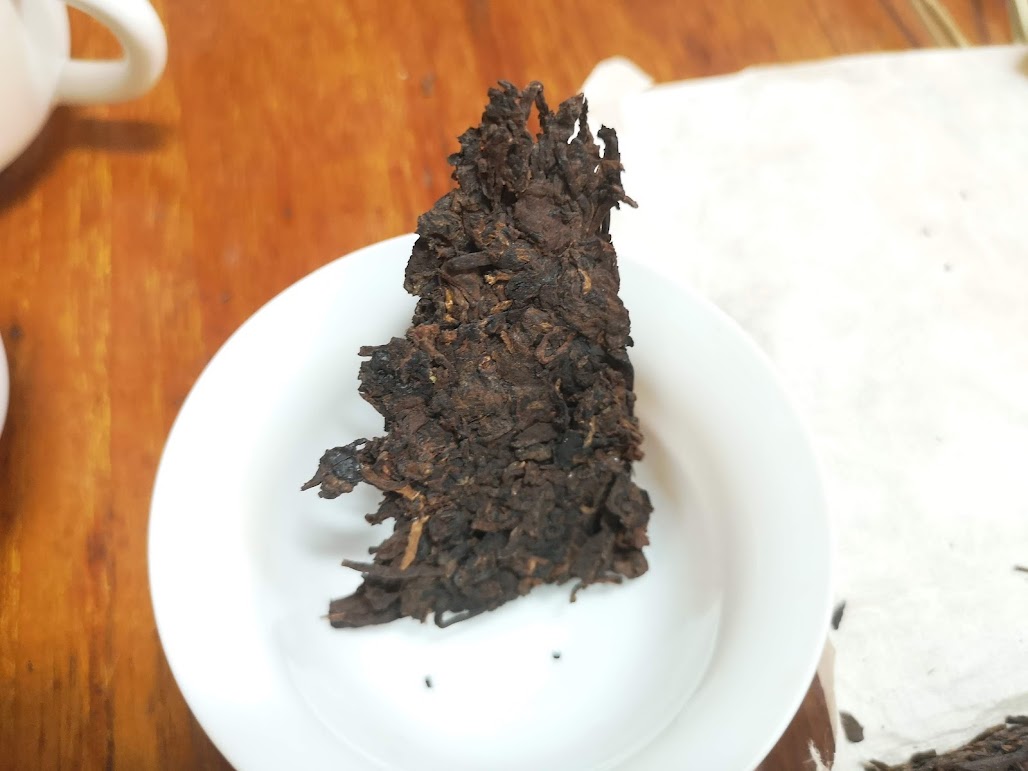
the Chawang Shop Jinggu brick version


This is a novel form of review, trying two shu pu'er versions that I expect both will need some more time to settle, related to not being very old.  I thought that earlier covid taste sensation impact would still be a problem at this point but it's been clearing up fast over the last 4 or 5 days, and that's pretty much behind me now.


Here's what they are:


Krasnodar shu puer, 2021 (from Moychay, a Russian vendor)


An experimental tea made in Khosta region from local tea cultivars (harvest 2019) using the Menghai Shu Puer «wodui» technology.

In appearance: medium sized curved flagella of dark brown leaves and buds, a small amount of thin cuttings and sticky lumps of «chatou». The aroma is intense, with notes of baked chestnut, toasted bread and spice. The infusion is transparent, with a chestnut-yellow shade.


Since this is listed as unavailable (out of stock, or perhaps to be returned to stock again later) there is no pricing listed, which I suppose is as well given the current events context, which I'll add more about after the other tea's details.  It's interesting seeing the tasting comments; as usual some people really liked it and others didn't at all.  The style is a bit unconventional, and I think the tea needs time to rest to really be at its best.  It doesn't say when it was fermented (wet piled), which is really most relevant with regards to when it will be rested from that process, not the harvest date.


2021 Chawangpu Jinggu Lao Shu Zhuan 400g


Material for this brick come from two villages in Jinggu and collected from 2018-2020. Larger leaves from spring and autumn harvest, also called huang pian, are pure old tree material. Fermented in Menghai during winter 2020 by well experienced master and the result is very good! 

Dark and clean tea soup with some dry fruit notes. Sweet and smooth.

15USD per 400g brick is special offer !

Manufacturer : Cha Wang Shop

Production date: Harvest 2018- 2020, pressed 11/2021

Harvest Area : Jinggu area, Puer


That pricing is unusual, per a separate post notice a special offer related to the tea not being fully rested yet, and as a kind of bonus to regular customers, not selling at that value related to a conventional business practice.  This tea is probably better than some of the shu cakes Yunnan Sourcing sells for $60 (at a guess; I've tried versions of their Impression sheng cakes, and at least one other in-house version, which were all nice, but not their shu).  I'm basing that guess related to placing a lot of shu versions, and to me this is well above average, rated against my preference.  That does include that it really seems to need a bit more rest, maybe even another year of it.  There's one standard style of heavy, peat-intensive, fully fermented shu, that can transition to lighter flavors and creaminess with some age, and this isn't exactly that, which I see as positive, since I like that, but I like positive variation from that more.  

Lots of shu made now seems to be maxed out for fermentation level, but this might be backed off a bit from that.  It's possible this has good potential for a 10+ year old version as a result but to me that would only make sense to check out related to buying a few of these cakes tied to value, not so much in terms of seeking out absolute best results.  It's decent shu, at a minimum, but to me aging shu doesn't usually tend to make enough difference to warrant a decade worth of storage oversight and wait.  The first year or two can really straighten out newly made character, letting it settle, but to me the whole point of shu is that it's easy to drink and really doesn't need time to reach an optimum.


There's not much to add about this one tea being Russian, related to that war, currently the main news item.  Obviously my full sympathy goes to Ukraine, and the sympathy I have for Russians suffering economic impact is a bit tempered by the comparison to that far more severe case, and the cause, that their own government initiated an unjust war, and what I see as murder of a neighboring country's civilians and ongoing war crimes.  All the same citizens of Russia didn't cause this, any more than citizens of the US caused a relatively unjust war against Iraq (the second one; them taking over a neighboring country that first time wasn't ok, just as it's not for Russia to do that now).  Some Russians might believe state propaganda and see it as a just war but everyone I hear from online expresses the opposite.

Russia, the US, and China really need to move past all this, and do their best to work towards the common good of their own citizens and that of other countries.  Of course that's not the kind of world we live in.  What Russian leaders are in the process of doing goes a couple steps further than the horrors that are the norm, and the most severe economic sanctions in history are a natural outcome from that.

I'm a fan of all three of those countries' cultures, and others.  Visiting Russia four years ago was one of the most memorable experiences of my life, as visiting China three times was.  It's a shame that appreciation can't extend to the leadership of any of the the three.


a friendly Russian offering guidance in the Moscow subway; how I remember the people there


friendly Russian tea shop staff; there were no exceptions from that theme


Moychay will take the same hit the rest of Russia does.  This post isn't intended as implying that Westerners should be ordering tea from Russia at this time; how that works out per a standard perspective is obvious enough, and it would make sense to get back to that only after this war gets resolved.  Supporting a foreign Moychay branch wouldn't necessarily offset the end goal of these sanctions, since there must be few Russian companies not operating at a loss just now, outside their oil and gas industry, so tax revenue trickling back to the Russian economy wouldn't be much of a factor, related to companies operating at a loss.  

These posts are never actually intended as direct marketing, I'm just passing on what I think about teas.  If I say that I think a tea has a really unusual character, is of unusual quality level, or represents an exceptional value, then I guess that could be implied, but even then it's just sharing perspective, not a sales pitch.  It goes without saying that personal preference, quality judgment, and impressions about value would tend to always vary.  The judgments here about shu needing a rest period to offset fermentation related aspects probably wouldn't be all that universally accepted either; it's just one person's opinion, based on trying moderate amounts of shu (only dozens of versions versus hundreds).


Review:


Moychay left; coloring is washed out related to light level for that image


both teas were normal shu color, brown


Moychay version left, Chawang right, in all images


Moychay Krasnodar shu:  nice!  I think this will clean up a bit with more time to settle, but it's nice like this.  A warm, dark bread tone dominates it, complete with dark rye and fennel seed tones.  Fermentation related funkiness isn't on the level I would've expected for this being less than a year old [if it is; fermentation timeline is implied in that 2021 date], but that does vary.  

A nice cocoa range supports that grain scope.  It has enough sweetness and complexity that it seems likely that fruit will fill in more once this settles a bit.  That mix sounds nice, dark grain, earthy seed range spice, cocoa depth, with good sweetness, and it is.  There's a little off-malt fermentation related flavor, which could be interpreted as in mineral range, not so far off cement block scent, but I'd expect that to only be an early round theme in this.


Chawang shop Jinngu:  the first aspect that hits you is an odd flavor input, not exactly like that cement block taste in the other but related, more towards wet slate, with a bit of mortar cement mixed in.  Again I think age will mostly drop that out, but for being stronger and more dominant than in the other tea it might take longer.  This version is from late last year, apparently packed at the end of November, so it is a bit early to be tasting this.  In looking at the description it was fermented in the winter of 2020 (which can mean two different things, that it's two years old or else more like one), and only re-steamed and pressed over the last 5 months.  But then it's not as if the "settling" step occurs on a fixed timeline.

Beyond that moderate level of funky range there is interesting scope.  It seems a little lighter, maybe less fermented than the other, with a lighter fruit and spice range potentially showing through.  It should be easier to describe next round.  Sourness stands out more in the first version when finishing this round of both together; this tea isn't sour, but there is an odd flavor aspect present.  Fermentation tastes should fade for both over the next year, or maybe even six months, given how the hot and humid Bangkok climate tends to speed up any transitions teas might go through, positive or negative.


Moychay Krasnodar shu, second infusion:  the sourness that stood out more in direct comparison seems stronger this round.  I suppose it works better for me because that flavor range, mostly around dark bread, naturally pairs with some sourness in the dark bread form, so it's easier to accept for sort of being expected, or even easy to overlook.  The cocoa tone is already starting to give way to a heavily roasted coffee input; this will probably finish an early transition cycle and be different next round.


Chawang Jinggu:  this is brewed stronger; that's apparent from just the appearance.  I didn't get the proportion (weight) to match, which is easy to get wrong when pairing compressed and loose teas, estimating amount by eye.  It's not that far off, and how fast these brew at different phases probably came into play as well.  The fast rinse for the Moychay tea was strong; it would make sense to be careful to only use a very fast rinse for that tea to avoid stripping out too much flavor.  I actually drank part of that rinse to check it, versus just tasting it, not that afraid of toxins as by-products from the fermentation process, even though they are present.

This is cool for being so distinctive.  That cement range mineral is moving towards struck match already, a lighter mineral tone, with plenty of warmth, richness, and depth filling in behind that.  It's better than my description implies; the complexity is good, and overall balance is nice.  It really probably does need a half a year to a year to keep settling, not really showing its full potential yet, as is probably true of the other version too.  This particular tea might be even better in two or three years.  Fermentation effect just varies, and even for this seeming to be a little on the light side, or maybe more accurately backed off a little from being completely fermented, the funkiness from it is significant.  It tastes much cleaner side by side with the other, tasted one after the other, for that sourness missing in this version, but that one flavor tone range is pronounced (cement moving towards struck match).


Moychay Krasnodar shu, third infusion:  someone's take on dark breads really would determine whether they love or hate this.  I'm on board; I really like it, about as much as I love shu in general.


Chawang Jinggu:  this is cleaning up a little, which is nicer.  It's hard to say that it's a fruitiness that comes across, but it's along that line, mild spice and dried fruit.  The warm aspect range is a bit neutral in this presentation, not clearly any one thing or another.  Mild root spice seems the closest match, which tends to be a neutral range, in some forms.  I can give both a slightly longer infusion time next round and see how that changes things, since the early transition away from odd flavors seems somewhat complete.

It's a little odd reviewing what isn't present, versus what is, but there's a lot of range of fermentation related flavor that could have occurred but didn't.  People describe shu as fishy, and I tend to not notice it in that form as much as many do.  Heavy peat flavor is more common, and some can taste like petroleum or tar.  Musty range flavors don't come up as often as one might expect, but of course they can.


Moychay Russian shu fourth infusion:  I brewed this round for around 20 seconds, versus around 10 for earlier rounds, although these would be fine brewed inky strong doubling that longer time too, to 40 seconds.  Fennel seed jumps to a much higher level input balance again, and this seems better this way.  Sourness has faded quite a bit but those other stronger flavors are probably also overpowering it.   This seems fairly clean at this point, not really off in any way.


Chawang Jinggu:  interesting how this changes, brewed stronger.  Warm and pleasant tones ramp up, and that cement range odd character has largely faded, but an aromatic floral range ramping up connects with a soapy effect now.  It's not enough to really throw off the experience, but different.  Those non-distinct woody or spice range warm tones are nice.  It's a little closer to cedar this round, versus spice.  

I don't know if it's apparent from the description but this seems like it would be a good tea to drink with food, with pleasant complexity and depth, and a neutral enough flavor range that it could adjoin and pair with lots of other range.  This would be good with toast and jam.  The other tea is a bit more distinctive, probably pairing with a more narrow range for that, but still probably decent with some foods related to reminding me a lot of dark bread.

Permit me a short tangent:  the last great dark bread I experienced I bought visiting Russia, some years ago, which I bought in Murmansk. It seemed like it was just a typical version to them, nothing presented as special, but it was fantastic with some cheese I bought there, truly memorable.  Ordinary pumpernickel is great in the US, not that I've had it in a long time.  There are specialty bakeries here, and I could be seeking out much better bread than I tend to experience, but I eat more Thai food than Western, and tend to buy better lighter bread in Japanese bakeries here, where they're really not into dark bread.


Fifth infusion:  not changed enough to write more notes.  Both versions are the best they've been though, very nice at this round, and probably not yet finished, although the Moychay version is dropping out faster.   Both are good, I think.  Both clearly reject the "shu is shu" theme of all versions tasting similar, one critique I've made about the tea type in the past.  The general type varies less than sheng, or even oolongs, I think, but these are both positive and distinctive in novel ways.  And I think both will be even more exceptional in one more year; it would be a shame to drink through too much of them before they're really ready, even though both are fine to drink now.


Conclusions:


Both were pleasant, interesting, and novel.  The Chawang Shop version kept improving over rounds, and held up to a higher number of rounds at higher intensity, with a lot of the most positive range of the Moychay tea extracting earlier.  I think the Chawang Shop version included a bit thicker feel, which I really didn't focus on due to combined tasting often limiting the range of aspects considered.  It will probably settle into being a more conventional, balanced shu version, with this Russian version staying a bit unusual, which could be good or bad depending on match to preference, and how it changes over the next year of rest.


Tuesday, January 18, 2022

Talking with Alex and Bruce about Russian tea, other themes


We had the first online meetup of the year recently, meeting with Alex Phanganovich, who I've mentioned before here, and Bruce Carroll, an American friend living in Chiang Mai.  Alex and I first met at a Monsoon hosted talk about tea and sustainability presented by a Russian ecological researcher, Alexey Reshchikov.


Alex is looking at Kenneth Rimdahl in the back, there at Monsoon


he met the kids that day, visiting while I was at swim class with them


I wanted to write this partly to cover discussing Alex selling a bit of tea he's ran across along the way from living in Chiang Rai, and also to mention Huyen's brother mentioning a new online sales outlet.  Huyen's whole family has an amazing vibe, and they are all tea experts, so it has been nice when they can join the meetups.


it's nice seeing Huyen's nephew join; soon he'll be talking about tea too


We were supposed to talk about tea tourism in Chiang Rai; that was the initial point.  We just didn't get to it.  I think there are only a half dozen main producers that Google search would mention there (like this does), and more unconventional and interesting smaller producers would be something else, maybe further out of the Mae Salong area.  Alex mentioned that learning about local tea culture was interesting while staying there, which we didn't get to far into.

We didn't talk about tea all that much, as those meetups usually go, delving pretty far into introductions, and how covid went for people, even into how tobacco storage and consumption parallels tea themes, which led to talking about weed.  Legalized marijuana is being developed in Thailand, and another friend here uses it for a rare problem with facial muscle pain treatment.  All that is what it is, already familiar or not.  

The point about tobacco comes up in discussing humidors quite a bit.  The main difference between tobacco storage and tea is that aromatic woods used for tobacco storage can add positive flavors, and for tea you don't want anything but the other tea contributing to the changes.  Then apparently for tobacco you use different pipes for different kinds of tobacco, as with clay teapots.  Who knew?

It has been snowing in Sochi, where Alex is living now, and a main place where tea is grown in Russia.  And also in Krasnodar, I guess?  In the US tea plants used in Sochi are known for being among the most cold tolerant types that exist, which applies fairly directly for a lot of the US too.  We talked a little about Russian tea preferences, and produced styles, about changes in gaba development and shu and such, but no developed sub-themes that really need to be filled in here came up.


hopefully they're cold tolerant


A question came up about Russian blends really being smoked or not, which didn't get far in discussion.  It's my impression that this is either something made up, or a reference to Russians importing and then mixing smoked Lapsang Souchong with other teas, or to tea transported from China by horseback picking up a smoke flavor from campfires as it was transported.  My guess is the first, that it was made up.  I'd expect most of the tea that made a trip by horse, earlier, was pu'er or hei cha instead, which would make it easier to transport, and matches the theme of Yunnan producing tea for Western and Northern Chinese areas that are too cold to make their own.  Not that I'm well informed about any of that; I asked someone by message before posting this but it didn't work to get more input.

Huyen covered a bit about range of Vietnamese teas, but I've been through a lot about that here in the past.  There are two really good articles on all that by Geoff Hopkins, the owner of Hatvala, on history and evolution of tea there and on origin areas, geography, and types.  Some interesting backstory on the article source:  per my understanding when the old World of Tea blog (by Tony Gebely) transferred content to become the Tea Epicure blog some of the material went to a partner's site instead, which is what that killgreen.io site is.  So unless I'm completely wrong that had been a World of Tea guest article, which is cool.

So I'll mention a little more on those two tea sales updates and let this go.

Huyen's family has long since founded a cafe in HCMC (Saigon) and a chain of gift shops with different outlets, Tra Viet.  I might have reviewed at least one tea from them but I never kept track of origins of what Huyen shared.  Her brother is now expanding to selling tea through Amazon.  It's nothing too novel, but if better tea really is starting to creep into outlets like that it would be good.  I don't think they'll kill off small tea vendors or foreign outlets any time soon, although minding that concern makes sense.

Alex specifically mentioned that he's not necessarily trying to become a mainstream vendor (he can be reached through Facebook though, or Instagram), and that he mostly sells a bit of what he picked up in a year or so of living in the north of Thailand.  Or in general gaba tea, gushu versions, or aged shu, per asking him for this write-up, and maybe later on more Russian teas.  Maybe that's especially relevant to someone living in the Sochi area, since meeting up with someone and trying some teas helps a lot for getting a sense about such things.

This has barely touched on tea issues in Russia so far, right?  That's partly because the general background about what teas Russians like and perspective on the subject repeats what is in other posts (like this one on Russian tea culture).  An interesting sub-theme came up about perspectives on Moychay, a Russian outlet I mention a lot here, for reviewing a lot of their teas.  Some Russian tea enthusiasts love Moychay and some don't--normal enough.  They share teas for review in this blog, to be clear, so my potential bias should be noted, which isn't going to come up here since I'll set aside going further with that discussion for another post.  Alex offered some thoughts on what objections might be, or how different biases could factor in, and how it relates to perspectives on other vendors, and that really got me thinking.

Short discussion came up of a book on tea by Sergey Shevelev, the Moychay owner, Geography of Chinese Tea.  He posted a nice intro of that as a Youtube video recently.  It pretty much matches the review I wrote, talking about what's in it, about Chinese tea types, geography, history, some old stories, tourism sites, processing steps for teas, and so on.  

For covering all that, and for including a lot of photo content, it's a bit general, but that seems fine for what it is supposed to be.  It's not a manual for how to process tea, but it does contain a lot more of the typical processing steps than other books I've read.  It's not a tourism guide, but it could work to cover ideas for what to see related to tea while visiting China.  It's not a comprehensive guide to tea types in China, although it is pretty close to covering all of the main types in limited detail, and many less known versions as well.  Someone just mentioned what they took to be a rare steamed Chinese green tea type in the Gong Fu Cha group, a tea from Hubei, and there was a short section on processing steps in that book on it.


So it was the usual, nice keeping in touch with people and making new contacts, and talking a bit about tea.  It takes the pressure off to do justice to a subject not talking to a tea producer or sub-theme expert, freeing up space for covering tangents.

Tuesday, January 4, 2022

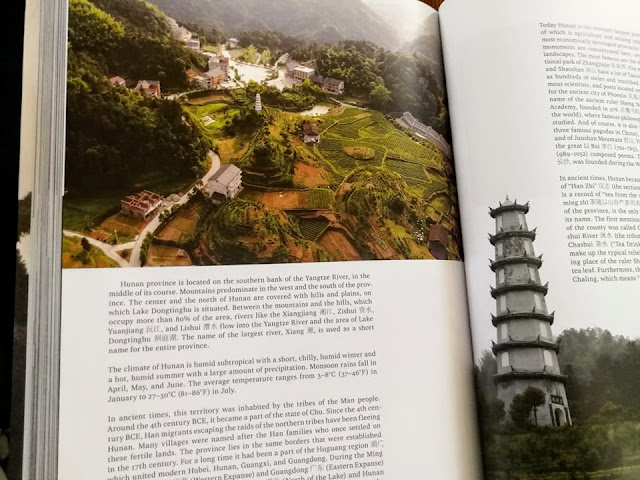
Geography of Chinese Tea (book review)


This is a great reference on Chinese tea background.  It's by Sergey Shevelev, the founder of Moychay, probably the main Russian tea vendor, and developer of a series of tea clubs (not exactly like a cafe).  Sergey talks about the book, about what went into it, and what it means to him, in this video gathering description (which seems more about talking through a tasting session, to be clear; I mention it more to bring up the video theme and location).  There are more book details here.

Sergey has been a very positive and helpful tea contact for awhile, and I helped do a final read-through of this text, and Moychay sent some teas in thanks, so in a sense I'm not impartial.  Maybe hardly anyone ever is completely objective about almost anything they experience, but that's leading into a different set of concerns.  To me I seem to have no problems at all communicating exactly the same thing I would based on a different connection context, or a complete lack of one, but who knows.  This post might go a bit far in the opposite direction, describing what I see as limitations in the work, which are more about scope choices and related to which interests it applies to, since I thought the content was quite good. 

It's interesting comparing and contrasting this topic scope with another tea text I did a late-stage editing read through for, Tony Gebely's Tea:  A User's Guide.  It really helps place what this about, the range.  Both are quite good texts, I think, both very informative, detailed, and well-grounded, but the scope covered is quite different.  There some overlap related to some tea processing and types information, but in general that text is all about user experience of and approach to tea, and this is about deeper background context than most people would ever encounter.  

This book is mostly about tea types, plant type inputs, locations, history, regional geography, processing steps, and so on, of course mostly limited to China, with some coverage of Taiwan, which may seem to overlap or be completely separate, depending on the subject being considered.  For tea it overlaps.  Since it mentions a lot of natural spaces, parks, and tea oriented landmarks in different places it overlaps with what a tourist in China focused on tea would seek out and experience.  It's not as much about related legends, which do come up here and there, so some main ones are included, but there is more about that non-fiction background.  It doesn't really cover brewing approaches, ceremonial aspects, or teaware either, at least some of which Sergey mentioned in that video cited as being covered in a separate text still under development.


Sergey making pu'er (he's the one on the right)


It's funny how much there is left to cover, given that.  It runs long because it doesn't stop at describing the best known areas and types, and ventures on to geographical descriptions and processing steps.  The first 50 pages is about tea culture and historical background, with a bit on tea plant compounds (which does overlap with Tony's book), but the rest of the overlap with Tony's reference is really with a lengthy list but abbreviated depth description of tea types, with this going a lot further on what those are and how they are produced.


Pictures tell a lot of the story; clear and impactful images of the famous and not as famous tea growing areas really fill in a sense of those places.  Then images of the actual teas and processing steps also round out a little on what a broad range would be like, venturing into tangents like aging background, as is relevant to the type being described.  History of every area gets detailed treatment.  

I suppose that means this book wouldn't be for everyone, going the extra couple of layers deeper beyond what tea experience itself is about.  Tea processing is a fascinating subject to me, but even that only goes so far in informing the actual experience, and less so the history.  For a range like oxidation level background it does apply to experience, because the text talks through what the most conventional styles are like, with less on what other variations and style interpretations might be like.  I don't mean just for Tie Guan Yin, pu'er, or Dan Congs, I mean for a very broad range of popular teas from across China, some of which aren't very familiar in "the West."


even for the more familiar historical sub-themes the extra details are is still interesting


In describing what works best about Sergey's communication about teas in the past I've always mentioned that he is a true tea enthusiast, in addition to being a vendor, with that other natural focus on the commercial side.  No doubt the history and background was always fascinating to him too, and this book represents ideas collected over many years and visits to China (at least 10, he mentioned), ideas which were previously only brought up in narrow scope video content.  He has long been a student of Chinese language, which might work as a general cut-off for how far someone tends to take dedication to the range of subjects.  

On the opposite side, for people who are bad with languages, not going there and not studying Mandarin doesn't seem to represent a gap or lack of commitment.  I was a lot more open to foreign language studies earlier in life myself, studying French, Spanish, and Sanskrit in academic circumstances, and now my Thai is still fairly limited even for living in Thailand for 14 years.  I suppose that partly relates to the added difficulty of moving beyond Latin based languages; learning Devanagari--traditional Indian language script--to study Sanskrit came a cost to me, and pushing through different language forms and structure seemed a bit punishing, and didn't go well.  Or maybe my brain is just less plastic now?  Hard to say, but it seems to relate as much to motivation level.


One part of how this approaches describing teas stands out as what some would interpret as a strength of the work, and others a weakness.  It describes type-typical experienced aspects in specific tea versions, or I suppose more accurately as one relatively typical version might be interpreted.  That's great, for passing on a sense of what a type might be like.  For people looking for gaps, with a negative bias, it could seem to introduce error, since any given type occurs as a broad range of exhibited aspects, with the "type-typical" theme only being so narrow.  

I don't see it as problematic describing that.  Any text would trip over itself trying to describe exceptions to every generality or a more complete flavors / taste / aroma range, and typically skipping that makes the most sense, to me.  One tea expert in particular comes to mind in mentioning that, an old favorite blog based reference who started discussions and an answer to every question with "it just depends," using half the answer content space to address context and range of exceptions.  To me that approach works too, since the placement of ideas and discussion limitations are also interesting, but not to cover this much scope.  It works better in a short passage to emphasize limitations, talking around and placing a narrower idea range, than to go through that over and over in a long text.

For the tea history, area descriptions, about type ranges, and general processing descriptions it's not as relevant anyway; it comes up more in discussion of aspects of types as a sensory experience.  This work passes on a sense of a typical experience range, but doesn't try to replace experience, or account for exceptions.  To cite an example of the kind of thing "left out," as a tea reviewer it's interesting to try to identify what I see as "quality markers," what sets apart the best versions of types, but really I think it's best to not venture into that subjective a scope in a broad work like this.  The other text on tea I mentioned, Tony Gebely's work, made the same scope decision to focus on general types descriptions, and not get swept into what separates quality levels, which again I think is for the best.

As I keep encountering more and more detailed tea background, and talking to vendors about processing themes and such, it's harder to find new ground I've not covered.  Half of this text was relatively unfamiliar, because I'm not an expert on how to process teas, and I've encountered a lot more about main tea areas than others (eg. Wuyishan and Yunnan, versus entire broad regions that I wasn't really clear on covered in great detail in this).


One might wonder, if a lot of Chinese people really do drink ordinary quality and relatively "generic" tea (an idea that comes up, which matches my experience), how is it possible that there is so much detailed background available on such a broad range of areas and types?  This seems to be a look into what informed locals would know and experience about their own area, types, and history, or that degree of coverage plus a bit more.  We are already exposed to some of that in those places I mentioned, Wuyishan (a Fujian area) and Yunnan (a whole province), but Chinese tea history doesn't end at those sorts of better known areas.  I don't just mean related to hei cha and a few more types of green and black tea either, and yellow tea; there is a broader and deeper still-living culture and history to be explored.

One might wonder if it wouldn't feel incomplete, like a gap, to hear about another dozen or more types of teas--or maybe 50, or more--and to not experience them, to only encounter them as ideas and description.  Sure, I suppose it could.  Also this treatment may not be as interesting for people who tend to narrow in on one range of teas they like and leave the rest aside the broad background exploration theme.  There's nothing wrong with only drinking oolongs, or sheng pu'er.  This book is mainly for people who like the background of tea in addition to the experience of it, although it could be used differently, for example as a narrower reference for specific types, or as an intro to the theme of tea processing.

For being a relatively long book, 511 pages, this isn't a difficult read though.  Again pictures tell a lot of the story, so actual text is much more limited, and it being separated out by broad and then narrower geographical areas make it approachable and much easier to read.  

For people into texts as a reference in general, and to the scope I've outlined in particular, I would definitely recommend this book.  As with most people I tend to consume more content related to shorter online videos myself, but there are different strengths and limitations related to the two forms.  It would take many hours out of a year to get to this much detailed content online, and one never would run across all of these same ideas, across any exploration time frame, not even a decade.  

On the Chinese language internet that may be more practical, but English Western web text or video sources just aren't that readily available, detailed, or complete.  Sergey's Youtube videos are a nice exception, or Farmerleaf's, and TeaDB is a good video blog, and the Tea House Ghost channel a nice reference, but all of these only treat one narrow and typically more conventional topic in short videos, with substantial focus on practical advice and perspective.  They just can't explore the tea history, geographical input, processing, and types descriptions from many main regions in China in the same way this text does.