Showing posts with label convention. Show all posts

Monday, July 1, 2024

Thai tea expo / function in Bangkok Central Embassy


I checked out a local Thai tea event at one of many Bangkok malls, at Central Embassy, at the Open House area on the 6th floor.  It's the first such function I've ever been to in Thailand, beyond there being a few tea related booths at coffee and tea related events.  It was nice.

A series of special presentations is one part of that; a tea expert of some sort was presenting about Gongfu brewing and aged Shui Xian, it seemed.  I didn't catch that much of that; the point is pointing out that it extends beyond sales booths.  For people considering visiting they may want to check out that schedule and get in there; it all only runs for another 6 days.  There is also plenty to see and experience from the vendor booths.


The sales booths were fine, representing a broader range of tea vending than one might ordinarily hear of.  They were split between producer booths and other types of vendors, cafes and such.  I talked to the Taetea booth staff, to Emerald Thai Tea (a local producer who make different kinds, including some older plant pu'er), and to another specialty producer who makes a lot of types of teas in the North (Sawan Bondin).  I tried some teas at all three booths; that's a nice part of such an event, that people hosting sales booths are happy to share small cups of tea and talk about the products and background.

An old tea friend had a display there, Danitha / Pop of Chai Jin, a Japanese tea sales and ceremonial brewing themed place.  Zhennan is a familiar local cafe that had a booth, but I missed them being at the booth when I went by.  There were others; Pop was talking to another small shop owner who I've met before, Eastern Tea Concept, that I also said hi to.


So what would be the best draw there for people who are really into tea, or just curious to explore further?  Probably mostly just seeing the range, in case some of it really matches your own interest, and then you could buy some tea from them.  Being able to try the teas makes all the difference.  

It would be nice to support local Thai companies promoting better quality specialty tea.  My tea budget is deep in the red related to my family living in a high cost of living city on a Thai salary, in Honolulu, and I've spent more than normally allocate on Vietnamese teas recently, so my own tea spending is severely limited just now.  It was still nice meeting and talking to people.


I was asking one Thai producer and vendor about how sales would go through Myanmar, since of course they're having problems with civil war there.  He didn't know, but I met a private importer from China who was working with Myanmar tea just after that.  It made for a really interesting discussion, hearing about how things go there.  

A bit rough, of course; he said that I shouldn't be visiting Myanmar any time soon, but that with the right preparations, connections, and support he can still go there.  He said that the tea plants growing there are quite old and now integrated with old-growth jungles, kind of a common theme everywhere, whether or not it actually matches the marketing spin descriptions.  This is an interesting tangent, to me, which I discussed more in relation to Thai ancient trees and forests.


Emerald Thai Tea booth, worth checking out


those ancient forest sheng versions; it was interesting trying them there


How would someone really know tea plant ages?  You can't, really.  Variety Sinensis plants grow to be large shrubs or small trees and age to reduced productivity over a century or less, but variety Assamica plants (both Camelia Sinensis) can grow to giant trees, and some can live for over 1500 years.  Size isn't the best indicator of age; they will grow at different rates and to different sizes depending on conditions.

But with the right local context background you can at least place when tea was growing there locally, which should set a very general earlier original time when plants were introduced there.  I forget how many hundreds of years ago that related to the teas being sold from Northern Thailand; I think 300 years and 700 years, for two different versions, carried by the Emerald Thai Tea brand producer.

It sounds impossible, right?  Thai history must have been quite vague just 2 or 300 years ago.  People know who the King was, of course, and some broad details about industries and lifestyle, but drilling down to tea production is something else.  

But there was an earlier empire in the North that supposedly had clear ties to the tea production (per that discussion at the event, at least), the Lanna Kingdom.  Dating that time-frame and knowing of local tea production couldn't tell you any given plant's age, but it could support a real claim that tea was there in a given area then, or at least probably was.  That's a long time ago; who knows.  Let's check Wikipedia's input on that timing:


The Lan Na Kingdom or The Kingdom of Lanna (Northern Thai:, pronounced [ʔāː.nāː.t͡ɕǎk láːn nāː], "Kingdom of a Million Rice Fields"; Thai: อาณาจักรล้านนา, RTGS: Anachak Lan Na, pronounced [ʔāː.nāː.t͡ɕàk láːn nāː]), also known as Lannathai, and most commonly called Lanna or Lanna Kingdom, was an Indianized state[broken anchor] centered in present-day Northern Thailand from the 13th to 18th centuries.

The cultural development of the Northern Thai people had begun long before as successive kingdoms preceded Lan Na. As a continuation of the kingdom of Ngoenyang, Lan Na emerged strong enough in the 15th century to rival the Ayutthaya Kingdom, with whom wars were fought. However, the Lan Na Kingdom was weakened and became a tributary state of the Taungoo Dynasty in 1558. Lan Na was ruled by successive vassal kings, though some enjoyed autonomy. The Burmese rule gradually withdrew but then resumed as the new Konbaung Dynasty expanded its influence. In 1775, Lan Na chiefs left the Burmese control to join Siam, leading to the Burmese–Siamese War (1775–76).

Following the retreat of the Burmese force, Burmese control over Lan Na came to the end. Siam, under King Taksin of the Thonburi Kingdom, gained control of Lan Na in 1776. From then on, Lan Na became a tributary state of Siam under the succeeding Chakri Dynasty.

Throughout the latter half of the 1800s, the Siamese state dismantled Lan Na independence, absorbing it into the emerging Siamese nation-state.[3] 


That goes on to say that an important development step was consolidating local rulership and establishing Chiang Rai as a capital in 1262.  Of course it doesn't really relate to when tea was being produced.  If a local tea producer could somehow connect that political history with the tea industry history it could establish that production on the order of 700 years ago, or even a bit earlier, maybe 750.

Two people showed me pictures of old, giant tea tree plants; that's something.  No one really knows how old those are though.


Tae Tea / Dayi; it was nice trying some familiar range sheng pu'er there


Sawanbondin; a brand selling different ranges of teas and herbs


the Sawanbodin booth was especially nice for trying different versions


The state of better quality specialty Thai tea


I tried some relatively interesting Thai specialty tea versions back when Huyen visited in a local shop back in January, a higher quality level than I usually run across.  I've been buying and liking Wawee Thai sheng pu'er (or pu'er-style tea) for a few years, and my local friend Aphiwat makes fantastic local sheng, based somewhere near Chiang Mai.  

Plantations have been developing new styles for years, like Oriental Beauty / Dong Fang Mei Ren and red / ruby oolongs, long after producing Jin Xuan and other varietals from Taiwan as rolled oolong back in the 90s.  I keep hearing of new developments in making local gaba versions, and Thai shu pu'er.  Tea Side made small batch, basket fermented shu a number of years ago, maybe 5 or 6, so that's not really new.


So what else is new?  It would be helpful if awareness and demand for these teas developed.  People can keep on making better and more novel styles of teas, and I guess profiting from selling them when demand enables pricing spikes (I've seen them selling for the better part of $1 / gram).  But for it to become a normalized, developed market theme that exposure needs to broaden.  

I guess events like this one can help.  I might've saw a few dozen people there, not bad for one of the least consumer populated malls in Bangkok (nicknamed "Central Empty," I've heard).  There were more people throughout the mall too, hundreds of them; maybe it is finally catching on with a target consumer base.

Small cafes have been cropping up here and there more and more for years.  Then again some fail as businesses too.  There was a pu'er themed shop in Sathorn near where I worked, that's now gone, and the closest specialty tea shop, general in form, also went out, I think even prior to Covid.  There was a specialized Liu Bao shop nearby; I never did get around to checking that out, and it could still be there.  My favorite Tae Tea outlet shop closed, the one in Belle Condominiums, and another relocated, the one in IT Square, if I remember right.

I see notices for some places, new form cafes, hosting 2 or 3000 baht per person special tea type tasting events (($90 or so, on the high side), and if a local market audience could support that expense level specialty tea would be doing ok.  Peace Oriental, the main local hybrid-culture style place from years back, opened a relatively opulent branch in Gaysorn, essentially the highest end mall here, on the Central Embassy level, and kind of around the corner from it.


No one would ever know to what extent general specialty tea awareness and demand are picking up now since most sales would occur through an outlet like Shoppee or Lazada, the Thai versions of Amazon and Ebay.  I just reviewed two amazing green teas selling from there, and I would imagine that many of the outlets in this tea event would have online shops in those places.  

It's hard to get any feel for business level for sales channels like that.  Yunnan Sourcing, a main US vendor based there and in China, has a related Facebook customer interest group, and many vendors host Discord servers (groups), so you can tell, a little by the discussions, what the following is like.  I suppose if a vendor expands offerings over time they're doing ok, and if they go out of business they weren't.

It was odd not seeing teaware producers represented there; there was at least one of those at the last coffee and tea event I visited, last year.  Then again it's odd just seeing this kind of event being held anywhere, as the first and only tea specific event I've heard of in Bangkok, beyond tastings and such.  It's a good sign.


completely unrelated, a vlog style video Kalani (my daughter) made about it raining hard, more to show her take on it than the weather event


Monday, December 18, 2023

Thai Coffee and Tea Fest Expo


I recently attended a Thailand Coffee and Tea Fest Expo, in the Queen Sirikit Convention Center.  Typically those events aren't worth attending, related to specialty tea interest, but I had a good experience once meeting an owner of the Kokang Myanmar tea producer so it's easy to be more hopeful than expectations can support.  That was an event up at Impact, an hour north of city center, probably listed as the Thailand Coffee Fest here, not even mentioning tea in the event title.  That event summary article author was not aware of this event planning.

The short version is that it was a bust; there was no Chinese tea there, and no Thai specialty tea (no Indian tea either; I'll get to what was there).  There was mostly coffee, of course, and then in tea range also matcha, and very little in the way of other tea scope.  Only two booths, beyond matcha scope:  a Harney and Sons version, and another selling blends that were essentially in the same range.  I tried a couple of Harney and Sons teas; they were nice.  I might have considered buying a jasmine green tea version they were selling, that I had tried, except that they only sold it in a tea-bag version, and I'd prefer loose tea.  At least they were promoting tea.


I met an old friend, Pop / Danitha, who is an owner of Koto Tea Space, a cafe that also sells matcha, there promoting the matcha sales.  She guessed that there was no Chinese tea because it was mainly directed towards shop owners, not tea enthusiasts, so there would only be booths carrying what small shops or cafes would want to buy.  I didn't see anything related to bubble tea there, so that theory doesn't seem to completely hold up, but it could still be mostly right.  At any rate Chinese tea just wasn't happening, or even Thai tea.  I've seen Thai producers host booths at that sort of thing before, and vendors oriented towards Chinese teas, but it just didn't happen to be there.


Lots of matcha related shops were; maybe less than 10, but close enough to that.  That's still not so much compared to dozens of booths and larger vendors there relating to coffee.  It was nice seeing so many small roaster or importer outlets for coffee; apparently that interest is booming.  There were ample equipment sales for that, and larger and more elaborate vendor booths from larger mainstream vendors.  There were even coffee brewing events, which weren't running just then, but there were notices about them.

There were a few shops selling ceramics, hand made coffee and teaware cups; those were nice.  One let me try coffee in two different cups, claiming that this would change the sensory / aspect experience.  It didn't seem to, to me.  I have a badly deviated septum so my sense of smell isn't great.  The related aromatic flavor component sensation that occurs in your rear nasal passages seems more normal, that it doesn't cost me much in terms of sense of flavor, but I guess that I would never really know.


teaware from Aoon Pottery & As.is


the small black ones had the nicest feel, but I usually use white cups


Pop's main business is the Koto Tea Space, and it represented the closest thing to a specialty tea theme in the event (really a related supply company, Chajin Tea Supply).  They had exhibits about matcha, and offered samples of a few kinds.  I tried matcha with coconut.  It was ok, but the umami isn't all that familiar to me, so it also just tasted like seaweed.  I've drank matcha before, and have reviewed a number of sencha and gyokuro versions in this blog, but I'm far removed from that experience now since it has been awhile.  A good version of matcha bumps the umami experience to an unfamiliar level, and the coconut flavor input made it harder to relate to instead of easier, or at least it seemed that way.  

It was nice talking about Pop's business theme, how all that goes, but it doesn't seem relevant to a summary of expo experience here.  Her cafe would be interesting to check out, off to one side of Chinatown, more or less, and they hold different themed tastings, of course all related to Japanese teas.


her related tea supply business, what was represented there


That was really about it.  I tried a jasmine white tea from Harney and Sons, and that one at Pop's station.  There was one other stall selling Thai flavored teas that I didn't really explore, and beyond that there was only more matcha.


So I walked around a rice expo beside that coffee and tea version, and ended up buying red and black Thai rice.  I've had a black version of black sticky rice (glutinous rice, khao neow) but never black standard rice.  My wife is into brown and other colored rice versions, so red rice is familiar.  It's not usually as delicious as white rice, but I bought it for her, not out of my own interest.


two kgs of rice was 200 baht, about $6, a good price


It would've seemed more anticlimactic if that wasn't what I expected to occur.  I would've thought a main Thai oolong producer might have been there, or another commercial tea vendor, along the lines of Harney and Sons, but just something else.  A couple of places had matcha ice cream for sale; that was a nice extra offering, but I didn't buy any.

It's kind of a shame that there isn't more going on with tea in Thailand.  That expo didn't represent all of it, of course.  Oolong production is fairly mainstream, and the sheng "pu'er" versions I keep writing about are appreciated by some people.  I just wrote about a dozen of my favorite or most popular tea outlets in Bangkok, and nothing in that expo related at all to any of that, except that I mentioned Pop's business there.

The contrast with coffee tells the story.  There were about 40 or 50 small booths related to independent coffee companies, and then at least a dozen larger businesses represented in much more elaborate settings.  Some had a lot of espresso machines and such on display, and some simulated cafe or physical store environments in well-crafted structures.  It's like how beer companies manage displays in such event exhibits, just not quite that elaborate, without the music, activities, and enthusiastic staff.  Then for tea there was a mixed range of a dozen booths, with not a single one really focused on loose specialty tea.  Harney and Son's selling tins of tea bags was the closest to that; not much of what was there even seemed to be loose tea.  Of course I gave it a quick survey, not really a thorough review, since if loose English Breakfast Blend turned up I wouldn't want that anyway.

Specialty tea is not having a moment in Thailand or in Bangkok, per my experience, not just at that expo.  It does help to clarify that small shops selling brewed tea that source loose tea versions, probably typically mostly low grade Shui Xian, buy that from Chinatown shops, so there is no need for a new vendor to hype a new form of that offering.  The oolong that was missing was a real gap; usually one of the main producers will promote their versions in events like that.  I suppose that never related to enough extra business level sales to keep up with attending events.  Bubble tea is absolutely everywhere in Bangkok; it's odd there weren't a couple of supply companies selling versions of that, or maybe there were and I overlooked them.


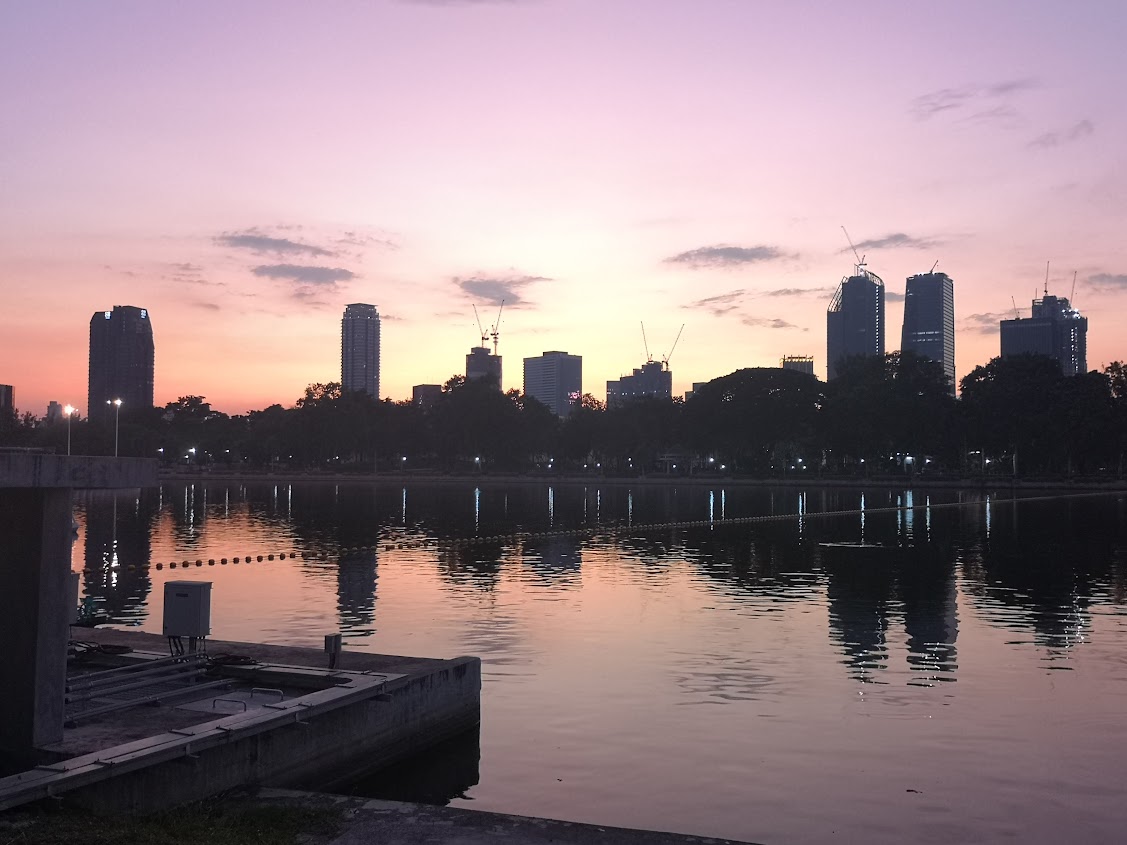
city view from the convention center; a nice walking and running track surrounds that lake


the sunset later on


Saturday, May 21, 2022

A tea tour and conference event in Georgia (the country)


first posted in TChing here.

An online contact / friend, Alexander Zhiryakov, mentioned an upcoming tea conference event in Georgia, which reminded me that I've not ever mentioned trying tea from that country in a TChing post. What I have tried was nice. Some versions from a number of years back, from Moychay, were kind of mid-range for being novel or pleasant, but still ok, and unique in style.  More recent versions from Nika of Greengold were very unique, and better than still-being-developed styles should be, really exceptional. A couple of reviews are here and here.


Nika!


That was because Greengold was working with a reclaimed old Soviet plantation, so the growing plants part was already covered, they had been thriving there under natural growing conditions for awhile. That just left processing, which went surprisingly well, related to them doing some networking and drawing on other resources and experience to replace processing development guesswork with experienced input.  All that will be part of this tour and conference event, since they will visit Greengold.


That friend mentioning the event, Alexander Zhiryakov, was the main founder of Laos Tea.  I met him in a Moscow tea tasting some years back related to that role and theme.  He's not the sole organizer of the event, but he is involved with that process.


Alexander is on the right


the version including Dasha


This doesn't really directly relate to Alexander working on different initiatives to set up tea testing based quality standards, overlapping with a broader evaluation theme. A group of friends and I talked with him and another Russian friend in that informal online meetup series last year, described in very limited detail here.


It seemed like an interesting event for combining a few main themes, the first of which is local tea background, drilled down to reviewing growing plants and processing demonstrations, including limited hands-on experience of tea making, and of course trying teas.  Then a second part related to tea judging tea versions, then auctioning some category winning versions and favorites. Then there was a related social outing afterwards, local gathering and hiking outing theme. It sounded great.


More specific details about that event (with meals and tea tastings along with event steps not mentioned in this summary):


Dates: 15 - 17 July 2022 

Place: Ozurgeti, Georgia (capital of Guria provice, the main tea region).

Travel related:  The nearest international airport is Batumi, 48km away from Ozugreti, with the Tbilisi and Kutaisi airports as alternatives.   


Day 1:  visit mountain tea garden (Greengold), learn about tea plucking and processing, how green and black tea are produced.

Day 2:  Travel to Anaseuly Tea Institute and Experimental factory, learn about Soviet tea science in 1950’s, and modern leaf compound analysis, with later sessions about tea tasting process and experimental processing techniques.

Day 3:  Tea fest opening in the Park of Culture, Ozurgeti, competition, awards, and beginning of tea auction portion.


Afterparty (separate):  in Bakhmaro, mountainous resort south-east of Ozurgeti, at 2000 m elevation, tea tastings and hikes.  


More information and related contact details will be posted in a Tea4b.com website notice, by the time this TChing article is posted.


two Greengold oolongs, really nice teas


It seems like in other tea areas local competition between producers tends to prevent these kinds of events being arranged.  Tea competitions or conferences are common enough, just not this scope, which overlaps some with guided tea tours, the parts about visiting producers and hands-on sessions related to making teas.  It would work in places like Wuyishan, or Assam or Darjeeling, but tea tourism is already established enough in many areas.  People already visit for vacations or to connect with producers, either related to a tour guided theme or else on their own.


Covid must have made it difficult to develop any new event ventures of most kinds over the last couple of years, unless those related to an online context.  It's nice to hear about a novel travel related theme, with great timing for shifting focus off other Russian news.  Potential disruption related to a "special military operation" being conducted by that neighboring country must bring up concerns about travel disruption, but from what I've seen of other recent tourism videos in Georgia there are great travel options there, and the country isn't experiencing any problems related to those events.


Saturday, September 29, 2018

Singapore tea expo, and on tea flavor profiling


I spoke with Cedric Teng, who I first met at a Bangkok park tea tasting awhile back, about going to a Singapore tea expo / festival held recently.  He agreed to pass on some photos and notes, which are really closer to a complete guest blog post than limited input.


Cedric in blue, listening to Sasha explain something


Narendra Kumar Gurung, the Nepal tea grower who started on developing local processing capability this year (covered here in three posts), was also in Singapore over that time frame.  He only visited the event briefly since he was there on other business, but I'll also pass on input from him as well. 

A second related post to follow will cite the organizer's online reference about one of the more interesting aspects, a flavor profile evaluation technique.  That was used to make suggestions to participants for which vendors to visit and what teas to try at the event, related to aspects preference.  That post will extend discussion into related methodologies and evaluation approaches.  Here the subject just gets covered related to Cedric's take on how it worked for him, with his complete account of the visit following.


Cedric Teng's guest post style input on the tea festival


The Singapore Tea Festival 2018 was held at ION Orchard from 21-23 September, and featured a plethora of tea enthusiast selling any and all things tea-related. The event was organized by Tea Pasar, an online tea marketplace that hopes to help tea drinkers understand their tea preferences, and connect them to tea suppliers and producers across the world. There were also workshops and masterclasses available for people to find out more about teas and the brewing process.


(Photo: 1a – Tea Festival Map; 1b – Workshop)

First and foremost, visitors were encouraged to register for an account on the Tea Pasar website, and were given a free porcelain sampling cup upon registration. This cup was to be used to sample teas from the booths available.


(Photo: 2 – Sampling Cup)

 Once into your account, users were prompted to select their tea preferences based on 8 different tea characteristics, namely sweetness, umami, saltiness, sourness, astringency, bitterness, aftertaste, and richness. The online algorithm will then formulate an individualized Profile Print based on these preferences, and offer some suggestions for teas that you may enjoy and the percentage match.


(Photo: 3 – Taste Profile)

Many of the teas available on the website were available for tasting at the event itself, making it super convenient for visitors to discover first-hand the type of teas they like, and also to tweak their preferences there and then as they sample the teas available. For me, my Profile Print started me off with a Wuyi mountain Oolong from Camellia TeaBar. The great thing about the festival is that you get the chance to talk with the tea brewers themselves, who can provide feedback and recommendations before you decide which ones you liked the most. Although my recommended tea, the Lapsang Souchong, was not available for tasting, I tried a few of their other Oolongs, my favourite being the House Orchid, which was lighter with some floral notes.


(Photo: 4 – Camellia Tea Bar)

With the number of booths available, it soon became more convenient to just go from booth to booth rather than follow the website recommendations, and I found myself sampling a bit of everything. Starting with the Oolong, I moved on to try a few different types of Pu Erh, before ending it off with some tea blends at The Tea Depot. In particular, I liked the Eight Secrets tea, which was a blend of eight different teas, which had a nice fruity aroma of lychee.


(Photo: 5 – Aerial)

All in all, I feel that the Tea Festival is definitely a great way for people to start figuring out their tea preferences or explore new brews, and with the array of teas available, it is likely that you would be able to find quite a number of brews that suit your tastebuds. Even though I started off preferring teas which were stronger and more bitter, I found myself gravitating towards sweeter teas with floral or fruity notes in the end, but I think more tea needs to be drunk before I decide on my preferred tastes.


Narendra Kumar Gurung's input


There's a lot more I might comment on related to all Cedric covered, of course starting with noting that his account was well-developed, detailed, and clear.  Before moving onto Narendra's input about the same event I'll add a couple comments about Cedric's experience. 

One part that stands out is his reaction to the tea profiling system they used.  His description didn't seem to reject that it was practical, or critique the form, but due to him still exploring which basic types and aspect themes he likes best in tea it seemed the functionality was limited.  I'll get back to all that in a second post about that subject.

He also didn't seem to experience their "workshop and activities" functions, an interesting looking part of the event.  To some extent that would be more relevant to people with a deeper interest in exploring some specific tea theme, or so involved with the subject they'd want to explore many.  Here is that event workshop schedule, cited from the event page as follows:


I really should have visited that; Singapore is right down the road from Bangkok.  Even just visiting the booths and trying and discussing different types of tea would've been worthwhile.

Narendra and I discussed the same event online by message, here condensed down to a few key points, covering his impression.


I visited on the last day of the festival, at around 6:00 pm, after attending a Nepal Day event held in a central area.  The tea expo was only three MRT stations away [Sinapore has the most functional subway system I've yet experienced].  I visited with my daughter and brother who lives in Singapore.  It was quite busy, with a large number of people eager to try many teas one after another, asking various questions to each of the exhibitors, with the event seemingly a junction of teas from around the world. 

We went around to each stall and tried teas from many different countries and places. Of course each had their own unique taste, flavor, packaging and presentation style. Singapore is truly an international hub, represented in that diversity.  But the tea tasting part of the experience seemed a little less genuine in form than the original preparation and drinking styles can be, probably due to demands of the format and the rush to serve so many people.

From my days in Fujian tea college the more genuine taste of many of the teas may not have been carried over due to the fusion of different preparation styles, which may have resulted in changes to different aromas experienced.  On the positive side there was a good energy from that crowd participation theme, and exposure to a greater number of participants.  Some teaware on display was also very eye catching.  But due to time constraints we couldn't meet the various tea masters and hold in-depth discussions about the products.

That event forum definitely has potential as an opportunity to explore and expose a larger number of people to the original character of Nepal tea. Nepali teas grown in high altitude and an organic manner could definitely attract a lot of tea lovers there.  But there could be some more work to be done in terms of better branding, packing, and advertising to support that. Nepali teas already produced have their own distinct, original style that compares well to others, but it may also be helpful to add more value by adjusting style to meet differing preference demands.


Conclusions, and about Singapore


The event sounded great to me.  In the initial draft of this post the next section covered the Teapasar flavor profiling system used at the expo, but that ran so long that I've split it out into a second post to follow.  That system seemed very novel, creative and forward thinking, obviously not something put together quickly for marketing purposes or event organization.  I'll get back with more details, and more about other related systems of tea aspect evaluation and summary.  Regardless of those details the general theme can all serve as food for thought for tea groups and event organizers in other places.  

I'll close with a bit more background about Singapore instead.


Narendra and his daughter, and part of the Singapore harbor area (credit)


Singapore is one of the two most culturally diverse cities I've ever visited, roughly on par with Honolulu for not having any one majority of race or background culture among residents.  It's the country I've visited the most in South East Asia, at least a half dozen times in vacation visits and work trips. There are four main groups living there, related to background:  from China, India, Malaysia, and "other," Westerners and people from all over.  As a former British colony that English background would have been more influential in the first half of the 20th century but Singapore is very diverse and mixed today.  Singapore was a part of Malaysia after that, and later split off to be an independent country.  You can imagine how diverse the foods offerings are there.

It's unique for being a city state and an island, literally just across a bridge from Malaysia.  A co-worker was just talking about how you can reach the closest town / city in Southern Malaysia by bus in half an hour or by high speed train in 10 minutes (seems a bit too fast, doesn't it; it takes me 45 minutes to get to work within Bangkok, and I don't live that far away).  We've visited the Legoland theme park in that area from Singapore on a day-trip before, by bus, and it seemed to me that took more like 45 minutes or an hour, but either way it's close.

Related to the infrastructure there, and more specifically to commercial expo / conference events, Singapore is clearly the most developed country in SE Asia.  Many parts of Bangkok are as modern as places get but Singapore is still ahead overall.  I'm not surprised that the event was managed professionally, with vendor participants showing mature development of supporting products, packaging, and marketing themes. 

Beyond developing an amazing subway system in expat discussions Singapore is regarded as having the best airport in the world, Changi.  I completely agree.  It's a hard point to argue, getting into details about efficient processing, food and shopping options, look and feel, internet services, transportation, and so on, but I'll cite an example that puts it in perspective: there's a butterfly garden in one terminal.  They cover the basics better than any other airport I've visited but also take things to another level.

I haven't been to Singapore in about 4 years, so I was already writing this blog the last time I visited, but I've ramped up tea interest and exploration quite a bit since then.  At that time I just looked around Chinatown to see what was there for tea and didn't turn up much.  This general commentary section stops short of describing broader tea culture in Singapore then; it's not something I've been exposed to much.  Of course I've talked to people in Singapore about tea by message; that comes up related to lots of places, in part due to being an admin for an international themed Facebook tea group.  But I have no summary version or additional observations to offer.


Part two of this post to follow will continue on about tea flavor profile evaluation, about the approach taken at this event and other related frameworks and systems, even about to what extent machine testing can cover related scope.  Can a machine taste tea?  Of course not, in the sense that we do.  But the extent to which one can might be surprising.


9 years ago, when Keo was a baby

with baby Kalani that time, on Orchard Road


visiting a botancial garden, and natural areas outside town are nice


Monday, June 5, 2017

A Bangkok tea expo; gateways to tea


Bangkok tea expo (media event image from the Impact arena, photo credit)


I attended a Bangkok tea expo at the Impact event arena over the weekend, the second time I've been to that one, and the second such event this year.  It was really a coffee and tea theme, combined with foods, but there wasn't much going on related to tea.  Unfortunately that will be the main theme of this post, that tea-themed expos in Bangkok don't amount to much.  I'll add some about what is going on with tea, related to what I saw, which will fill in some background.


SNSS local Ceylon vendor


At that expo I saw a local business contact who I ran across at last year's event, the Chai Dim owner, and a Ceylon vendor I met for a tasting earlier this year.  Other than matcha, and commercial Thai tea that sells in grocery stores that was about it.  I'm not really into matcha but I almost bought some, just to participate.  I've tried real matcha a number of times, and Starbucks latte level versions more, and ice cream and smoothies, but it's sort of an acquired taste, like beer or coffee, and I've not acquired it yet.  Which I'm ok with.  I don't love green tea so it's not the best natural fit.  I was into adding spirulina to protein drinks when I was a vegetarian (which lasted a bit shy of 20 years, not a short stint), so I have the potential for that range, but my tea habit is enough ground to cover without it.


Chai Dim vendor booth


Where to go with saying I barely drank any tea there?  I can describe what I did try.  I tried a Wuyi Yancha Shui Xian that was ok, not great, but decent for commercial tea.  And I tried a SNSS Ceylon hot brewed tea that was fine, typical for those, better than what one buys in a grocery store, and a version they had prepared with milk and sugar.  That was probably the one interesting high point, tasting milky tea in a range that wasn't completely familiar.  It was good, with enough flavor range it almost seemed like flavored-tea versions, except it was that mineral-intensive and earthy Ceylon range natural flavor.  Still sweetened milky tea though.


At last year's version I first met those two vendors I mentioned and tried a Nespresso machine version of Thai flavored tea, and drank a bit of local Thai tea, and a Dilmah brand sample (decent commercial Ceylon tea, if one is into such things).  Not much going on in comparison this year; the same, just less.


So that's it:  the story of a Bangkok tea expo is that there wasn't much tea there.  I went to a different coffee and tea specific expo version not too long ago and walked back out without seeing an equivalent of those two booths I said some about here.  I tried some watery, warm matcha there or else I'd have not have tasted anything.  Even though it was awful it filled in the experience, a little.

I've been to an organic foods event here in town that's had more tea selection than both events; it really seemed the "coffee and tea" sub-theme would draw out more showing than it did.  At least I bought some cashews, and sausages, and milk-candy for my kids on the walk back out through a different section.


SNSS Ceylon display; I have some tea to review later


Beyond the expo, other related discussion


at the Jip Eu Chinatown shop, looking a little somber

I met another vendor in town for different reasons, Kenneth of Monsoon teas in Chiang Mai, at my favorite Chinatown shop this weekend, Jip Eu.  We talked a little about what he was into (the short version:  wild, sustainable, other-related-plant-type based tea development).  Really that's not as distinct a subject as it might seem.


In one Facebook tea group a long discussion just reviewed how closely Taliensis--another Camellia Sinensis variety--is related to the other two standard branches.  The short answer:  who knows (but different research papers do give longer answers).  And I just reviewed a Yabao tea buds product that seems to be from a plant type that's not exactly the same as those in the other two main branches (Dehongensis instead, although what that is isn't clear).


We were sitting in one of the best places to pick up Wuyi Yancha in Bangkok, maybe the best, and tried a really nice Da Hong Pao there.  Of course "nice" is always relative; probably as good as nicer online shops tend to sell, maybe not quite as good as the average tea version pitched as being in the "never makes it out of China" range.  That Bei Dou I bought from them awhile back probably was on that level, just crazy how pleasant and well balanced (reviewed here).


All that aside, I asked him how it might work to get people into better tea, and his answer was simple:  gateway teas (not how he put it, but how I tend to think of it).  Flavored teas and blends, to be more specific.  On the one hand that's a solid, completely intuitive answer that matches lots of people's experiences.  I started out on tisanes 25 years ago, and maybe only got into normal teas because of that, partly by way of trying out Tazo blends around 20 years ago.


Bit of a tangent, but it makes you wonder how long Tazo has even been around (23 years, per the Wikipedia entry, probably with more on that somewhere on their website).  I had no idea I was an early adopter.  Really I just tried a lot of their line since a restaurant in Colorado carried it, within the first few years the brand even existed, it would seem.  I remember drinking a health-inspired blend from a local health-foods shop called "Immuni-tea" back then; that was an interesting idea to develop a functional blend (even if the validity might be questionable), and got in early with that range of tea puns, but as I recall it tasted a bit nasty.


Peony tea shop in Silom; mostly about blends (2015 photo)

Others experienced or are still experiencing something similar through Teavana, or David's tea, or by trying Twinings versions, or whatever else comes up.  T2 seems to have dumbed down their selection from years ago, probably in part related to being bought by Unilever, but one can only assume the blends sell (or at least the profit margin is good).  Here in Thailand you see mostly bottled (RTD, ready to drink) Japanese theme tea, bubble tea, or Thai tea (spiced black tea, served cold with milk and sugar, the orange one).  Plain black tea with sweetened condensed milk isn't exactly the same but not so different.


Of course a tea enthusiast might well think people don't need to go through all that, they could go straight from a Starbucks coffee habit to any number of plain-tea entry points.  Light oolong (Thai versions) was one of my own, but I'd been drinking green tea in Japanese restaurants before that, and buying an unusual Laos farmer-produced version was another stepping stone.  So was jasmine green tea.  Earl Grey not so much, but that was the luck of the draw, if that restaurant in Colorado had carried it in addition to Zen and the rest maybe the process would have went faster.


At the expo the Chai Dim vendor was saying the same thing; he started selling a whole line of blends in the past year.  That one Shui Xian was the exception, the only plain tea loose he sold (as I remember), with a smoked Lapsang Souchong as a standard flavored alternative.  I probably should've tried that; the smoke balance in versions almost never matches my preferences but I could probably still get into smoked tea if it did.  I reviewed a smoked tea from Japan that was nice not long ago, it just didn't lead me to searching for more, at least just yet.


food and beverage expo meets car show  (photo credit)


Where does that leave plain tea


Would a better plain tea booth at that expo had worked?  Maybe; it would probably depend on the format.  End-customers can and do go to those events but it's more focused on other vendors, so the vending theme would have to be right.  The image would need to sell, to an extent, along with the teas themselves.  The same awareness problems that factor in for end-customer sales also applies to other vendors.

These are issues I've been giving a lot of thought to.  This market is where the US tea market probably was 20 years ago, definitely establishing an opportunity for the right approach.  But then surely lots of US tea vendors have failed in the last 20 years, or continued with businesses that aren't clearly successful.  Awareness on the customer side has to be one factor; the most promising development on the supply side means nothing without the teas being desired and purchased.  The main difference is that Northern Thailand was growing tea 1000 years ago, and a wave of Chinese immigrants (Tai people--long story) were responsible for establishing the Sukhothai kingdom and era right around 1238 (with lots more on that here).  That shop I was in has been around for about a century but that's quite recent compared to the roots of Chinese tea here.


Again and again I post about vendors that are chipping away at the problem, building up awareness and demand in Thailand, but the conditions are just as much a recipe for failed businesses as an opportunity.  I suppose I have more ideas for potential directions than I've shared here but the root of the problem is that although tea awareness isn't non-existent interest in better tea is very, very limited.  There are vendors selling them but people aren't buying them, and online options don't need to be in-country, teas ship from place to place easily.  I've had one idea for a new approach that is truly novel, something I've been biting my tongue about, related to the potential for a darker side of marketing to emerge.  I'll say more about it if I ever see it happening.


There are Thai teas being sold here, of course.  Thai oolong is sold in grocery stores, or in small shops all over the place, or Royal Project stores, and online, in lots of places.  There are closer connections to other Asian countries than in the West, so you can visit Chinatown for tea, or walk into a Vietnamese restaurant and probably pick up some low-end green tea.  It doesn't seem to be serving as a gateway, and I'm not completely sure why not.  Unless you count about one new tea-themed cafe starting up in Bangkok per year, including branches, and then it is on the rise, but that's going to take time to build up to much.  I'll walk by 8 or so booths selling bubble tea or instant tea on the way to the BTS after work (elevated train system); at this rate it will never be on remotely the same level of popularity.


on the way back home from that event; way outside of Bangkok looks like this


Sunday, May 29, 2016

The Bangkok World of Coffee and Tea Expo


I've seen notices for tea and coffee exhibitions in the past, and always intended to check one out, but only now finally did (the World of Coffee and Tea Expo).  Expos are common here in Bangkok, just an unusual version of a sales event, held in huge conference centers based on all sorts of themes.  We've been to similar ones related to electronics, baby goods, books, and travel.  It's not so similar to the tea conventions people frequent in the US, not focused on just that one theme, and this was just one third of a huge event covering a lot of additional food scope. To make a long story short, the scope was limited but some interesting things came up.


Chang beer!  But I wasn't there for that.


I did go to an organic foods event once that had a dozen stalls with people brewing and serving samples of tea, so I expected more of the same.  Novelty in tea selection is limited in general in Thailand, and I didn't expect a lot of foreign-originated sales to be part of it.  I'll describe some of what was there by vendor, easier for a reader to follow.  When first walking in it looked like any other expo, noisy, with lots of people and lots of presentations, and an amusing use of presenter "pretties" to sell all sorts of things.


Dilmah, commercial Ceylon teas


I must be joking, right?  These teas are sold in grocery stores, essentially no different than Twinings (not all of which is crappy tea-bag tea).  I kind of am, but I wasn't seeing a lot of tea when I first walked around, lots more elaborate coffee sales and brewing equipment, and I started to get nervous that this vendor might be what I came to see.  I didn't stop at their presentation area at first, and really did find a few more interesting places before stopping by here to check it out.


Of course they have a broad range of flavored tea-bag teas, none of any interest to me, but in the past I've tried slightly better loose tea from them.  It was still nothing novel or above average, still the kind of tea you need either milk or sugar added to get down, to soften the astringent character.  Taken with milk and sugar their loose tea is much better than Lipton's tea bags, but that's sort of beside the point.


They had a nice demonstration display that seemed to show the other kinds of teas I'd actually be interested in, better loose teas, but they weren't preparing samples of those.  They asked if I'd like to try a pomegranate flavored iced tea (I think it was--something fruity), which I declined.  Looking around some of their loose tea could've been ok, types like Tie Kuan Yin, which they said was also from Sri Lanka.  It would seem odd if the loose Lapsang Souchong and Darjeeling they were selling were also from that country, but we didn't discuss that.  I would guess that they do make teas that the average loose tea drinker really could appreciate, maybe even better Ceylon teas that they would love to have a chance to drink, but I just wasn't seeing it there.


They did give me a tea-bag version of a Ceylon oolong to try, my first, I think.  It wasn't great, and didn't taste like much at all.  I had a Thai oolong sample that I was carrying around to compare it to (Boon Rawd, a commercial producer here, but one that at least makes reasonable loose teas).  That was a light oolong served in a pyramid-style tea-bag, much better than the oolong dust in the Dilmah tea bag, not that I needed a comparison tasting to place either.  I dumped most of the hot water from the Dilmah cup into the Boon Rawd sample cup to get one more infusion out of that bag, which probably would've went at least one more.


Boon Rawd, commercial volume Thai tea maker / plantation


This was what I was expecting to find; a tea maker producing decent lightly oxidized oolongs, teas I'd appreciate more if I'd not already tried a thousand of them.  They also sold flavored teas, and some herbal teas (tisanes, to some), not that I was interested in that.  There's not much more to tell; that one oolong was nice, but not nice enough it stuck in my mind which type it was (Jin Xuan, Four Seasons, etc.; I think the latter).

As for contact they have a website, but for English language a related article might work better, although there isn't much there.  That says they produce 400 tons of tea a year, a good bit, and this blog post says they have a restaurant at their farm.  A visit might be nice but I wouldn't expect much for any better quality specialty teas.

I thought I'd tried decent osmanthus oolong from them before, one of the few floral infused teas I'd find it worthwhile to drink, but now I'm remembering it was from this other commercial producer instead.  That previous floral infused tea was nice but not interesting enough for me to try another sample of one at the expo.  So there wasn't much to report.  If they make a next level of better tea that would be news to me, but at least decent commercial loose teas are a nice gateway offering, a leap forward from what people sell as lemon tea or milk tea (adulterated low-grade black tea).


Specialized Ceylon Tea Supplier for Wholesale and retail  (SNSS)


Nice to see something slightly different; a vendor selling a broader range of Sri Lankan teas.  I tried a few; they were fine.  Better Sri Lankan / Ceylon tea can be something of a revelation, but this was just pretty good.  I tried a range of their black teas and a green tea, and bought the better black tea they had on offer.  It was an amazing value, 100 baht or around $3 for a small amount of tea, surely enough to brew a dozen cups worth though.  If I only liked standard Assamica black teas more I'd have bought the larger size, a really nice tea to have for daily drinking, but not so much if you prefer other styles.

The most interesting tea they carried, a golden tips, they didn't have with them.  Staff said it was unavailable due to limited production due to flooding in Sri Lanka.  Too bad.  They had two white teas in their product line-up, including another more like a silver needle, and that was it besides the broad range of black tea types.  Most of those I wouldn't be interested in, ground teas or finer broken leaf versions, but the one I tried was probably better black tea than most casual drinkers know exists.  That's not really a high bar to clear for specialty tea, but they were well over it.  I guess I could do a review of this tea since I have some to keep trying, but otherwise that covers it for them.


Big Eye Coffee, Nespresso compatible coffee maker compatible tea cartridges


Something different, to me at least.  I've had Thai tea prepared in espresso machines before, so it's not a brand new idea for me, but interesting to see it go the next step.  It took forever to get them to make me a sample, with a language hang-up finally emerging (my Thai is ok for taxi directions, not good for talking through tea tasting).  I had a tough choice:  compare what I'd already tried related to Thai tea, since I'd have a baseline for how that would be, or try something else (there were a few tea types).  I went with Thai tea.


Of course it was a bit astringent.  Thai tea is normally prepared with milk and sugar, usually referring to a black tea (traditionally Assamica) mixed with different herbs.  In modern forms star anise is prominent, but I've read that there were earlier versions; see this related post.


It was ok, nothing special, the process worked.  It would work better if the tea were served with sugar and milk, how Thais take it, almost always iced.  I never did find out if the other teas would be ok or not since I waited 10 to 15 minutes to get that sample, and with my Thai barely enabling me to request a sample I wasn't going to wow anyone by claiming a privileged status as a tea blogger.  Even without a language gap maybe that would've met with a blank look.


At least it's nice to know some coffee drinkers might find it easier to mix dry leaves and hot water, even if a 15 second brew of ground up tea using boiling hot water probably wouldn't work out as well as dumping the leaves and water in a coffee cup for a few minutes.


Related to cost, their website shows these sell for 135 baht for 10 capsules (about $4), on sale from 150 baht.  Obviously that's a much better deal than Starbucks, the same price as one cup of coffee for 10, and a good trade-up for people buying mixed powdered teas for 30 baht / $1 each.  It looks like those machines cost 2600 to 3900 baht ($80 to $120), but that could save people a lot of money if they could kick a coffee shop habit.


It's a bit of a tangent, but in a sense I really don't get powdered tea.  It is a bit like a chocolate milk version of tea, decent for what it is, so it makes just a little sense, but it's not so much like normal tea, definitely a missed opportunity to drink something much better.  I also don't get people being too lazy to make it themselves, since you pay more for someone to stir powder in water and put it in a plastic cup.  I guess that includes the benefit of participating in what Starbucks started, everyone walking around with their drink in the morning, or whenever, and maybe there is some reason why leaving the house with it doesn't work out. 


Chaidim Specialty Thai tea vendor


It's almost as if I went to this event to meet this guy / vendor, since this was the only specialty tea producer offering unique products there.  I might also include that one Ceylon vendor, since you won't find decent Ceylon in a grocery store or tea shop in Bangkok.  The owner was at the booth, Nedhim Behar, originally from Turkey (cool enough, right?).  He was mostly pitching tea and herb blends, not an unheard of thing here, lemongrass and ginger tisanes or mixes.  Those are nice in their own regards, just not really my thing.  But they did have some decent Thai oolong.


Dong Ding style oolong; looks about right

After trying a nice lightly oxidized oolong--so boring, given that overexposure I already mentioned--I tried a medium oxidized style oolong, a Dong Ding style tea, if that makes more sense (as described in this post).  It was nice; a good feel to it, a good bit of cinnamon, clean flavors, with a decent balance; it really worked.  There was a time when a regional designation applied like that would seem odd to me, but if you mentally add the word "style" it's back to being perfectly fine, so probably as well not to sweat that part.  But then pu'er-style teas sound more interesting as hei cha or dark tea, so maybe it's as well to not use that approach for those.


In retrospect I probably should have asked about buying it, but we got to talking about lots of tangents and then he was busy so I only grabbed the row of sample pyramid-style bag versions and went off.  I could easily say this was the best truly mid-oxidized version of a Thai tea I've tried, but no others come to mind, except one tea that stood out for me hating it, a tea with an off chemical taste.  They just don't do that style here.  I've tried Thai versions of Oriental Beauty (Tea Side and Tea Village vendors sell versions), and that oxidation level is medium, but it's really a different thing.  If more comes up to say about that tea I'll do a separate post, but I'll switch it over to those tangents that I mentioned here.


Dong Ding-style, a little oxidized

The owner, Nedhim, was working on a project to make a version of hojicha, more or less, still sorting out roasting methodology.  It seemed like it needed some tweaking still, that the char was too much, but it's nice when people have cool and innovative ideas that really will work and then they make it happen.  The catch might be building up a demand, but if people are going to be drinking low-grade fairly awful Wuyi Yancha as restaurant tea then they may as well bump that up to a drinkable hojicha variation.  I know, different origins, different flavor profile, probably different restaurants, but to me a comparison makes sense.  If you could try the restaurant-grade Shui Xian I've tried alongside a hojicha it might make sense to you too, or maybe not.


We talked about Thai organic standards, initiated by him selling teas that are certified to US and European organic standards instead.  He said that the US and European standards are more strictly controlled, with much better testing regimens for their certification processes (who would have thought).  The rest of the discussion about organic growing went where you would expect, pros and cons of going that route (teas that are healthier, versus lower production levels, with the added demands of establishing a natural growing environment).

He said that one problem with growing teas organically is that it doesn't really work to mix the two growing styles in a limited area, an interesting line of thought.  One farmer could be spraying chemicals that cross the road to land in the next farm.  It also doesn't mix well having an organic growing environment trying to balance a complete life-cycle of insects and other birds and insects that eat those insects, with the conventional farm trying to wipe out that layer of ecosystem nearby.  Yeah, organic is better.  I wonder how much risk there really is from consuming those chemicals, and I'm not hopeful or naive enough to guess that it's probably none.

As far as cost and offerings of products, the website lists those at retail level.  That Dong Ding style tea costs the same as the others, and at $11 for 50 grams (350 baht; funny translating it back that direction instead), which seems like a pretty good value to me.  The lighter oolongs you might find comparable versions of in grocery stores or Royal Project shops, although many wouldn't be quite as good, but you could waste a lot of time figuring out that mid-roasted Thai oolongs don't come up.

From talking to Nedhim he seems to sell teas in different ways, so if someone wanted to buy kilograms for a different purpose that would probably work out.  For lighter oolongs a trip to the Chiang Rai area--where tea is made in Thailand--would turn up lots of other options, but again the mid-level oxidized and roasted tea might not be so easy to find, even there.


Chaho Japanese tea


One larger display are held Japanese tea dealer in Bangkok; lots of Japanese people live here.  This is a bit of an afterthought, since Japanese teas aren't my favorite.  I actually considered picking up some matcha, as any US based tea lover would have, but I've not acquired a taste for matcha yet, and I'm in no hurry to.  I've bought it before, and since I've participated in two formal Japanese tea ceremonies in the past I'd assume that I've tried ceremonial grade, but I don't naturally love it.  I'm sure if I tried matcha another dozen times I'd stand a chance of acquiring a preference for it, but I've got too much scope to cover now as it is.


I tried a genmaichai there (kind of random--what they had out), and noticed they had an interesting powdered version of hojicha, but it wasn't interesting enough for me to buy it.  I like the idea of hojicha, and the tea can be nice, but I like most other kinds of tea better, so it defeats some of the point of drinking it.  I saw hojicha soft serve ice cream here in a mall not too long ago and probably should have tried that since I'm still curious about it, but it will turn back up again.


I would expect this vendor to sell to commercial customers in addition to direct retail but I didn't discuss that.  Their website mentions some sort of outlet in Silom, near where I work, so that's something I could check out on a lunch break.  I always thought eventually I'd get back to Japanese teas more once I give Chinese teas more of a look, and pu'er has been high on the list but on hold for awhile (I've only tried a couple dozen, barely started as pu'er goes).  Then again I've had an intriguing introduction to teas from Nepal that requires more follow-up, and still haven't ran across better teas from Malaysia, or followed up on better versions from Laos, so maybe it's not time yet.

The rest of the event


Loud!  And crowded.  I only saw half, one of two halls holding the event, and sort of wondered about the other additional food displays event area, but not enough to go over there.  It's a shame that I'm not more interested in food.  I eat it, and I cook, and I'm slightly into regional foods across Asia that came up a lot there, with all sorts of booths covering most of what one could imagine of Asian foods, but I was a bit burned out on the noise and stimulus to try and take it all in.  It would seem to make more sense to only buy foods that weren't already in grocery stores, but such stores cover a lot of range here.  There were probably some really interesting gyoza or sausages or whatever on offer that I missed out on.

I was happy to find as much tea as I did, worth it heading way out to Impact, not really even in Bangkok, instead out in a suburb (Nonthaburi).  Tea awareness and demand here really isn't where coffee is yet, or else there would have been lots more to see and try.